It took three attempts for Cec Weatherby and Don Bain to break their Melbourne to Sydney hoodoo and set a record that stands to this day
Twenty years after Charlie East punted his 1908 Renault from Melbourne to Sydney in less than 24 hours, the intercity record had been broken almost every other month for more than a decade. The subsequent publicity delighted the fuel, oil and rubber magnates, although townsfolk in the growing communities along the route were becoming a little pissed off. As were the police, who were powerless to prosecute the speed demons –unless they could be apprehended in the act. Highly unlikely at anything faster than walking pace.
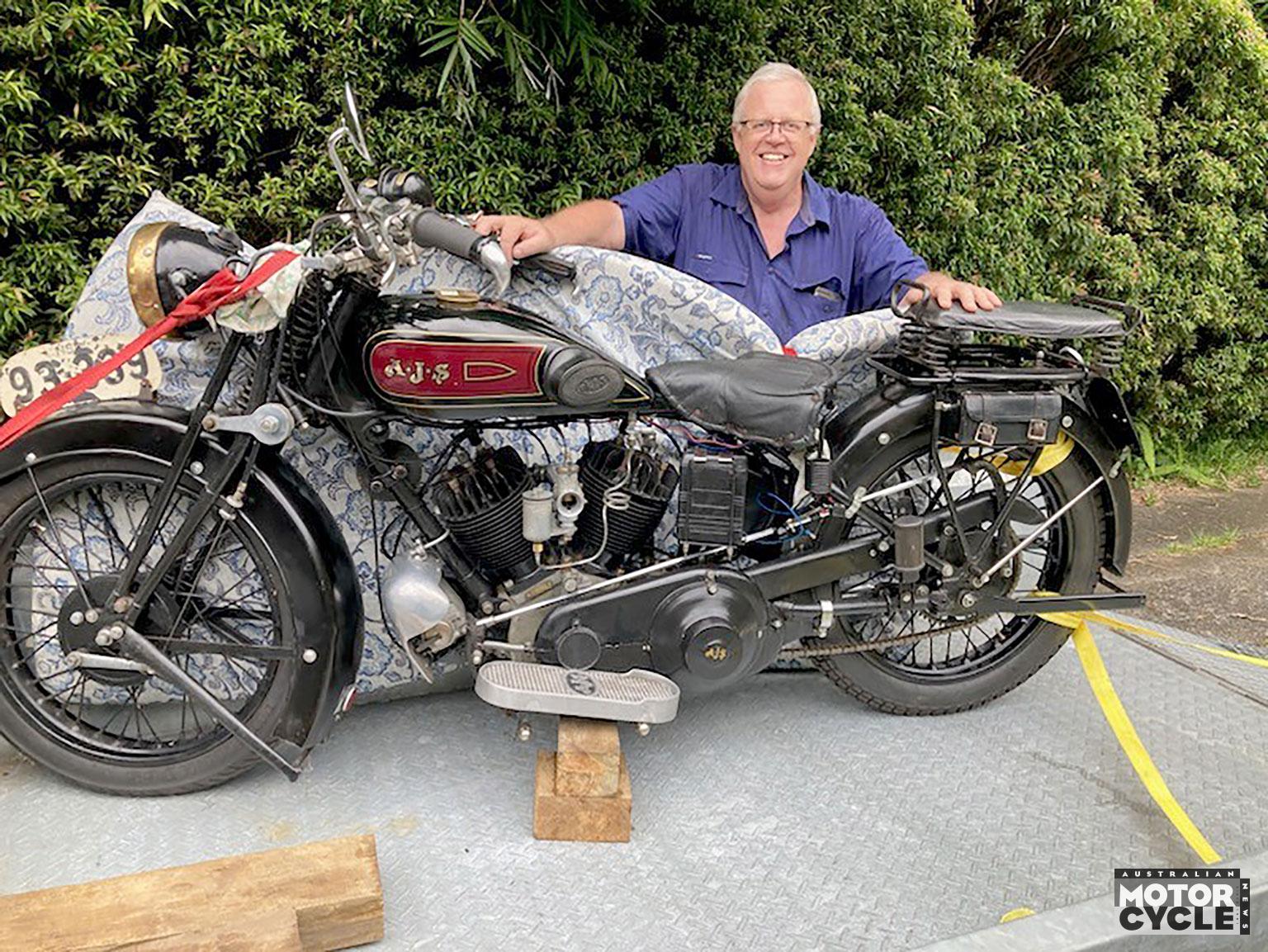
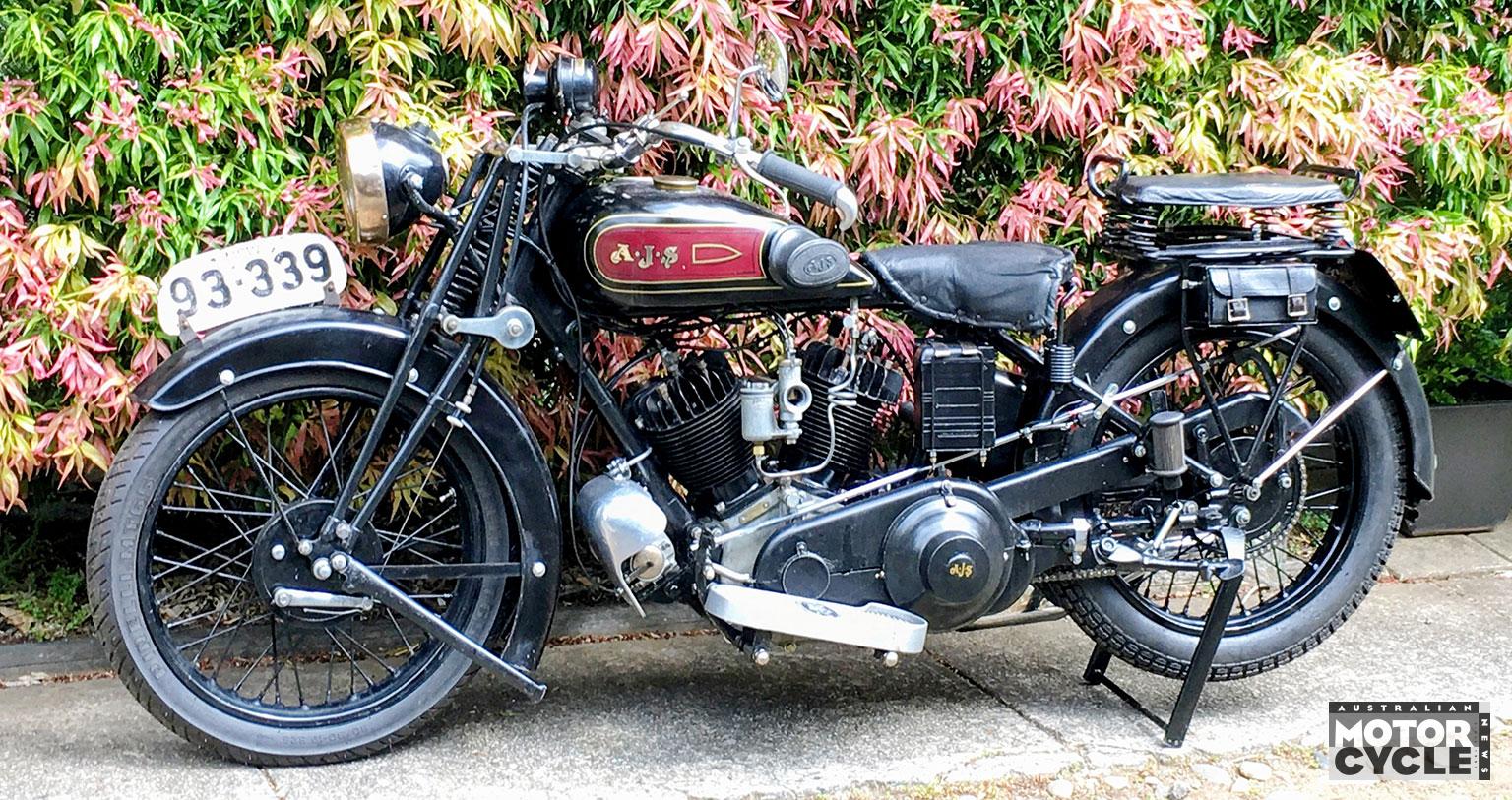
On 30 March 1928, renowned motorcycle aces Cec Weatherby and Leo Harris rode a Matchless V-twin from Melbourne to Sydney in 14 hours and 35 minutes – a new record for any type of motorcycle. Only one year later, Weatherby, together with his good mate and fellow TT competitor Don Bain, calculated they could lower the record even farther on a Phil Irving-tuned 996cc AJS V-twin fitted with the latest Goulding Comfort Sidecar.
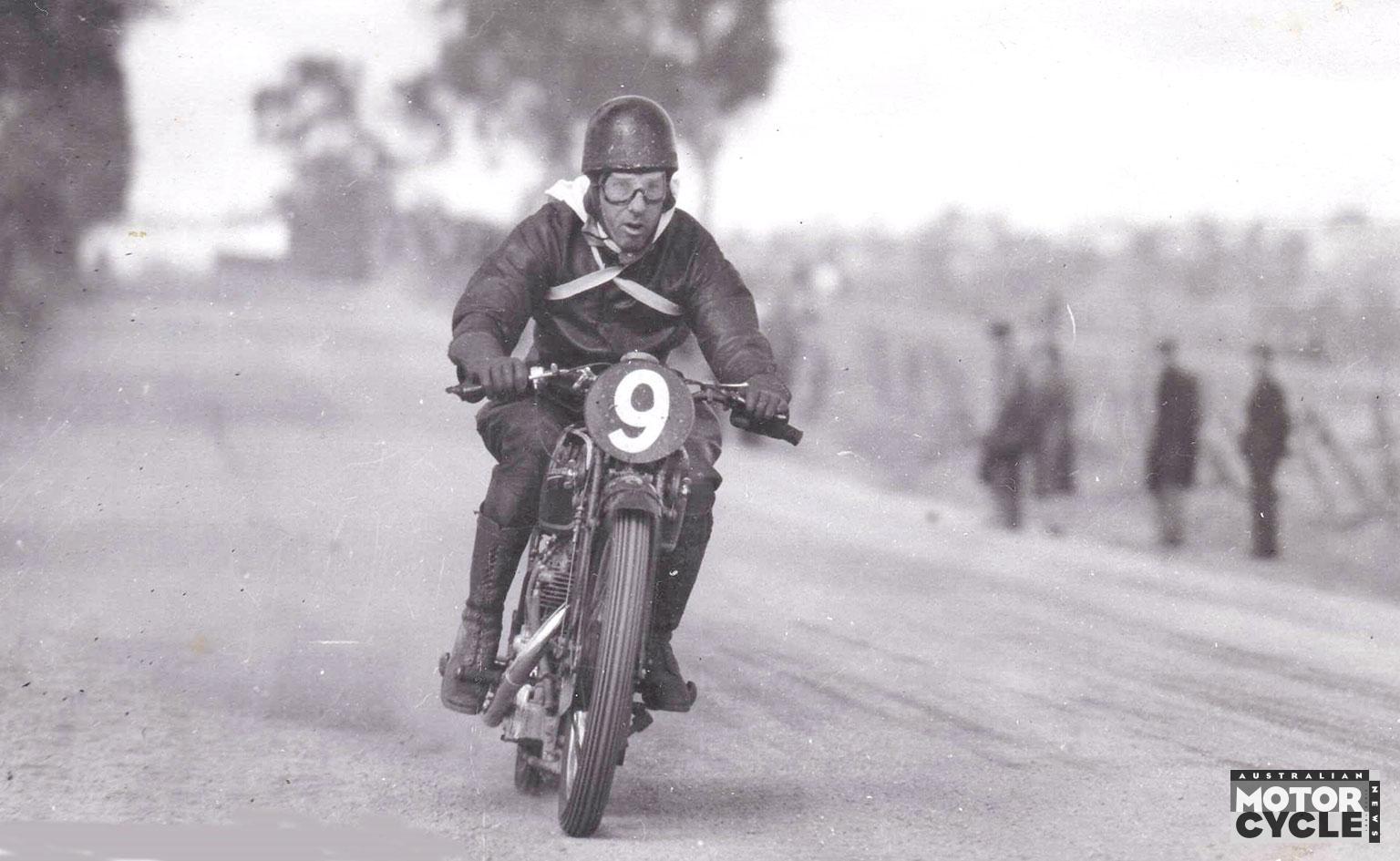
Setting out from Melbourne GPO at dawn, Weatherby and Bain cleared the city’s outlying dairy farms before milking time, intent on a steady 45mph (73km/h) once they reached what was then known as the Sydney Road. They had taken the precaution of having a team ready to fit new tyres in Albury – and again in Goulburn – however, while the first stop was successful, they suffered a blowout before reaching Goulburn.
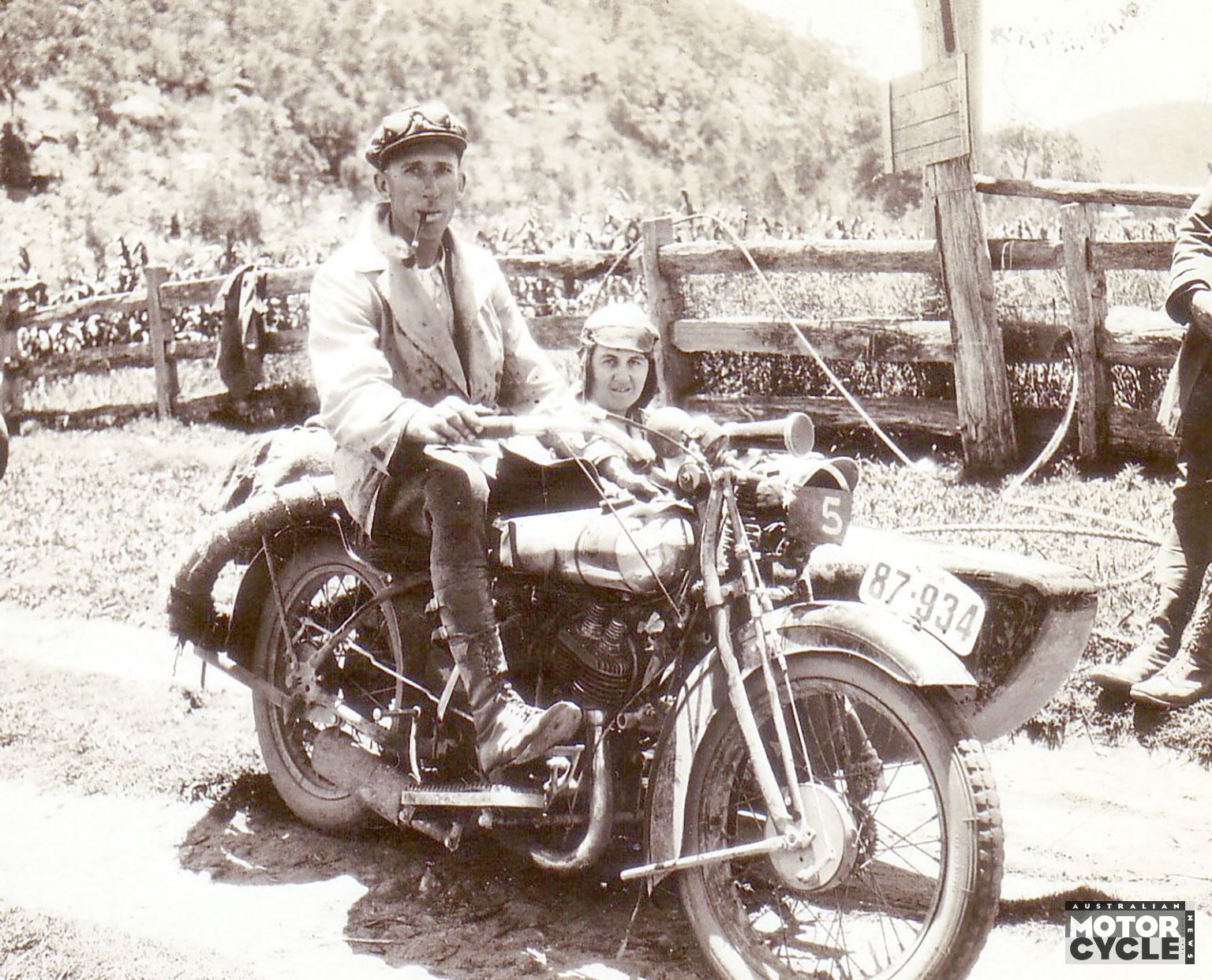
Given that their principal sponsor was Barnet Glass Tyres, this attempt went unpublicised, its failure passing unnoticed. But Weatherby and Bain remained enthusiastic, and having considered what was required to preserve the tyres, they prepared the AJS for their return journey to Melbourne.
It goes without saying, a new record remained firmly in their sights.
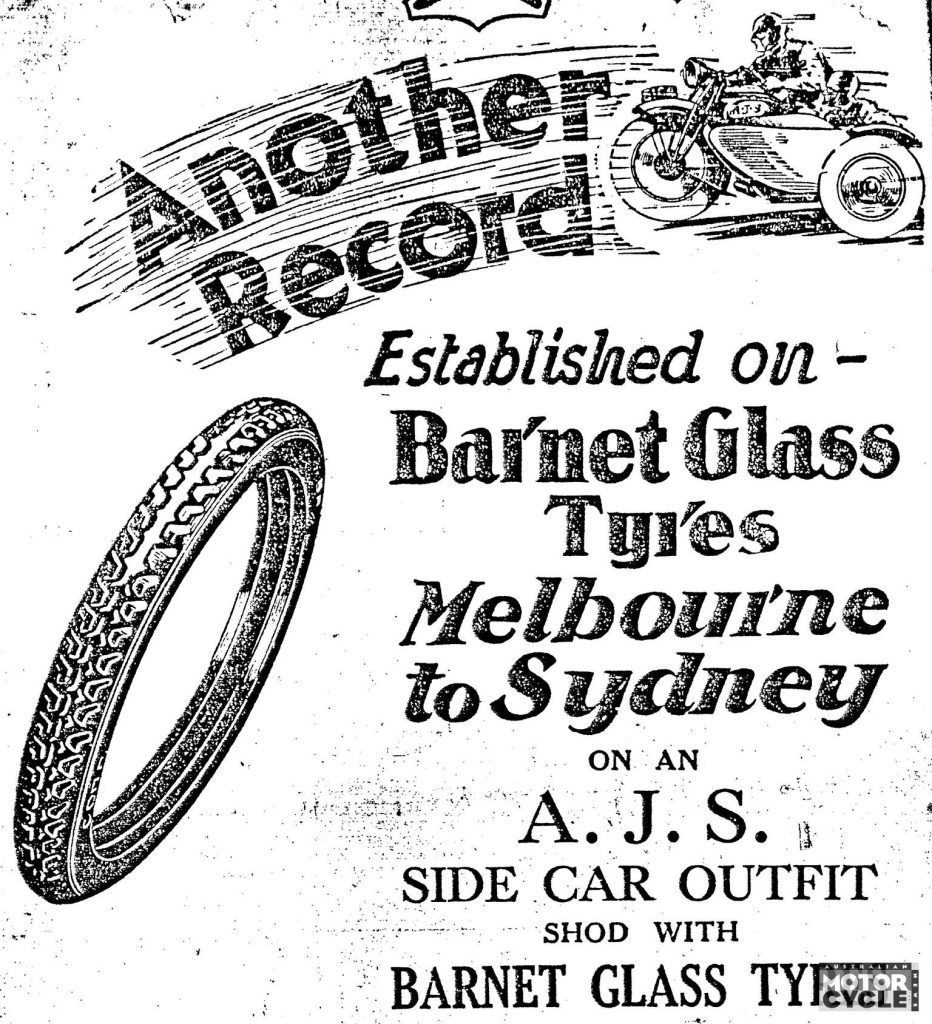
Departing Sydney GPO at 5am, they cleared Liverpool less than half-an-hour later, leaving civilisation in their wake. By the time they reached the Shell Service Station in Albury at 2:53 the following morning, their average speed was just short of 39mph (63km/h). Familiar as they now were with the route, they knew the ride along the fringe of the Goulburn Valley south of the border would allow speeds of 50mph (80km/h) – even in darkness.
Their final rider change was in Euroa, barely 160km short of Melbourne, where their old mate Phil Irving was on hand to retune the engine and adjust the brakes. But, as soon as the fuel was topped up, Weatherby roosted off into the darkness before Phil could refettle the outfit. Approaching the tight corner before the rail crossing at Seymour with dodgy brakes, Weatherby rolled the outfit, throwing Bain clear. Both riders were badly knocked about and Bain was still only semi-conscious when Weatherby dropped him off at the local hospital.
Duty fulfilled – and somewhat dazed himself – Weatherby pressed on alone, knowing that without a passenger, any record would probably be invalid.
It mattered not. Due to oil starvation, the AJS seized on the outskirts of Melbourne, leaving Weatherby alone in the darkness to contemplate this second failure.
Once again, the press releases were quietly binned.
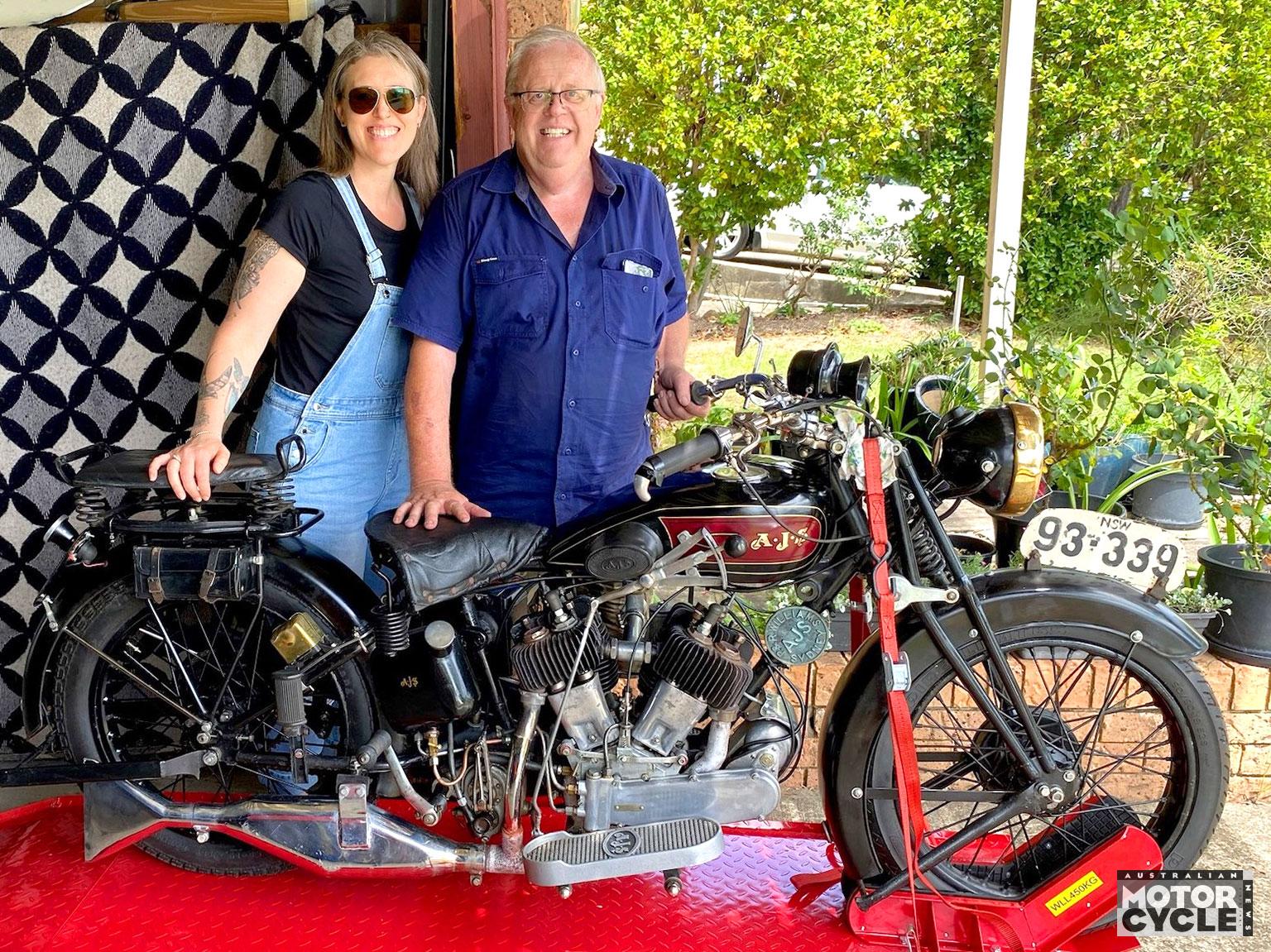
Realising only proper preparation would prevent another piss poor performance, Weatherby and Bain regrouped. Just weeks later they set out on a third, meticulously planned, attempt. Knowing they had a number of railway crossings to negotiate on the way out of town, they calculated that by departing Melbourne GPO precisely at 5:45am on a Saturday, and having supporters such as Irving open and shut the many metropolitan railway crossing gates for them, they would save precious minutes while departing suburbia at full throttle.
As Phil later reported: “Our combined efforts just managed to open and close the gates in time to avoid screaming tabloid headlines such as ‘Mad Motorcyclists Derail Train’.” Once underway, now knowing how hard they could push the AJS, how to conserve the Barnet Glass Tyres, and having fuel stops planned and confirmed ahead by the Shell organisation, they were prepared for the worst; knowing when to go hard and when extra caution was required.
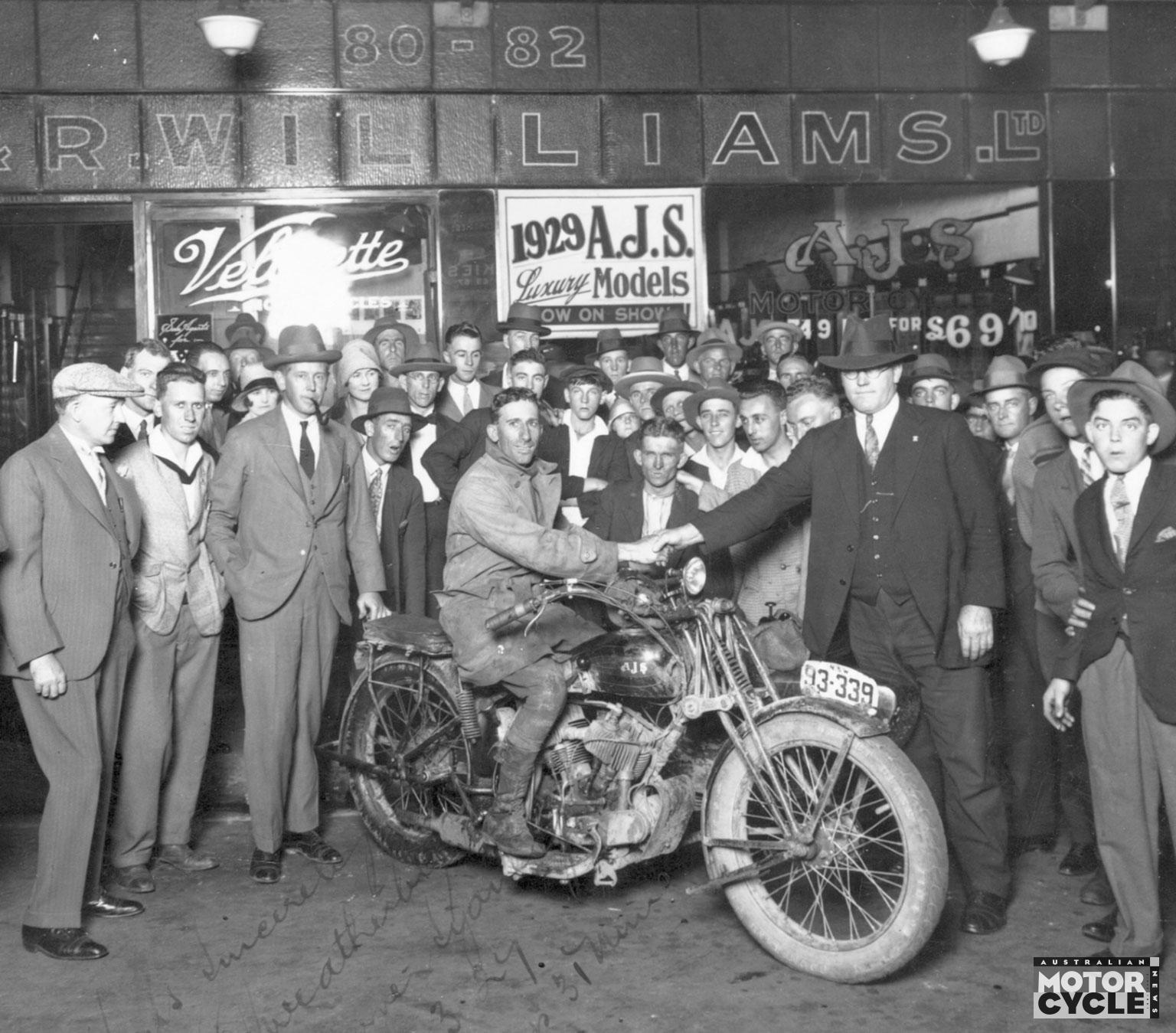
Light rain all the way north to Yass kept the late summer heat bearable and settled the dust. From Yass through to Sydney the road was reported to be ‘practically’ underwater, however maintaining a reported average speed of 45mph suggests this presented no real problem. On arrival at Sydney GPO at 7:16pm on Sunday 24 March 1929, Weatherby and Bain were greeted by the entire staff of P & R Williams – the Australian AJS distributors – together with scores of supporters and a full complement of newspaper reporters. No doubt there were Barnet Glass Tyres and Shell Petroleum representatives lurking about with a few cases of longnecks to oil the media and celebrate the occasion.
Bill Goodwin, president of the Auto Cycle Union, was on hand to congratulate the lads on their efforts. They’d covered 575 miles (925km) in 13 hours 31 minutes, setting a new outright record and breaking the previous sidecar record by more than two hours. This record would stand until such attempts were banned by the Royal Auto Club and their affiliates two years later – and thus it stands to this day.
ANZAC TO THE CORE
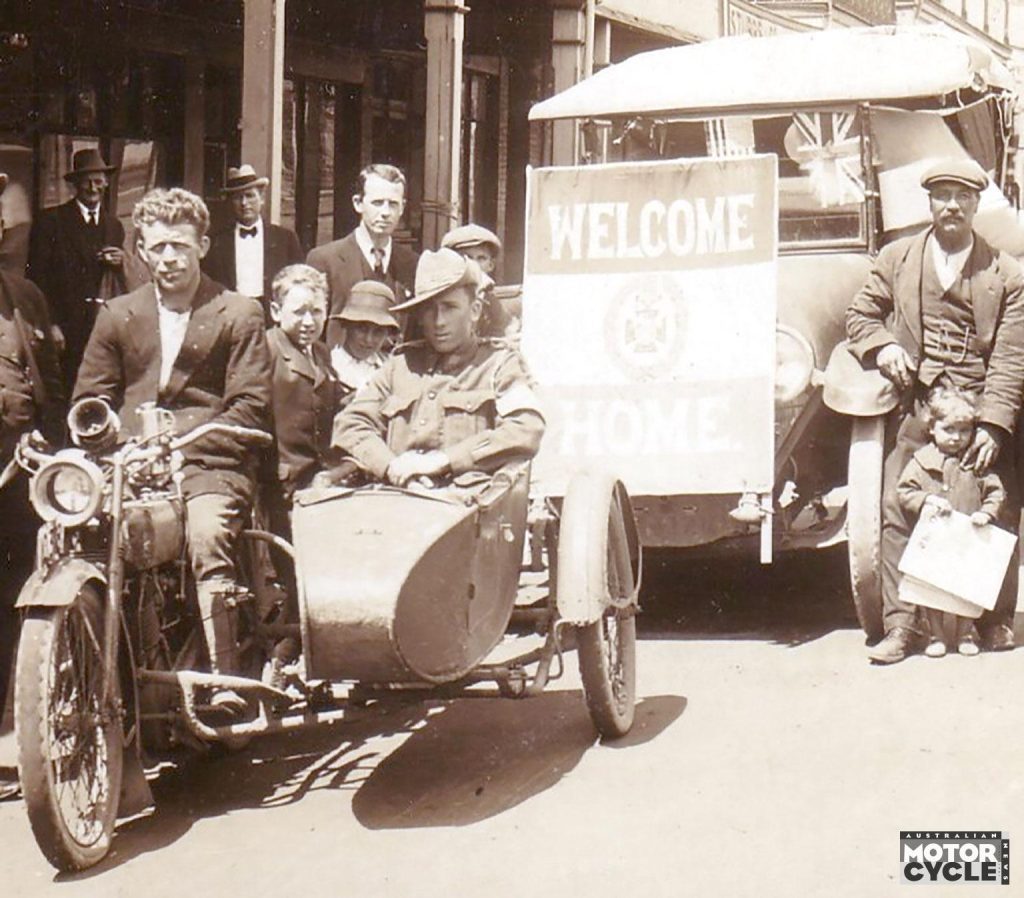
Battlefield bravery found its peacetime outlet in motorcycle racing
Being awarded the King George ‘Distinguished Conduct Medal’ (DCM) for his gallantry in the Battle of the Somme during World War I only confirmed Cec Weatherby was a man of enterprise and determination. Returning to his hometown of Yass, NSW, Cec married his sweetheart Dora. He returned to work as a motorcycle mechanic and got stuck into racing – often with Dora riding shotgun in the ever-popular Reliability Trials of the era.
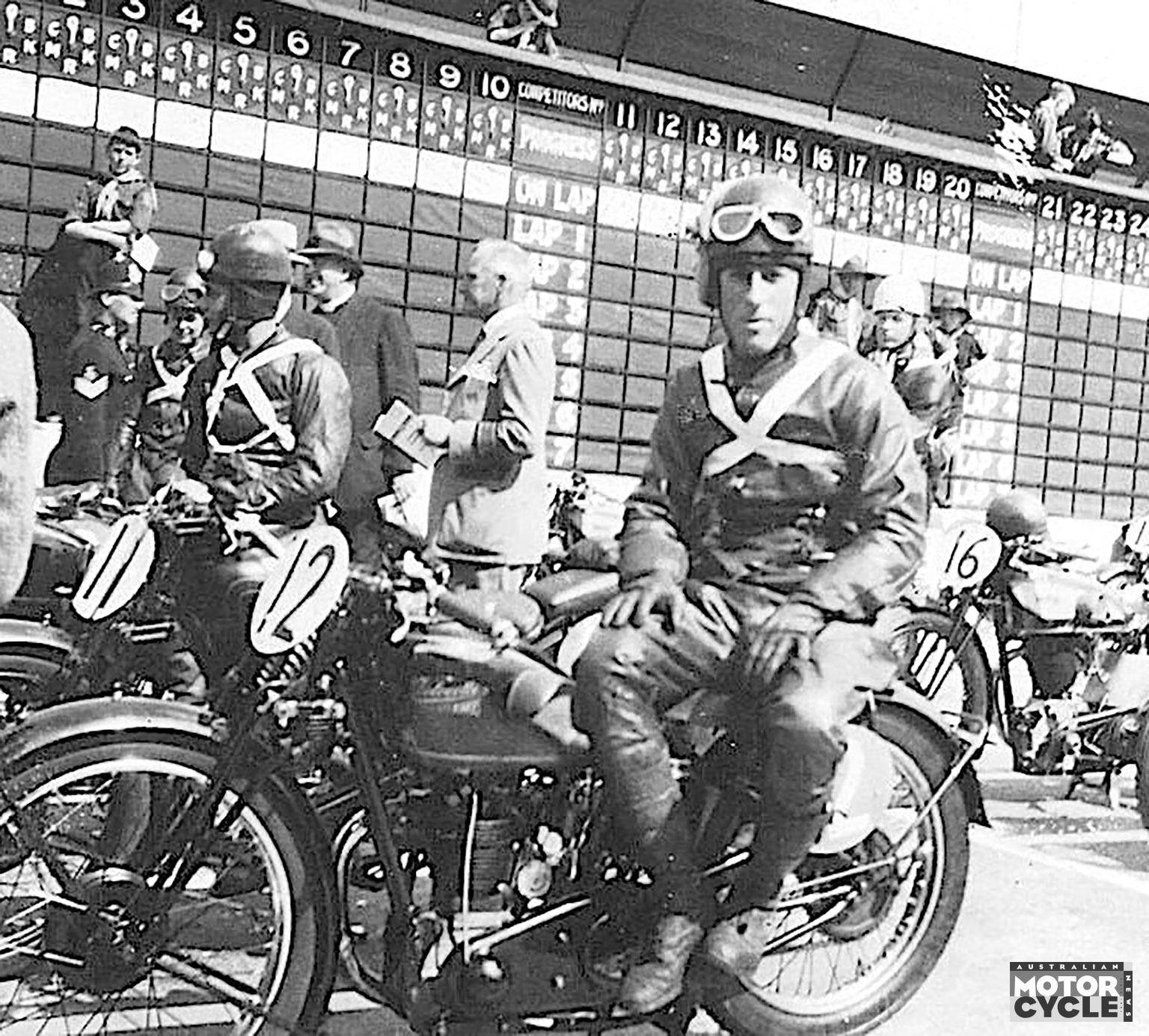
But these trials only supplemented the TT racing at the new Vale circuit, located between Bathurst and Perthville. It was here that Cec met Don Bain, the two becoming fierce competitors and lifelong mates; at the inaugural Vale meeting in 1931, Bain’s Velocette just pipped Weatherby’s AJS in the Junior TT, the first of many major events in which they appeared on the podium together.
Both mates were later enthusiastic members of the committee that established the ‘Bald Hill Scenic Drive’, which later became Mount Panorama, a venue where they both enjoyed success before Cec headed off to compete at the 1933 Isle of Man TT.
After hanging up his helmet, Cec swiftly made the transition to off-track activities and it’s rare to scan a motorcycle race program from the post-war period without coming across his name as one of the valued ‘behind the scenes’ officials that kept the sport running. In fact, Cec was perennial Motorcycle Steward at Cumberland (Parramatta) Speedway throughout the 1960s.
Cecil James Weatherby. 12 August 1898 – 31 January 1971.
Lest we forget.