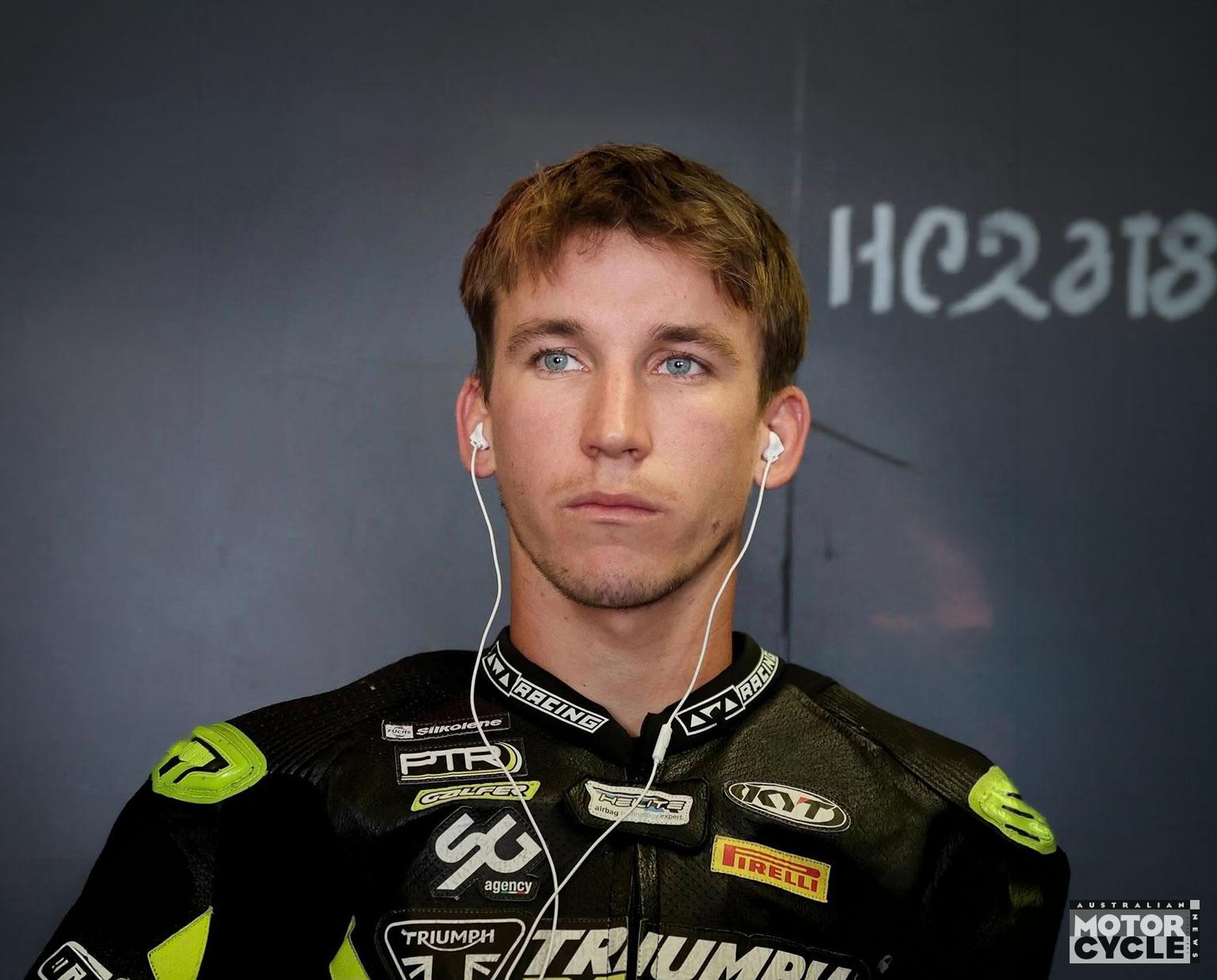
The man with the best job in moto-journalism rolls out a hit parade of significant racebikes he’s ridden over the decades
01 | Honda NSR500
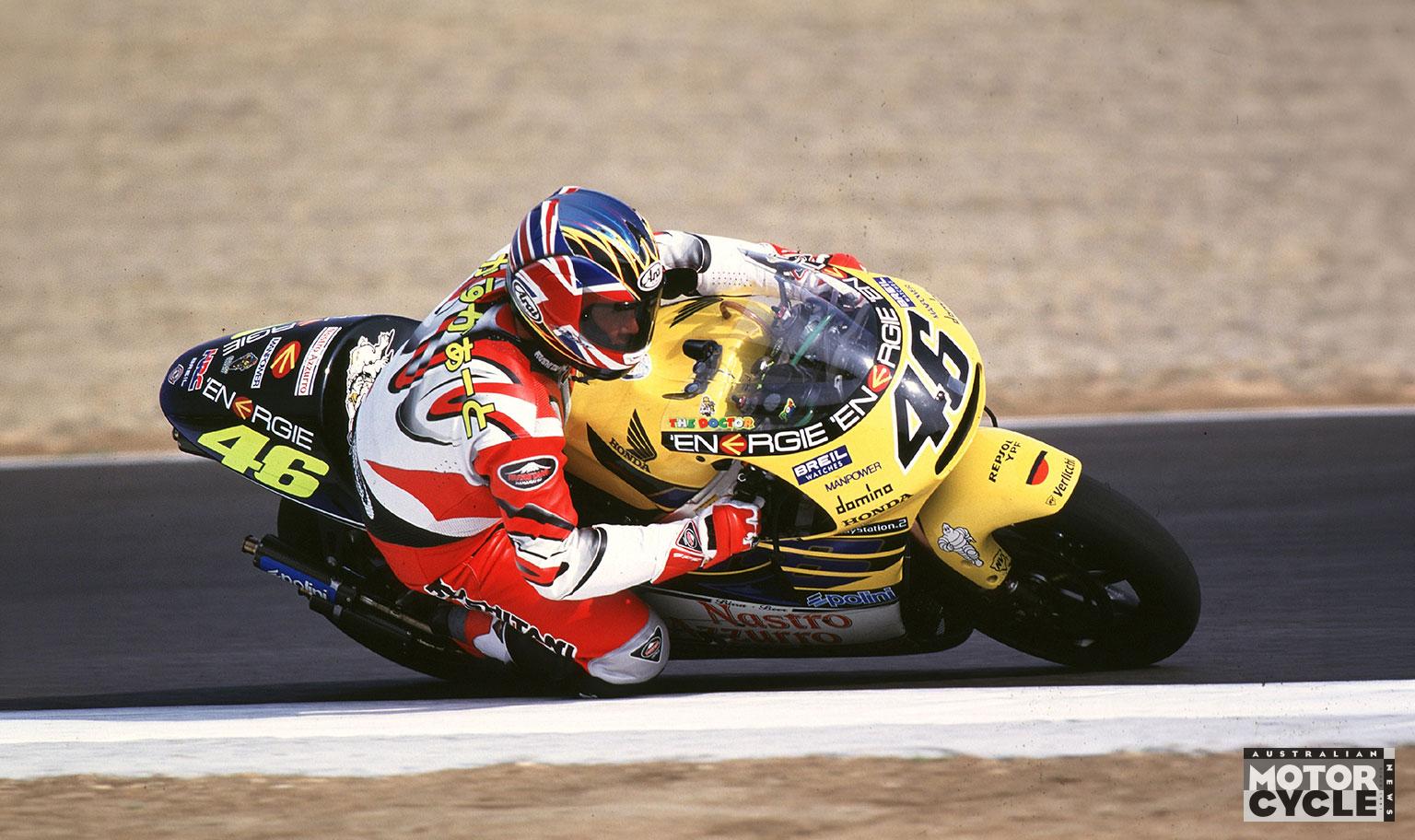
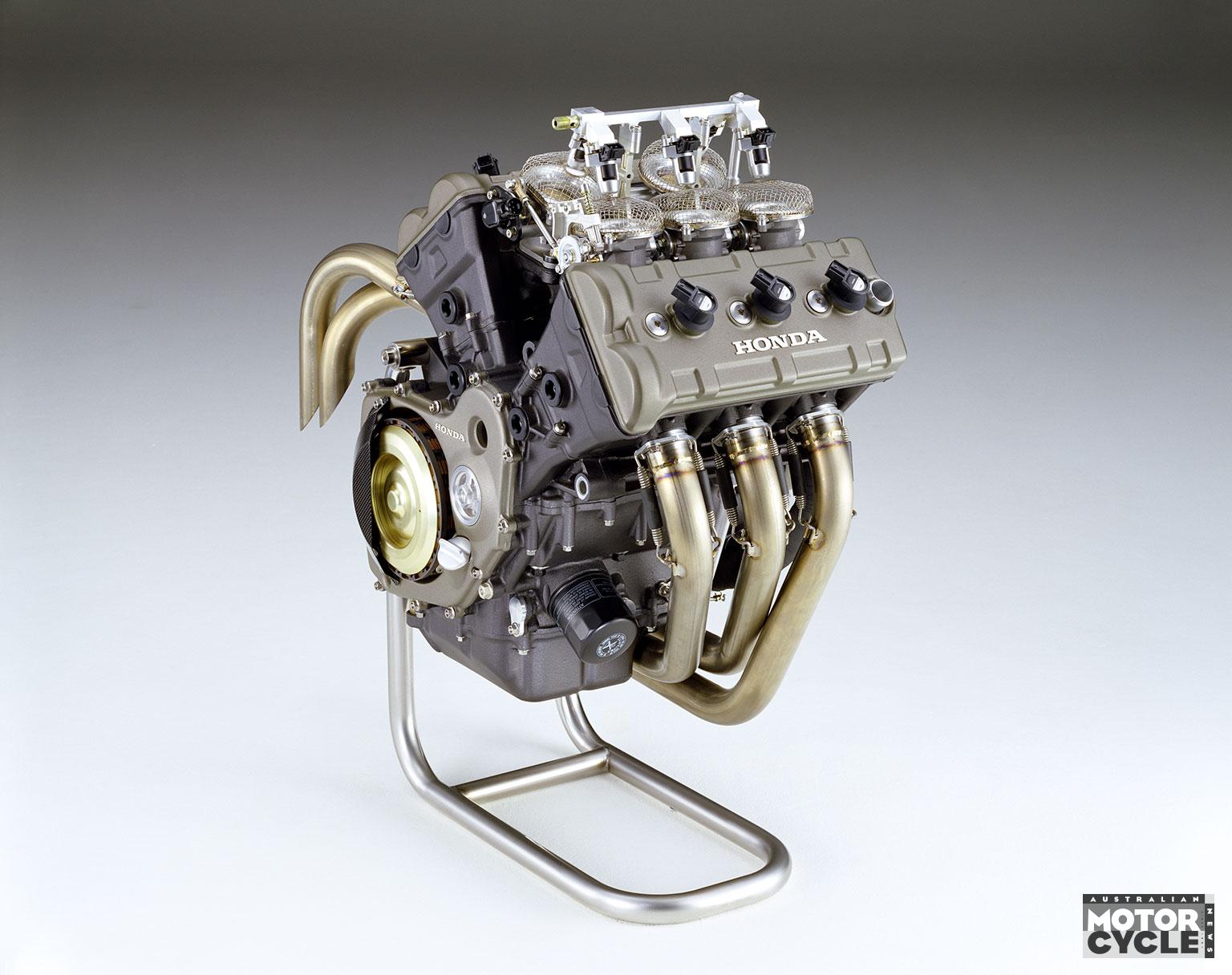
Honda’s NSR500 is 500GP’s longest-lived and most successful racer design. Valentino Rossi’s final 2001 title-winning NSR500 had the same essential 54mm x 54.5mm single-crankshaft V4 reed-valve engine – now delivering 145.5kW (195hp) at 12,500 rpm – as the 107kW (144hp) version on which Freddie Spencer won the first of the NSR500’s 10 500cc world titles 18 years earlier. Against the 79 victories in 500GP racing that MV Agusta earned with a variety of triple and four-cylinder racers between 1952 and 1976, Honda’s V4 had scored 131 GP wins by the end of 2001.
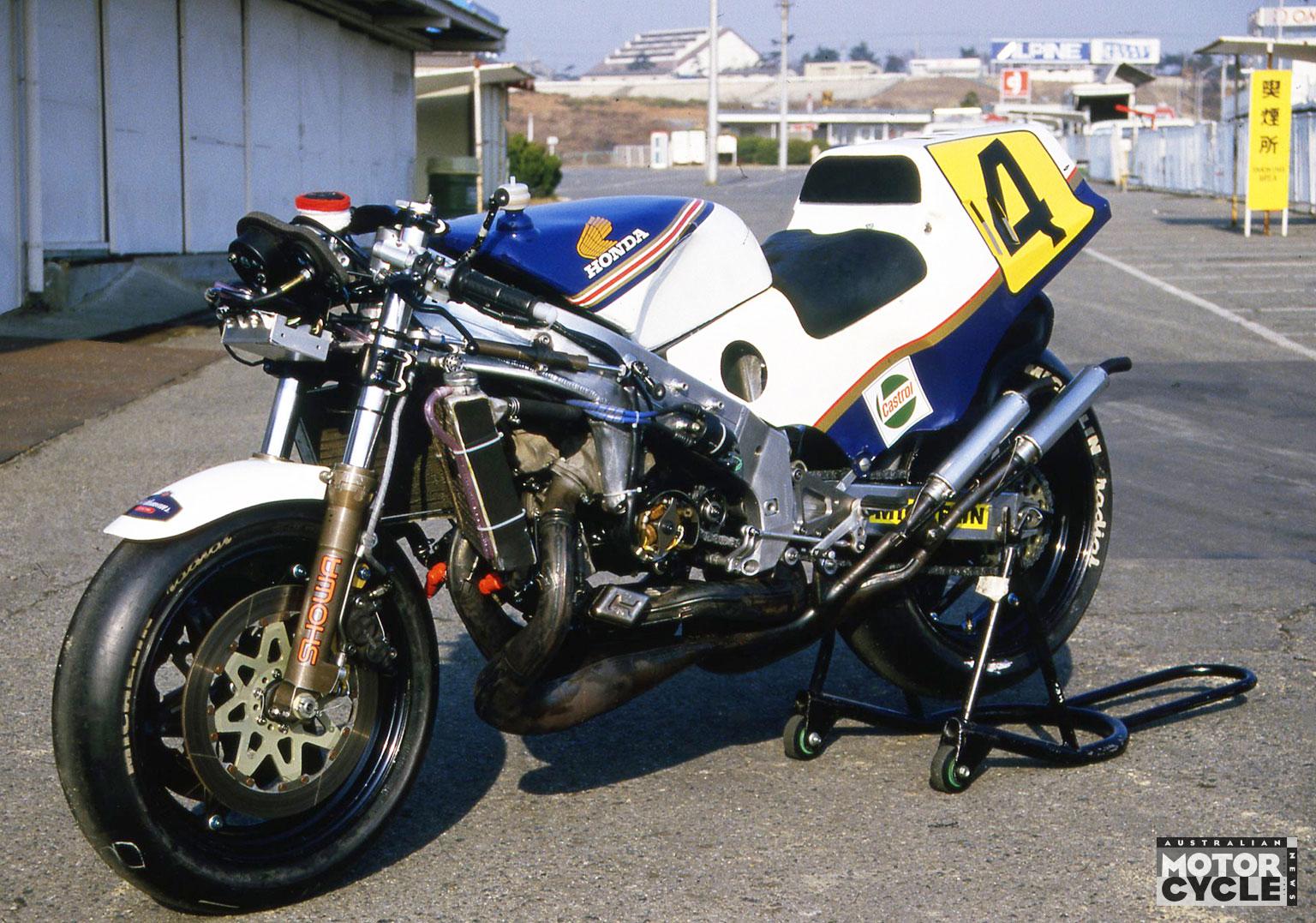
As the only outsider allowed to test ride every variant of the NSR500 each season from its first world title in 1985 onwards, it was fascinating to track its evolution from the hot seat. Honda made just one major change to the engine in that time. In 1987 it widened the included cylinder angle from 90° to 112° to move the battery of trick 36mm Nissin carbs to within the angle of the vee, delivering more consistent and smooth power.
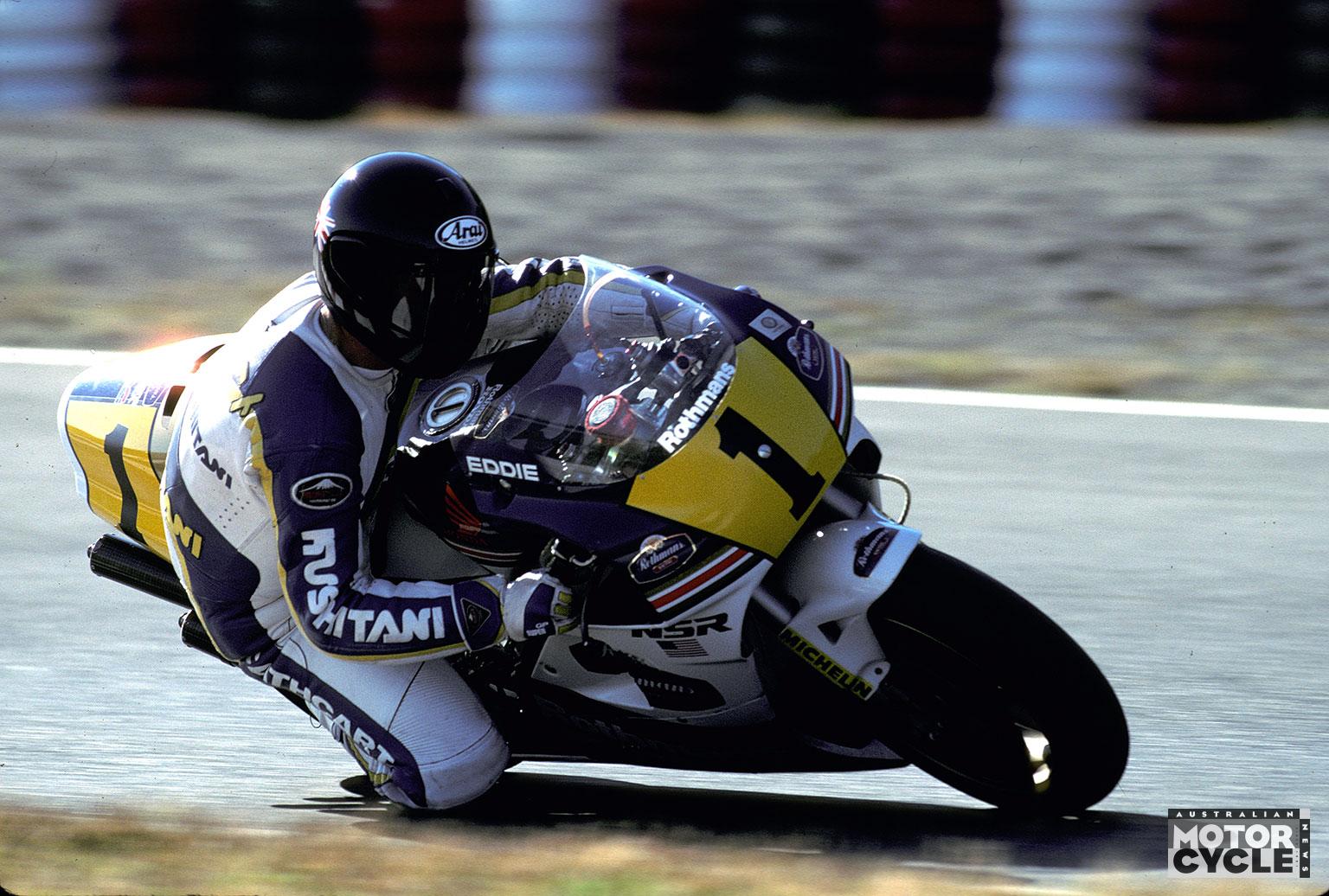
But 1992 saw arguably the NSR500’s single biggest improvement with the Big Bang engine. All four cylinders fired within around 70° of crankshaft rotation, allowing the rear tyre to regain grip between each explosion of power. Refined handling also made NSR500 performance an easy-access option, allowing riders like Alex Criville to defeat Mick Doohan on level terms.
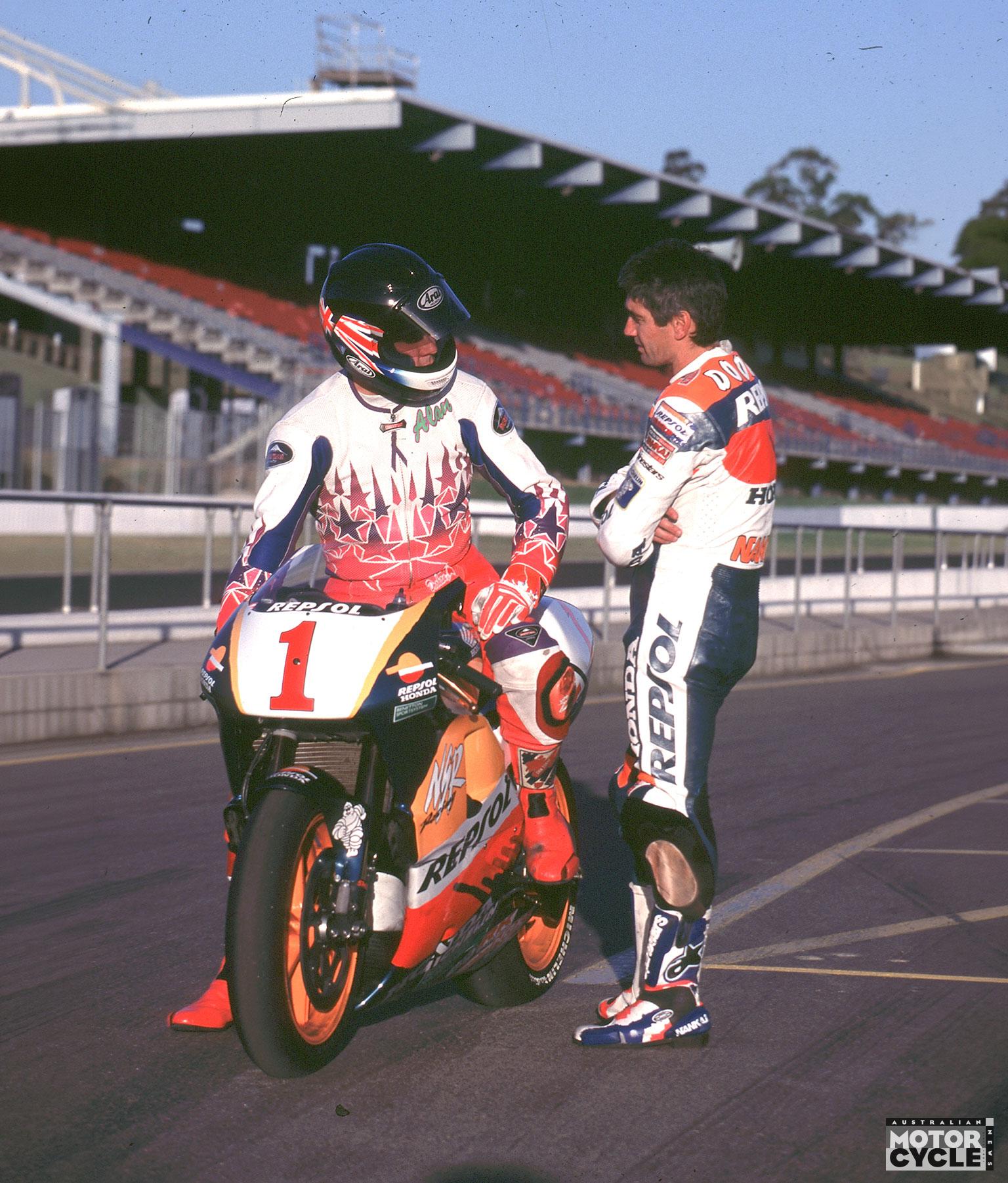
So Mick decided to revert to the old pre-Big Bang 180° Screamer engine, now tamed by modern electronics and ongoing tyre development. HRC engineers tried to talk him out of it but Mick was proved right. The Screamer won 12 races in his hands in 1997, plus two with Criville and one with Tadayuki Okada, en route to a Honda clean sweep of all the GPs and the first four places in the points table. Total domination.
02 | Norton Manx 500
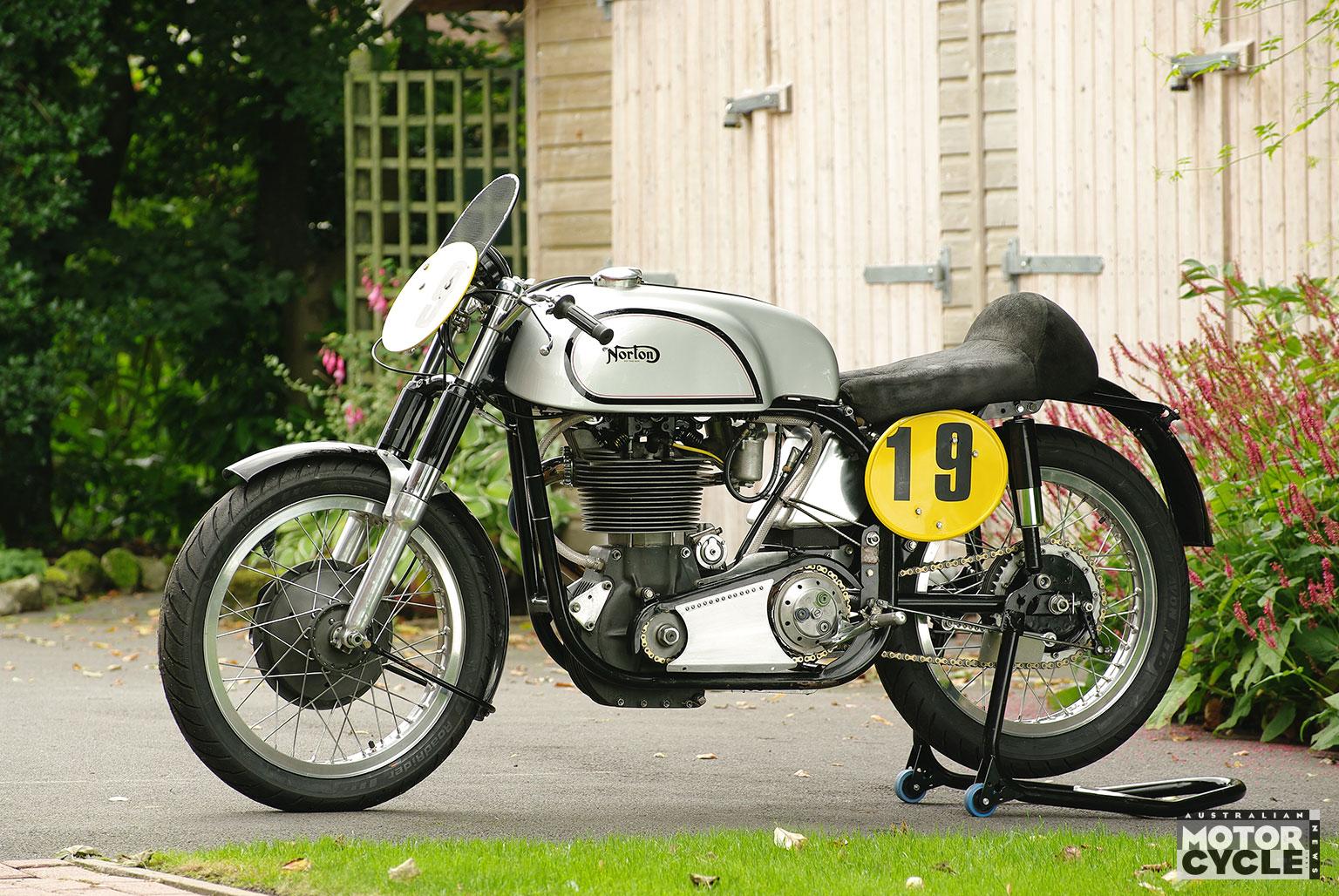
The ultimate British single debuted in 1950, its ‘Featherbed’ frame delivering outstanding handling to help Geoff Duke defeat the more powerful Gilera and MV Agusta fours to win both the 350cc and 500cc world titles in 1951. The Manx became the mainstay of Continental Circus racing for two decades, privateer Godfrey Nash finishing third in the 1969 500cc world championship, despite Norton’s owners AMC ending production after 1962. The DOHC engine produced 37kW (50hp) at 7500rpm in a motorcycle weighing 140kg. Norton won five successive sidecar world titles with it, too. Gone but not forgotten, in highly developed replica form, the Manx Norton is the bike to beat in modern classic racing.
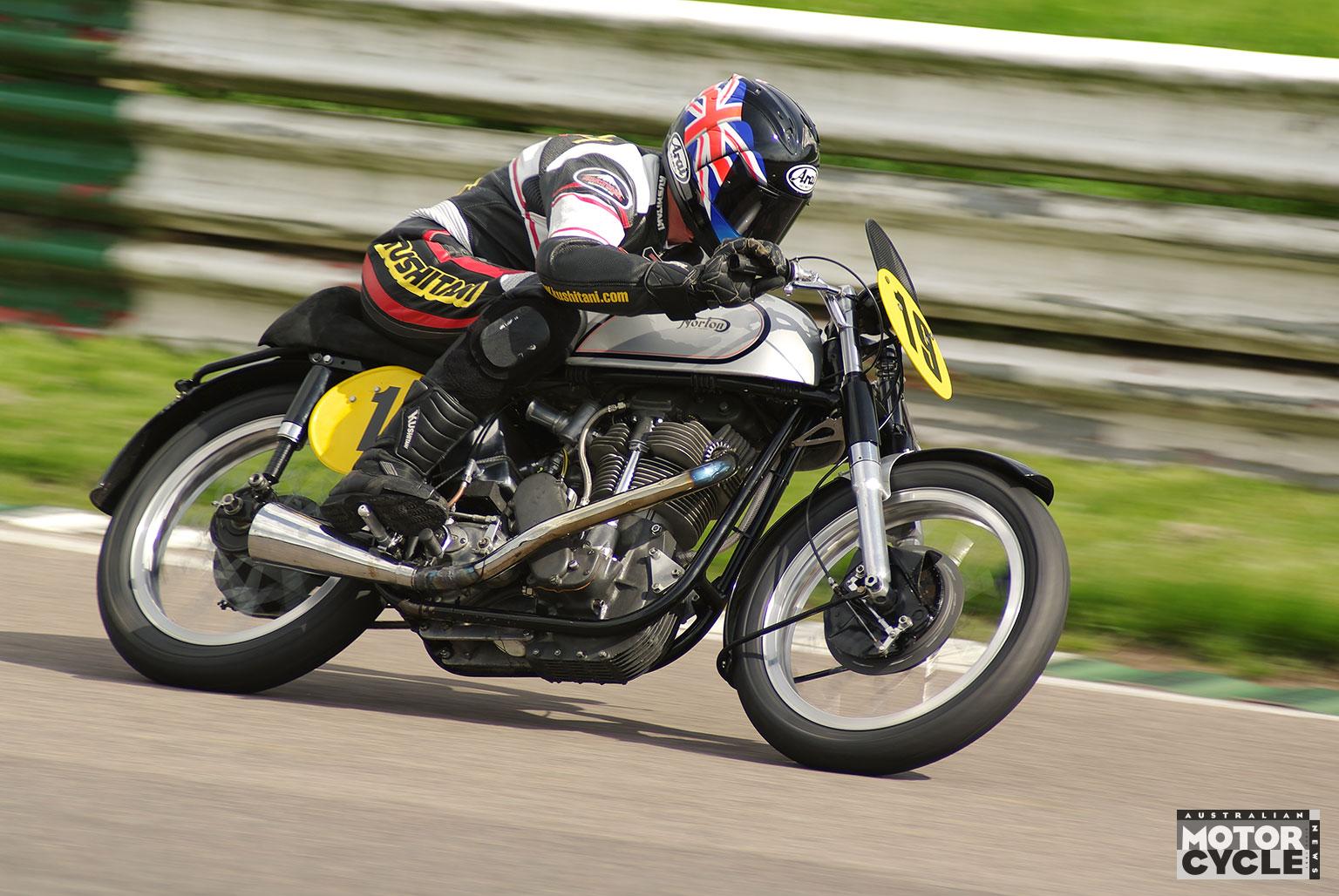
As an owner since 1975 of the Manx’s greatest British rival, the Matchless G50, I might have had a jaundiced view of the Norton if not for racing one for British sponsor Ian Telfer for three seasons, finishing third in the Daytona Premier 500 and Dutch Historic TT at Assen, until I lost my ride to a bloke called Barry Sheene, who went on to become a repeat winner of the Goodwood Revival. The G50 is lighter, more nimble, stops better and is above all oil-tight – the Manx Norton has exposed valve gear. However, nothing ever steered as well as a Manx in its heyday. The Italian Gilera and MV Agusta fours eventually profited by hiring ex-Norton factory riders Geoff Duke and John Surtees to teach their new Latin lords the black art of frame design in harnessing the 20 extra horsepower their fours developed.
03 | Honda 250/297 Six
Gloriously musical, fiendishly complicated, improbably compact and rewardingly dominant, the RC166 Honda six represented Soichiro Honda’s riposte to the increasing threat of the two-strokes he detested. It took time to develop, but Mike Hailwood blitzed the 250cc world title on the six in 1966, winning all 10 rounds on a bike whose 39mm x 34.5mm engine now developed 42.5kW (57hp) at 17,500rpm. In 1967, Honda’s 297cc version defeated Agostini’s full 350cc MV Agusta triple, clinching Honda’s final four-stroke GP world title of the classic era. It would be another 25 years before the next one….
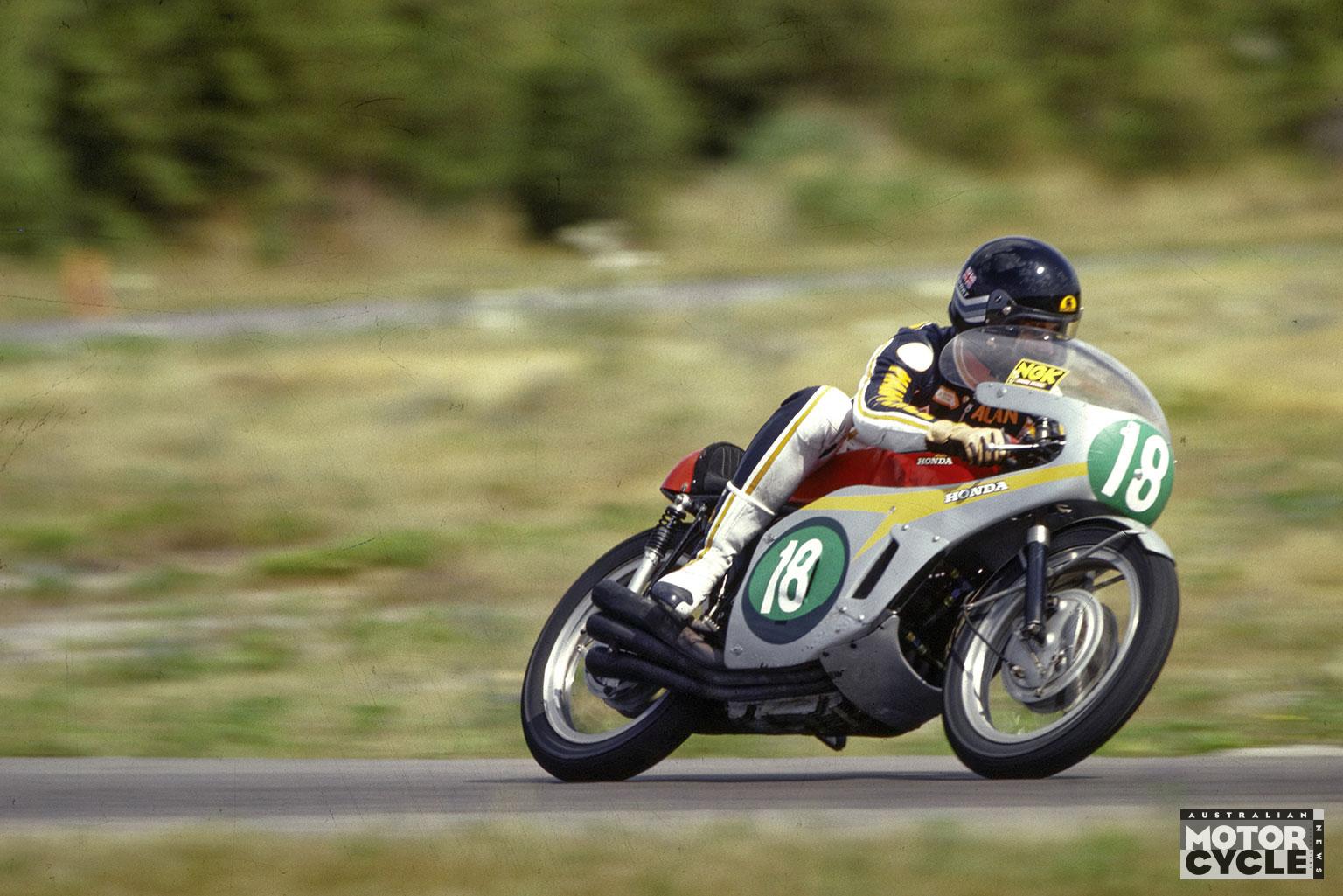
Riding a genuine Honda RC166, one on which Mike Hailwood dominated the 250GP season in 1966 rather than a modern authentically engineered copy built by George Beale, introduced me to a 24-valve screamer that would cut out if I let the revs drop below 8000rpm. I had to work the silky smooth clutch as if it were a two-stroke to stay in the five-figure range accelerating out of a turn. But once I got the engine wound up to 11,000rpm, it completely smoothed out and started pulling hard, with a real surge of power from 12,000 up, en route to the 16,000rpm ceiling I was asked to observe on this piece of living history. And unlike on its evil-handling concurrent RC181 500cc four, Honda had no problems delivering that potent performance to the tarmac. Undoubtedly, the ne plus ultra of the Golden Age of GP racing.
04 | MV Agusta 500 Triple
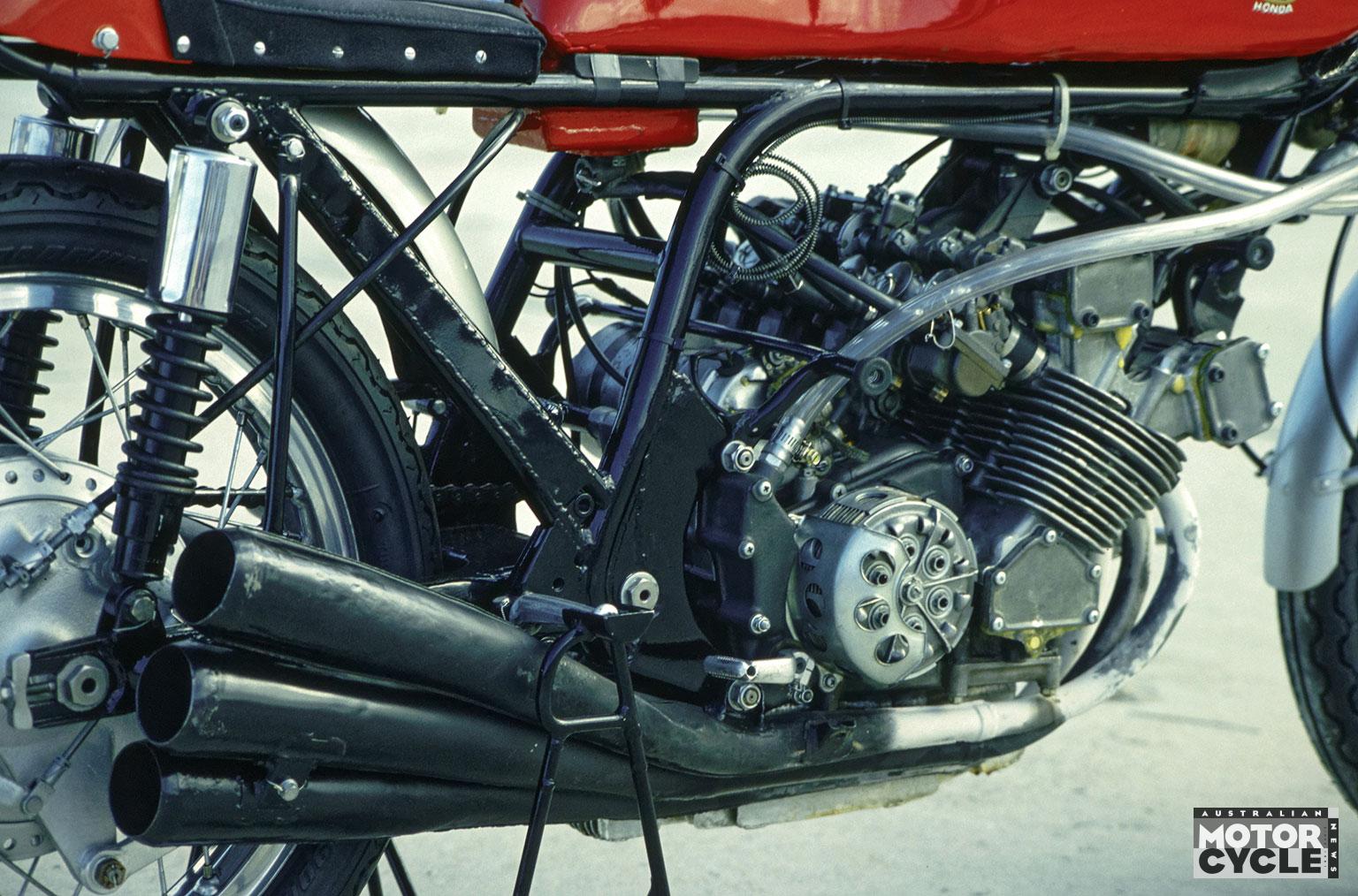
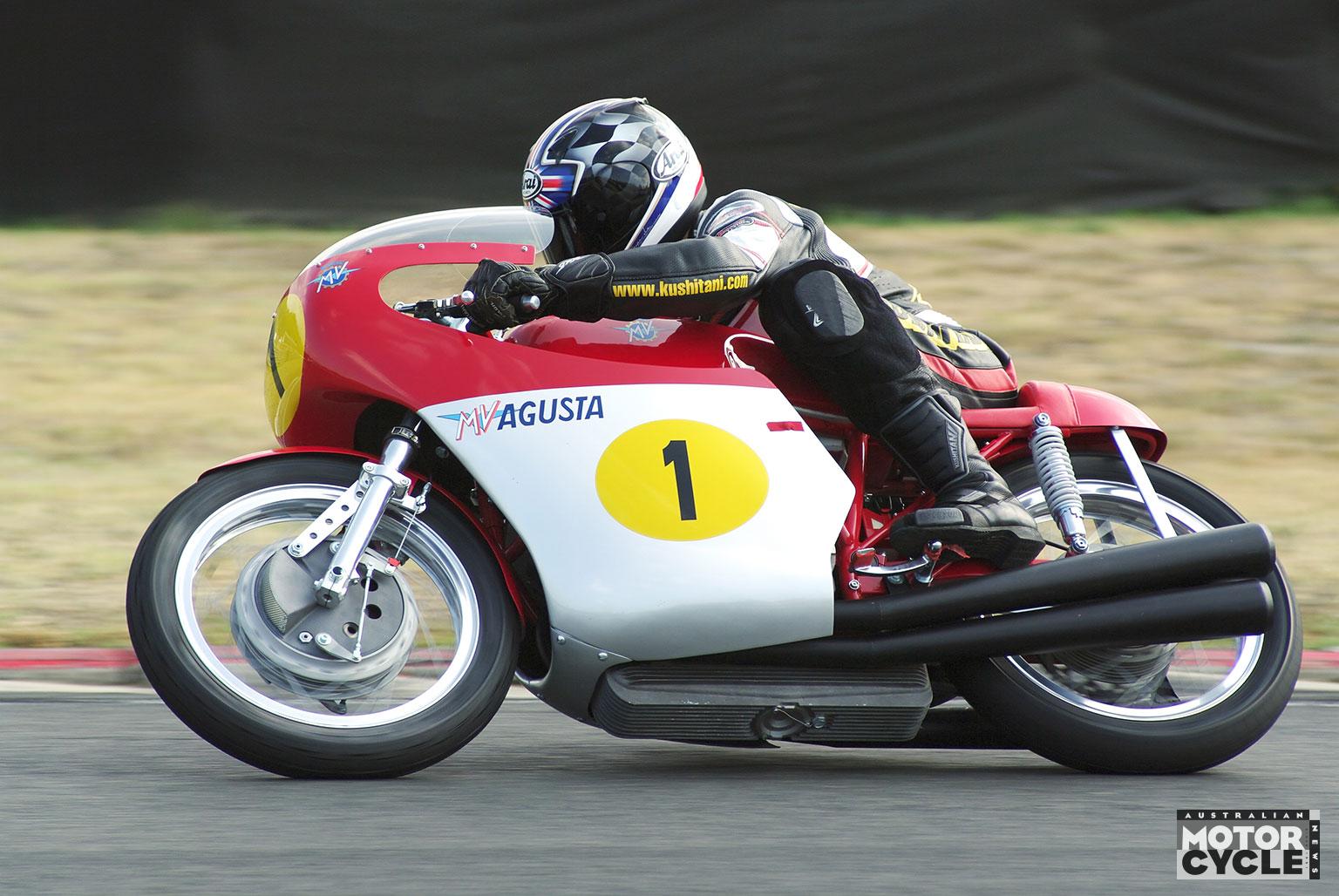
Beginning life as Count Agusta’s slimmer, lighter response to Honda’s four-cylinder 350cc domination, a 420cc version of MV’s triple allowed Giacomo Agostini to prevent Hailwood’s Honda RC181 four-cylinder winning the 500cc class. After Honda’s withdrawal after 1967, MV triples helped Agostini win 13 of his 15 world titles up to 1973, in both 350cc and 500cc guise. He felt so completely at home on them he resisted every attempt to persuade him to adapt to the new fours MV brought on line in 1972. Eventually, teammate Phil Read did so and Ago left for Yamaha.
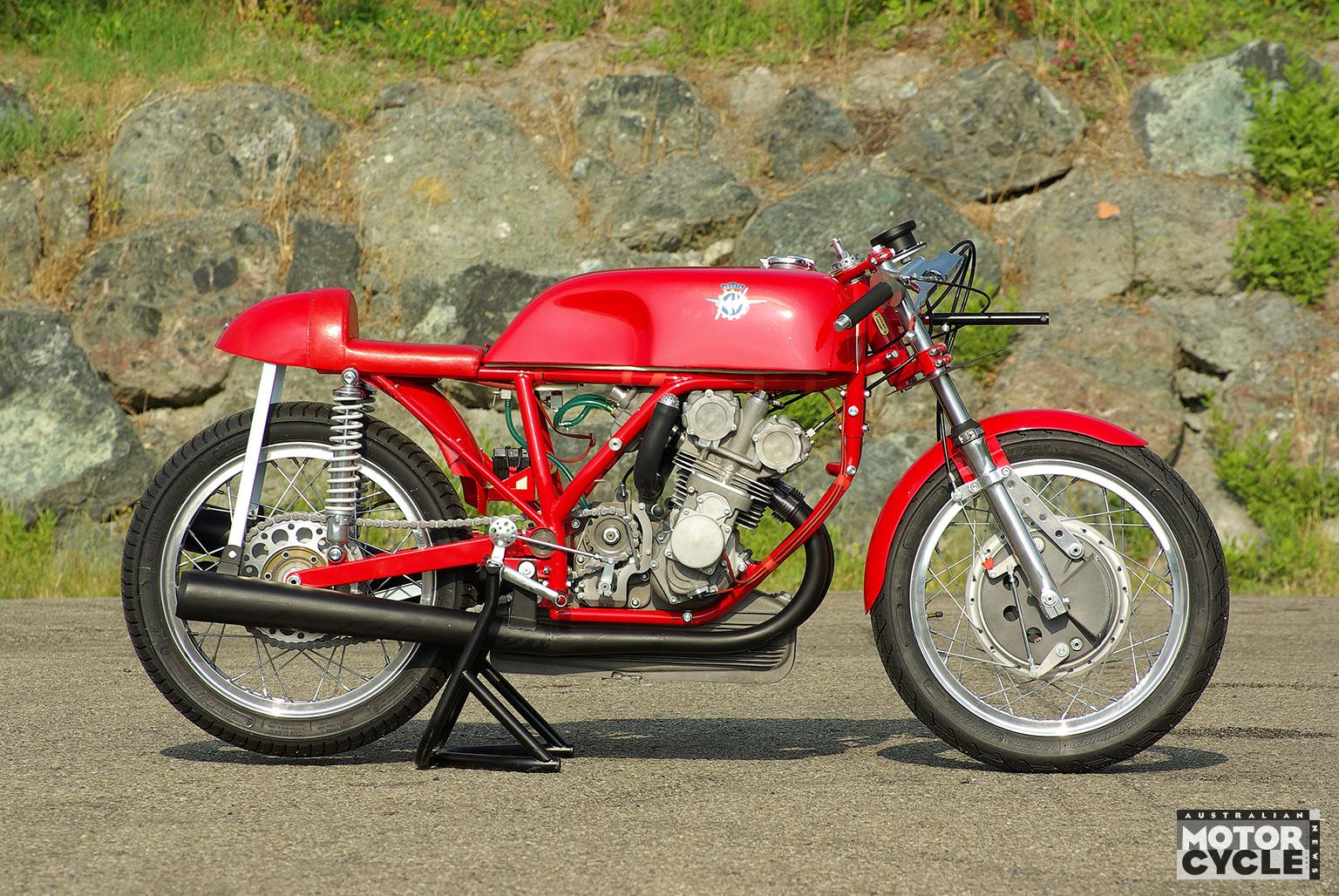
Invited to ride the last of the continuazione MV 500 triples made in the MV Agusta factory for Ago to market to deep-pocketed enthusiasts, it’s not until you sit aboard the perfectly proportioned MV-3 that you realise it’s quite diminutive. It’s made to measure for Ago like a two-wheeled bespoke suit, with a short 1310mm wheelbase removing all sense of bulk. Firing up the MV-3 was child’s play – three steps and drop the clutch. No wonder Ago led so many races from start to finish. He’d be changing into third gear by the time the British four-stroke singles and Japanese two-stroke twins had fired up and been clutched up onto the pipe. The MV-3 pulls cleanly from as low as 6000rpm, accompanied by that gruff contralto growl that becomes a howl as the revs reach the 12,000rpm limit Ago observed in races. The extra top-end power was really noticeable, hence his insistence on revving the MV-3 hard all the time. And making music doing so…
05 | Ducati 750 V-twin
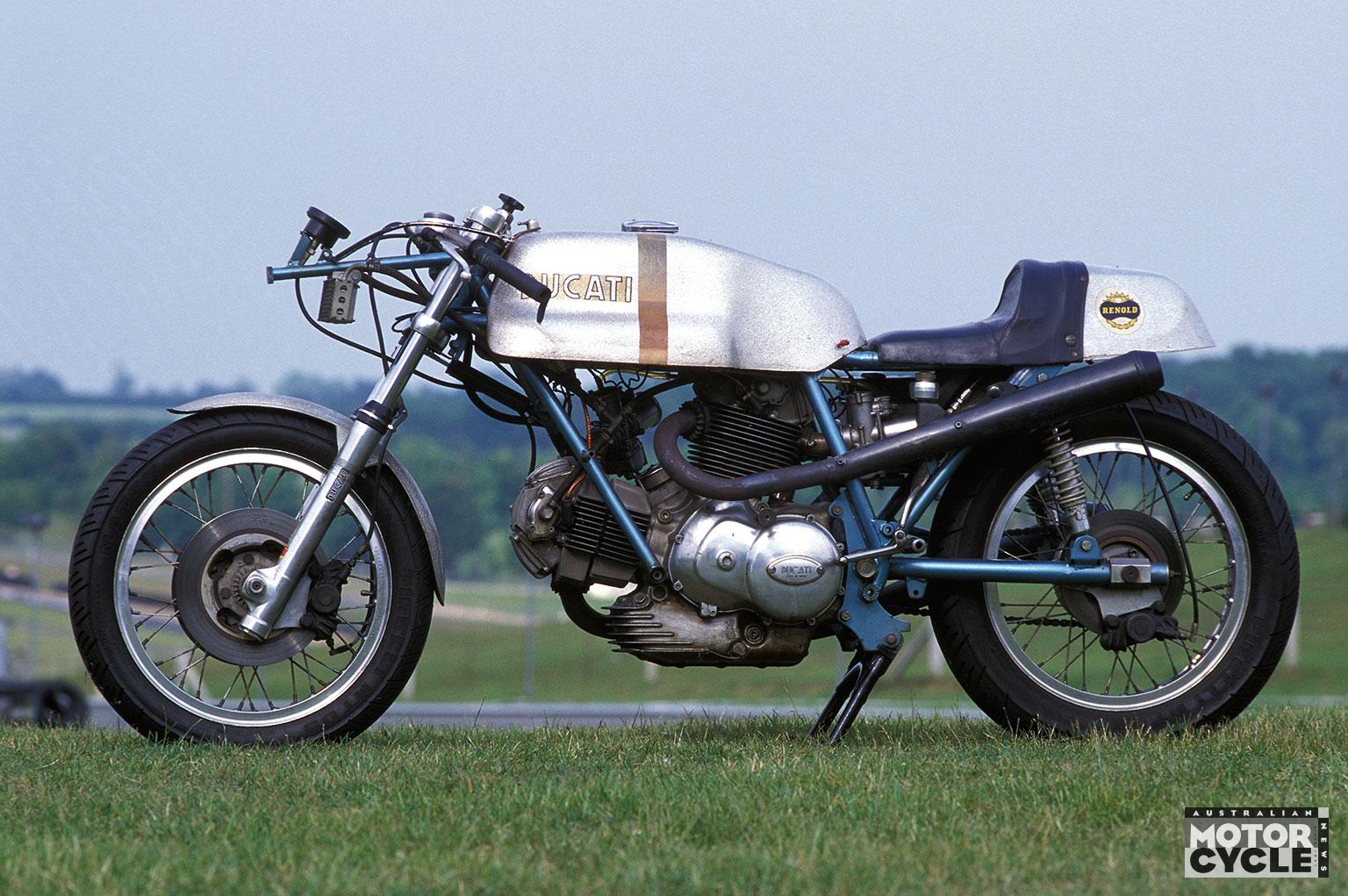
In the early 70s, Italian bikes were unfashionable and considered eccentric. Paul Smart’s 1972 Imola 200 race victory, the first big European race for Formula 750 proddie-derived racers, changed all that. Smart kickstarted the development process that led to Ducati’s iconic status today as the class act of WorldSBK. His 63kW (84hp) 90º desmo V-twin Imola winner formed the basis of the 750SS, a road-legal replica that could also be raced successfully. That philosophy has governed Ducati’s model development ever since, establishing it as the world’s most iconic sportsbike manufacturer, the desirability of whose products is directly linked to their success on the track.
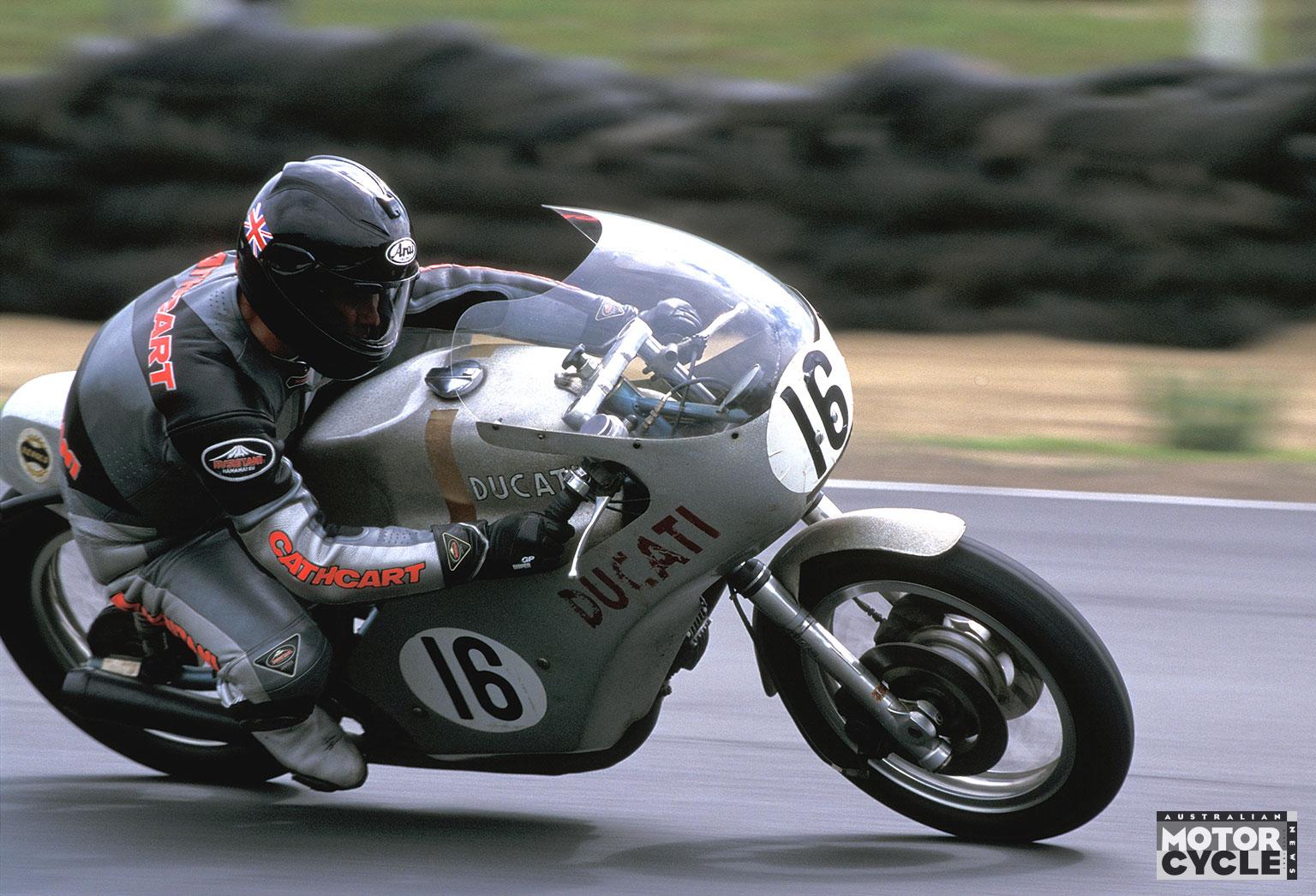
Riding Paul Smart’s 1972 Imola 200 winner confirmed it was the father of the 1974 750SS customer version I’ve been racing for the past 50 years. Beyond the same stretched-out riding position and spartan cockpit, there’s the same off-beat lilt to the torquey, punchy engine’s thunderous note, the same stiff operation for the wet clutch, with a sudden pickup as it grips, and the same fantastic braking response from the cocktail of twin 278mm Brembo cast-iron front discs and AP-Lockheed two-piston calipers that set then-new benchmarks. The truck-like 1530mm wheelbase compromised agility in tighter bends but gave superior stability in high-speed sweepers where its more unruly but potent four-cylinder rivals would misbehave. Smartie’s Imola winner was in every way the recognisable grandfather of every Ducati V-twin since.
06 | Yamaha TZ750
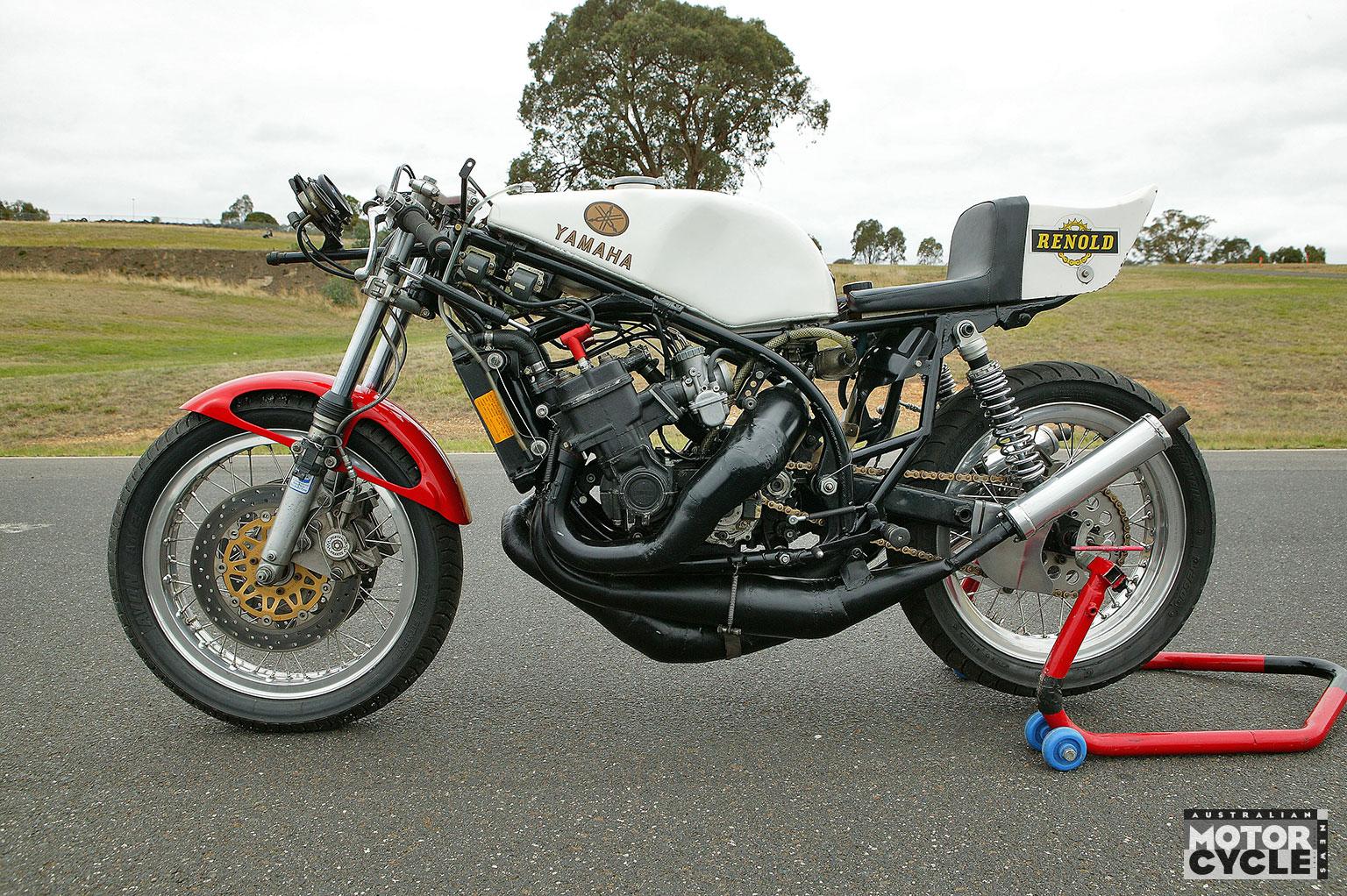
The 567 Yamaha TZ750s built from 1974-79 provided the most performance for the least money any factory has ever offered. The 97kW (130hp) inline four-cylinder reed-valve two-stroke dominated Formula 750 racing. Yamaha became a victim of its own success, turning the world series into a one-make race, which led to its demise. The TZ750 turned its paying customers into giant-slayers, and it’s a tribute to its qualities that so many riders around the world earned a good living for the best part of a decade racing one. It was the ultimate privateer tool – fast, reliable and user-friendly, and as easy to work on as any four-cylinder racer could ever be.
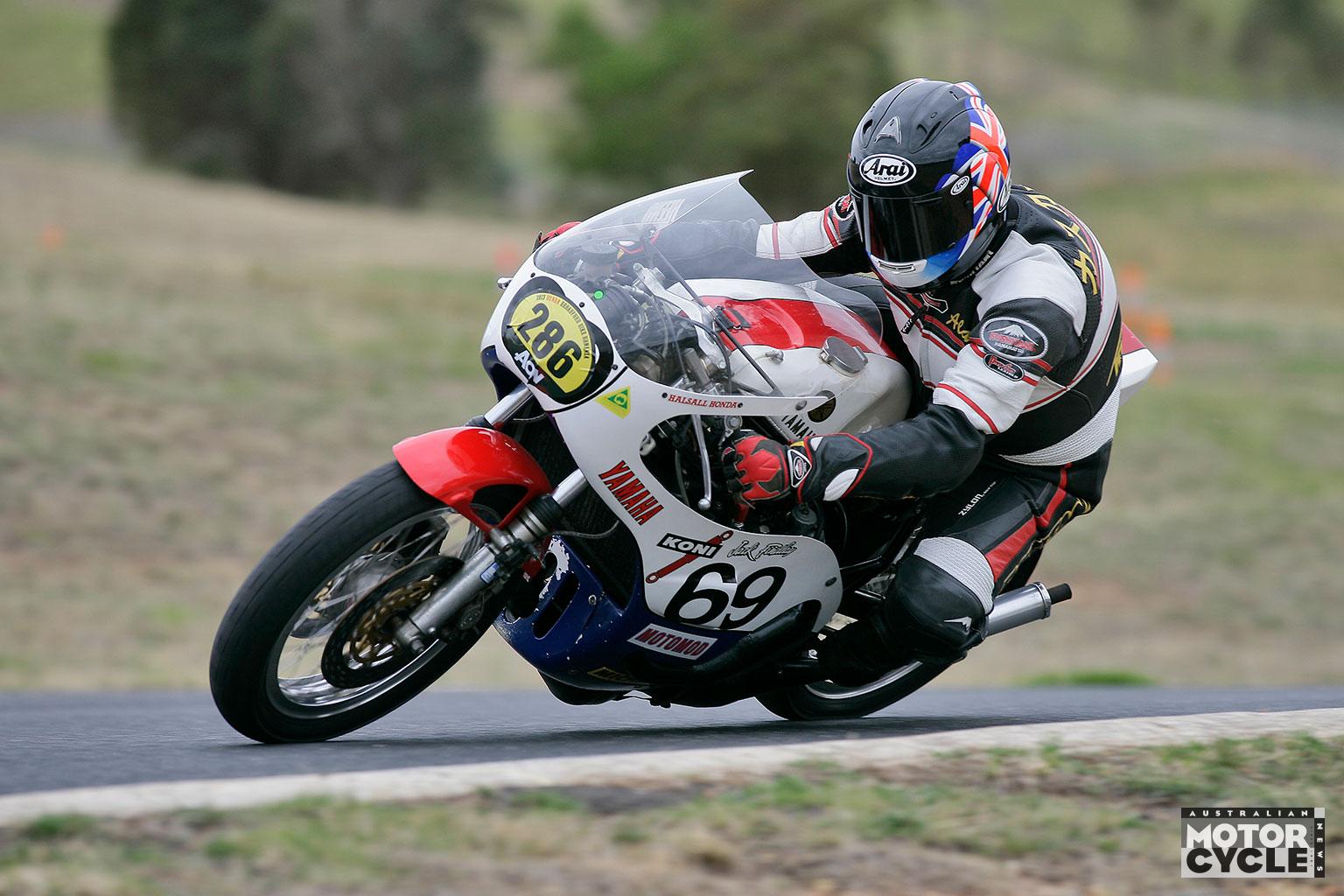
Aussie Jack Findlay, the Prince of Privateers, won the 1975 FIM F750 world title, aged 40, on this first-series TZ750. It did double duty as a 500GP ride, by swapping the 694cc engine’s TZ350-derived cylinders for TZ250 ones.
Riding Jack’s bike showed it has refinement and rideability quite out of keeping with its reputation. A forgiving power delivery is more typical of a four-stroke and there’s a surprising amount of engine braking for a ring-ding racer. It drives cleanly from low down, pulling more strongly from 6000rpm with a muscular rather than explosive punch of power up to 11,000rpm. This made it an easier than expected bike to ride on a tight track, despite what by the standards of the day was a pretty intimidating power output. Bulky and power-packed yet lithe and wiry, the TZ750 is a mixture of opposites. Just twist the throttle – and go!
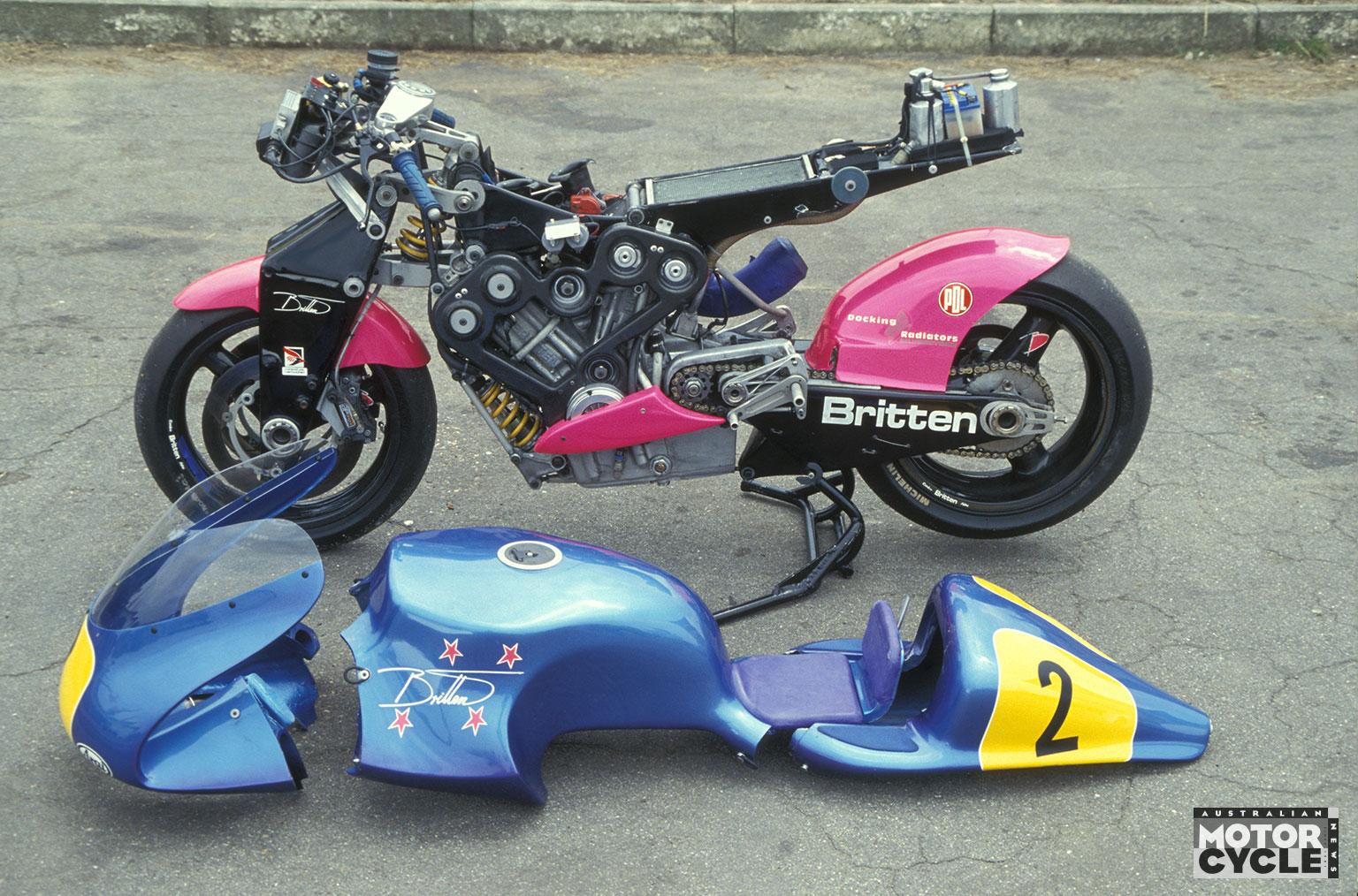
07 | Britten V1100
Kiwi John Britten’s death from cancer in 1995, aged only 45, was a tragedy for the world of motorcycling. The technical excellence and avantgarde engineering of the bikes he created would have sufficed by their mere existence to ensure his name was remembered. The fact they also won races around the world by defeating the products of major manufacturers only adds to the calibre of his achievement. The 127.5kW (171hp) at 9700rpm delivered by Britten’s ultimate 99mm x 72mm 1108cc 60º V-twin engine was already remarkable for 1992 – but his self-made carbon fibre hyper-minimalist chassis with girder fork and radiator under the seat stamped the V1100 as a motorcycling work of art. It weighed just 138kg. We shall not see his like again.
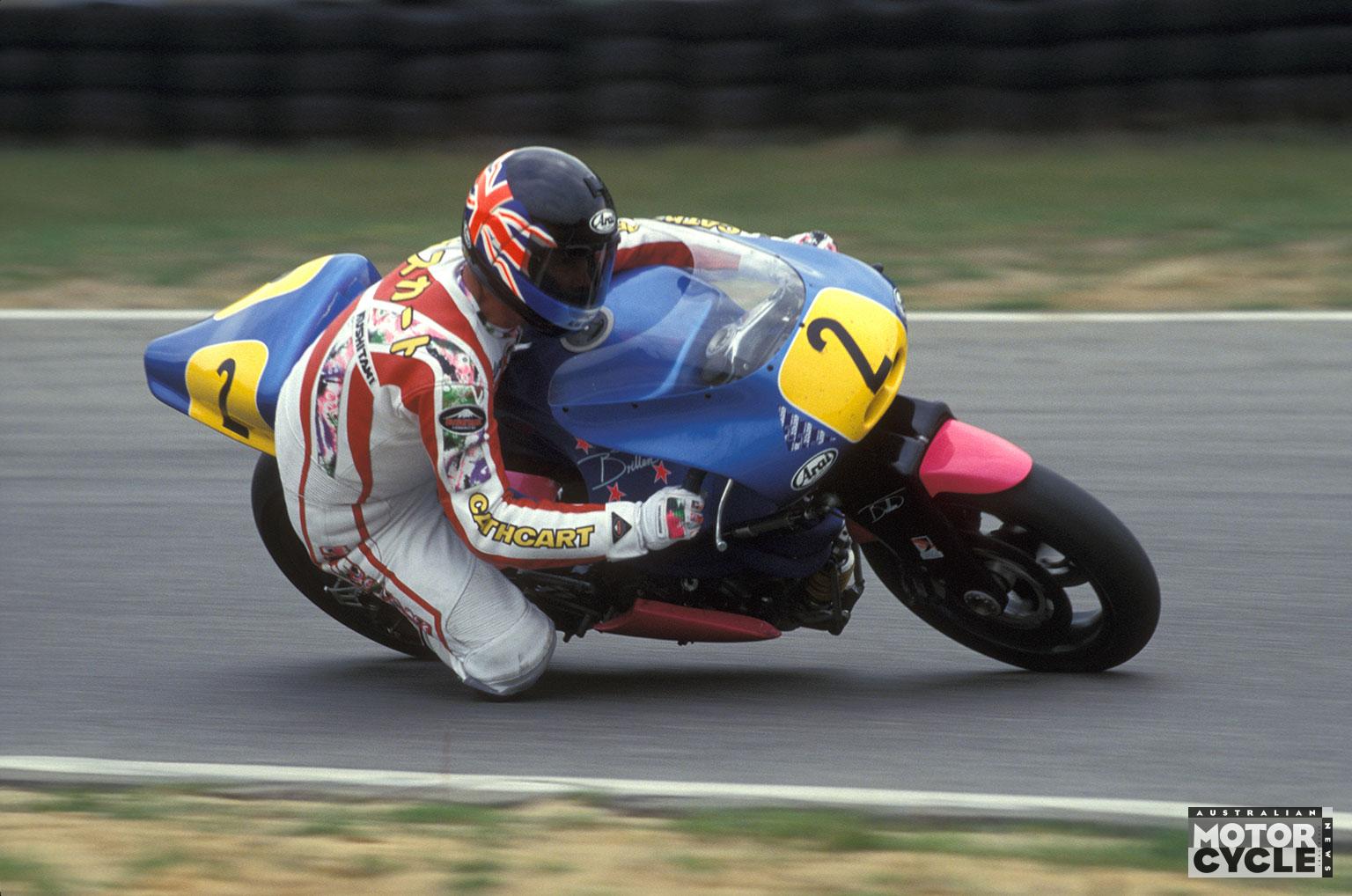
The Britten felt like a then-current V4 500GP bike to sit on. Its one-piece seat/tank unit gave a close-coupled riding position and a lot of your bodyweight was thrown onto the front wheel to enhance grip. The powerful, fast-accelerating engine was the key to the equation, given it was effectively the chassis as well! The engine would pull cleanly and very strongly from as low as 3000rpm up to peak revs of 9500rpm. Uncannily free of vibration despite the narrow cylinder angle and lack of a balance shaft, lazy-feeling in its power delivery yet awe-inspiring in terms of performance, the Britten V1100 was one of the great motorcycle engines of our day. It was designed, constructed and developed in a land so remote from the mainstream of the modern motorcycle industry that its very existence was almost a miracle in itself.
08 | Yamaha 250
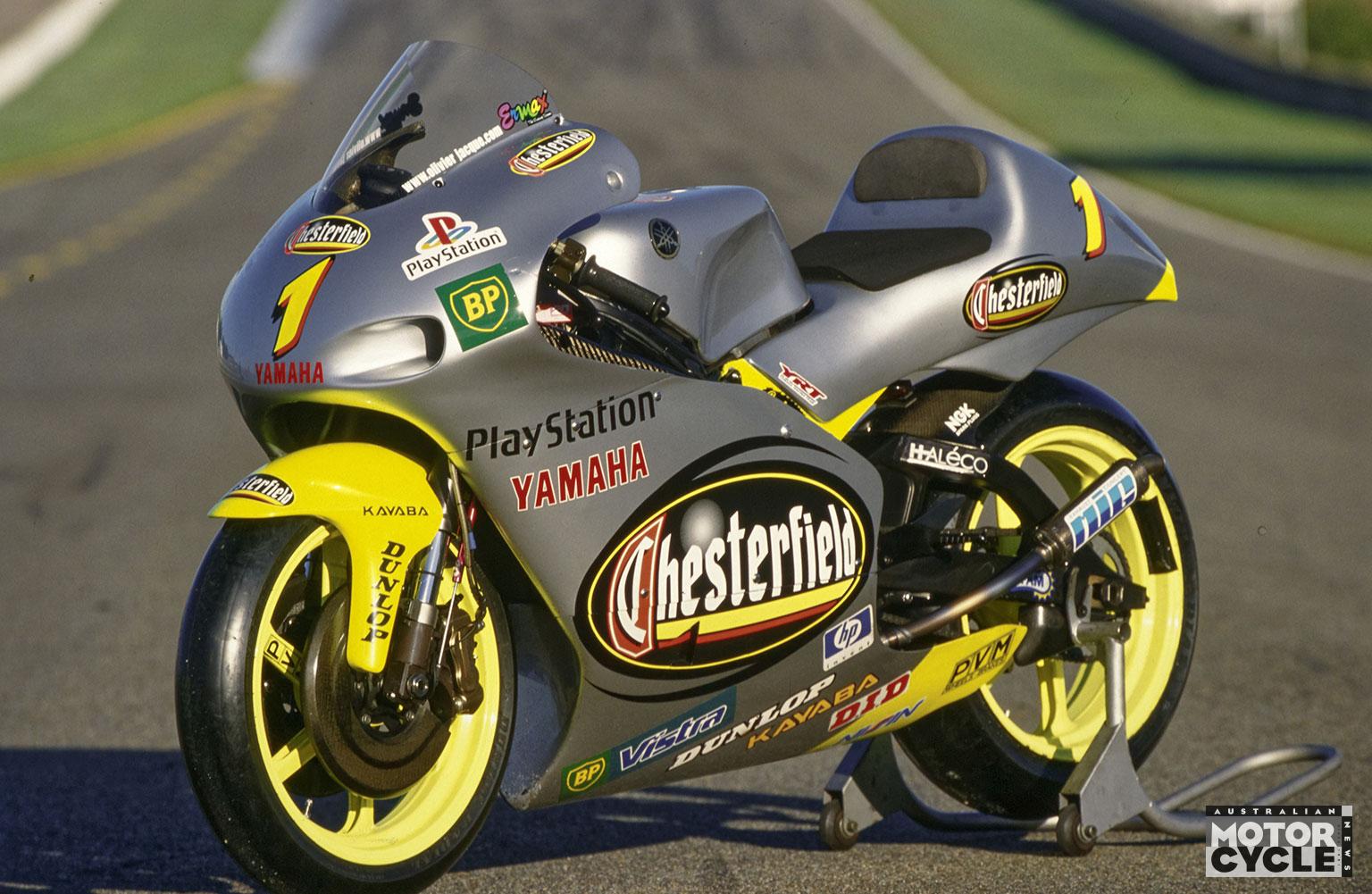
Whether air-cooled or watercooled, piston-port or reed-valve, parallel-twin or V-twin, no other customer GP racer gave so many riders at every level of racing so much success over so many years as Yamaha’s 250/350cc two-stroke twins. From the parallel-twin TD1 of 1962 through to the final 2000 world title-winning V-twin YZR250, Yamaha led all others in packing grids with affordable, dependable racebikes that helped deliver 14 world titles.
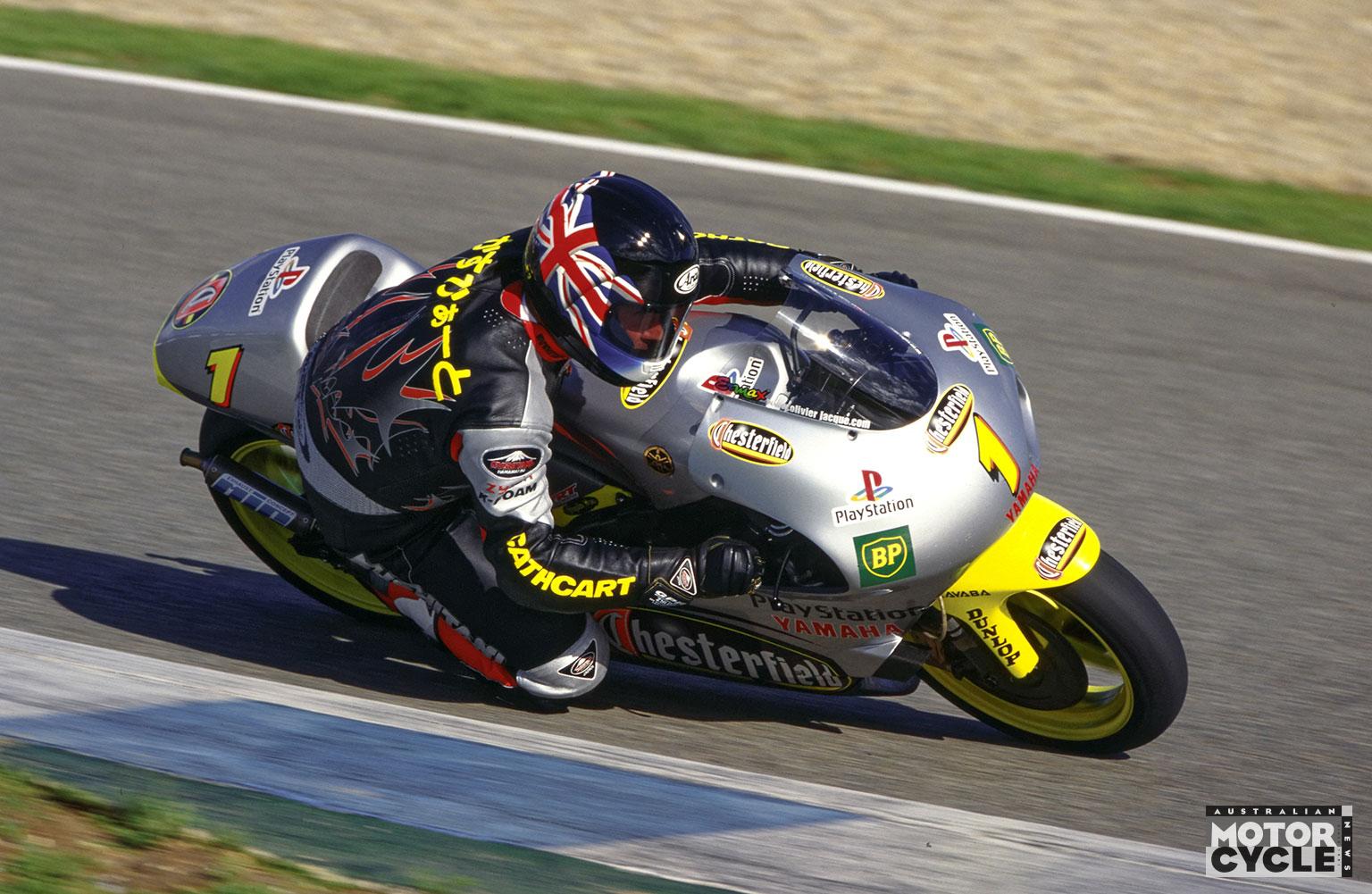
Thanks to its voluptuous streamlining, which still delivered a spacious riding stance, the 2000 YZR250 was elegantly designed and beautifully detailed. The 54mm x 54.5mm single-crank 90º V-twin crankcase reed-valve engine was positioned quite far forward to load up the front wheel. Yamaha had concentrated the bike’s mass so well, with the pivot point of the long swingarm located almost in the middle of the 1330mm wheelbase, thus offering greater traction.
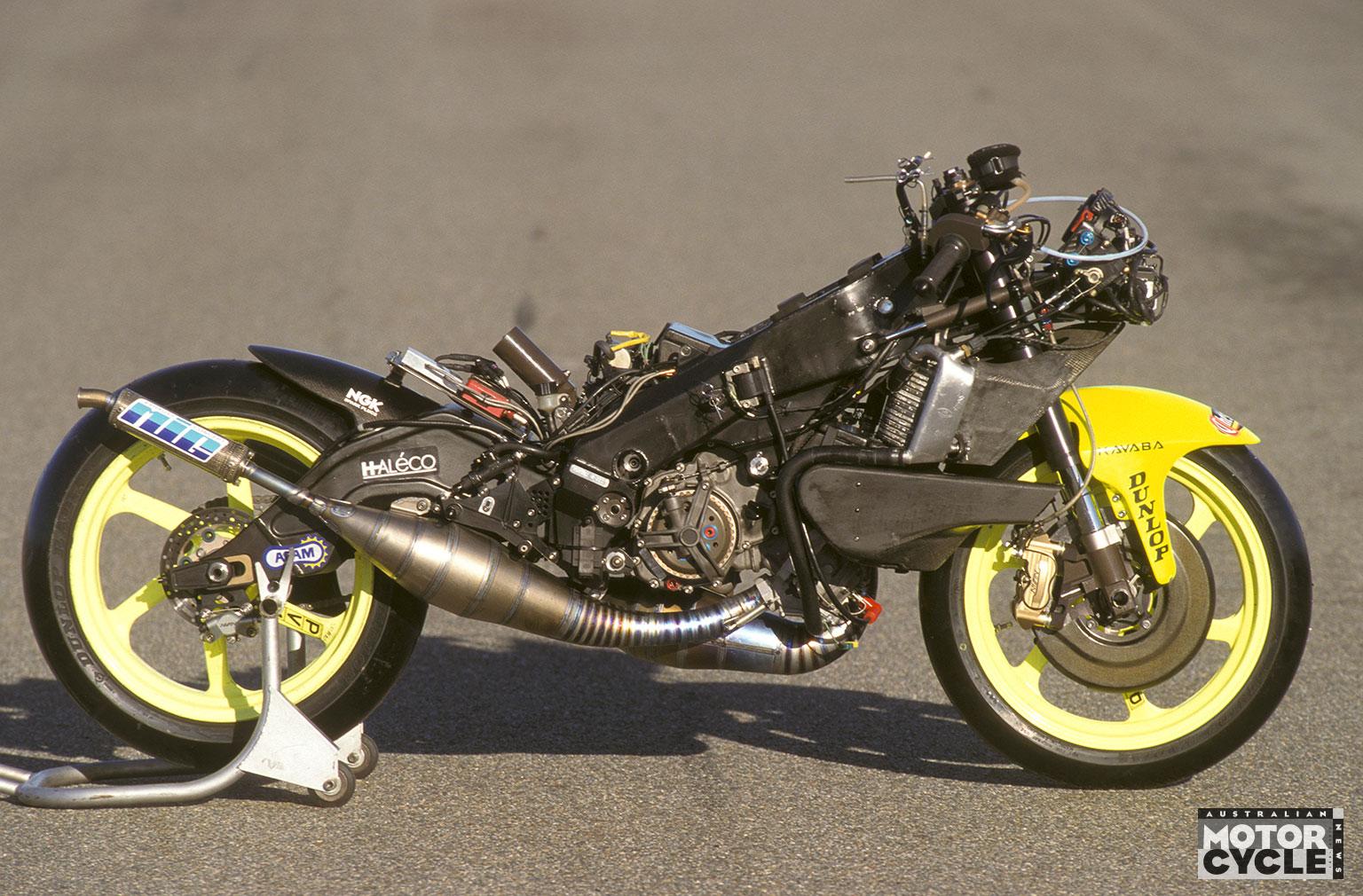
Though less toy-like than the notably smaller NSR250 Honda, the Yamaha still felt agile and nimble, and steered beautifully. The V-twin engine was slightly less explosive than the Honda, but it felt strong and willing, although to get good drive out of a turn you needed to get it revving above 8800rpm, where the power came in strongly, with the fat part of the powerband between 11,000-13,000rpm. The extra overrev Yamaha engineers delivered for the 2000 season was a crucial benefit, because it made the Yamaha easier to ride in the close-quarters combat of 250GP racing. This refined and effective package was the product of a four-year R&D effort by Yamaha’s engineers. Respect!
09 | Honda RC211V
Winning three out of the five MotoGP world titles in the 990cc era in 2002-06, Honda’s RC211V finally delivered the ghost of Mr Honda the four-stroke world title he would undoubtedly have relished. Producing over 185kW (250hp) at 16,500rpm in a 148kg package that propelled Nicky Hayden to the final world title of the 990GP period, the 997cc RC211V also recorded 244 rostrum visits, 47 poles and 58 fastest laps in those 83 GPs. That’s the kind of dominance that makes a bike legendary.
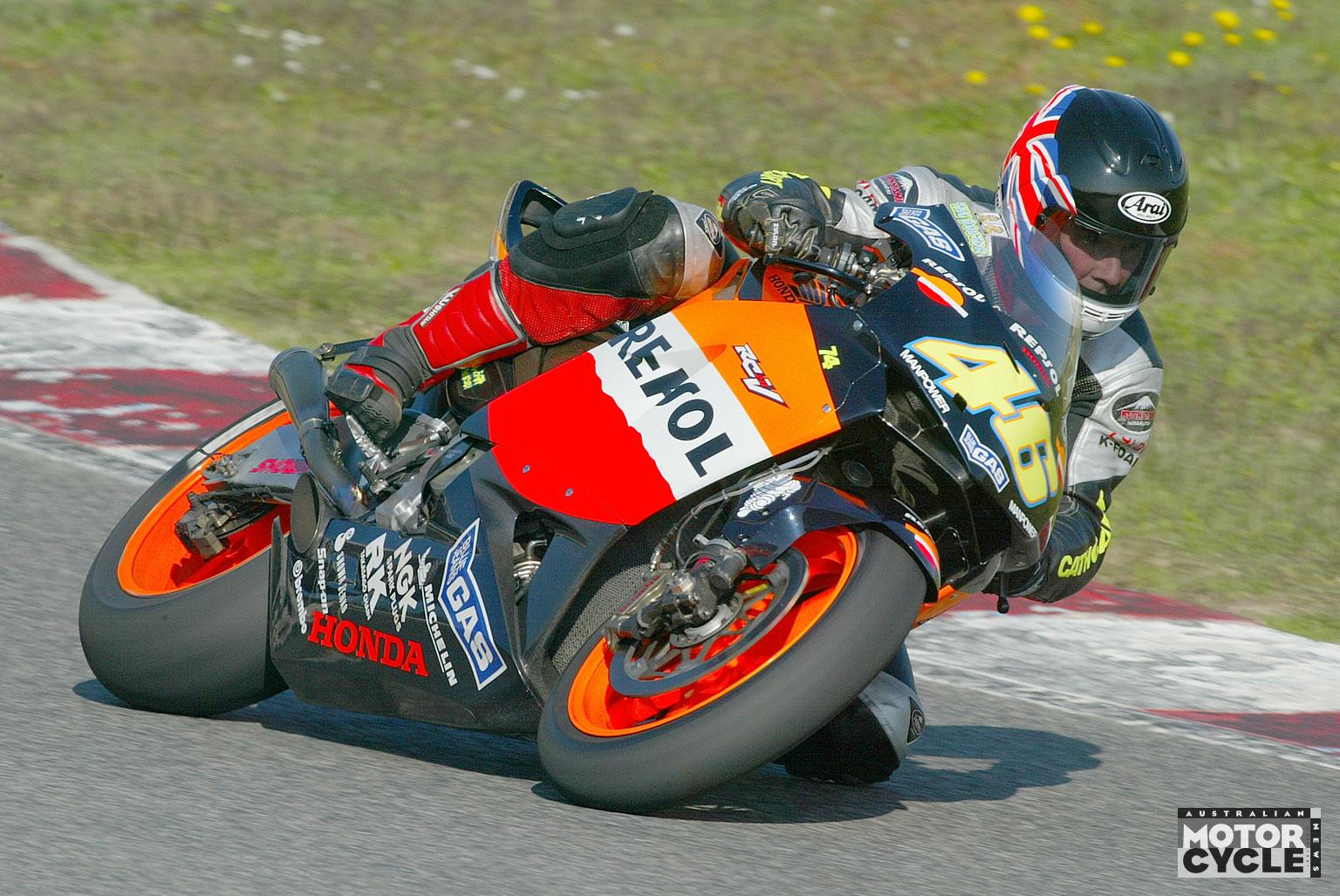
Riding Valentino Rossi’s 2003 world champion RC211V came just a couple of days after he had signed off his career as a factory Honda rider with a convincing win on the same bike. I was aware of a much more strident-sounding version of the ultra-distinctive V5 exhaust note than a year earlier, reflecting the new triple-exit megaphone exhaust developed for that season. Despite no counterbalancer in the 75.5° V5 engine, there were no undue tingles at any revs. The engine delivered vivid midrange acceleration, with a linear delivery from as low as 8000rpm up to the 15,000rpm rev limiter. As a result you had to force yourself to cut down on gearshifting, using a higher gear than you might expect to. Acceleration was sharper low down than on the 02 bike I’d ridden at Suzuka, when I’d revelled in the thrill of experiencing a knee-high fifth-gear 250km/h power wheelie for the first time, before acclaiming the Honda as the best bike of any kind I’d ridden up to then. A year later, it still was.
10 | Ducati Desmosedici GP7 800
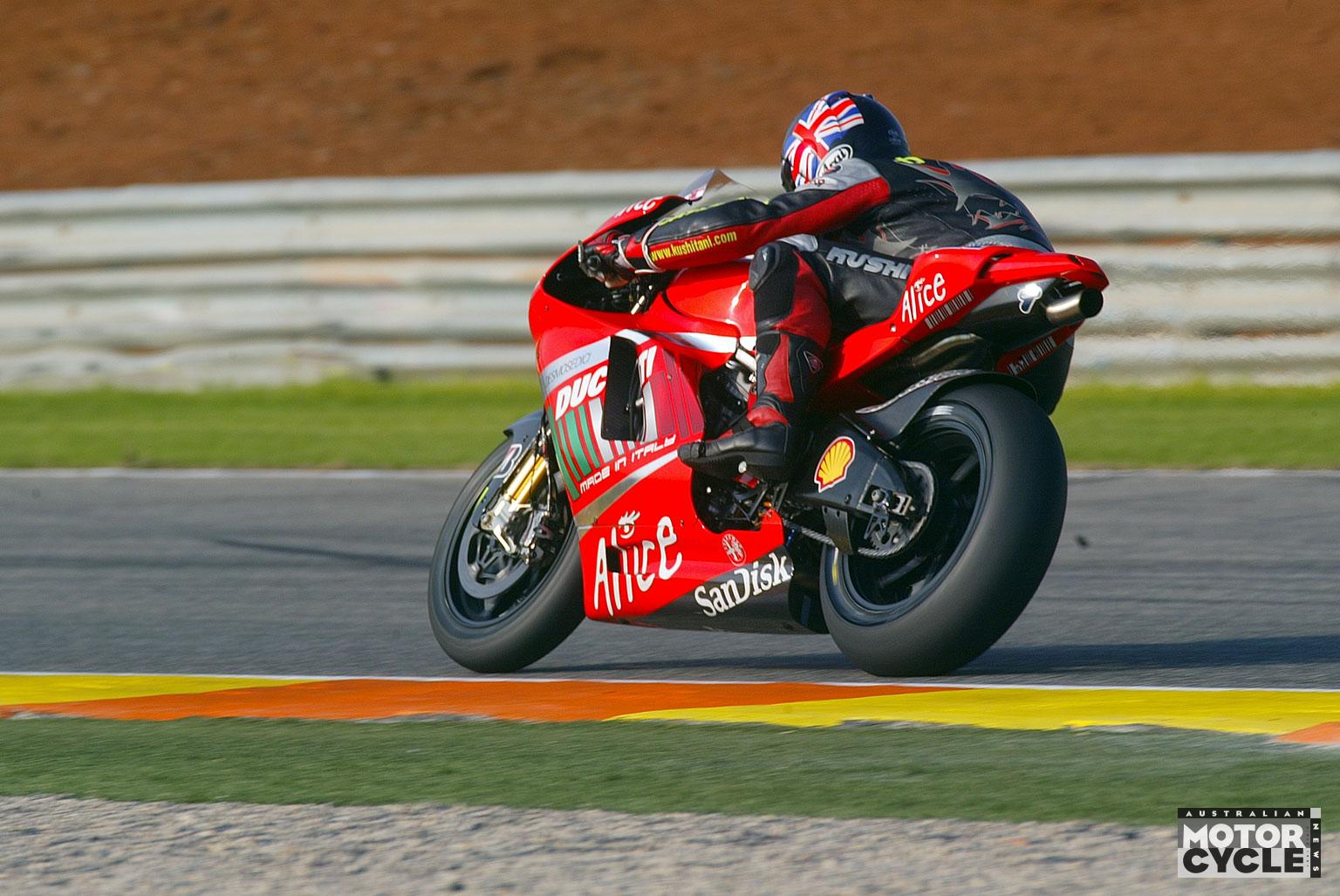
There were ironies galore in Ducati’s domination of the 2007 MotoGP season, the debut year of the 800cc formula, when a 21-year-old Aussie became world champion in a flawless debut MotoGP season. Casey Stoner won 10 races and led 267 laps, against just 77 for Honda’s championship runner-up Dani Pedrosa and 66 for Yamaha’s third-placed Valentino Rossi. Could this be the start of a new era, with the upsetting of the Japanese established order by a small Italian factory doing things differently? Well, look at the MotoGP paddock today…
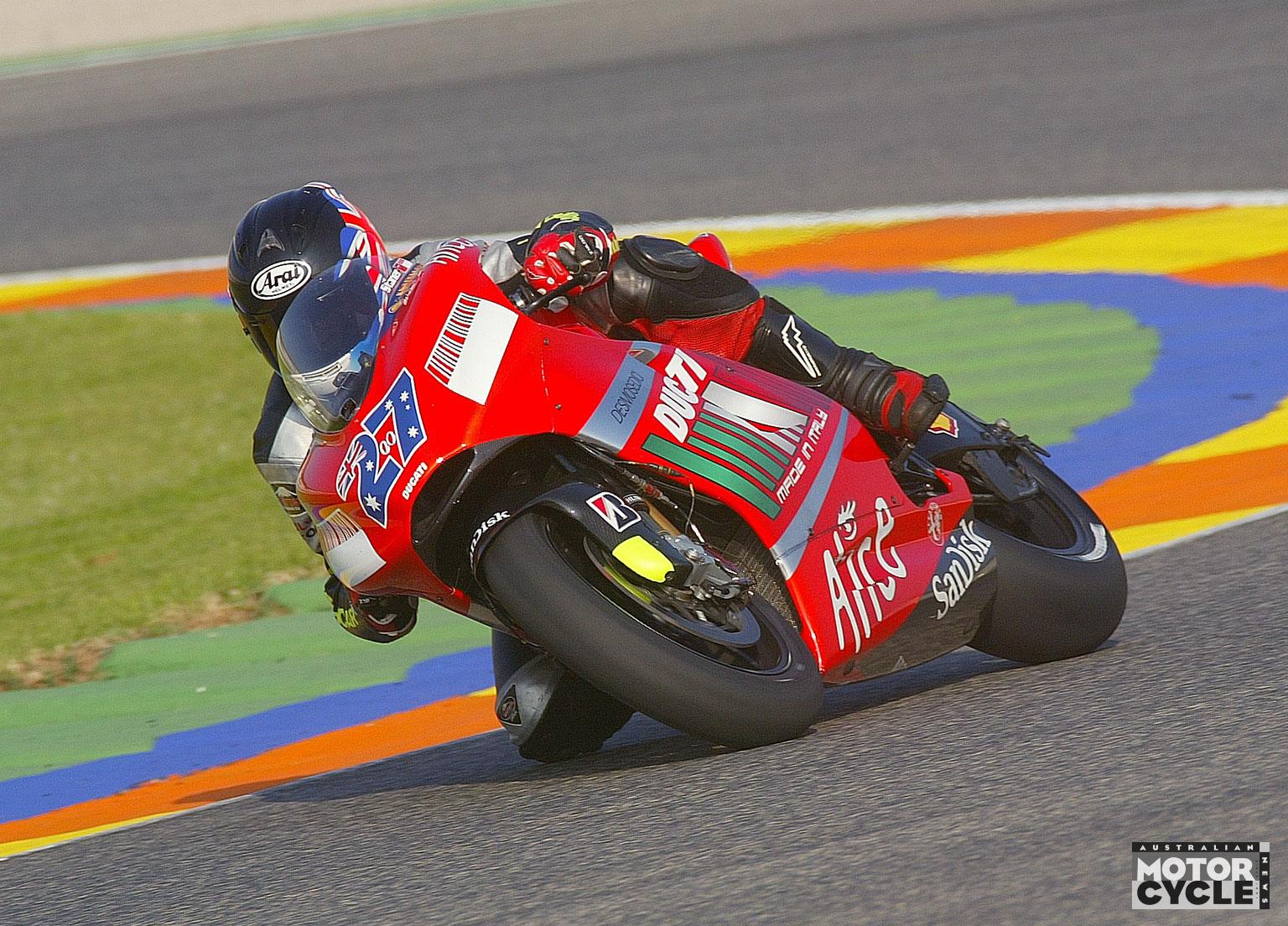
The chance to ride Stoner’s Ducati at Valencia, the same day I rode all four of its rivals, showed me it was not only quite different technically, but much more responsive to ride. It was simply a better package. Still a 990cc Desmosedici V4 at heart, it had been subtly downsized. Extremely high footrests and wide-spread flat-set ’bars suited the diminutive Stoner’s riding style. The GP7 required more physical input from the rider, who had to stop, turn and fire it out of a corner to take maximum advantage of the superior power and torque. The flat ’bars helped Stoner pull it up early onto the fat part of the rear tyre. To maintain that speed advantage in sweepers meant using as much as 60º lean angle, hence the high footrests. This was a bike not everyone could easily ride fast, as teammate Loris Capirossi proved, finishing seventh that year. Stoner’s unique takent made him the right man in the right seat at the right time.