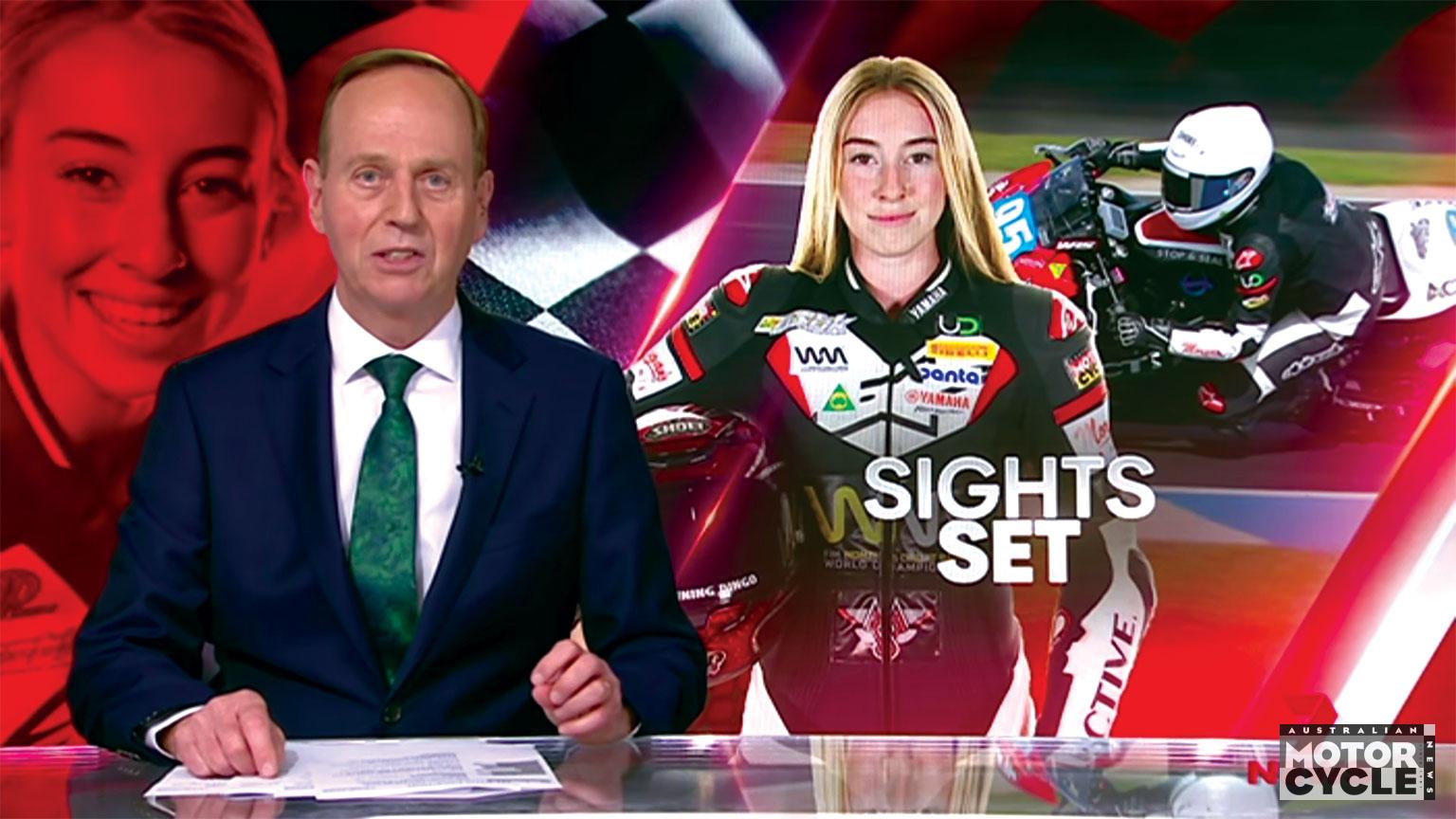
Tarzy has plenty of racing trophies in the cabinet. But her next big milestone is finally being able to ride to the shops…
One minute I was standing on the championship podium celebrating third place in the 2026 ASBK Supersport 300 class, and the next I was sitting in a classroom with a notepad, learning how to ride a motorcycle.
Sounds backwards, doesn’t it? A professional motorcycle racer who couldn’t legally ride to the shops.
Despite spending most weekends racing around Australia, there was something exciting about experiencing motorcycling from the other side. Racing and road riding might both involve two wheels, but they couldn’t be more different. There were no slick tyres, no race suspension, no scrutineering – and certainly no lap timer. Instead, I was about to spend the day in Murray Bridge for Part A of my Rider Safe course learning on a Suzuki GSX-S125 inside a fenced-off training range. And honestly? I learnt a lot more than I expected.
BACK TO CLASS
After arriving at the Rider Safe centre, I met the two instructors, the mechanic and the five other riders completing the course. Everyone was incredibly friendly and, considering it was only eight degrees outside, nobody seemed too upset that we started the day in the classroom. Although I couldn’t help thinking how strange it felt seeing motorcycles sitting outside without tyre warmers wrapped around them!
The morning kicked off with introductions before we settled into our seats in front of a TV that looked like it had been there since the early 2000s. The videos matched the set-up too. I’m fairly sure my parents owned half the helmets and leathers featured on the screen.
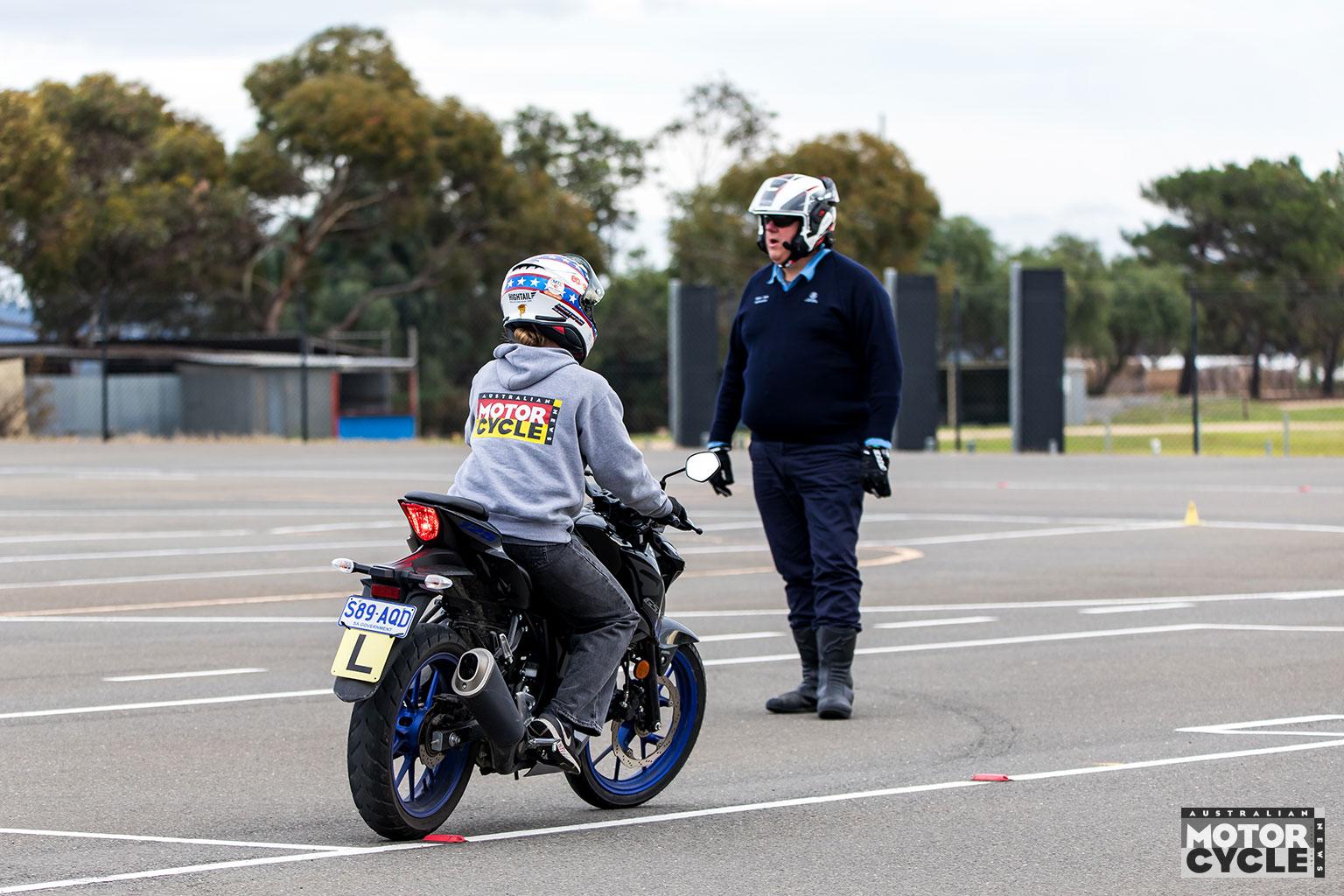
The first classroom session covered the basics – protective gear, motorcycle controls, rider responsibilities and low-speed riding techniques. While most of it was aimed at complete beginners, it was interesting seeing how the fundamentals never really change. Whether you’re learning to ride at 30km/h or racing at 230km/h, the foundations are surprisingly similar.
Eventually it was time to head out onto the ‘range’ – a fenced bitumen area covered in white lines, cats eyes and enough cones to keep everyone honest.
As soon as we walked outside, I spotted the fleet of training bikes. First in, best dressed. Without hesitation, I made a beeline for the only Suzuki GSX-S125 sitting among a row of Honda CB125Fs. At the time I simply thought it looked sportier, but later discovered I’d accidentally made the right choice. The Suzuki produces around 15hp compared to the Honda’s 1. Good choice, Tarzy.
SLOW AND STEADY
Before anyone was allowed to start the bikes, we learnt how to walk them forwards and backwards, mount them correctly and complete the FINE-C starting procedure – Fuel, Ignition, Neutral, Engine cut-off switch and Clutch. Only then were we finally allowed to fire them up. Our first task was finding the friction zone.
Now, if you’ve ever watched a race start, you’ll know this is where things got interesting for me. Normally, when I’m balancing a race bike in the friction zone, I’m sitting at around 9000rpm waiting for the lights to go out. This time? Idle speed.
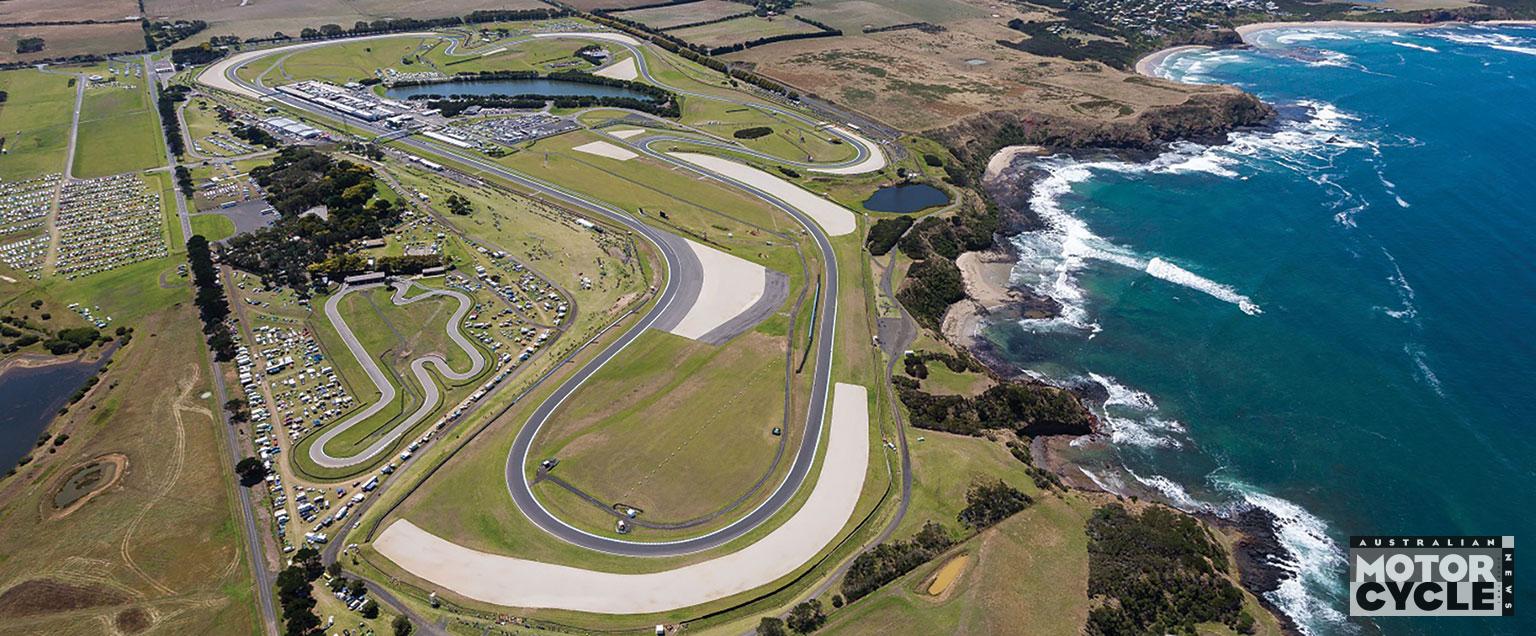
Everything inside me wanted to launch the poor little Suzuki like I was heading into Turn One at Phillip Island. Instead, I had to patiently creep forward using tiny throttle inputs and delicate clutch control. Holding myself back was probably the hardest part of the entire morning.
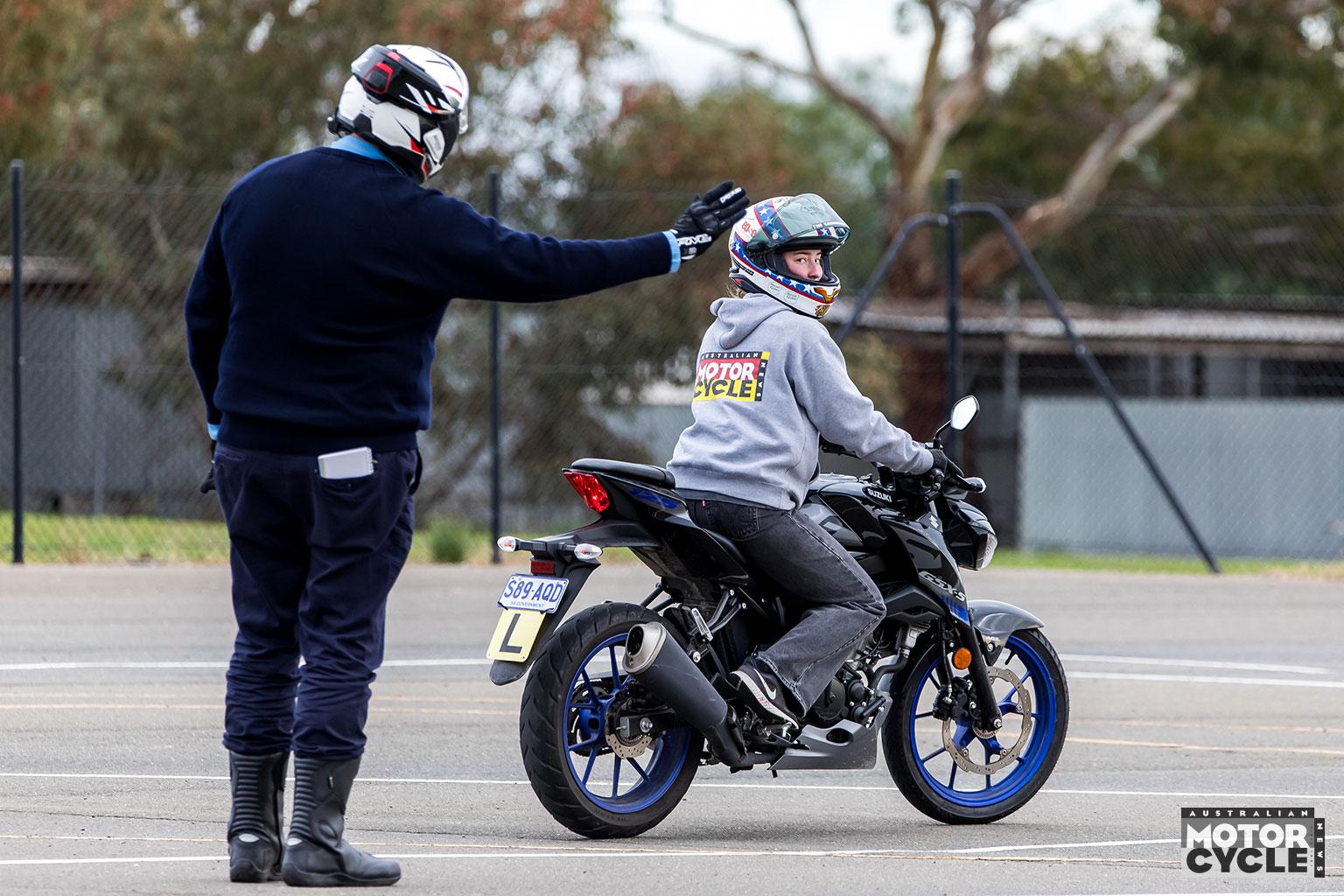
Once everyone had mastered moving away smoothly, we progressed to riding laps around a large rectangle before stopping at each corner using both brakes. That was another adjustment. On my Supersport 300 bike, I rely almost entirely on the front brake. Even in wet races, the rear rarely gets a look in. Here, however, we were encouraged to use both brakes together and practise smooth, balanced stops. The instructors also reinforced one lesson I’d heard countless times throughout my racing career: “Look where you want to go.”
It immediately reminded me of learning Honda Corner at Phillip Island years ago. Back then, my coaches taught me to turn my head early and focus on the exit kerb long before I reached it. The Rider Safe instructors were teaching exactly the same principle – just at a more relaxed pace. Funny how some lessons never change.
After our first riding session, we parked the bikes and headed back into the classroom, ready for the next challenge.
CONFIDENCE BUILDS
Everyone had a bit more confidence than when we had first arrived. There was plenty of chatter about how the bikes felt, how cold everyone’s hands were and how much easier riding became once you relaxed. It reminded me of a race weekend – everyone starts off a little nervous before settling into the rhythm of the day.
Next we focused on braking, gear shifting and how motorcycles differ from cars. It was during this lesson that I realised I was about to face one of my biggest challenges of the day: road shift. For almost my entire racing career I’ve ridden with race shift, where first gear is up and every other gear is down. It becomes second nature after years of racing, so the thought of having to swap back to a standard road shift really gave me pause.
Back out on the range, we lined up single file before the instructors explained the next exercise. Move away smoothly. Shift into second. Brake. Shift back to first.
Simple enough… except my brain kept trying to race.
The Suzuki didn’t exactly have an abundance of horsepower, so by the time the instructors wanted us to shift into second we were nowhere near the redline. Normally I’d be grabbing another gear with the engine absolutely screaming. Instead, I was short-shifting at what felt like walking pace.
The first time I came back down through the gears I instinctively gave the throttle a little blip. The instructor walked over with a grin, patted me on the shoulder and laughed: “No need to blip this time.” I couldn’t help laughing too. Years of muscle memory had taken over. Normally a blip helps settle the bike while charging into somewhere like MG Corner at the Island or Turn Two at Queensland Raceway. Riding around a training range at 25km/h? Slightly unnecessary.
CORNERING SKILLS
After a quick break we headed into what ended up being my favourite classroom session of the day: traction, road conditions and cornering. One line from the training video really stood out: “When the turn stays the same and the speed increases, you must increase the lean angle.”
It made perfect sense. I’d never really thought about it because racing teaches you this naturally. Every time you find another few kilometres an hour through a corner, the bike simply leans farther. Hearing the theory behind something I’d spent years doing instinctively was actually really interesting.
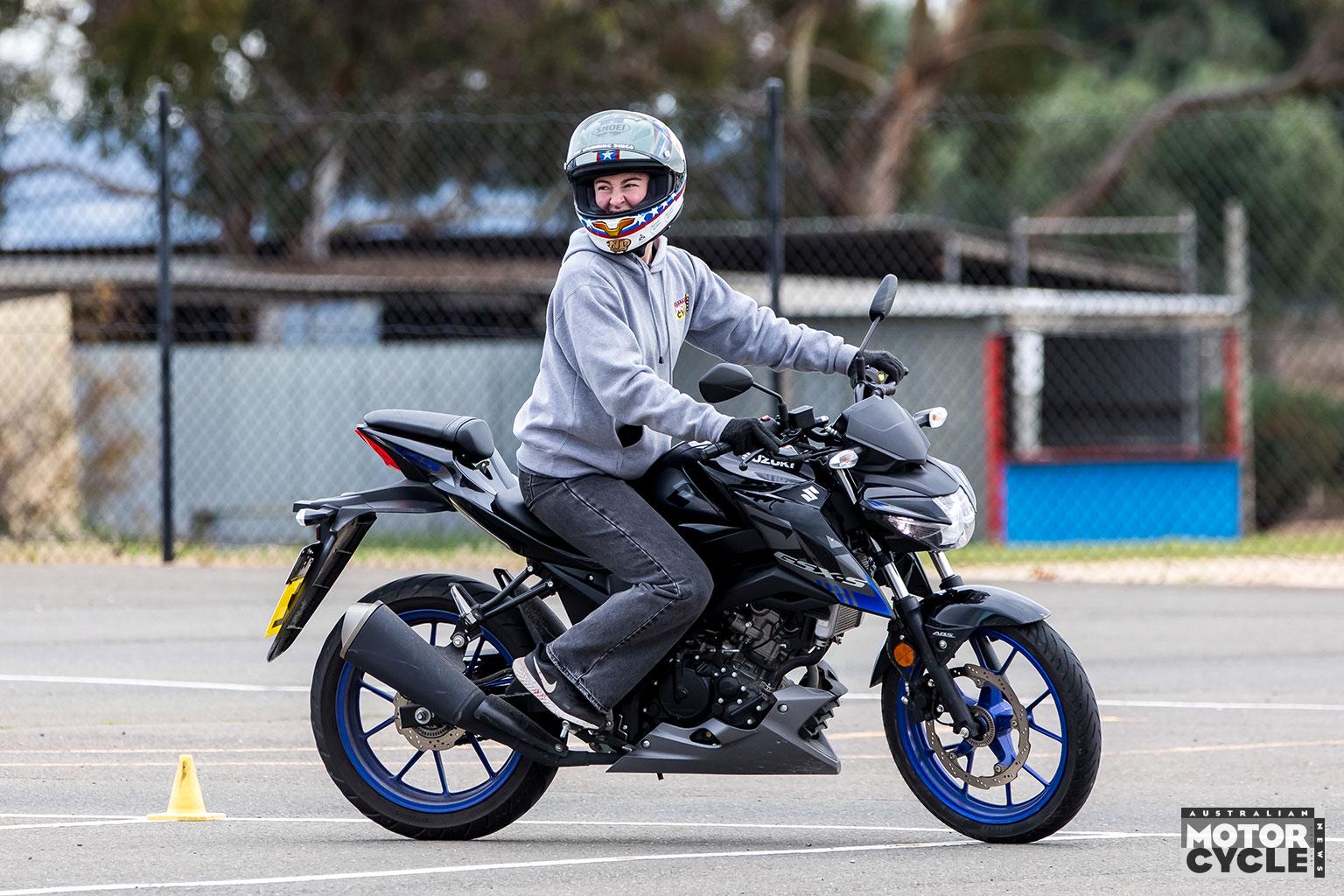
Back out on the range we put it into practice by riding continuous circles and figure eights. This part felt much more familiar. The instructors encouraged everyone to turn their heads and look around to the opposite side of the circle: “Look where you want to go.” Exactly what every racing coach I’ve ever had has drilled into me.
Whether you’re negotiating a U-turn on a learner bike or clipping the apex of a hairpin at Phillip Island, your eyes almost always determine where the motorcycle ends up.
Then came the weaving exercise. Ironically, this challenged me more than the circles. On my race bike, the steering lock is incredibly limited because of the fairings and steering stops. Ninety-nine per cent of my direction changes happen by moving my body and weighting the bike rather than physically turning the ‘bars. Suddenly I was expected to weave through cats eyes by actually steering. It felt completely foreign.
Once I stopped overthinking it and looked ahead instead of down, everything started flowing naturally. Funny how often the simplest advice is also the best.
By lunchtime we’d covered plenty already – but the day wasn’t over. In fact, lunchtime turned into one of the funniest moments. Photographer Bec from PitLane Studios came down to grab a few photos for the story, so while everyone else was eating lunch, I quietly ducked away and climbed into my race leathers. There I was, standing beside a learner-approved Suzuki GSX-S125 in full ASBK race gear, adjusting mirrors and pretending to check my indicators like I was about to head out for qualifying. The instructors got a pretty good laugh out of it. So did I.
REACTION-TIME TEST
After lunch the exercises became more realistic. Instead of knowing when we’d stop, the instructors would randomly raise a hand while we were riding. As soon as that hand went up, we had to react, brake firmly and work back through the gears smoothly. Reaction time has always been one of the biggest parts of racing, so this felt surprisingly familiar. The difference was that instead of avoiding another rider or reacting to a yellow flag, I was preparing for unexpected situations you might actually face on the road.
The next lesson reinforced another habit that’s almost the opposite of racing: stand the bike up before braking. On track, trail braking is a valuable tool. On the road, the safest option whenever possible is to straighten the motorcycle before applying maximum braking. Different environments. Different techniques. Same bike.
One exercise I genuinely expected to struggle with was the U-turn. As we rolled towards the painted box, I remember thinking, How on earth am I supposed to get around this without hanging off or sticking a knee out?
Turns out it was pretty easy. The trick wasn’t body position at all. It was turning my head as far around as possible and trusting the bike to follow my eyes. Once again, looking where I wanted to go solved the problem.
It’s amazing how many riding techniques come back to vision.
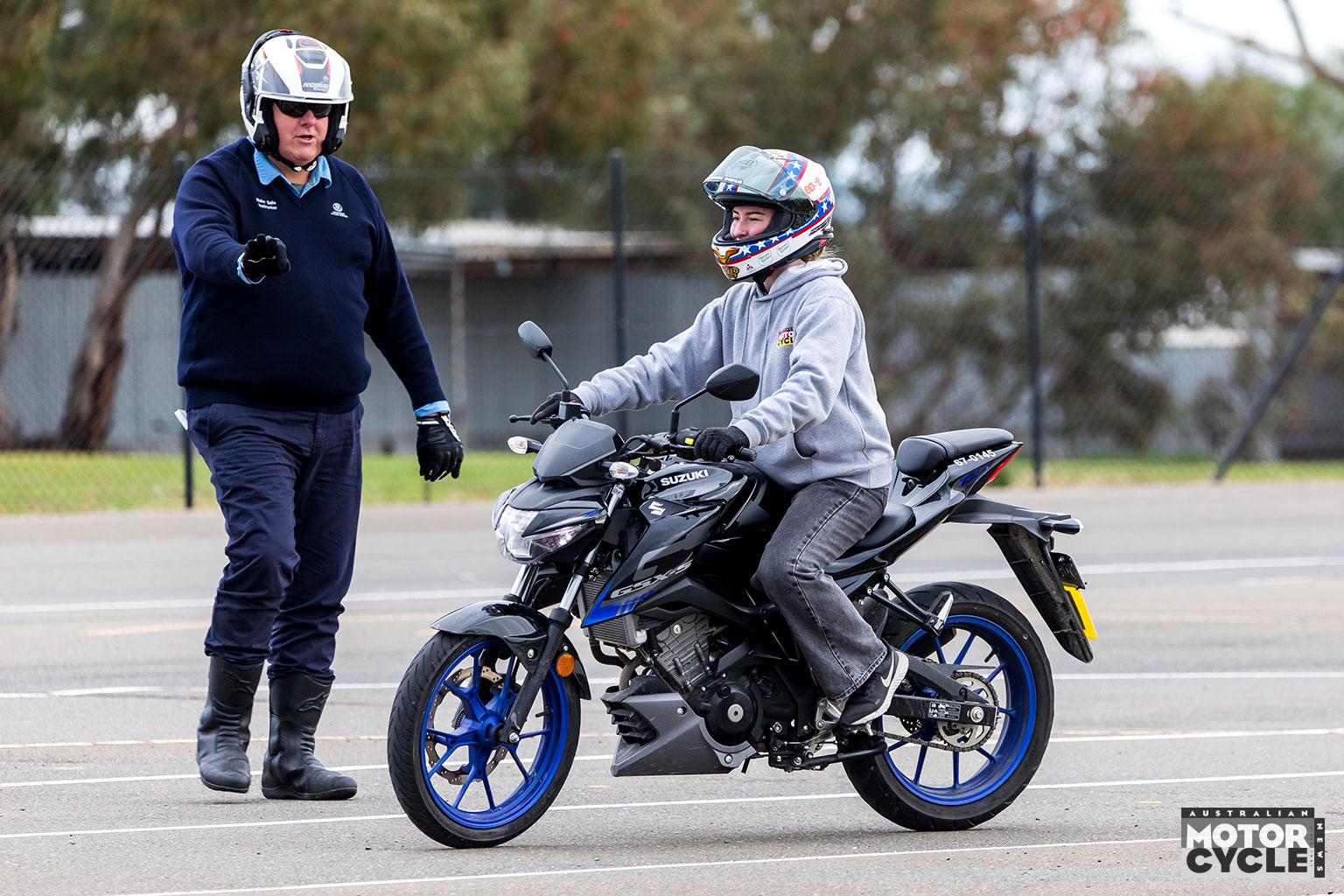
The final classroom session covered what was arguably the most important topic of the day: SEE (Search. Evaluate. Execute.) The concept was simple. Constantly search for hazards, evaluate what could happen, then execute the safest decision. As racers we’re always scanning for brake markers, apexes and other riders. On the road you’re scanning for distracted drivers, intersections, pedestrians and unexpected hazards instead. The process is remarkably similar, only the consequences are very different.
Our final riding exercise combined everything we’d learnt – along with lane positioning, mirror checks, indicators, head checks and gap selection.
Two painted lanes ran across the range while everyone rode in a continuous figure eight. We had to decide when it was safe to merge, communicate clearly and commit to our decisions.
Gap selection was probably the newest skill for me; I’m used to riding alongside competitors travelling in exactly the same direction. Judging traffic approaching from another direction before committing to an intersection required a completely different thought process.
BUT DID SHE PASS?
Before long it was assessment time. One by one we completed the course, marked quietly by the instructors. Move away, third gear, brake, second gear, semi-circle, accelerate, brake again, come to a controlled stop. Simple.
When I parked the bike, one of the instructors smiled: “I think you’ll be pretty happy with that.” I certainly was. I’d passed with zero demerit points.
Not bad for someone who’d spent the previous weekend trying to win races rather than remembering to cancel indicators.
Walking away from the course, I realised I’d learnt far more than I had expected to. Sure, some of the riding felt completely different to racing, but so much of the foundation was exactly the same. Vision. Smoothness. Patience. Planning ahead. Those skills don’t care whether you’re chasing trophies or riding to work. Now there’s just one thing left to do… Part B.
Hopefully by the next time you hear from me, this professional motorcycle racer will finally have a motorcycle road licence! Now that will be something worth celebrating.