On a special Saturday night in 1967, the Sydney Showground proved why speedway’s test matches mattered
If you lived in Sydney in 1967 and had even a passing interest in motorcycle sport then there is a chance that you were at the Sydney Showground Speedway on Saturday night 11 November.
After all, a massive crowd was there, with one newspaper report quoting 30,000 in attendance – remembering that Sydney’s population at the time was only two-and-a-half million.
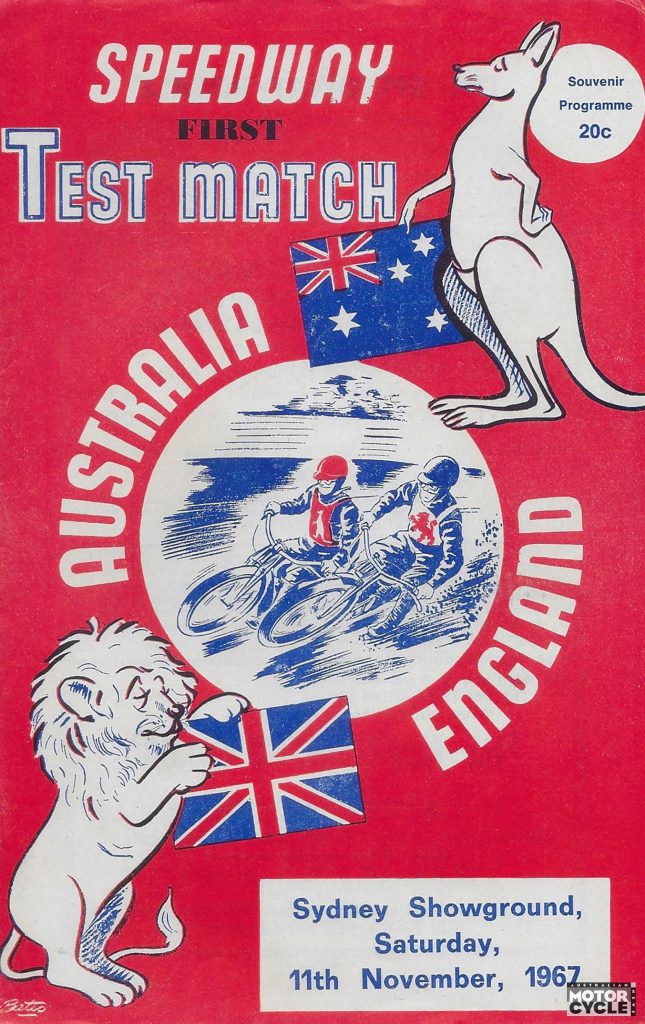
The occasion was the first speedway test match, of a series of five, between Australia and England, the visitors actually led by a Scottish rider! It was an official test match series!
Saturday night at the Royale was a habit for many and it certainly was for a teenage me and my parents – but this night was very special and had been a long time in the making.
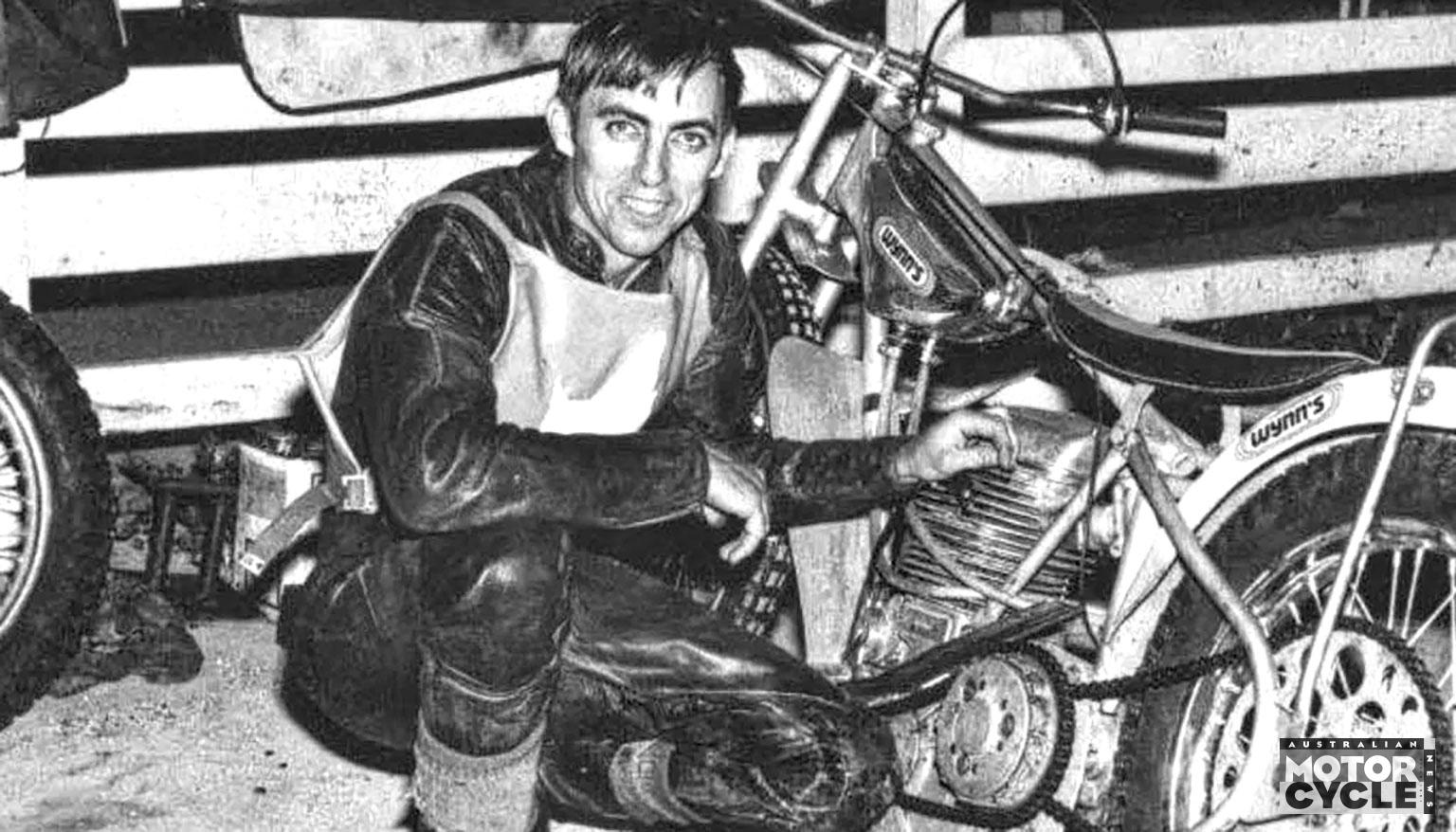
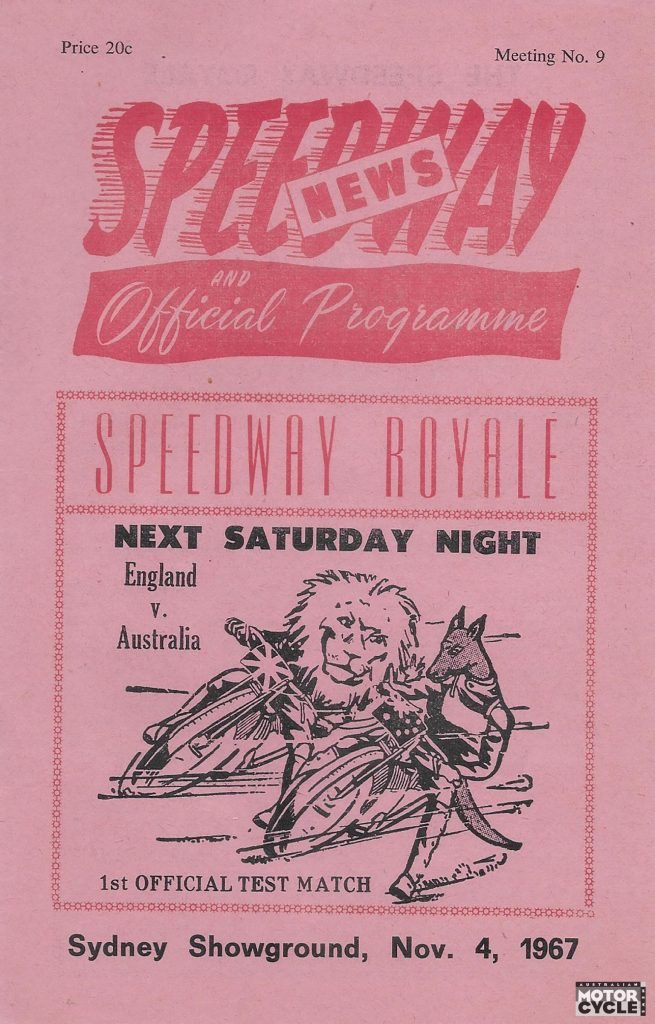
The two countries first met in a speedway test match at the Wimbledon track in London in 1930, and the program for the Showground meeting claimed it was 166th test match meaning that it was in the same sphere as encounters in cricket, rugby league and rugby union.
Whether that number is correct for speedway depends on the criteria for what is an official test match.
Growing up, I cynically thought that it was an official series if the Poms won, but unofficial when they lost – apparently I was wrong.
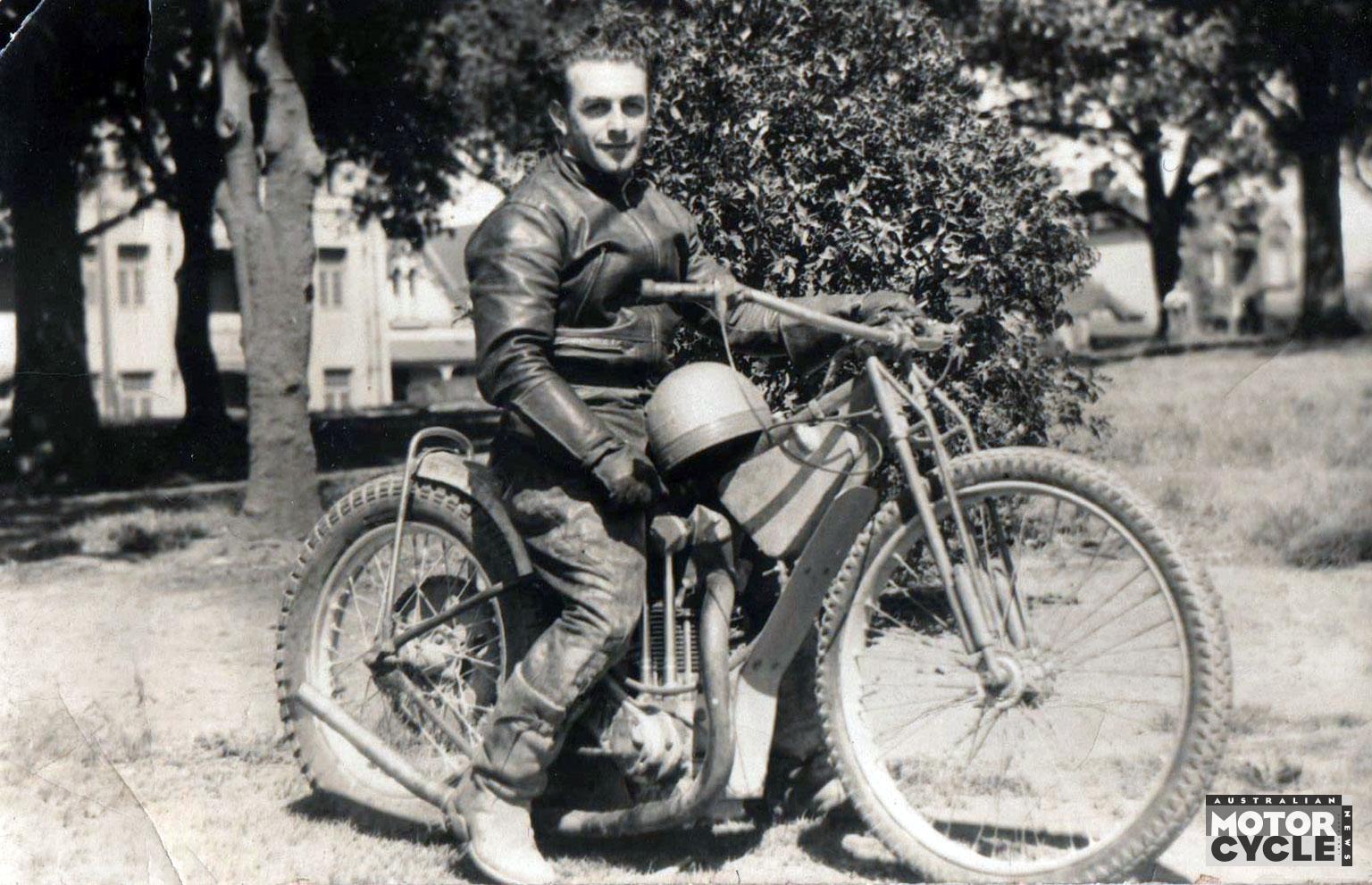
One newspaper article leading up to the 1967/68 series claimed that the last official series was in 1952 – but subsequent matches were included in the 165 matches listed in the program on 11 November.
For many years English authorities had deemed that any matches staged in Australia were not official test matches as the best English riders had not been available.
After months of negotiations between England and Empire Speedway, who promoted both the Sydney Showground and Brisbane Exhibition tracks, a tour by a full-strength English team came to fruition.
This time it was official, with what appeared to be the best possible touring team, and there was no dissent raised when the English team was announced.
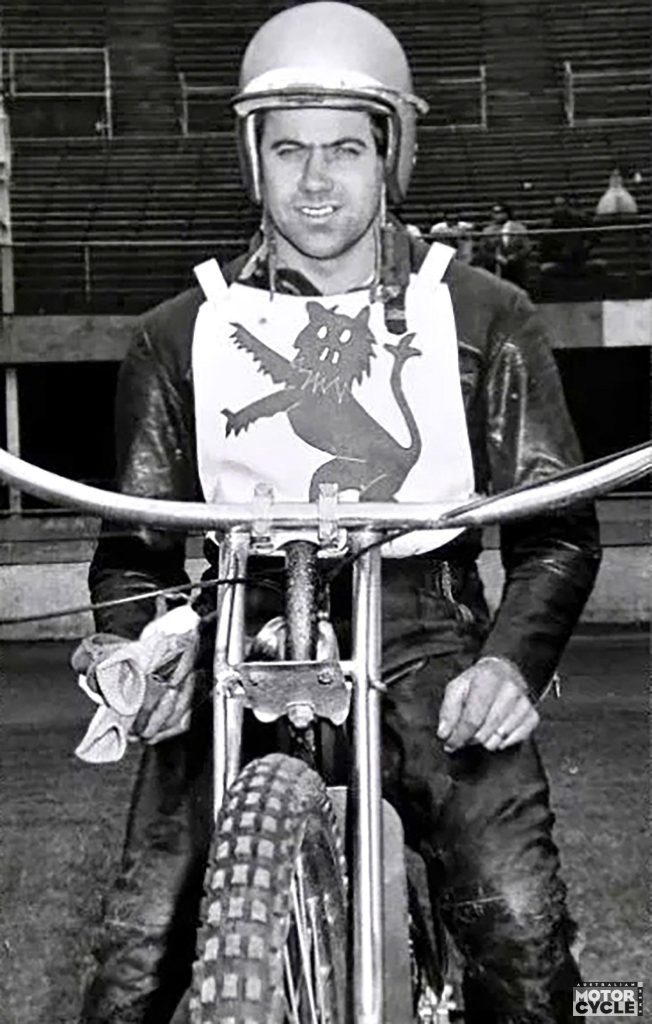
Ken McKinlay was captain and manager of the team and although he was in the veteran stage of his career he was still an accomplished performer with the experience from many previous trips to Australia to count on.
He held a special place in the history of the sport in this country having won the Australian championship (in the era when overseas riders could compete) at the Sydney Showground three years earlier and he held (and still does) the distinction of being the only rider to win the state championship in all five mainland states.
Both Eric Boocock and Ray Wilson had spent the previous Australian summer racing at the Rowley Park track in Adelaide, which was the venue for the final test of this series.
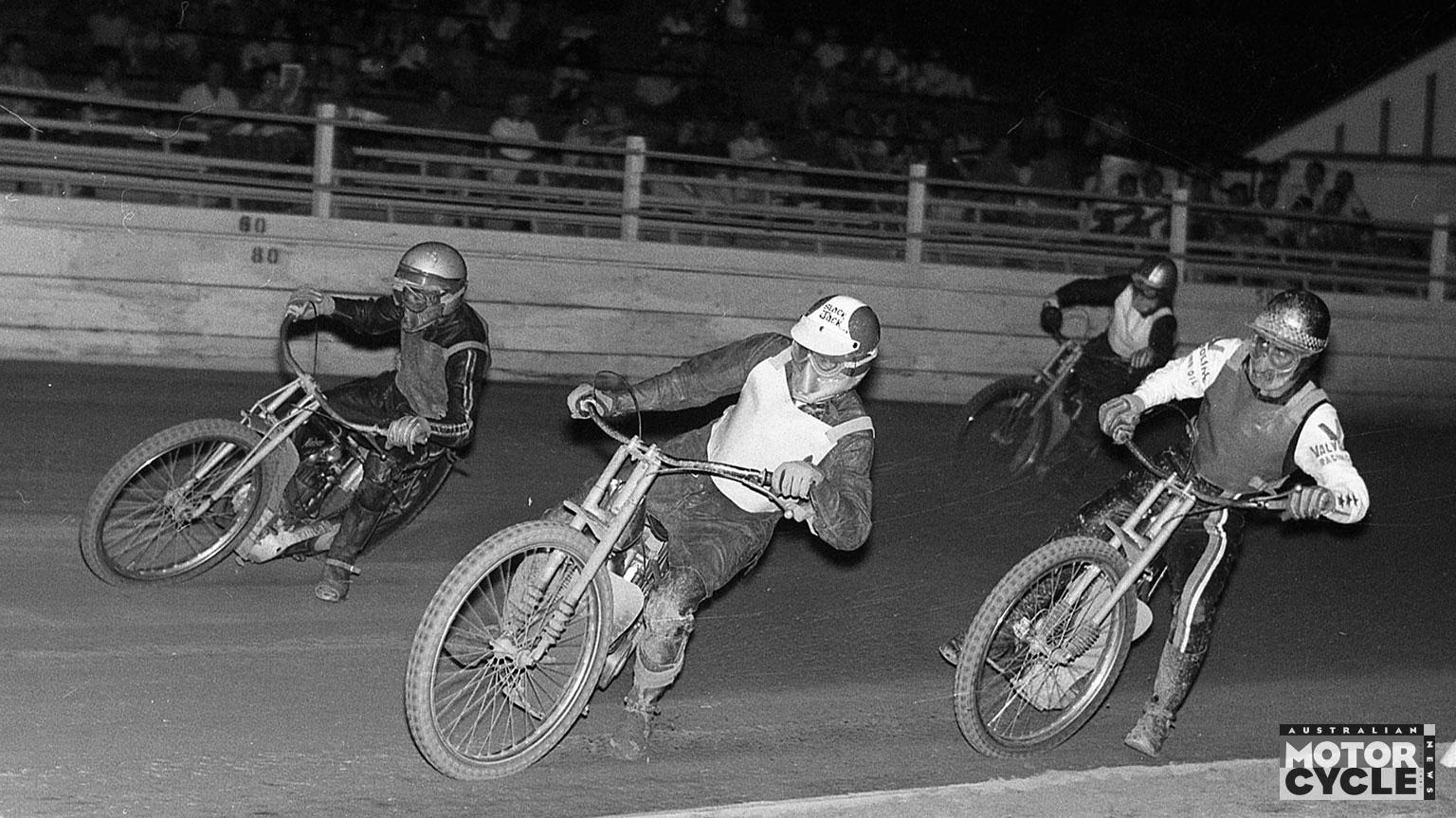
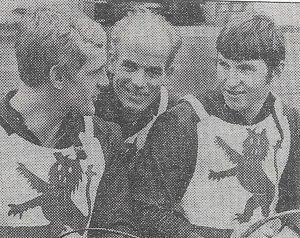
Eric’s older brother Nigel led the first-timers to Australia. He was joined by Roy Trigg, Colin Pratt and Terry Betts (the latter duo on what would be their only racing trip to Australia) to make up the seven-man team which could have called on the services of Bryan Elliott, who had migrated to Adelaide, if needed.
Of those eight riders only Trigg and Betts had not ridden in a World Final up to that stage in their careers.
The Australian team for the first test match was announced as a ‘news flash’ live on TV at 7.30pm on the previous Sunday night.
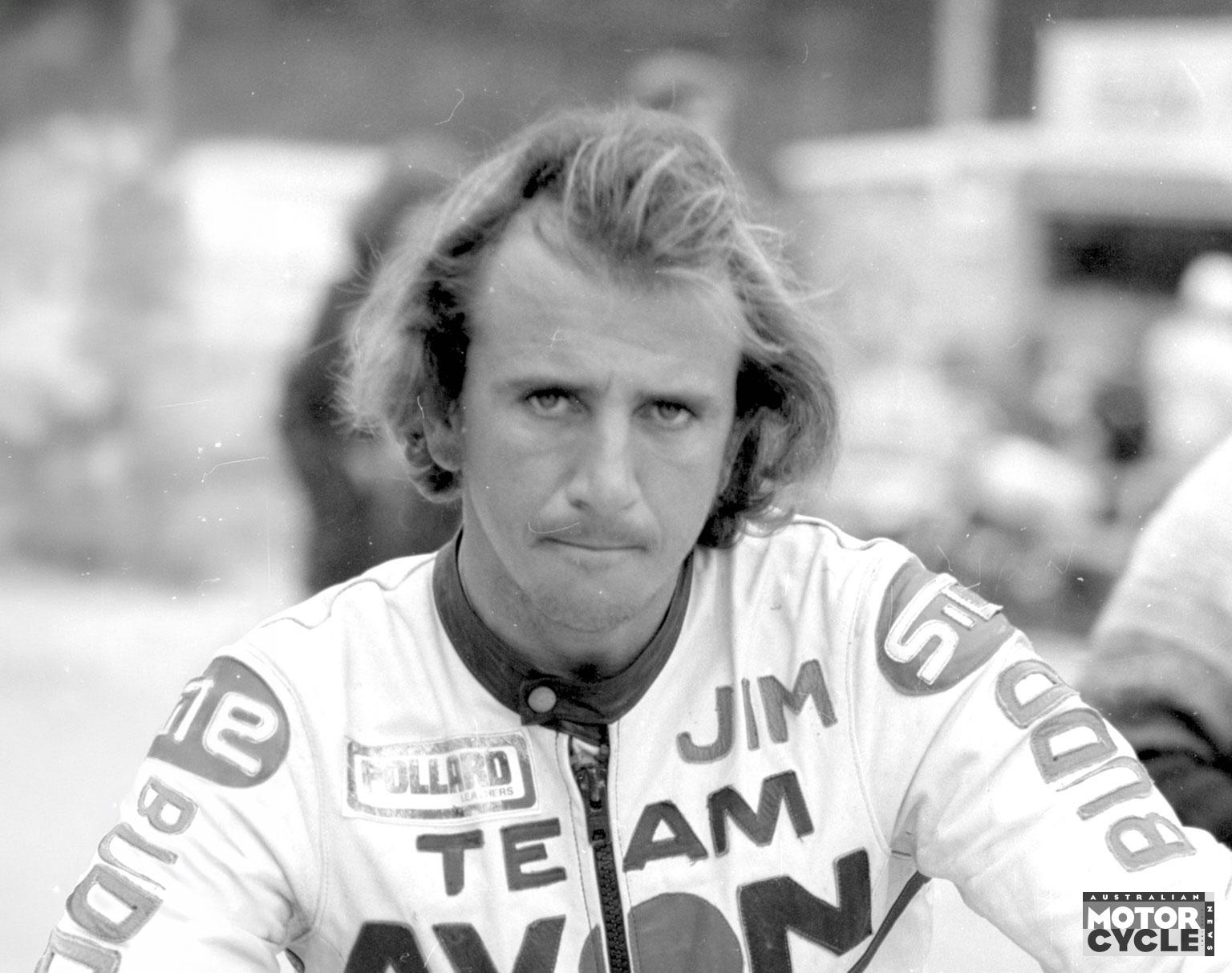
Jim Airey captained the Australian team after returning home from a successful season of racing in the UK, as had Greg Kentwell, who was placed at reserve.
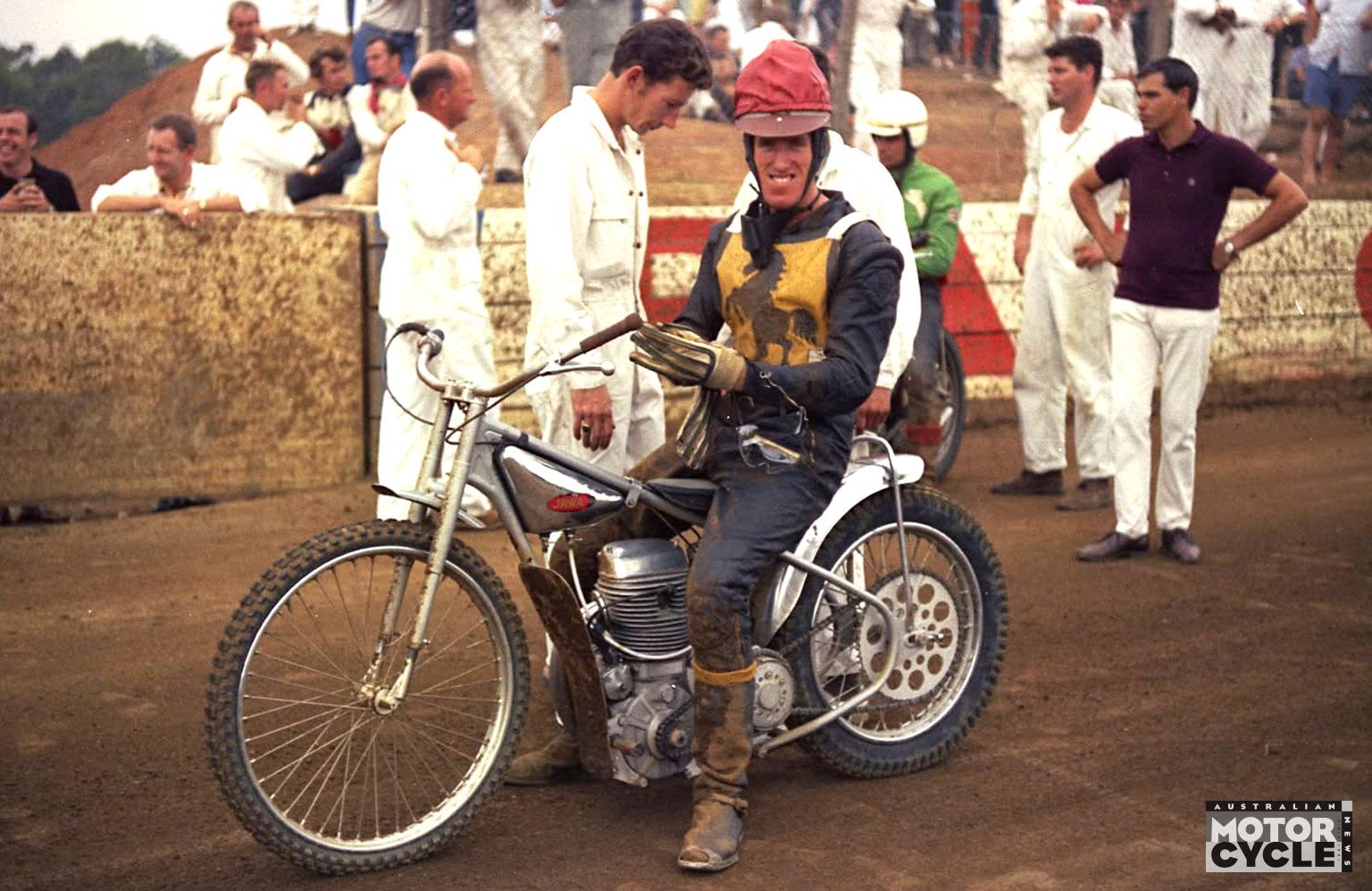
Showground regular Bill Bryden was in while Gordon Guasco, Kevin Torpie, Jack White and Trevor Harding completed the line-up after successful stints in a very competitive North Queensland scene during the Australian winter.
None of the Australian team had ridden in a World Final – Airey was the only rider to later achieve that but his one and only appearance on speedway’s big night was still four years away.
The format for a test match was 18 heats, each team having three pairings who stayed together and met each of the opposition pairings once in each half of the match.
The reserve rider, the No.7, for each team could be used as required to replace any rider in the 1-6 line-up, up to a maximum of six rides.
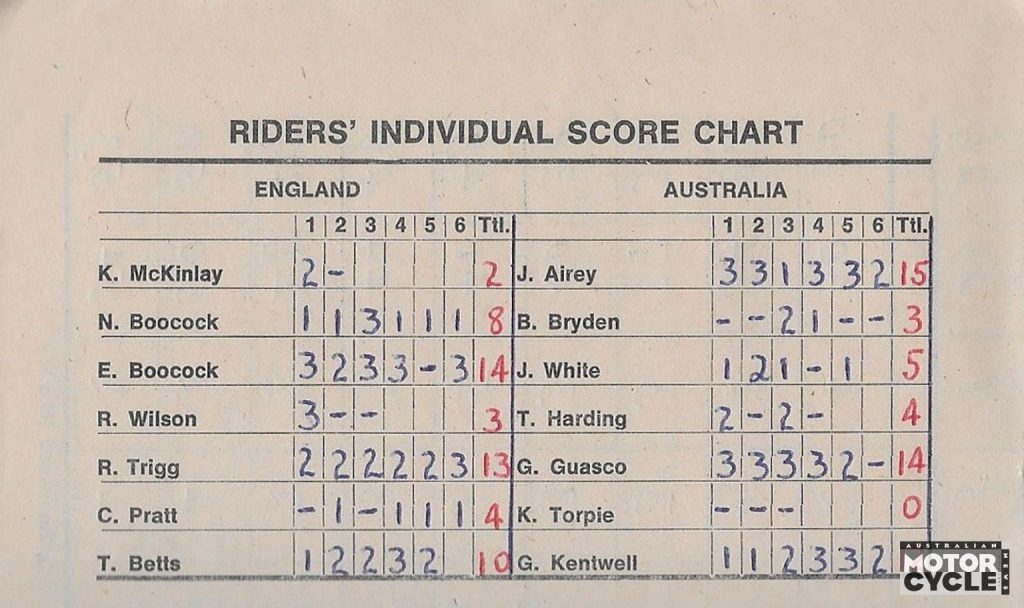
Both teams suffered from mechanical issues with McKinlay’s new ESO machine seizing while leading his second race and with his partner Wilson also forced out it left reserve Betts battling solo against two Australian riders on two occasions.
Australian manager Lionel Levy was kept busy and gave reserve Kentwell a full quota of six rides covering for Torpie, who had magneto problems, and Harding and White who, like Bryden, did not contribute as much as expected.
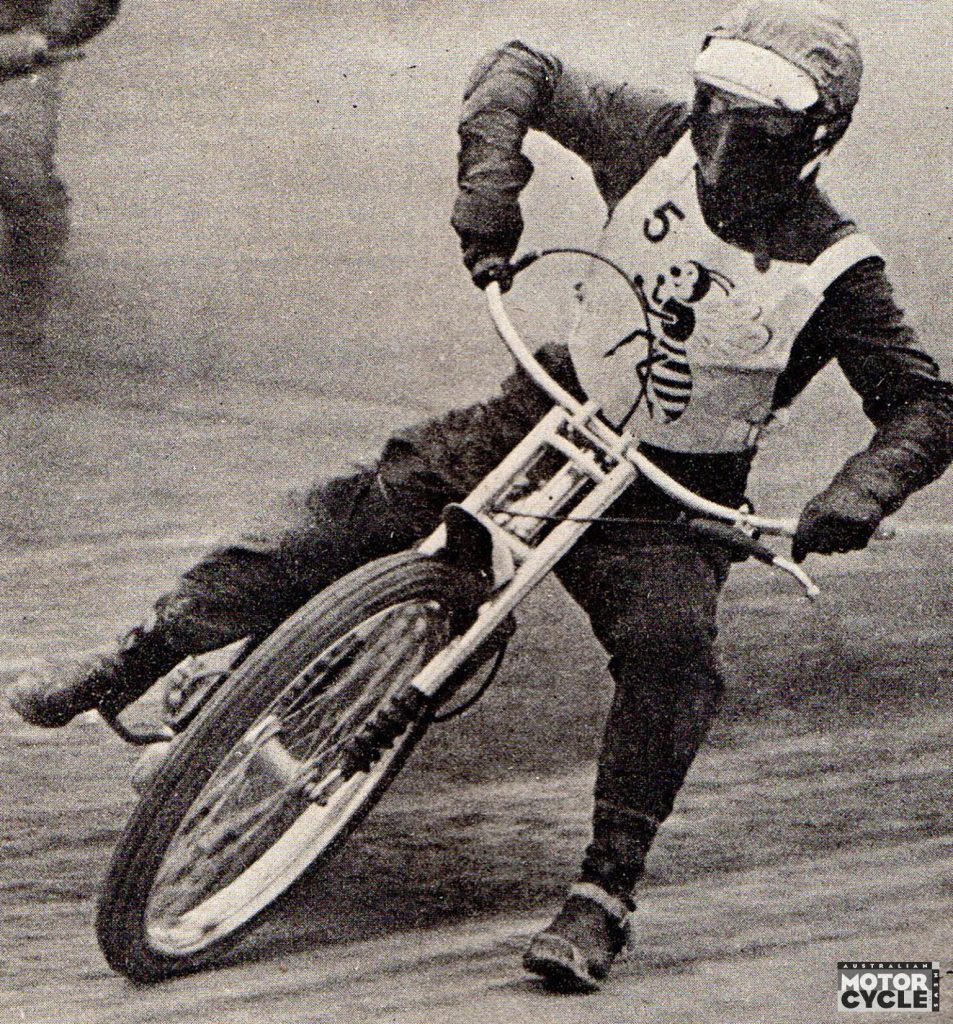
One of the highlights of the night came in Heat 2 when Eric Boocock equalled the three-lap scratch race track record – set originally by legendary English rider Jack Parker and later matched by two Australians who were part of this match in Lionel Levy and then Gordon Guasco.
The scores were always close with a three-point advantage to Australia after Heat 16 being the biggest lead that either team managed. Back-to-back 4-2s to the Poms turned that around as Australia ultimately lost 54-53.
That ‘odd’ point occurred when Guasco fell in Heat 16 and although he ‘finished’, he was excluded after having received assistance to pick up his machine.
The majority of Australian fans were not accustomed to watching teams racing which the English riders proved to be very proficient at.
It was an occasion that all present will have remembered as a special night of on and off track action as two great sporting foes did battle.
The sour point of the night came after the racing.
As the visitors were doing a victory lap a spectator threw a beer bottle, which hit Terry Betts in the head. Betts was carrying McKinlay when the bottle was thrown and both fell to the track.
McKinlay was unhurt, while Betts was fortunate that the bottle narrowly missed his eye. He was transported to hospital for stitches to his forehead while a 20-year-old man was quickly apprehended, arrested and charged, appearing in court on the following Monday.
It has been over 58 years since that memorable night and sadly the passage of time has not been kind to those involved.
Of the Australian team, only Airey and Kentwell have seen in 2026.
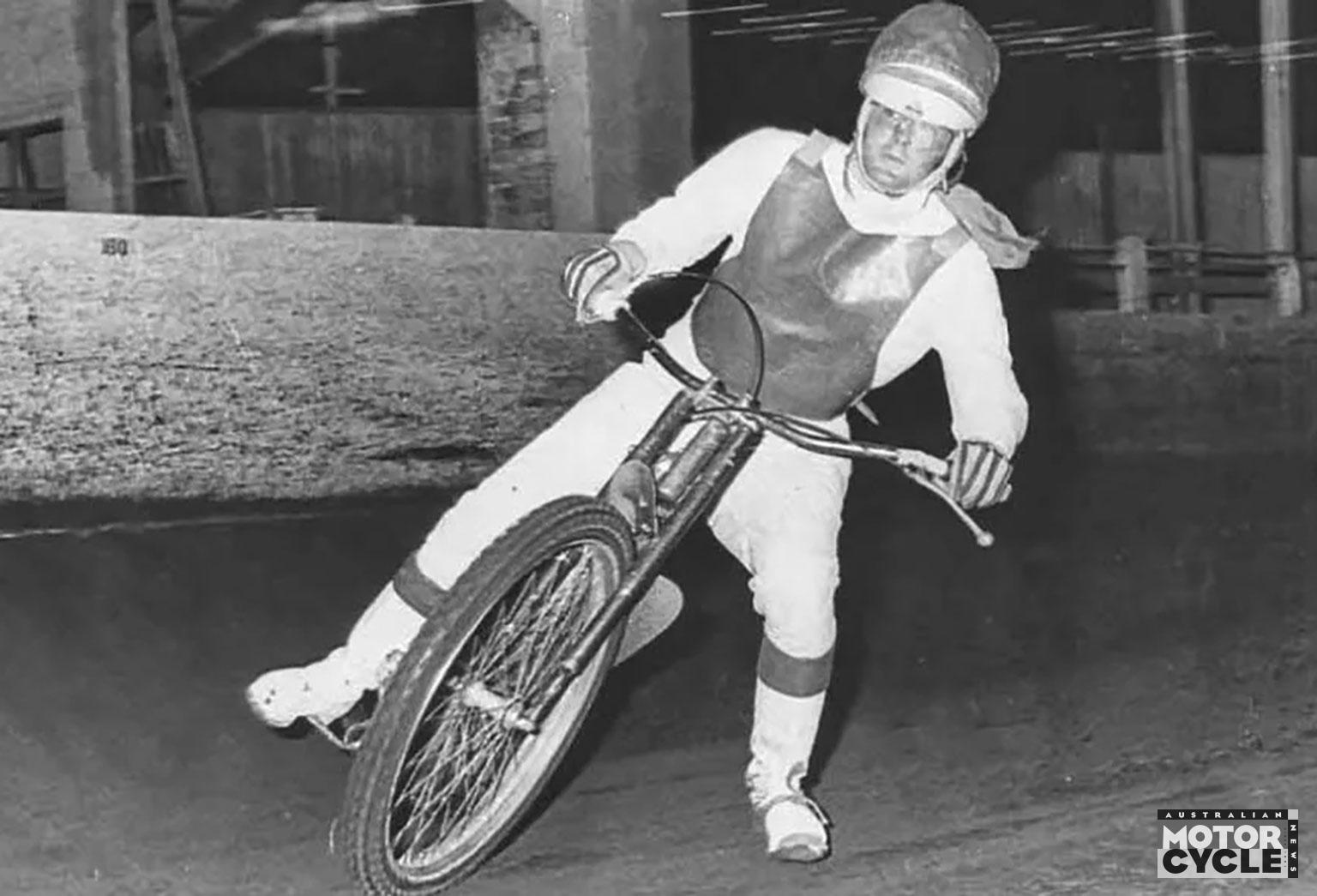
Guasco died after an accident at the Liverpool track in 1970, while White (2012), Bryden (2021), Harding (2024) and Torpie (2025) have all passed away.
White survived a lengthy career in speedway and died after a fall from a ladder at his home.
Levy, the Australian manager for the Showground test, had resumed racing that season at age 50, but he lost his life after a crash at the Showground later in the same season.
Of the tourists, McKinlay passed away in 2003 after having ridden until he was 47 years of age.
Nigel Boocock, who later migrated to Australia after numerous trips Down Under as a rider and later organiser of various composite overseas teams, died in 2015.
The other 1967 tourist who is no longer with us is Colin Pratt, who survived the Lokeren bus crash in 1970 with injuries so severe that it ended his career as a rider, before he went on to be a promoter at several English tracks as well as having a stint as manager of the Great Britain team.
He died in 2021.
Things were different in 1967
- Gasper sponsorship, a newspaper war and television speedway coverage
- Cigarette sponsorship was prevalent with the Craven Filter brand sponsoring the Sydney Showground Speedway and the smokers in the English team were given some of their product.
- Sydney had two morning newspapers, two afternoon newspapers and three Sunday newspapers.
- Capital city commercial TV networks each hosted a weekly Tonight Show with English captain Ken McKinlay appearing on one in the week preceding the test match, dressed in his racing leathers.
- Channel 10 in Sydney did live crosses for progress reports during the test, with a heat race shown in one cross. A one-hour special was aired on the following Wednesday night with commentary by Jim Shepherd and Mike Raymond.
- Admission to the meeting was $1 for adults and 50c for children, with 20 cents for the Official Souvenir Programme.
- And, sadly for Terry Betts, glass bottles were able to be brought into sporting venues.