Endless pre-tests, suffocating nerves and one unforgettable reward: riding the ultimate racing motorcycle
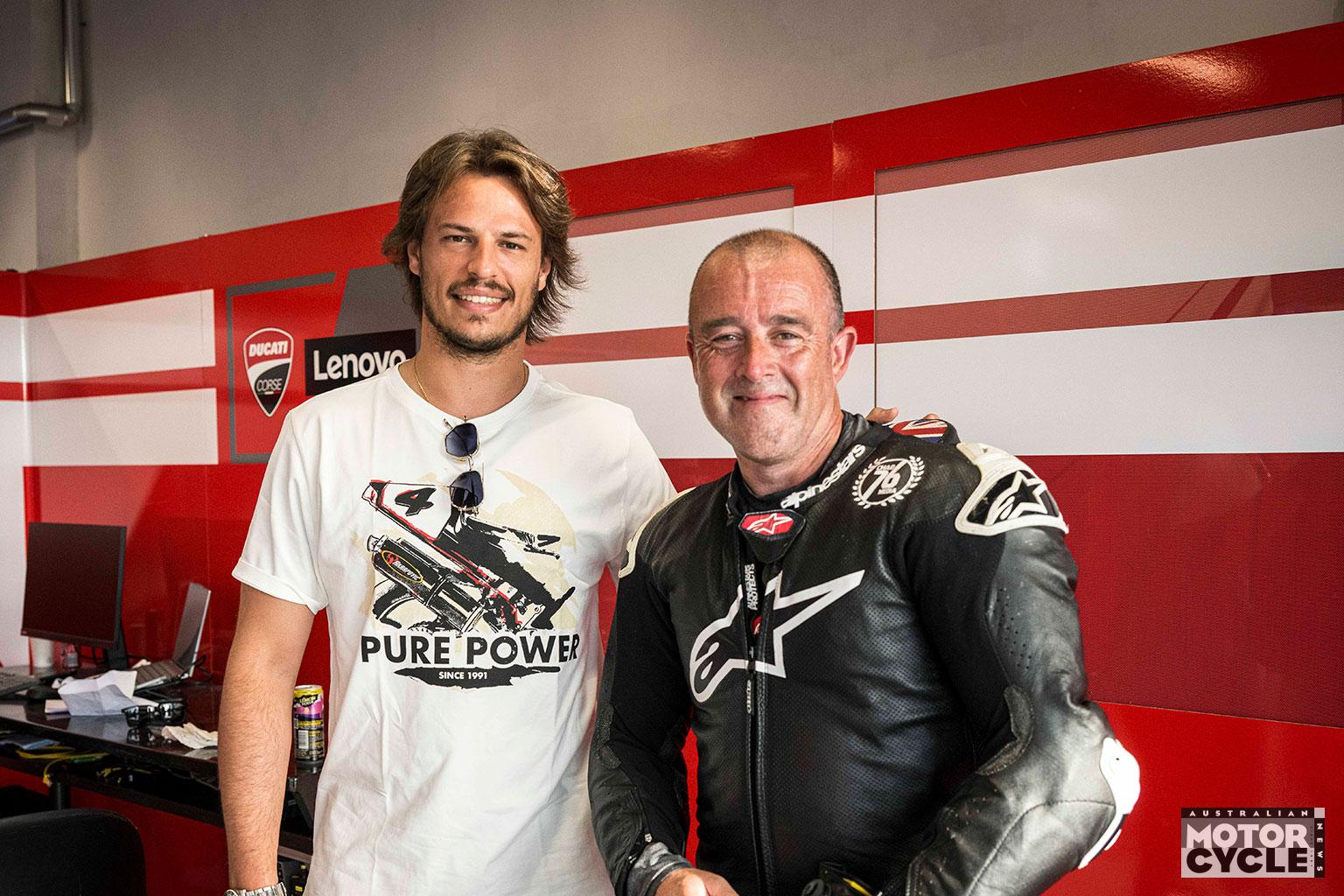
I’ve just climbed off a Ducati V4 S, one of the best sportsbikes on the market. It’s ridiculously quick and far more capable than me. I’m drenched in sweat and frantically towelling myself off while chatting away about riding techniques to a guy in the pit garage. So far so normal. I could be in any pitlane at any trackday. Except the track is the Misano World Circuit on the scorching Adriatic coast of Italy. And that guy is Casey Stoner, two-times MotoGP world champion and Ducati demi-god.
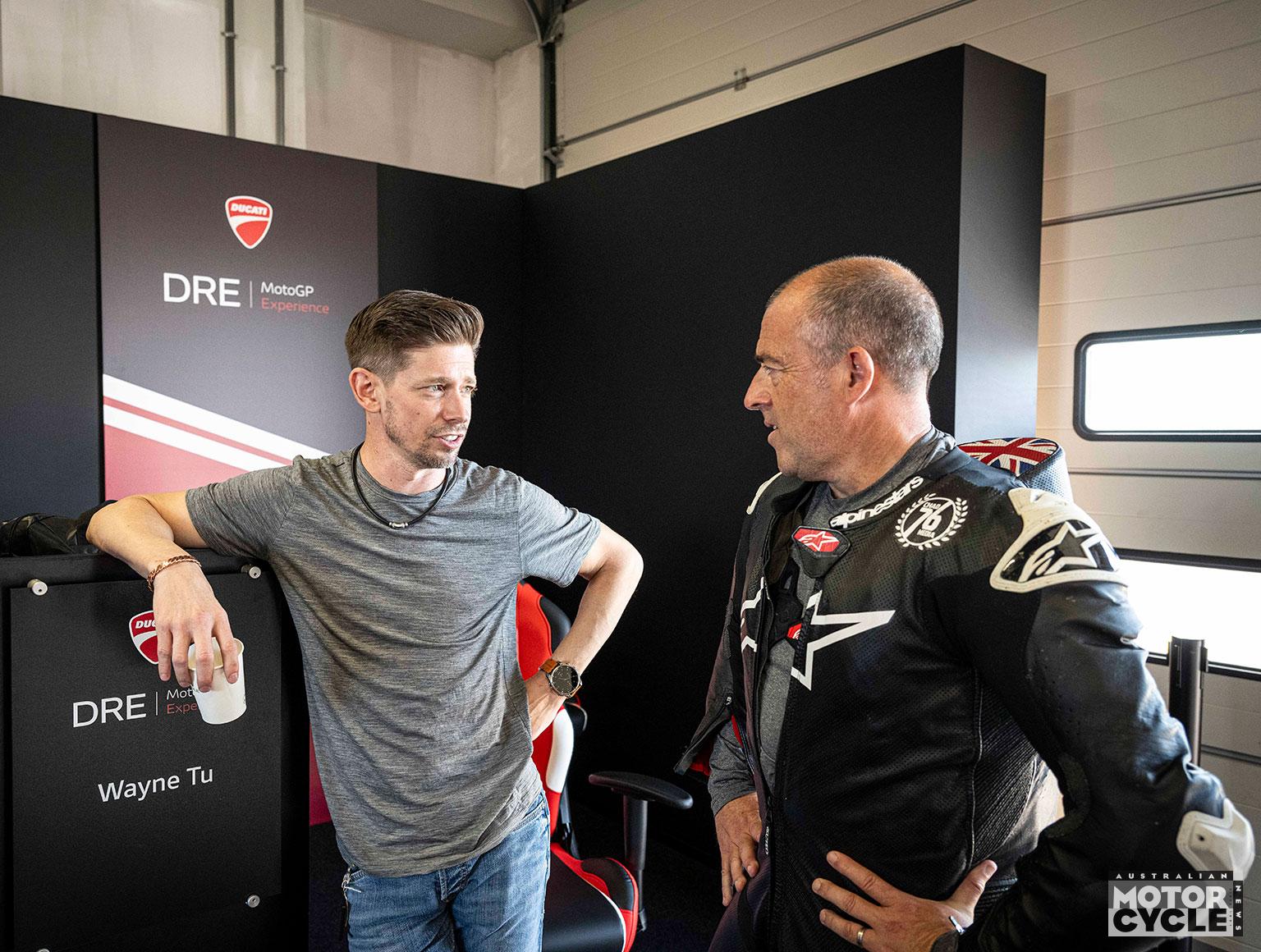
So not so normal, then. Casey is one of the most talented and revered bike riders of all time, and this is one of the most historic and technically challenging grand prix tracks on the planet – so my pulse is up. But that’s not all. Just when even being here and hanging with Casey starts to feel a bit normal, a Ducati Corse crew member looks across the garage at me and nods.
“Chad, it’s time to ride the World Superbike V4 R.”
Time slows. My pulse races again.
I apologise to Casey and say I’ll catch up with him later, like he’s my trackday buddy, and try to focus on the fact that the most dominant machine in World Superbike history, the bike which, as I write, has won 24 of this season’s 24 races in the hands of Nicolo Bulega (23) and Iker Lecuona (1), is all mine for the next 20 minutes.
In a normal dream, this would probably be the point at which you wake up. But as I walk to the V4 R, the Aruba.it Racing crew busying around the bike with the same smooth efficiency they would on a race weekend, I cannot push from my mind that even this is not the high point. After riding Bulega’s history-maker, I’ll be climbing straight onto Marc Marquez’s GP26. Yes, really. The factory superbike is just the warm-up act for a moment of MotoGP madness.
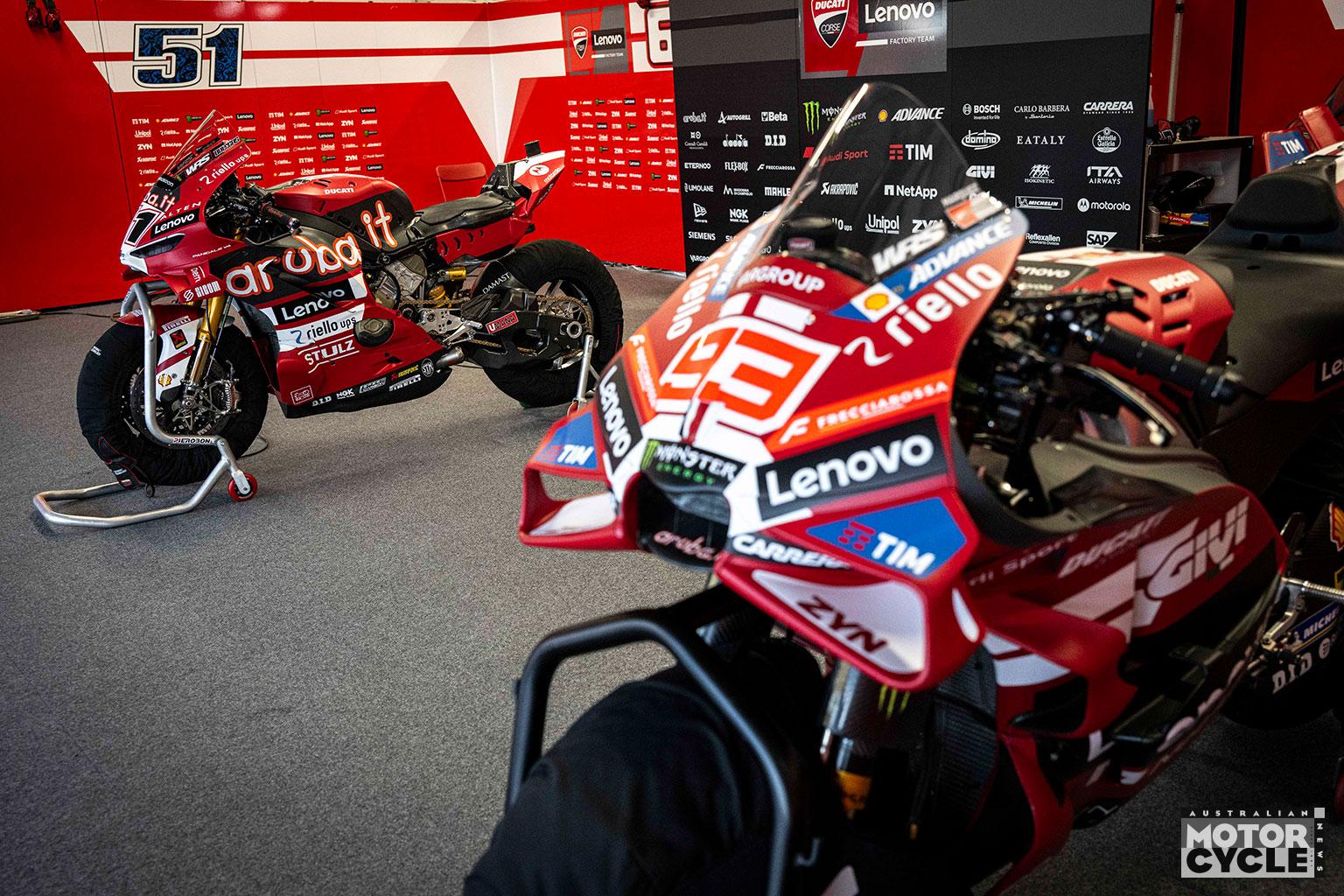
And it’s not just me experiencing this dream of dreams, either. I may be the only journalist in the world being given the chance to throw a leg over Marc’s near 300hp and 157kg factory machine, but Ducati has invited a handful of special clients to experience the bikes that rule the world in both MotoGP and WorldSBK. And, for all of us, it hasn’t been an easy journey getting to this point.
We’ve all had to complete and pass a full preparation program of medicals, simulator sessions, technical briefings and aptitude tests. And that was only the start.
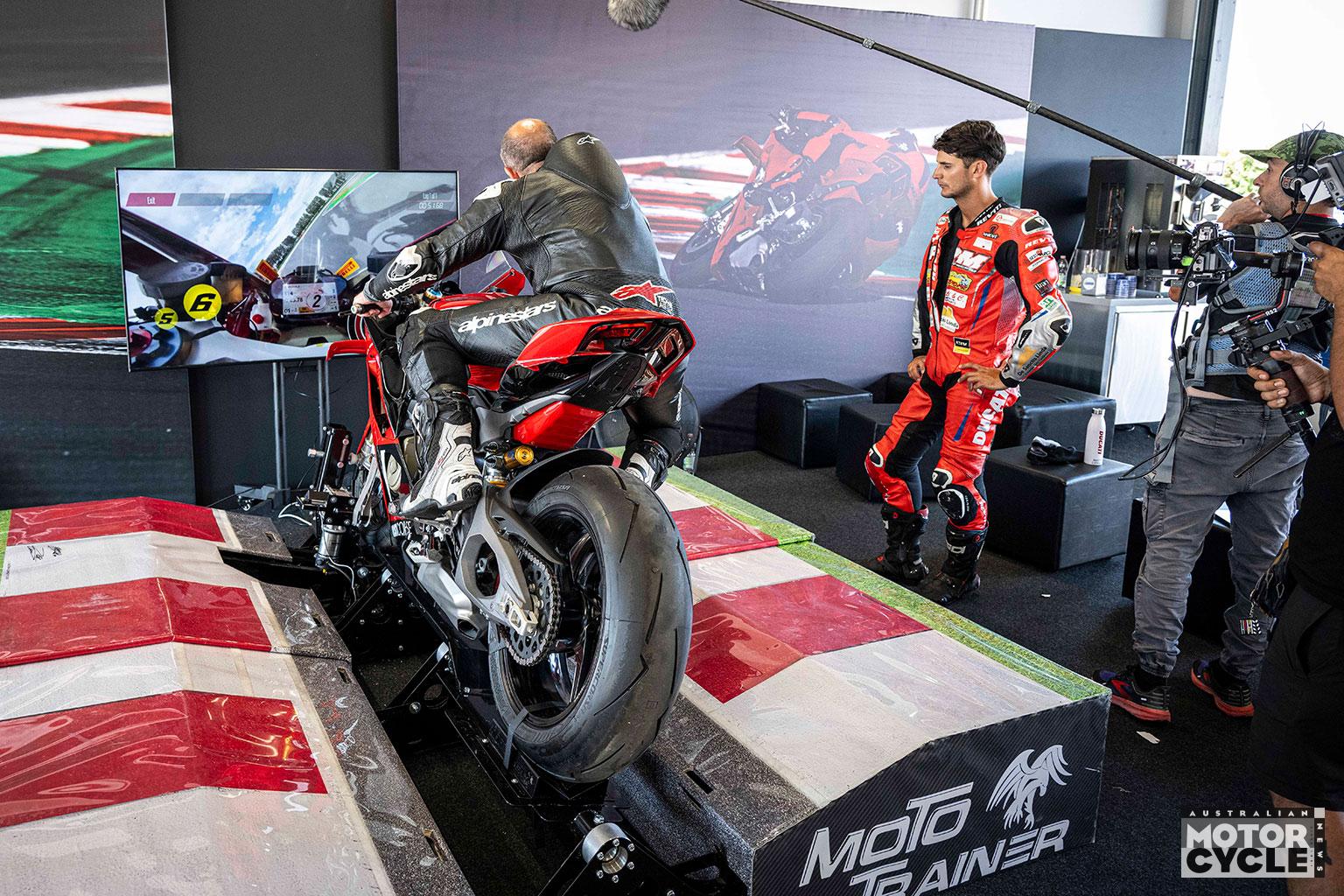
To be cleared to ride these bikes, everyone has also had to meet a set of strict physical requirements. There’s a maximum height, a maximum weight and a maximum BMI. Heart rate, blood pressure and overall fitness all have to fall within Ducati’s prescribed limits. Only once Ducati’s engineers and medical team are completely satisfied are you given the green light.
On the Sunday before the ride, we spent hours with Ducati Corse engineers, working through a detailed technical presentation before sitting an aptitude test. We covered the lot. What every button does on both Bulega’s superbike and Marquez’s MotoGP machine. What to do if the bike ends up in the gravel. How to adjust the traction control and engine-brake strategy. Which buttons to press and, more importantly, which ones never to press. What warning messages might appear on the dashboard and how to react to them. The list is endless.
Even on Monday morning, before we’d turned a wheel, there was yet another medical at the circuit. Next came the racebike simulator, on which we had to rehearse the race shift, learn Misano’s braking markers, turning points and corner exits.
Only after passing the aptitude test, the FIM medical, the on-site medical and the simulator test, and once the Ducati Corse technicians were satisfied with my pace, could we begin the riding program.
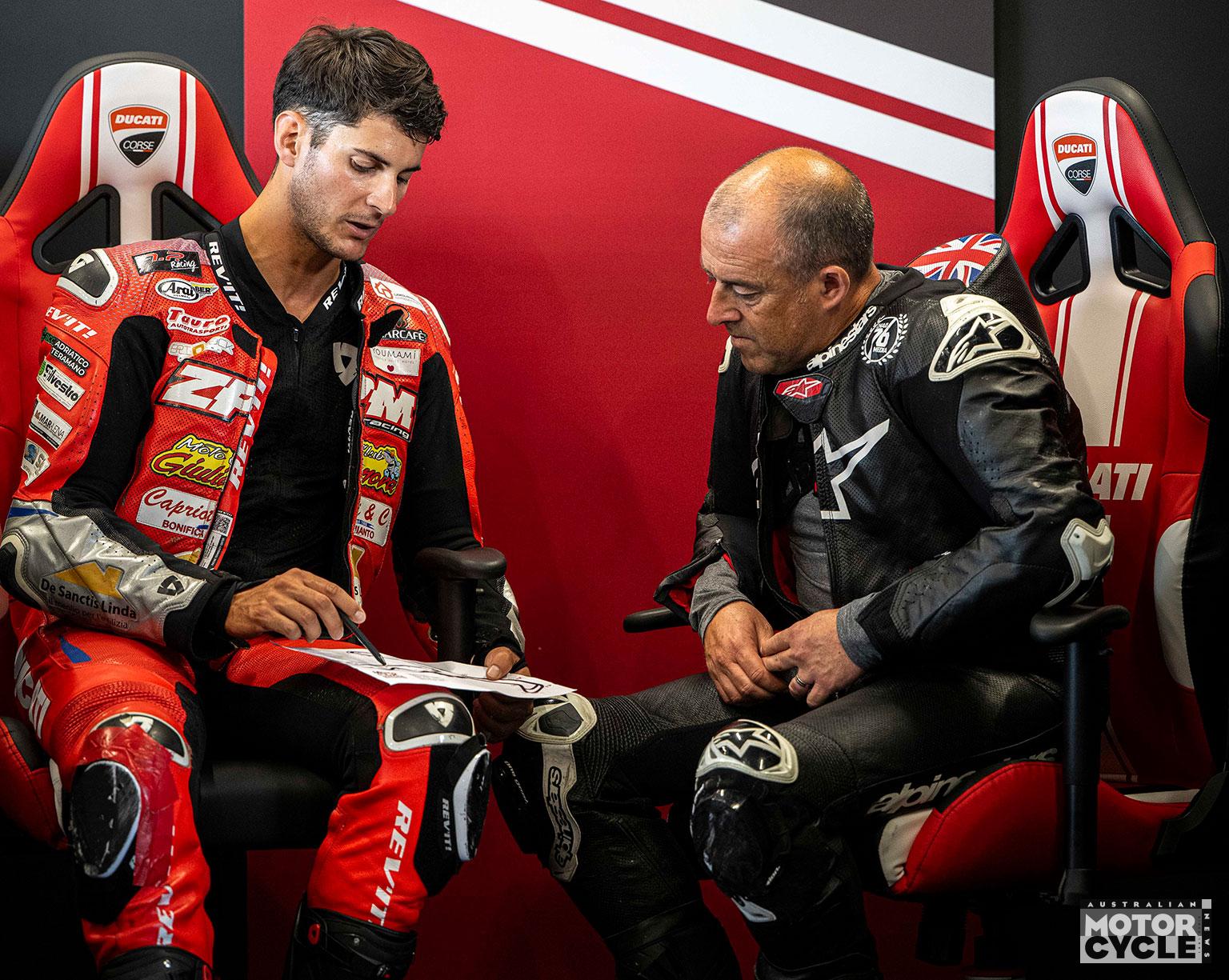
We felt a bit like astronauts who’ve spent a lifetime in training for one brief chance to leave Earth. Endless preparation for a few unforgettable moments that virtually nobody else will ever experience.
By the end, just a handful of clients from around the world had earned the opportunity to take part in this extraordinary experience. Their day followed exactly the same progression as mine: first the Panigale V4 S, then Bulega’s V4 R and finally, if everything went to plan, the ultimate reward: Ducati Lenovo Team’s Desmosedici GP26, as campaigned by two of the fastest humans alive, Francesco Bagnaia and MotoGP world champion Marc Marquez.
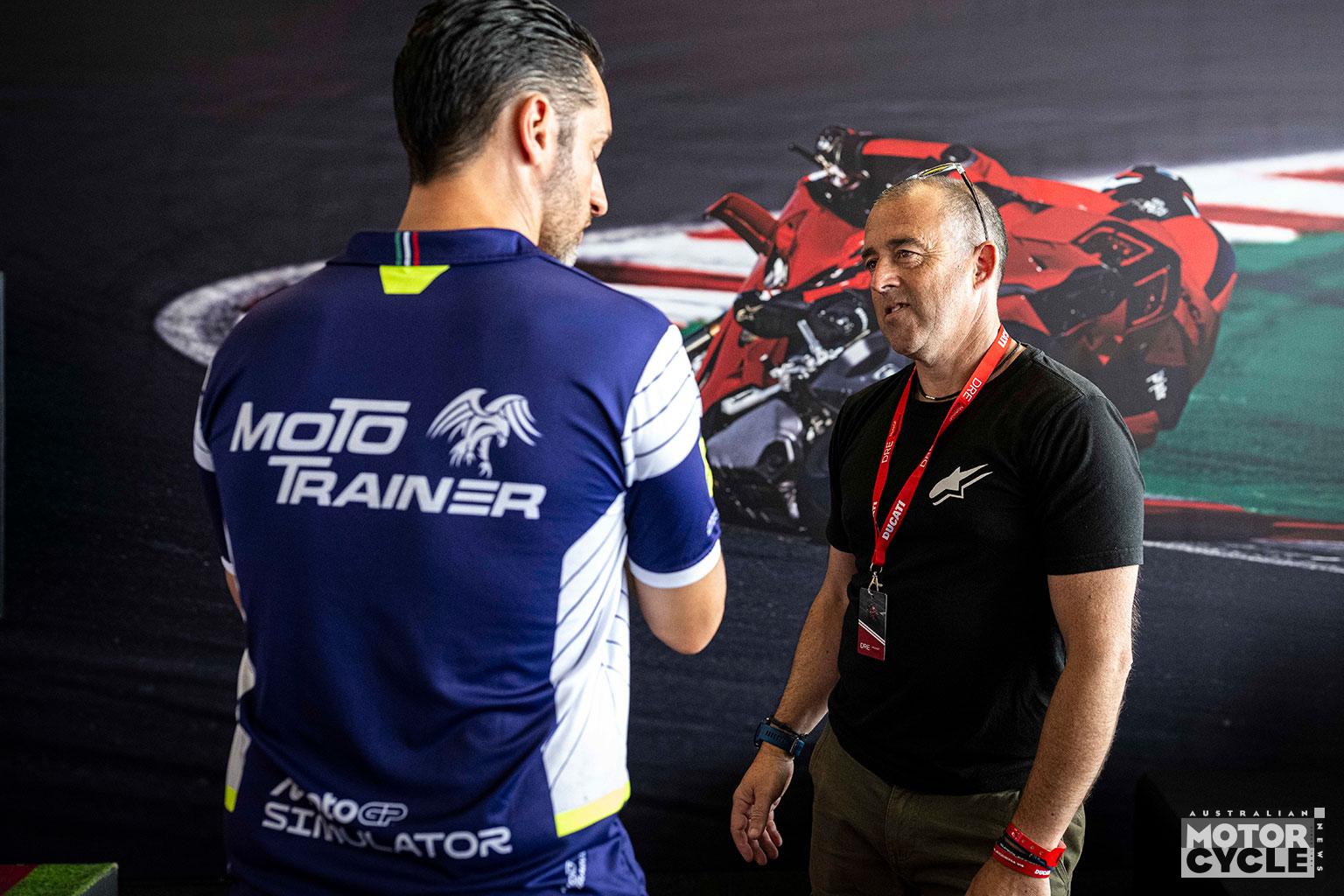
Nerves, nerves and more nerves
It feels strange arriving at World Ducati Week on the Sunday, just as everything is winding down. The crowds are beginning to thin and the teams are packing away after a busy weekend.
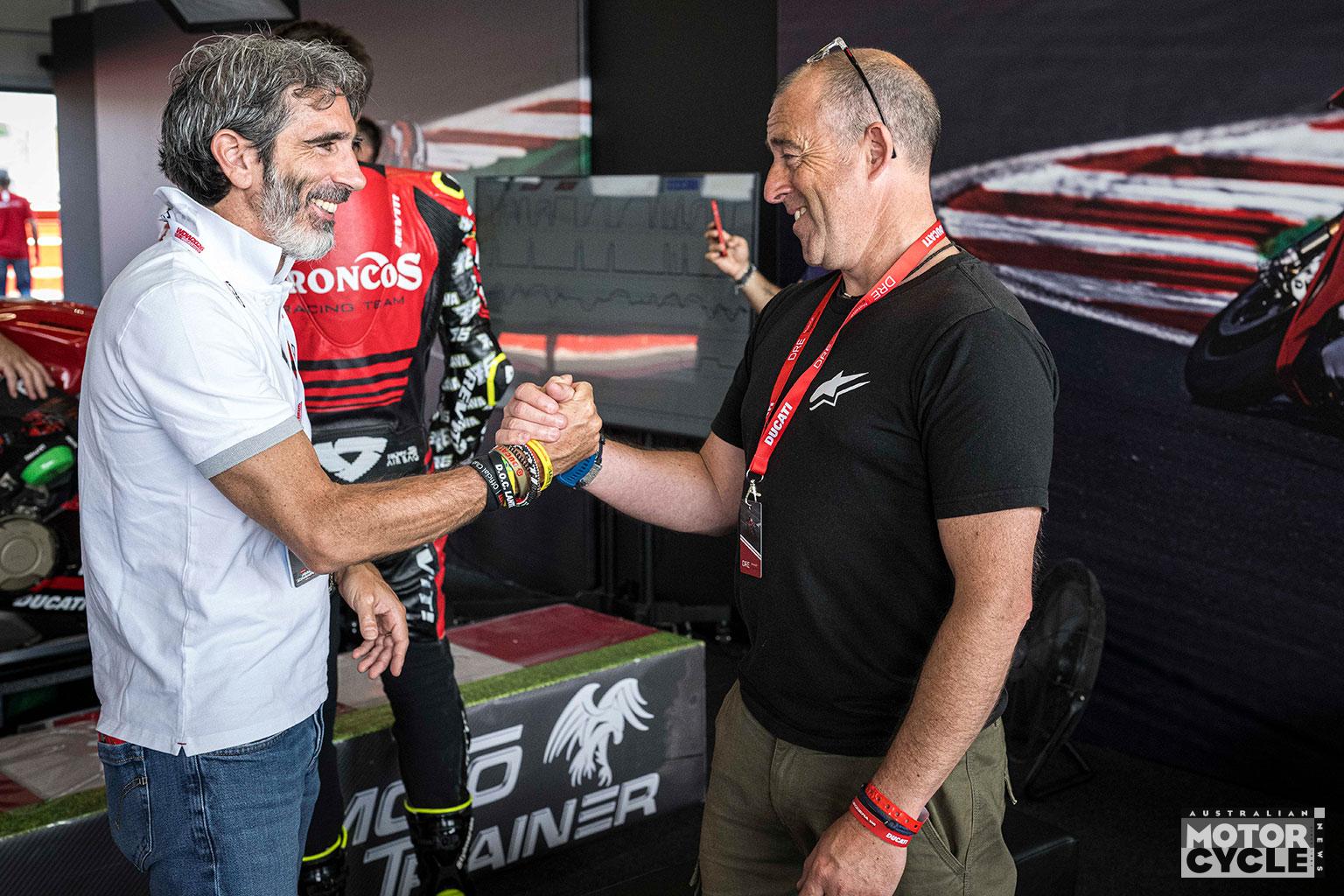
For most people, the brilliant 100th anniversary event is over. For me and a hand-picked group of Ducati owners, though, it’s only just beginning. While everyone else is coming down from the excitement, we are building and buzzing, because we know what’s coming.
But first it’s time to get the formalities out of the way: I need to sign on, introduce myself to the Ducati Corse team, attend the technical briefing and work my way through 27 pages of paperwork, including presenting the FIM medical certificate I’d completed back in the UK. Even standing still, the 36°C heat is as relentless as the ratcheting tension.
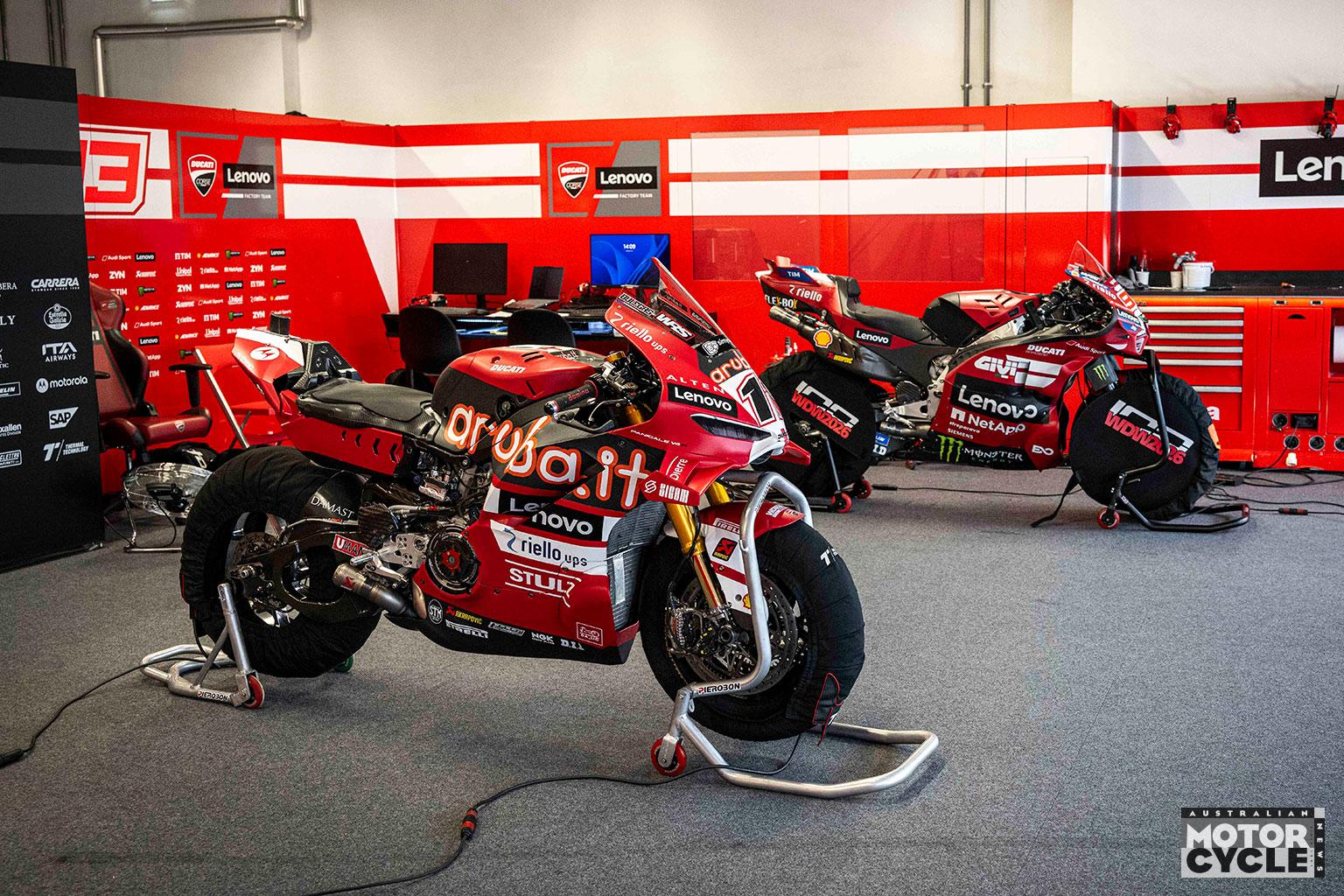
Sunday evening is a complete contrast. The day ends with a flamboyant, beautifully presented dinner, where we get the chance to meet senior Ducati staff, including CEO Claudio Domenicali. But beneath the smiles and the conversation lurks a sense of nervous anticipation because nothing is guaranteed. Before anyone gets anywhere near the Bulega V4 R or the Marquez GP26, they still have to pass the medical examinations, the simulator sessions and the final assessments. So, while it might look like a celebration, there’s no wine for us tonight – just plenty of water, good food and a few butterflies.
It’s brilliant chatting to red-blooded Ducatisti like Benjamin Lisle and Mark Brackley. Both riders have a dream garage collection, and both have purchased the Superleggera. They’re successful, accomplished people, but tonight they’re like small children on Christmas Eve, counting down the hours until morning, desperate for the chance to ride motorcycles that most will only see on TV or from a trackside grandstand. Neither Ben nor Mark knows what to expect – how can they? – but both know this will be a defining once-in-a-lifetime moment.
monday morning
It’s 9am. The temperature is already climbing into the high 20s as I enter a now almost deserted Misano World Circuit. The paddock may be still but my pulse is on the march. Again. I have a medical scheduled for 10 o’clock, so I’m actually trying to calm myself down. The last thing I want is for my heart rate to be elevated when the medical team checks me over.
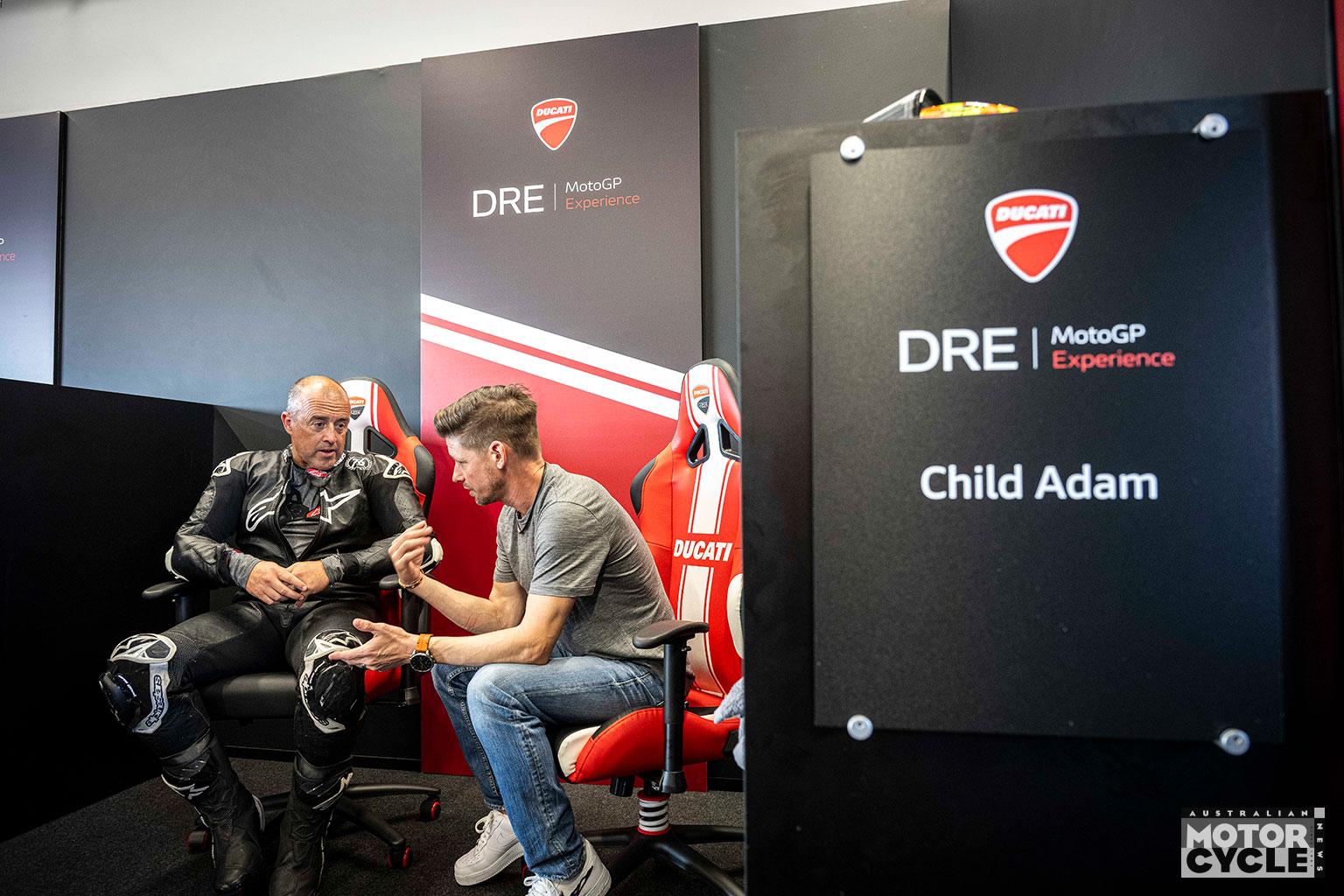
In the distance, I can hear some of the clients already out on track, learning Misano on the standard Panigale V4 S. I can also hear the bark of unsilenced race bikes being warmed in the garages. The atmosphere is electric.
The reality of what is about to happen is starting to sink in. I feel incredibly privileged but, right now, the mission is simple: keep the nerves under control, keep the heart rate down, stay in the shade and stay out of the heat.
By lunchtime, I’ve passed every test.
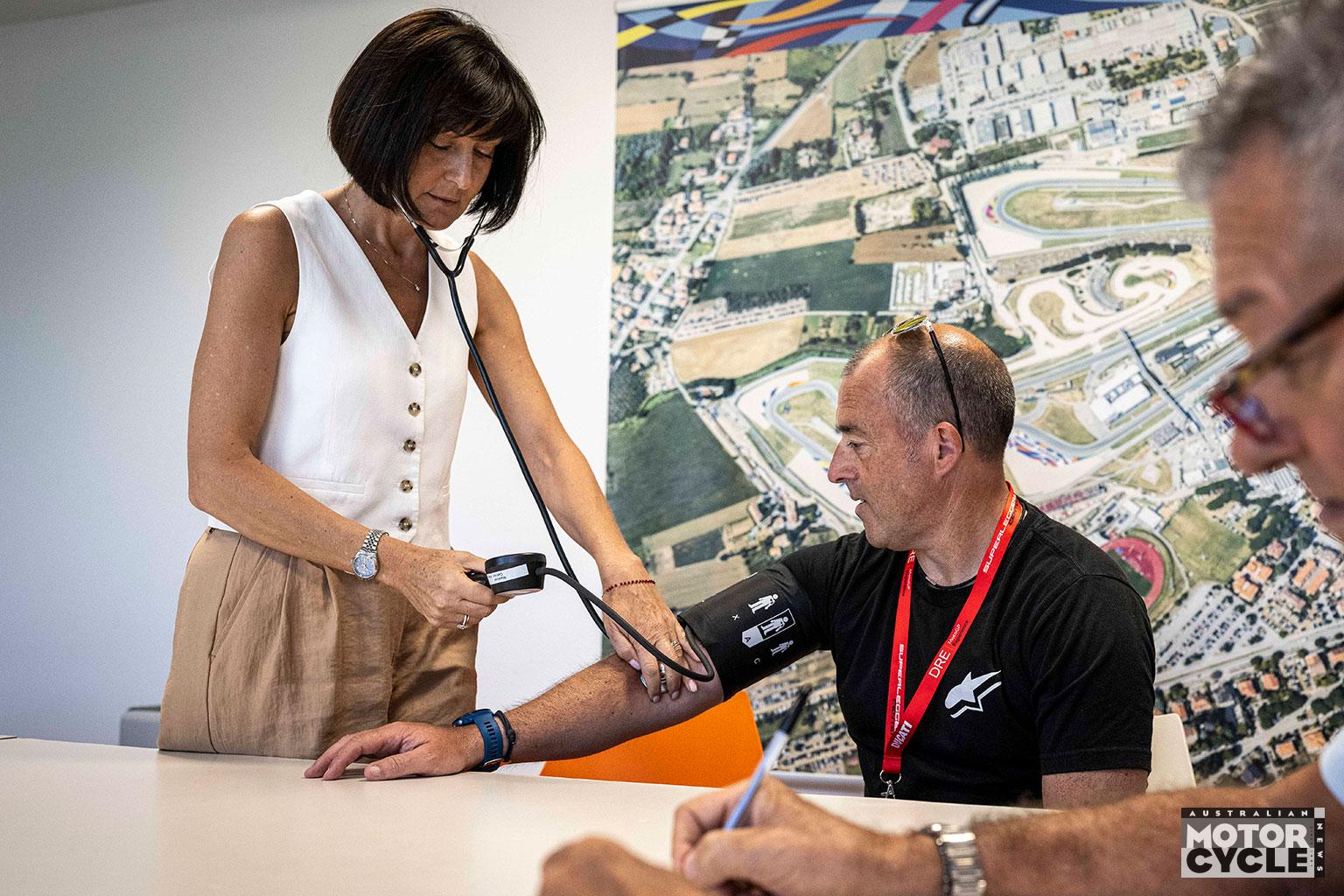
The medical is cleared. The aptitude assessment is complete. I’m not in my race leathers yet because I’m scheduled to be the final rider of the day. But soon it’s my turn to sit down with my DRE Academy instructor, go over the circuit, review the gear changes and spend more time on the simulator making sure I understand the race-shift pattern and everything that comes with riding these machines.
I’m reminded again that both racebikes don’t have neutral between first and second; instead, it’s down for first (and all the way to top gear). Then it’s onto the Panigale V4 S road bike for 20 minutes.
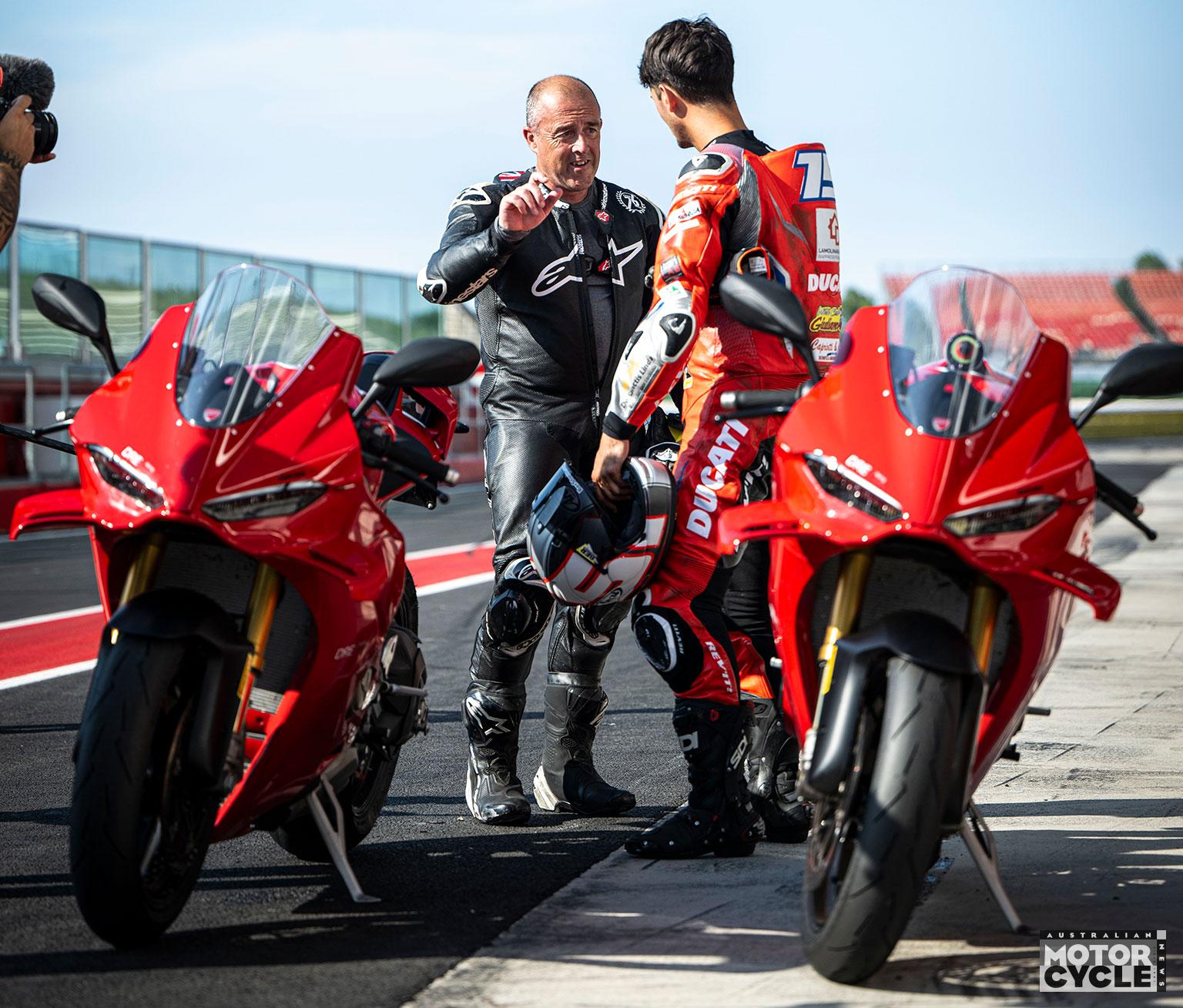
This session is about building confidence, putting in some quick laps and allowing the DRE instructor to check my lines, braking points, body position and overall technique before we move on. After that, we debrief, make any final adjustments, and then it’s time for the WorldSBK Aruba.it factory V4 R. And, if everything goes perfectly, the ultimate step: straight from the ultimate production bike onto the MotoGP GP26 before the circuit closes at 6pm. Fingers crossed. There is zero room for error.
If something goes wrong on either of these bikes, there are no spare machines waiting in the garage. There is no second V4 R. There is no backup GP26 knocking about. It’s hard to convey the anticipation and the suffocating, overwhelming nerves.
Like so many of us, all I’ve ever wanted for much of my life is to ride and race bikes. Now I’m trying to manage the enormity of this moment without looking too much like a gibbering bundle of nerves.
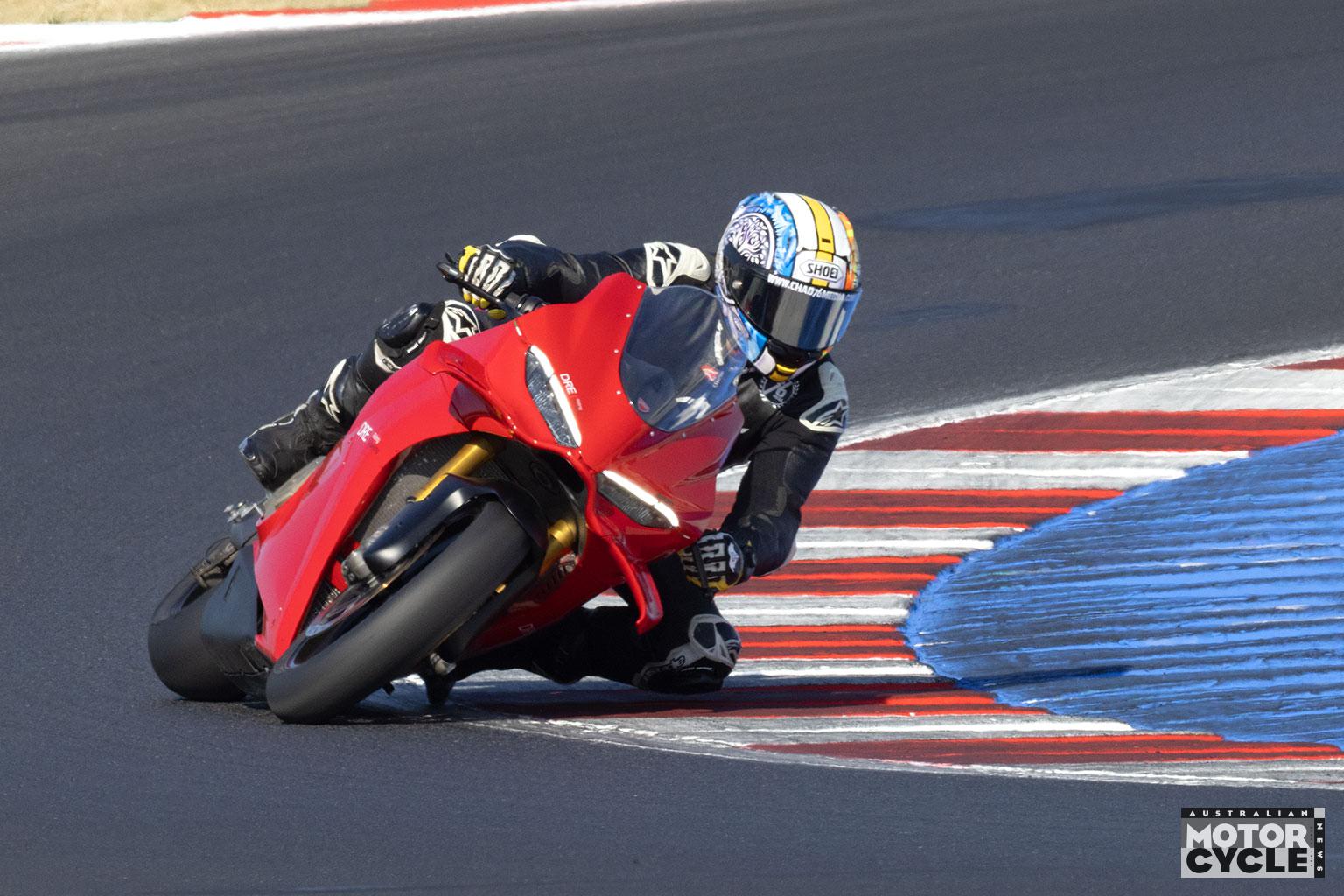
By 4pm it already feels late in the day and I’m only just pulling on my leathers. As if the pressure wasn’t high enough already, Casey Stoner strolls in alongside rising MotoAmerica supersport star Kayla Yaakov, who has been invited by Ducati after an impressive season earning pole positions and podium finishes in the US championship. Most of Ducati’s VIP clients have already finished for the day. Now, it’s just the two of us left.
I head out onto the track aboard the Panigale V4 S, complete with a full race exhaust and Pirelli racing slicks. Riding Misano is always special. It’s fast, flowing and perfectly suited to the V4 S. Through the sweeping section at the back of the track, you’re just getting fifth gear, while over the start-finish line and down the straight it’s charging through fourth, sometimes reaching fifth before it’s time to brake again.
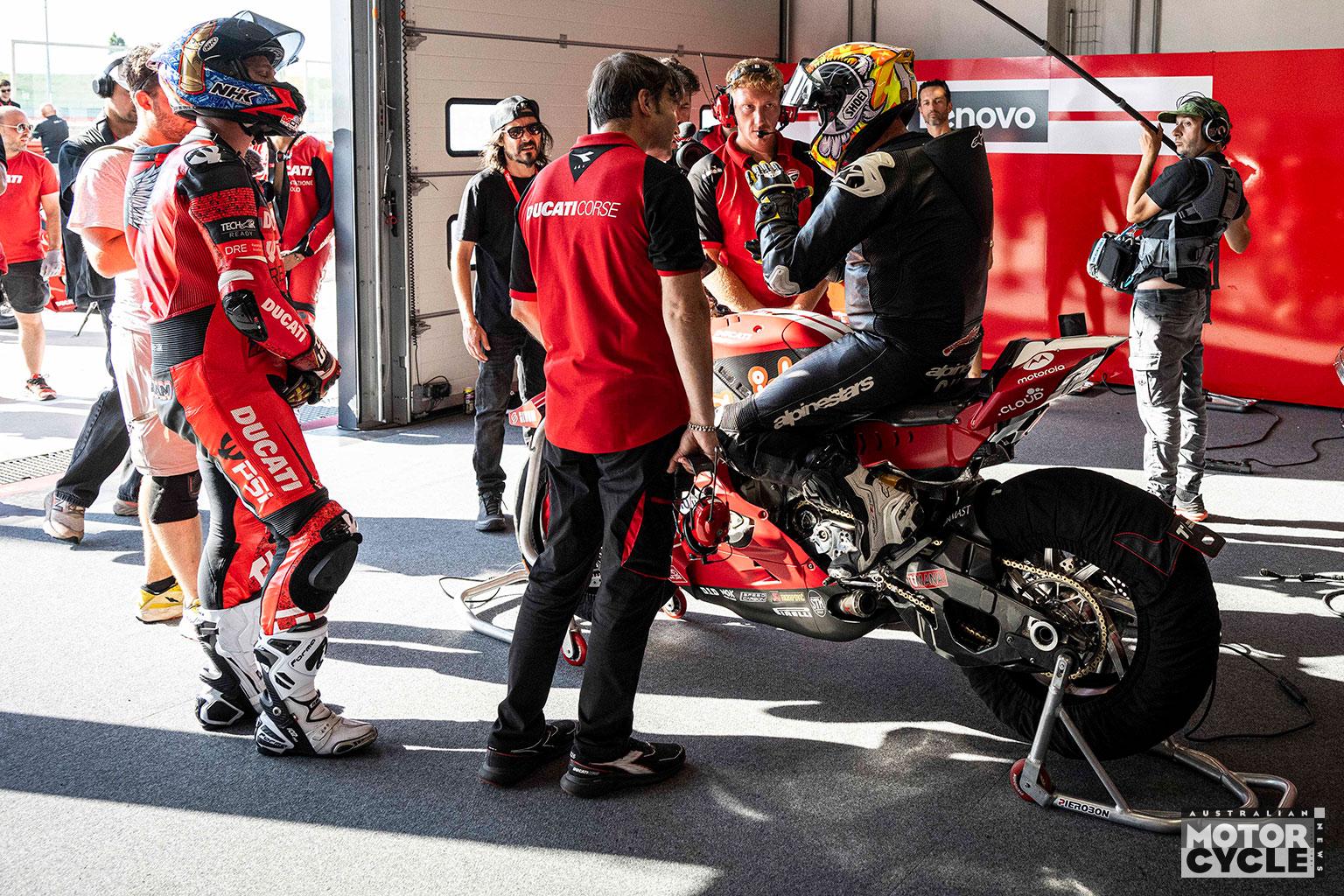
With close to 230hp and weighing just 181.4kg, it’s an astonishing motorcycle on a circuit. Blisteringly fast, incredibly stable and endlessly rewarding. For me, it’s one of the very best sportsbikes you can ride on a trackday but, as I roll into pitlane, sweating profusely, one thought keeps running through my mind: this is only the starter course.
Riding the V4 R
Finally, with the shadows lengthening, I’m handed the Bulega V4 R. I’ll be following former MotoGP rider Karel Abraham, who is seriously quick. If I can stay somewhere near his lines, I’ll be doing well.
The plan is simple. As soon as the signal comes, it’s helmet on, gloves on, jump aboard and head straight out onto the circuit behind Abraham. I paid full attention during the briefing last night and I even passed the test. But as I walk over to the bike and throw a leg over it, I can’t remember anyone mentioning there would be two levers on the left handlebar.
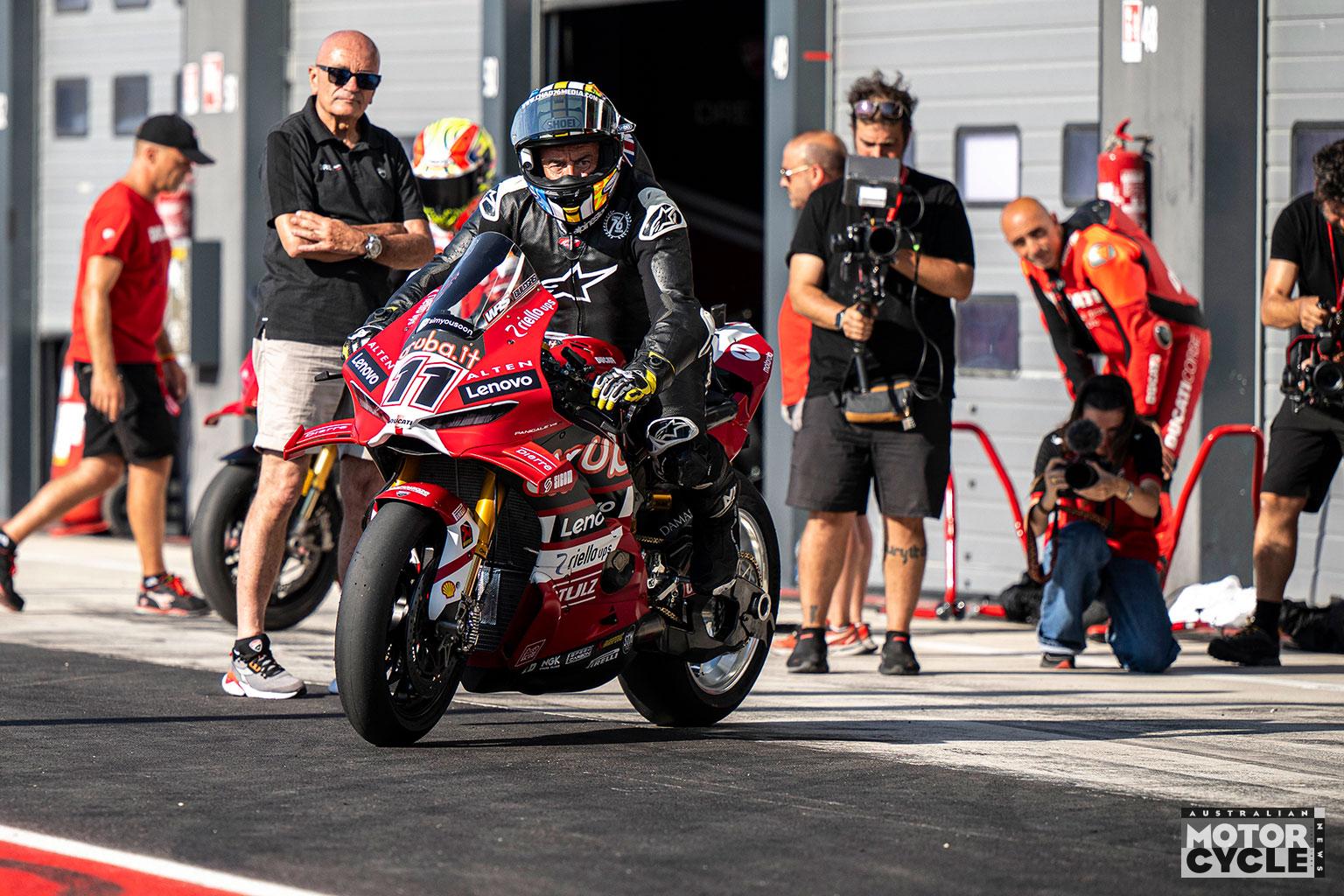
The clutch lever sits unusually high and almost upright. Then I notice that there is a rear brake lever where the clutch would normally be. Right then, whatever you do, don’t grab that thinking it’s the clutch.
The dash looks reassuringly familiar. It’s clearly based on the Panigale V4 S, or the other way around, but this is a pure racing display, stripped back to deliver only the information a rider really needs.
Then the 998cc Desmosedici Stradale V4 fires into life. It sounds sharper and harsher than the race-kitted V4 S. I run through everything in my head one last time. Race shift. First gear is down. Second is down. Third, fourth, fifth and sixth are all down as well. To come back through the gears, it’s one lift after another. Once you’re in first gear, you have to lift the gear lever and press the separate neutral lever.
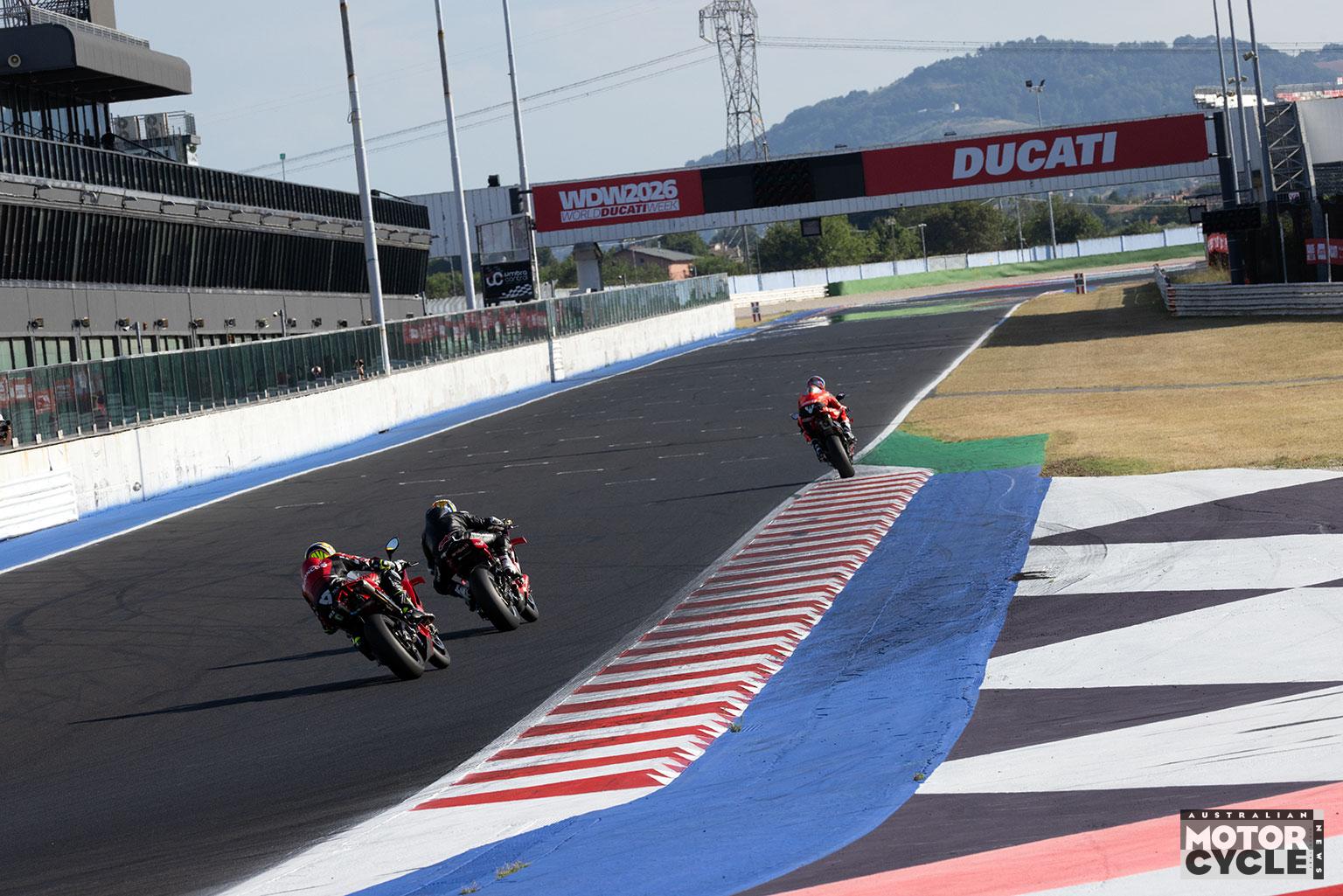
The crew chief gives me the nod. I click down into first, squeeze that almost-vertical clutch lever, ease it out, feed in a few revs and the bike begins to roll.
We ease onto the circuit. The bike feels familiar. The tank shape, the seat, ‘bars, even the dash all have that Panigale DNA. It’s like a V4 S or a V4 R, but one that has been transformed into something else entirely.
The ‘bars are much wider than I expected. The seat is wide too, but comfortable and extremely grippy. The bike feels secure, planted and reassuring. But the speed… The speed is something else.
Second. Third. Back to second for the tight complex at the start of the lap, then onto the back straight. Abraham is ahead and he’s taking no prisoners. He uses a huge amount of kerb on the left-hand side, picks the bike up and gets hard on the throttle on the exit. This is not a sighting lap.
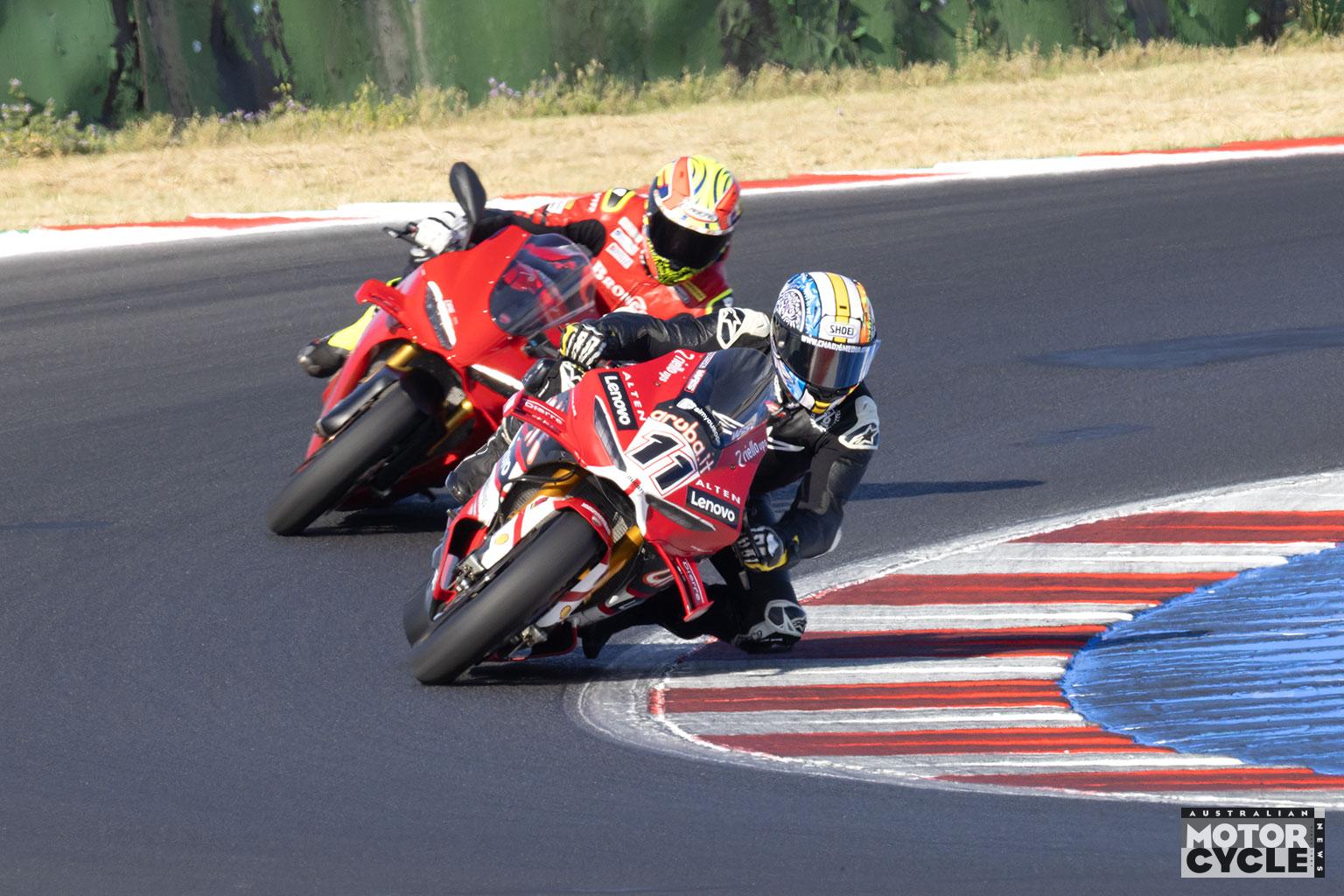
Meanwhile, several metres behind, I fail to light the shift lights in second gear. I don’t hit them in third, either. I’m into fourth, but this time I don’t dare grab fifth. The acceleration is already overwhelming.
Then it’s back down to second via the most perfect quickshifter ever devised, before tipping into the next left. A short blast, second gear, third gear, then back to second for the hairpin at Turn 10. Some riders take this corner in first, but I decide to stay in second. It gives the bike an easier time and, if I’m honest, it gives me an easier time too.
We arrive at the fast section of Misano; where the V4 S was already reaching fifth gear through Turn 11 and before 12. But this is different. Bulega’s bike is brutally rapid. Shift light in second. Shift light in third. Shift light in fourth. I probably should select fifth but this all simply feels too fast. I don’t quite have the courage yet. After all, there’s over 235hp at the back wheel and, at 168kg, not much more bulk than a 125/250.
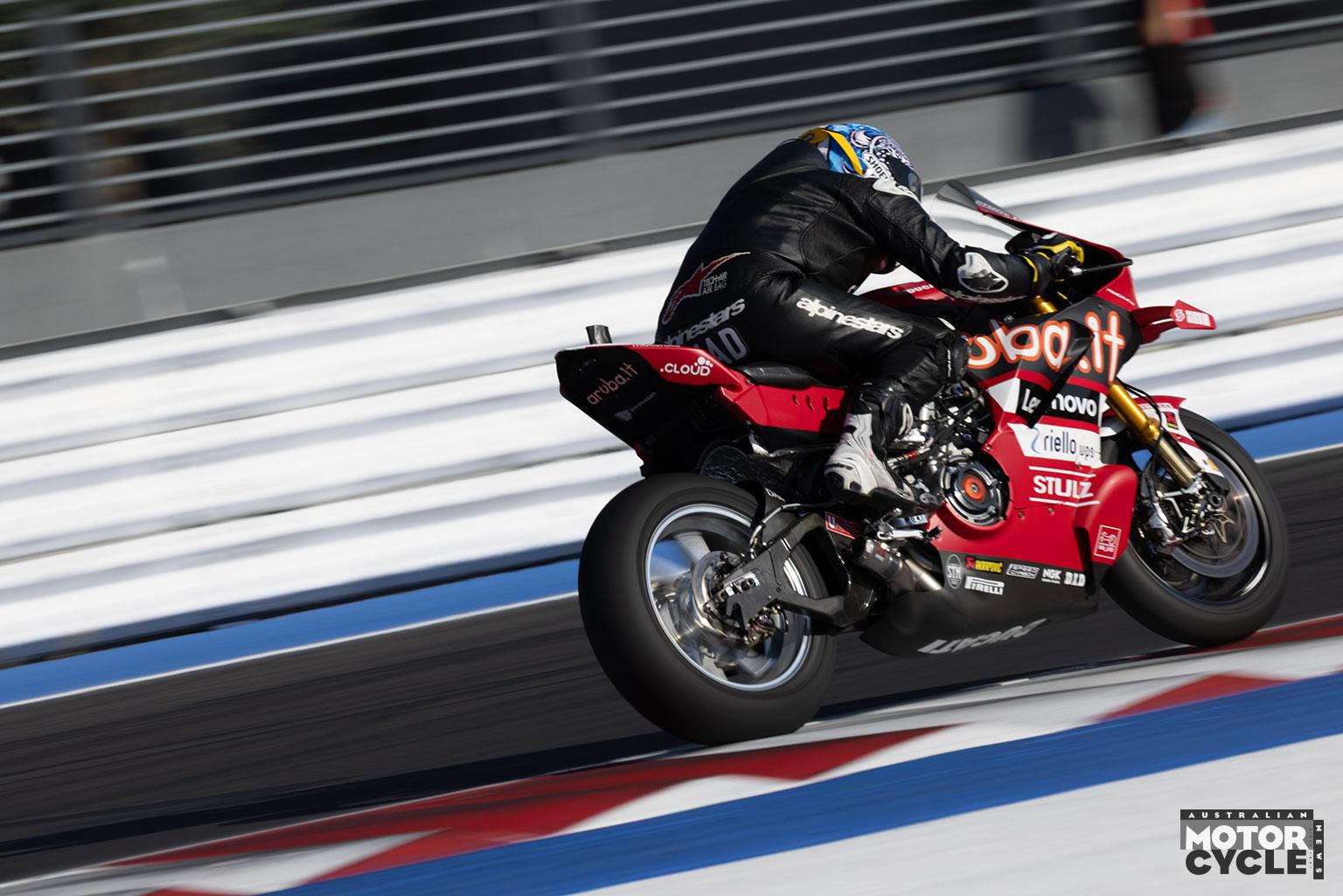
I tip into a fourth-gear right-hander, which should be taken in fifth, use plenty of kerb, get back on the throttle and drive out of the corner. Still no fifth gear. Still not brave enough. Jesus, this is fast.
Then it’s back to third, back to second and we’re across the start-finish straight. I know I have to commit. Stoner is there. Bulega and the Ducati team are hanging over the pit wall. No excuses.
This time it’s second gear to the shift light. Third to the shift light. Fourth to the shift light. I stop blinking and possibly breathing too. Hard on the brakes. Fourth. Third. Second. A little rear movement as I turn into the first right-hander. We are progressing.
Because of WorldSBK regulations, the Stradale doesn’t actually rev dramatically higher than the roadbike. The magic isn’t just at the top of the rev range; it’s the way this thing delivers its power, the grip it finds and how it drives out of corners.
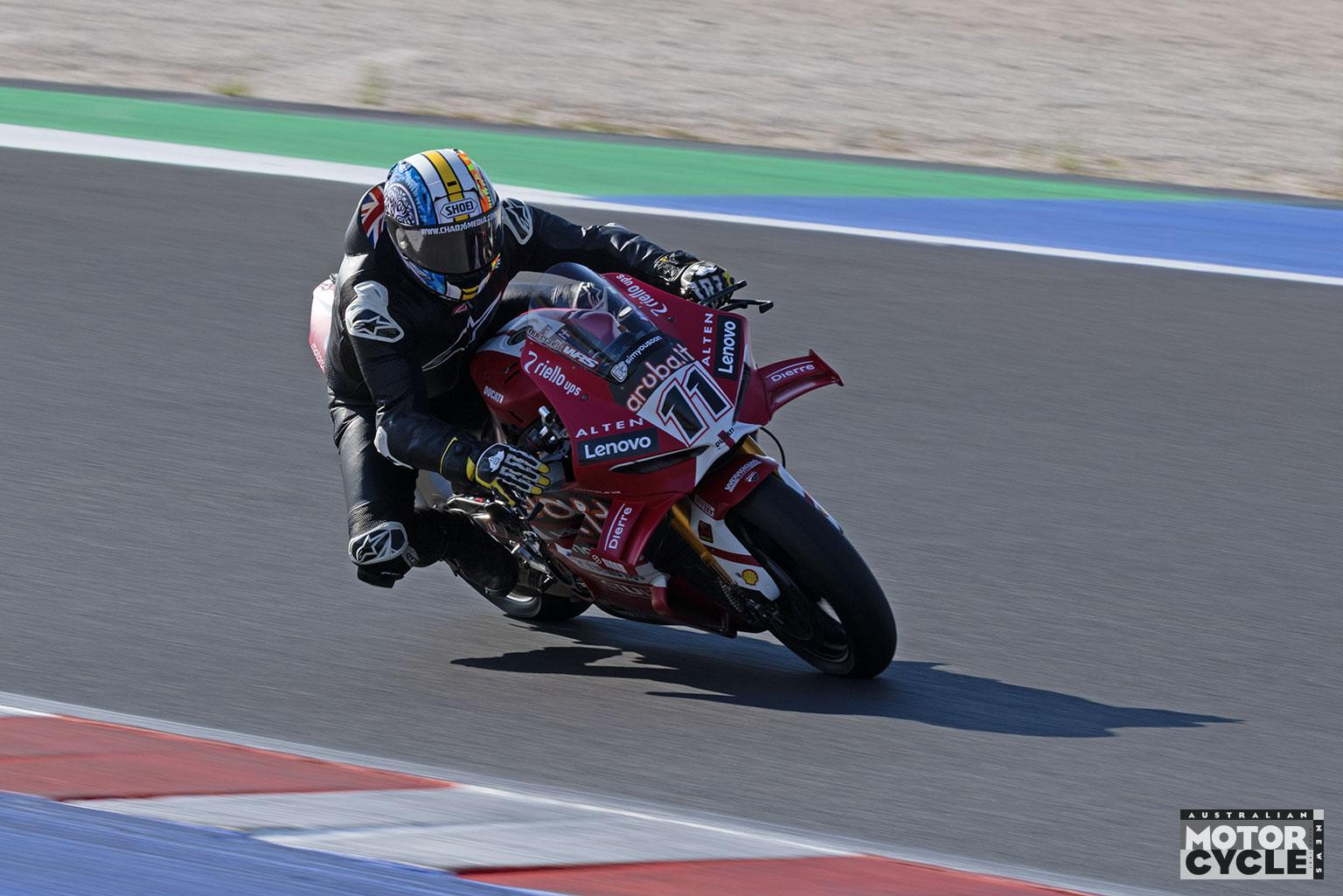
Abraham is upping the pace every lap. I keep seeing him glance over his shoulder to make sure I’m still there, and I can’t help but smile. I’m not hanging on and praying anymore. I’m starting to understand the bike and I’m absolutely loving it.
I think that’s because of the V4 R’s familiarity and because it feels like a road Panigale, albeit a hollowed out one on steroids. The layout is familiar, so too the way you sit on the bike and the relationship with the controls. Obviously, there are no roadbike luxuries – no indicators, mirrors or user-friendly switchgear – but it still relates closely to the V4 S.
The laps slip by. I’m braking a fraction later, carrying more corner speed and beginning to trust myself and the bike. The acceleration is addictive through second, third and fourth gear, so too the way it stampedes out of corners with no wasted energy or movement from the chassis.
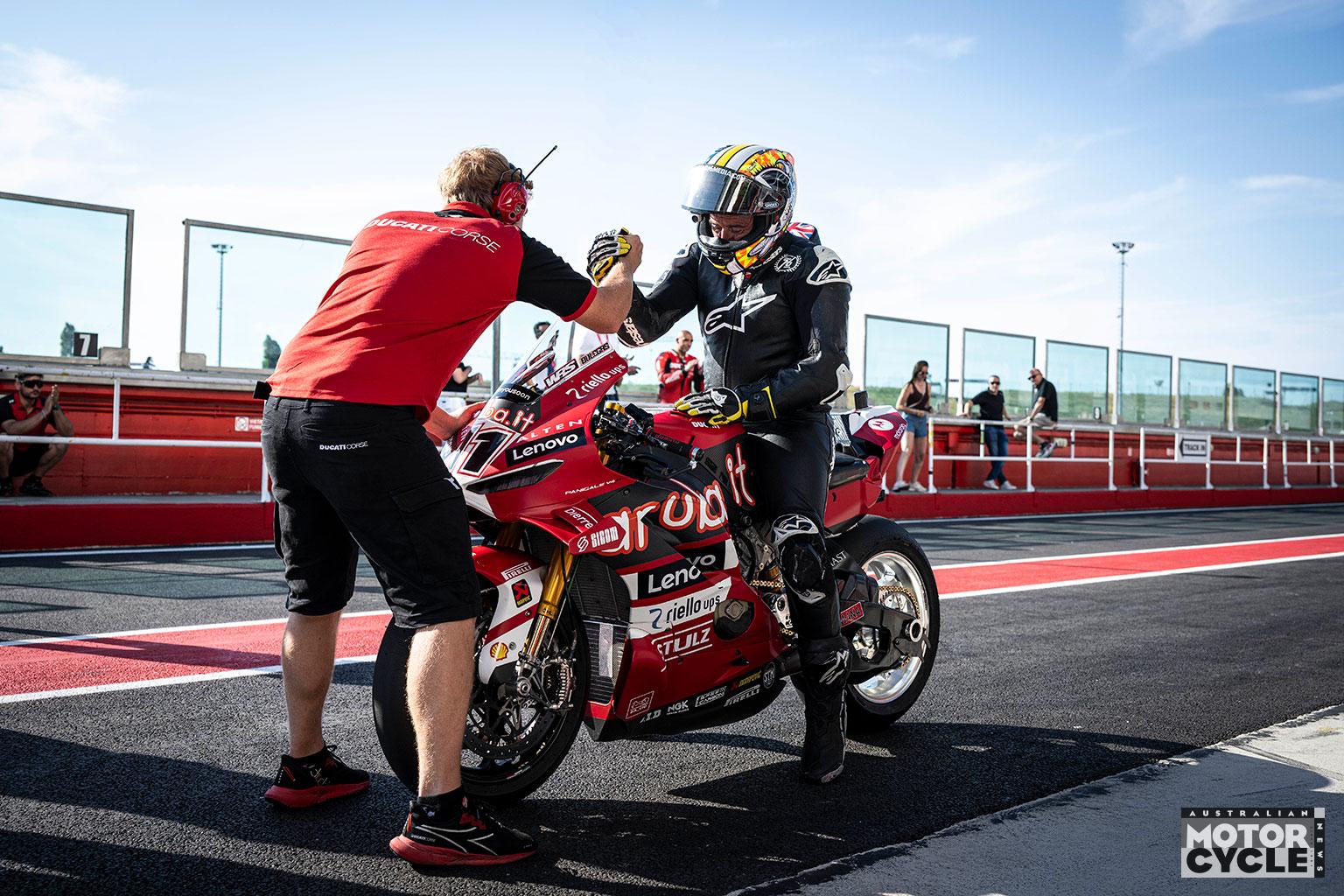
But the flat-out Turn 11 at the back of the circuit is still intimidating. I’ve still not used fifth gear in anger. I tried it once but it felt like a step too far. The speed builds so quickly that a voice in my head tells me to be sensible. I cannot crash this bike.
Back in the pits after six fast laps, I’m mainly relieved to have brought the V4 R home in one piece. How Bulega and the WorldSBK boys race for 30 laps is beyond me.
When I switch off the engine and press the neutral release, I get a ripple of applause from the Ducati technicians, and the DRE instructors come over and give me a huge hug. They know what I’ve just experienced. They know the emotions I’m feeling and how hard I’m concentrating.
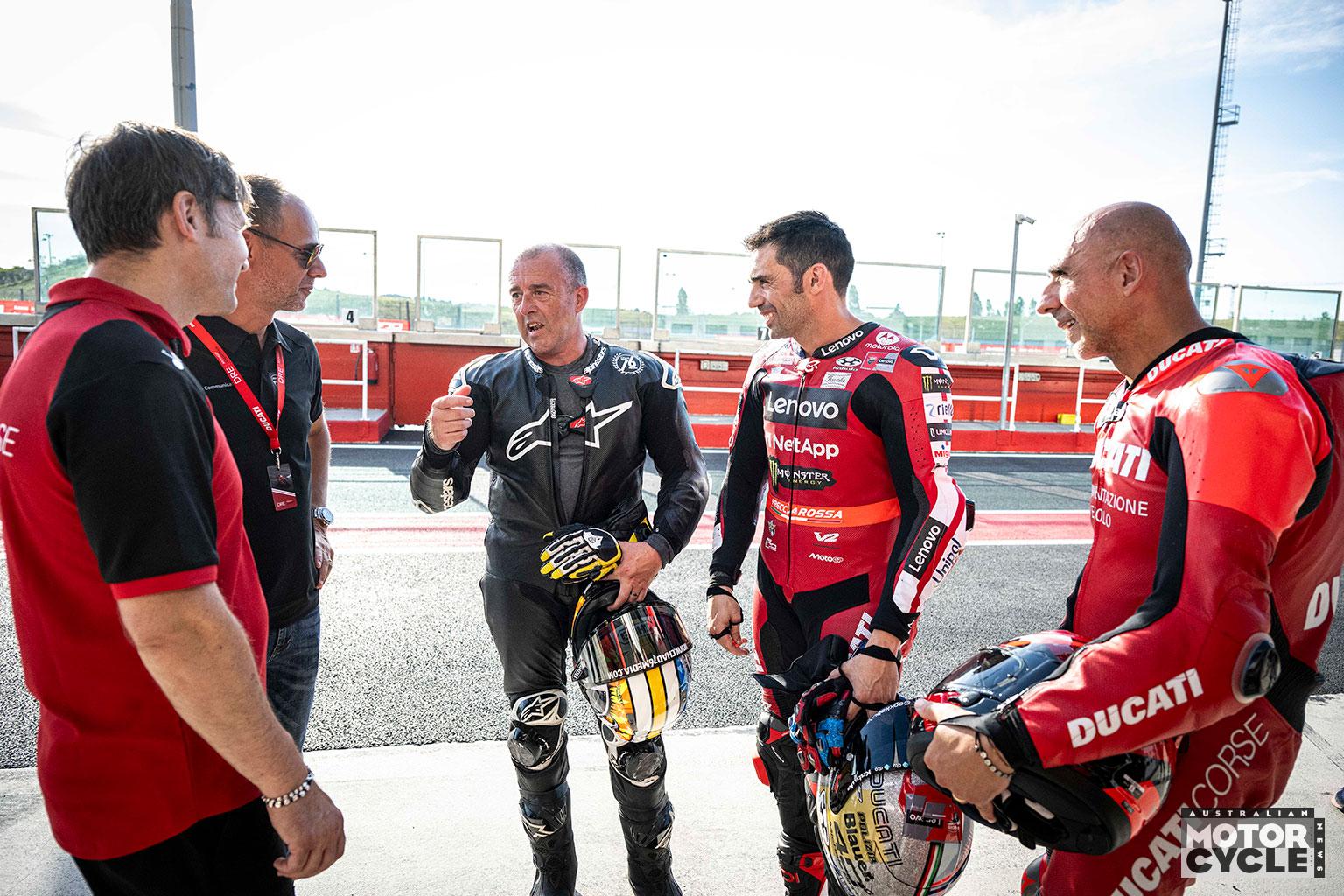
Living the dream: riding the GP26
I’m desperate to decompress and regroup after the physical pounding the V4 R has handed me, but it’s already 5.40pm and the track should close at six, so there’s barely time for a quick drink and debrief with the team, then it’s straight onto the MotoGP machine.
I’ve been overcome by nerves before. I’ve sat on the startline of the North West 200 road race, I’ve raced at the Isle of Man TT, but this is up another feeling. I kind of knew what to expect when I went road racing. I’d built up to it over years. But I haven’t a clue what the GP26 is going to be like. The factory V4 R makes 240hp and now we’re going up to around 300. From a rev ceiling of 14,000rpm to 15,000rpm, we’re going to escalate to nearly 18,000rpm.
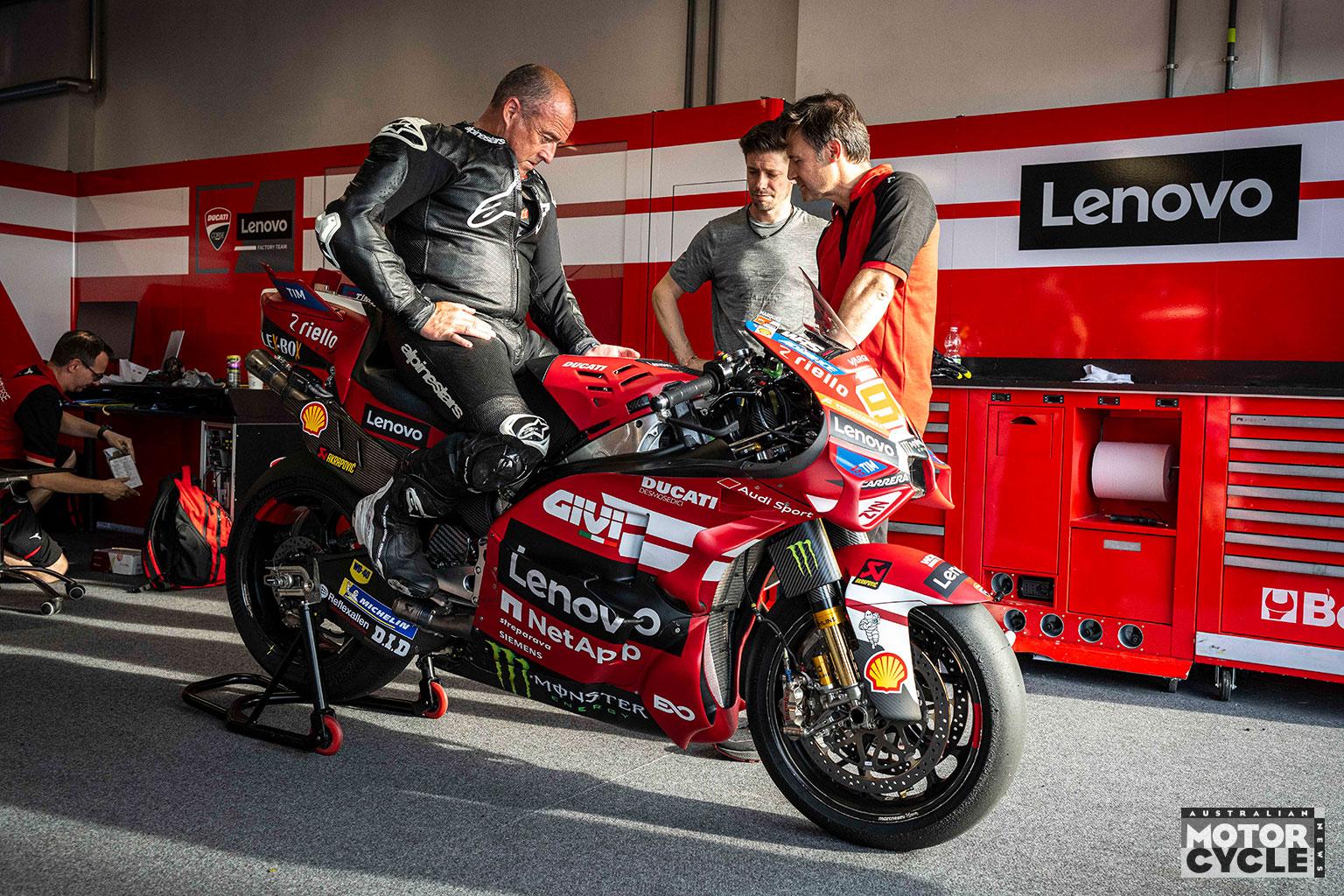
I’m still trying to breathe normally and smile and give an impression of calm. I’m trying to stay professional and to focus on the pictures and the video I have to produce rather than the fact that Ducati are about to let me loose on Marquez’s priceless MotoGP bike. The set-up is almost identical to what the factory riders use, with only a couple of small differences: the rev limiter is set slightly lower and we’re running steel brake discs instead of the carbon discs.
This time I’m following Ducati Corse’s test rider and regular wildcard in MotoGP, Michele Pirro, who will act as my reference rider. He’s on a V4 R, but even on a road-based bike he’s capable of lapping just a few seconds away from WorldSBK pace, so there’s no chance he’ll be taking it easy.
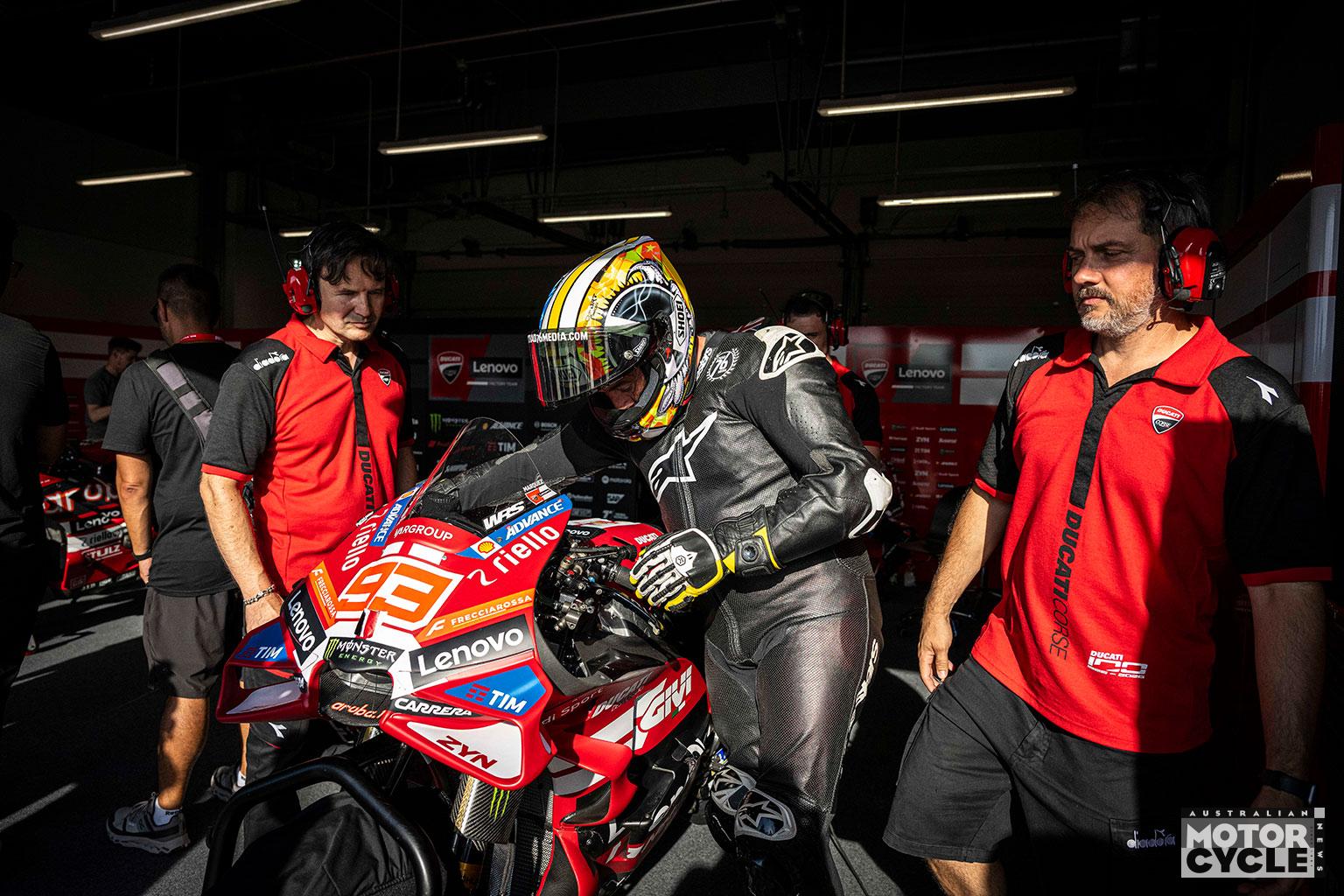
Now even the Lenovo team personnel look a little nervous. The bike fires into life, spitting fury into the air. I jump on without kicking any of the aero carbon and quickly adjust the brake lever using the span adjuster on the left ‘bar so it sits slightly closer. Hopefully Marc won’t mind.
Thankfully there’s a conventional clutch, and the team has taken off the thumb-operated rear brake and ride height device lever. That means I only have to focus on releasing the clutch, braking normally, and remembering the race-shift pattern (with no neutral between first and second). It’s my first taste of a seamless gearbox, too.
Just don’t stall it, son.
Leaving pitlane there’s a vague sense of Ducati familiarity. The dash looks similar to Bulega’s standard V4 R but beyond that everything is wildly different. There are more buttons crammed onto the ‘bars and far more systems working in the background. It doesn’t feel like any Ducati I’ve ridden before. In fact, it doesn’t feel like any motorbike I’ve ridden at all.
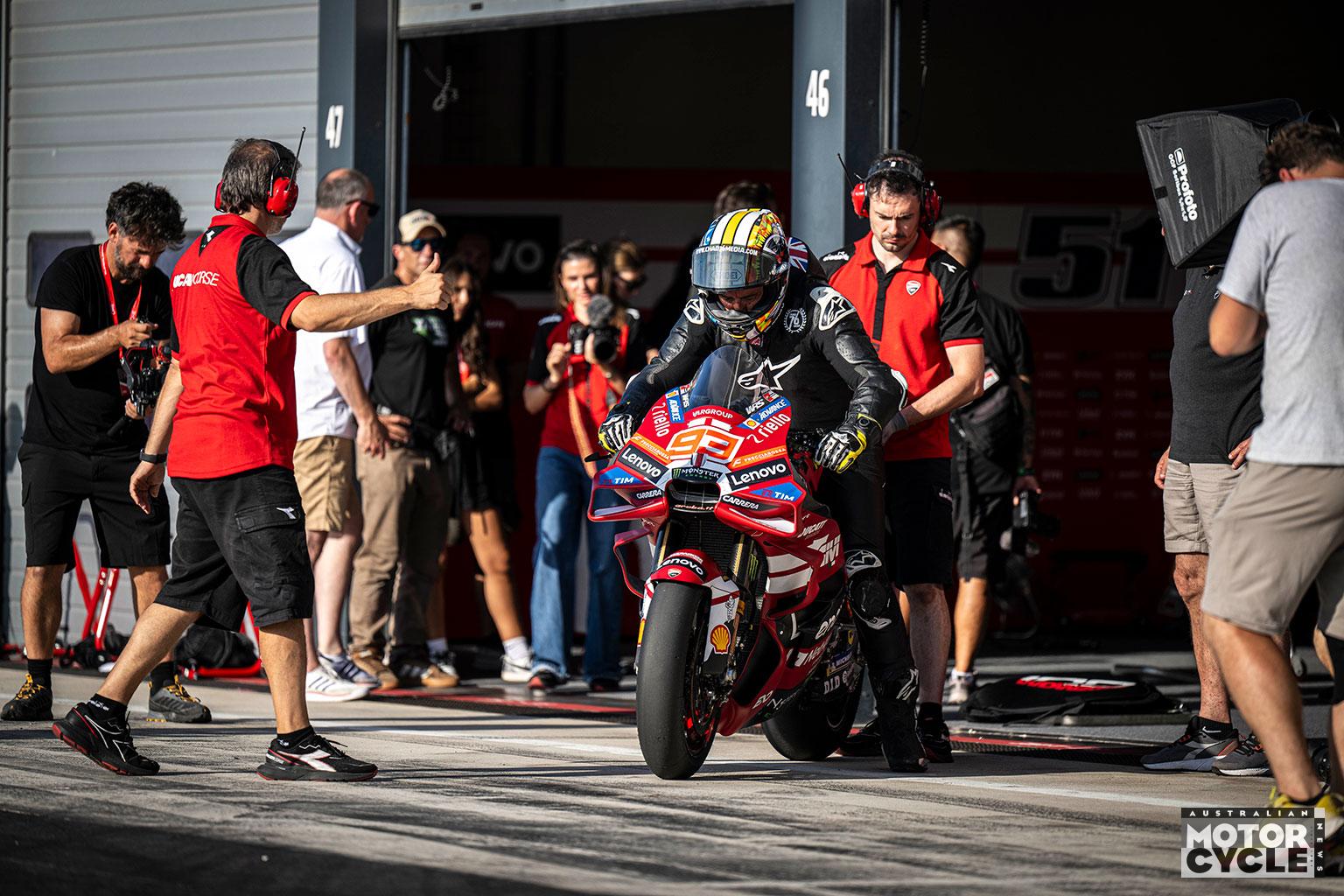
That’s because Ducati has designed it with one purpose in mind: going as fast as possible around a racetrack. Bulega’s bike is a missile but still based around a roadbike platform that has to function on the street and cope with everyday riding. The MotoGP bike has none of those compromises.
It is the F1 of the two-wheeled world. Every component, every setting, every design execution exists in the name of winning races. There are no useful devices to help a normal rider survive. And you get that immediately.
The ‘bars are high and wide for a racebike, although still not as wide as Bulega’s. The seat is surprisingly broad and extremely grippy. The shape of the fuel tank almost locks you into position, cupping around your legs like a fairground ride designed to keep you secure when the brakes are trying to throw you forward. The raised section at the back of the seat also stops you sliding backwards under acceleration. It’s almost comfortable.
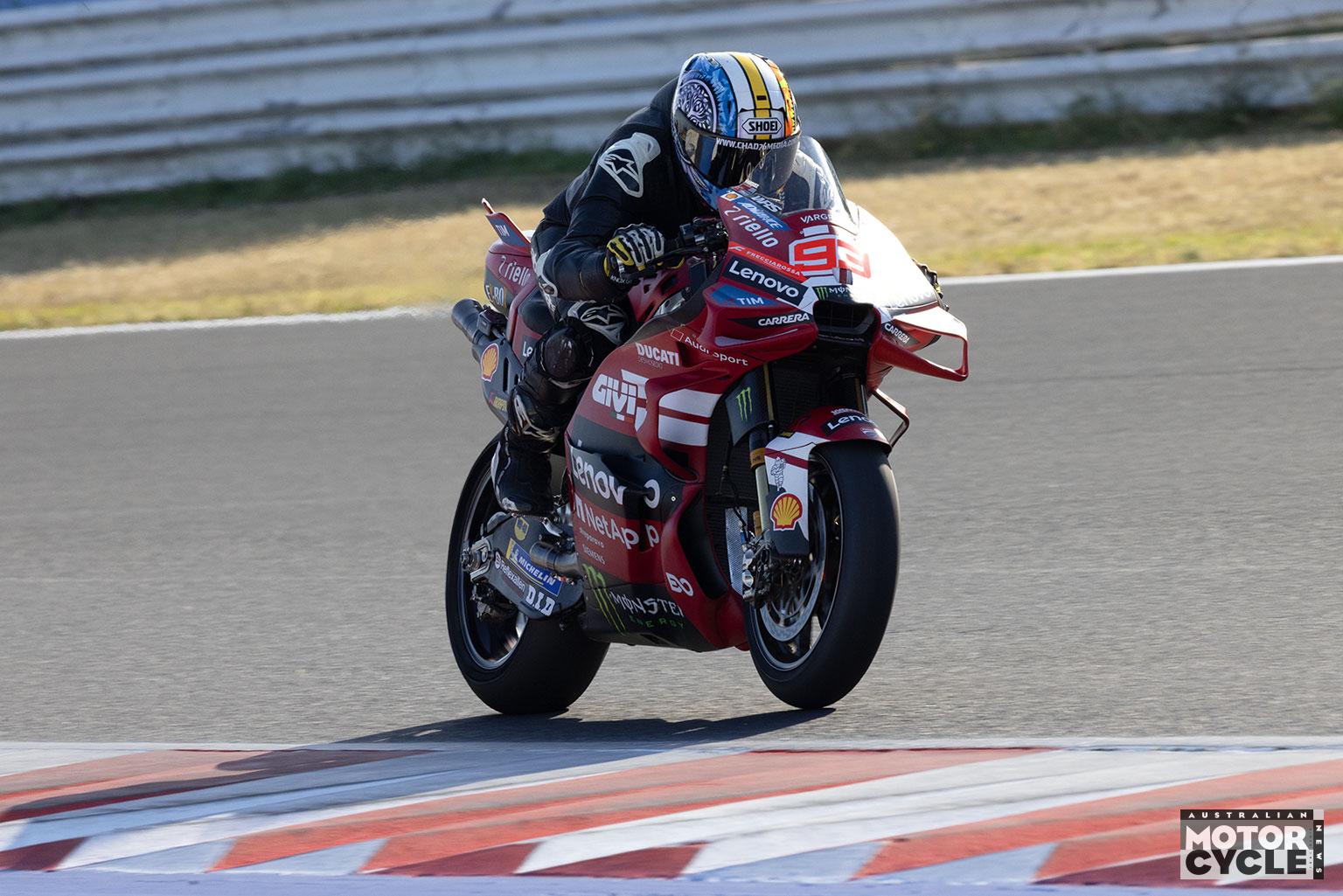
There’s no time to learn the bike at my own pace. Pirro is already pushing, setting a strong rhythm from the start.
I need to keep the tyres up to temperature and the engine within its operating range. I force myself to start riding properly straight away.
The first real opportunity to unleash at least some of those 300 horses comes on the exit of Turn 6 onto the long back straight, through the slight kink of
Turn 7, and into breaking for Turn 8.
I’m certain I’m revving the Desmosedici hard, but the bike doesn’t feel like it’s building speed in the usual way. It doesn’t squat or react in any way; it just accelerates in one continuous surge, the seamless gearbox compounding the sense of infinite and uninterrupted drive.
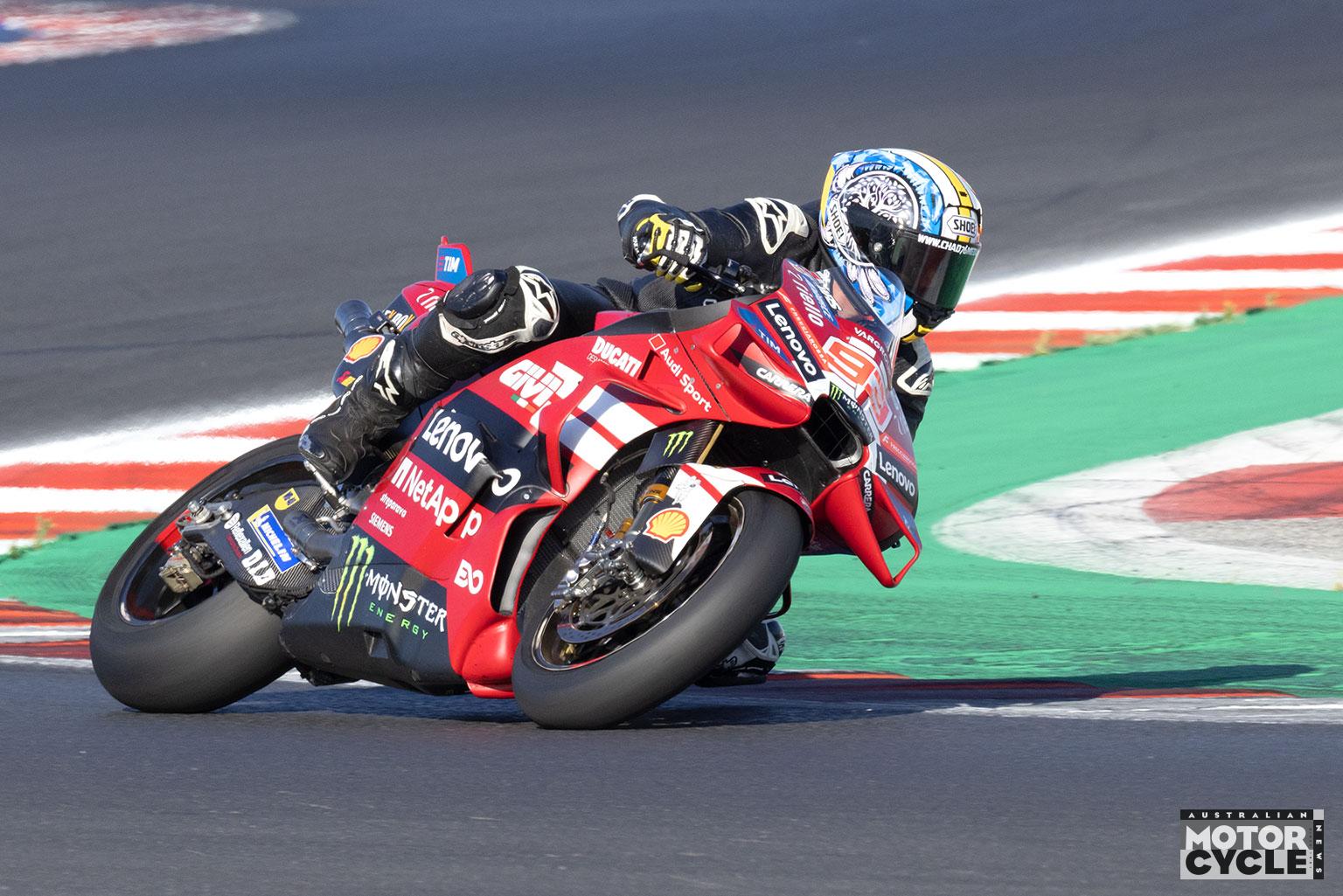
All this and I still haven’t seen the shift lights. That means I’m not revving the V4 high enough. They should illuminate at around 18,000rpm, and although the engine sounds totally crazed, I’m probably only reaching 15,000rpm. Coming into the Turn 10 hairpin before the fastest part of the circuit, I decide I have to illuminate those bloody lights. I can’t return to the pits without even using all the revs. So it’s second gear out of the corner, then I stand the GP26 almost upright and twist the throttle fully open…
There’s a shift light! Third gear. Another shift light! Fourth gear and then into the fast kink.
Holy shit. This is something completely different, even to the factory V4 R, which until 30 minutes ago was the most explosively quick motorcycle in my universe. Now there is no gap between the gears. No break in acceleration. Instead, there’s an enormous wave of indescribable force and traction that shovels you into the future and simply makes every other bike I’ve ridden seem a bit limp.
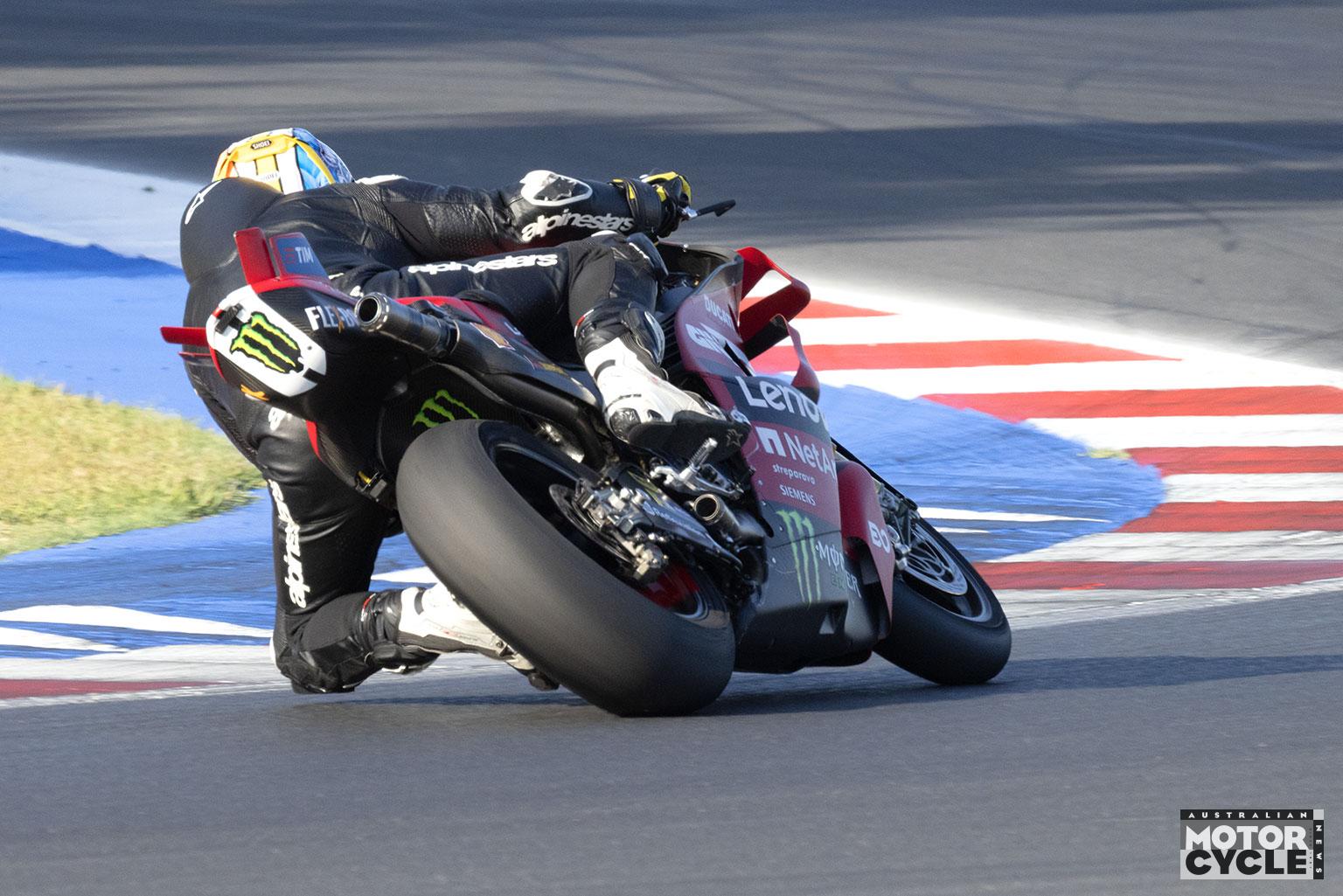
The bike feels without limit. It feels alive. I, however, am not attacking the corners. I’m not anywhere near my limit with my braking or turning. I’m simply riding within myself, making sure the tyres and brakes stay up to temperature and that I don’t make any mistakes.
But as I come out of the final corner and onto the start-finish straight, I know everyone at Ducati will be watching. So I have to give it another go. I brake hard, go down to second, and experience the fastest gear change ever. Through the next flowing section, I’m still trying to recalibrate my riding. I decide to hold second gear through the entire complex of Turn 1 to Turn 4 rather than rush another shift. I want every gear change to be deliberate and precise (I’d been warned that you must change up gears on the power or it won’t shift at all).
Shift light. Second. Shift light. Third. Shift light. Fourth. Pirro is ahead of me on the V4 R and I’m closing in fast. I’m carrying so much speed on the straight that I feel like I could pass him on either side of the track.
Just as the GP26 is about to swallow Michele and the V4 R whole, he brakes later, because he’s a MotoGP rider who knows exactly what he’s doing and I’m very clearly not. But the point is made.
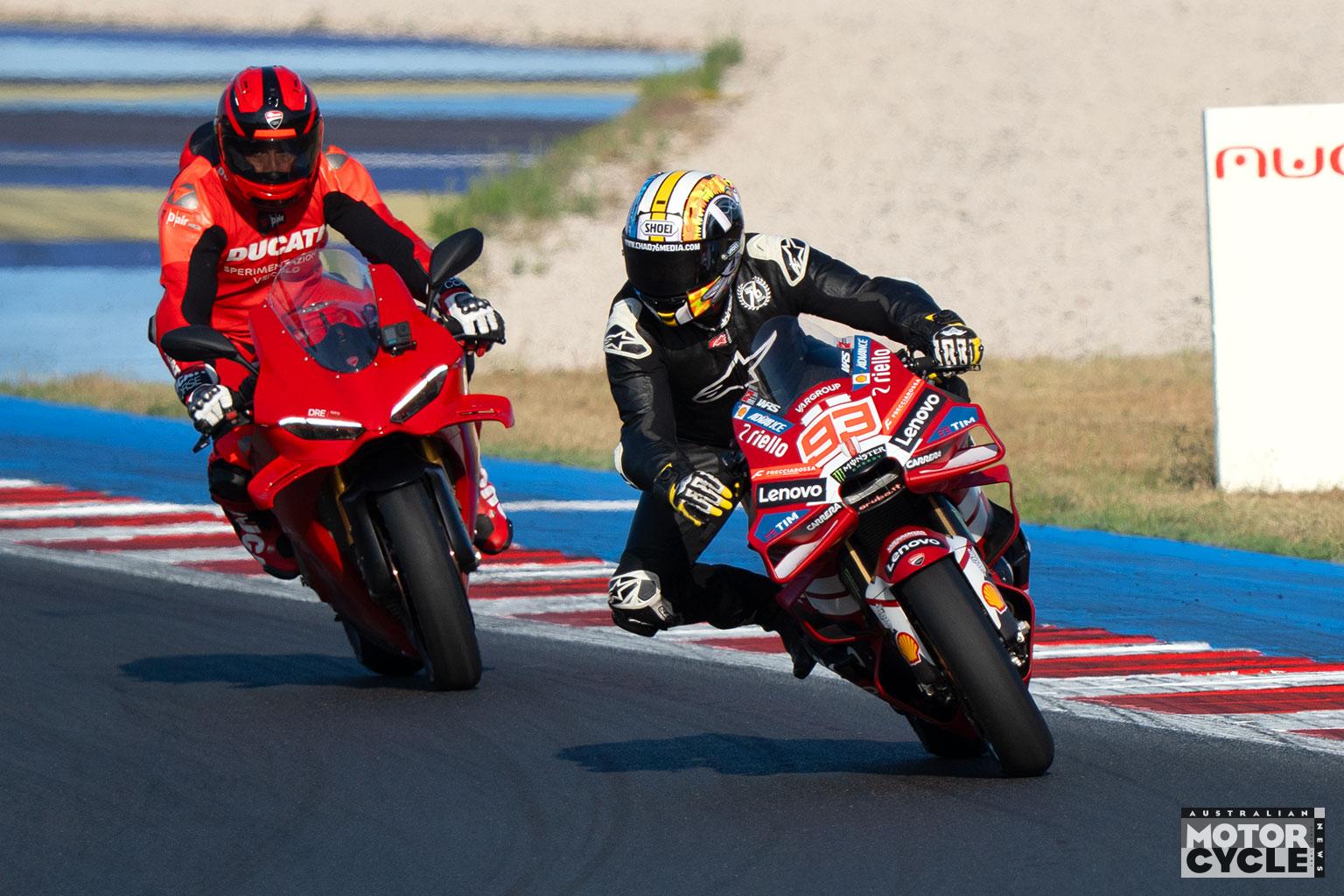
The seamless shift means there’s no drama or break in traction. The only giveaway that you’re moving through the gears are numbers on the dash fast-changing from second to third to fourth.
The acceleration in fourth gear feels as savage as it does in first. There’s so much efficiency, and so much force and torque and traction I don’t know what to do with it.
The brakes are another revelation, even when using steel rotors rather than carbon. The lever is incredibly light – a one-finger operation with forensic feel – and adds even more precision to the bike. But I’m nowhere near exploring the full potential of either the stoppers or the bike’s cornering ability.
Bikes with 300hp weighing less than 160kg should ride like barely controllable beasties, but the GP26 doesn’t feel nervous or wild. Even under heavy braking, it doesn’t dive dramatically onto the fork or lift the rear wheel and become unstable.
I’ve ridden racebikes with enormous power outputs and they often feel aggressive, frantic and difficult to control. Not this one.
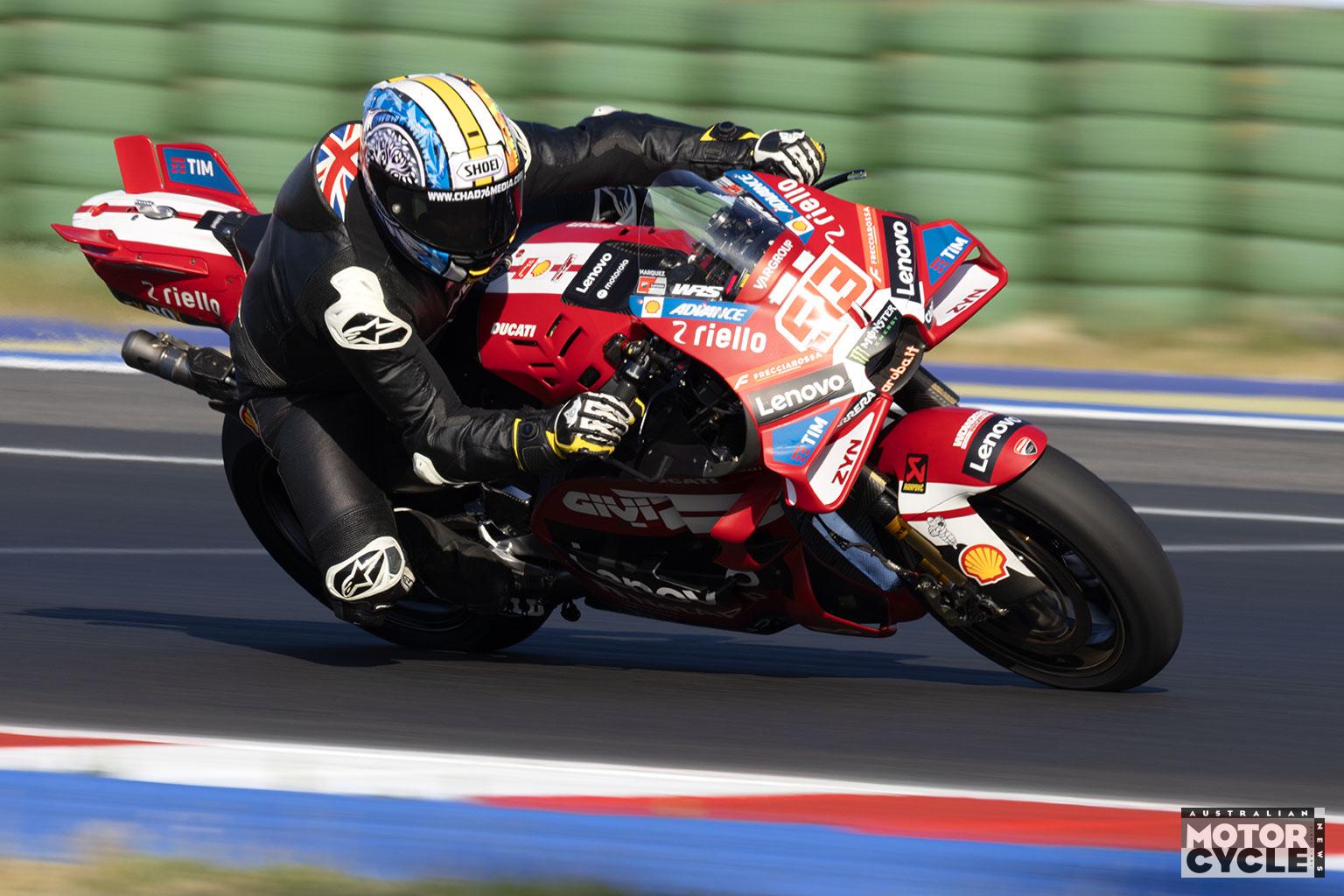
Instead, you get relentless thrust. It destroys perceptions of distance as straights feel like they’ve been cut in half. Bulega’s V4 R scared me with its speed, but on the straights there’s still time to process what’s happening. On the MotoGP bike, there is not. It’s second gear-third gear-fourth gear-end of the straight-brake. That’s how quickly it happens.
What surprises me most is that, at my pace, it’s also quite reasonable. Helpful almost. I can use second gear through some corners where a MotoGP rider would probably be in first. I can feel the traction control working as I pick up the throttle. I’m not spinning the rear tyre or sliding the bike, but there’s a slight hesitation as I first apply the power – clearly some electronic intervention is keeping me safe – before the bike stands up and unleashes everything all the way to the 18,000rpm shift lights.
The chassis is planted, stable and forgiving. I can feel what the tyres are doing. The bike is communicating with me, even though I’m riding nowhere near the level it was designed for. It doesn’t feel like a rigid and uncompromising racer that’s impossible to understand. There is feel. It has movement. It gives feedback and confidence.
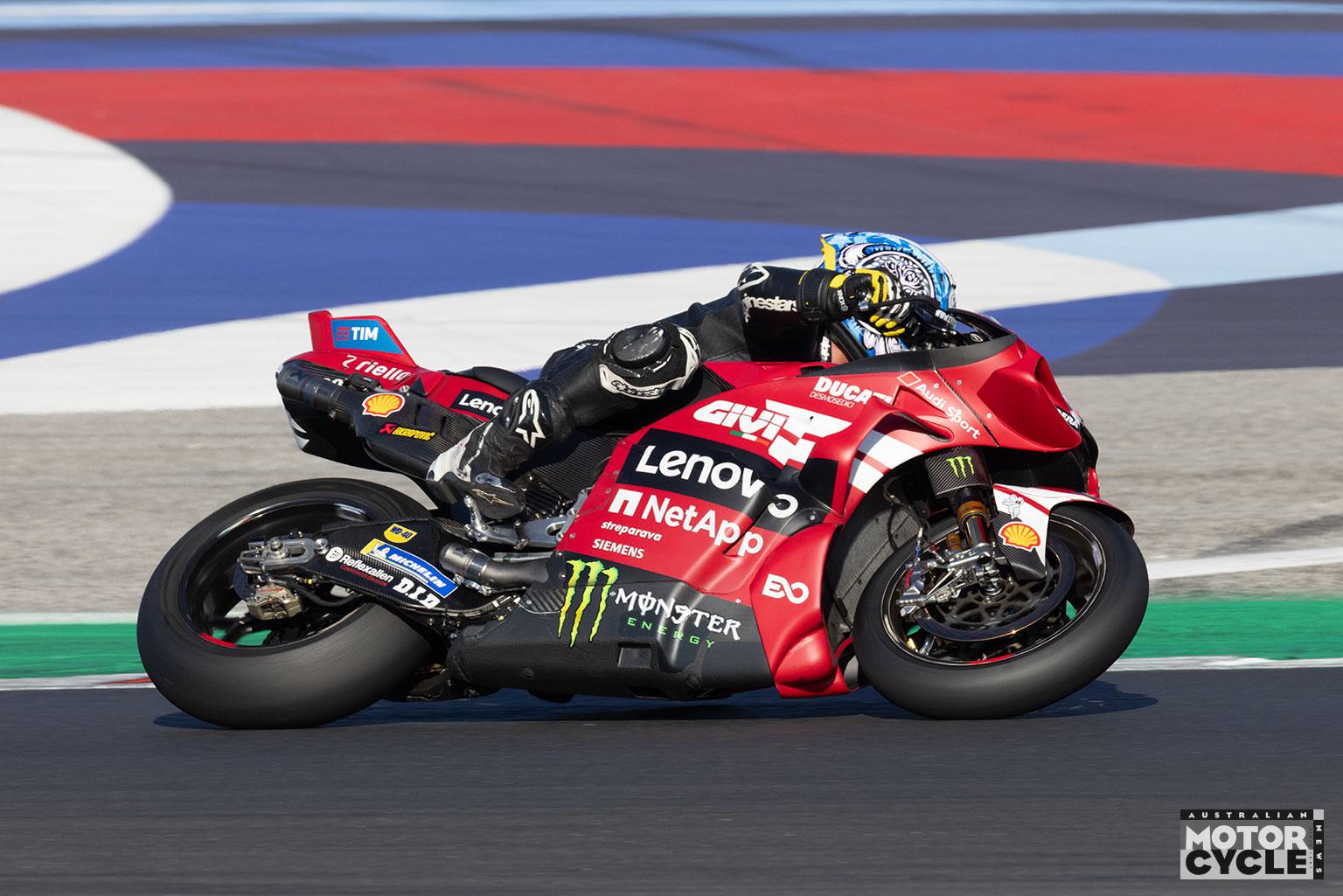
Of course, I’m not twisting the chassis or flexing the swingarm. I’m not doing anything remotely close to what a MotoGP rider would do with this machine. But even at my relatively slow speed, the bike is telling me exactly what it’s doing. And because of that, I start building confidence. I can understand it. I can gradually push a little more. Every lap I’m getting faster.
I suspect, however, that the GP26 itself might be wondering how it ended up carrying a slightly overweight and considerably slower passenger around the Misano circuit. If motorcycles could talk, I’m certain this bike would be laughing at me. All season it has been ridden by Marquez, pushed to the absolute limit by the greatest rider in the world. Now it has a journalist from Yorkshire sitting on it, trying to put together a respectable lap while attempting to look like he knows what he’s doing.
After five laps, I know we must be getting close to the end, but I’m finally starting to absorb what’s happening. The first three or four laps were about survival, a blend of panic and concentration, but now I can finally look around and take it all in. The sun is starting to drop. It’s 6pm.
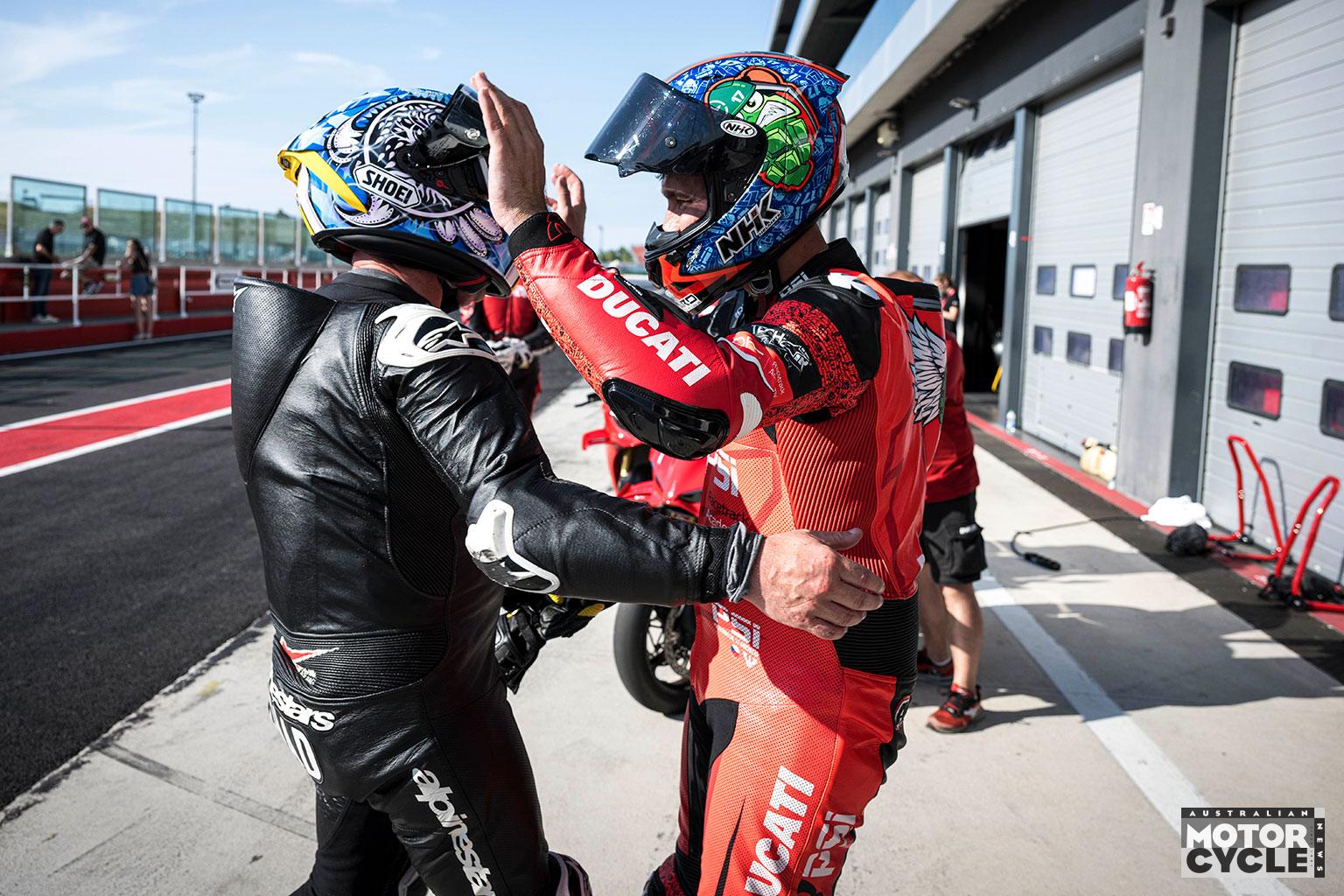
We cross the start-finish line again to begin lap six. Ducati Corse must be happy with what they’re seeing in the data and the lap times, because I’m more than happy to stay out there for as long as they’ll let me. By now, the process is clear. Get through the corners, keep heat in the brakes, keep the tyres working, brush the knee on the historic track, stand the bike up and unleash the power…
Back in the pits, I’m emotional. Getting to this point has been a huge undertaking, so there’s an enormous sense of relief. The job is done. The bike is safe.
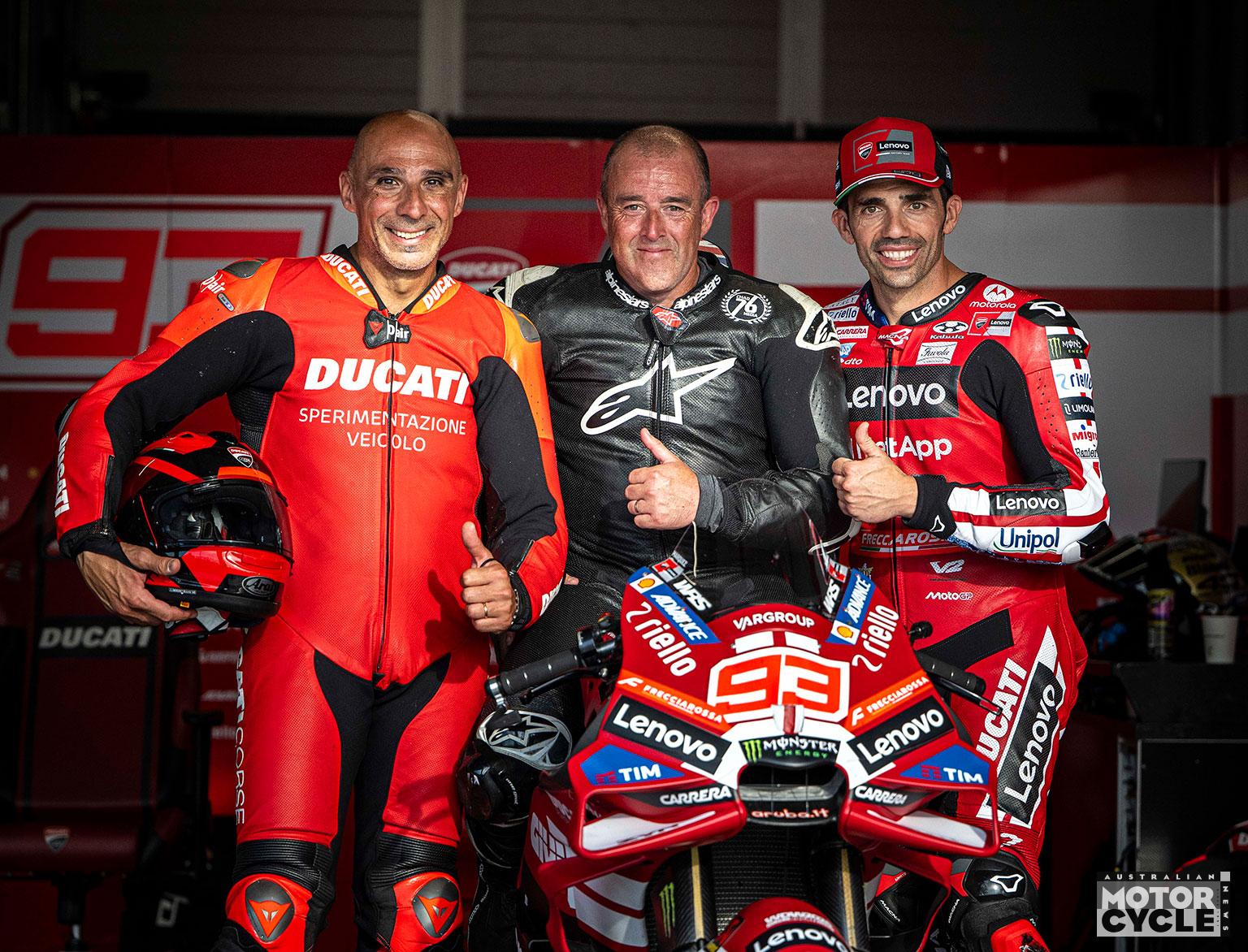
Beyond relief, there’s something else; an overwhelming respect for MotoGP riders. Riding the GP26 gave a small glimpse of what it must feel like to control one of these machines. The power, the chassis feedback, the precision, the amount of information coming through the bike are unlike anything I’ve experienced before. To do what these riders do for 20 or 30 laps around Mugello or Jerez in 40-degree heat, fighting wheel-to-wheel at those speeds and that intensity, is almost impossible for me to comprehend. One tiny mistake, perhaps running slightly wide, can be the difference between qualifying second and qualifying 10th. That level of precision riding is beyond belief. They also have to process everything: buttons, dash, electronics, tyre behaviour, chassis feedback, rider weight changes, ride-height adjustments, and countless other details happening in real time. The physical skill is extraordinary but the mental workload is just as impressive.
MotoGP bikes and their riders truly exist in a world of their own. Like my dream day at Misano, they are simply not normal.
Thankyou!
I feel incredibly privileged to have been given this opportunity and I’m hugely grateful to Ducati Corse, the Ducati Lenovo and DRE teams and all at Ducati for their support and for trusting me with such special machines.
DUCATI GP26 SPECIFICATIONS
ENGINE
Type Liquid-cooled, 90 degree V4 four-stroke, desmodromic DOHC, four valves per cylinder.
Capacity 1000cc
Fuelling Magneti Marelli electronic injection with flow mapping adjusted to meet 22-litre race fuel allowance
Ignition Magneti Marelli programmable CDI with adjustable mapping
Transmission Ducati Seamless Transmission (change gear at full revs without disengaging clutch). Chain final drive
Clutch Dry multiplate slipper
PERFORMANCE
Power Over 208kW (280hp) @ 17,500rpm
Maximum speed In excess of 350km/h
CHASSIS
Frame Aluminium alloy twin-spar, swingarm has carbon-fibre covers
Dry weight of complete bike 157kg
SUSPENSION
Type Öhlins
Front: Upside-down fork with carbon outer tubes, fully adjustable
Rear: Single shock, fully adjustable
TYRES & BRAKES
Tyres Michelin 17in front and rear
Brakes Brembo
Front: Twin carbon discs (steel for this test) with four-piston calipers
–Rear: Single stainless steel disc with two-piston caliper