One is building a name in Europe. The other is knocking on MotoGP’s door. Together, Archie McDonald and Senna Agius reveal what life is really like for Australia’s next generation of Dream Chasers…
For a country at the bottom of the world, we’ve produced an extraordinary list of riders who’ve made it to the biggest stage. Doohan. Stoner. Bayliss. Miller. Their names are etched into our sport, and their achievements rightly celebrated. What we don’t often see is everything that came before. It’s a reality that hasn’t changed for decades. If you’re an Aussie rider with big ambitions, sooner or later you have to leave our shores and take your chances on the other side of the world. There are no guarantees – in fact, the odds are stacked against you – yet every year, another group of youngsters pack up, board a plane and have a crack.
That’s what our Dream Chasers series is all about. Not champions (not yet, anyway) but about the riders living the journey right now, making sacrifices, chasing chances and building careers in one of the toughest sporting environments on the planet.
In this first instalment, we intersect with two riders at very different stages of that journey.
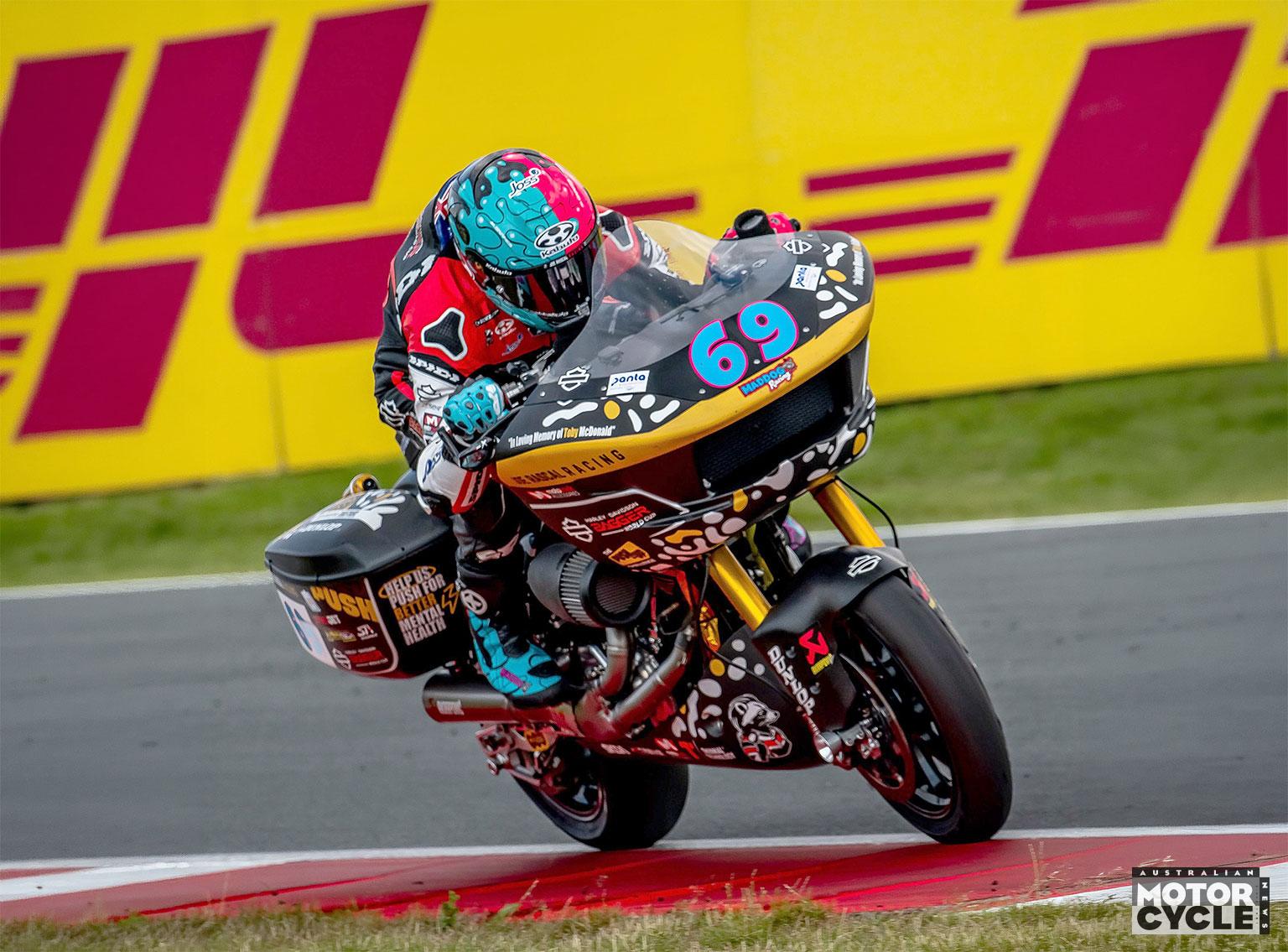
Archie McDonald has left home and is carving out a career in Europe aboard one of the newest and most unconventional race bikes in the world. At just 20 years of age, he’s also had to overcome personal heartbreak that would test people twice his age.
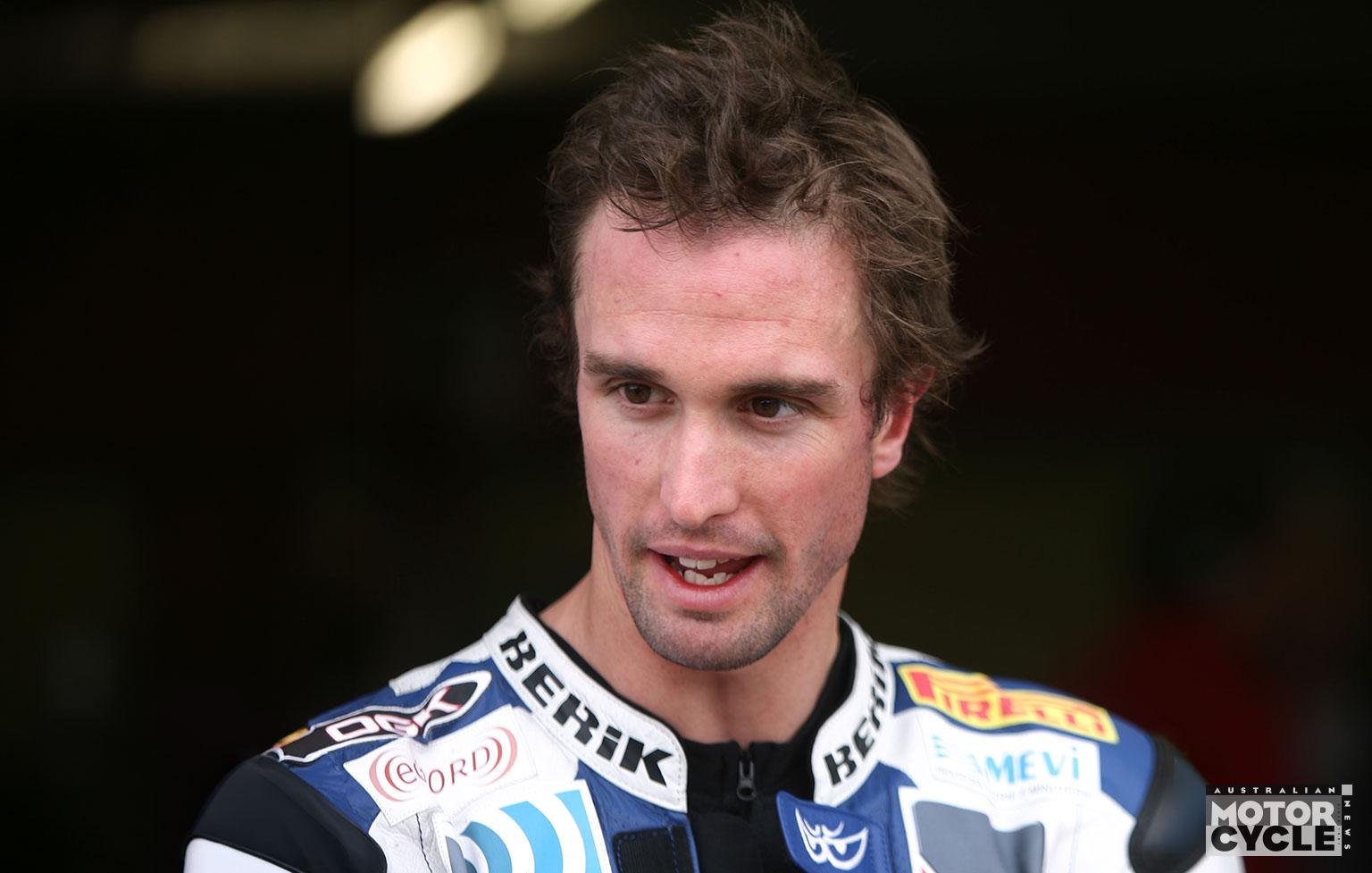
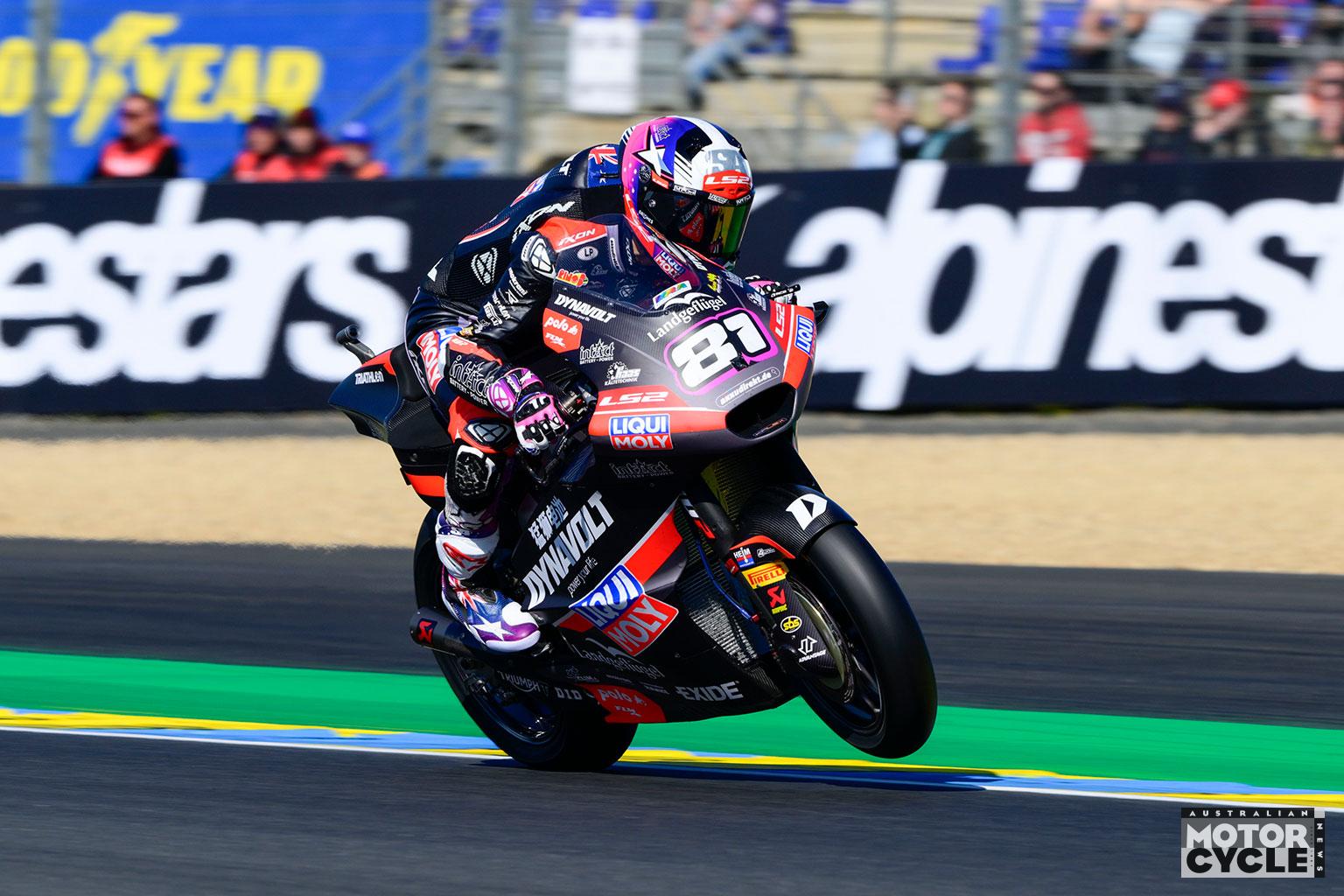
A few steps farther down the road is Senna Agius. The Moto2 front-runner is no longer dreaming about international racing – he’s living it. With MotoGP speculation swirling, every weekend is another chance to prove he truly belongs on the biggest stage of all.
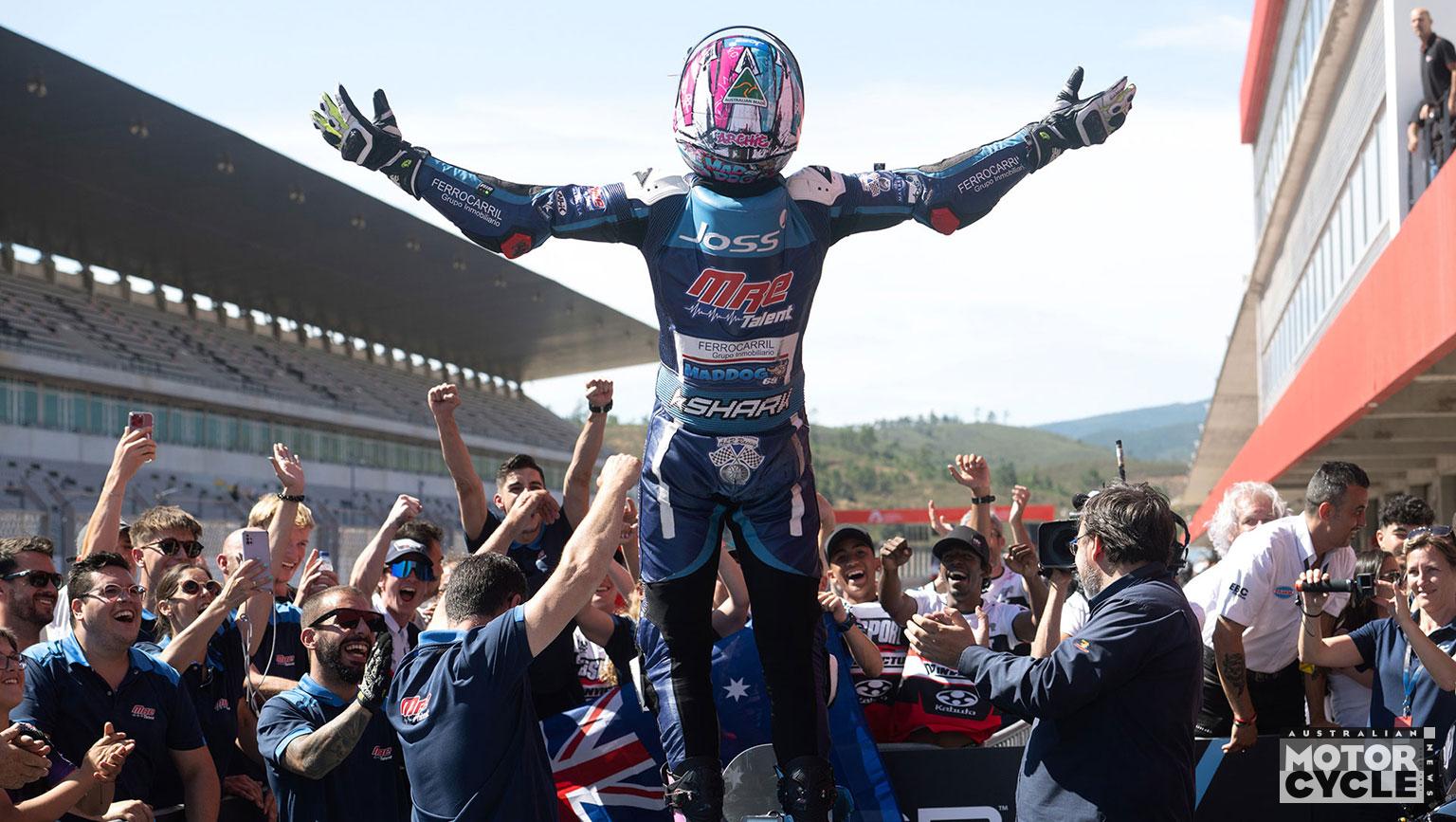
Different championships, different personalities, different paths… same dream. And while only a handful of Aussies will ever make it all the way to MotoGP or become world champions, every one of them starts in exactly the same place: a willingness to chase something bigger than themselves.
Mad Dog’s European education
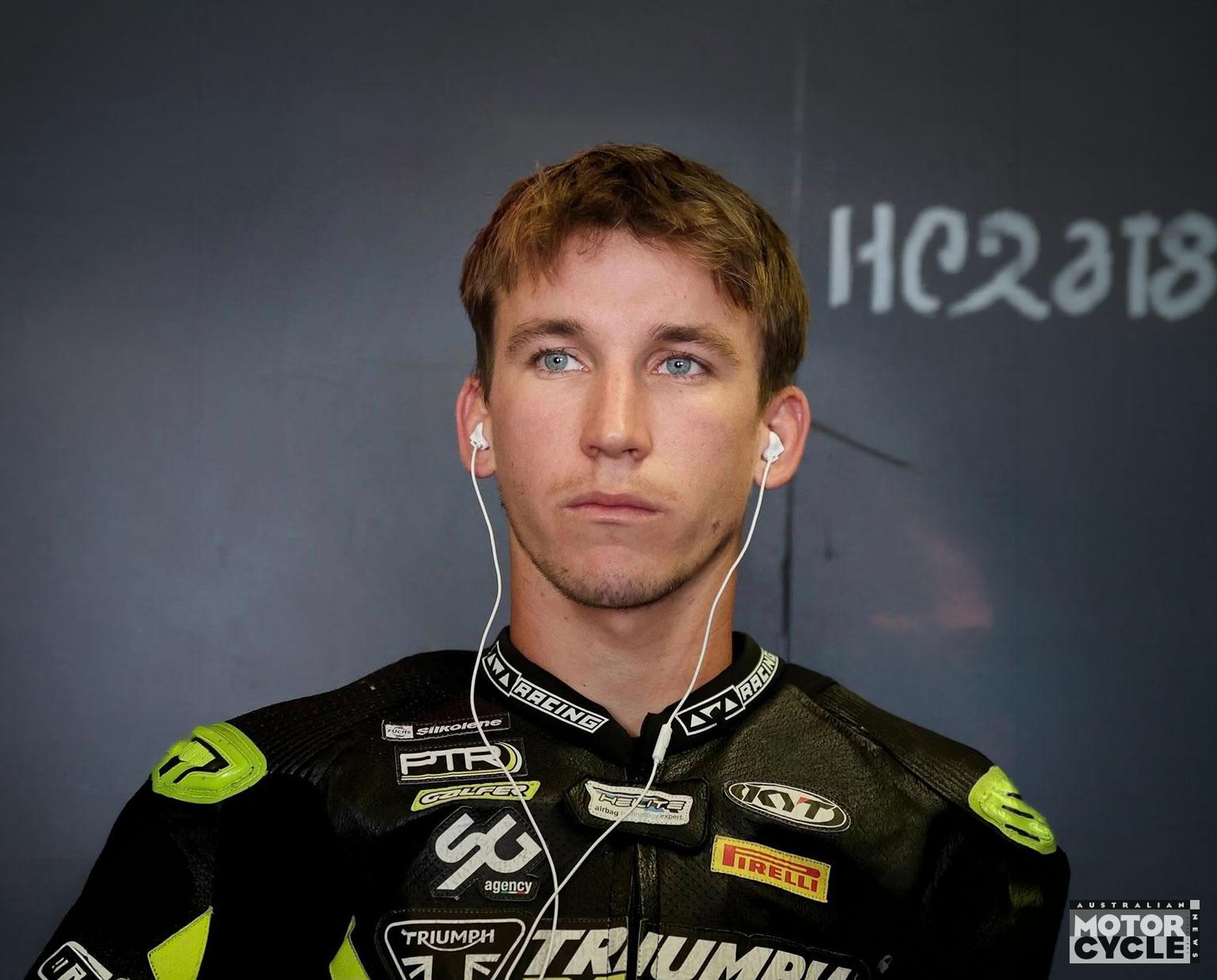
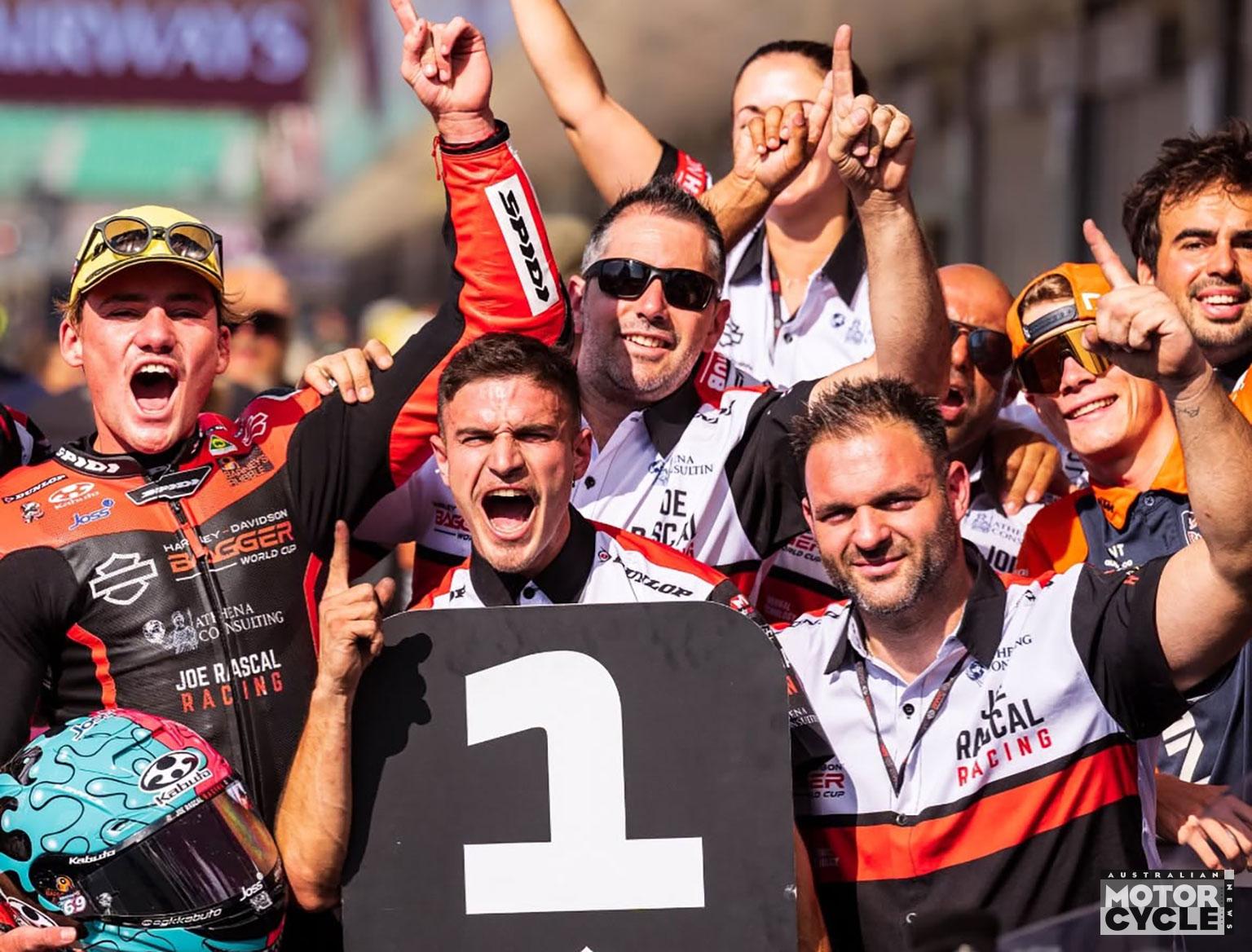
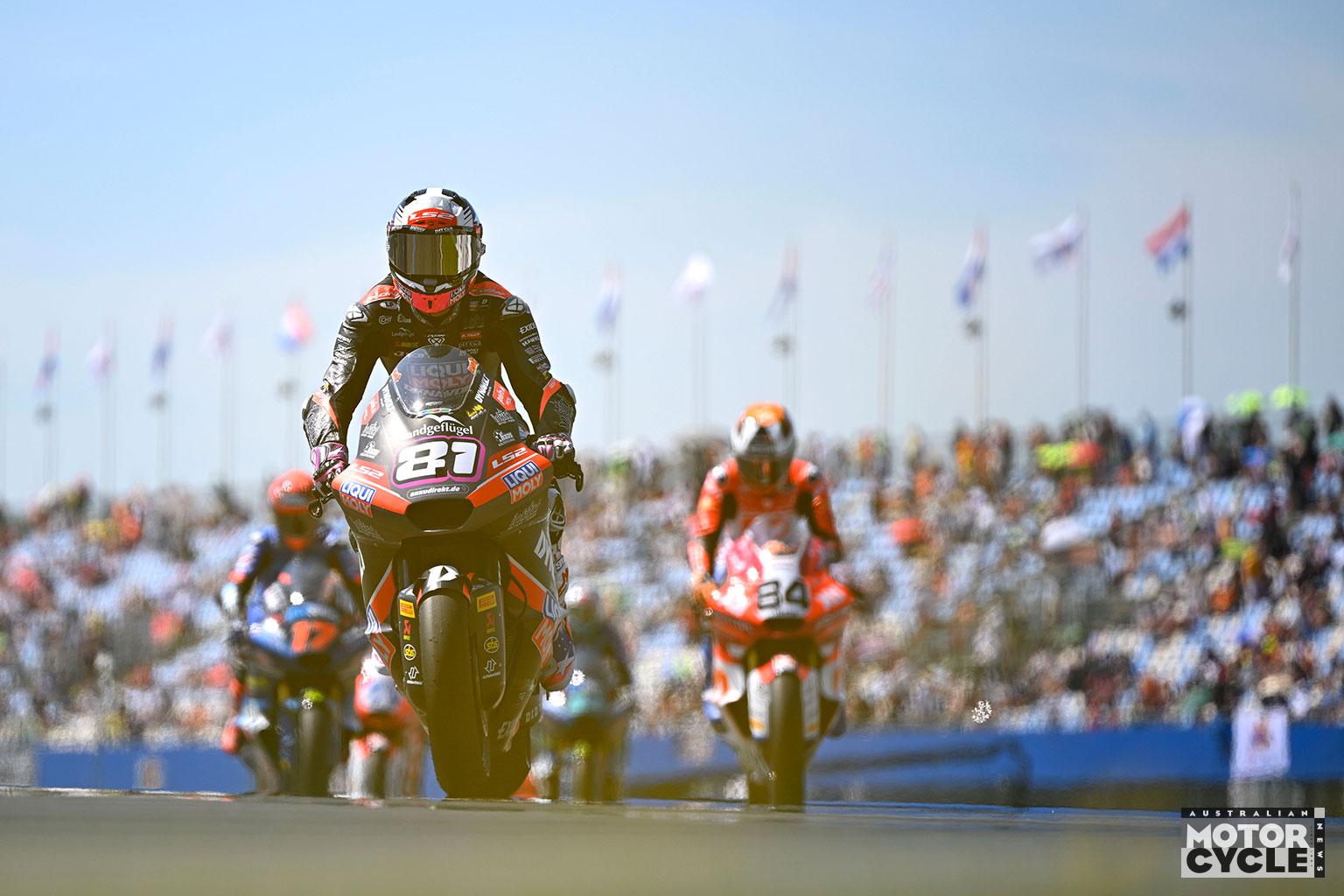
Few outside Australia’s racing circles had heard the name Archie McDonald before 2026. Now the Albury rider is making Europe take notice. Better known as ‘Mad Dog’, McDonald has emerged as one of the revelations of the inaugural Harley-Davidson Bagger World Cup, taking on former world championship stars aboard 280kg, 2100cc V-twins despite having only recently moved up from Supersport machinery.
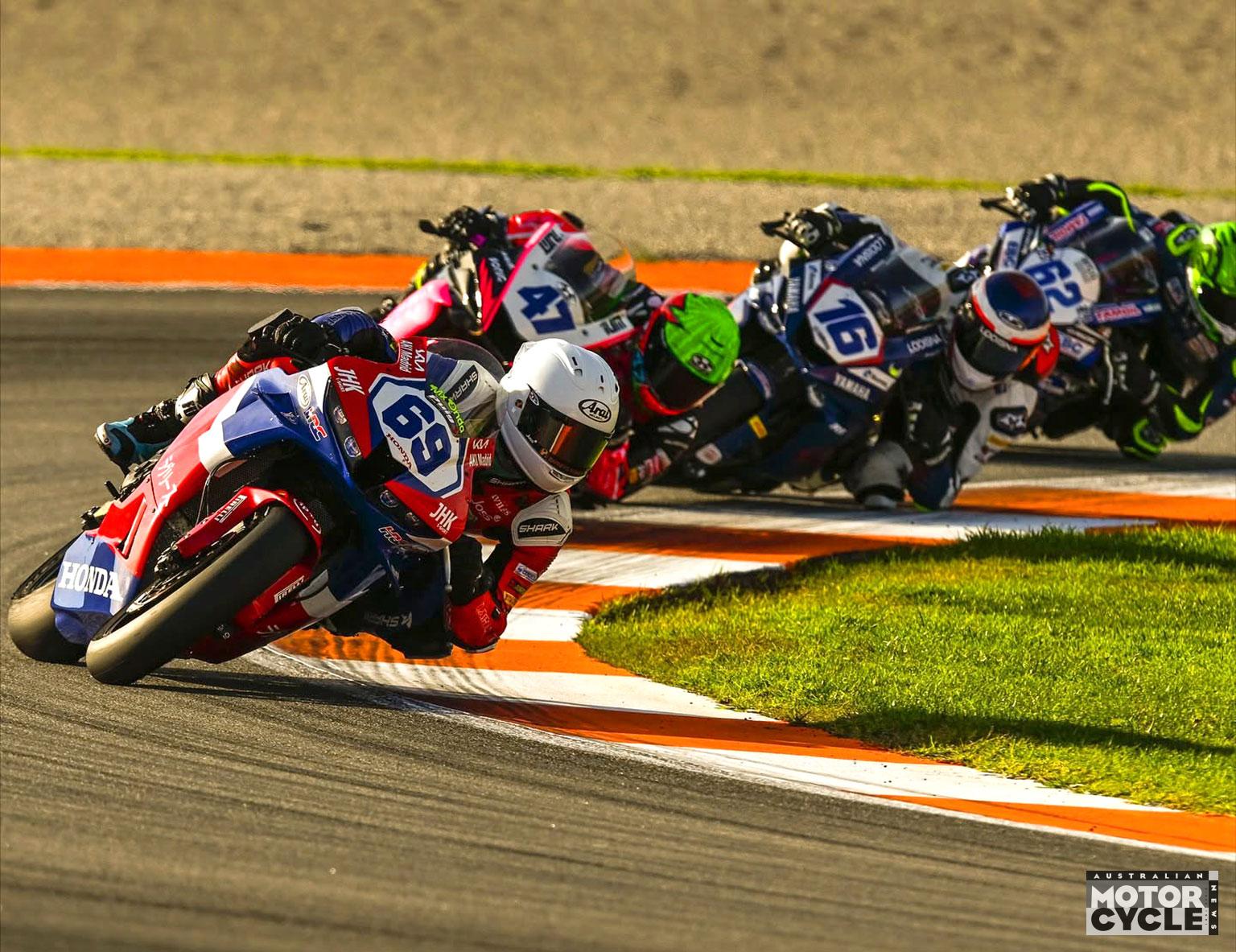
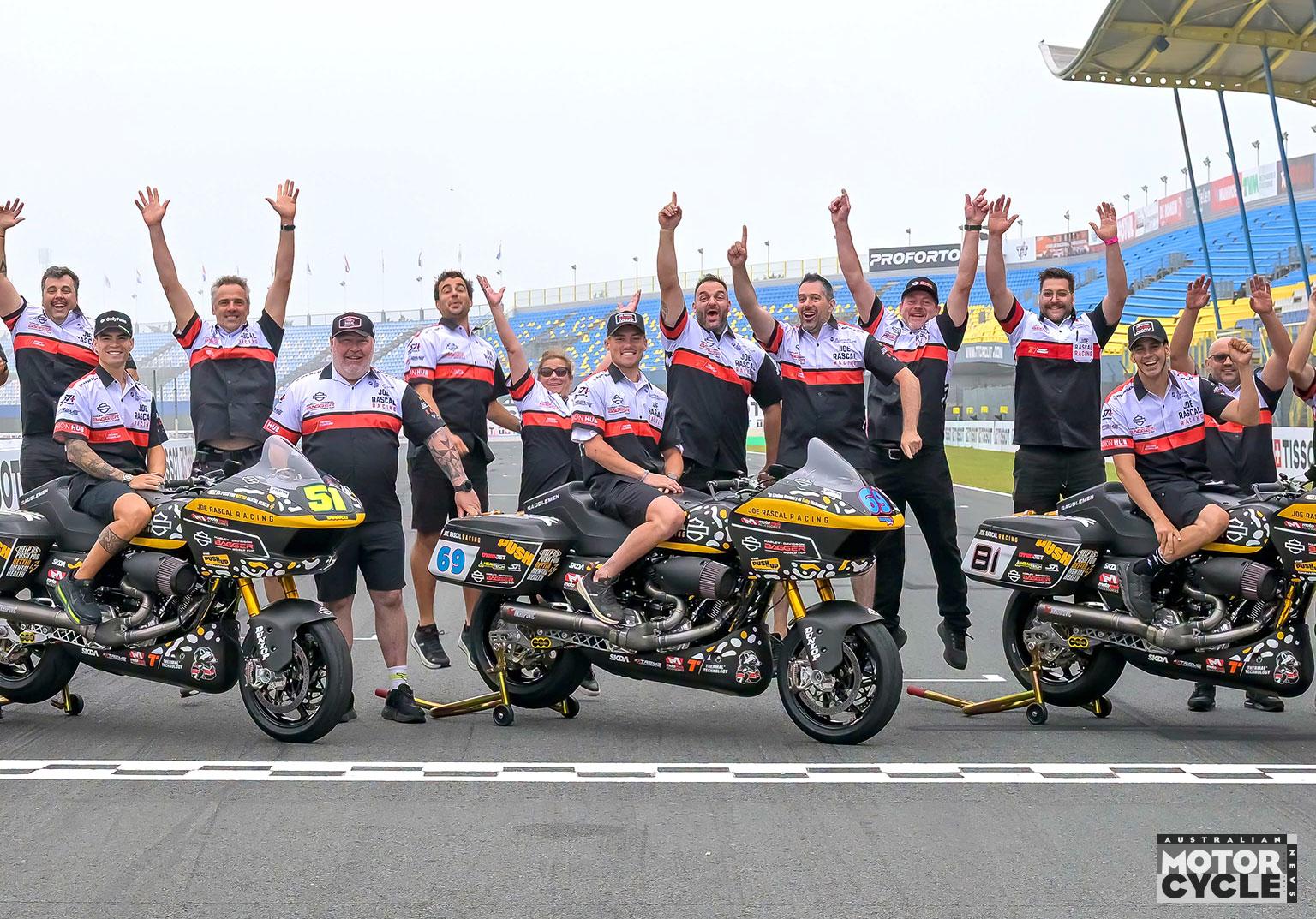
It’s been a remarkable rise. A five-time Australian dirt track champion, Archie switched to road racing in 2019 before relocating to Mallorca, Spain, four years later to chase opportunities unavailable at home. After alternating between the ASBK Supersport championship and European Stock 600 competition, he landed a coveted ride with Joe Rascal Racing, with results following quickly.
Despite giving away years of experience to rivals including Andrea Iannone and Eric Granado, McDonald has established himself as a genuine title contender. His rise, however, has come against the backdrop of unimaginable personal loss. His brother Toby passed away in April. Just weeks later, he was back on the grid at Mugello, Italy, racing in Toby’s honour while using his growing social media following to raise awareness for the Push For Better mental health campaign.
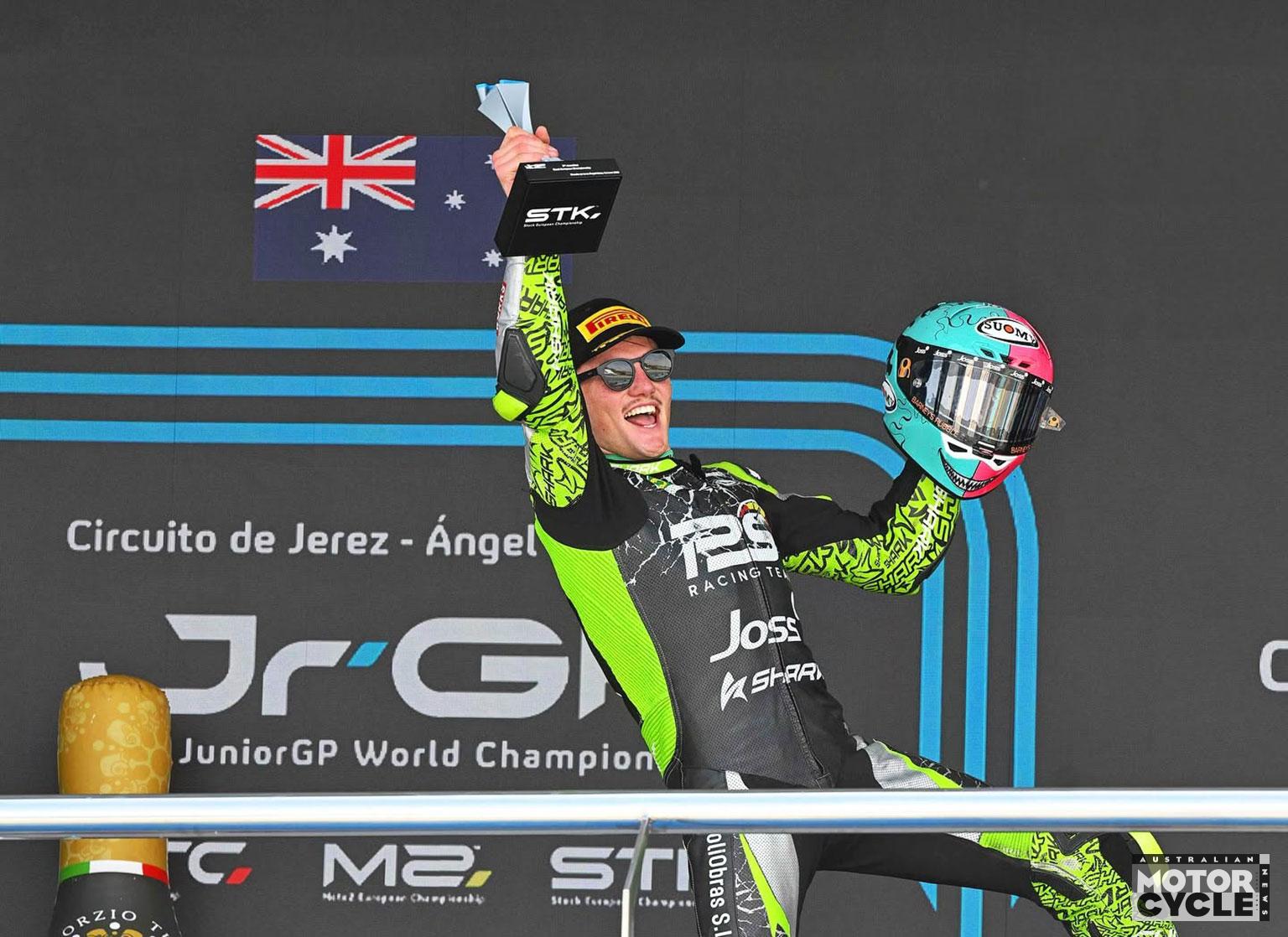
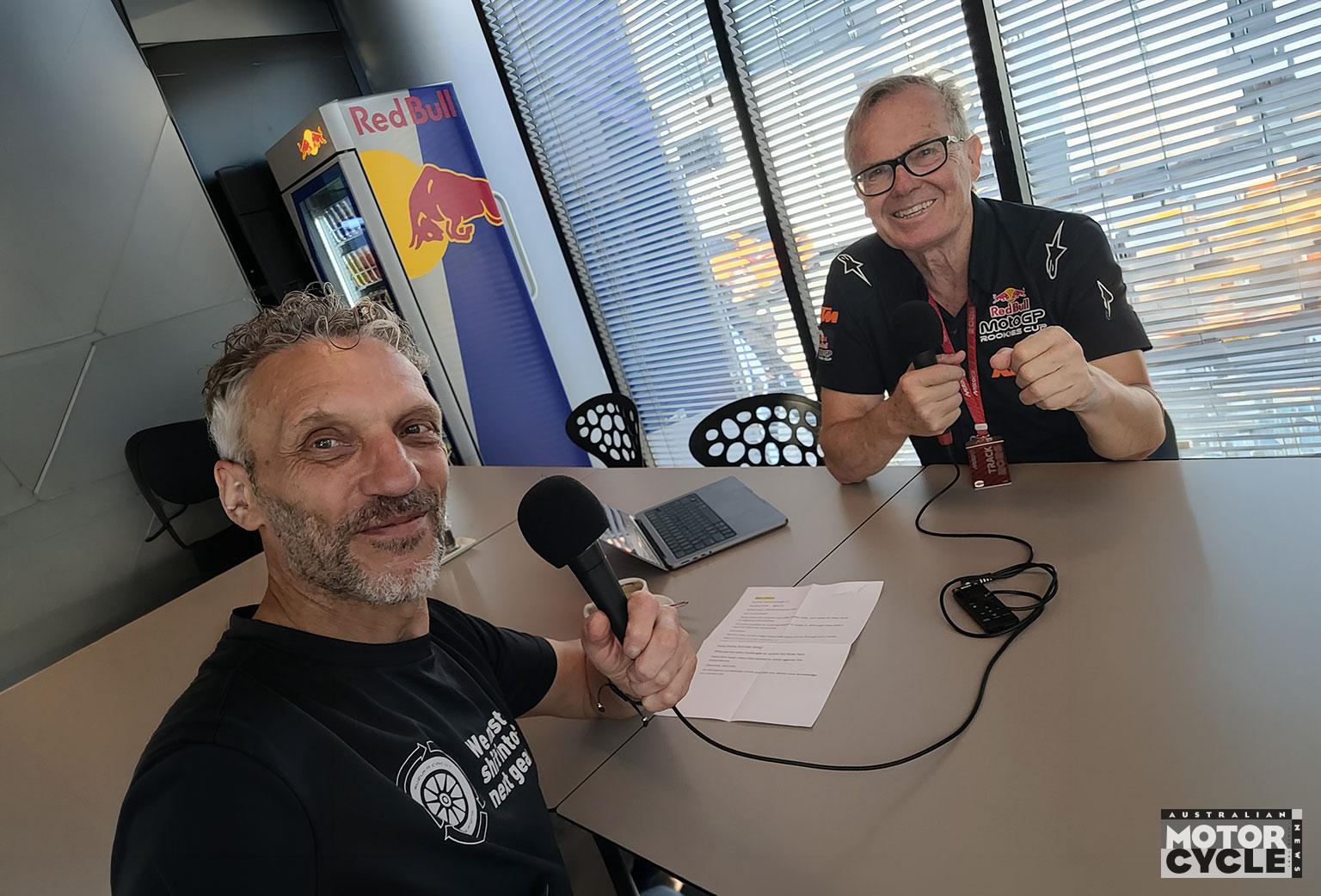
Neil Morrison caught up with Archie during the Dutch round of the Bagger World Cup to find out how a dirt tracker from regional NSW ended up chasing a career on the other side of the world.
The making of ‘Mad Dog’
The nickname doesn’t really fit. Away from the bike, McDonald is thoughtful, articulate and quietly spoken. But once the visor comes down…
“It didn’t come from a charity,” he laughs. “It just came from being myself on track. When I was 13, I went riding with my best mate Matthew Fife. I came in after the session and he said, ‘You’re an absolute mad dog!’ I mean, he said a few more words than that – but he was shocked by the person I was on track. I’m not like that in parc ferme. But it’s stuck and I wear it high and proud. It’s a good nickname – unique.”
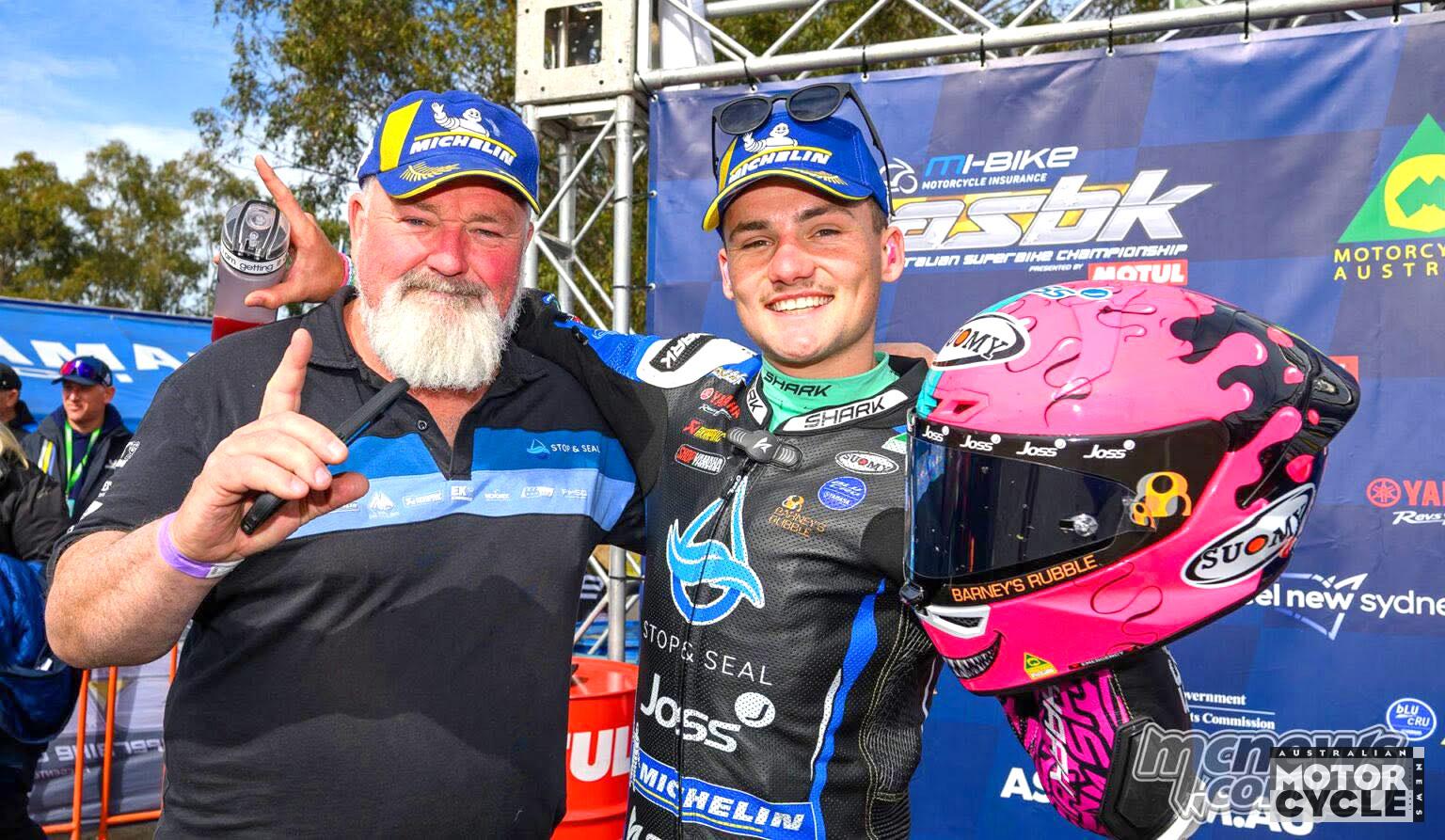
Unlike many Australian racers, Archie wasn’t born into a racing dynasty. “There wasn’t a granddad or cousin that raced,” he explains. “It was just Dad putting me and my brother on bikes in the backyard. We’d spin laps for days on end. One day we went to a track and we didn’t stop. We were beating 12-year-olds at the age of four. Ever since then we’ve loved it. It became my job, my passion and eventually my life.”
The family’s backyard wasn’t exactly sprawling, either. “We had less than an acre,” he laughs. “That didn’t stop us. We were banging into fences and each other and loving every minute.”
Choosing the road less travelled
Those early years built five Australian dirt track championships before a crossroads arrived. “After 10 years of dirt track, it was either speedway or road racing,” McDonald says. “We picked road racing.”
That decision led him into the Oceania Junior Cup before another life-changing move: Europe. “I was 15 when I first came over,” he says. “Dad stayed with me the first year before I moved in with Joel Kelso, who was being coached by Angel Poyatos. I still live with Angel today.
“The first month was a complete shock. We’d drive to the track and pick kids up from school because motorcycle riding was part of their PE class. I’m thinking, ‘How are these kids riding motorbikes for school sport when we were playing badminton in Australia?’
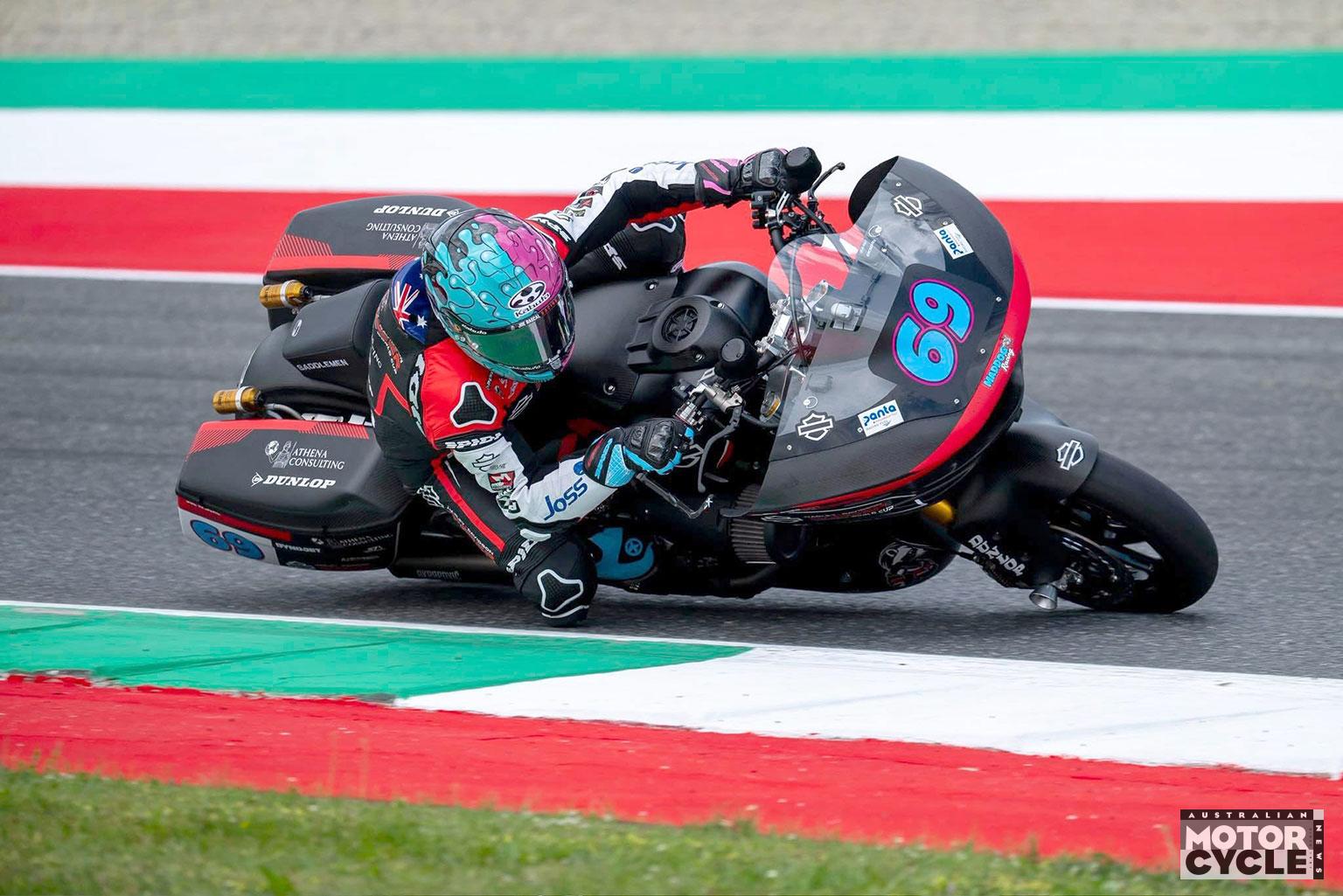
“That’s when I realised this is their culture. This is their life. I said to myself, ‘I want this to become my life too.’”
It meant sacrifices. Friends back home continued living normal teenage lives while McDonald chased something much bigger.
“They still ring me to tell me about the amazing party they had on the weekend,” he says. “I tell them, ‘Hopefully I’ll join you after I’m retired.’ This is what I’ve committed to.”
Learning a new language
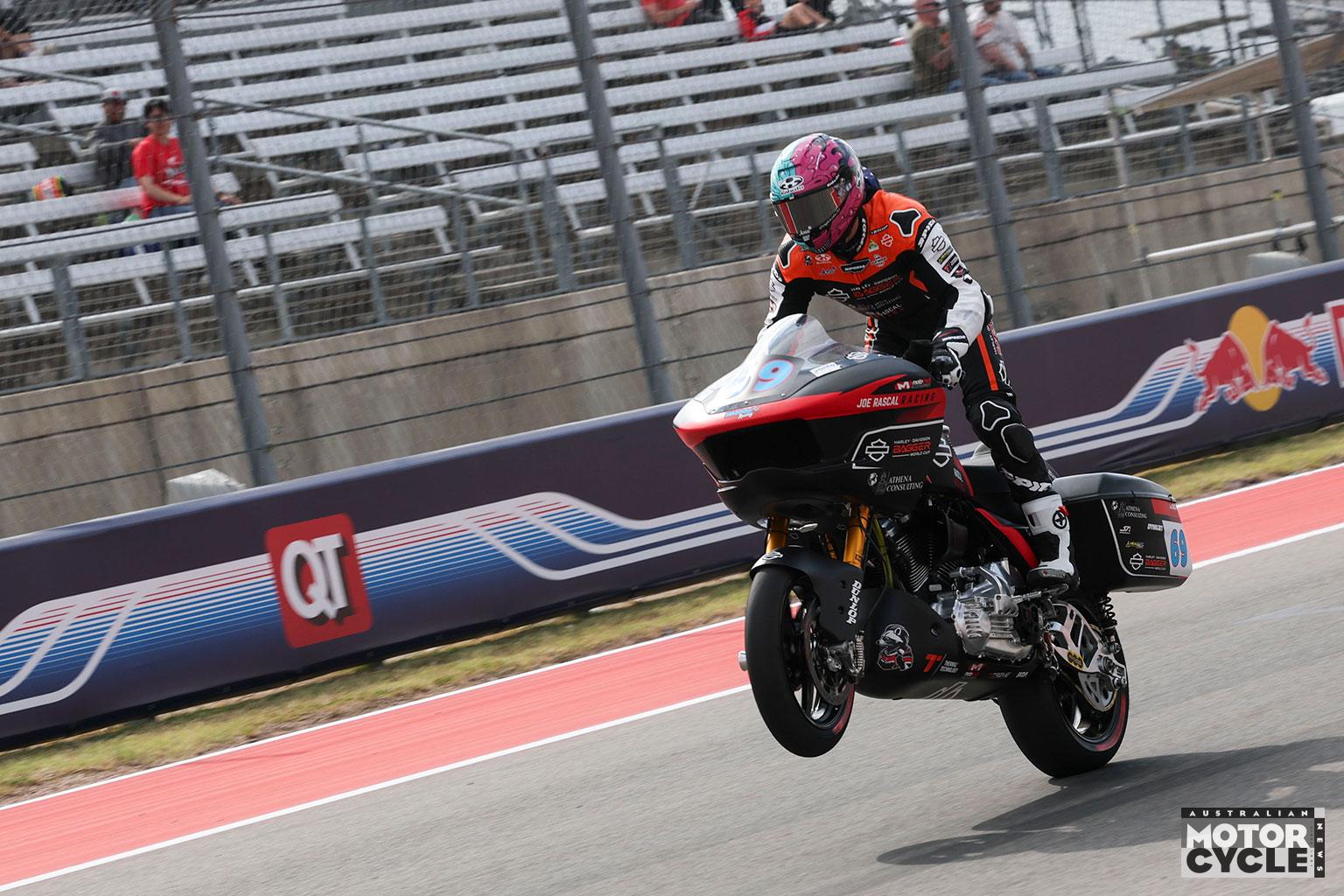
Not Spanish. Motorcycles. Moving from Supersport to the Harley-Davidson Bagger World Cup demanded a complete reset. “Massive difference,” McDonald explains. “The bikes are completely different sizes and riding styles. But in the end it’s just another race bike. You don’t realise that until you sit on one yourself. It’s a proper racing machine.”
The numbers certainly tell the story. A 600cc supersport becomes a 2100cc V-twin, producing almost double the torque. “It’s such a powerful bike. It’s torquing out of the corners so much, you just have to hold on twice as much as a 600, which I love. It’s more training, more gym. You have to adapt to any bike you ride. I’ve definitely changed my riding style and training.”
Then there are the circuits. Most have been completely new. Fortunately, Angel Poyatos has an unusual training method: “He’ll change the track every session,” Archie says. “It could be adding a cone to a corner. Adding a chicane. So, you go inside or outside of a cone. There’s a million ways of changing it. It’s like a deck of cards – all you have to do is add a cone and it’s a completely different track. It could be one corner or 50. Also, if you do it backwards it’s completely different.”
That ability has allowed McDonald to arrive at circuits like Austin and Mugello with no race experience, yet immediately fight for podiums. “I also study a lot,” he says. “I watch videos upon videos. I’ll watch more videos of a track than I’ll ride it, just to learn each bump in each corner. Before coming to this interview, I was watching laps of Assen and will until I get on the track. It’s a way to imbed it in my brain.”
Nothing is impossible
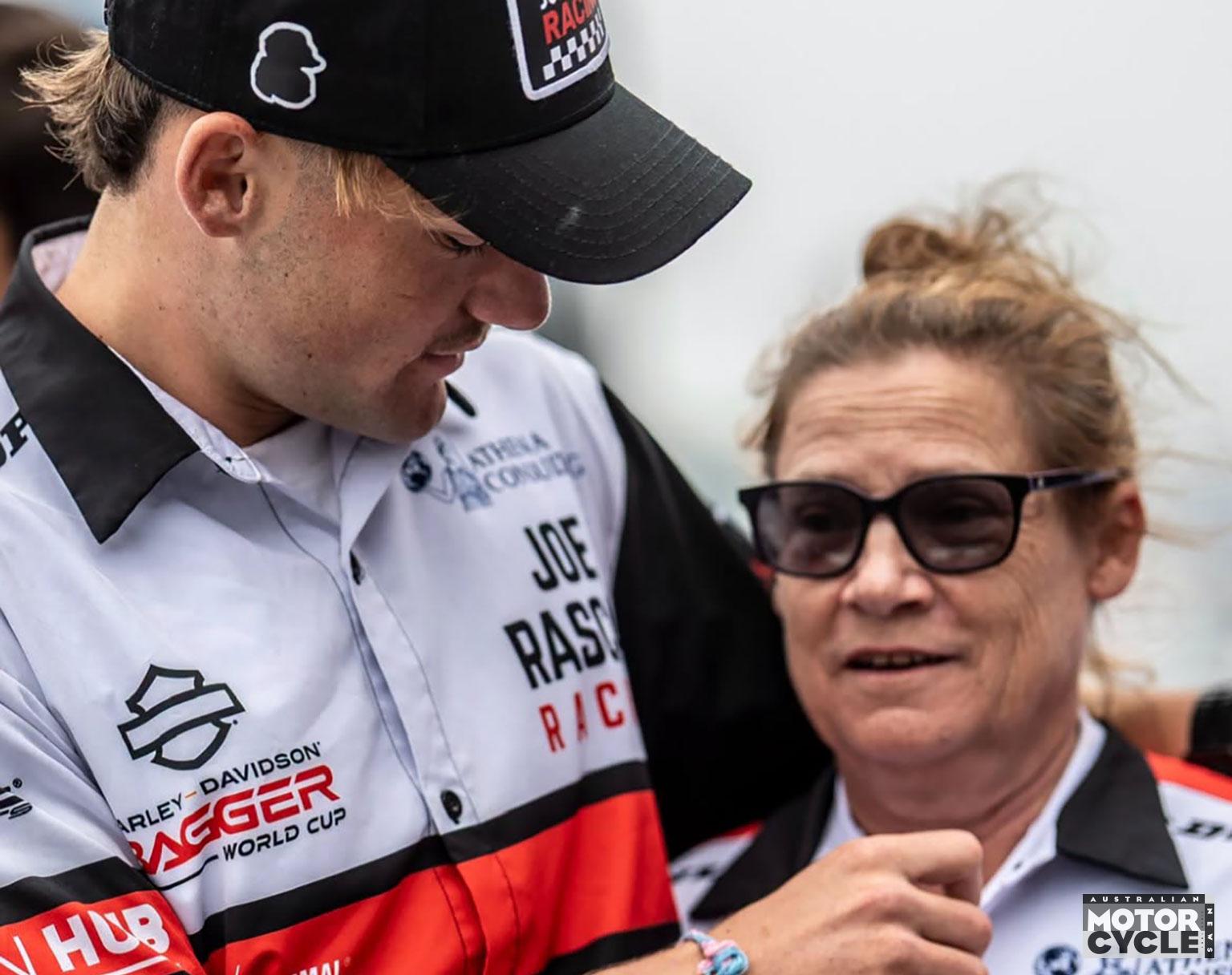
Perhaps the most striking thing about McDonald isn’t his speed, but his mindset. Many riders would feel intimidated lining up against former MotoGP race winners and international stars. Not ‘Mad Dog’. “I’ve trained myself not to care,” he says. “I don’t care who I’m racing, what they’ve done or what nickname they’ve got. Whether it’s ‘The Maniac’ or Marquez, I don’t care! It’s my race to win.”
That mentality also shapes how he views his future. Is his aim to eventually get into Moto2? “There’s no permanent pathway from here. I’m pretty comfortable where I am. I really enjoy the Baggers and Joe Rascal Racing. This is a new team, a new category and I’ve already learned so much, gained so much. We have a good two years ahead of us for sure. The future – where we’re going – is unknown but we’ll develop and grow as a team.
“But after every race weekend there seems to be another opportunity. We’re going to take every chance we can to become the best in the world. That’s Joe Rascal’s mentality and that’s the ‘Mad Dog’’s mentality. I want that in a team and I’m grateful to have that. Hopefully it takes me very far.”
Racing through grief
Some interviews finish with championship ambitions. Sadly, this one couldn’t. Weeks before Mugello, McDonald lost his brother, Toby. The tragedy changed everything. “I saw things I thought I’d never see. Not only that – it’s ongoing with my family, which is probably the worst part. I realised I had to get on with it. The sun keeps rising, which was annoying because I couldn’t take leave of my job. There’s a date for racing and everyone turns up.”
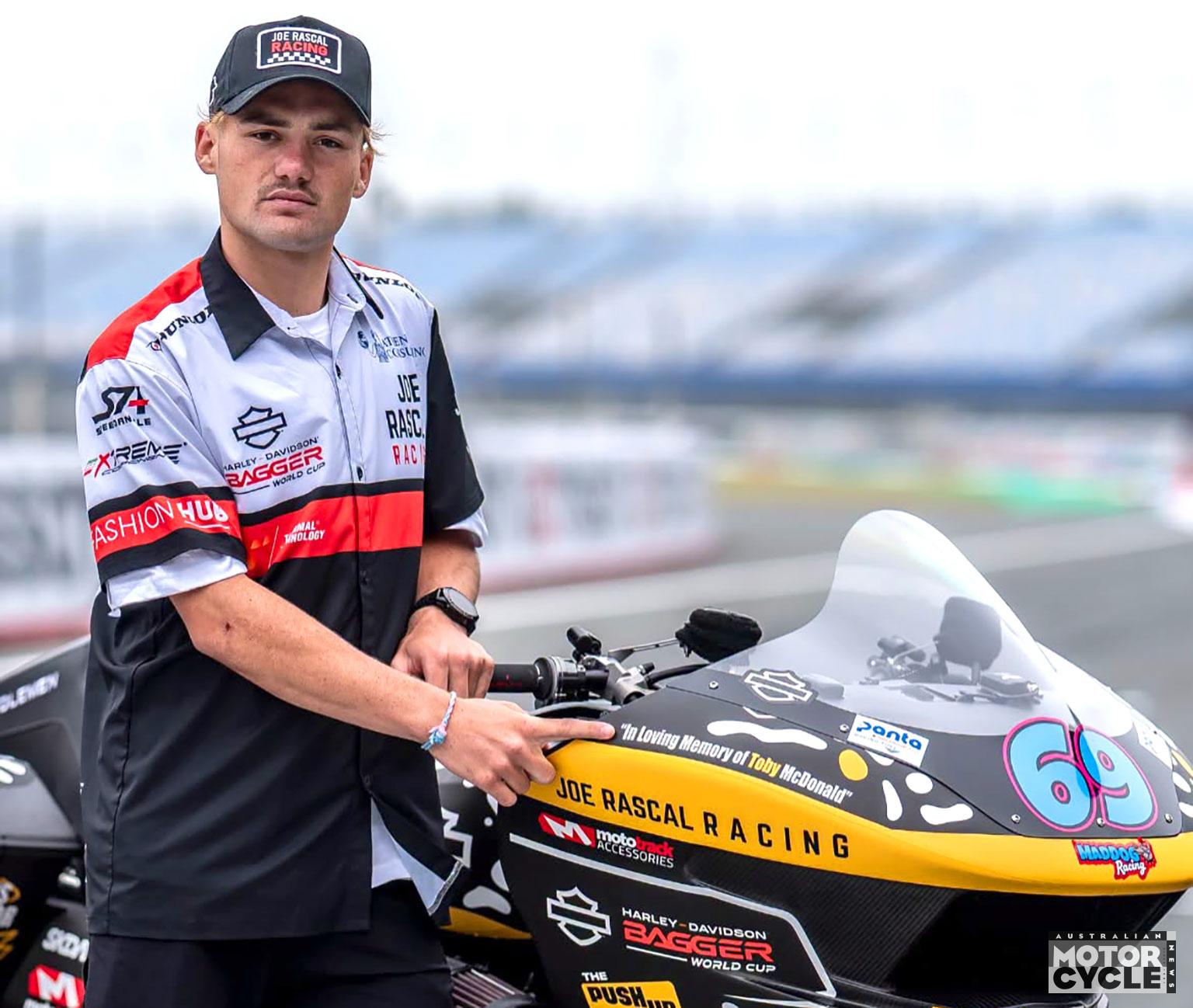
Rather than withdraw, McDonald decided to use his platform. Every day he posts push-up videos supporting the Push For Better mental health campaign. “I don’t want people’s sympathy,” he explains. “I want people asking, ‘Why’s this guy doing push-ups?’ It’s a way of letting people know that some people are going through unimaginable things. As much as doing 100 push-ups a day hurts, someone’s going through a thousand times more pain. All it takes is for someone to see a video, or a special livery on a motorbike, to think: ‘I should really check up on someone and ask if they’re okay.’ That’s all it takes to save a whole life. It’s so important to check up on someone you don’t know, or someone that’s your brother.”
Then comes the memory that still haunts him. “I saw my brother the day before I lost him. I was with my friend on the couch. He wanted to pick up some stuff, so I went and grabbed it. My friend asked him, ‘How are you?’ He replied, ‘Staying alive.’
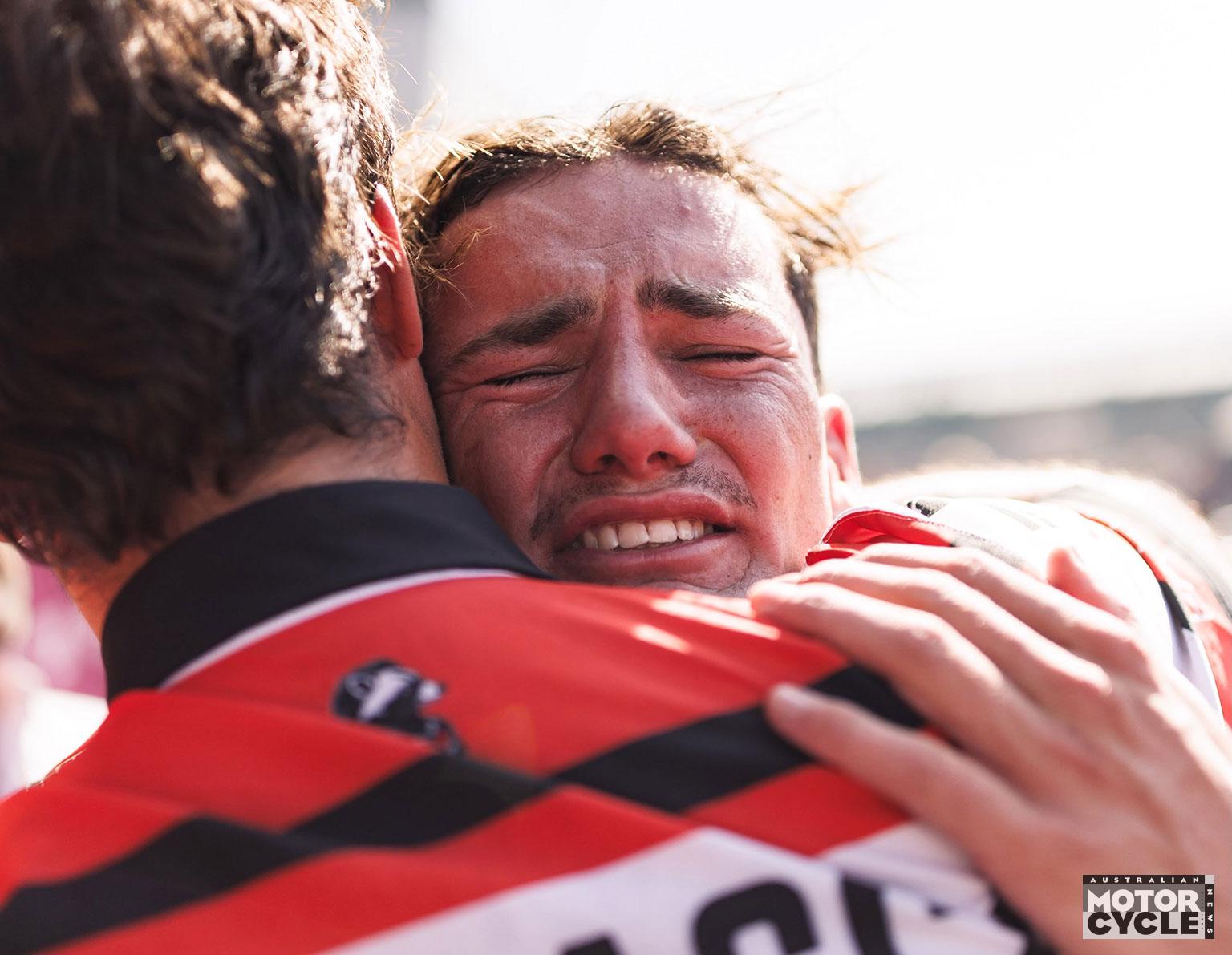
“Did I think anything of it at the time? Not at all. I had no idea. But that goes to show it can happen any time and you can’t see it. You have to check up on everyone you can. The push-ups is just me trying to spread as much awareness as I can.”
Every journey has milestones
For Archie, simply making it to Europe was the first victory. Leaving home, learning unfamiliar circuits, adapting to new bikes, new languages and a completely different racing culture. Building a reputation from scratch. It’s the stage of the journey where every race is another lesson and every opportunity has to be earned.
But farther up the road, the challenge changes. The pressure doesn’t disappear – it grows. The questions become bigger, factory teams begin watching closely, every result is scrutinised, every rumour gathers momentum and every single weekend shapes the future. Senna Agius has reached that point. The dream isn’t just alive; it’s knocking firmly on MotoGP’s door. Peter Bom spent the weekend alongside Agius to find out how the young Aussie is handling the pressure.
Within touching distance
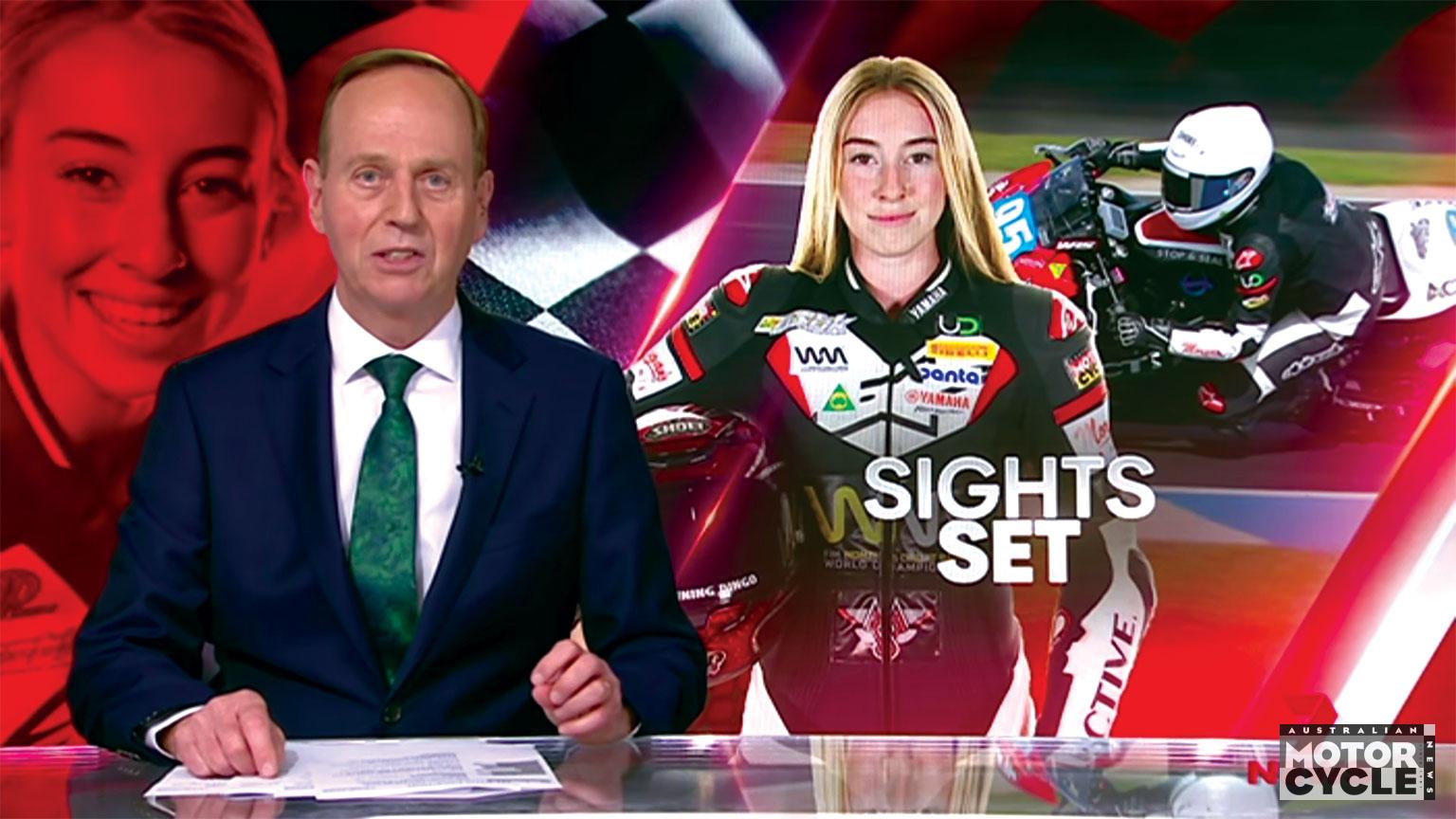
They all dream about it, but very few Moto2 riders ever make it happen. The step up to MotoGP is the biggest leap in motorcycle racing, and for 21-year-old Senna Agius, that dream suddenly feels closer than ever.
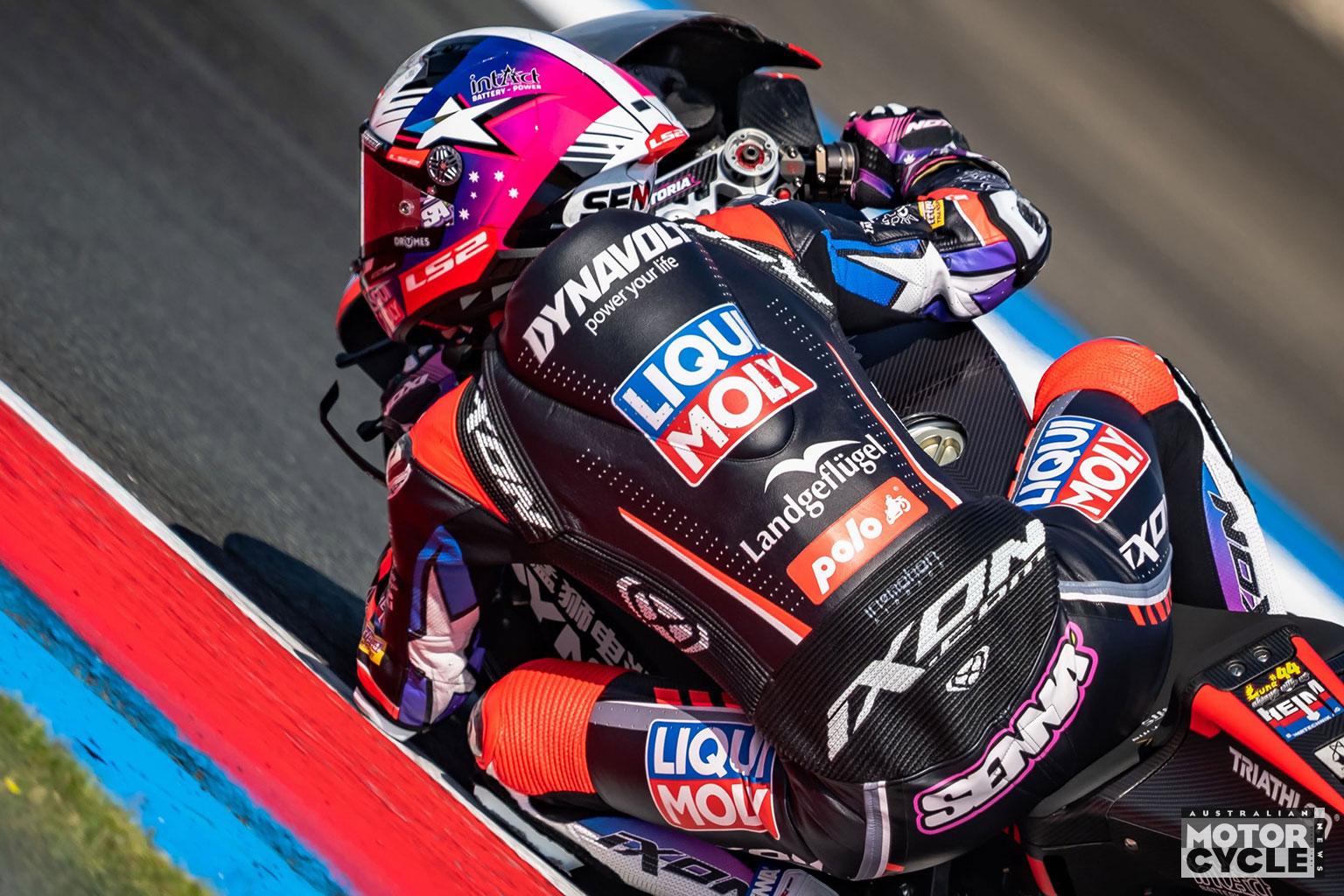
It’s Thursday morning in the paddock at Assen. The Cathedral of Speed is still quiet, carrying that familiar calm-before-the-storm atmosphere before another GP weekend bursts into life. Mechanics are building bikes, hospitality staff are preparing for guests and the MotoGP paddock – rebuilt 22 times a year as it moves from country to country – is settling into another temporary home. Last week this little village stood in Brno, Czechia; this week it’s in Assen, Holland. And the biggest rumour travelling through it is that the Tech3 team is weighing up Agius and Moto2 teammate Manuel Gonzalez for a future MotoGP seat. Whether true or not, it’s exactly the sort of speculation that follows riders when they’re beginning to prove they belong. I am therefore curious to hear what Senna has to say about this, and how he handles that pressure… but first I want to hear how he has spent the past few days.
“The Monday after Brno I am at our home in Andorra, just recovering and washing clothes,” Senna tells me. “Tuesday I train and that’s about it. Wednesday we’re travelling again. My dad is usually with me but this weekend my mum and girlfriend are here too. Wednesday night we normally have dinner with the whole team. It has a real family feeling.”
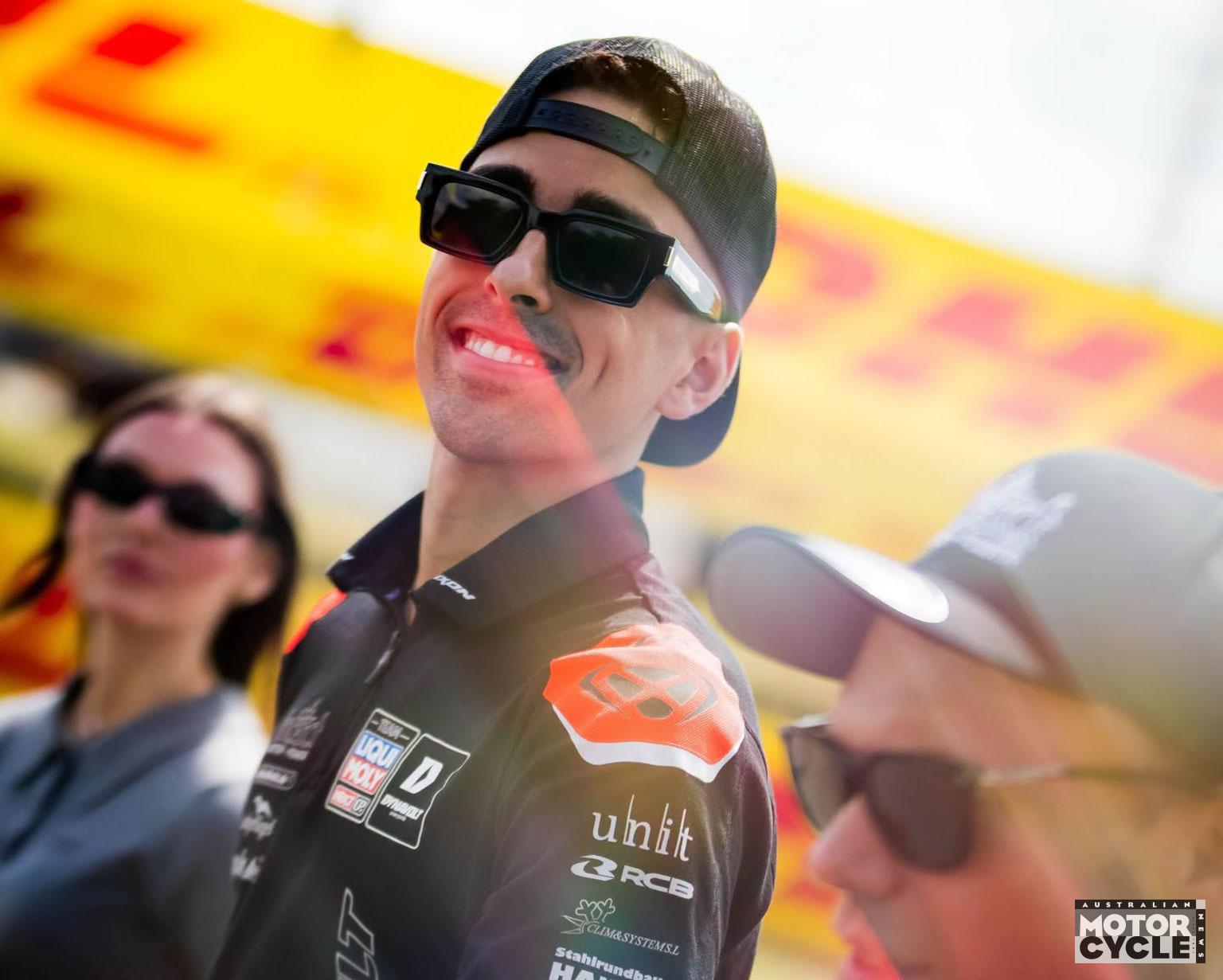
That routine repeats itself almost every week through a 22-round world championship. The glamour people imagine rarely exists. It’s all about recovery, training, airports, hotels, more racing, then repeat.
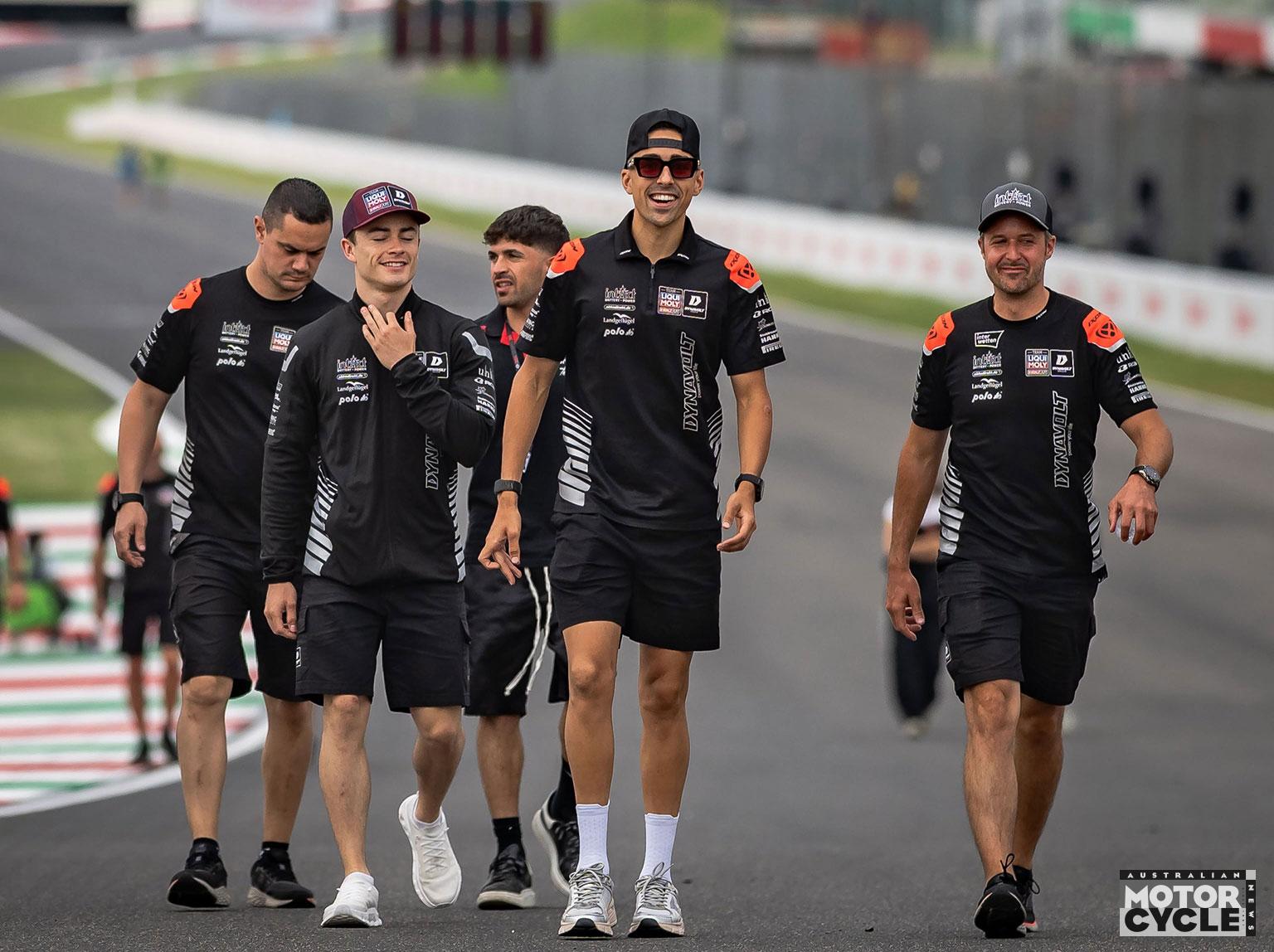
Thursday, however, is when another race weekend truly begins. “When I wake up, I go for a run around the track before breakfast,” Agius explains. “I might have one or two media commitments, then we do the track walk followed by the technical meeting.”
Those meetings reveal just how professional Moto2 has become. The team studies Pirelli’s tyre allocation, reviews data from previous seasons and compares Agius’ numbers with benchmark sectors supplied by Kalex. “It’s really about giving me direction before Friday.”
Chasing perfection
From the outside, racebikes always appear to be evolving. Inside a Moto2 garage, the changes are surprisingly small. “We find our direction during the opening races,” Agius says. “Now we’ve got a window where we know the bike works. Normally we’re only making little adjustments. The team looks at the data after every session and, if something’s outside that window, we’ll correct it.”
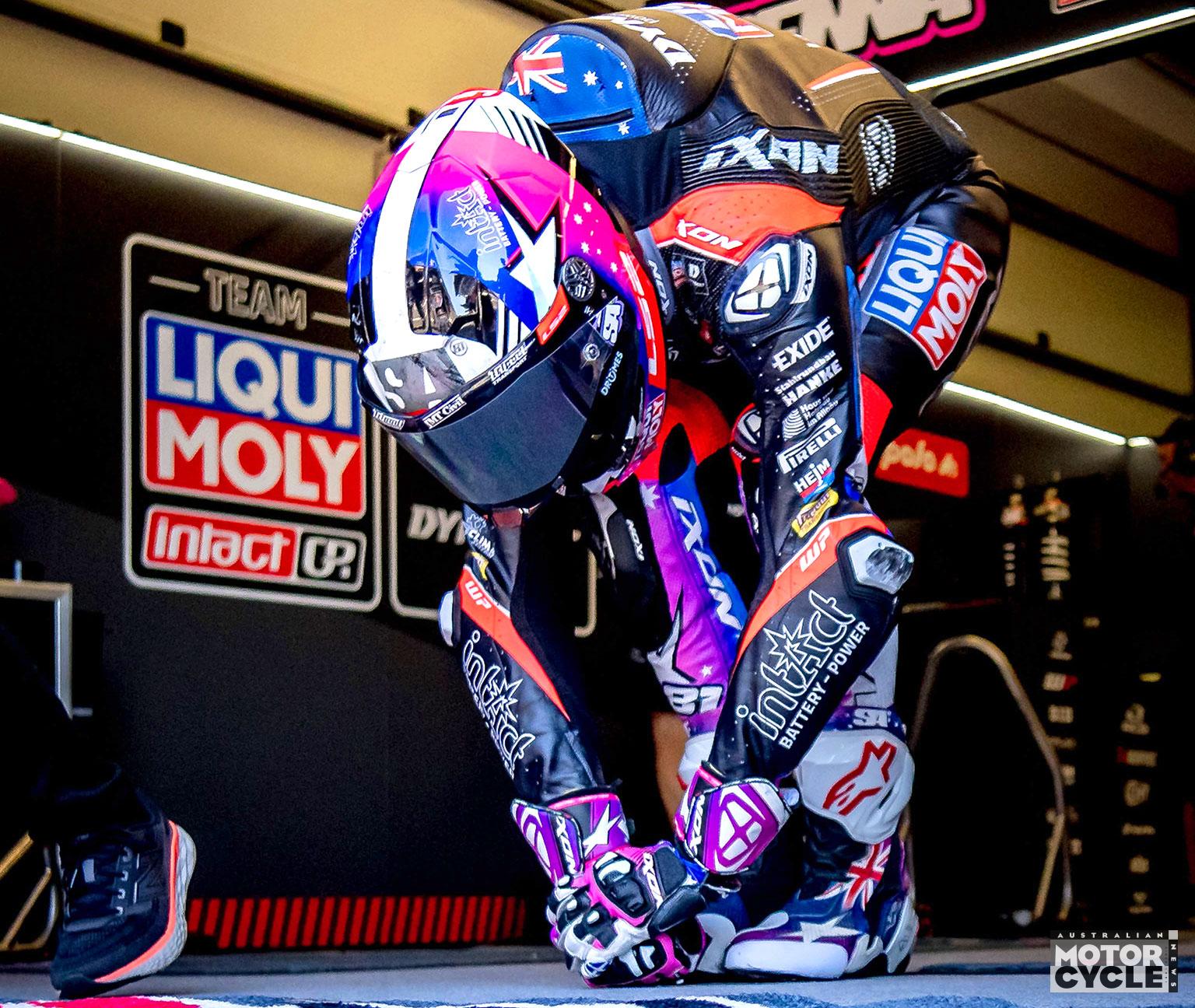
The same attention to detail extends to Agius himself. Every rider has his own way to prepare himself before going out on track – isolating themselves, or jumping and joking around with the mechanics (Jack Miller!). Some need to stretch and exercise for an hour, while others just squat five times and feel ready to go. For Senna, every pre-session follows almost exactly the same routine: “25 minutes before I go out, I start warming up while watching Moto3 so I can see the track conditions. Some coordination stuff, some activations of some muscles, but nothing too strenuous. I’m in my leathers when I enter the pitbox with around nine minutes to go. Same time every session. My corner in the pitbox is organised by me on Thursday, having my helmets, gloves, earplugs, etc all where I want them. Between the races, all this personal stuff stays in the truck and I wouldn’t have it if I didn’t get it out myself. I’ve got my own corner of the garage organised exactly how I want it. But they’re routines, not superstitions. If something changes, I don’t panic.”
It’s a subtle distinction. Routine builds confidence, while superstition creates dependence. “I think superstitions become, not a weakness,” Senna says, “but they can… you become vulnerable.”
Every gram matters
Moto2 rewards precision everywhere, including on the scales. Senna is tall by Moto2 standards, but he has long accepted that weight management is one of his biggest challenges. “My food plan has been pretty strict for a couple of years now,” he says. “Lots of carbohydrates and protein, very low fat and low fibre. It’s honestly pretty boring. And to be truthful, I’m usually hungry throughout the race weekend.”
It’s the compromise required to remain competitive. “I always wish I was lighter. But you can’t go so far that you stop being healthy. That’s the limit we have to play with.”
When pressure is a privilege
The rumour that Tech3 KTM will base their decision on a shootout between Senna and teammate Gonzalez is fairly likely. I assume that Tech3 team boss Gunter Steiner simply wants to be sure that his next rider is not only fast but will also not crack under the pressure that comes with a MotoGP contract. Is Senna unflappable?
“In the end, they’re rumours and I just know that the rumours won’t come true unless the job on-track is coming. So they’re linked, they’re related to each other. We all feel pressure, we all want to get the job. So I just feel like I’m one of them and I need to prove on track to make my dreams come true – and stay calm.”
Let the riding do the talking
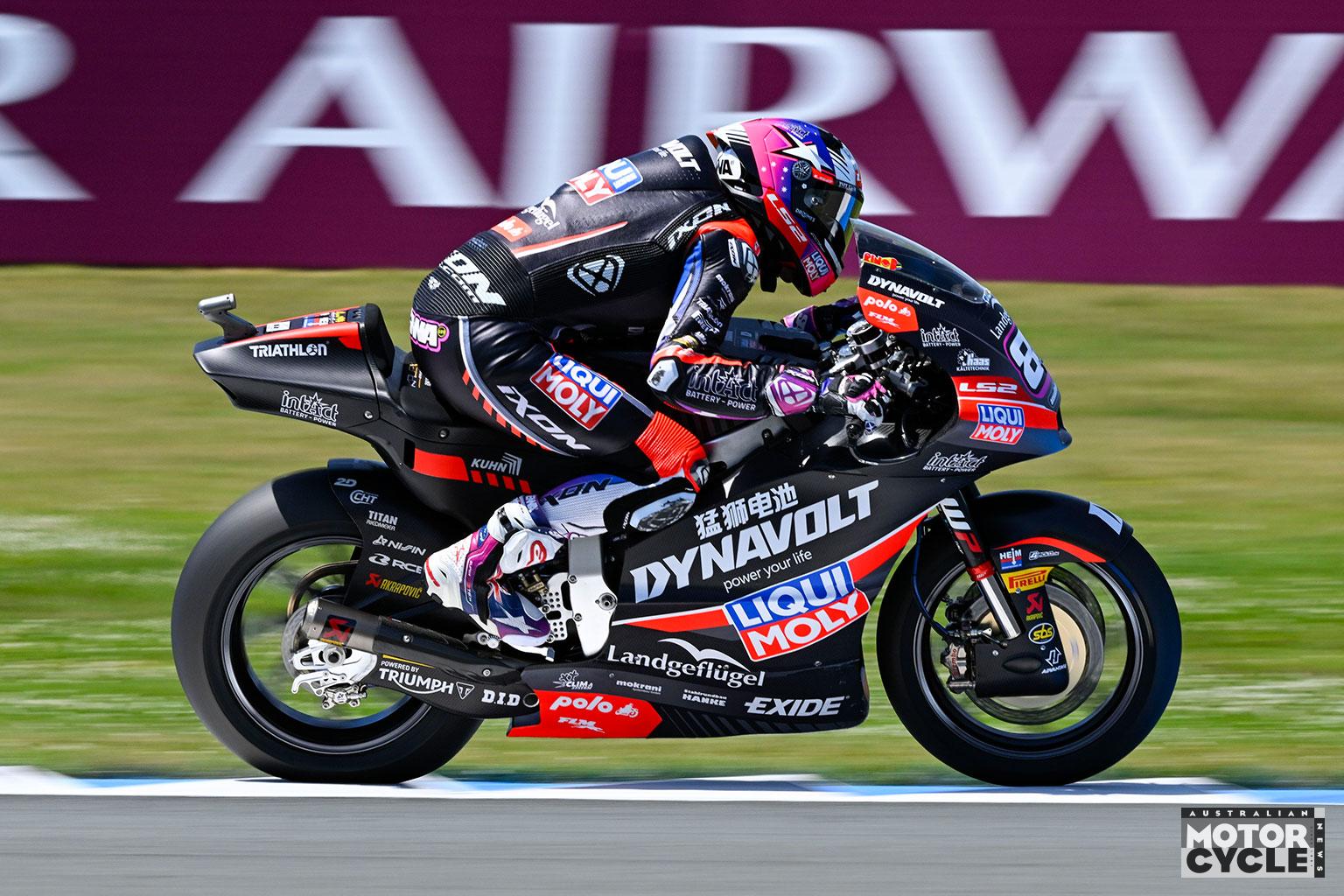
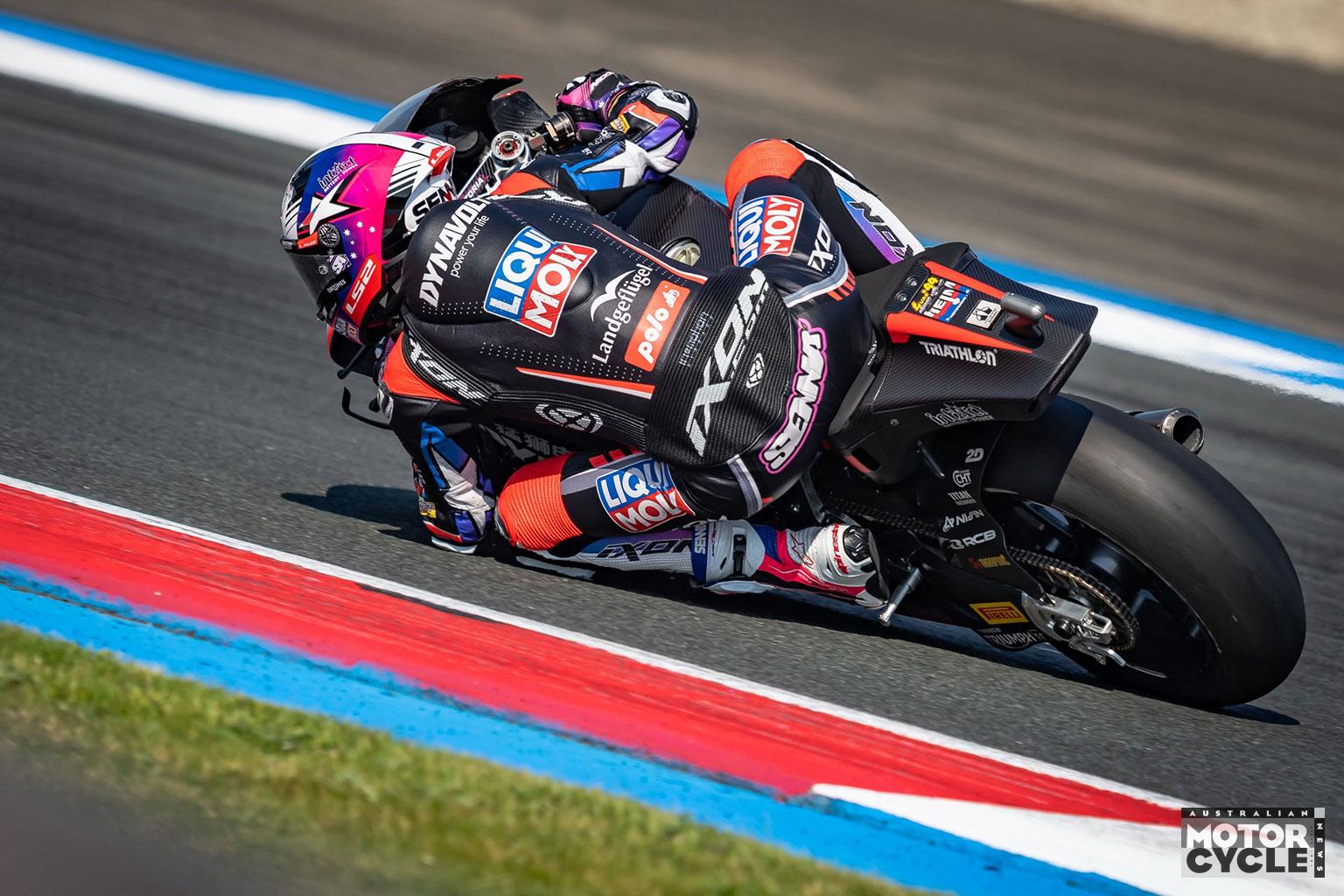
The rest of the Assen weekend only strengthened Agius’ reputation. Fast throughout practice, competitive in qualifying and intelligent during Sunday’s race, he showed exactly why he’s considered one of Moto2’s brightest young talents.
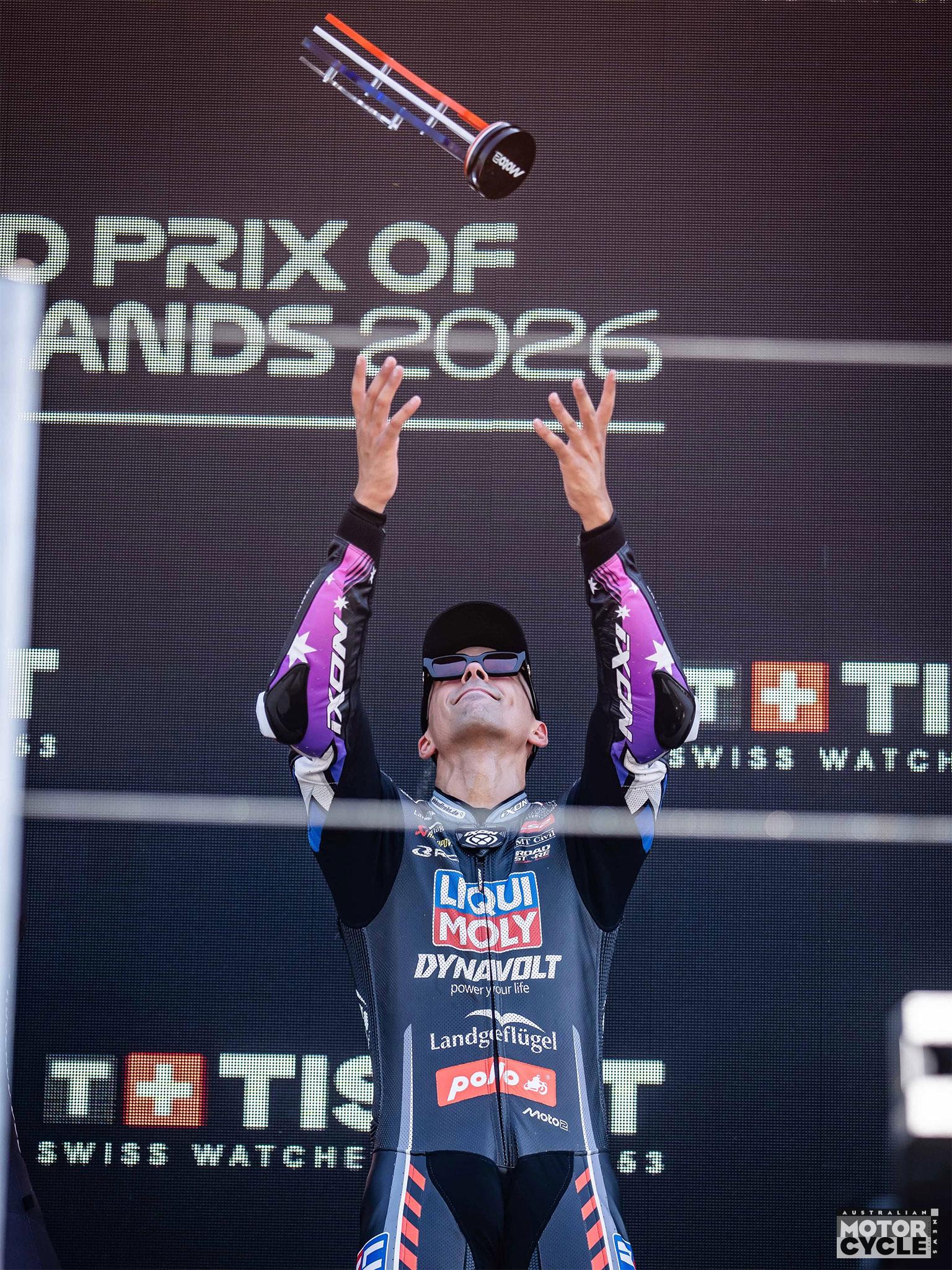
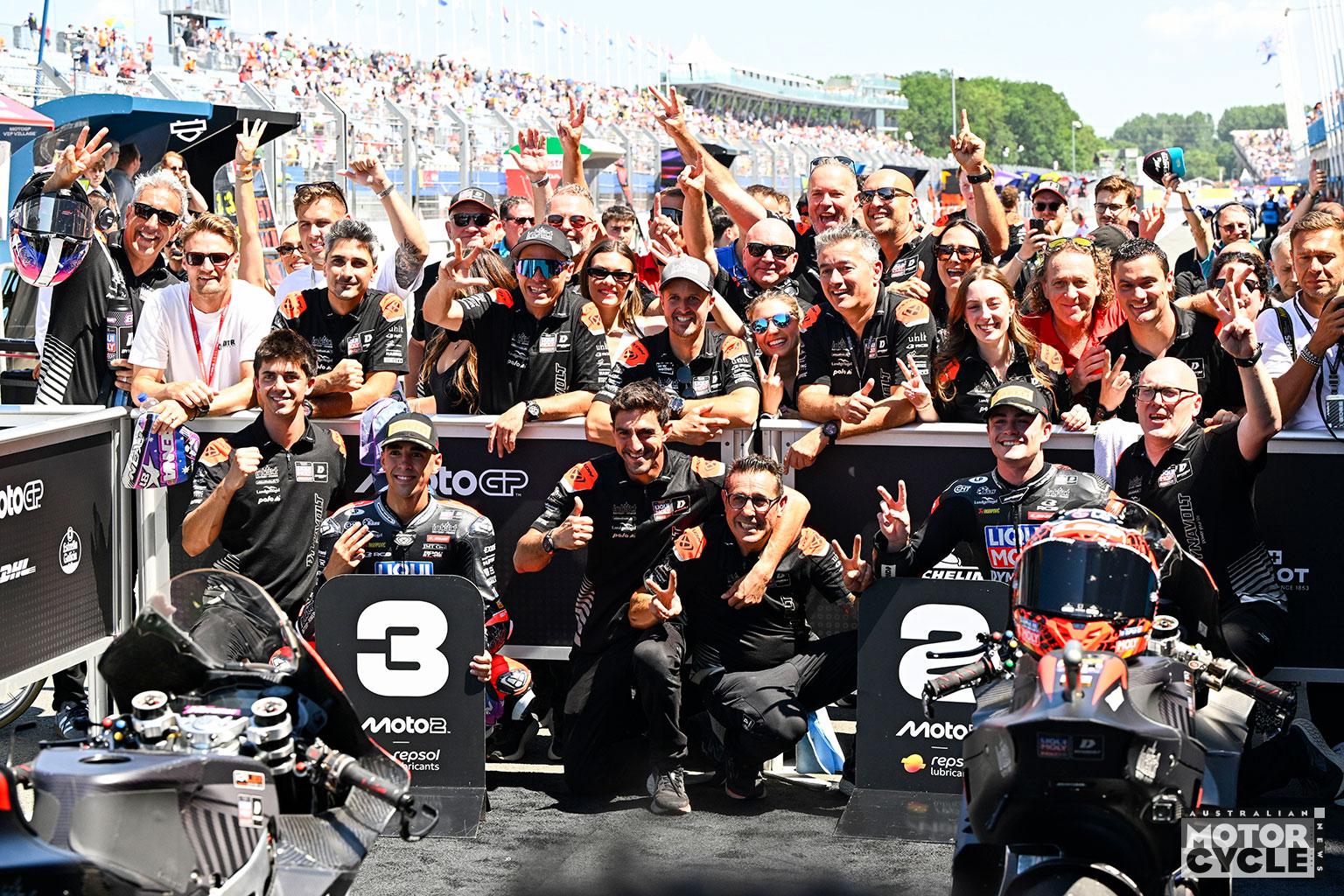
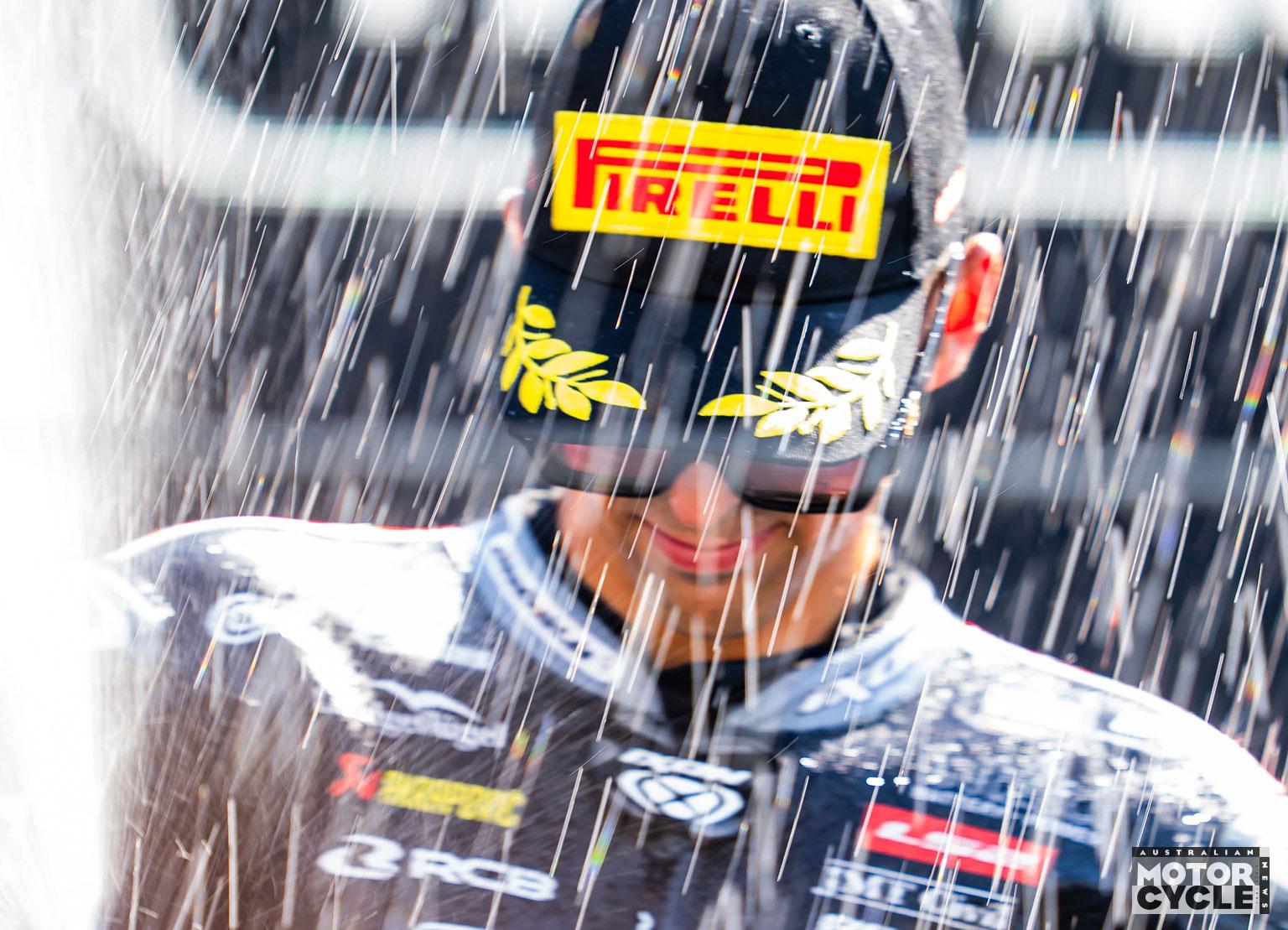
After managing his tyres through the opening Sunday laps, Agius fought back strongly in the closing stages, finishing on the podium after one of his most complete rides of the season. “If I could do the last lap again I’d probably do it differently,” he says afterwards. “But it was one of my best rides. We’ve got to take confidence from every situation at the moment and use it as motivation.”
The championship standings still favour Gonzalez, so on paper that would seem to make Steiner’s decision simple. But Grand Prix racing has never been decided only on paper. Where Gonzales is 25 years old and in his fourth full year of Moto2, Senna is 21 and in only his second full year. MotoGP needs riders who can adapt quickly and deal well with stress. The fact that Gonzales was leading the championship last year by 40 points at one stage yet didn’t become champion showed a crack in the Spaniard’s armour, clearly struggling with the pressure of leading by many points and not wanting to make silly mistakes.
If Tech 3 really wants to choose between these two, I certainly know who I would choose.
THE CHASE CONTINUES
Of course there are no guarantees in motorcycle racing. For every Aussie who stands on a MotoGP podium, hundreds have packed their bags, chased a dream overseas and discovered just how difficult it really is. Some make it, some don’t. Most fall somewhere in between, building careers that never make the headlines but still demand extraordinary commitment.
Archie and Senna are separated by more than championships, racebikes and experience. One is still establishing himself in Europe, learning his craft and proving he belongs. The other is racing at the sharp end of Moto2 with MotoGP now an attainable ambition rather than a distant fantasy.
What they also share is something every Australian racer who has gone before them understands: leaving home isn’t the hard part – staying there is.
Somewhere overseas this weekend, another young Aussie will be wondering whether this is the year when everything changes. AMCN will be following their every step.