Returning with another blunt take on road safety, reader Alan Moloney reckons the blame game has gone too far – and the real lessons are being missed
A while back I wrote an article about the cancer of declining speed limits on quality mountain roads – which AMCN fairly described as a ‘reader rant’. Well, I’m back with another one, this time about the way East Coast governments keep blaming Alan Moloney for the increasing road toll.
First, let’s have a look at that road toll. As you can see from the government department graph below, Australia has enjoyed a decreasing trend since the 1970s, both raw and per-capita. The sharpest decline seemed to happen from about 1981, when I got my licence. Nevertheless, the government insists on blaming me.
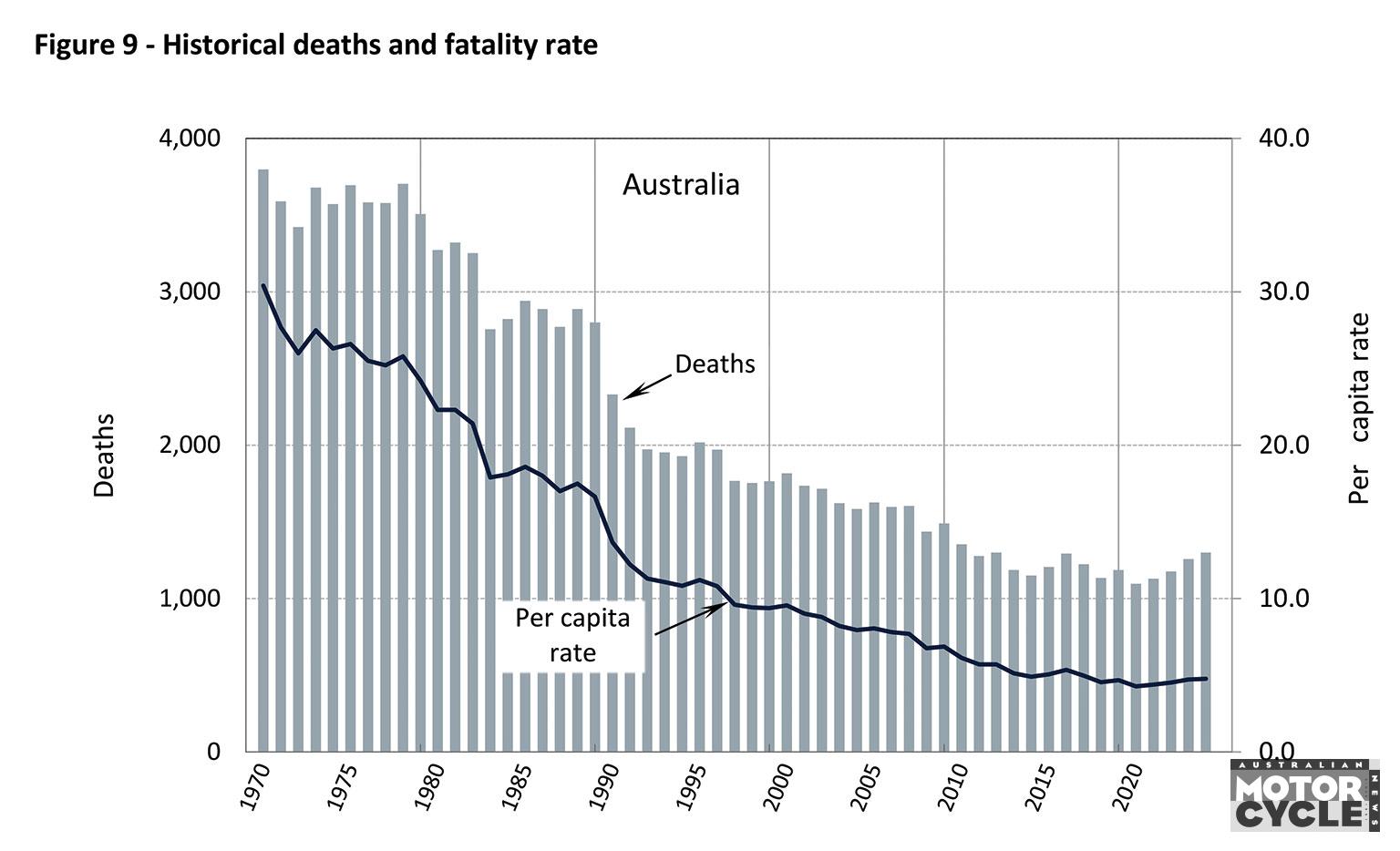
The black line is a measure of fatalities per 100,000 people. This is a better indication of trend than the raw data, which includes an increase due to population growth. When I look at this picture in full context, I do not see an increase in road fatalities, I see a plateau. To me, this data suggests that whatever we did since 1970 has worked, but we won’t get any farther with the approach that got us here.
When I started work as an apprentice in a Sydney factory in 1982, safety was terrible. We had around 1000 employees and suffered a fatality almost every year. Management blamed careless workers and ran crude incentive schemes where crews lost points if someone was injured.
Ten years later the place was unrecognisable. Injuries were rare and a fatality would have been unthinkable. The difference was simple: a new CEO arrived and made it clear that management – not the workers – were accountable for safety. Management controlled the systems, the equipment and the budgets, so management owned the results.
I believe that the state governments in NSW, Queensland and Victoria are stuck with the same limiting mindset. Every road trauma is the fault of the motorist. I think of it as a ‘Speed Kills’ mindset, but the blame culture in government extends beyond speed to all driver behaviour. They are demonstrating an unwillingness to consider their own part in road safety, even though they control the money, the design, the maintenance, the policing and the rules.
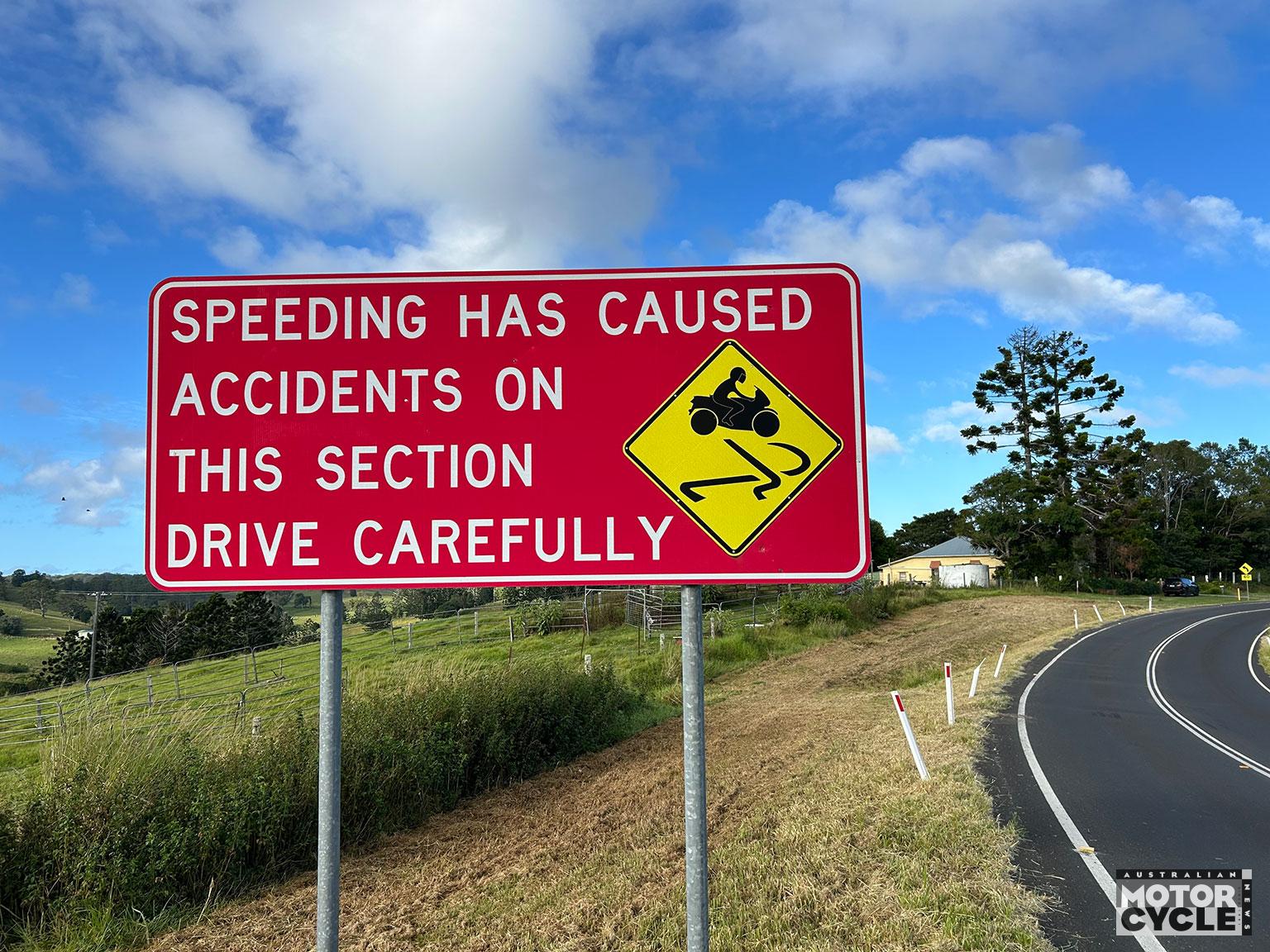
For years I drove through Mount Mee north of Brisbane past the big red sign below blaming speed for motorcycle accidents while the road surface itself was in shocking condition. I always wanted to put up a following sign saying “To be fair, our poor maintenance has probably caused more.”
To the state government’s credit, they have actually resurfaced much of the road, but to their absolute shame, there are currently rills of loose gravel above the new surface on a road known to be frequented by motorcycles.
And what about the massive ‘Fatal 5’ campaign? Speed, Distraction, Drink Driving, Driving Tired, Seat Belts. Notice anything? That’s right, it’s all my fault again.
I’ve just returned from what is a regular trip to Newcastle via ‘B’ roads through the Great Dividing Range. I reckon I could add a few based on the last two days’ riding: Poor camber, poor drainage, Volkswagen-sized potholes, random bitumen lumps, gravel inadvertently washed on to the road, gravel deliberately left on the road, poor maintenance practices, poor repair materials, poor surface material, debris on the road, stock on the road, wildlife on the road, slippery road snakes, poor policing practices. Do you think the fatal 19 will take off as a slogan? It would at least put the motorist’s contribution into fairer context.
The problem with the government’s obsession with blaming the motorist is that they are allowing their blame mindset to blind them to the possibility of learning from incidents when they happen. As soon as they have established that someone was five kays over the speed limit, the Speed Kills mindset is confirmed again.
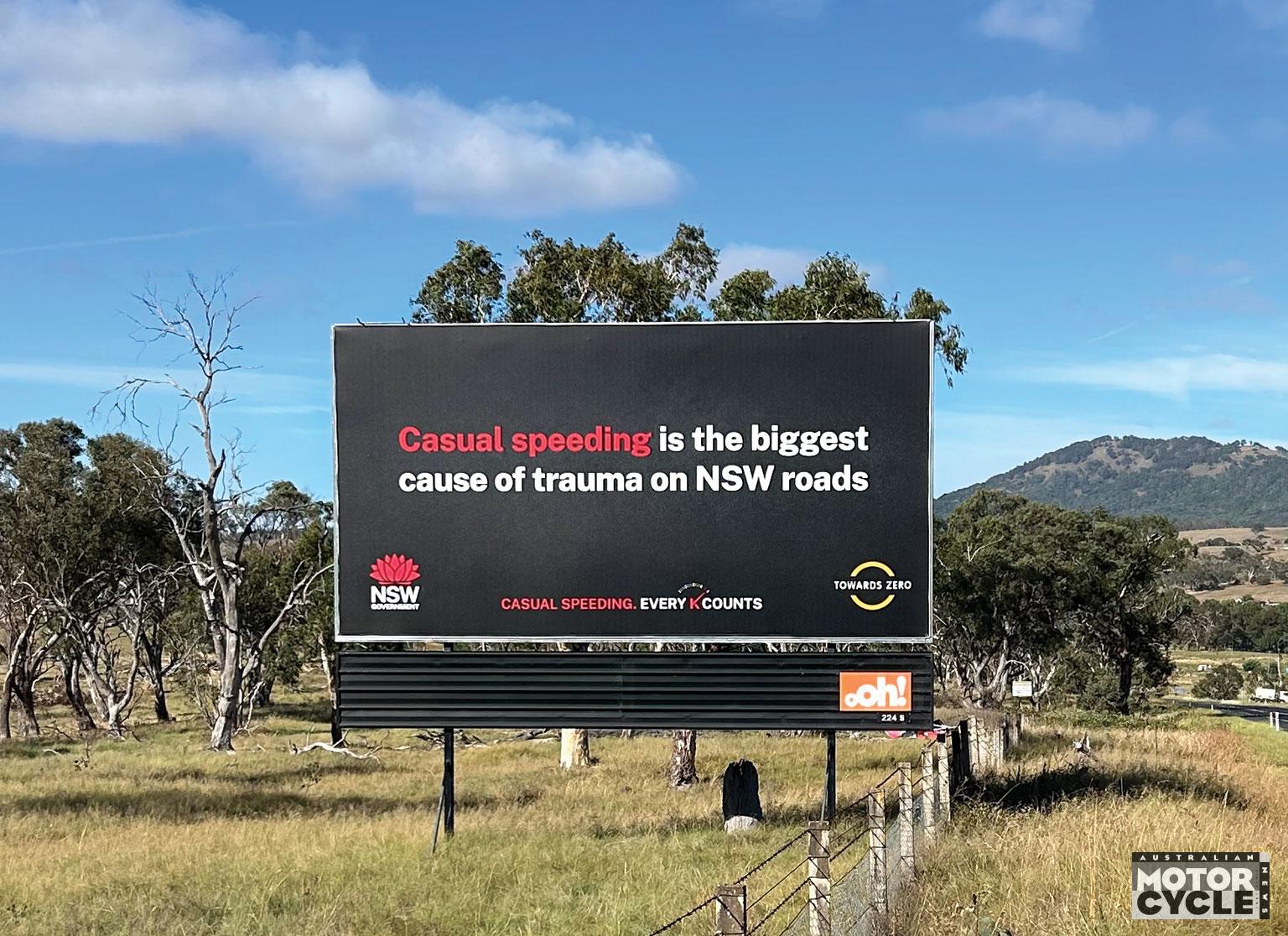
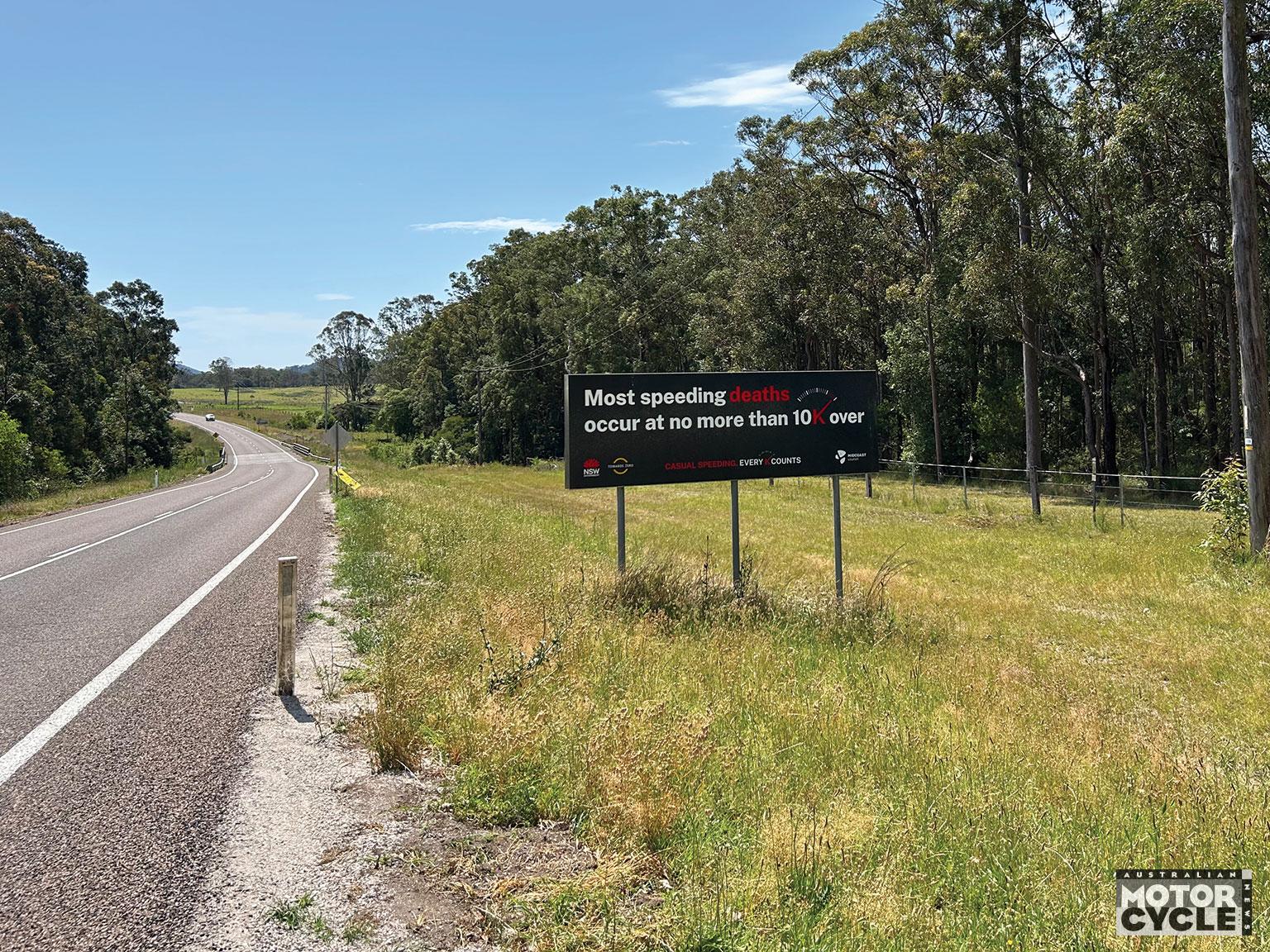
The ‘Most speeding deaths occur at no more than 10k over’ sign (below left) is what motivated me to write this rant. It’s a classic case of confirmation bias – interpreting data in a way that reinforces an existing belief while ignoring alternative explanations. Here we have an analyst sitting in front of a dataset that is screaming at them that something other than speed is going on. The data is trying to tell us that for most ‘speeding’ deaths, people weren’t really speeding!!! Fortunately for everyone down at the government office, they were able to conclude that even going five kays over is clearly lethal, meaning that speed still kills (phew!) and there is no need to ask difficult questions about whether they need to do something differently.
They even made up a new term for speeding just a little bit: casual speeding. Apparently in NSW, this is the biggest cause of all the serious accidents. Surely no one actually believes this.
Are they saying that if I caught the edge of one of their massive potholes on the Armidale road, provided I was going five kays over, I caused the accident and their pothole was as innocent as Shirley Temple’s left dimple?
It shouldn’t surprise anyone that most accidents happen at five to 10 kays over to legal limit. From what I’ve seen on the open road, most people drive five to 10 kays over most of the time. Concluding that this is causing the trauma is the same as concluding that breathing is the biggest cause of death. It is certainly true that most people who die were breathing just before they died.
I have often passed brand new pavement with a layer of gravel in rills along the surface, either deliberately placed there or left behind as a byproduct of the road resurfacing. They are inconvenient for a car, but potentially lethal for a bike. If I caught one of those, provided they estimate that I was five kays over, again it would be all my fault – problem solved.
What I find really offensive about this is that the police and road authorities are shifting the blame entirely to the road users. In doing so, they are stating clearly that they were not at fault, and they have nothing to learn from the incident. “We have determined the cause, and it was not us.”
The problem is, they will never reflect on their design, construction, maintenance or policing practices and will continue leaving gravel on new roads because ‘Speed Kills’. Has anyone ever heard of a manager, engineer or contractor from a road authority going to prison for causing a serious accident? What about the guy who authorised the road snakes on the Summerland Way? Surely he is in prison? No?
What is needed is basically the same as was needed in my 1982 factory, completely new management for the police and the road authorities across the Eastern states. We need leaders who won’t accept the lazy thinking behind these signs and safety initiatives. We need every investigation into every motor vehicle accident to ask the question “What did we do that contributed to this outcome?”, and “What can we do differently to make the situation safer?”.
We need police and road authorities to recognise that they are accountable for the road toll. They have the money. They design, build and maintain the roads. They put the signage in place. They decide where and how to deploy police (or whether to redeploy the resources into road maintenance).
It is convenient to blame the road user. Let’s face it, there’s always an element of truth in blaming the drivers and riders (or the employees). Unfortunately, the plateau in road safety statistics will continue until the blame mindset stops.