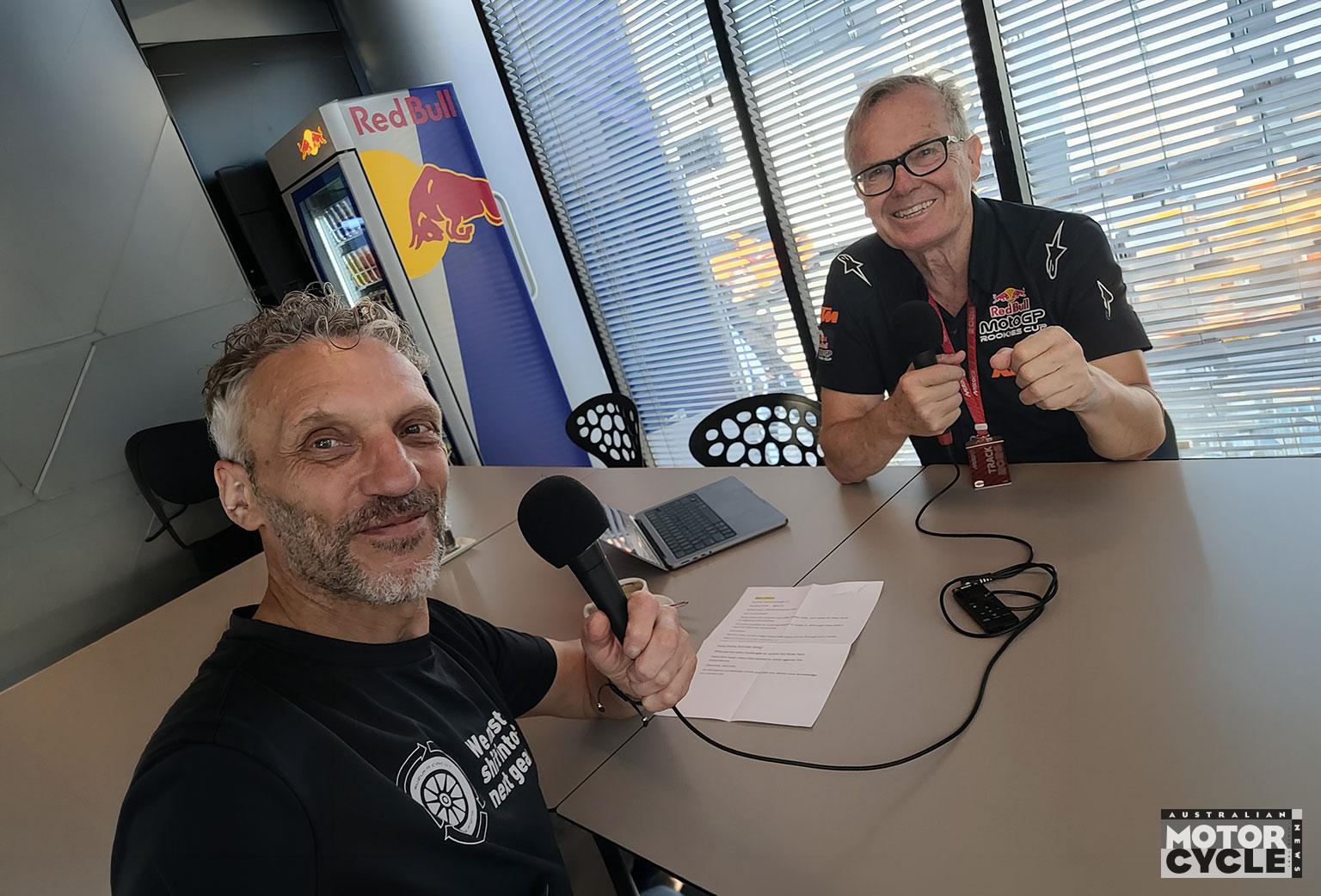
Evel Knievel biographer Stuart Barker spent the last 25 years thinking he’d lost a major interview with the daredevil. But a recent clear-out revealed the whole exchange transcribed into a notebook. What you are about to read has never been published before…
In the 1970s, Evel Knievel was one of the most recognised people on the planet, and easily the most famous motorcycle rider. His ever-crazier death-defying leaps over lions, sharks, fountains, buses and even a canyon captured the imagination of millions and inspired a whole generation of kids to perform their own stunts on their pushbikes.
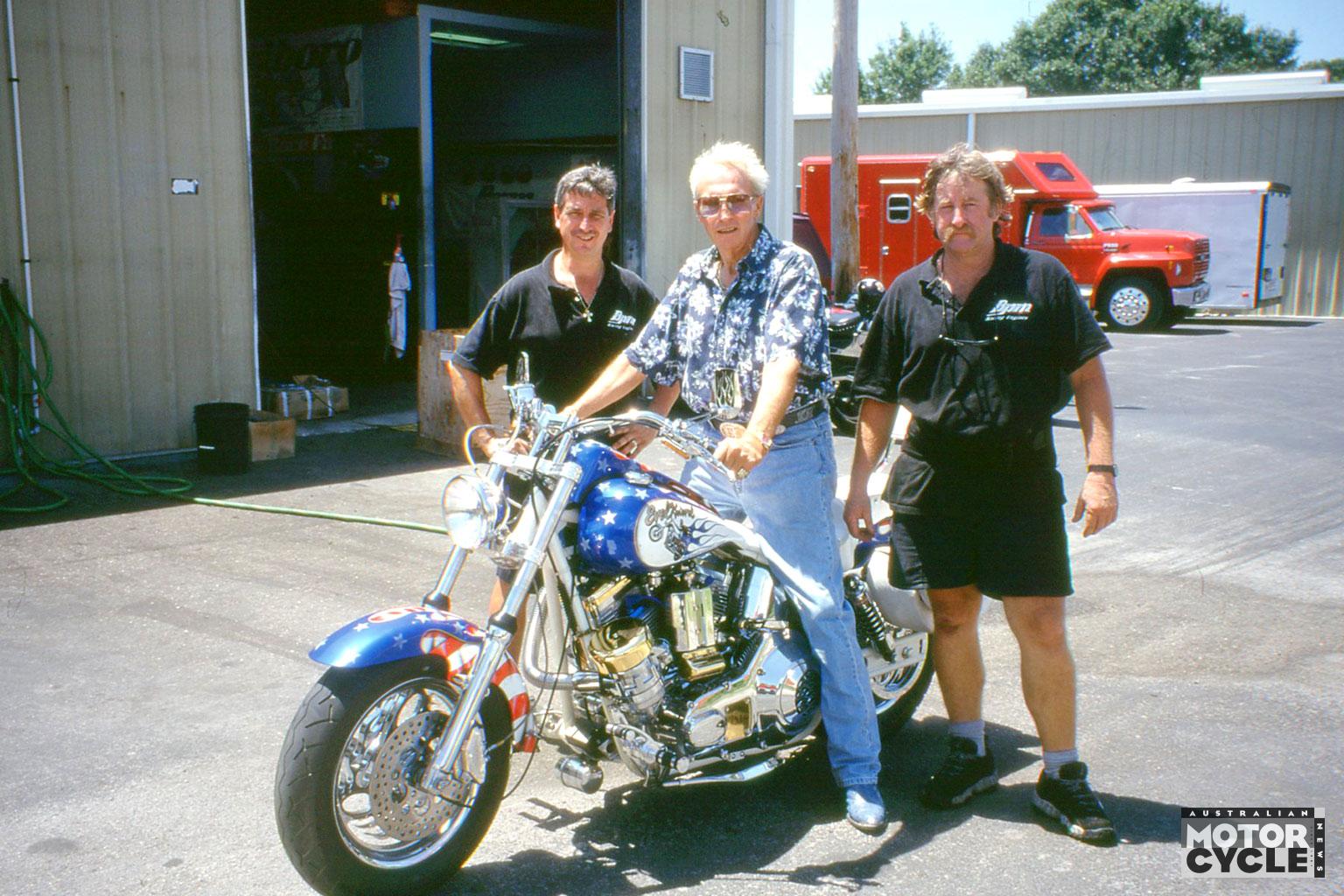
Movies have been made about him, songs have been written about him, his line of wind-up toys made over $300 million – and since his death in 2007 his legend has only grown.
The following in-depth interview is likely to be the last to be uncovered and in it, the legendary daredevil talks openly about risk-taking, boozing, women, religion, guns and the US government. As always, he pulls no punches.
The Root of all Evel
While Evel Knievel inspired an entire generation of kids to put playing cards in the spokes of their bicycles and then jump over ramps pretending to be on a motorcycle, it might come as a surprise to learn that the man himself did the very same thing.
EK: A daredevil show came to Butte, Montana. Joie Chitwood was the name of the show. This was when I was a young kid and I went home and took the mudguards off my bicycle and put cards in the spokes, so it sounded like a motorcycle, and I built little ramps and I jumped off ‘em. I’d put on little shows for the kids in the neighbourhood. Then, when I got to racing, I could do a wheelie either sitting on the motorcycle or standing on it. I could do it better than anybody in the world. And I mean that – better than anybody in the world. I was the first guy to do one standing on the seat.
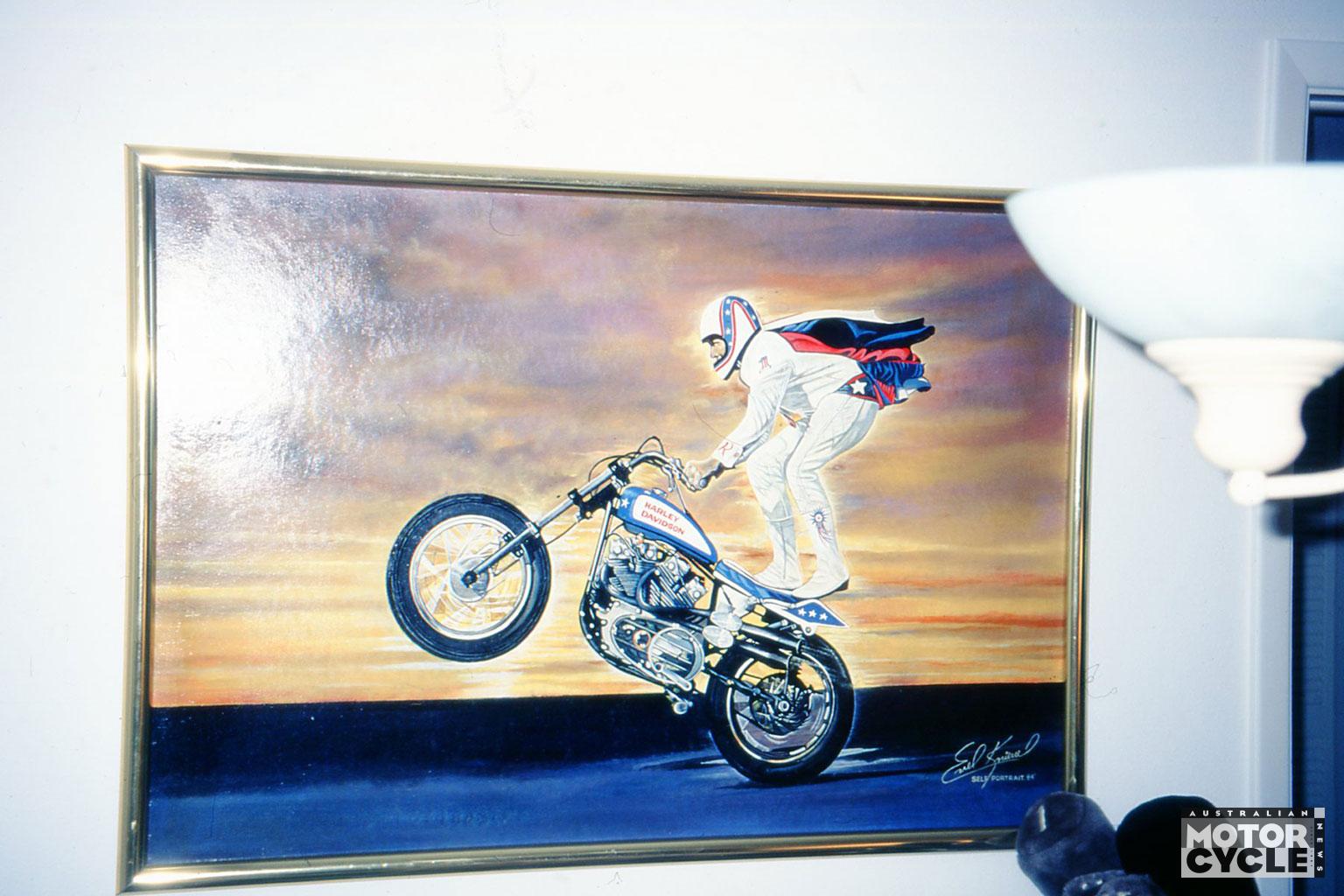
Knievel raced flat-track events all over the US during the 1960s before hitting upon the idea of starting his own stunt show.
EK: I wanted to be a motorcycle racer when I was a kid. I raced flat-track for a long time – raced all over the United States. But then, when the AMA (American Motorcyclist Association) put us on 250s, the little guys who didn’t weigh anything would go past you like a rubber band. We raced on half-mile tracks, but it was clay, it wasn’t dirt.
See, I thought motorcycling was becoming so popular throughout the world because of Honda’s effort and their advertising campaign – ‘You Meet the Nicest People on a Honda’ – that I could start a motorcycle daredevil show and that the public would support it. So I had about eight or nine people working for me and I had a two-and-a-half-hour show when I was in my early 20s.
Knievel’s Bikes
Although he’s most famous for his partnership with Harley-Davidson, Knievel rode, and jumped, a variety of British motorcycles (his first bike was a 125cc BSA Bantam) before teaming up with the iconic US brand.
EK: They handled well (the British bikes). The Triumph T120 Bonneville was a much better handling motorcycle than the Harleys. But that was the 1960s model. In the 1970s they detuned ‘em. The Harley had too much torque – the XR750 had way too much torque. When it got up in the air it wanted to twist to the right because it had too much torque. The Triumph went as straight as a bullet. I rode a Norton too: the 750 Norton Scrambler (1967 P11) was a good bike.
There was no school that Evel could attend to learn how to jump a motorcycle: he had to learn by himself through a very painful process of trial and error.
EK: When you hit that ramp, you had to hit it right – you had to be on the power curve. If it runs flat off the take-off, you’re gonna miss it. It’s just like crouching in a crouch – if you crouch too much you can’t jump very high. You gotta be on the power curve.
Surprisingly, Knievel made very few modifications to the Harley-Davidson XR750 that he jumped, despite it not being built for that purpose.
EK: We made the swingarm stronger and I just used the best shock absorber I could find, with two or three inches of travel.
Overnight Fame
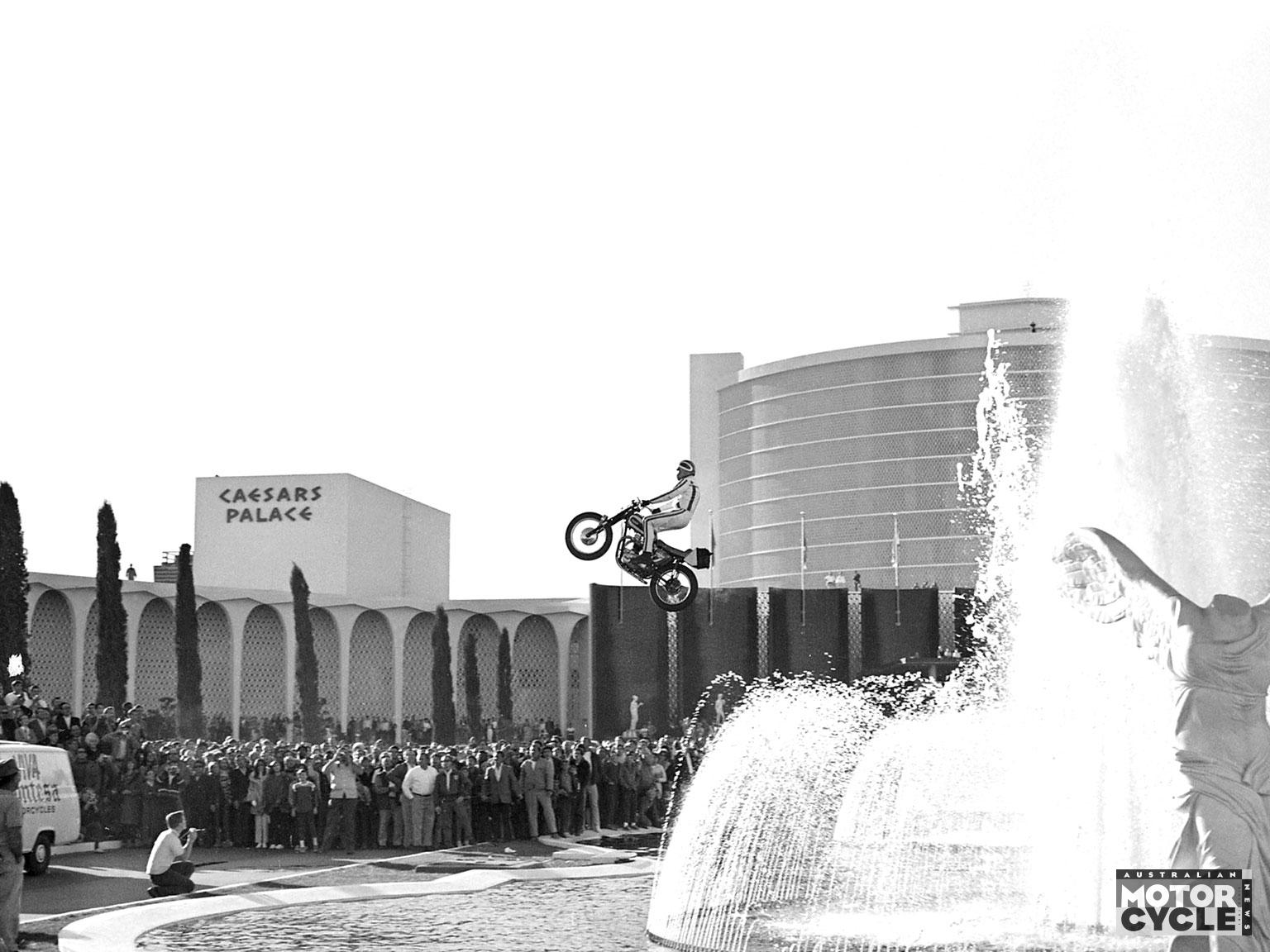
Knievel says it was ‘three or four years’ before he got his big break as a daredevil, and that it happened on 31 December, 1967, when he tried to jump the fountains at Caesar’s Palace in Vegas. He cleared the fountains but crashed heavily on landing. The horrific film footage of his crash made him globally famous overnight.
EK: I got hurt so bad. I never knew the jump was going wrong. I never knew it. I thought I’d made it. It was a surprise and a shock – a BIG shock.
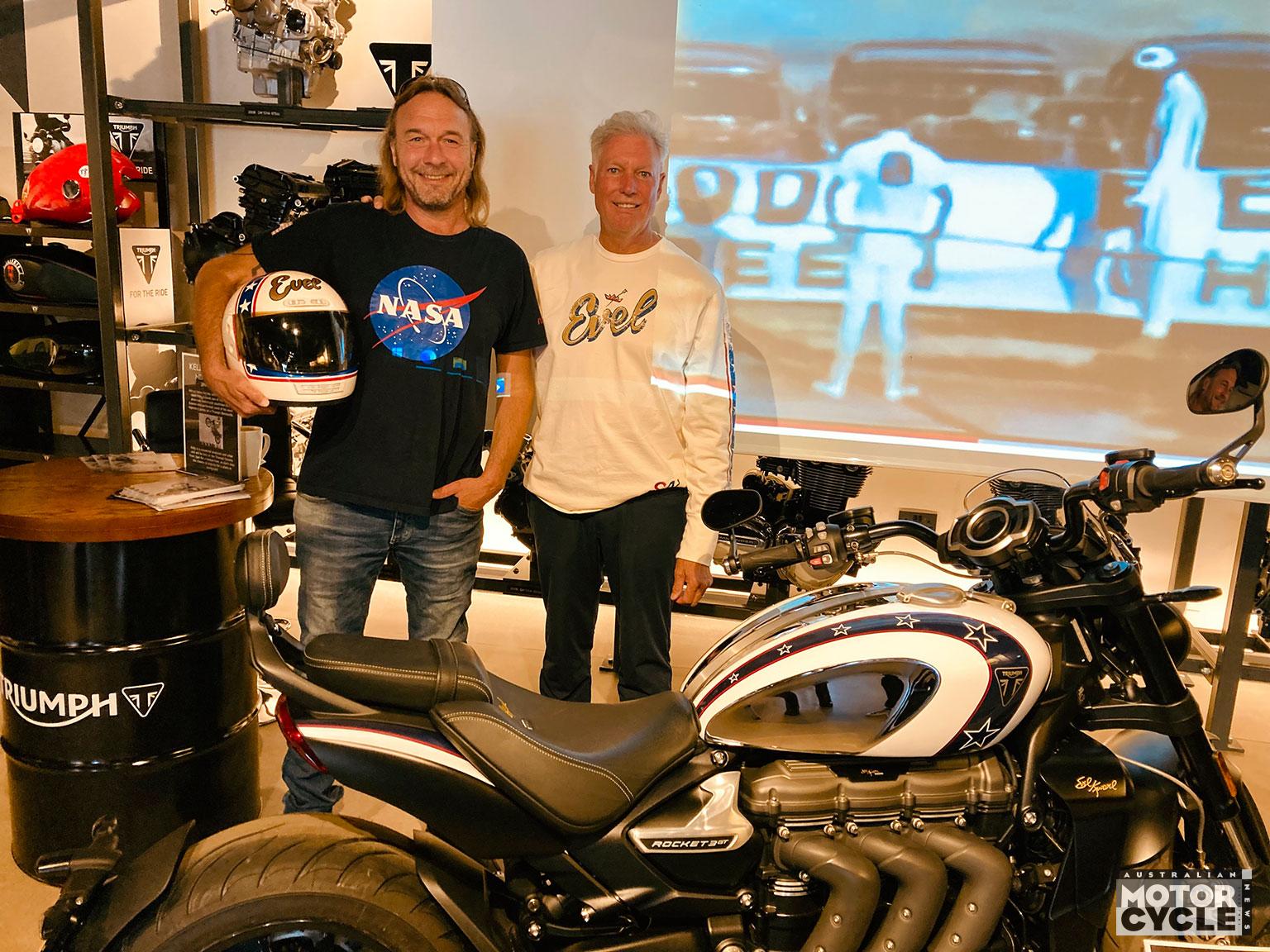
While modern motocross bikes are far better suited to jumping than anything Knievel ever rode, he says the principles remain the same and that courage and commitment remain the crucial factors.
EK: I have no idea what I could have achieved on a modern motocross bike. But you know what? Jumping a motocross bike? That’s no different to jumping the bikes that I jumped. You gotta have the guts to pull the trigger – you gotta get across. It’s like I put you in a Learjet and I’m gonna help you take off, okay? But I’m gonna give the controls to you and say, ‘Alright, big boy, here’s all the controls and everything. Now, you go ahead and land it.’ Now, that’s where you’ll have your ass knee-deep in crap, boy.
According to Knievel, it was his never-say-die attitude that struck a chord with the general public, even if they weren’t interested in motorcycles.
EK: They loved me because I always said, ‘You can fall many times in life, but you’re never a failure as long as you try to get up.’ Use your body or use your head or use anything you got left to be a worthwhile human being. And I think America needed that in the 1970s, with Vietnam and Watergate.
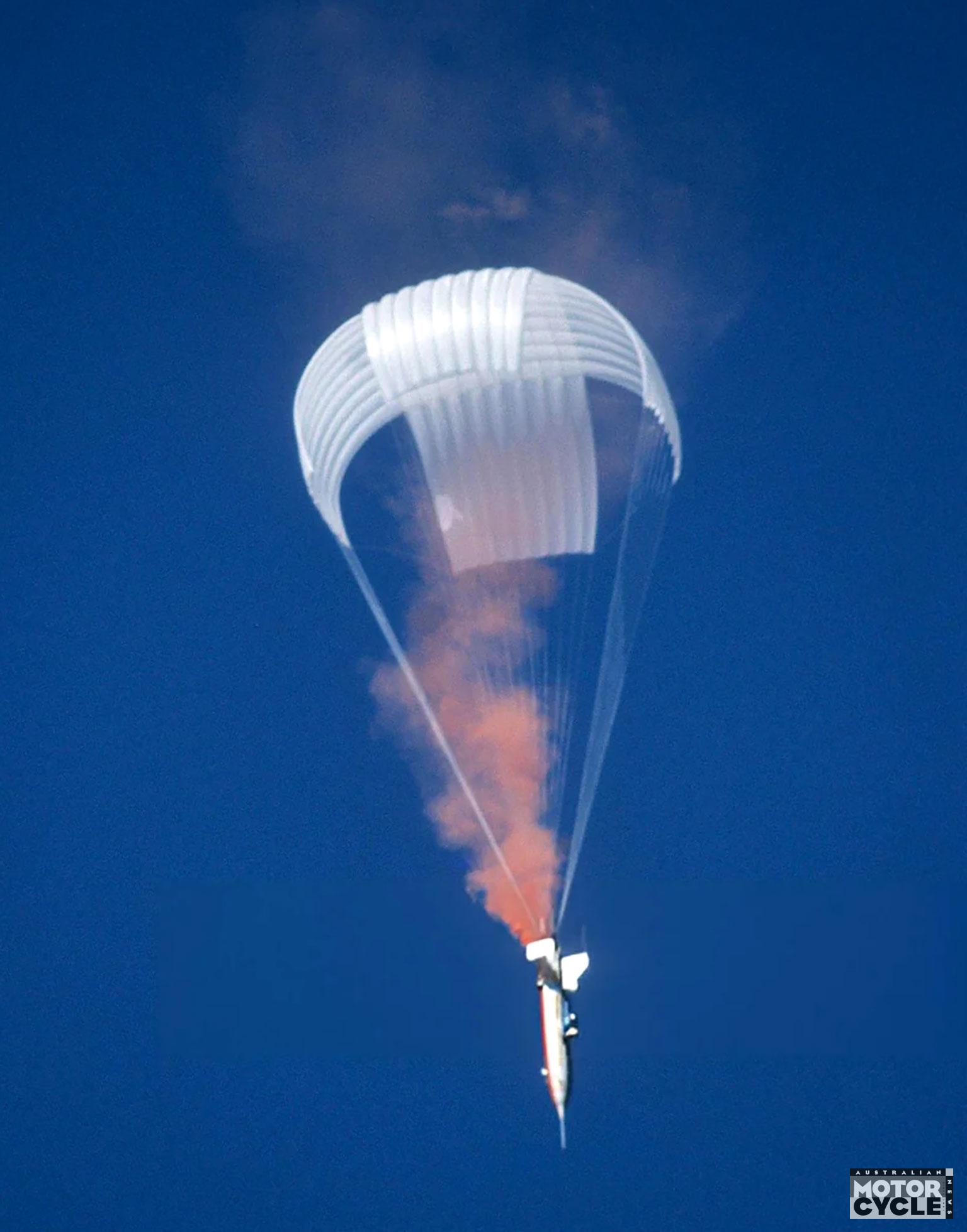
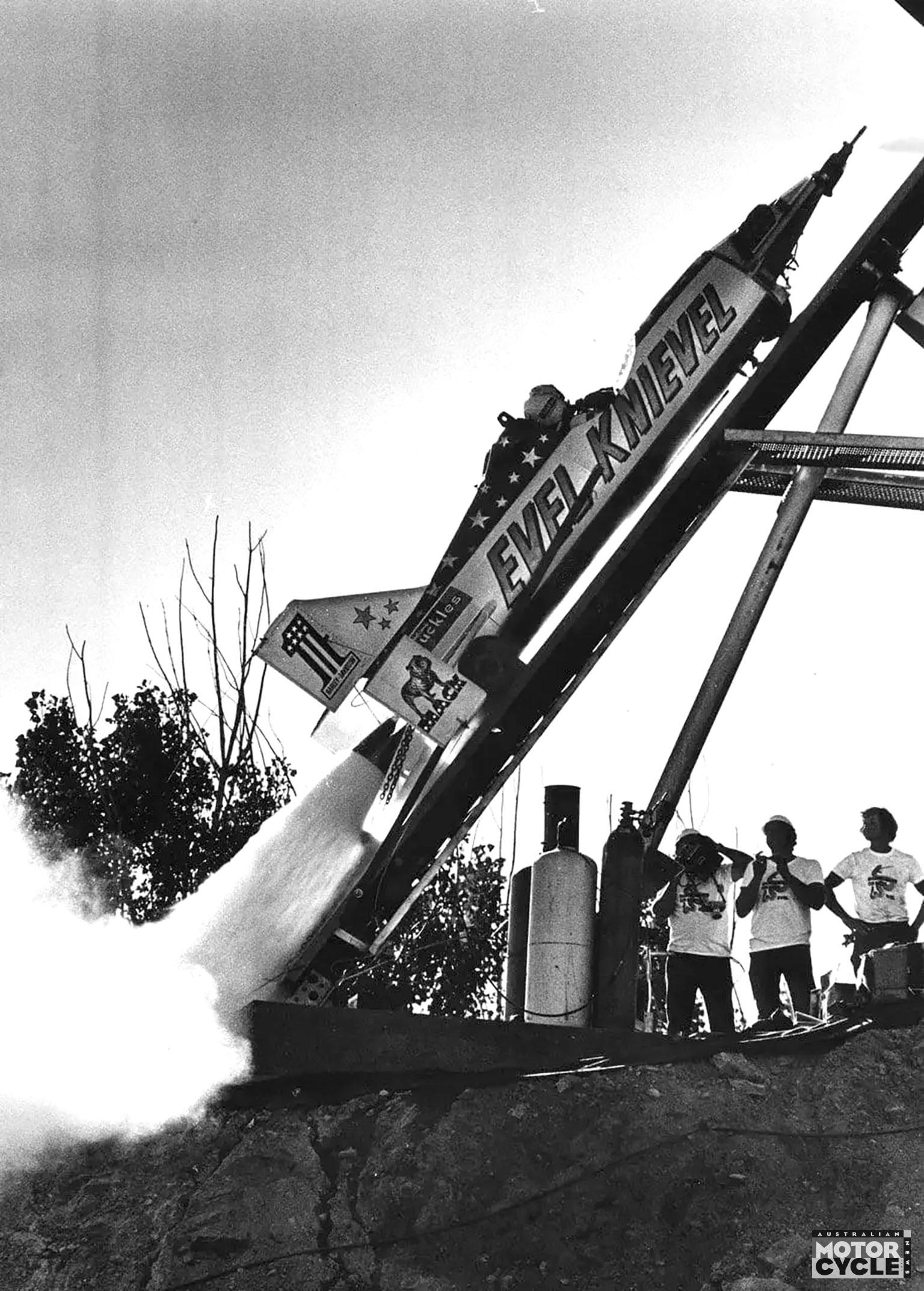
To the end of his life, Knievel was touchy about the failed Snake River Canyon jump in 1974. He attempted to blast across the quarter-mile-wide canyon in a home-built, steam-powered rocket but his safety parachute deployed almost immediately after take-off, and he drifted down into the canyon. By then, Knievel had already done the most dangerous part, yet there were still those who felt he had ‘chickened out’. As if Evel Knievel’s bravery could ever be doubted.
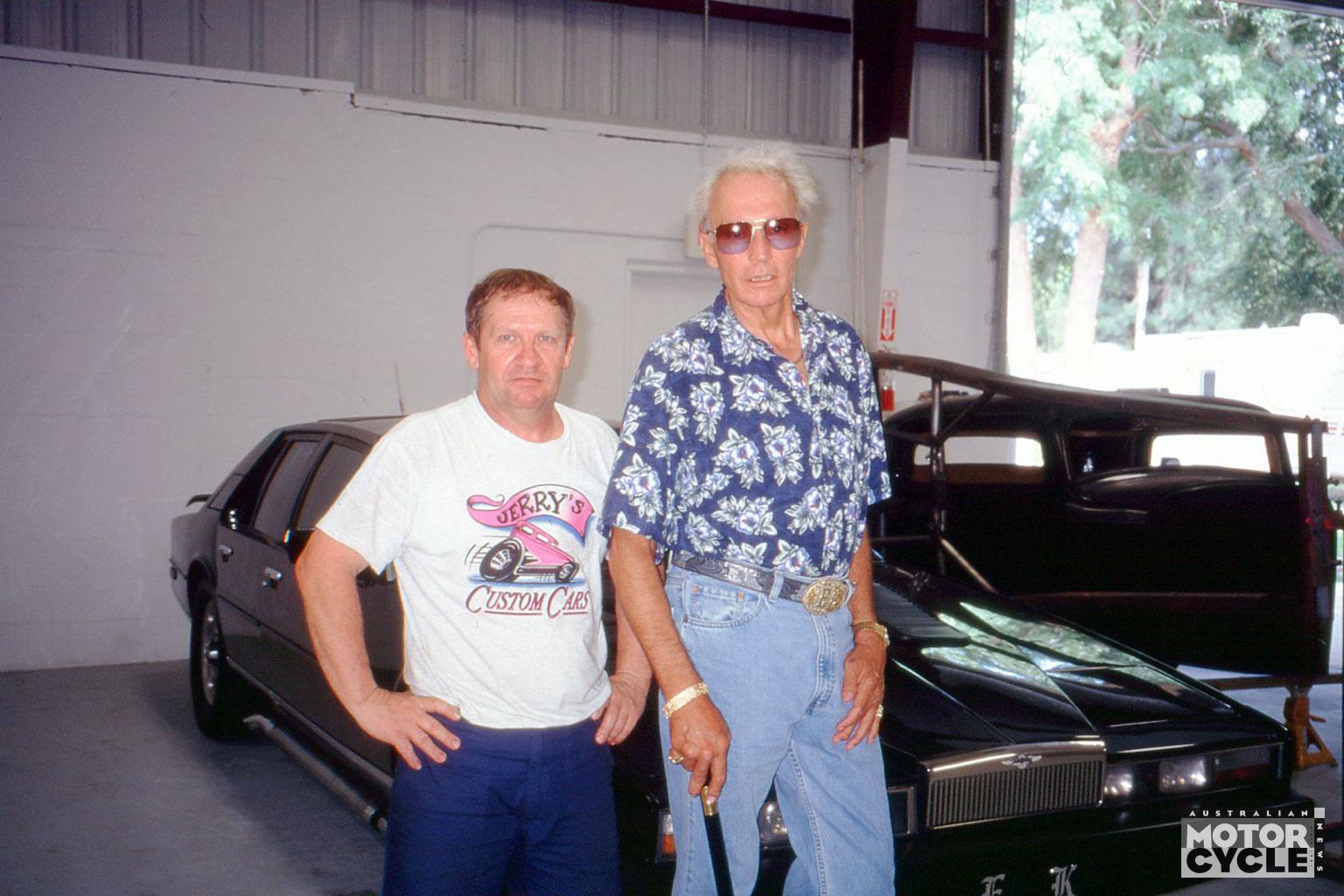
EK: The parachute malfunctioned. That’s all I can tell you about it. Man, I gave seven years of my life to that canyon jump and BANG! The parachute went. The engineer didn’t know what the hell he was doing.
Ahead of a jump, Knievel would take a slug of Wild Turkey whiskey, murmur to himself ‘God take care of me, here I come’ and twist the throttle. But despite his quick prayers, he wasn’t exactly religious (at least not until late in his life).
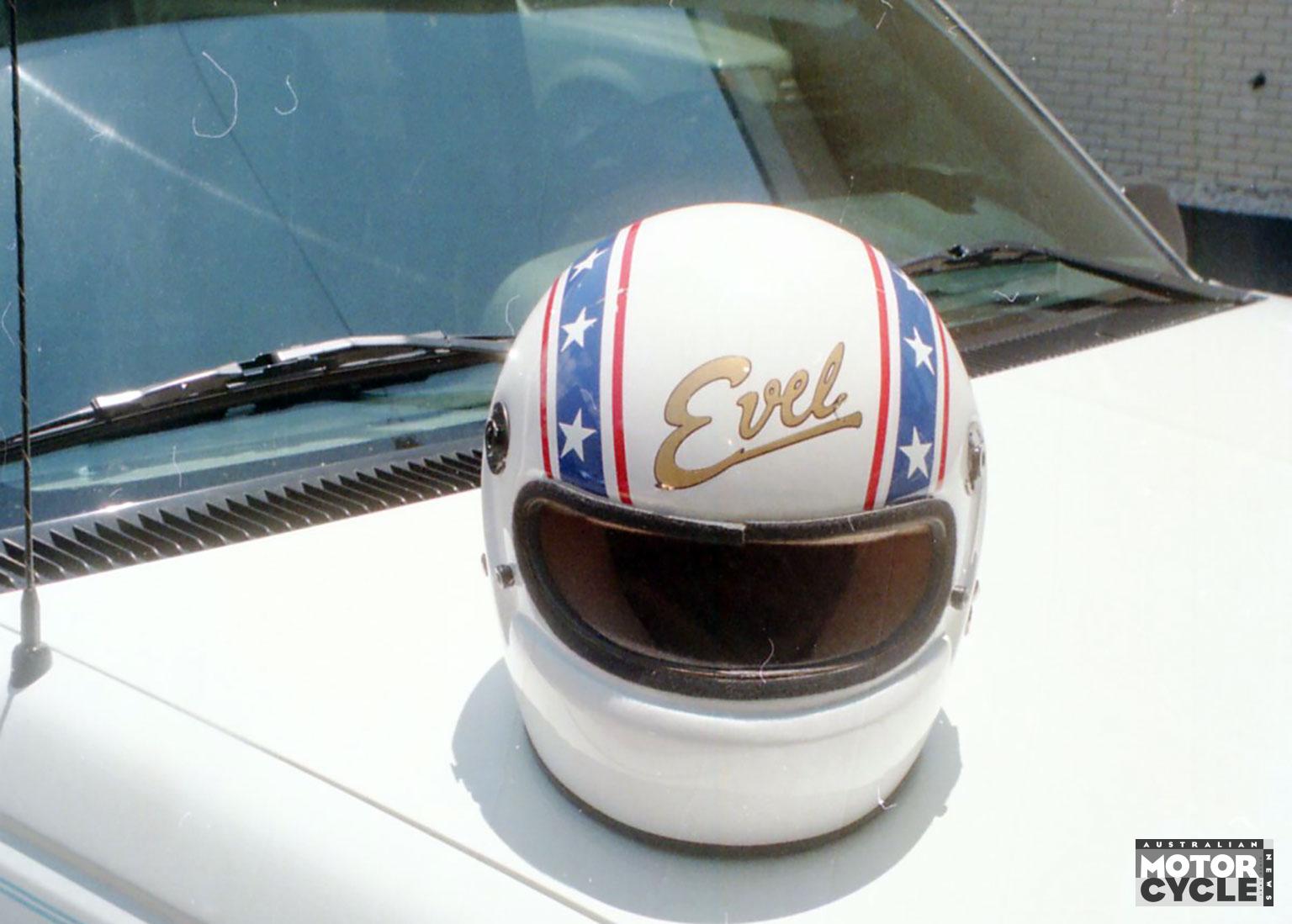
EK: No, I’m not religious. I believe in God, but I don’t believe in God through any Jesus Christ, or any Buddha, or any Sacred Cow; I just don’t believe in any of that. I believe in God because there’s a God. That other stuff is bullshit. Prove it to me – show me some scientific fact. Find me one of the Ten Commandments or find me one piece of Noah’s Ark.
When asked what he considered to be his greatest achievement, Knievel put keeping his word at the top of the list.
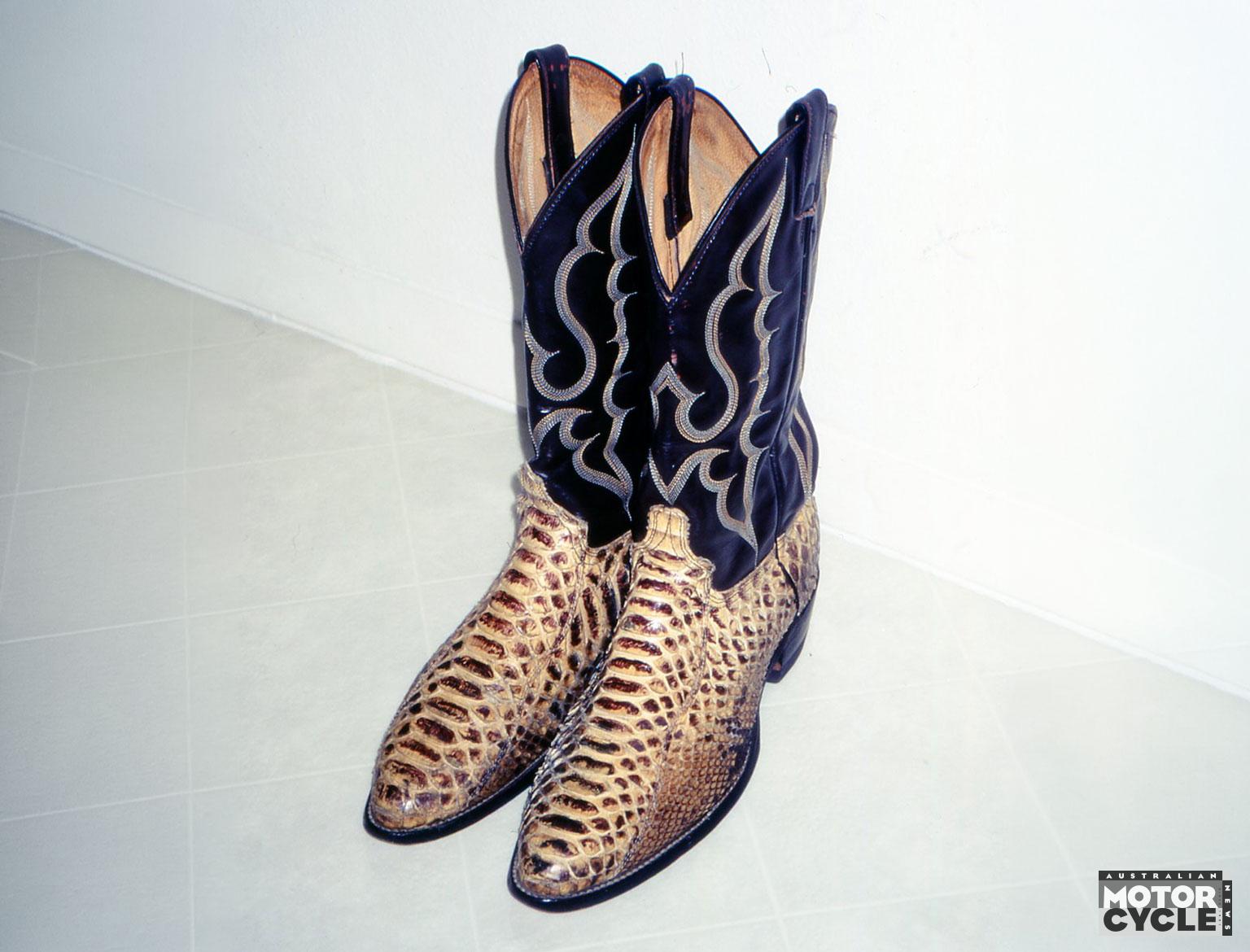
EK: You know, I kept my word. I said I’d try to jump the canyon. I’ve just done the best I could with my career. I’ve tried to speak out to children about drugs and alcohol and made contributions to society, and I’ve tried to be right with my family and friends and that’s about all a person can do.
God put you here to do the best, and be the best, you can, and a human being can’t really ask for any better deal than that.
Girls, Girls, Girls
Despite being married throughout his career, Evel Knievel was a notorious womaniser. I asked him if there was any truth in the rumour that he had lept with seven women in a 24-hour period for a bet.
EK: No. It was eight. I got $1000 for that. I had to hire guards to stand at my hotel to keep women away. I mean, everywhere I went, when I went out, I had to hire guards to fend ‘em off. I probably slept with two women a week ever since I was 25.
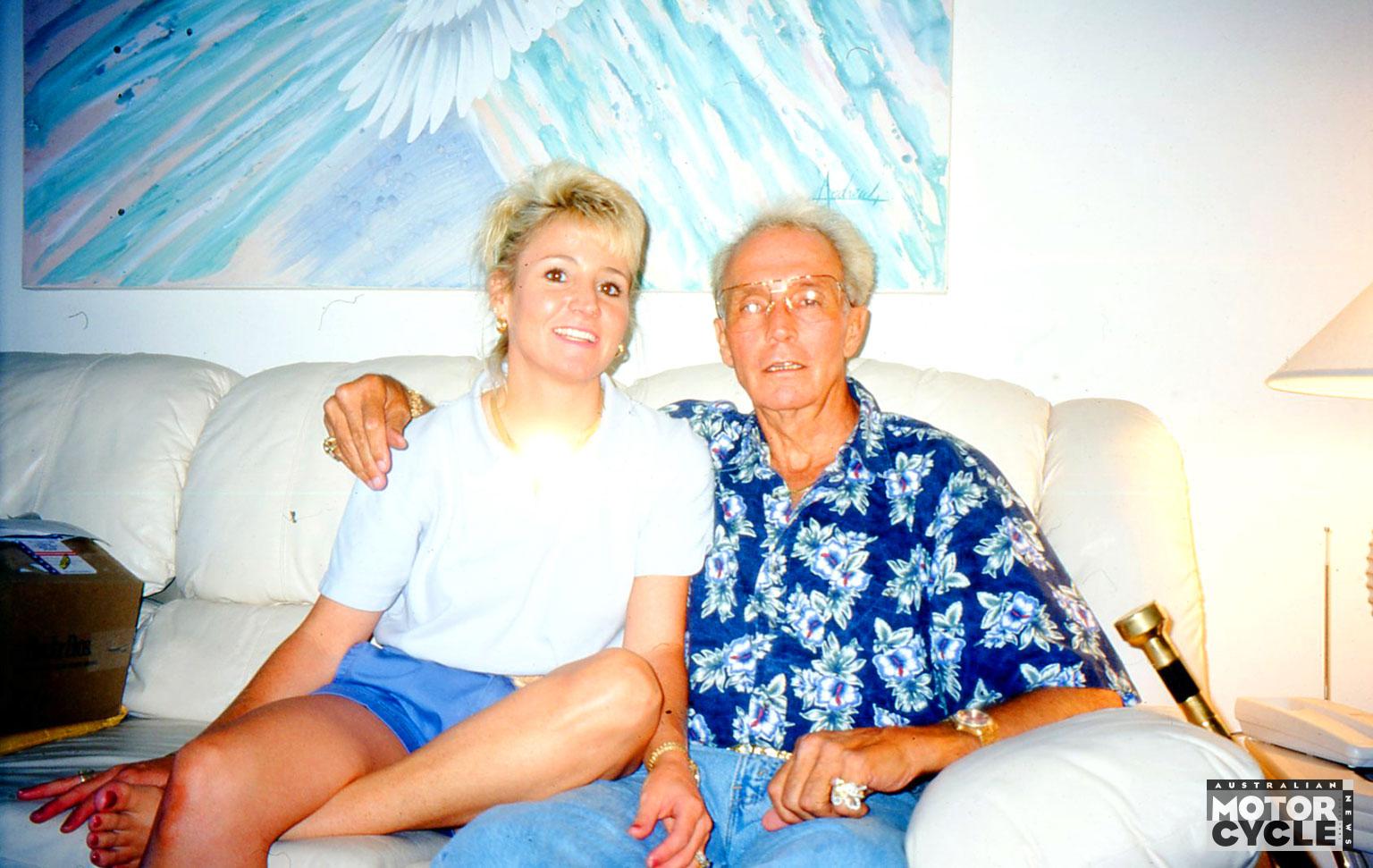
I mean, I love my wife (ex-wife Linda) dearly. She’s such a beautiful person and she’s the mother of my children. She didn’t like my travelling, and she knew about a lot of things. Every time she picked up a newspaper there’d be a picture of me and the girl I was with – some actress or something – and it hurt her, you know? It hurts women, but certain men are certain ways; that’s just all there is to it. I just have a sexual appetite for many women, and I just can’t help it. I mean, what do you say when you’re first born? ‘I’m gonna be oversexed’ or ‘I’m gonna have many women?’ or ‘I’m gonna be gay?’ You know? You don’t do that.
I’ve been very faithful to Krystal (Kennedy – Knievel’s fiance at time of interview) in the seven years we’ve been together, though. She’s a wonderful person and I just think it’s about time that I changed my ways. I’m still friends with my ex-wife Linda too. We split up seven or eight years ago, but we’re still in touch.
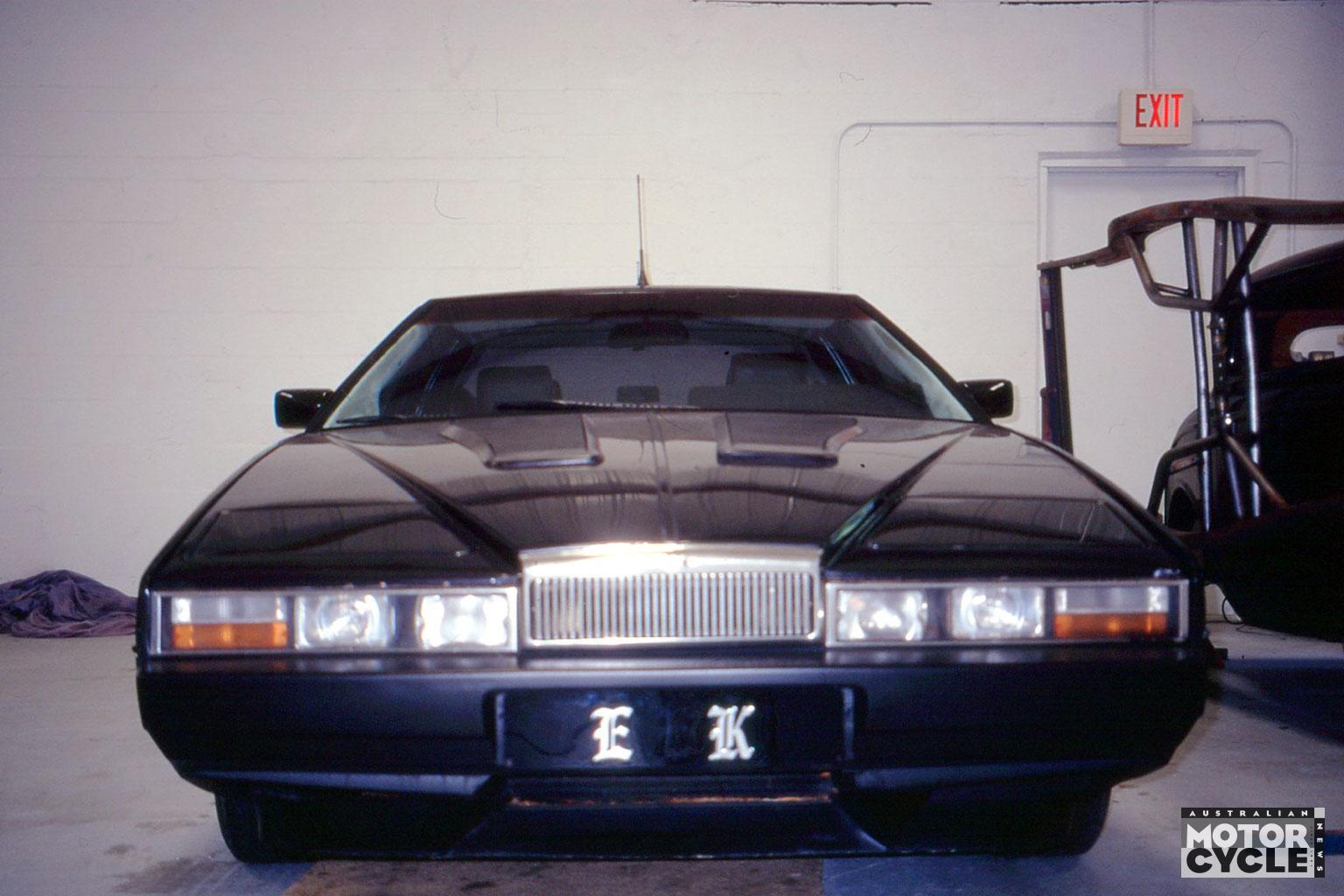
Booze, booze, booze
Evel Knievel was well known for his love of beer, whiskey and partying, but he quit booze when he suffered liver disease and needed a transplant in the late 1990s.
EK: Yeah, I was a hard drinker. I drank a lot of Wild Turkey, but I haven’t had one in 10 years. And I quit beer a year ago. I drink non-alcoholic beer now. I wish I could still do it, but I’m glad I don’t. It doesn’t do anything but destroy your body. Anything in excess destroys your body. Anything. You have to take everything in moderation. Krystal and I partied and drank like a couple of wild people for the first few years we were together but we thought we were hurting our relationship, so she helped me to make the decision to settle down.
‘Color Me Lucky’
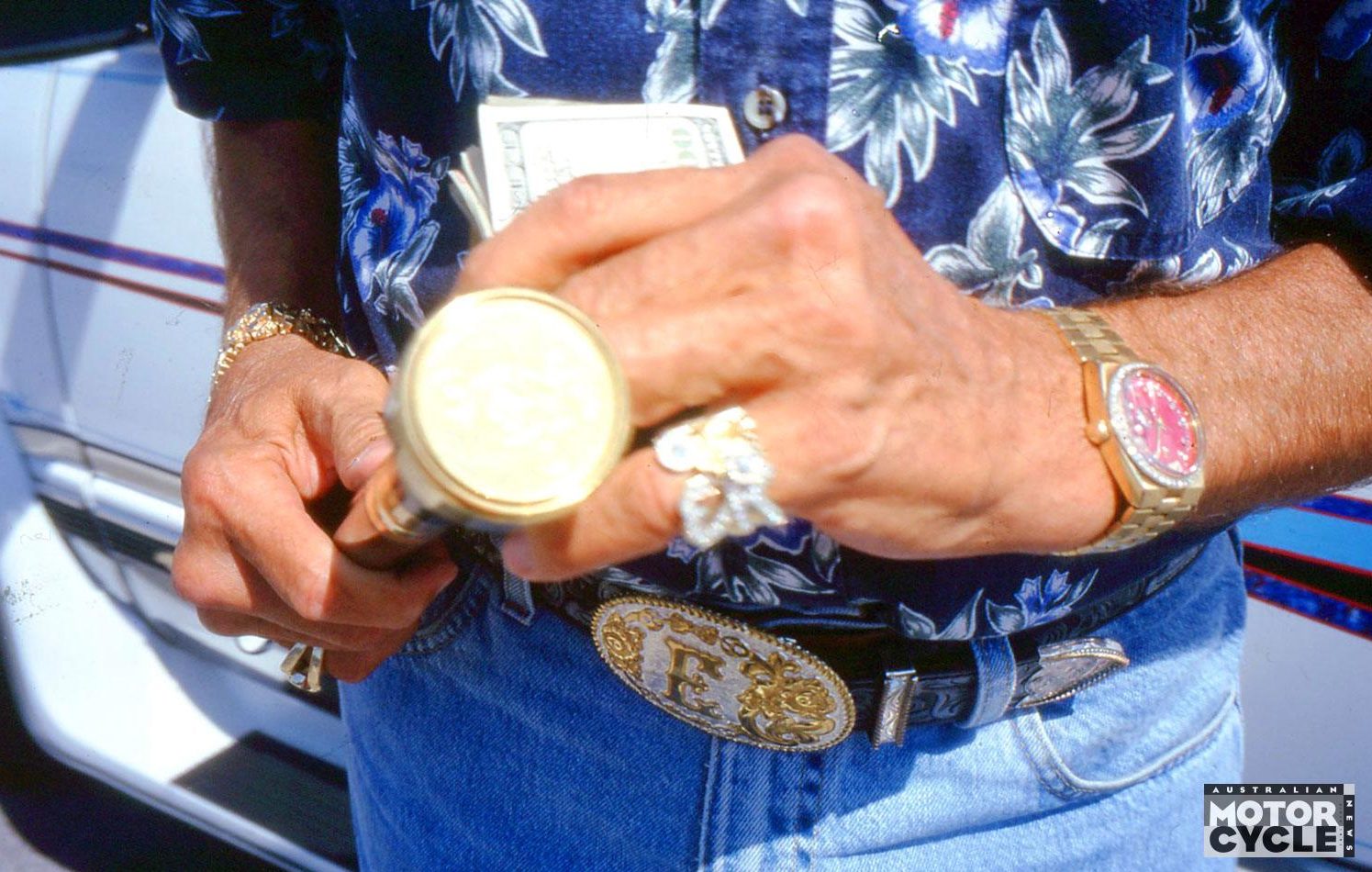
Knievel was also big on gambling; some of his famous logos included playing cards, dice and the phrase ‘Color Me Lucky’. At one point he had so much money he was photographed shovelling it into his own bank vault in Butte, Montana. But he knew how to spend it too.
EK: I always was a risk-taker and I love to gamble. I gamble on football, basketball, hockey… I got a guy who owes me a couple of thousand dollars, right down the street here (from a bet he won playing golf). I’m gonna go down and see if I can get it.
I’d sometimes gamble $50,000, sometimes $10,000, sometimes a thousand. I still enjoy going to Las Vegas, but I hate to gamble there – they rob you. It’s horrible. That’s the worst gambling in the world. They have a licence to steal from you. They’re (those who gamble in Vegas) a perfect example of fools being born every minute.
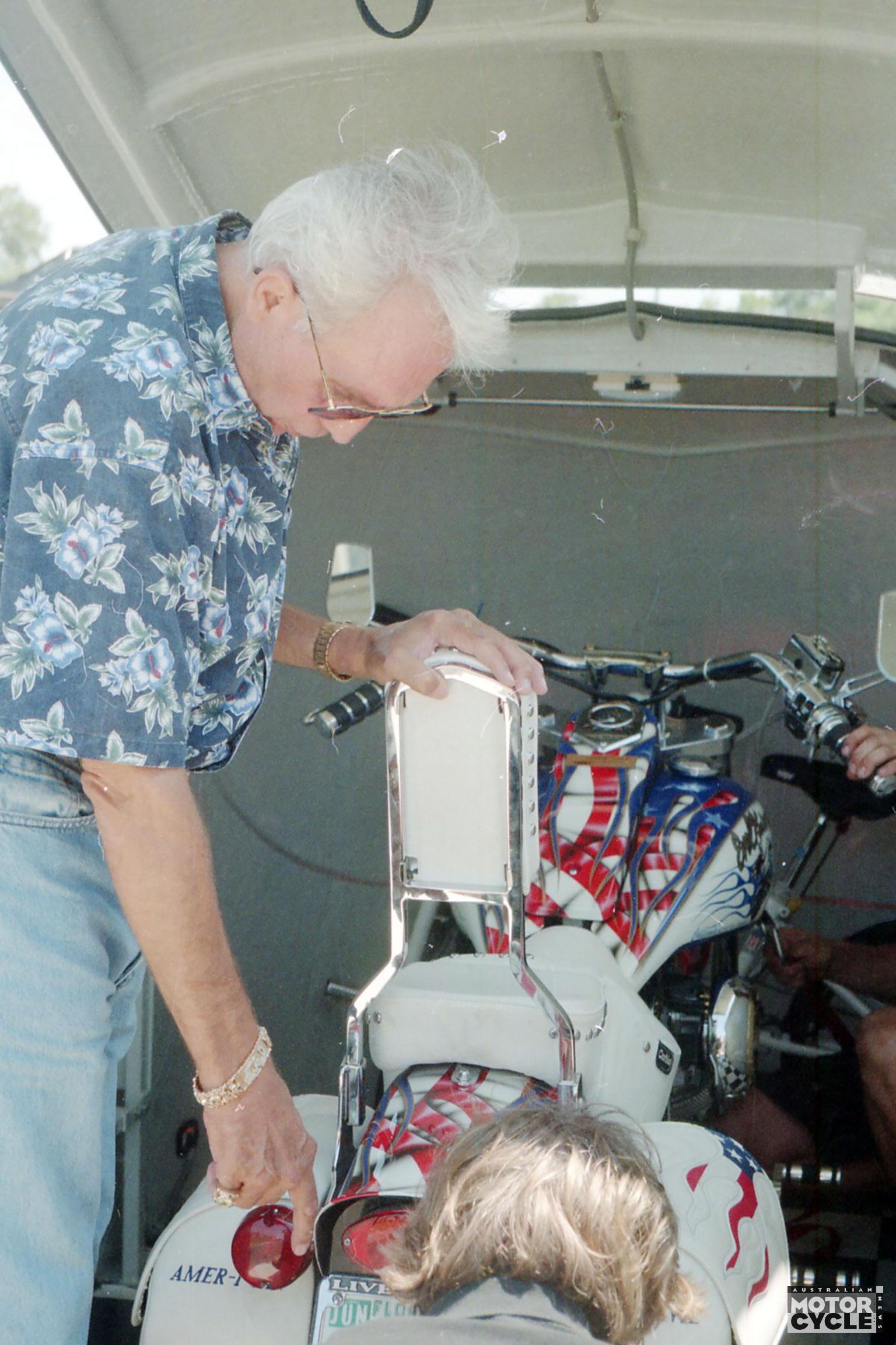
Knievel claimed to have made ‘about $30 million’ during his career but spent almost every cent of it and would eventually find himself in deep trouble with the IRS.
EK: Yeah, I blew a lot of it. Most of it. But I have an agreement with a big investment firm that I’ve signed everything to. I just live on a salary plus expenses. But as far as expenses go, I can have anything I want – from a Learjet to a racehorse.
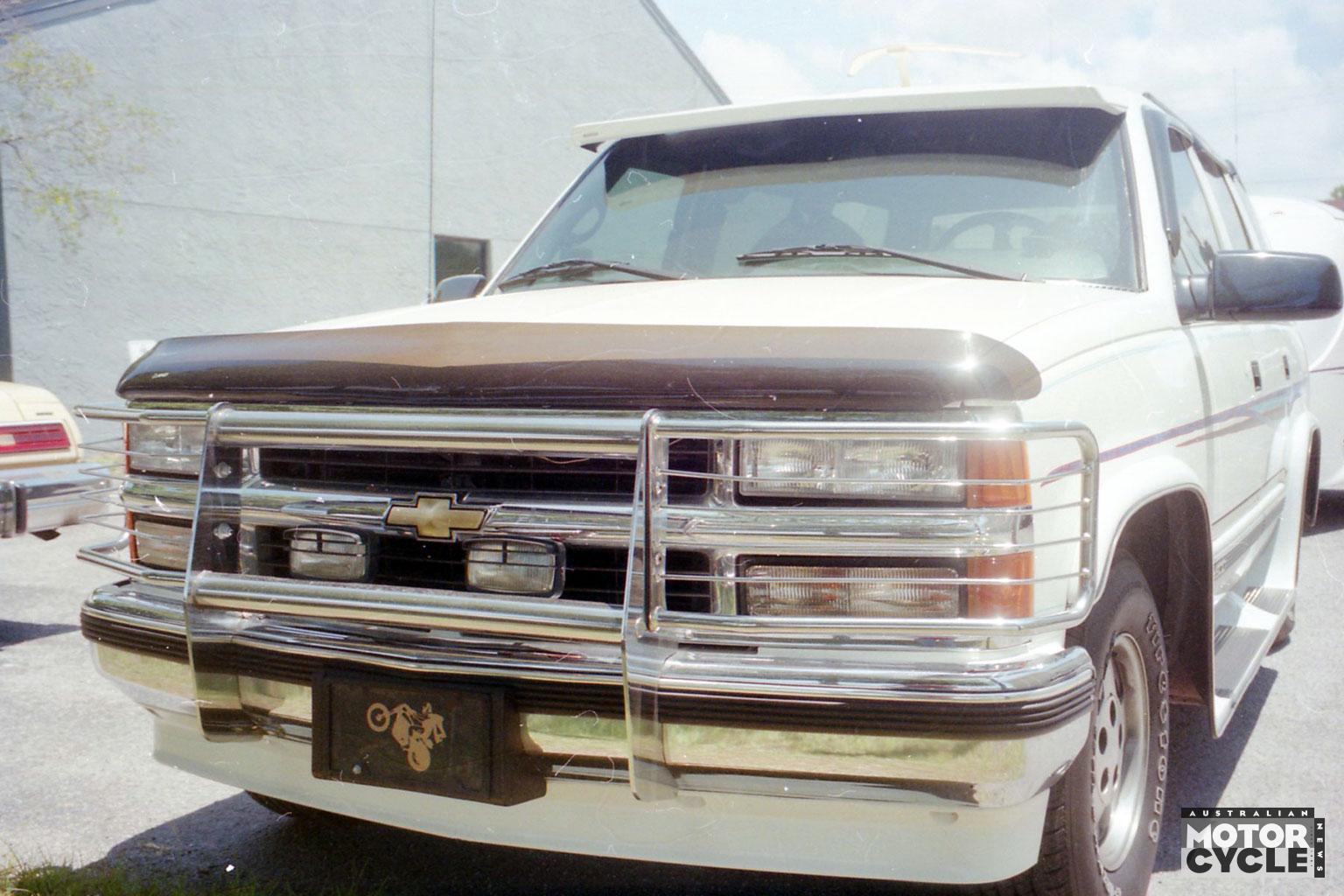
Knievel spent much of the 1980s on the run from the IRS, living in a truck and trailer, constantly on the move. After that outlaw experience, he had no love for the US government.
EK: The US government is run by a bunch of fuckin’ thieves, liars and conmen. To be a good politician in the US you gotta be a goddamned crook and a liar and a thief. That’s what it amounts to. And the IRS is worse than the Gestapo. They threaten people and lie and cheat. We need a business manager to run this country. A good one.
The Final Jump
Evel’s last jump attempt of any consequence was when he tried to leap over a pool of live sharks in Chicago in 1977. Again, it all went wrong, but then, it was Knievel’s spectacular failures that truly made him famous – not the many jumps he landed successfully.
EK: It was the CBS TV channel that came up with that idea in 1976. They were big sharks (l3 lemon sharks). I made a practice jump, and the landing ramp was so damp I slid off it and knocked a cameraman’s eye out. Then I slid under the grandstands and broke my arm in half.
Fall from Grace
In 1977 – the same year as the shark jump – a journalist named Sheldon Saltman released a tell-all book about Knievel that the daredevil took exception to. Knievel pinned Saltman down and broke his arm with a baseball bat. Aside from going to prison, Knievel also lost his lucrative contracts with Harley-Davidson and Ideal Toys – the firm that produced his range of famous wind-up toys in the 1970s. The action effectively marked the end of Knievel’s career, and age hadn’t diminished his contempt for Saltman.
EK: He said I was a drug taker and that I hated my mother. He said I’d fucked every woman in Butte, Montana. My kids even had to quit high school over that book. And it broke my mother’s heart. I’ve never taken a drug unless it was prescribed by a doctor. The guy was just a filthy, stinkin’ little liar. A filthy little leprechaun user of people. Skinny little, rotten little bastard. I shoulda killed the little prick. I was sentenced to three years in the penitentiary for beating him up, but I only did six months. I spent my time in the high-power hole (solitary confinement), so nobody bothered me.
Despite the ugly ending, Knievel’s career had been one hell of a ride. His televised jumps attracted some of the highest viewing figures in US television history.
EK: I’m number one, number four, number seven and number nine on ABC’s all-time charts. And that’s against things like Muhamad Ali’s Rumble in the Jungle and Superbowl.
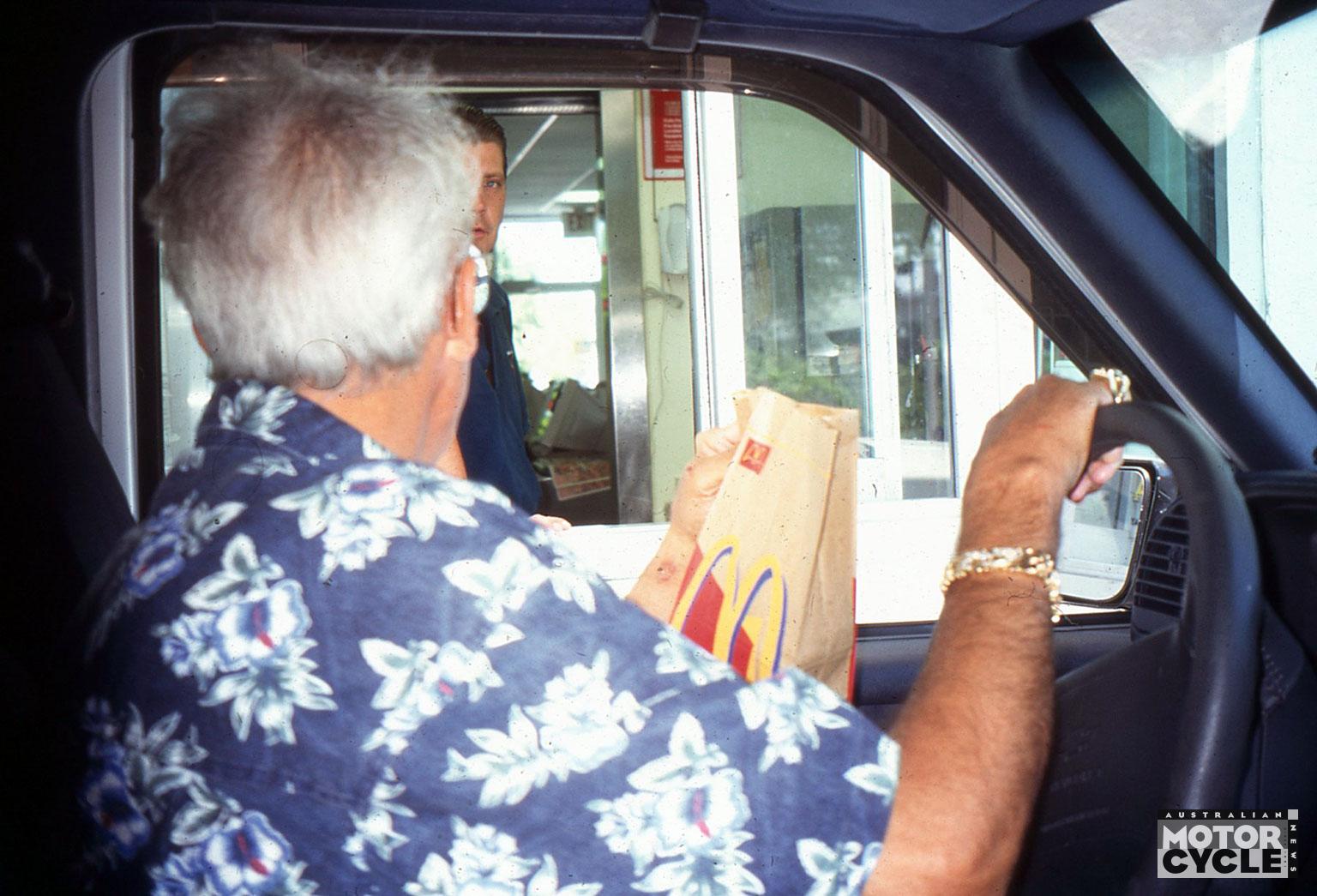
Retiring
Evel Knievel had retired from jumping by 1979 but travelled to Australia that year for one last tour. The plan was just to make personal appearances and perform a few wheelies while up to 50 other performers carried out various stunts. Knievel was scheduled to take part in 40 shows over a nine-week period, but he grew bored after the eighth stop on the tour and flew back to the US, disillusioned; a broken man.
EK: When I quit performing, I went through a real tough time. A real tough time. I wanted to be in the arena. I wanted to be a player, and when that’s taken away from you, when you’re used to it, it’s like… I mean, I still sign a hundred autographs a week, but that’s not what I enjoy doing. I stopped performing because I just didn’t think I had the nerve to pull the trigger anymore.
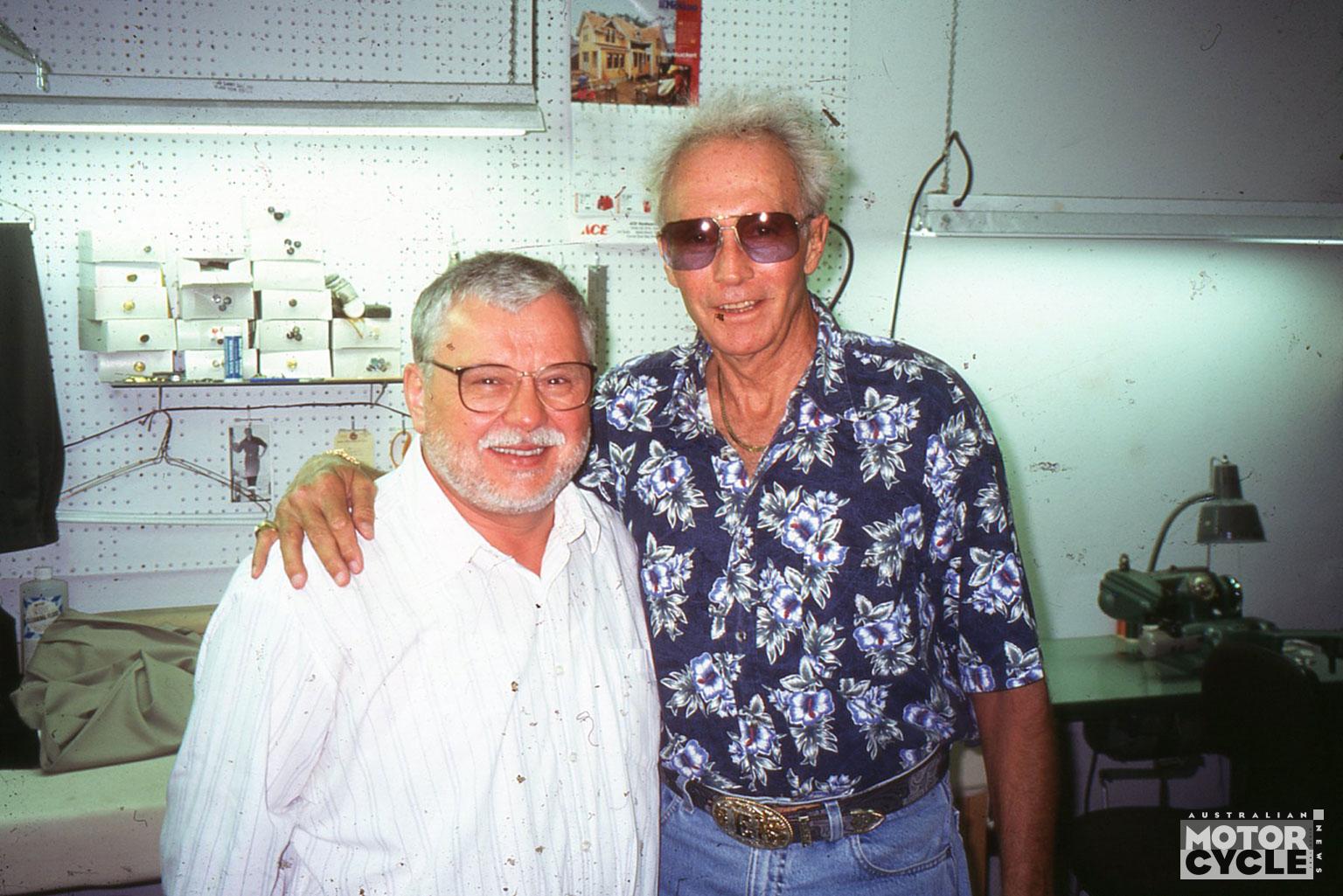
Fame (again)
While he was forgotten about for much of the 1980s, Knievel experienced a renewed fame from the 1990s onwards as he came to be seen as the godfather of extreme sports and started appearing on TV and in public again. He had conquered his alcoholism and come to an arrangement with the IRS. Life was looking up and Evel could finally embrace his status as a US national treasure.
EK: I can’t even go in a grocery store now. People want an autograph; they wanna kiss you and hug you… I’m happy for it, but I can do without it – I like my privacy. But it goes with the territory; I earned it, so I might as well enjoy it. It’s a good feeling. I mean, nobody knows who Kenny Roberts is, but he was a great rider.
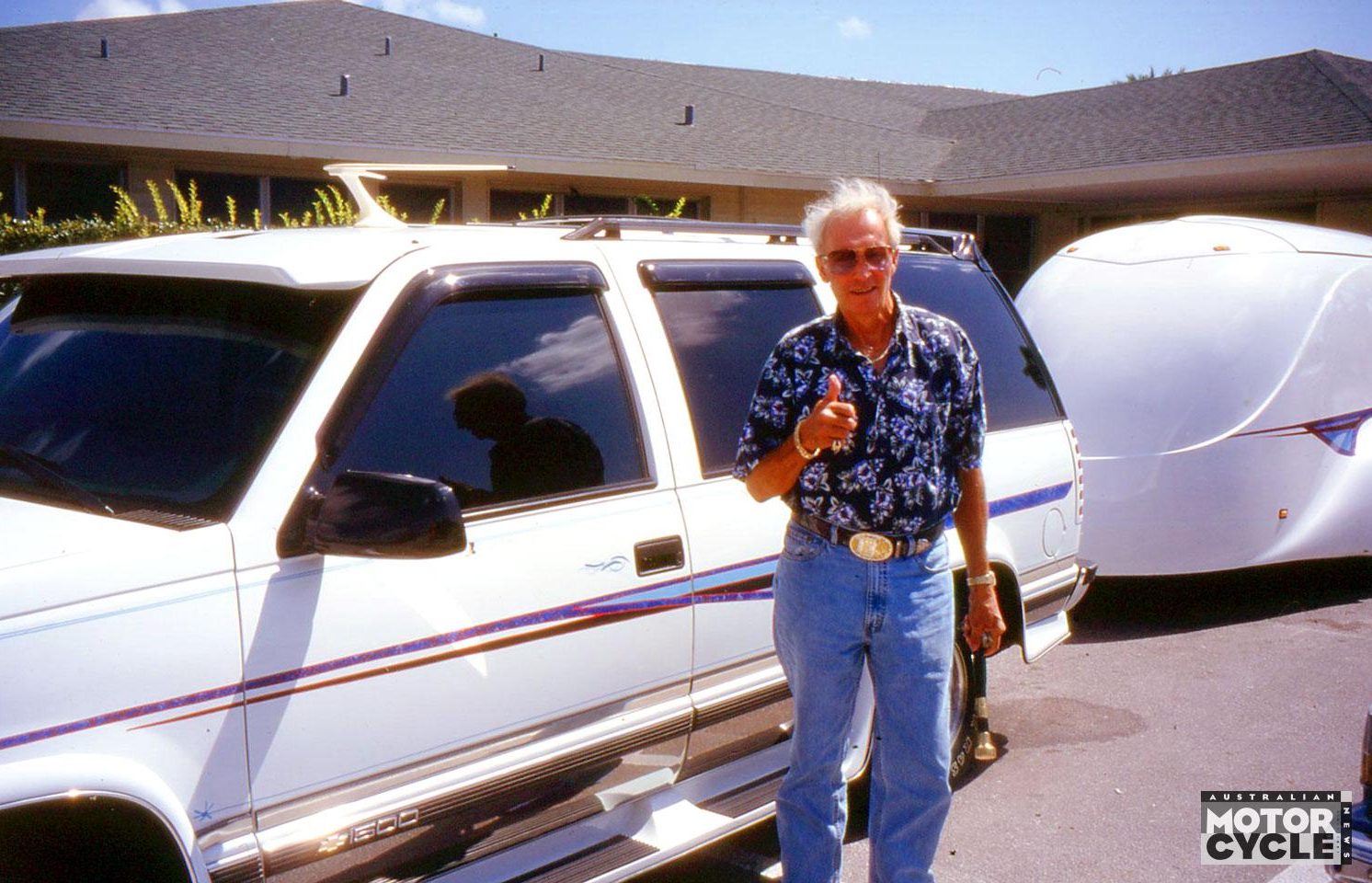
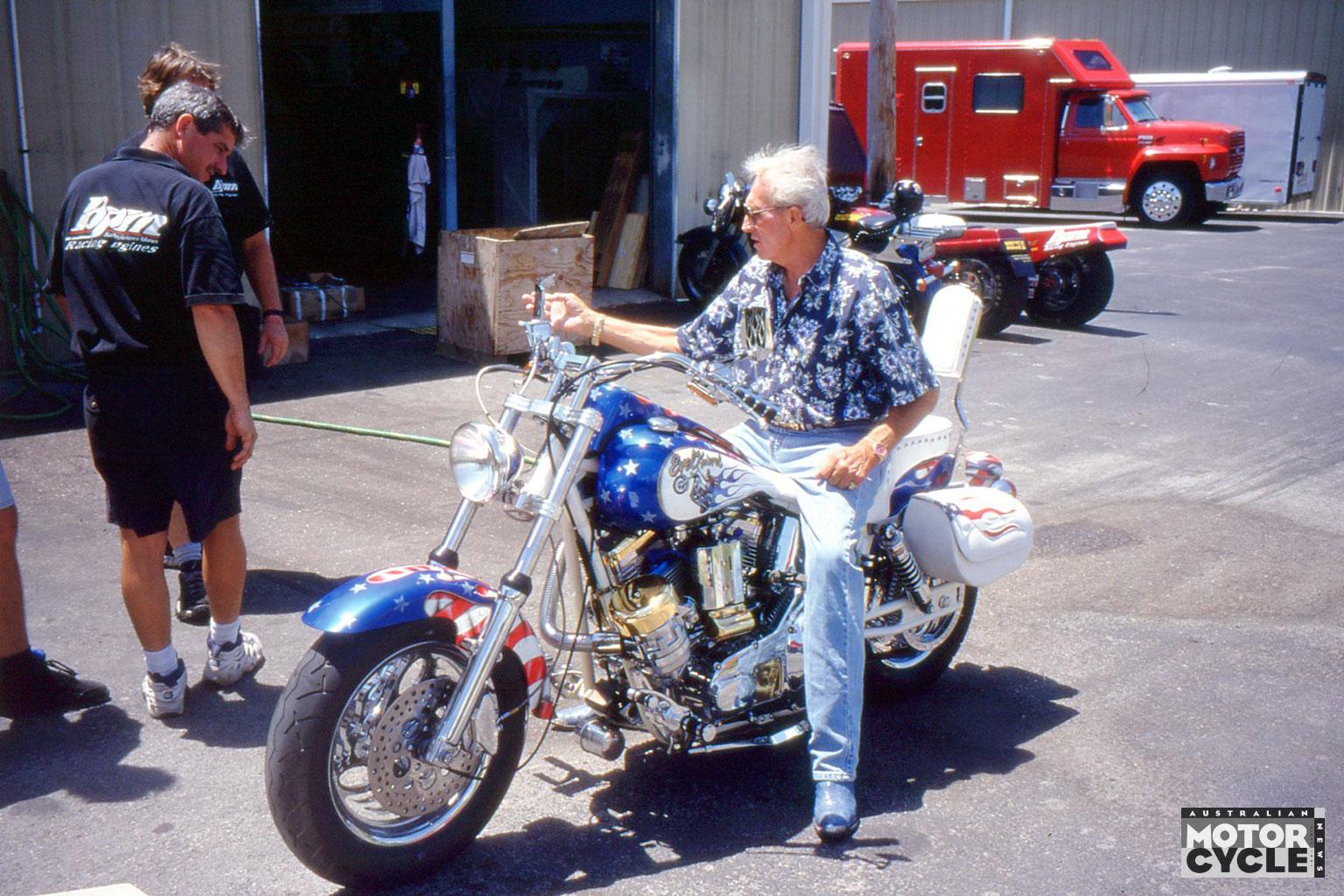
Even though he was seen as a national treasure in his later years, Knievel took no chances when he was out and about. As I sat alongside him in his Jeep Cherokee on one visit to see him in Clearwater, Florida, I asked if it was true that he always carried a gun with him.
EK: Yeah, I always carry a gun. There’s a Magnum .44 right in the back there. You know how many murders and car-jackings we have in this country? I don’t go on any trip with my little 28-year-old fiance without a goddamned shotgun and a pistol with me.
If I killed somebody, I’d rather have 12 people judge me on a jury than six people carry me in a coffin to my grave. That’s the way it is.
Living with Pain
There’s a price to pay for being a retired daredevil, and Knievel paid it every day in his later life with so many niggling old injuries finally catching up with him.
EK: I have bad arthritis, and it hurts me to get up in the mornings. I have to be very careful in the mornings because of all the injuries I have. I’m a slow starter, but I get going so I can play golf. I play a pretty good game of golf; I’ve been playing it all my life (Knievel would hold his hands under hot running water for 20 minutes each morning, just so that he could hold a golf club).
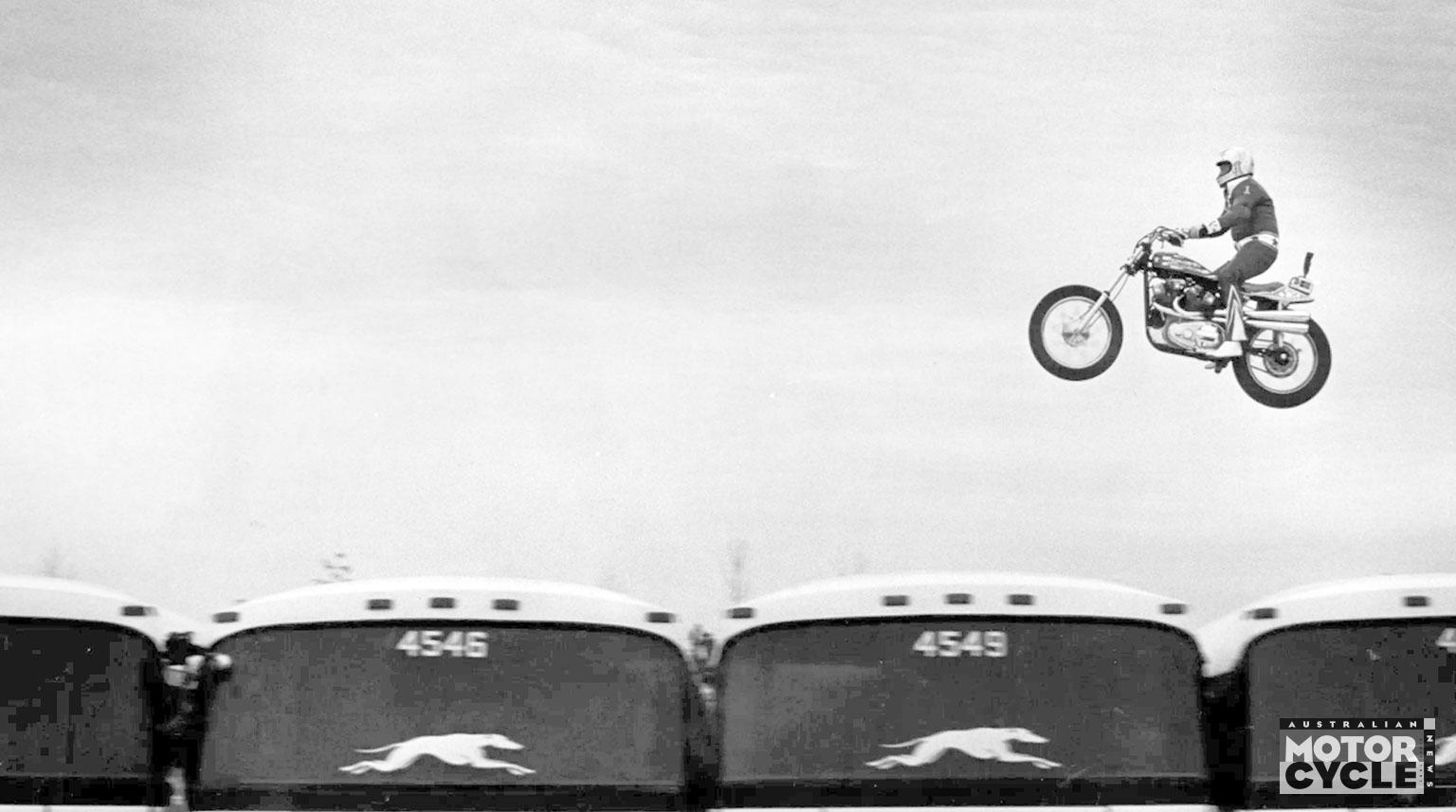
I’ve had 35 broken bones. I’ve broken my back four times, my femurs five times and some other bones two or three times. That’s a lotta bones. And I was unconscious for 29 days after Caesar’s Palace. A goddamned dumb doctor in England (after Knievel’s Wembley jump in 1975, when he attempted to jump 13 buses but clipped the last one and suffered a massive crash) let me out of hospital and said nothing was wrong with me. My pelvis was crushed and he never noticed.
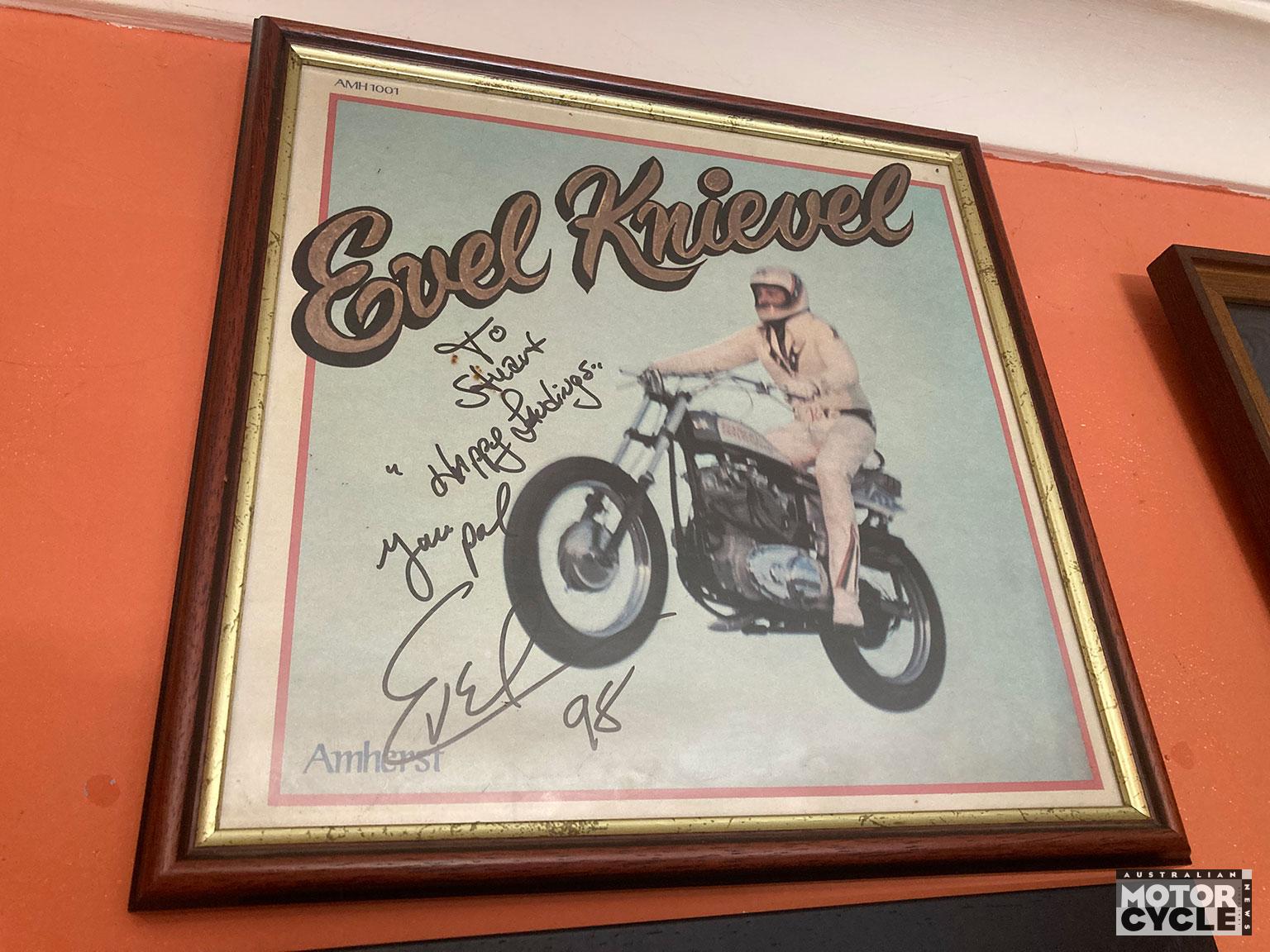
No Regrets
A fall from grace, a painful divorce, the squandering of millions, the long-term problems with the IRS, a prison sentence and the lingering pain from his many injuries… Knievel’s life wasn’t all roses, but he had no regrets,
EK: I’ve had a good life. I’ve lived a better life than any king ever had in England, I’ll tell you that. I’ve done everything in my life that I wanted to do, except sleeping with a couple of ladies that I wanted to sleep with. But other than that, I feel very satisfied with my life.
Knievel died in Clearwater, Florida, on 30 November, 2007, at the age of 69, his body ravaged by old injuries. He was buried in Mountain View Cemetery in his hometown of Butte, Montana.
“If I die, then I’ll just be getting somewhere quicker than you’re going and I’ll wait for ya,” Evel Knievel said. “That’s all. I’ll sit there and have a cool beer and wait for ya.”
Life of Evel
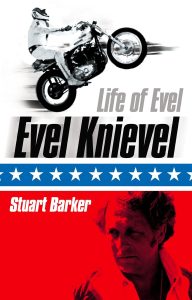
STUART BARKER’S book Evel Knievel: Life of Evel was first published in 2004 by Collins Willow. It is currently under option to Sony/Columbia and is due to be turned into a movie starring Channing Tatum in the title role. The book is still widely available on the internet.