Back in January 1989, the wild beast met its master, and together they became untouchable
Certain bike and rider combinations seem made for each other, to the point where it’s hard to mention one without thinking of the other. Carl Fogarty and the Ducati 916, Barry Sheene and the Suzuki RG500 and, perhaps the most concrete example of all, Mick Doohan and the Honda NSR500.
Doohan took five consecutive 500cc world titles on the V-Four in the 90s and was responsible for developing it from a wild, high-siding, tyre-smoking beast into the most successful 500cc GP bike of all time. Here he explains how he did it…
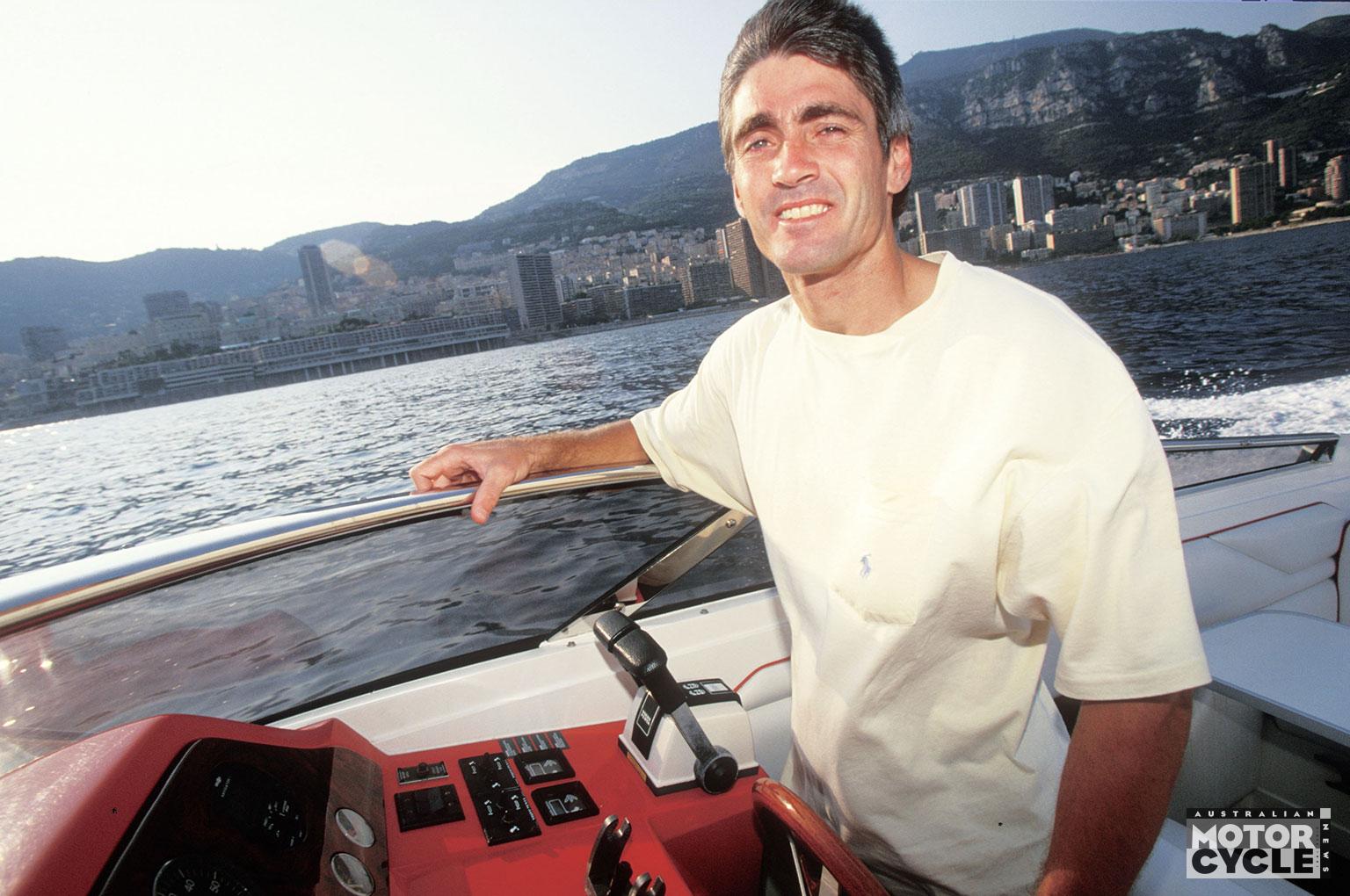
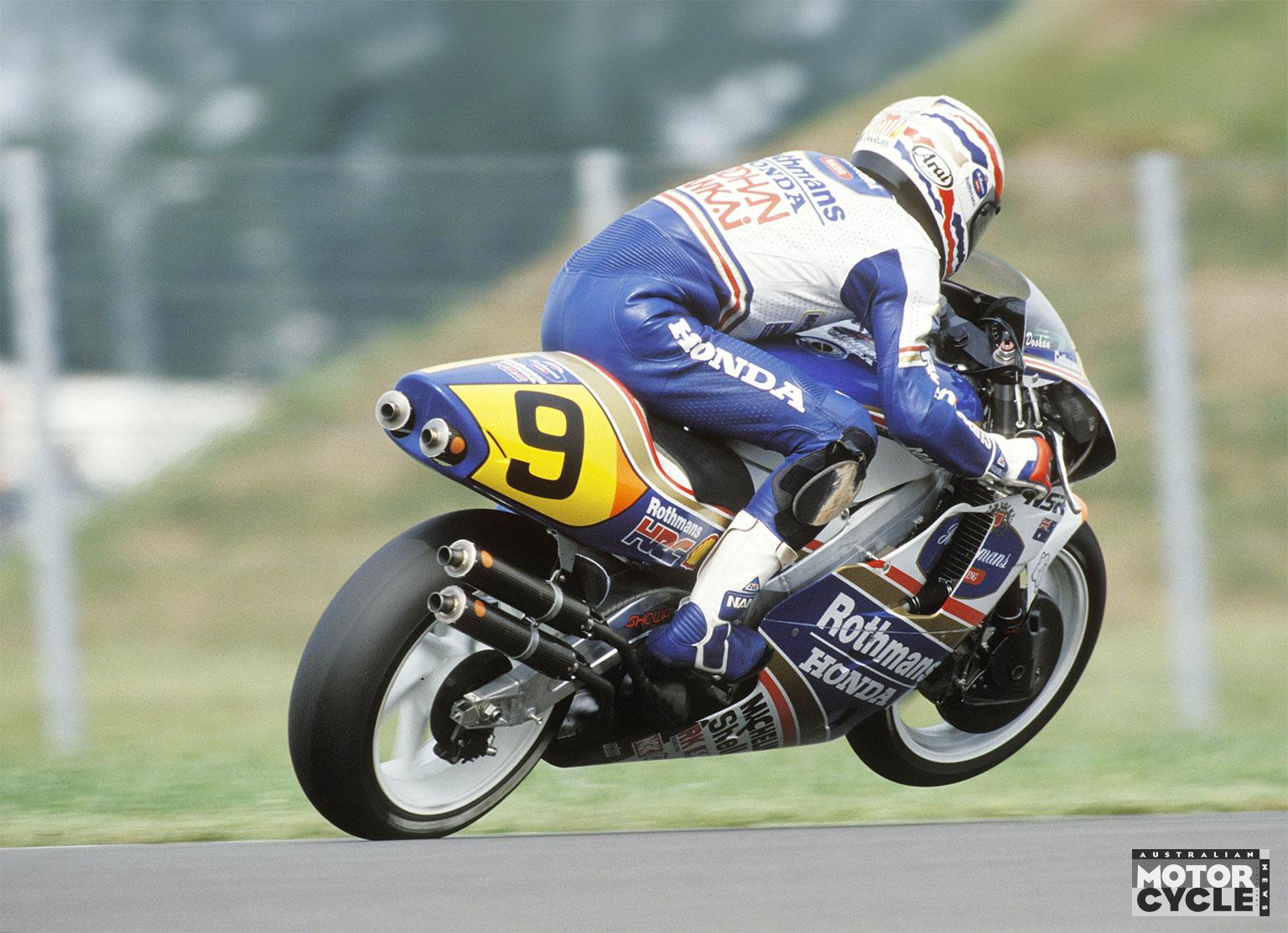
Mick Doohan and the Honda NSR500 were the most formidable and successful partnership of the 500cc era of Grand Prix racing that ran from 1949 until 2001. The NSR scored more than 100 GP wins between its introduction in 1984 and Doohan’s retirement in 1999, and Mick was responsible for more than half of them, proving that he was the key player in the development of the bike that became the most successful GP racer of all time
Doohan raced at a time when GP bikes were at their most ferocious and when the level of competition was astronomically high. While having to fight off the talents of Wayne Rainey, Eddie Lawson, Kevin Schwantz and Wayne Gardner, Doohan and the NSR managed to rack up five consecutive world championships between 1994 and 1998, and 54 race wins between 1990 and 1998. But that was only part of the story; it was the way in which Doohan and the Honda dominated the competition that really marked them out as the original ‘aliens’. The pairing held the record for most wins in a season (12), most pole positions in a season (12), most successive pole positions (12), and most points ever racked up in a season (340).
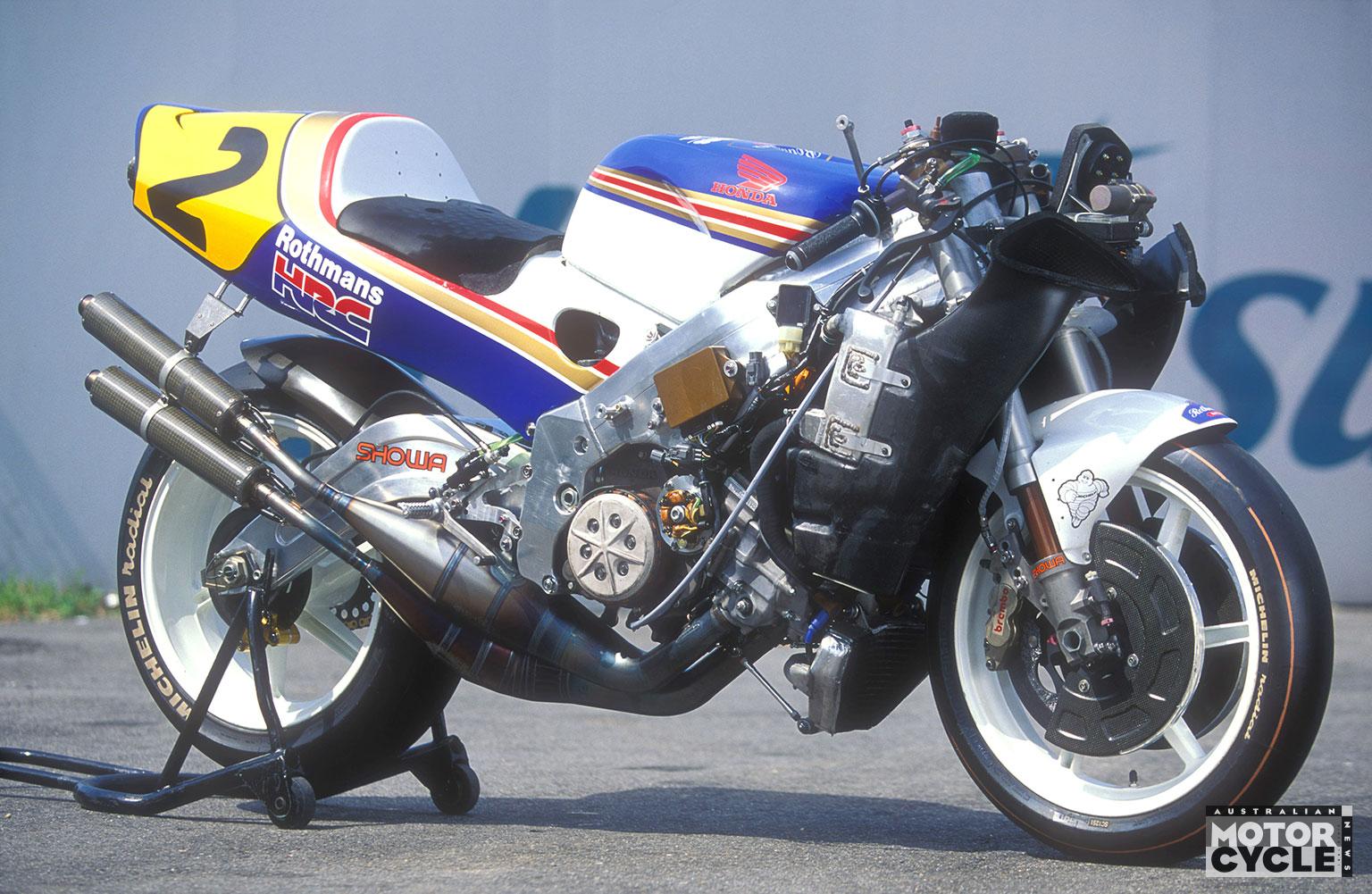
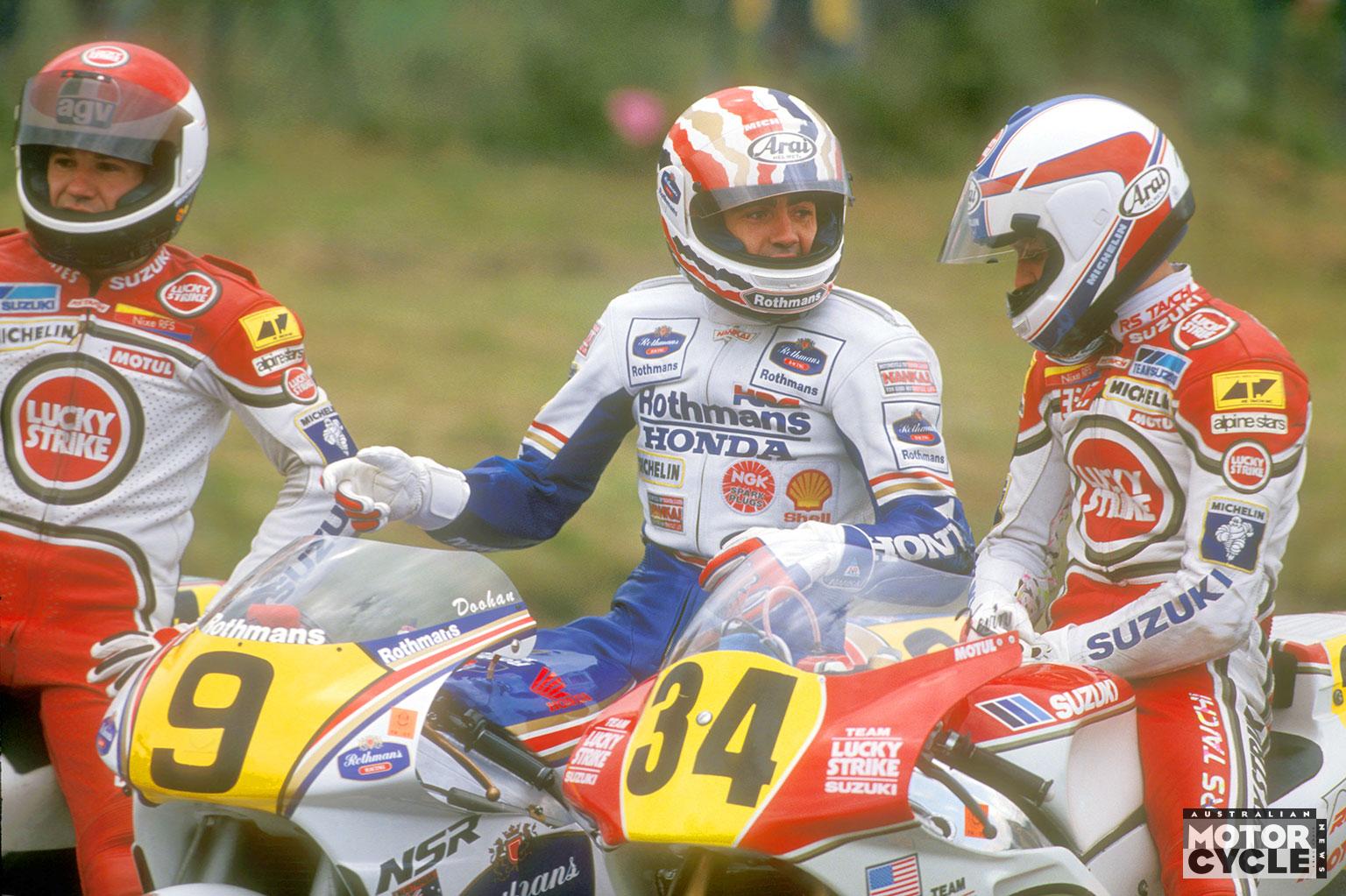
All these records were set during the 1997 season when mighty Mick and the NSR were at their most dominant, but it wasn’t always like that. Doohan first threw a leg over an NSR500 Honda in January 1989, at Honda’s Suzuka racetrack in Japan. The bike had already won two 500cc world championships, first with Freddie Spencer in 1985 and then with Wayne Gardner in –87, but the 88 machine that Doohan first tested was an evil bitch with too much power and wayward handling and it wasted no time in showing him who was boss.
Within a handful of laps, the fickle NSR spat its rider off and, just to make sure its would-be pilot got the message, followed him into the barrier with a sickening thump, breaking his crash helmet in two. It would be the first of many crashes to come before Doohan finally tamed the bike.
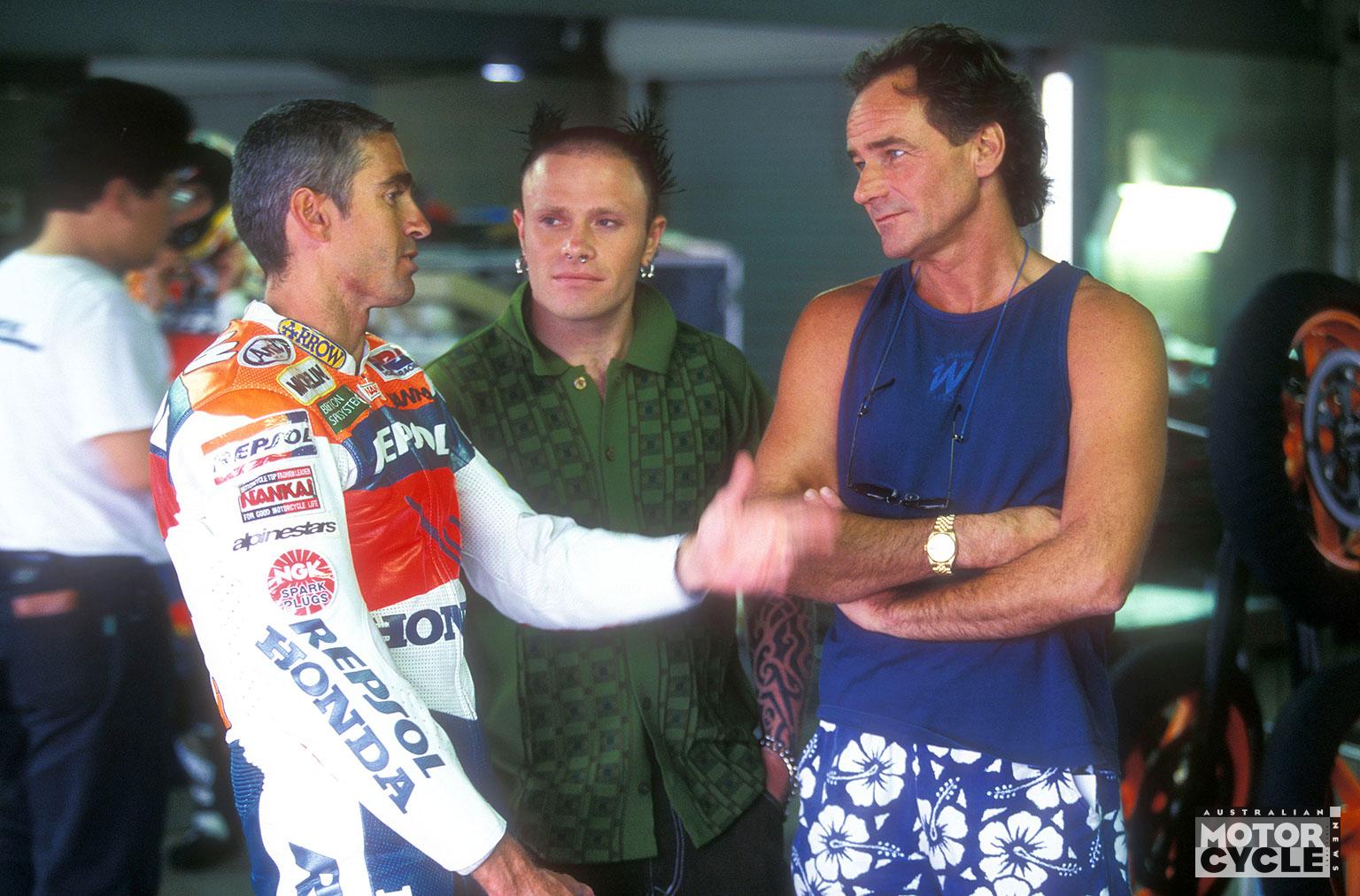
“The engine was great, but the chassis was terrible so it didn’t do anything you wanted it to do and the thing would just spin up all over the place,” Doohan says of his first ride on the NSR. “It was exciting to ride, with it being a new bike for me. I’d just had a test on the Yamaha (YZR500) and it was a fantastic thing. It wasn’t that far removed from Yamaha’s Superbike and F1 bike, other than the engine, of course. But the Honda’s power felt connected to the throttle whereas with the Yamaha you had to crack it open and then feed the power in. But in the end I didn’t sign for Yamaha because the deal was better at Honda and, at that time, Yamaha was world champion with Eddie Lawson and they also had Kevin Magee, Wayne Rainey, Christian Sarron – there were about eight Yamahas that were all doing good and Honda really only had Wayne Gardner and a couple of satellite bikes, so it just seemed the more logical choice to sign for them.”
Leaps and bounds
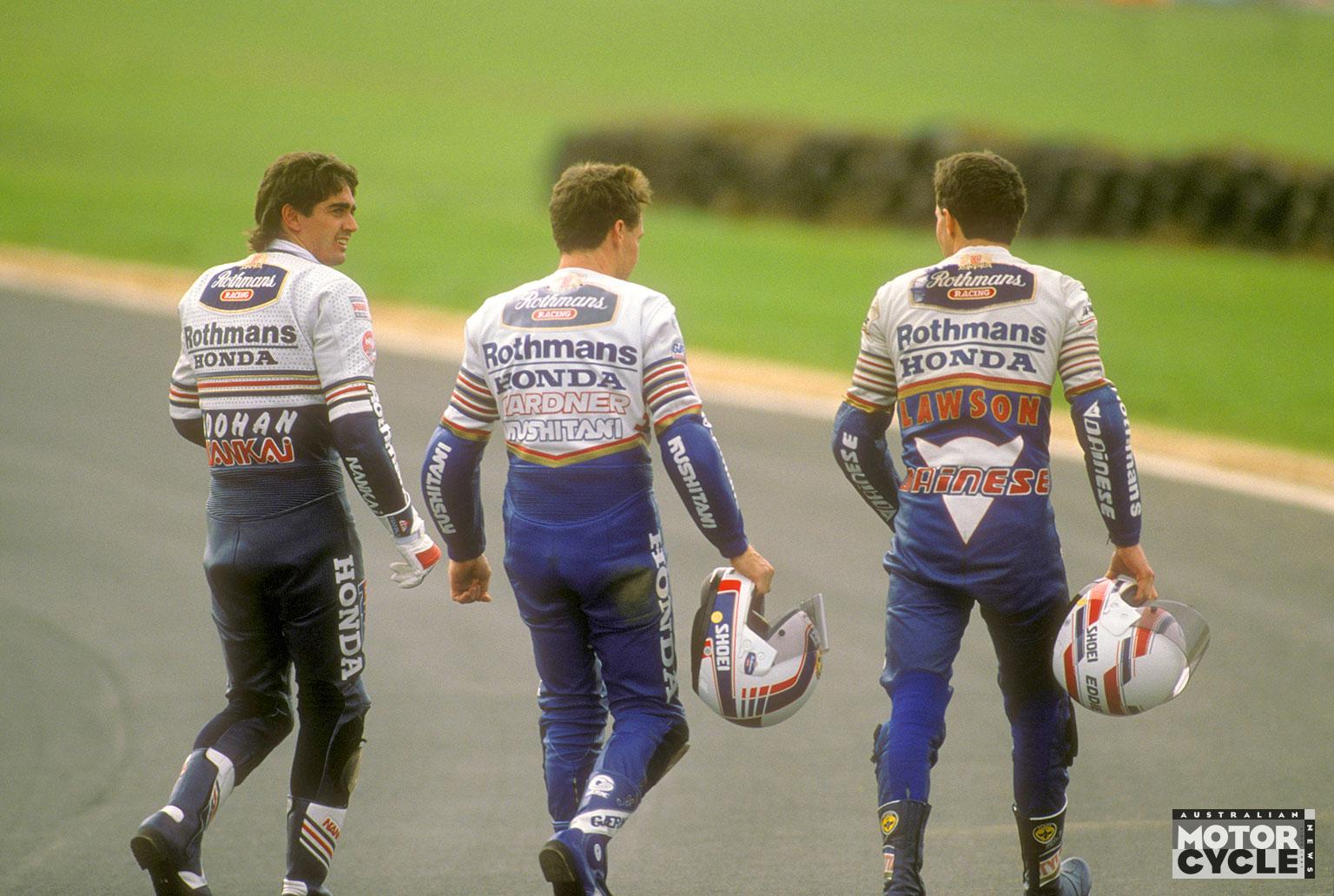
Although he realised the NSR needed some refinement, Doohan is the first to admit that, at the time, he wasn’t experienced enough to know exactly what to change. ‘Two years prior to testing the NSR I was racing a 250cc production bike, so my knowledge wasn’t really that big or that broad. So, my first year on the bike in 1989 it was a little bit better, but it was a physically bigger bike than the 88 machine so in some areas it was better but in other areas it wasn’t any good. You’d lean it over and it would still go straight ahead – and it would spin up in the corners like you wouldn’t believe. But once I did get my head around what we needed and what I liked… the good thing was that Eddie Lawson had moved over to Honda in a team with Erv Kanemoto, and it was good to know that what he wanted from the bike was the same thing that I was wanting, so we were both on the same page there. Eddie brought the bike along in leaps and bounds. I think that year he went through about 10 or 12 chassis – at the end of the year I was still on about number four. But it wasn’t until about the middle of 1990 that I started developing a few more things with Honda, raising the steering head and stuff like that, and we started getting a different character into the chassis, then pretty much from the end of 1990 the direction of the machine was going my way.”
Honda’s racing division, HRC, has not always been famed for listening to its riders – especially unproven ones. So, did Doohan struggle to get the changes made that he wanted? “Initially, yes. Like I said, I had come from nowhere, riding 250cc street bikes around Australia, and then Honda put me on their factory bike so I couldn’t really dictate terms to them. But once I started to get the results there wasn’t too much they could say, so they were happy to go with me. Then after that, pretty much I’d do anything I wanted so we had a great relationship.”
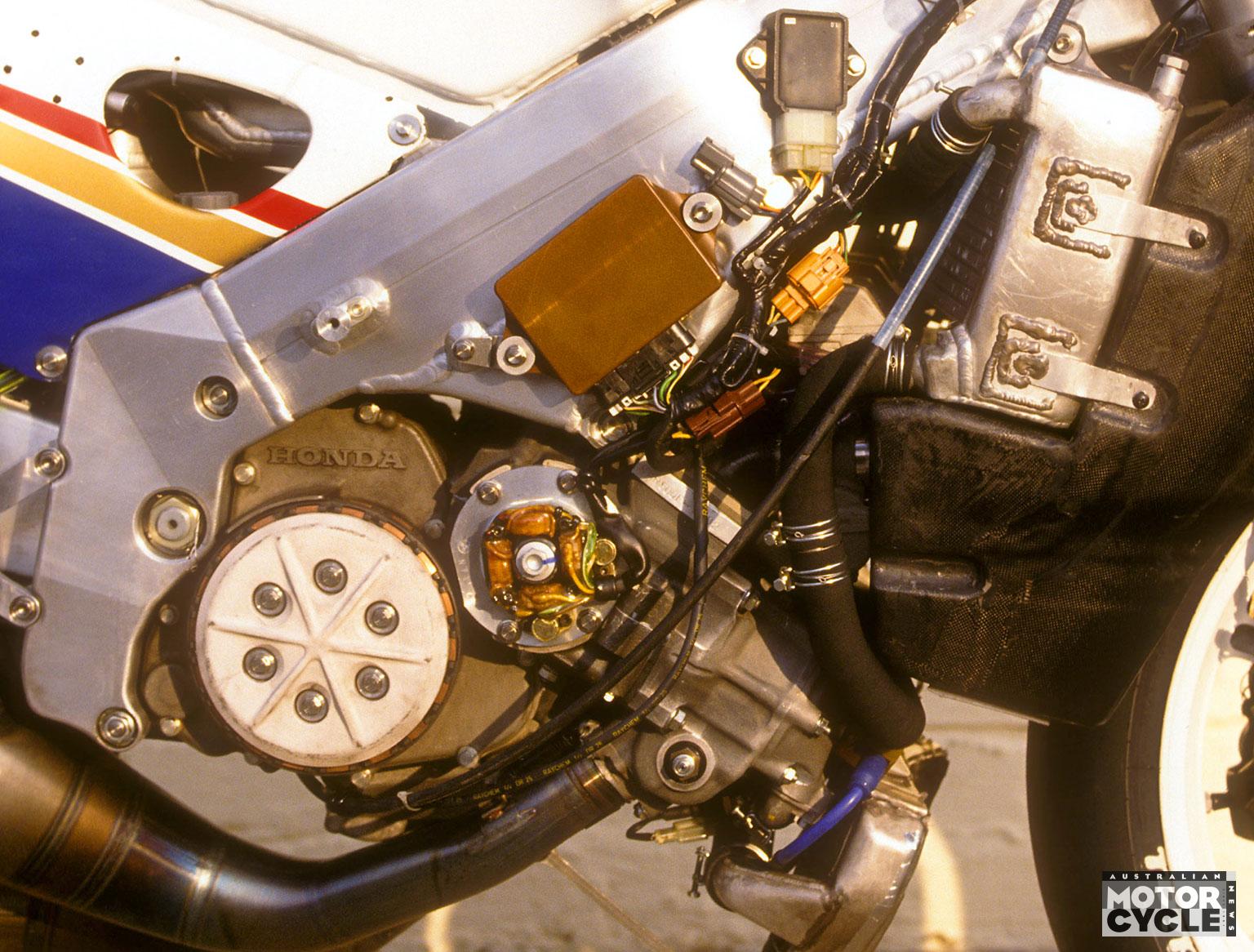
The most famous change to the NSR, instigated during the Doohan era, was the introduction of the ‘big bang’ engine in 1992. Having finally managed to convince his Honda bosses that outright power wasn’t everything and that he’d be happy to sacrifice some top-end for a bike that had more useable power, the factory’s answer was the big bang. It bunched the firing order of the cylinders together, allowing the rear tyre more time to find traction before the next pulse. This also cured the NSR’s terminal wheelspin problem. Fitting a counter-balance shaft to the bike’s single-crank engine also solved long-standing issues with the NSR’s handling, so for season 1992 Doohan finally had a bike he could use to fight for the world championship.
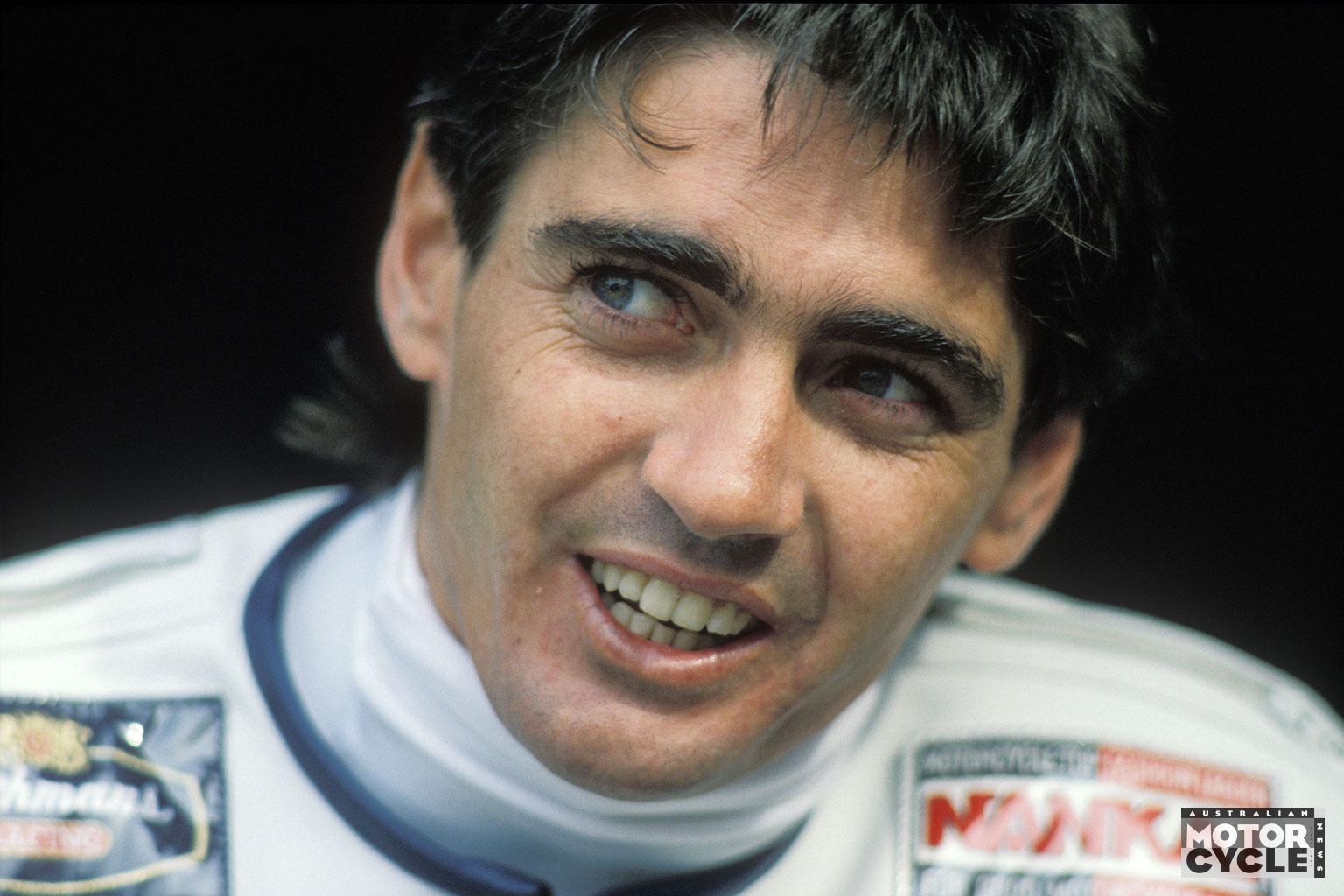
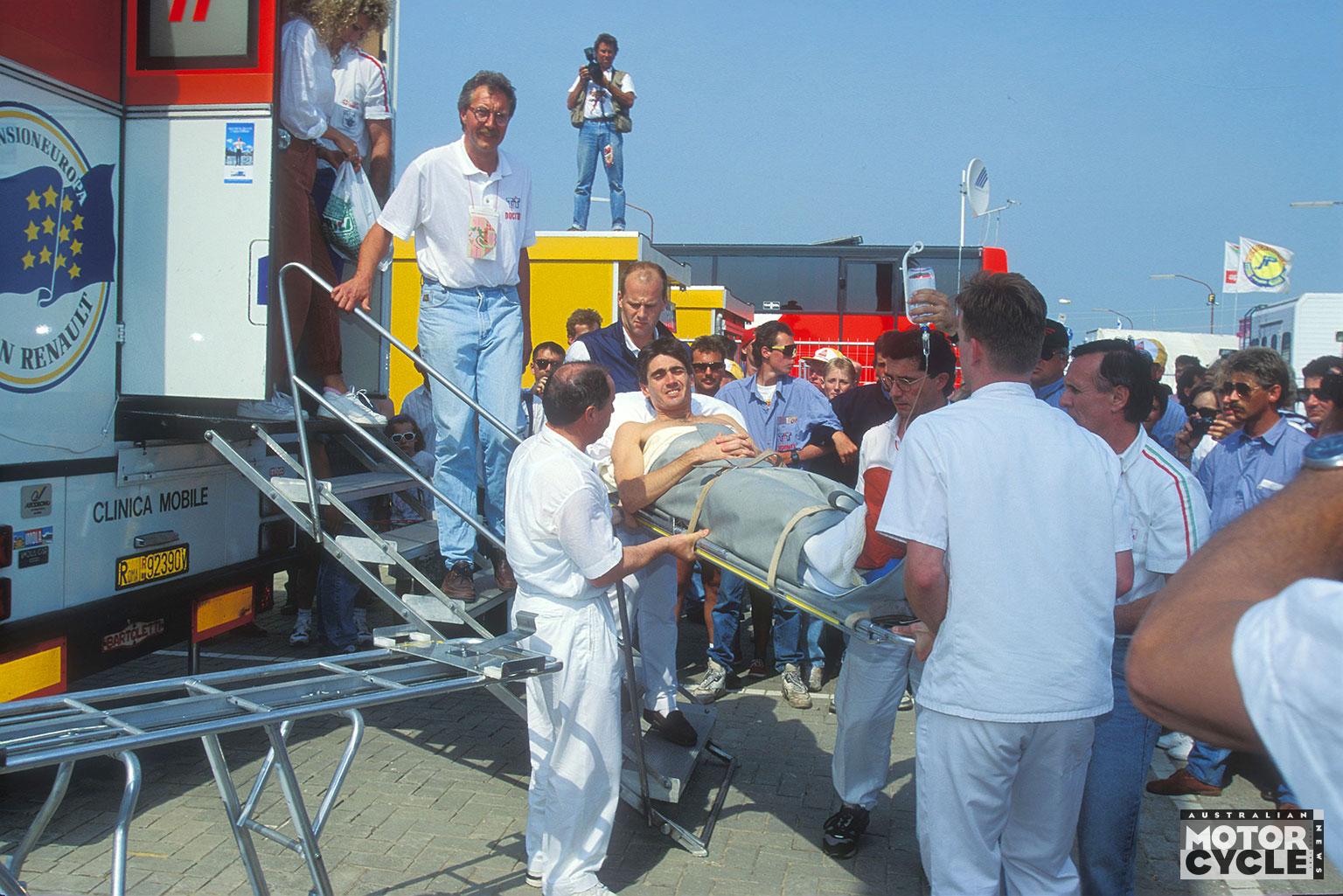
And fight he did. Five wins and two second places in the first seven rounds saw him build a huge championship lead before his now infamous Assen crash, which almost saw him lose a leg. Dutch doctors were ready to amputate but Dr Costa smuggled Doohan out of the local hospital and stitched his good leg to the bad to help ‘feed’ it.
Taming the screamer
Doohan eventually recovered and came back to racing more determined than ever. He won the 500cc world championship for the first time in 1994 on the ‘big bang’ NSR and repeated the feat for the next two years. But in 1997, he shocked the paddock when he fired up the latest generation NSR for the first time during testing. Gone were the subdued tones of the ‘big bang’ engine and back came the howling strains of the unfettered ‘screamer’. Doohan had gone back to the future.
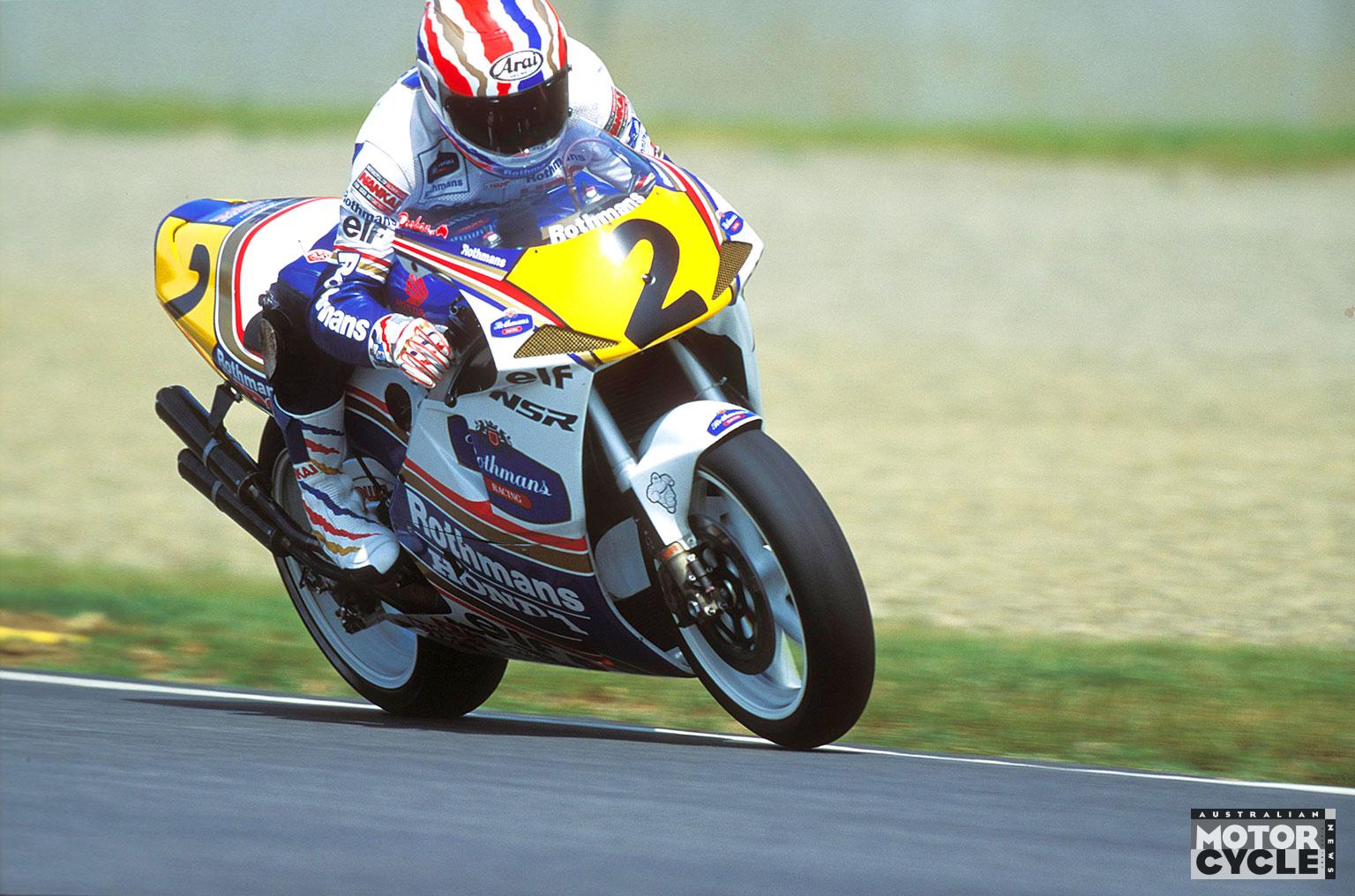
“I felt that the advances with electronics had come along so far that we could tame it a little bit,” he says of his decision to return to a screamer engine when everyone else (including other manufacturers) were running big bangs. “Initially we’d went away from that engine to the big bang just to try and get a little bit less wheelspin, which did work, but then you got to a point where you couldn’t get a great deal out of the machine so you felt like you wanted to get a little bit more and make it a bit more lively and you couldn’t do that with the big bang engine. So, we just tried it. We thought, ‘Well, why don’t we go back to what we had a few years ago, but now with the electronics we have?’ Not that we had any traction control or anything like that – and the way that the engine had developed, maybe it would be a little bit more forgiving, and that’s exactly what it was.
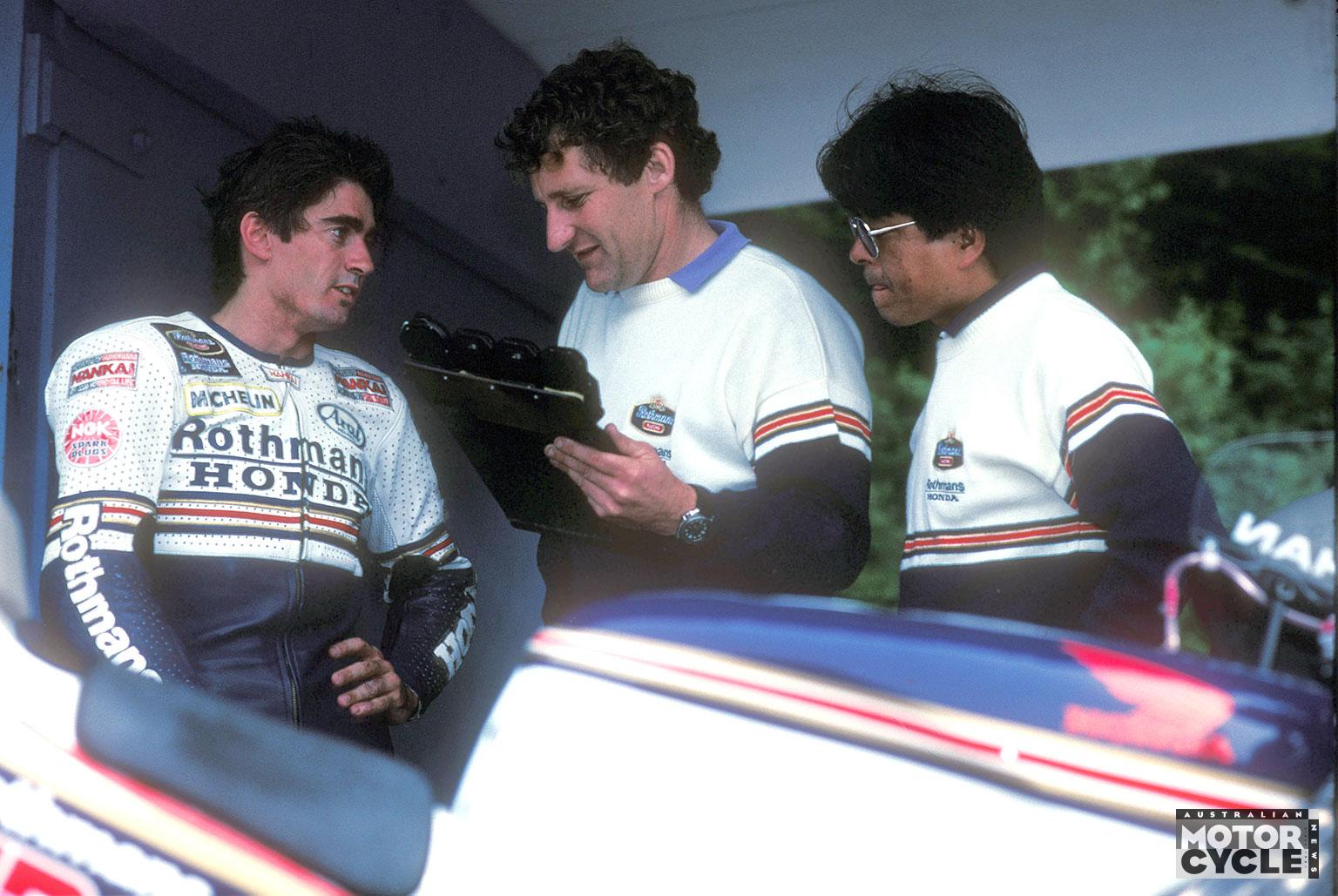
“For some of the other guys, who were a little bit less fluid with the throttle, they didn’t want to ride it. I don’t know if they found it extremely hard but a few of the boys crashed – I know Alex Criville had a couple of big crashes on it and he didn’t want to ride it, so I think the other guys thought they would just stick with the big bang engine and I don’t think Honda really wanted to risk giving it to the other guys.”
It was a huge psychological blow to the rest of the field. Doohan’s throttle control was apparently so sublime that he was the only man on the grid capable of taming a full-on screamer engine. As a result, he decimated the field in 1997, setting a new record of 12 wins in a season to take his fourth world title.
Despite his huge success on the bike, Doohan doesn’t necessarily believe that his particular riding style made him an ideal match for the NSR. “I think riding styles are just something that you have and then you adapt yourself to the bike,” he says. “Most bikes I rode I generally went fairly well on, so I didn’t feel that it was a hindrance or a benefit, really.”
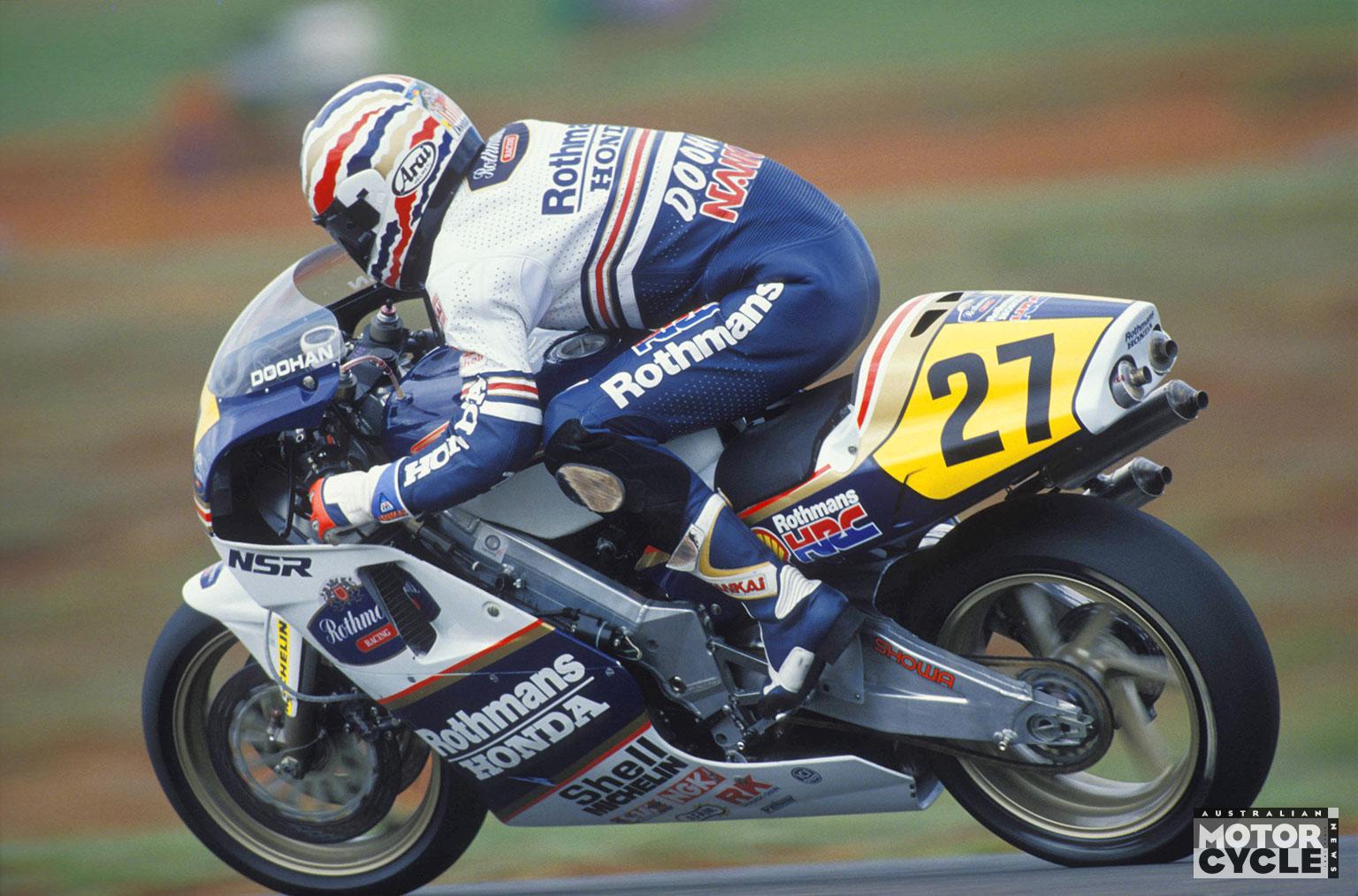
And for all its strong points, Doohan is quick to point out that the NSR wasn’t without its faults. “It definitely had some weaknesses,” he says. “It wasn’t that great under brakes; and turning, it didn’t really like that too much. It’s strength obviously was the engine; it was always a good, tractable engine and it was reliable. Honda are very conservative in the way they do things, so if we thought we had some problems then things were replaced all the time.”
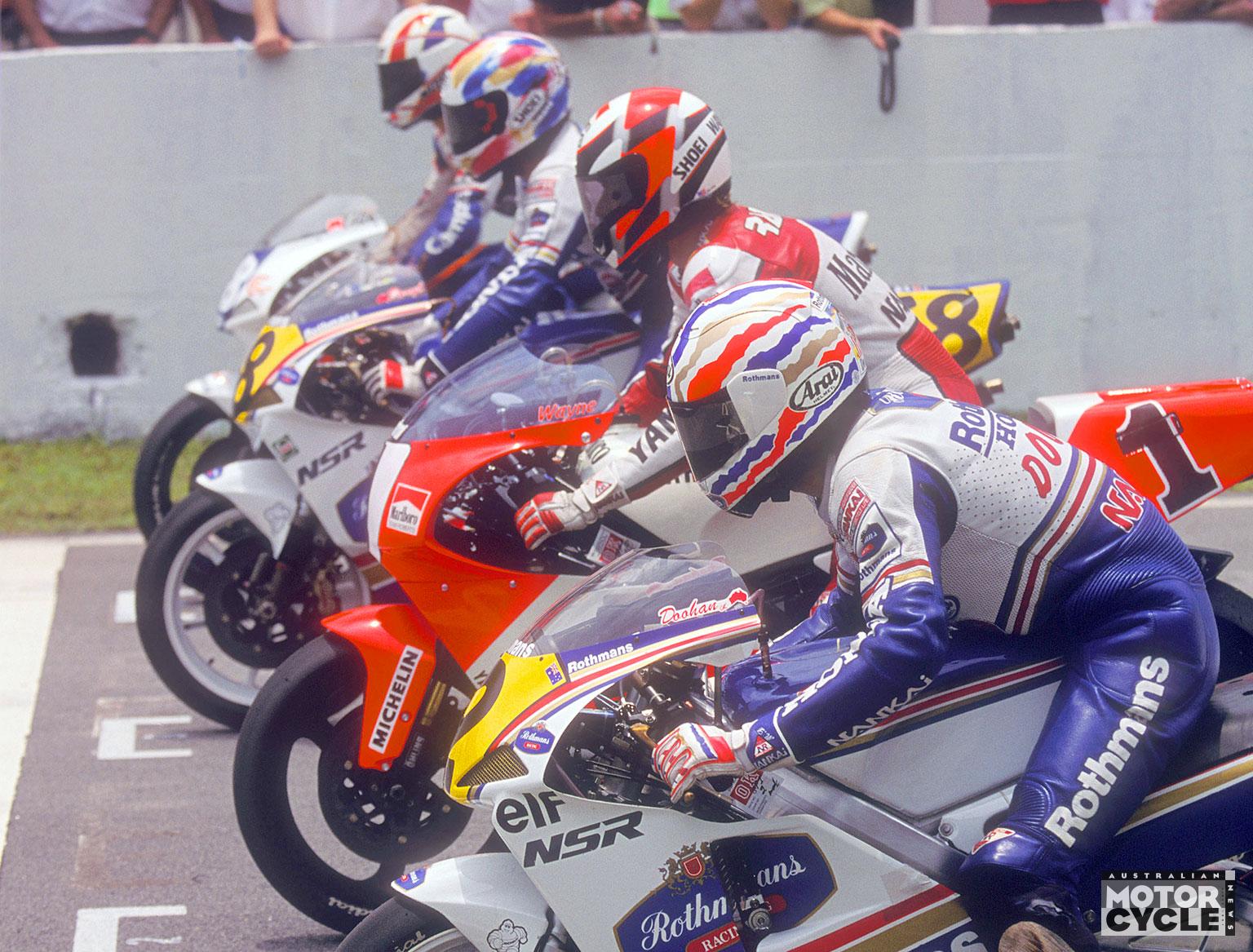
Because of his runaway success on the NSR, Doohan’s competitors often found their only defence was to state that they too could win the title if only they were on a Honda. It’s something that clearly still riles Doohan. “All those guys, whether it be Max Biaggi or Luca Cadalora or whoever, could win races but they’d always have an excuse why they couldn’t do it (win the championship). Cadalora was a lovely guy, but I think he thought that if he had a Honda then he’d win the championship. But when he got one (in 1996), the result at the end of the year was the same – he still had to beat me. You didn’t just have to beat the Honda; you had to beat the rider on it too.”
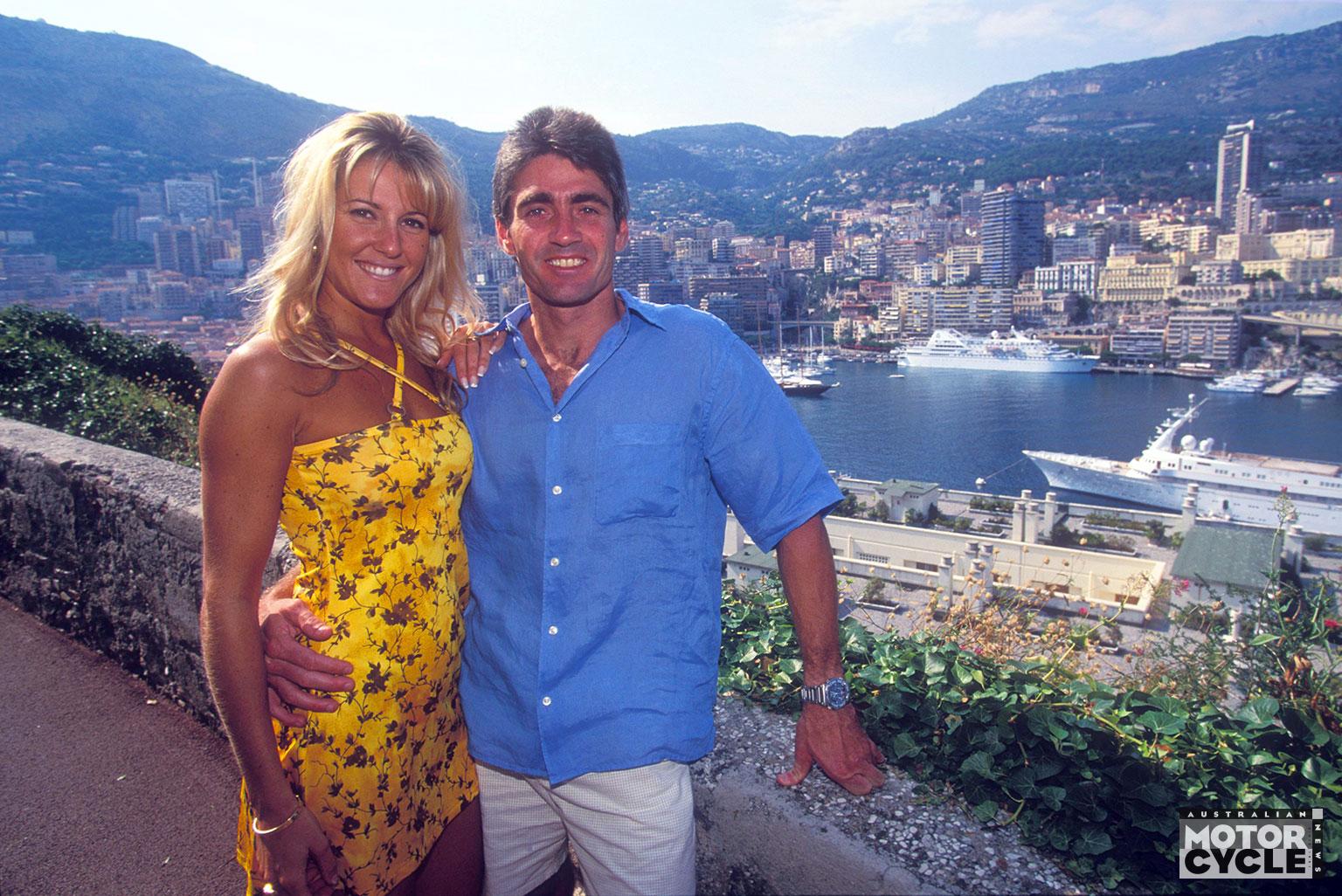
Unlike Cadalora, Doohan believes the NSR’s competitors were perfectly capable of winning in the right hands. “The Suzuki was quite good. Daryl Beattie was doing good things on it in 95, and the Yamaha wasn’t too bad either. In fact, the Yamaha was winning up until Wayne Rainey crashed (the triple world champion for Yamaha was paralysed following a crash at Misano in 1993), and then all of a sudden people are saying it’s the worst bike in the world. Only recently did Yamaha get its good name back. I think Kenny Roberts Senior was the one who started bagging the Yamaha about being such a bad bike, but it was winning title after title – the rider always looks a lot better when you bag the bike, you know?”
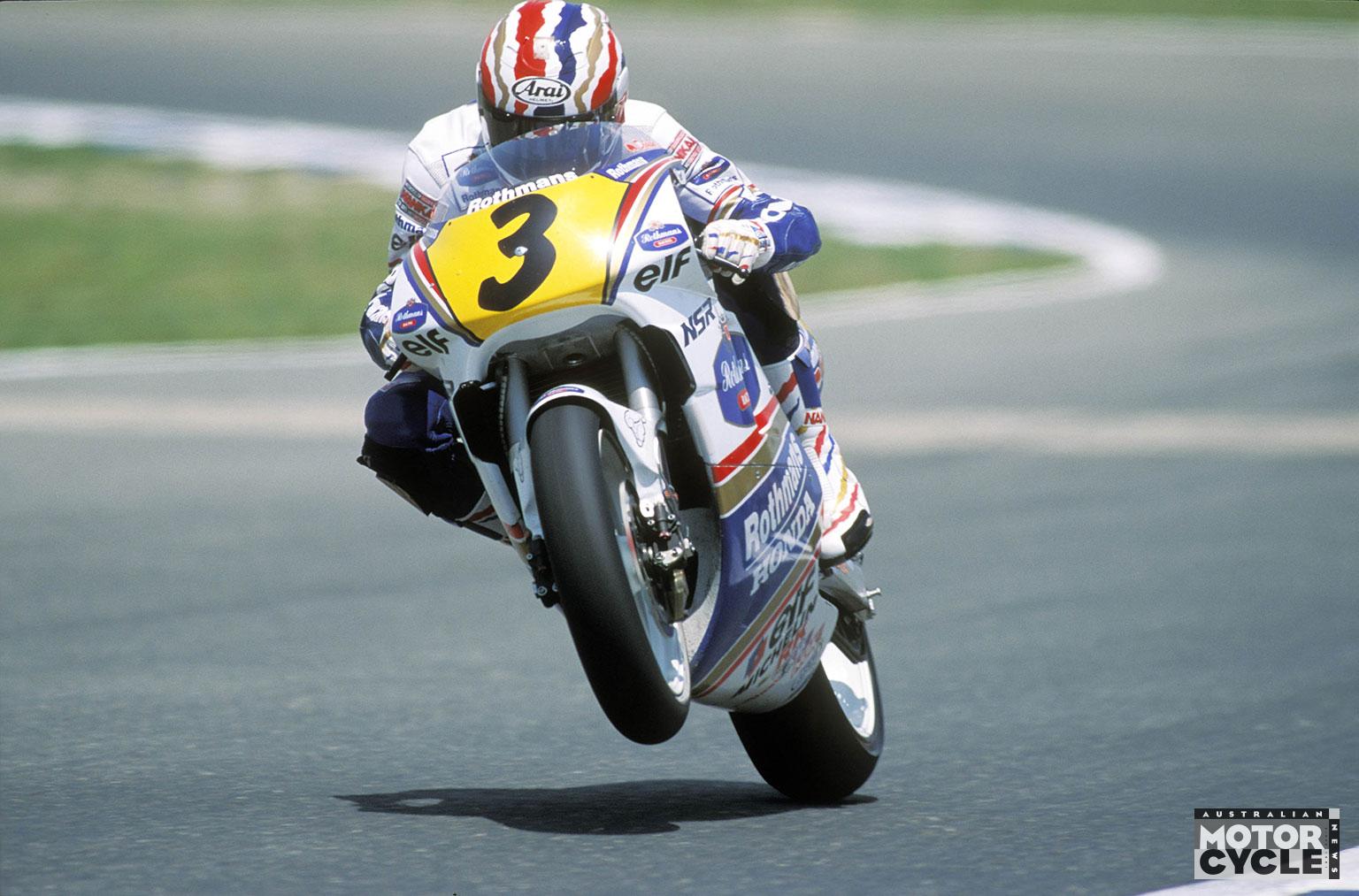
Doohan won his fifth and final world championship in 1998 but suffered career-ending injuries during a crash at Jerez the following year, three rounds into the championship. It was his 11th year of riding and developing the NSR, so how much difference was there between the bike he first rode in 1988 and the machine that he ended his career on in 1999? “Oh, huge – probably about the same amount that’s happened in the last 10 years, even though the MotoGP bikes now have completely different motors. The 99 model was a much tamer beast than the 88 bike. In fact, the 1998 model was just like a big 250; it took me quite a while to get my head around how to ride the thing because we had gone back to unleaded fuel and lost a lot of power and a lot of the savageness out of the bike, so you could actually have the bike leant over and open the gas, which was something new to me compared to the bikes of the late 80s. So, it took a while to get back into that 250 style of riding.”
Message for the doubters
If there’s one thing that still makes Mick angry it’s the suggestion that he didn’t develop the NSR as much as he might. It’s often been written that he refused all kinds of gizmos from Honda – from anti-wheelie launch control to fuel injection – but he denies these accusations vehemently. “No, no, no,” he says, laughing when the question is first put to him before turning gnarly. “I don’t know where you get your information from. We tested everything, it’s just that if it wasn’t working… I mean, I was there to win races, I wasn’t a test bed for Honda.”
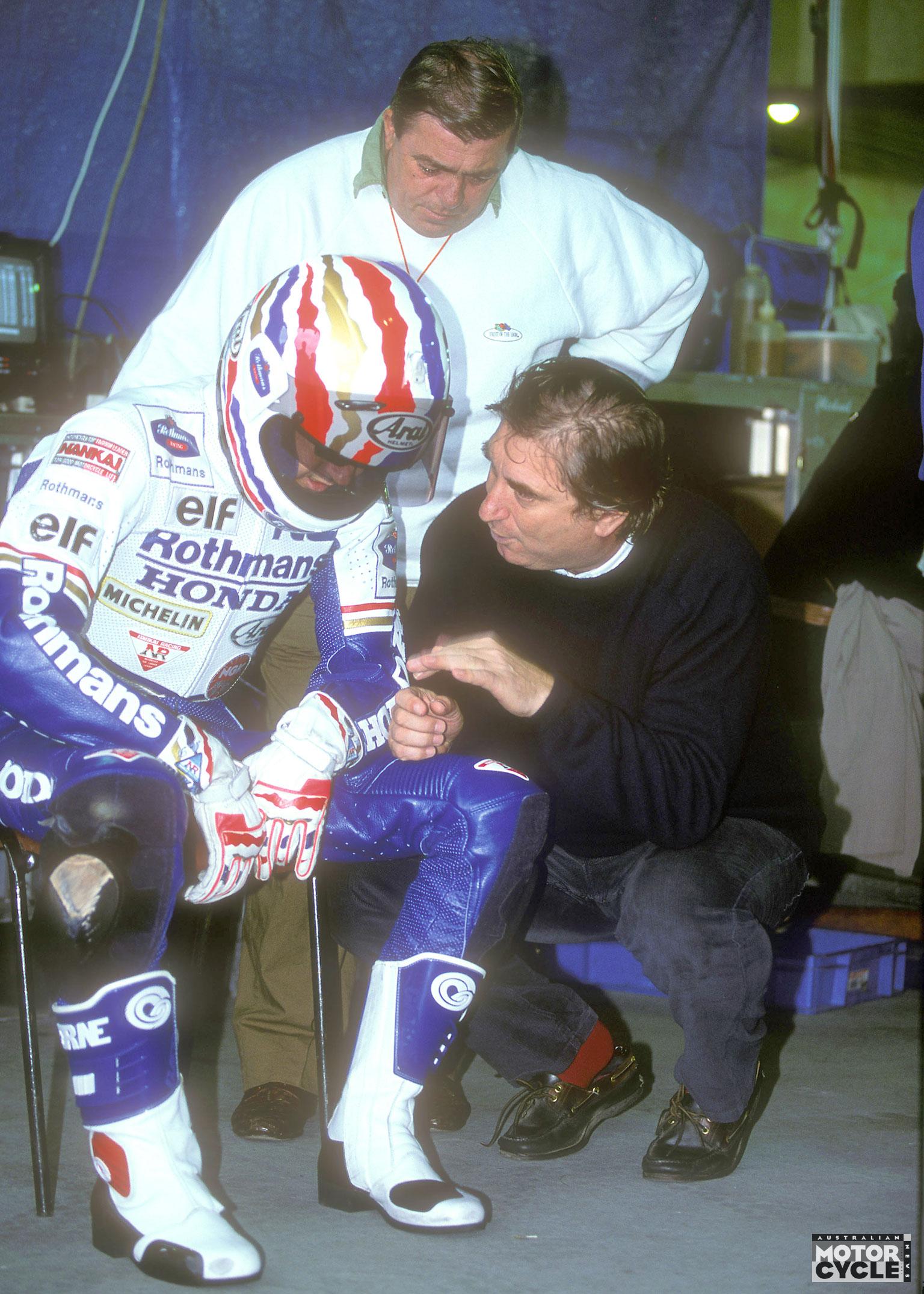
So, he wasn’t offered anti-wheelie control for race starts then? “No, we never had any of that type of stuff. Apparently, we had fuel injection too but that didn’t work either – all that did was break my wrist. You know, they said we tried water injection too. There were a lot of gizmos we did try but they didn’t improve the bike. We could have persisted with them, but we’d be losing races. But the bike was always evolving. Yamaha had a lot of gizmos too, but they ended up pulling them out because it was too much of a test bed.
“For example, active suspension wasn’t like what it is today. You’d map in the circuit so if there was a bump you’d program in the suspension to expect that bump. But if you weren’t on that exact line then the bike would react differently. It was all really in its infancy, so it wasn’t really beneficial other than for the manufacturers to justify the budgets they were spending.
“A lot of the things that I wouldn’t waste my time on was to rebuild the bike and make it a new bike every year. I would just want to fix the bad things; I didn’t want a new sheet of paper every year. I was like, ‘Well, why get rid of all the good stuff we’ve got? Let’s just get rid of the bad stuff and try and make the good stuff a bit better.’
“So, my focus was on making the whole package better; the package from A to B rather than just the top speed like Honda used to focus on. I’d try to get the thing to handle, to stop, to do this and that. I’ve read those stories as well – that apparently I didn’t like developing the bike, and I find that hard to believe. I’ve got five of them sitting in a museum at my house here (a model from each of his championship-winning years) and they all look very similar, but if you look deeper, they’re a hell of a lot different than each other. And that’s where it comes back to people saying we didn’t want to develop the bike.
“Well, that wasn’t the case – we just didn’t want to destroy the bike.”
Doohan on Jerry Burgess
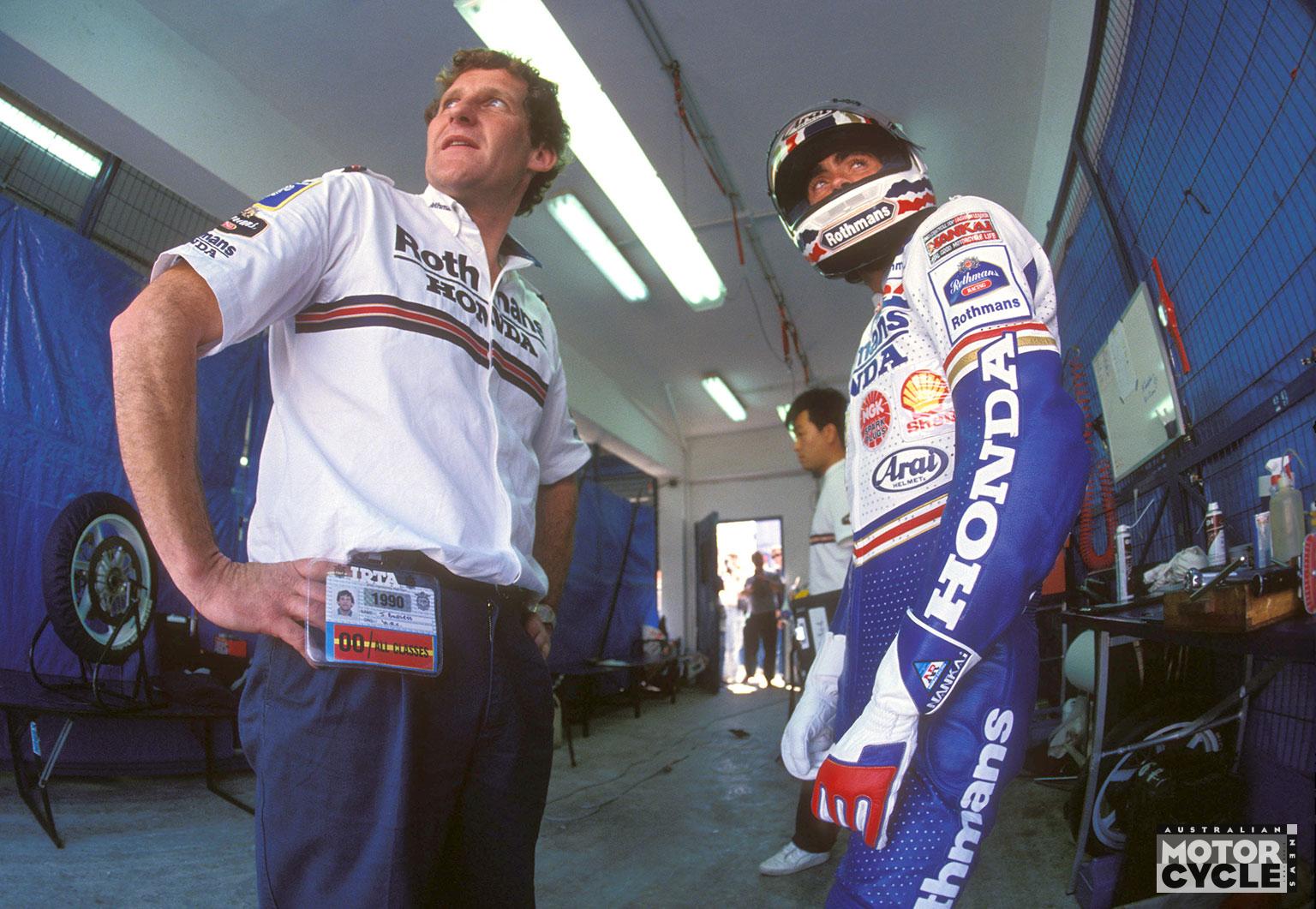
Before helping Valentino Rossi to seven 500cc and MotoGP world titles, Jeremy Burgess was Mick Doohan’s right-hand man, and he is quick to credit him with the huge role he played in developing the NSR.
‘Without a doubt Jerry was a huge part of that whole team, let alone the development of the NSR. His biggest strength is understanding the rider and understanding what the rider is really describing – what he’s feeling out there. Whether or not that comes from him being a rider in the past, I don’t know, but he can take what you say and have a look at the data or whatever and sit down and break it all down, even if you’re not 100 per cent technical. You can try and be technical all you like, but at the end of the day you’ve also got to tell him what you feel and he can decipher that.
“I think he worked with the Japanese Honda engineers quite well and he was very firm on directing development so that little bits and pieces didn’t sneak onto the bike without us knowing. Jerry used to ask them if the bike was the same as before and they’d say, ‘It’s almost the same’ and that could mean it was a mile away from what it was before, even though it looked the same. But once we got on top of that – and it was hard because you’d always get some foreign things coming in every now and then – but JB’s pretty good at knowing exactly where the bike’s at, what’s going out of the bike and what’s coming into the bike. And I think that’s somewhere that Suzuki, for example, lost in its final years – just not keeping track of where they were and what were the parts they actually needed to develop. Maybe throwing too many things on at once and getting lost and that’s where JB was so good at directing the ship.”
The Results: Doohan and the NSR
- 1989: Takes first podium (Germany) and finishes 9th in the world championship
- 1990: Takes first win (Hungary) and finishes 3rd in the world championship
- 1991: Takes 3 race wins and finishes 2nd in the world championship
- 1992: Takes 5 race wins before badly breaking leg. Finishes 2nd in the world championship
- 1993: Takes 1 race win (San Marino) and finishes fourth in the world championship
- 1994: Wins 9 races and the world championship
- 1995: Wins 7 races and the world championship
- 1996: Wins 8 races and the world championship
- 1997: Wins 12 races and the world championship
- 1998: Wins 8 races and the world championship
- 1999: Suffers career-ending injuries in third round at Jerez
- Total wins: 54
- Total world titles: Five (1994-98)