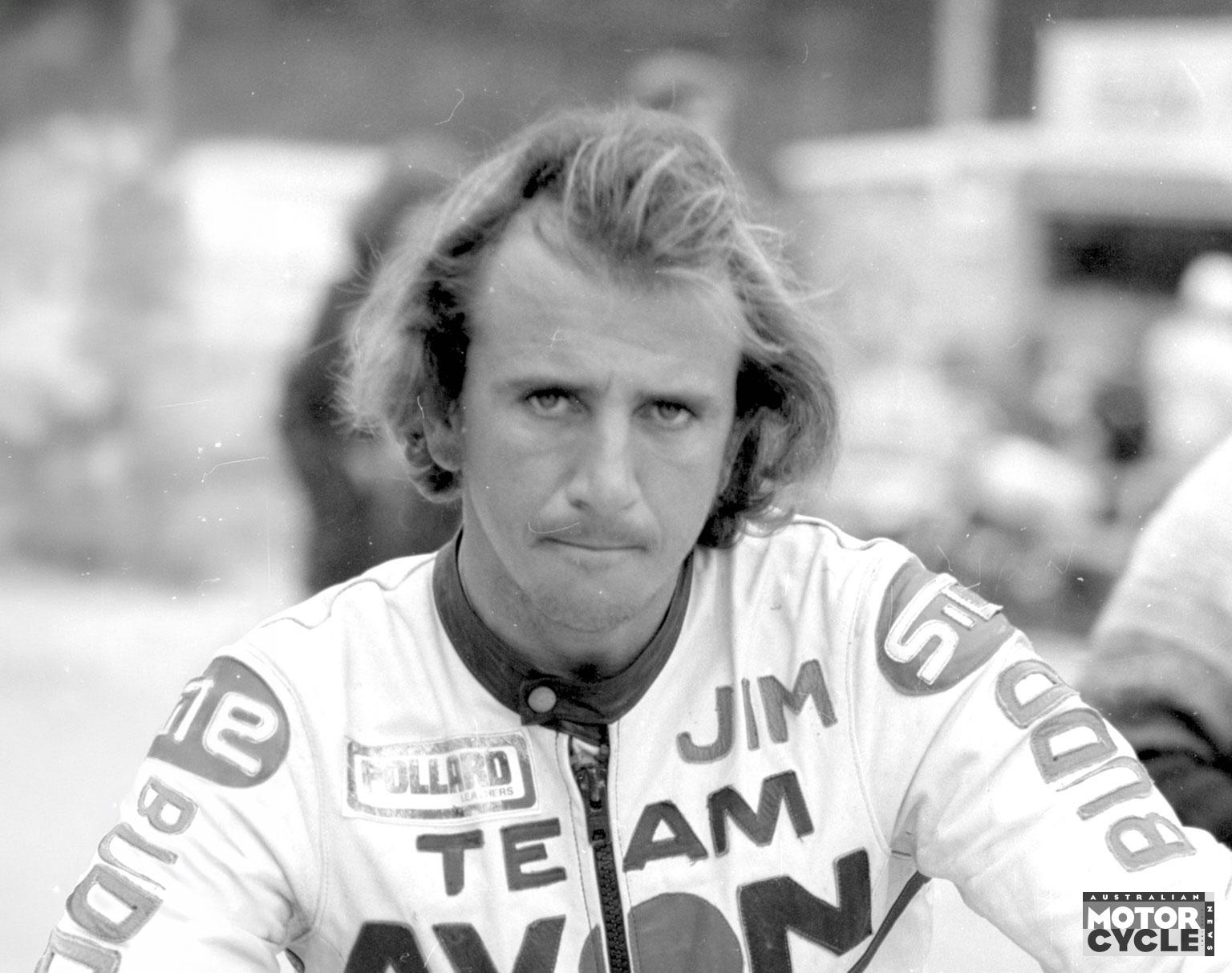
He was one of the finest production racers of his generation, a Castrol Six Hour master and a winner seemingly incapable of giving up. Jim Scaysbrook remembers the remarkable Jim Budd
Twenty-five years ago, Australian motorcycling lost one of its most gifted competitors, who was also a universally popular and respected figure during his too-brief life. Jim Budd first trained as an electrician in the mining industry. If he had not been a highly successful motorcycle racer, he would probably have achieved similar heights in skiing. He was passionate about both, and managed to combine local snow sports with visits to Aspen, Colorado, when time and resources permitted.
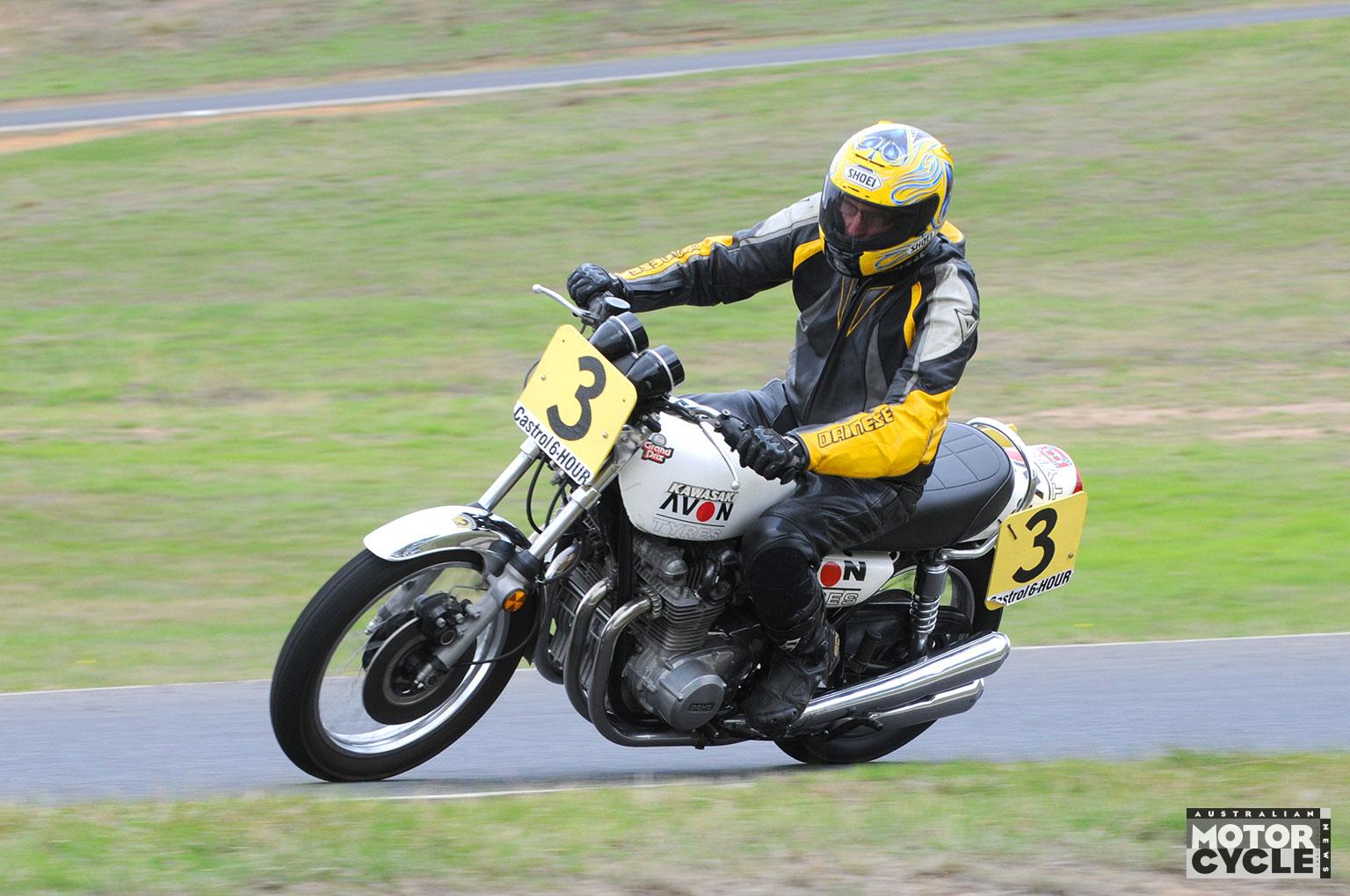
Based on the NSW Central Coast, Jim and a bunch of mates combined surfing, partying and tearing around the streets on motorbikes – much the same as a great number of their generation. A close friend was Erik Soetens and both were members of the Wyong Motorcycle Club. Erik had an H2 Kawasaki 750 triple that was definitely the duck’s guts when it came to belting up and down the Old Pacific Highway. Jim hankered after a similar machine but had to make do with a Honda CB750, which he punted with incredible verve and on which he made his racing debut at Oran Park in 1974.
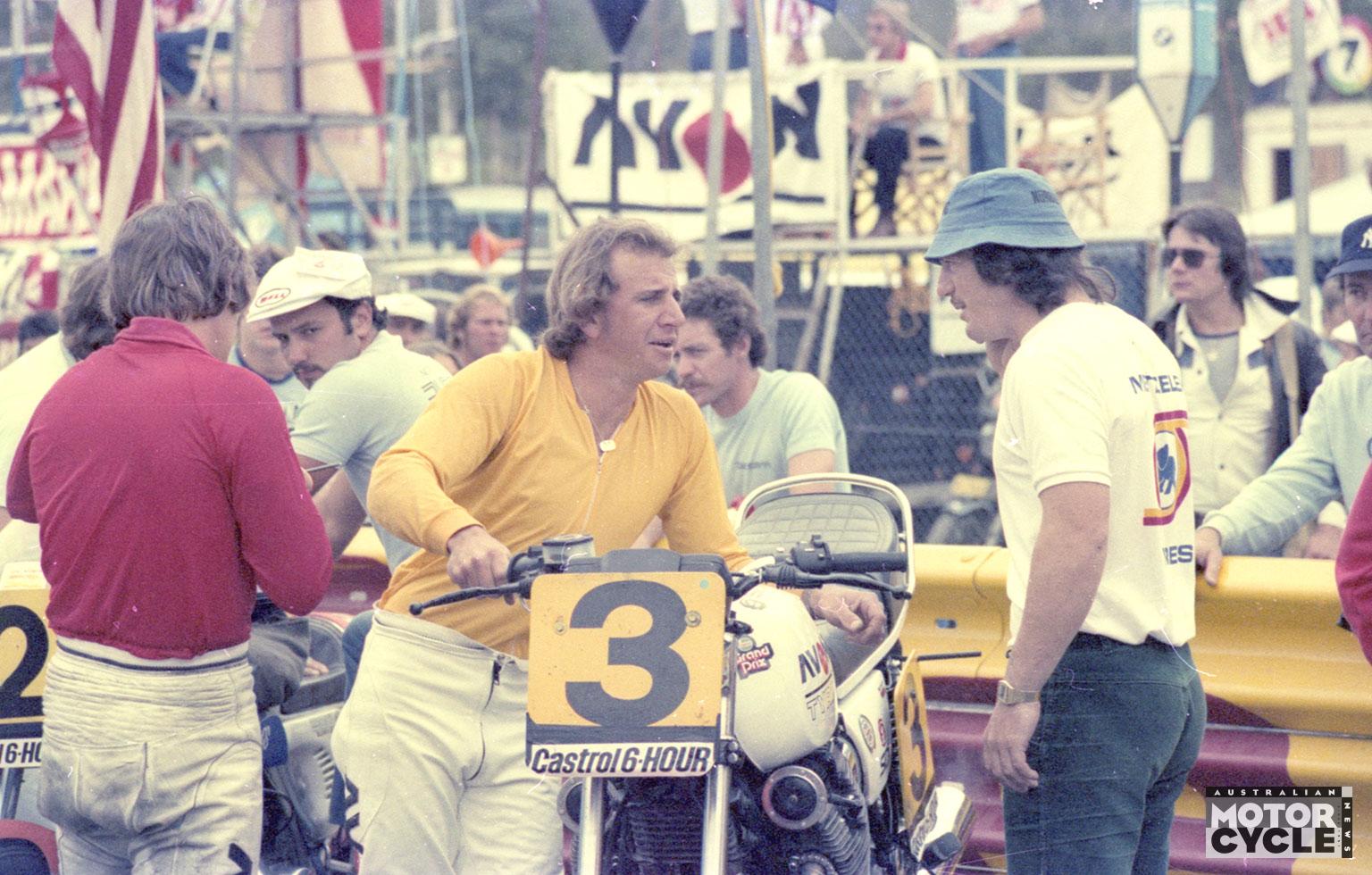
The Castrol Six Hour Race for production motorcycles had become a huge part of Australian motorcycling, drawing massive crowds to Amaroo Park each October. By 1975, Jim had ditched the Honda for a new Kawasaki Z1-B, which he dropped during the Unlimited Production Race at Bathurst without injury.
The next target was the Six Hour, with Erik as co-rider. Preparation consisted of fitting Avon Roadrunner tyres and setting the tappets, although there was also the small matter of a strictly illegal fuel tank swap. A mate’s earlier Z1 tank held fractionally more juice than the Z1-B item, so it was fitted and escaped the scrutineers’ gaze.
That year’s race will be remembered for John Warrian’s heroic solo ride until his Ducati’s gearbox seized, handing victory to the glamour Kawasaki team of Gregg Hansford and Murray Sayle. But quietly into third place, four laps behind the winner and almost unnoticed, came the completely unsponsored Central Coast pair, earning $700 in prize money – nearly half the price of the bike.
Bathurst in 1976 was where Jim really showed his class. In the Unlimited Production Race, Dennis Neill, Garry Thomas, Jim and Roger Heyes, all Kawasaki-mounted, ran nose to tail until the final lap when Neill pulled a small gap and held out Jim for the win. Second among such company was a real feather in his cap, and people were beginning to notice this fast and steady rider.
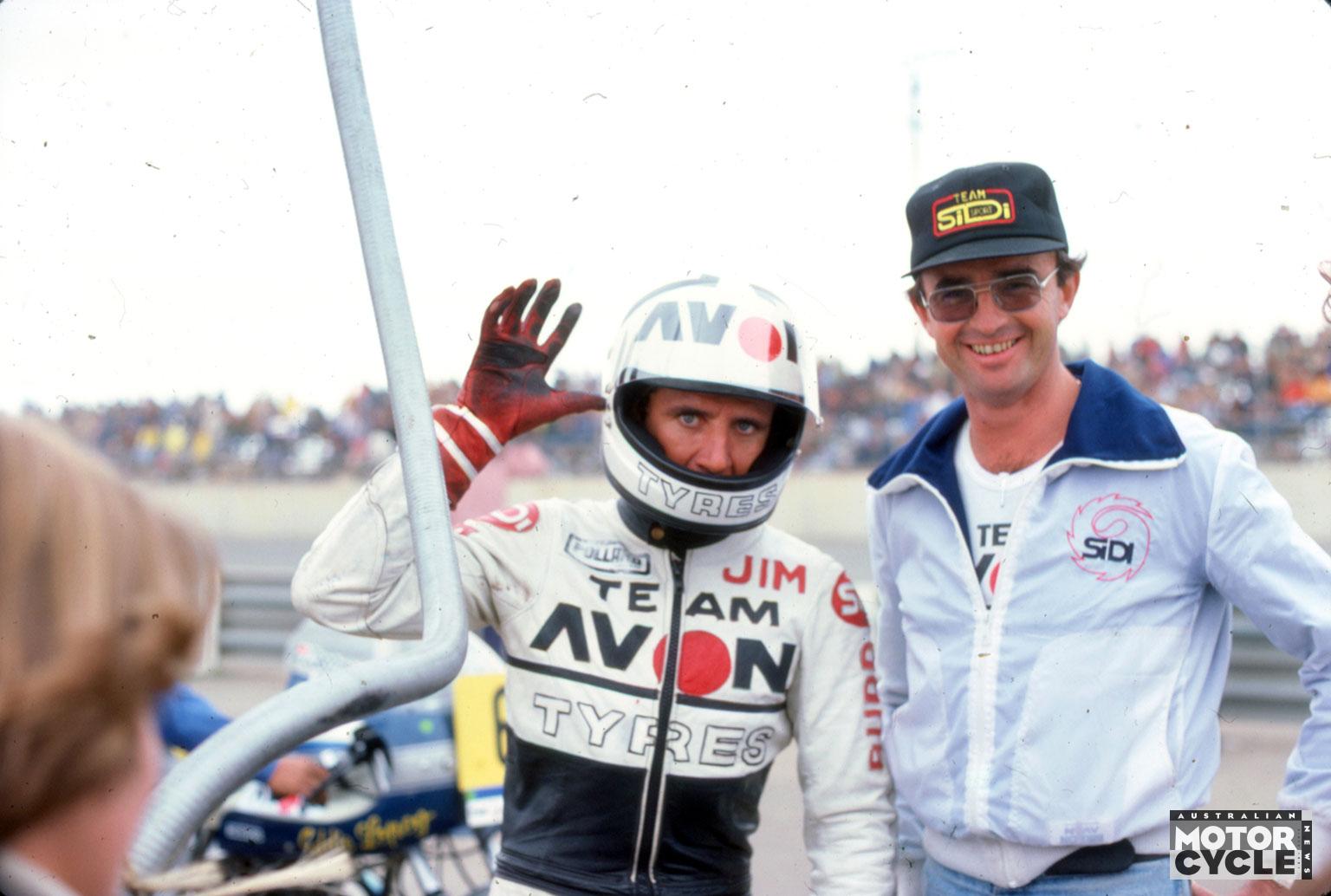
One was Lindsay Walker, head of Walker Radial, Australian Avon tyre importers. For 1976, Walker established Team Avon Tyres and signed Budd and Heyes, as well as buying Jim’s Z1-B – with its correct fuel tank.
The team had a secret weapon. Greg Easton, another Central Coaster and skilled engineer, devised a new internal system for the mandatory 20-litre refilling drum. A spiral pipe with a central breather created a swirling effect that rammed fuel into the tank in about half the usual time.
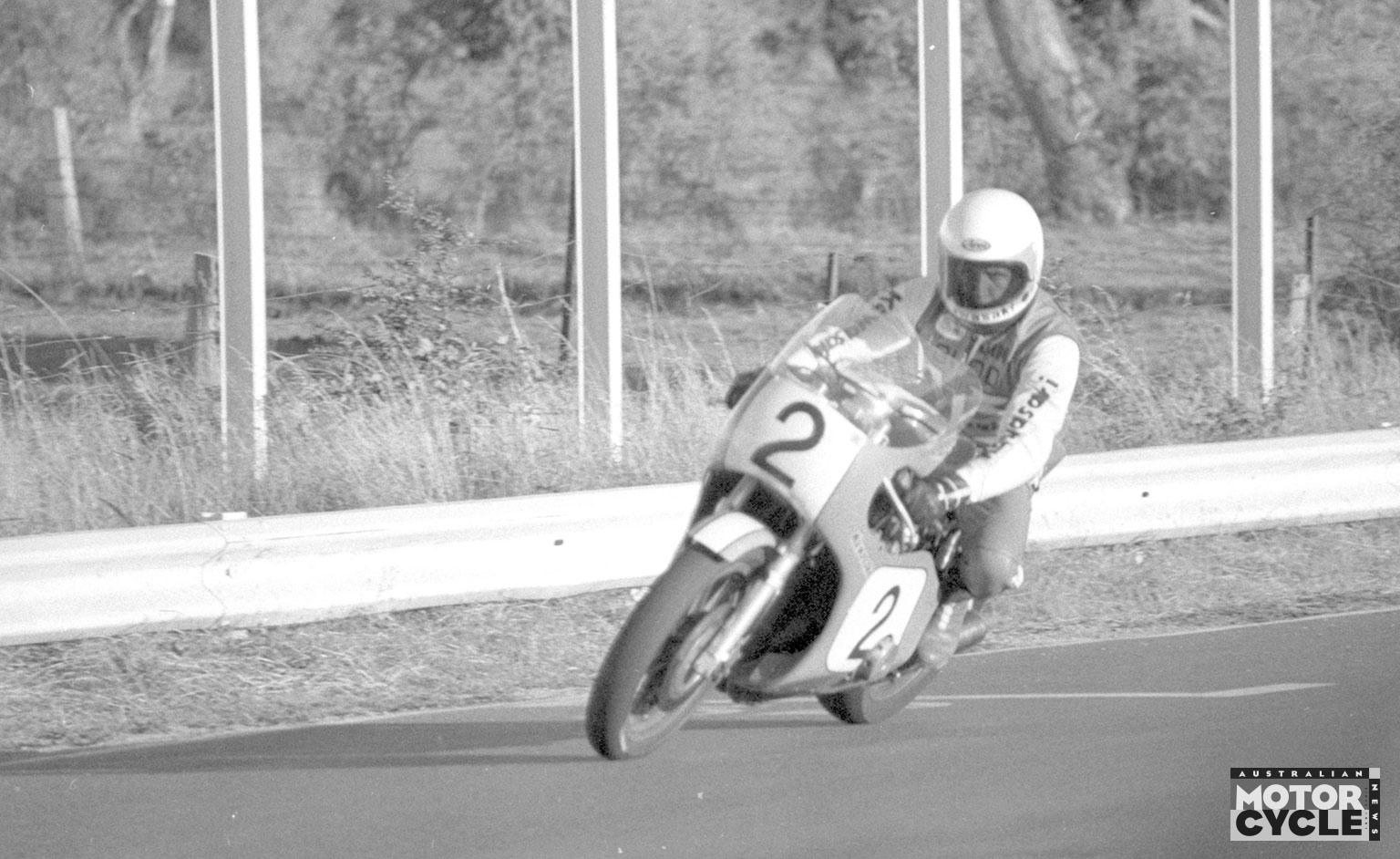
In Six Hour qualifying, Jim was one of only six riders to break the 60-second barrier. After 77 minutes of racing, the Avon Kawasaki hit the pits and the ‘swirl-filler’ sprang into action for the first time. Heyes was back on track after the bike had been stationary for just 6.5 seconds.
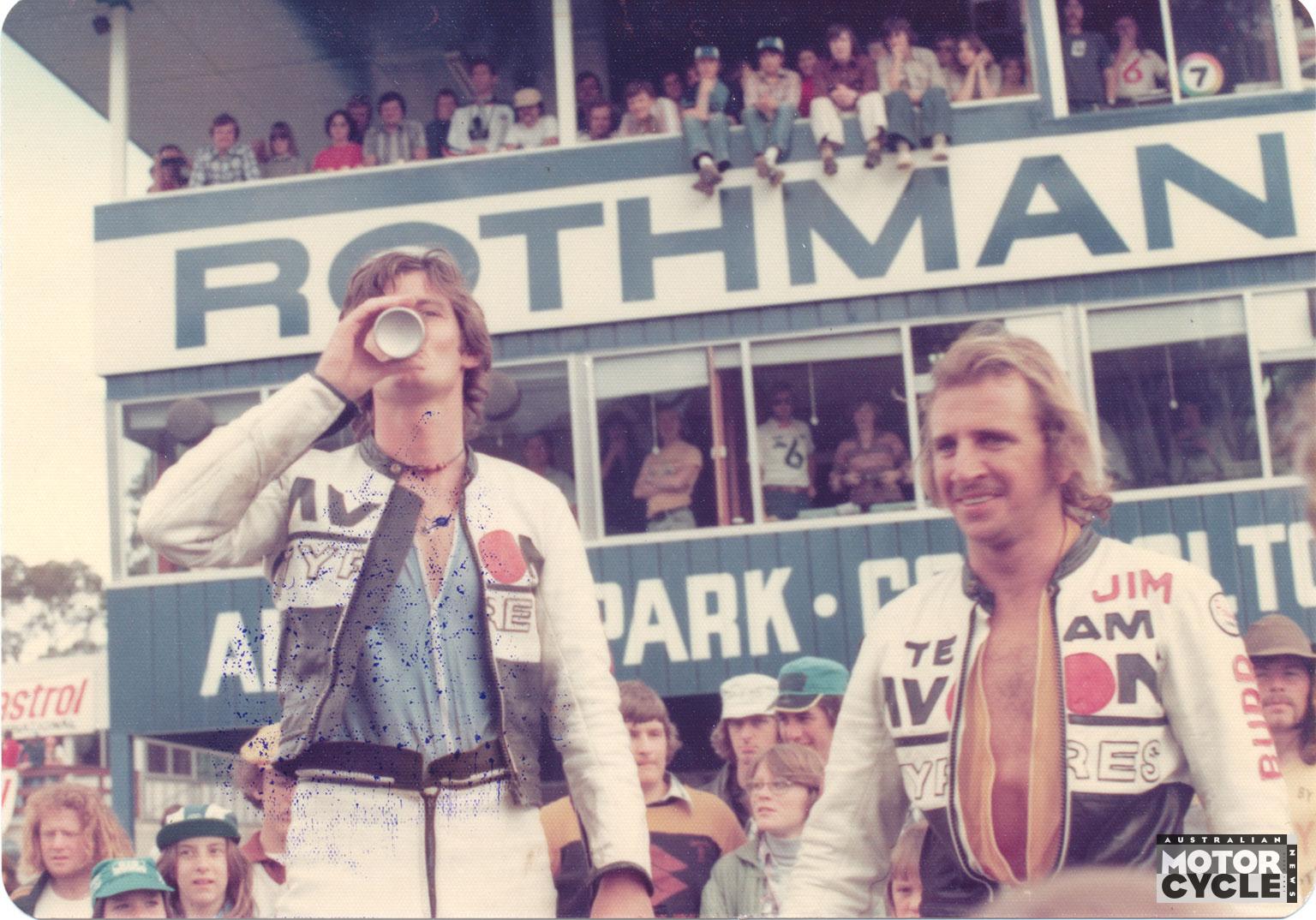
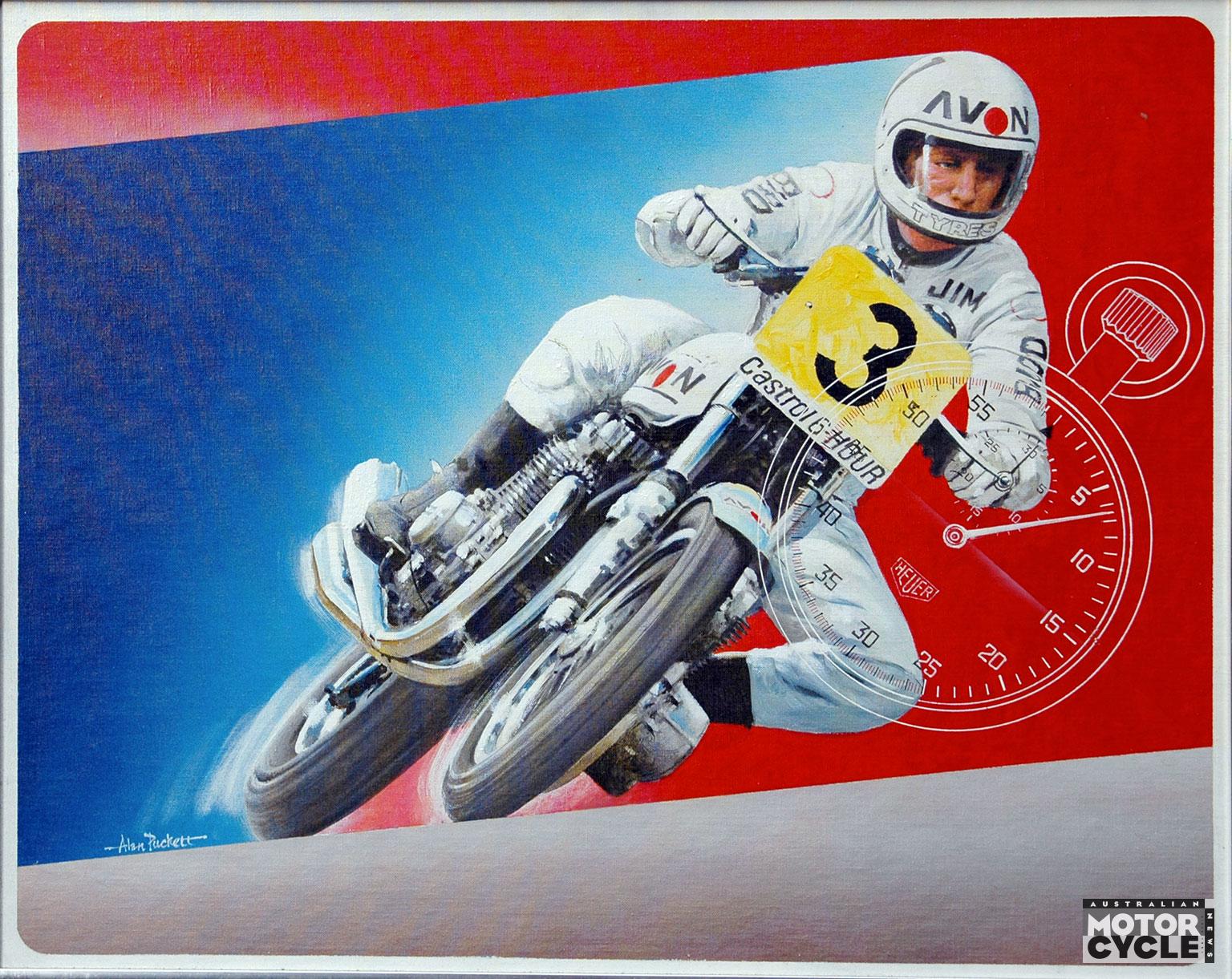
Budd and Heyes went on to beat the previous race record by five laps, giving Avon its third victory in a row and its first as an official entrant.
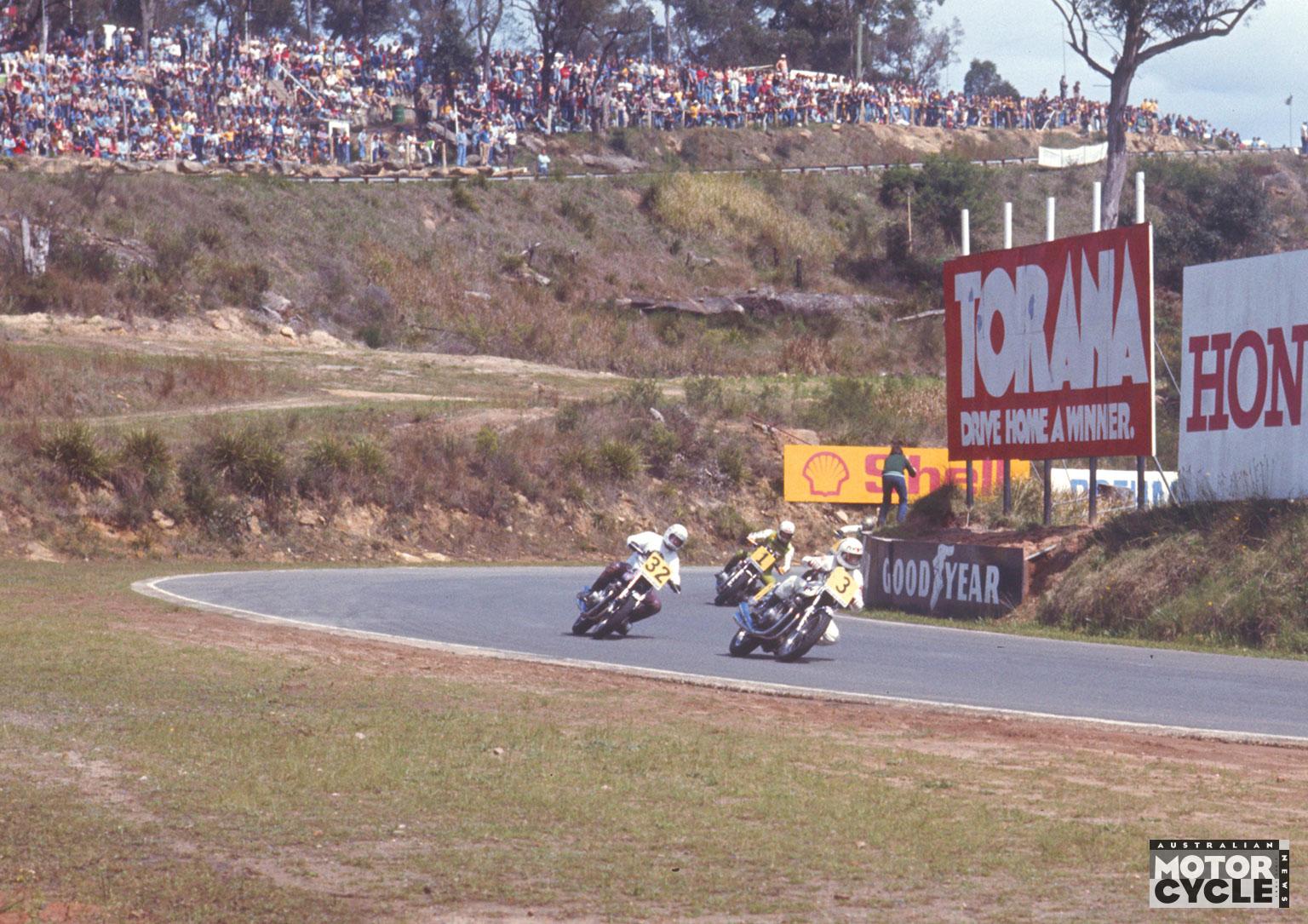
With production racing now the most popular and well-supported form of the sport in Australia, Jim travelled extensively to major meetings. In Queensland he met Elayne Kelly, sister of top production racers Neil and Terry Kelly. Elayne soon became Mrs Budd.
FRONT-RUNNER
Team Avon expanded to two bikes for the 1977 Six Hour, pairing Jim with close mate Neil Chivas on the old Z1-B. Jim qualified in an amazing 59.1 seconds – half a second quicker than any production bike had gone before – then blasted into the race lead.
But the BMW of Joe Eastmure and Ken Blake could run considerably longer between fuel stops, and with 30 minutes remaining Jim was 20 seconds behind but closing rapidly. At the fastest corner on the circuit, he overdid it. The Kawasaki snapped sideways and charged off the track in a full-lock slide. Jim somehow kept it upright despite riding halfway up the dirt bank beside Cattai Creek before rejoining.
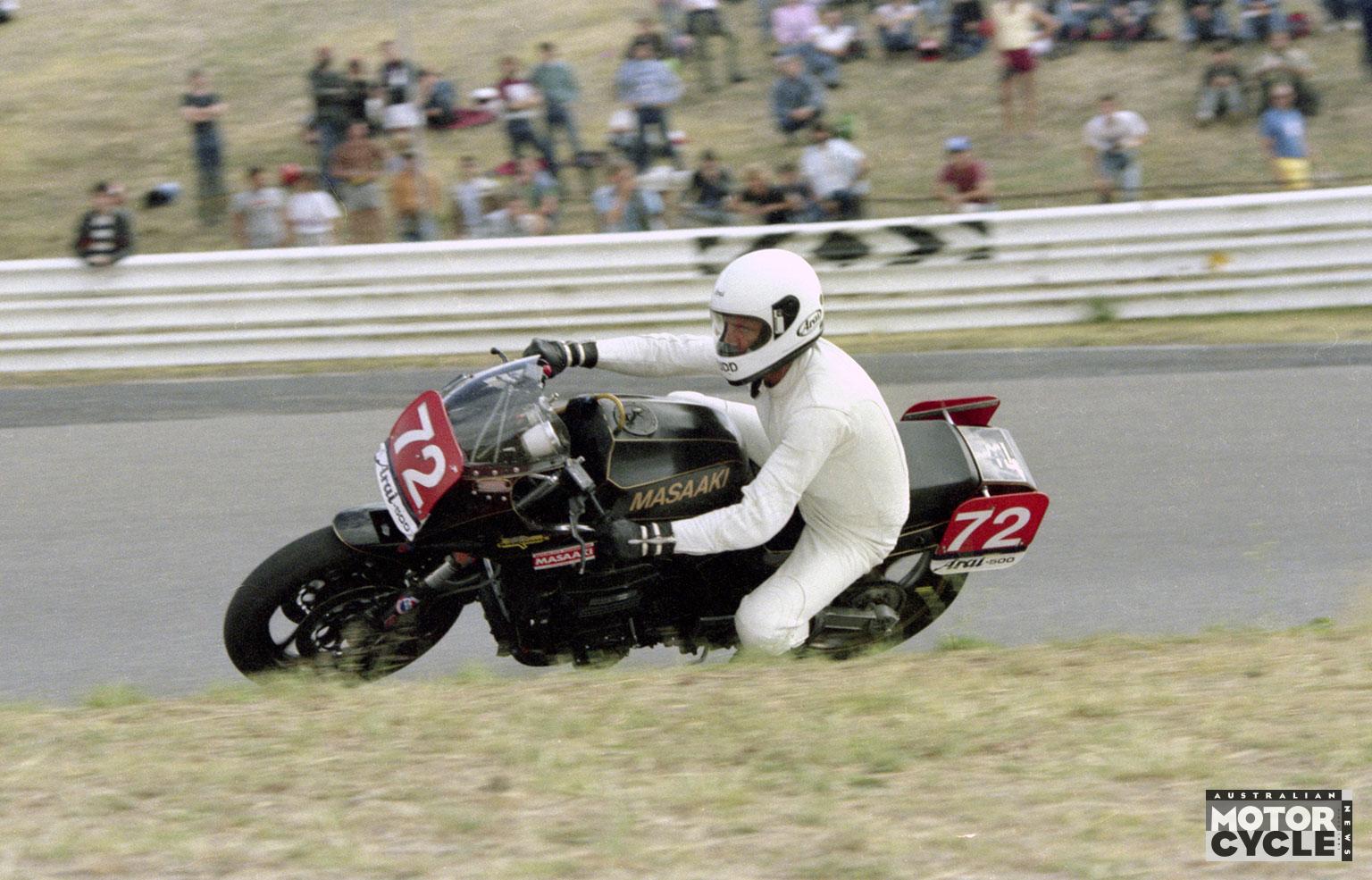
The entire episode was captured on live television and broadcast around the world, but the BMW was gone. Jim and Neil settled for second, one lap in arrears.
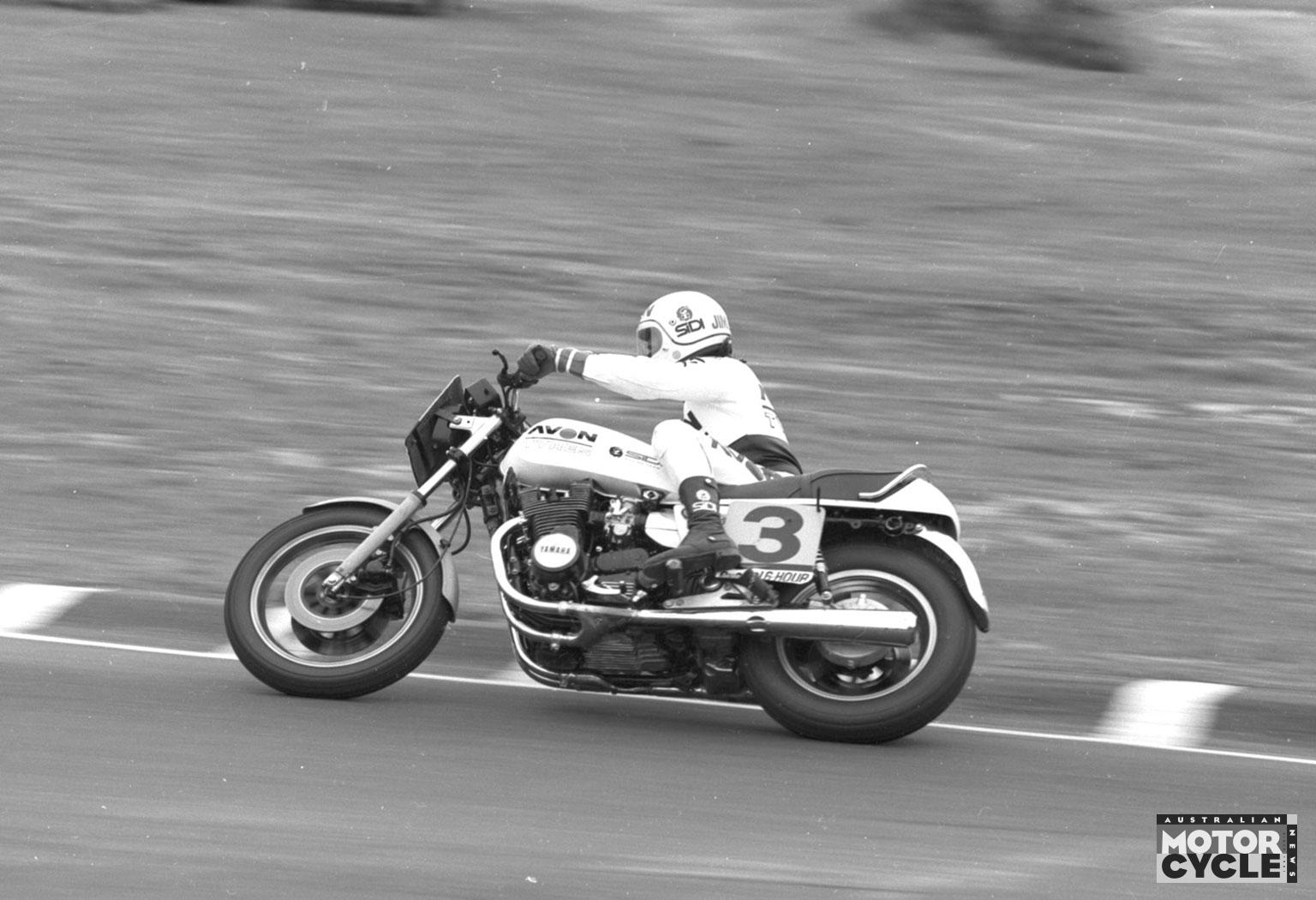
Budd and Heyes reunited for 1978, this time on the new Yamaha XS1100, a bulky tourer that had, against expectations, established itself as the bike to beat. At half distance the Avon team pulled a master stroke, changing the rear wheel and refuelling in just 49 seconds before running home clear winners.
THE HARD ROAD
Season 1979 did not start well. Jim crashed at Amaroo Park on 24 June directly in front of Neil Chivas, who was unable to avoid running over his head. Jim suffered a fractured skull and bruising of the brain and was unconscious in Sydney’s Royal Prince Alfred Hospital for five days. Recovery was slow, but he was determined to race again. Four months later, having received a last-minute medical clearance, he joined Greg Pretty on the Pitmans Yamaha XS1100 for the Six Hour. They finished second to the Suzuki GS1000 of Alan Hales and Neil Chivas.
It was a remarkable comeback and kept Jim’s impeccable Six Hour record intact – two wins, two seconds and a third in five years.
FACTORY CALLING
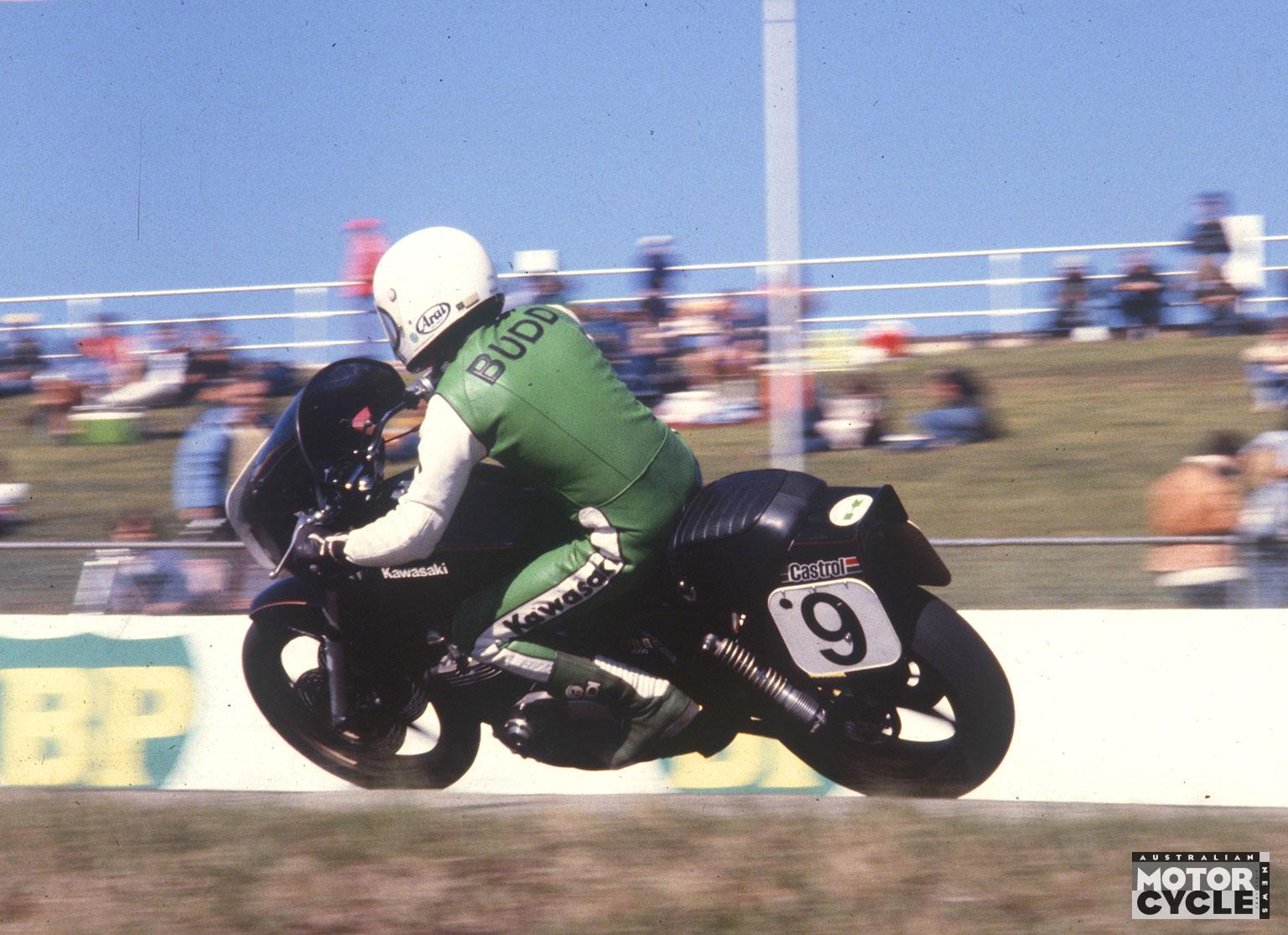
For 1980, Jim joined the highly successful Team Kawasaki alongside star rider Gregg Hansford. But what promised to be a big year proved intensely frustrating.
Jim and Gregg led the Coca-Cola 800 at Oran Park before their works-supplied Kawasaki Z1000SR stopped with an electrical failure. At the Arai 500 at Bathurst, they again led before transmission problems intervened. Jim finally achieved his cherished overseas racing debut at the legendary Bol d’Or in France, again with Hansford, only for faulty fuel to ruin their race after just three laps.
The year closed with the Castrol Six Hour, where Budd and South Australian Paul Cawthorne rode a Kawasaki Z750. Jim qualified fastest in class, but a persistent misfire caused several lengthy stops and they were eventually classified 13th outright – the first time Jim had been off the Six Hour podium since his 1975 debut.
Jim and Kawasaki parted ways at the end of the year, and in 1981 he rode for several team owners before deciding to call time on his racing career.
His general health had been deteriorating, leaving the fit and tanned Jim Budd of old in increasingly poor condition. It was later disclosed that he was suffering from Light Chain Deposition Disease (LCDD), which primarily affects the kidneys and often leads to kidney failure. He suffered four strokes and underwent a kidney transplant, which initially appeared successful.
ONE MORE TIME
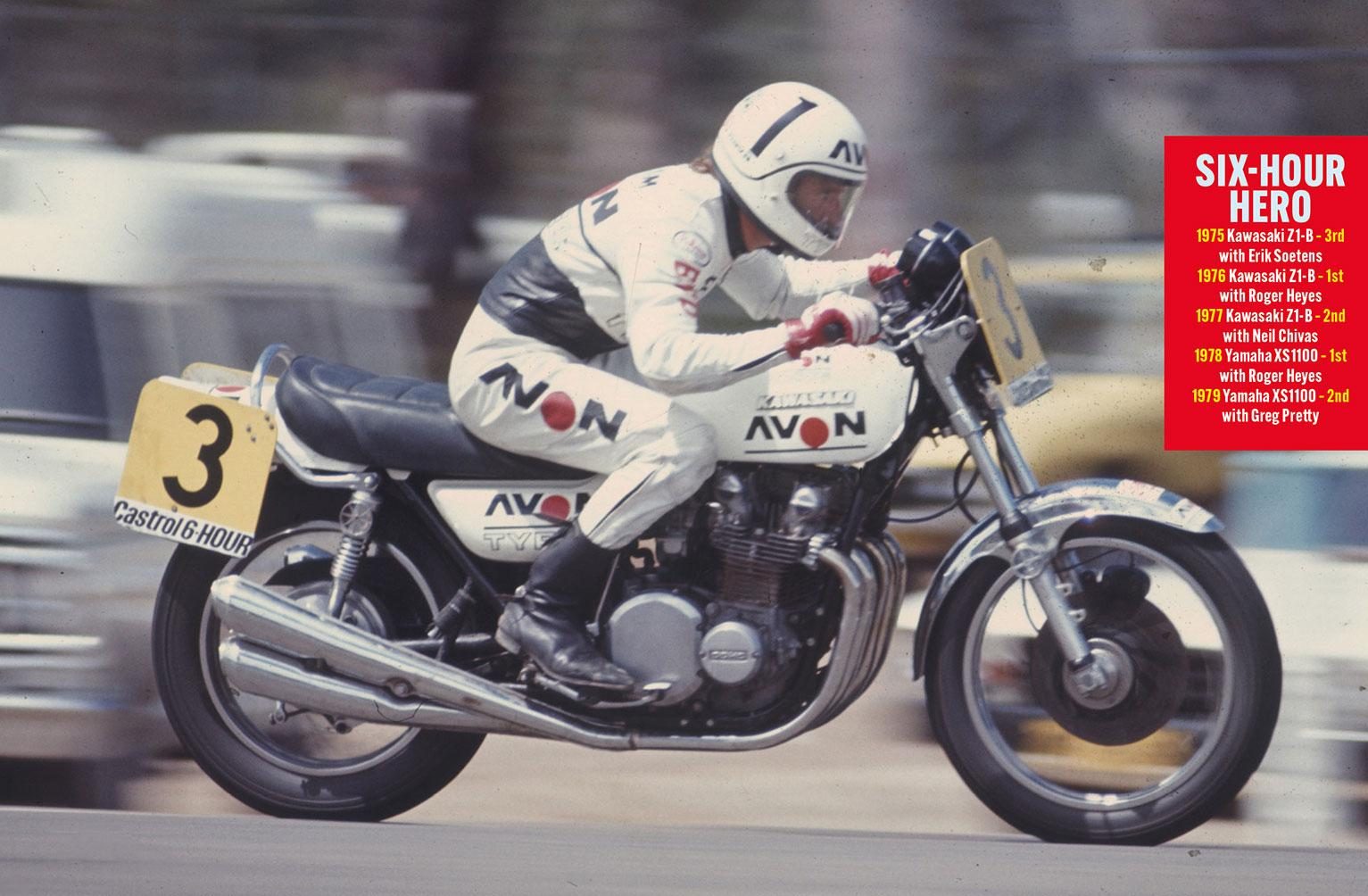
Remarkably, Jim declared himself fit enough to make a comeback at Bathurst in 1986, riding a Kawasaki 1000 for Masaaki Motorcycle Engineering in the Arai 500. Clad again in his signature white leathers and helmet, he completed the race in 11th position, but dismissed the effort afterwards.
“My ego took a bit of hammering,” he said later. “The only reason I finished so high up was because the attrition rate is so bad in that race.”
That looked to be the end of Jim’s time as a motorcycle racer but there was one more twist.
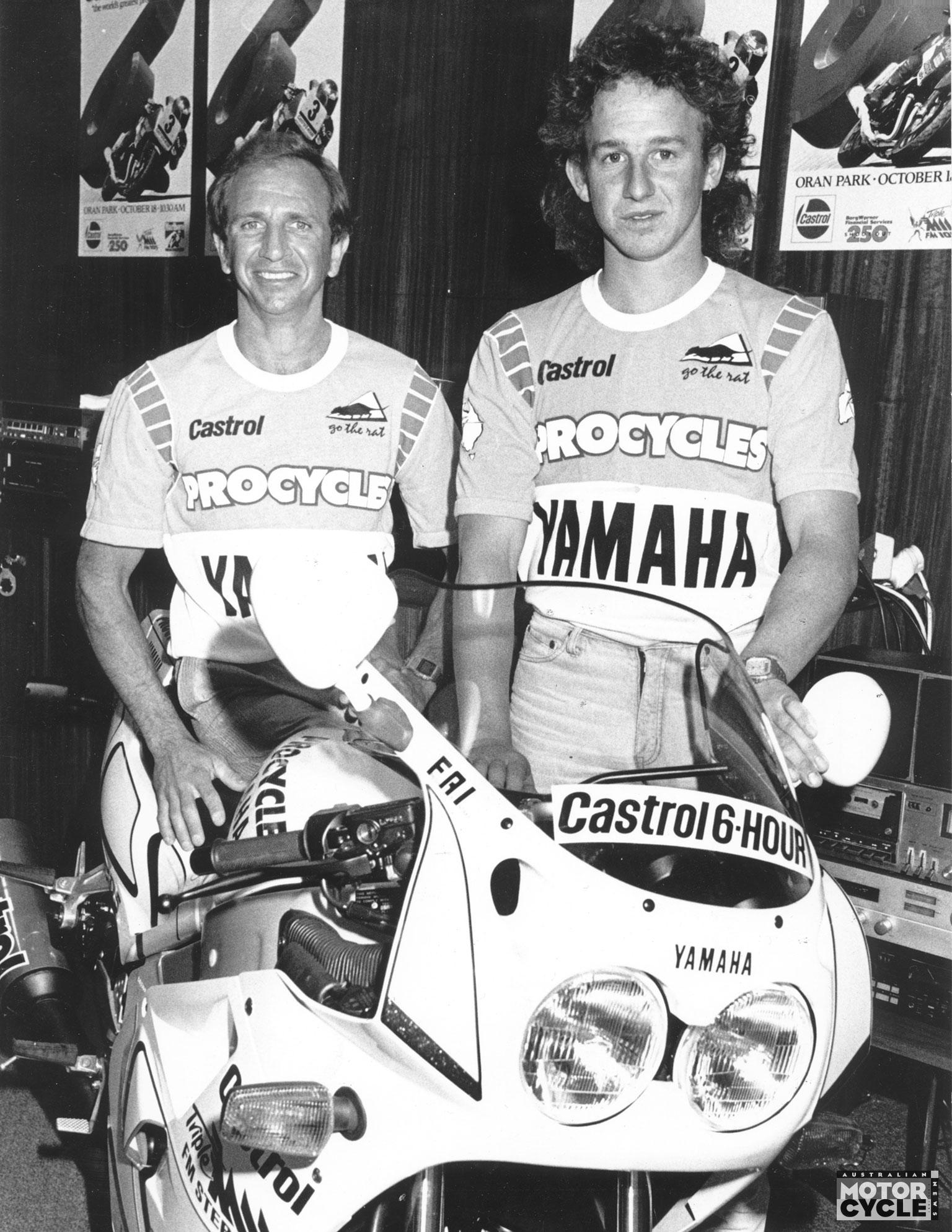
For the 1987 Six Hour at Oran Park, Sydney Yamaha dealer Procycles entered an FZR1000 for 20-year-old Tasmanian Simon Pinnington. The other seat was offered to Jim, who accepted without hesitation despite being one of the oldest riders in the race at 37. To familiarise himself with the bike, he undertook a marathon ride through the eastern states as well as private testing at Oran Park.
The field was stacked with stars, headed by Marlboro Yamaha’s Michael Dowson and Kevin Magee, with Mick Doohan and John Pace also among the leading combinations. To his credit, veteran Budd was faster than his rookie teammate, qualifying ninth.
Jim made a woeful start, getting away towards the rear, but by 2.30pm the pair had climbed to seventh outright. That was as far as they got. Exiting Energol Corner, the sweeping bend leading onto the main straight, Pinnington lost the Yamaha, which clouted the concrete hard, smashing the front end and putting them out.
This time, Jim hung up his helmet for good.
His health continued to fail, requiring further hospitalisation, but he maintained a robust personal training program, running and cycling hundreds of kilometres each week. Another stroke ultimately proved too much, and he died on 28 July 2001 at just 50 years of age.
Throughout his life, Jim Budd was not just a remarkably talented racer, but a humble and polite human who never had a bad word to say about anyone.
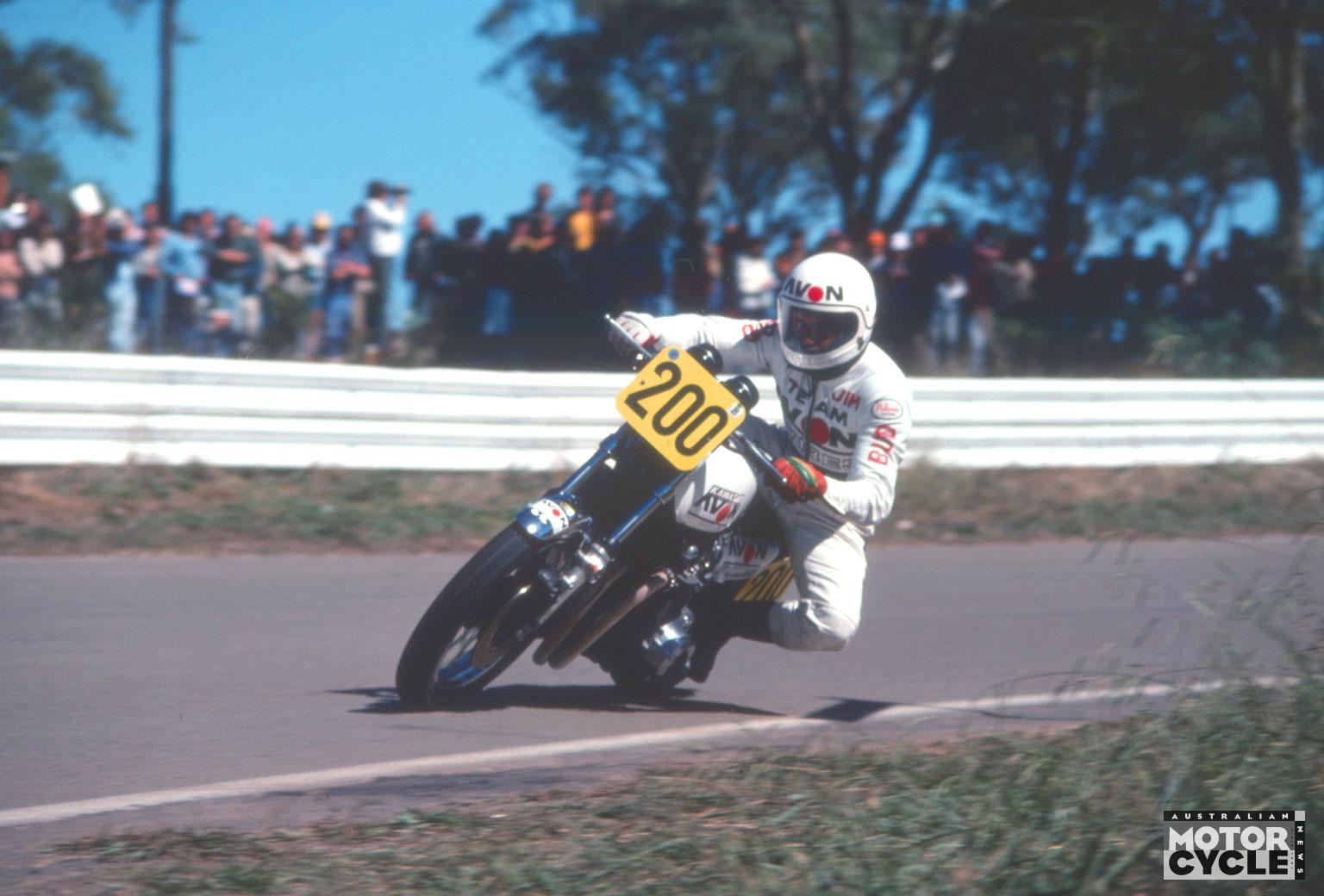
Perhaps the last word should go to the man who recognised Jim’s talent from the beginning and fostered his career, Lindsay Walker.
“If Jim was anything, he was determined and, if needed, ruthless; he was a true racer,” he says. “I remember he spent his first winnings on an old dirt bike and practised getting off it, in case or perhaps when the need became obvious.
“We were scrutineered out of starting a medium-distance race in Melbourne because the horn didn’t work. After scrambling to find one post-haste, Jim started to use it with great effect during the event as he came up on slower riders. They wanted to black flag him, but I talked them out of it, provided he stopped slipping under the rider and beeping them out of the way!
“Jim was a good bloke with some really great mates that stood behind him. Greg Easton gave up racing just to fettle for Jim, and to great effect for him and the team.”