For more than three decades, Pino’s Trattoria has fed, sheltered and befriended the MotoGP paddock at Phillip Island. Rosa Scarlato reflects on the riders, friendships and memories that made Pino’s part of the story
It would be easy to assume that the motivation for a restaurant owner in Cowes wanting the Australian round of MotoGP to remain at Phillip Island is purely financial. But for 74-year-old Rosa Scarlato and her three children, Annalisa, Romina and Luciano, the relationship between Pino’s Trattoria and the greatest sport on earth runs far deeper than the money it brings through the door.
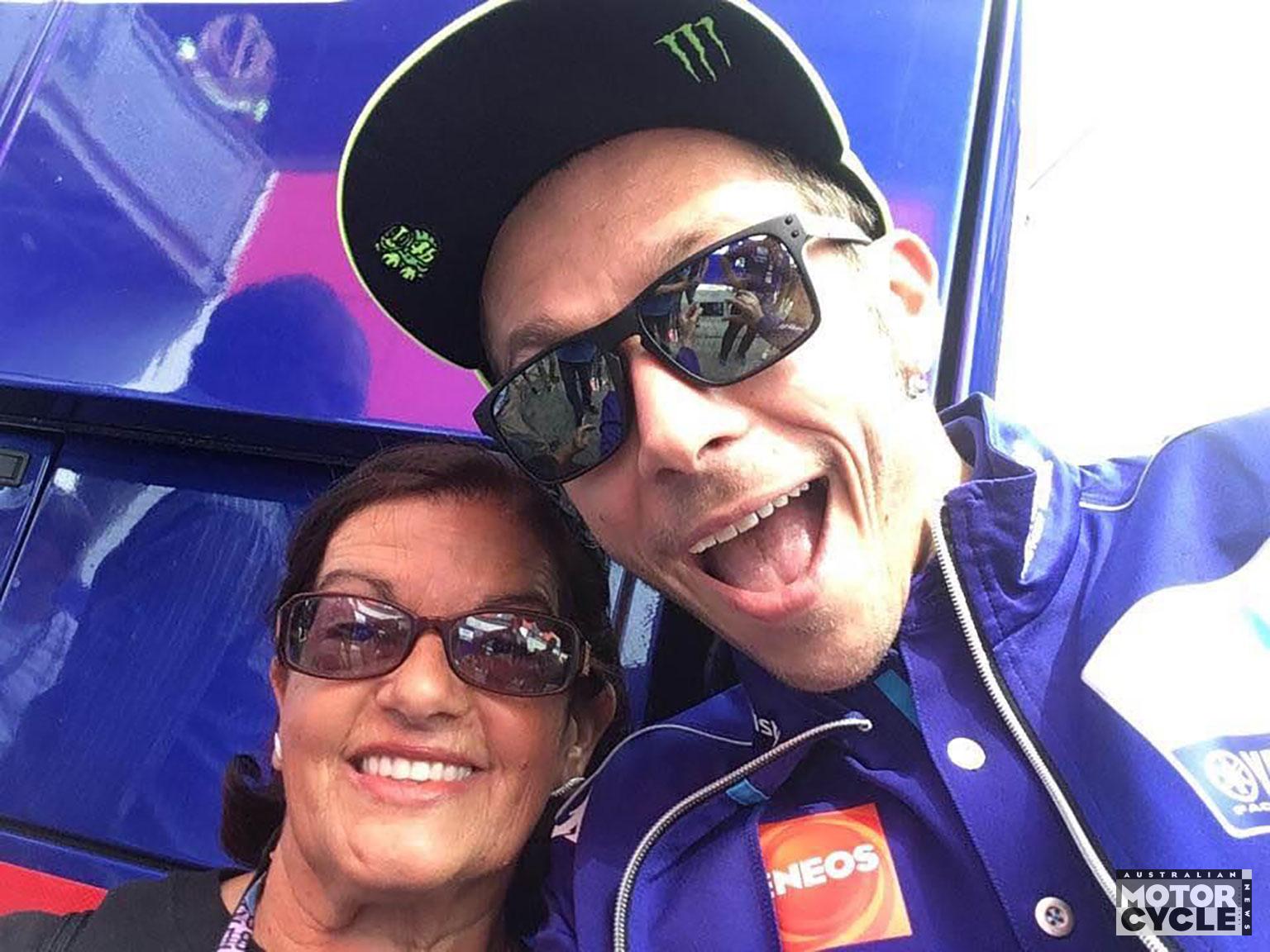
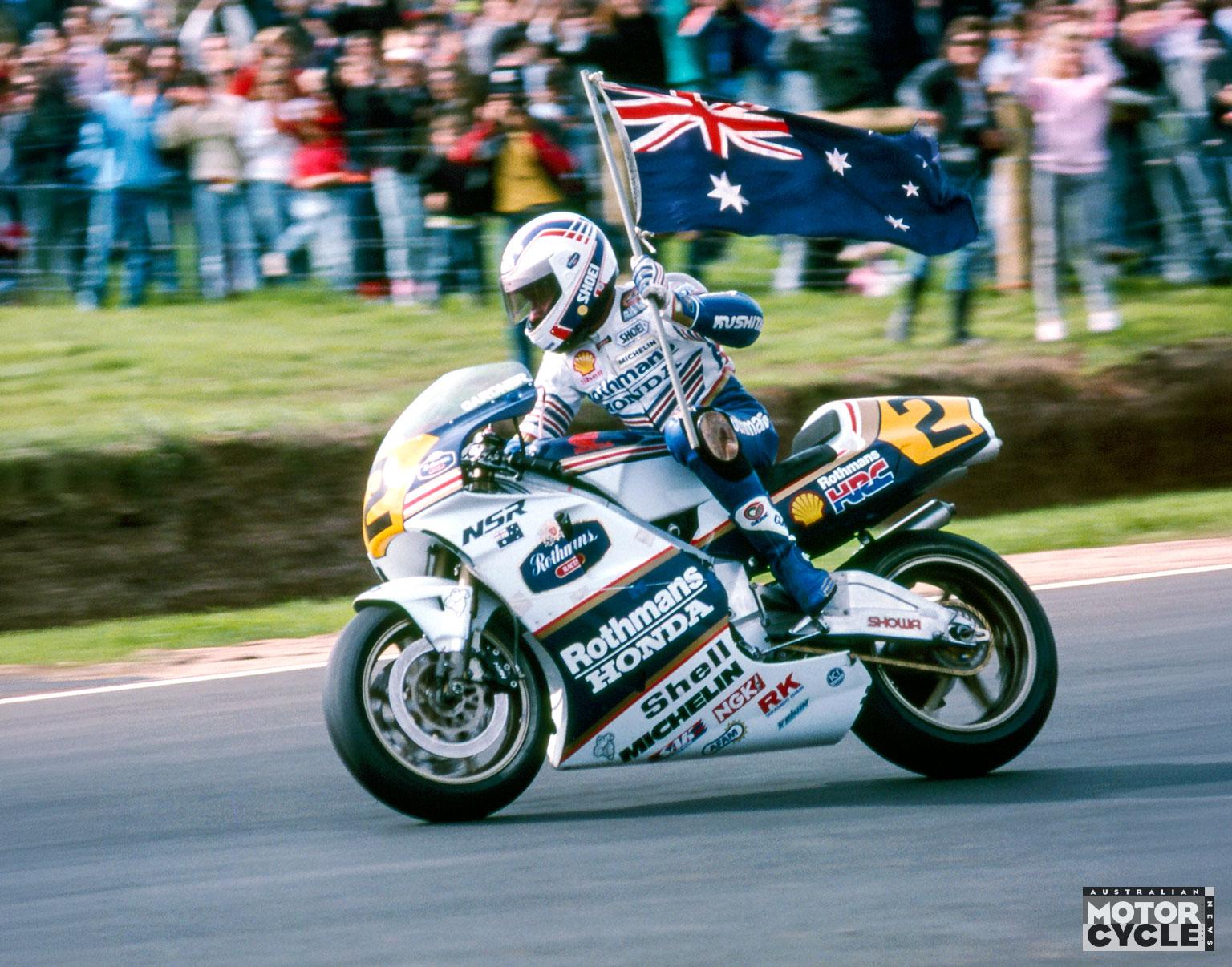
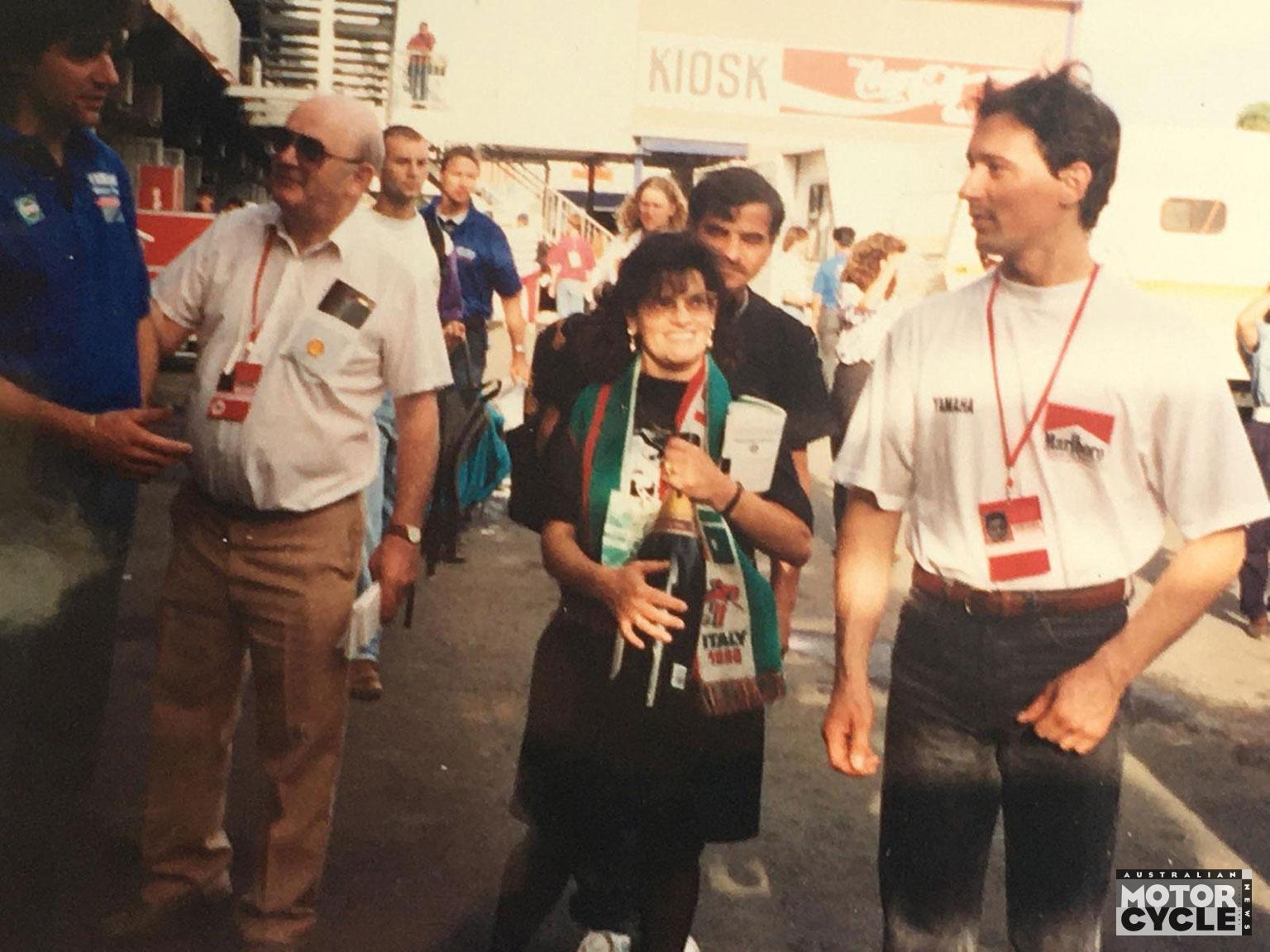
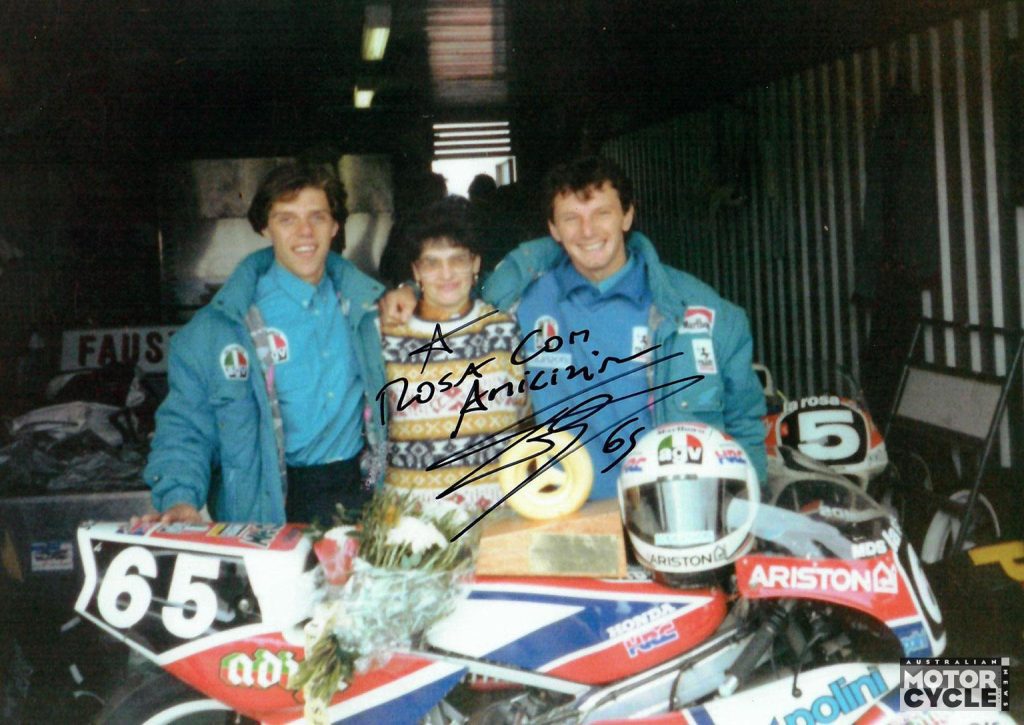
Rosa’s love affair with grand prix racing began before Pino’s Trattoria even existed. It was during the 1990 Australian Grand Prix that a young Loris Capirossi became the first Italian to be crowned world champion on Australian soil.
“He was only 17 and I went onto the podium with the Italian flag because it was the first one and it was fantastic to see an Italian countryman win, you know, together,” she says.
By then Rosa and her husband Pino were already well established in Cowes hospitality. Pino had previously run a fish and chip shop bearing his name, before the couple became partners in Isola Di Capri, the town’s other longstanding Italian restaurant. They had three young children and, when that partnership came to an end, decided it was time to build something of their own.
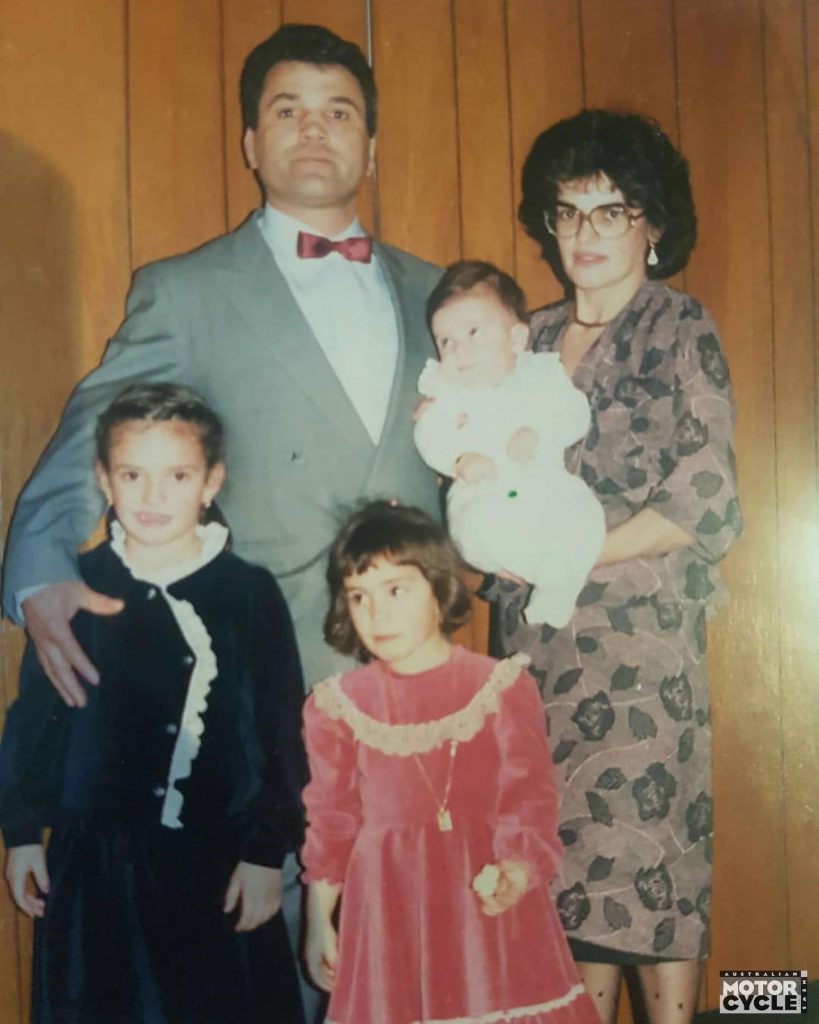
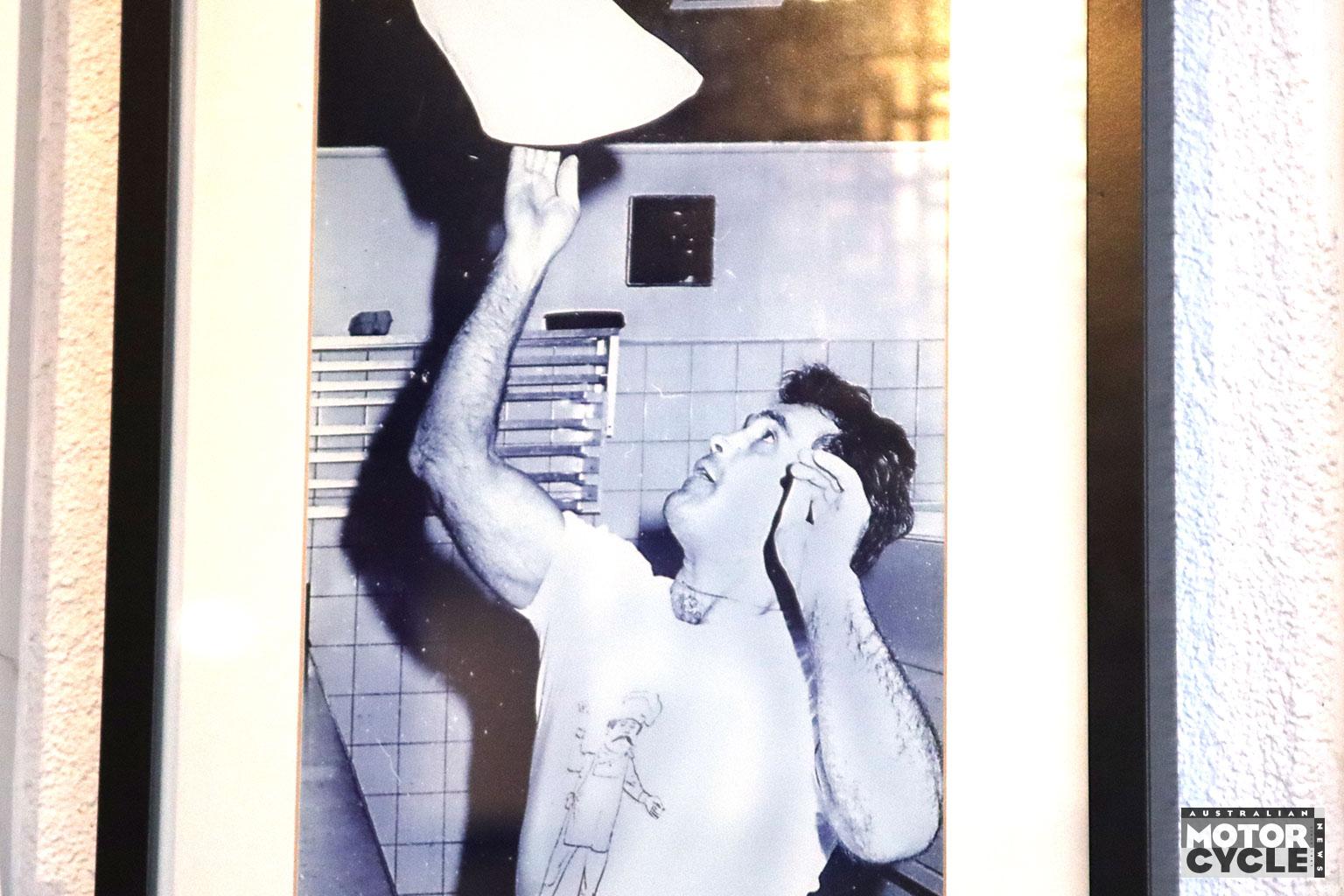
In 1991 they opened Pino’s Trattoria, initially a modest 46-seat restaurant. Pino worked the kitchen, although by Rosa’s telling he was never inclined to stay hidden out the back. He was outgoing, loved music and had a habit of emerging from the kitchen to dance among the tables whenever the mood took him.
The restaurant grew, the family bought the property next door and Pino’s slowly but surely became a fixture in Cowes. But in 1999, just eight years after they opened its doors, Pino died suddenly, leaving Rosa to raise their three children and continue the business they had built together.
“When Pino died, a lot of people come in and they support us,” recalls Rosa. “The kids were young and no father and it felt emotional for them. From ’99, more and more people would come in, talk to each other. They’d say they found Pino’s … and now Rosa.”
The restaurant continued to grow, eventually expanding to around 300 seats at its peak, with Rosa revealing that during busy grand prix weeks, they could turn those tables several times over and serve as many as 1000 people in a single night.
The relationships the Scarlatos have built over the decades with the riders and their teams stems back to when the Phillip Island Grand Prix Circuit regularly played host to preseason testing for both the GP and World Superbike paddocks.
“They used to hang around and we used to play cards with them and just drink after work and talk,” Annalisa recalls. “The Island outside of events is quite quiet and peaceful – it’s basically like home. You’d sit at the bar and chat, have a drink, play cards. That’s how we became close with a lot of the teams.”
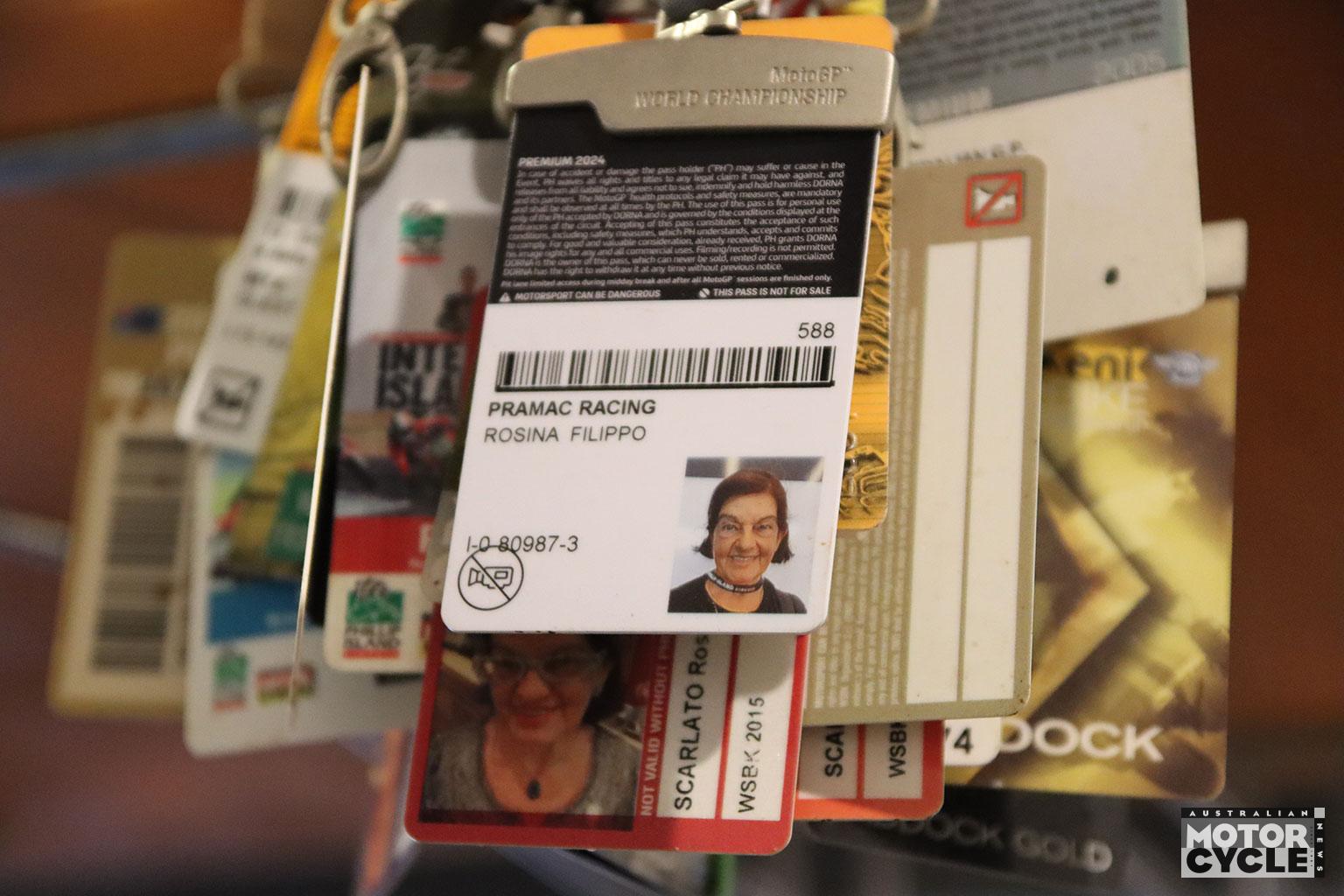
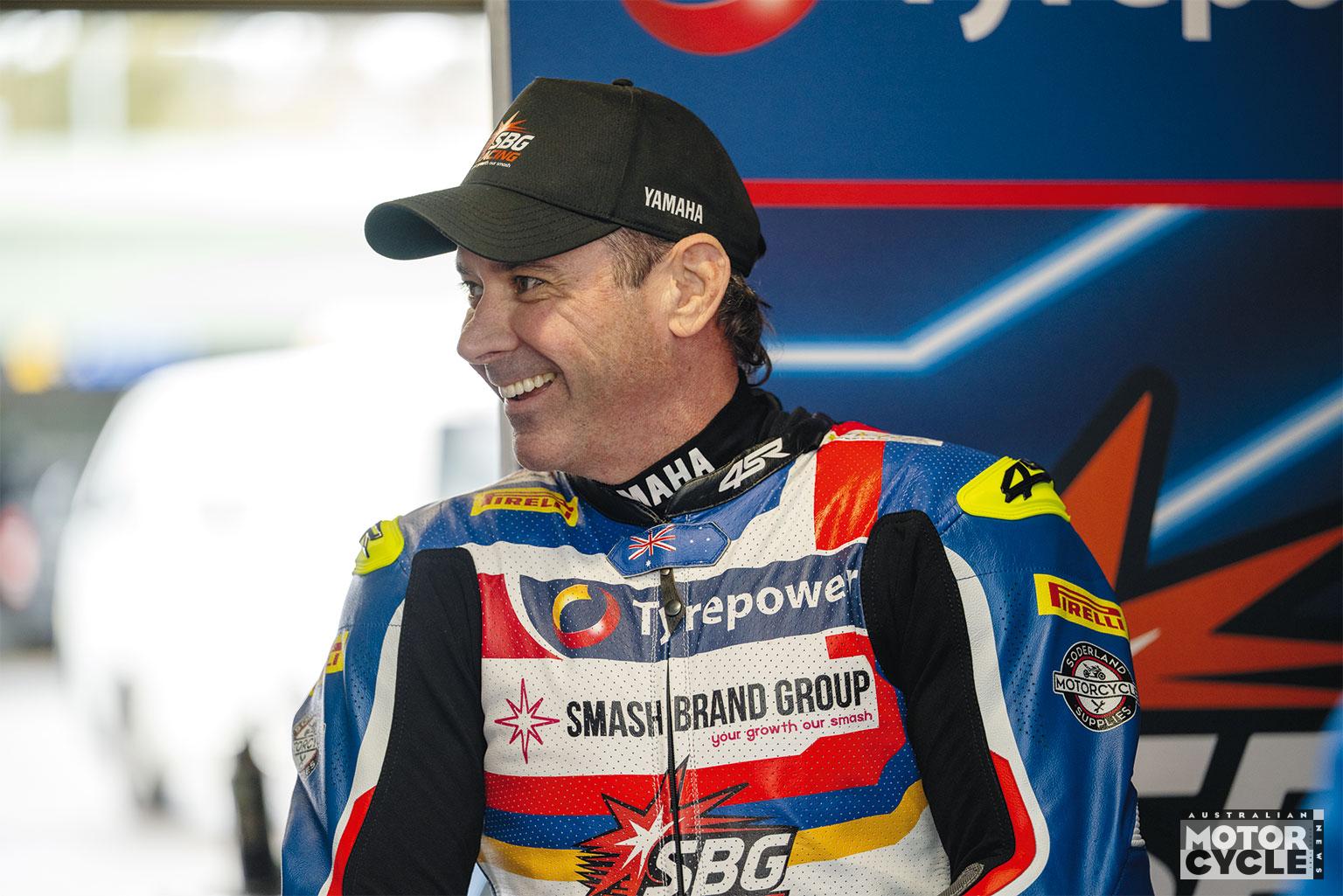
Rosa remembers Troy Corser’s children as babies, asleep on the floor of the restaurant while the adults carried on around them. Corser himself once arrived outside Pino’s on a Harley-Davidson, told the diminutive Rosa to grab a jacket and took her for a pillion lap of the Island.
“Me, a little midget, on the back of Troy Corser,” she laughs. “It was very, very good.”
Incidentally, Corser’s donation of one of his 2001 Suomy race helmets was the first of what would become an extraordinary collection of rider-donated memorabilia lining the walls of Pino’s.
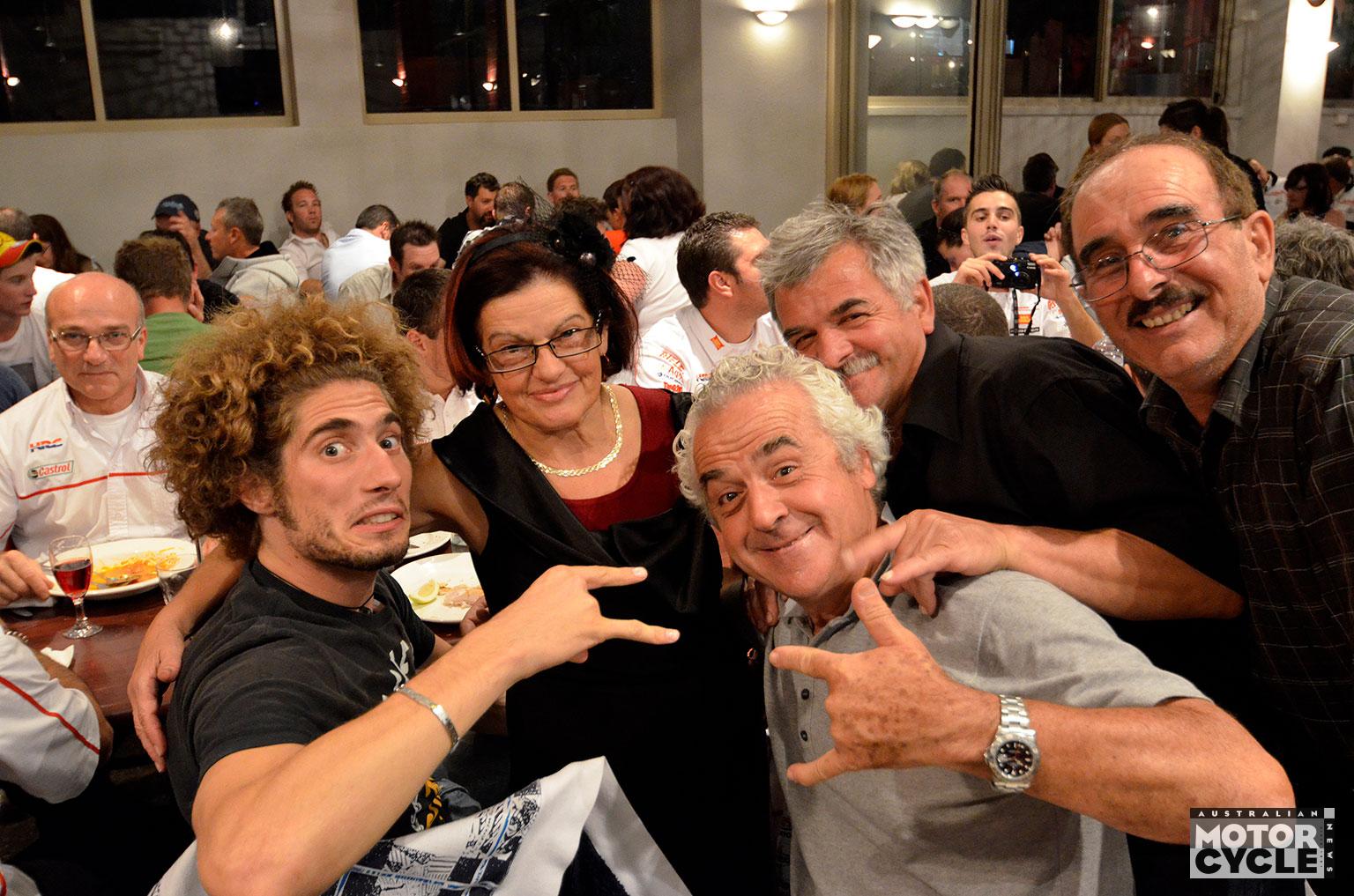
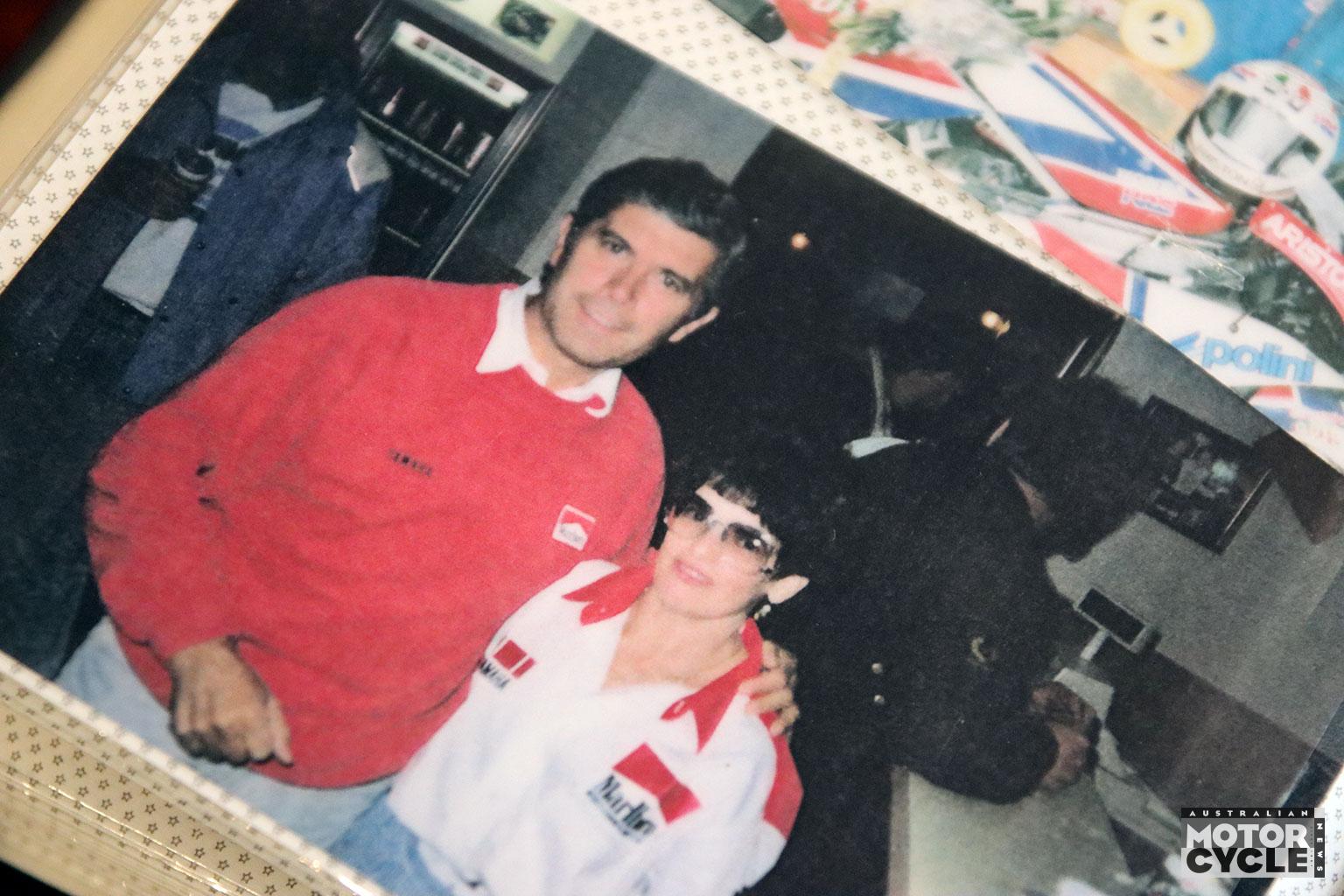
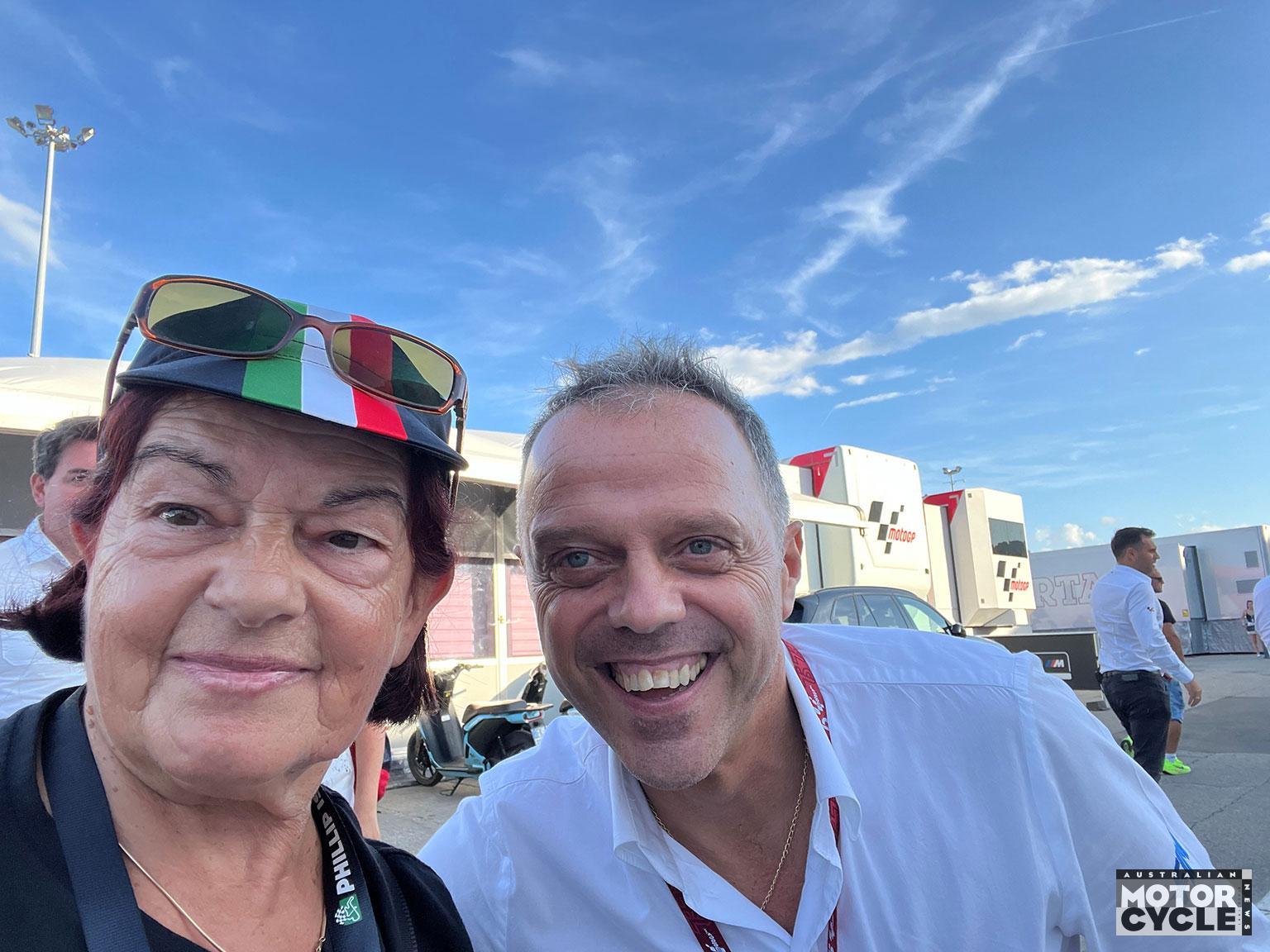
Racing indeed found its way into Pino’s, but Rosa was hardly a passive host. Her affection for the sport has only grown with the friendships formed through the restaurant, and these days the relationship works both ways. For the past decade she has made an annual pilgrimage to the Misano MotoGP, where she stays with the Simoncelli family and works her way through a paddock populated by familiar faces.
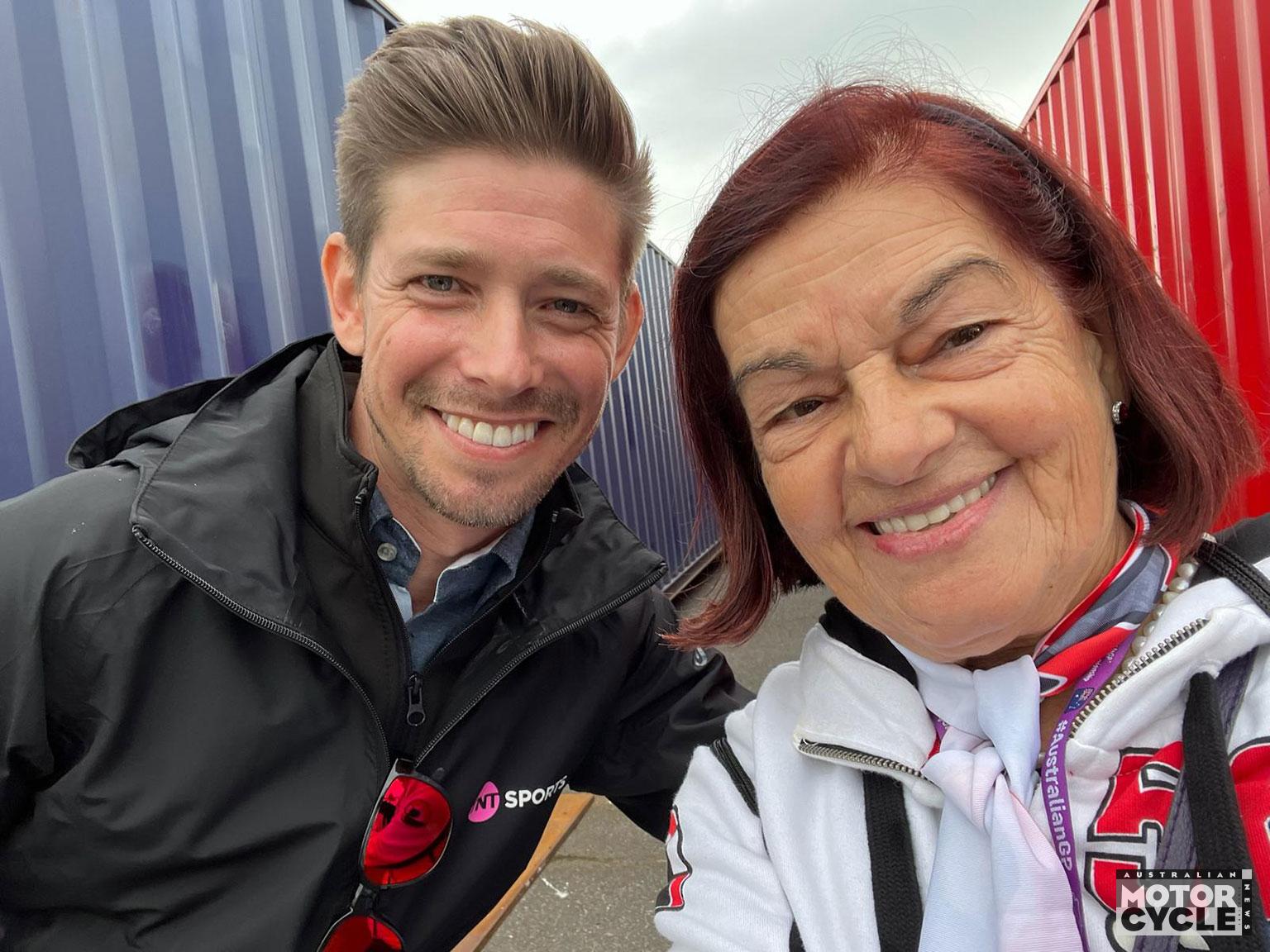
Scroll through her camera roll and the evidence is abundantly clear. Rosa beside riders, team bosses and crew members in garages up and down pitlane; arms around shoulders, broad smiles and the occasional entire team crowding into shot. There’s no sense that she’s collecting famous faces for social media. More often than not, they look every bit as pleased to see her as she is to see them.
“When they see Phillip Island (on my T-shirt), they say, ‘Hey, that’s Rosa!’” she laughs.
That familiarity has made Rosa something of a paddock fixture in her own right and it developed because feeding the paddock was only a part of what Rosa came to provide. Over the years, riders and teams learnt that if something went wrong away from the circuit, there was a fair chance she would know who to call.
“I remember after the Covid, Valentino’s team they didn’t confirm the booking and Max called me and said, ‘We need a place for 40 people to sleep,’” she recalls. “And it was May. I said, ‘Max, you’ve got to be joking – May! – I’m going to Italy next week, I cannot find places for 40 people – 40 people!’ And he said, ‘Rosa, please, you have to help us.’ Well, I called all my friends with the houses – and I accommodated them. Do you think they can do that in Adelaide?”
Rosa’s ability to assist comes with its own trove of stories. She’s helped team personnel replace lost passports, made calls to get local repair people open on a Saturday to ensure a rider can line up on Sunday, and accepts packages sent directly from teams and manufacturers so they can be collected at any hour. Her local knowledge and willingness to help could well be impossible to replace.
“I mean, if they call and say, ‘Rosa, help me for Adelaide.’ I can’t help. I don’t know anyone. I’m sure there are a lot of Italians there, but after 35 years, it’s very hard to start again.”
Those 35 years have also given Rosa and her kids a view of the paddock few fans ever see. Rossi was already a regular at Pino’s before his fame made an ordinary meal almost unworkable. His team would arrive first, then Rossi would slip through the back door once everyone was seated. Eventually even that became too difficult and the Scarlatos began feeding him and his crew in the office, away from the main area. “There was nothing fancy in there – pizza boxes and wine and a freezer,” Annalisa says. “But it was the only way that he could chill out and eat and not be disturbed.”
The arrangement gave Rossi somewhere to switch off for a few hours, even as fans waited outside in the car park until four or five in the morning. Once dinner was finished, Annalisa said he would still stop for photos and autographs on his way out.
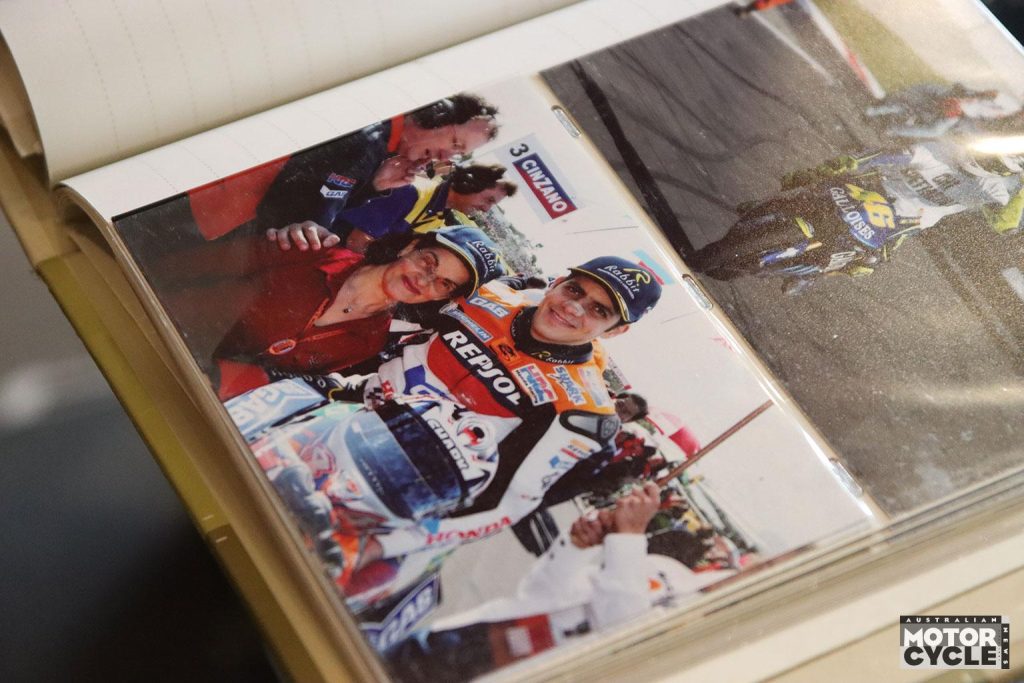
Rosa remembers his regular order, too. “Valentino, he used to eat steak all the time,” she says. “They say the steak is very good in Australia.”
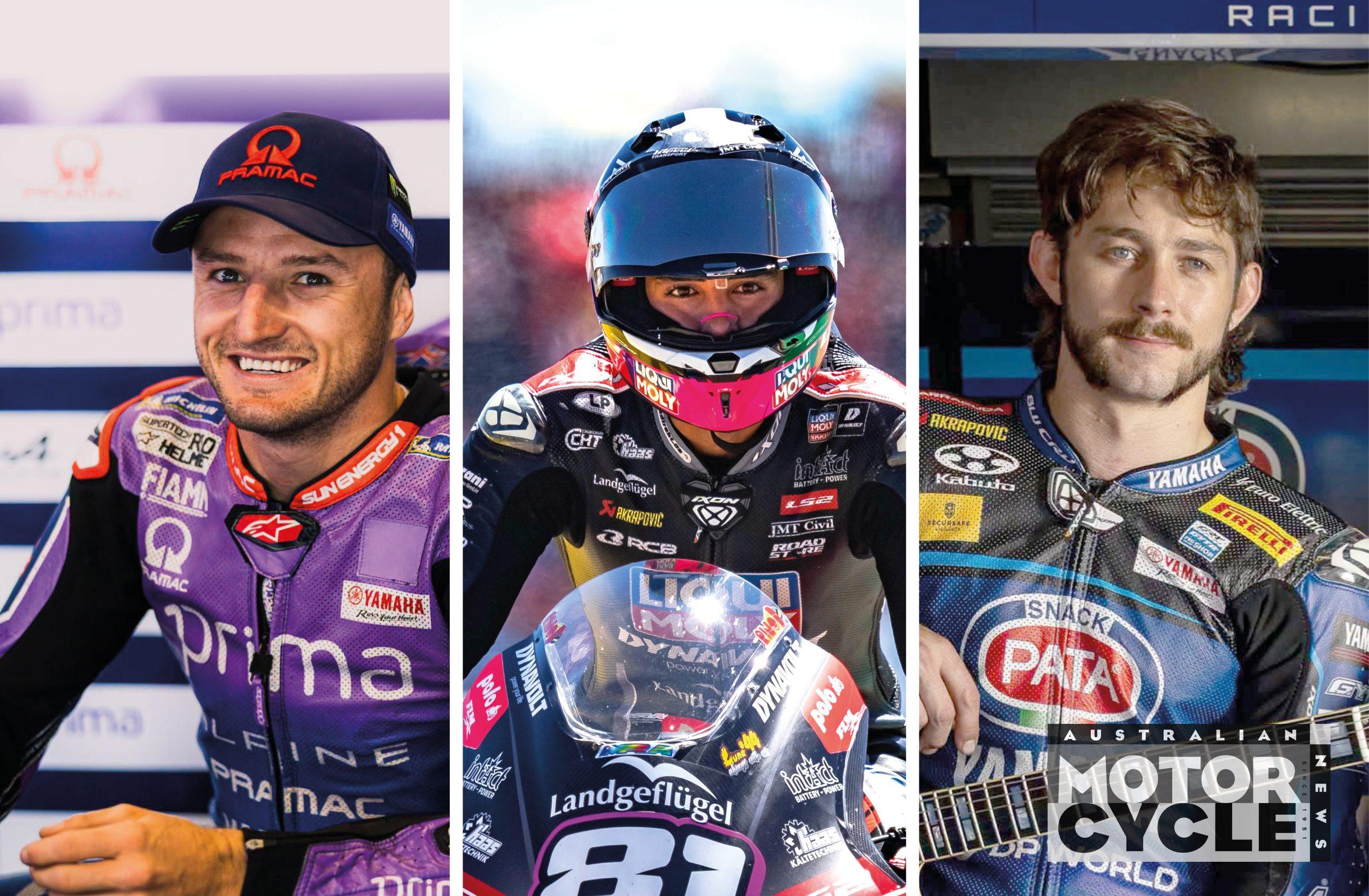
Jack Miller, meanwhile, knew how to play the game. Pino’s has two sets of his leathers – two of as many as 25 at the time of writing – and Rosa reckons he quickly worked out they made useful bargaining currency when the restaurant was full.
“The first suit, he came over and he said, ‘Rosa, I have a present for you’. I said, ‘Yeah, what do you want?’ Then I said, ‘Well, what’s the present?’ He said, ‘My suit.’ I said, ‘Yeah, but what do you want?’ He said, ‘I have 30 friends and the people are waiting in line.’
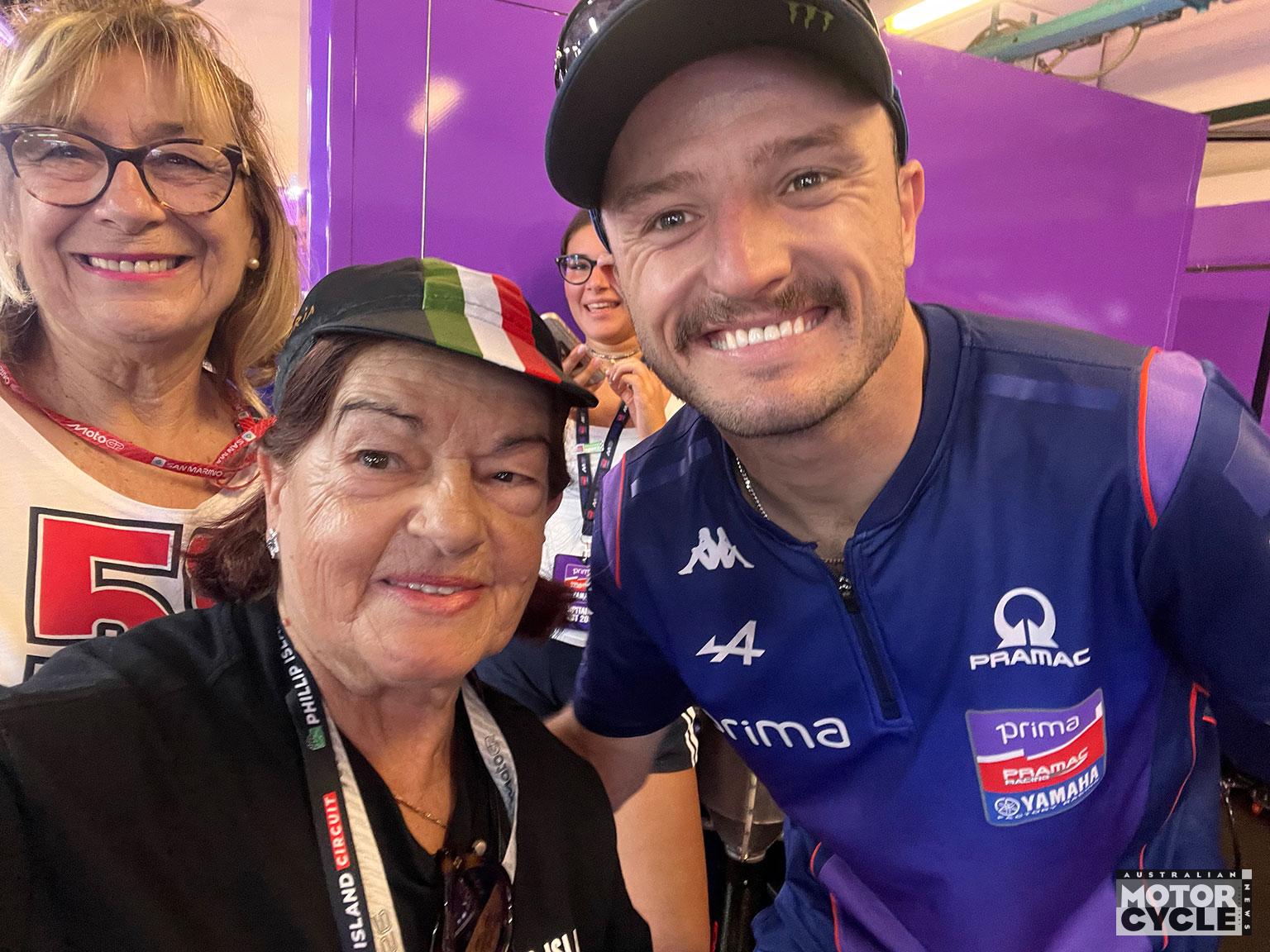
“‘Well, you can wait another hour, because there’s no room,’ I said. He said, ‘Oh, Rosa, you can find a table.’ So I said just to stay outside in the car park and I’ll see what we can do.”
Another visit from Miller ended with a jug of vodka and lemonade being thrust into Rosa’s hands.
“It was the same year he finished third, and they come with a jug of lemonade and vodka, and they wanted me to drink it,” she recalls. “And I said, ‘You’ve got to (drink it), I have to work.’ He said, ‘No, you have to drink it.’ So I tried to drink the jug, and I said, ‘You’re going to have to finish it,’ so he finished it.
“But he took a photo of me drinking the vodka. We have good memories.”
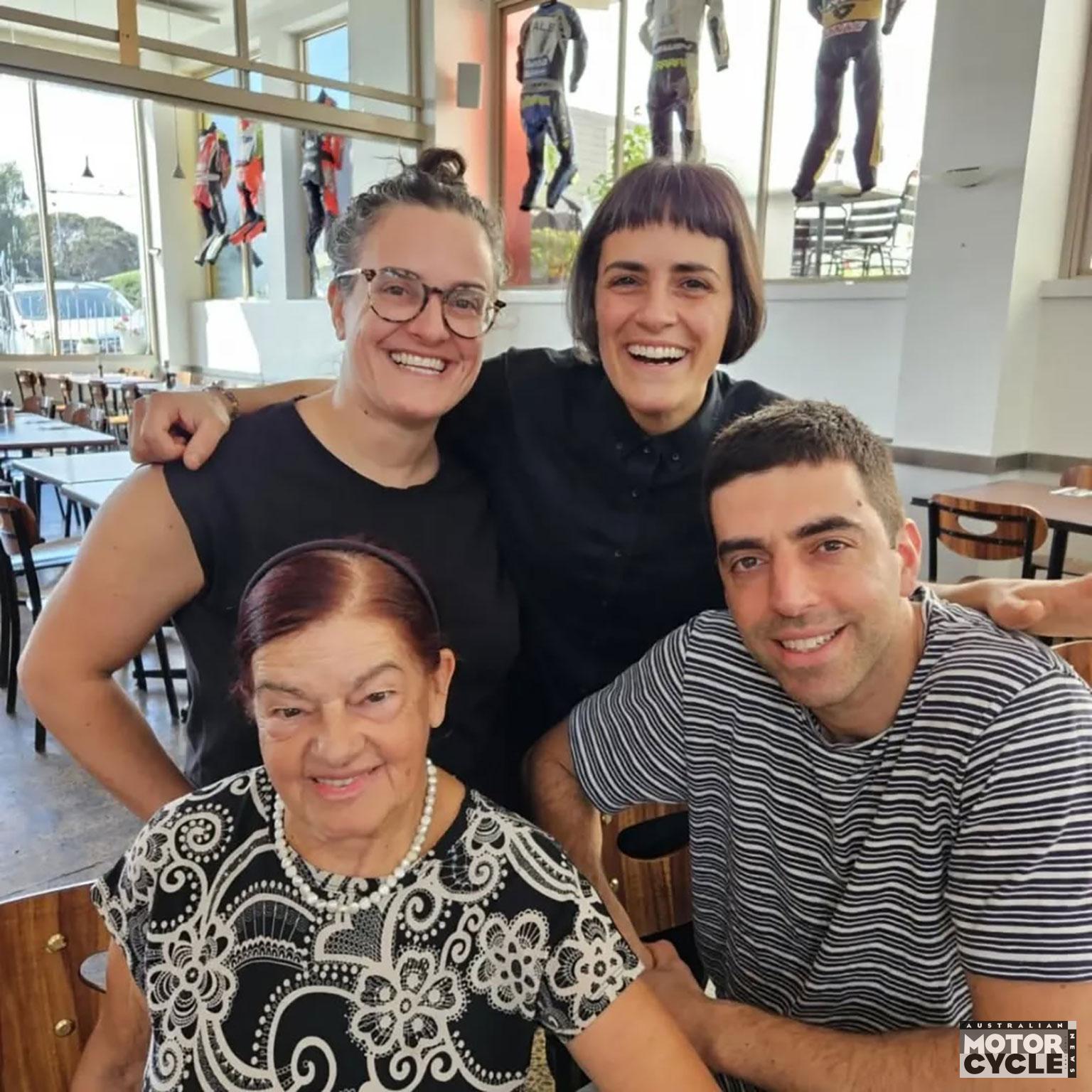
Capirossi, however, occupies a special place in the Pino’s story. The 17-year-old that Rosa and Pino cheered onto the podium in 1990 ended up becoming a lifelong friend, and decades later she still drops everything when he walks through the door.
“I already told him – I have a very soft part in my heart for him. He was the first Italian to win a championship (here). And he was only 17.”
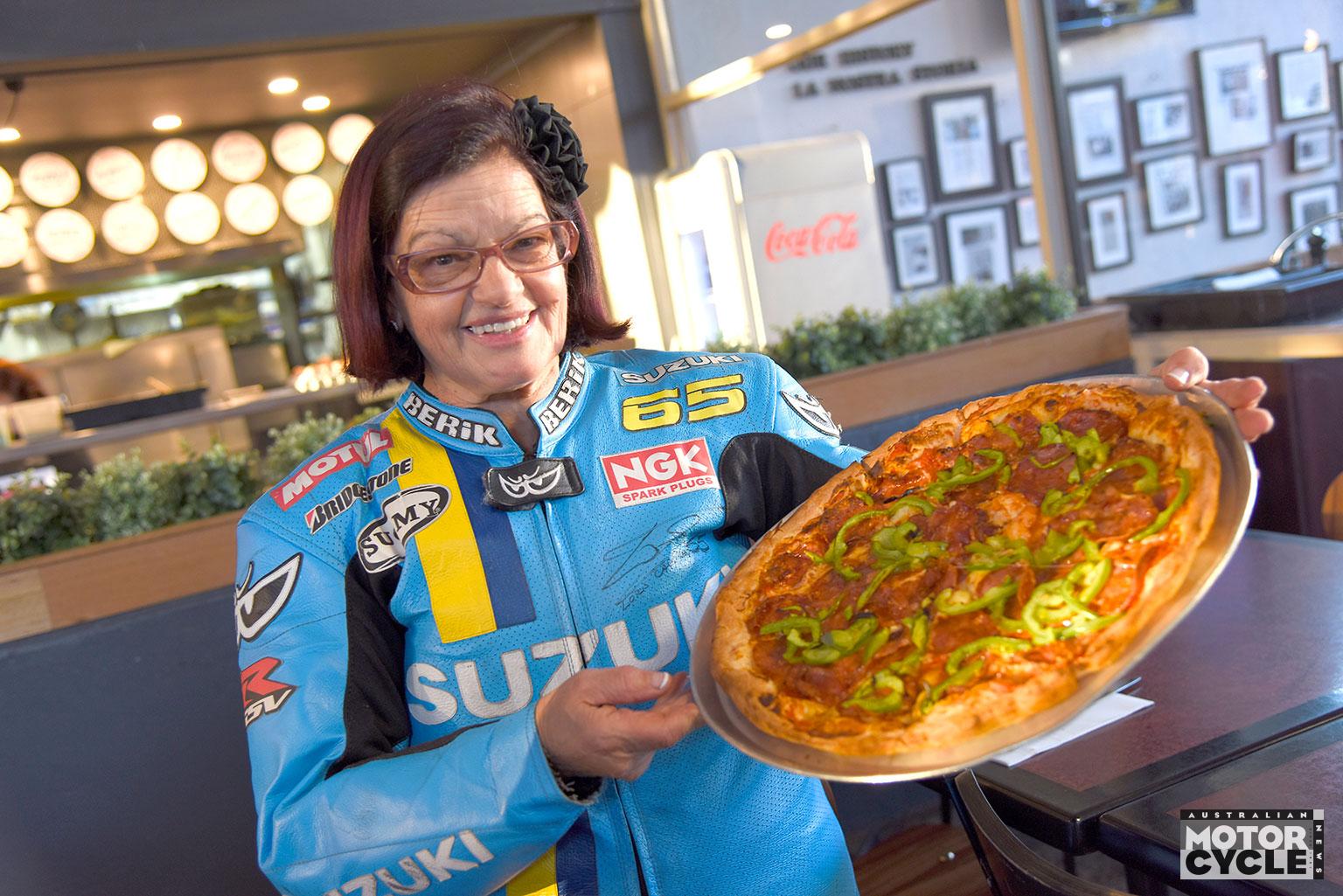
Pino’s now has two of Capirossi’s suits hanging in the restaurant, including Suzuki and Pramac leathers, plus a helmet.
On one occasion Rosa pulled on his Team Suzuki leathers and headed to the circuit, fooling more than a few people before lifting her visor.
“And everybody thought it was Capirossi! But I wasn’t the same size – he’s a little bit taller than me. And they think I’m crazy – I am,” she laughs.
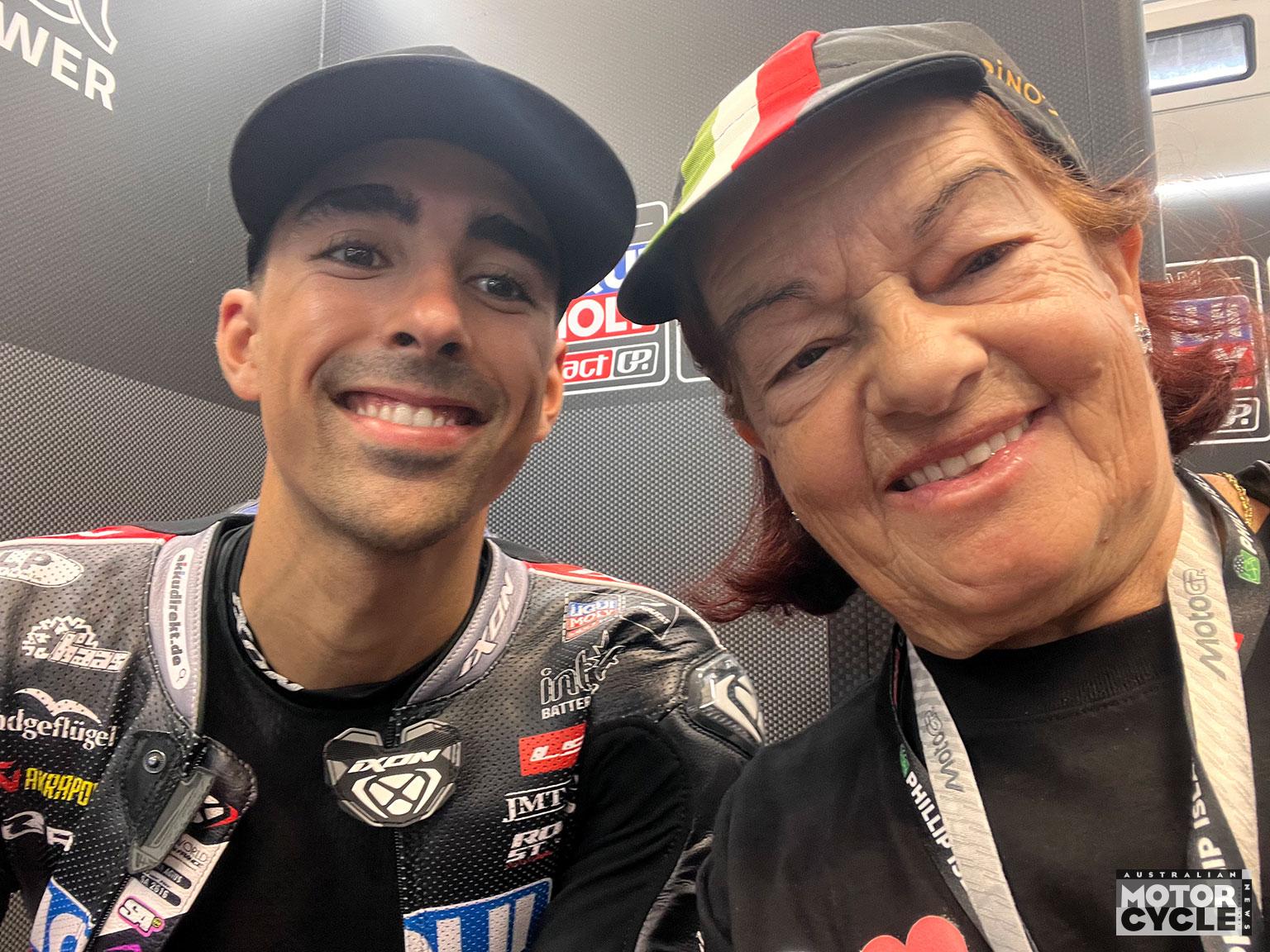
“I even had a photo with (circuit doctor) Dr Costa to say, what’s the matter with me? And then I took off the helmet – he said, ‘Rosa! It’s you!’
“I try to make happy memories for them. I think the memories I have, I’m 74, I will take to my grave because they give me such joy.” The joy, she says, is in the memories they have but also the relationships that have been formed.
The Simoncelli family is particularly close to the Scarlatos. Marco’s sister Martina spent a season working at Pino’s, while Rosa has grown close to his parents, Paolo and Rossella, and for the past five years has stayed with them when she travels to Misano for the grand prix.
This year, Rossella gave her somewhere particularly special to sleep.
“Normally I stay in Martina’s room,” Rosa says. “But this year, I slept in Marco’s room and I said to his mum, I said, ‘That’s the best present you’ve ever given me.’ You know, his things and his bike and all the memories. I felt like I was in the sky with him. It was fantastic. And it’s something you can’t forget.”
It’s a connection that carried on through Paolo’s SIC58 Squadra Corse team. At Phillip Island in 2025, Moto3 rider Luca Lunetta qualified on the front row and asked Rosa to join him on the grid as his umbrella girl.
“I’ve never seen so many photos of myself!” she laughs.
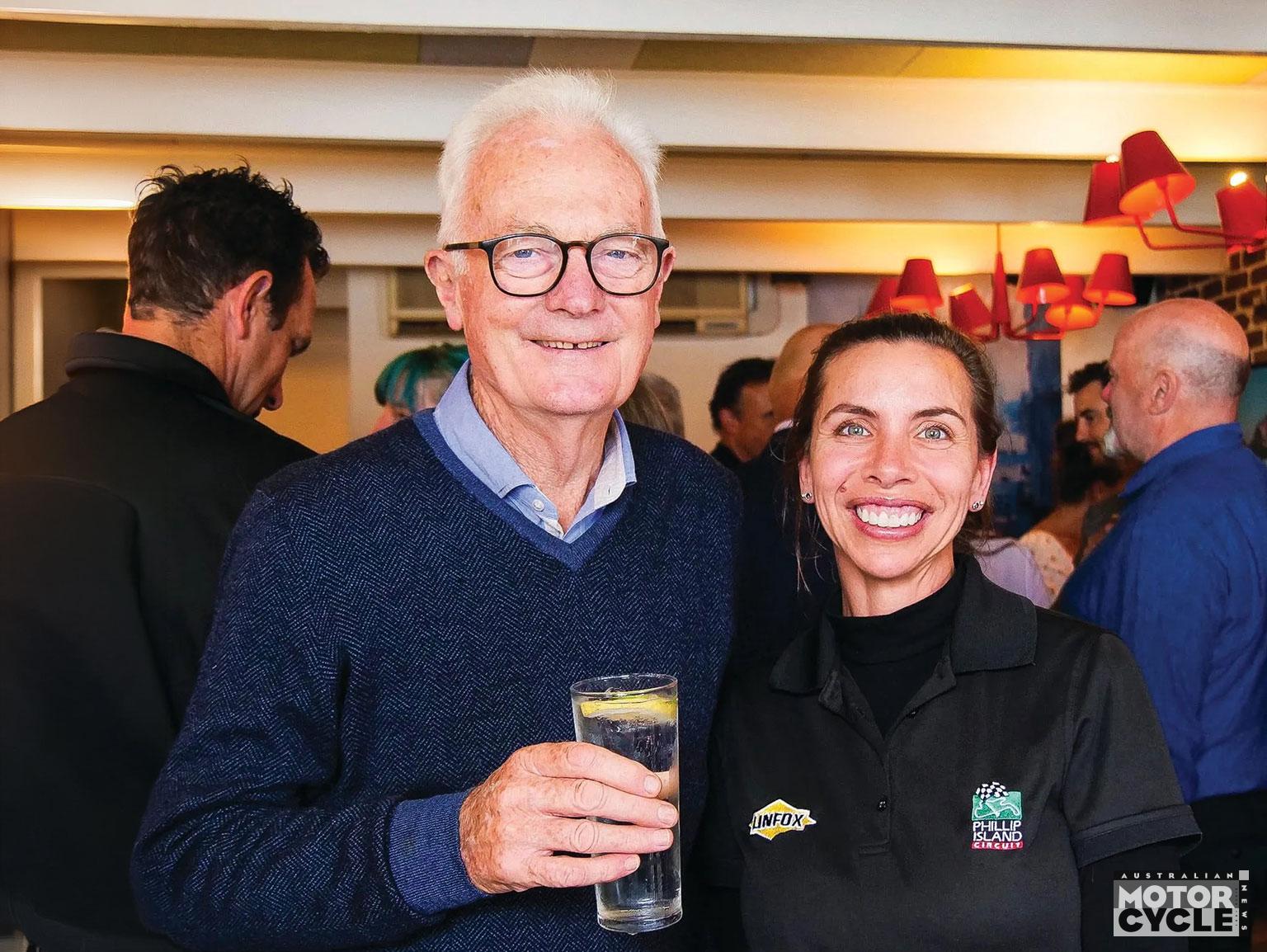
When Rosa first heard that MotoGP was leaving Phillip Island, one of her first instincts was to ring Andrew Fox, whose family owns the circuit. He didn’t answer, but eventually called her back.
“He said, ‘Can I speak to the woman who’s
half-a-metre tall who thinks she’s 10 metres tall?’” she laughs.
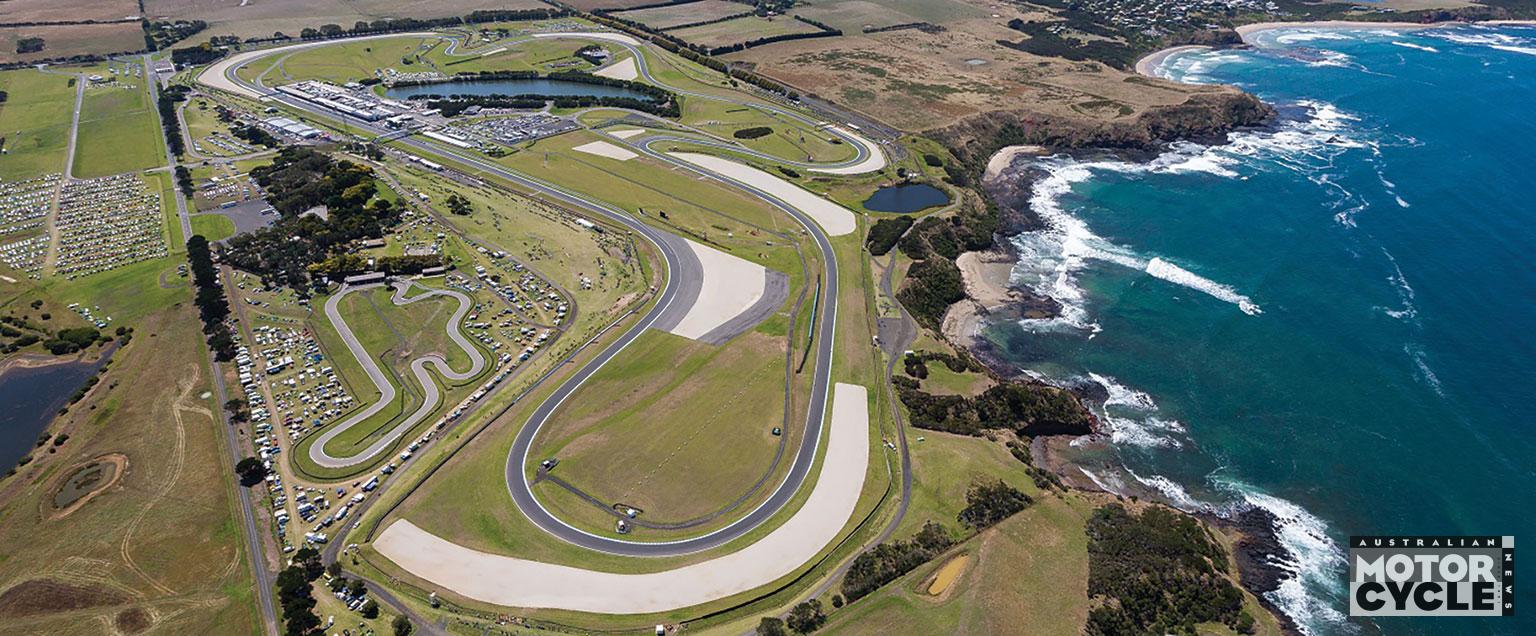
But for all the laughter and cheekiness and pride so evident in Rosa’s face as a result of the unique and sincere community she and her children have built over the years, there’s a clear sense of sadness that life will never be the same when the MotoGP paddock no longer descends on Phillip Island from 2027 onwards.
“It is sad,” she says. “I mean, it’s the best track in the world and I still don’t understand why they change it. They are all Labor Party. Why can’t they put their heads together and say, ‘Let’s do it for the country, not just for Victoria’?” Annalisa brings it back to the business: “At the moment we’re in the build-up of getting ready, our suppliers, sourcing staff,” she says. “It’s just a big weight and then it’s a big relief once we’re in grand prix week and it’s happening. So we don’t know how we’re going to feel when next year comes along – the adrenalin and all that build-up will just go.”
Adelaide has already tried to tempt Pino’s across with an offer to run a food truck at the new event. Rosa’s answer, for now at least, is emphatic.
“I said, ‘Never!’”
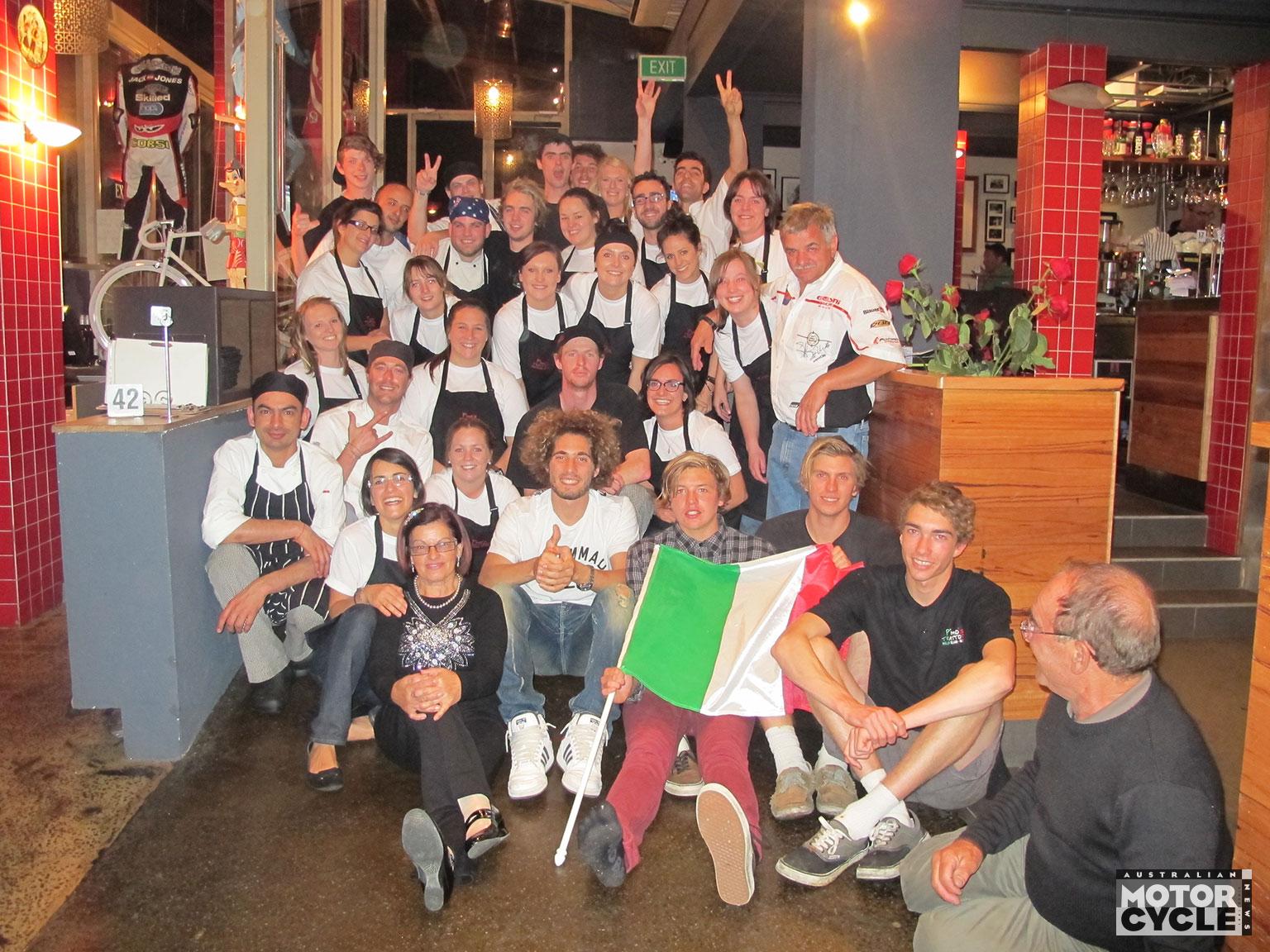
Whatever happens after MotoGP leaves Phillip Island, the restaurant bearing Pino’s name will still be there, along with the friendships and memories built around it.
When Rosa is asked what her husband would make of what Pino’s has become, she doesn’t hesitate.
“He would be very proud… he can still see from where he is,” she says. “And it doesn’t matter how tired you are, you just think about what he thinks and he would be very happy, very unbelievably happy to see what the kids have created.”
Off the wall
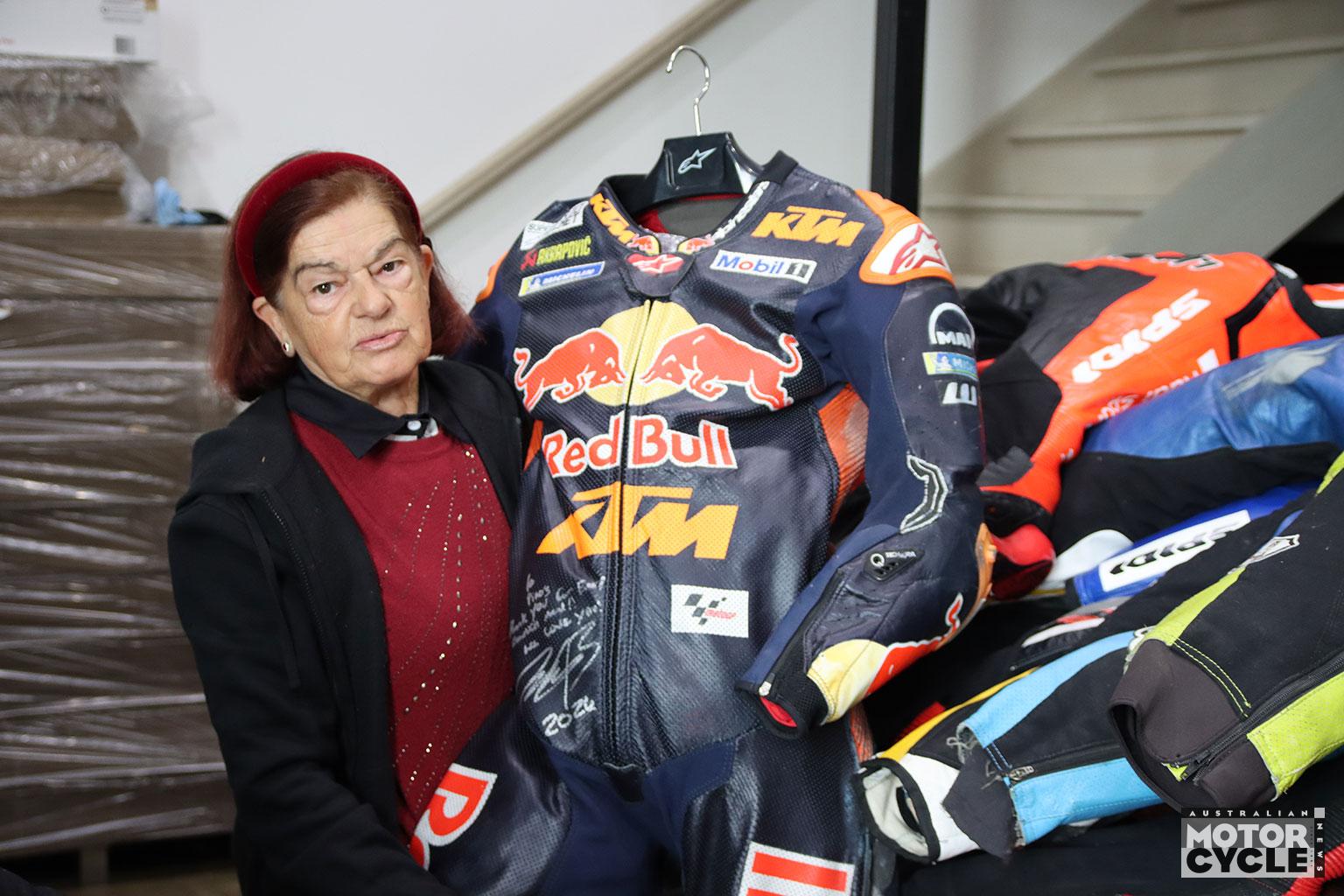
Walk into Pino’s on any normal day and the walls are covered in race-worn leathers donated by riders over more than three decades. When I visited a few weeks out from the final Phillip Island MotoGP, however, they were conspicuously bare.
With grand prix week approaching, every suit was being cleaned and oiled before going back on display. And when Rosa offered to show me where they’d gone, I followed her into a room out the back to find decades of GP and World Superbike history piled across tables, chairs and just about every other available surface.
There are around 25 suits in the collection now, along with helmets, wheels, fairings and various other bits and pieces donated by riders over the years.
Rosa worked her way through the pile, dragging out one suit after another and immediately launching into the story behind it. Some were immaculate, others still bore the scars of their working lives, but all of them were about to receive the same treatment before being returned to the walls.
And the collection is far from finished. Rosa said she has already put the word on Pecco Bagnaia for a set of his factory Ducati leathers since he won’t have a use for them next year.
“I said, ‘I will have to have one of your suits hanging in the restaurant,’” she recalls.
His response?
“I’ll do my best.”