For almost a century, Phillip Island has been built, broken, abandoned and reborn. As MotoGP prepares to farewell one of the world’s great circuits, AMCN tracks the extraordinary story of the island that simply refused to disappear
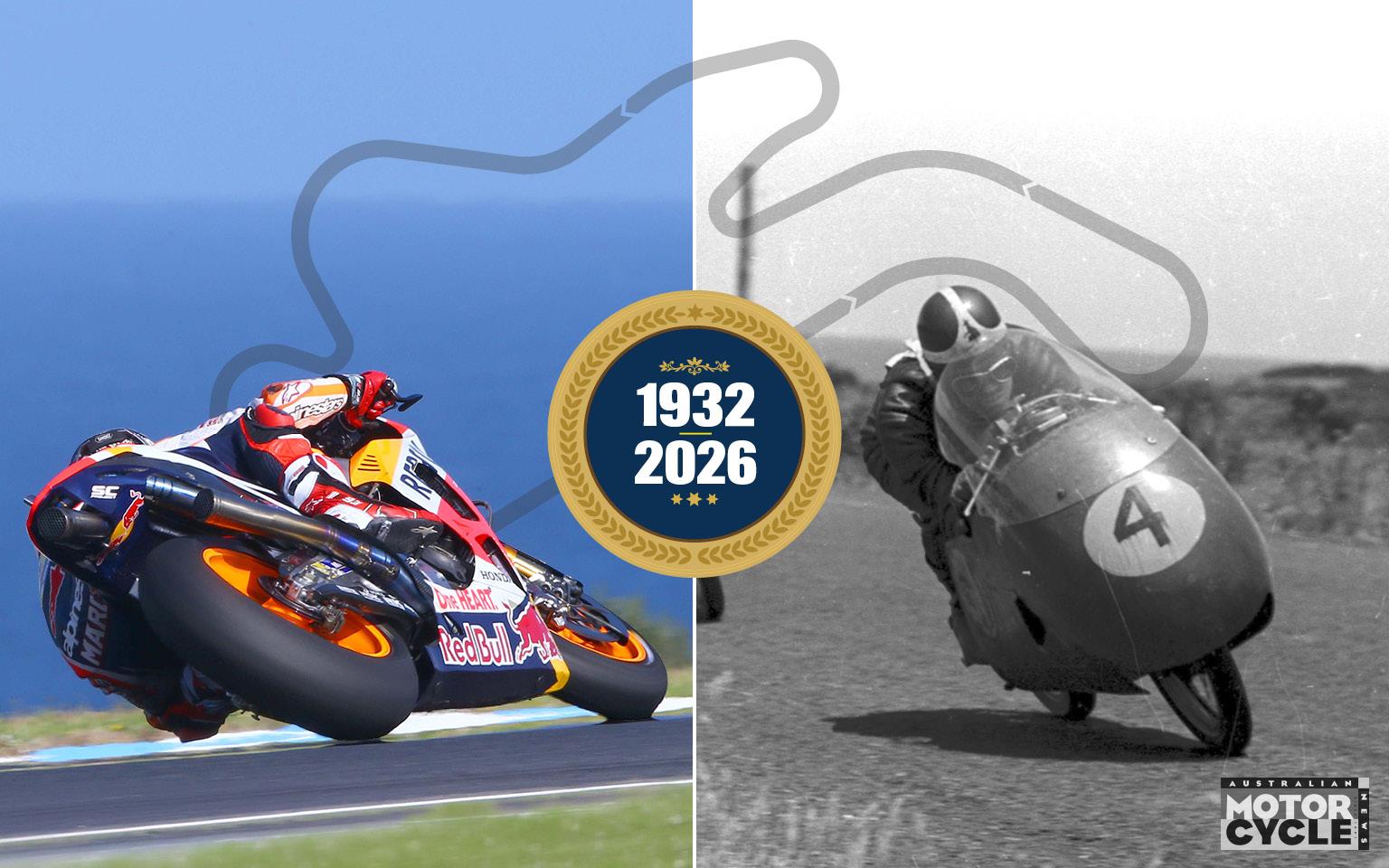
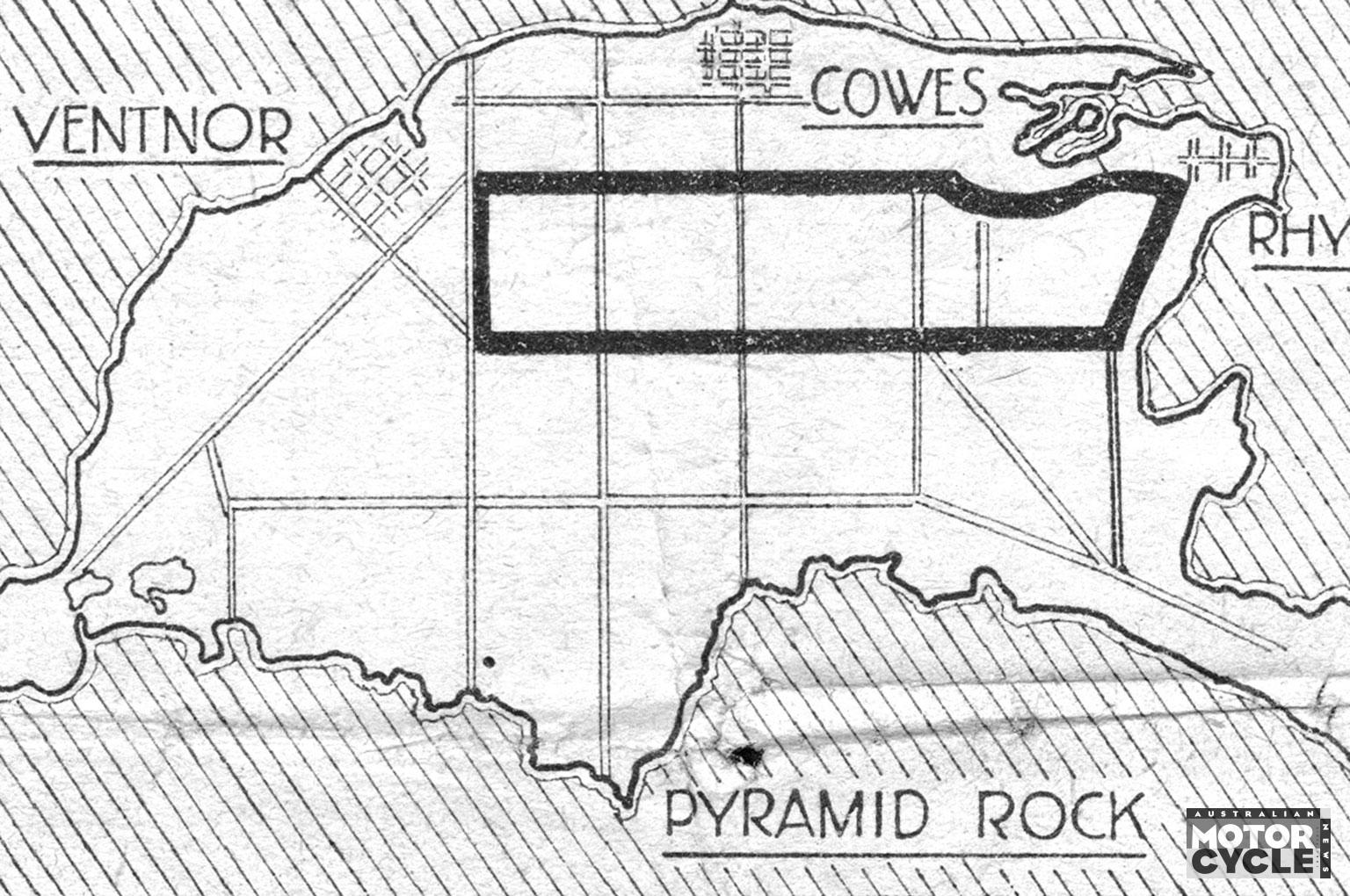
It is more than somewhat ironic that the claimed giant leap for mankind – at least in MotoGP terms – in relieving Phillip Island of its annual event, the Australian Grand Prix, in favour of a city centre circuit in South Australia should be seen as so revolutionary by various governing bodies. For it was a street circuit on Phillip Island that hosted the Australian Grand Prix for motorcycles in 1932, and not just any old street circuit, but a gigantic 12-mile (19.32km) roughly rectangular loop running out to Rhyll, slightly east of Cowes, the main town on Phillip Island.
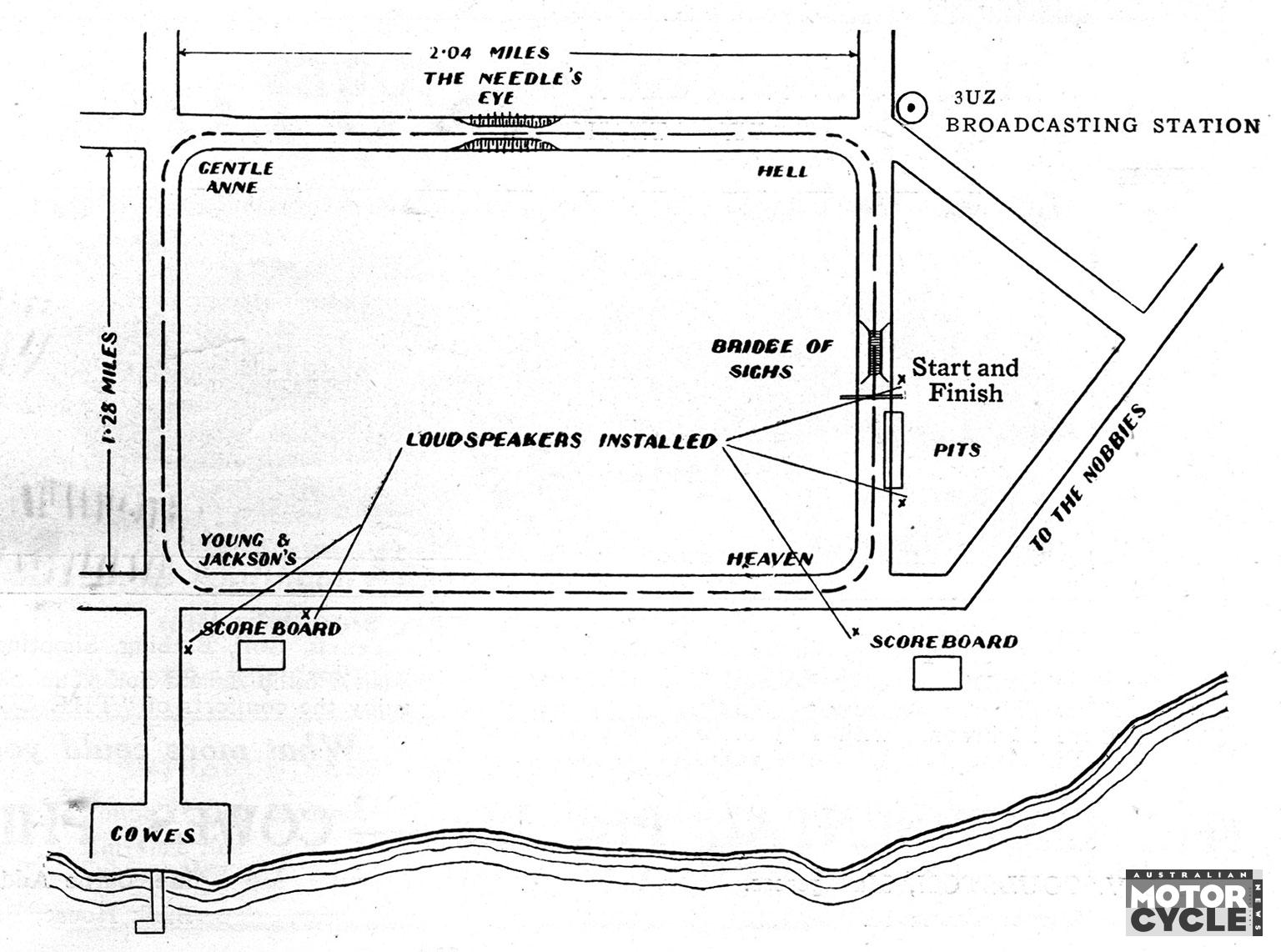
Just how this turn of events came about was a direct result of the Victorian government’s implementation of the Highways and Vehicles Act of 1924, prohibiting racing on public roads and virtually shutting down all forms of motorsport in the state overnight. But where some see problems, others see opportunities, as did the community on Phillip Island. Here was a settlement so remote from the mainland that it barely existed in the eyes of the government; indeed the only vehicular access was by a small punt running from San Remo on the mainland to Newhaven on the island, capable of carrying just two cars per crossing.
THE BEGINNING: 1928–1963
In 1928, the burghers of the island decided to make this isolation official by voting to become a separate identity from the mainland with the formation of the Shire of Phillip Island and Woolamai. This allowed the new shire to side-step the Highways and Vehicles Act, an outcome celebrated by motorsport enthusiasts far and wide.
Almost immediately, permission was granted to the Victorian Light Car Club (VLCC) to stage a race on the public roads at Cowes, where an unsealed lap of 6.6 miles lay beckoning. 17 January 1928 was announced as the date for what was originally titled the 100 Miles Road Race, which before long became known as the first Australian Grand Prix for cars.
A motorcycle version, entitled the Victorian TT, was scheduled for a few days later, to be held over a longer lap which used most of the car track plus a few extra miles of deeply rutted sand tracks leading out to Rhyll and back. The stage had been set for the tiny community to begin the process of establishing itself as the motor racing capital of Australia – a process that would subsequently see disappointment and elation in almost equal measures.
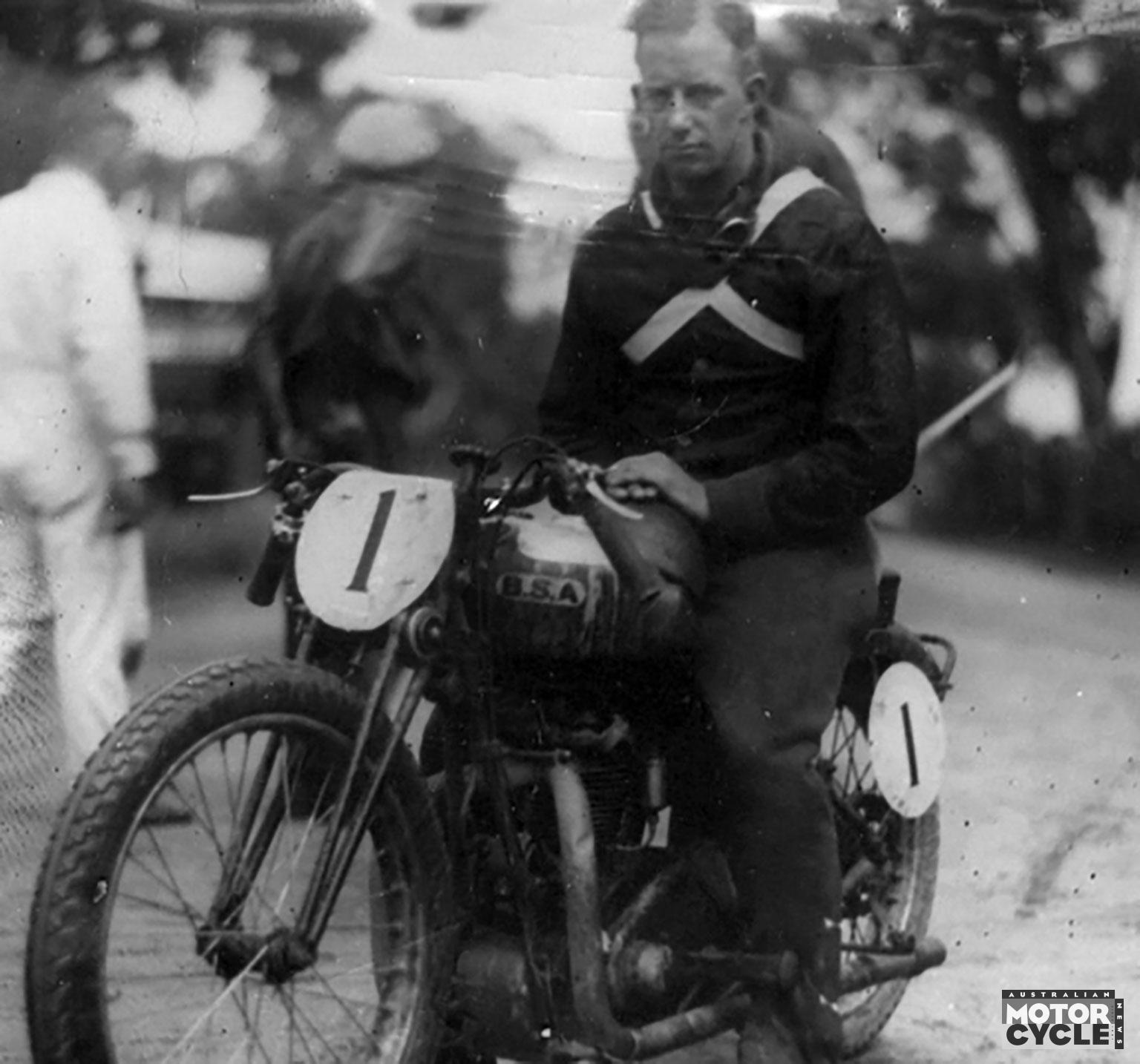
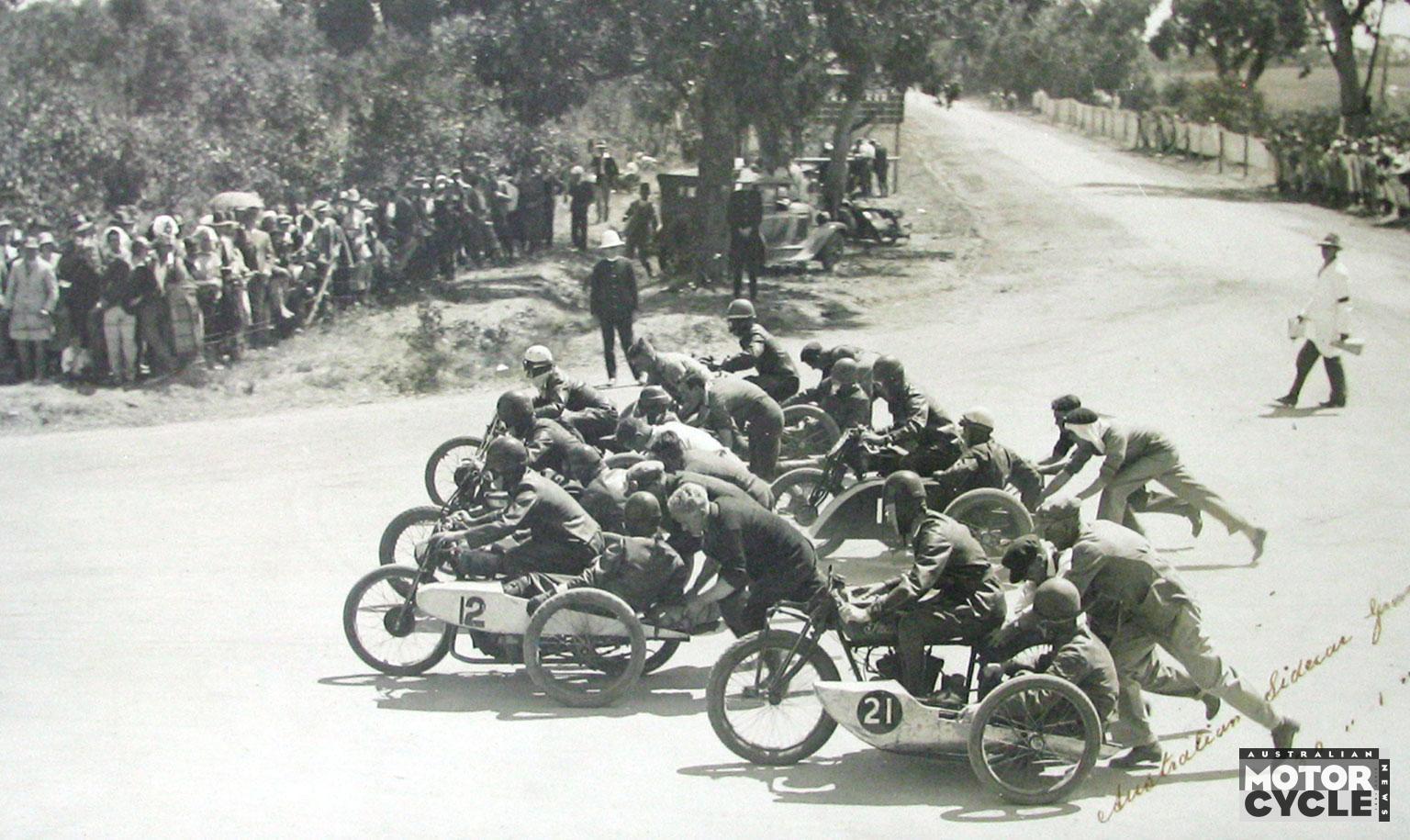
The first disappointment occurred when torrential rain rendered the circuit impassable and the meeting was postponed. The cars eventually raced on 31 March, and one week later, on Easter Saturday, it was the bikes’ turn following frantic work to rectify the damage to the roads. The longer track turned out to be a disaster and proved too narrow for some of the sidecars, which ran in conjunction with the solo bikes. There was nothing in the way of crowd control either, so it was a relief to all that the meeting went off without a hitch. The winner of the solo class was Alec Finlay in a race time of four hours, 13 minutes and 30.4 seconds.
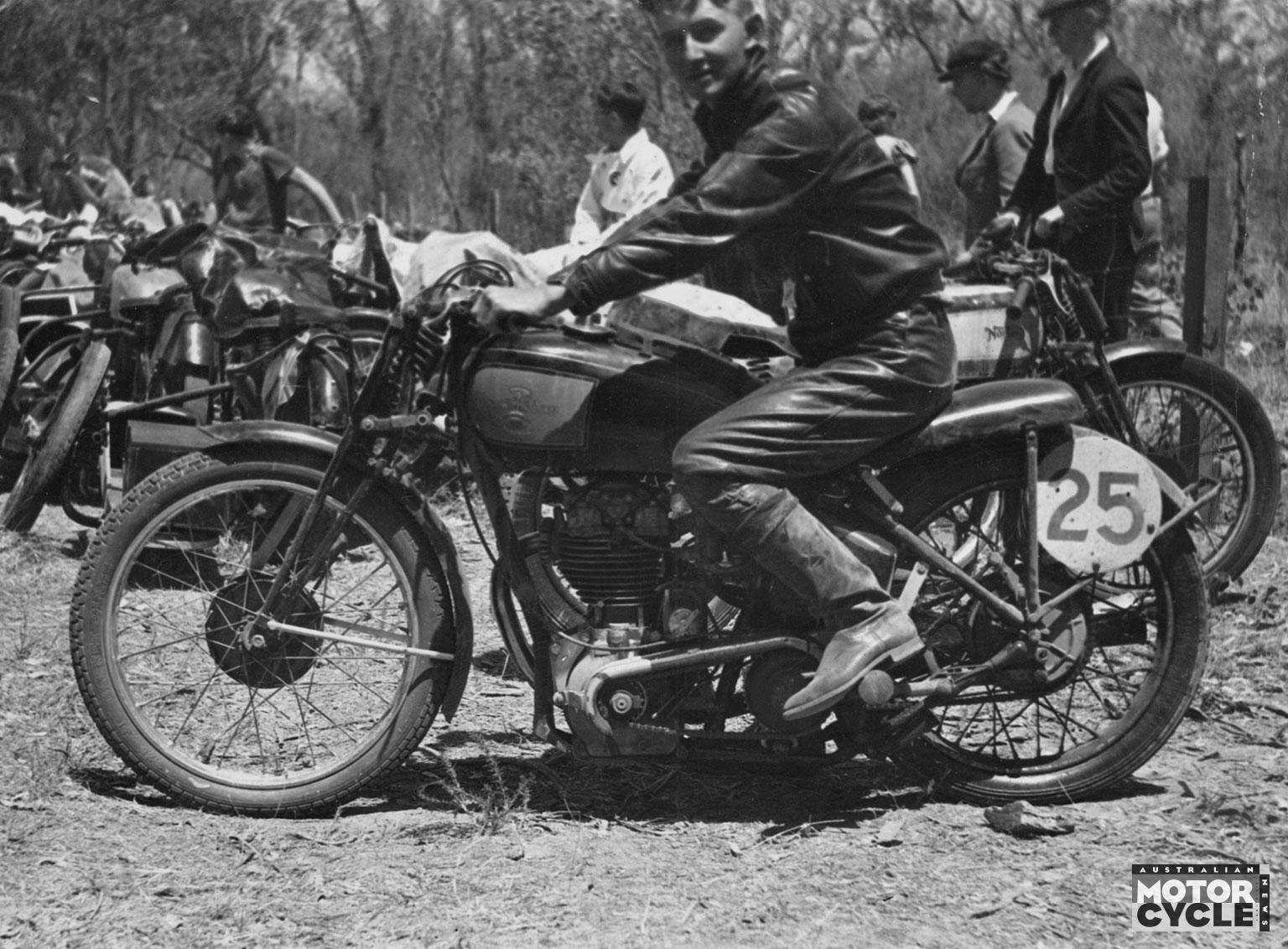
Although the cars became an annual fixture, it was 1931 before motorcycles reappeared, this time for the Victorian TT. The ‘Rhyll’ course was quietly forgotten and the cars and motorcycles used the same 6.6-mile circuit. The dust menace was assuaged by the dumping of vast quantities of used, black sump oil which ran off into the various waterways in a viscous, acrid mass.
By the time the motorcycles returned, the dreaded Highways and Vehicles Act had been replaced by the Motor Car Act, which permitted racing on public roads under strict police supervision. There was a huge entry with many interstate stars, most notably NSW rider Stuart Williams, who had competed at the Isle of Man TT with help from the AJS and Velocette factories. Williams had the 200-mile race under control until the last lap when his engine seized, allowing Victorian Jimmy Pringle through to win – the first in a string of successes that saw him become Australia’s top rider and gain a place in the Norton works team at the Isle of Man TT.
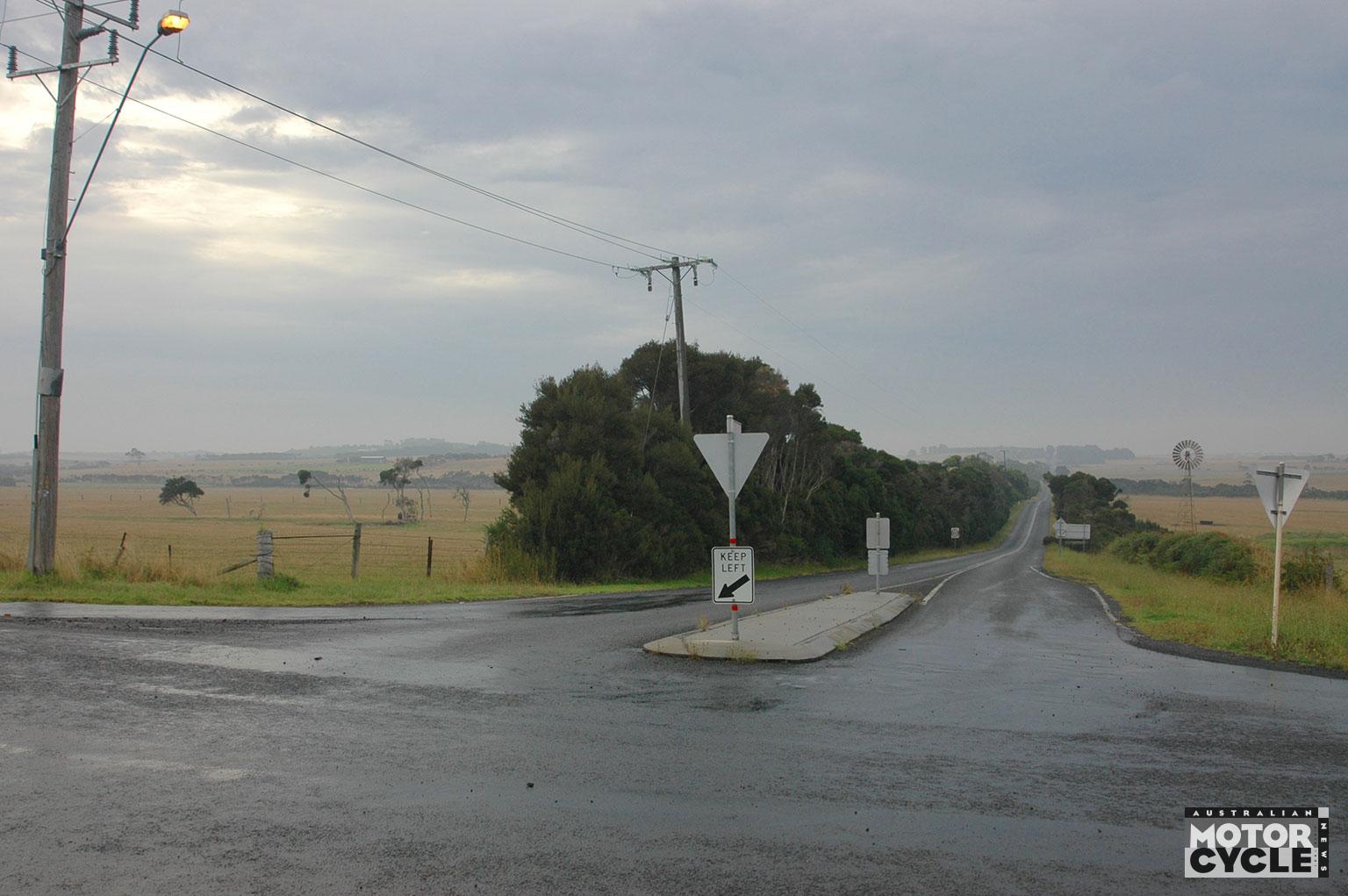
The 1931 event was such a success that 12 months later Phillip Island staged its first Australian Grand Prix for motorcycles, establishing the Australia Day holiday weekend as what would become its traditional annual date. After the marathon race of the previous year, race distances were slashed, with Norm Osborne winning the main Senior GP.
In motorcycling terms, a high point in Phillip Island’s history came in 1937 when Stanley Woods, the jovial Irishman with a record 10 Isle of Man TT wins to his credit, was brought to Australia along with works 350cc and 500cc Velocettes. After winning the South Australian TT, his next appearance was on the island on 1 February, where he was expected to clean up. However his 500 swallowed a stone in practice and he was forced to use his 350 in the main Senior TT, where he finished third behind Australia’s top rider Jimmy Pringle and South Australian Clem Foster.
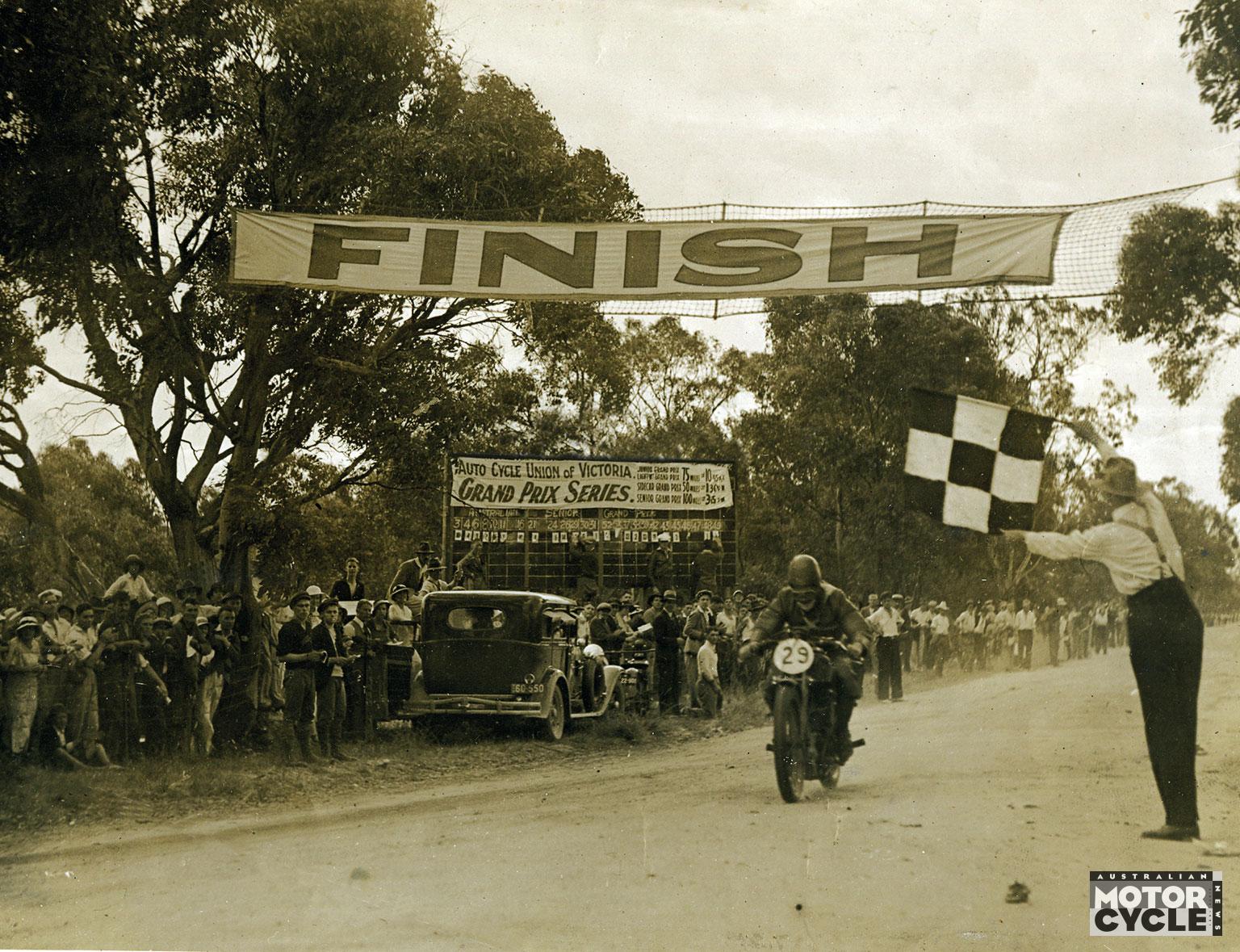
Motorcycle racing on the island’s road circuit continued until 1940, by which time, with World War II in full swing, numbers of competitors and spectators were well down. It was fully expected racing would resume when the war ended, but it did not quite turn out that way.
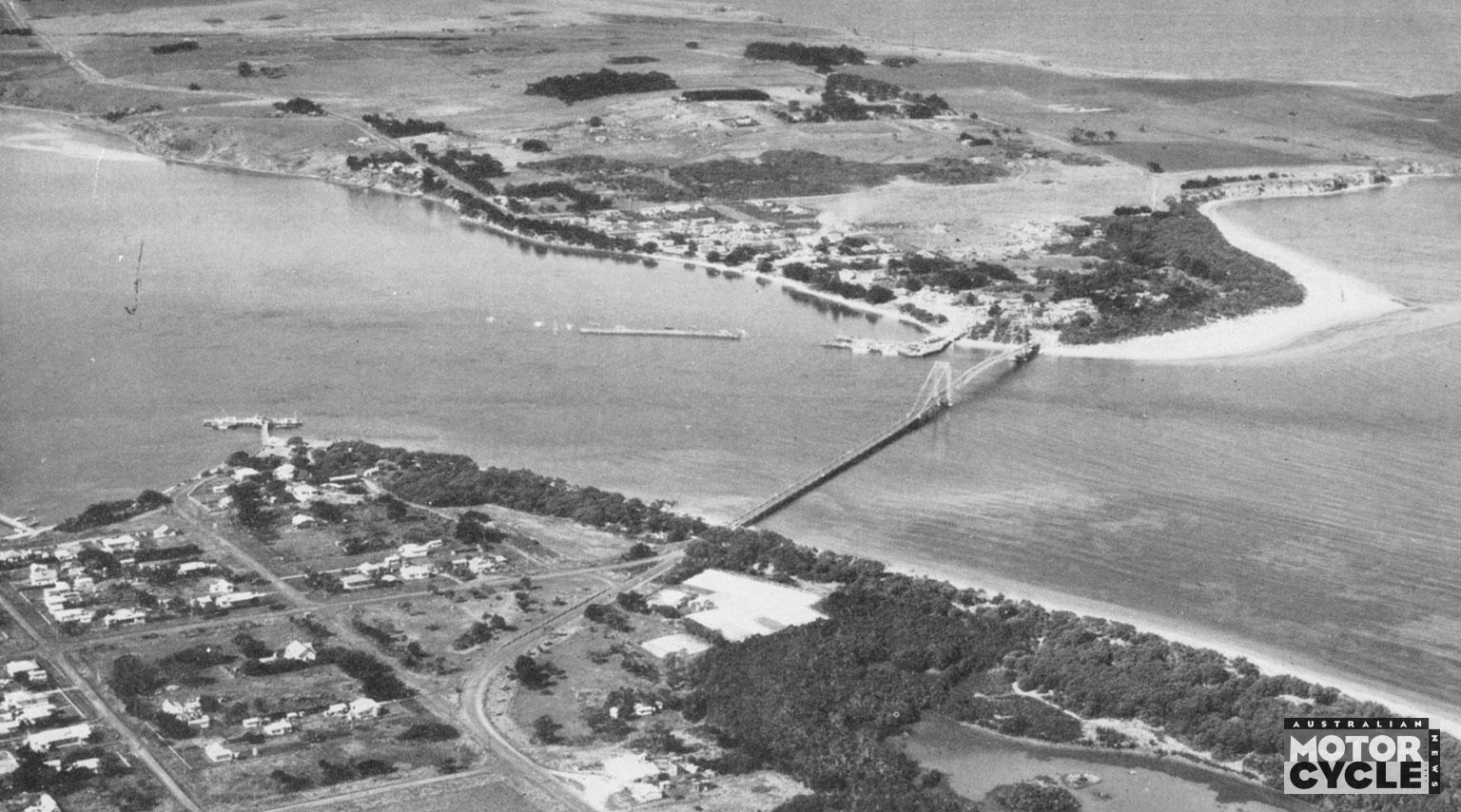
After a five-year break from motorsport, island residents – who were now served with much better access thanks to a suspension bridge opened in 1940 supplementing the punts and ferries – strongly opposed moves to again close the roads, with the associated noise, dust and general disruption this brought. Moreover, there were now several other venues available in the state, including Victoria Park in Ballarat, which was far more accessible and fully sealed, plus Fishermans Bend in the heart of Melbourne.
Moving right along
Phillip Island had not yet dismissed ambitions to hold motorsport events, but the suspension bridge was incapable of carrying the types of heavy road-making equipment used to lay hot-mix bitumen – the preferred surface for motor racing tracks. This meant that only the old-style cold-mix bitumen could be used; a thin crust laid over road-base material that was to prove a major impediment in years to come.
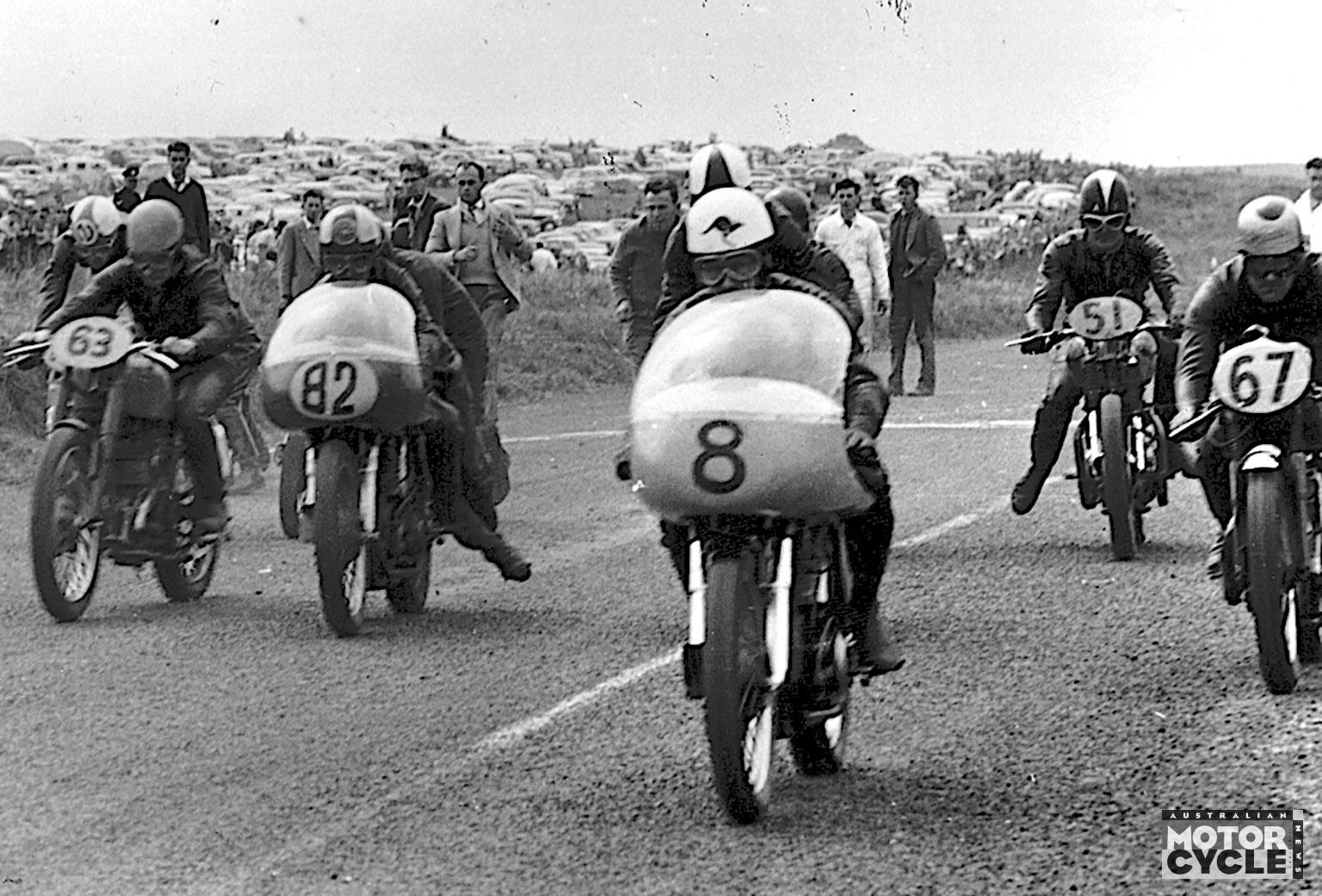
Nevertheless, there was growing momentum on the island to somehow create a permanent circuit, with proponents pointing to the economic benefits such a circuit would bring. Many, many meetings were held, but identifying just where such a circuit could be constructed proved a challenge.
In time this group of six people became the Phillip Island Motor Racing Club. Then along came P.D. Whitlock, a local landowner who was also a successful Holden franchise dealer through Brighton Beach Motors in Melbourne. He offered to sell the club 300 acres of land with only $200 for a deposit.
Even getting this sum together was a formidable task, but was managed thanks to the very flexible and generous terms of the loan. There was no fixed period for repayment and payments could be made for any amount. Whitlock himself became a member of the club, by now referred to as PIARC – Phillip Island Auto Racing Club.
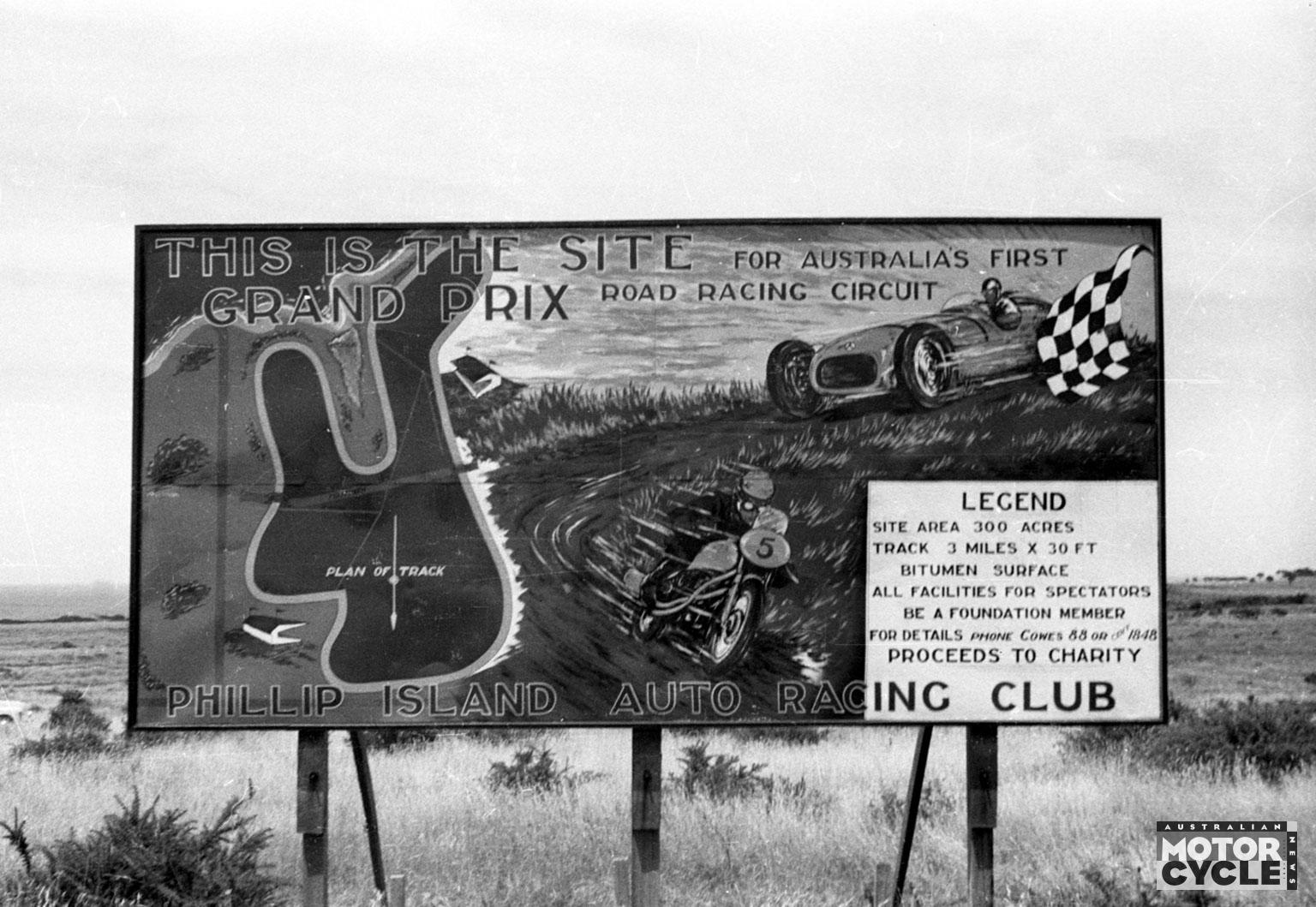
Club members had worked out a rough design measuring exactly three miles and staked out a course through the salt brush using wooden stakes with painted caps. The design was given to surveyor Alan Brown to formalise, with the committee by then joined by members drawn from motorcycle and car racing, including the illustrious Phil Irving, designer of the Vincent-HRD V-twin.
Brown’s design was generally accepted – with one major modification. The direction of racing was reversed, from clockwise to anticlockwise, and has remained so ever since.
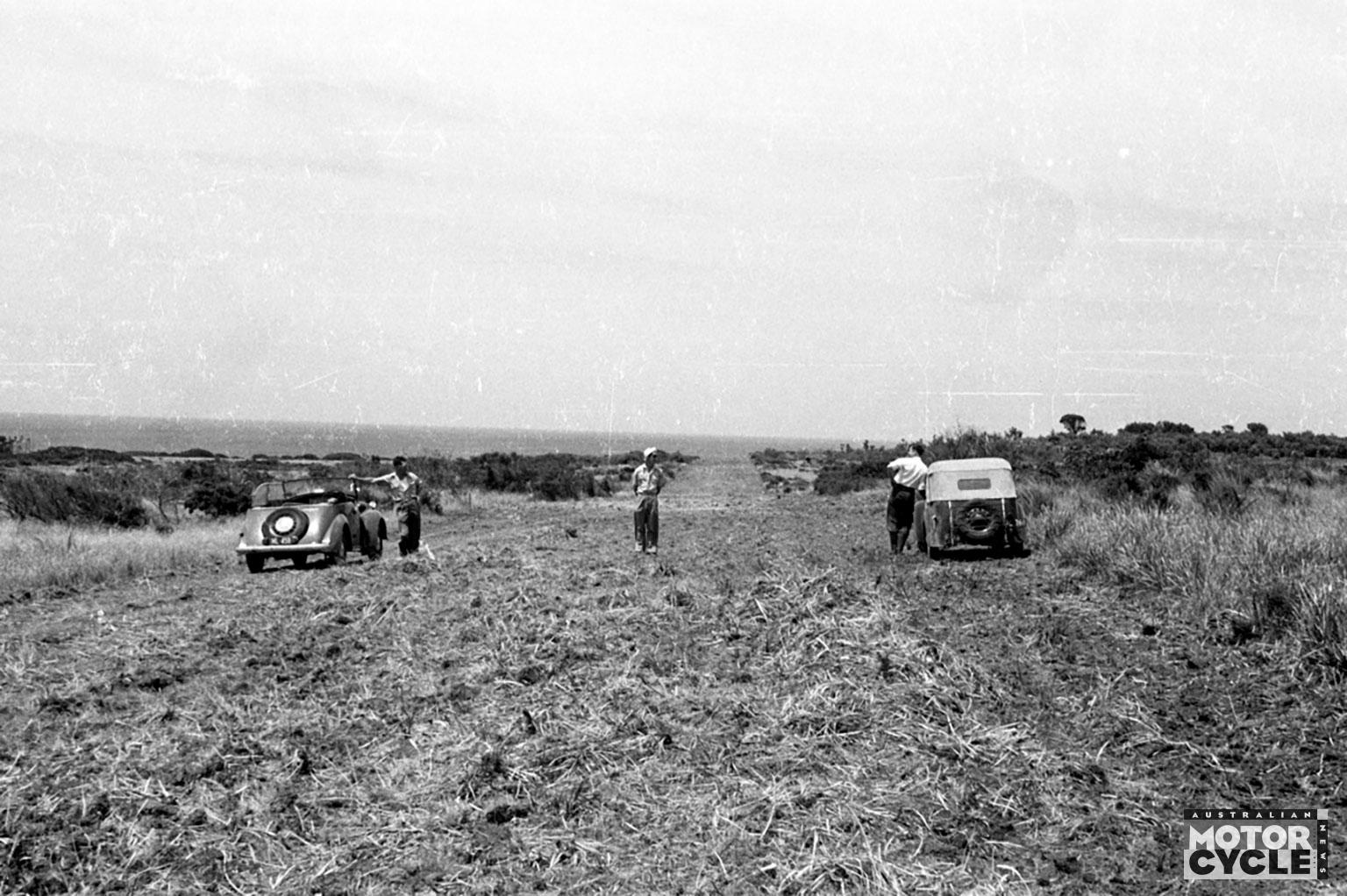
A membership drive was launched to finance construction and by January 1953 the original loan had been repaid. A rotary hoe set to work clearing the scrub around the pegged-out circuit and the first race meeting was optimistically announced for October that year. The date came and went, but PIARC continued to gather new members and subscriptions, with membership eventually closing in June 1955 at 2730, including British Formula One star Stirling Moss.
But just when things were looking rosy, Phillip Island played its trump card. For 18 months, the island received almost continuous, record-breaking rainfall, which not only curtailed work but exposed the inherent problem of very poor natural drainage. After several false starts, the milestone was eventually reached and the circuit officially opened on 15 December 1956. It rained that day too – absolutely non-stop.
Cars and motorcycles shared the program for the opening meeting, and the bike line-up contained big names like Maurie Quincey, Ken Rumble, Trevor Pound and Keith Campbell, who brought his works Moto Guzzis back from Europe for the occasion. Unfortunately Campbell, who would go on to become 350cc world champion in 1957, succumbed to the treacherous conditions during practice and crashed, dislocating a shoulder and sidelining him from the races.
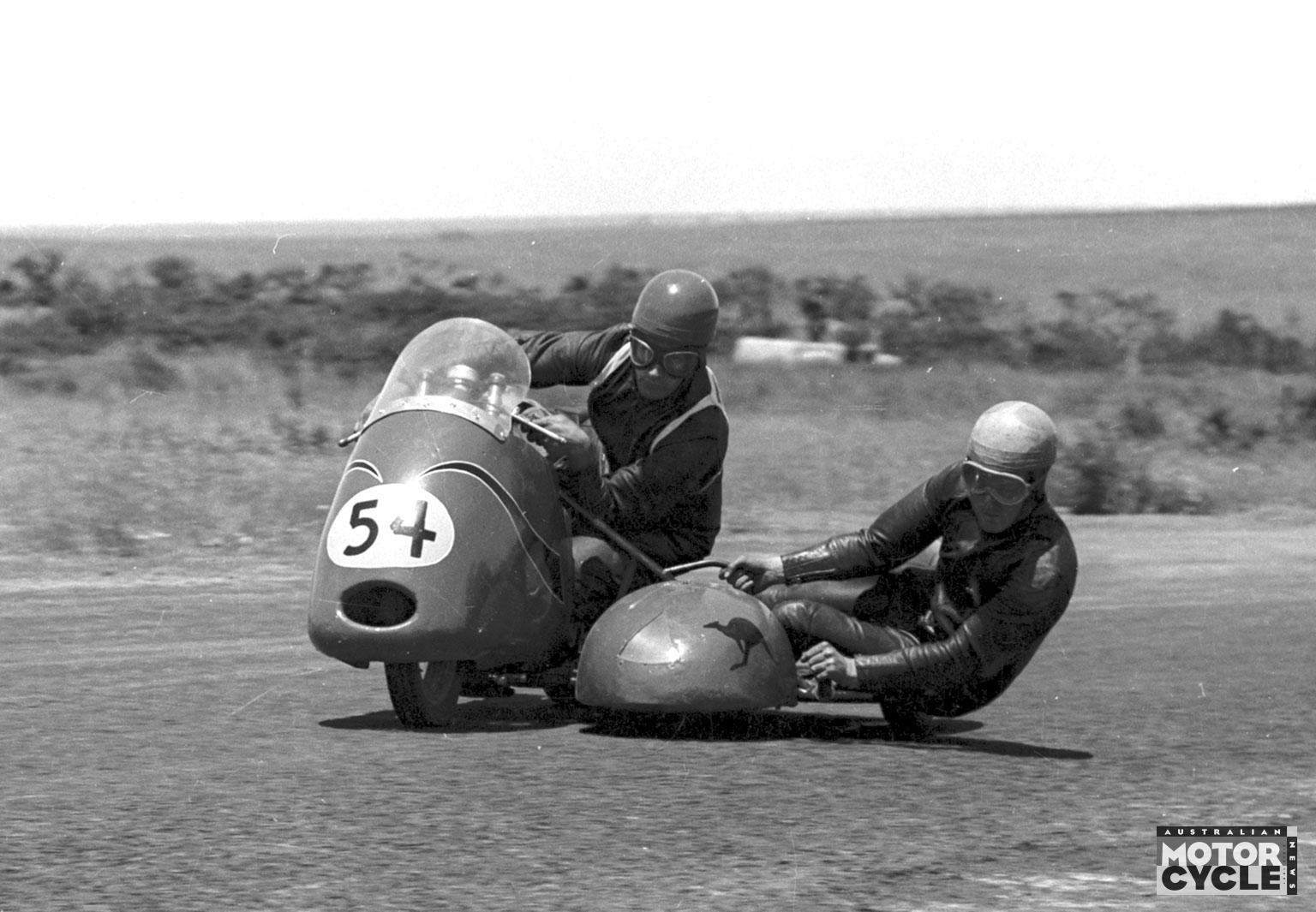
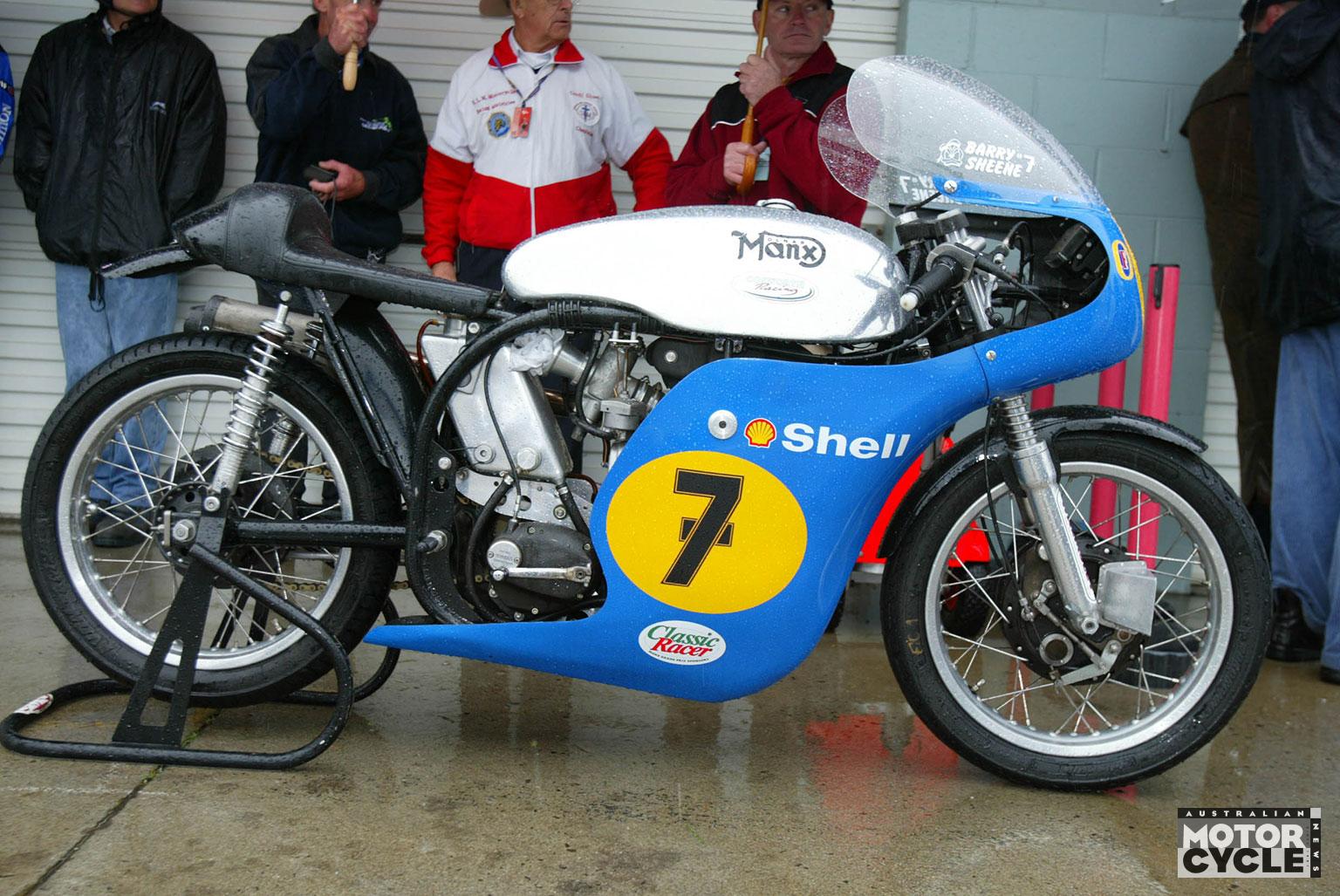
Thus the opening motorcycle race on the new circuit, for bikes up to 350cc, was won by Rumble on his Manx Norton. The Sidecar race was won by Bob Mitchell and Max George, who were also recently returned from three successful seasons in Europe.
The meeting ground to a sodden finish, with the final car race tragically recording the circuit’s first fatality, 19-year-old university student Phillip Rothfield. Not surprisingly given the appalling weather, the promoters suffered a significant loss, setting the scene for a never-ending struggle to maintain the cash flow that was vitally necessary to maintain the track.
Some months later came an announcement that South Australia had relinquished its right to hold Australia’s top motorcycle title, the Australian TT, for 1957, and once again Hartwell and Preston clubs put their hands up. As a result, the TT moved to Phillip Island on 29 December.
A huge crowd turned out in the summer sunshine to witness magnificent racing from the cream of Australia’s riders. The Hinton brothers, Eric and Harry Junior, took out three championship titles between them, with sidecar honours in both classes going to Bernie Mack and Ray Kelly. Eric Hinton set a new outright motorcycle lap record of 2 minutes 19.6 seconds.
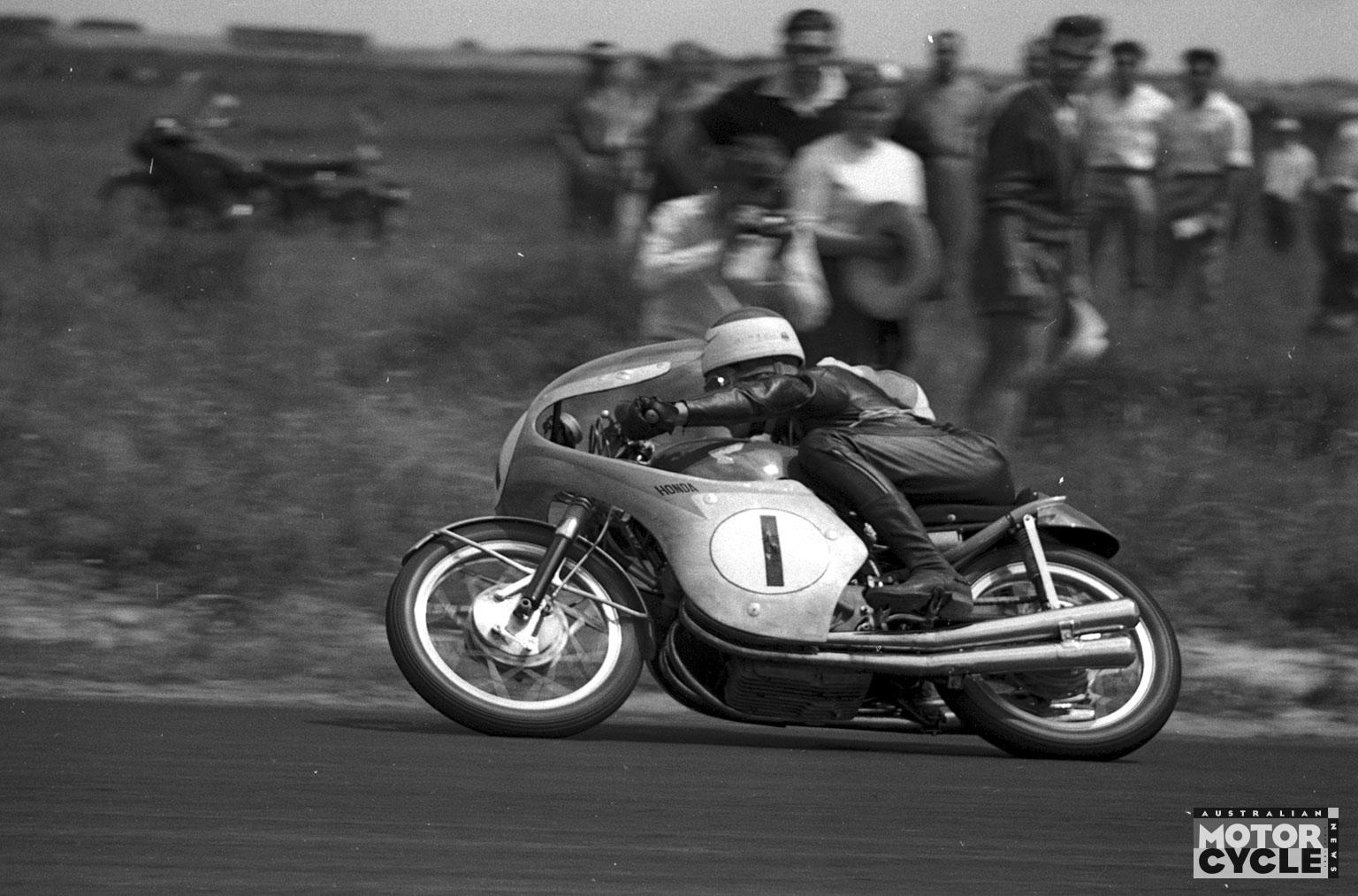
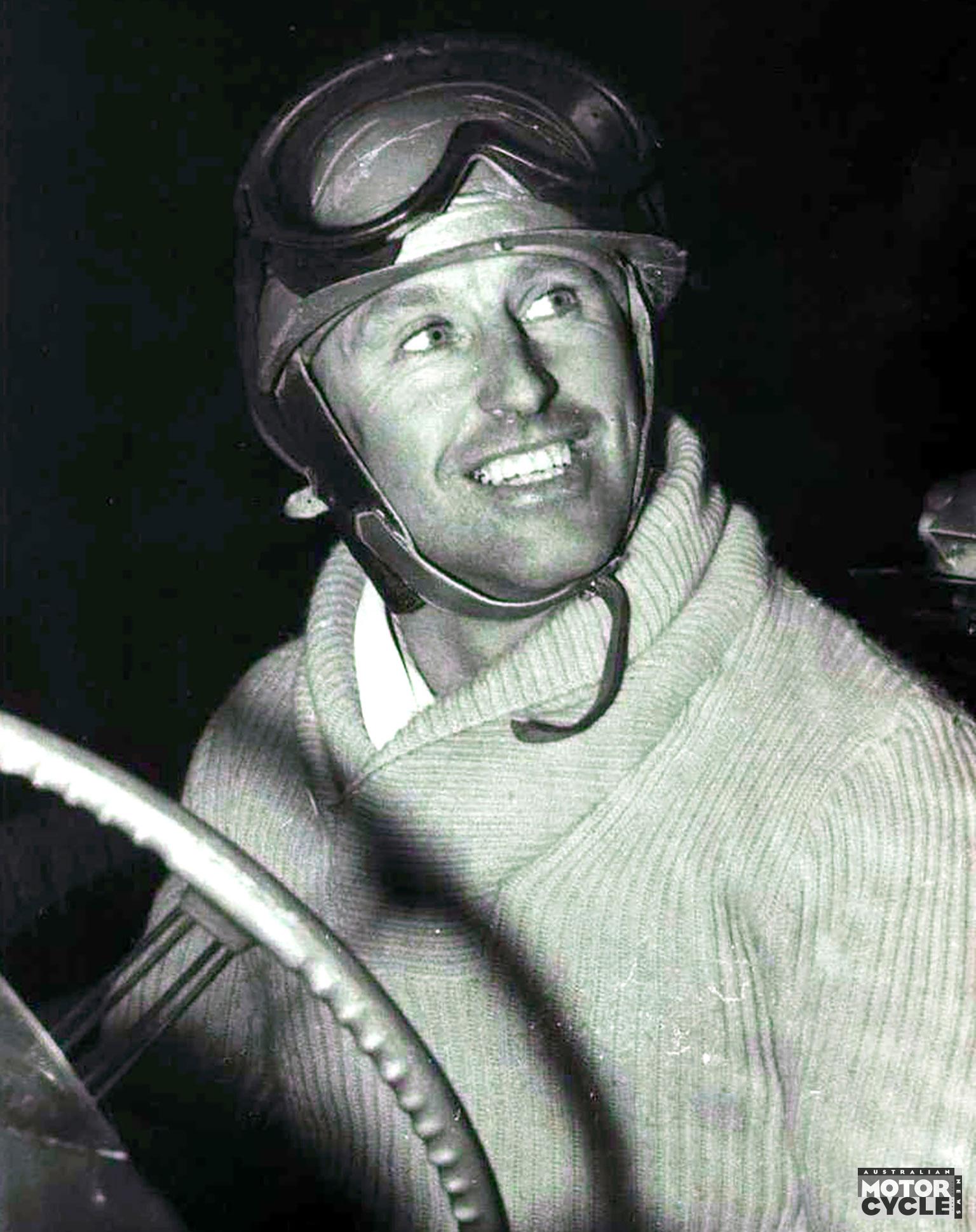
In 1961, Tom Phillis, now a works rider for Honda and world champion in the 125cc class, brought with him the factory four-cylinder 250 Honda as well as his own 500 Norton, and ran riot, winning every start and smashing lap records. The following year it was the turn of future 250cc world champion Kel Carruthers to dominate.
Nobody knew it at the time, but it was the swan song for motorcycles in Phillip Island circuit’s original existence.
Since the advent of the Armstrong 500 for production cars, the track had been pounded mercilessly and was by now a series of potholes patched with concrete. The surface was deemed too dangerous for motorcycles, so the meeting scheduled for New Year’s Day 1963 was transferred to the tiny Winton circuit near Albury.
By 1964, Phillip Island circuit was virtually abandoned, with weeds growing through the shattered surface of the track and sheep grazing in the paddocks that had once been crammed with spectators. It looked like a sad and permanent end to the efforts of so many enthusiasts, as well as a crippling blow to motor racing in Victoria.
Or so it seemed.
BACK FROM THE DEAD: 1964–1978
Len Lukey had been a consistent competitor at Phillip Island since the beginning, but had retired from racing after winning the CAMS Gold Star as Australia’s top driver in 1959. Fittingly, he had clinched his national championship by winning the final round at Phillip Island.
After acquiring the property, Lukey convinced creditors, the largest of which was Repco, to accept the terms of settlement. He agreed to lease the circuit back to the club for exactly one pound ($2) per year, provided it undertook to run four events per year for the next 10 years. PIARC itself had virtually collapsed, its membership plummeting from 3000 to just 40. Fortunately a deal was done with the Southern Sporting Car Club to transfer its membership to PIARC, along with its own cash assets. This was not a complete solution to the financial woes, but it was a stay of execution.
With all this in place, Lukey set about his own plans for the property. These included a Japanese-style garden park, an Olympic-sized swimming pool, a roller-skating rink and a children’s playground. He also set about beautifying the now desolate property, re-grassing the entire 300 acres and excavating a huge lake in the centre to be used as a water-skiing park as well as a water storage facility. The entire area was fenced and fast-growing trees planted.
As the flurry of activity continued, a somewhat optimistic date of Easter 1965 was forecast for the reopening of the circuit. The track work included not just the total resurfacing, but the vital task of rectifying the totally inadequate drainage.
To no one’s immense surprise, the proposed opening date failed to happen.
Lukey, a man of limitless energy and enthusiasm, was by now battling his own ill health, but continued with his dream of transforming a barren and wind-swept racing circuit into a civilised community.
Equally unsurprising, the island weather once again threw a spanner in the works. Within hours of receiving its final coating of bitumen, a fierce storm lashed the island, washing away the track foundations and forcing a major rebuild. Once again, the club, and hence the circuit, was desperately short of money and was lucky to secure a favourable loan to keep it afloat.
Yet another new opening date of 22 October 1967 was announced. By now Lukey was a very sick man, and was to battle cancer for the next 11 years before finally succumbing on 28 October 1978. Without his spirit, determination, generosity and financial connections, Phillip Island circuit would have vanished forever.
Somewhat uncharacteristically, fine spring weather accompanied the launch of the third era in the history of motor racing on Phillip Island, and 15,000 spectators filed in for the long-awaited event. The infield airstrip was a hive of activity, with light aircraft landing and departing throughout the weekend.
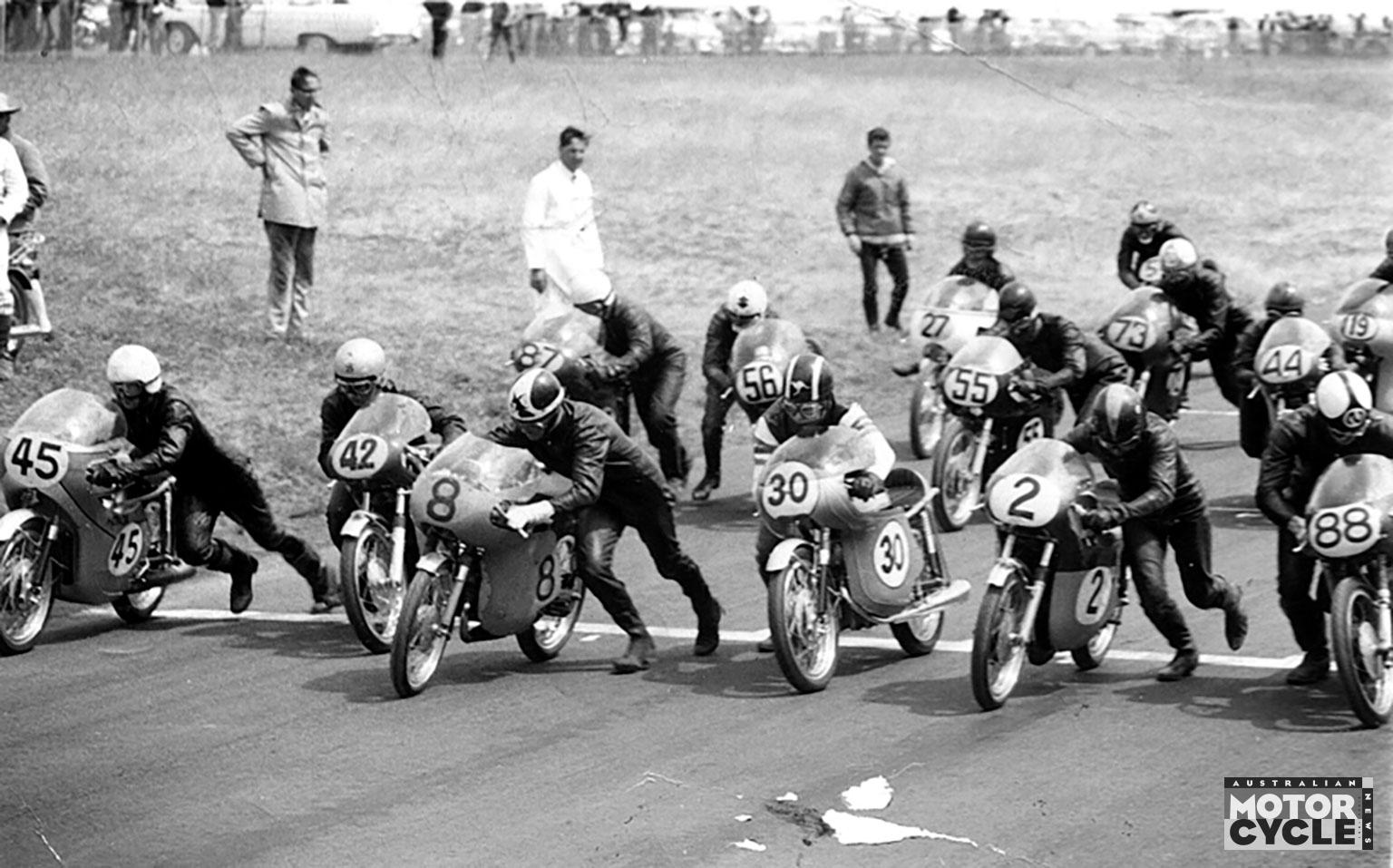
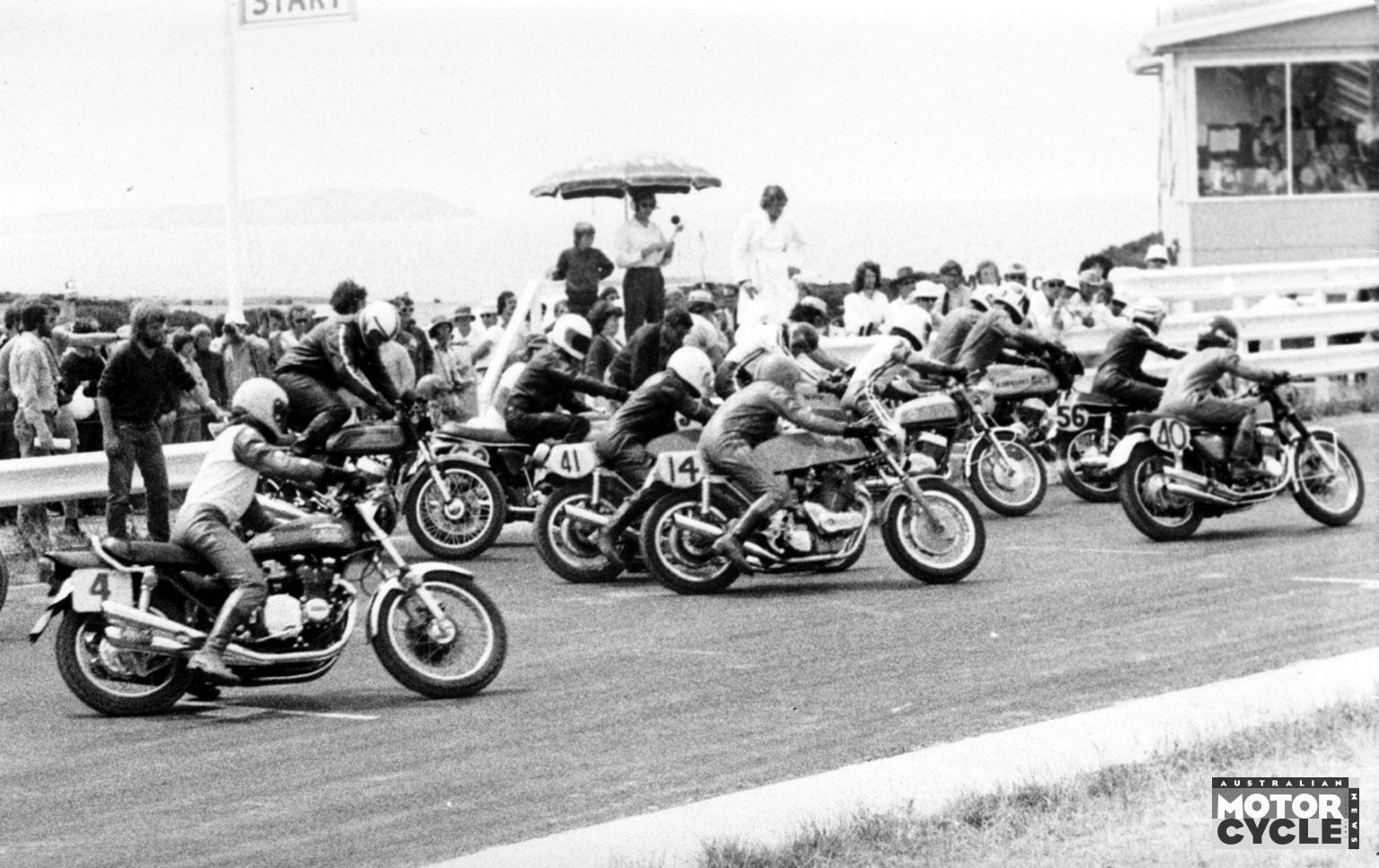
Among the onlookers were numerous members of the motorcycle racing fraternity, anxiously awaiting their turn to try the freshly rebuilt track. This came with a combined car and bike meeting on New Year’s Day 1968.
In the five years since motorcycles had last raced there, some quite significant changes had occurred in motorcycle design, although the massive strides in tyre technology were yet to come.
Some of the larger-capacity bikes – mainly over-bored Triumphs and Nortons – were putting out close to 75 horsepower, around 20 more than a good Manx Norton, but the limiting factor was the ability of the tyres to cope. The 1969 meeting was again a combined affair, with the bikes run as the Australian Grand Prix. The entry was enormous, headed by Kel Carruthers, who was briefly back in the country prior to the European season that would see him crowned 250cc world champion for the Benelli factory.
Sensationally, Kel was beaten in his opening race, the 125 GP, by all-rounder Graeme Smith on the Flood Bultaco. Once aboard the old 250cc four-cylinder Honda, Kel cleaned up both 250cc and 350cc races. Ron Toombs claimed the 500 GP but Carruthers, now on a Norton, snatched victory in the Unlimited.
On 21 November 1969, a new 640-metre concrete bridge opened to connect San Remo to the island. It was not only a boon for local tourism, but finally permitted access for modern and heavy road-making equipment. It meant that hot-mix bitumen sealing was now possible, and the rapidly disintegrating circuit certainly needed it. However there was still the question of finance, which was not so simple to answer.
For the second time in the circuit’s history, Phillip Island hosted the premier event in the country, the Australian TT, in January 1970. In a weekend of upsets the major title, the Unlimited GP, went to South Australian Ken Blake, riding a home-built 730cc Triumph special running a nitro fuel mix. Blake’s bellowing four-stroke twin took the lead from the start and held off favourites Ron Toombs and Bryan Hindle.
The most significant development of the meeting came in the Sidecar classes, which had previously been the domain of the ageing Vincent twins. Lindsay Urquhart obtained one of the just-released Honda CB750 four-cylinder road bikes and, to shouts of horror from those in the long queue of prospective buyers, pulled the engine out and installed it in his racing outfit. The result was a new chapter for the class, with Urquhart easily winning both Junior and Senior classes.
The circuit’s condition had further deteriorated for the New Year’s Day meeting in 1972. As great chunks lifted out of the track surface, the remedy was to fill the cavity with concrete, leaving a black-and-white chequerboard surface where the concrete sat proud of the bitumen in some places.
This was a day when Ron Toombs, a man who had been racing since 1952, showed his absolute mastery. On his stable of Yamaha twins he was superb, winning every solo title on the program from 125 to Unlimited – a feat never before achieved.
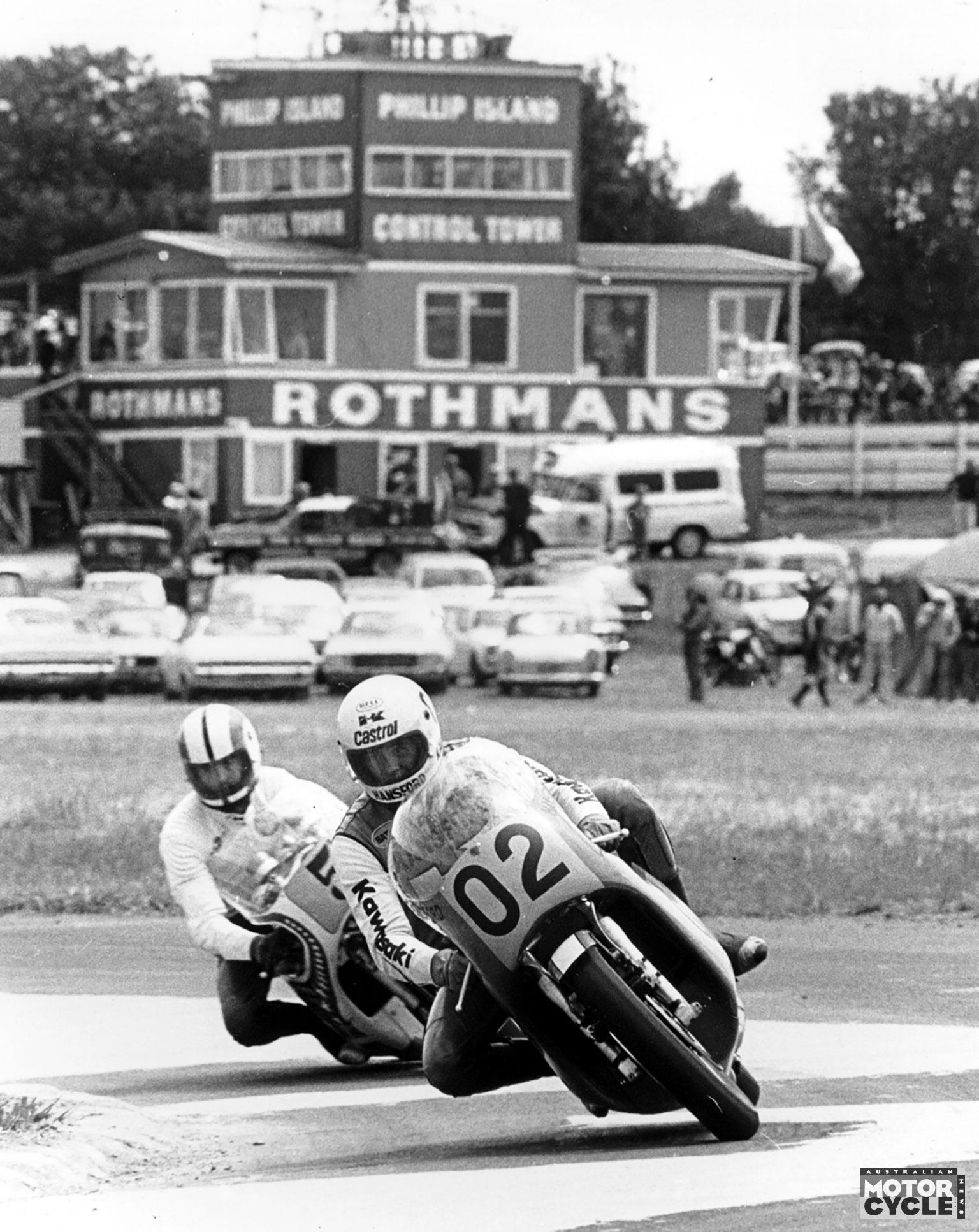
‘Rough and rugged’ were the words one newspaper used to describe the course for the Phillip Island Grand Prix in January 1975. But the conditions made no difference to the remarkable Ron Toombs, now entering his 23rd season of racing and aboard the fiery 750cc H2R Kawasaki air-cooled triple. There was no catching Toombs after he hit the front on lap two of the main Grand Prix and steamed away to win easing up.
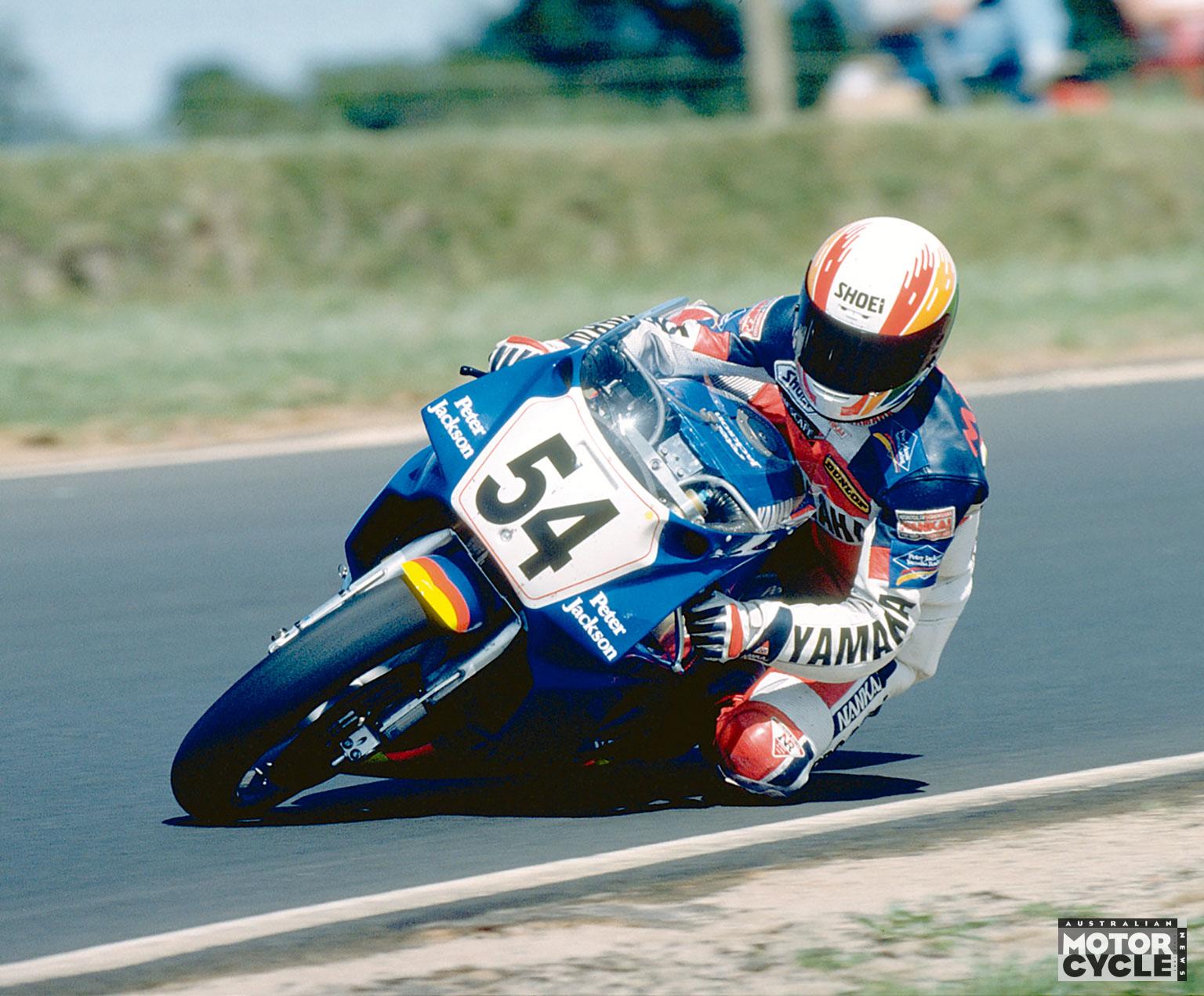
One year later, the Victorian Motorcycle Grand Prix was billed as a clash between Gregg Hansford’s works 750 Kawasaki and Greg Johnson on the ex-Warren Willing TZ750 Yamaha. The forecast proved correct, with Hansford narrowly winning the Tom Phillis Memorial Trophy from Johnson and Murray Sayle. A new lap record of
2 minutes 2.0 seconds went to Hansford.
Johnson was determined to make amends in the Unlimited scratch race, but was handed the win after Hansford pulled out with a broken steering damper – a vital piece of equipment on a circuit now so rough that it was likened to a ‘tar and concrete motocross’ track.
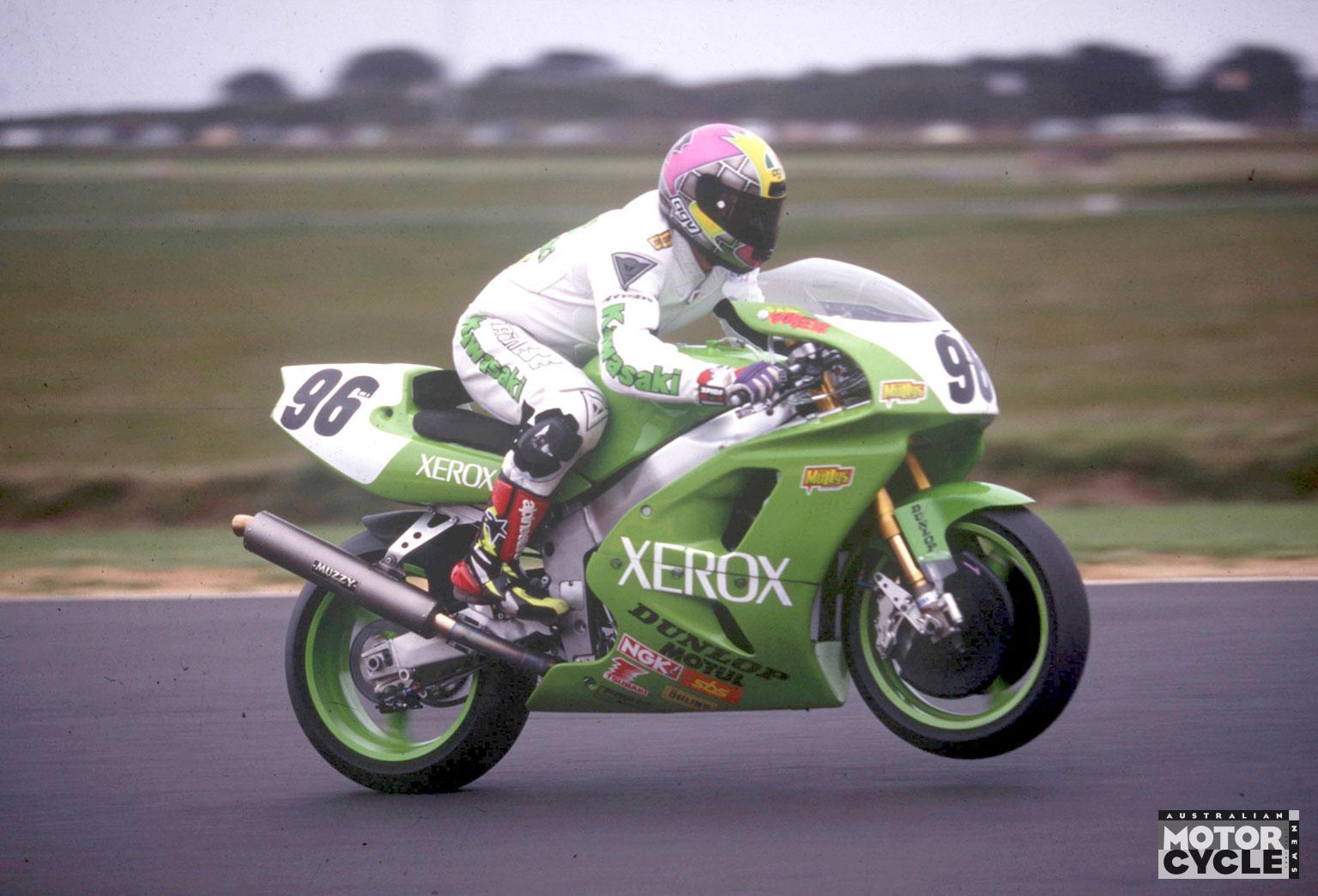
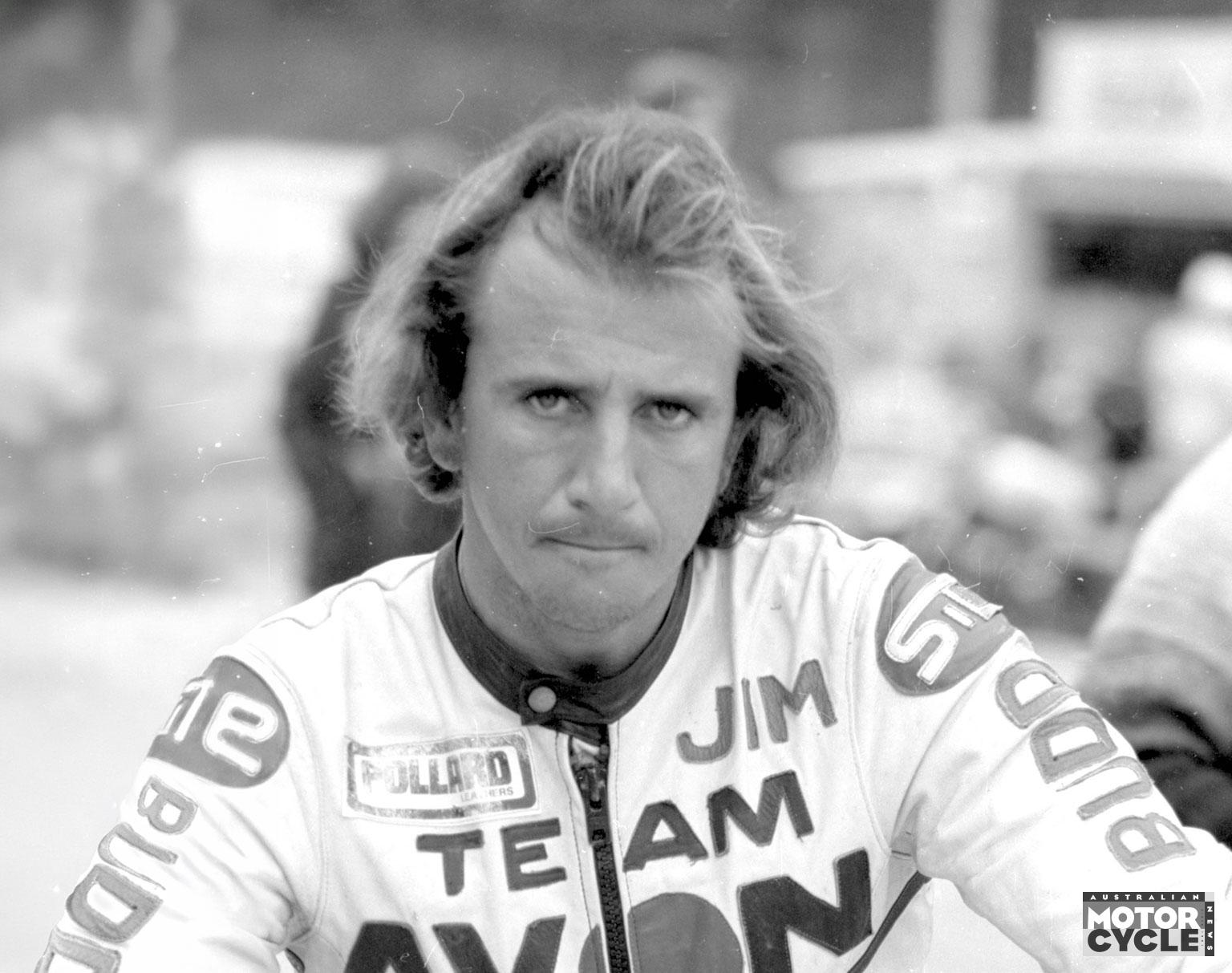
Nobody realised it at the time, but the 11th consecutive New Year’s Day motorcycle meeting in 1978 would be the last. Despite the dreadful condition of the circuit, which by now resembled a rough country road, a good entry turned out for the Victorian GP, with Greg Johnson on a new TZ750 Yamaha owned by Albury motel proprietor and super-enthusiast Jack Walters the favourite for the feature Unlimited GP.
In the warm-up Unlimited Scratch, Johnson came from behind to pass Bob Rosenthal and set a sizzling new lap record of 1.57 – a full five seconds under Gregg Hansford’s existing mark.
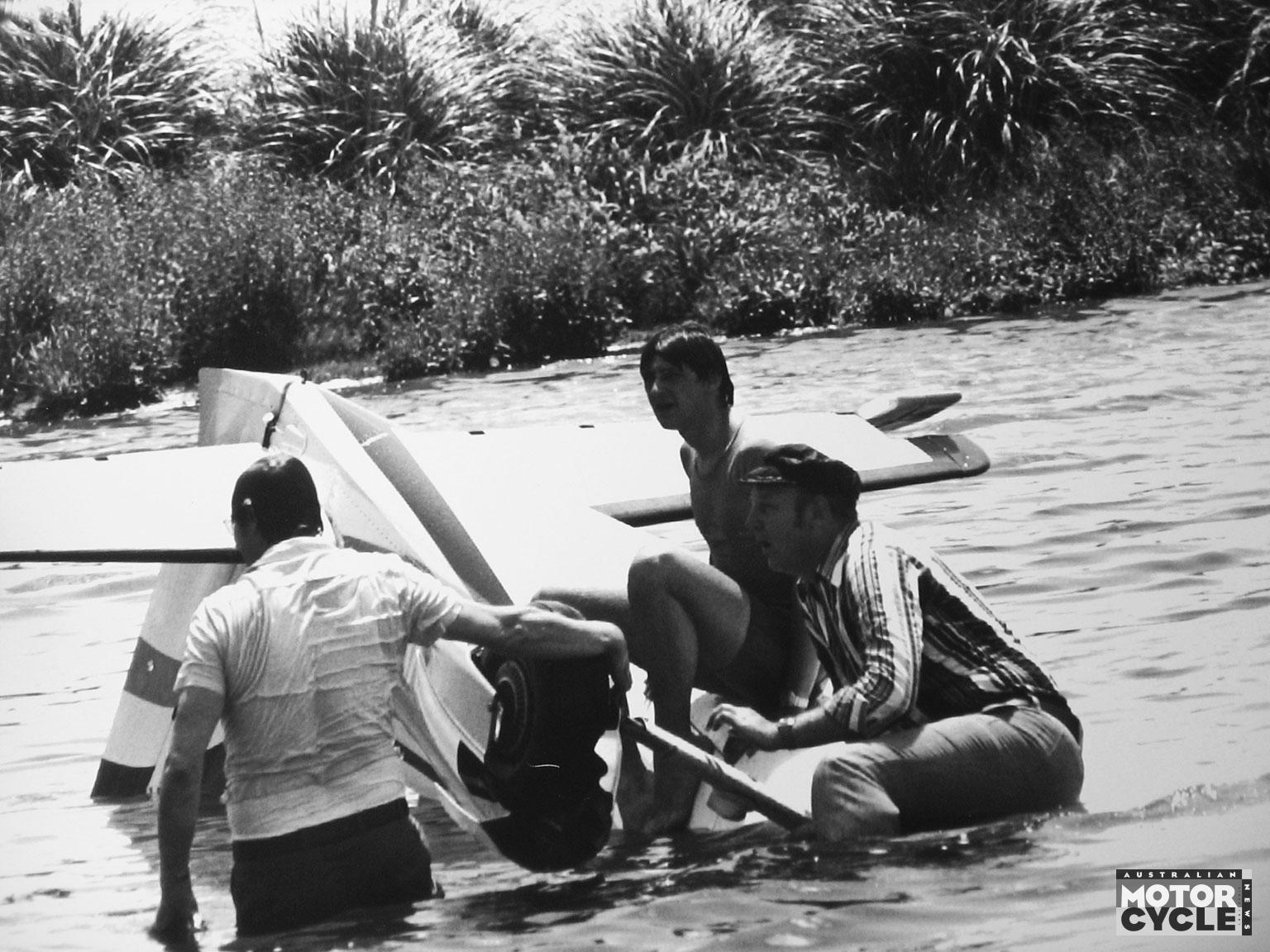
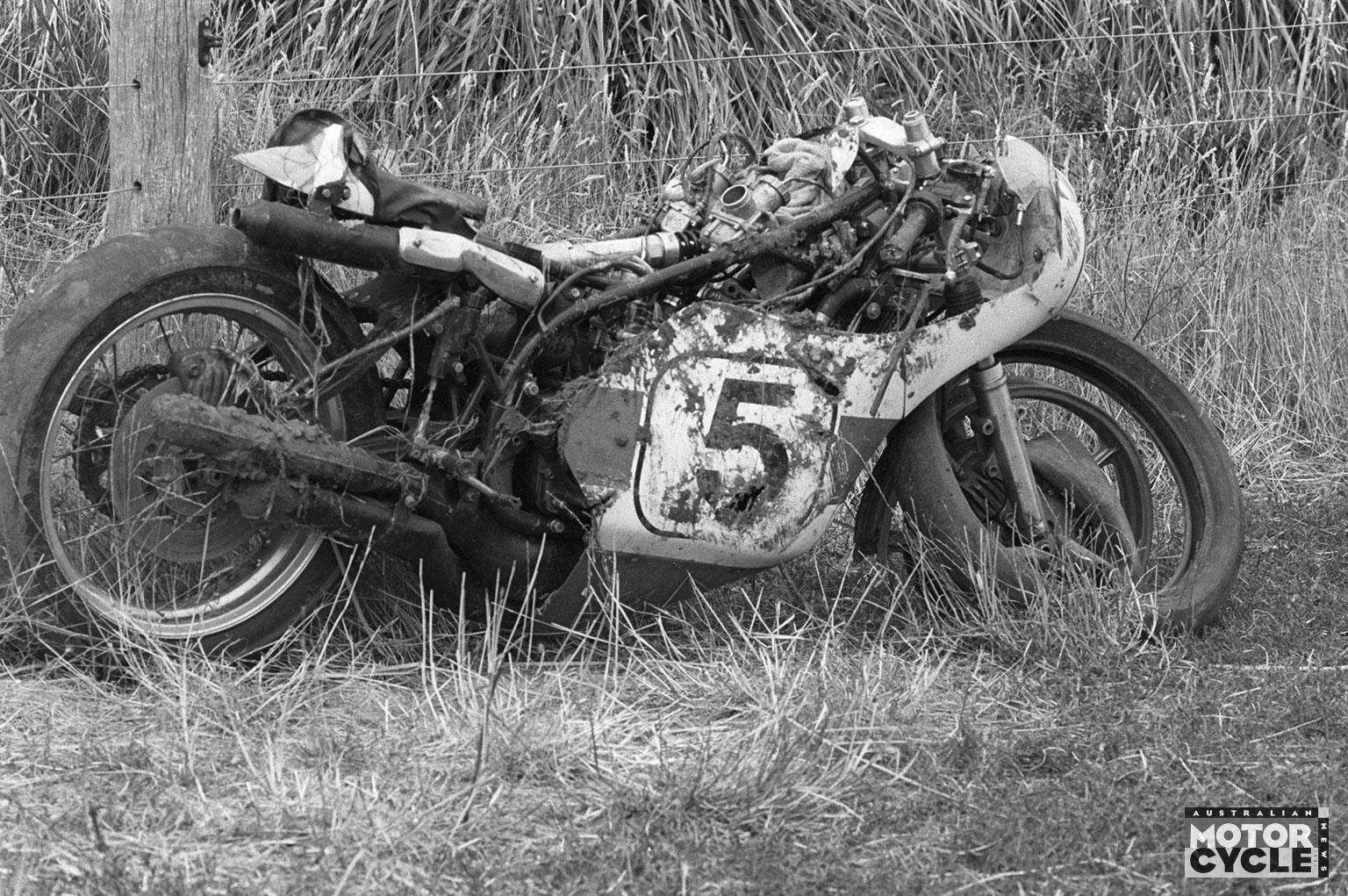
In the main Unlimited GP, Johnson blasted into the lead and stayed there until lap nine, when things went horribly wrong. Approaching the braking area for Southern Loop at high speed, the Yamaha’s engine seized and Johnson ran head-on into the Armco fence, sending the bike cartwheeling into a dam.
Amazingly, Johnson walked away, but the Yamaha was a total wreck when it was retrieved from its watery grave. He would go down in history as the all-time motorcycle lap-record holder for the circuit in its original form.
It would be another 11 years before the bikes would be back.
THE IMPOSSIBLE DREAM: 1978–1988
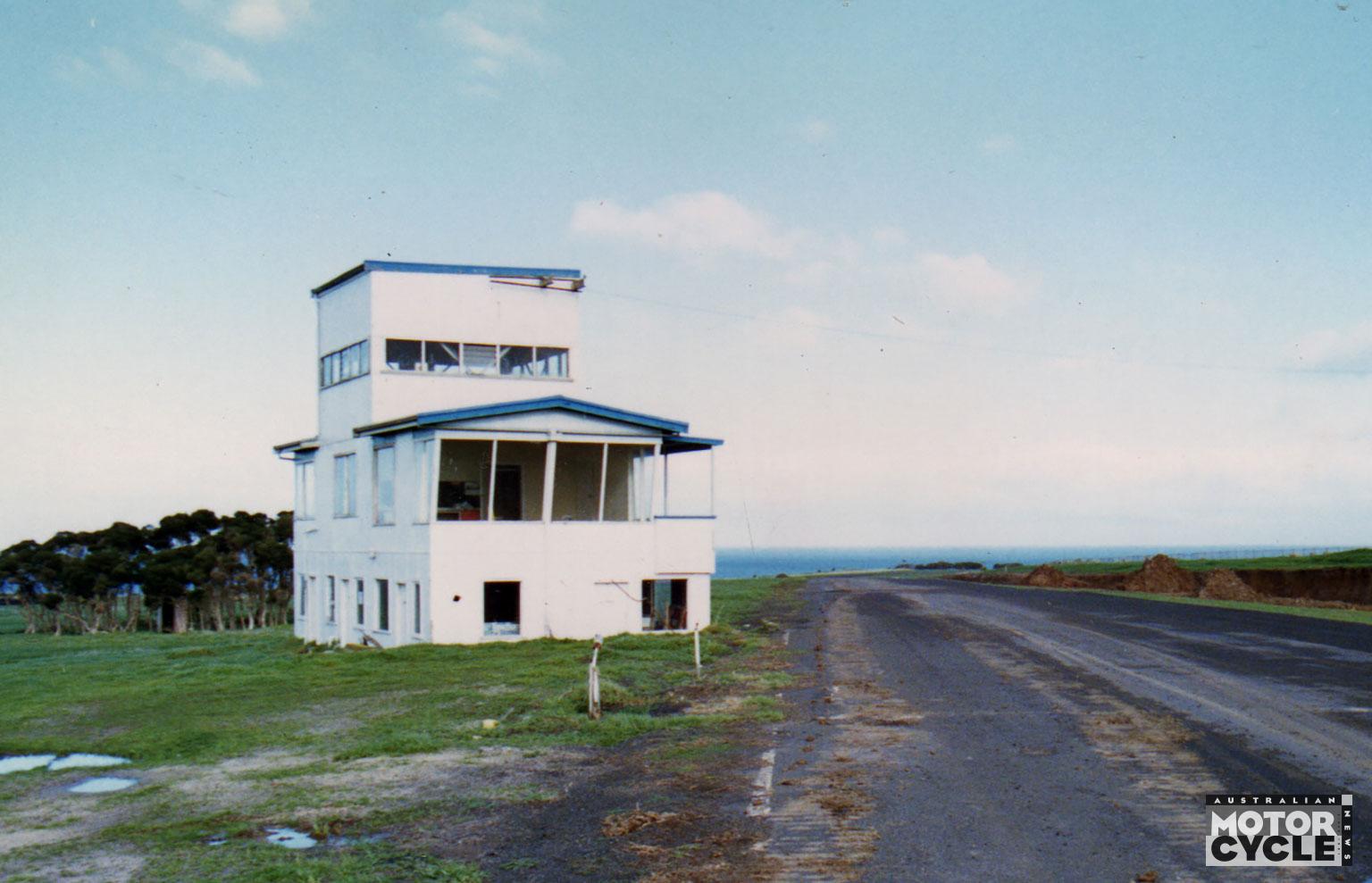
By the early 1980s, there were few reminders of the Island’s motor racing heritage, with the crumbling remains of the once-great circuit fighting a losing battle against nature and the elements. Cattle grazed in the paddocks, the Len Lukey Memorial Gardens attracted few visitors, and the annual club sprint days and gatherings for classic cars provided only fleeting reminders of the past.
Since Lukey’s death in 1978, there had been a long and acrimonious stand-off between the administrators of his estate and various parties interested in the facility. The circuit and its land were placed on the market for $1.2 million, but the purchase price was only part of the problem. Major work would be required before the track could ever be licensed again.
As interest waned, so did the asking price. Finally, in 1984, the administrators accepted an $800,000 offer from Placetec Pty Ltd, a group of investors who, for the most part, had little interest in reintroducing motorsport.
One of Placetec’s prime movers was Fergus Cameron, whose family had long farmed nearby. As a youngster, Cameron had accompanied his father, a foundation member of PIARC, to watch the races. But Placetec’s plans for the property were primarily rural, and the old circuit was destined to become farmland.
However, as soon as news of the purchase became public, Cameron began to realise the significance of what his company had acquired.
“Everywhere I went, particularly in Melbourne, I was constantly hearing people talk about the circuit and identifying the property with the circuit. That made me realise the history and the legacy of what we had.”
Cameron and fellow Placetec director Peter Henderson began fielding approaches from individuals and organisations convinced Phillip Island could once again become a motorsport venue. The economics had changed, however. Devoting 300 acres to a handful of race meetings each year was no longer realistic. If the circuit was to return, it needed to become a multi-use facility capable of hosting everything from club racing and corporate days to international events.
Few, however, regarded the meeting as the beginning of a full-scale revival. The circuit was generally considered beyond saving.
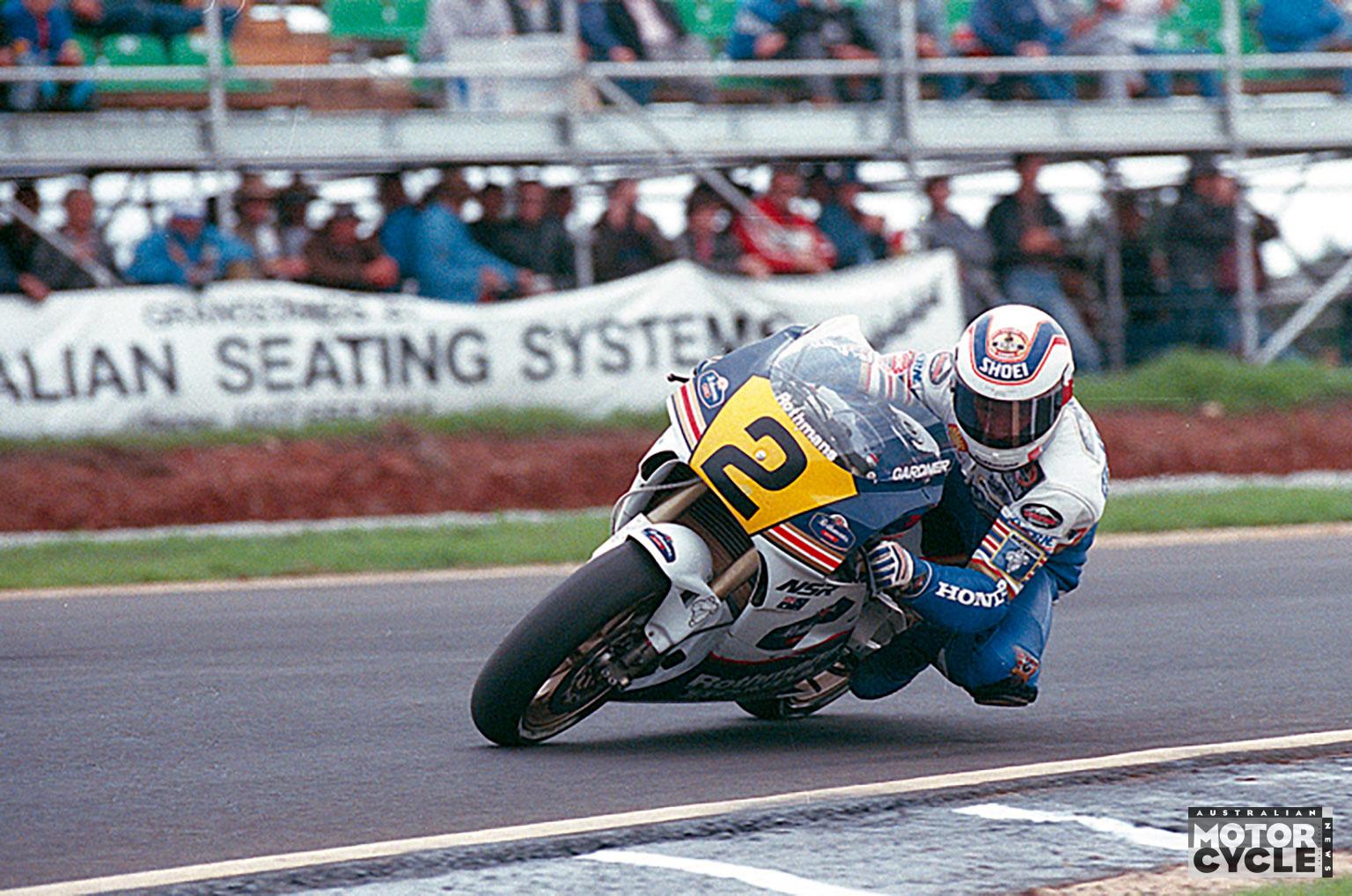
By this time, Wayne Gardner’s exploits in the 500cc World Championship had sent interest in motorcycle racing soaring in Australia. When Gardner became 500cc world champion in 1987, that interest exploded. Grands Prix were being shown on Australian television and inevitably the question arose: why couldn’t Australia have one of its own?
The problem was where to put it. Mount Panorama at Bathurst was briefly considered and rejected. Most other circuits were too small or lacked the necessary facilities. Motorcycling Australia president John Thompson strongly favoured Sandown Park in Melbourne, although considerable safety modifications would be required. Bob Jane’s Calder circuit also entered the discussion with promises of substantial upgrades.
Meanwhile, Hartwell Motorcycle Club secretary Wes Brown had been in discussions with Placetec about the future of Phillip Island. The result was a joint venture called Hartron, and ultimately the involvement of English-born Adelaide engineer Bob Barnard.
Barnard had made his name through his work on the Adelaide street circuit for the Australian Formula One Grand Prix from 1985. He was also interested in exploring promotional ventures of his own, and with Gardner now a world champion, the timing could hardly have been better.
After numerous meetings and negotiations, a new company, Barfield, emerged with Barnard and Cameron at its core, and Placetec awarded it the lease to Phillip Island.
The crucial breakthrough was securing the Australian round of the 1989 World Motorcycle Championship, backed by Alan Bond’s Swan Lager operation. With Gardner carrying the number-one plate throughout 1988, the possibilities were obvious.
The problem was that Phillip Island was nowhere near ready to host it. The circuit needed not merely to be rebuilt, but brought up to the requirements of modern international motorcycle racing. Communications, spectator safety and infrastructure all required major work. And all of it required money.
The competition to host the GP was fierce. The FIM had received 18 applications for only 15 championship rounds, while within Australia Phillip Island still had to defeat Sandown and Calder. International Racing Teams Association boss Mike Trimby inspected all three in January 1988, rejecting Calder and concluding Sandown would require considerable safety work. Phillip Island was his clear preference.
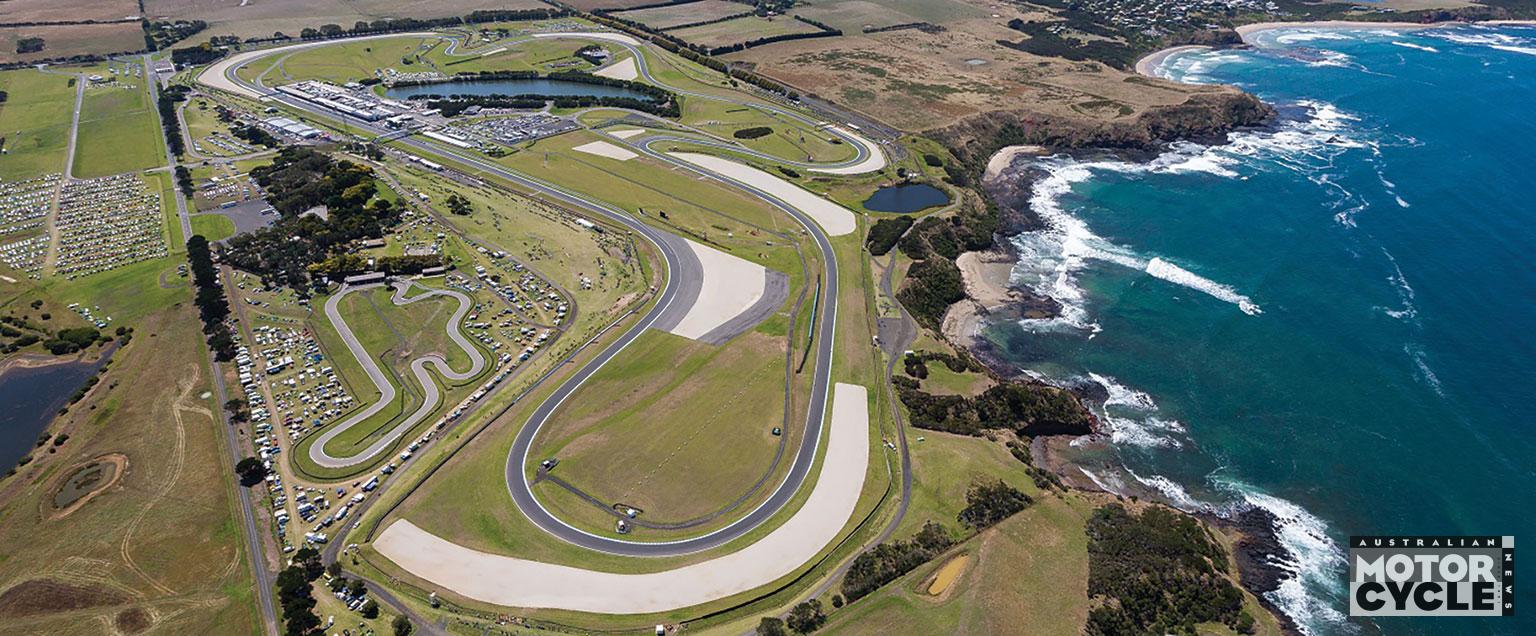
In February 1988, the FIM awarded Australia its GP, to be held at Phillip Island on 9 April 1989. At least $3.5 million would be spent on the reconstruction. The original layout was retained almost entirely, although Turn Four was truncated and Turn 10, the right-hander after Lukey Heights, opened slightly, reducing the lap to 4.449km. One of the largest engineering jobs was the construction of a tunnel linking the pit area to the outside of the circuit.
Once again, the Phillip Island weather did its best to impede progress, causing expensive delays as the deadline approached.
The FIM insisted that an international-standard meeting be staged before the GP, leaving the final round of the Swann Insurance International Series in late 1988 as the circuit’s crucial test. By then the track had been sealed and enough of the facility completed for racing to go ahead. Days of rain reduced spectator areas to mush, but the new racing surface drew universal praise.
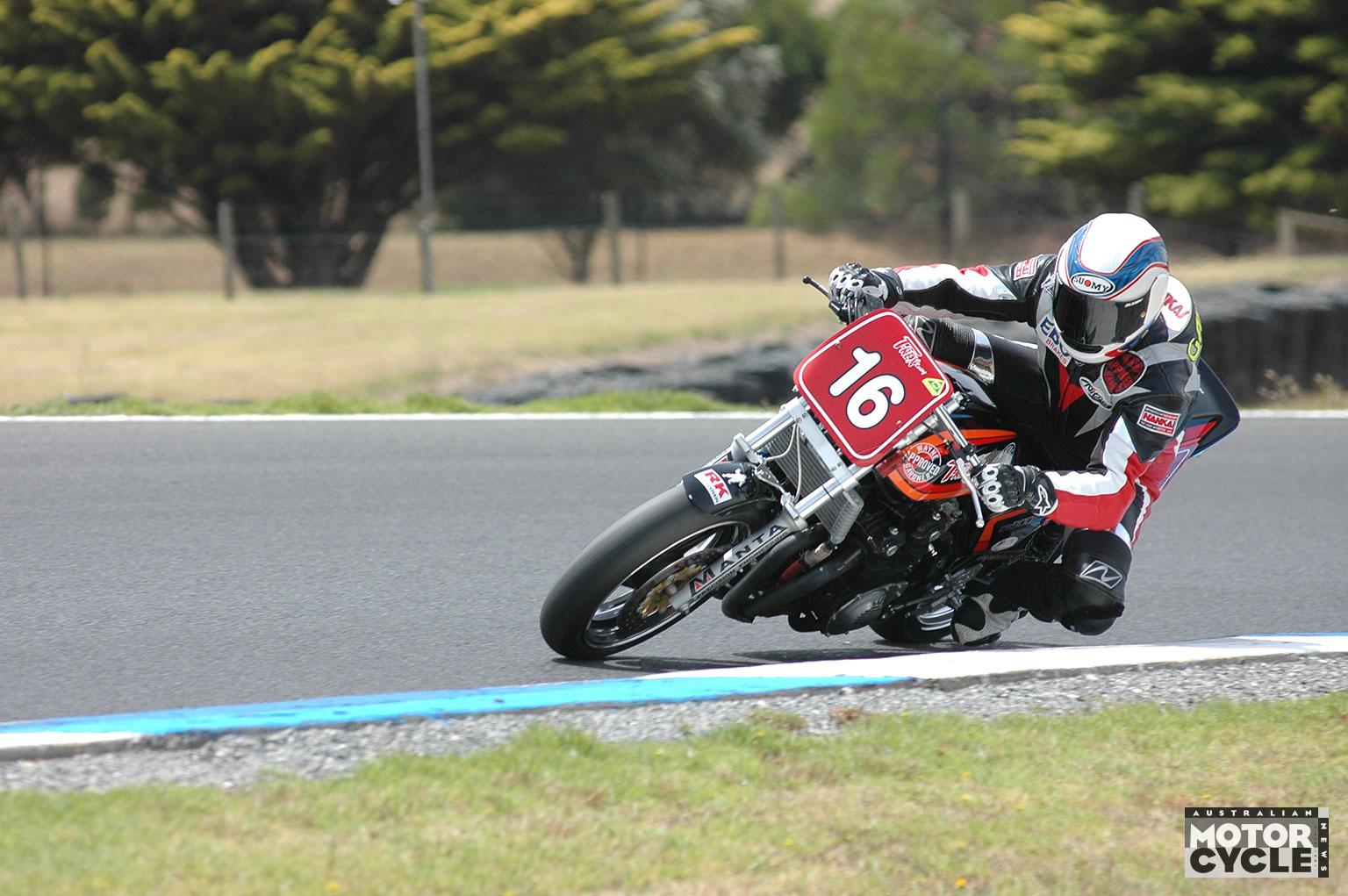
The field included Michael Dowson, Malcolm Campbell, Mick Doohan, Rob Phillis and Peter Goddard, along with New Zealanders Gary Goodfellow, Aaron Slight and Andrew Stroud, and British star Terry Rymer.
Doohan’s first-race chances disappeared when a long start-line delay fried his clutch, while Dowson eventually overcame Goddard for victory. In the second leg, Campbell, Doohan and Dowson fought furiously until Campbell snatched victory over Doohan by little more than a tyre’s width.
The circuit had passed its test. After years of decay, argument, negotiation and reconstruction, Phillip Island was ready for the biggest motorcycle race Australia had ever seen.
WELCOME TO THE WORLD: 1989–2002
Bob Barnard had spoken of a crowd of 70,000 being possible for Sunday 9 April, 1989. This was usually dismissed as the optimistic dreams of a cash-strapped promoter, but it turned out to be a conservative estimate. The official figure was 92,000, and it looked it.
In qualifying, Kevin Schwantz, who had won the opening 1989 GP in Japan, became the first man to crack the 1.35 barrier – by one thousandth of a second – with Wayne Rainey, Gardner and Tadahiko Taira filling the front row of the grid. By the time the 500s lined up for the race, the atmosphere around the circuit was electric.
The story of that seminal GP at Phillip Island has been recounted endlessly – a four-way dice between Rainey, Gardner, Frenchman Christian Sarron and Kevin Magee. For lap after lap there was nothing in it, until Gardner pulled a small gap which was sufficient to get him over the line 0.35 seconds ahead of Rainey, with Sarron just edging out Magee for the final spot on the rostrum.
The crowd, which had held its collective breath for the nail-biting last lap, erupted in a cheer that almost lifted the top off the grandstand. By the time Wayne made his triumphant way to the ‘winner’s circle’, spectators had swarmed onto the circuit to deliver the hero’s welcome so richly deserved.
Peter Clifford, editor of the prestigious Motocourse annual, wrote: “There was no avoiding the feeling that you had more than witnessed, you had been part of something special. For it (the 500 GP) was, without doubt, one of the greatest Grands Prix of all time.”
It had been a fairy-tale end to an emotional weekend – outwardly a colossal success, but behind the doors of BPM there was trouble brewing. Only weeks after the event, reports began to surface that Barfield was in trouble, with over $2 million owed to companies which supplied equipment for the Grand Prix. A spokesman disclosed that the event had cost $8.5 million to stage and receipts would fall well short of this figure.
Then in August came another significant development. The NSW government announced that it was seriously considering building a world-class motor racing complex at Eastern Creek, in western Sydney, and would be seeking to secure international events. A further spanner in the works appeared when Victoria passed stringent new regulations to its Tobacco Act, presenting obvious difficulties for a sport heavily dependent on tobacco sponsorship.
Thus began an amazing game of brinkmanship which saw offers and counter-offers between Victoria and New South Wales. In October came the announcement that the Grand Prix would go to the as-yet unconstructed circuit at Eastern Creek from 1991, and perhaps as early as September 1990.
Before 1989 was out, Barnard’s operation had shifted to the paddock and former industrial waste depot that would become Eastern Creek Raceway, with the 1990 Grand Prix scheduled to take place there in September. It soon became apparent that this was an impossible dream, and the issue was put beyond doubt when the FIM refused to licence the new track for a GP before it had conducted at least one international meeting.
The 1990 event was therefore back at Phillip Island. It had been a sorry and at times ugly saga, but in the era where Australia was just discovering mega-sports promotion, not an uncommon syndrome. The race was back on, admittedly in a somewhat scaled-back state compared to 1989.
The 1989 winner had endured a horror year with multiple crashes and injuries that had kept him out of several races. His title hopes may have gone, but Gardner arrived at Phillip Island in September in a determined frame of mind.
With the tightened budget, little in the way of improvements had been carried out at the circuit in the 17 months since the momentous 1989 GP, but it still prompted Motocourse to describe it as ‘the finest track on the GP calendar’. The weather looked ominous in the lead-up to race weekend, contributing to a race-day crowd of 62,000 – still very healthy but considerably below the 1989 figure.
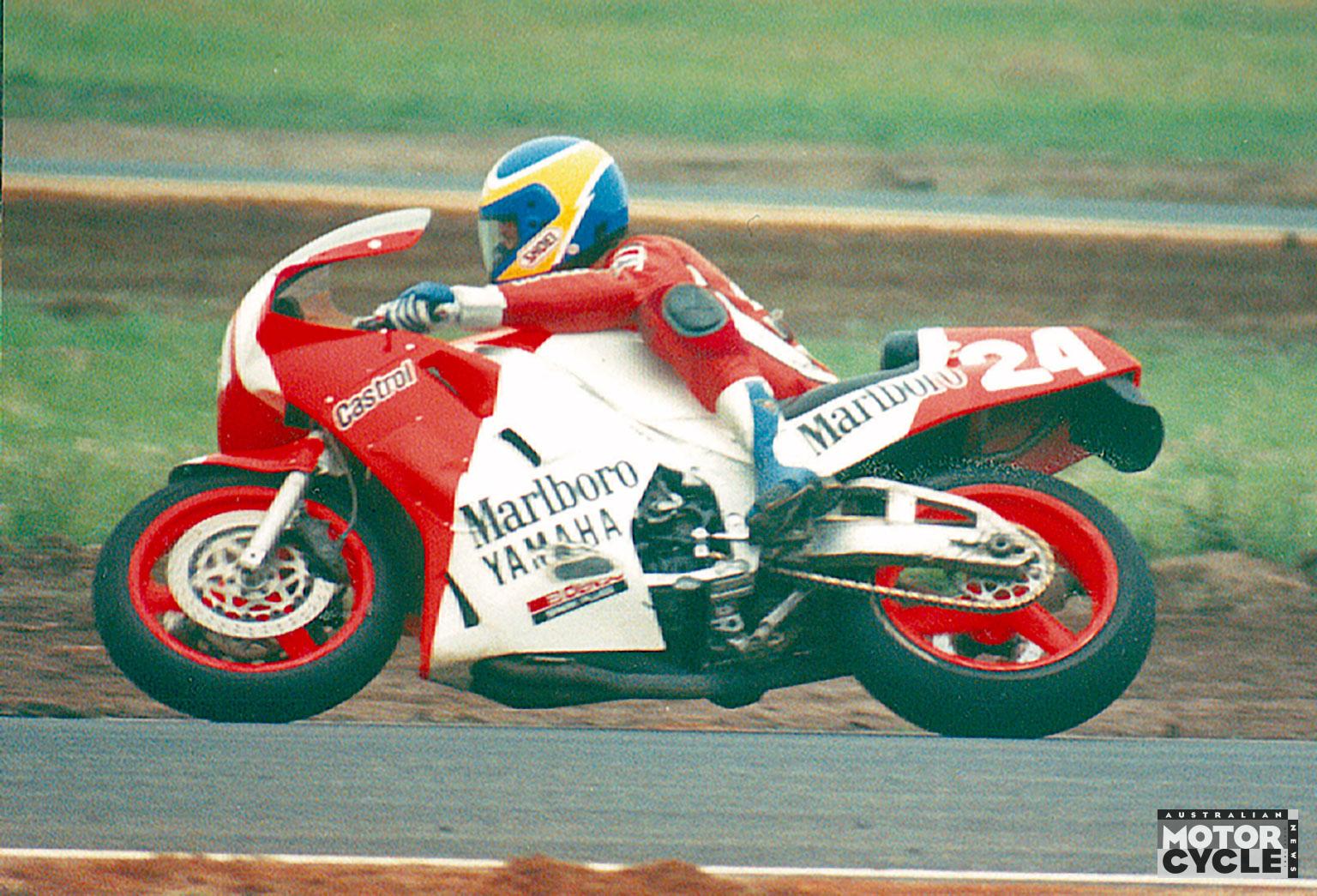
Doohan stormed off the line into the lead in the 500 GP, taking Rainey with him. Behind, Schwantz settled into third while Gardner was lucky to survive the second lap after a massive slide saw him out of the saddle, smashing the fairing in the process; 28 of the 30 laps went by until Wayne finally snatched the lead with a brave inside pass at Turn One, beating Doohan by 0.85 seconds to record a magical win with a new lap record of 1.34.560. The deliriously happy crowd cascaded onto the circuit to acclaim the first-ever Australian 1-2 in the history of the 500cc Grands Prix; celebrations at the track and in Cowes continuing throughout the night.
Once again, Phillip Island had demonstrated that no other circuit could produce such consistently close and spectacular racing, but in the minefield of politics that now surrounded racing at the top level, sentiment counted for nothing.
The GP was off to the bland expanses of the former rubbish dump at Eastern Creek, and another chapter in the island’s illustrious history looked to be over.
After the calamitous course of the Eastern Creek GPs had played itself out, leaving the Auto Cycle Union of NSW bankrupt and a trail of disillusioned people in its wake, the Australian Motorcycle GP returned to its spiritual home – Phillip Island.
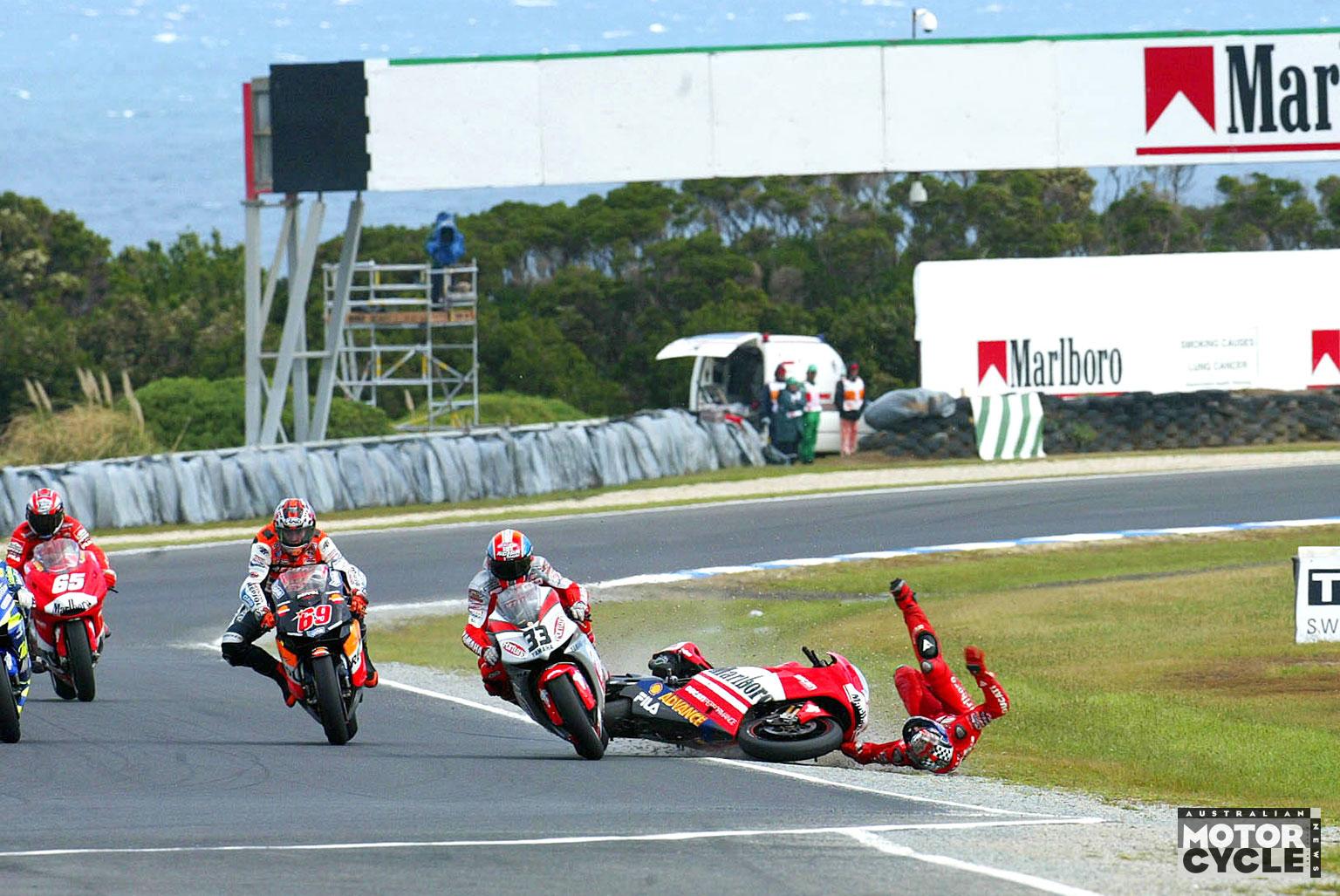
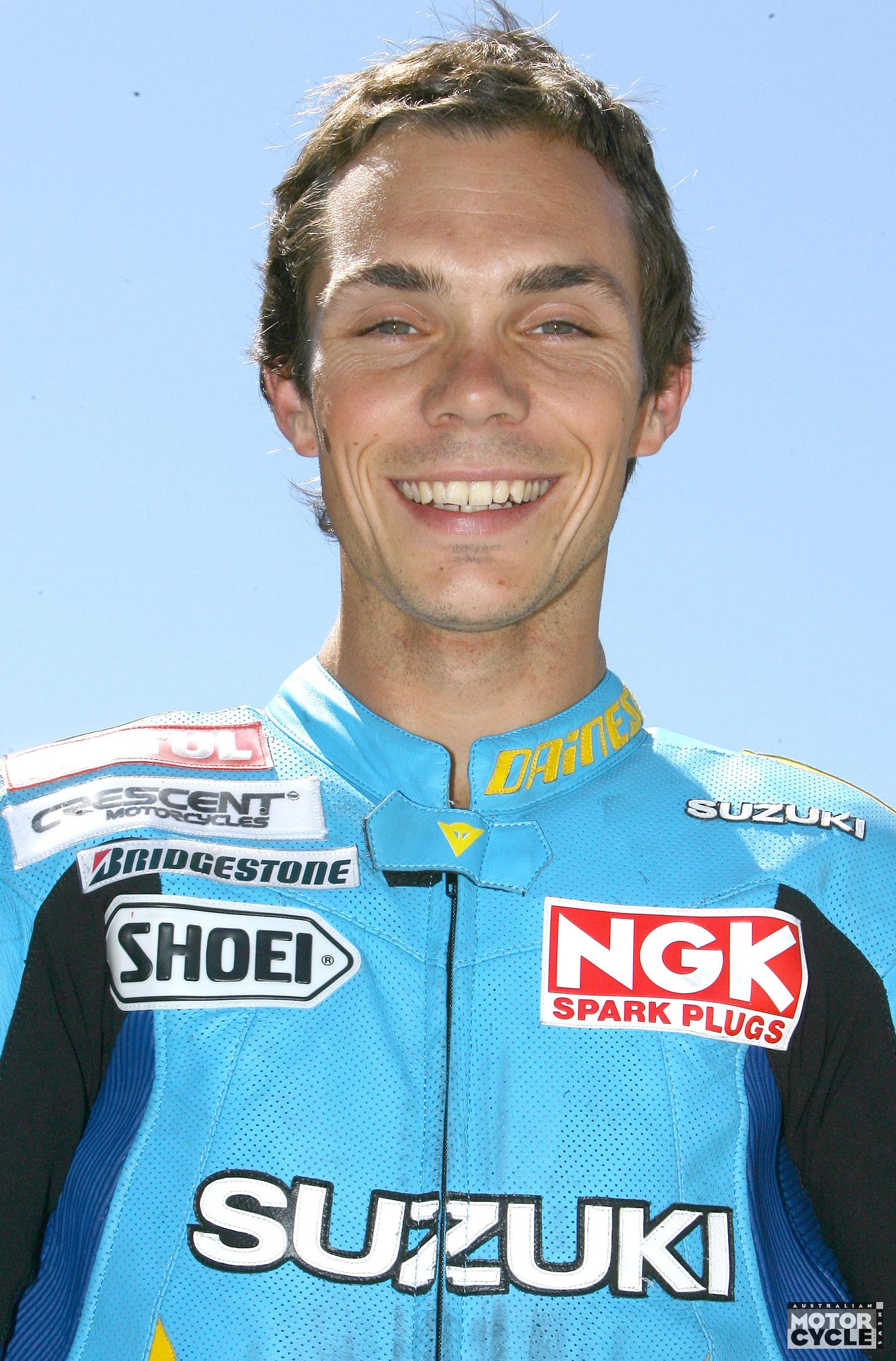
While the event had been away, Doohan had gone from GP rookie to four-time 500cc world champion, but there was still one thing missing from his CV – a win in his home country. After claiming pole and controlling the race in 1997, everything looked to be going to plan – until lap 17. With a seven-second lead, Doohan inexplicably dumped the Honda in Turn One, handing the win to teammate Alex Criville and leaving 50,000 fans stunned.
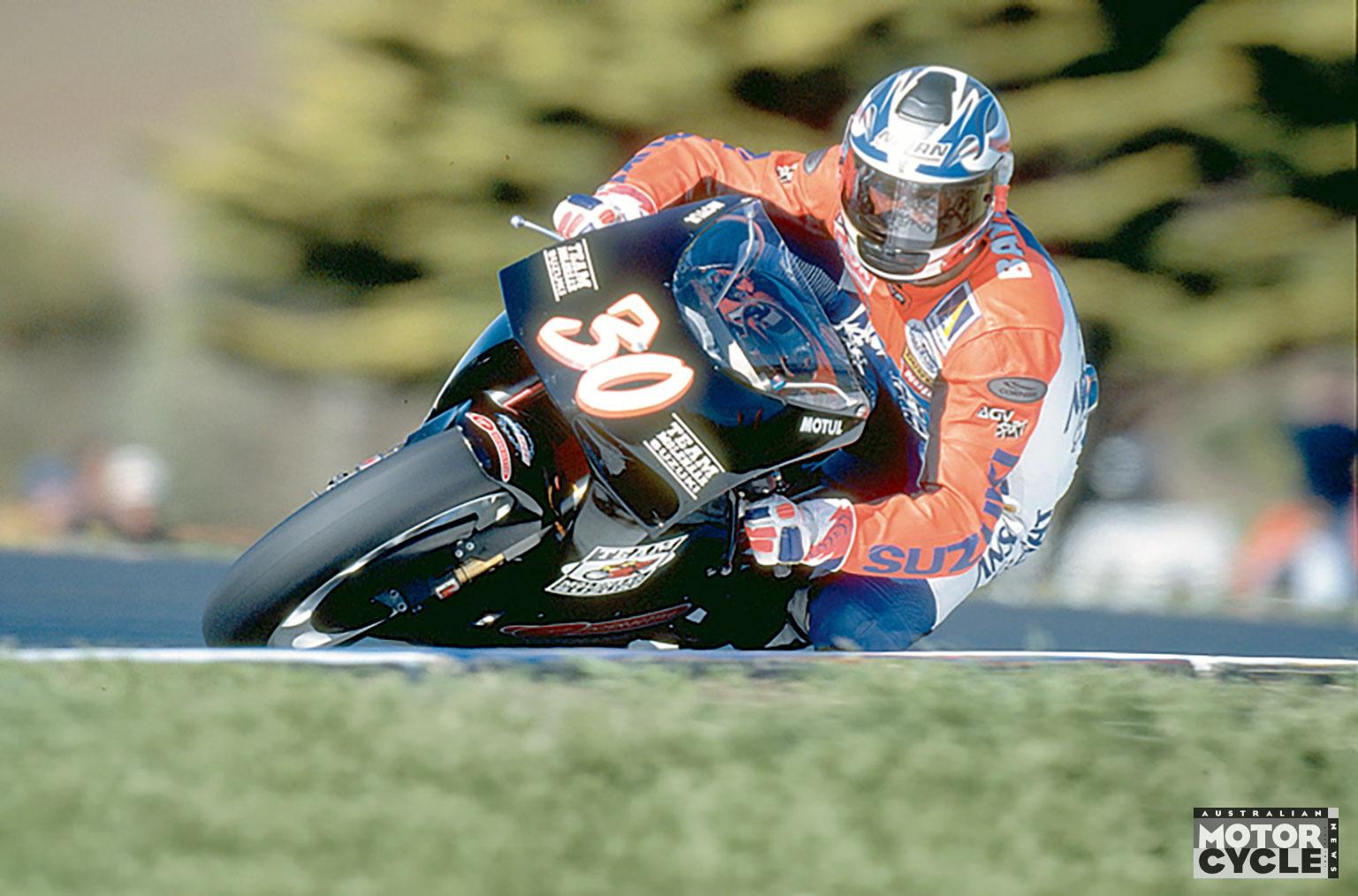
The meeting saw an unlikely star launch an international career when 28-year-old wildcard Troy Bayliss nearly made the podium in the 250 GP.
One year down the track, Doohan made no mistakes to finally break his Phillip Island hoodoo. In winning the Qantas Australian GP, he became world champion for the fifth successive year. Doohan had finally delivered the win he had promised for so long, and 51,000 fans went home windswept but happy.
It was just as well Mick grabbed that win in 1998, because he would not get another chance. At Jerez on 7 May 1999, he crashed at 200km/h, breaking his right collarbone, left wrist and right tibia – the same leg he had smashed at Assen in 1992. Although he refused to consider retirement at the time, by the time Phillip Island’s GP rolled around in October, it was pretty well accepted that his racing days were over.
Acknowledging his legion of fans at Phillip Island, Mick struggled into his leathers and completed two demonstration laps – at a speed that would have qualified him for the main event!
The Island continued to throw up surprises, cementing its place as a rider favourite, even if spectator numbers were easing off.
Kenny Roberts Junior had already sealed the 2000 World 500cc crown before the teams arrived for the final round, but it made no difference to the quality of the racing.
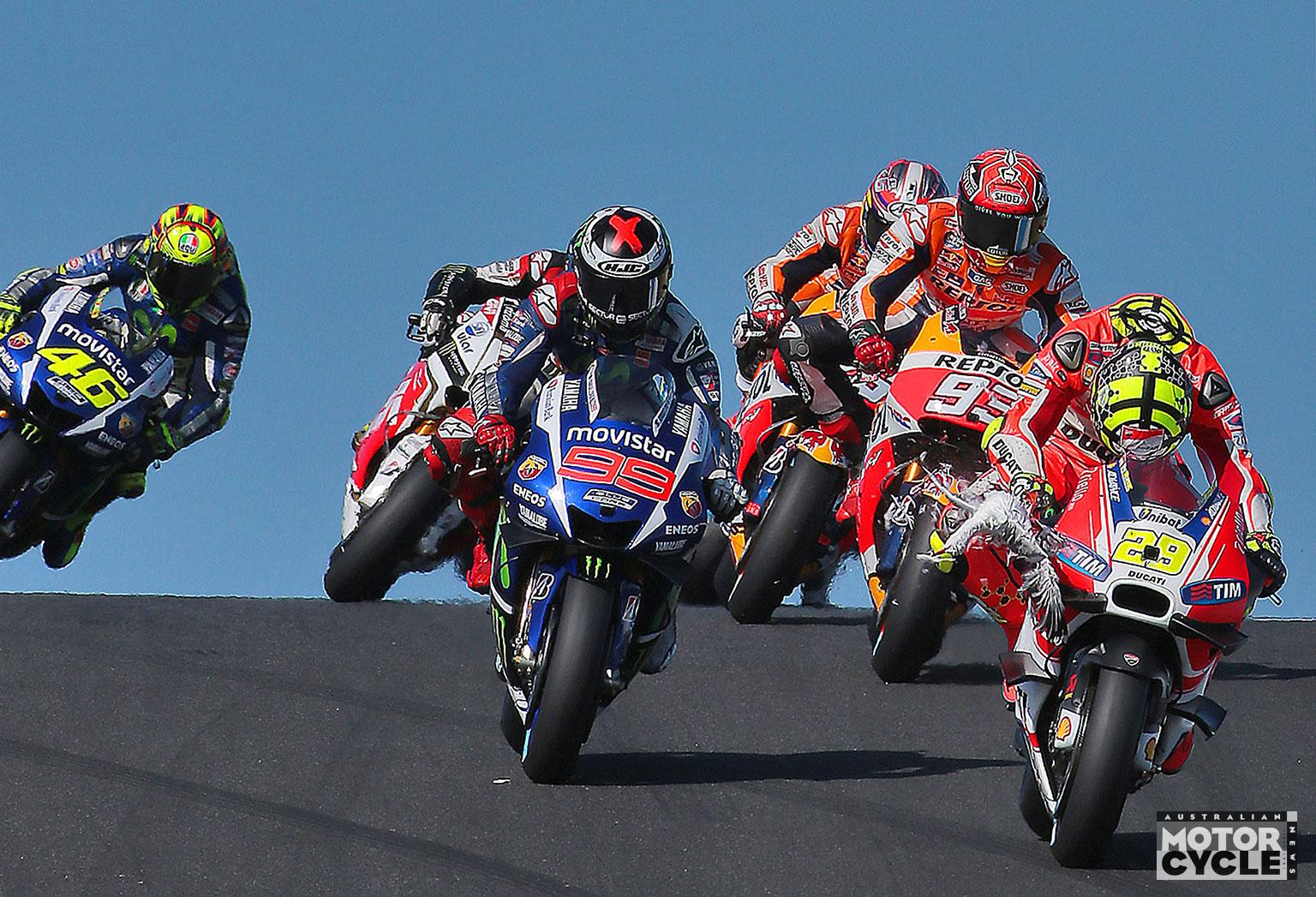
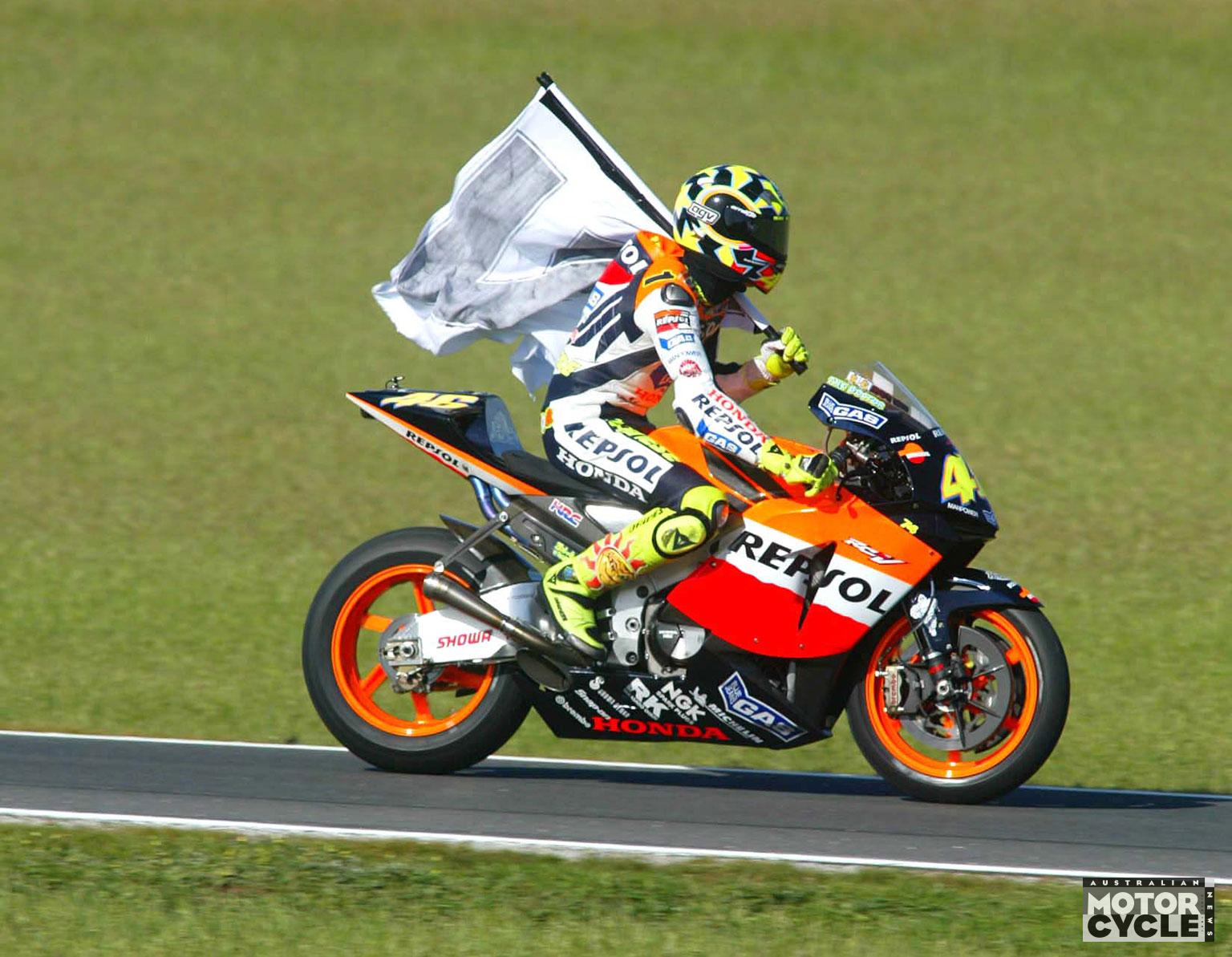
For almost the entire 27-lap journey, less than two seconds covered the top 12. In a sensational last-lap jostle, Max Biaggi took the win from Loris Capirossi, Valentino Rossi and Alex Barros – just 0.426 seconds covering the lot. For such an extroverted character, Rossi’s progress to superstardom had been orderly and structured. In his second year in the 500 GP ranks, in 2001 Rossi only needed eighth place or better to claim the title at Phillip Island, but “I don’t think that is a good way to win the title,” he said at the pre-race press conference.
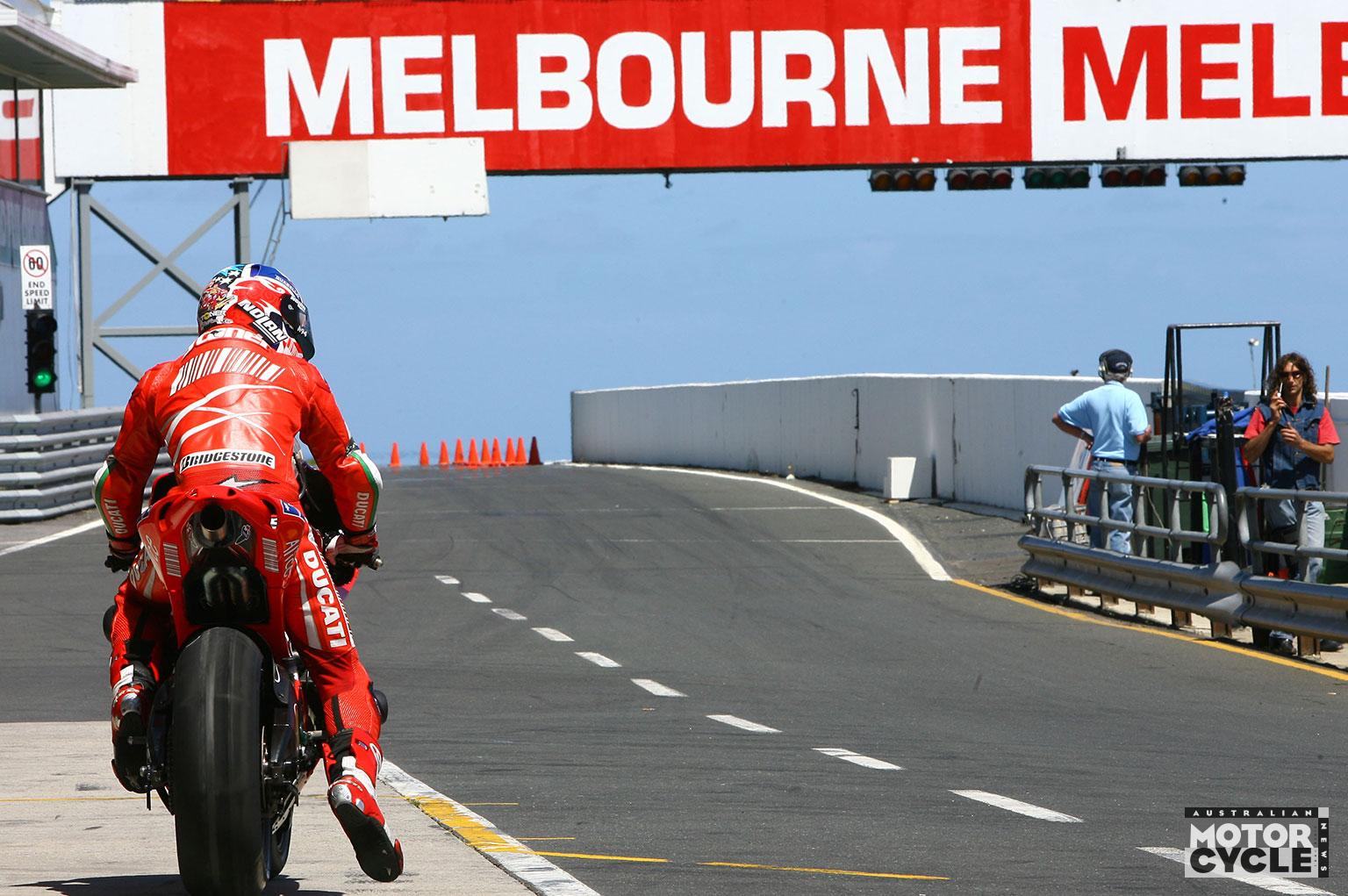
The race quickly developed into a six-way struggle for the lead between Rossi, Barros, Olivier Jacque, Noriyuki Haga, Biaggi and Capirossi, but at the flag Rossi held out Biaggi in the closest finish since 500 GP racing began in 1949 – just 0.013 seconds.
The meeting was a milestone in more ways than one, for it ushered out the 500cc class after 52 years. In its place came the most radical, expensive and noisiest form of motorcycle racing yet devised – MotoGP.
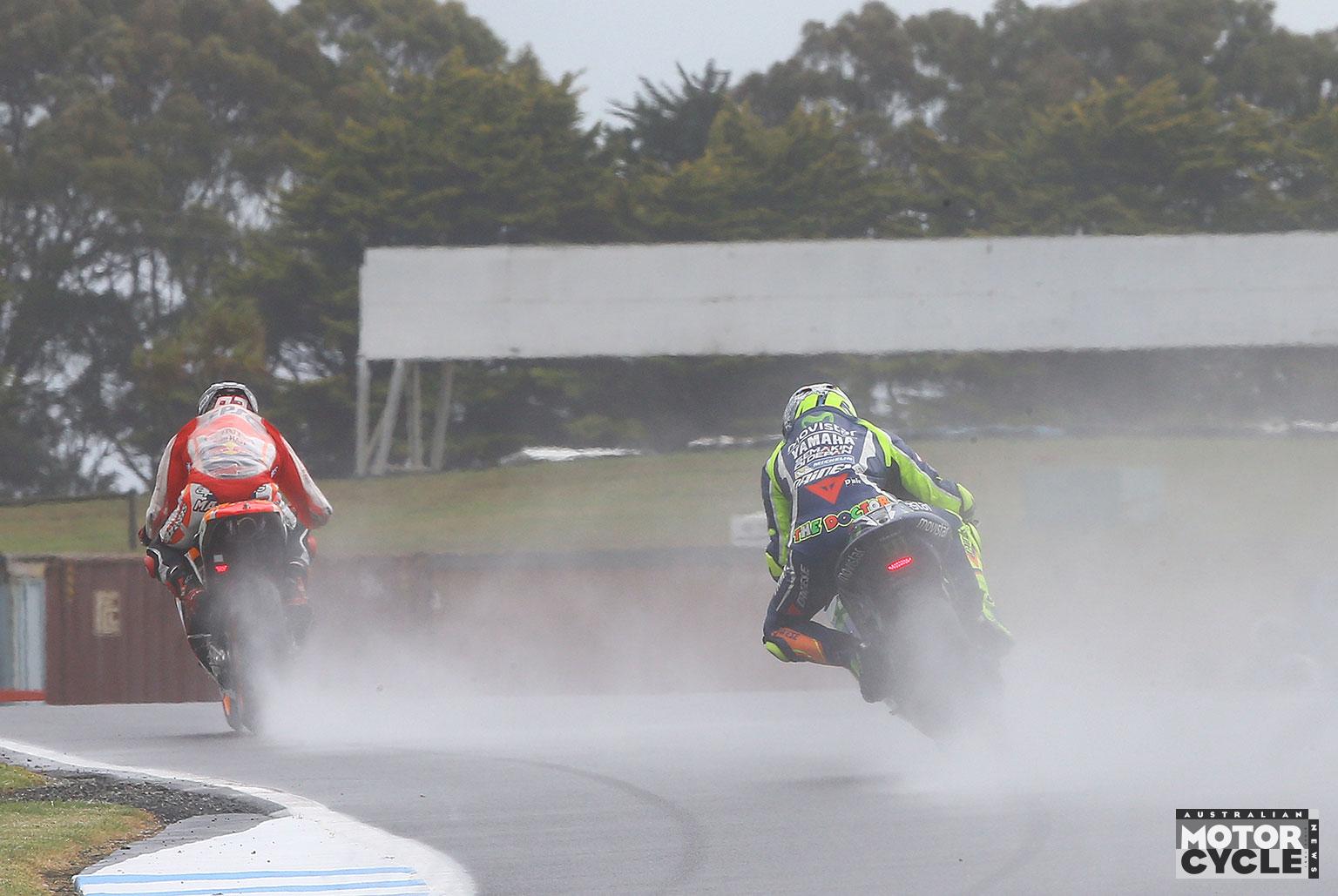
By 20 October 2002 the sport had witnessed 14 races for the thundering MotoGP machines, yet Rossi was still very much the man to beat. The two-strokes were not quite a thing of the past, running alongside the 990s while manufacturers caught up with the regulations. When the dust had settled from qualifying for the Australian GP, the front row was occupied entirely by 500cc bikes – all ridden by men over 30!
It quickly became a two-horse race; Rossi versus Barros, who was having his third ride on the five-cylinder RC211V Honda. It was all going to come down to the 27th and final lap, but there was no close finish this year after Barros mistimed a desperate lunge at Honda Corner and took the escape road, rejoining without losing second spot.
ONE LAST ISLAND: 2003-2026
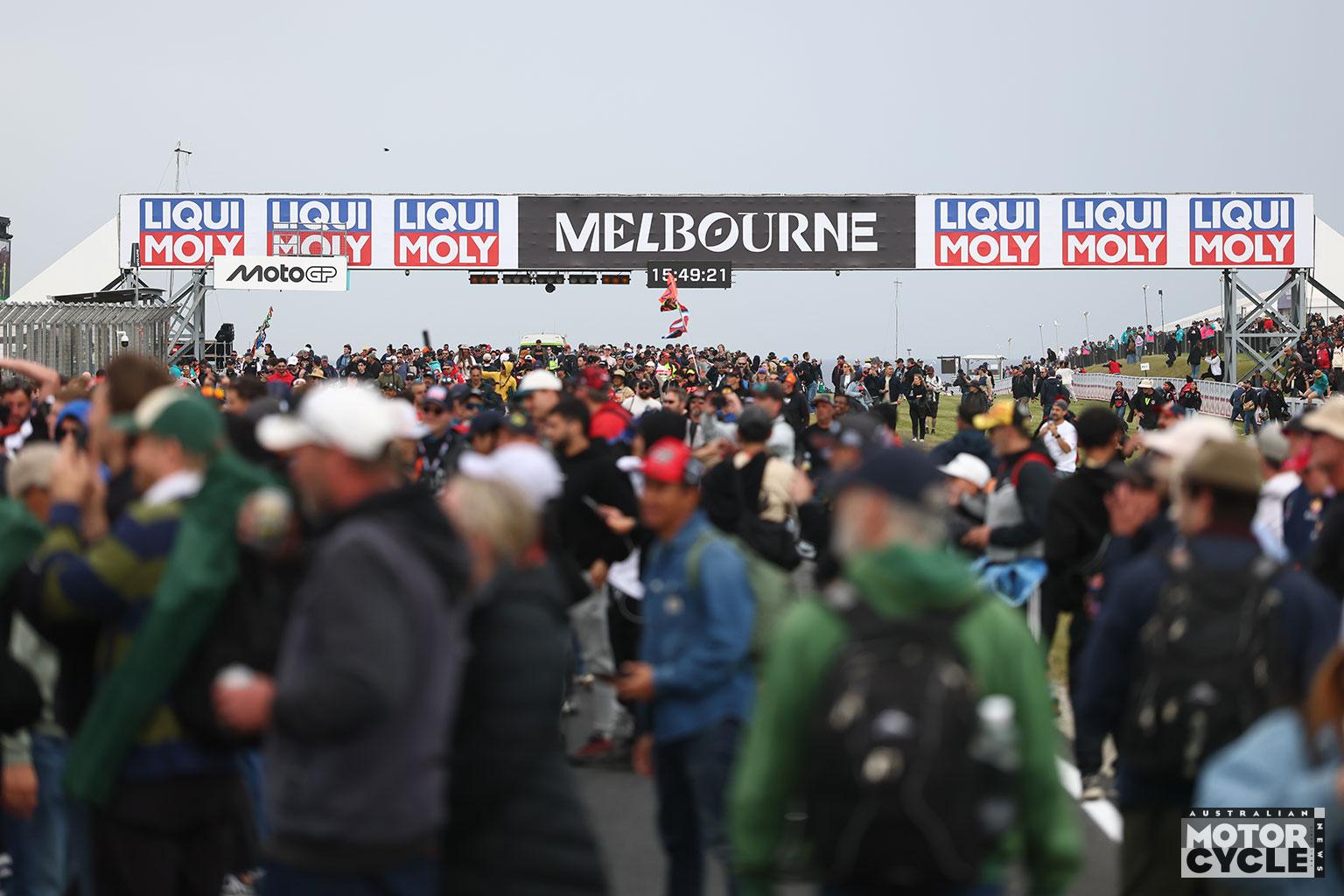
Not again, surely? The 2002 Grand Prix launched MotoGP and set the scene that endured to 2026, when the shock announcement came. MotoGP was abandoning its spiritual Australian home for pastures new in South Australia.
Once again, the island’s fate had come down to a typically Australian state-versus-state clash, where anything goes and the winner takes all. And in yet another example of Victorian government ambivalence in Phillip Island circuit’s history, the state did little more than posture while the rug was pulled swiftly from underneath it.
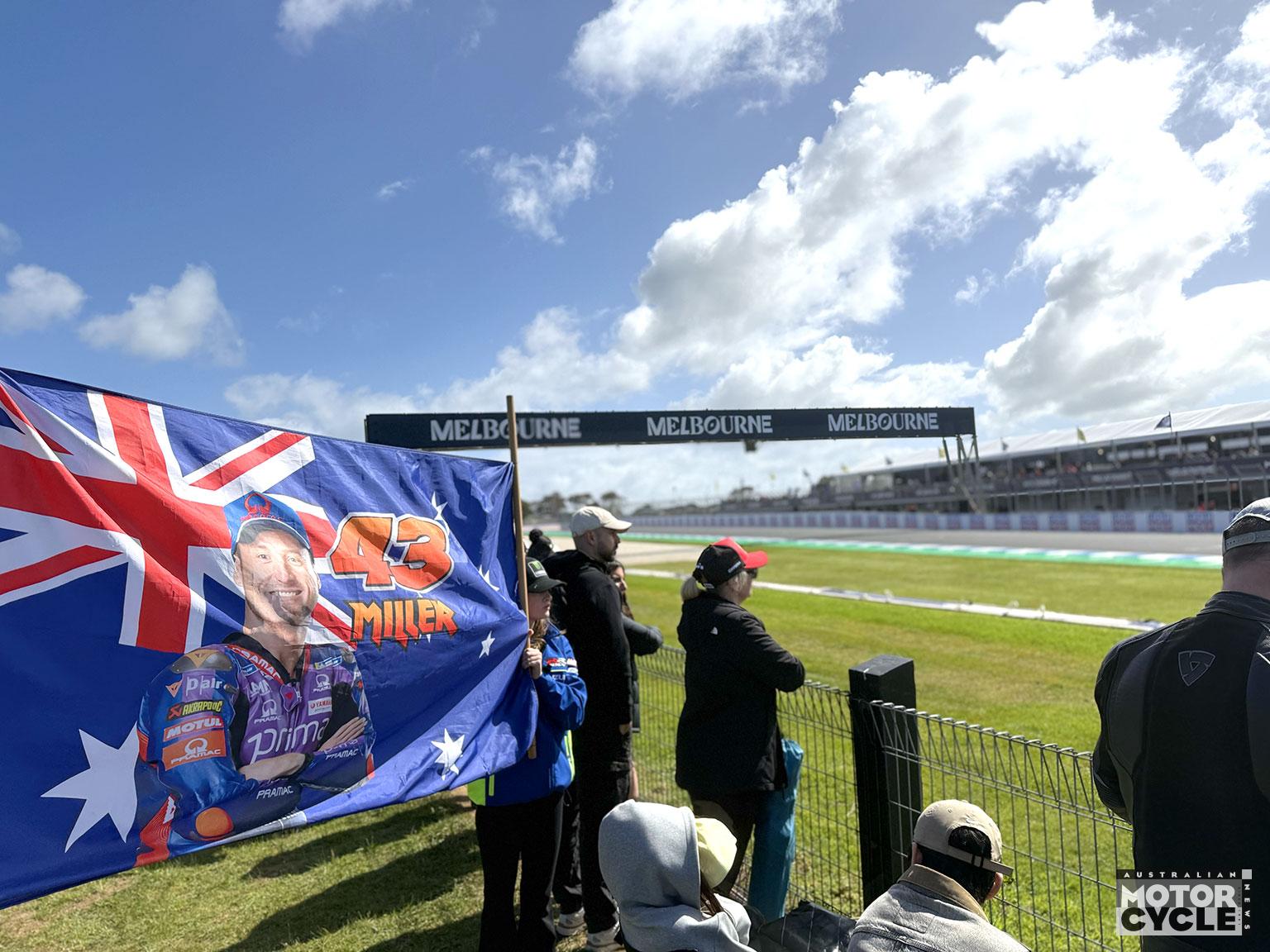
While the circuit itself had kept up the required maintenance and resurfacing, the infrastructure decidedly had not, despite continual promises.
Since 2004, the Phillip Island circuit has been owned by the Linfox Property Group, who built one of the largest and most successful transport companies in the world through hard work and business acumen. Although having no previous history in motorsport promotion, the show has gone on relatively hitch-free ever since its acquisition.
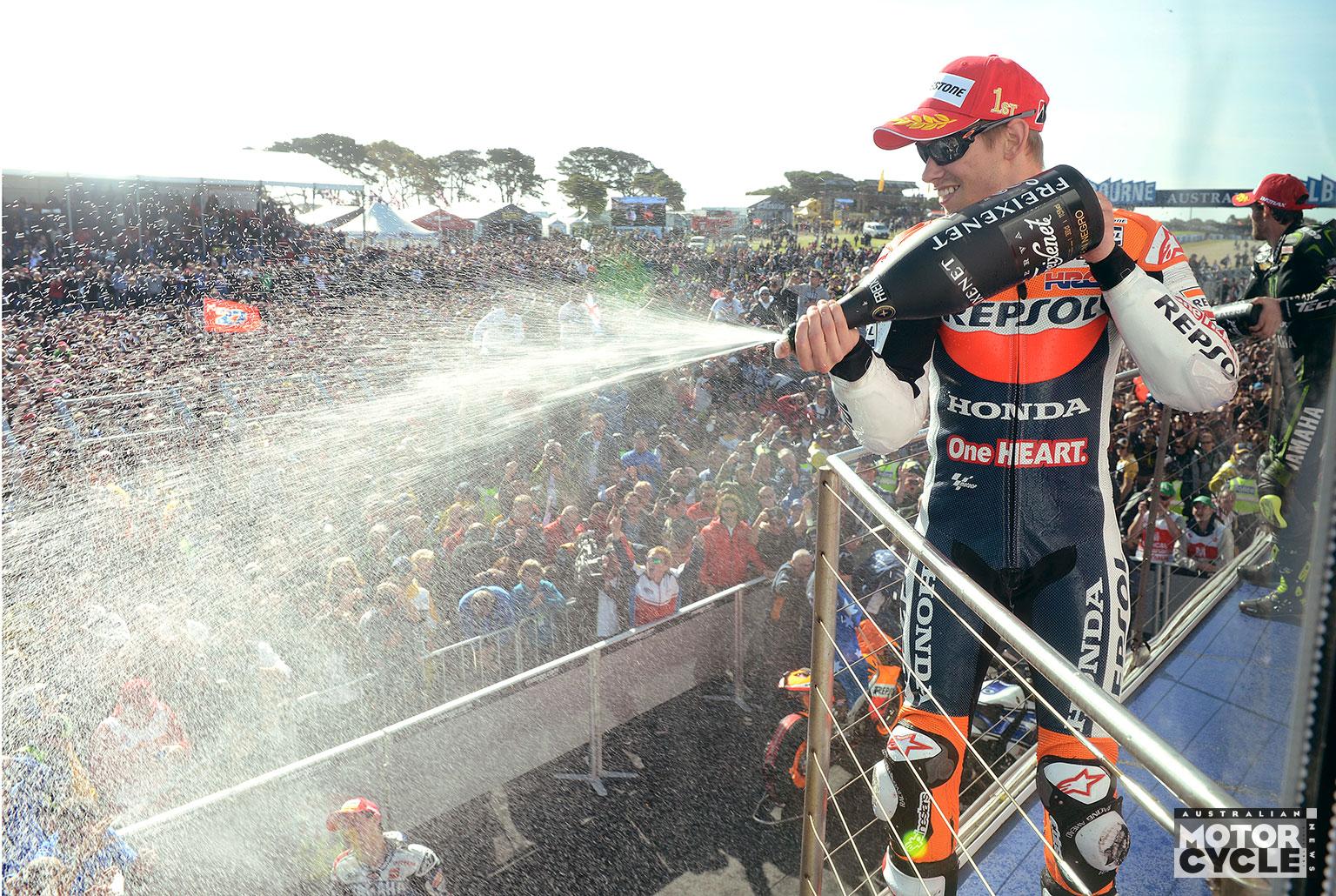
Through this period, we have thrilled to the sheer brilliance of Casey Stoner, with six consecutive Phillip Island MotoGP victories, and on to the Marc Marquez era.
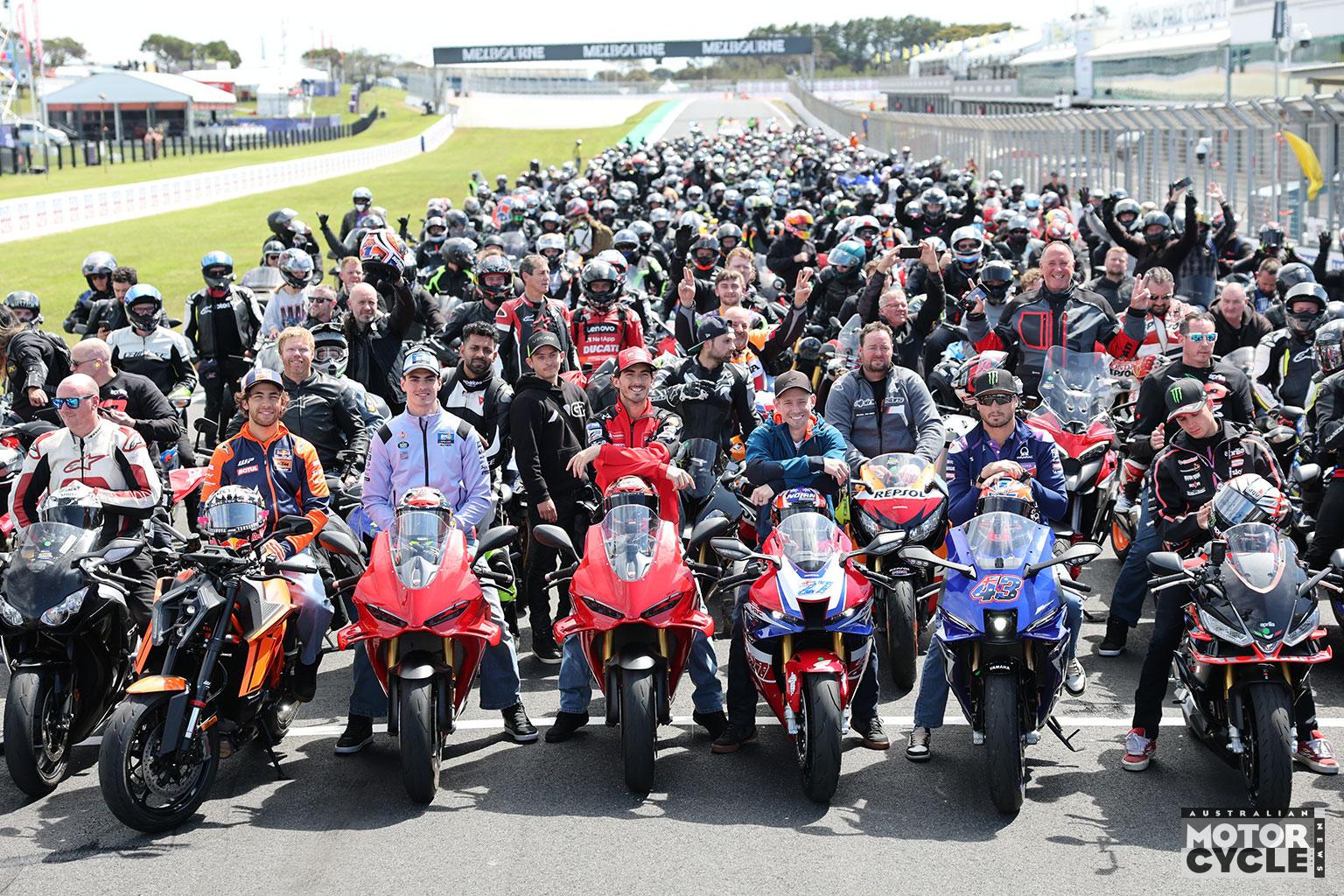
And yet there seemed to be a slight air of resignation from the moment the bombshell dropped.
If the Fox group has another plan up its sleeve, it has been very coy about saying so. Clearly, this is a company that has not got to where it is by making half-baked decisions, or by throwing cash at a losing cause.
Across the state line to the west, the promises came thick and fast; fast enough for Liberty Media, the relatively new owners of MotoGP, to conclude a deal while the deal stood – for a street race right in the middle of the state’s capital, Adelaide.
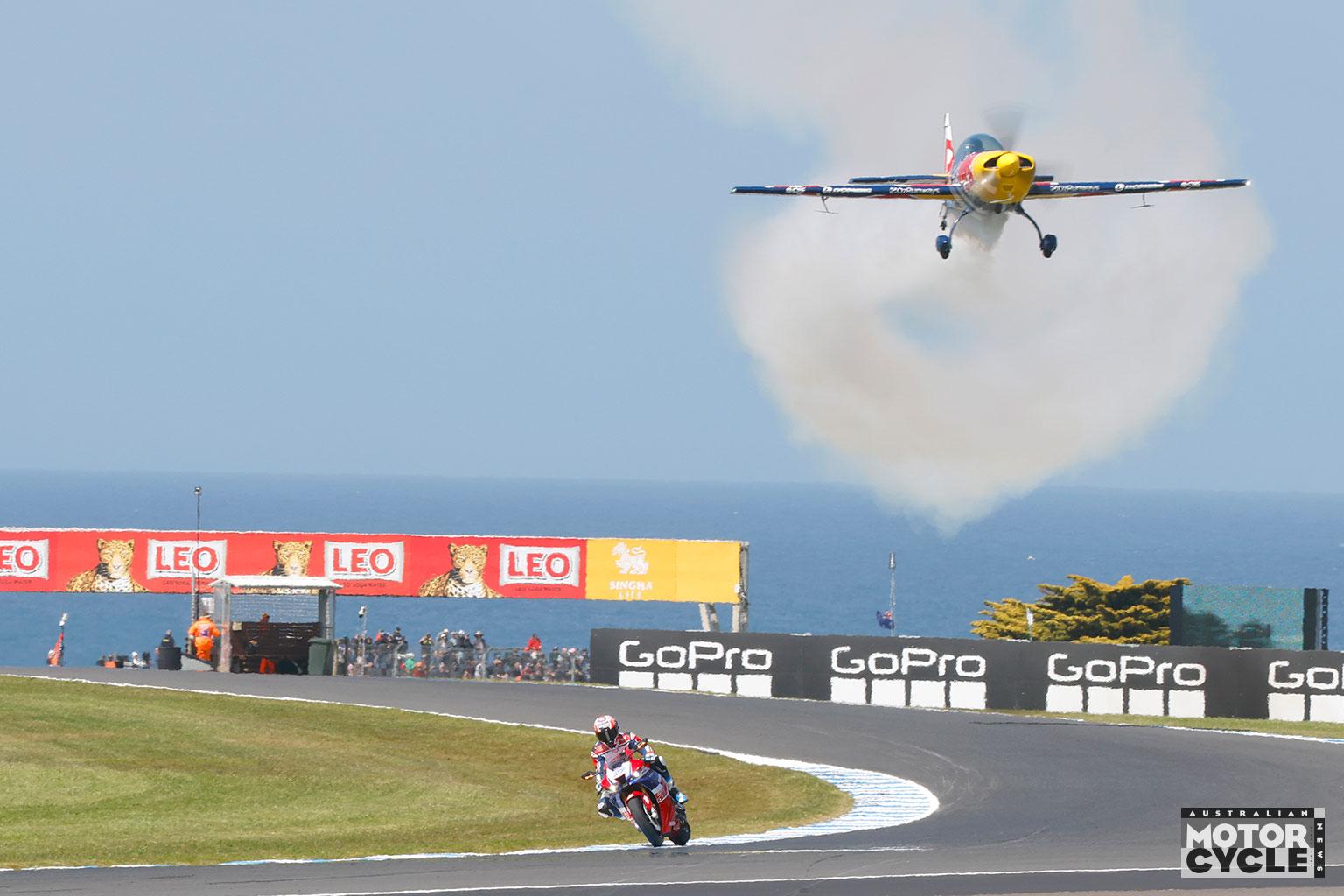
Ninety-five years after the first Australian Motorcycle Grand Prix on Phillip Island – ironically a street race – the Oz title was gone and conceivably will not be coming back.
However, unlike the previous occasions when the track was allowed to fall into such disrepair that racing was no longer possible, Phillip Island’s magnificent stretch of bitumen is still intact, still capable of producing some of the most exciting motorsport anywhere in the world.
Just what form that motorsport will take post-2026 is very much the burning question.
Island memories
John ‘Roothy’ Rooth
I’d have ridden to the first Phillip Island GP as a punter if a cock-up hadn’t seen me running Two Wheels. Same glitch meant I pulled some of the first laps of the track for a photo shoot before the race. I’m writing this while riding Poland with Nevermind to celebrate turning 70. That’s 60 years of solid riding from the first farm bike on. Yet that handful of flat-out laps on a stock VFR is seared into my brain. Swooping through Barnard’s corners, blasting out and clamping down before twisting into the next turn with a glimpse of ocean. Surely the nearest thing to soaring a Spitfire in 2D. Then being there when an Australian won the first ever Australian Grand Prix, the proudest moment ever for an Aussie motorcyclist thanks to our Wayne and our Phillip Island. Get stuffed, Adelaide.
Hamish Cooper
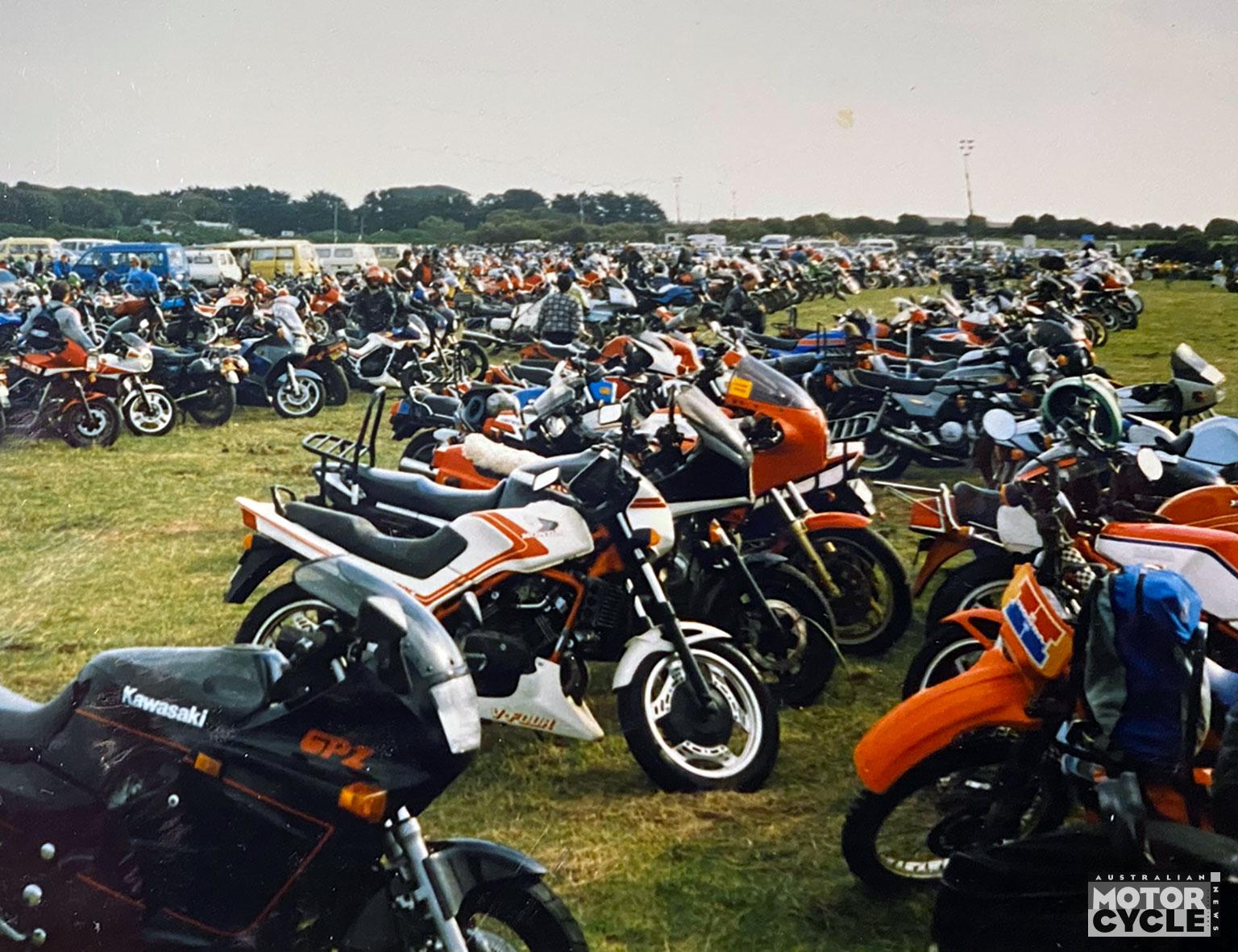
By any standards, 1989 was a year to remember for me. On the spur of the moment I tied a sleeping bag and backpack to my road-registered Rickman Triumph racer and rode interstate to the first Oz GP. I’d been to Easter Bathurst a few times but had never seen so many motorcycles parked in a paddock before. Then Wayne won and I experienced a track invasion for the first time. On the long ride home my neck muscles went into spasm thanks to the clip-on ‘bars – but the Triumph just droned on and on. At a dusty country fuel stop, an English tourist ran up and shook me by the hand, saying he’d never expected to see a Rickman in Australia. A few months later I was sitting at Rhencullen on the Isle of Man, equally amazed as I watched the wailing rotary Nortons getting airborne. What a year!
Kel Buckley
In 2005, four mates and I hired a Kia Carnival in Sydney, threw some tents and sleeping bags in the back and headed to Phillip Island. I was the only MotoGP fan – the others weren’t even into bikes, so why they agreed remains a mystery. We rolled into the campground after dark on Friday in the pouring rain, unaware that you need to arrive Thursday morning to claim your patch. We had nowhere to camp, no supplies and the food trucks had closed. A group of blokes with a very well-equipped camp offered five wary young women some space. Turns out their intentions were genuine and we spent the weekend laughing, partying and grinning until our faces hurt. We loved it so much we returned year after year for more than a decade, and hung out with the same group of guys each time. Good people make great memories.
Peter Bom
I live practically next door to the TT Circuit Assen in the Netherlands, yet by far my best racing memories come from the 17 times I visited Phillip Island on the other side of the world. I worked there in every class except MotoGP. For European teams, every race at Phillip Island felt like a holiday; we stayed in seaside vacation homes and had daily fun driving V8, rear-wheel-drive rental cars on the gravel roads. We even learned a trick from Rossi’s crew: remove the air filter and “the engine speaks better”. Of course, things went wrong sometimes, but fortunately, Chris Vermeulen taught us that the police won’t ask questions if you claim you were startled by a koala – a protected species – crossing the road.
Alan Cathcart
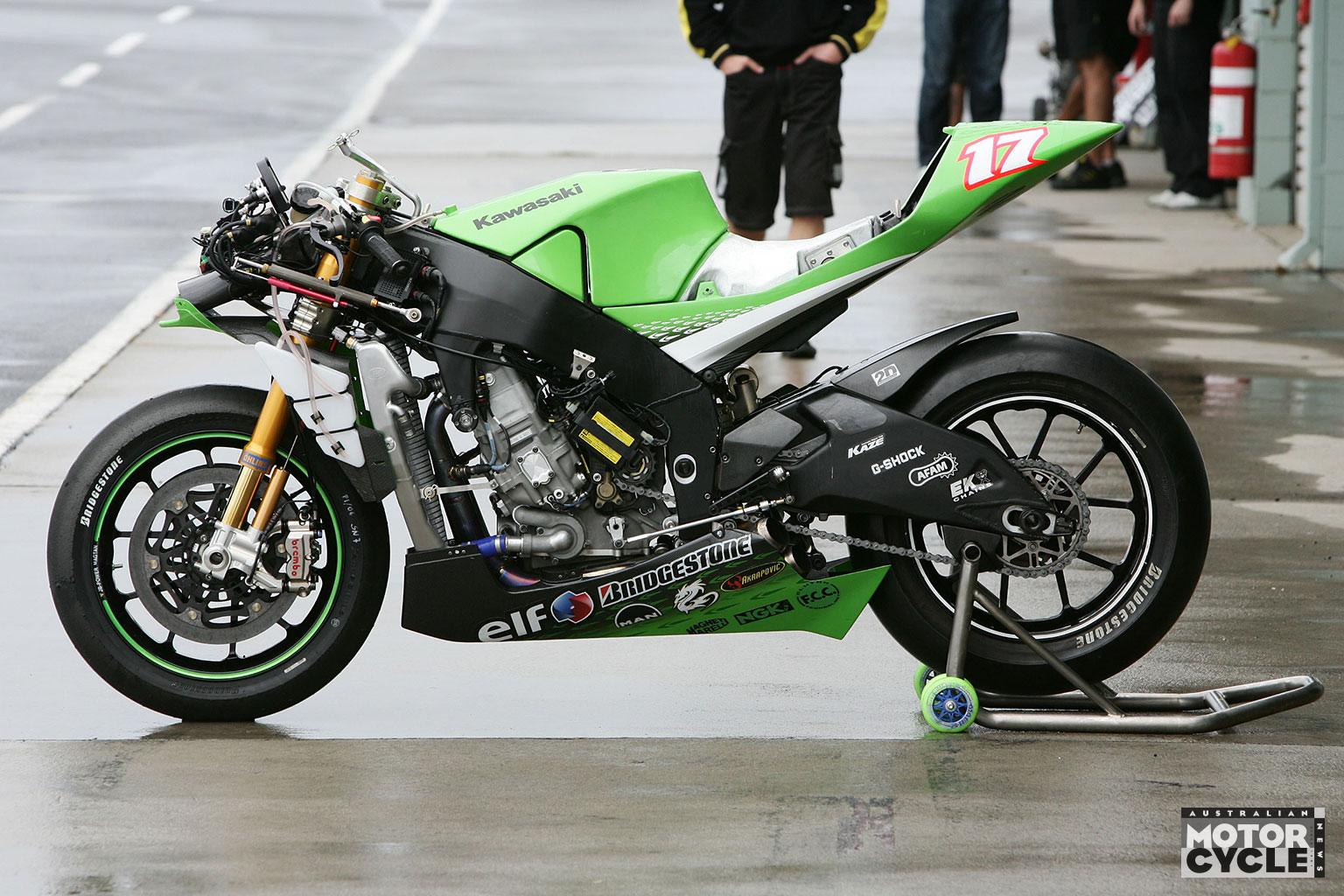
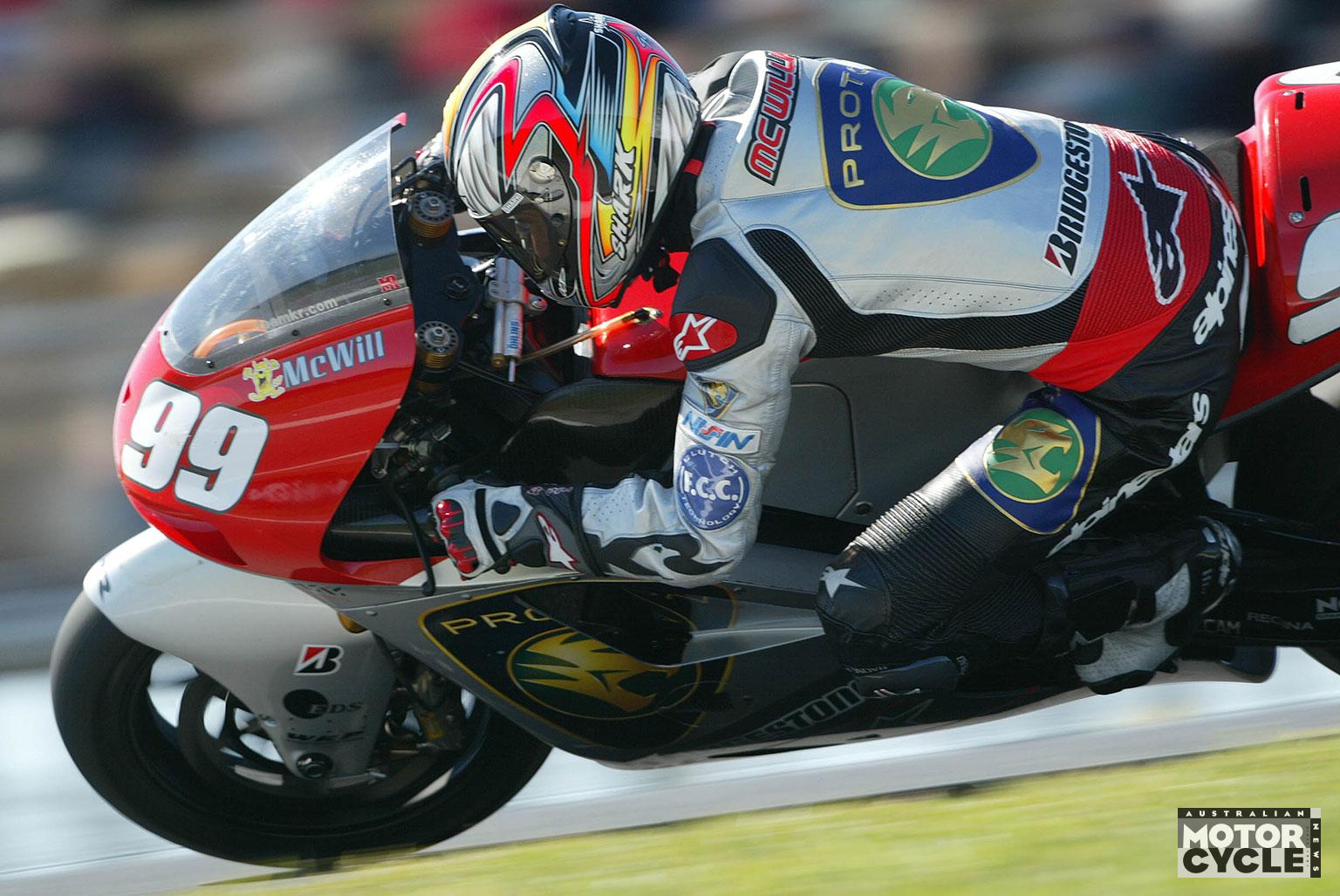
Aside from the 27 editions of the annual 50-race Island Classic, which grew into the most spectacular no-holds, nail-biting, tyre-smoking, handlebar-rubbing festival of historic motorcycle sport to be seen anywhere in the world, for me Jeremy McWilliams’ legendary, historic pole position for the 2002 Australian GP race on the 500cc two-stroke Proton KR3 triple remains an all-time Island highlight. Despite riding the smallest capacity and least powerful bike on the grid in the transition era for the new MotoGP class against the dominant new 990cc four-stroke machines, his high corner speeds secured a lap time of 1:31.919 to break the 1:32 barrier. This remarkable feat stands in history as the final premier-class pole position ever achieved by a two-stroke motorcycle.
Mark Bracks
The Oz GP is a pilgrimage. I returned from England to attend the first one and that was an epic boys’ road trip. There were many more journeys before I moved to the Island permanently. There were very few boring, processional races over the three classes due to the unique qualities of Phillip Island. And it’s the place where my dreams and career took a massive upswing. Additionally, it was also what happened offsite – the fun and frivolity in Cowes, especially at the Isle of Wight Hotel in the first two years, and the first years after its return in 1997 were brilliant. And then there was the invite-only Honda after party… But as far as the best memory of races, it’s hard to go past those very first ones, when an Aussie won the Aussie GP. Thanks for the memories.
Neil Morrison
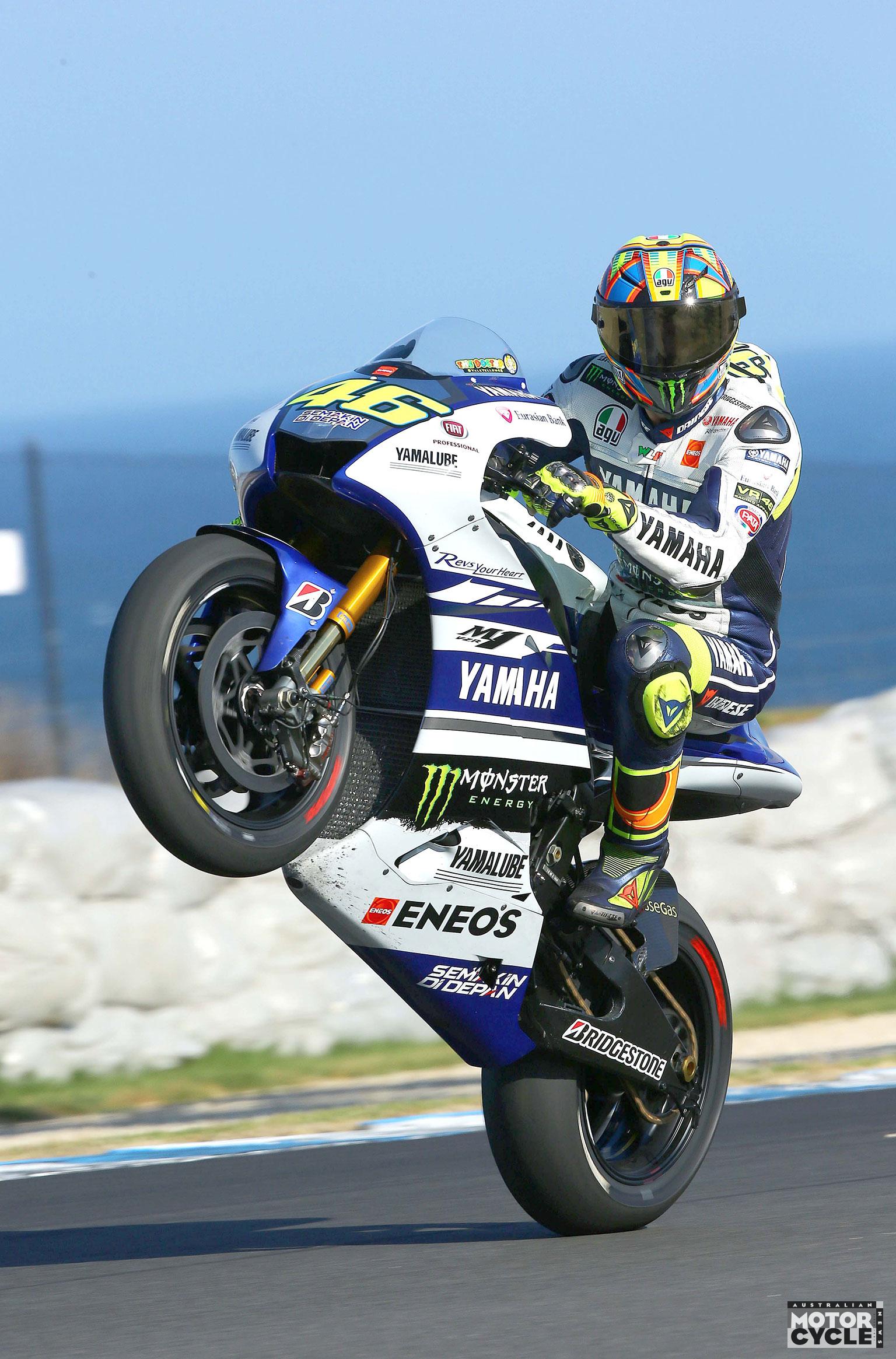
I was still working as a teacher in Barcelona in 2015, my first year as a MotoGP journo. I’d saved up just enough money to cover the trip to Australia at the end of the season. After a week of partying with old Irish and Scottish friends in Melbourne, I straggled down to Phillip Island for the first time to sleep in a room with three colleagues crammed in. To be honest, I could’ve slept in a ditch and still been on Cloud Nine. Standing on the inside of Lukey Heights during practice was the fulfillment of a lifelong dream. Oh, and it just so happened that I saw one of the best-ever races on Sunday – as Marquez, Rossi, Lorenzo and Iannone went at it from lap one, changing places a staggering 52 times over 40 minutes and 33 seconds. What a trip!
Mat Oxley
The first year was the best. In April 1989, Australia was in the grip of Wayne Gardner fever. The Wollongong Wild One had lifted the country’s first MotoGP crown 18 months earlier and was in with another chance in ’89. We flew into Melbourne from Japan, where Gardner had finished the season-opening GP in fifth, after crushing a testicle while saving a crash. We couldn’t believe it when we hit the road to Phillip Island. Gardner flags flew from lamp posts, houses, hotels, office blocks, everywhere! And all the way there! The race was epic: WG beat Wayne Rainey and Christian Sarron by a fraction. On the last lap, when WG finally seemed to have secured victory, the crowd’s roar drowned out the bikes. Unforgettable.
Gordon Ritchie
PI memories? I have a thousand. My latest-ever finish to a ‘Sunday night’ of WorldSBK deadline work… at 05.30 on the Monday morning. The much-missed Fergus Cameron kindly offered me, unbidden, the keys to his BMW X5 car for a couple of solo laps, after a winter test day. I had just casually mentioned that I had never ridden/driven around the track before… A one-to-one, every nut and bolt, rundown of the first full factory HRC VTR1000SP-W Honda twin from the project leader himself. Watching Anthony Gobert win ‘that’ WorldSBK wet race on the SB8R Bimota, from inside a press room full of dumbstruck fellow witnesses… Being crushed inside Valentino’s pit garage by massed Rossi-maniacs when he won the title at PI… There are so many more.