The bike was a gamble. The rider was a genius. Alan Cathcart discovers the thinking behind Ducati’s radically different Desmosedici GP7 in an exclusive interview with then Ducati Corse boss Filippo Preziosi
Let’s face it, we all like it when the little guy wins. When the underdog upsets the odds. When David beats Goliath. Like when Casey Stoner beat Valentino Rossi. When Bridgestone beat Michelin. When Ducati beat Honda, Yamaha, Suzuki and Kawasaki to win all three 2007 MotoGP world titles: Rider, Constructor and Team. It was a triumph of Italian ingenuity, passion and determination, but also of the foresight to gamble on building a motorcycle unlike any of its rivals. A bike that deliberately swam against the tide of paddock PC: The Ducati Desmosedici GP7.
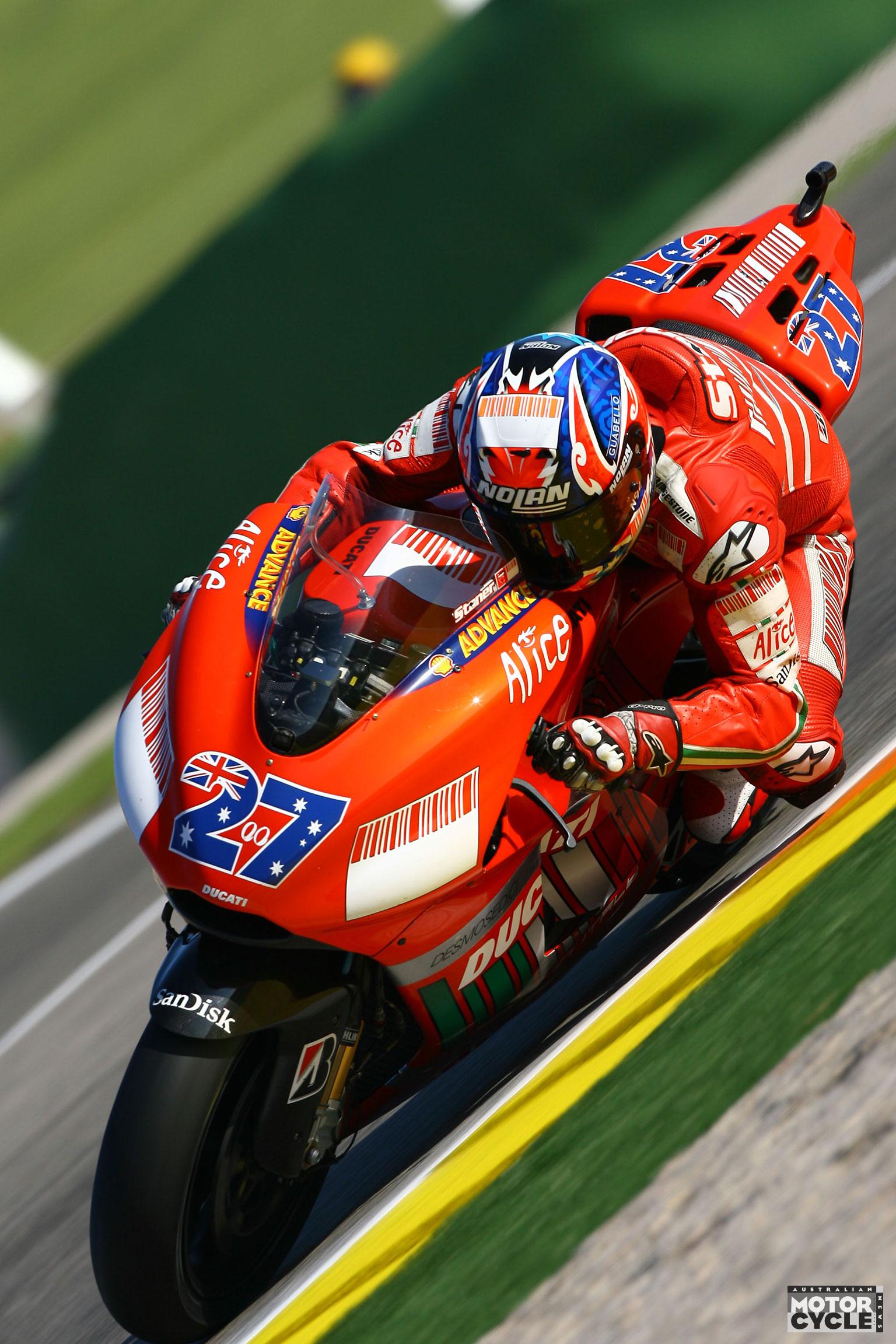
There were ironies galore in Ducati’s domination of the 2007 season. Stoner, a 21-year-old previously regarded as fast but accident-prone during his debut MotoGP season on a Michelin-shod Honda, became world champion with a remarkable display of speed and consistency.
He was the only rider to score points at every round, finishing on the podium 14 times in 18 races and winning 10 of them. Teammate Loris Capirossi added an 11th Ducati victory.
Stoner led 267 laps during the season, compared with just 77 for championship runner-up Dani Pedrosa and 66 for third-placed Rossi. Is that dominant, or what?
Ducati became the first non-Japanese manufacturer to win the premier-class world championship in 33 years, since MV Agusta’s final 500cc crown with Phil Read in 1974. Meanwhile, just 20km away in Maranello, Ferrari regained the F1 world championship that same season. Both Italian manufacturers were sponsored by Marlboro, ran on Bridgestone tyres and used Shell fuel.
For Ducati enthusiasts who had once been dismissed as hopeless eccentrics for buying motorcycles with desmodromic engines built in Bologna, it was payback time.
Another 15 years would pass before Pecco Bagnaia delivered Ducati’s next riders’ championship in 2022. But the foundations of Ducati’s subsequent success were surely laid by Stoner and the GP7.
Four laps of glory
The opportunity to ride Casey’s championship-winning GP7 came at the annual press test following the season-ending Valencia Grand Prix. I was fortunate to be one of just four testers invited to sample all five factory racers, alongside Randy Mamola, Kevin Schwantz and Alex Gobert. There were just two problems.
With 30 journalists waiting to ride the Ducati, I would get only four laps on Casey’s cannonball, compared with 10 each on the Yamaha, Suzuki and Kawasaki. And Ducati wanted me to go first.
“We know the track conditions aren’t so good first thing in the morning after the overnight cold, so we need an experienced pair of hands to start the test,” explained Ducati PR executive Federica de Zottis. “You’re up first!”
Thanks, Fede. Age before beauty, eh? Couldn’t Randy or Kevin go first? Or perhaps I could have another run when the track was warmer? Apparently not. To make matters worse, I was entrusted with scrubbing in fresh tyres for everyone else.
Naturally, I did as I was asked. Apart from a couple of substantial slides through the first right-hander in Valencia’s infield, caused by cold tyres and my considerably slower pace than Casey or Loris, I survived without too many frights.
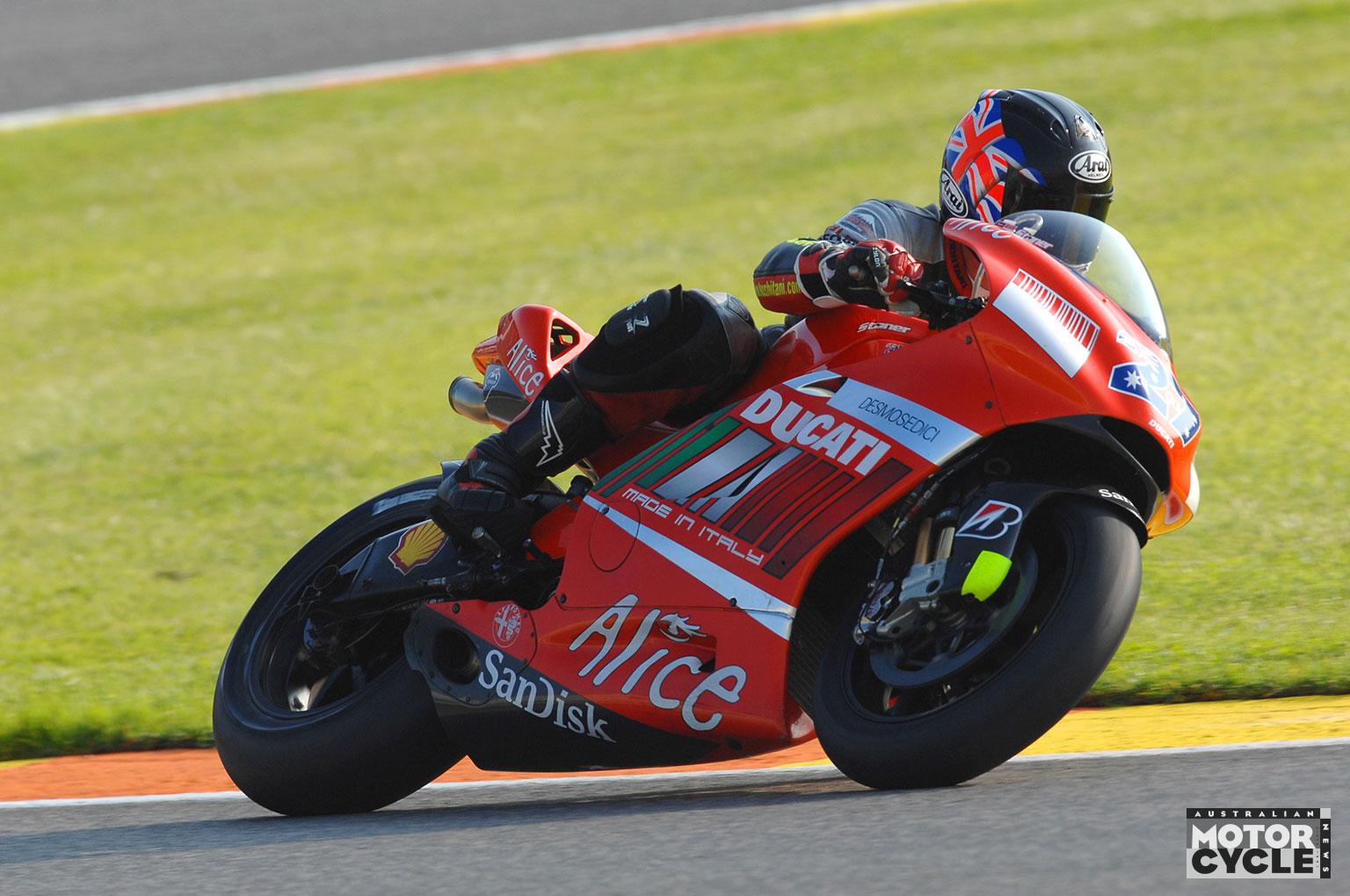
But those four laps were doubly frustrating because the Ducati was so different from its Japanese rivals, and so much more responsive to ride. It was simply a better package.
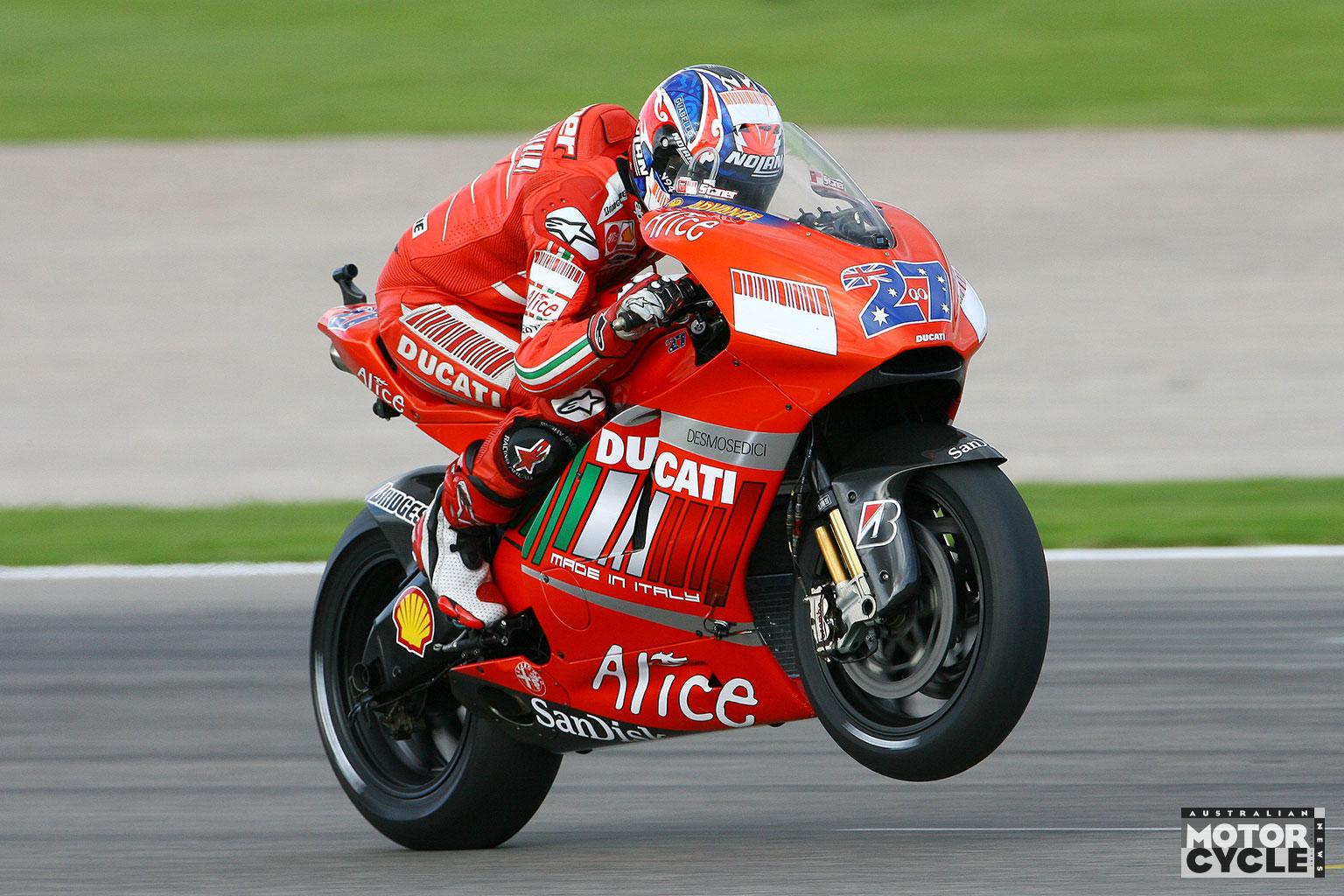
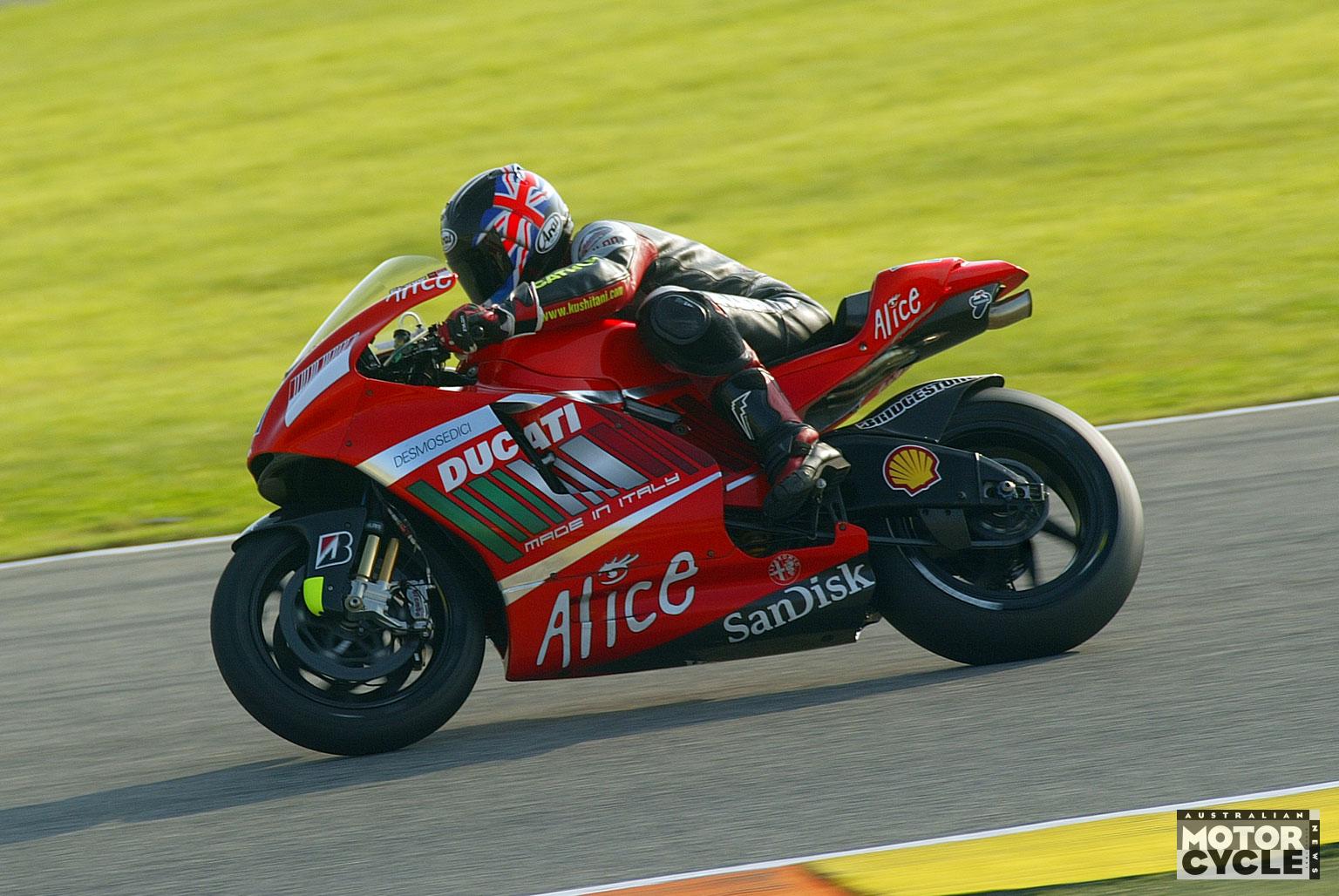
The Ducati was longer, lower and more voluptuous, a motorcycle you sat in rather than on, unlike its higher-tailed Japanese rivals.
The seat was noticeably lower, while the chassis felt longer and more balanced.
Compared with the previous year’s 990cc GP6, the 800cc GP7 also felt smaller and less bulky, probably thanks to the reduced inertia of its smaller-capacity, higher-revving engine.
But the riding position was especially distinctive, with extremely high footrests and widely spaced, relatively flat ‘bars.
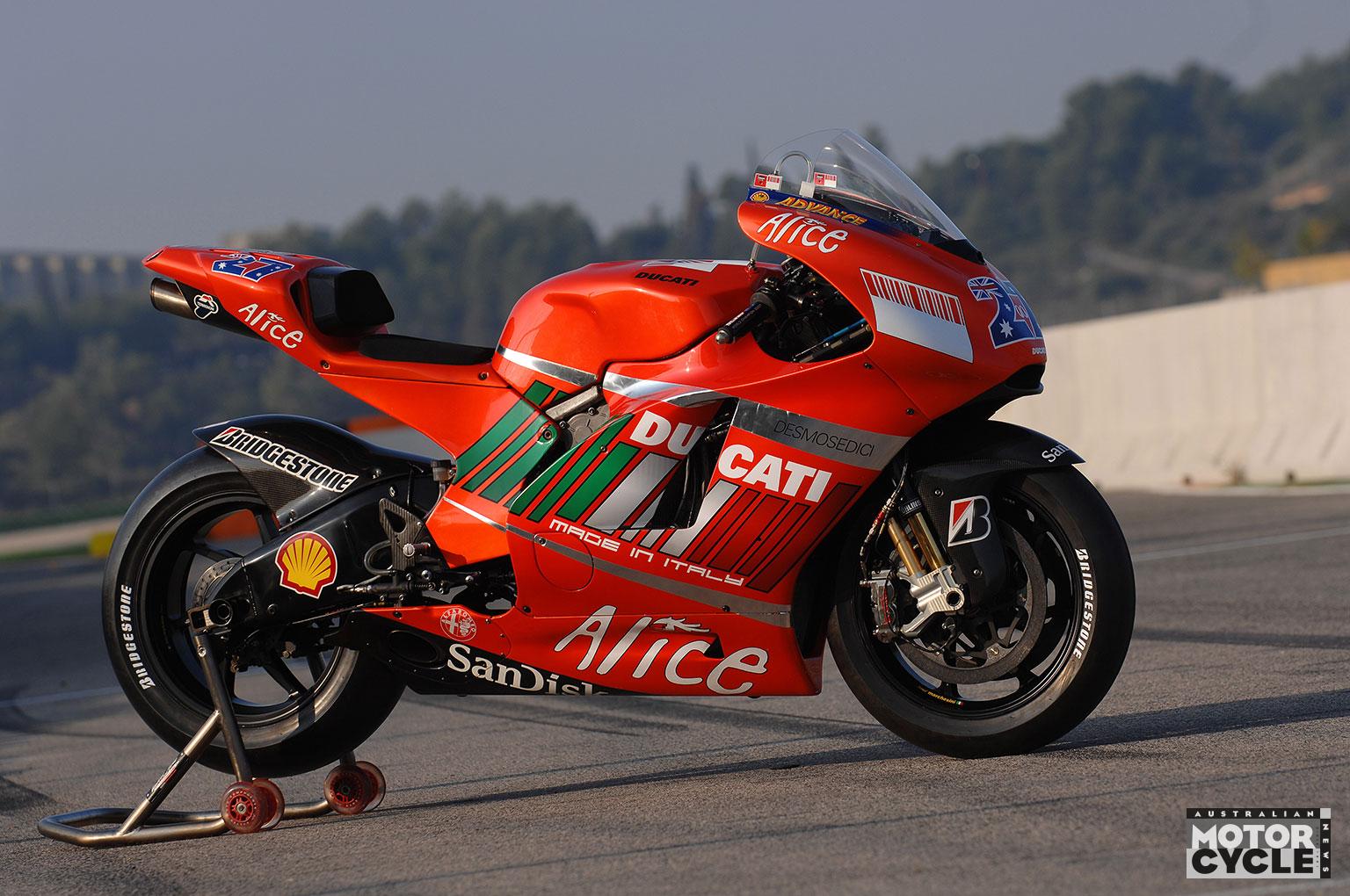
I’d expected steeply dropped clip-ons from a rider who had graduated through the 125cc and 250cc Grand Prix classes.
“Don’t forget I’m a dirt-track graduate; that’s where I learnt how to race back home in Oz, as a kid!” Casey explained when I asked him about the ‘bars. Watching him battle Pedrosa for victory at Valencia the previous day, however, suggested there was considerably more to his riding style than that.
The Stoner method
You could see that Casey worked harder physically through Valencia’s many corners than the seemingly smoother Honda rider.
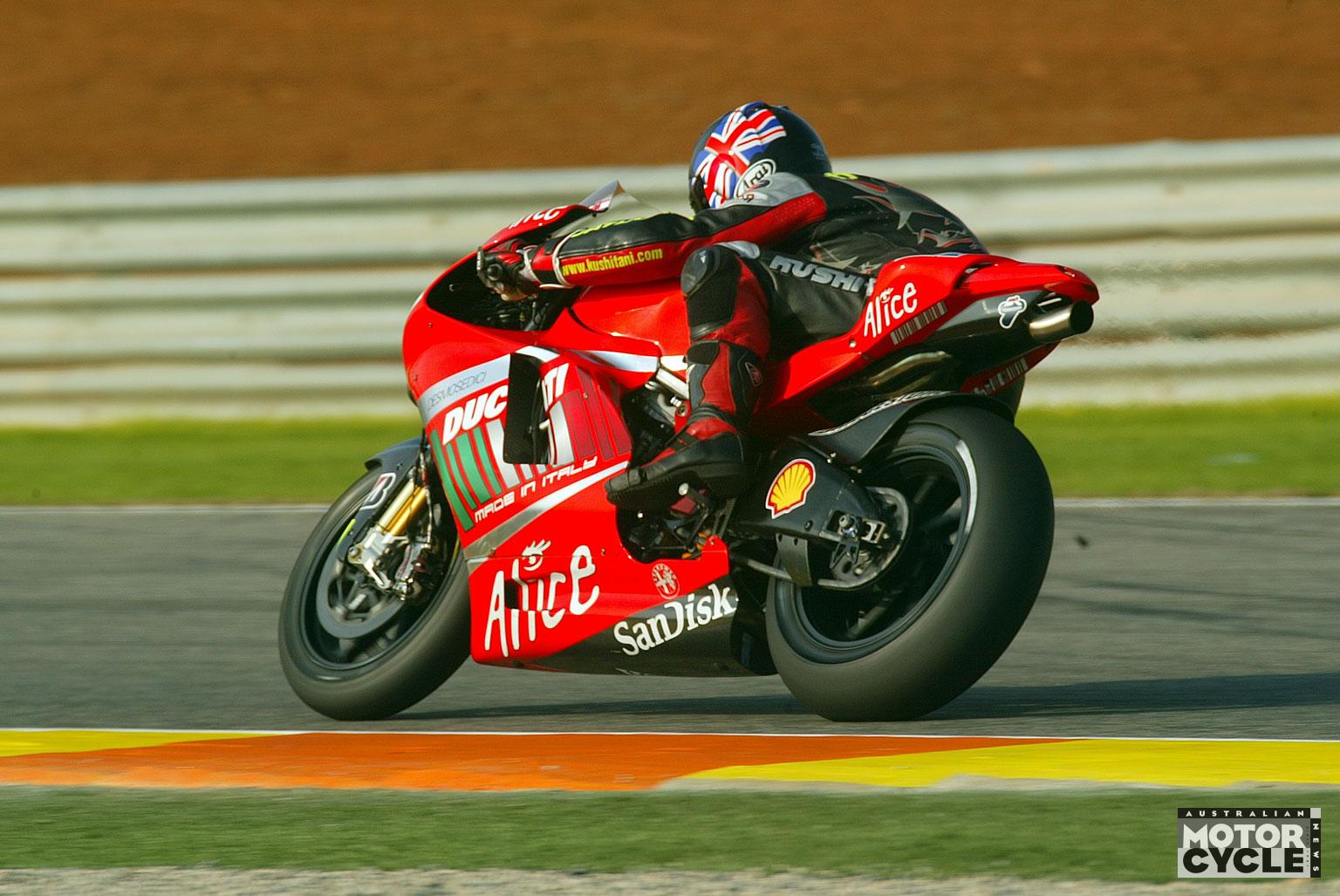
That difference reflected the contrasting philosophies behind their motorcycles. Honda’s RC212V was built almost like an enlarged 250cc racer, designed to maintain corner speed with the rider tucked tightly aboard. The more powerful Ducati demanded a different approach. It had to be stopped, turned and fired out of corners like a two-wheeled catapult, exploiting its superior power and torque.
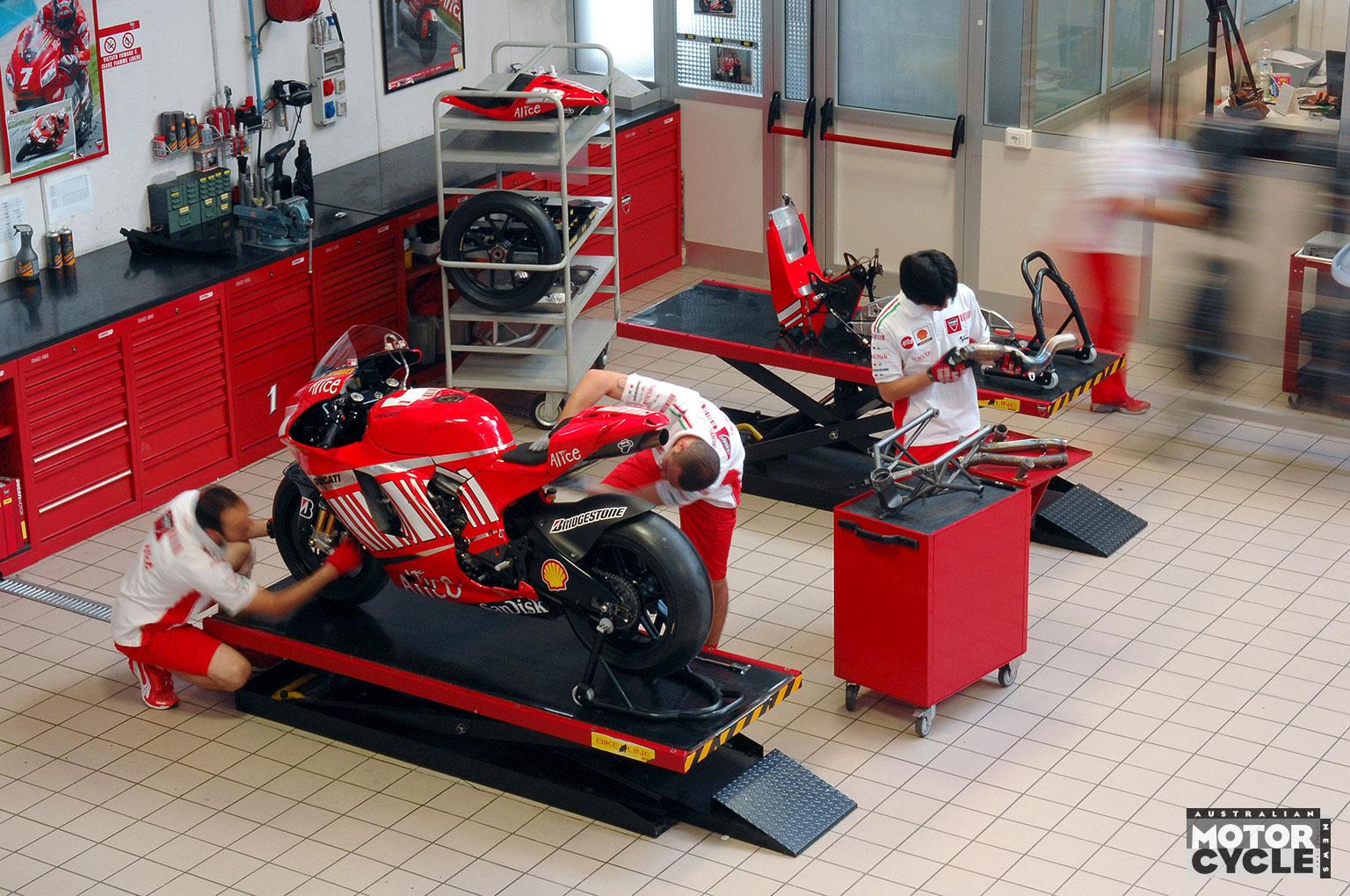
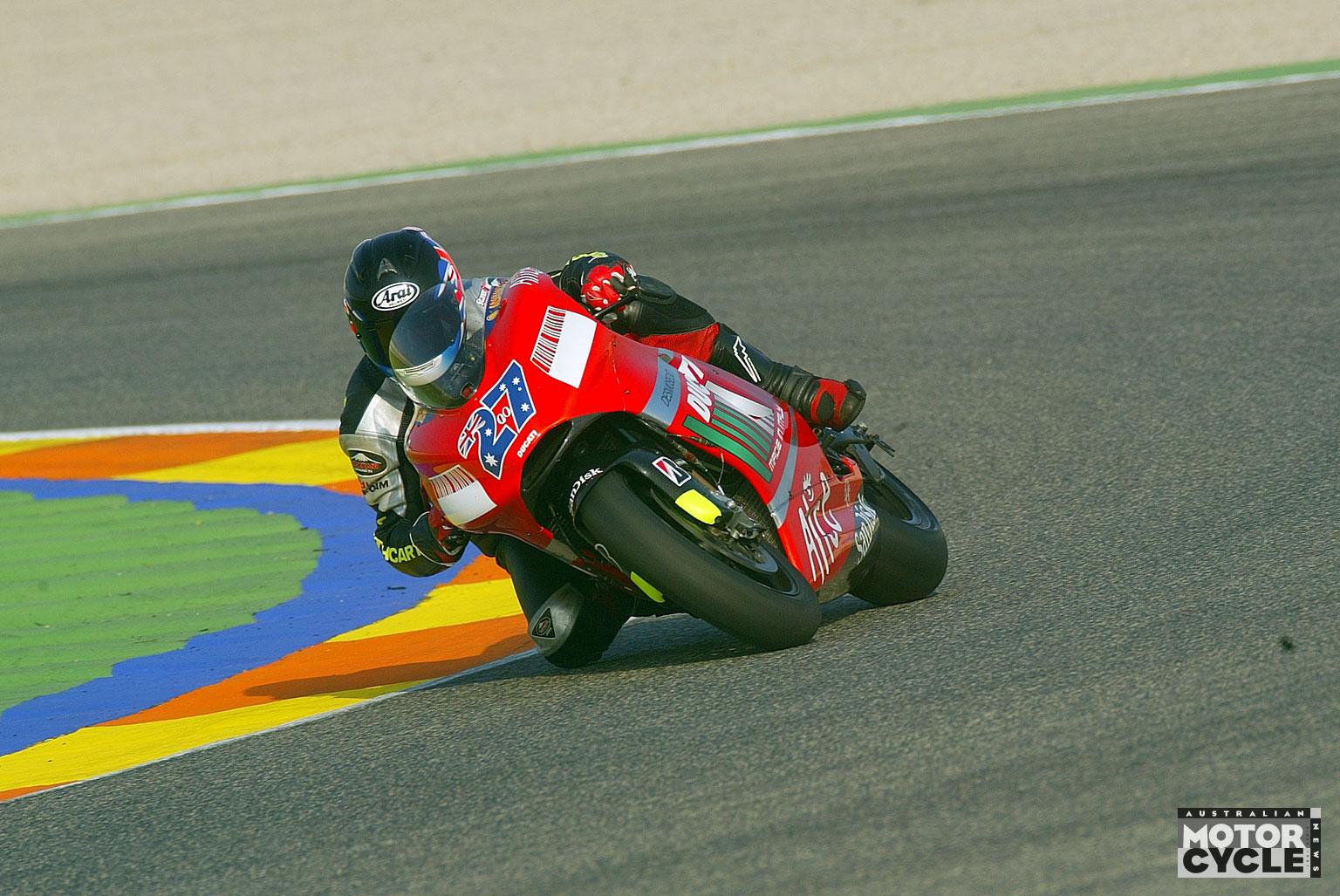
That required leverage to help lift the bike onto the wider, grippier section of its rear Bridgestone as early as possible. Hence the flat ‘bars. But maintaining speed through faster corners demanded extreme lean angles, as much as 60 degrees according to Ducati, which explained the unusually high footrests.
This wasn’t a motorcycle that just anyone could climb aboard and ride quickly. Capirossi’s difficulties adapting to the GP7 that season demonstrated as much, despite his experience and two 125cc world championships.
Stoner’s particular combination of dirt-track instincts, physical riding style and extraordinary feel made him precisely the right man for this motorcycle.
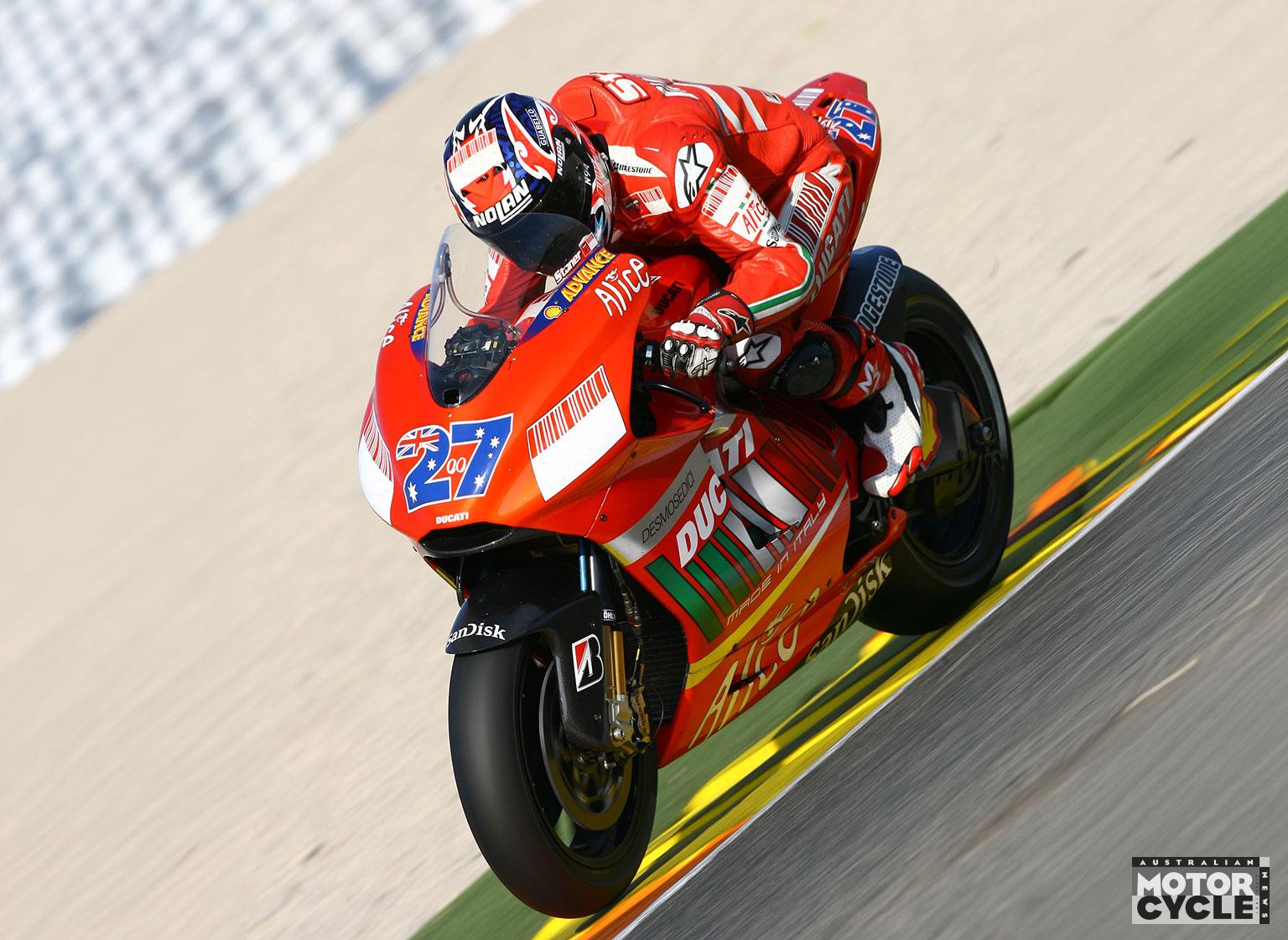
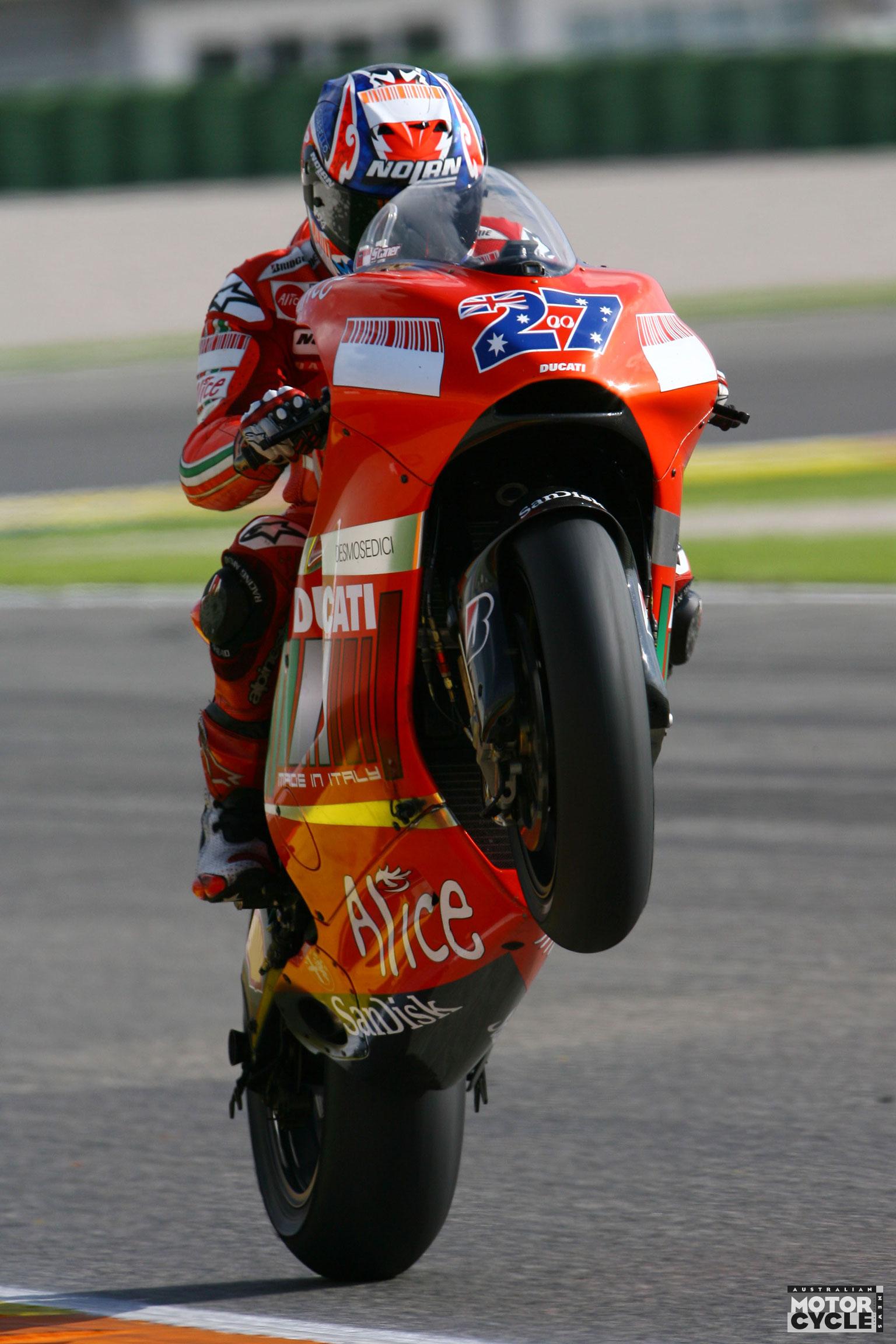
Climbing aboard the Number 27 Ducati, I found myself surprisingly comfortable despite being considerably taller than Casey. He liked plenty of room to move around and dominate the machine physically, so the riding position was spacious.
The exception was those high footrests, which made downshifting the race-pattern gearbox awkward for someone of my height. The gear lever had also been raised to prevent it grounding at extreme lean angles.
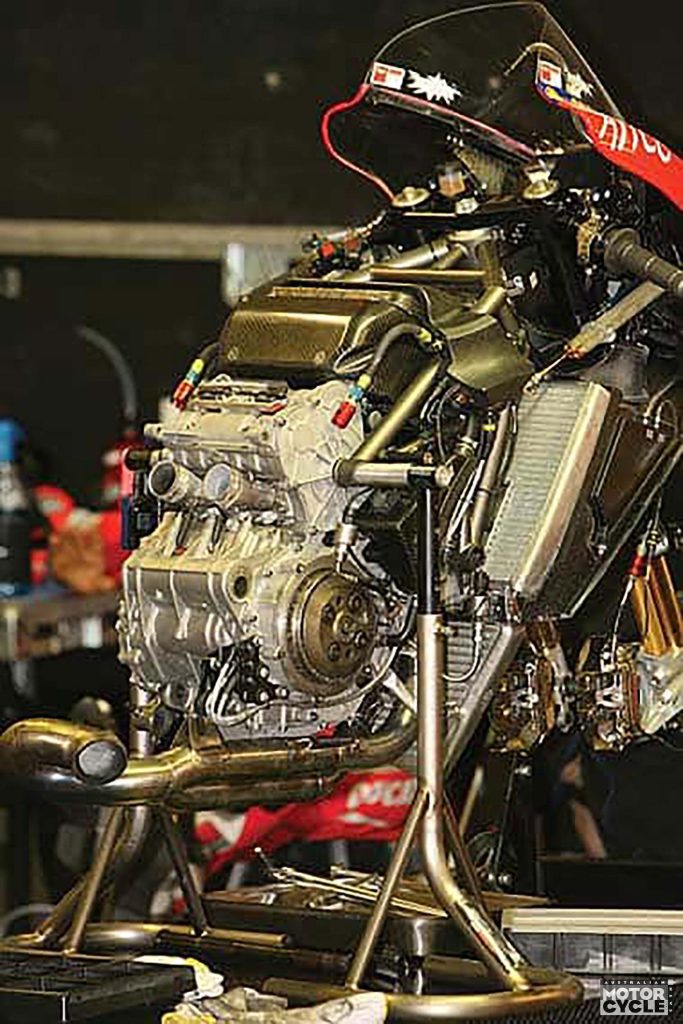
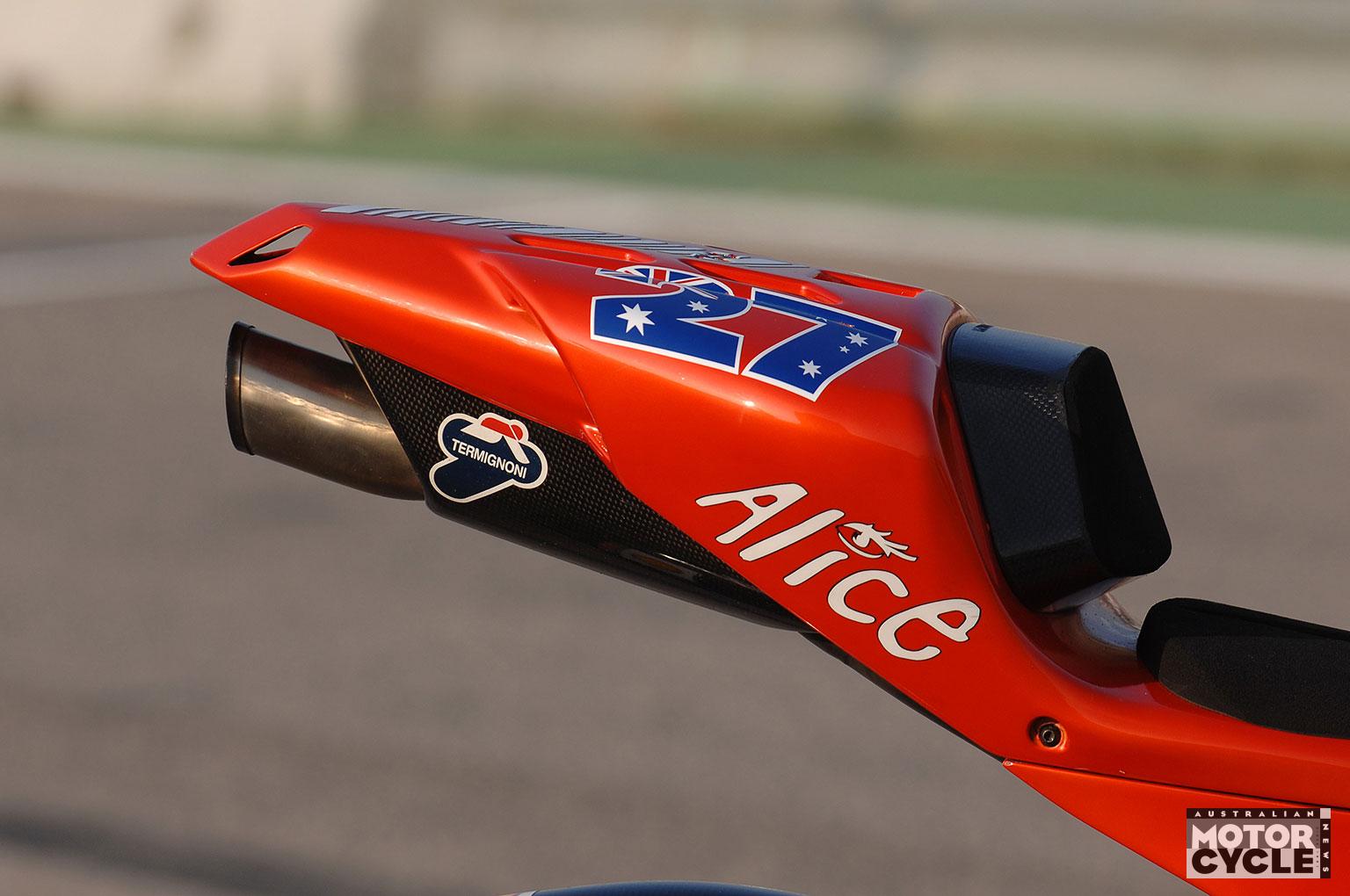
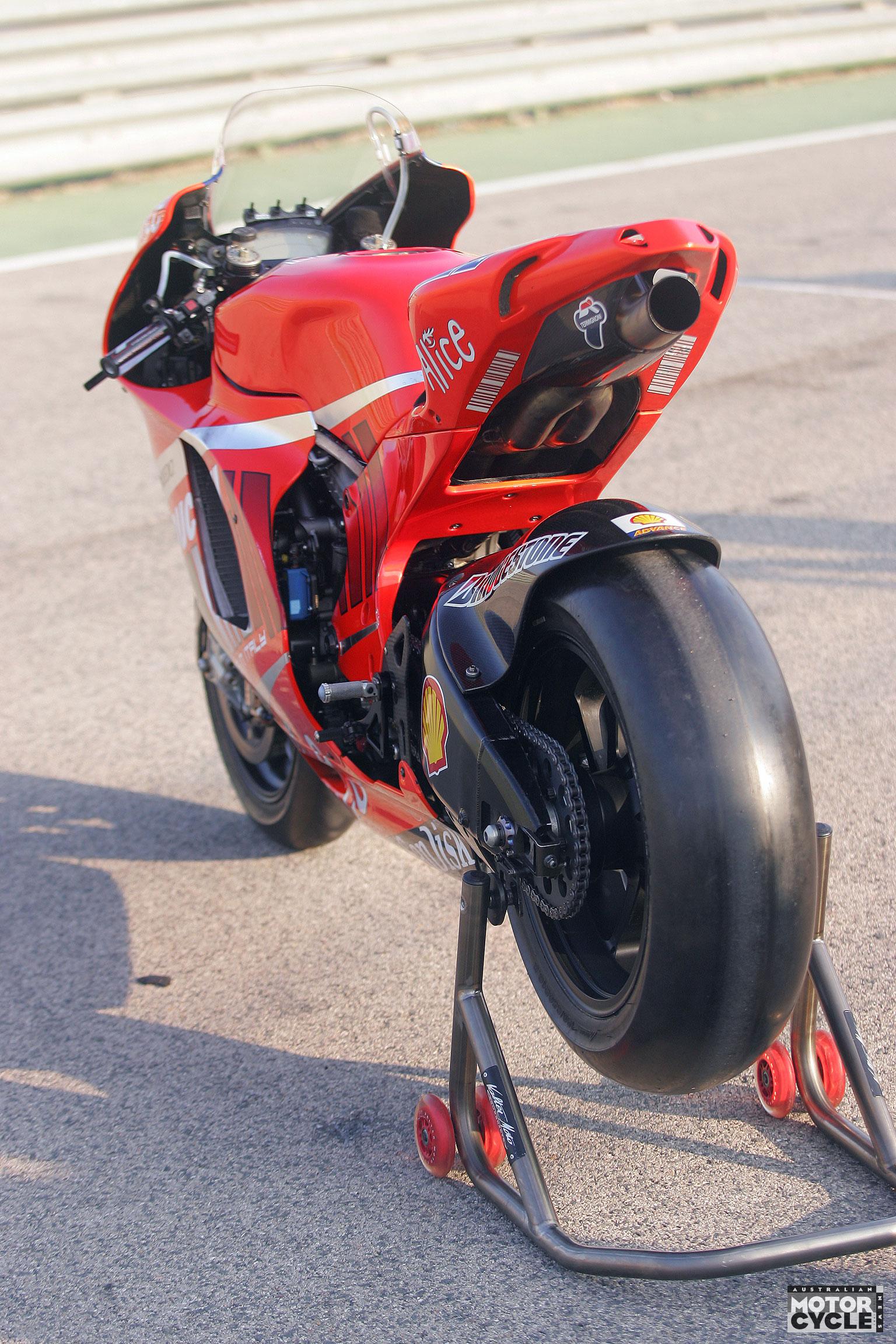
Starting the GP7 on the rollers produced an instant wall of sound from its twin exhausts. The screamer engine had allowed Ducati to return to a two-into-one arrangement on each side, replacing the four separate megaphones required by the previous 990cc Twin Pulse big-banger.
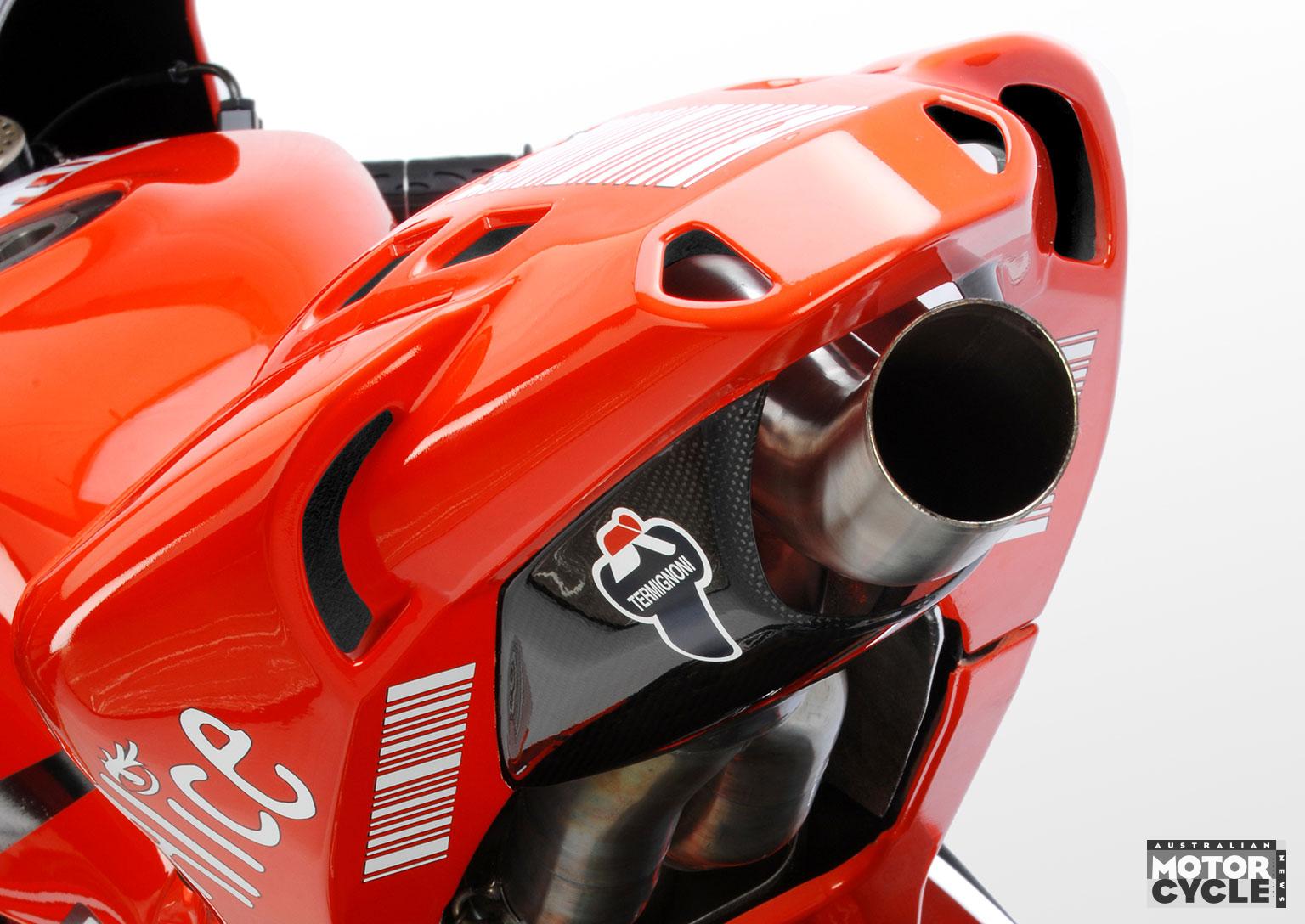
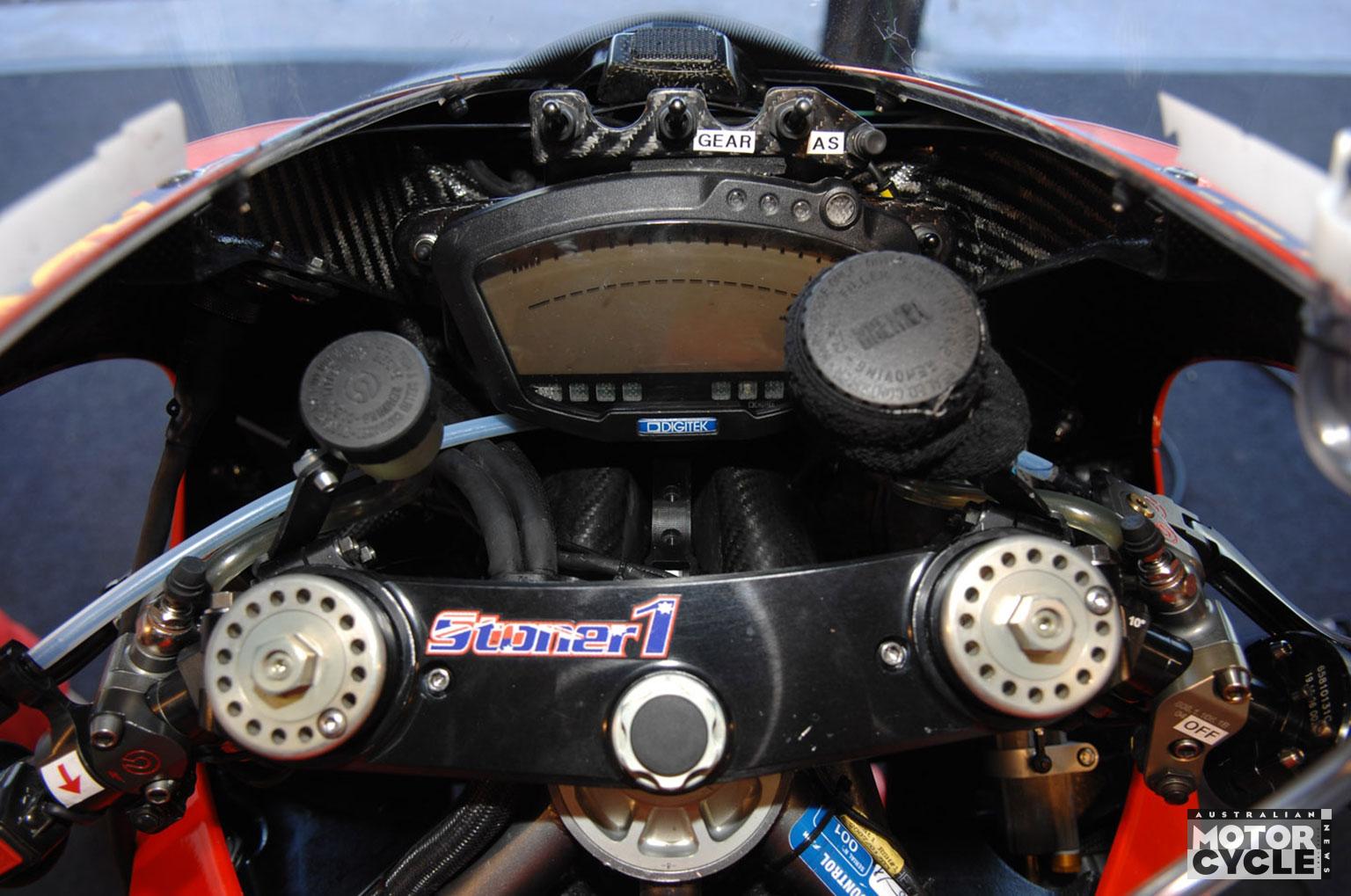
The uneven 3000rpm idle was deliberately set high to help offset engine braking when the ride-by-wire throttle was closed entering a corner. Blipping the throttle produced an angry rasp as the revs climbed across the Digitek dashboard. The earth seemed to move beneath me. And that was before I’d even ridden it.
Power without punishment
I’d expected the GP7’s power delivery to be peaky, with a relatively narrow powerband in pursuit of its Honda-beating performance. Instead, it was almost the opposite.
Although it didn’t pull quite as strongly from very low revs as the Suzuki or Kawasaki I rode that day, the Ducati accelerated fiercely from around 11,000rpm, with a muscular spread of midrange power building towards the 19,000rpm rev limiter fitted for our test. That’s 19,000rpm from an 800cc V4, not a six-cylinder 250 like Mike Hailwood’s Honda!
A row of blue shift lights began flashing around 18,500rpm, signalling that it was time to select another gear. Exiting Valencia’s final corner, the GP7 accelerated like an Exocet missile. Its Magneti Marelli electronics prevented the front wheel rising more than a few centimetres as I powershifted through the gears with the throttle wide open.
With that glorious exhaust note filling my ears and the circuit rushing past in my peripheral vision, it was a serious thrill. One that quickly became addictive.
I used first gear for Turn 2, then second through the following sequence, working the throttle between apexes. The rear stepped out in the first two right-handers, where the cold Bridgestones hadn’t reached their proper operating temperature. I managed to catch both slides.
What about traction control, you ask? Well, that works best when you’re riding the bike as it was intended. In just four early-morning laps, I wasn’t prepared to give it the berries through those right-handers, so never got that side of the tyre properly warm.
Left-handers were another matter. Exiting the infield chicane and the final corner onto the pit straight, I could revel in the Ducati’s tremendous drive while its electronics quietly helped the rear Bridgestone find traction.
There was no obvious sensation of traction control intervening. No machine-gun stutter, no abrupt interruption to the power. Just a reassuring sense of unseen control as the system managed ignition, fuelling and throttle response. I had to remind myself not to get too pleased with myself. This was strictly showbiz. After all, it had taken F1 great Michael Schumacher four hours, rather than my four laps, to record an impressive MotoGP qualifying time aboard this very motorcycle at Valencia, helped by a tow from Randy Mamola.
More than a missile
Perhaps the biggest surprise was how smoothly the Ducati responded when I opened the throttle hard exiting a corner. The massive Brembo carbon brakes provided wonderfully controlled stopping power, allowing me to brake deep into turns. The GP7’s low build, long wheelbase and carefully developed slipper clutch also made it remarkably stable under heavy braking.
Then, as I picked up the throttle, the electronics softened the initial response without blunting the acceleration that followed. There was none of the jerky pickup or brutal closed-to-open throttle response I’d encountered on other racing motorcycles. This was particularly surprising given the raw-edged roar coming from the titanium exhausts. The soundtrack promised aggression, but the delivery was beautifully controlled.
Filippo Preziosi and his engineers had mapped the engine and electronics to make this world championship-winning motorcycle astonishingly manageable. Admittedly, I didn’t experiment with the various traction-control settings or engine maps available through the cockpit controls. Four laps were barely enough to form an impression, and my main priority was bringing the motorcycle back in one piece.
But although the Desmosedici engine was the star attraction, it was the complete GP7 package that impressed me.
Apart from the tiny, agile Honda, the Ducati seemed to change direction better than its rivals, particularly through Valencia’s two chicanes. It flicked from side to side much more willingly than the previous 990cc GP6. And where that motorcycle tended to push its front wheel through the long left-hander over the hill towards the final turn, the GP7 held a much tighter line there.
I used fourth gear there. Casey used fifth, but I wasn’t quite that brave!
In a wonderful example of less being more, the smaller 800cc Ducati was consistently faster around circuits than its more powerful 990cc predecessor. Even its straight-line speed was astonishing. The GP6 had reached 341km/h at Shanghai in 2006, but Stoner’s GP7 was only 4km/h slower at the same circuit a year later, recording 337km/h despite surrendering almost 200cc.
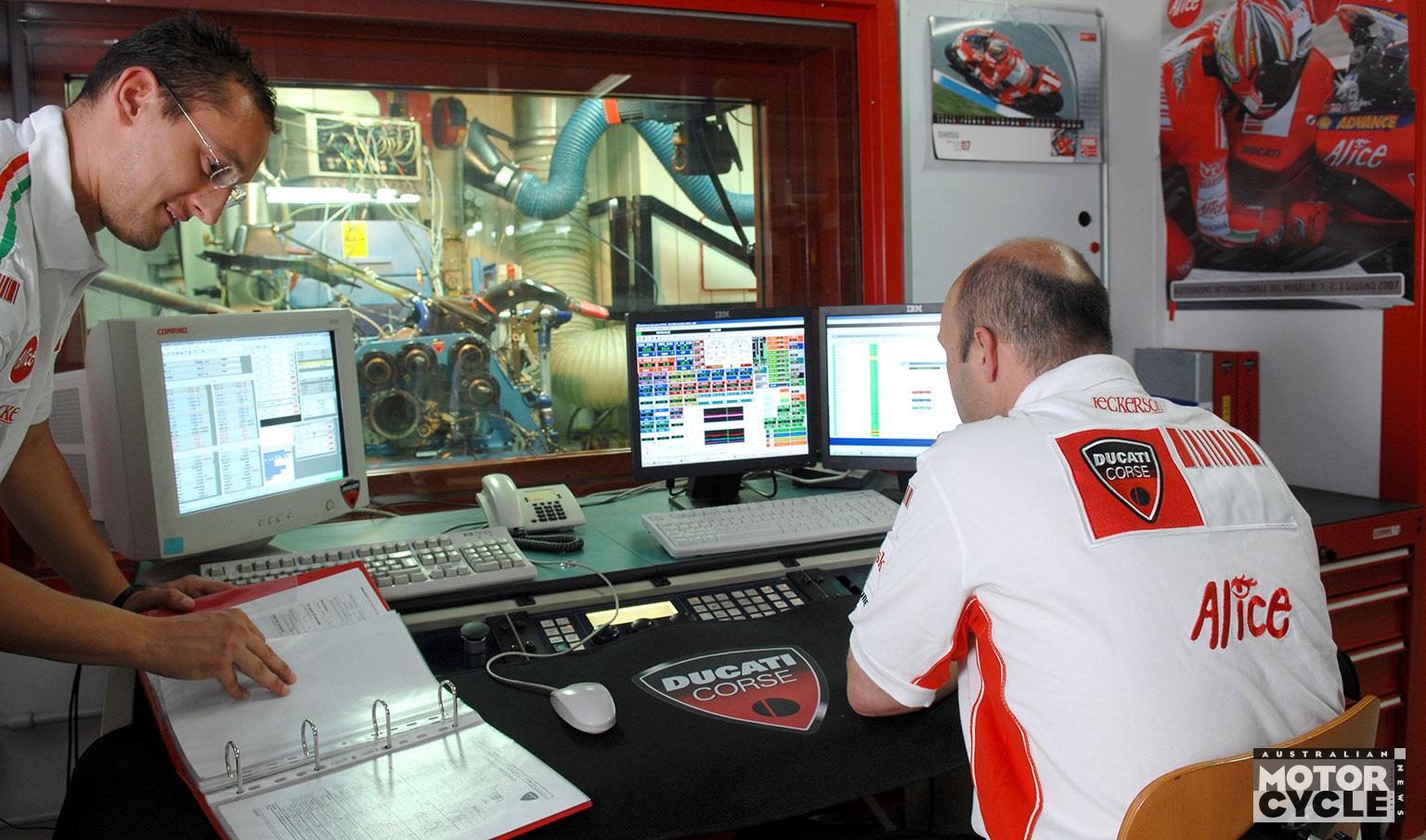
Before riding the GP7, I’d wondered whether Ducati’s championship success was primarily down to its powerful engine, Bridgestone’s superior tyres or the sophistication of its electronics, as Valentino Rossi had suggested. Now I understood that all three played a part. But there was another ingredient that couldn’t be overlooked: Casey Stoner.
His ability to ride the GP7 precisely as it demanded, extracting the maximum from its unusual combination of strengths, was fundamental to Ducati’s achievement.
But why had Ducati built such an unconventional motorcycle in the first place? And how had a relatively small Italian manufacturer succeeded where the Japanese giants had failed?
For the answers, there was only one man to ask.
The man behind the machine
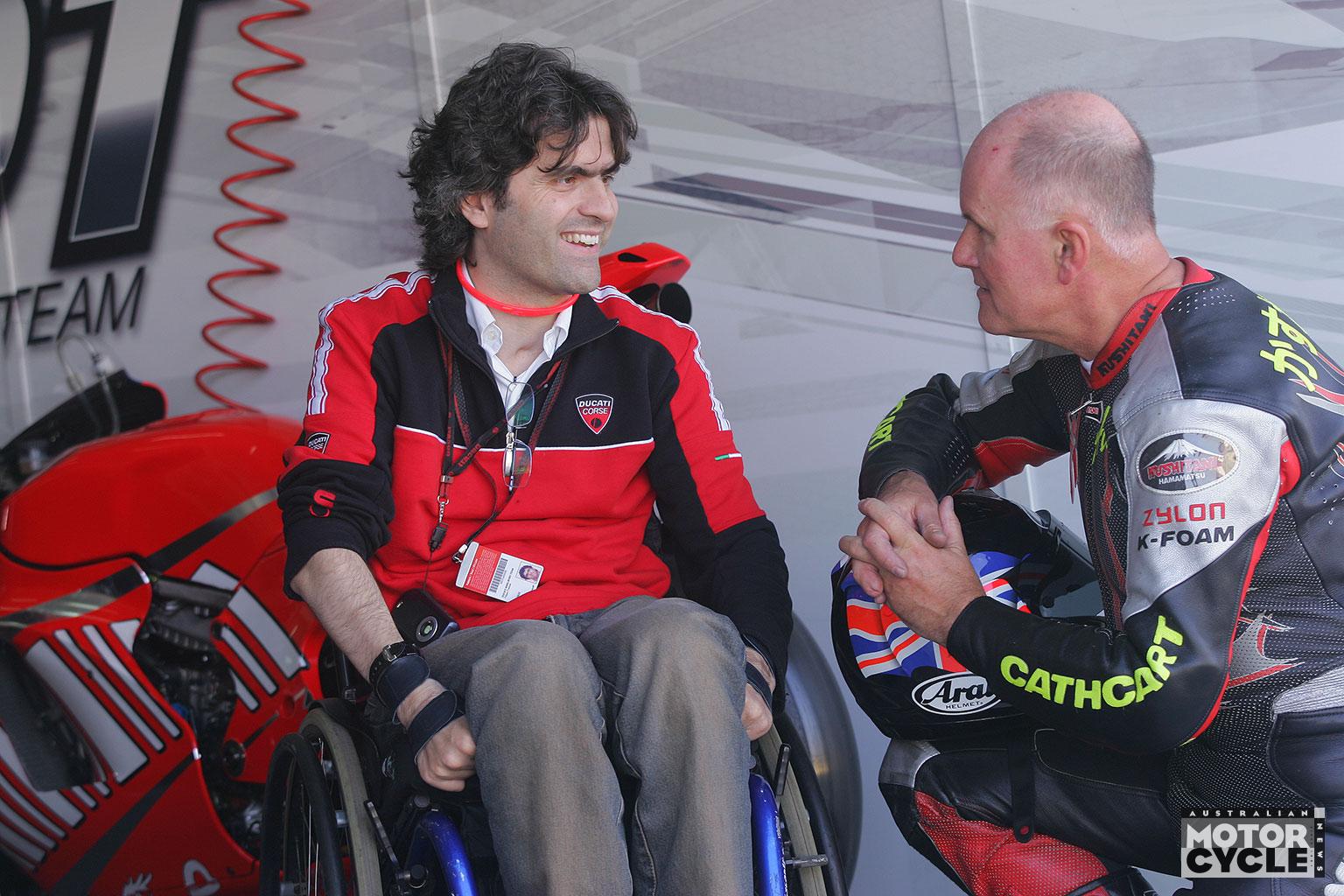
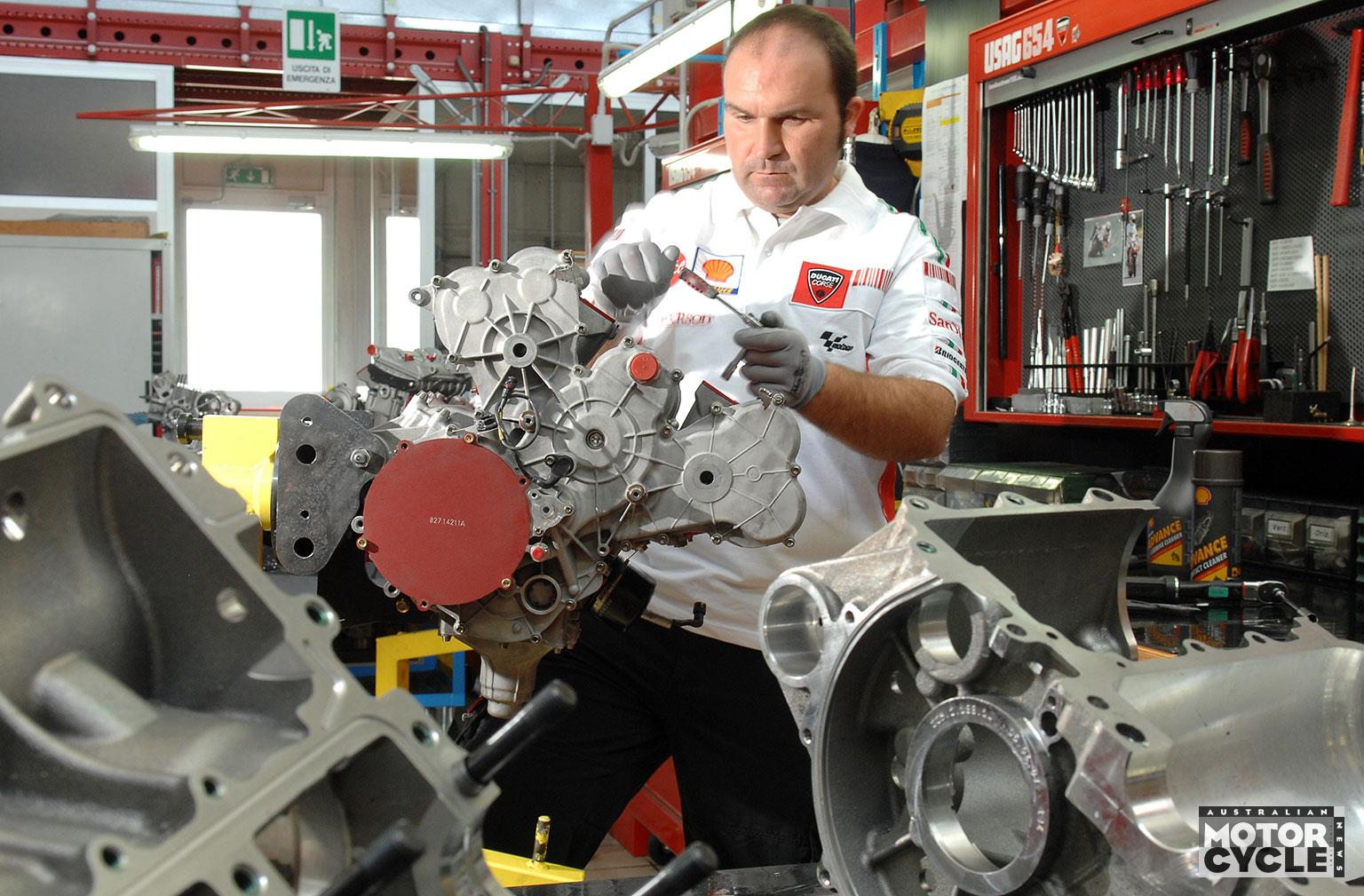
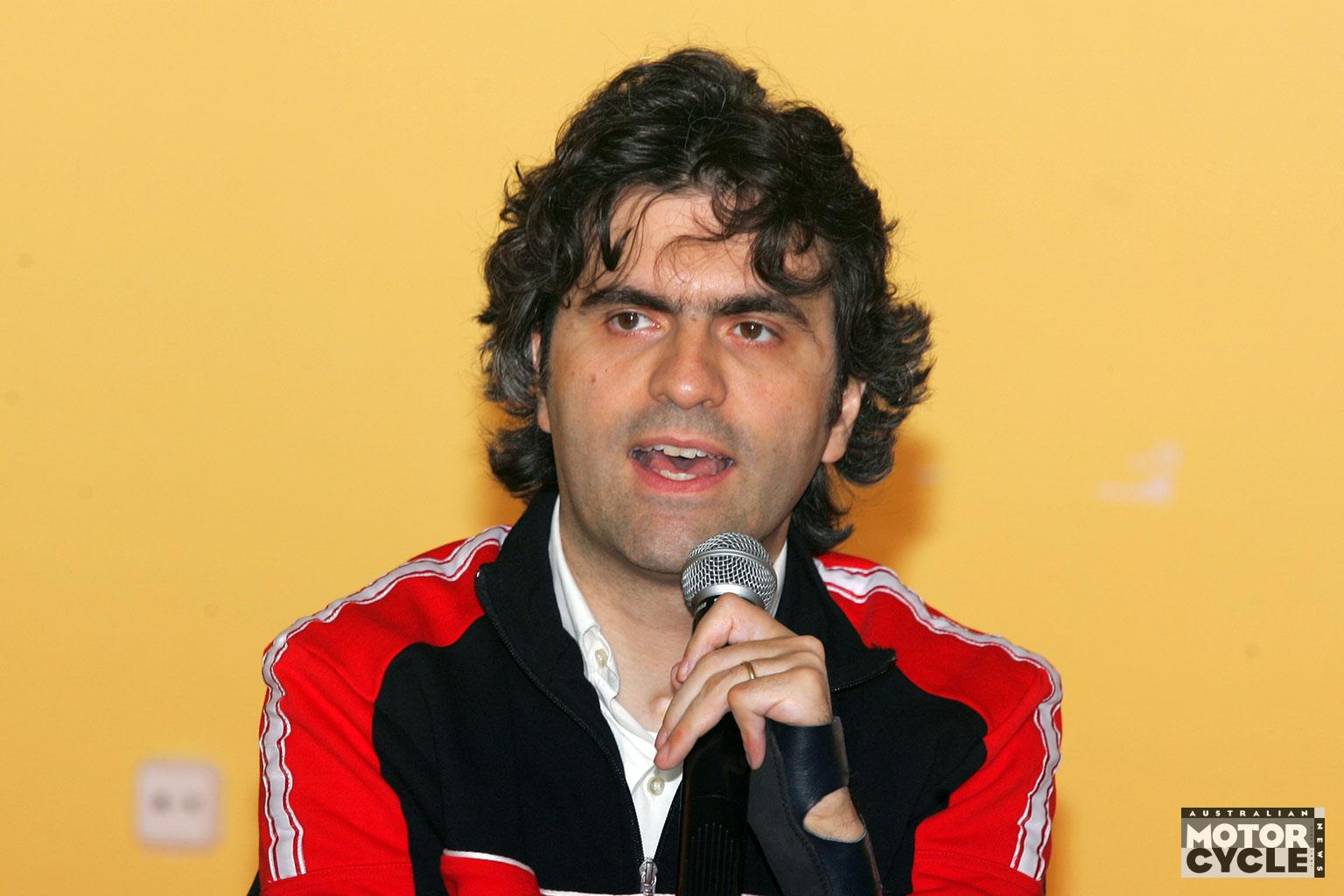
If Casey was the man who made the Ducati Desmosedici GP7 a winner, Filippo Preziosi was the engineer who gave him the means to do it.
Born in Perugia, Preziosi studied mechanical engineering at Bologna University. As a student, he would ride his humble 350TL desmo V-twin to Ducati’s nearby factory and gaze through the gates, dreaming of working on the motorcycles already defeating the Japanese manufacturers in World Superbike racing.
He joined Ducati’s racing department in 1994, the year Carl Fogarty won his first world championship aboard the legendary 916, and eventually became the driving force behind Ducati’s MotoGP engineering program.
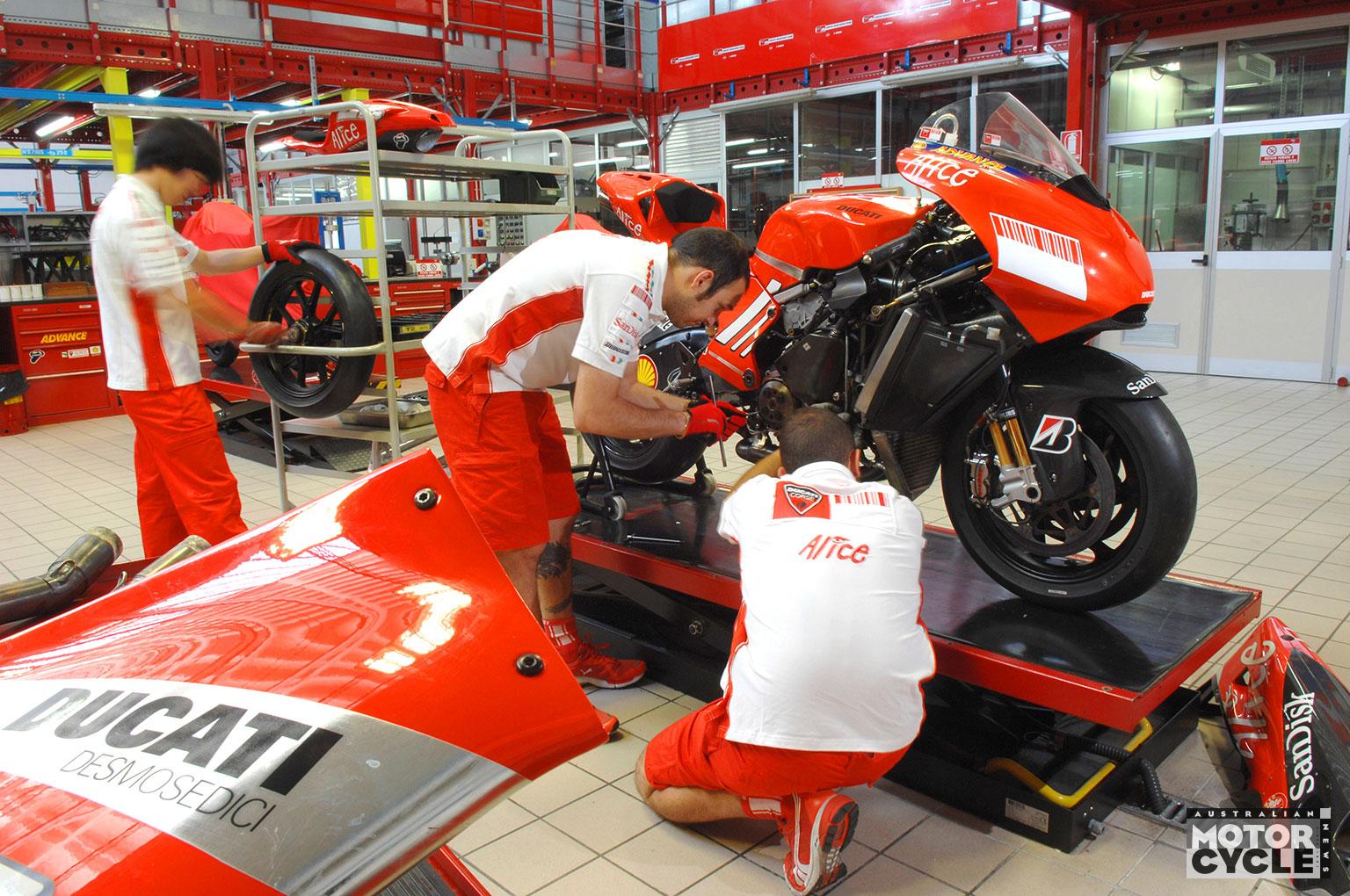
A serious motorcycle accident in Algeria in December 2000 left Preziosi using a wheelchair, but did nothing to diminish his contribution to Ducati’s racing success. By 2007, aged 39, he was general manager of Ducati Corse, overseeing the development of the Desmosedici GP7 and the engineering decisions that helped defeat the Japanese giants.
His explanation of how Ducati achieved that success reveals a remarkably pragmatic approach to racing motorcycle development.
If it works, keep it
“We at Ducati were very opposed to the change of rules from 990cc to 800cc for MotoGP, because that meant you had to throw away your old engine and build a completely new bike, which costs a lot of money,” he said.
“Our company is a small one, our resources are limited, so for us it would have been much better to keep what was already working well.”
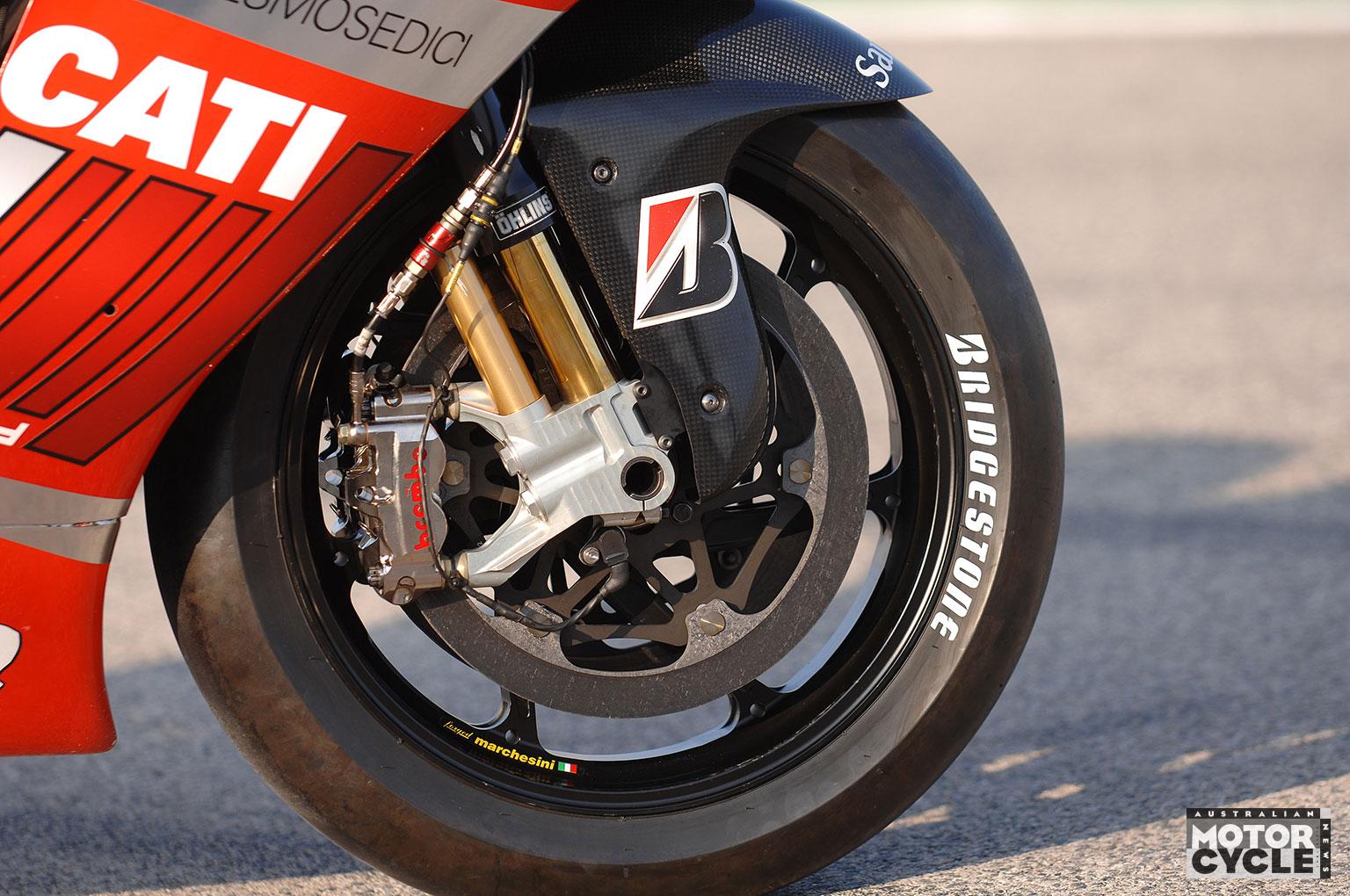
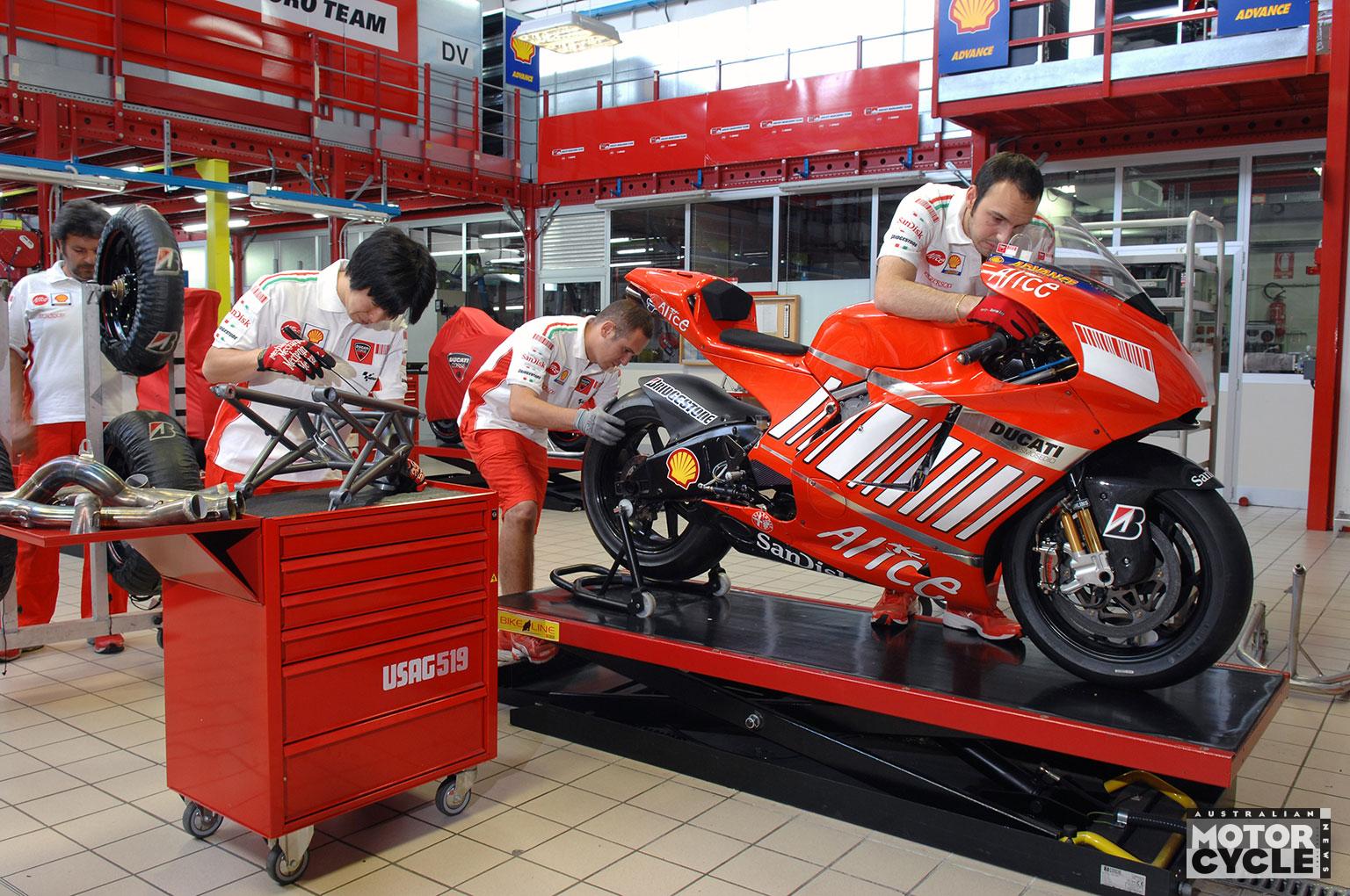
That philosophy extended throughout the motorcycle. Ducati retained much of the GP6’s suspension, brakes, wheels, transmission and bodywork rather than wasting resources redesigning proven components.
Preziosi explained that although the smaller engine produced less torque, the loads imposed on the gearbox were still largely dictated by tyre grip, wheelies and other chassis dynamics. “It’s not so difficult to design a new gearbox, but why do that, if it would stop us doing something that was necessary to improve performance?”
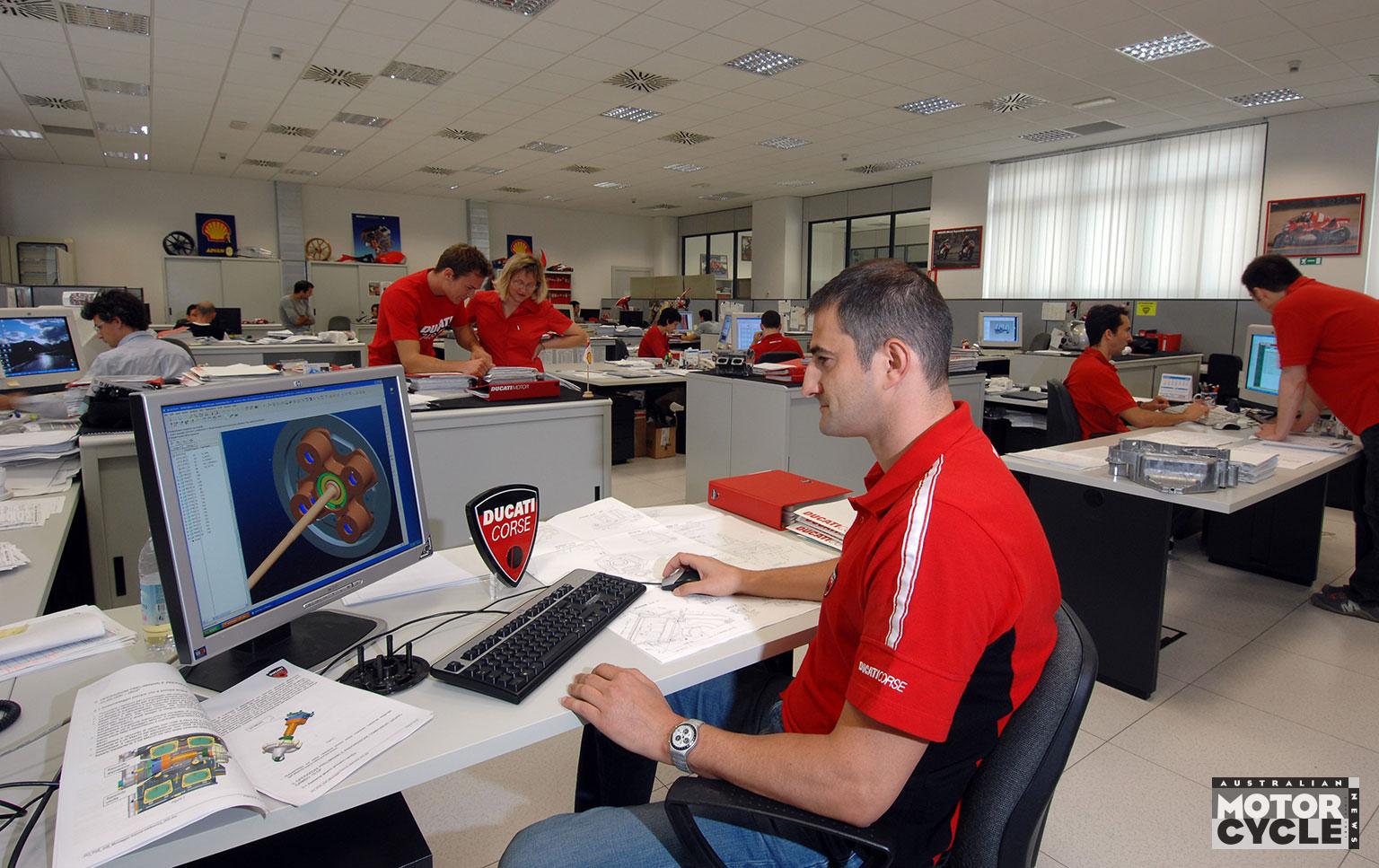
Even the bodywork remained largely unchanged, much to the frustration of Ducati’s marketing department. “But the main point for a racing bike is to be fast, not to be different, so we tried to concentrate our efforts to have a faster bike, not a different bike.”
The engine, however, was another matter.
The screamer gamble
Ducati considered various configurations before deciding that its existing 90-degree V4 layout remained the best solution. “We did many simulations, and spent a lot of time trying to understand what was the best layout, but at the end of the day the answer was the same as we already had!”
The resulting 798cc engine retained desmodromic valve operation but adopted an ultra-short-stroke 81 x 38.7mm configuration, allowing it to reach extraordinarily high engine speeds.
The decision to return to a screamer firing order, rather than the more manageable Twin Pulse arrangement used on the later 990cc machines, was particularly controversial. “This was completely the opposite strategy compared to the rest of the MotoGP paddock, where technicians, riders, mechanics, journalists, everyone insisted the screamer engine was too aggressive, that rideability was the most important thing in the world.”
Ducati was deliberately pursuing outright power when its rivals were prioritising rideability. “We’re fighting with Valentino Rossi who is seven times world champion, we’re fighting against Honda who are 14 times world champion, we’re fighting against Michelin who are 26 times world champion. So if we choose to follow the same way as them, there is no chance to win. Ducati has to change something, we have to do things differently.”
The combination of high revs, desmodromic valve operation and careful fuel management produced an engine delivering a claimed 225bhp (168kW) at 19,000rpm.
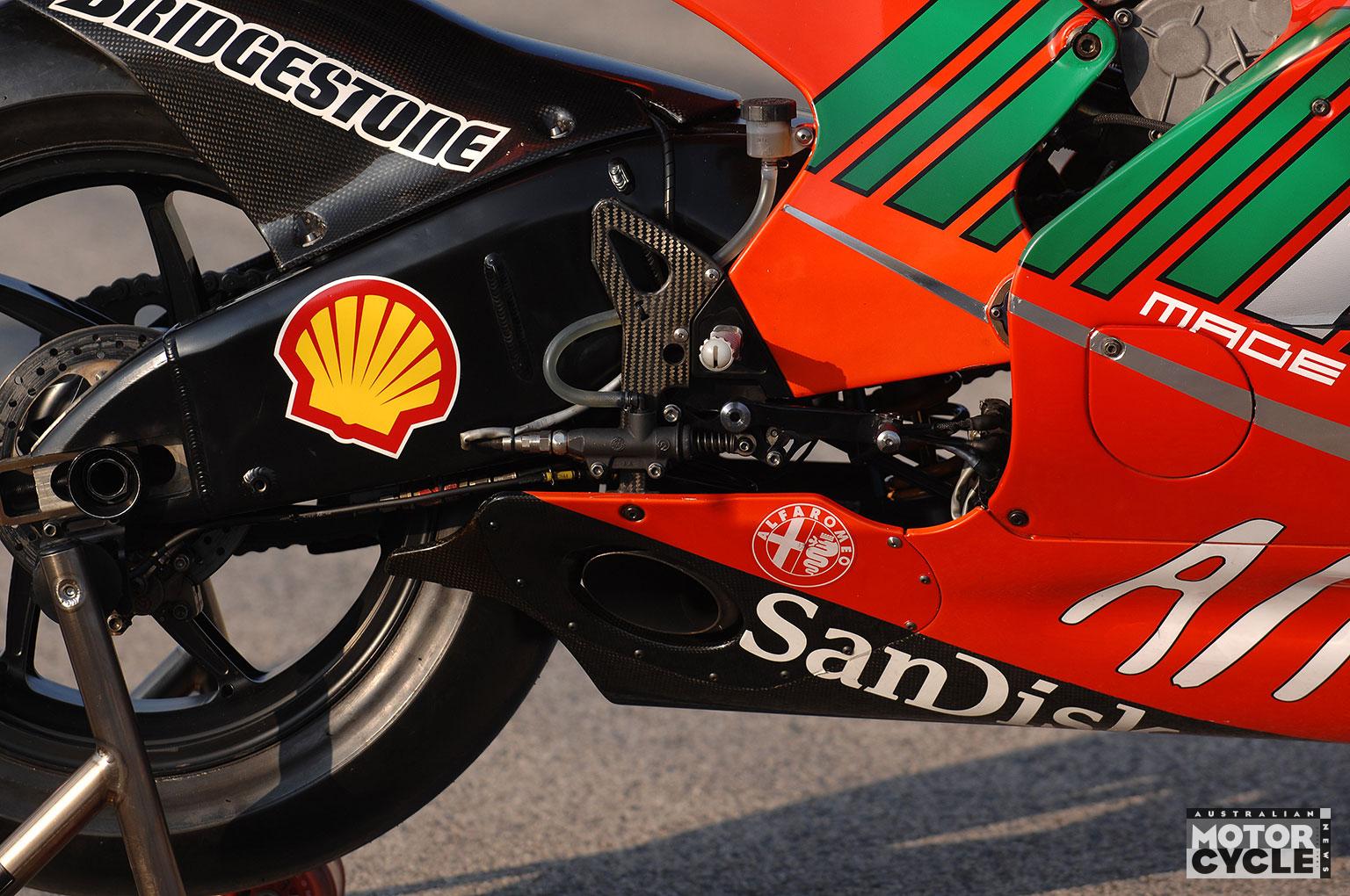
Preziosi credited Ducati’s collaboration with Shell as an important part of achieving the necessary efficiency within MotoGP’s reduced 21-litre fuel allowance. The desmodromic system also offered advantages beyond outright engine speed, reducing the energy required to operate the valves at lower revs. “So that means you are not wasting fuel moving the valves, you are using that fuel to push the bike forward,” he said.
The gamble worked spectacularly, although Preziosi readily acknowledged the importance of the rider: “Of course, if Casey was not the Casey we know and admire so much, maybe we would have had a very bad season, and now I would have had to apologise for making the wrong choice! But thanks to Casey we’re laughing, and I can tell you how intelligent we were!”
The footrest revelation
Another surprising discovery concerned the GP7’s chassis. “Loris complained the bike was not so stiff. He said there was some delay in its response. So we studied this a lot, and eventually realised the problem was not on the chassis itself, but on the stiffness of the footrest hangers. Yes, really!”
The footrests were more important than they appeared. “As you know, when you ride a bike you steer it not only with the handlebars, but also by shifting your body weight on the footrests, so if the footrests aren’t as stiff as they should be, there’s a delay in the response of the bike.”
Ducati addressed the problem by making the engine an integral part of the chassis, supporting a tubular steel front structure and a new carbon-fibre rear subframe. “The Ducati is the only MotoGP bike for which this is true, so the engine is not only created to supply energy to move the bike, but is a central part of the frame.”
The resulting structure was lighter and stiffer, with better support for the footrest hangers, helping deliver the precise response Stoner demanded.
A different bike every corner
Despite speculation about Ducati’s sophisticated electronics, Preziosi insisted that much of the GP7’s hardware was carried over from the previous year. “We kept a lot of parts from before, like the ECU, the injectors, the lambda probes and so on. We didn’t see any reason to change them after 2006.”
Instead, Ducati concentrated on software development, using the existing Magneti Marelli system to make its powerful screamer engine more manageable. “The main point of the electronics was to improve rideability, because the specification we decided on for the engine was very good in delivering power, very good in fuel efficiency, but maybe not so good in rideability.”
Software development offered a considerable advantage for a manufacturer with limited resources. New mechanical components required manufacturing, testing and distribution, whereas revised electronic settings could be transmitted directly to the team at a circuit.
“But if you have a good idea lying in bed at night, and you put the idea on the software in the morning, look at it in the system and you find that it’s working well, you just have to use the ADSL connection to send it to Sepang or Le Mans or wherever the team is, and they can test it and find they have a different bike.”
The flexibility was extraordinary. “With this kind of electronic management we can practically make a different bike with the same hardware for every track, for every rider, for every corner, in every weather condition. So then we can have a lot of different bikes in the same bike!”
It was an ingenious, cost-effective approach that allowed Ducati to challenge manufacturers with far greater resources. But as Preziosi himself readily admitted, all that clever engineering might have counted for little without Casey Stoner.
I’d been privileged to experience just four laps aboard the GP7, enough to appreciate its extraordinary performance but also to understand the unique demands it placed on its rider. Casey had mastered those demands across 18 Grands Prix, winning 10 of them and delivering Ducati its first premier-class world championship.
So, thanks to the pragmatic genius of Filippo Preziosi and his team, plus the extraordinary talent of Casey Stoner, the solitary Latin David beat the phalanx of Japanese Goliaths. Forza Ducati!