Ahead of its public debut at EICMA, AMCN goes behind the scenes of the extraordinarily complex WMC Mono RR to discover how a supercharged single could change the future of motorcycling
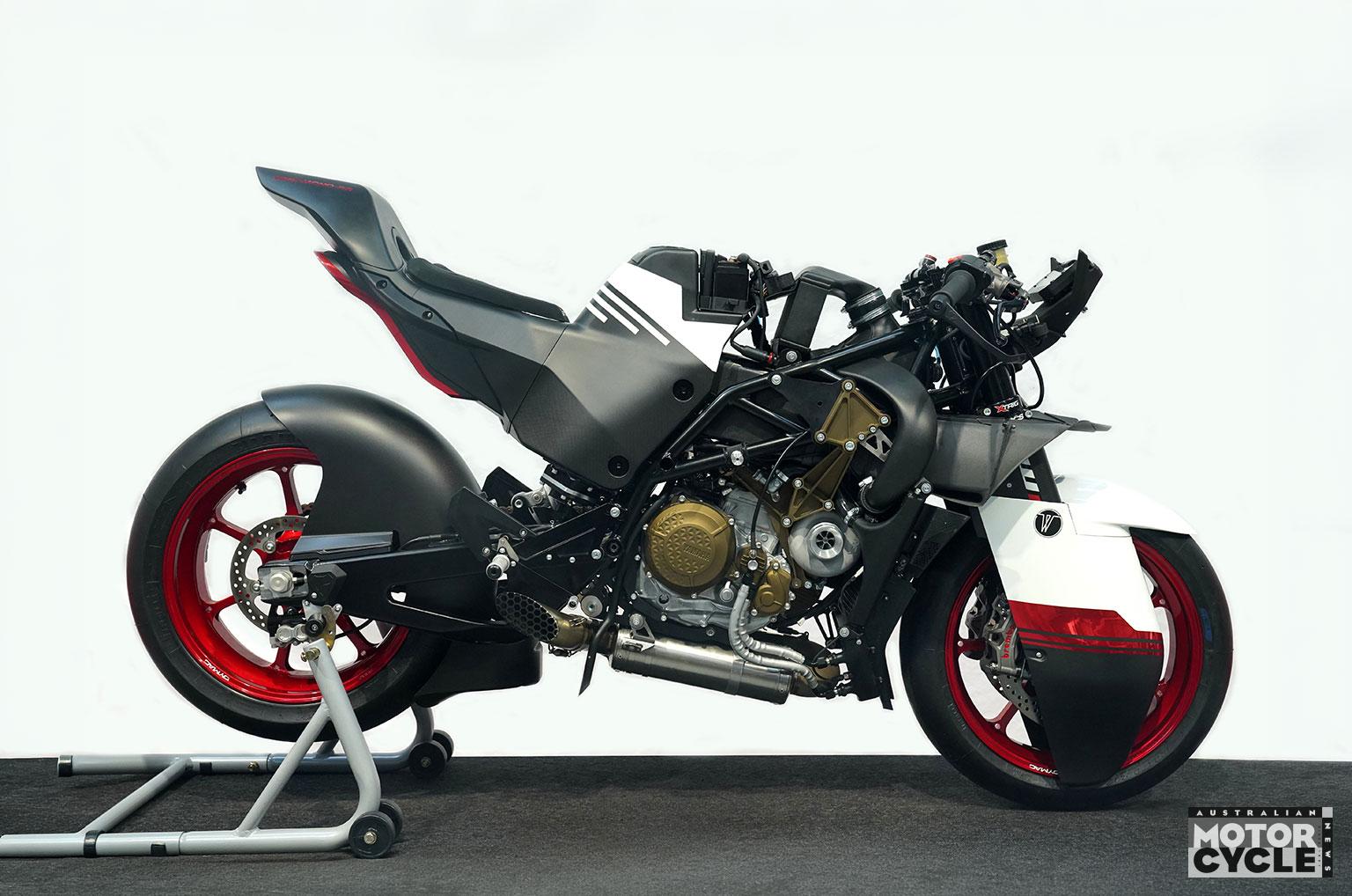
It’s a motorcycle unlike anything else on the planet, built around a radical aerodynamic concept and powered by a supercharged single-cylinder engine. And while the rest of the world waits for its public debut, AMCN has been given an exclusive insight into the extraordinary engineering behind the WMC Mono RR.

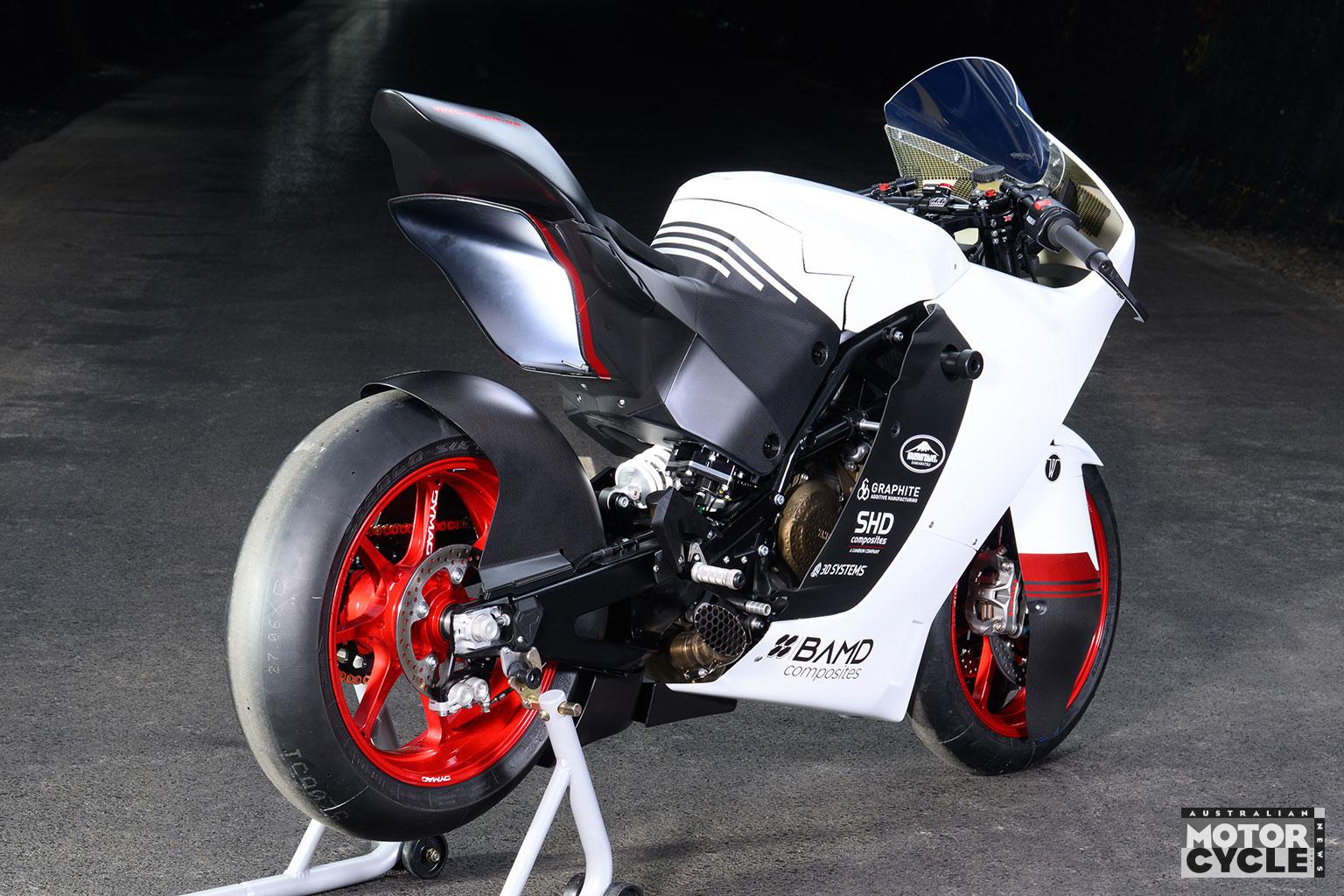
There’s growing momentum behind the idea of supercharged motorcycles and this new technology demonstrator aims to prove that combining a small, blown engine with radical aerodynamics results in a lightweight, efficient and high-performance bike that’s a template for future generations of mainstream models.
Downsized, forced-induction engines have been a trend in cars for years as manufacturers combat increasingly strict emissions laws and ever-growing customer demand to use less fuel. With environmental legislation for bikes a step behind their four-wheeled brethren, it’s no surprise that motorcycle brands are increasingly following suit. Honda, Kawasaki, Yamaha and Suzuki all have boosted motorcycle projects either in production or on the drawing board.
Now British engineers at White Motorcycle Concepts have taken the idea to new extremes with the WMC Mono RR: a supercharged single that offers the mouthwatering prospect of a 100hp (75kW) engine in a 100kg bike with groundbreaking aerodynamics: all combining to create a virtuous circle where each step towards reducing weight or improving aero opens the door to further gains.
Aerodynamic innovation has been at the heart of White Motorcycle Concepts’ work since the company’s foundation. It leapt onto the scene five years ago with its first project, the WMC250EV, a challenger for the electric motorcycle land speed record that most clearly illustrated founder Robert White’s vision of a central duct that channels air directly through the bike, from the nose to the tail, to slash drag while retaining a realistic riding position for a normally proportioned human. Since then, WMC has worked on a host of projects incorporating the same central duct idea, from the WMC300 Hybrid three-wheeler, based on Yamaha’s Tricity 300 and adopted in small numbers by UK police forces, to prototypes for major brands, like the WMCSRS that was built in conjunction with Zero to explore drag reduction on the American firm’s SR/S sportsbike.
But the Mono RR project revealed here is the bike that most closely reflects White’s original idea. Going back to his original patent for the drag-reducing duct, he believed a small, single-cylinder engine with forced induction could be the compact powertrain needed to make space for the through-bike duct while providing impressive performance.
WMC’s intention isn’t to become a manufacturer in its own right but to demonstrate that its alternative approach to motorcycle aerodynamics offers tangible benefits in terms of performance and efficiency, whether on the track or on the road, and to work with other brands to implement the same ideas into their bikes, whether for racing or for the road.
Building the WMC Mono RR
Instead of starting from scratch and building a complete bike from the ground up, WMC has opted to use the Krämer EVO 690R track bike as the basis of the Mono RR project – not only providing the initial building blocks but acting as a baseline against which to measure improvement.
The EVO 690R is already one of the most focused motorcycles on the market: a dedicated track-only model that, in its normal form, uses KTM’s 80hp (60kW) LC4 690 single in a 125kg machine that bristles with exotic, race-quality components. In its normal form it aims to give customers a supermono experience akin to a Moto3 racer but with the torque of a much larger single. WMC’s aim is, initially, to match the original EVO 690R’s power and weight figures, but with much improved aerodynamics that simultaneously reduce drag and increase downforce: normally an impossible combination, since adding downforce usually means bolting on drag-inducing winglets.
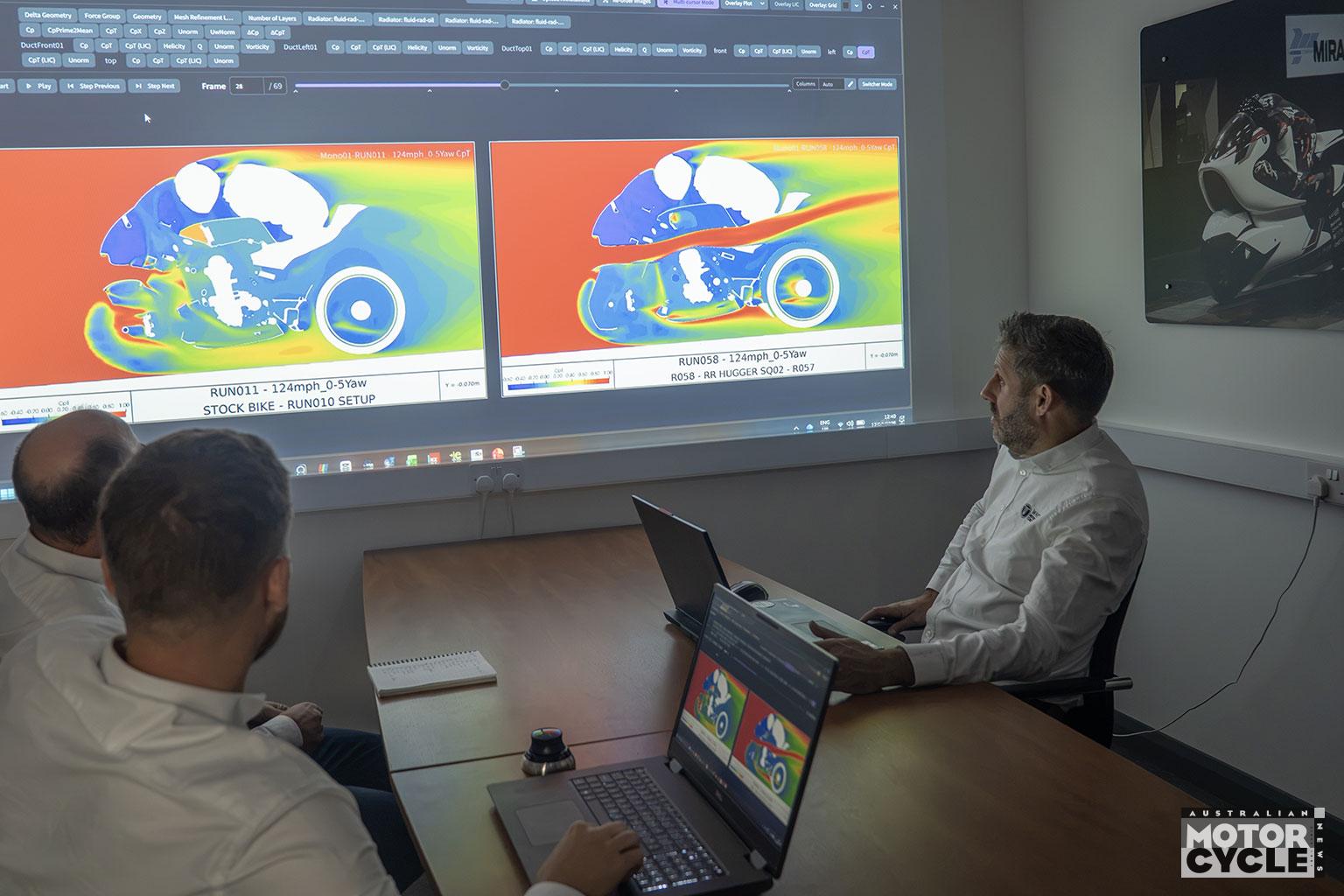
Starting with computational fluid dynamics (CFD) models, developed with the help of software from motorsports experts Bramble CFD, that could predict airflow and allow components to be modified or moved without actually making them, WMC developed the idea of using a smaller 450cc single-cylinder engine and adding a supercharger to bring its performance back to the level of the original KTM 690 engine. More power-dense than the normally aspirated 690, the smaller engine could be tightly packaged and gave more flexibility to mount ancillary components like the intake plenum and the supercharger in positions that maximised the potential size of the through-bike aerodynamic duct, without expanding the bike’s external dimensions or compromising other elements like the fuel capacity.
powertrain and performance
Building an entirely new engine wasn’t viable so WMC hunted out the most suitable mass-manufactured single for the job, settling on the engine from Yamaha’s YZ450F motocrosser.
It’s already an unusual engine thanks to its reverse cylinder design that puts the intake at the front of the cylinder head and the exhaust at the rear. In the YZ450F the engine is canted backwards, with the cylinder leaning rearward by a few degrees, but it’s rotated slightly forward in WMC’s implementation in the Krämer frame.
While it’s 244cc smaller than the original KTM LC4 engine that the Krämer was designed around, the Yamaha engine is also much shorter, clearing a huge amount of space above the cylinder head for the all-important aerodynamic duct that runs through the bike.
The Yamaha engine’s design suited WMC’s needs as it meant there was space to mount a Rotrex
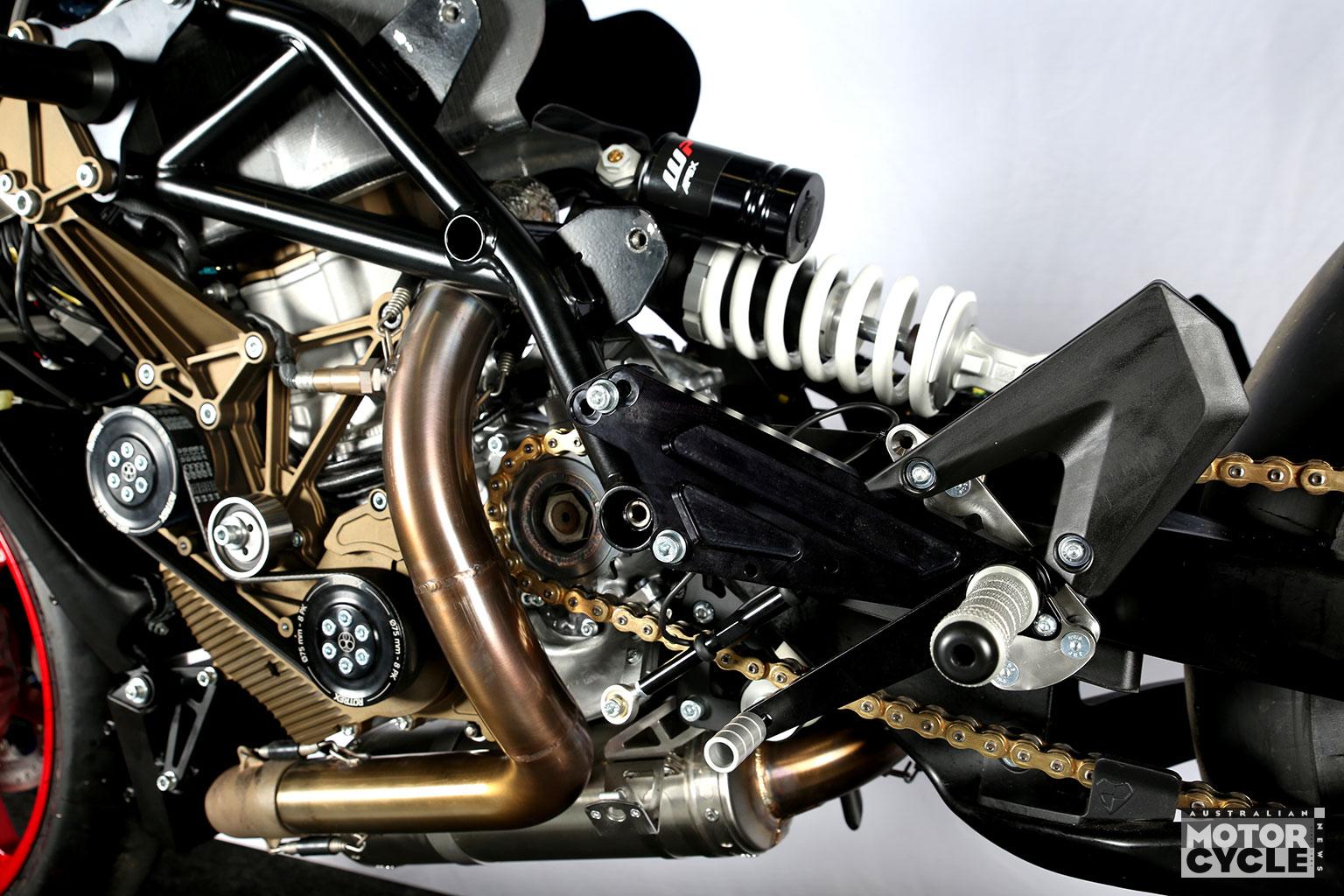
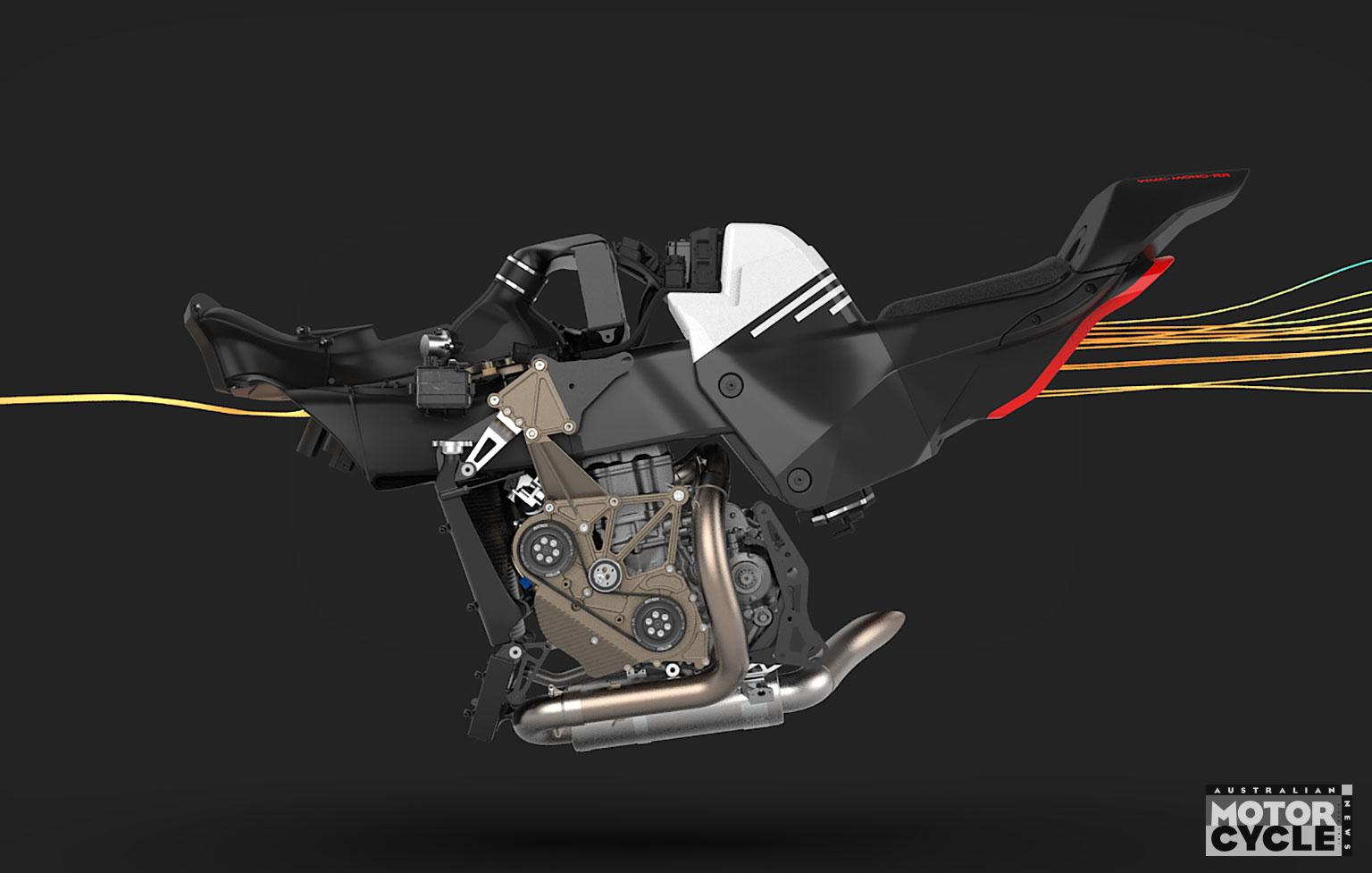
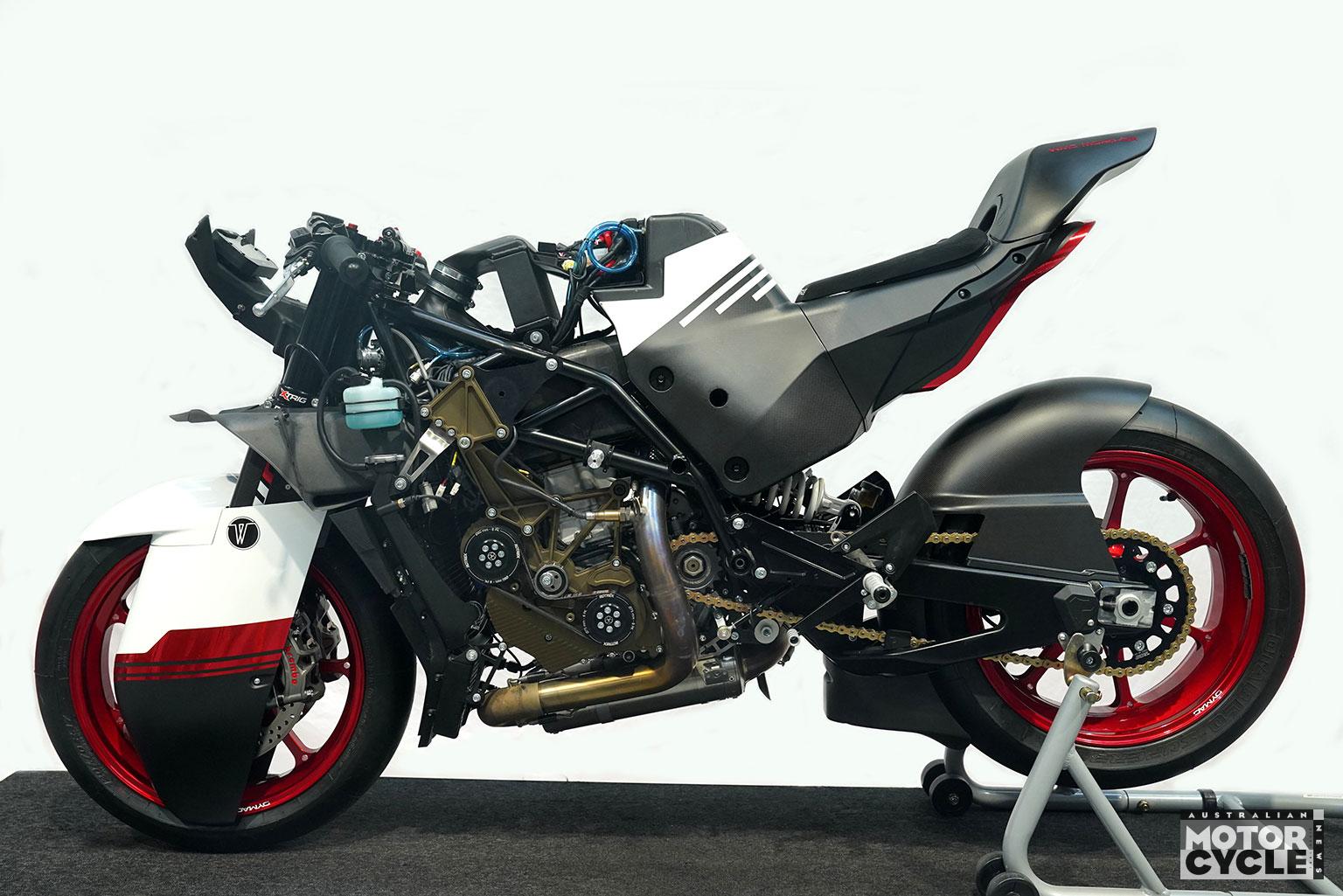
C15-20 supercharger in front of the cylinder, driven by the crankshaft. The supercharger draws intake air from an airbox mounted in the nose of the bike, compresses it and feeds it into a pressurised plenum chamber mounted in front of the fuel tank, above the through-bike duct. The reverse-cylinder engine’s throttle body at the front of the cylinder head is directly underneath, so the pressurised intake air can be channelled through a pipe cutting through the wide, front section of the aerodynamic duct, straight into the throttle body. An electric supercharger, as Honda is adopting on the upcoming V3R, was also considered, but ruled out due to the complexity and additional weight that comes with the necessary battery and electronics.
As well as the supercharger, the engine gets a new conrod and piston, revised ports, changes to the intake and exhaust, a new Bosch fuel injector and electronics with a knock control system.
White explained: “We went with the Yamaha reverse head engine because the throttle body sits to the front of the engine where the cold air is, and it also sits at a wider portion of the duct. The biggest problem with running a combustion engine is that we couldn’t fit everything under the ducts to maintain the centre of gravity, so we had to move some subsystems above the duct and some below. We crossed the duct with the inlet trumpet from the front of the engine into the plenum, which made us select the reverse on the head Yamaha engine for packaging.”
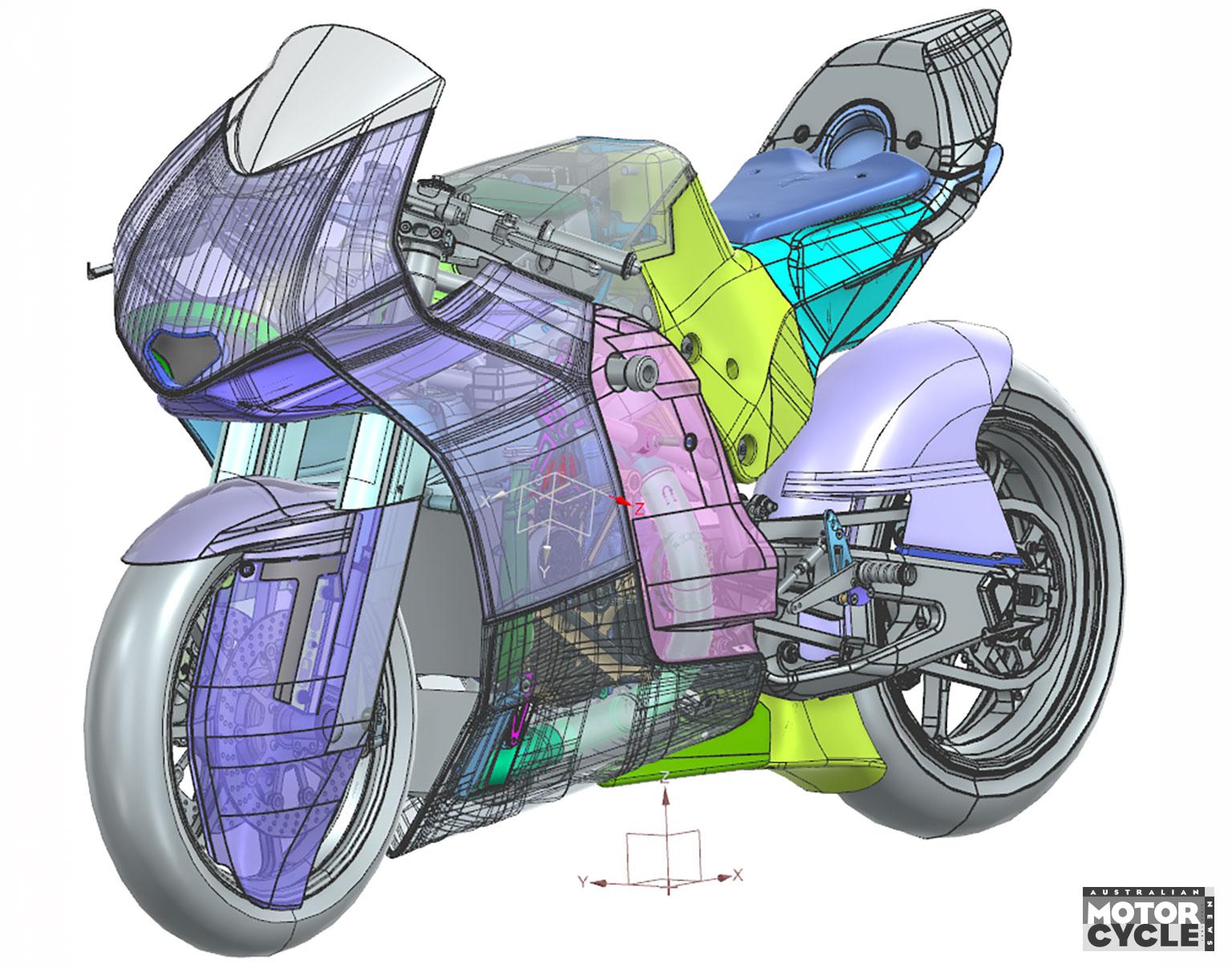
Despite swapping from a 693cc KTM engine to a 450cc Yamaha with a reversed cylinder, WMC didn’t have to make big changes to the Krämer’s existing steel tube frame. “The engine has gone into the chassis on exactly the same relationship between swingarm pivot and drive sprocket on the output of the engine, so we’ve maintained the mechanical position of those items,” said White. “This chassis would normally use the latest 690 iteration of the KTM LC4 single. The idea is that we maintain the power but increase the power density per unit volume of the powertrain. So, the powertrain is around about 20 kilos lighter and it’s much more energy dense because we’ve gone for forced induction.”
It wasn’t quite as simple as just bolting on a supercharger, though. White said: “We drive a supercharger, which has been specially made for the project, off the left-hand side of the crank. Then that packages on a driveshaft across the front of the engine so that the supercharger sits on the right-hand side and directly feeds air up into the intercooler that sits above the duct, with an optimised route for that charge directly down into the plenum, into the inlet trumpet.
“It crosses the aerodynamic duct into the Bosch throttle body and directly into the cylinder head, which at this stage is running standard cams, but is ported. So, we’ve got a slightly larger throttle body than standard and then, on the exit, we’ve got a 3D printed, titanium exhaust header which is about four millimetres larger in diameter, and the ports have been matched for that. Then it picks up onto the standard Krämer exhaust silencer, once it goes through a link pipe, which we’ve designed and manufactured. All of this means it’s been optimised for packaging to get the biggest duct possible through the centre of the bike.”
Initially the goal is to make the same power as the stock Krämer’s KTM 690 engine but the supercharger means there’s scope to increase that performance relatively easily by increasing boost. Paired with the weight savings of the smaller engine, there’s potential for the bike to eventually hit 100hp and 100kg, a 1:1 bhp-per-kilo ratio.
Going for an engine-driven supercharger rather than an exhaust-powered turbocharger means that the issue of turbo lag – the stumbling block for many previous attempts at using forced induction in motorcycles – is skirted. Boost will be directly tied to engine revs, allowing it to build predictably and ensuring there’s no delay in getting power when you open the throttle.
Unlike the supercharged Kawasaki H2 models – the Ninja H2, Z H2 and Ninja H2 SX, or the Bimota Tesi H2 and Tesi H2 Tera that share the same Kawasaki engine – or Honda’s forthcoming V3R with its electrically-supercharged V3, the WMC bike uses an intercooler to make the compressed intake air colder and denser and improve performance even more.
Aerodynamics and drag reduction
The use of a forced-induction, single-cylinder engine reflects the very first iteration of White’s aerodynamic duct idea, as illustrated in patents filed back in 2019. That idea was switched to electric power for the WMC250EV that was completed in 2021 – the electric powertrain allowed for a particularly clear demonstration of the duct idea for its first implementation – but as a keen rider himself White is all too aware that combustion engines hold a special place in enthusiasts’ hearts. He’s long wanted to pursue the single-cylinder project, and believes it provides the best of both worlds: efficiency and economy to please legislators and environmentalists, but with the character, sound and visceral experience that riders love.
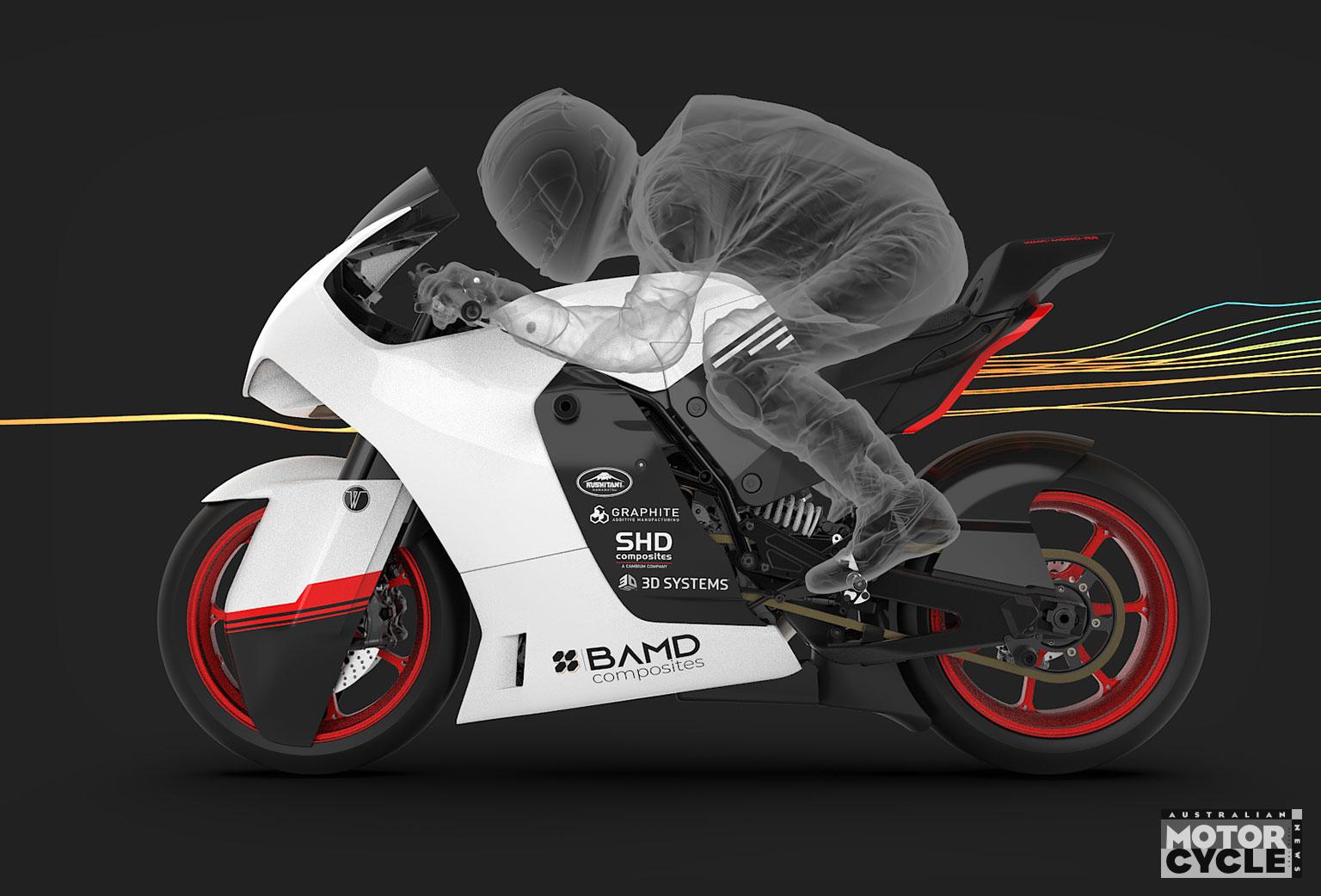
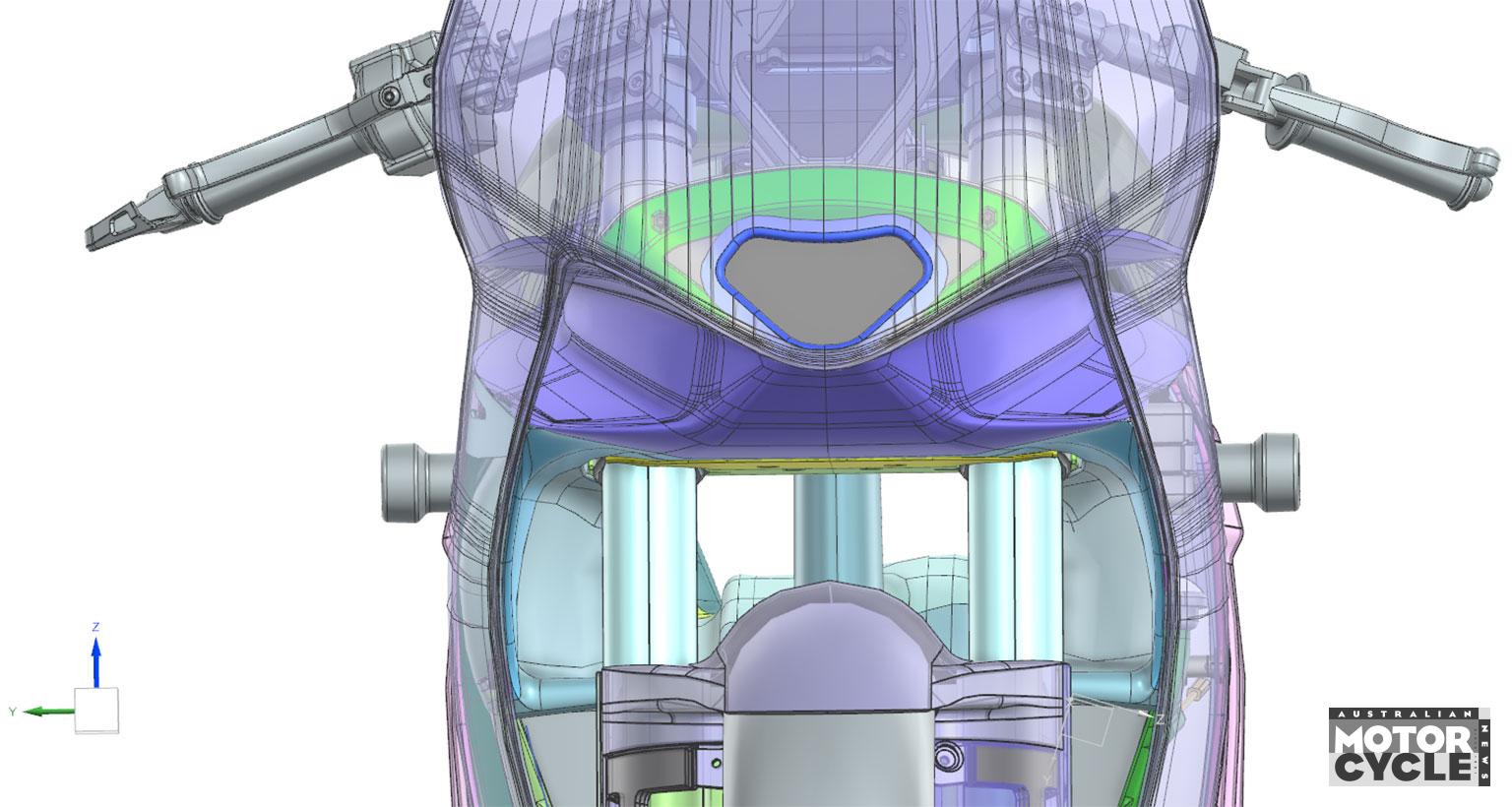
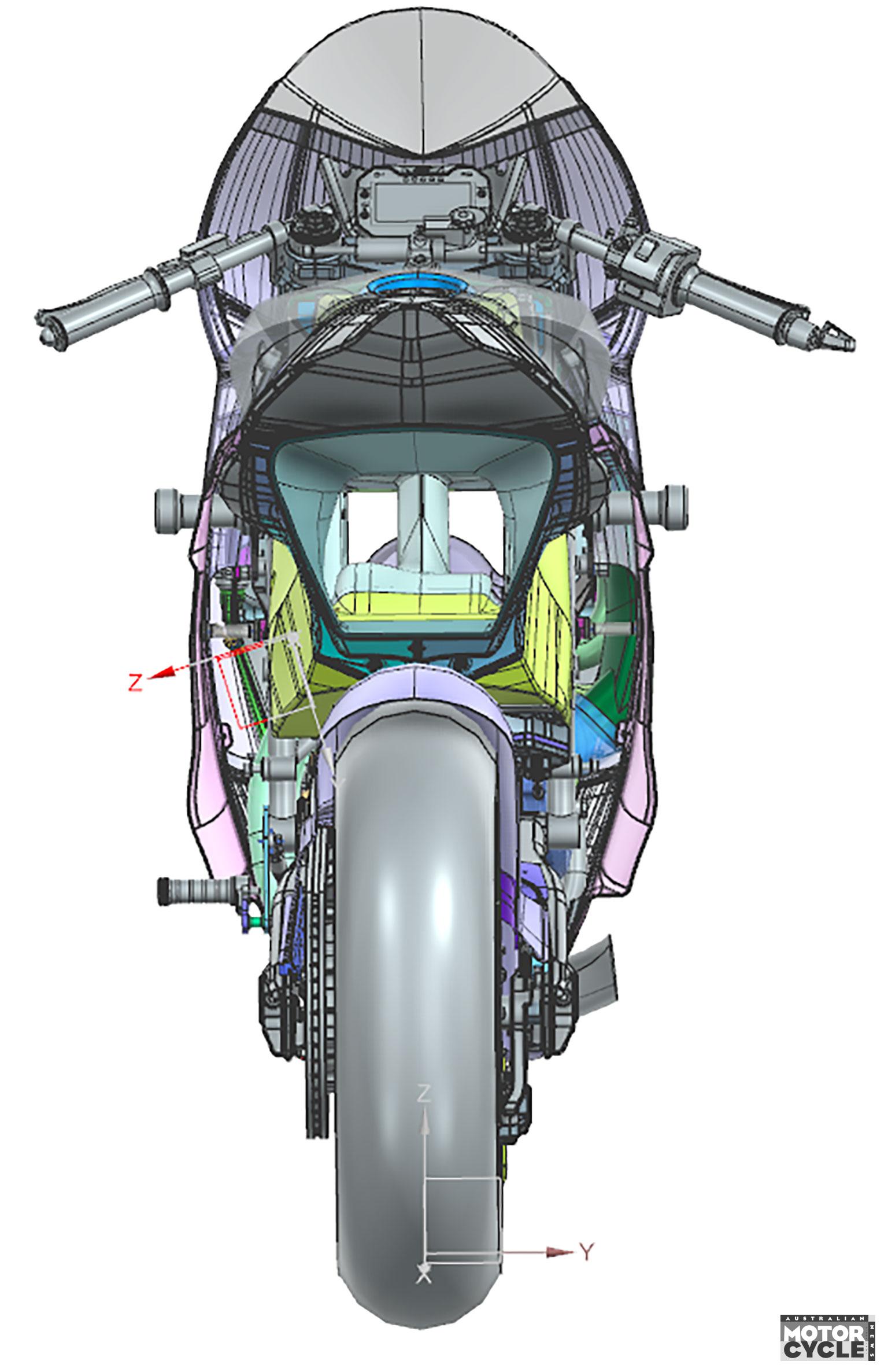
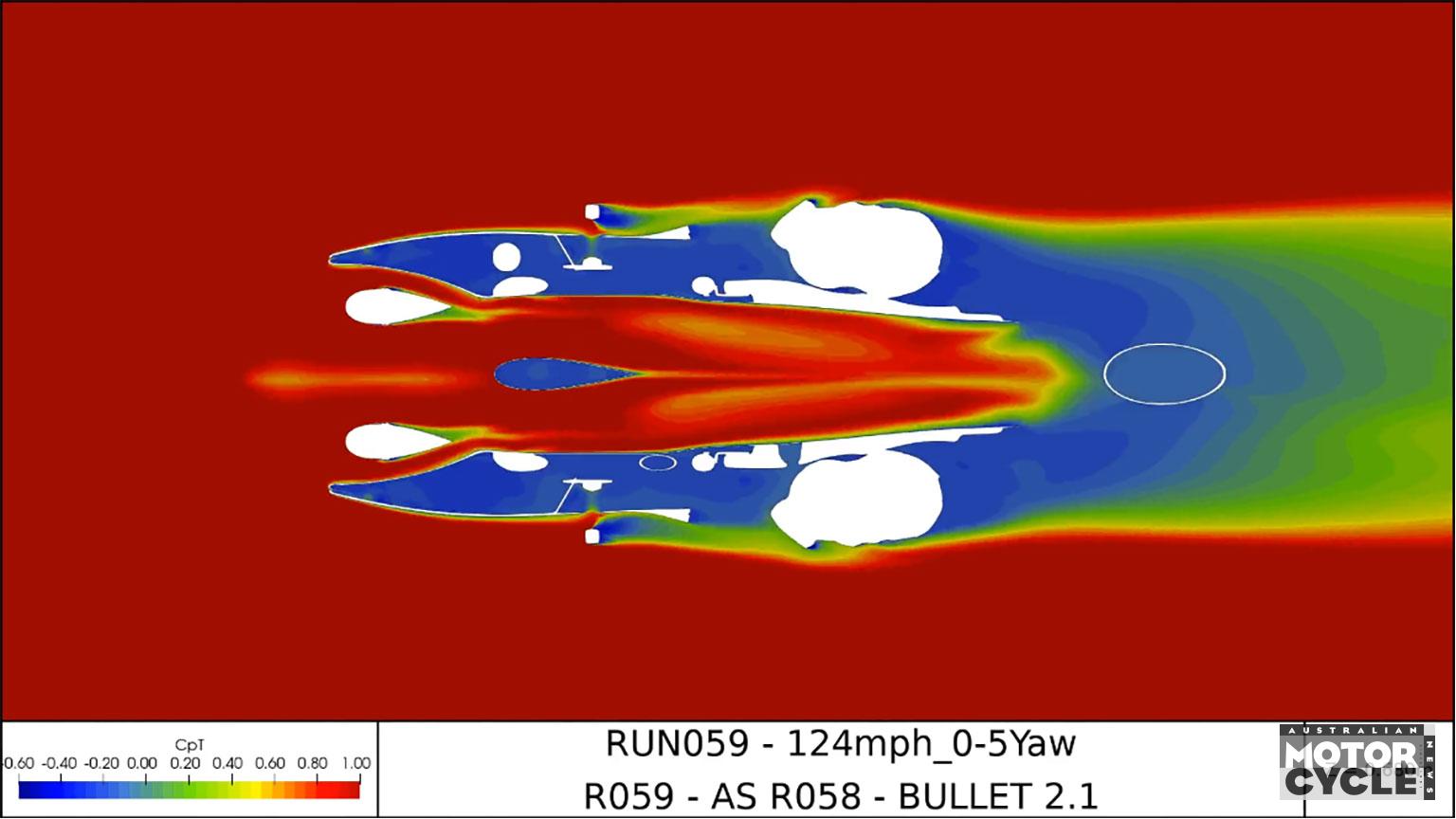
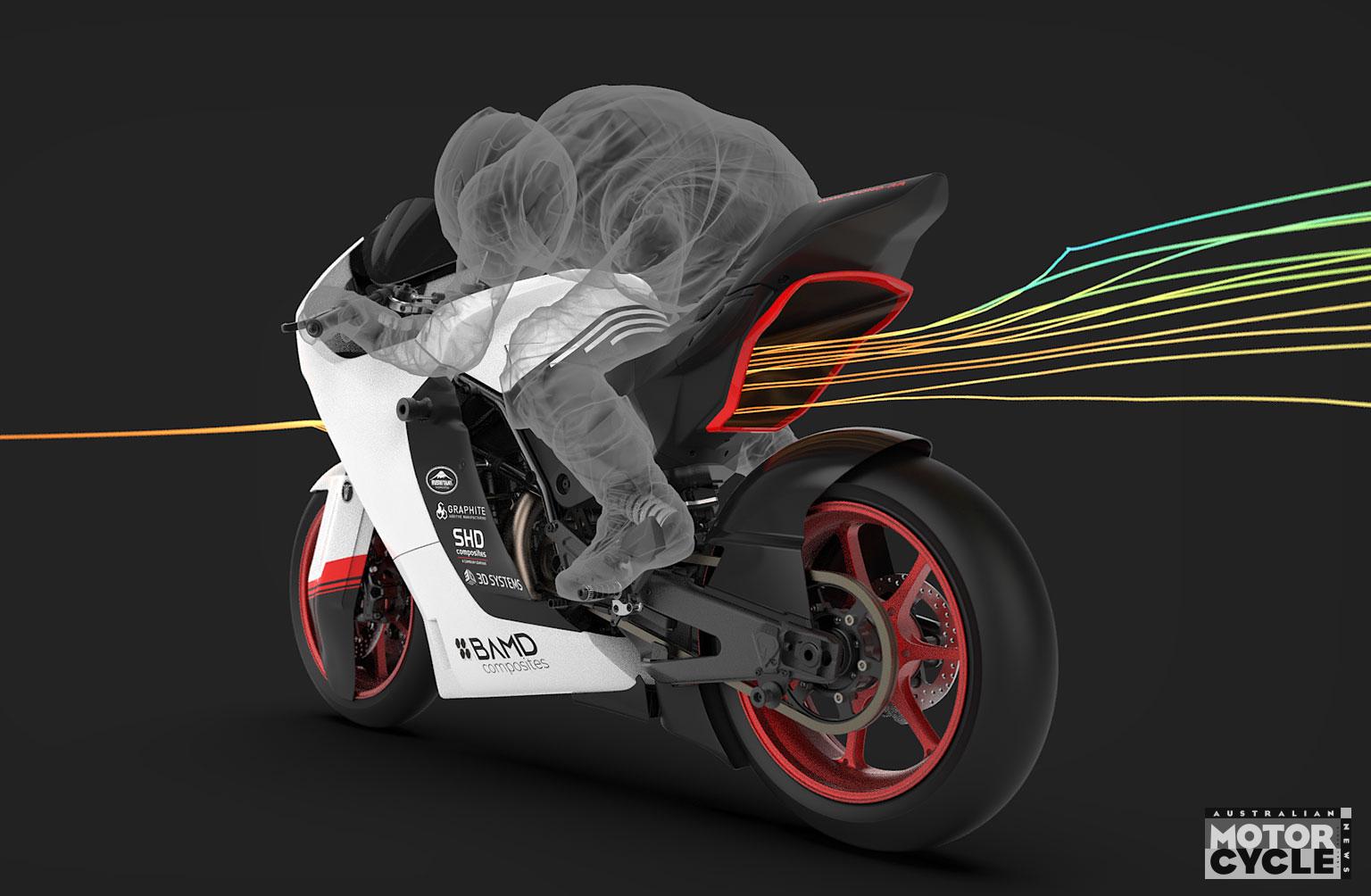
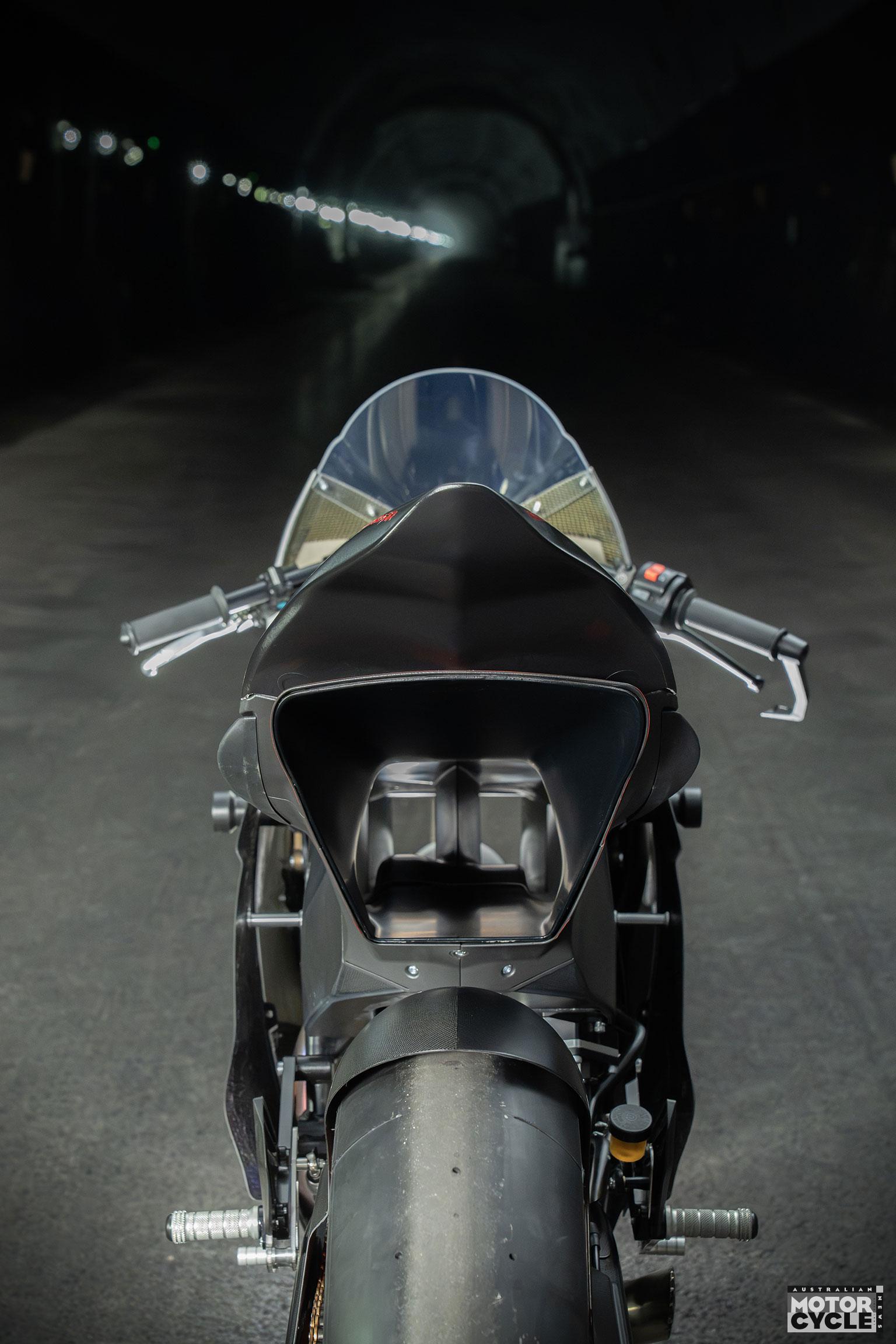
While the duct in the Mono RR project isn’t as cavernous as the WMC250EV’s vast opening, it’s still remarkably large. It slices a channel that gives a direct line-of-sight from the front of the bike to the rear, clearly illustrating where the air is being routed. You don’t have to be an aerodynamicist to see that it’s going to have less drag than a normal bike.
The idea of ducting air through the bike rather than around it means the overall frontal area is reduced, but so is the drag coefficient: the air doesn’t need to be moved around as much as the bike slices through it. While it might be possible to cut the frontal area by, for example, using the compact powertrain to reduce the height of the bike – like a drag bike, for example – that would compromise the riding position and the weight distribution, harming comfort, usability and handling. The duct gives the bike conventional external dimensions, but with reduced drag.
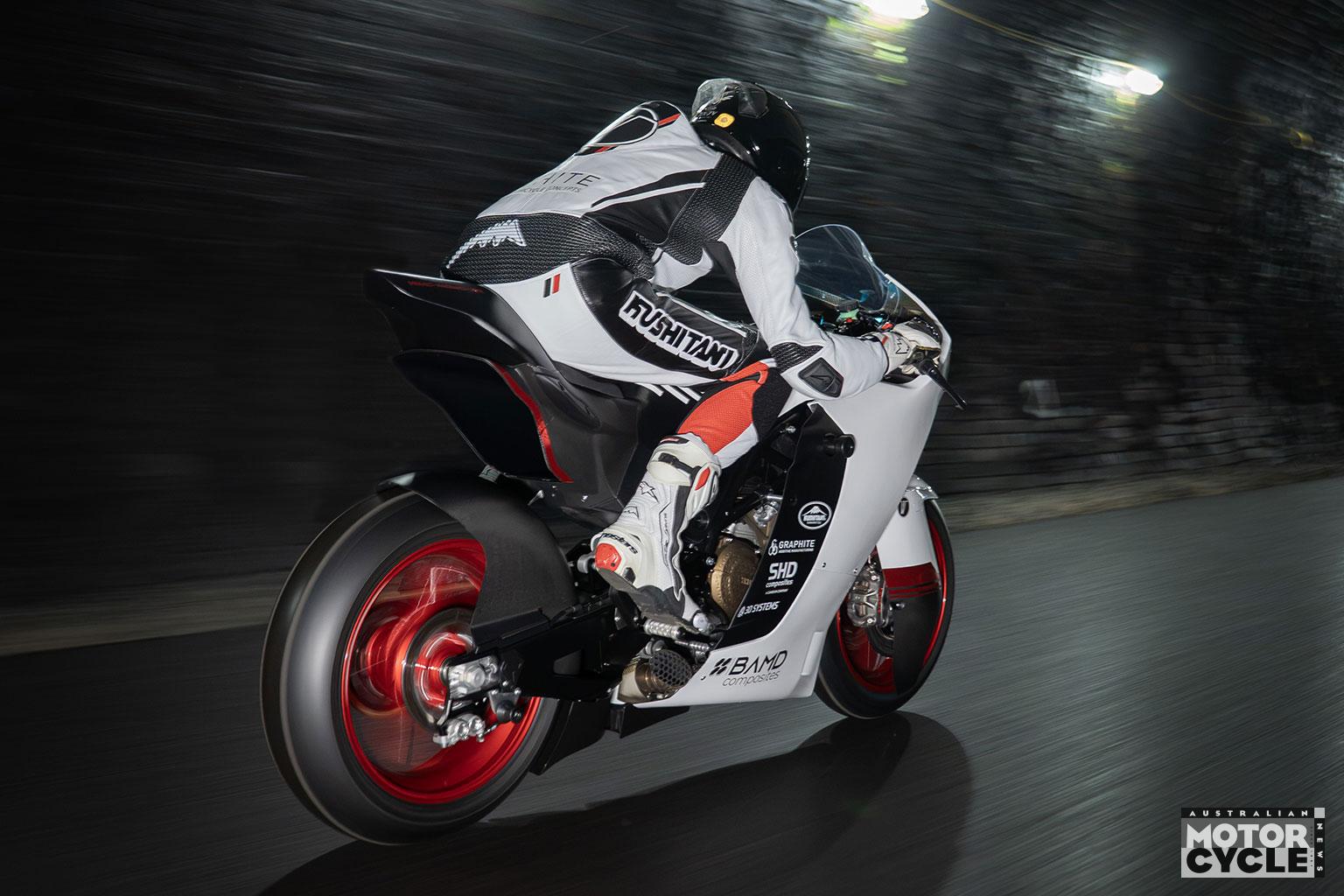
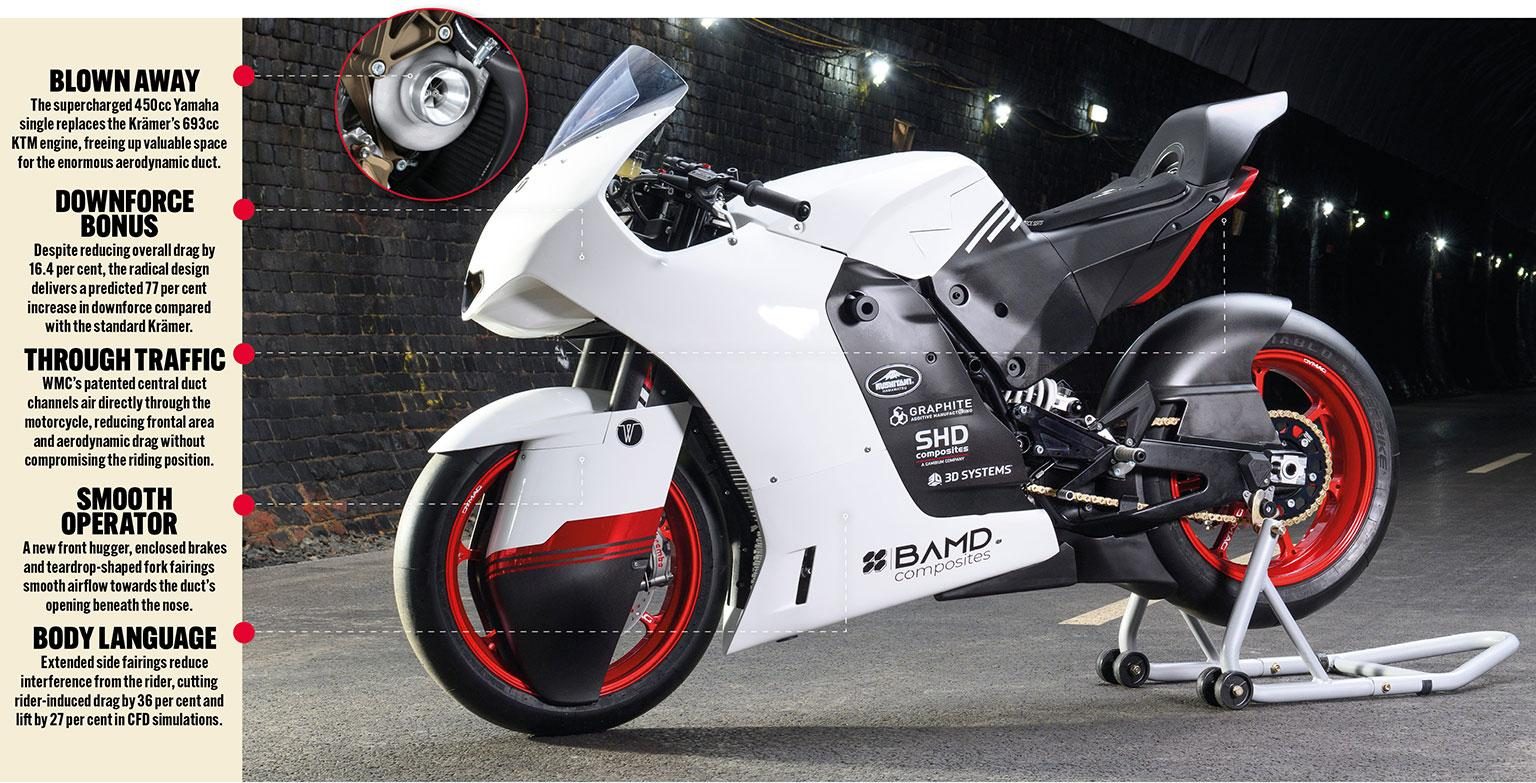
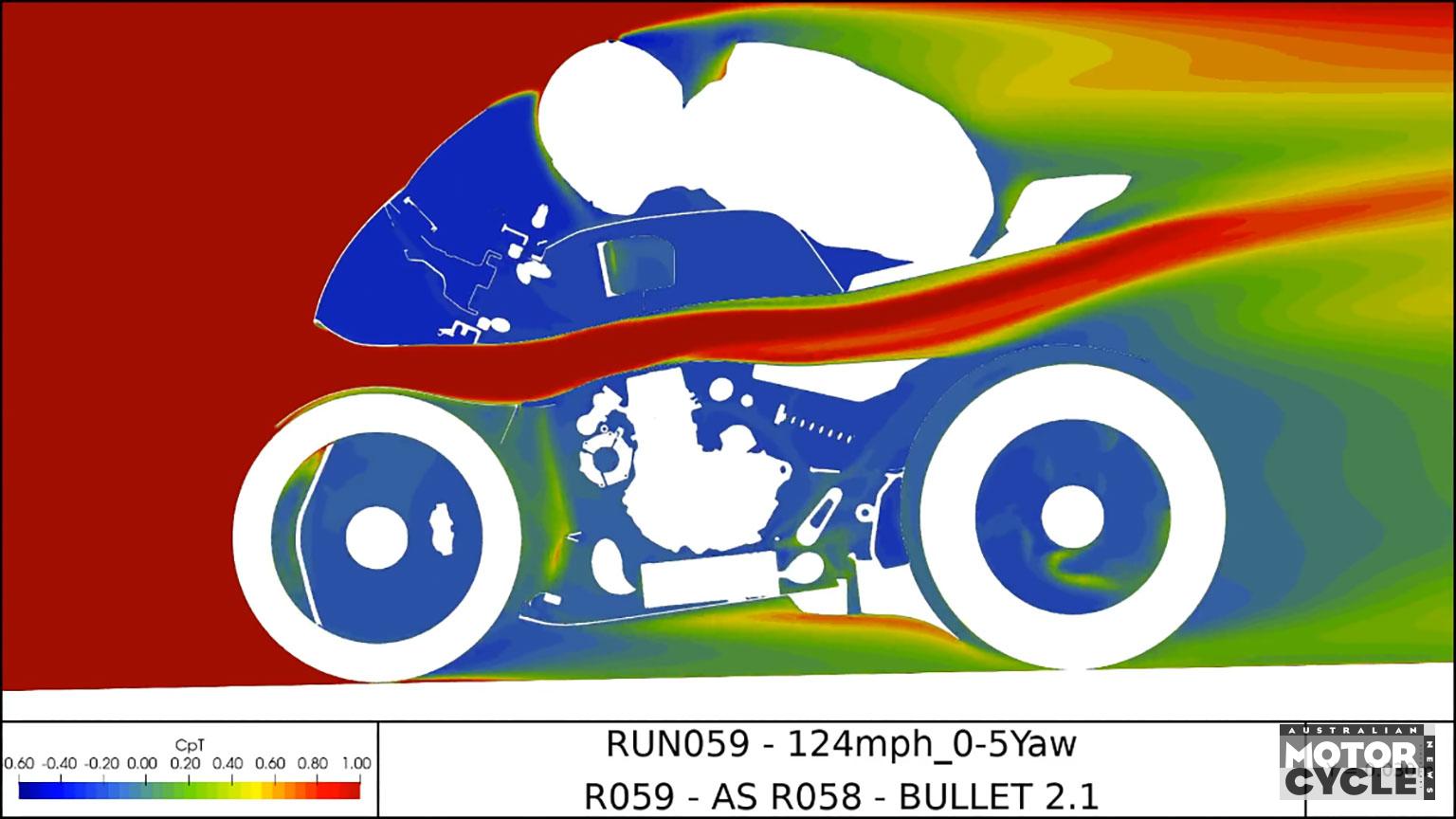
How much is it reduced? In CFD testing, the Mono RR has 16.4 per cent less drag than the standard Krämer EVO 690R, already an impressive number, but that’s just the start of the improvements. Over and above that, the computer results show the Mono RR has 77 per cent more downforce, thanks to the duct and other aerodynamic updates, and a lift-to-drag ratio that’s improved by a remarkable 111 per cent. The balance of the bike is also better. There’s 34 per cent less lift at the front and around 7 per cent less downforce at the rear, making the two ends much more closely aligned – albeit still with a small amount of front lift and a modicum of rear downforce.
Aerodynamic changes beyond the duct include a new front hugger that channels air into the duct’s opening under the nose, as well as cowling the front brakes and adding teardrop-shaped fairings around the fork legs so they don’t interrupt the flow as abruptly. A rotating under-nose cowl, which fits around the fork and turns with the steering, creates a smooth upper surface for the air that’s directed over the front hugger into the main duct’s intake.
The combination of those changes meant the air hitting the front of the bike wasn’t disrupted as much as the original Krämer’s more conventional design. As a result, it clung closer to the fairing sides and WMC discovered that the rider’s body started to have a detrimental impact on the aerodynamics. The solution was to extend the trailing edges of the side fairings farther back, which resulted in a 36 per cent reduction in rider drag and 27 per cent less rider-induced lift compared to the original baseline figures.
Construction
WMC is based in the heart of England’s ‘Motorsports Valley’ – a region centred around Northamptonshire and containing not only the Silverstone GP circuit, but a concentration of F1 team bases and related industries. As a result, they’ve drawn on some of the world’s leading experts in the development and construction of the Mono RR prototype.
Many of the intricate parts like the engine brackets to mate the Yamaha 450 single to the Krämer frame’s KTM 690 mounting points, the exhaust header and the radiator ends are 3D-printed, and WMC has called on companies including Graphite Additive Manufacturing to make elements including clever deformable mandrels that have made it possible to manufacture the prototype’s carbon-fibre duct, itself made by BAMD Composites.
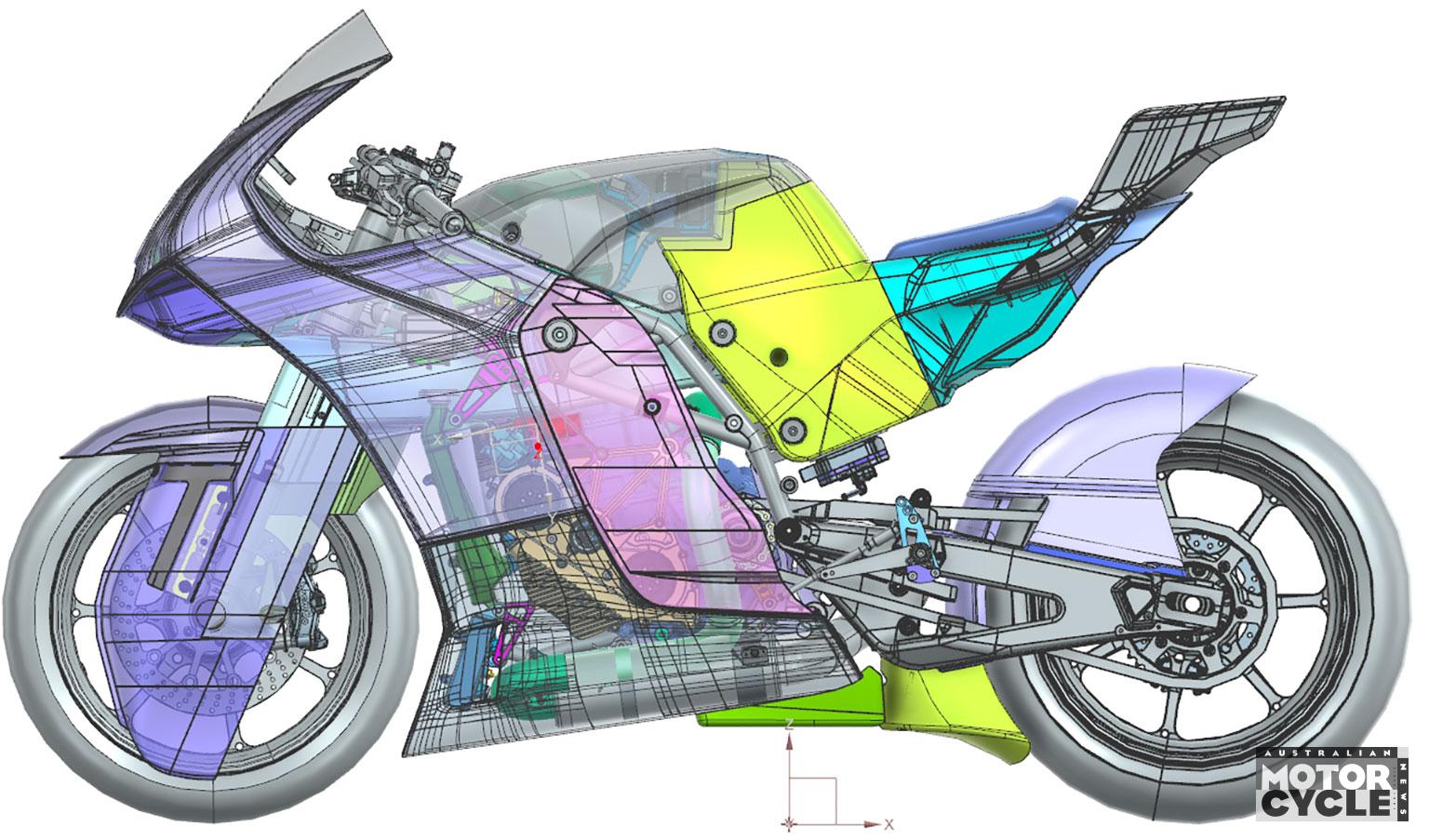
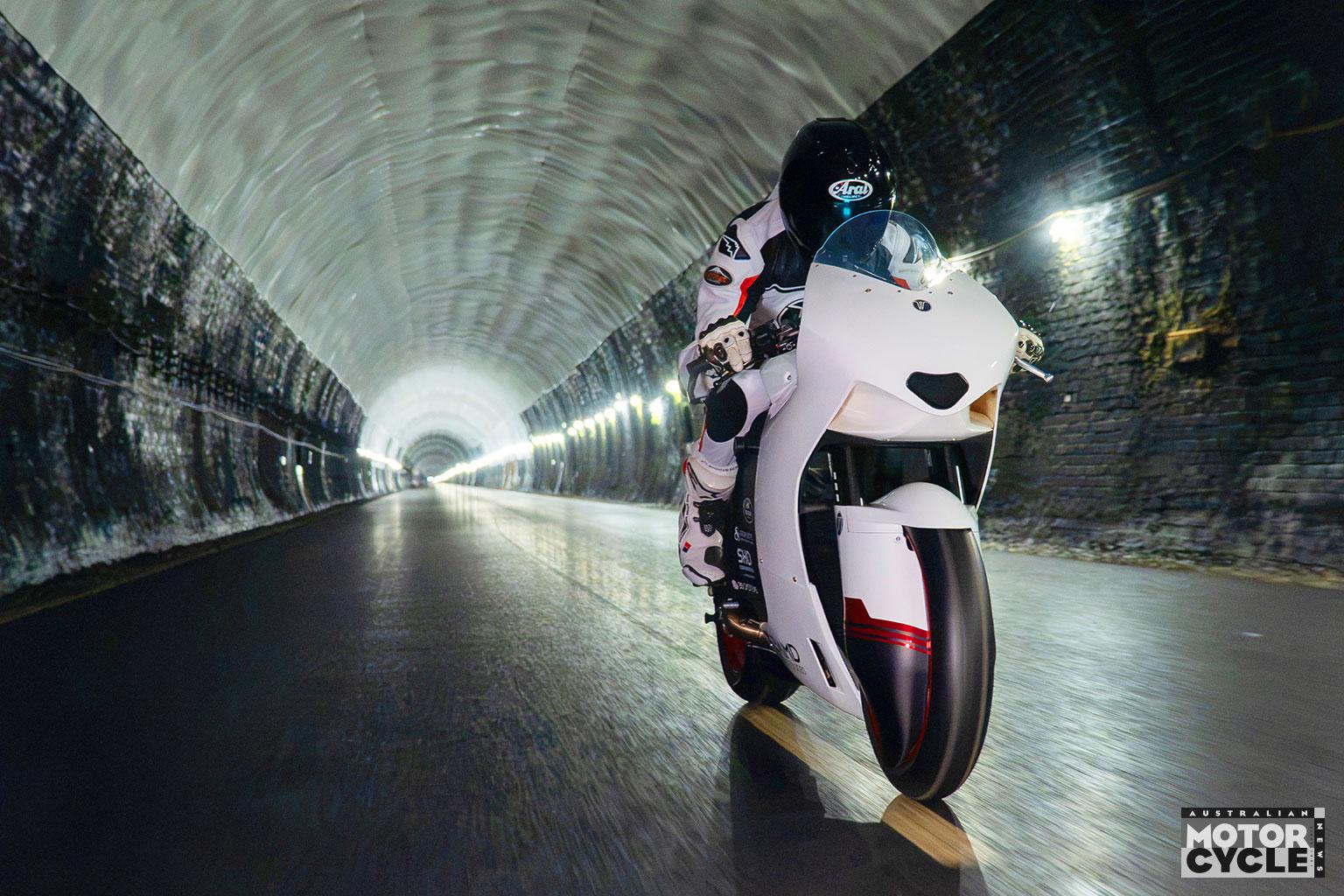
Meanwhile, computational fluid dynamics specialists Bramble CFD provided the abilities to simulate the bike’s aerodynamic performance, not only in a straight line but also taking into account cornering and pitching, plus the movements of the rider, to give an accurate prediction of the bike’s performance even before the first prototype was made. Those achievements can then be confirmed by real-world aerodynamic testing with Catesby Tunnel, a unique, 2.7km straight tunnel, also in Northamptonshire, which started life as a railway tunnel in 1897 and was abandoned for over 50 years after its closure in 1966 before being converted into a world-class vehicle test facility in 2021.
What’s next?
White Motorcycle Concepts is at heart, a technology company rather than a manufacturer, so the Mono RR is intended to be a rolling technology demonstrator to prove the advantages of its patented aerodynamic duct ideas, as well as the potential of the supercharged, small-capacity engine.
While the ultimate goal may be to provide development services and intellectual property licensing to major manufacturers wanting to adopt its ideas, WMC hasn’t ruled out the possibility of making more examples of the Mono RR if enough wealthy customers were to come forward wanting their own supercharged single-cylinder track bikes with the unique WMC aerodynamic ideas.
If big manufacturers can be convinced of the benefits of White’s aerodynamic concepts, and follow the trend already seen in cars to develop smaller, boosted engines instead of big, normally-aspirated ones, there’s always the chance that one of them will pick up the ideas seen in the Mono RR and bring them to a much wider audience in the future.