When the alternative was spending his weekends at Bunnings, AMCN reader Paul Smith decided to go racing instead…
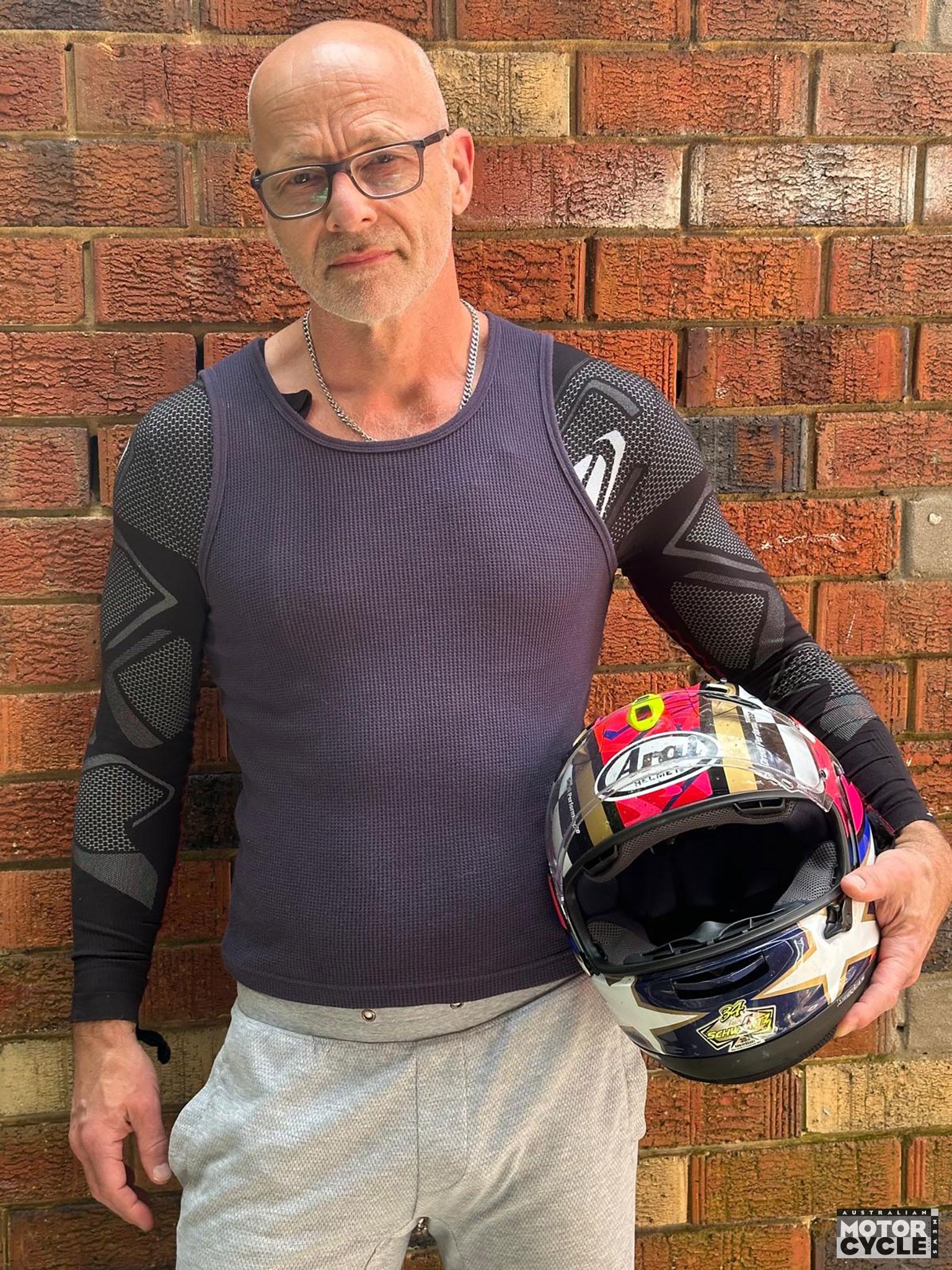
It was vanity, I admit. I was nearing an age where the people I knew, when asked what they did at the weekend, would start talking about gardening and trips to Bunnings.There was no way I was going to surrender. I wanted to say I’d spent my weekends racing motorbikes. Nothing in my mind could sound as cool. But I had financial realities to consider, like rent and food. An R6 track bike, trailer, tyre warmers, spares and one-day-only $800 slicks? And when I binned it, what then?
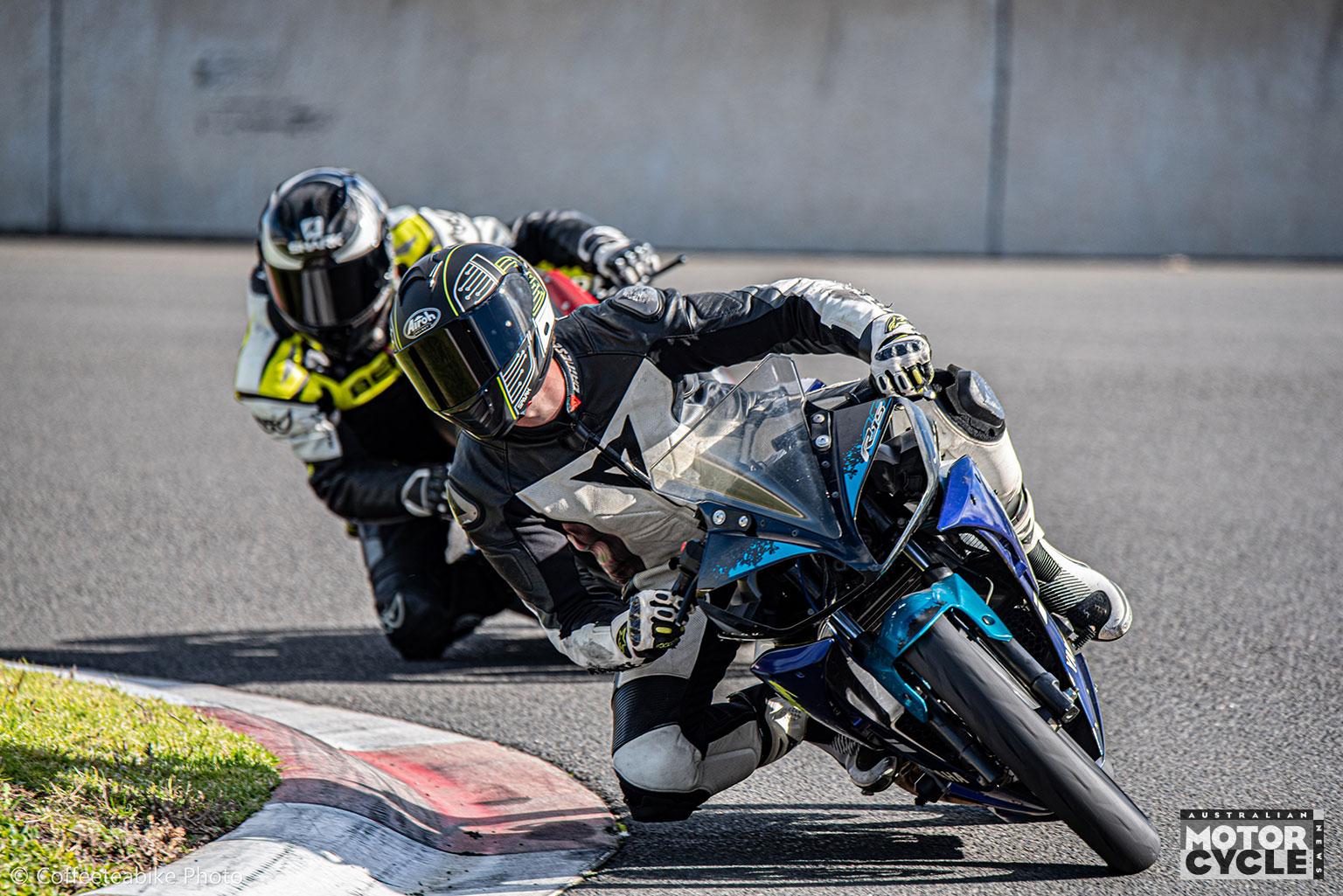
So I found myself signing up to the Commuterlites and 150 Production Racers Facebook group, a colourful mix of diehards doing bucket racing. When I mentioned my plan to one of the track-day staff at SMSP who raced litre bikes, I thought he would laugh. We weren’t going to be riding 220hp machines.
“Mate, you are going to have so much fun, seriously.” There was a sparkle in his eye, like he was remembering the night he lost his virginity.
What you’re about to read is the story of my escape from Sunday afternoons in Bunnings through this mystical portal. As I would discover, bucket racing was virginity sex of the sort that carries more than a little S&M.
FOOLS RUSH IN
We found the bike in Mosman, Sydney, travelling to a posh house with harbour views with my new ‘business associate’ Azaan, a guy I’d met at a track day who was going to be my partner in crime. Neither of us had any idea what we were doing.
With $2000 in my back pocket, the negotiations involved talking to the owner’s son, a kid still doing his HSC. The bike was a 2016 Yamaha R15: 2800km on the clock (allegedly), only used for racing (allegedly), crashed once (allegedly). For the asking price, it came with paddock stands and a set of wets, and if you ignored the crash damage, a silver-speckled paint job.
Following a 35-second test ride up the road, we handed over the cash and loaded it into the back of the van. This was sufficient to gain us entry to the Production 150 class. Six endurance races at Pheasant Wood Circuit, each four hours long except for a six-hour end-of-year finale. Teams of two or three riders.
When I spoke that night with Mark Cumberland from the Facebook group, he seemed nervous about our plan to race in the 150s. It was more serious, apparently. The 125 Commuterlites were more about fun. I thought, ‘How serious could it be? They’re learner bikes.’
“It’s fast and it’s close,” Mark explained. “Some of these guys are ex-ASBK. Exactly how much racing have you done?” “None.” “Track days?” “A few.” “Errrm, Okay. You just need to stick to the racing lines – no swinging out to swing in; none of that yellow-group track-day bollocks.”
Life got in the way for Azaan. Family commitments and looking after his young kids meant he reluctantly had to pull out. I needed someone to step in, so I put up a post on the Facebook group.
I was like an ugly man on Tinder. I got one response, from a guy named Dan Mobbs who sent videos of himself riding the South Circuit at Eastern Creek. His track-day experience was as limited as my own, but when I went through the GoPro footage, he seemed to have some serious skills.
“Okay, you’re in,” I said, as though he’d just made it through the selection process for MotoGP Rookies Cup. The following week was our first race.
BAPTISM OF FIRE
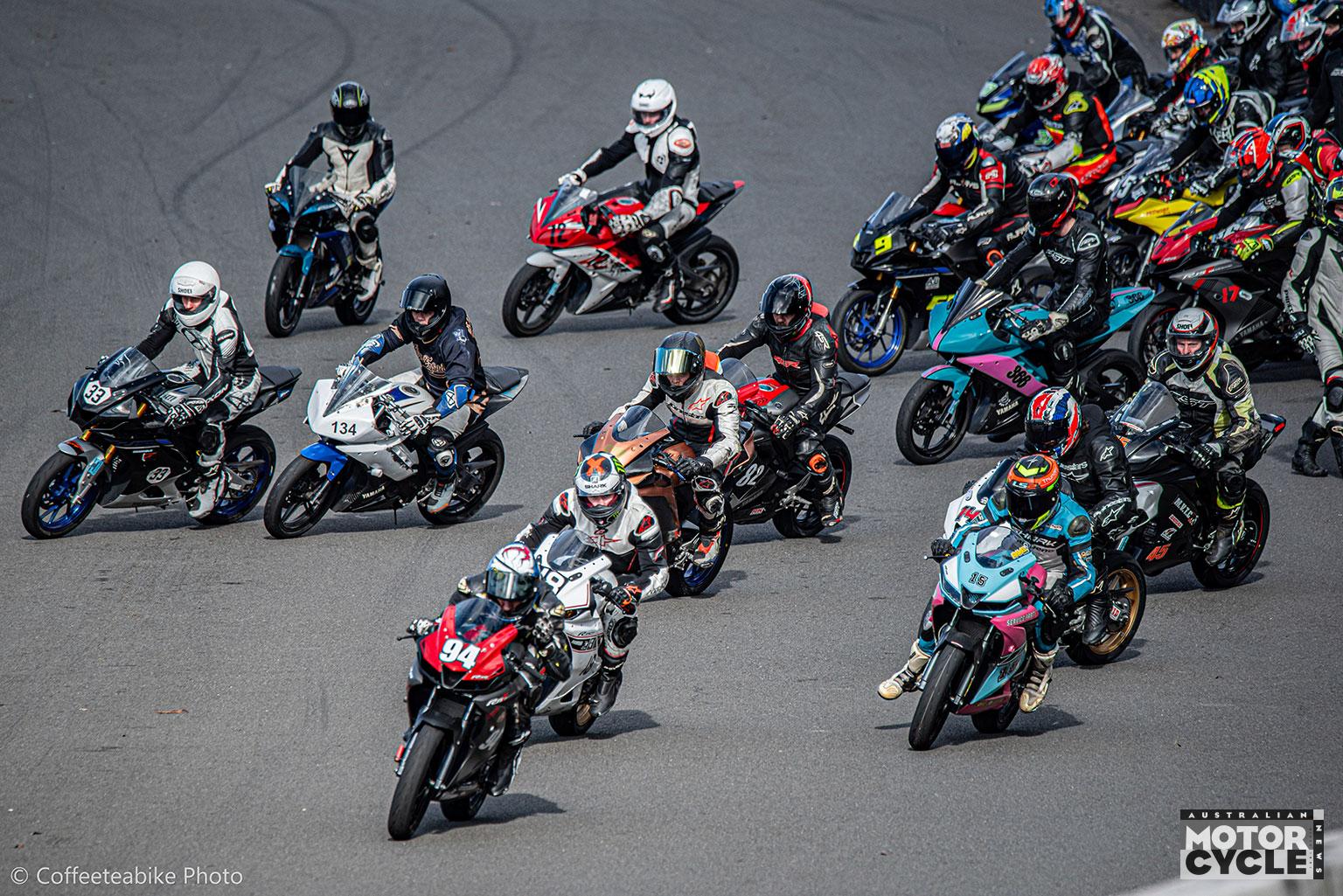
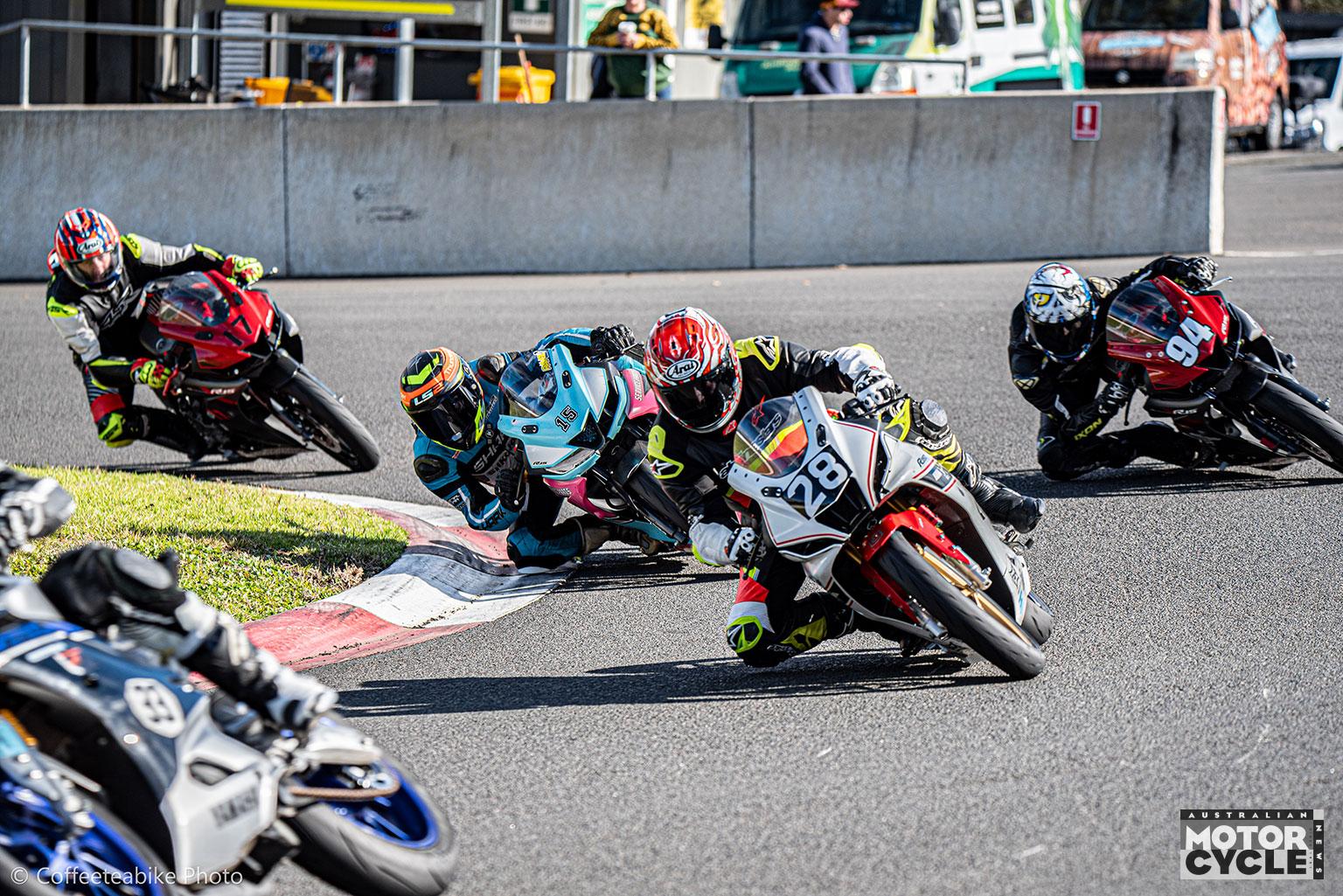
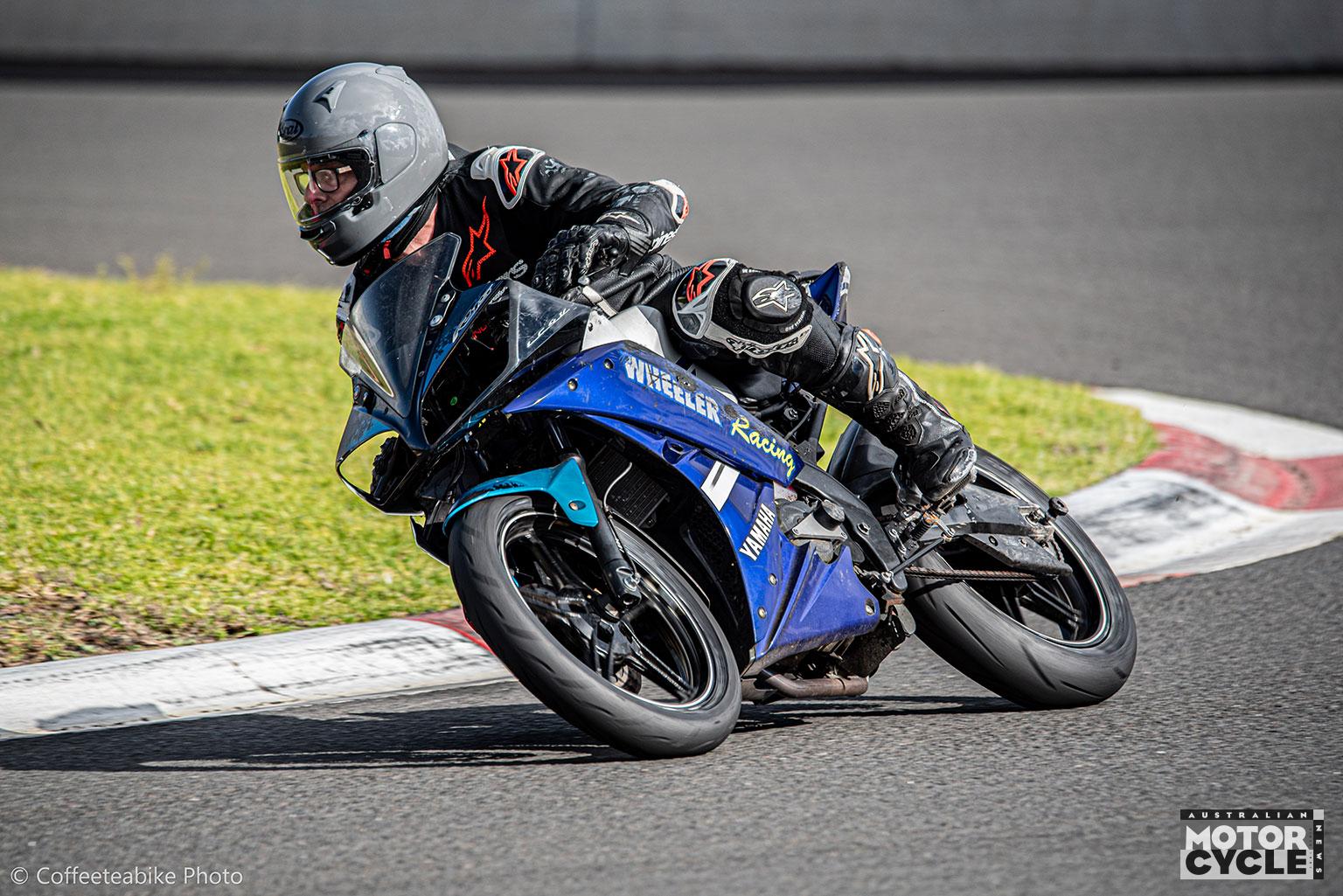
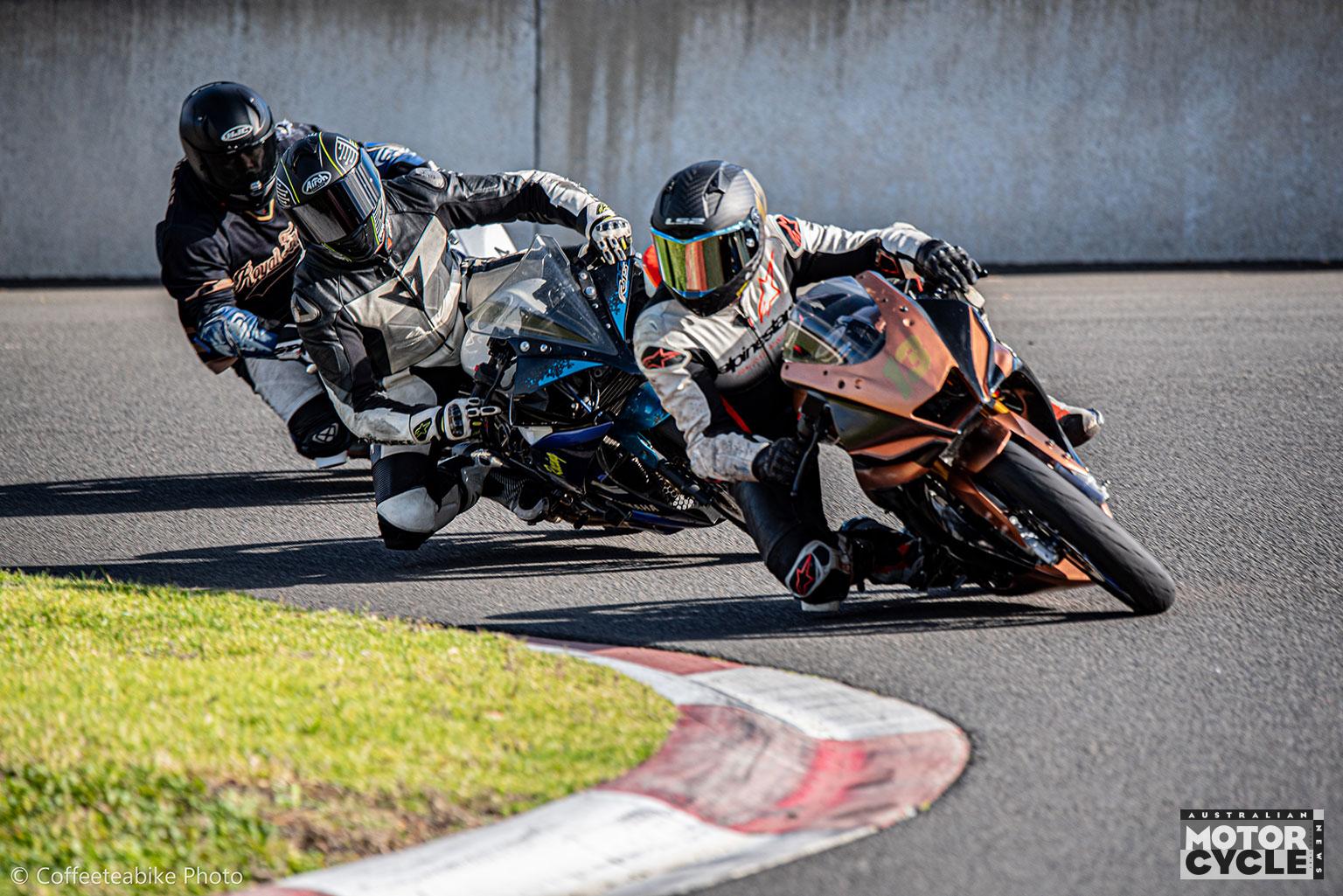
The bikes, to keep costs down, are essentially stock, minus the headlights and indicators. There are some tweaks you can make to the rear shock, and it’s sensible to upgrade the tyres. Some are more equal than others, it’s true. A few teams ride the R15M, with its quickshifter, slipper clutch and upgraded suspension. But the format was super cheap and democratic. Everyone welcome.
My first moments racing motorbikes were bewildering. Within seconds I was swamped. Bikes would come across a few centimetres from my front wheel, hang there for a split second and disappear.
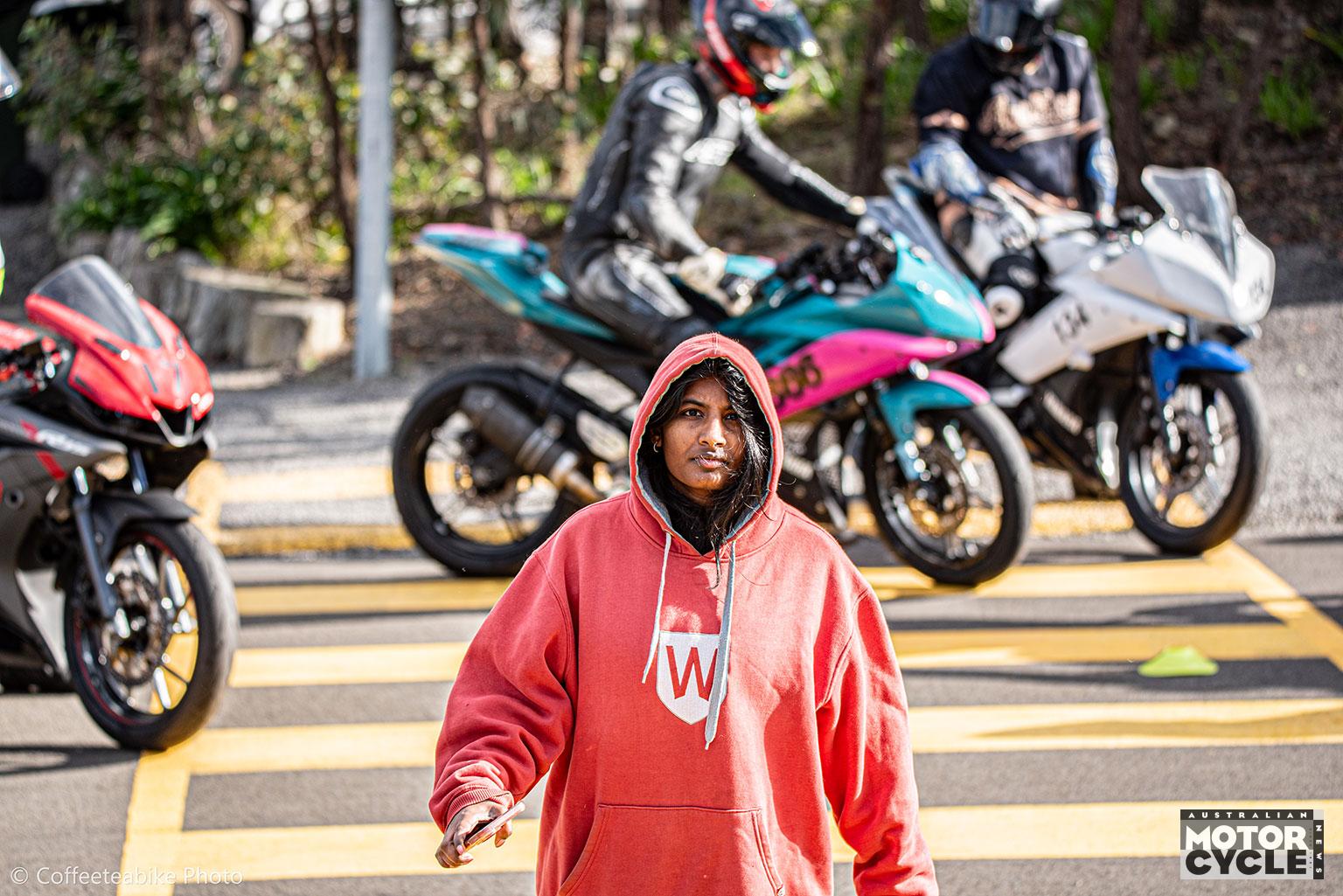
On track days, this intimacy was often alarming because it was a coin toss whether the rider knew what they were doing or, having overcooked it, was about to shoot off out of the corner at some random angle for a chat with course control.
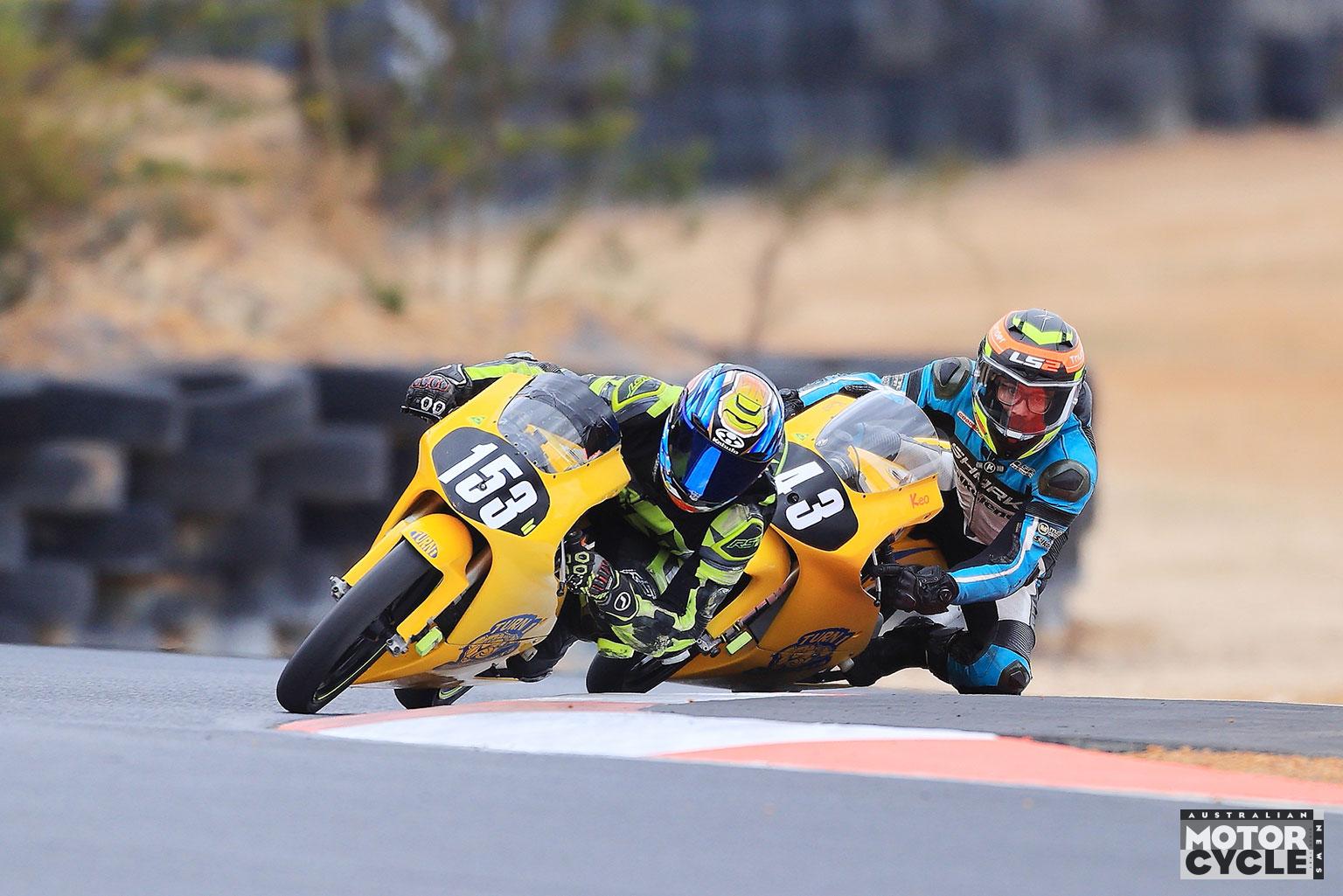
Here it was like getting a clinical-grade haircut with a scalpel. You were occasionally lifting the bike mid-corner as three riders came around, under and over you. But if you were on the racing line, as Mark had said, you were fine. No heart flutter.
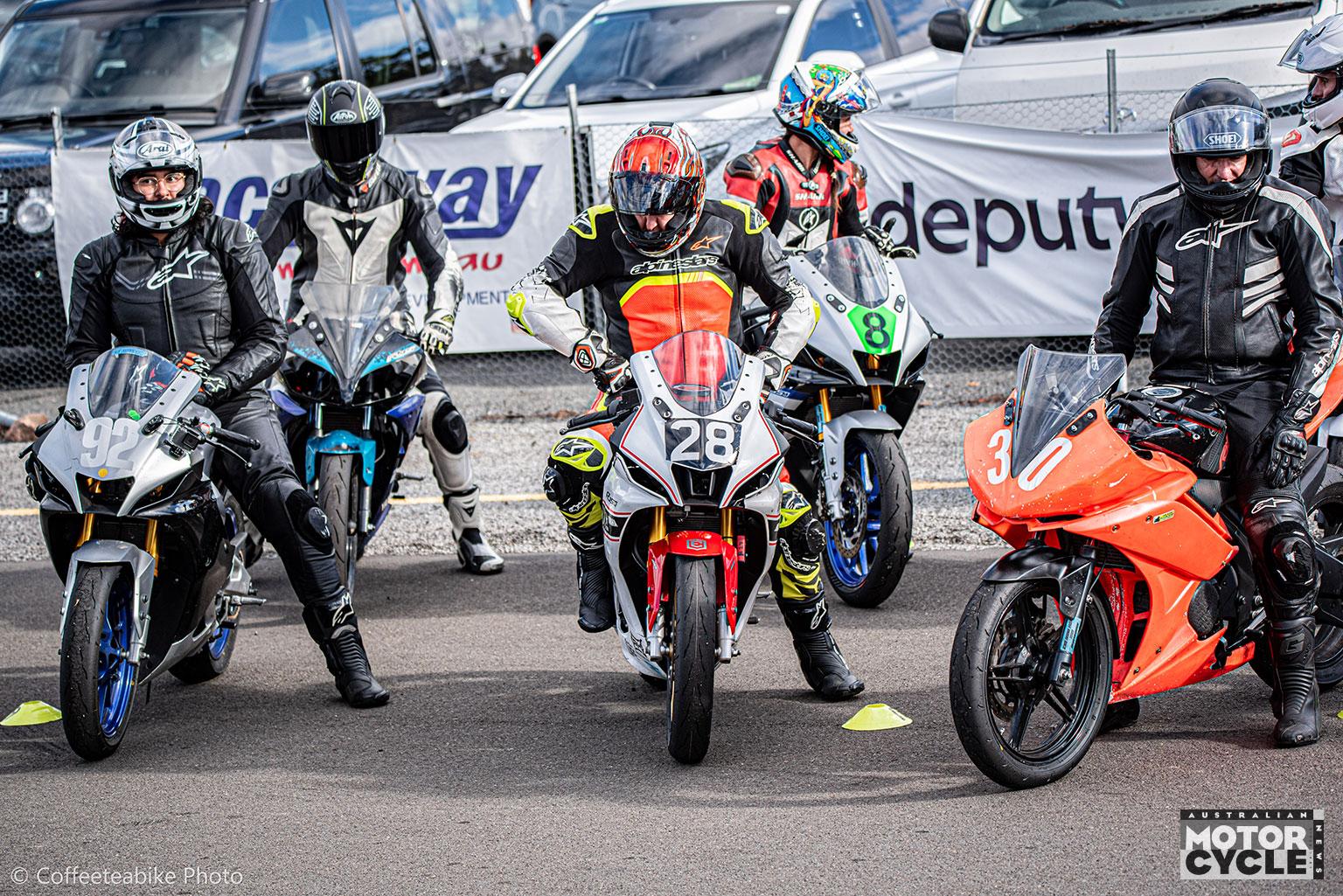
The wonder of it was that we were all on the same bikes. I couldn’t blame my lap-time disparities on anything other than rider talent. You were punished for every imperfection. Too much brake into the corner? Too slow, and you got swamped. Your line a metre out? Too slow, and you got swamped. Wrong gear? Too slow, swamped.
But the shock was discovering just how much corner speed these bikes could carry. I was being schooled in the basics of racing – riding a slow bike fast. But being schooled, as we all know, is boring. I needed someone on whom I could execute a move of my own.
It took time, but halfway through my first stint, I spotted a man of considerable size wearing super-snug black leathers in the distance. I had no reason to assume I possessed superior skills, but I thought Newtonian physics might help. I did a calculation along the lines of F=MA, or whatever it is. My version was something like horespower divided by his weight versus hp divided by mine.
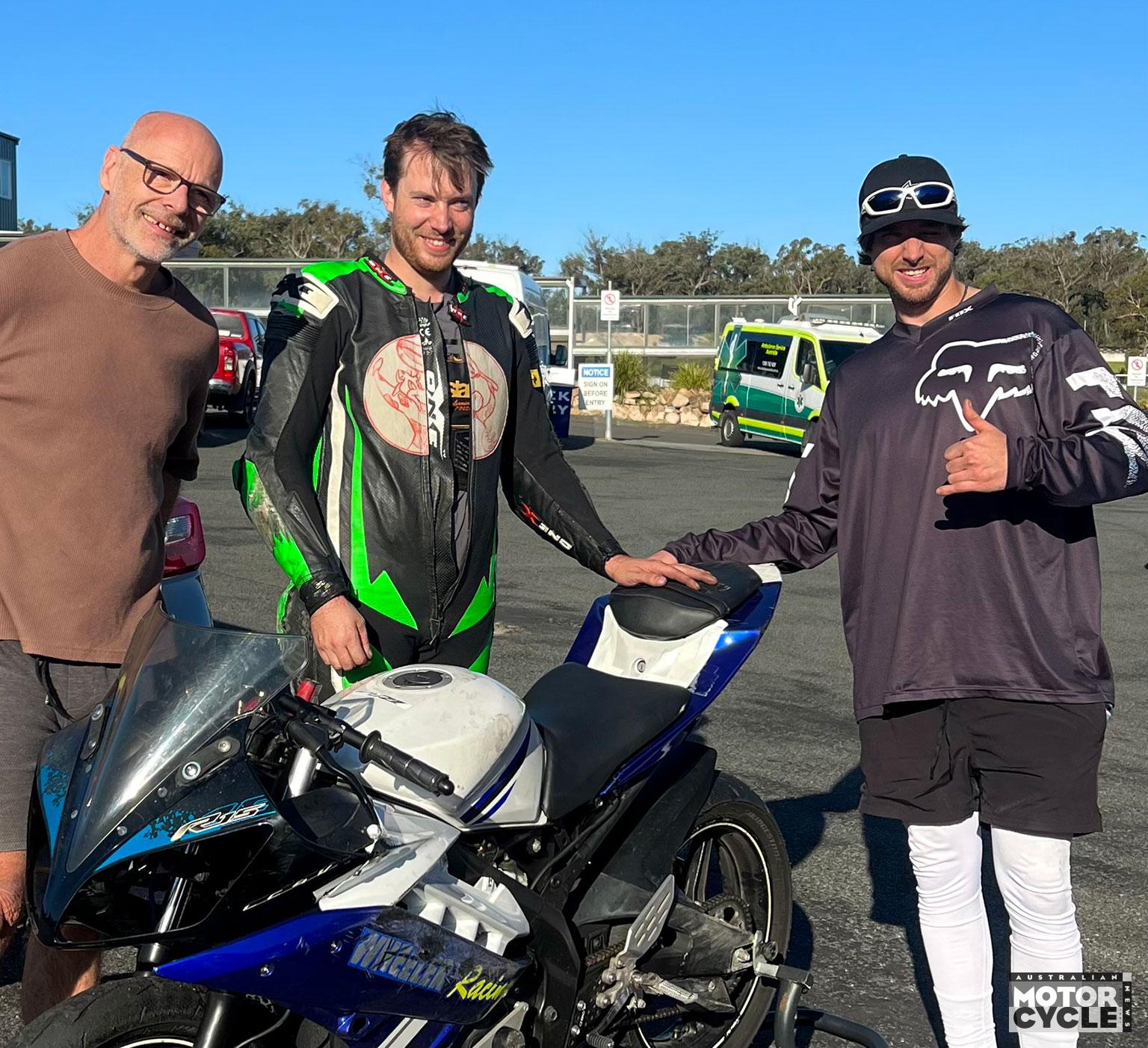
Or, to be honest, his arse looked bigger. The learner-legal performance of our machines made power-to-weight ratios acutely sensitive to men who enjoy large serves. So, on the incline after the tight right, I began closing in. On the other side, before momentum came to his rescue, I slipped underneath him.
To my shame, I braked because I was panicking about making the next turn. He had nowhere to go. I’m sure I heard him shout. It was a classic block pass of the sort I’d been subjected to riding yellow group during track days at Eastern Creek. Ugly, but this was my first race pass and I returned to the pits with a swagger in my stride.
CRASH COURSE
In the end, Dan and I never finished. With just two of us in the team, swapping every 20 minutes over the four hours was exhausting. Late on, the footrests began to come loose. We crouched down to work out what needed doing and realised our brains were baked. Even thinking through which bolts to remove felt like doing differential calculus, so we called it quits.
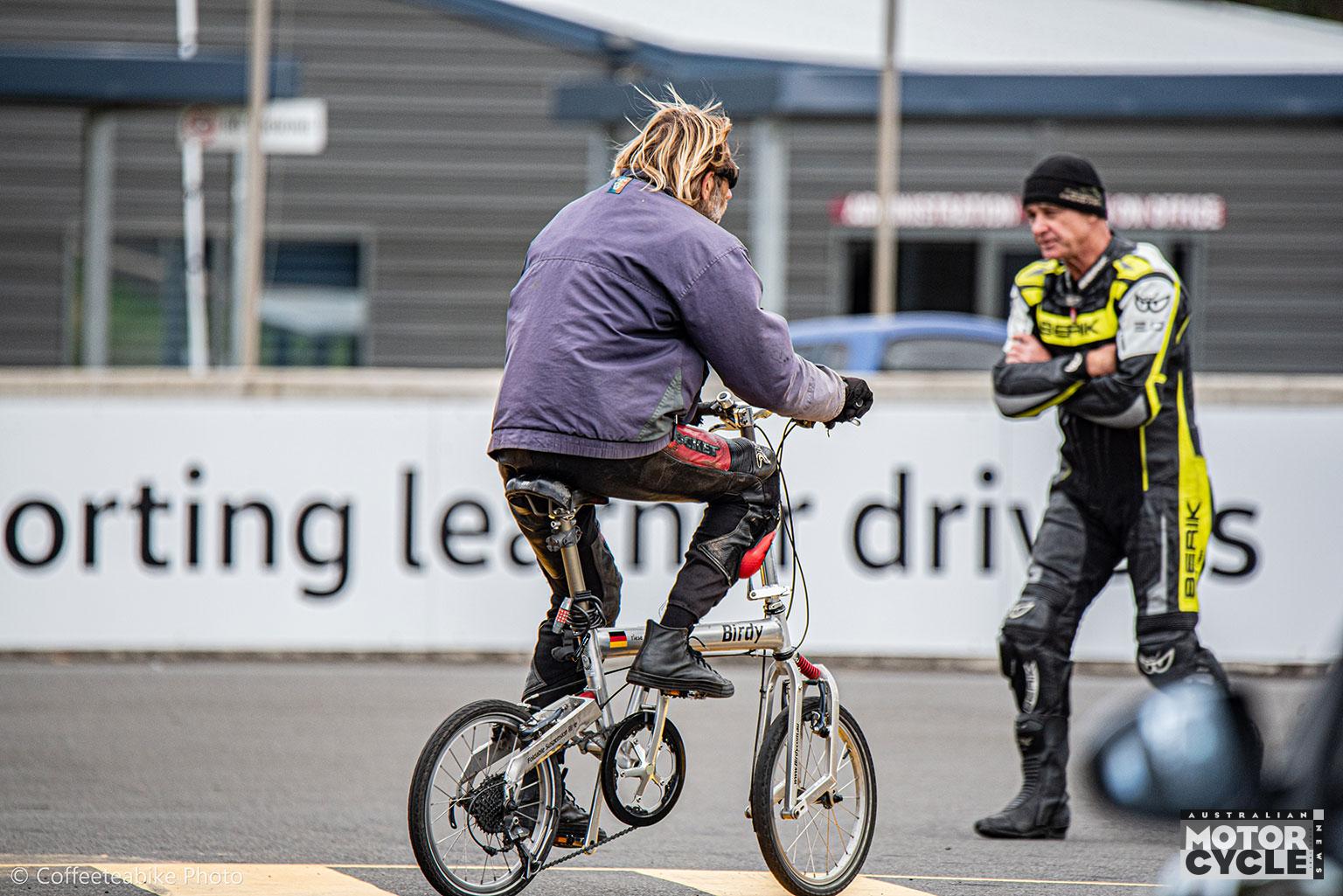
By the second race, Jackson Pankau had joined us. An old school friend of Dan’s, Jackson worked as a mechanic at SMSP. He also moonlighted as a mechanic for Will Nassif, an ASBK racer with the Omega Racing Team.
The second race didn’t go particularly well either. There was something wrong with the suspension. The chatter was bad. Our pace quickened throughout the day but there was a limit to what the bike could take.
Dan went down first. We got the bike running again after half an hour, but a few sessions later Jackson careered off towards a tyre wall, twisting the front fork as the bike skidded across the gravel. Game over. Another DNF.
We renamed the team Joan Mir Racing, in tribute to MotoGP’s DNF king.
A few days later, I got a text from Dan. He’d done some analysis involving an Excel spreadsheet and my lap times and decided I needed instruction. So we went to Joan Mir Racing’s secret training facility (AKA the IKEA carpark at Tempe) for some after-hours knee-down circles.
To reduce costs, Dan had 3D printed kneepads, which turned out to have the same shape as Madonna’s conical bras from her Blond Ambition Tour circa 1990. Standing in the carpark I felt like I was doing panto.
The numerous YouTube videos of knee-down circles belie the speed and sensations of doing them in real life. It’s a brain-blood rush, at least for the uninitiated. But under Dan’s old-school pedagogical approach, the initial panic slowly subsided as I eased my death grip, leaving the steering unmolested and allowing the bike to do what it wanted to do, which was simply to sit there going round and round forever.
Standing in the middle of the cones like a circus master, Dan would shout, “Move your head and look, for f#ck’s sake. Look at me!”
That’s what I thought I’d always done: look. But I realised that during a year of track days, most of the time I’d been gazing blindly towards some vague destination up ahead.
SECOND COMING
When the third race arrived, we turned up in good spirits. This was Joan Mir Racing: The Resurrection. Jackson had sorted the suspension. He’d also brought along another R15 in his van, which he planned to sell for parts after the racing.
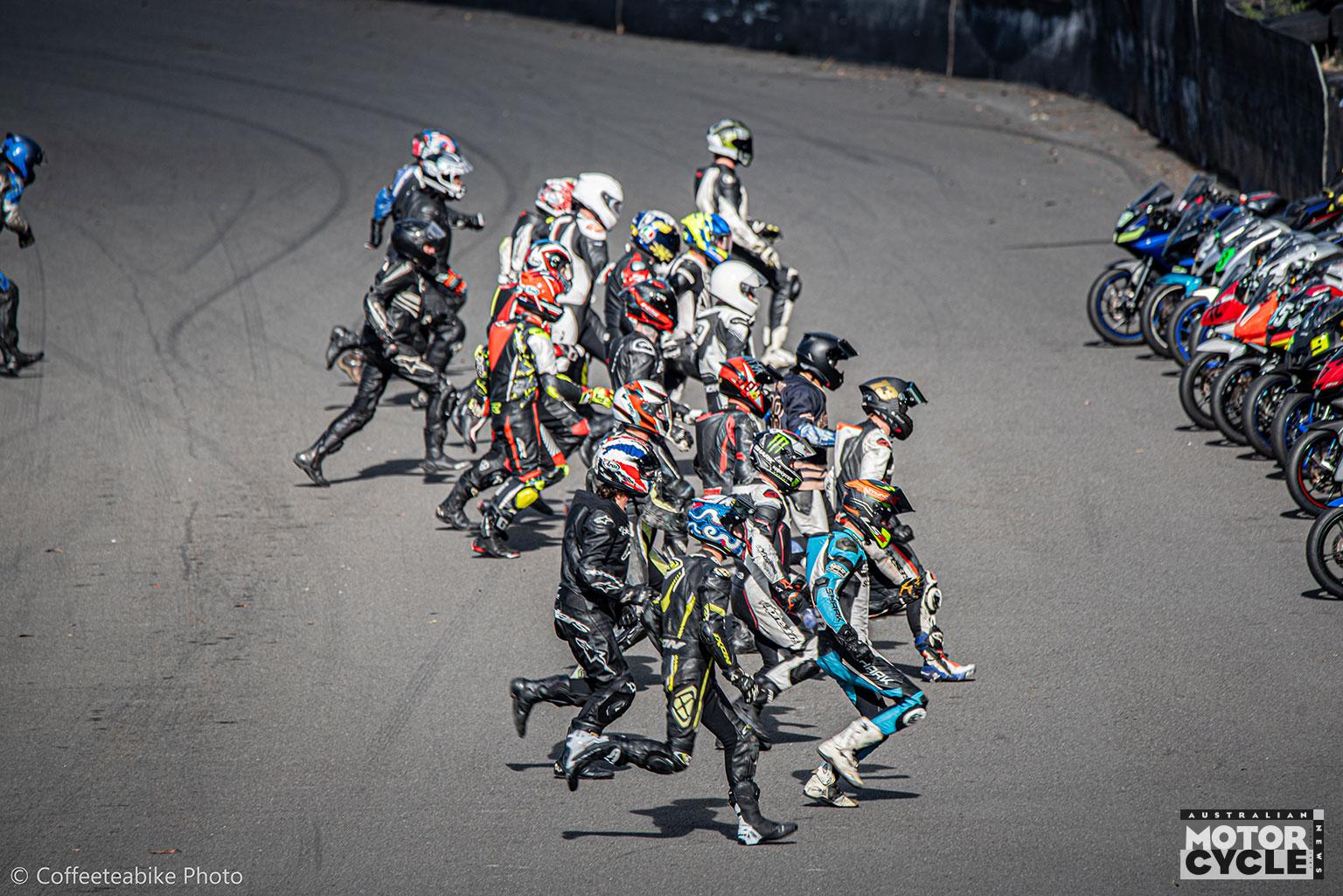
The first miracle happened in the morning. One of the best things about this racing is the Le Mans start, where riders stand on one side of the track and, when the flag drops, run across to their bikes, jump on and launch. It’s like watching a boiling swarm of tiny insects carrying out a blitzkrieg.
Through this chaos and into the first corner, Dan emerged on our beaten-up race bike in second place. And that’s where he stayed.
“What the f#ck is happening?”
I took a picture of the leaderboard and started sending texts to friends and enemies. The Resurrection: second place. Even my feckless, useless kids responded.
Dan came in, Jackson took over, and again it was wheel-to-wheel action. “It’s like go-karts,” Jackson said when he returned. This carried on all morning, through the first hour and a half. Upper half of the pack. Respectability.
Dan’s lap times since we’d started bucket racing had fallen from 1min05s to 1min04s to 1min03s. They continued to tumble, at one point reaching 1min02s. There were probably half a dozen riders among the teams doing faster times. The problem with this speed, on seriously worn tyres that had already done two races, was that Dan was riding on an edge I was nowhere near.
The first I knew he’d gone down was when I returned from the toilets and saw the wreckage.
SWAMP THING
The bike had started to slide in the final banked turn. Dan said he thought he was going into the wall. The GoPro footage showed why he was shaken.
But he was okay and in one piece, which was more than you could say for the bike. The front end was mangled: bent fork, twisted triple clamp, smashed dash and the stink of petrol.
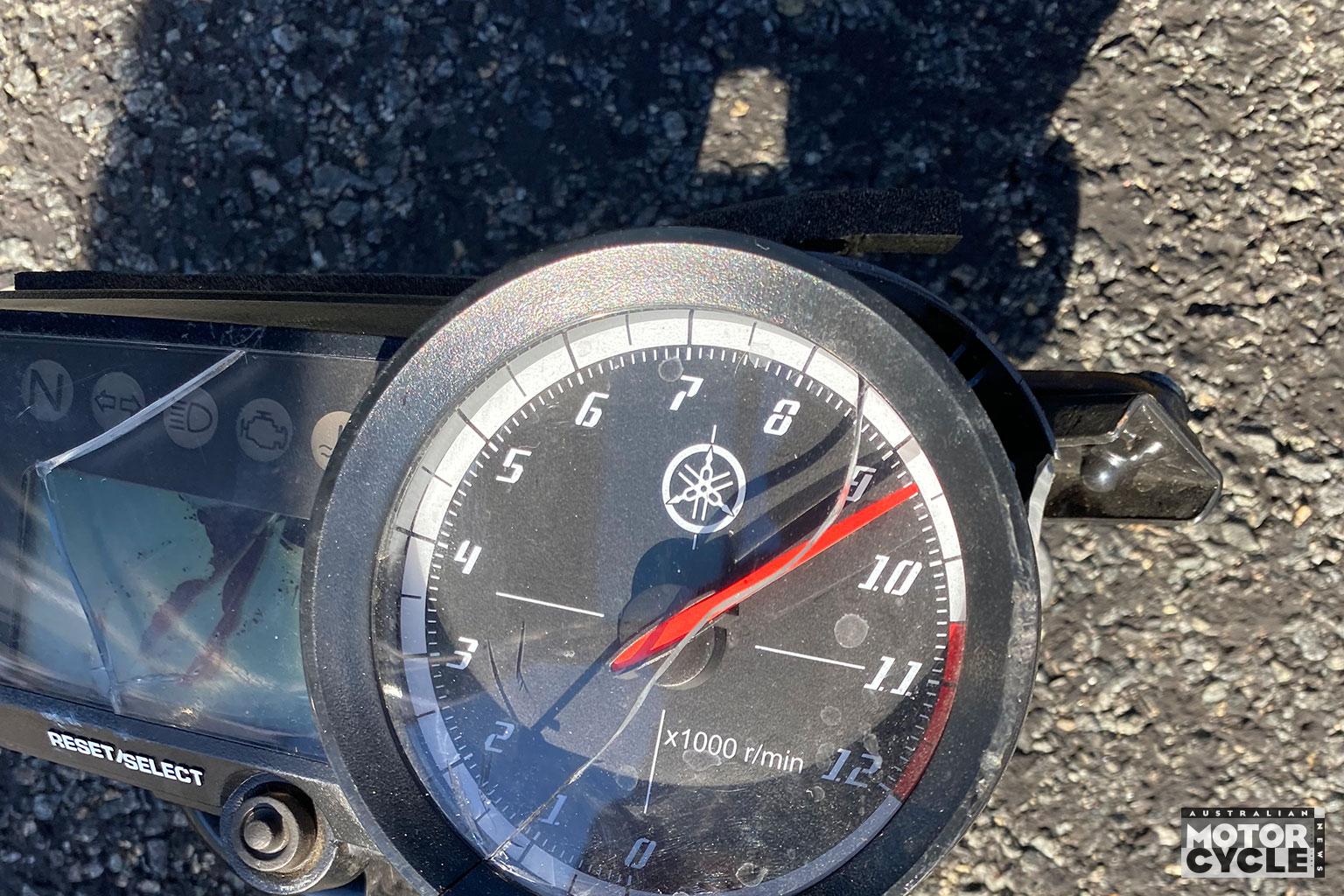
Dan held the rev counter in his hand, its needle frozen at impact, showing he’d been pinning it through the corner at 9400rpm in third before the rear said no more.
I was getting ready to pack up. Another DNF. I looked at Jackson and, for a split second, his face darkened. But that, I learnt, was not his natural temperament. He had the unsullied, boyish optimism of all genuinely beautiful people. “F*ck it… we’ve got spares.” He marched to his van.
I imagined he’d soon be pulling out some parts machined from high-grade metals, sourced from his ASBK friends. Not strictly legal in this world of racing, but who’d be doing the scrutineering given we were coming last?
The back doors opened. I peered inside. “What the f*ck is that?”
“What?”
“That! What the f*ck is it?”
It was the spare bike he’d been planning to sell for parts. But this R15 didn’t shine with speckled silver paint. It sported turquoise fairings in a fluoro design common to 1980s Australia, back when mullets were an original fashion statement.
There hadn’t been much buffing or polishing and, to my untrained eye, strange mucus was secreting from the engine case. It looked like it had been pulled from a swamp. This turned out to be close to the truth.
Jackson explained that a bloke had turned up at the garage where he worked with a bike he was having trouble starting. The reason, apparently, was that it had been lying in a ditch in his garden for six months. He wanted to know whether Jackson and his colleague could get it running.
“Did you?”
“What do you think?”
And so it was from this Loch Ness monster that we’d harvest the vital organs needed to replace the bits Dan had re-engineered at Turn 9.
With help from Dan, Dan’s dad and me ‘passing the spanners’, it took Jackson about 40 minutes. Other than the rear paddock stand, we had nothing to prop up the bike while we removed the front end, so we stuffed chunks of broken masonry, sourced from behind the pit sheds, under the footrests.
With the racket of the race in the background, Jackson stripped the donor bike in his van and fitted its front end, dash and front wheel to our race bike, along with the original bike’s clip-ons.
No one should ever blow smoke up Jackson’s arse, believe me, but watching him do all that with a mallet and a socket explained why he was working as an ASBK mechanic. There was no pit crew other than us, and no precision-engineered parts. But there was also no fuss, no whinging. Let’s just sort this out.
We removed the masonry from under the pegs and Jackson did some stress testing, pushing the ‘bars and front wheel against the pit-garage wall. “Looks ready, sort of.”
Our bike was now thoroughly mongrelised. With the new-old dash, it suddenly had 32,000km on the clock.
My first thought: “Jeez, the resale price is going to take a hit here, boys.”
But in this form, with its black, sightless eyes and battered rear end, the bike looked psychopathic, like a freshly lobotomised badass. There was no way anyone would f*ck with us.
Until this point, Dan and Jackson had employed an unspoken and unsubtle strategy of minimising my time on track, given the speed with which I could drag us down the race order. But the memory of Joan Mir Racing: The Resurrection running second was now a distant one. What we needed was a test rider.
“Who’s next up?” I asked. The looks were meaningful and silent.
FEAR & LOATHING
“What… you want me to go out?” A short pause. “Look, you are the team owner. You need to start showing some leadership.”
I got on the bike. “Just do a couple of laps in the carpark first,” Jackson called out as I moved away. “Yeah, sure, you f*ckers,” I muttered into my helmet.
The brake test seemed to work, at least at the 20km/h I managed in the carpark. But I entered the track gingerly, taking the first few corners in a nervous sweat as my arse was once more swamped by the other riders. Soon I was heading towards the scene of Dan’s racing incident, down the back end, gathering speed along the right-hand curve before sending it left, knee down, trailing the brakes. I was determined not to be a chickenshit.
It was then that I came to understand the truth behind an often-asked question. What separates the racer from a normal mortal? Bike skills? Cat-like reflexes? A need-to-kill-
to-win mentality?
Yes, but the other answer is this: the human imagination. Zarco, Marquez, Morbidelli? These people have none. Whatsoever. There’s nothing in that part of their brains, just a small piece of concrete. That’s the only reason someone like Alex Marquez can be hurtling along at 240km/h as a Catalan hailstorm explodes around him and, following a thumbs-up Instagram post from his hospital bed a few hours later, be back on the bike in the following weeks, smashing himself up in more or less the same way.
But me? As I went into that turn, I had a technicolour premonition of my last six seconds of life before someone called in the Westmead Hospital air ambulance. I was carrying far too much ambition for my talent and, in my mind’s eye, I could see the swamp bike’s front end beginning to deform under the unaccustomed physical forces, bits flying off into outer space as the wheel axle shattered and my face made a rapid, unwanted descent towards the tarmac, where I’d undergo an 80km/h facial scrub.
“Whoa, whoa, whoa!” I was now singing a duet with my own arsehole. The bike dipped under braking and, with Dan’s words in my head (“Look where you’re going, for f#ck’s sake”), I turned in and, by some miracle, came out the other side.
Neither Jackson’s mallet nor the swamp-bike modifications had failed me. It was then, as the afternoon sun broke through the clouds, that I felt the ecstasy of bucket racing.
DEAD LAST & LOVING IT
I’m not sure how, but The Resurrection made it through the following hour. We’d been missing in action, but after a series of pit stops and rider swaps, Jackson completed the final laps as the race clock ticked towards the end of the fourth hour and the chequered flag went up. We were dead last, but Jackson’s eyes were ablaze: “This was no DNF, Mir! We did your f#cking name proud, you f#ck!”
It was like listening to Winston Churchill with Tourette’s.
Dan’s wheel-to-wheel racing before his Turn 9 crash had been worth the free entry for anyone who’d turned up. Three, four, five riders mixing it up from corner to corner. He reached out to one of his adversaries the next day, anxious that things had become a little too brutal towards the end. But this was the reply: “Mate, did you look through the photos of that first stint? That was probably the most fun I’ve ever had on a bike!”
And, to be honest, that was the truth for all of us that afternoon. Winners and losers, the fast and the slow. Just the joy of being out there racing and not stuck in Bunnings looking at the pot plants.
KICK THE BUCKET!
Fancy having a crack yourself? The Commuterlites & 150 Production Racers Facebook group is a great starting point to learn about the bikes, racing formats and events (or email Scott Hill at scott@pheasantwood.com.au). Former Aussie champion Ken Watson established these classes at the track in 2021 with affordability in mind. His son Keo has an R15 with 30,000 race kilometres on it, often screaming at 11,500rpm, with only basic clearance checks done.