40 years after Suzuki unleashed the original GSX-R, its flagship superbike returns with fresh electronics, revised internals and a familiar appetite for speed
It’s been a long time between drinks for the GSX-R1000R. Its last revamp dates back to 2017. A lot has happened since then. The Covid pandemic, Trump became president twice, Taylor Swift married a footballer, Suzuki even dropped out of MotoGP. But they didn’t give up on racing. That 2017 GSX-R1000R won the World Endurance Championship four times, taking the GSX-R’s tally to 15 World Endurance Championships. There was obviously not a lot wrong with the 2017 Gixxer, but to celebrate its 40th birthday, a makeover was in order.
More than meets the eye
We’ve spoken of Euro 5 and Euro 5+ for years and their effect on production motorcycles but, to put it into perspective, the Gixxer 1000 hasn’t been sold in Europe since 2020 because of these regulations. A revamp was going to take more than a paint job and some new stickers.
Suzuki got to work dragging the GSX-R into the modern era of Euro 5+ while keeping the bike competitive for racing, maintaining reliability, bringing updated electronics to the party and ensuring it still looked and felt like a GSX-R.
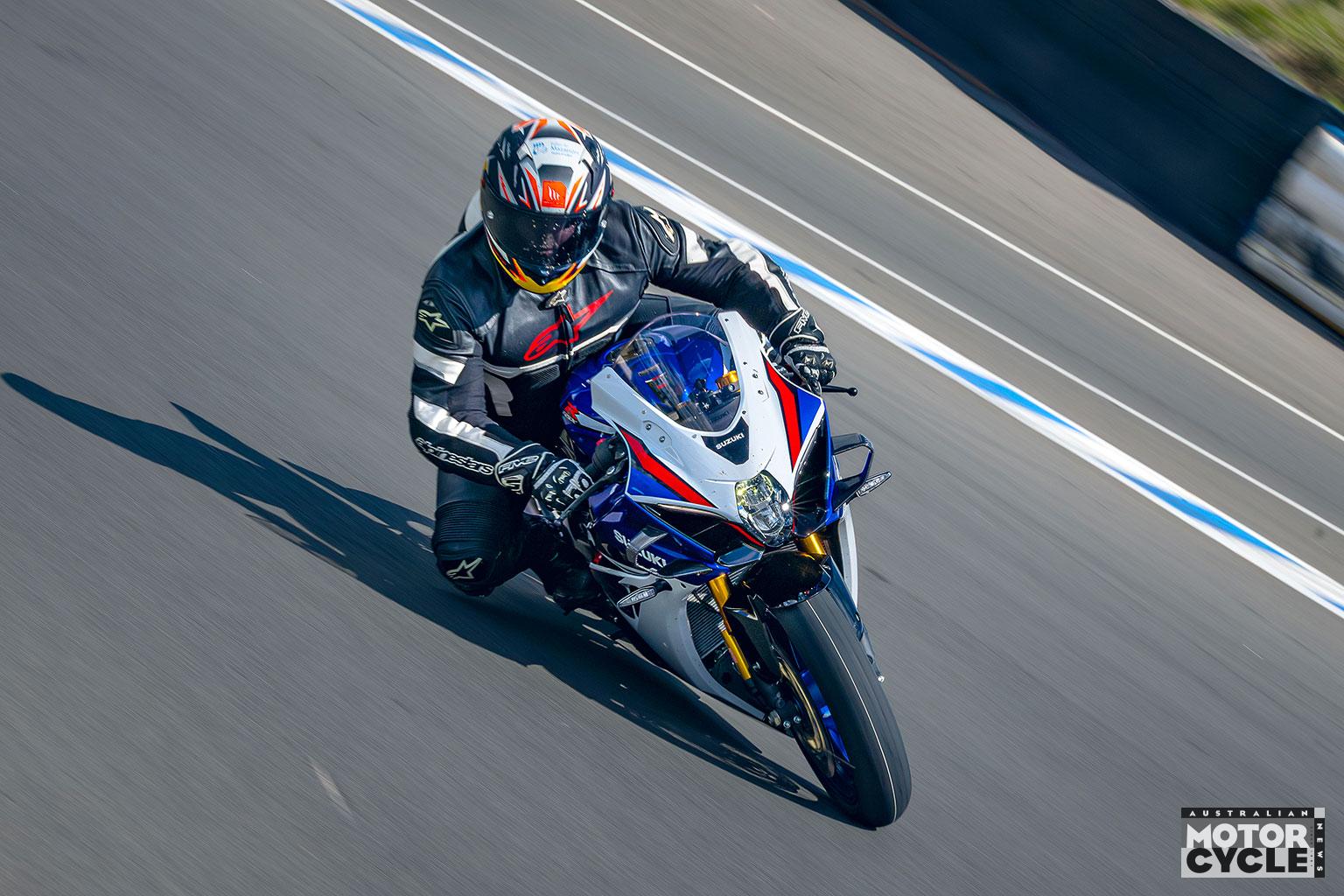
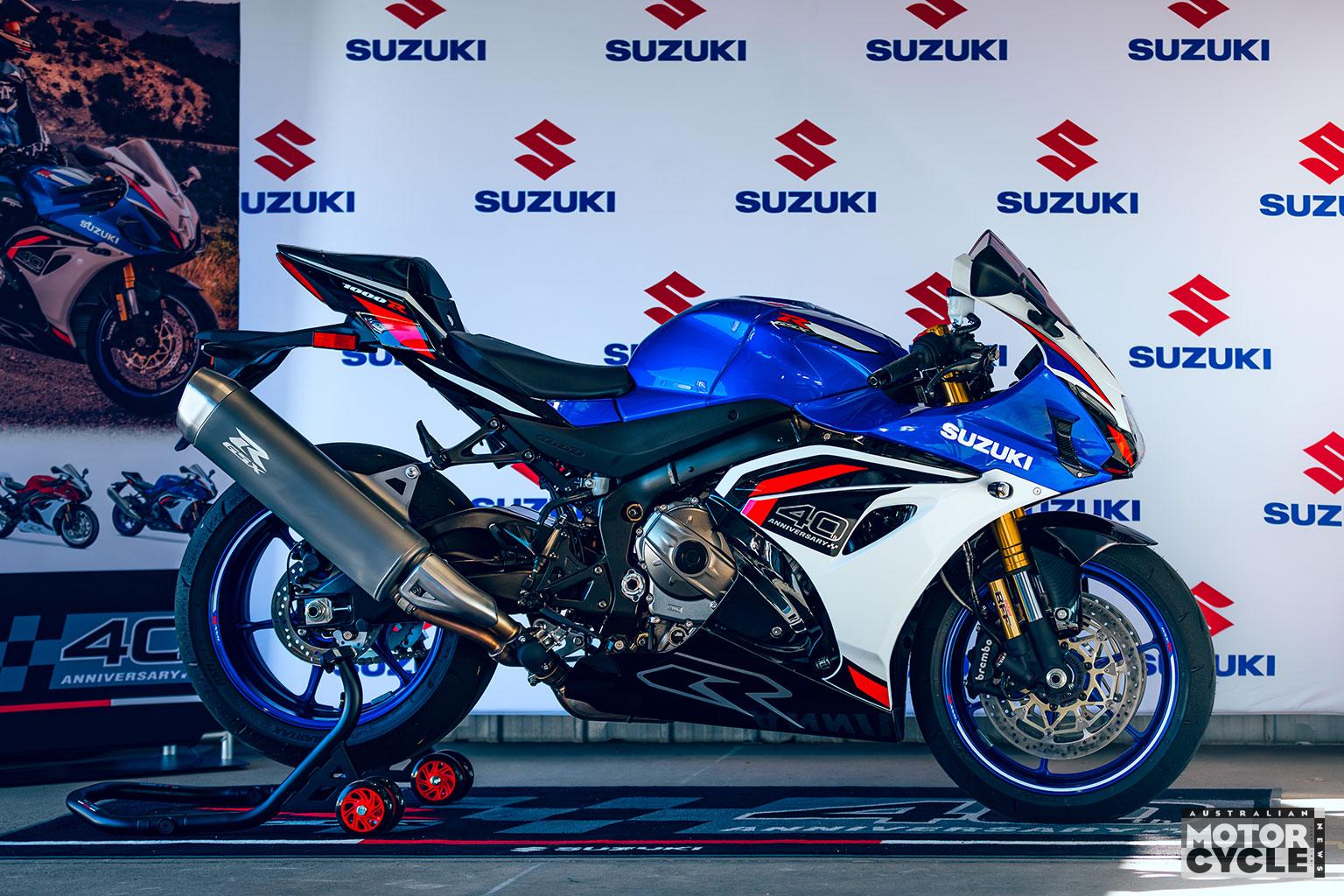
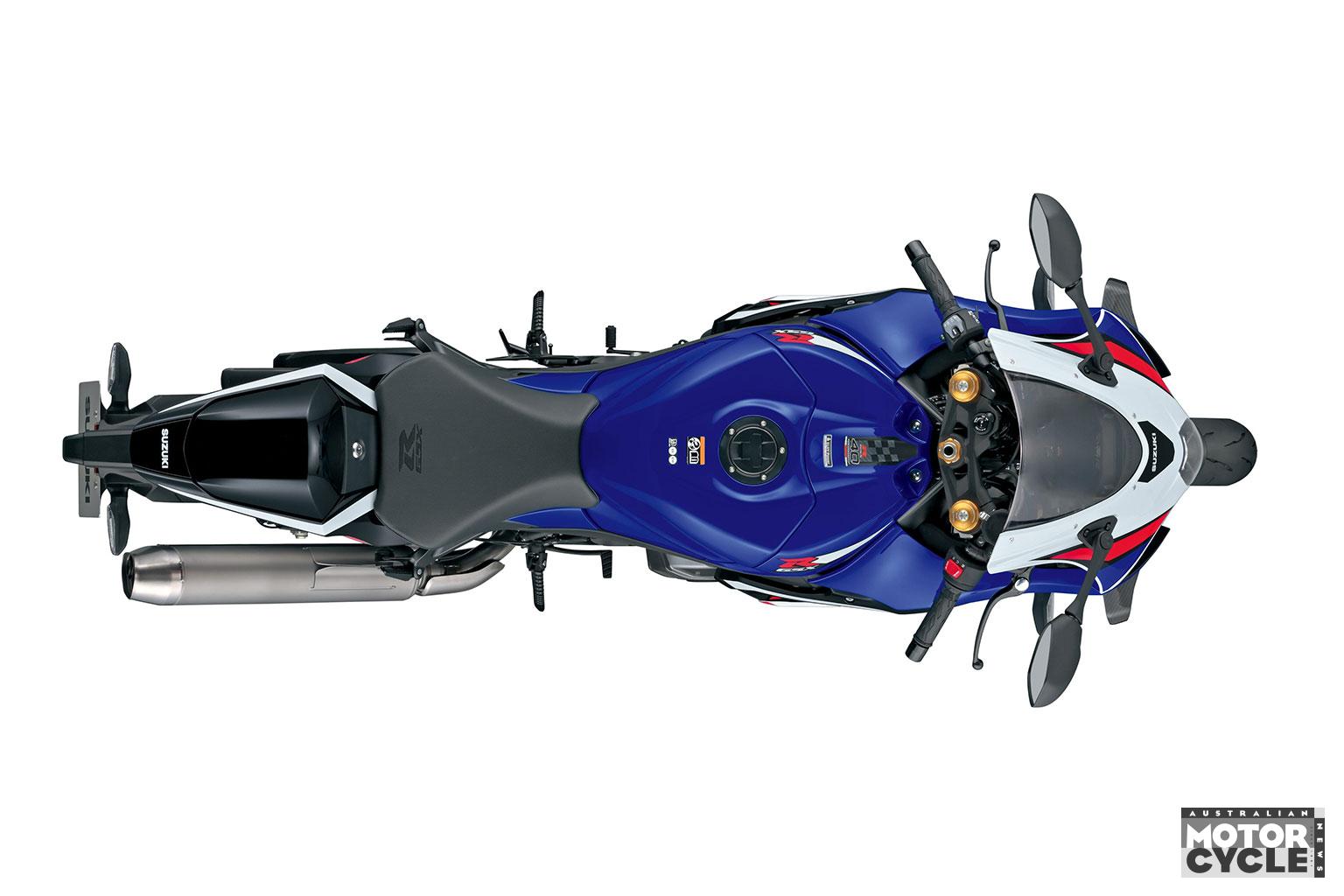
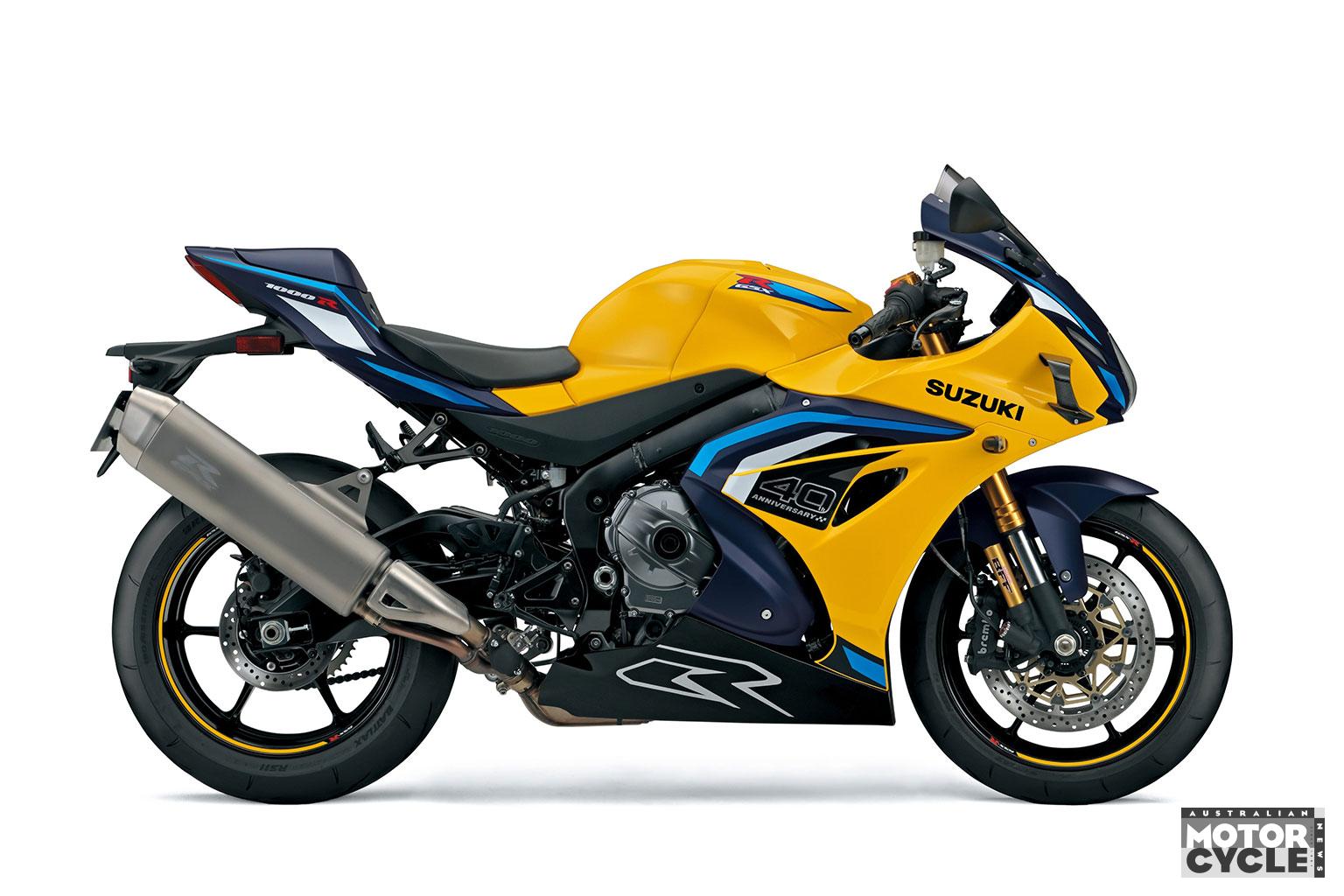
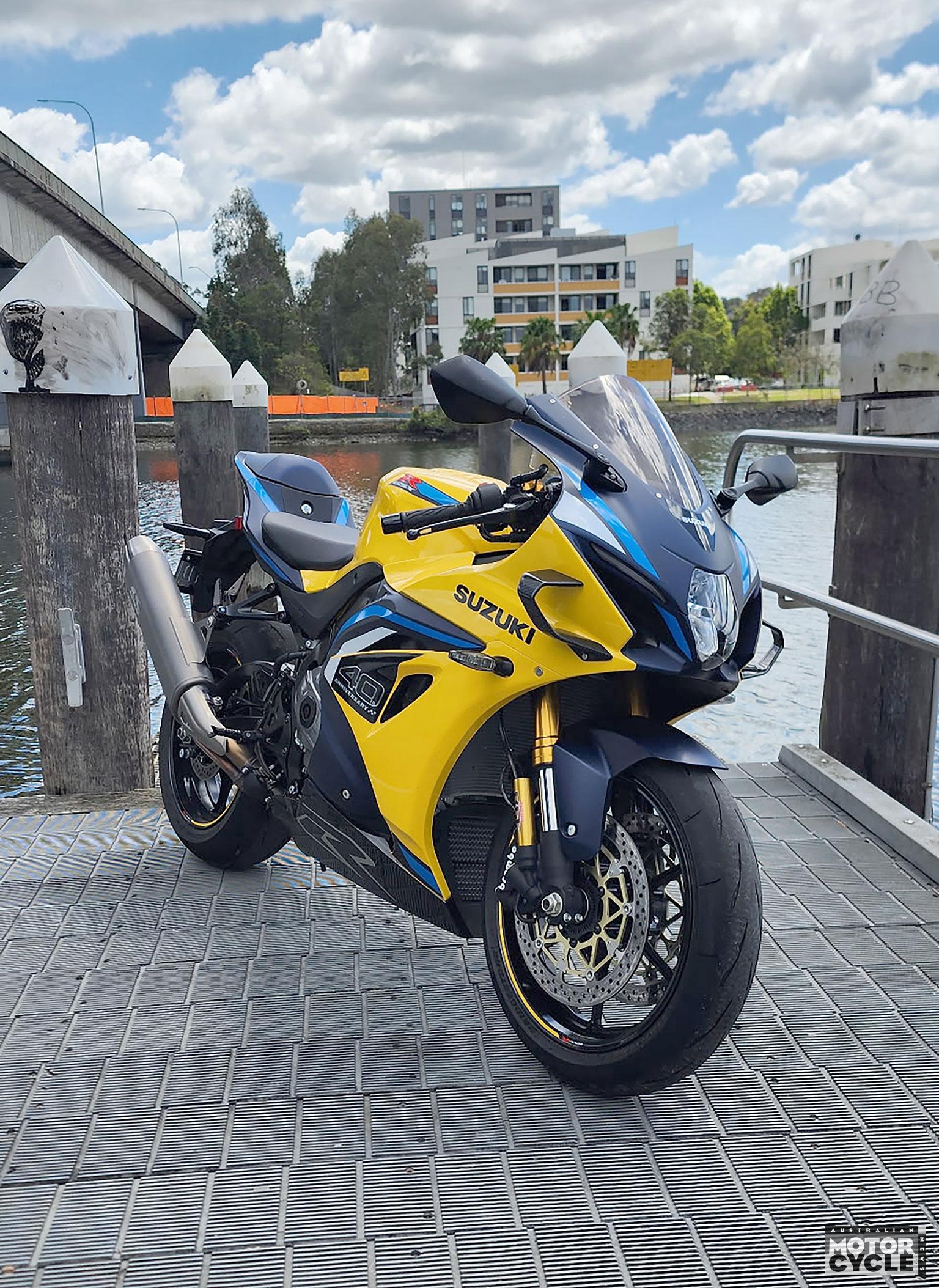
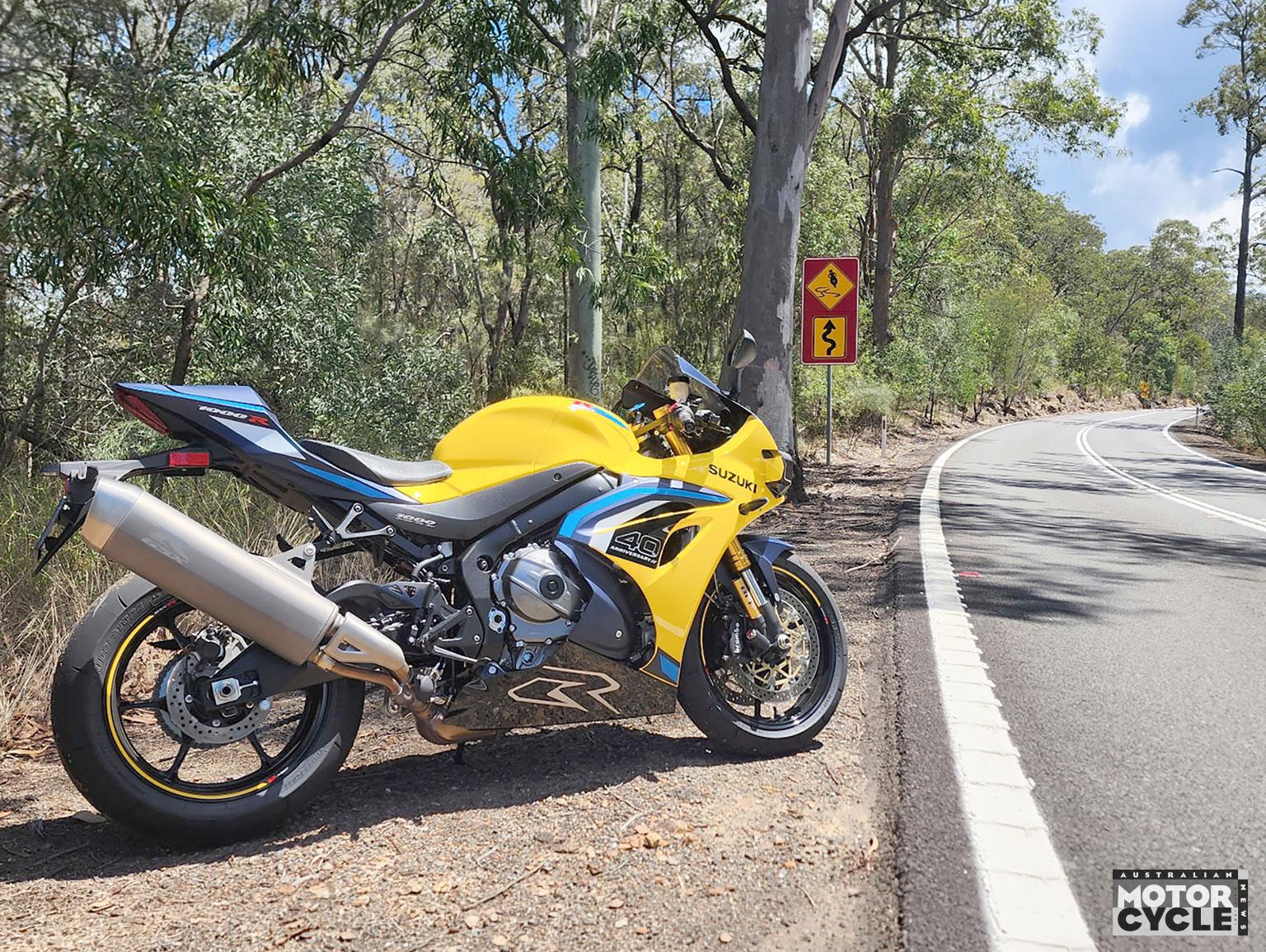
Right off the bat, the most obvious updates are the new colour schemes. If you aren’t a little stirred by them, maybe a scooter is more your style.
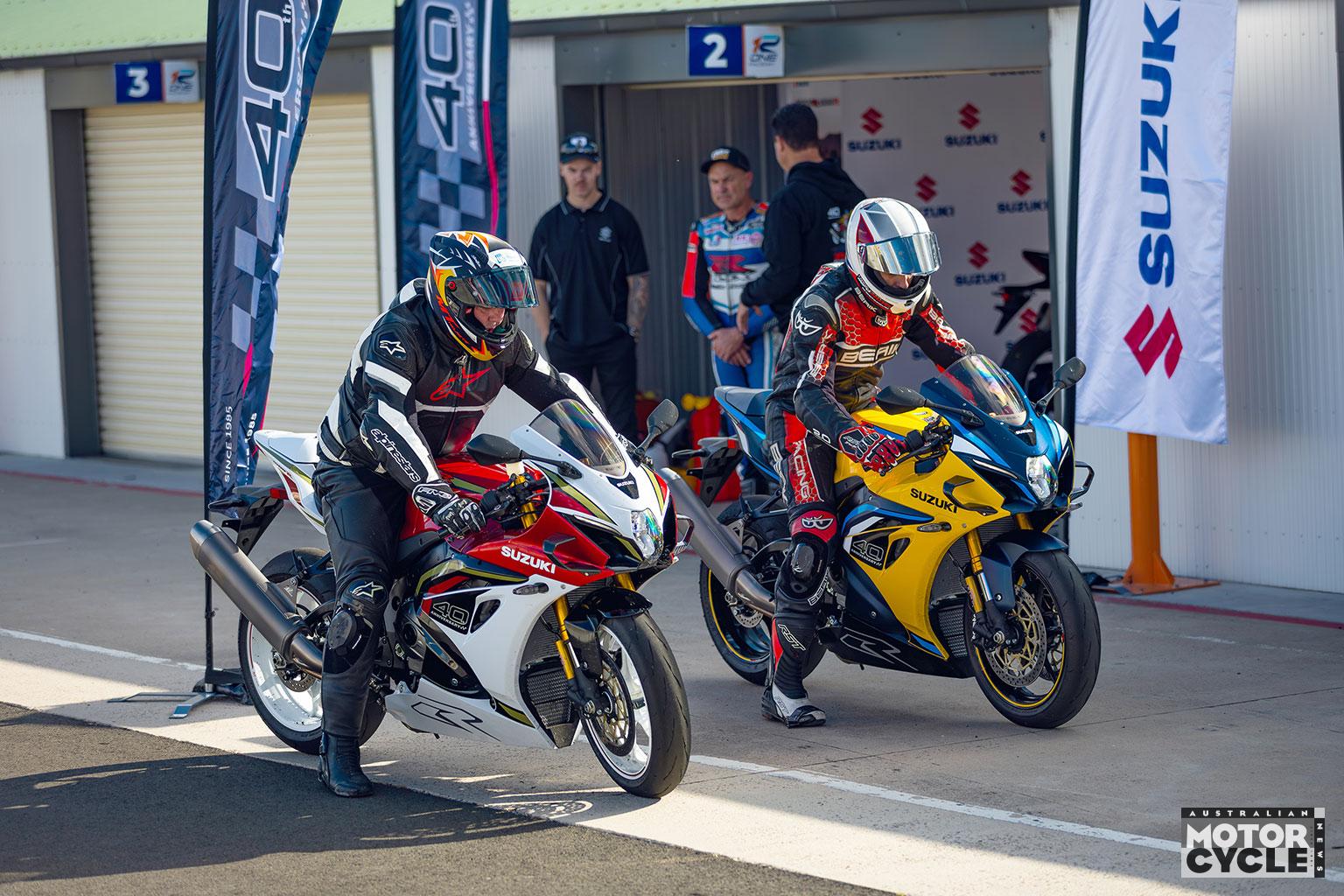
The blue and white is inspired by Suzuki’s heritage racing colours. The candy red and pearl white machine harks back to the Lucky Strike GP bikes ridden by legend Kevin Schwantz and Aussie weapon Anthony Gobert. Then there’s the yellow and matte blue World Superbike Corona Extra tribute.
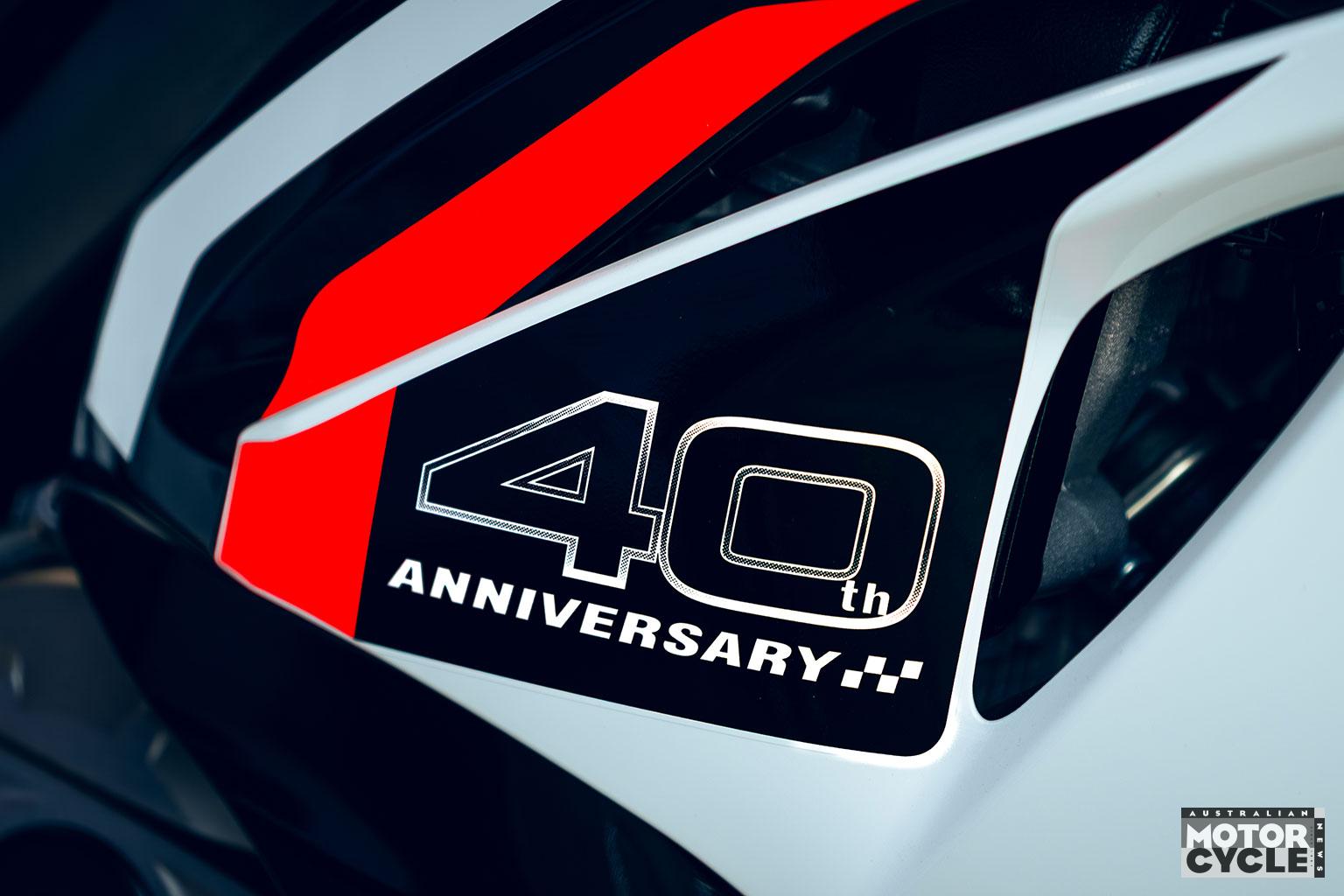
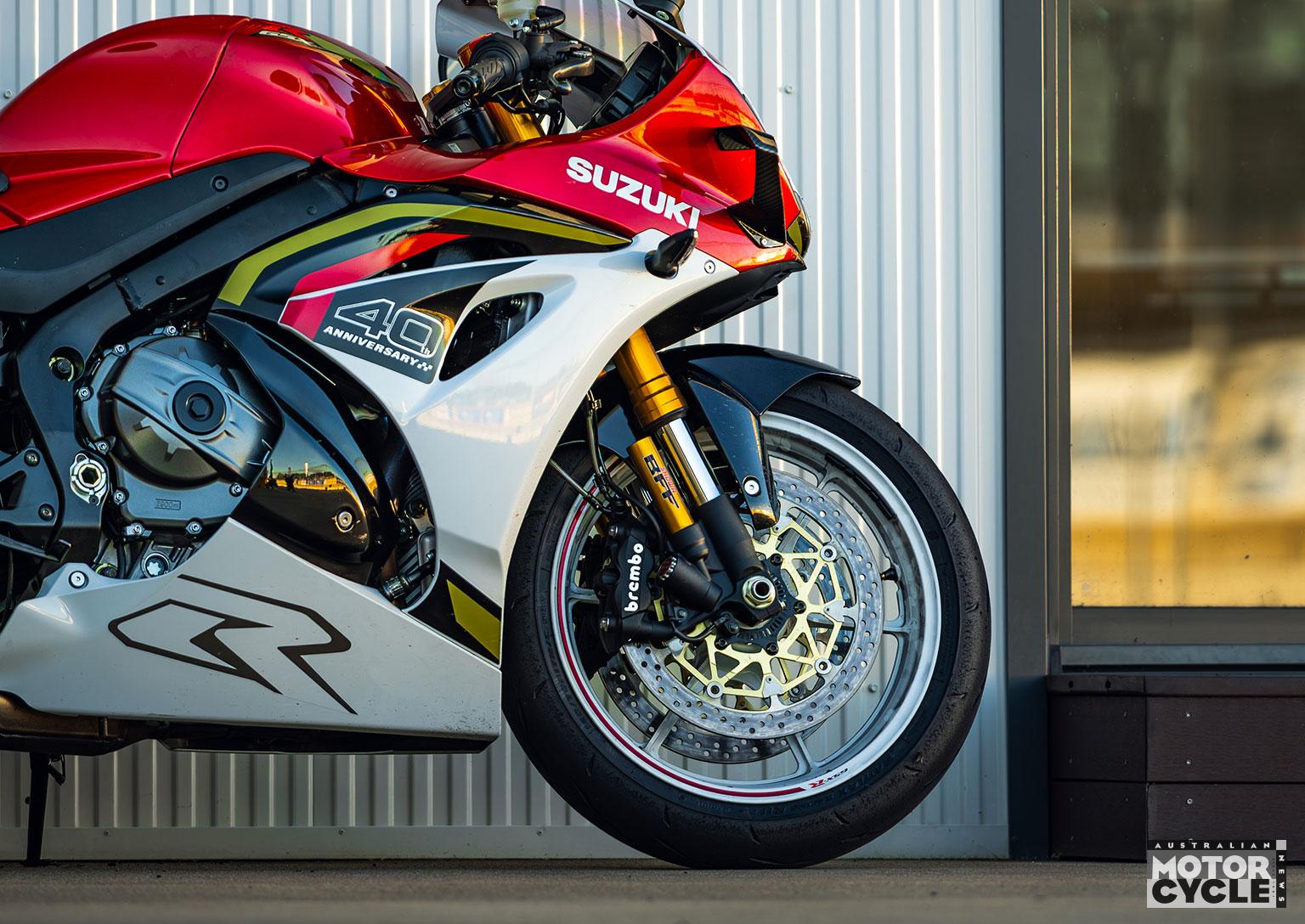
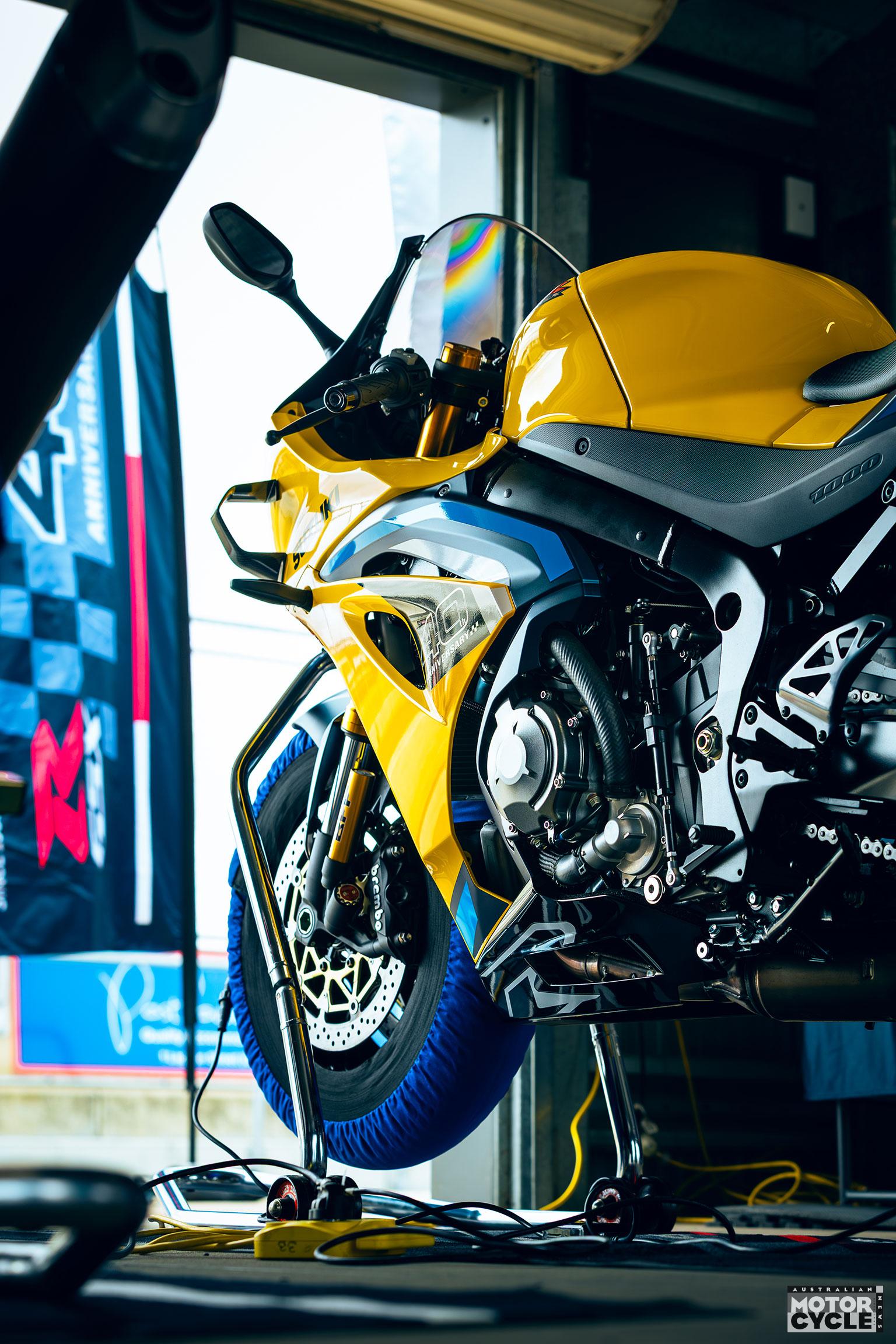
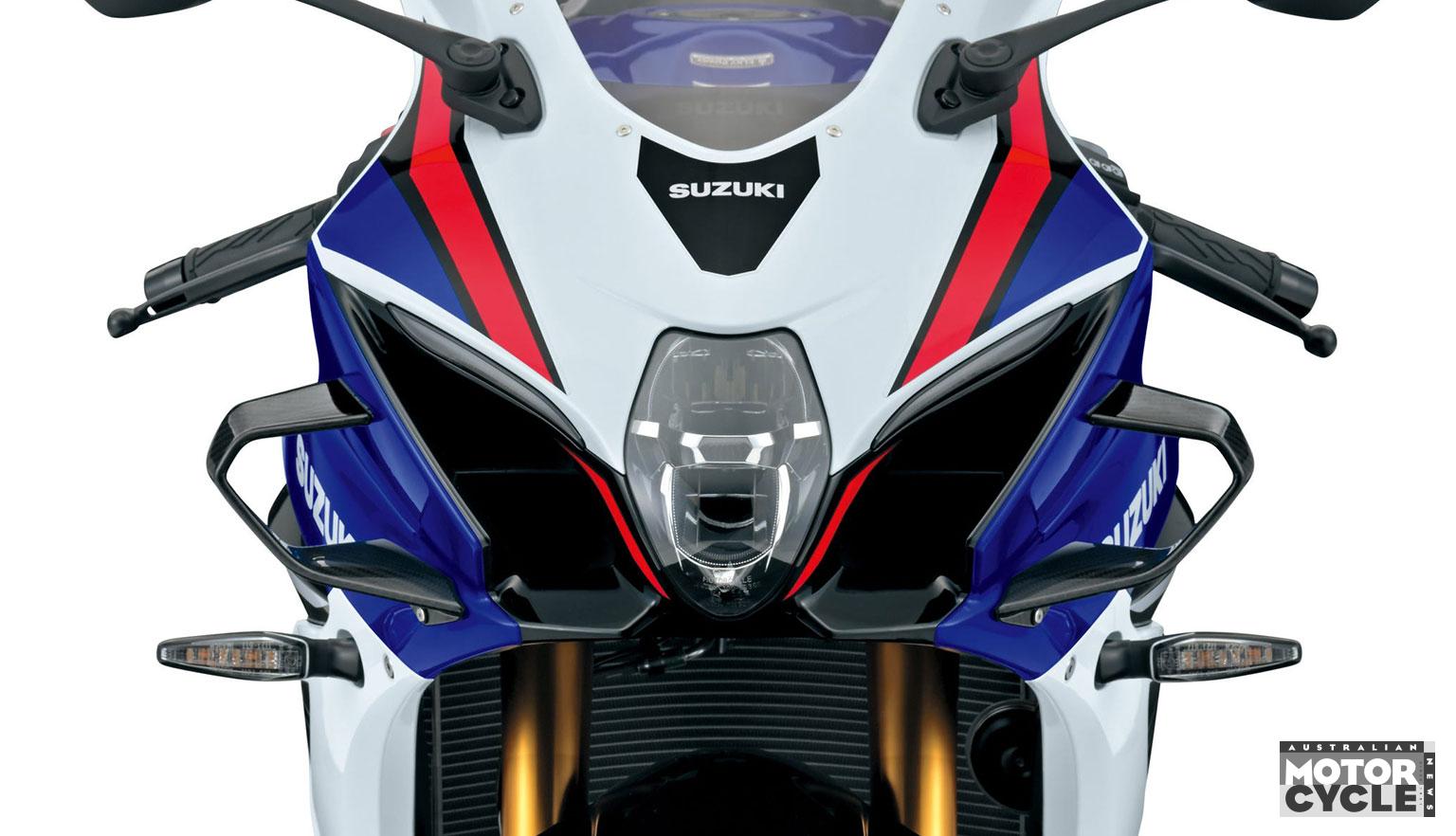
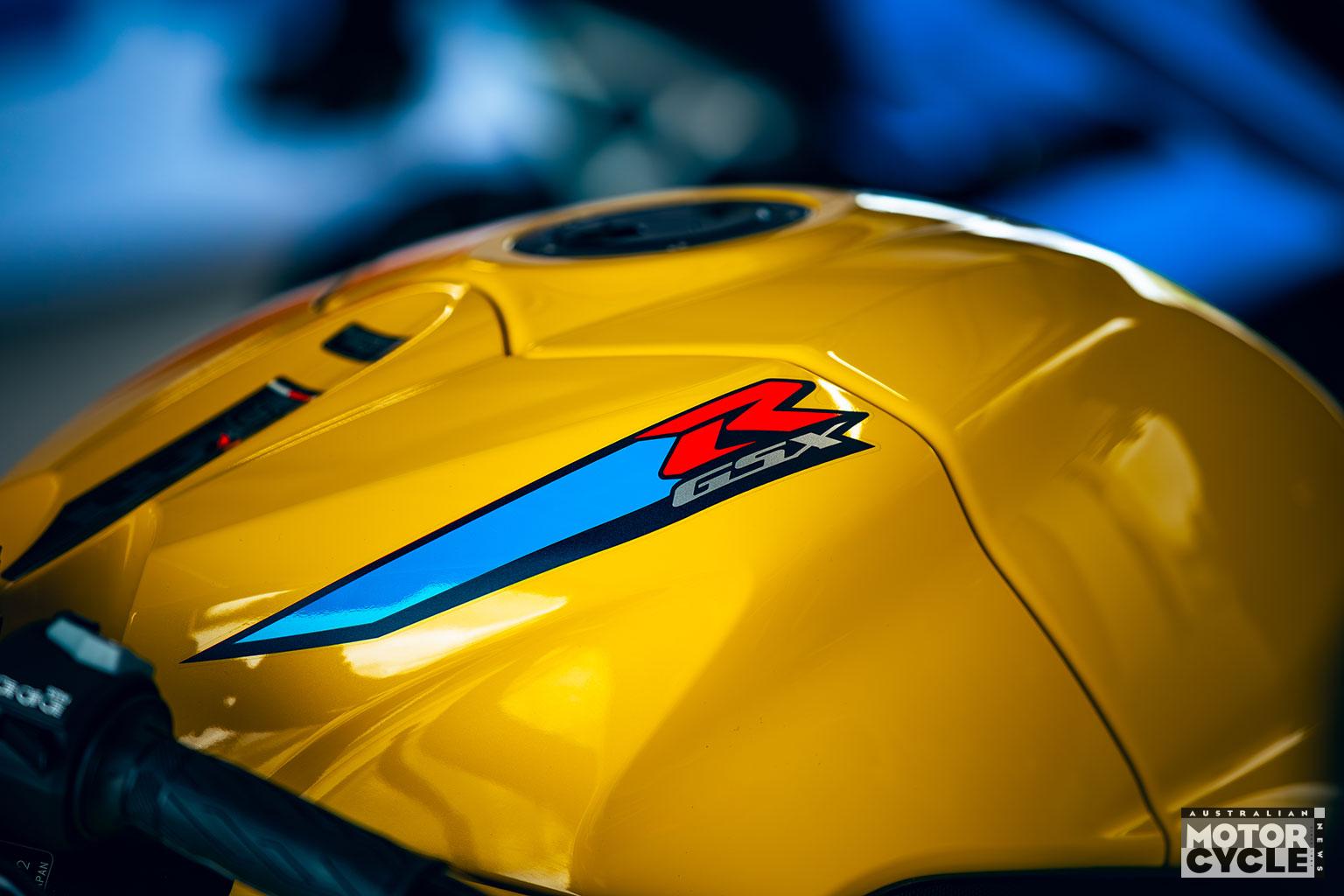
Throw in a decent-looking muffler, carbon wings derived from the WEC bike, some tasteful 40th anniversary emblems and new LED lighting, and that’s about the extent of the visible changes. The bulk of the updates are hidden beneath the surface.
The 999.8cc inline-four engine has had a thorough going-over to improve efficiency on the road and performance in racing trim.
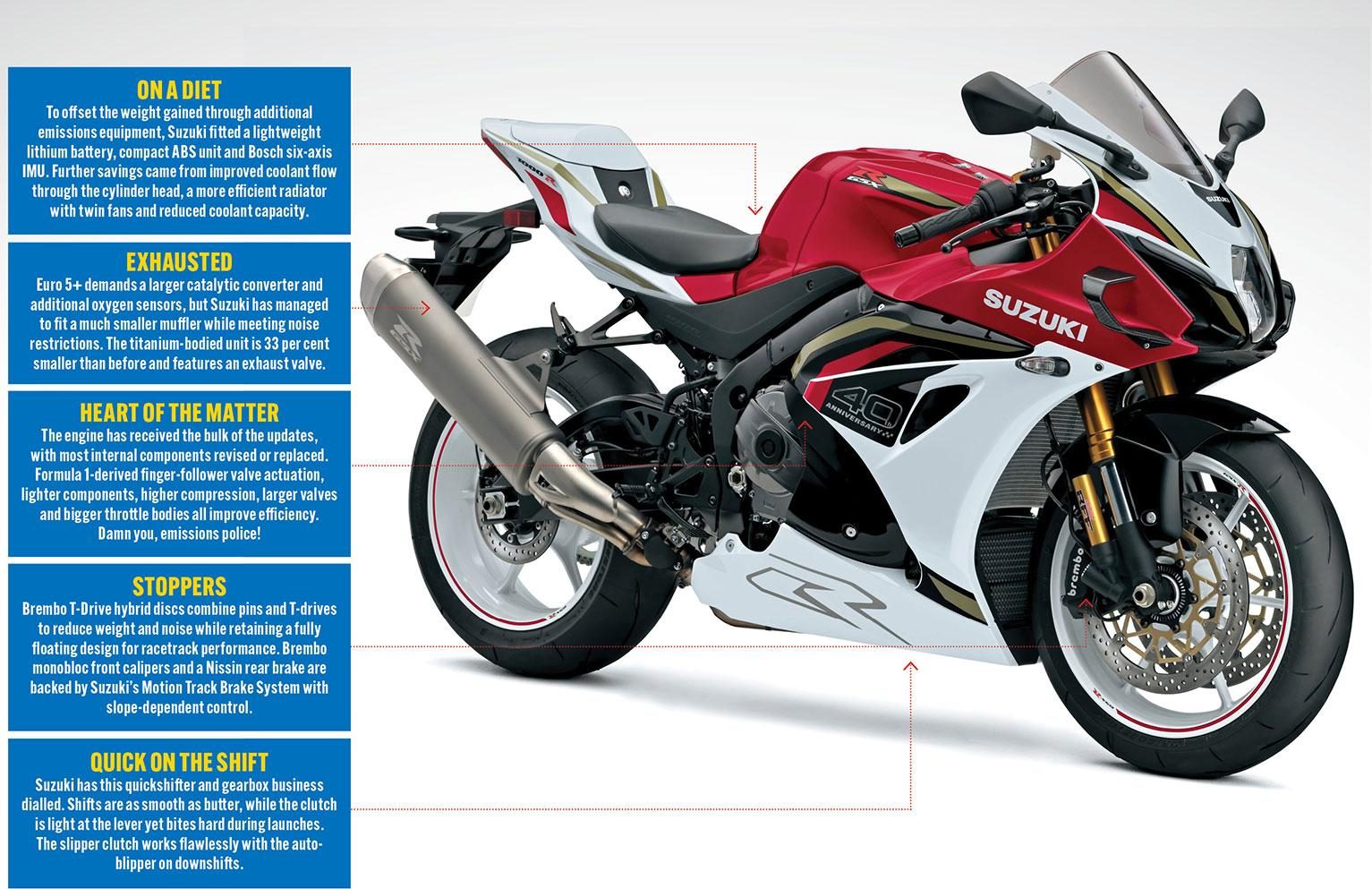
The valve train now runs lightweight, Formula 1-derived finger followers rather than shim buckets, along with new thin-walled hollow camshafts with reduce overlap, larger exhaust valves, a wider cam chain and mechanical variable valve timing.
New forged pistons boost compression, intake and exhaust ports have been tweaked, larger throttle bodies fitted and the fuel injectors upgraded for better efficiency.
Down below, the revised crankshaft features larger journals to handle the higher loads seen in endurance racing, along with changes to reduce trapped air and friction inside the crankcase.
This sounds like a recipe for a substantial boost in power. Unfortunately not, in road trim anyway. Thanks to a substantial catalytic converter strapped under the engine, some of the spice has been snuffed out.
Quoted figures are 143.5kW (192hp) and 110Nm, down a little on the previous model in stock form. But with a full race exhaust system, the potential should be higher.
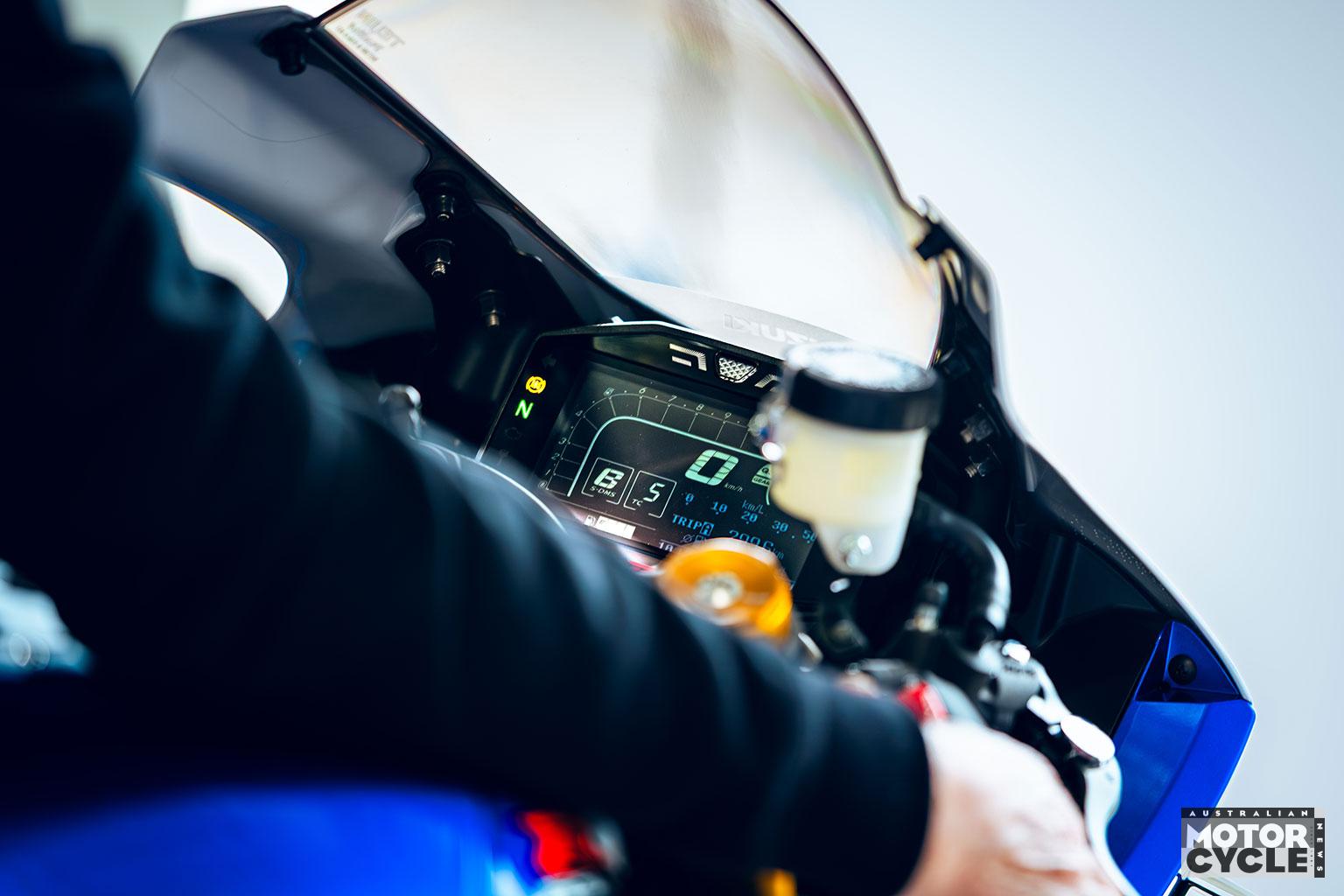
The electronics package has been updated and brought over from the latest-generation Hayabusa. There’s a whole bunch of tech wizardry at play on the GSX-R, but it’s very easy to use and adjust thanks to three simple ride modes and a 10-level traction control system. Both are adjustable on the fly, and TC can be turned all the way off if you like to live on the edge.
At the heart of the system is a six-axis IMU, which helps manage engine torque, traction control and lift control (anti-wheelie). Level 10 is the most restrictive and Level 1 the least.
You can’t tweak the individual controls separately; they’re all adjusted together. So, for example, you can’t chuck wheelies while keeping traction control active for slippery conditions.
The three ride modes affect throttle sensitivity without restricting outright power. A is for ‘Active’, the liveliest and snappiest of the modes. B is for ‘Balanced’ and is just what the name suggests, a happy medium where the throttle isn’t too touchy but all the power is readily available when needed. C is for ‘Comfort’, which dulls the initial throttle response considerably. It almost feels like you’ve lost power, but wind the throttle right open and it’s all still there.
The ABS system is quite advanced in the way it calculates lean angle, rear lift and the slope of the road or track, but it isn’t adjustable.
On track
Our track time was at the recently overhauled One Raceway at Goulburn, formerly known as Wakefield Park. I’ve spun a decent number of laps there in my racing days, but it looks a whole lot different now. There’s even an extra corner!
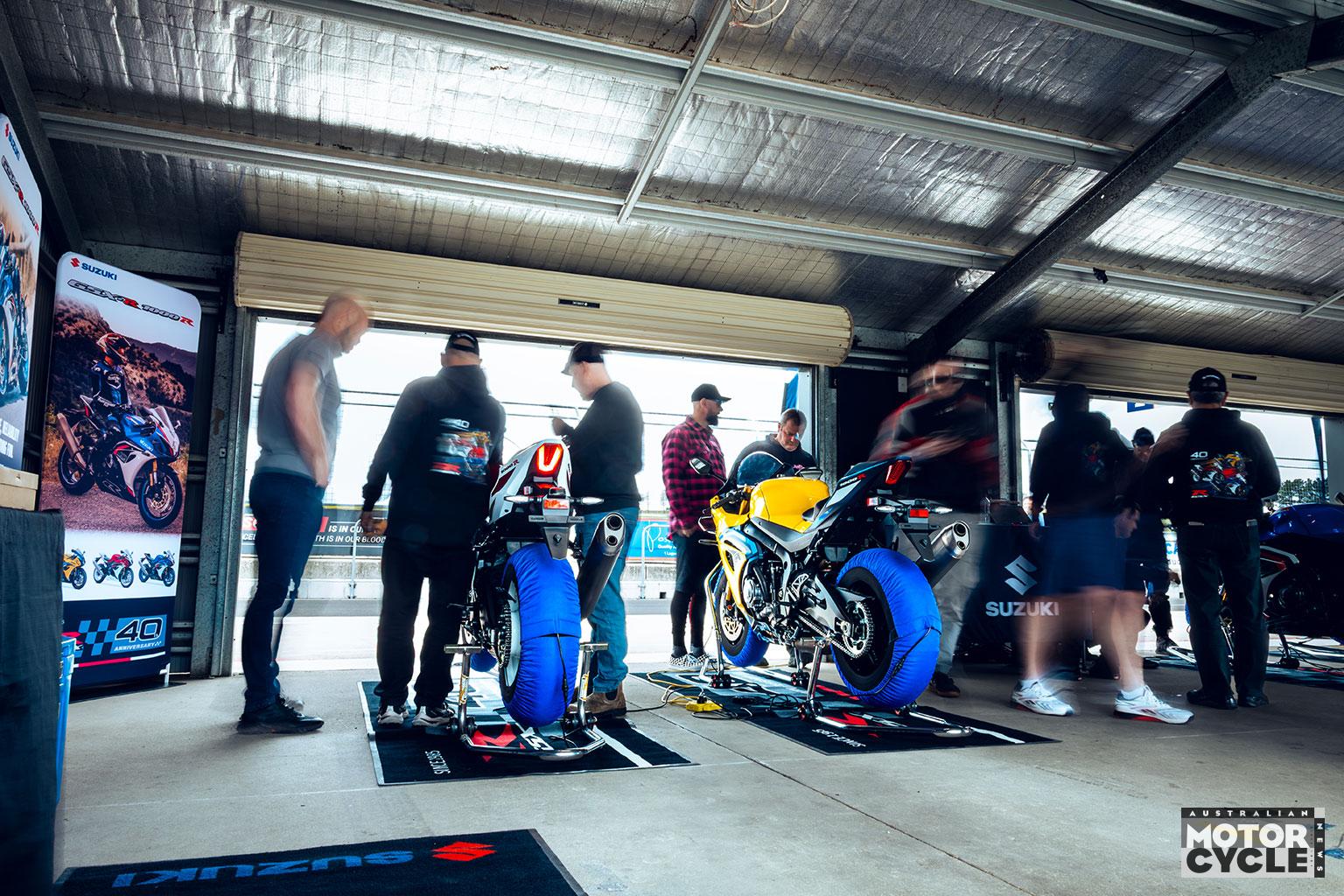
Suzuki gave us a quick rundown of the dash and how to change modes and TC, pointed out the brand-new Bridgestone R11 race tyres fitted for our track sessions, then sent us out for a few laps behind three-time Aussie Superbike champion Shawn Giles to get acquainted.
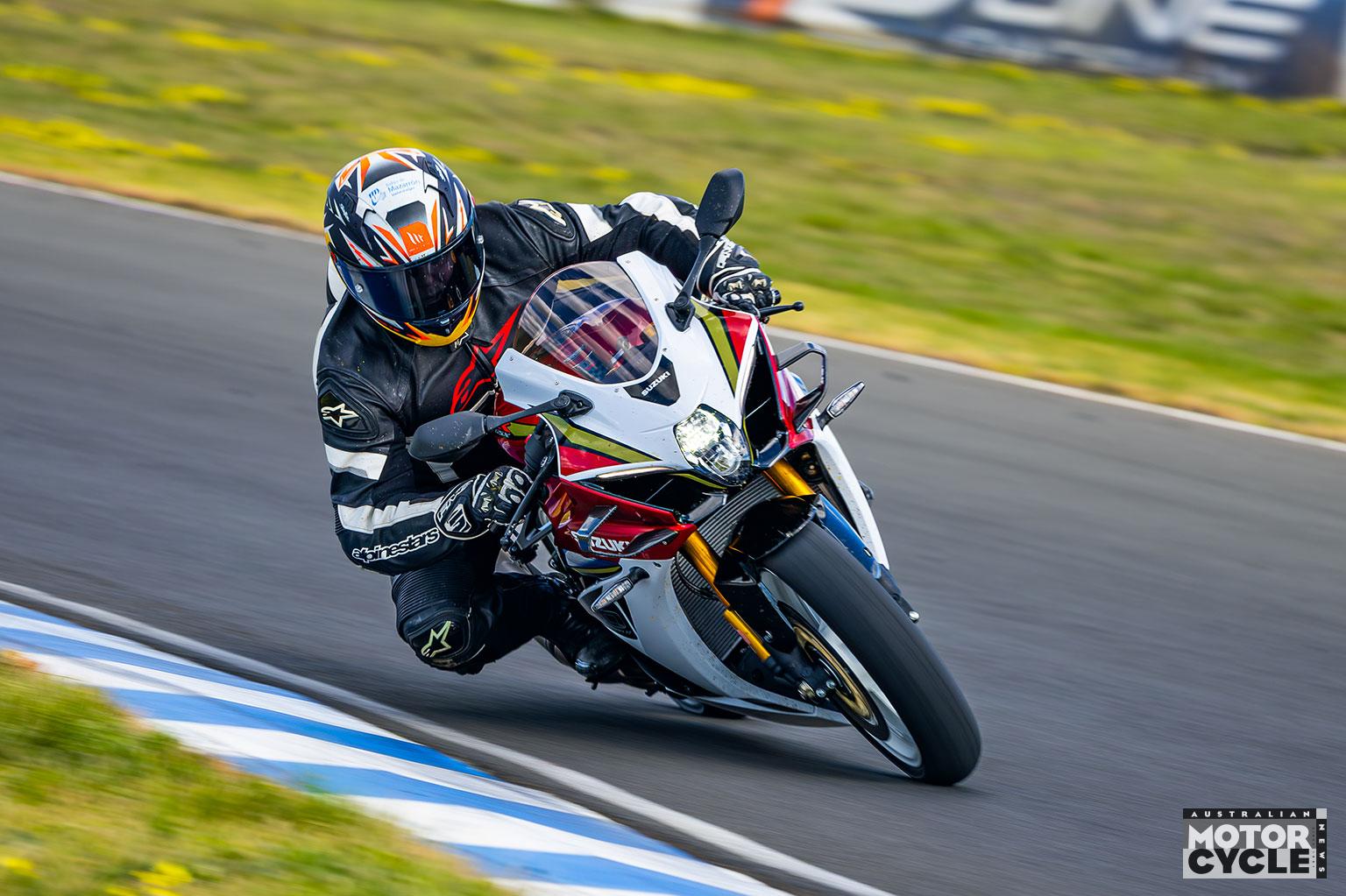
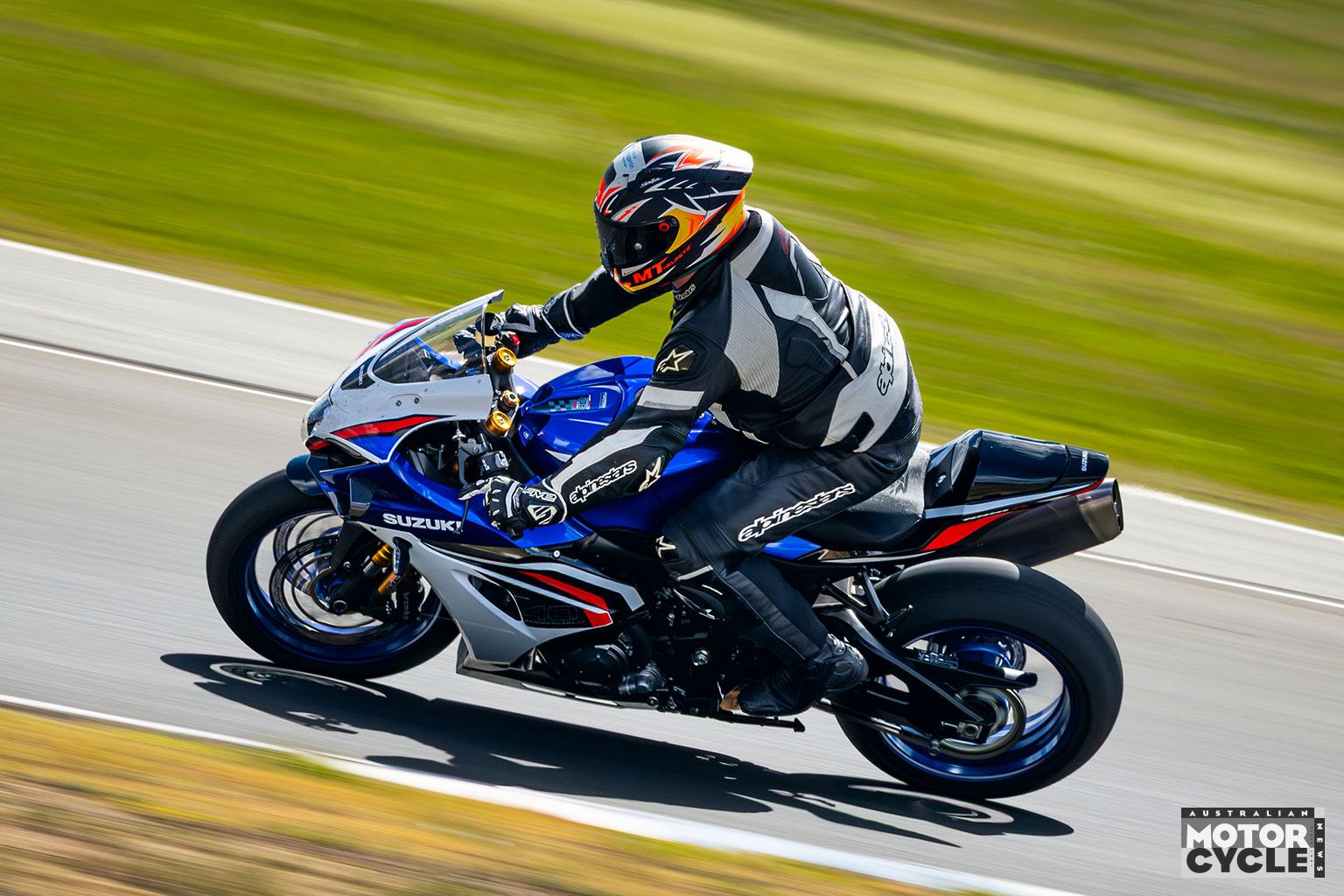
We started with a conservative TC setting of 5 and ride mode B to get a feel for the track and bike in safe hands. The GSX-R feels small and very nimble on track. The gearbox is as sweet as can be and everything just feels easy.
After following Gilesy for a few laps, he pulled aside and waved us through. Turns out I’d been following him blindly, without paying any attention to the correct lines for the updated circuit.
For most of that first session, I had no idea where I was supposed to be through the new section. I couldn’t have asked for a better wingman than this bike to drag me out of trouble after a dodgy exit or missed apex.
With each lap, as my pace increased, the bike felt better and better. Traction control on Level 5 kept things very safe as I wound the throttle open, although I was keen to unleash a bit more power because I could feel the system holding back the delivery.
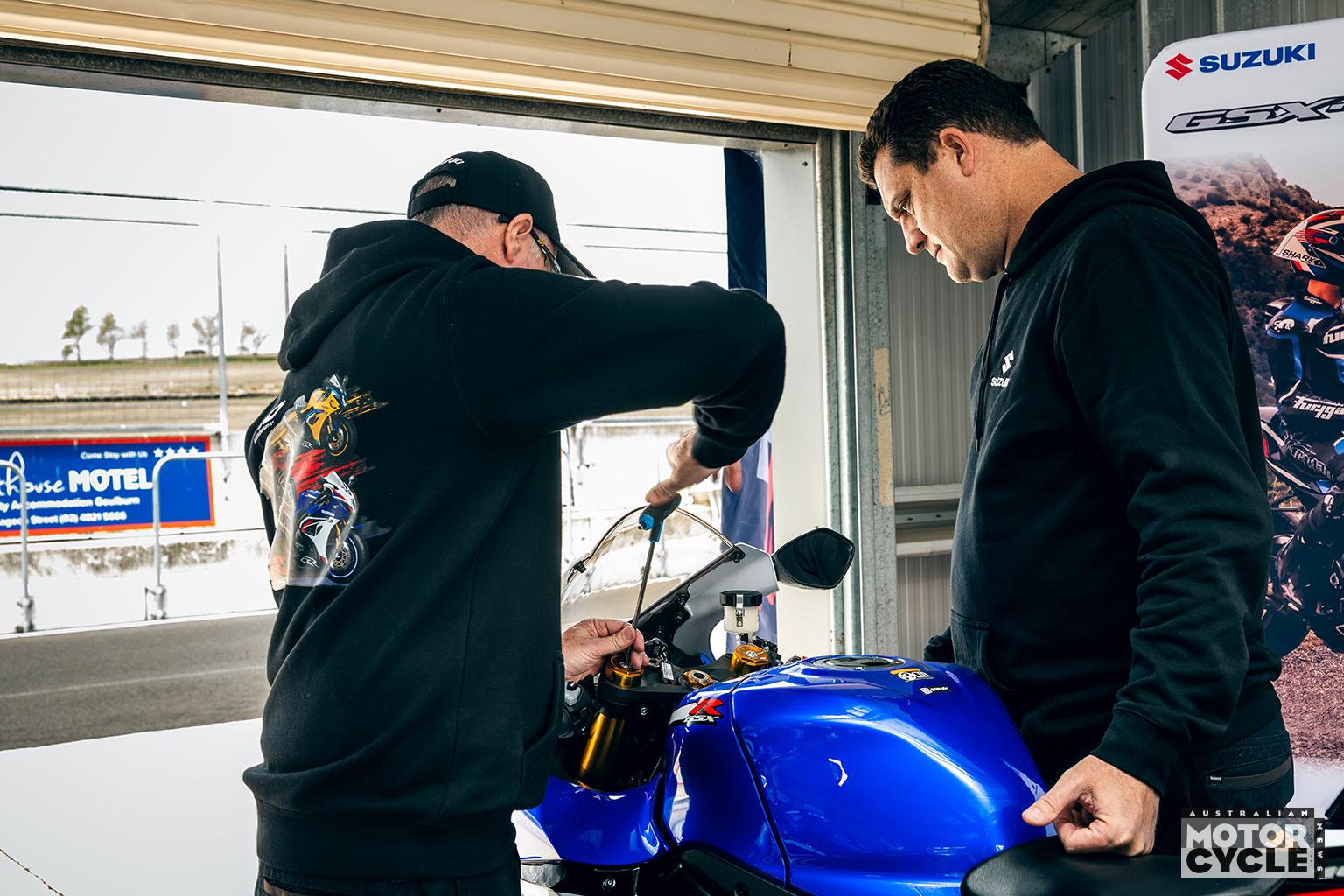
For the next session, we made a few adjustments. My 100kg heft is obviously a little more than the Gixxer is sprung for, so we added some rebound damping to the rear to calm it over bumps and when driving out of corners. We also took some free play out of the throttle.
These changes made the bike feel more like mine and settled the rear end considerably. As I dialled the TC down to Level 2, the bike really started driving hard out of corners, and I could feel the limits of traction before the electronics pulled in the reins.
One Raceway is a pretty tight track and having a flexible power curve is a real advantage. Otherwise, you need to change gears constantly. I was able to run most of the circuit in third gear, then shift up to fifth on the straight.
The engine has plenty of torque down low and doesn’t suffer up top, thanks to the variable valve timing and extra injectors.
I can see why the GSX-R is so good in endurance racing. You don’t need to be on the ragged edge, using all your energy. The speed comes easily.
The Showa BFF (Balance Free Front) fork and Showa BFRC Lite (Balance Free Rear Cushion) suspension are up to the task, although a little softly sprung for me on track. The bike was well controlled across bumps and responded nicely when pushed into the apexes at the top of the hill.
The Brembo monobloc front calipers aren’t the latest gear available, but they work perfectly well and are matched to Brembo 320mm T-Drive hybrid discs. With steel-braided lines standard, the feel is fantastic and the initial bite is good.
The Bridgestone R11 race tyres were flawless, as expected on track. The standard tyres are Bridgestone RS11s, which would have dealt with the circuit just fine, but why not have the good stuff, right?
Towards the end, we got to sample the launch control. It’s one of the easiest systems I’ve tried. Pull to a stop, hold the starter button and launch mode engages, provided TC is switched on. Select first gear, hold the throttle wide open and the revs rise to 9500rpm. Then release the clutch without letting the engine bog down and the bike does the rest, controlling wheelies and wheelspin until you select third gear or close the throttle.
The induction roar is unreal on this bike. It sounds healthy and addictive as you click through the gears with the throttle pinned. For the remainder of the final session, I ran the bike in A mode and turned TC completely off to see how wild things would get.
Turns out, not that wild.
I recorded my fastest laps of the day and felt completely in control. The throttle is sensitive and I could feel the available grip as I fed the power on.
The front wheel really only comes up in second gear, and even then nothing crazy happens unless you force the issue. That could be the wings at work, or simply that the power output isn’t overwhelming the chassis geometry.
The Gixxer is no slouch, but its power-to-weight ratio isn’t as outrageous as a BMW M 1000 RR or Ducati Panigale V4. But neither is its price.
On the road
While the GSX-R1000R is designed for the track, most examples will spend the majority of their lives on the road.
I do love a superbike on the road and couldn’t wait to give it a squirt around my local area.
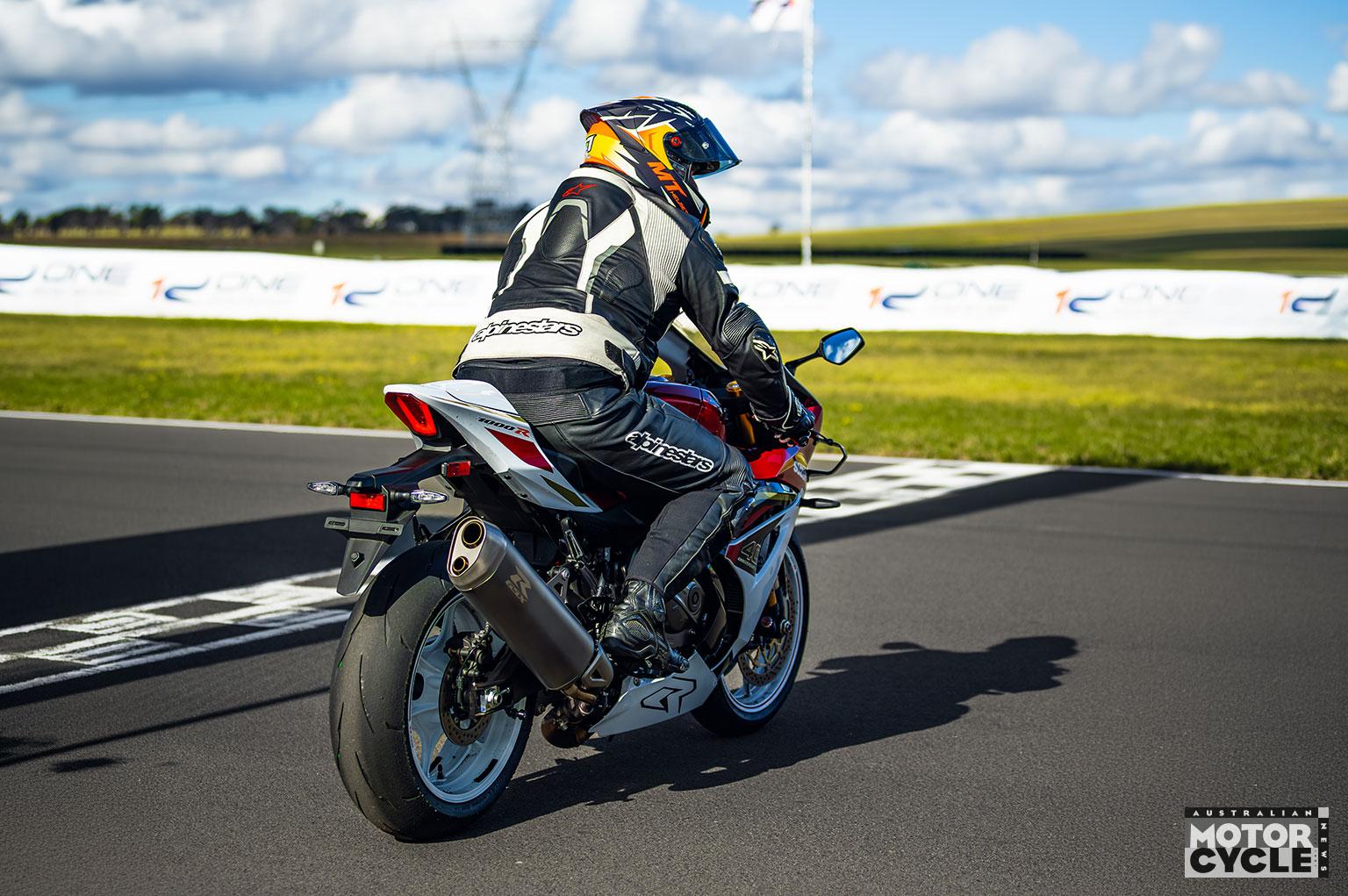
The GSX-R commutes like a beast. The cable clutch is light, the throttle is nice and responsive, and there’s tonnes of power right off idle for traffic-light launches. This was a pleasant surprise and made lane filtering to the front of traffic much less stressful than on the last superbike I tested.
The quickshifter is a dream, even at low speeds. I don’t know where Suzuki gearboxes have been all my life, but I’m hooked.
Once out of the traffic and onto more open roads, I was a little sad to have no cruise control. I don’t rely on it, but it’s nice to have when trundling along at 80-100km/h.
Comfort isn’t high on the design brief for these bikes, but it feels pretty spacious for its size.
Hitting my local twisties reminded me that the suspension is on the soft side for my weight. It takes the harshness out of crappy roads, but when pushing on a bit, things can get bouncy. So once again, I dialled in more rebound damping to calm it down.
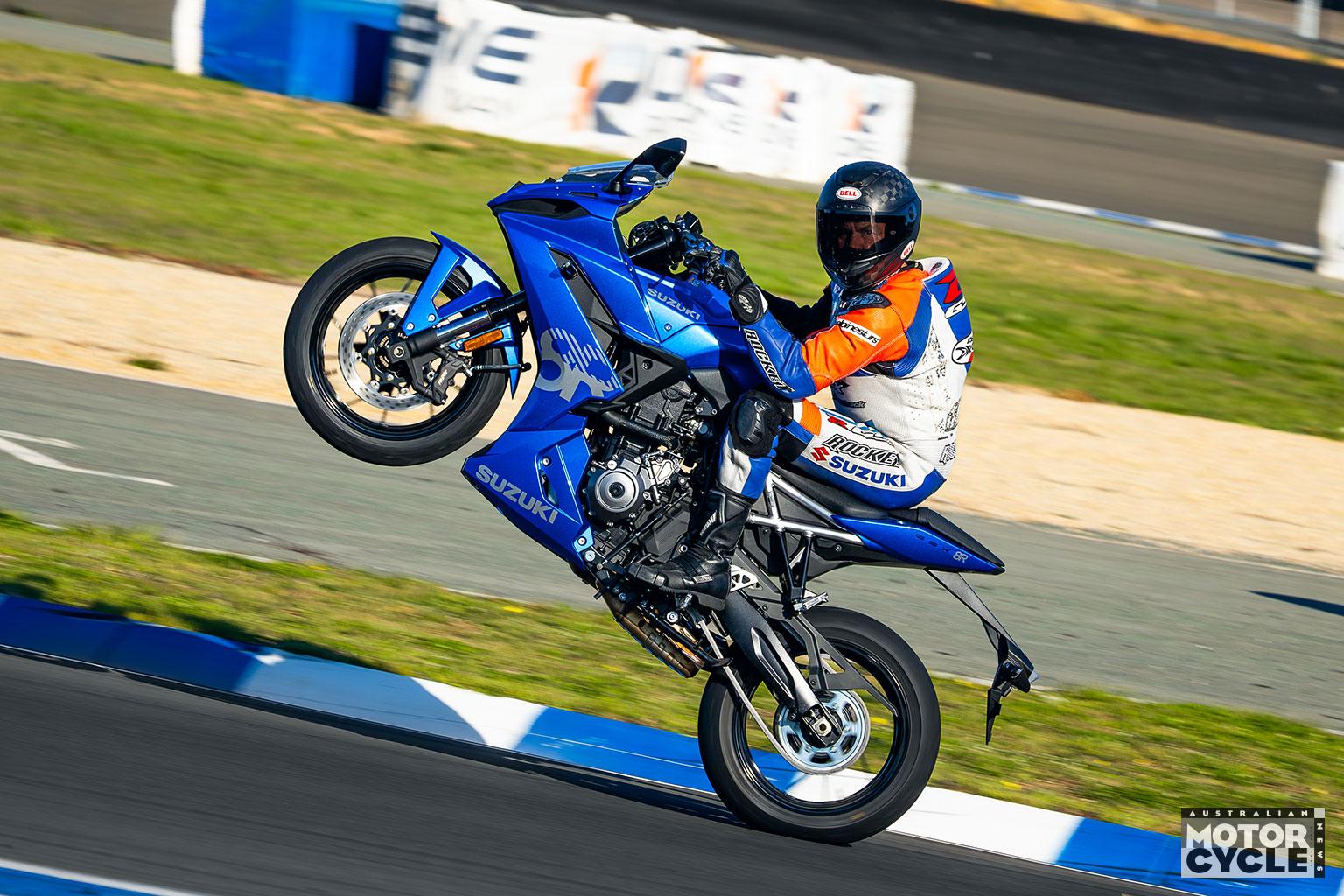
The GSX-R comes standard with Bridgestone RS11 tyres, and they’re super-sticky once warmed up. On the road, I prefer TC on Level 2 as a little safety blanket while having fun on twisty back roads. I did turn it off to partake in a couple of wheelies for science, and the Gixxer certainly has the potential to be a crowd-pleaser in that department.
While it’s definitely not a tourer, conservative riding should see more than 250km from the modest 16-litre fuel tank. You’ll probably need to stop for a stretch before then, though.
It’s the first Gixxer I’ve ridden on the road, and what a pleasant surprise. It feels a bit old-school but with modern mumbo, and the sound of that inline-four screaming through the mountains is worth the price of admission alone.
The wrap-up
The new GSX-R1000R will set you back $30,990 ride away. In Australia, we only get the top-spec version, with its higher-spec BFF fork and BFRC rear shock, carbon wings and colour-matched rear seat cowl.
The 40th anniversary model is definitely an evolution of the legend rather than a revolution. While the electronics package is quite modern, a few missing niceties leave it a little behind the eight ball. Cruise control would have been nice for the road, while the dash could use a full-colour TFT display with connectivity and the ability to tweak individual ride settings.
And yes, it could do with a few more horses, particularly when you look at what the European superbikes are pumping out these days. But here’s the thing: at no point on track or road did I feel short-changed in the fun department.
The chassis is beautifully sorted, the gearbox is a gem and that broad, usable spread of power makes the Gixxer an absolute pleasure to ride fast on track and at more normal speeds on the road.
It’s not loaded with every electronic trick in the book, and its engine is clearly itching to be freed from its Euro 5+ shackles, but there’s something refreshing about a superbike that doesn’t demand a professional race licence to get the best out of it.
Forty years on, Suzuki hasn’t forgotten what made the GSX-R special in the first place. It’s fast, friendly, beautifully balanced and still knows how to put a massive grin on your face.
The Gixxer is back. And it’s still got it.
✅ PROS – Sweet-handling chassis, broad and flexible power delivery, wonderfully easy to ride fast.
❌ CONS – Could use more outright power, no cruise control, dated dash lacks TFT display and connectivity.
Fast foes!
HONDA CBR1000RR-R SP – $39,999 ride away
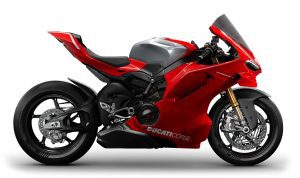
DUCATI PANIGALE V4 – $39,325 ride away
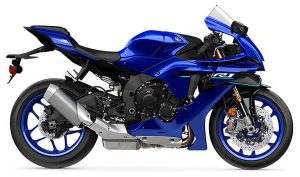
YAMAHA YZF-R1 – $33,749 ride away
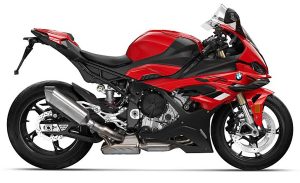
BMW S 1000 RR – $29,620 ride away
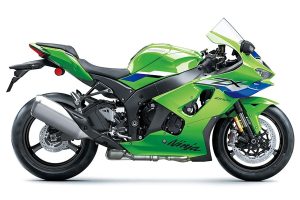
KAWASAKI ZX-10R – $28,764 ride away
40 YEARS OF GSX-R
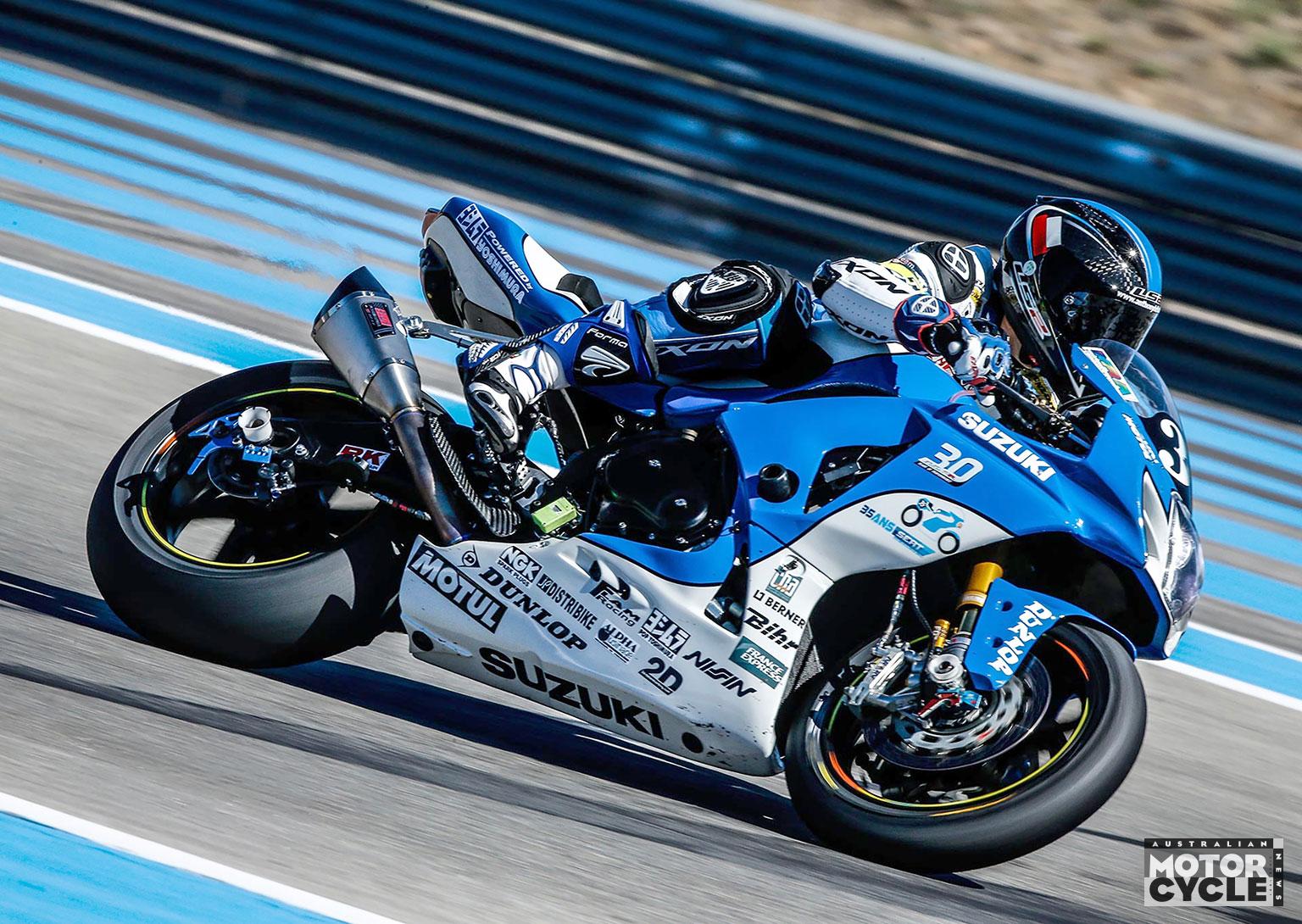
Since the first GSX-R hit the market in 1985, Suzuki has been at the sharp end of the superbike era. Designed as race bikes with lights, the GSX-R family became a force in production-based racing, including the AMA Superbike championship, most famously with Mat Mladin’s seven titles.
Over the years, there have been GSX-R1100, GSX-R1000 and GSX-R600 models, while the GSX-R1300 Hayabusa took Suzuki’s performance ambitions in another direction.
Suzuki superbikes have carried many an Aussie to success. As well as Mat Mladin, there is Troy Corser, Shawn Giles, Josh Waters and Wayne Maxwell in various championships.
A big part of the GSX-R’s success has come through endurance racing, where man and machine push the limits of reliability and speed.
Suzuki is the most successful manufacturer in the Endurance World Championship, with 21 titles, 15 of them achieved since 2001 aboard GSX-R1000 machinery. No wonder its catchphrase used to be ‘Own the Racetrack’.
SPECIFICATIONS
ENGINE
Type 999.8cc, liquid-cooled, inline-four, DOHC, 16-valve, VVT
Bore & stroke 76 x 55.1mm
Compression ratio 13.8:1
Fuel system EFI, eight injectors
Transmission Six-speed
Clutch Wet multiplate, slip/assist
Final drive Chain
PERFORMANCE
Power 143.5kW (192hp) @ 13,200rpm (claimed)
Torque 110Nm @ 11,000rpm (claimed)
Top speed 300km/h (limited)
Fuel consumption 5.4L/100km (measured)
ELECTRONICS
Six-axis IMU, ride-by-wire, cornering ABS, 10-level traction control, lift control, launch control, torque control, bidirectional quickshifter, three ride modes
ROLLING CHASSIS
Frame Aluminium twin-spar perimeter
Rake/trail 23.2°/95mm
Wheelbase 1420mm
Suspension Showa Balance Free, fully adjustable
Front 43mm USD fork
Rear Link-type monoshock
Wheels 17in cast aluminium
Tyres Bridgestone Battlax RS11
Front 120/70 ZR17
Rear 190/55 ZR17
Brakes Brembo/Nissin ABS
Front Twin 320mm discs, Brembo monobloc calipers
Rear 220mm disc, Nissin single-piston caliper
DIMENSIONS
Weight 203kg (wet, claimed)
Seat height 825mm
Fuel capacity 16 litres
SERVICING & WARRANTY
First service 1000km
Minor service 6000km
Major service 24,000km
Warranty Three years, unlimited kilometres (Suzuki servicing required)
BUSINESS END
Colours Blue/white, red/white, yellow/blue
Price $30,990 ride away
Contact suzukimotorcycles.com.au