Given the current punishing schedule – still, at the time of writing including a visit to Qatar in the midst of escalating tension in the region, and cramming seven races into nine weeks – perhaps a certain amount of grumbling is inevitable.
Most of it from the riders, feeling increasingly ignored and put upon by a series of new rules, strictures and threats, and growing demands on their time off-track. To those in charge, their role as elite sportsmen seeking sporting success seems to play second fiddle to that of entertainers, there to help MotoGP attract more fans.
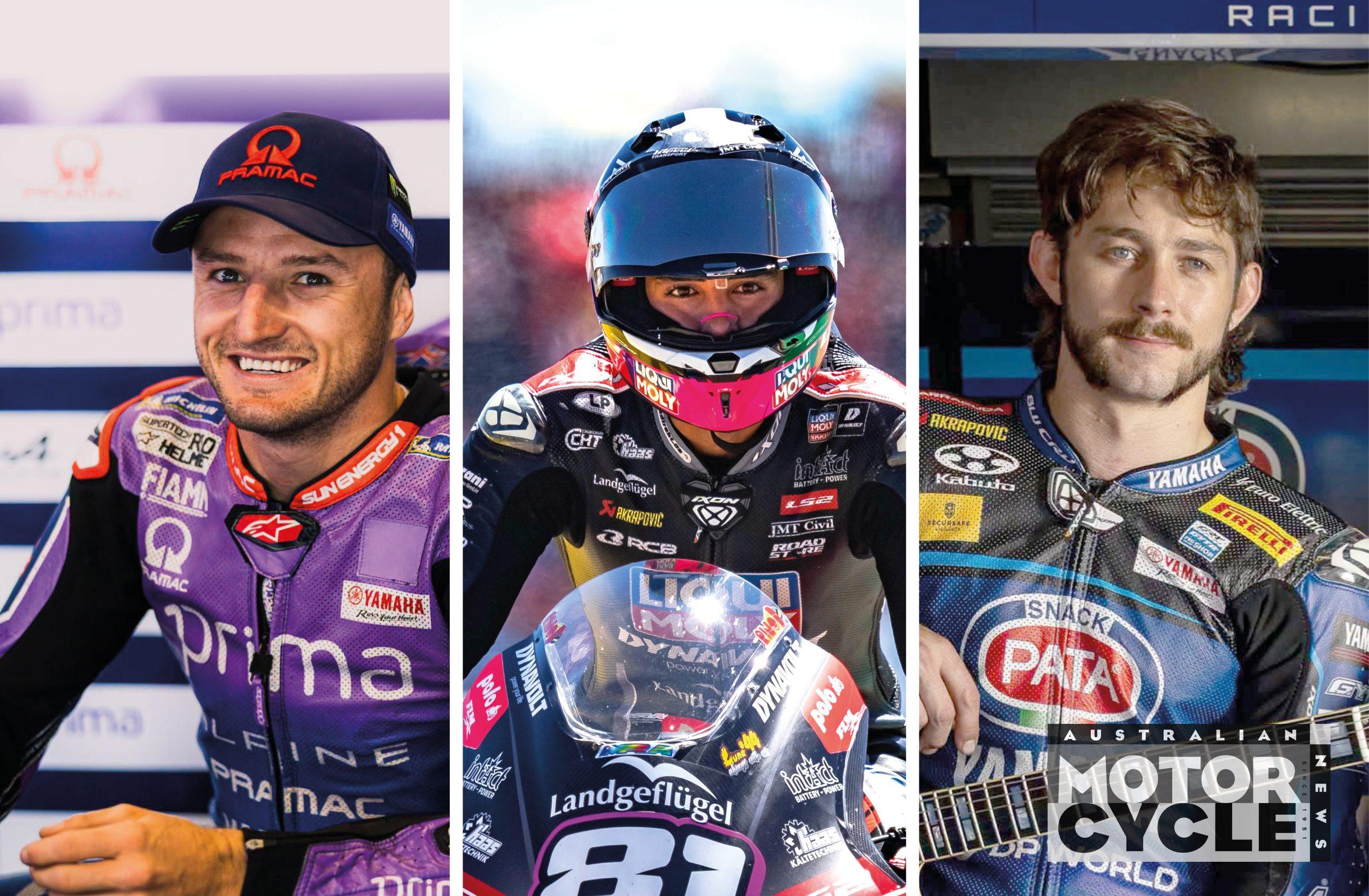
Said Jack Miller, it “gets misconstrued, that we’re here to be entertainers. Which we are… but our entertainment is racing a motorcycle. The racing is the show”.
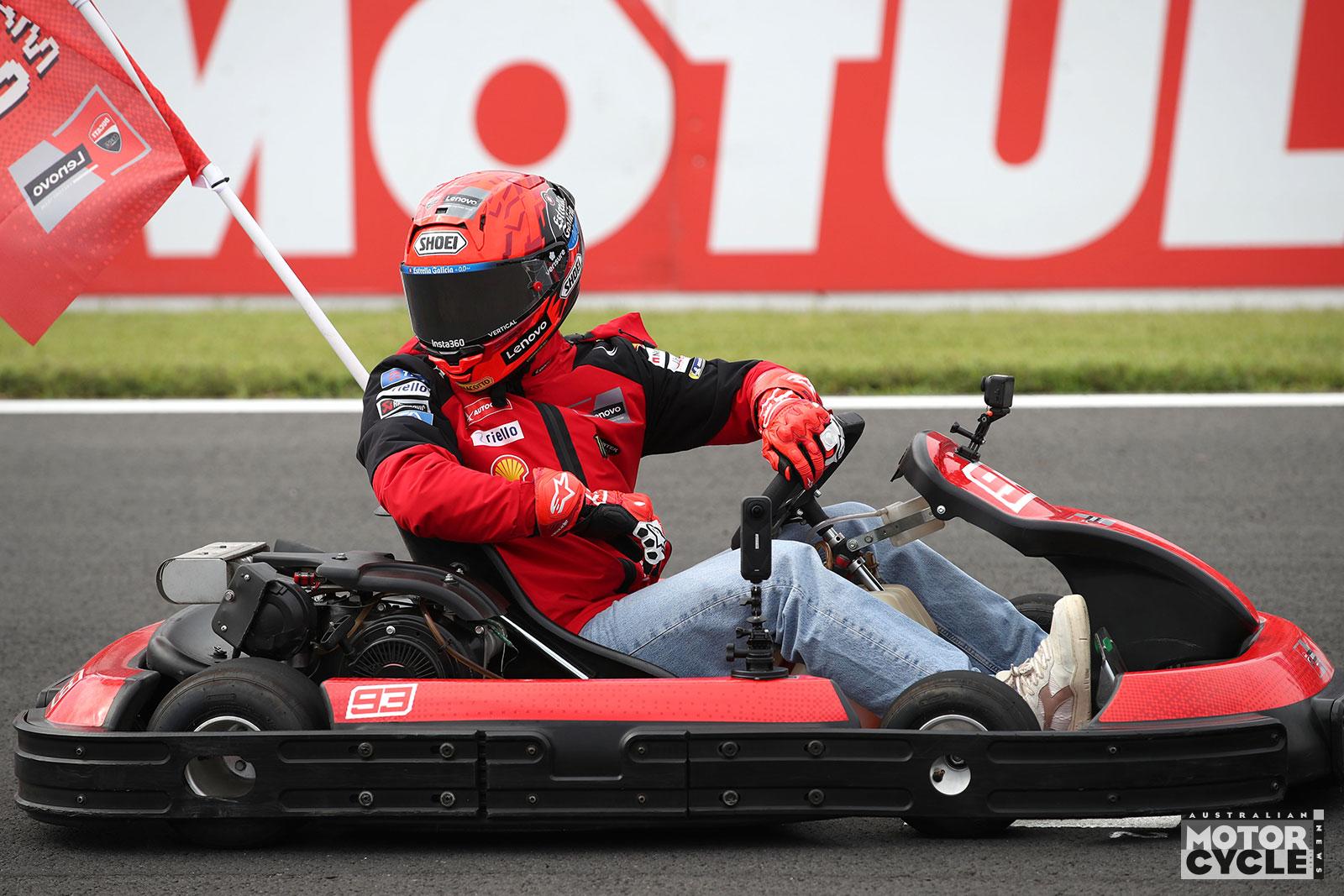
One arc of complaint was triggered when Marc Marquez sent a body-double (his leathers, dark visor) in his place in a flim-flam kart ‘race’ on the morning of the Japanese GP.
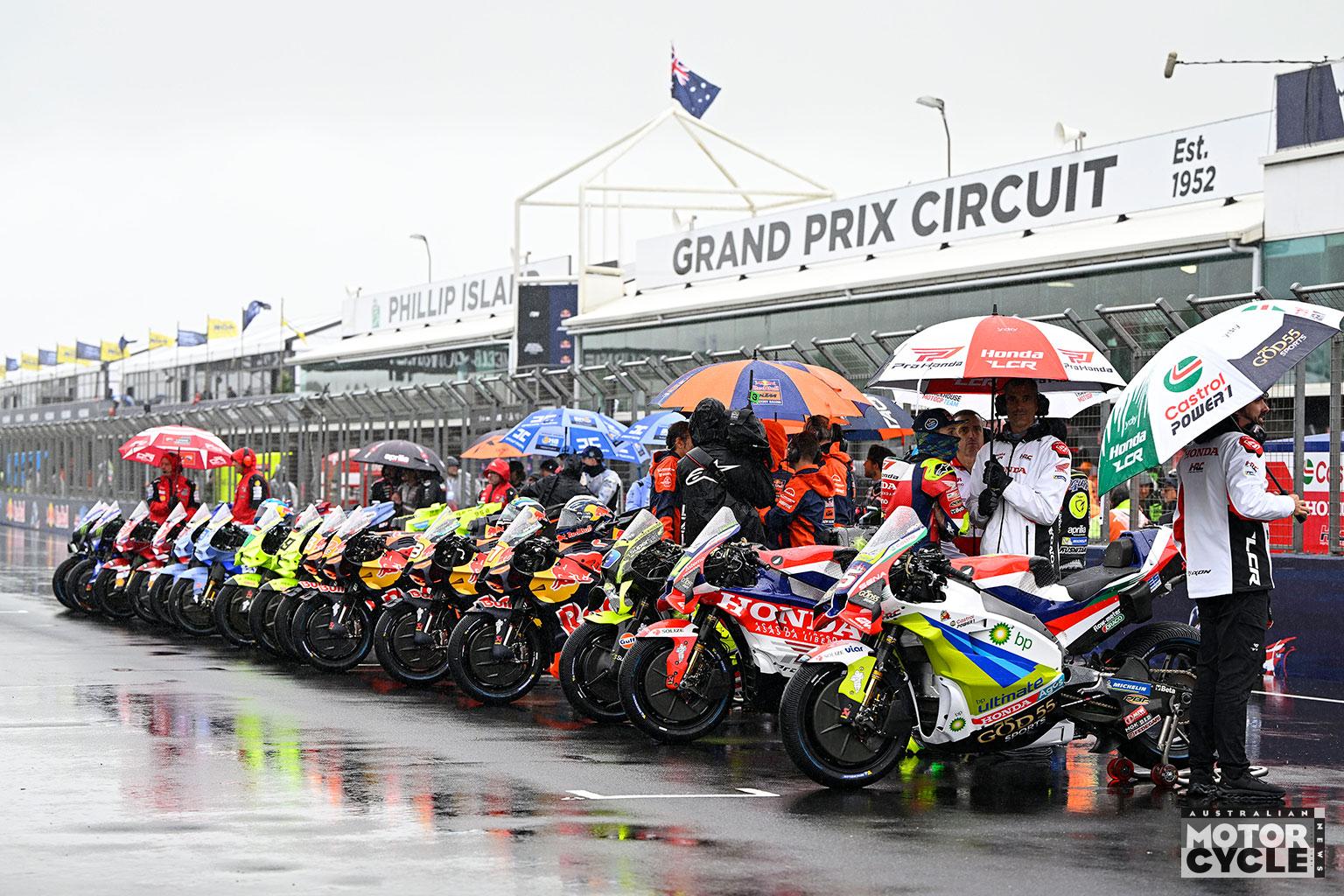
The event, on sluggish rental karts with dodgem-car rubber buffers, had MotoGP riders run a full lap of Motegi (it took ages), swerving around ‘entertainingly’. It was fairly typical of silly-billy promo events dreamed up by MotoGP management, always cleaving towards maximum cheesiness. The regular package includes the Hero Walk (a mock-royal pitlane walkabout, with fans pressing in for selfies and signed caps) and the Rider Parade… around the track on a flat-bed trailer, waving at the crowd, or (sometimes) empty grass banks.
Various other events and obligations have one thing in common: they treat the riders like performing monkeys, often at a time when they need to be with their teams or alone, preparing their bikes or themselves for the forthcoming combat.
Marc’s unrepentant explanation was that he needed to ice his injured right shoulder, after a double-length warm-up for everybody (to assess the suddenly urgently needed hard tyres).
MotoGP’s response was a stern warning, of a severe (€5000/$A8k) fine for any rider failing to take part in promo events. A similar punishment awaits any of them not joining in with the pre-race national anthem.
This came on top of the announcement of a radically revised weekend schedule, starting next year. As well as cancelling race-morning warm-up altogether (denying riders a chance to test a crashed and overnight rebuilt bike), it adds an extra qualifying session on Friday for Saturday’s Sprint; with two more qualifying sessions on Saturday for Sunday’s GP.
Two of these sessions will see the full 22-strong grid going for crucial banzai laps on track at the same time – precisely the high-risk reason why half-grid Q1 and Q2 sessions were devised in the first place.
It was cooked up, according to MotoGP’s not-quite-head honcho Carlos Ezpeleta, after an approach by the teams, and supposedly aimed at reducing track time. Most riders, however, interpreted it in the opposite way, as imposing increased stress and consequent risk. To the extent, according to Pedro Acosta, that it would “shorten our careers”.
Not everybody was against it. Marco Bezzecchi approved of separate qualifying for the Sprint, saying: “At least you don’t destroy two races with one bad qualifying”. A fair point.
More universal was the complaint that it had been done without any input whatsoever from the riders. Marc again spoke for many: “It’s interesting to understand what the main goal is, because for the rider it is only more demanding. But we don’t decide and we must shut up.”
All grist to the mill for anyone who sees these talented athletes as nothing more than living clickbait.
Time for some sort of riders’ union? There’s a troubled history here, reflecting the difficulties individuals competing with one another have in finding a common voice. Maybe Valentino Rossi would like to appoint himself. Or Marc.
For the moment, though, performing monkeys they will remain. In between occasional outbreaks of bike racing.