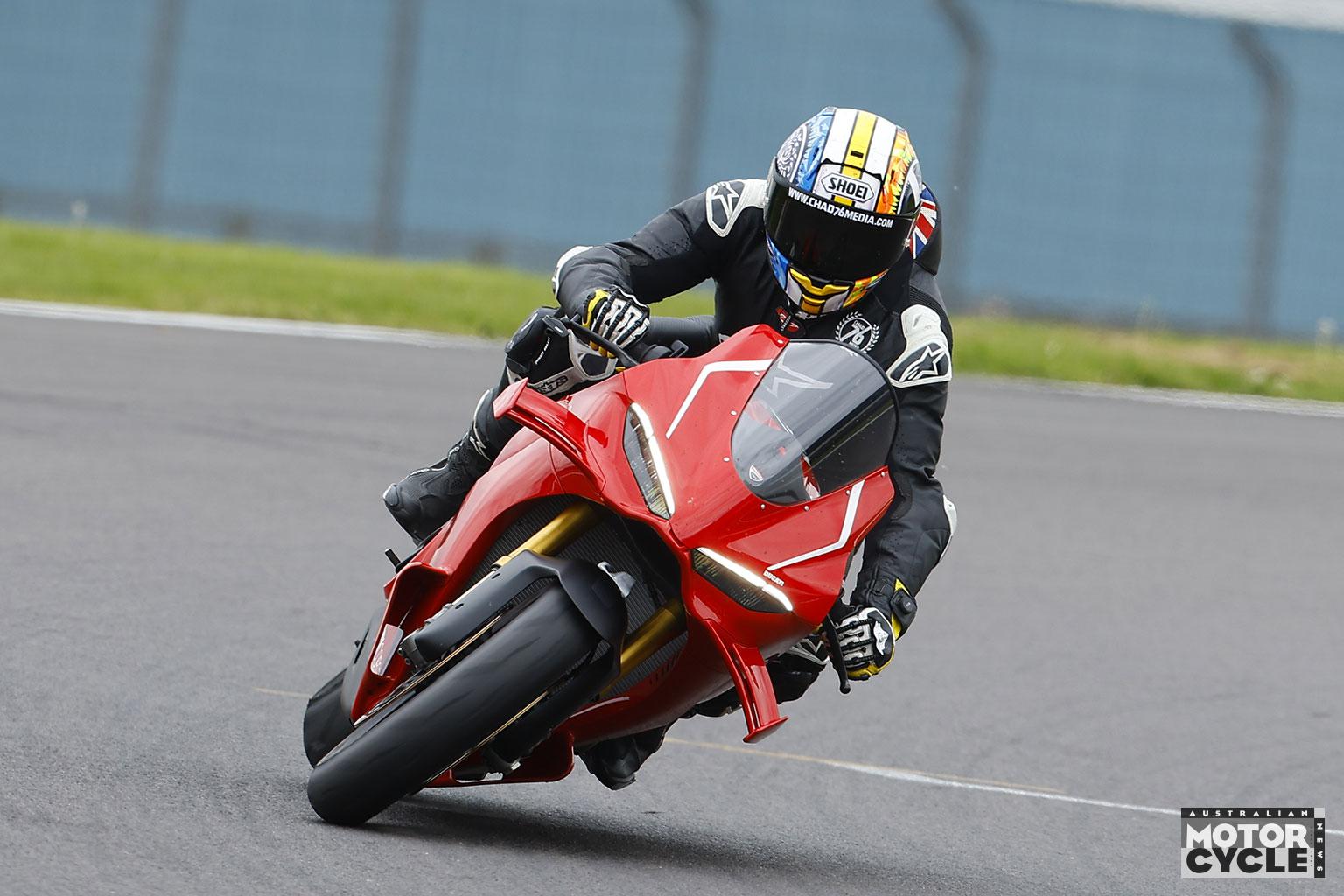
With looks to make you weak at the knees and 239hp to finish the job, Chad discovers there’s much more to the new V4 R than crazy numbers!
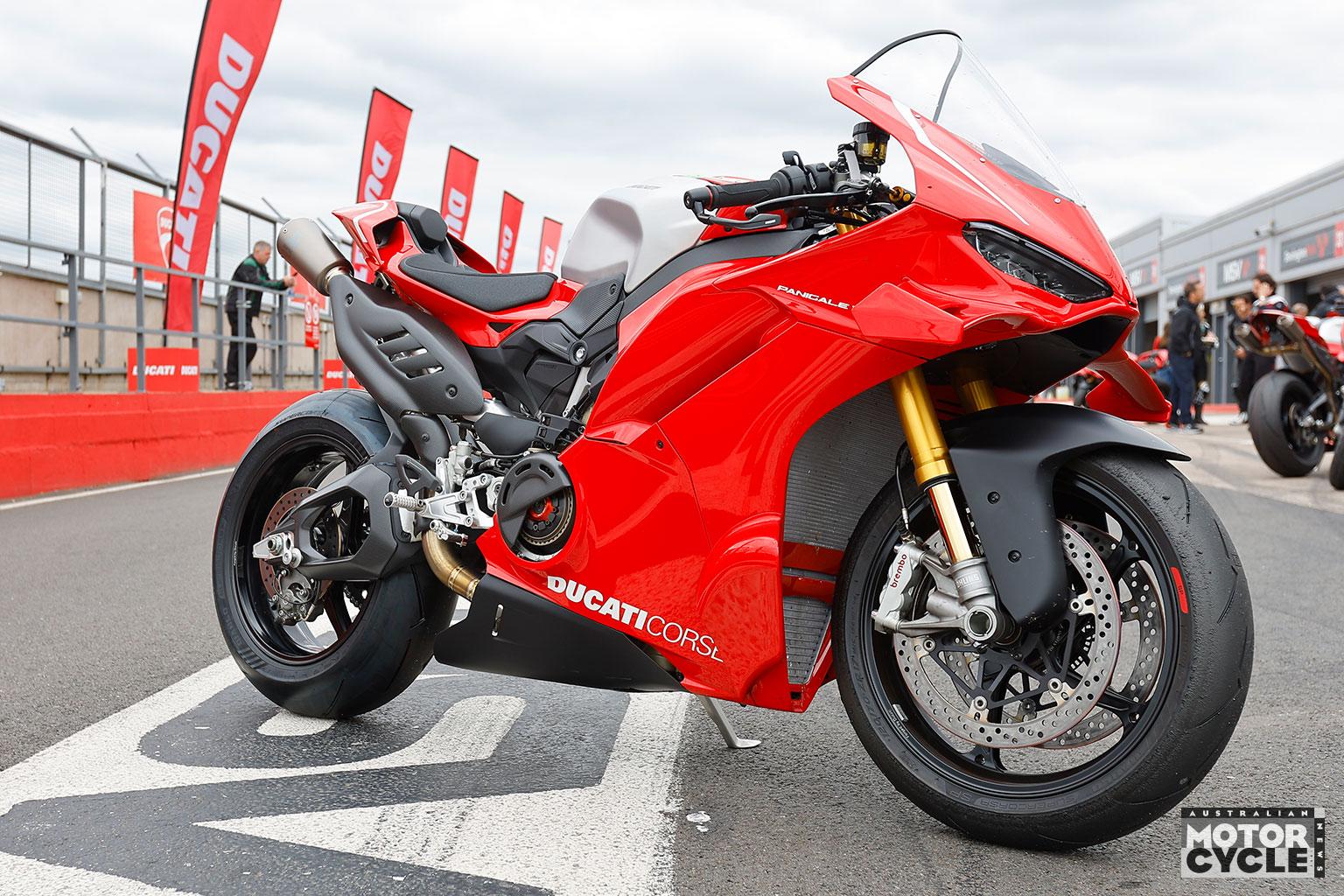
Did the teenage you have a poster of a Ducati on your bedroom wall? Mine was a Ducati 888 SP, then the legendary 916 SP. And I still love today that Ducati continues to push the boundaries of what is achievable for a road legal superbike, and still each update looks so beautiful, including this Panigale V4 R.
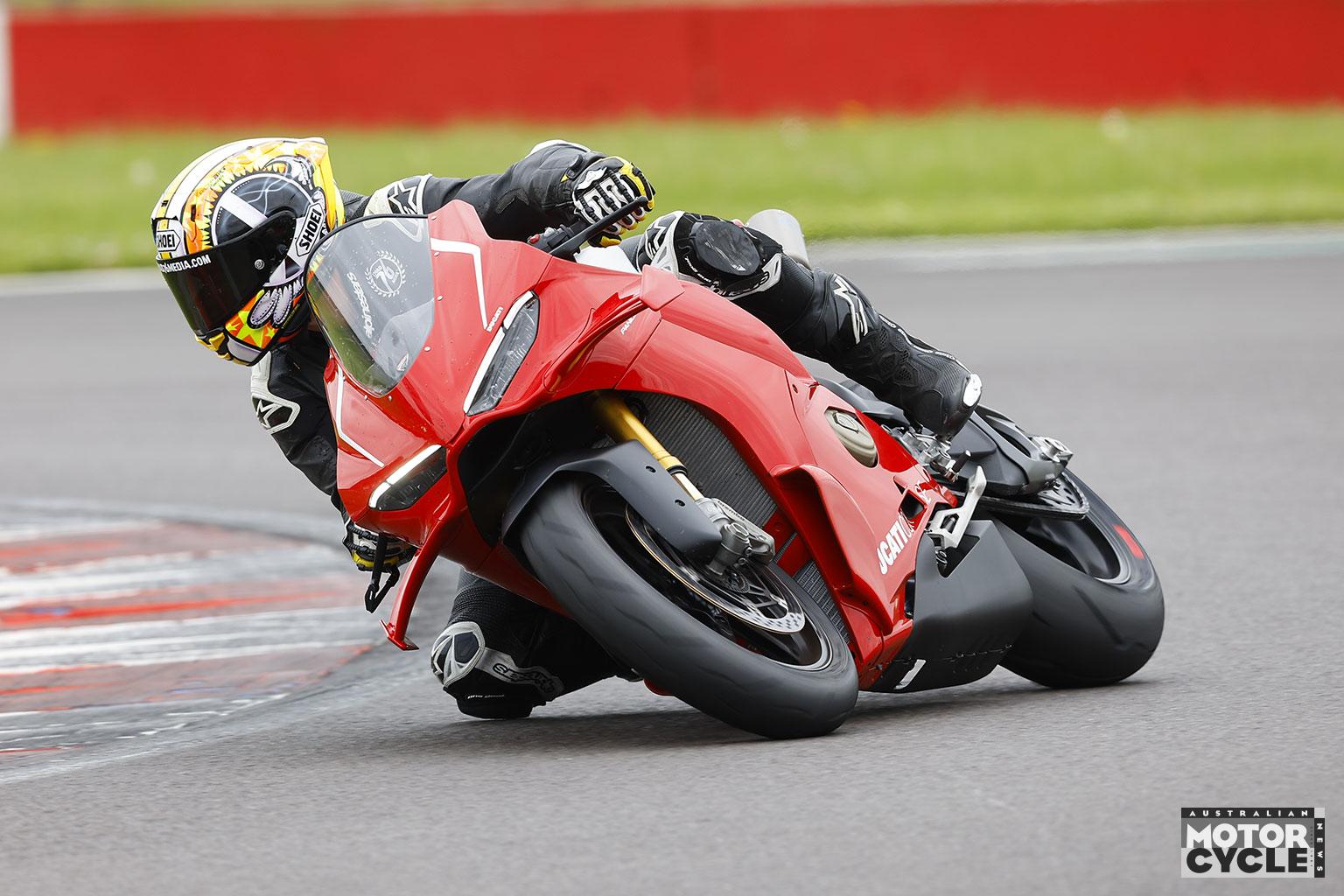
This near-240bhp motorcycle may be a rolling super-computer wrapped in crazy, state-of-the art aero, but it’s still immensely desirable – still gives me the same feeling as when I watched Baywatch for the first time and saw Pamela Anderson running in slow motion.
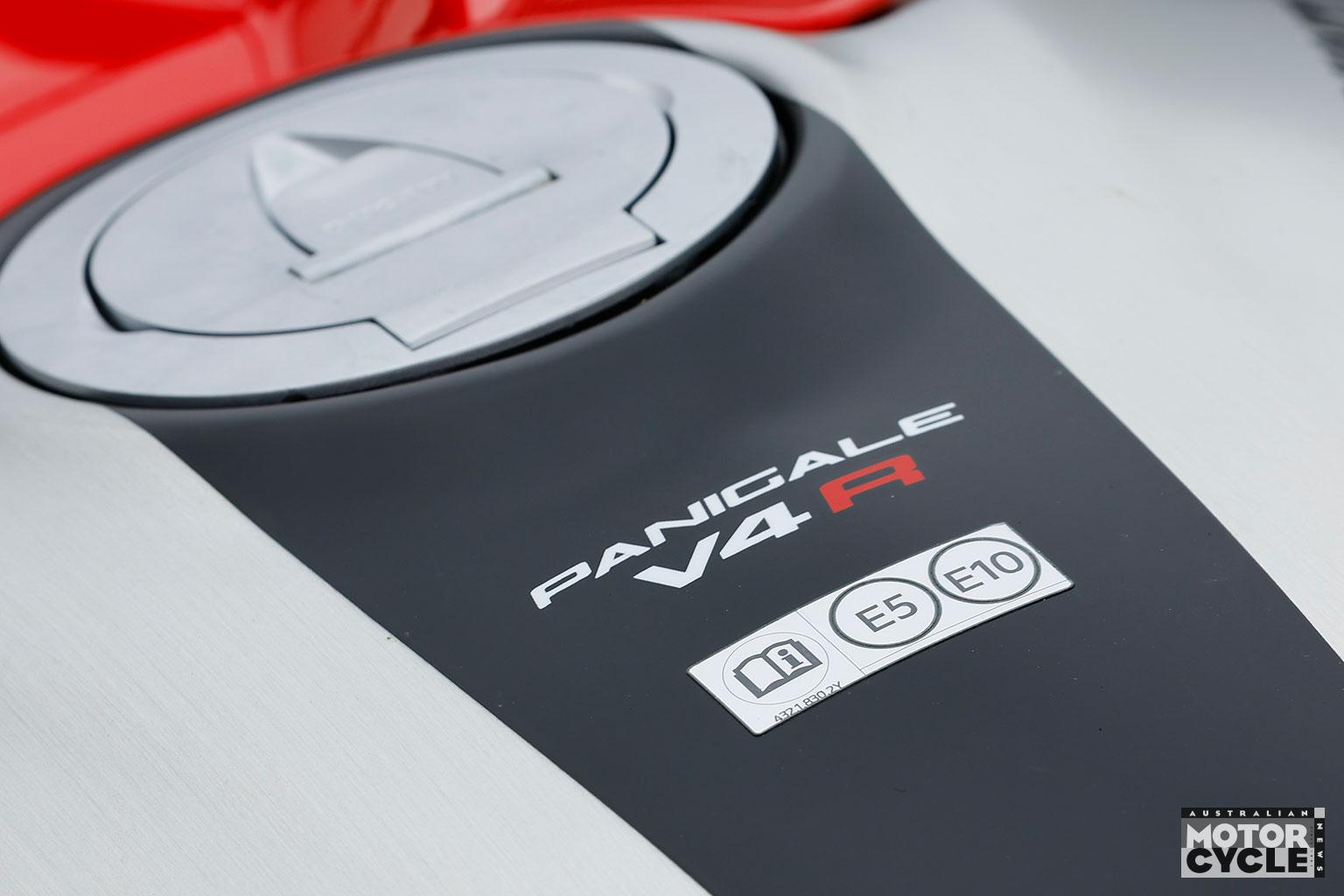
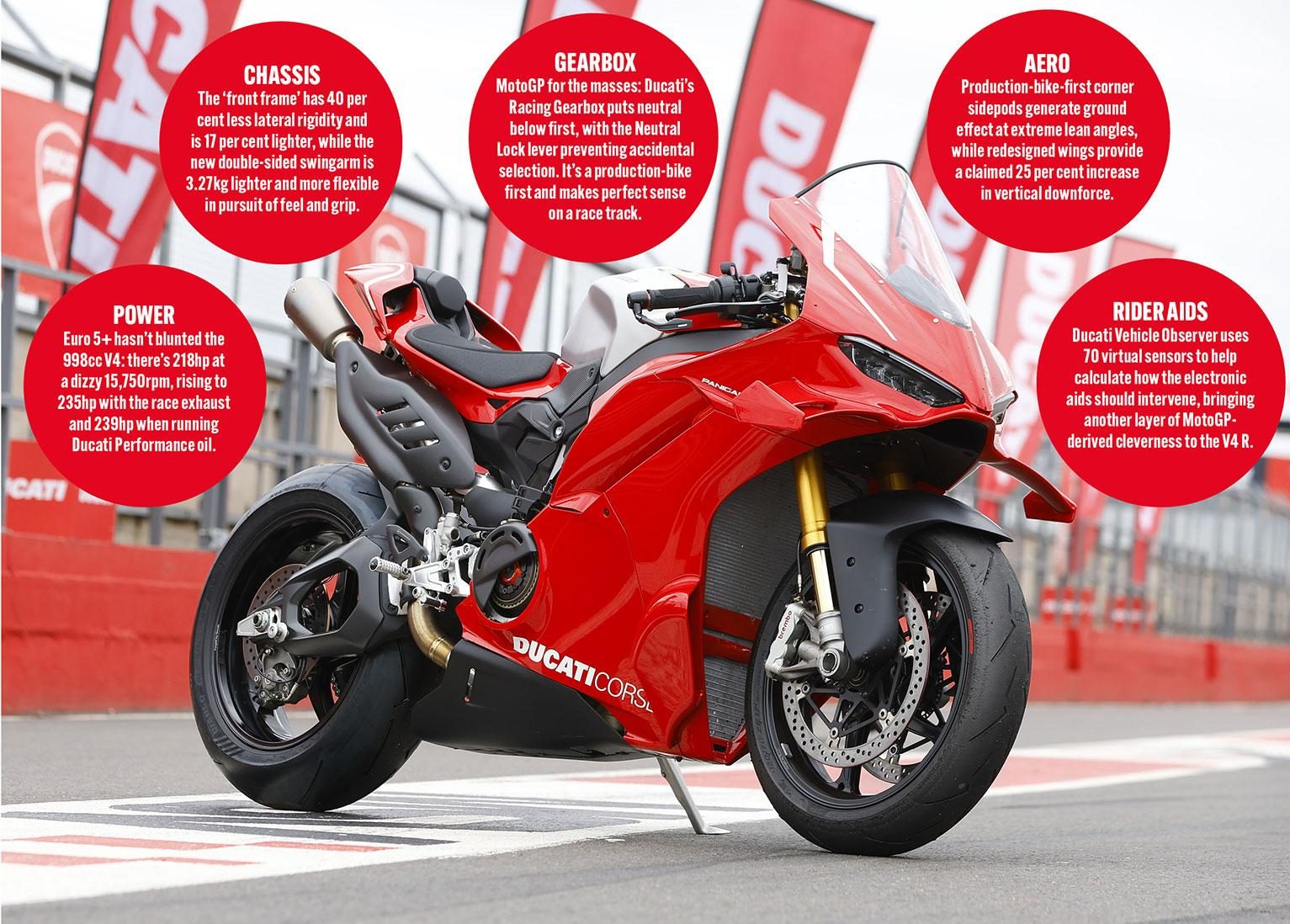
And this time the numbers really are staggering. Peak power remains at a quoted 160.3kW (218hp) at 15,750rpm, this despite its 998cc Desmosedici Stradale engine now conforming to even tighter Euro 5+ regulations. Peak torque is up to 114Nm at 12,000rpm, which is also impressive. But the number you really want to hear about is two-three-nine. That’s the amount of horsepower this homologation special churns out once you’ve fitted the full race exhaust and filled it with Ducati Performance oil. That’s your Top Trumps winner, right there. A new ultimate for the fastest superbike yet seen.
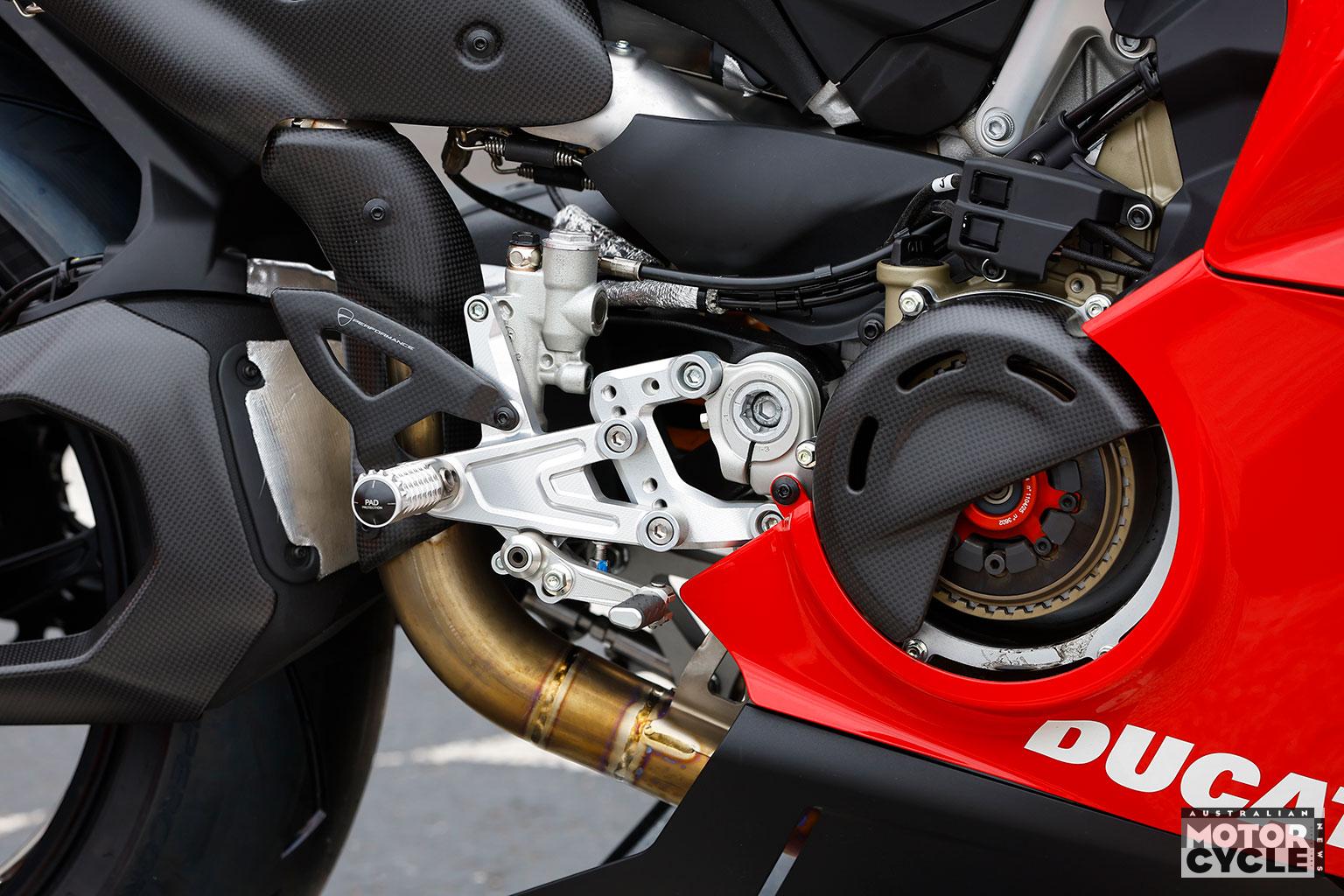
The 2026 V4 R features other world firsts. The Ducati Racing Gearbox (DRG) with a neutral lock system adopts a modern race shift pattern with neutral placed beneath first gear rather than between first and second. Corner sidepods, meanwhile, create extra ground effect at big lean angles.
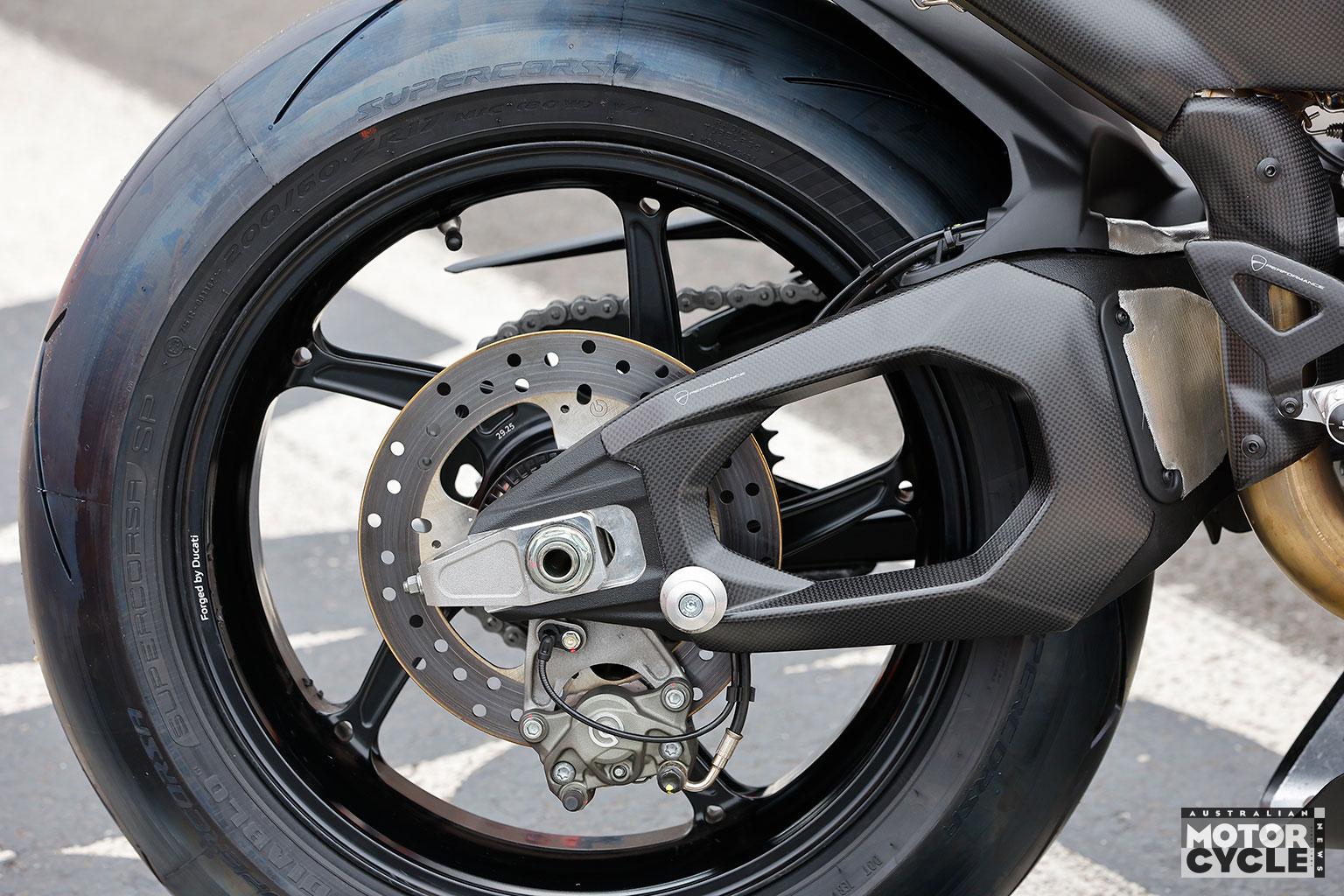
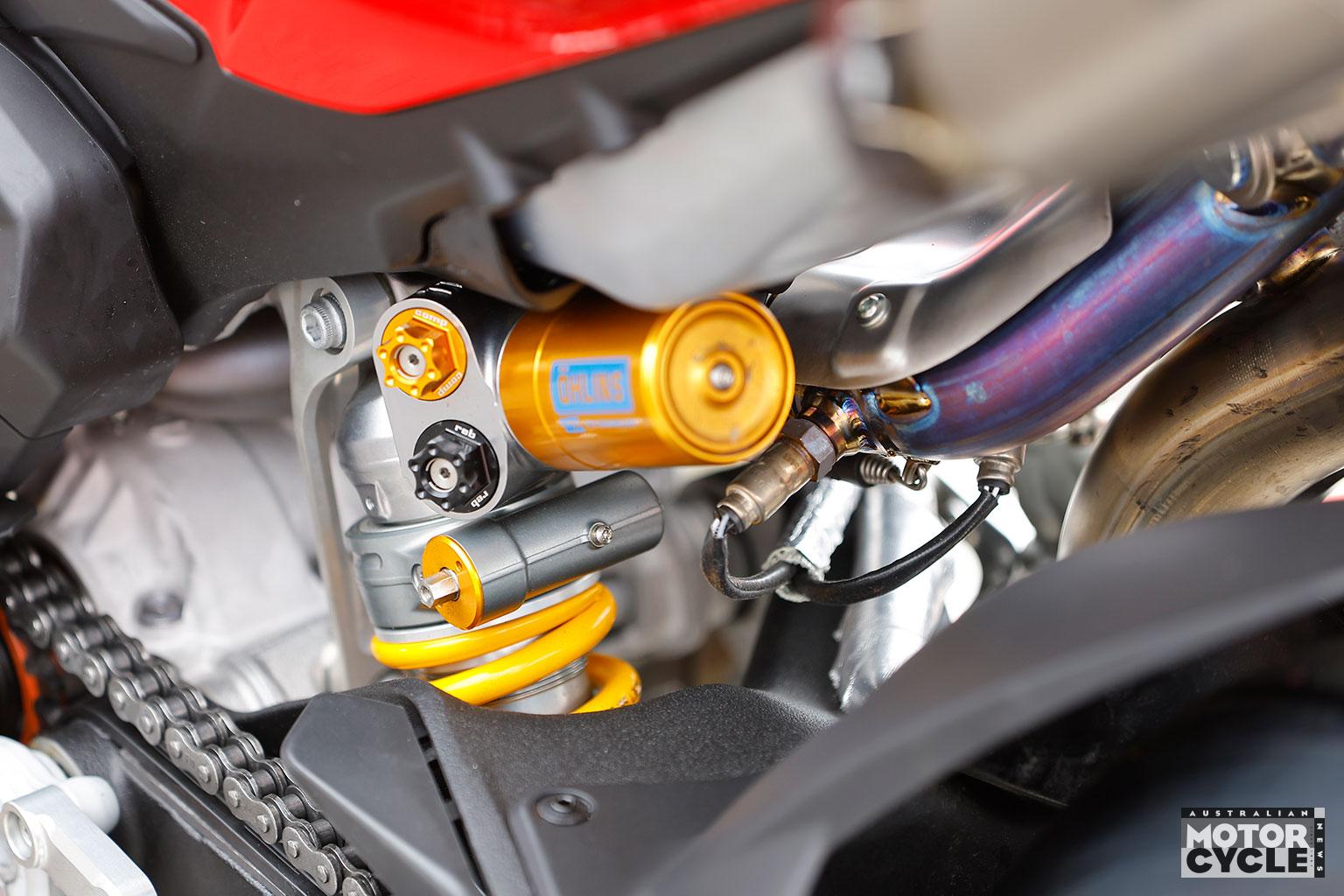
In line with the Panigale V4 S, a new ‘front frame’ has 40 per cent less lateral stiffness, while a lighter and more flexible new hollow-centre double-sided swingarm is also adopted in pursuit of even more traction and stability. Suspension is top-end mechanical Öhlins, there are Hypure brakes from Brembo, and combined braking and Ducati Vehicle Observer (DVO), which finesses and optimises the bike’s array of MotoGP developed rider aids, come on board the R for the first time.
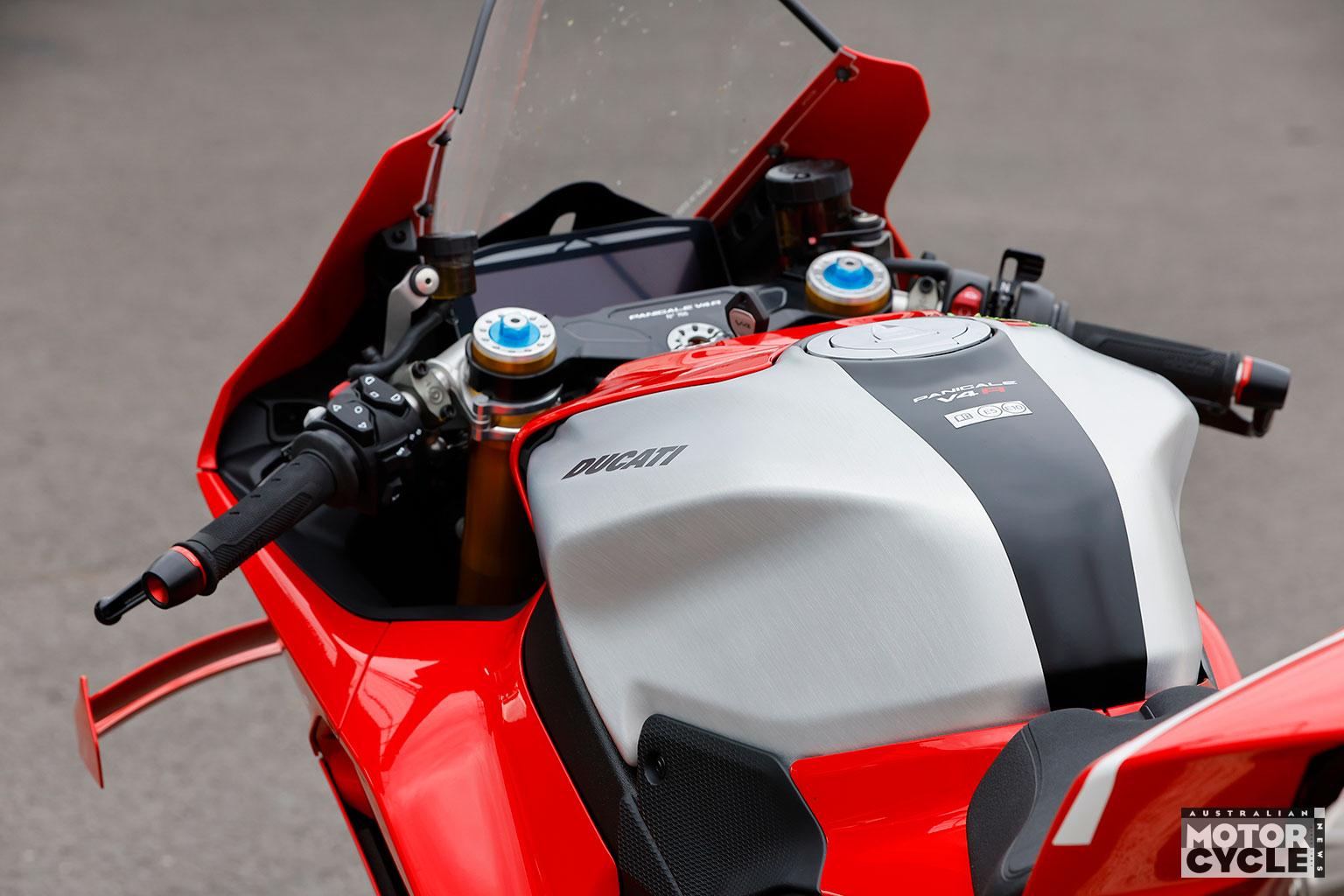
So that’s massive power, a lighter chassis with more flex, more aero-generated downforce, and a suite of rider aids filtered down from MotoGP and WorldSBK. Plus looks that are as stunning as ever.
We already know what the V4 R can do, of course. Introduced this year in World Superbike, it has been utterly dominant, winning the manufacturers’ title with 12 races remaining. In British Superbikes, Ducati-mounted Kyle Ryde won all three races at round one. Furthermore, Ducati riders like Ryde and Tommy Bridewell have been using standard V4 Rs as training bikes and putting in some blistering lap times. Ryde even finished a recent BSB test at Donington Park sixth fastest on a slightly modified road bike.
But what is this homologation special like in the hands of a normal rider? Do you need to be at a world level to feel the differences and get the most out of it? We headed to the spiritual home of World Superbike, Donington Park, England, for a full day of testing to find out.
The V4 R is priced at close to £40,000 ($75,225 in Australia) but, arguably, that represents something of a bargain. WorldSBK enforce a price cap of 44,000 euros on homologation machines, and considering the technology, materials and engineering that go into each build, I wouldn’t be surprised if Ducati is losing money on each V4 R produced.
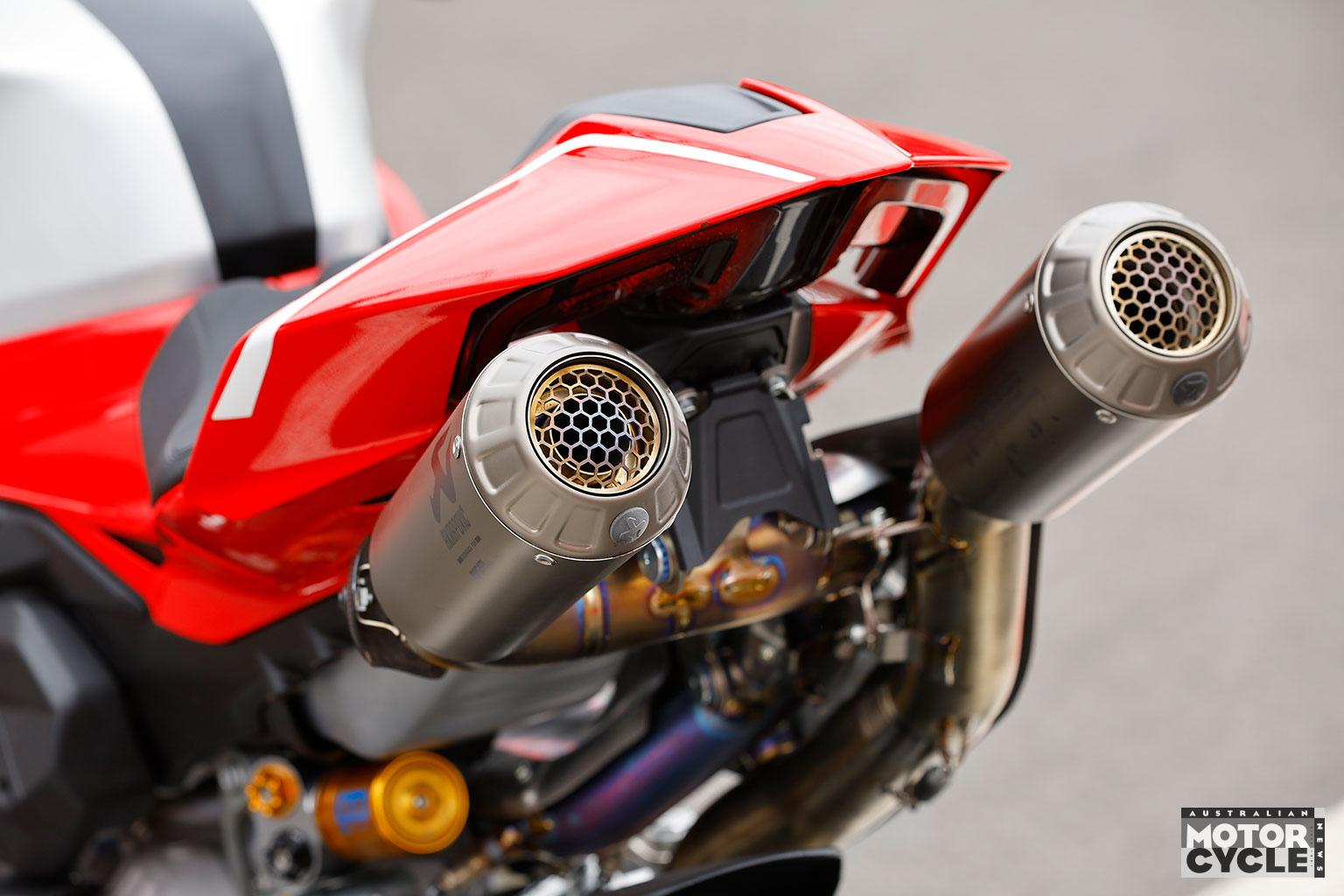
The full race titanium Akrapovic exhaust system adds £8249 ($A15,500) to that figure, and you need the £148 fairing lowers to accommodate it, but… Well, we are back to Baywatch again here. There’s something magic about twin under-seat silencers and has been since they appeared on the 916. In terms of volume, the V4 R’s system turns things up to 11 and is strictly for track use only. Simply warming the Desmosedici Stradale at 5000rpm in the pitlane is a spine-tingling experience.
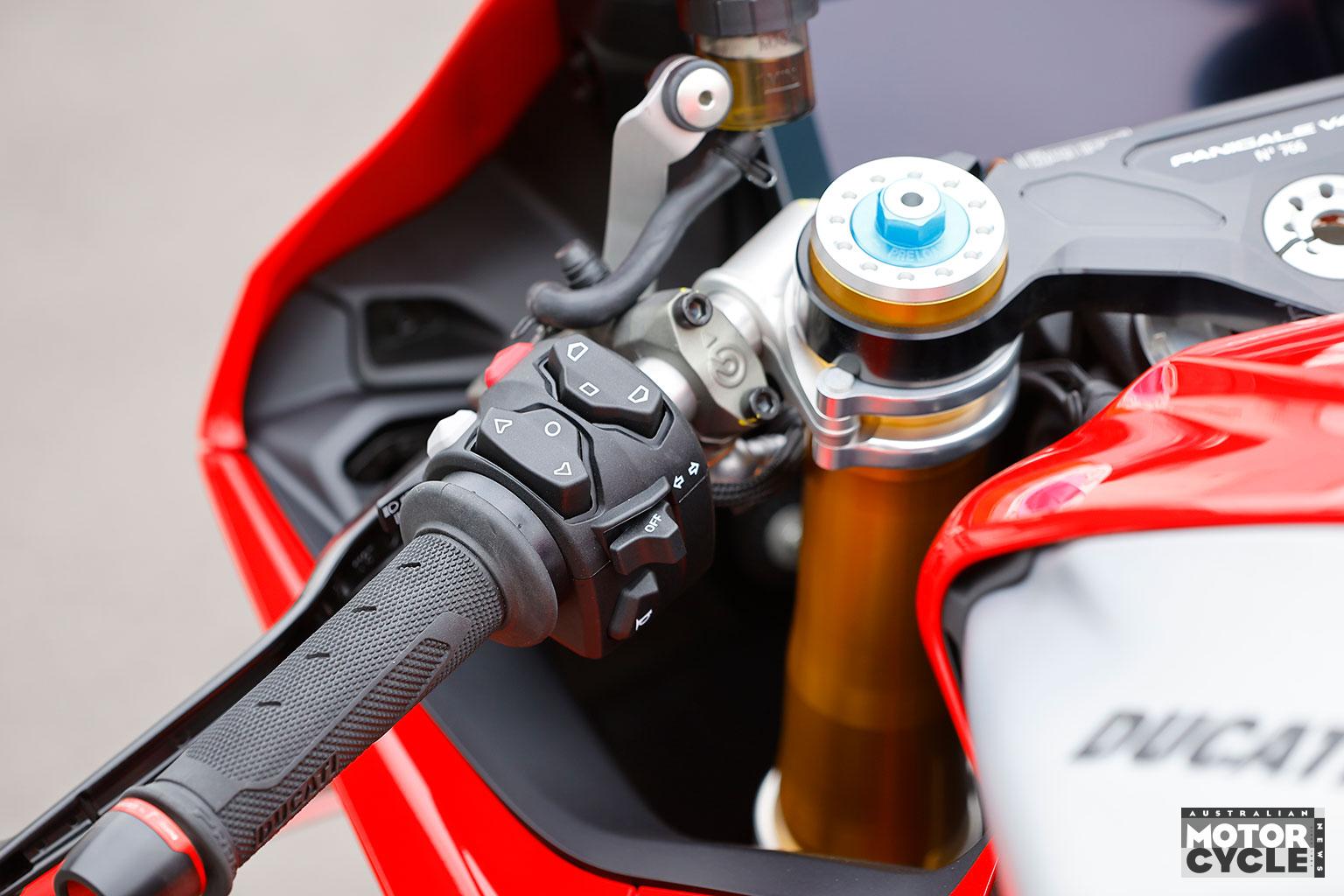
On board, it feels like the 1103cc V4 S, which should come as no surprise, but with a slightly taller (855mm) seat, a lovely bare-alloy tank, and the Ducati Neutral Lockout lever on the right ‘bar next to the throttle and in the same place as the MotoGP and WorldSBK machines.
To select first gear it’s no longer down but up, then second gear is up again and it’s the same all the way to sixth. To go down the gearbox it’s the reverse, all the way to first gear at the bottom – with no neutral between first and second gear. If you want neutral, it’s below first gear, and you must use the conventional clutch and that DNL lever on the right handlebar.
This is a first for a production bike and makes perfect sense on track. With the auto-blipper and latest quickshifter, DQS 2.0, you only need the conventional clutch to start and stop, and you only need the DNL lever to select neutral when you’re parked in the pits or stopped. You could argue that it’s a little gimmicky and commuting your V4 R through Milan might be a tad awkward, but it also feels undeniably factory – and you can reverse the gear selector for a race shift relatively easily.
Ducati usually fits blanket-warmed Pirelli WorldSBK slicks to its track test bikes but this time opted for the standard road-legal Diablo Supercorsa SP V4 tyres, without warmers, which meant the first few laps were ridden in a tentative fashion.
Even at a slow warm-up pace, though, the feedback was excellent. I could feel the heat being generated, the tyre pressures increasing, and the feedback building corner by corner. The quickshifter worked sweetly at half throttle, while the Akrapovic’s bark between shifts urged me to build some pace.
The V4 R is a renowned rev-aholic, but Ducati has worked on improving the desmo’s midrange torque for 2026. In addition to a three per cent gain at peak there’s a claimed seven per cent increase in useful grunt at around 6000rpm. The race-ready V4 R glides and flows nicely in the lower and middle revs and can easily be ridden normally and calmly.
But with three laps already done, it was time to forget about the real world and start pushing for lap times. And, wow, what a bike. I’ve never known Donington Park seem so narrow and short. The straight from Foggy Esses to the Melbourne Loop was reduced to a brief and violent burst of acceleration; Melbourne to Goddards was no longer any distance at all.
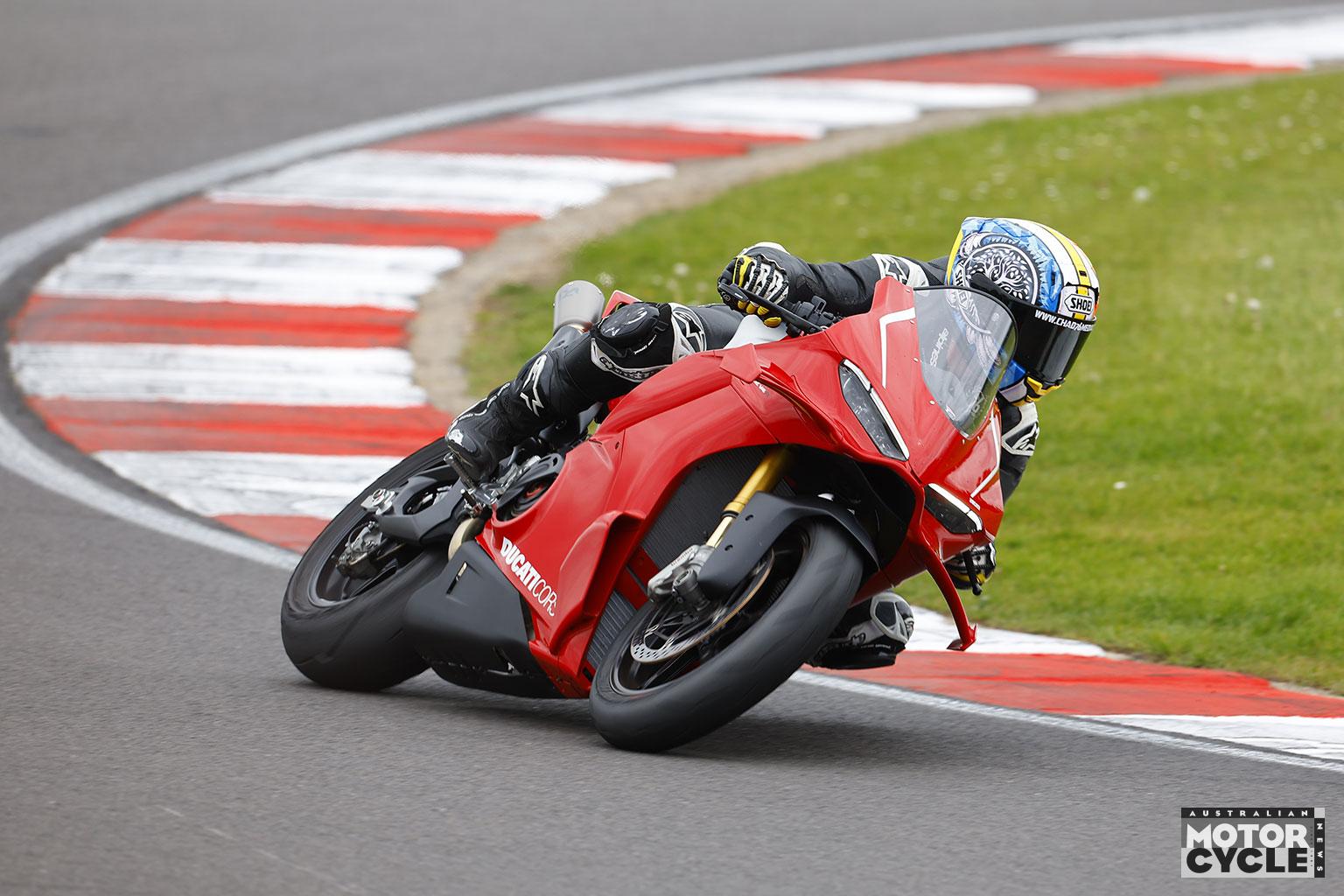
I was a little steady on the side of the tyre down the cascading, swooping Craner Curves, but the acceleration out of the Old Hairpin was so immense and immediate I struggled to catch up. Gear shifts were quickfire yet immaculately precise. The engine and drivetrain seemed to have no resistance. Revs flowed like water, speed built so quickly that I was scrambling to locate my brake markers.
After session one, back in the pits, I was wired like an excitable child on Christmas morning. The V4 R is a drug that had given me a mild hit, and I wanted more.
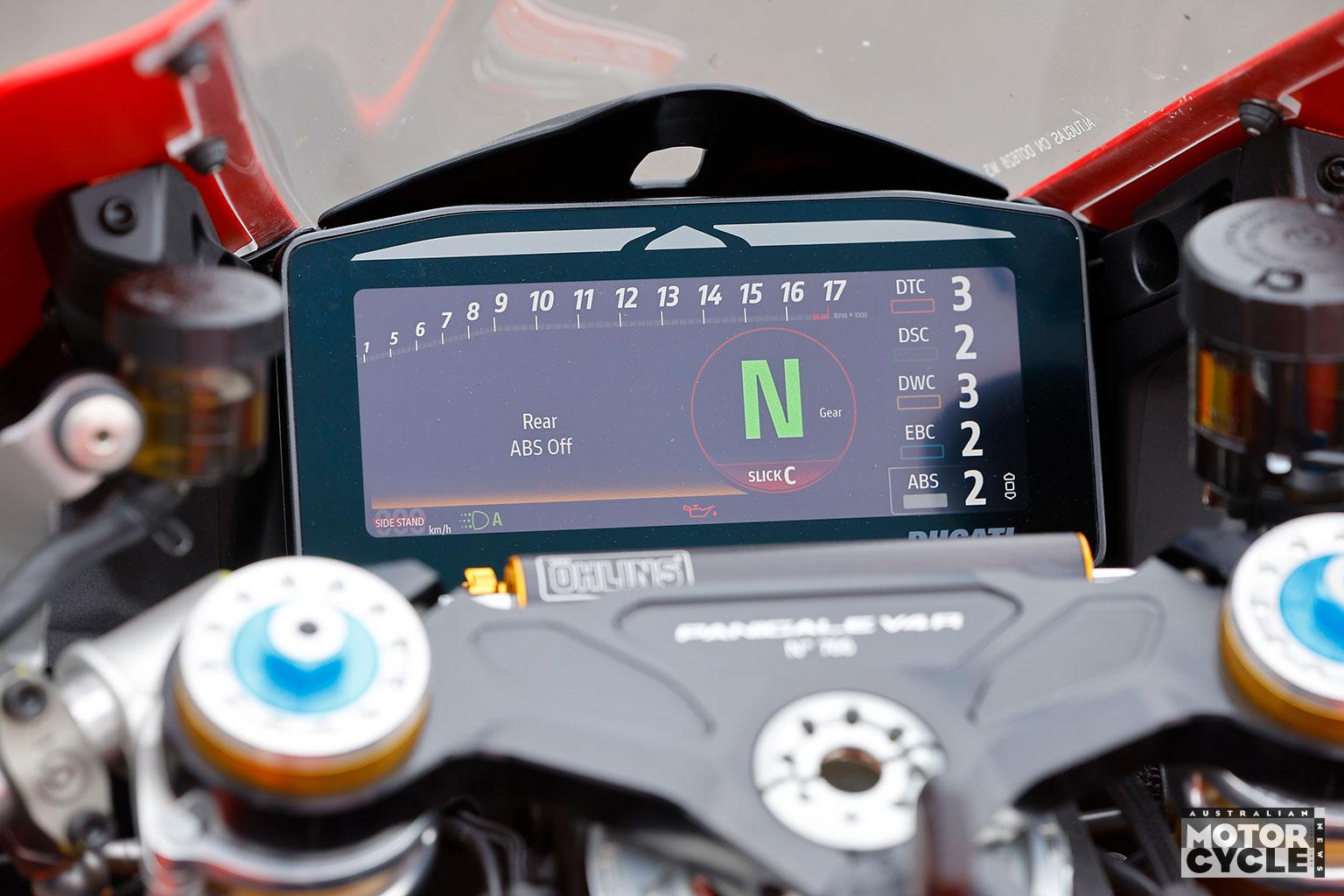
For session two I had an idea of what to expect but it still took my breath away. We’d opted for mode Slick A, which gives full power, puts the rider aids near minimum and the brakes on ABS 1.
With the electronics pushed back, I was getting a feel for the V4 R, carrying more of its corner speed and trusting the feedback from the quality top-shelf Öhlins suspension.
In the first session, I had been changing gear too early, probably because most bikes in this class make peak power at around 12,500rpm to 13,500rpm – Ducati’s own V4 S peaks at 13,500rpm – but the V4 R keeps revving, peaks at 15,750rpm and revs on to a dizzy 16,000rpm plus a fraction more.
It’s almost unthinkable to rev a bike this hard but it’s addictive when you do. Where before I had been short shifting to third gear, I was now holding second and then holding it some more.
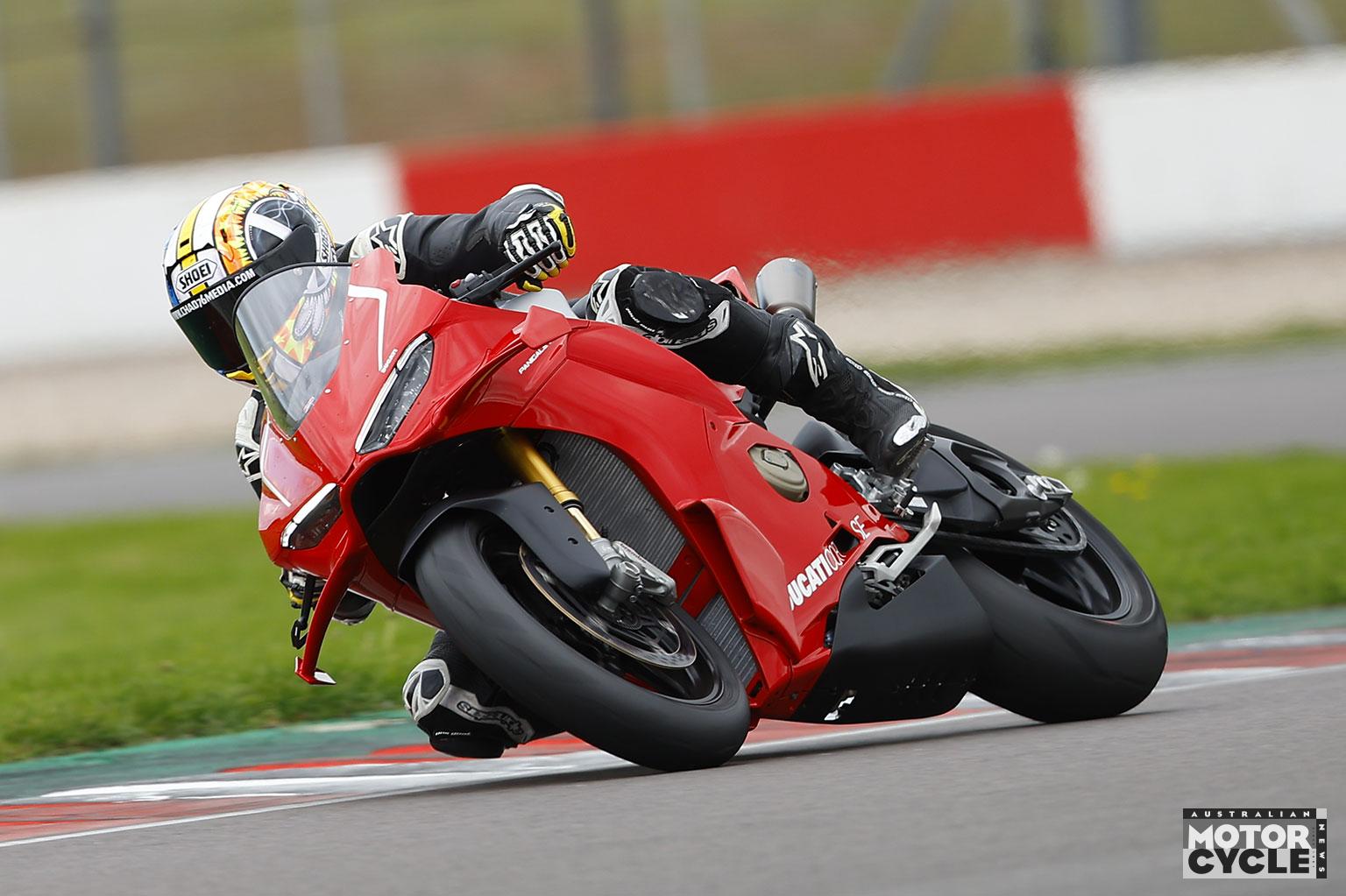
The Ducati ran through Coppice corner with immense speed and lean. I touched the gear lever, stood the bike up and it drove in third gear with brutal force. Before, I had been a little hesitant, now I was getting on the power sooner and earlier, even in the lower gears, basking in the feedback and also relying partly on the rider aids sweeping up my mistakes.
Those straights continued to contract even more. It was like someone had shrunk Donington Park in the wash and I felt like the V4 R needed a wider track like Mugello, Italy, to fully stretch its legs.
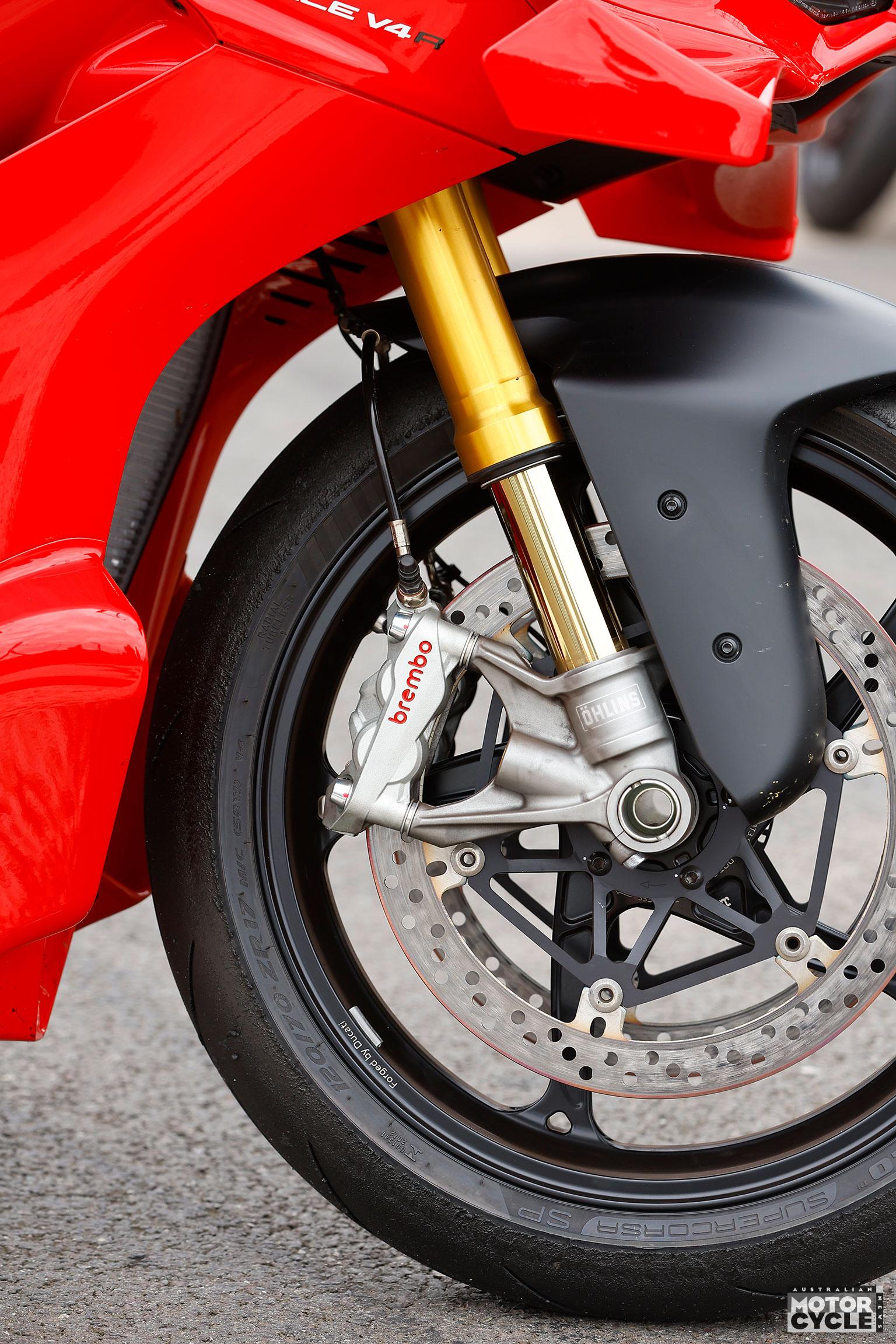
Corners were approaching at an alarming rate but, thankfully, I had the very latest Hypure Brembo front stoppers on large-diameter 330mm discs to help out, and only 186.5kg plus me to haul up.
In ABS 1, the most extreme track setting, ABS is reduced to a minimum and the combined braking system is set to Track Plus to give the maximum braking performance. This means you don’t need to touch the rear pedal because it’s all done automatically via the DVO and other electronic rider aids. The system even momentarily adds some rear brake once you’ve released the front brake to, in theory, tighten the line. Apparently this is what the MotoGP riders do automatically.
It’s a mighty impressive system. I rarely touch the back brake on a superbike because I don’t have the brain capacity – everything is happening too quickly – but now Track Plus does the work for you. You can dangle your leg MotoGP style, foot not even on the right peg, and the Ducati activates the back brake automatically.
I don’t know if it was the improved aero package, improved electrics or brakes, or possibly a combination of all three, but braking performance was jaw-dropping. By session three I was getting a little carried away, with the rear starting to come around a few times into Goddards and Redgate.
In ABS 2 there is less rear brake and in ABS 3 full control by the rider. Incidentally, mode 5 allows slide-by-brake like we have seen on Ducati Supermoto models, allowing a progressive slide more for show than lap times.
This is just one of the clever rider aids and electronics helping you cut lap times and, let’s be clear here, impress your mates. But old school feel, chassis flex, mechanical grip and suspension transmission are still present. You feel in control, despite the avalanche of horsepower and electronic support. And that, perhaps, is the real surprise.
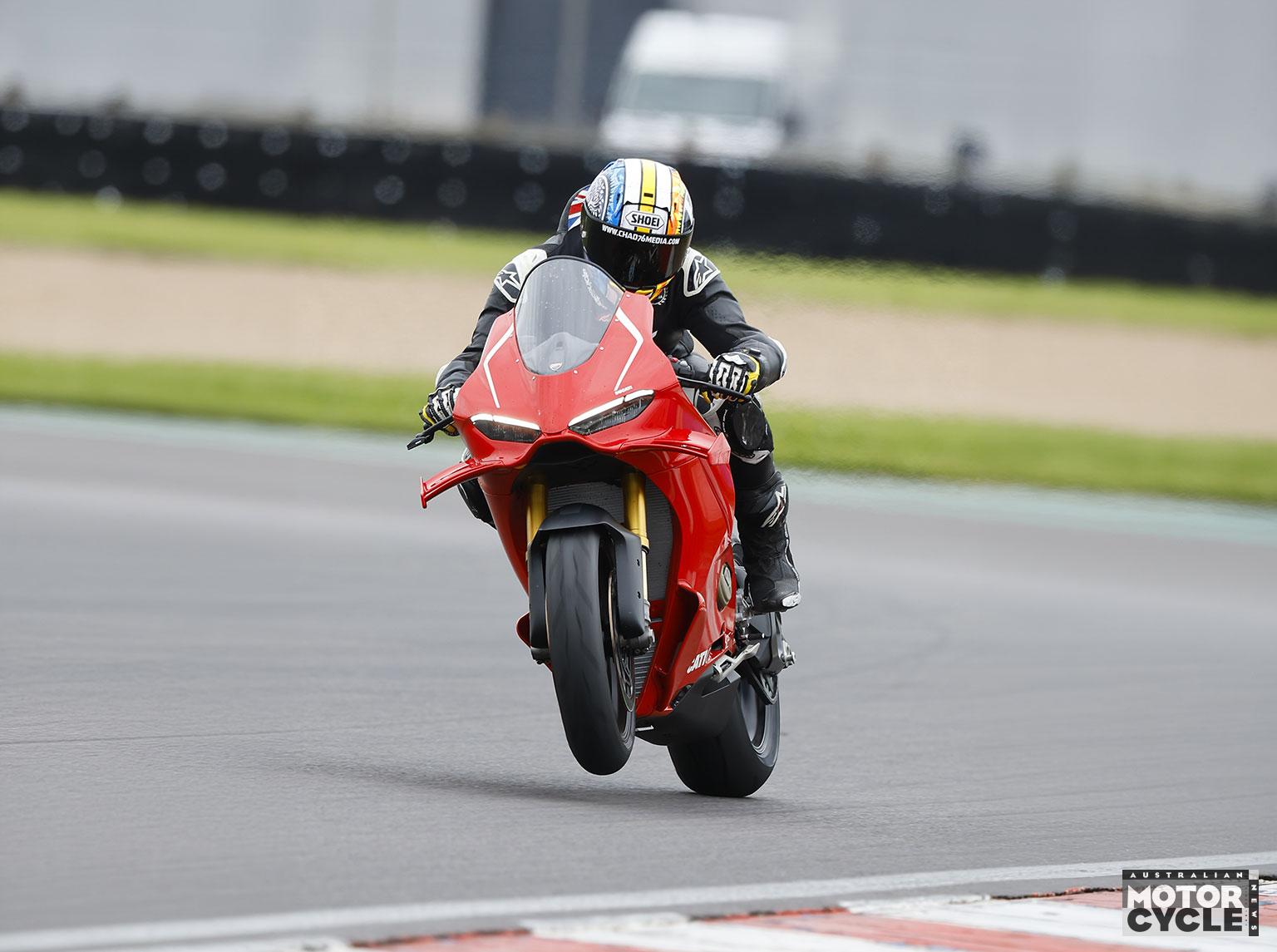
After lunch we threw on a new rear tyre and I could immediately feel the difference; every time we changed a rider aid or suspension setting, the difference was immediately obvious.
The previous Panigale V4 R is blisteringly quick on track but hard work; you can sometimes feel that you are along for the ride, which makes you reluctant to reduce the rider aids. But the current V4 R drips with feeling. Its connection with the track is as intimate as any I can recall. Not just on the exit but when trail braking and mid corner.
Towards the end of the day, the front tyre had had a full workout yet was giving me the confidence to keep lapping hard. I wasn’t pushing or sliding the front, I’m not that good, but I knew the grip had dropped maybe 10-20 per cent simply from the feeling fed through the chassis to my brain. With a near-empty track and a well-abused V4 R, I could just have fun.
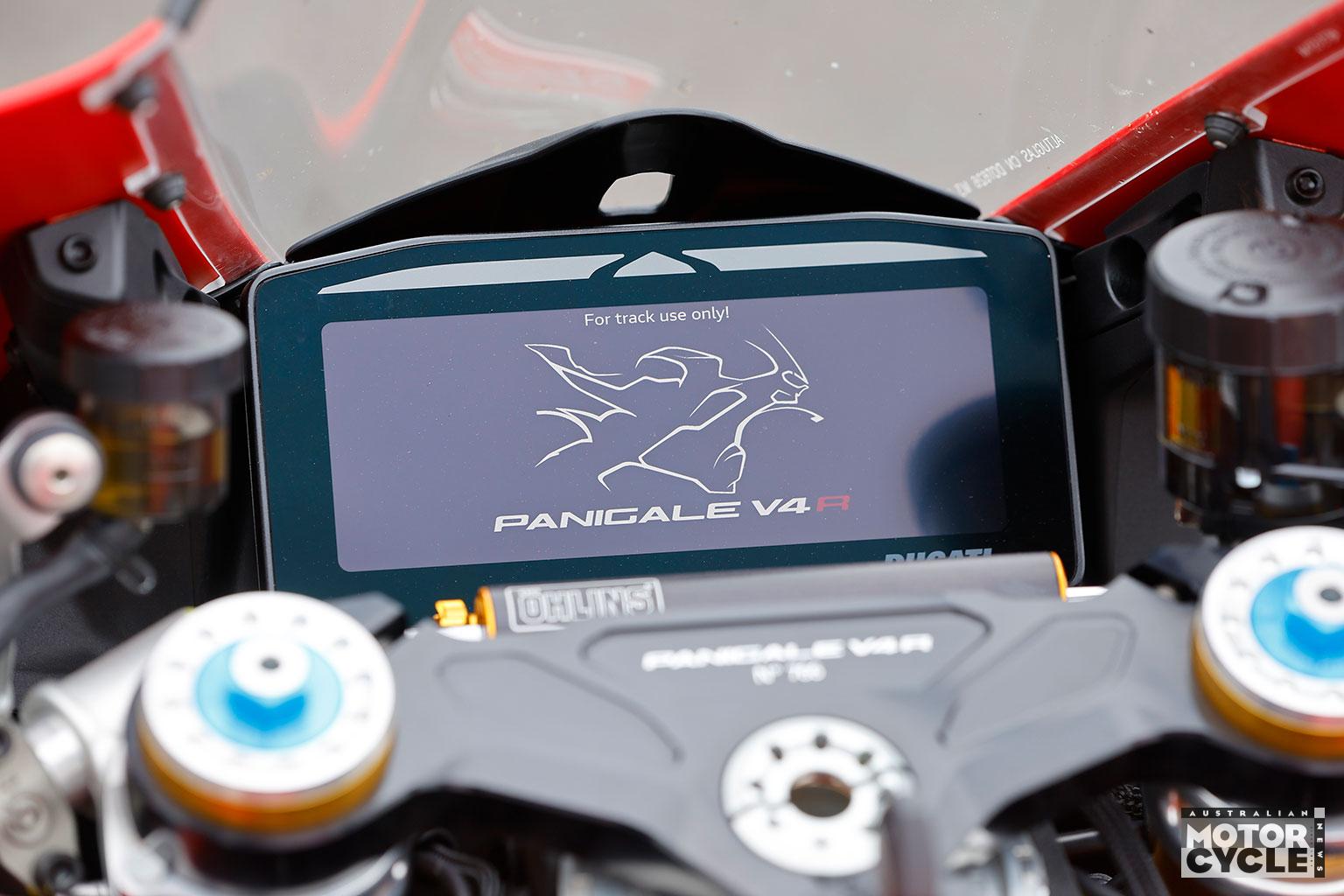
The 6.9-inch TFT dash is clear and gives you live rider aids, which illuminate when active, plus a large lap timer with splits just to the left of a large, clear gear indicator. On worn tyres, I could see the DSC (slide control) illuminate out of Coppice, and the DWC (wheelie control) activate on the exit of both hairpins, but neither intervention in any way interfered with the fun.
This level of electronic control from the rider aids is class leading. I could see the lights illuminate but, on these lowest settings, I felt nothing. Seeing the lights is like feeling a rope or harness before climbing; it gives you that added extra security you need on a 239bhp superbike.
The big question: is the Panigale V4 R the best 1000cc superbike on the market? I think so, especially with the full race exhaust fitted. BMW’s M 1000 RR must be close, so too Honda’s Fireblade RR-R SP, but the others can’t match the all-round performance of the Ducati.
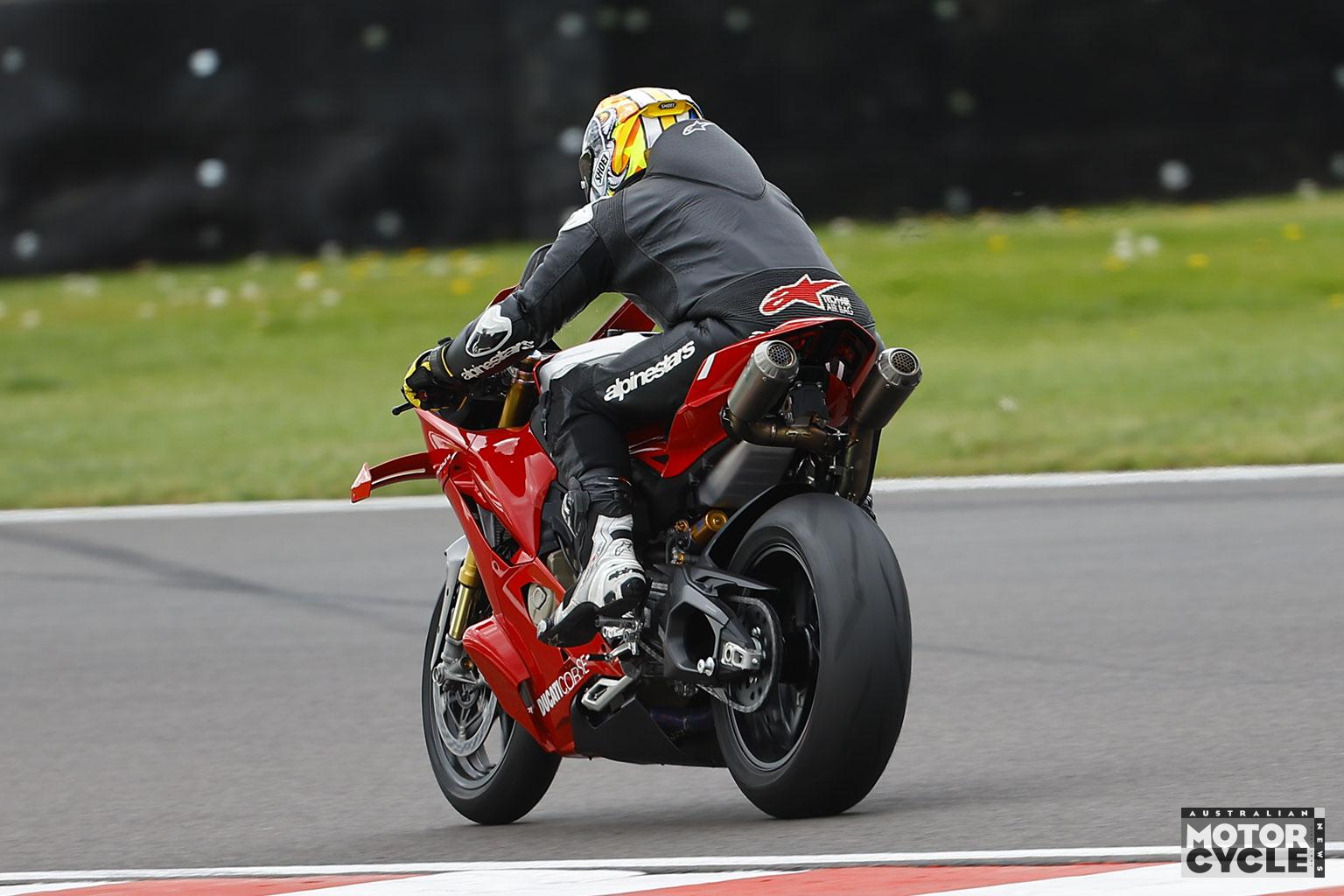
In a stopwatch race, it’ll be close, but I think the V4 R will come out on top. Its rider aids and electronics, for me, lead the field, especially as they aren’t solely for former racers or BSB riders. They can be trimmed to work for any skill level.
Previously, the competition was arguably easier to ride, but now the Ducati has more feel and more feedback despite its immense power. Hustling a 239bhp superbike will never be overly straightforward but I didn’t feel too fatigued after six sessions. You’re no longer a passenger on an angry horse; instead, you’re more in control with more understanding.
A homologation special has to make you go weak at the knees; has to look fast when standing still – and the V4 R does that, too. Yes, the BMW is mean and the Honda in factory colours looks sublime, but do they have the wow factor of the Ducati?
If I won the lottery, this is the one I’d put in my garage or park in pit lane on tyre warmers and slicks. It is the most expensive but currently the best. Unknowns such as the new Bimota KB998 and Manx Norton GP are upcoming, but race results don’t lie.
✅ PROS – Mind-bending 239hp in race trim, sublime chassis feedback, class-leading rider aids, phenomenal braking performance, addictive 16,000rpm-plus V4 engine.
❌ CONS – Price! Race exhaust adds substantially to the cost, Neutral Lock awkward for road use, huge performance difficult to exploit away from a race track.
HOW IT COMPARES TO THE V4 S
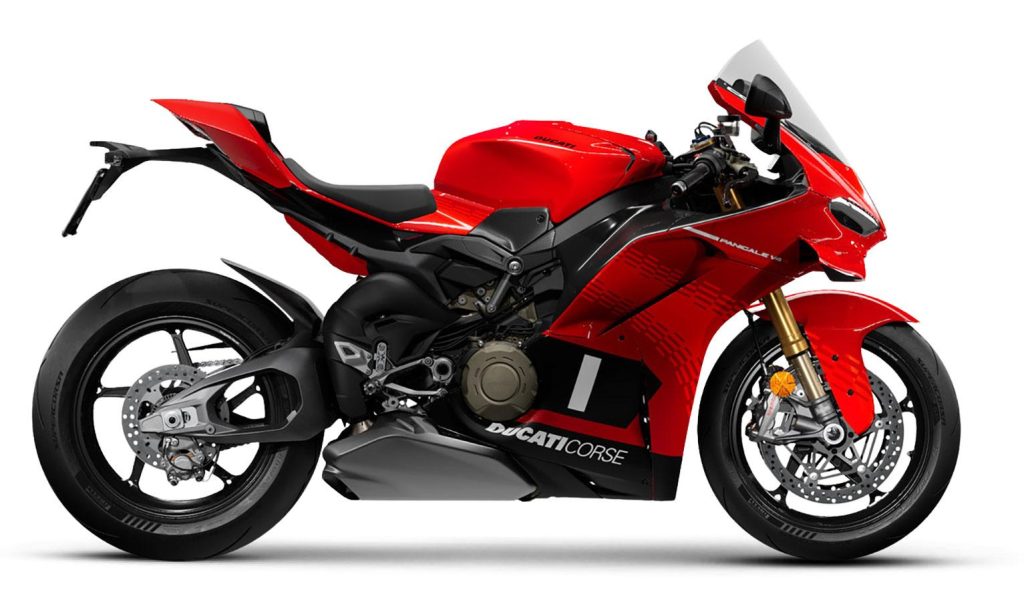
In a strange turn of events, I managed to grab a ride on the standard V4 S between riding the new V4 R, which was revealing. On the surface, they appear to share many similarities: chassis, swingarm, rider aids, including the DVO, but everything is bespoke to each model.
The larger 1103cc V4 S produces 161kW (216hp) at 13,500rpm, with 120.9Nm of torque at 11,250rpm, compared to the standard V4R’s 160.3kW (218hp) at 15,750rpm and 114Nm at 12,000rpm. With the factory race exhaust that power figure rises to 178kW (239hp). Essentially, the V4 R makes more power via more revs, but a little less torque.
Weight is very close between the two bikes, and the V4 R uses manually adjustable Öhlins suspension as opposed to the electronically adjustable suspension on the V4 S, which is constantly adapting to its riding environment.
Despite a similar quoted weight, the V4 R steers faster, is more accurate and easier through the faster sections of Donington Park and when you have to change direction at speed, like Craner Curves. Yes, the V4 S has the torque and is easier to set up, but the V4 R feels like it’s on the next level, closer to a race bike that’s ready to win.
COMPETITION
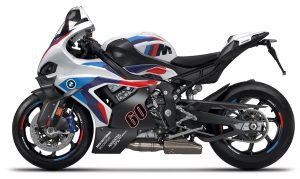
BMW M 1000 RR
999cc inline-four | 218hp | $58,400 ride away
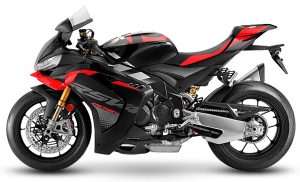
Aprilia RSV4 Factory
1099cc V4 | 220hp | $40,690 ride away
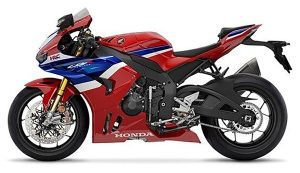
Honda CBR1000RR-R Fireblade SP
1000cc inline-four | 214hp | $36,699 + ORC
SPECIFICATIONS
ENGINE
Type 998cc liquid-cooled 90° V4, DOHC, 4 valves/cyl
Bore & stroke 81mm x 48.4mm
Compression 14.0:1
Fuelling EFI, twin injectors/cyl, variable-length intake
Transmission 6-speed, chain final drive, dry clutch
ELECTRONICS
Riding/power modes, DVO, DTC, DWC, DSC, EBC, DQS 2.0, Race Brake Control, cornering ABS
PERFORMANCE
Power 160.3kW (218hp) @ 15,750rpm; 235hp race exhaust; 239hp race exhaust/Ducati Performance oil
Torque 114Nm @ 12,000rpm
CHASSIS
Aluminium front frame
SUSPENSION
Front 43mm Öhlins NPX USD fork, fully adjustable, 125mm travel
Rear Öhlins TTX36, fully adjustable, 130mm travel
WHEELS
Forged aluminium, 17in
with Pirelli Diablo Supercorsa SP V4 tyres; 120/70 front, 200/60 rear
BRAKES
Front Dual 330mm discs, Brembo Hypure 4-piston radial calipers
Rear 245mm disc, 2-piston caliper
ABS Bosch Cornering ABS
DIMENSIONS
Rake/trail 24°/98mm
Wheelbase 1477mm
Seat height 855mm
Weight 186.5kg wet, no fuel
Fuel capacity 17L
BUSINESS END
Price $75,225 ride away
Contact ducati.com.au