Superbike performance, serious touring comfort and a staggering electronics package in one massive adventure machine
It’s no secret Ducati builds some of the most exotic superbikes on the market and has done so for a very long time. I remember as a child, my uncle had a 1974 model 750 Super Sport, a bike which, along with early Bultacos and Ossas my dad and grandpa owned, was no doubt responsible for sparking my lifelong passion for motorbikes.
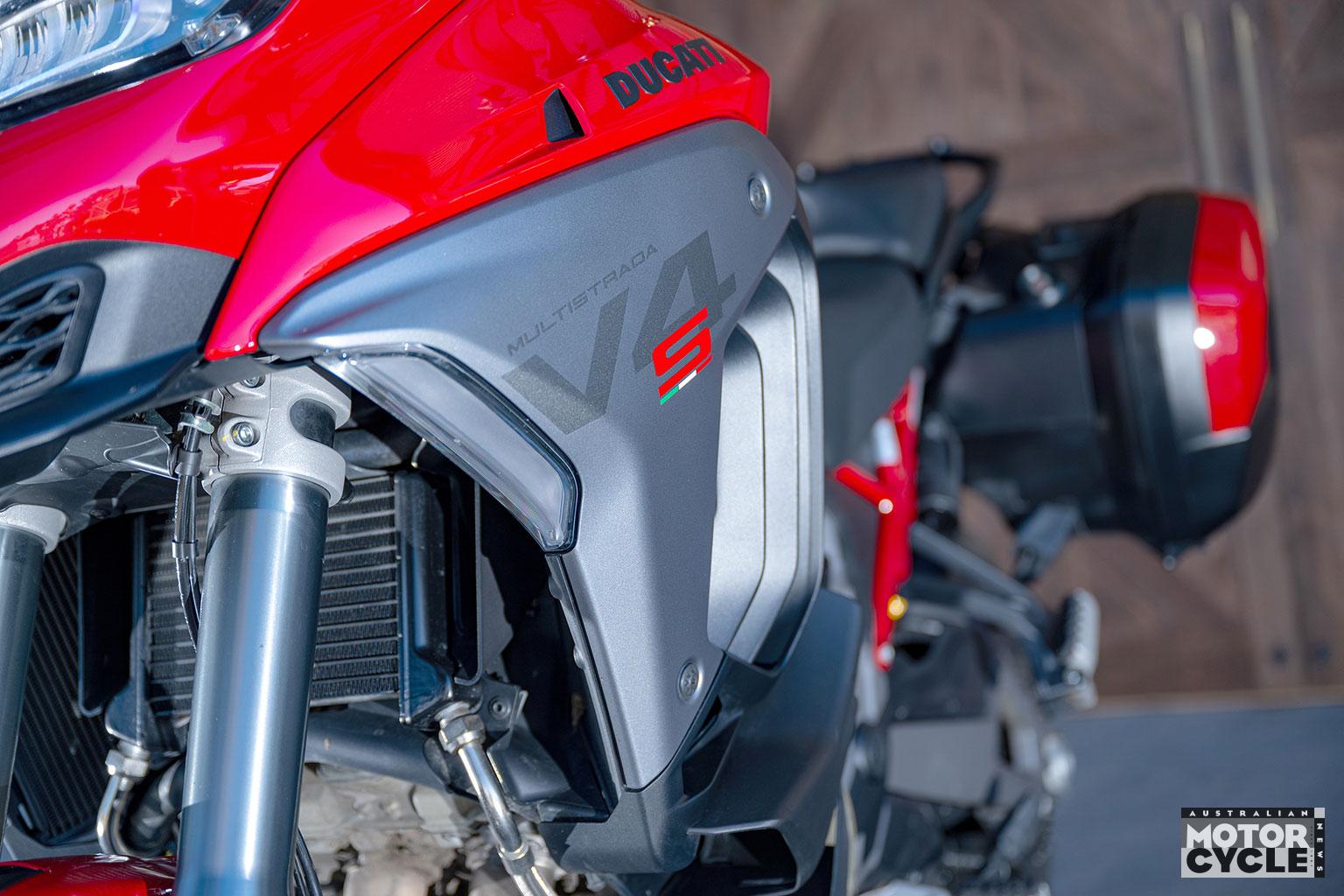
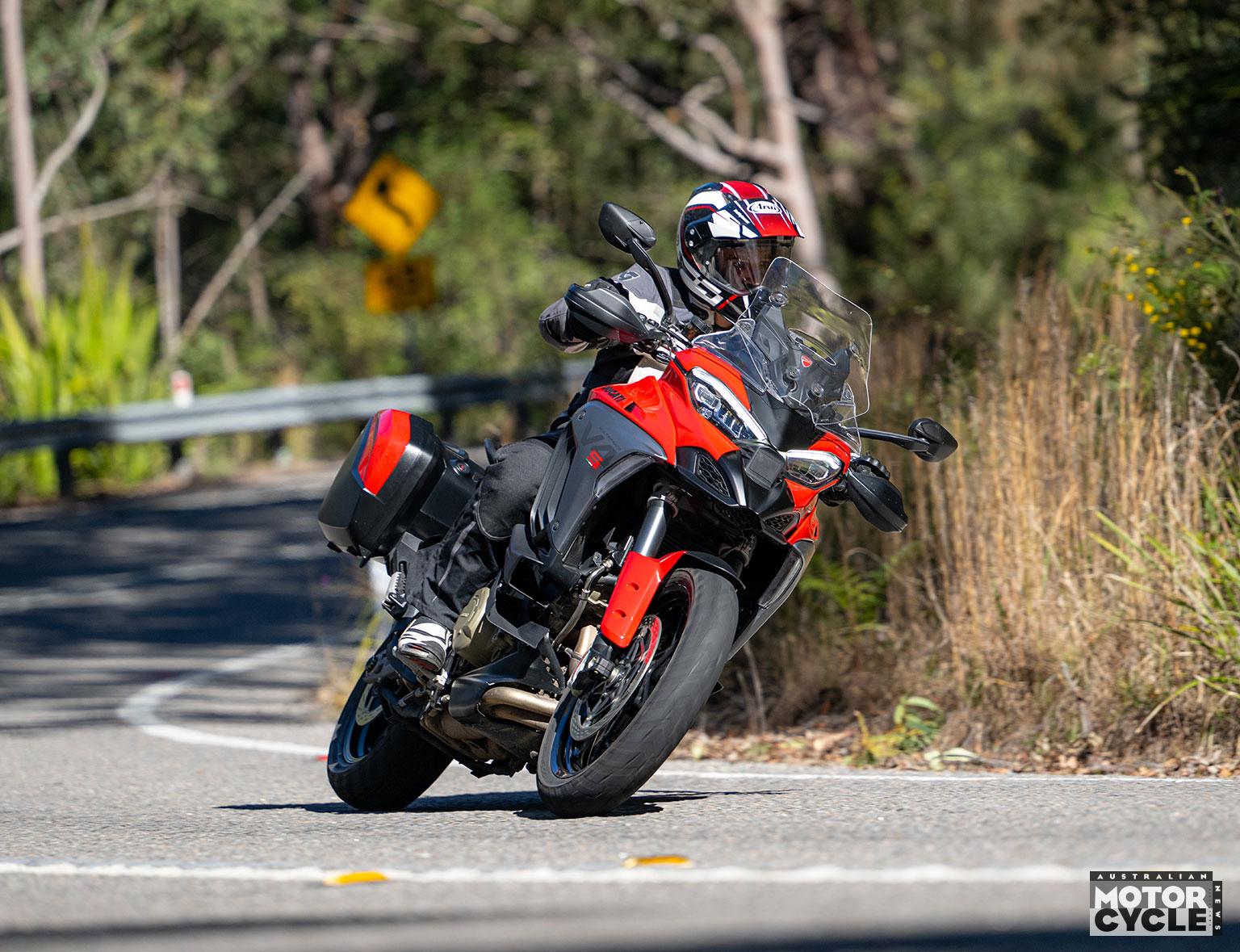
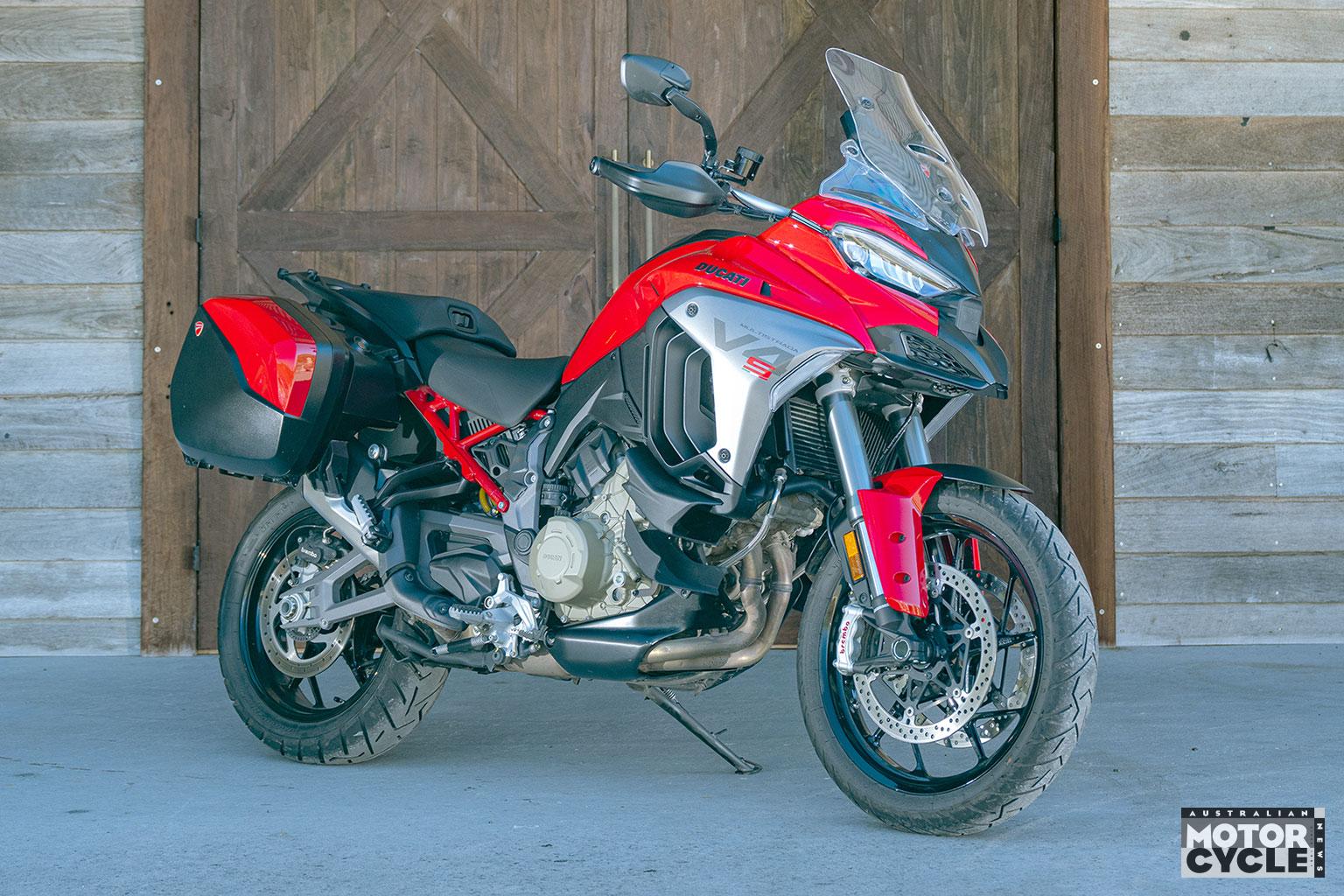
Fast forward to present times and I still found myself staring longingly at the Multistrada V4 S I was lucky enough to have in my possession for two weeks.
While Ducatis have become no less exclusive, the range of models now available is staggering; from full-blown superbikes to sports nakeds, Hypermotards, Scramblers and adventure bikes, and now even 450cc MX and enduro models, with a 250cc version on the way as well, as they reignite the brand’s commitment to the off-road scene. So where does the jam-packed-with-technology Multistrada fit in?
ENGINE AND BRAKES
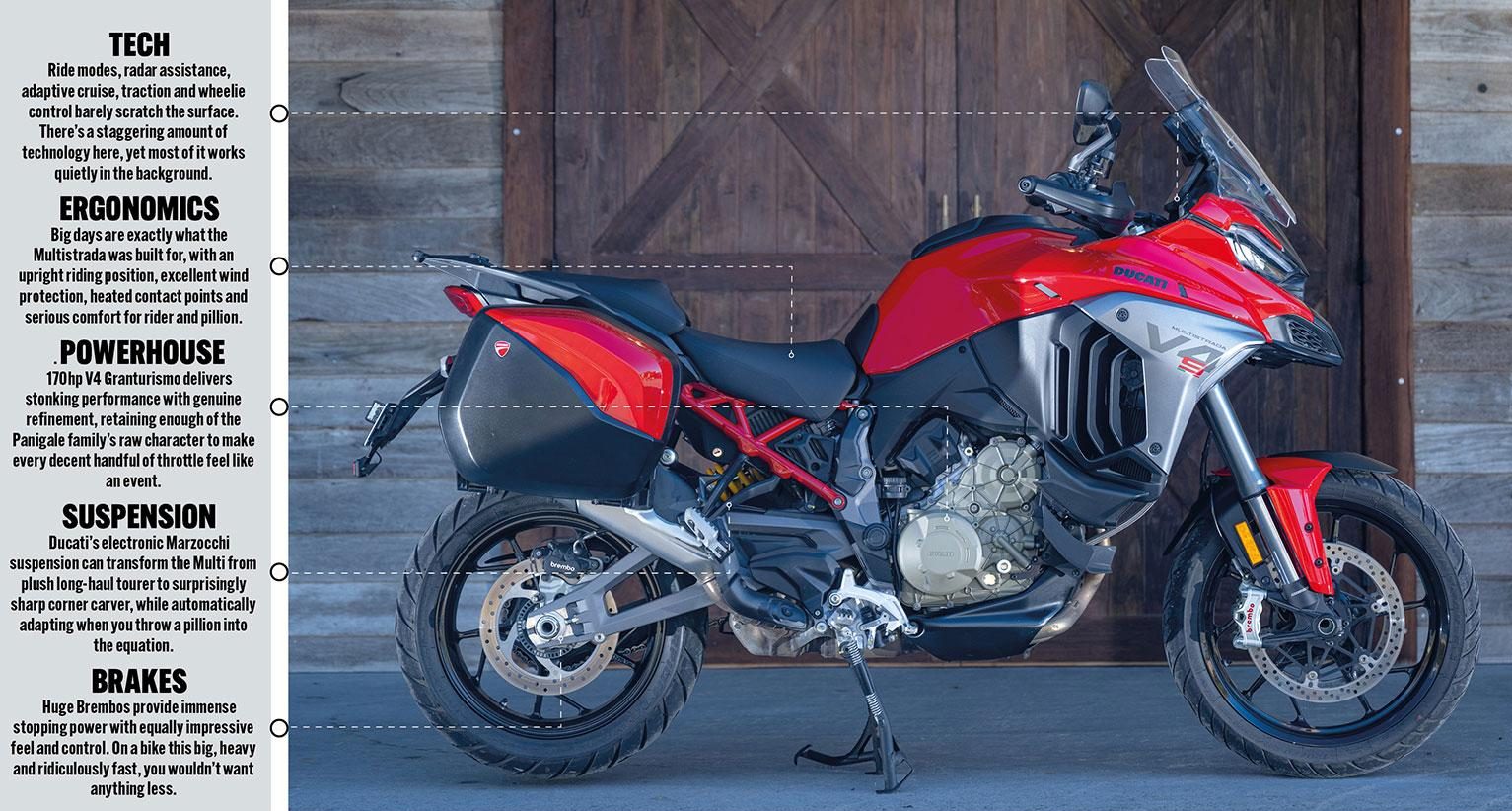
Let’s start with the engine. The Multistrada is essentially a mildly detuned Panigale. If you’ve ridden a Panigale or V4 Streetfighter, then you’ll be aware of what lies within and what insane power they produce.
The V4 Granturismo-spec engine has been tamed to a much more civilised 125kW (170hp) and 123Nm, with the focus on lower to mid-range power and torque over peak horsepower. Let’s be honest here, 170hp is certainly more than I ever need, and most of you reading this will ever need, but it’s there and it is nothing short of magnificent.
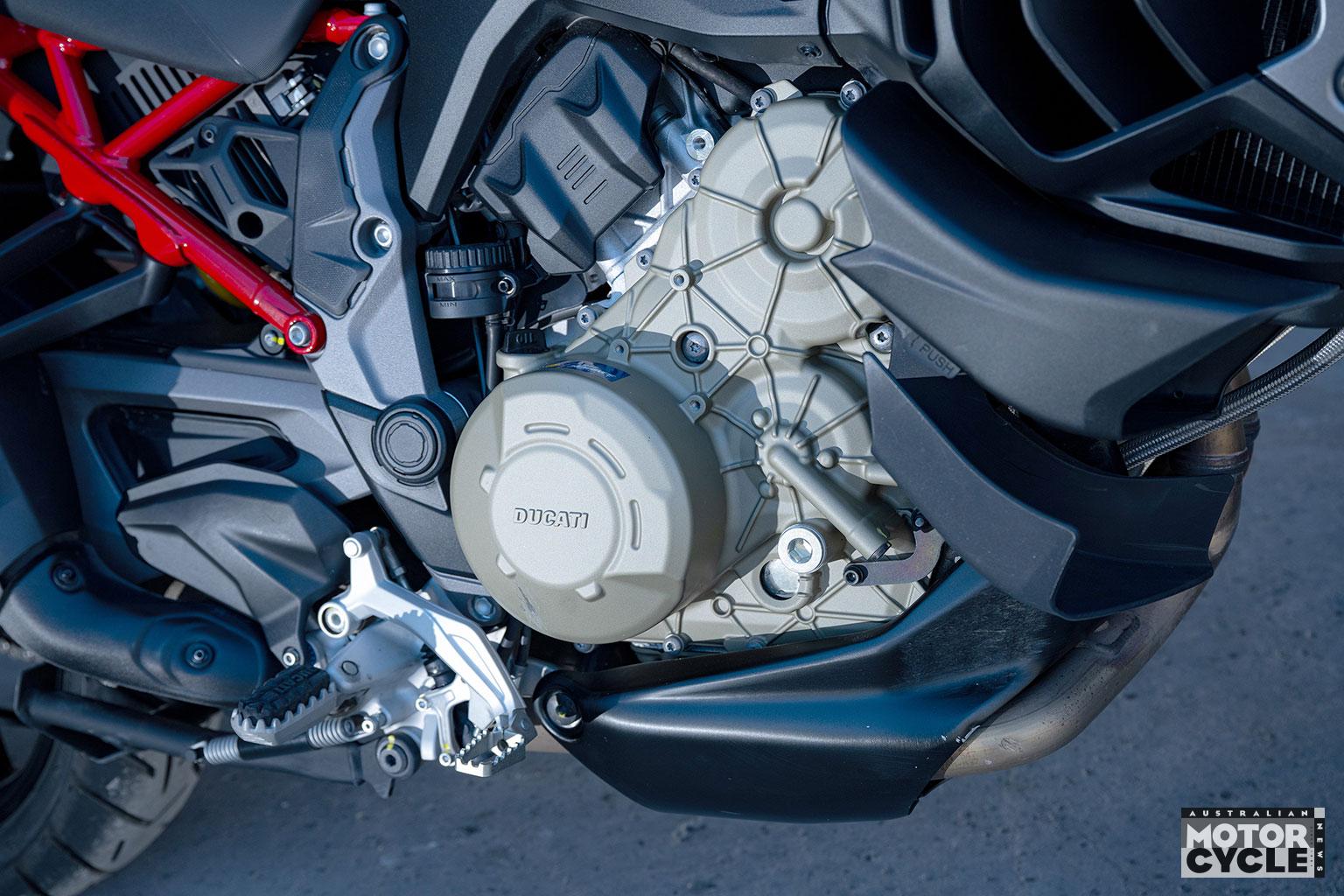
From start-up to redline, this is one hell of an engine, as I knew it would be. But despite the fact that it has so many electronic aids, it has maintained a rawness to it that few modern bikes I’ve ridden can match. There is a beautiful induction note and the standard exhaust note is loud enough under load to remind those around you that you’re on something serious. Throttle input and response are flawless; from low rpm it pulls incredibly hard all the way to redline, which is substantially lower than a Panigale. But that doesn’t matter because this isn’t a street-legal superbike, it’s a bike designed to take you anywhere you desire in absolute comfort.
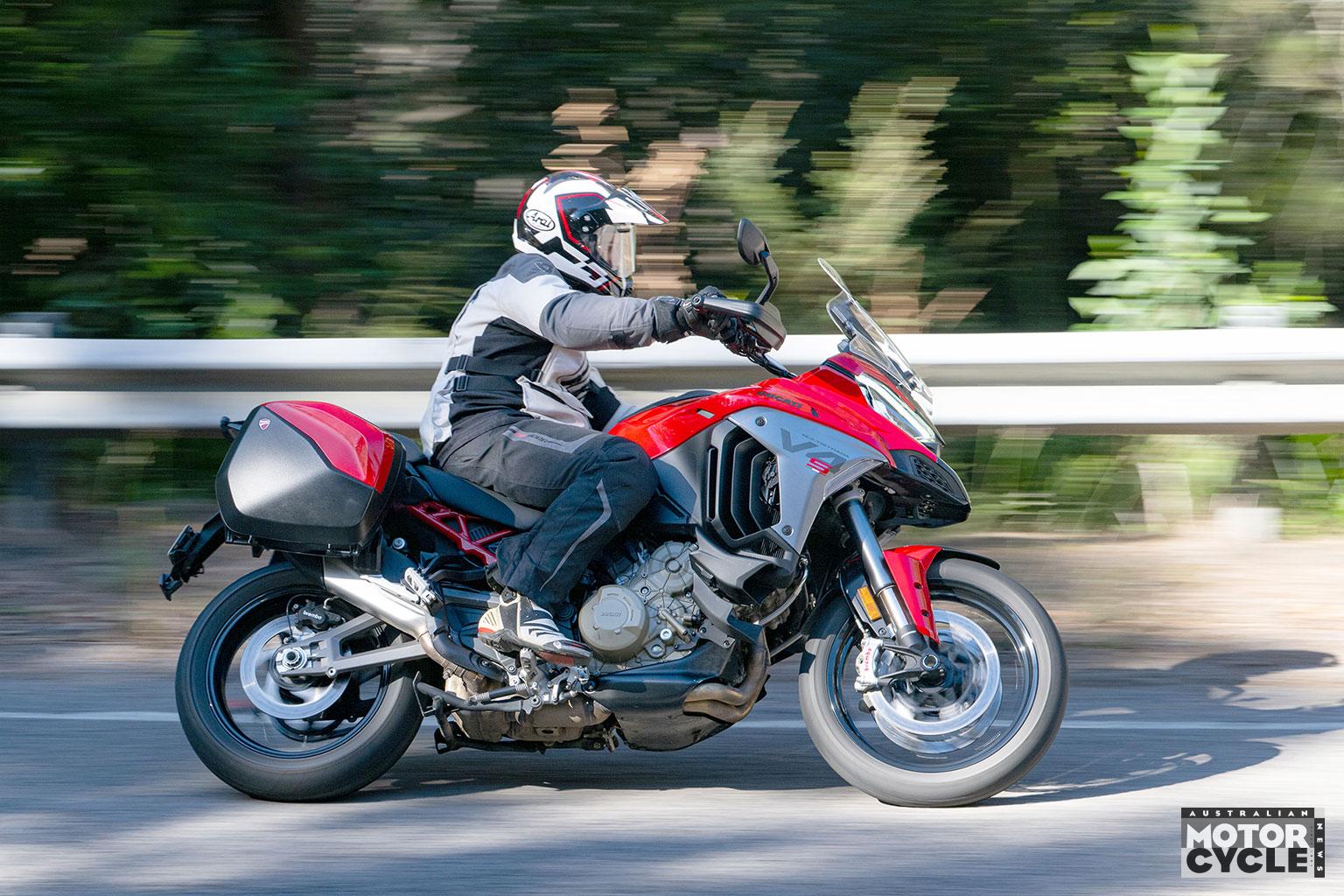
It is, of course, ridiculously fast, so it’s a shame we are so heavily restricted with our speed limits. I have no doubt it would be every bit as capable cruising at 200km/h on the only European freeway with no mandated speed limit as it is at our measly 110km/h. You’d most likely be thrown in jail for winding out second gear over here.
But regardless of where you are in the rev range or what gear you’re in, it’s almost like the engine talks to you, saying, “Go on, dare ya.” It loves a heavy throttle hand and I may or may not have been a good boy at times.
The gearbox is, of course, matched to a quickshifter, which performs beautifully up and down the gears, and the ratios are close to perfect. A slightly taller sixth gear would be all I’d wish for, as it sounds a little busy on the freeway. Looking down at the tacho shows it’s not, but it does sound like it. The hydraulic wet clutch makes your minimal traditional gear changes a breeze.
The engine cuts power to the rear two cylinders at low rpm to save fuel and the crankshaft counter-rotates to offset the wheels’ gyroscopic effects.
There are five ride modes: Urban, Sport, Wet, Touring and Enduro. Full power is delivered in Sport and Touring, while the other three cut power to 115hp. Wake up one morning and feel like you don’t need full power? Easy fixed. Select Urban and off you go.
This is where it gets really amazing. Not only do these default modes alter outright power, but they also change things like DTC (Ducati Traction Control), DWC (Ducati Wheelie Control), and Touring mode gets dual braking that activates both front and rear brakes. ABS levels also change, as does engine response, and the list goes on.
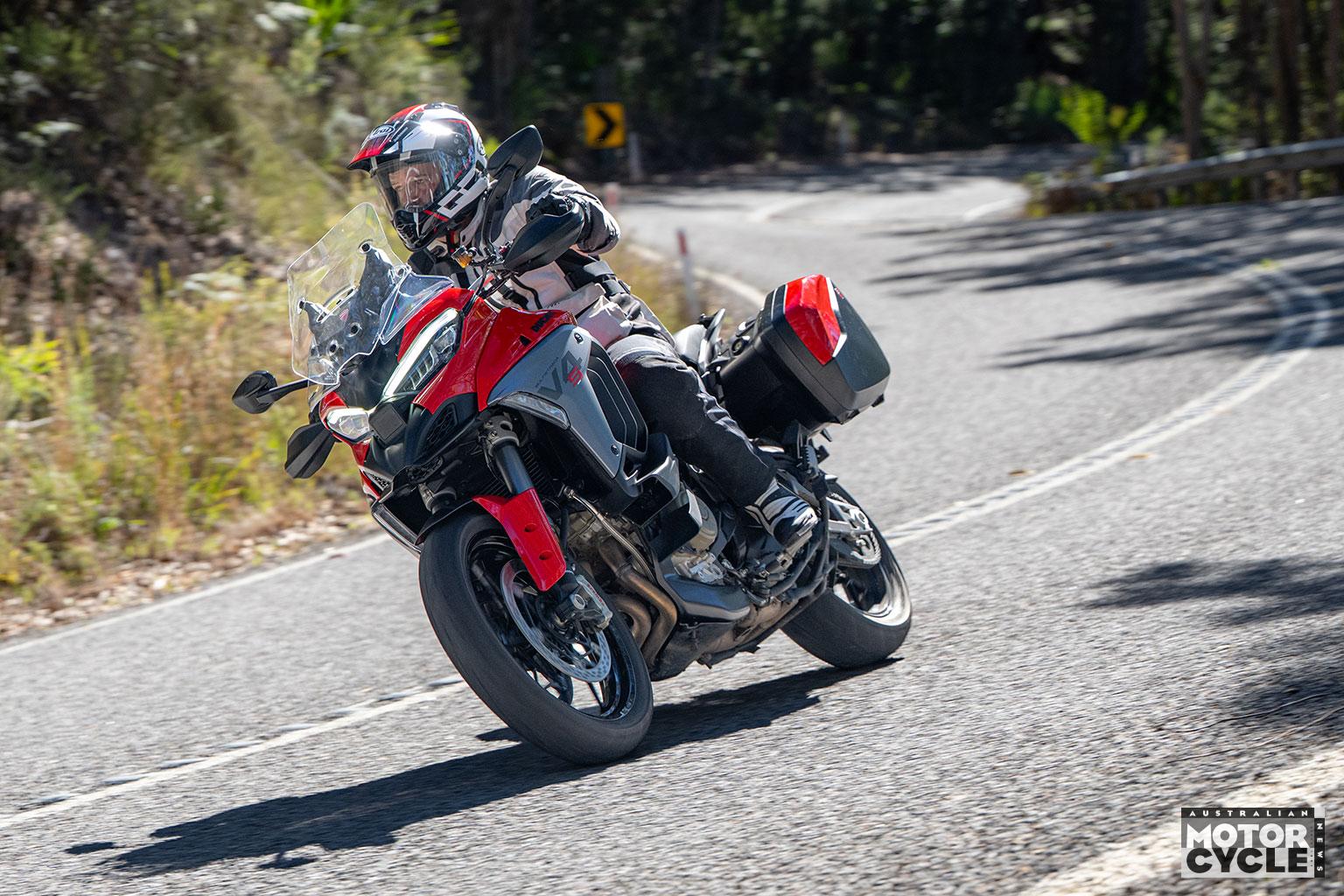
The tech is staggering. The spec sheet provided to me was mind-blowing. All is customisable but what is most impressive is the difference it makes to how the bike performs.
Service intervals are 15,000km and valve-clearance checks are at a whopping 60,000km, which is almost unheard of, especially in high-horsepower machines.
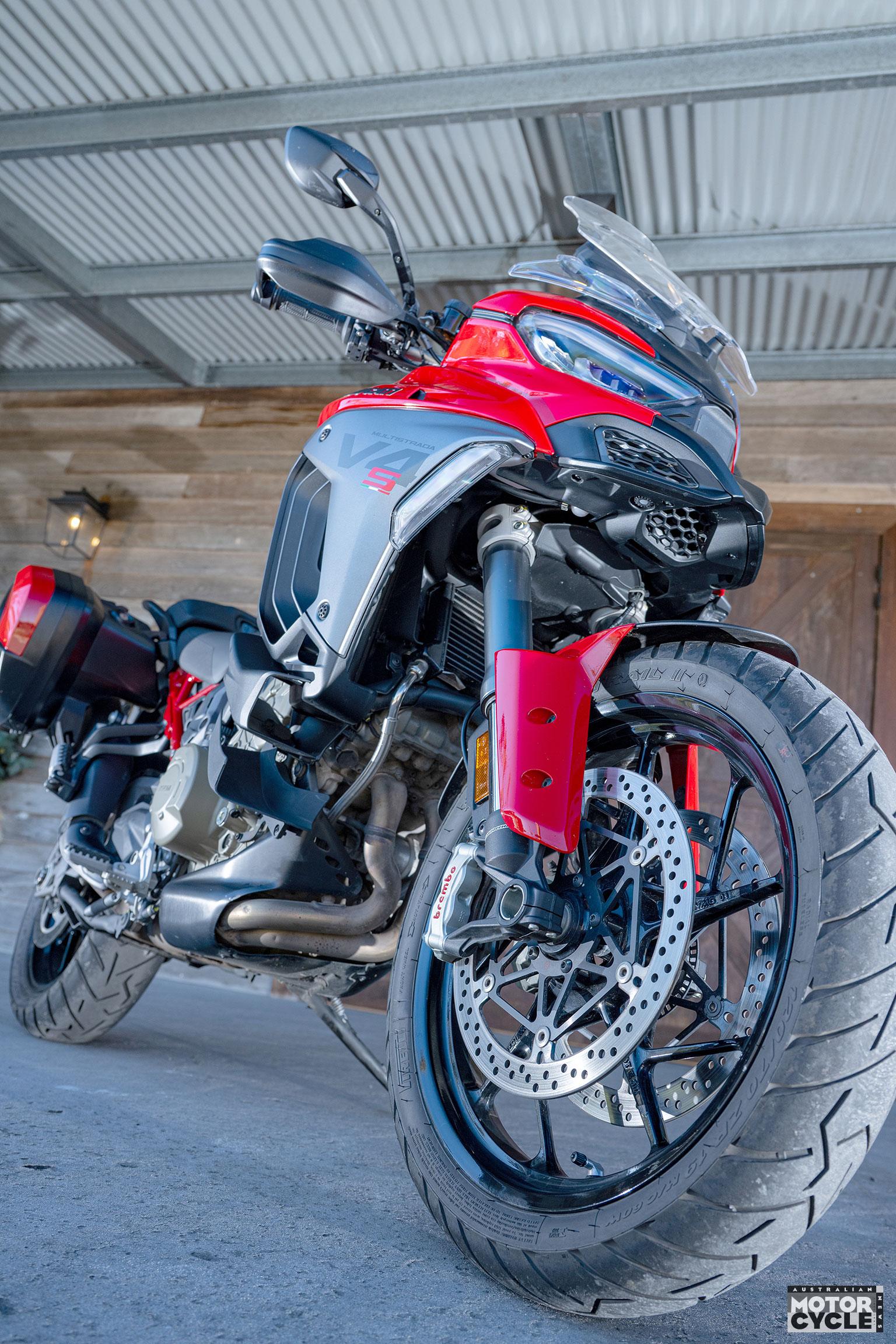
There is little point wasting my words on the braking capabilities. They are simply incredible.
HANDLING AND SUSPENSION
The V4 S is a huge bike but as I rolled out of Ducati HQ in Alexandria, Sydney, in peak-hour traffic, I was instantly impressed with how well it handled slow traffic. With a full tank (22 litres) on board and a high centre of gravity, I was imagining it to be quite the opposite.
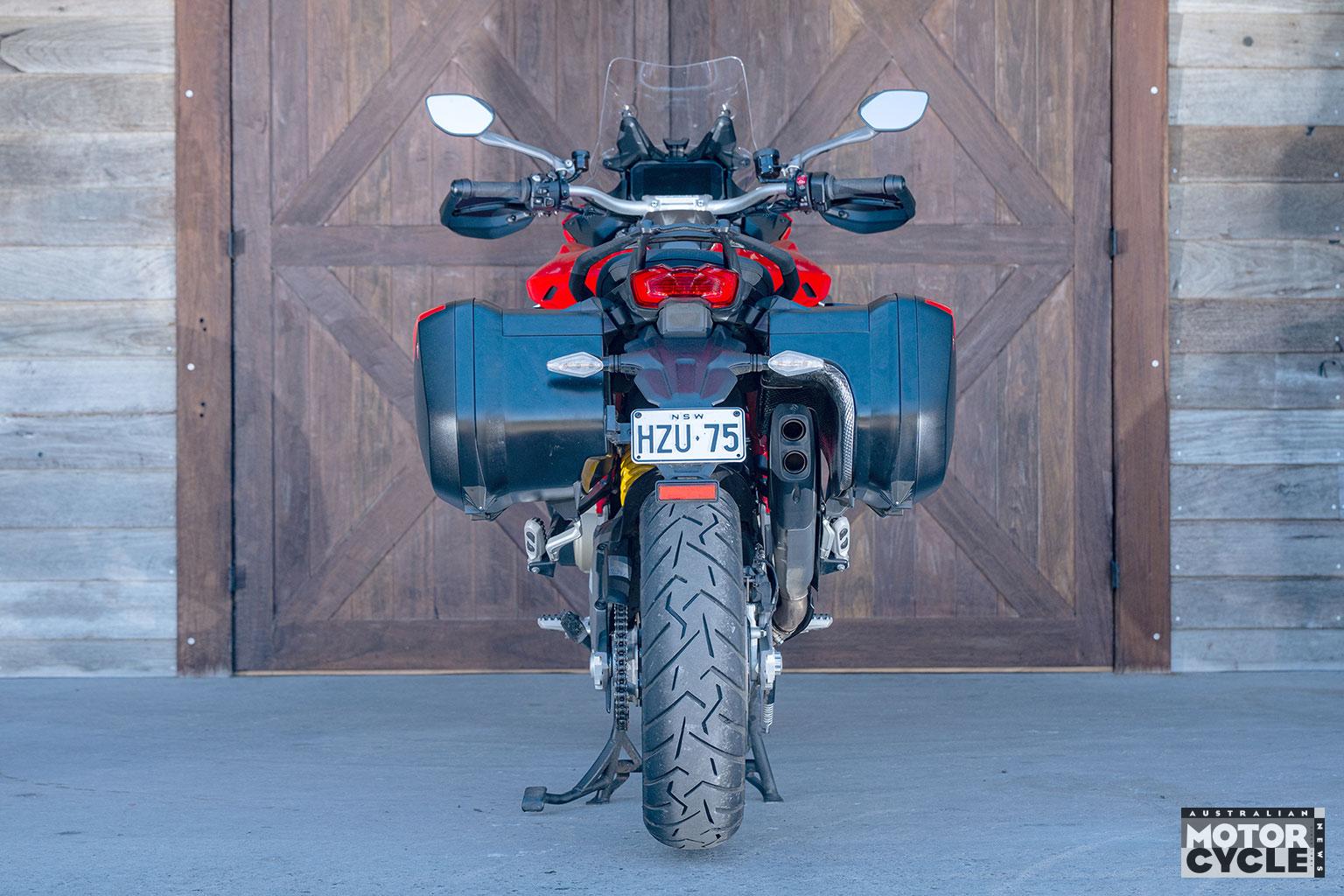
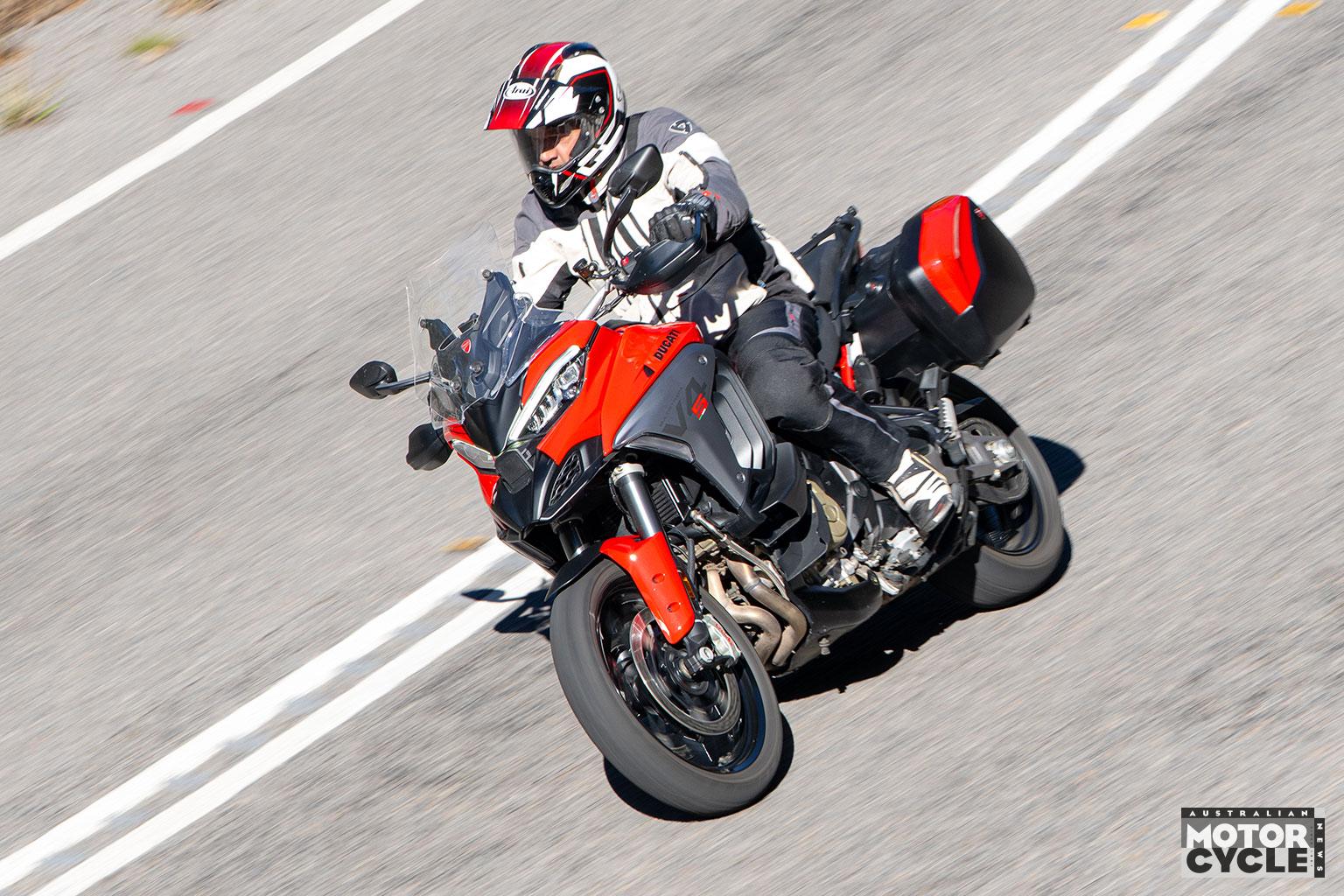
I was also semi-reluctant to lane filter, given it was fitted with genuine Ducati panniers, but my trip improved as I left the city and I was looking forward to getting to some open road.
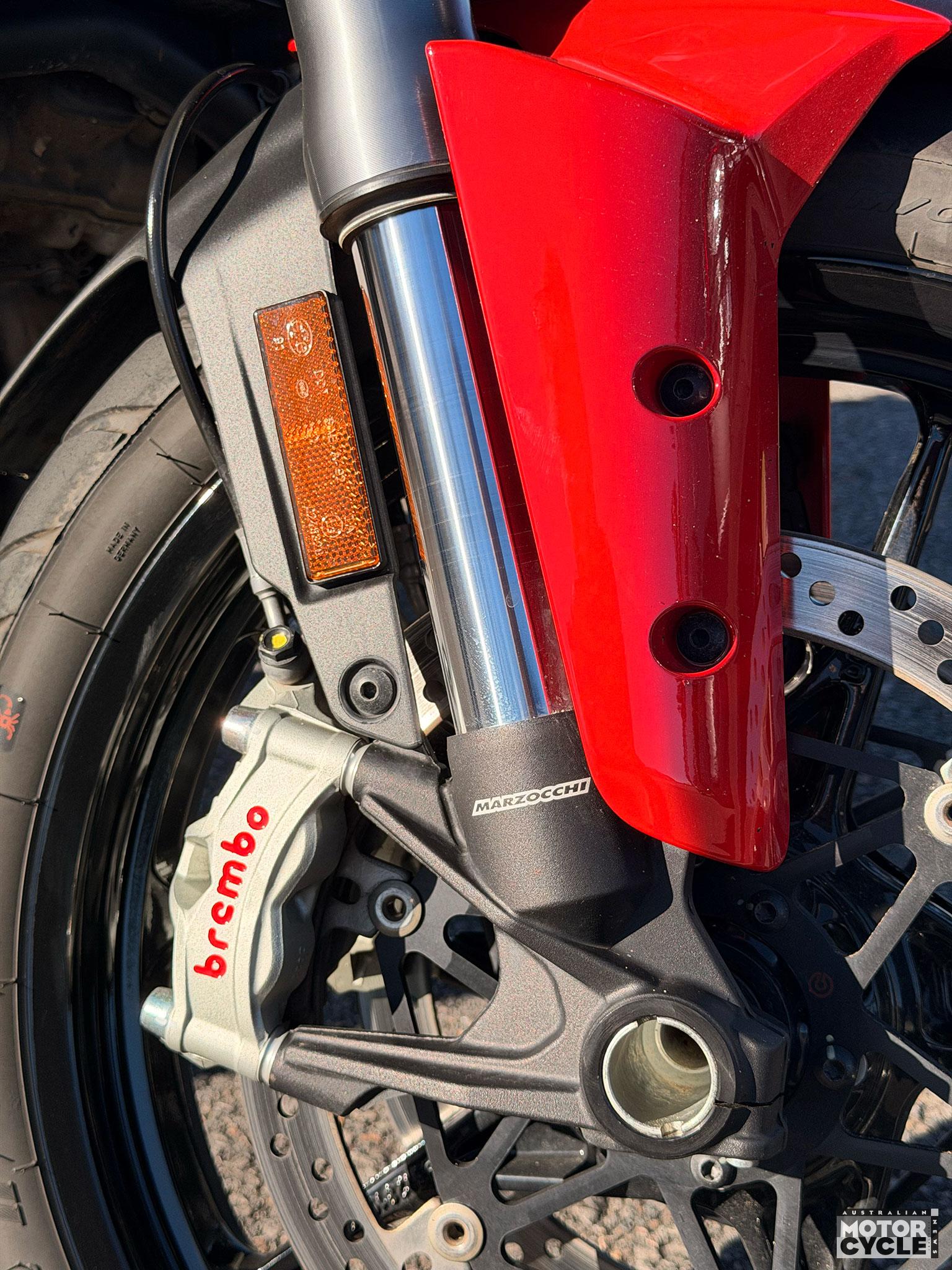
Multistradas are equipped with electronic Marzocchi componentry. Just like the engine, the mode you’ve selected changes the suspension, all at the push of a button. The bike was in Touring mode when I picked it up and, without doubt, it is the most compliant suspension I’ve ever felt on a roadbike. The way the big Ducati absorbs road imperfections has to be ridden to be believed.
After a few days I changed to Sport mode and was once again impressed by how the bike behaved. It sharpened everything up and turns it into a machine that will handle as well as just about any bike out there, despite its size and weight.
If you carry a pillion, it will automatically correct the ride height and can even lower the rear about 7cm as you roll to a stop to assist with getting your feet down on the ground at traffic lights, for example. As you ride off, it returns to normal height and is a great feature for shorter riders.
The Multistrada inspires confidence on any sealed road, whether it be rough or smooth. I say sealed because I didn’t take it off road. It would no doubt be capable on good fire trails but the tyres on it were not suitable and the last thing I wanted to do was throw a $40,000-plus machine down in the dirt.
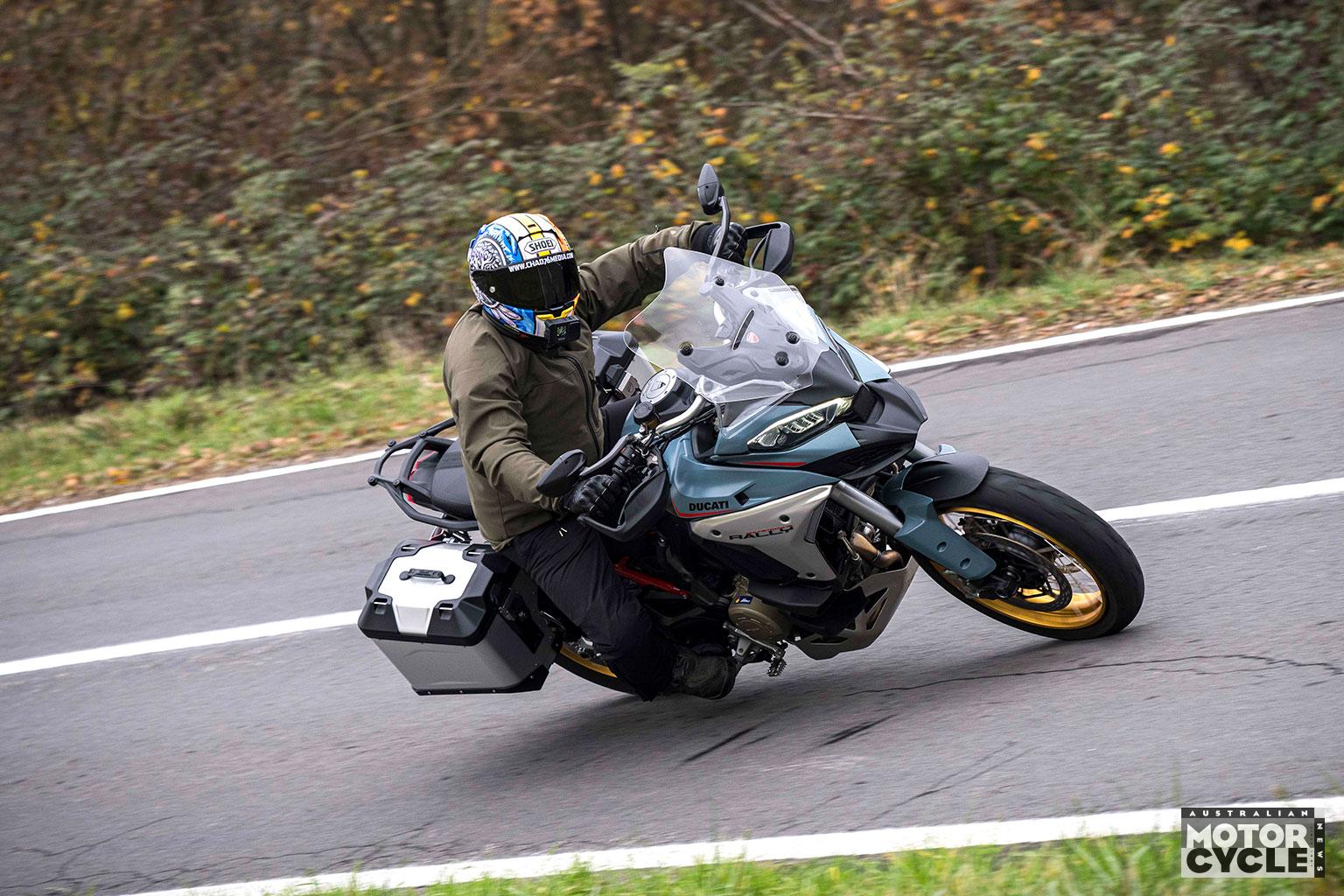
Ducati makes a Rally version, which has spoked wheels and more substantial engine protection, as well as quite a few other features to make it the better option for those likely to leave the tar more often. It would probably be my pick; despite owning a roadbike, my background is dirtbikes and off-road is where I’m happiest.
The geometry of the Multistrada, along with the advanced suspension wizardry, makes it an extremely comfortable place to spend a day or even weeks on. It really is that good.
ERGONOMICS AND CONTROLS
There are very few bikes that can genuinely make you want to do huge kilometres. You can imagine a bike will be fine on 500-1000km days, but two hours in you might feel like ending it all into the back of that B-double you are rapidly approaching.
I rode my GSX-R750 from Sydney to Phillip Island for Casey Stoner’s last hurrah and remember how over it I was by the time we hit Goulburn. My dad was on his BMW F 800 GS doubling my wife and it looked a lot more comfortable, obviously.
The first long day is always the worst, as your muscles ache as you get accustomed to the position a bike puts you in. The ride home was more bearable, but let’s talk horses for courses.
The Multistrada eats distance with ease, performance, comfort and safety. I will most likely never drive an Audi RS6 but, if the Duke was to identify as a car, I think that’s what it would be. Brutal performance with total luxury and refinement.
The riding position for me at 180cm was perfect. Wind protection is superb, especially with the screen in the higher of its two positions, and it’s very easy to adjust on the move. Combined with the very large fuel tank, which, when ridden moderately, can give over 300km, there is a lot of protection from the elements, particularly at higher speed.
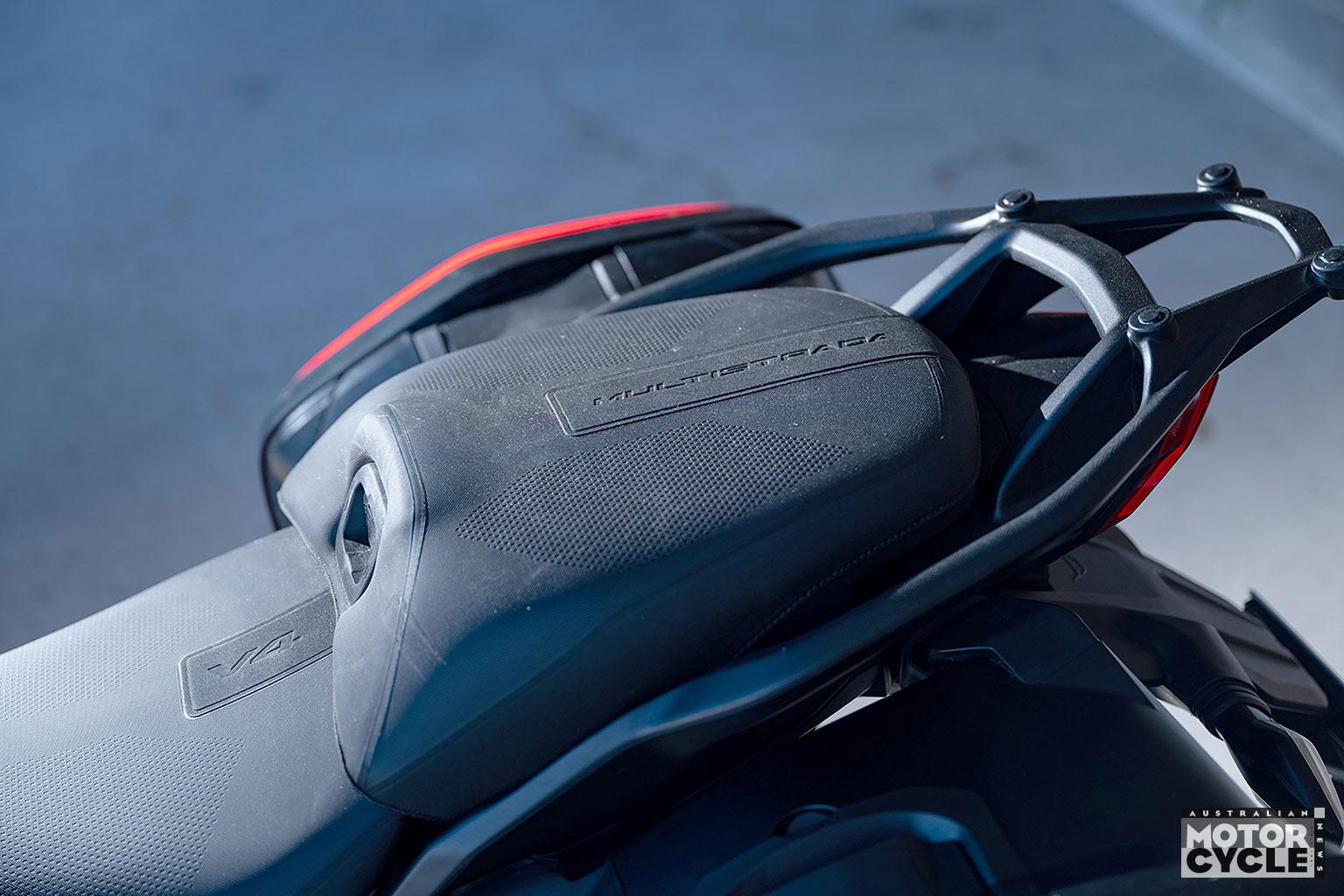
Pillion comfort was given the thumbs up as I took my neighbour for a ride and, just like the rider, they get a heated seat! Five levels of heating can also be applied to the grips, which made chilly mornings so much more pleasant. What next, hey? Massaging seats? Wouldn’t surprise me.
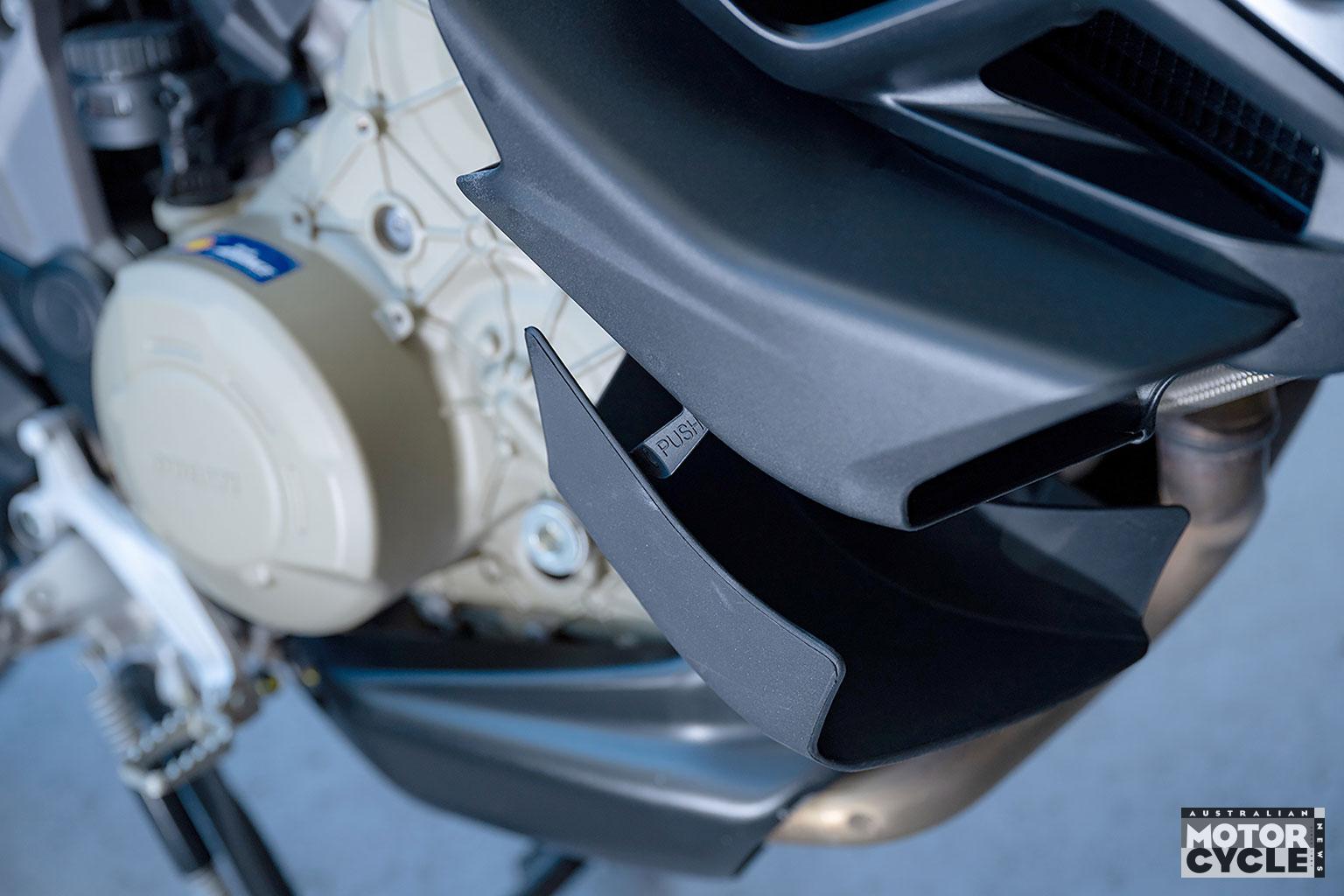
On the Multistrada there are smallish MotoGP-style wings on either side of the engine. On closer inspection, I learned that these can be open or closed to reduce or increase airflow around your legs. Just another touch to improve touring comfort.
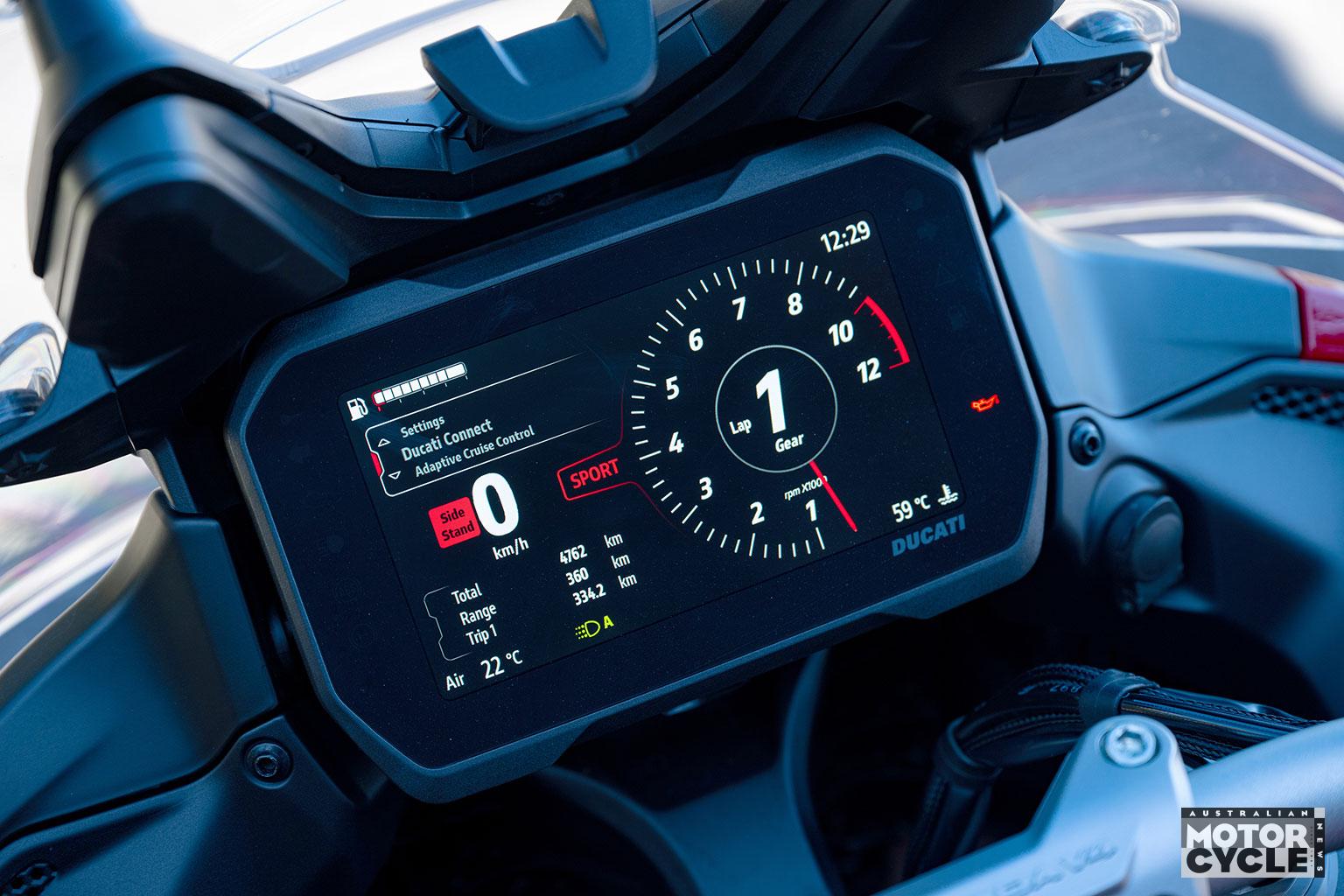
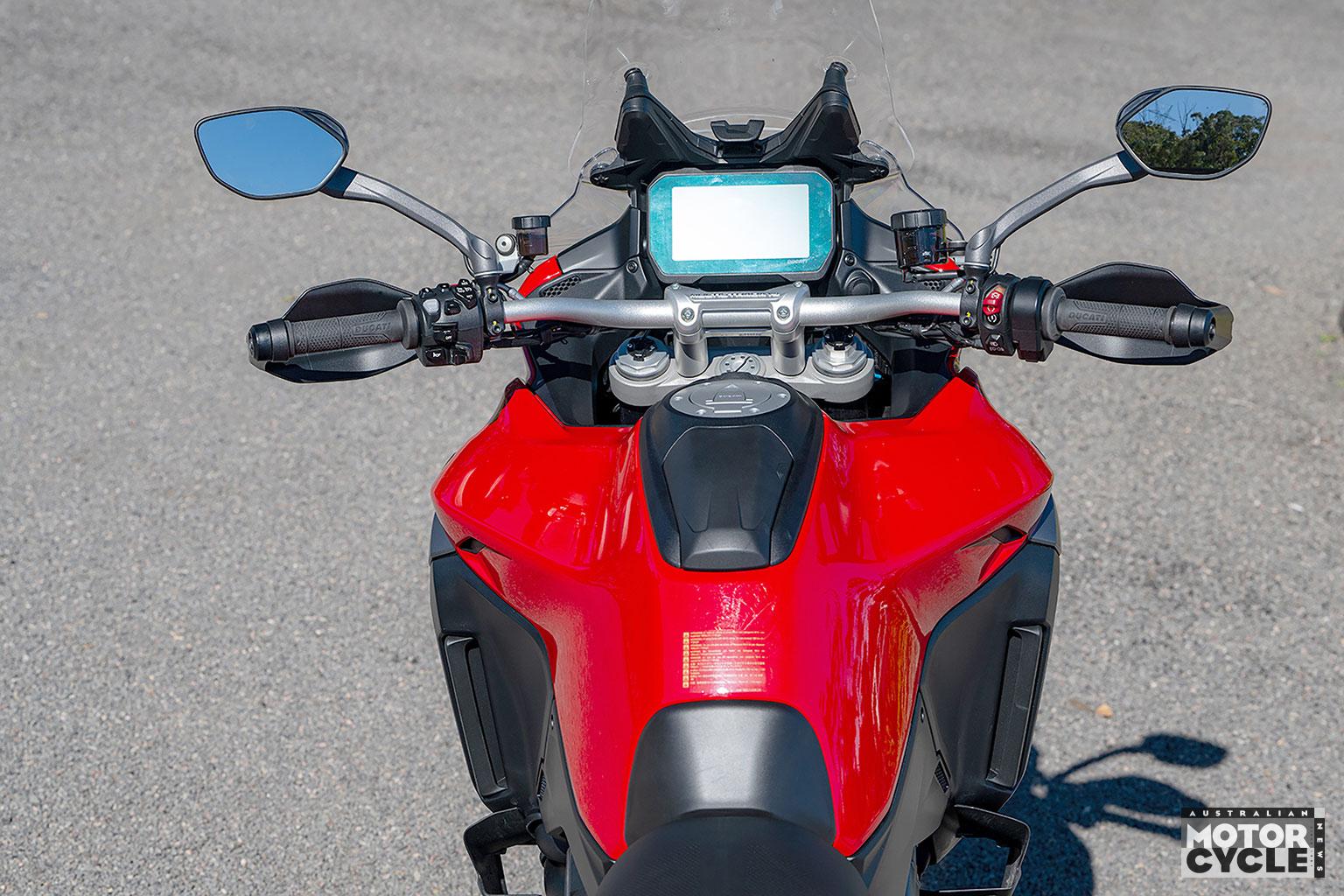
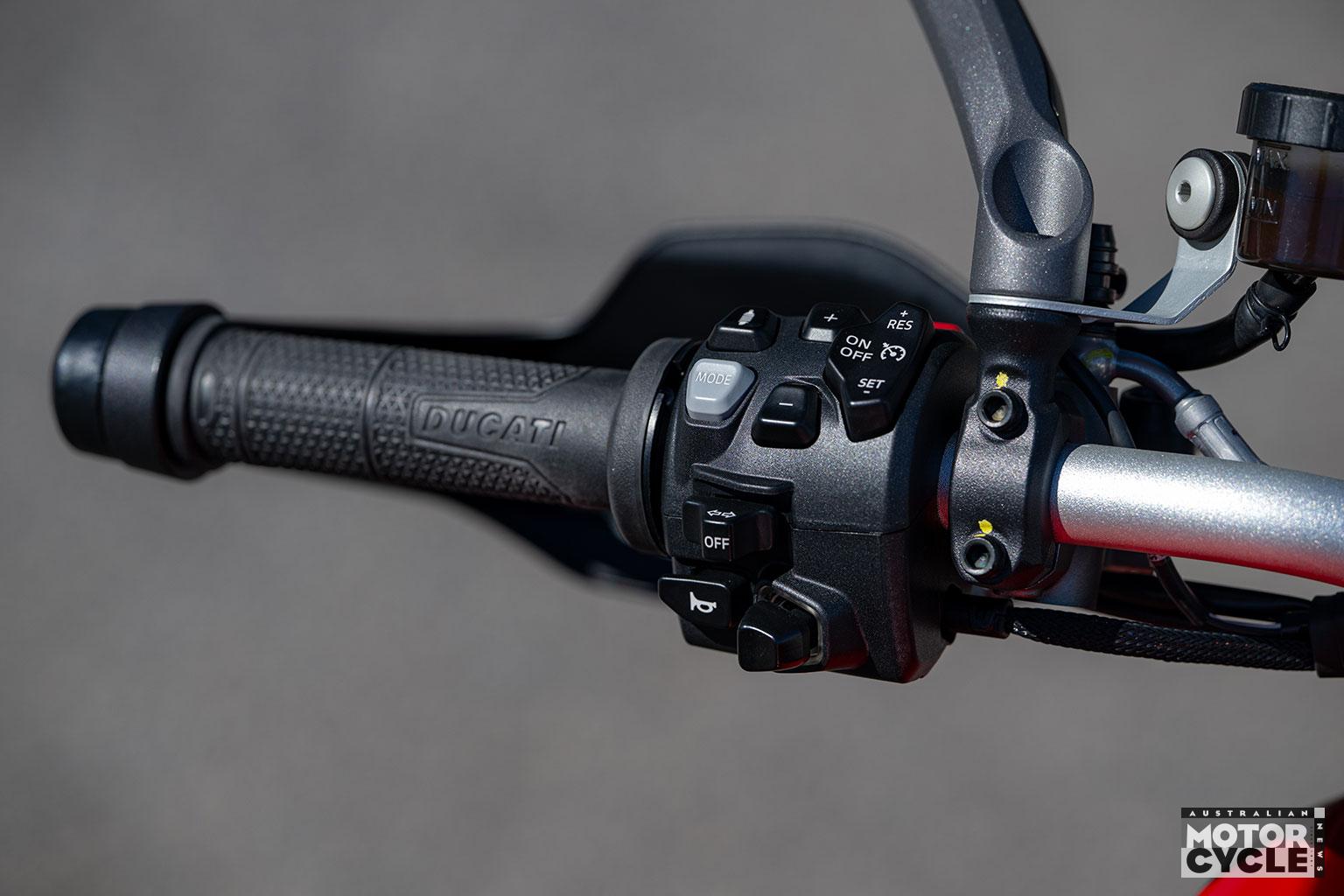
The TFT dash is very easy to navigate and seems much easier than the first-model V4 S Multistrada I rode a few years ago. The illuminated switchblock is well laid out and there are a lot of buttons, but it very soon became second nature, despite the fact it’s a busy little area, particularly on the left. The screen is only a glance away from providing you with all the relevant info on the move; night or day, it is crystal clear.
Beautiful cast-aluminium mirrors give great visibility of the world behind, but about the only thing I wasn’t a fan of was the vehicle proximity lights on them, like many cars have. They are too big and bright and face right at you, so they can be a bit annoying. In heavy traffic they’re constantly going on and off when cars approach on either side or behind. Smaller and not as bright would be much better, I reckon.
Radar adaptive cruise control is something I am personally not a fan of on any bike – or car, for that matter. Cruise control is something I like for me, not the vehicle in front, and it’s frustrating when following someone who can’t keep a constant, steady speed. One minute you’re doing 110km/h and the next you’re doing 95km/h for no apparent reason. Thankfully, regular cruise control can be enabled and works well. The same radar at the front of the bike also warns you of a forward collision threat. Nice one.
I mentioned before it came with panniers. This did make the bike a little less stable on the freeway. I tried the same stretch of road without them on and the bike was rock solid. It wasn’t bad by any means, but it was definitely noticeable.
The headlights, both low and high beam, are excellent.
LOOKS AND FEEL
Pulling up at traffic lights, the big Ducati draws a lot of attention. Almost everyone looks at it in awe. It’s a big, muscular bike.
The best way to describe it would be a “superbike on stilts”. It’s also like a pizza with the lot but won’t leave you wondering why they added that topping. From the first mouthful to the last, everything just works.
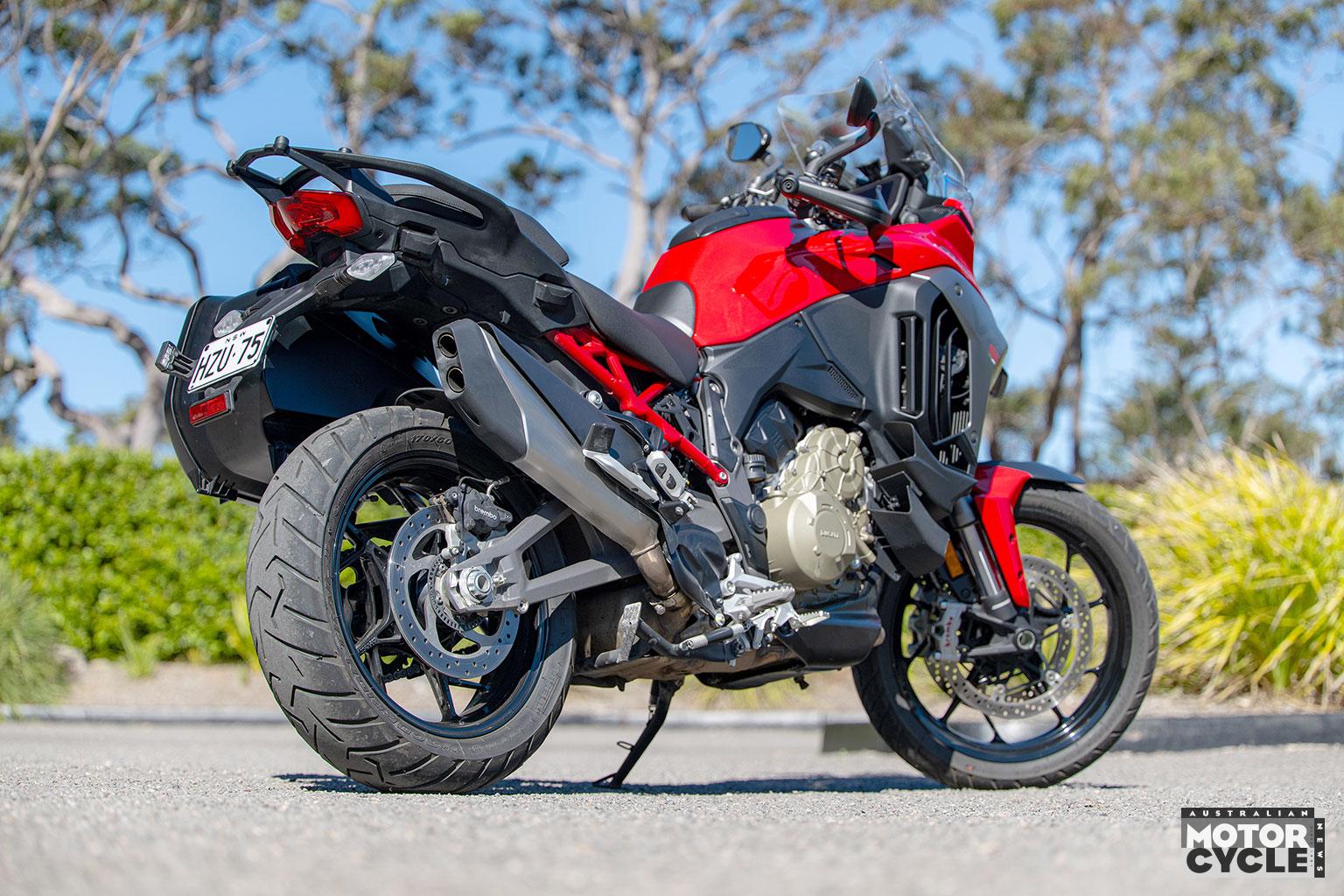
The engine and all the high-tech gadgets complement each component to make this one of the most sophisticated sports-touring adventure machines ever made.
It’s not cheap but you get what you pay for. It goes like a rocket in complete comfort and refinement, and I’m struggling to think of another high-end bike I would rather ride around the globe.
Bravo, Ducati, and ciao for now.
COMPETITION
BMW R 1300 GS – $30,210 ride away
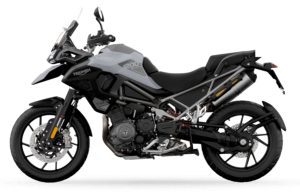
TRIUMPH TIGER 1200 GT PRO – $30,590 ride away
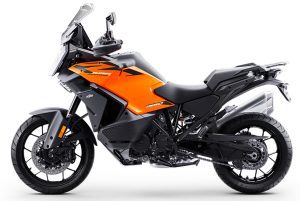
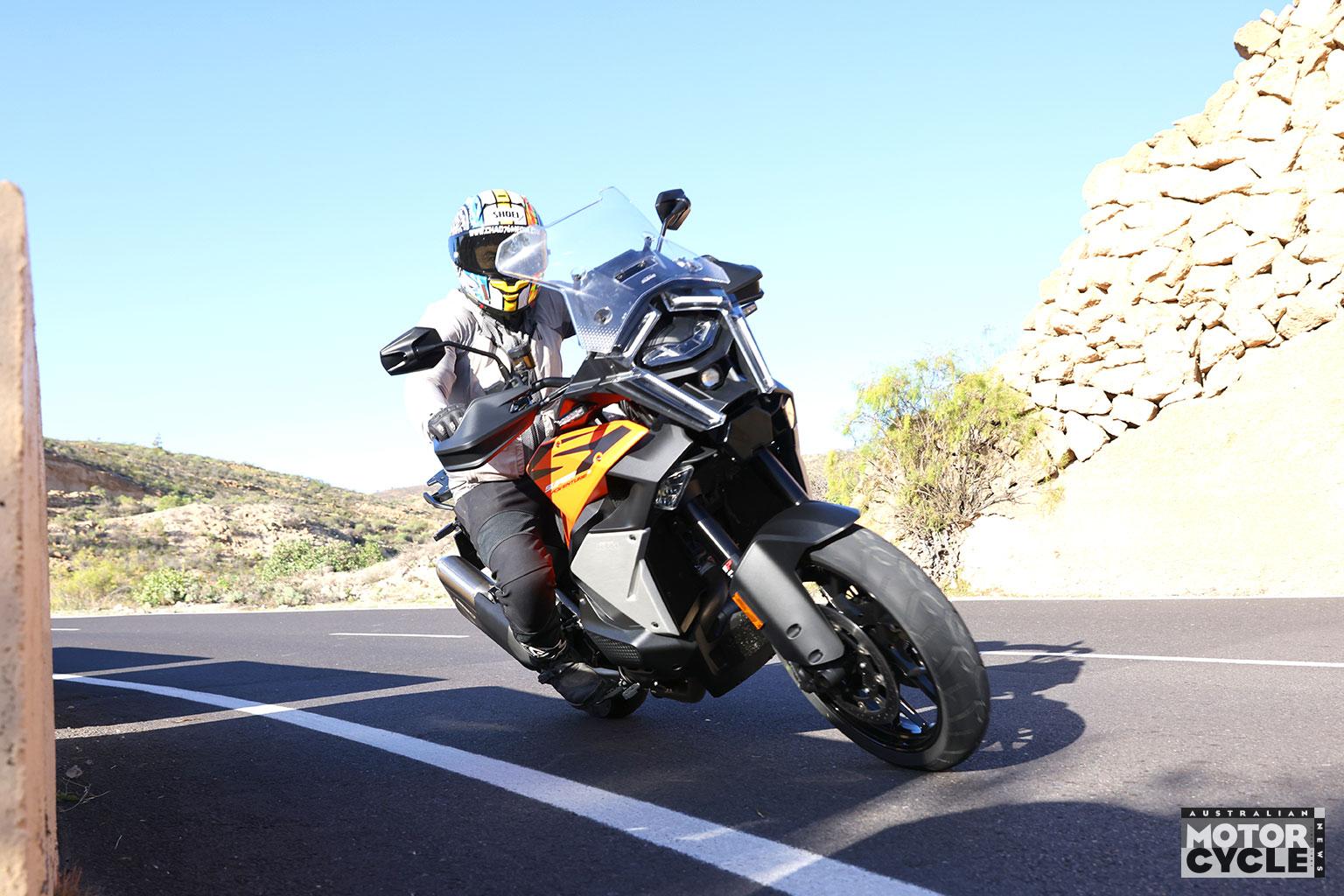
KTM 1390 SUPER ADVENTURE S – $34,495 ride away
SPECIFICATION
ENGINE
Type Liquid-cooled 90° V4, DOHC, 16-valve
Bore & stroke 83mm x 63.3mm
Capacity 1158cc
Compression ratio 14:1
Fuelling EFI, ride-by-wire
Transmission Six-speed, quickshifter
Clutch Wet multi-plate, slip/assist
Final drive Chain
PERFORMANCE
Power 125kW (170hp) @ 10,750rpm
Torque 124Nm @ 9000rpm
Fuel consumption 5.1L/100km (measured)
ELECTRONICS
Five ride modes, cornering ABS, traction/wheelie control, radar adaptive cruise, semi-active suspension, quickshifter, blind-spot and forward-collision assist, hill hold
CHASSIS
Frame Aluminium monocoque
Rake/trail 24.2°/100.6mm
SUSPENSION
Ducati Skyhook semi-active; 50mm Marzocchi fork, 170mm travel; Marzocchi rear monoshock, 180mm travel
WHEELS & BRAKES
Wheels 19in/17in, cast aluminium
Tyres 120/70 ZR19 (f), 170/60 ZR17 (r)
Front brake Twin 330mm discs, Brembo Stylema calipers
Rear brake 280mm single disc, twin-piston Brembo
DIMENSIONS
Wheelbase 1566mm
Seat height 840–860mm
Ground clearance 200mm
Weight 232kg (wet, no fuel, claimed)
Fuel capacity 22L
BUSINESS END
Service intervals 1000km first; 15,000km minor; 60,000km major
Warranty Four years
Price $42,600 ride away
COLOURS Ducati Red, Thrilling Black, Arctic White
Contact Ducati.com/au/en