More performance and all the tech for Triumph’s 2027 Tiger revamp
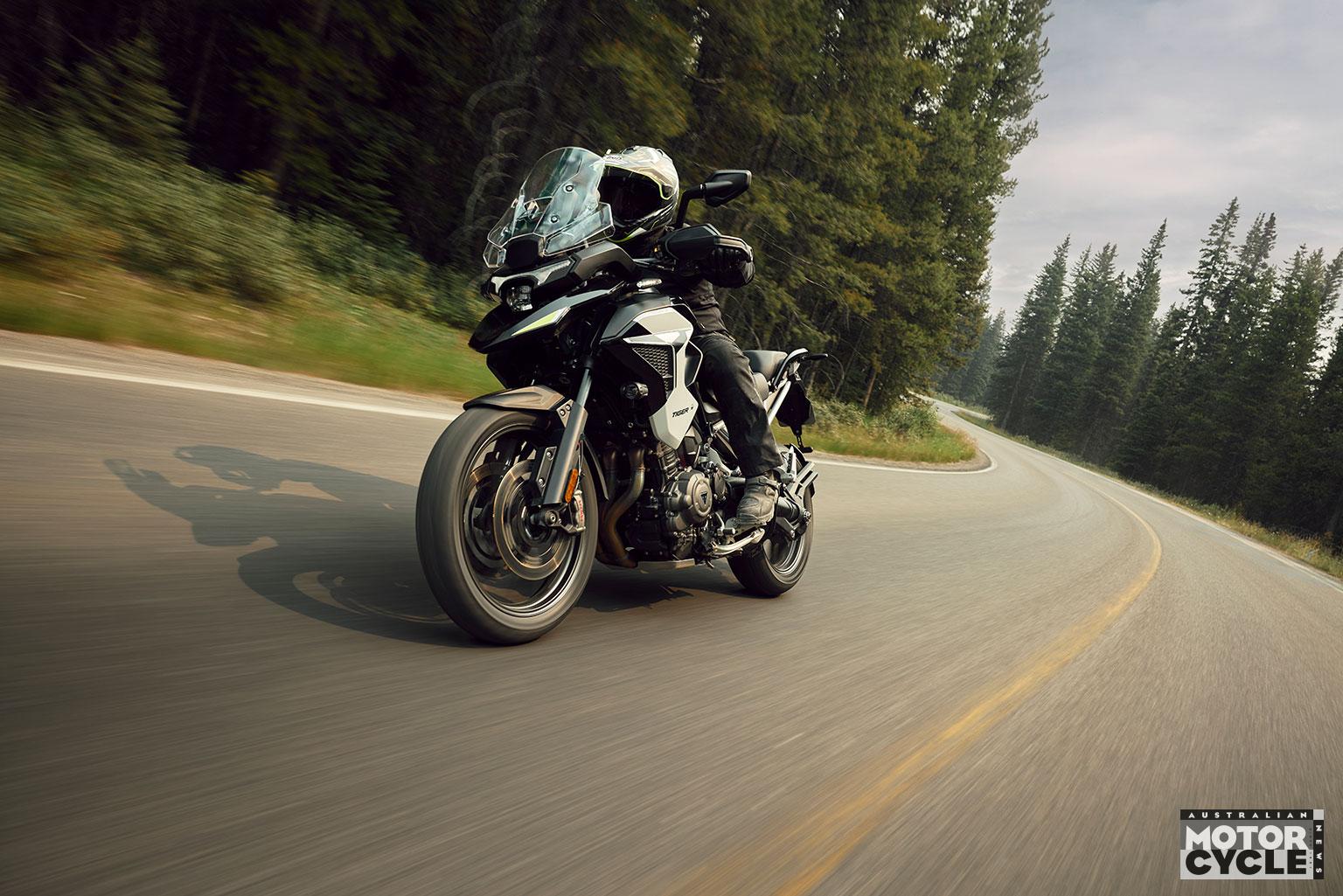
Adventure bikes are rapidly becoming the most high-tech motorcycles on the planet and Triumph has taken a huge step forwards in that respect with its new 2027 Tiger 1200 lineup – adding a host of equipment more associated with luxury cars than motorcycles.
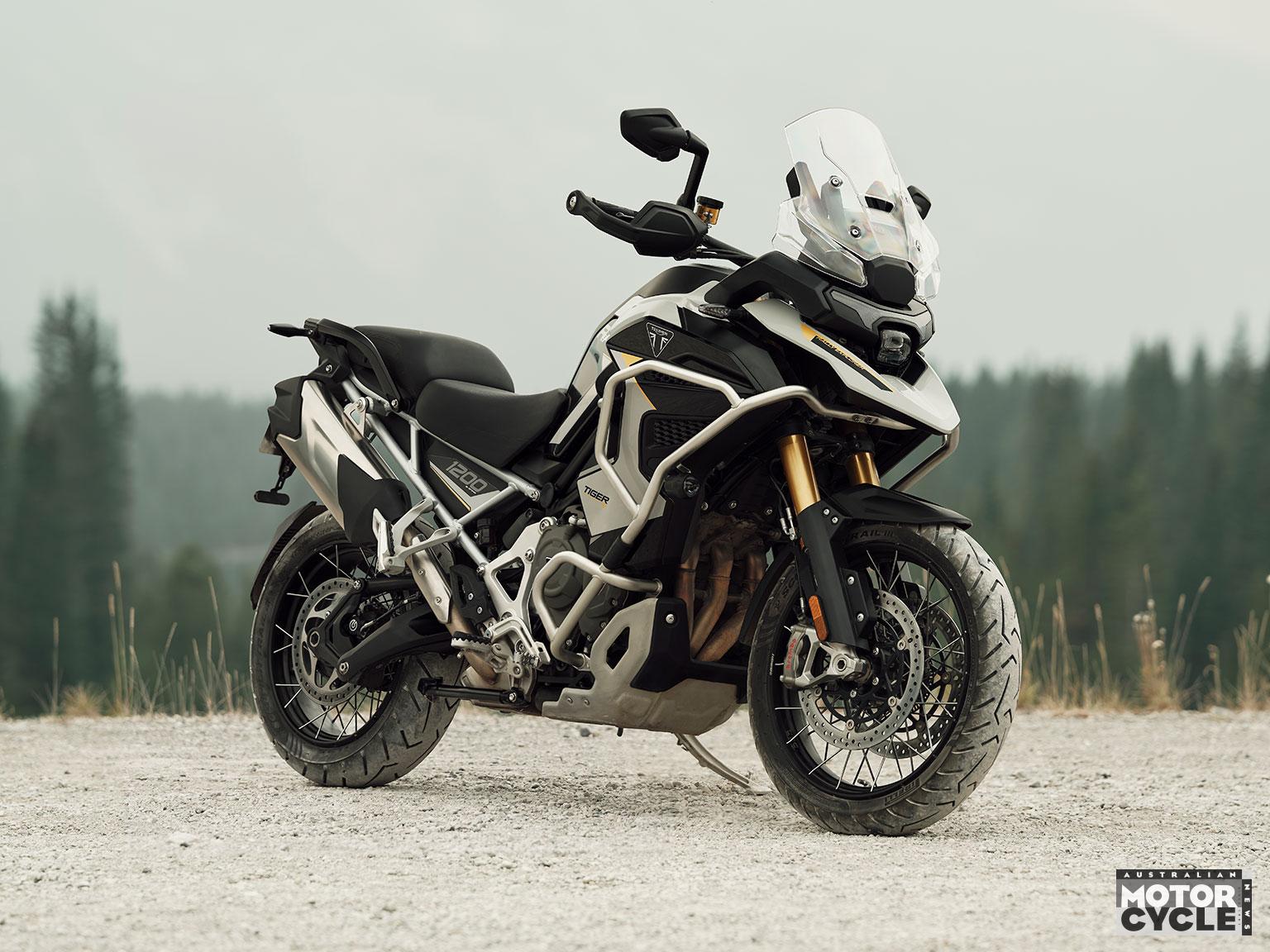
Before we get into the insane levels of equipment, let’s cover the basics of the engine and chassis, which are both updated versions of the previous generation.
The motor is the same 1160cc T-plane triple that we’re familiar with, but with a new cylinder head, pistons, valves, cams and crankshaft in pursuit of a bigger spread of performance. The maximum power is hiked from 110.4kW to 116.2kW, arriving at 9,250rpm and paired with 130Nm of torque at 6,750rpm. That increase confirms the Tiger’s position as the most powerful shaft-drive adventure bike on the market.
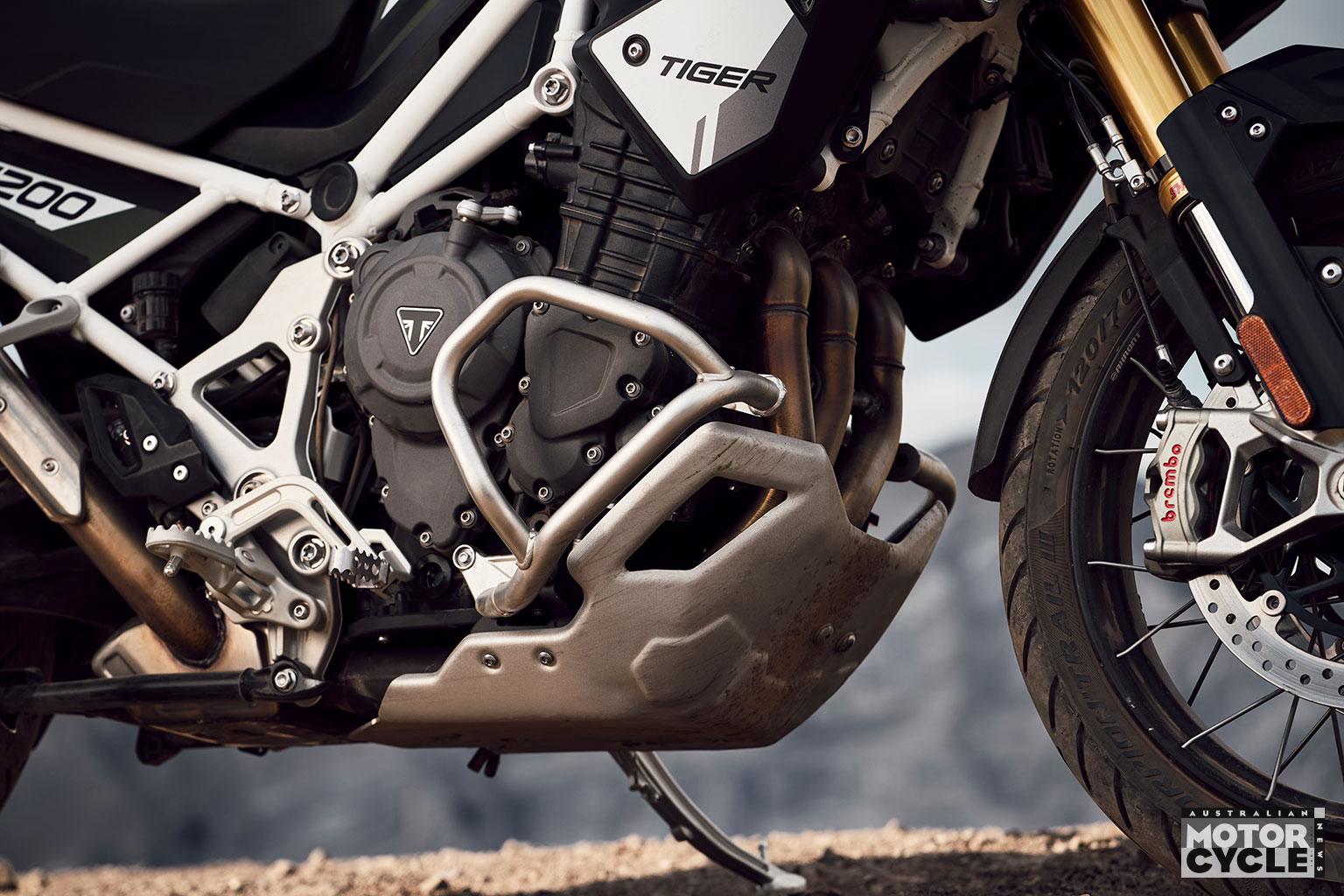
Revised gearing, spreading the ratios wider apart, aims to improve the Tiger’s low-speed useability without impacting its top speed or relaxed cruising ability.
As before, there are four distinct versions of the bike, created through combinations of two key sets of changes. Essentially, you pick whether you want a ‘GT’ version with alloy wheels or the wire-wheeled ‘Rally’ variant, and whether you’d prefer the ‘Pro’ with a smaller, 20-litre fuel tank, or the ‘Explorer’ with a 30-litre tank. So the range is made up of the GT Pro, Rally Pro, GT Explorer and Rally Explorer.
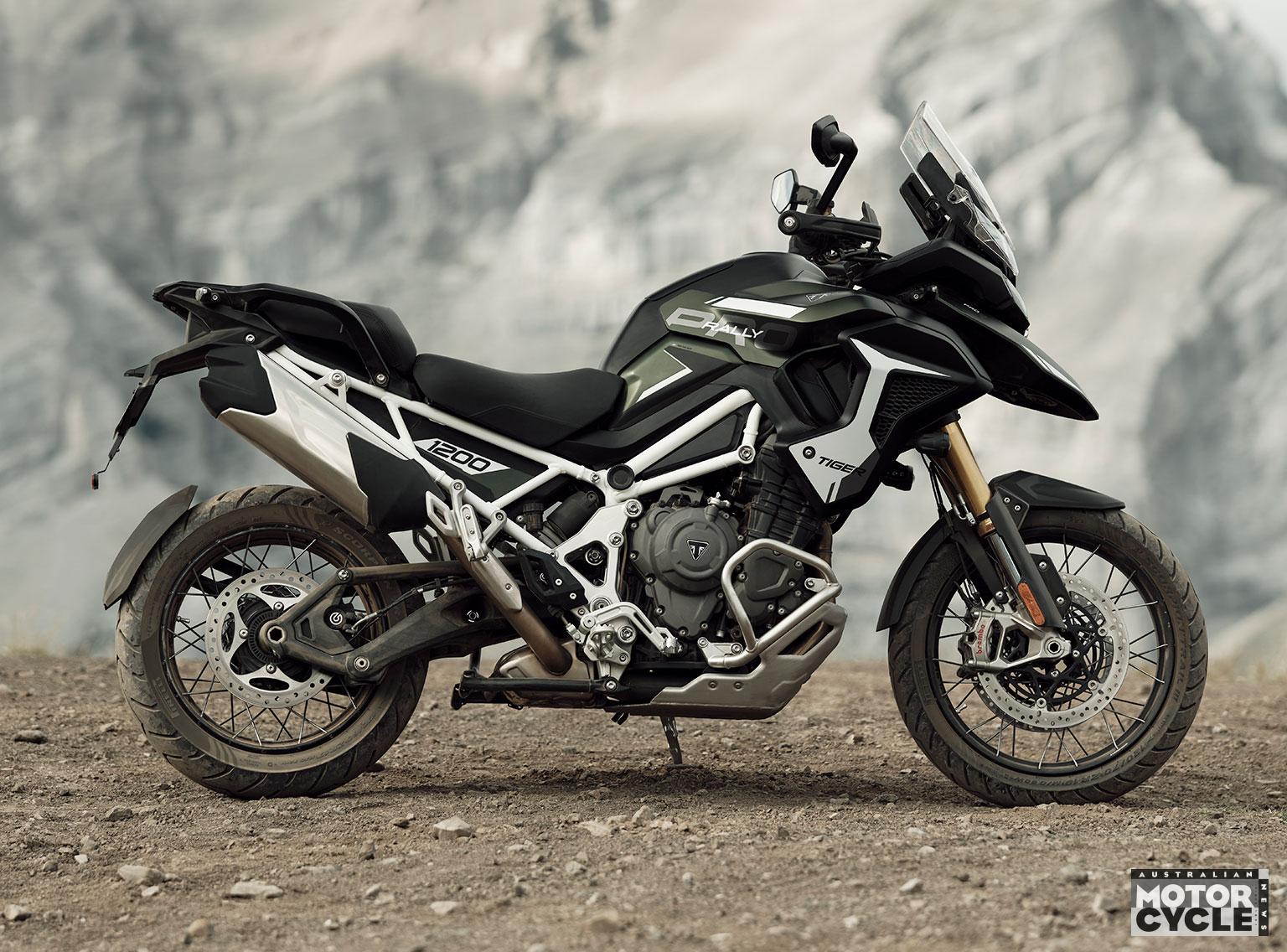
But regardless whether you opt for the ‘GT’ or ‘Rally’ wheels, the sizes are the same for 2027: 19 inches at the front, 17 at the rear. That’s a departure from previous generations, which gave the Rally modes a 21-inch front and 18-inch rear. The suspension is now also shared across the whole range, with 200mm of travel at each end, where older Rally models were taller, with 220mm of travel.
That suspension is clever stuff, though. As before, it’s electronically-adjustable, semi-active kit from Showa, but for 2027 the Tiger gets the new HeightFlex system that hydraulically adjusts the rear preload to automatically drop the rear end, and the seat height, by 30mm when you come to a halt. Start moving and it jacks it back up again to ensure the correct geometry. As a result, when combined with the optional low seat, the Tiger 1200’s seat height at rest can be as low as 790mm: the same as a Speed 400.
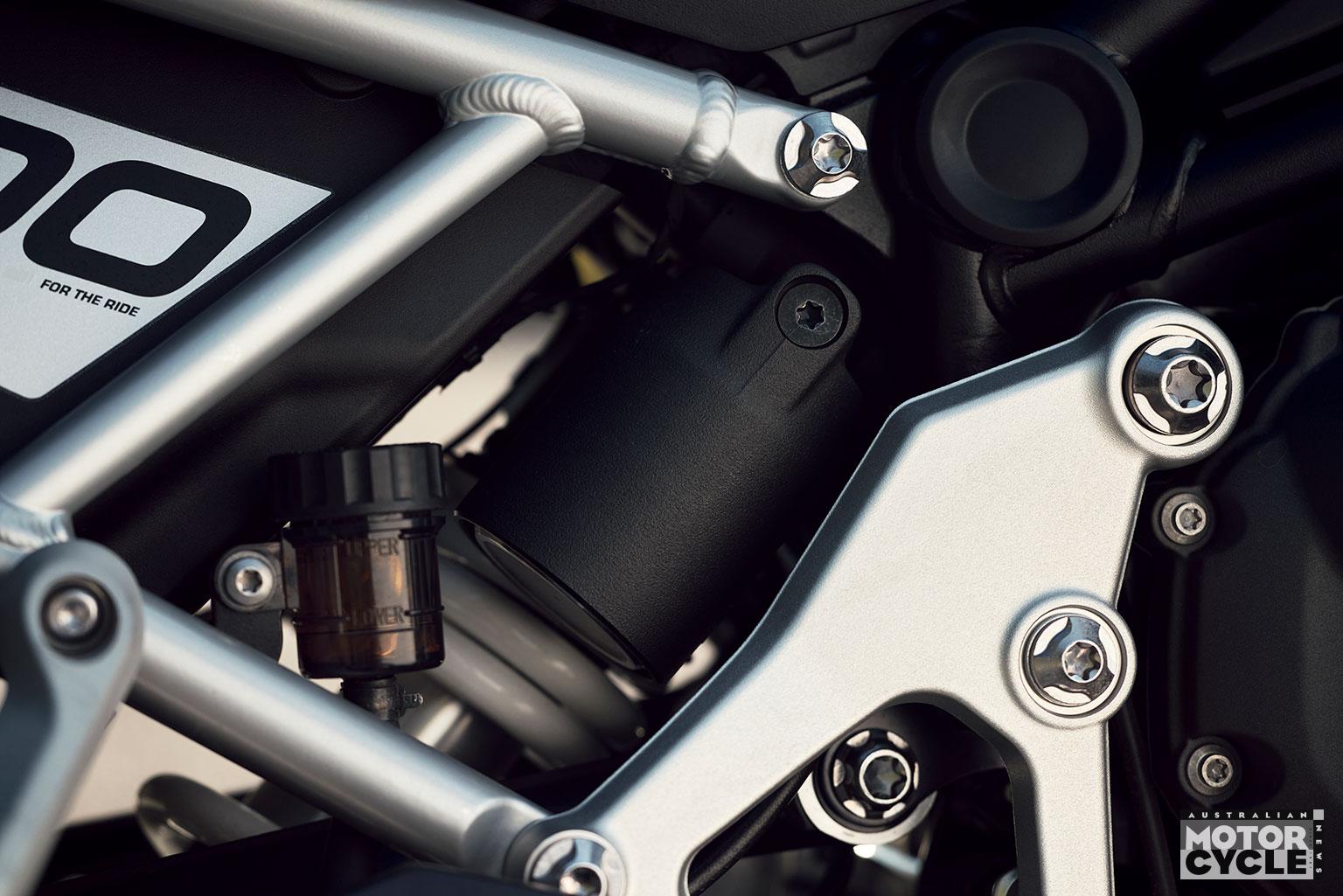
While other bikes have a similar function, the HeightFlex system is faster acting than most, returning to its normal height in just a few seconds. It’s also self-levelling, automatically adjusting the rear preload to maintain the right ride height and geometry regardless of rider weight, pillions, or luggage loads.
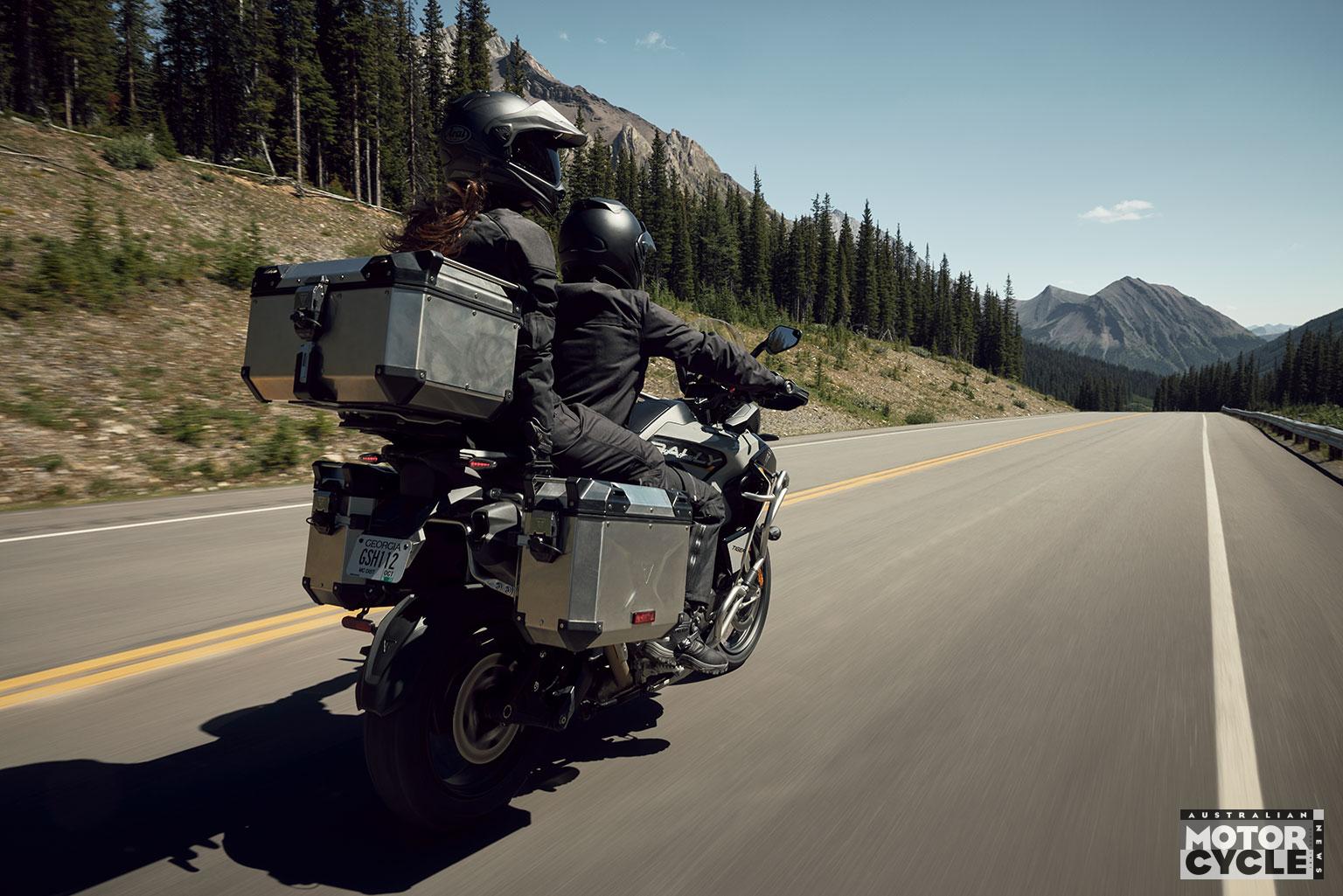
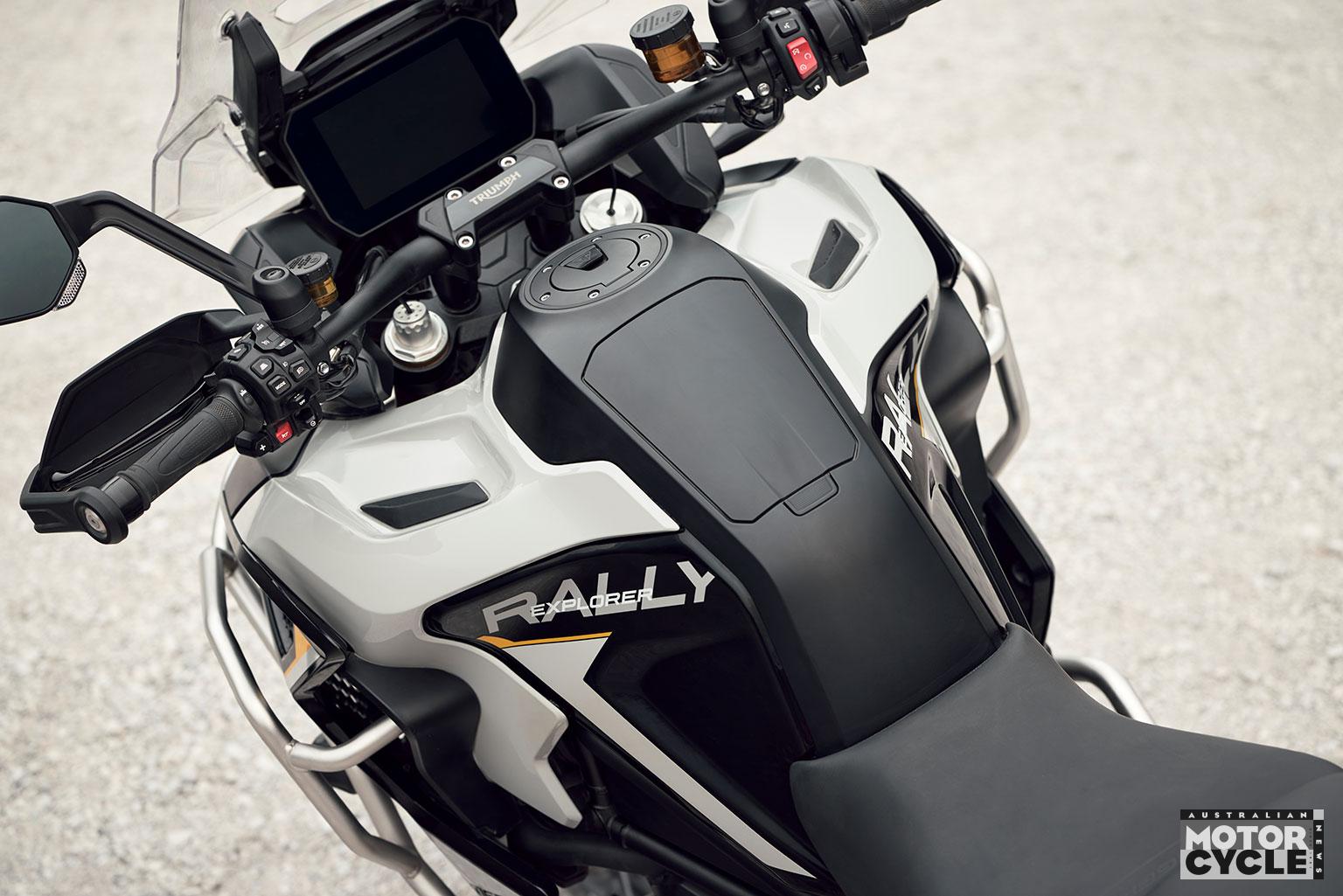
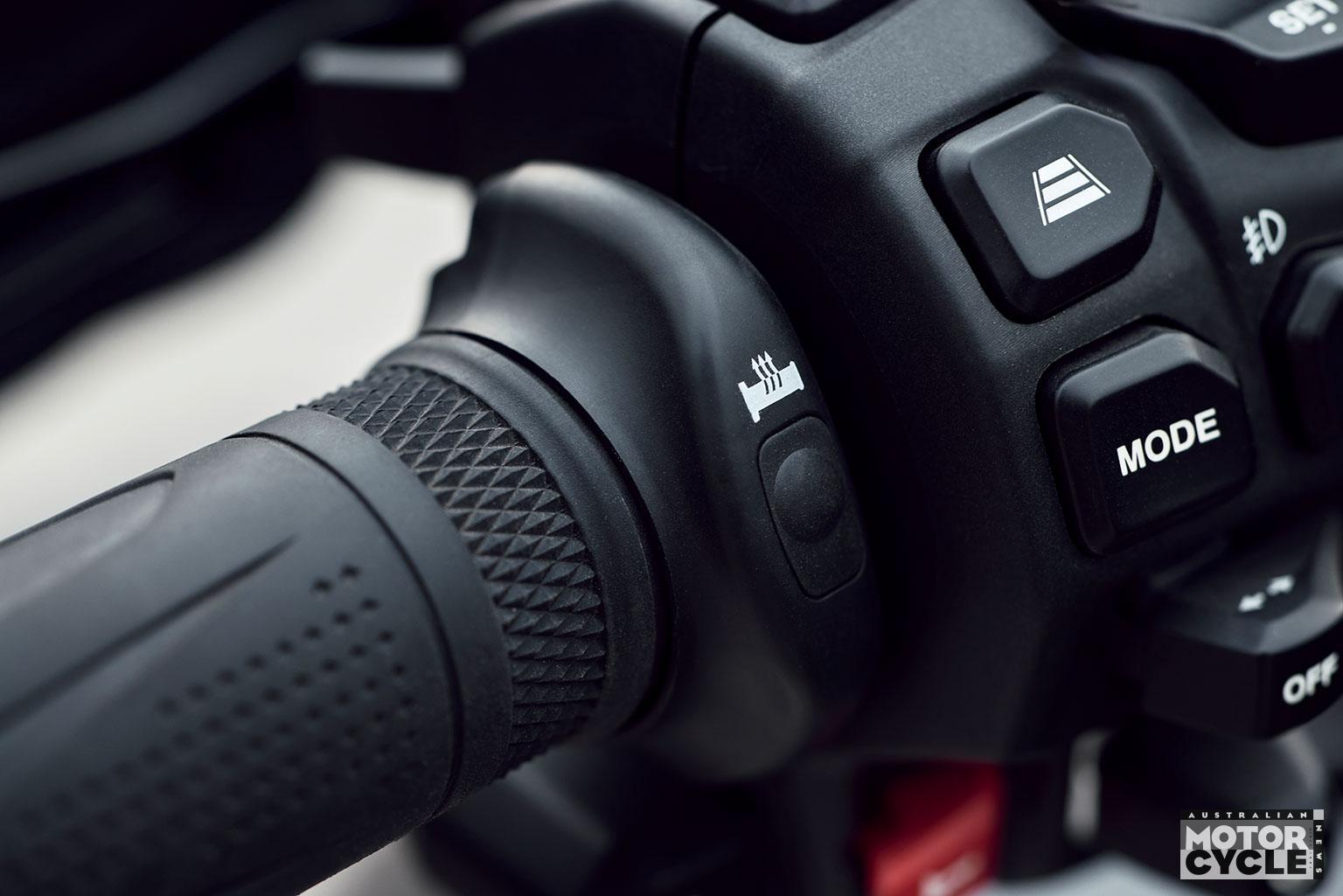
The new tech doesn’t stop there. Triumph has also managed to get in before the competition by adding the first purpose engineered wireless Apple Carplay and Android Auto to be fitted to a standard production bike, all incorporated into a new 7-inch touchscreen dash. On the move the touchscreen is disabled but a new lefthand bar pod gives control over all the functions. With your phone acting as a key element in the system, there’s also a waterproof phone cubby on top of the tank, not only including its own USB-C charge port but with an active cooling fan to prevent it from overheating.
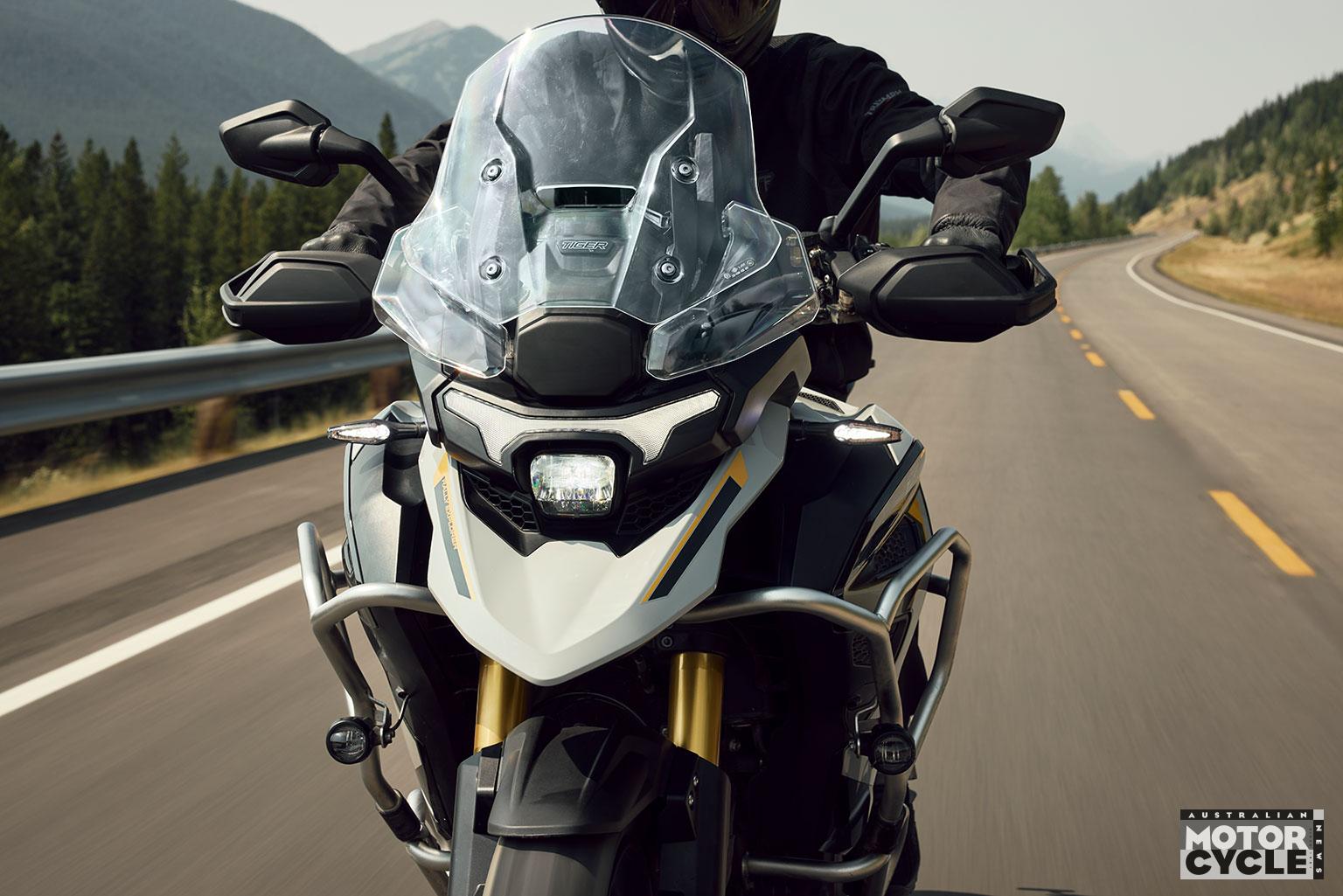
On top of all that, there’s the new radar system. Where Triumph previously used a Continental-made, rear-facing radar, the company has now joined the ranks of Ducati and others by switching to a Bosch system with both front and rear radars. That means there’s adaptive cruise control, automatic emergency braking and a host of other functions from the front radar unit, plus blind spot monitoring and more from the rear unit.
The GT models get seven riding modes, all adjusting the throttle response, the cornering traction control and ABS settings, and the engine braking mapping. Rally versions of the bike get an eighth ‘offroad pro’ mode as well, and in a change from previous Tigers, the offroad riding modes can now be selected on the fly.
In short, the 2027 Tiger 1200 is firmly established as the most high-tech Triumph ever made, and offers equipment levels that few rivals can match. What’s more, it’s all standard-fit: Triumph is keeping the optional extras to a minimum, with little more than luggage sets that can be added at extra cost. As a result, while the list prices might seem high, they actually undercut most rivals when those rival machines are spec’d up to the same standard.
One thing that’s glaringly missing from the Tiger 1200 now is a semi-auto transmission. BMW offers its ‘ASA’ auto on the R1300GS, KTM has its AMT option on the 1390 Super Adventure, and of course Honda has offered DCT on the Africa Twin for years. Don’t bet against Triumph adding something similar to the Tiger in the future.