After a turbulent year, the latest numbers suggest the Austrian brand is finding its footing again
KTM has put its disastrous 2024 behind it and resumed the sort of rapid growth that saw the Austrian brand become one of the biggest players in the market.
Now under the ownership of India’s Bajaj, the former partner that swooped in to save KTM from financial collapse in May 2025, KTM has now had three consecutive good quarterly results with fast-growing sales and improved profitability.
Starting with those sales, Q3 of 2026 was always likely to look good in comparison to the same period 12 months ago, when the brand was still in the early stages of its post-buyout reconstruction, but the numbers are still impressively strong. Globally, wholesale figures showed that KTM, along with its sister companies Husqvarana and GasGas, rose from 31,402 in Q3 2025 to 47,391 in the same part of 2026. That’s a 50% year-on-year increase. The growth was present across all KTM’s main markets, too, with European sales up from 14,032 to 20,265, North American sales rising from 9,035 to 11,625, and the rest of the world up from 8,335 to 15,501.
The company’s latest figures also show that its inventory levels have stabilised to a total stock of 140,507 bikes in September 2026, well under half the 289,947 unsold bikes in stock in January 2024. That overstock was a significant element in KTM’s financial problems in 2024, leading to a bailout from Bajaj that was subsequently converted to full ownership.
In financial terms, those Q3 sales converted to a 57% increase in revenue for KTM, Husqvarna and GasGas, rising from 224 million Euros in Q3 2025 to 351 million in Q3 2026. For the year to date, revenue has grown 63% from 649 million Euros to 1,053 million.
That increased revenue is paired to a substantial reduction in overheads, which stand at 255 million Euros for the year to date, compared to 352 million for the first three quarters of 2025.
The quarterly report from KTM’s parent company, Bajaj Mobility, shows the scale of the company’s staffing cuts. After peaking at 6,184 employees in 2023, that figure has dropped to 3,631, with the biggest cuts in white collar roles that have been halved from a peak of 3,549 in 2023 to 1,736 now.

Writing on LinkedIn, KTM and Bajaj Mobility CEO Gottfried Neumeister said: “One good quarter is a result. Three good quarters are a direction.”
He went on to explain the 50% increase in sales and said: “Get profitable and start scaling – and we’re proving that we can do it not sequentially, but in parallel.
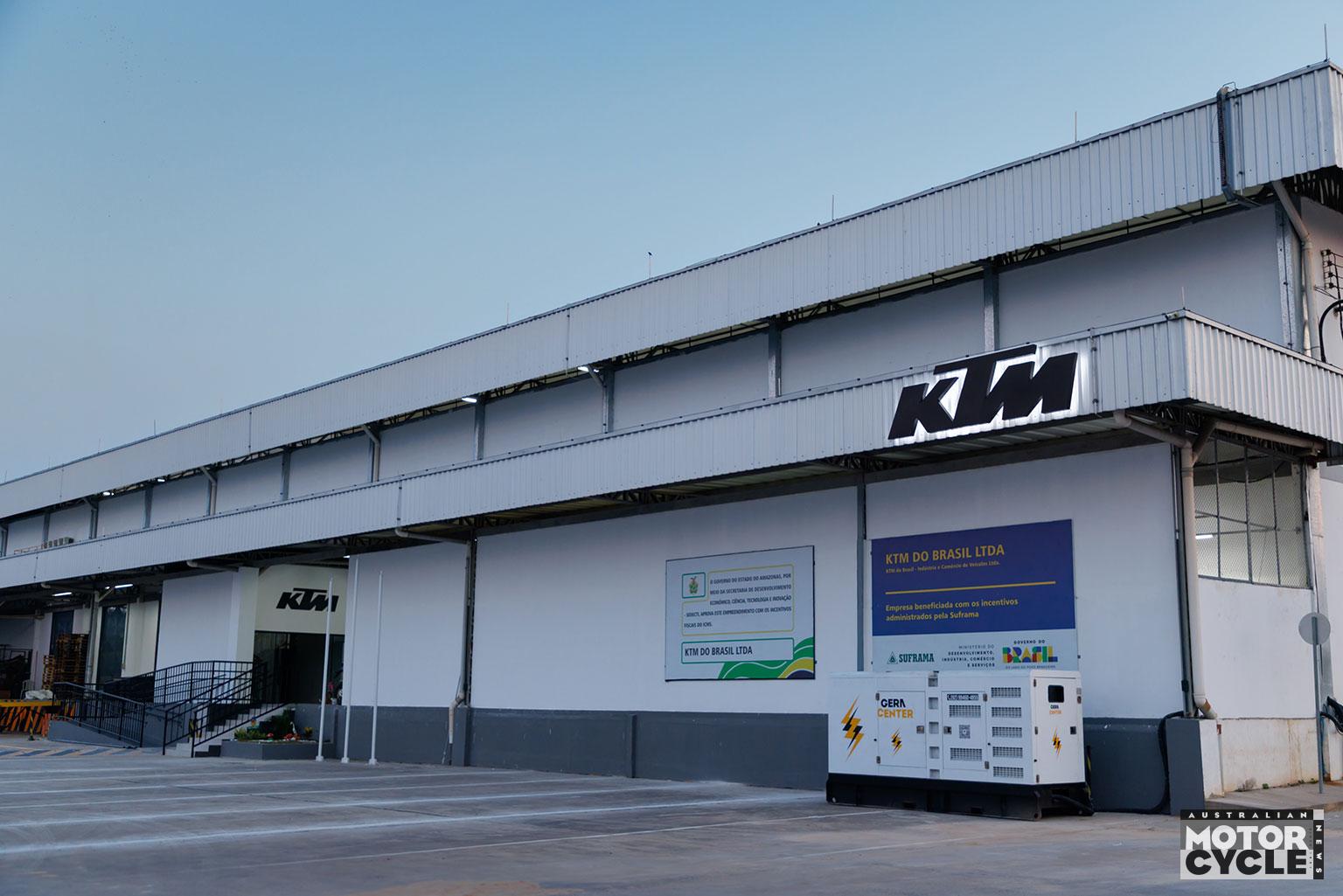
“We have cut overhead costs and kept our inventory at a healthy level. At the same time, we keep growing: in October, we opened our new KTM plant in Manaus, Brazil – our first fully KTM-owned assembly plant outside Austria, in one of the most important motorcycle markets in Latin America.
“There’s still a lot of work ahead of us. But we can be proud of what we have achieved together so far.”