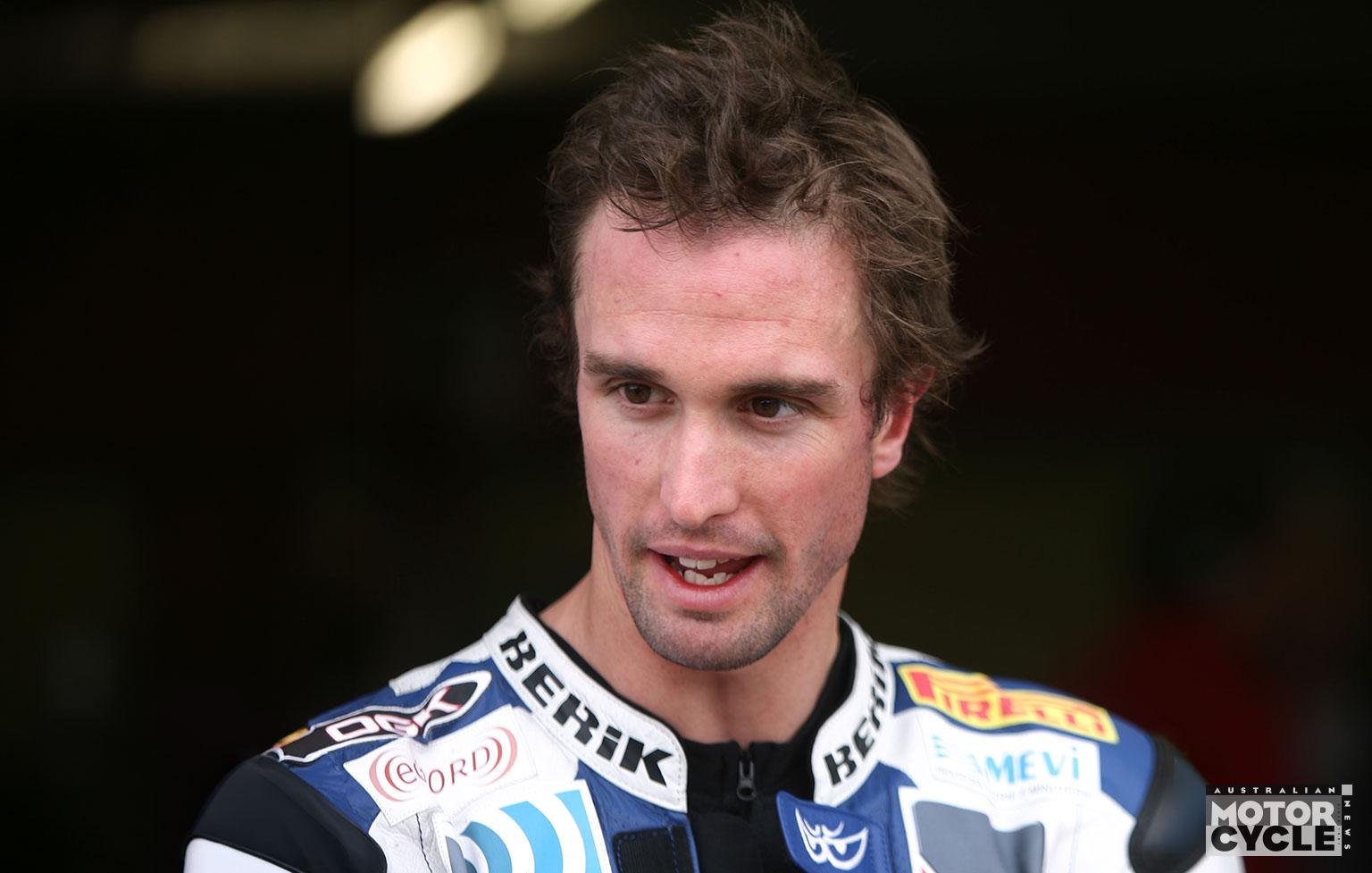
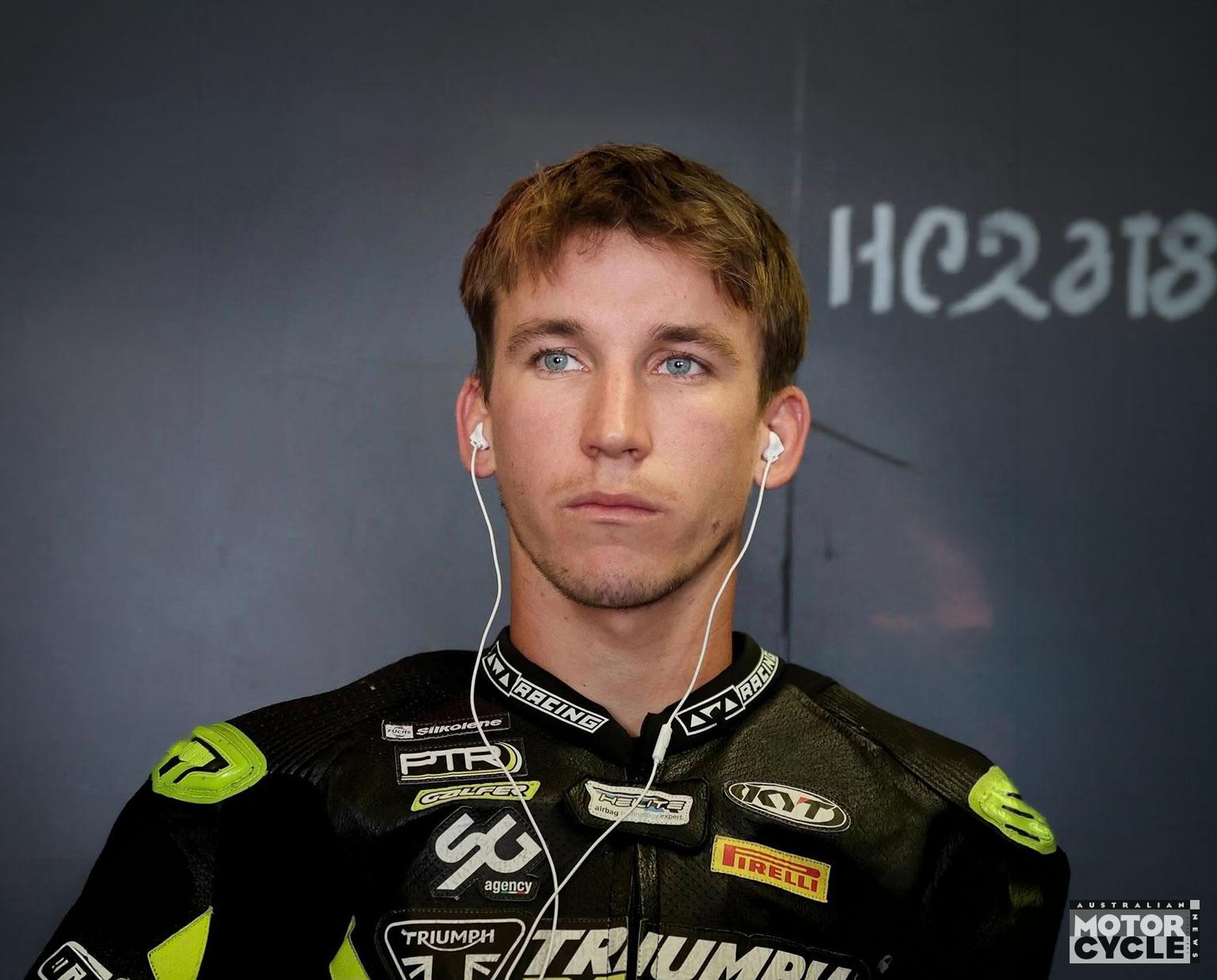
One of Australia’s brightest young road racers of the early 2000s, Russell Holland spent years chasing one goal all the way to the WSBK championship. But his toughest battle came long after the chequered flag
We’re well over two hours into the phone interview before I learn that former Australian Superbike ace Russell Holland’s previous two years have been in recovery. Until then, we’d been discussing his motorcycle racing career; his fastidious approach, his unwavering self-belief, his string of strong results and the arc that took him from the back of the Moriwaki series that his father Wayne and Tony Hatton initiated in the early 1990s all the way through to the Superbike World Championship in 2008. I’m struck by how articulate he is when retelling his racing experiences and am constantly impressed by the detail he remembers from any given round of any given year.
Russell belongs to an exceptionally talented generation of Australian racers. Think Josh Brookes, Craig Coxhell, Wayne Maxwell, Josh Waters, Glenn Allerton, Jason O’Halloran, Bryan Staring and others. And while many riders of the era learnt their craft racing dirt track, Russell had no racing experience before his father Wayne spotted an ad in Australasian Dirt Bike magazine for a Moriwaki GP80. He had, however, grown up around bikes, riding with his dad from an early age before graduating to minibikes of his own.
“Dad bought the bike, went and met (the importer) Tony Hatton and then he realised there was no actual series for them to race in,” he recalls. “So Dad set up the Australian Junior Road Racing Association, contacted everyone who’d bought a bike, organised training days with Bernie Hatton, Tony’s nephew, and we started doing practice days at Eastern Creek’s go-kart track.
“It ended up being a really big thing. Some of the top guys out of those first couple of years were Anthony West, Broc Parkes and Chris Vermeulen.”
PRIVATE MATTERS
That plucky approach Wayne displayed in order to give Russell and a bunch of his contemporaries an avenue to build successful careers is something that’s been evident throughout Russell’s racing life.
Perhaps its best expression came in 2006. With an Australian 250GP championship to his name, a 250cc Grand Prix wildcard and a third place in the 2004 Australian Supersport Championship, Russell had already established himself as one of the country’s quickest young riders.
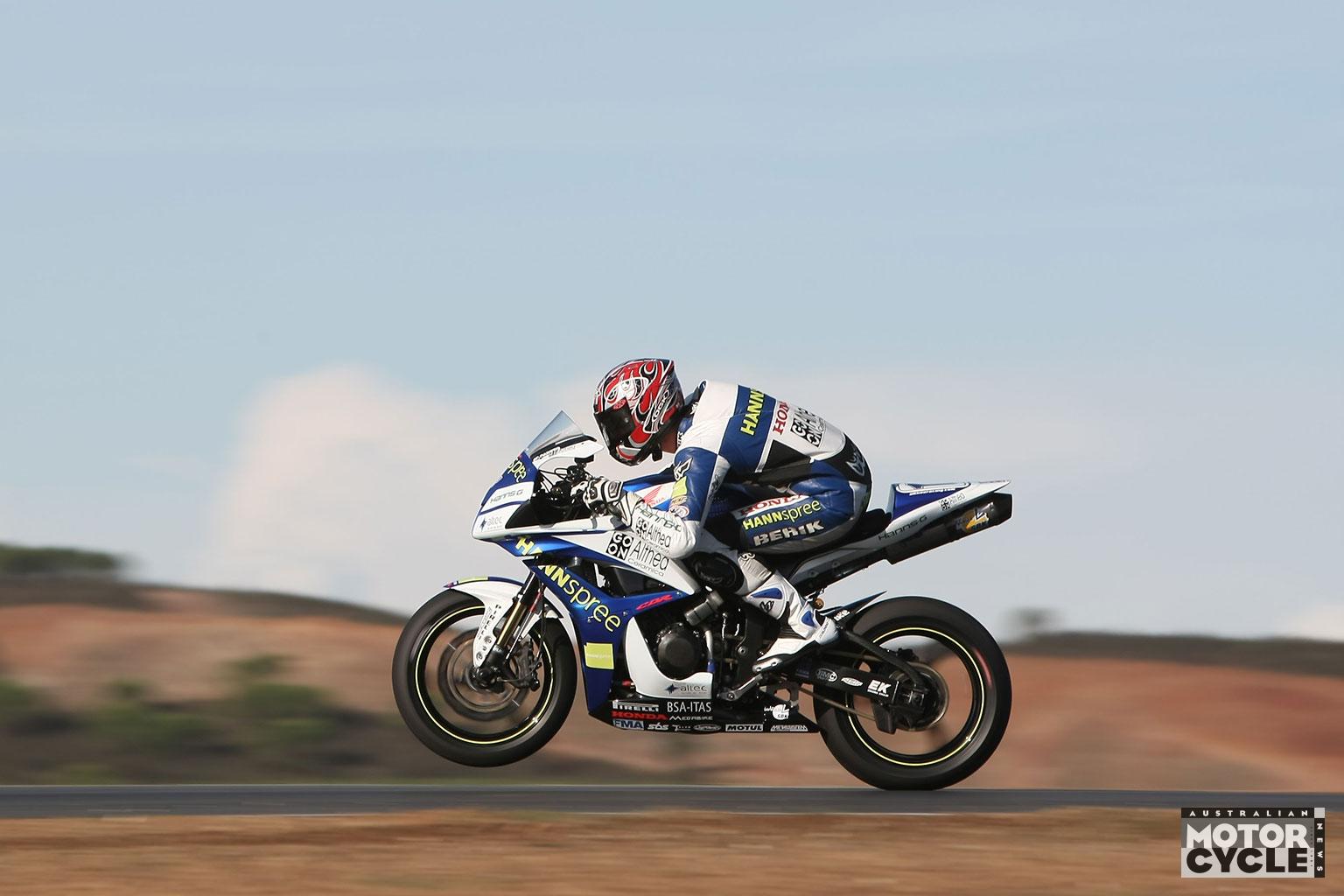
His first Australian Superbike season in 2005 showed plenty of promise, but two massive crashes at Wanneroo destroyed both bikes and compounded the financial strain. By the Phillip Island finale, Russell and Wayne had already decided it would be their last big push together. Another crash left Russell’s bike wrecked, but Honda put him on a spare CBR1000RR for the final race to help Josh Brookes’ title bid. Russell finished fifth and Brookes won the championship.
But getting results and paying for them were two different things.
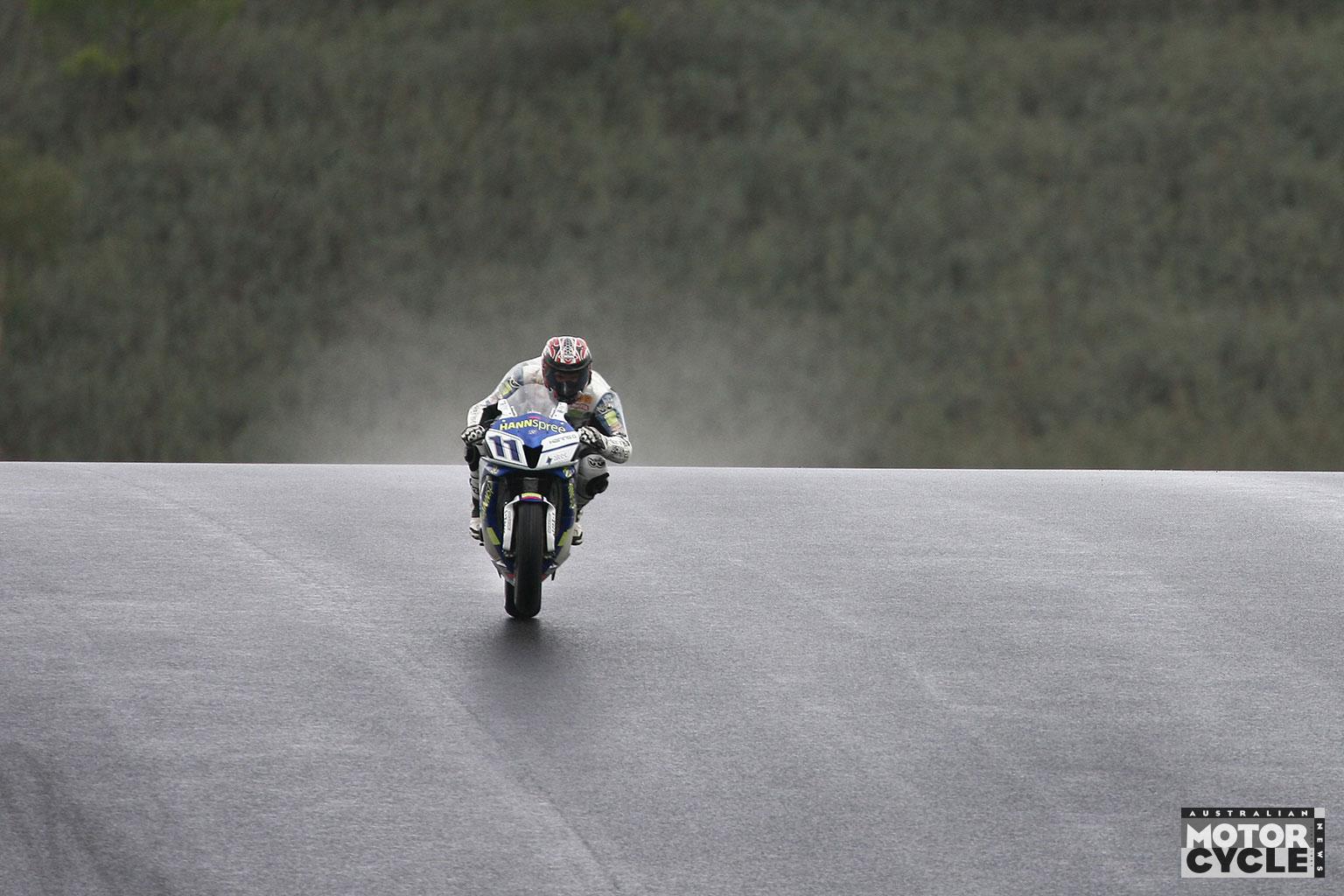
Wayne had spent eight years travelling the country with his son while running a construction business and supporting a family, and Russell was increasingly uncomfortable with how much his racing demanded of everyone around him.
“I was feeling a lot of guilt about all the years that Dad had supported me,” he says. “I appreciated that, but also felt really guilty. I wanted to be able to do it on my own and I wanted the family to be able to move on and not be sacrificing for me.”
Then, just before Christmas, Honda’s Paul Free called: “He said, ‘We’d like to help you go racing’.”
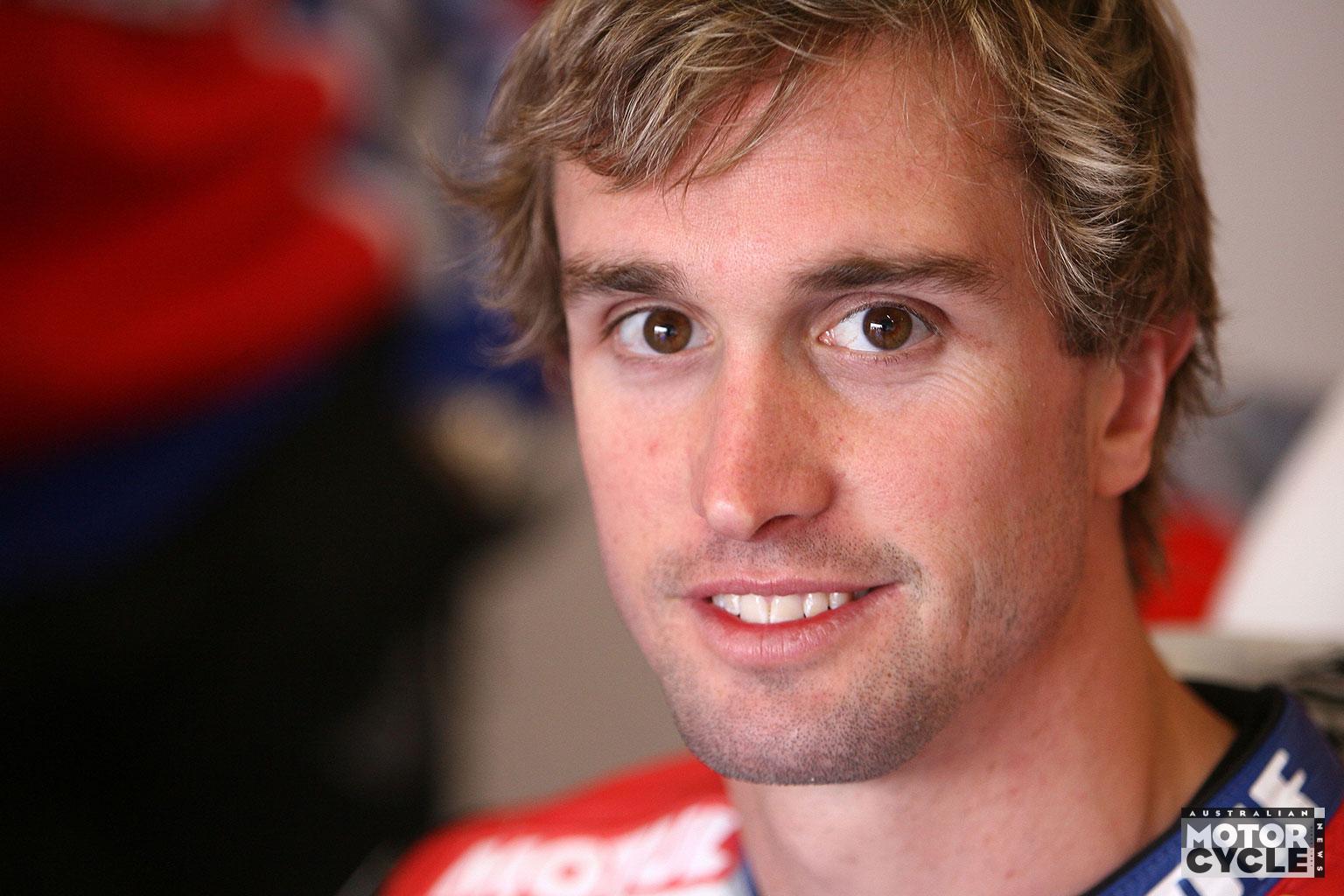
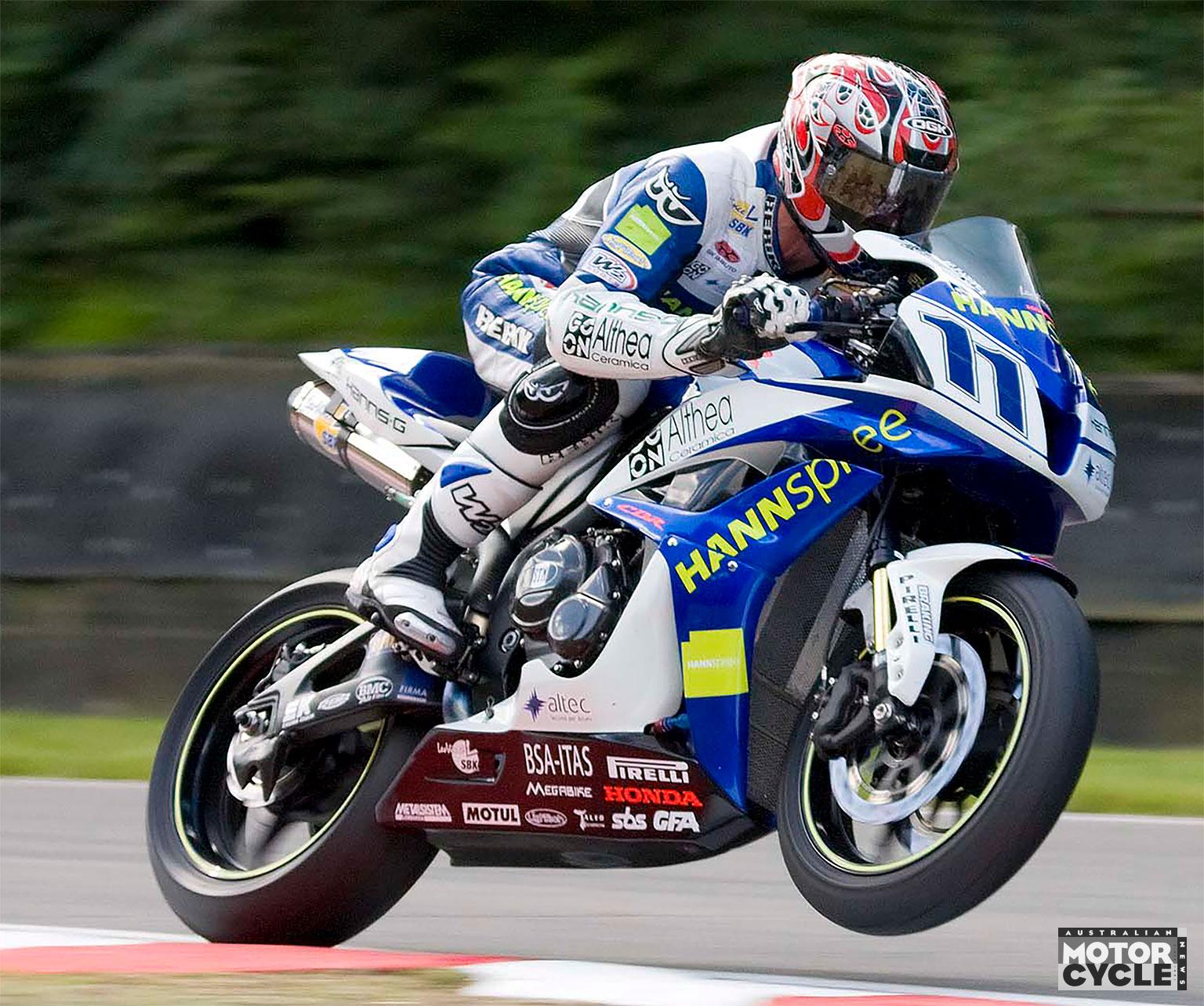
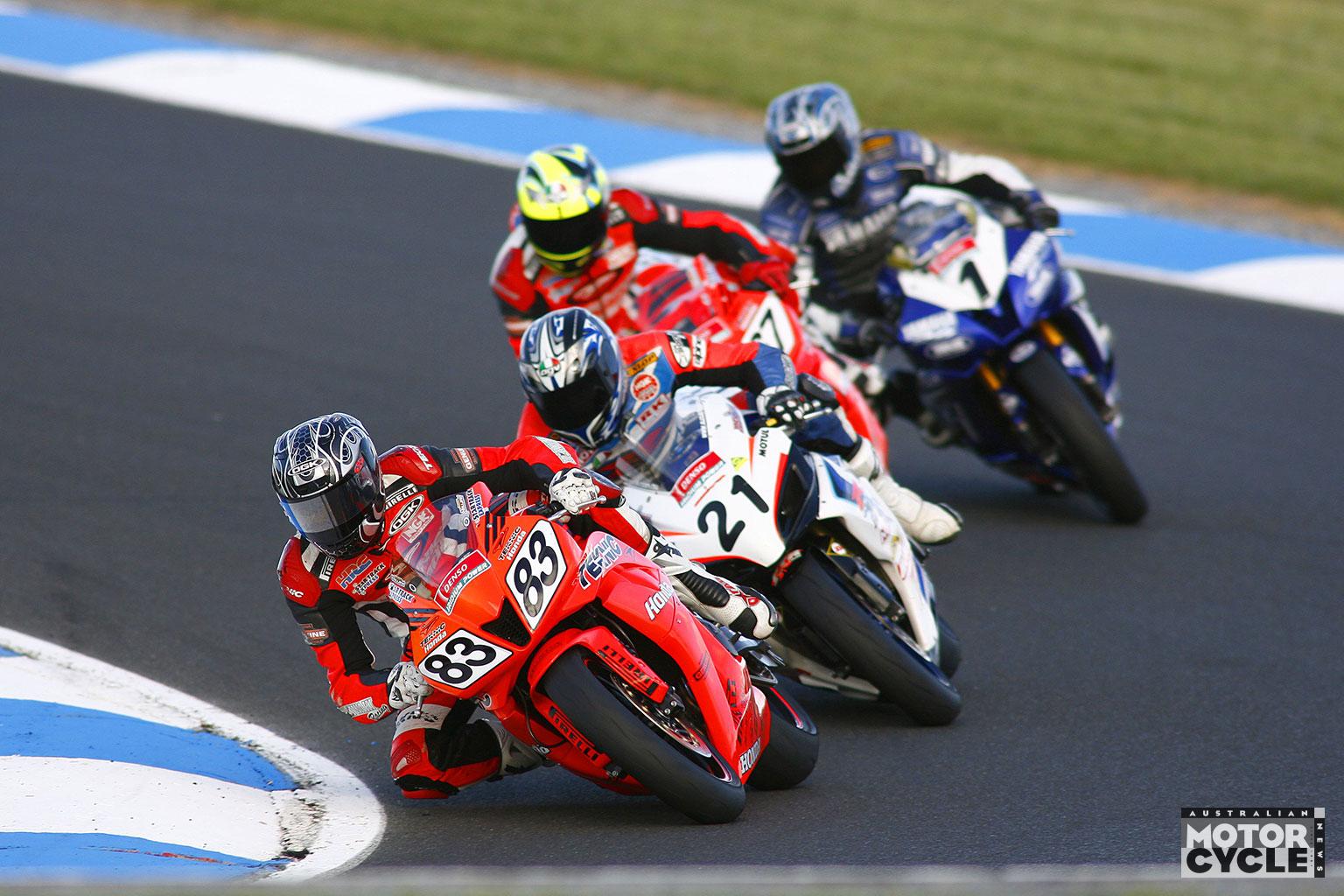
Fielding a CBR1000RR under the Russell Holland Racing banner, he had the vastly experienced Geoff Winzer as crew chief, respected engineer Ian Irving building the engines and Galvin Marketing providing Pirelli tyre support. A second place at the opening round was followed by a third; his maiden Superbike win came at South Australia’s Mallala before he took the double at Queensland Raceway. “All of a sudden I was in contention for the championship.”
Russell was within about 10 points of factory Yamaha rider Jamie Stauffer when the season began to turn against him. A testing crash at Winton broke his collarbone a week before the race. “Honda put me in touch with a surgeon and I got it plated three days after it happened. So I had four days recovery before the race.”
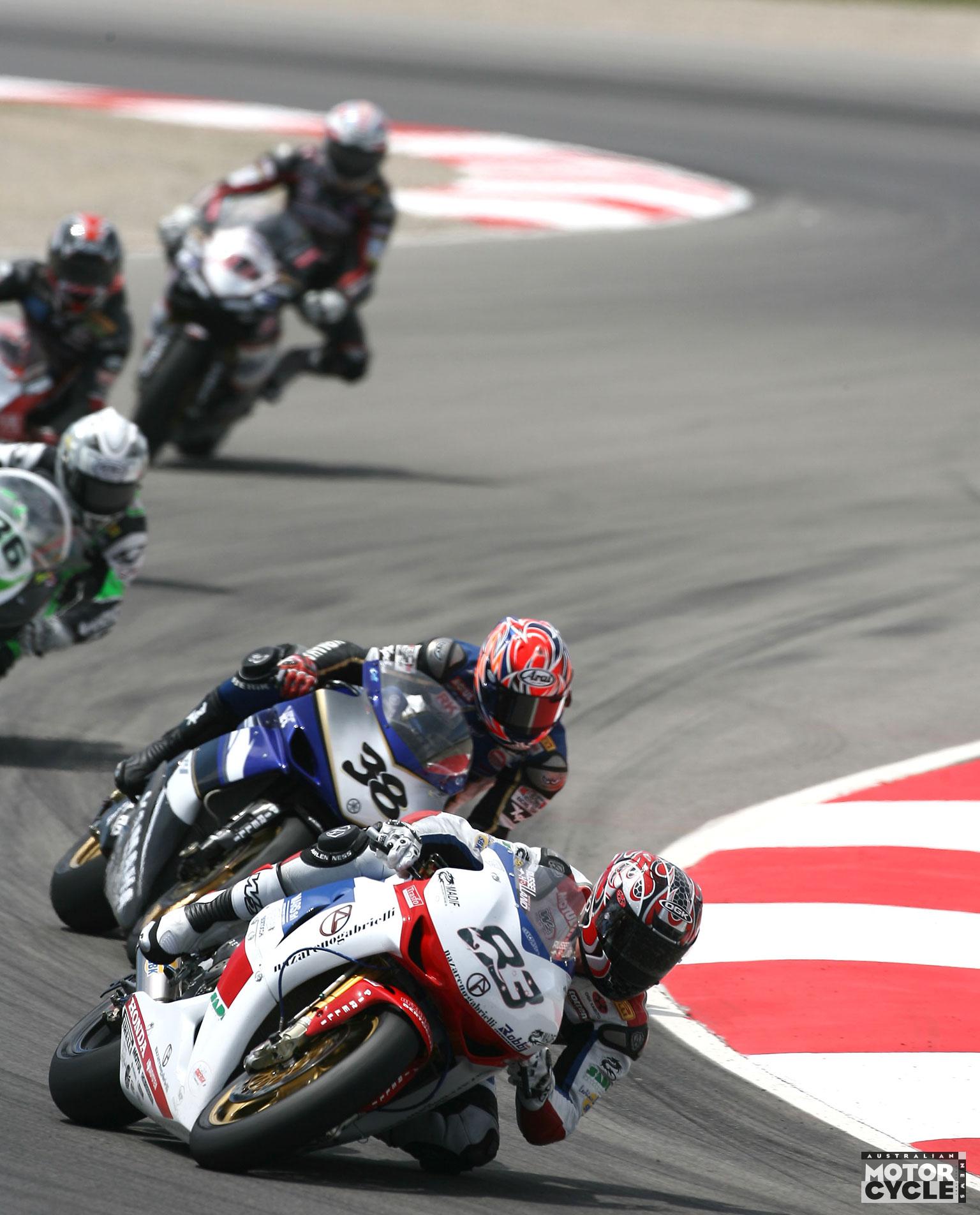
Stauffer ultimately won the championship, with Russell second outright and claiming the AMCN Privateer Cup. For all that came later – the factory Honda ride, HRC machinery, Suzuka and his time in the world championship – that privateer campaign remains a highlight. “It’s probably the trophy I’m most proud of, and was the culmination of the commitment Dad and I had made over the previous nine years.”
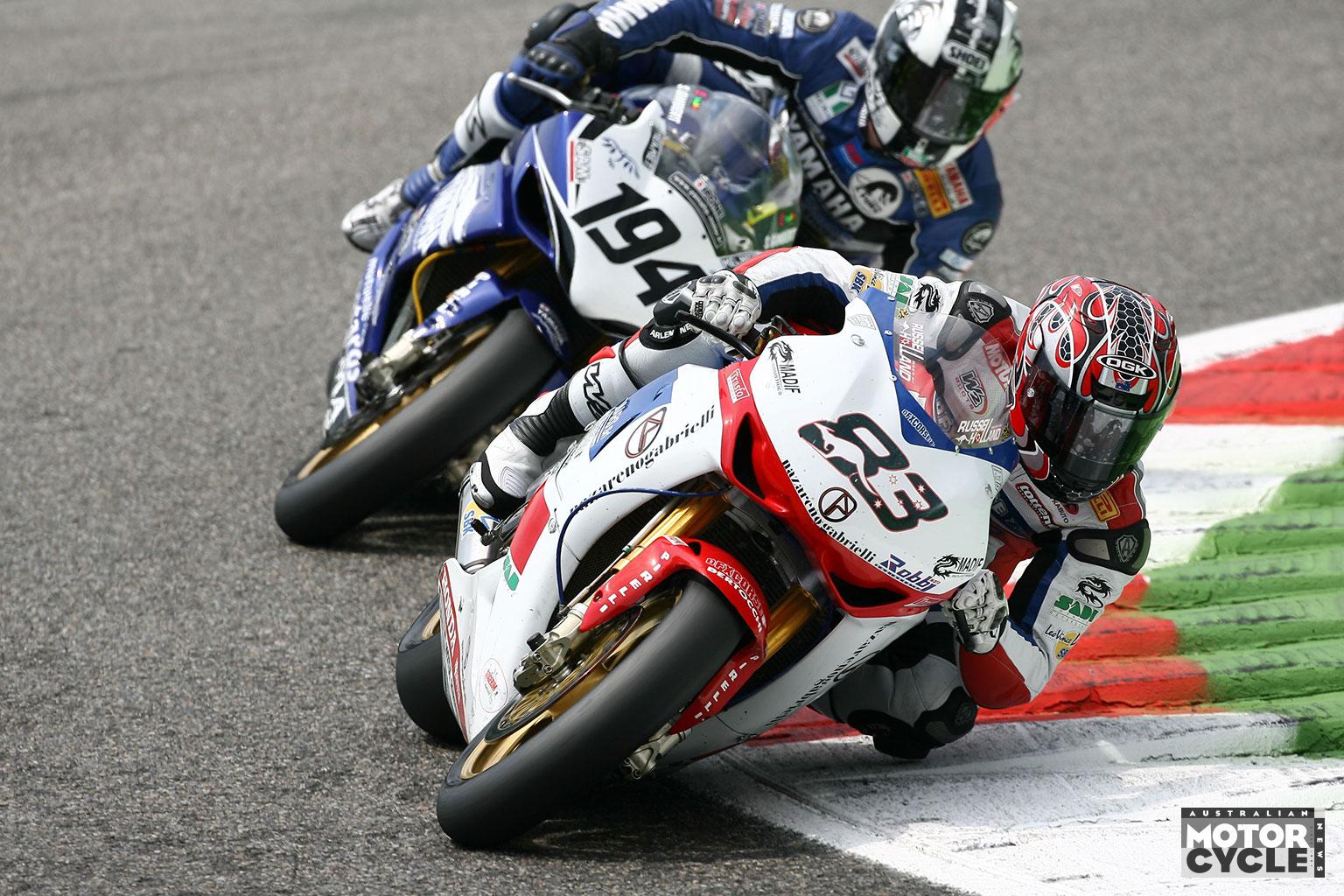
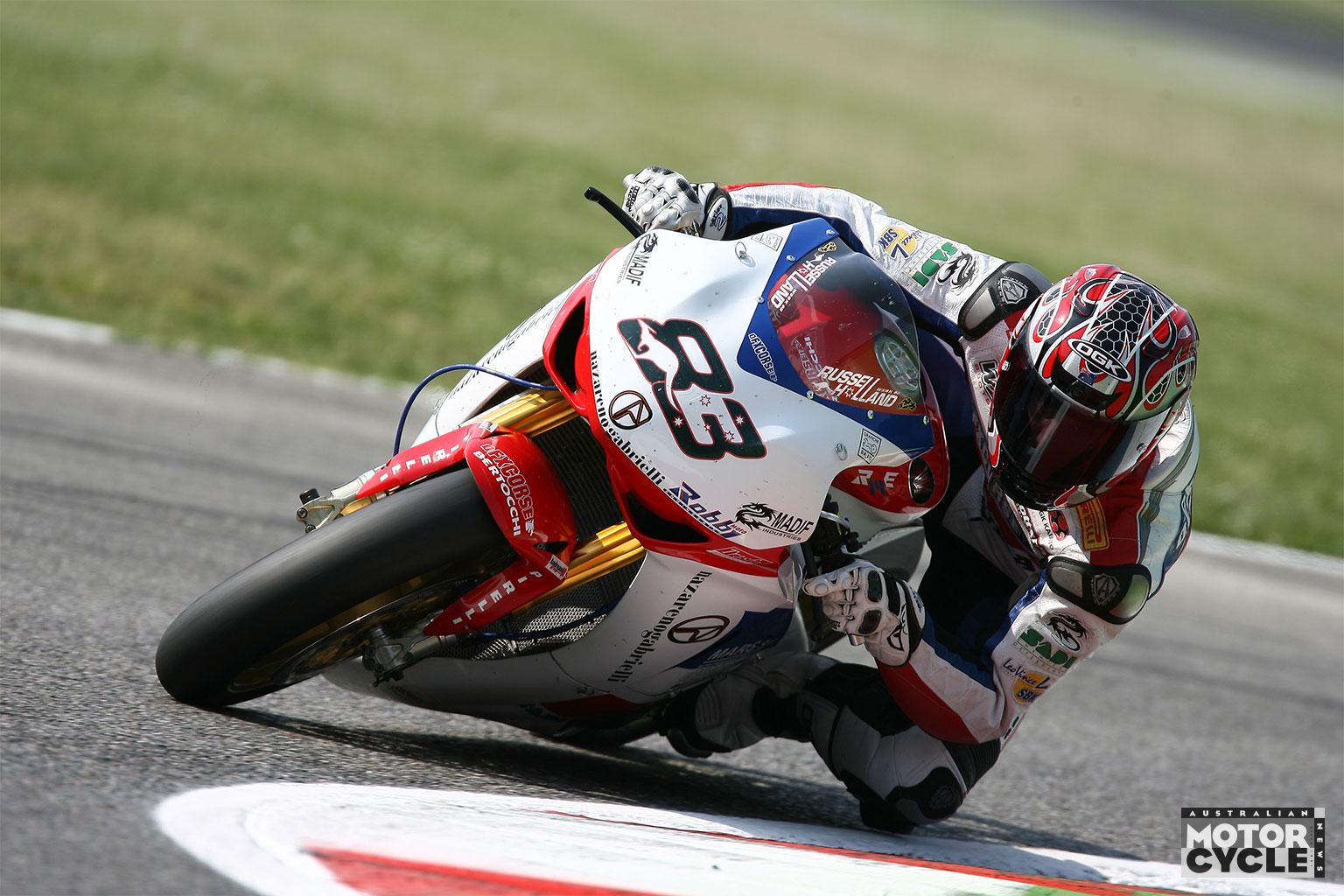
The runner-up result had earned him a place with factory Honda for 2007, along with some extraordinary opportunities in Japan, including testing an HRC Superbike alongside Carlos Checa and James Toseland and a Sakurai Honda ride at the Suzuka 8 Hours. The latter ended with Russell misjudging his fuel situation on what he thought was the final lap, turning a likely top-five finish into a DNF.
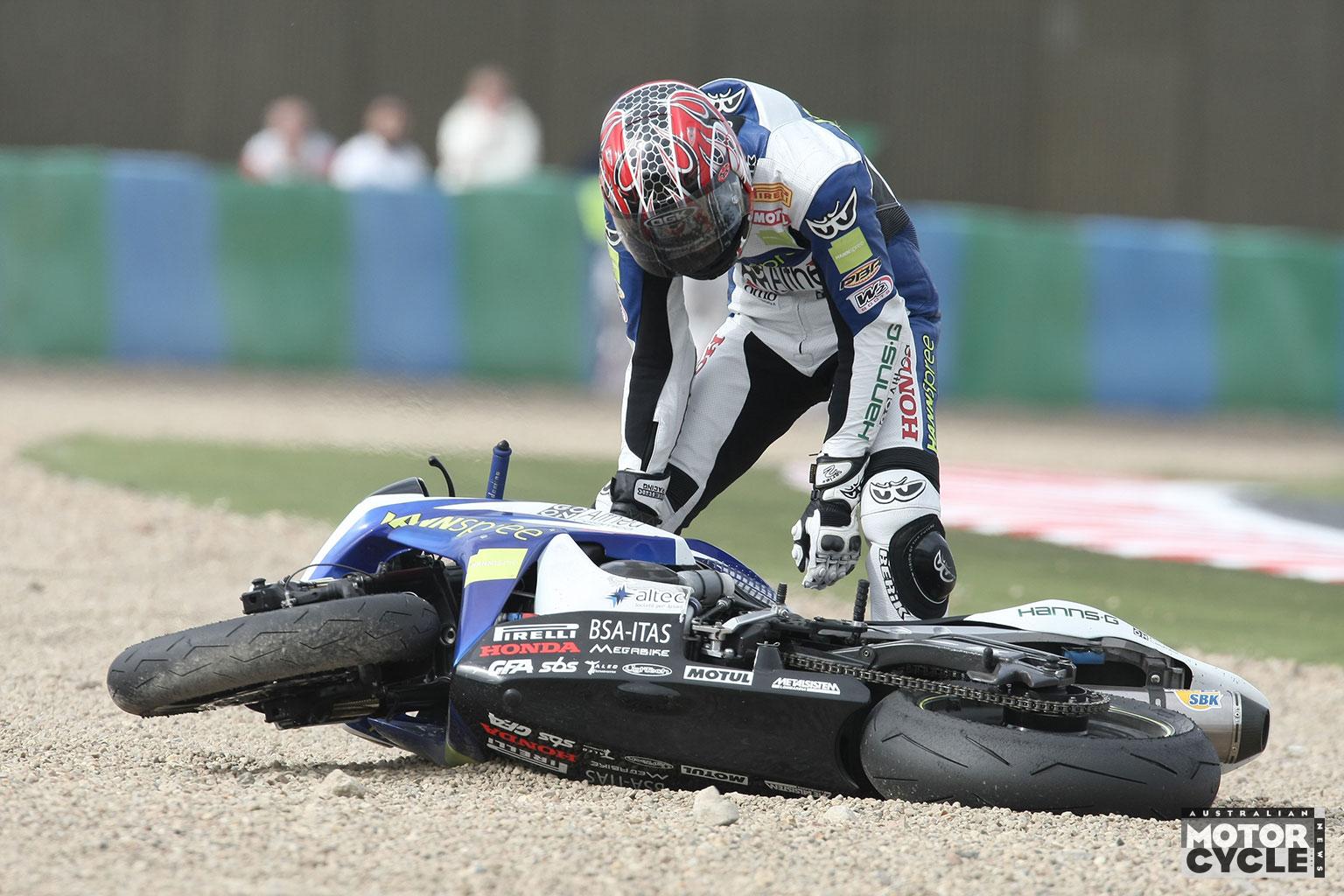
“Race direction pulled me straight in for a random drug test, which is no big deal, except I was really dehydrated and I was trying to urinate and I couldn’t go,” he recalls. “I was standing in the bathroom for a couple of hours, the medics are just feeding me bottles and I was drinking everything they gave me and nothing was coming out.
“I missed the Honda dinner. I missed the presentation. Finally, I was able to go and I just made it for the very end of the Honda party.”
WORLD VIEW
Russell’s domestic prospects were considerably less amusing. Midway through the season, Honda signed Jason O’Halloran for the following year. Russell was surprised, particularly because nobody from Honda had told him there wouldn’t be a 2008 seat available until late in the season. Kawasaki had shown interest and Yamaha had made an offer, but Russell’s thinking had moved overseas.
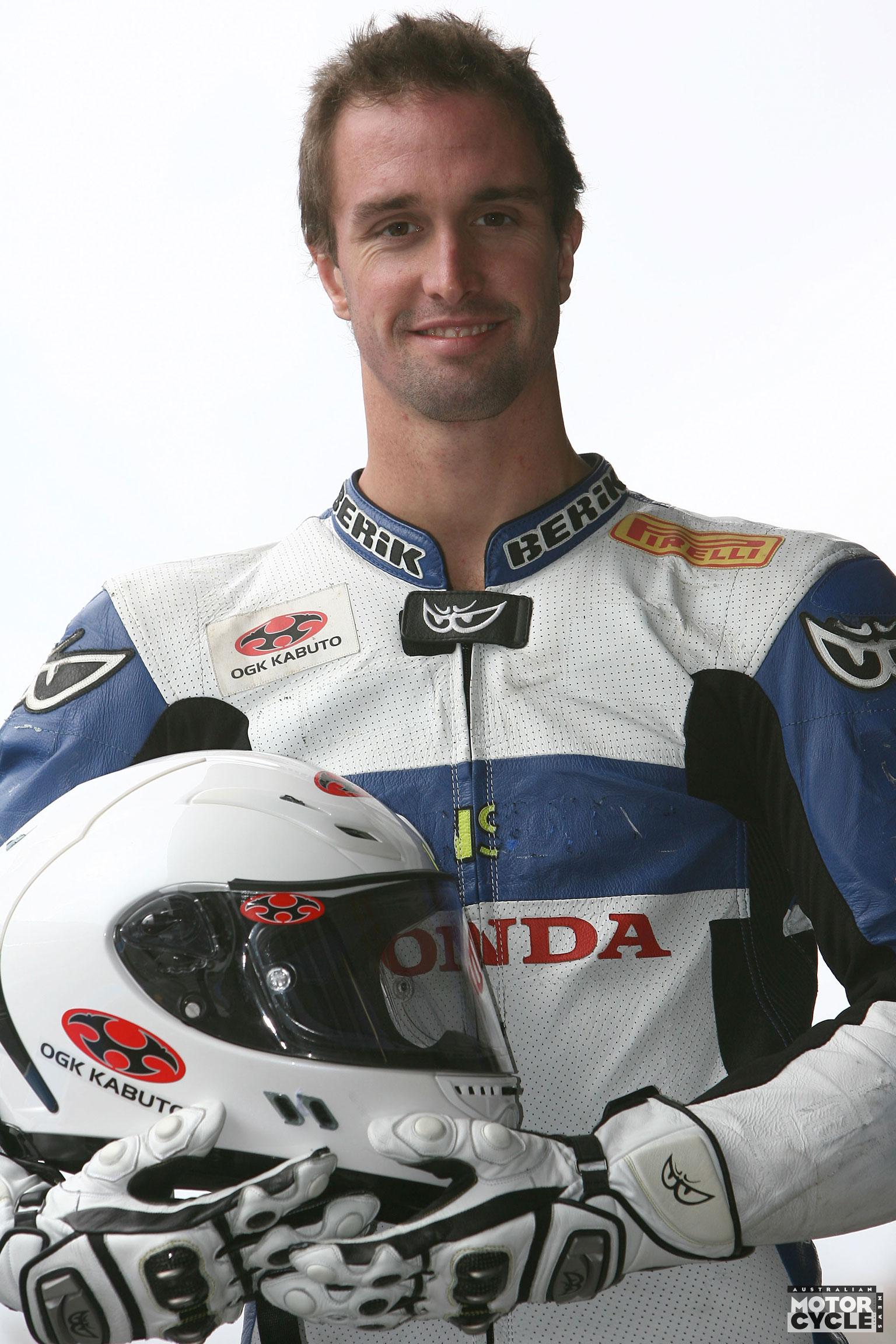
“I’d had my objective of the world championship since leaving school at 16 and was feeling ready to get out of Australia,” he says. By the final round, the decision was made. “One way or another, I was going to try and get to the world championship.”
Peter Goddard, then working as an Öhlins technician in WorldSBK, advised Russell to get himself to EICMA in Milan, where teams and riders would be talking about the following season.
“I told anyone who would listen that I wanted to race in the world championship.”
Russell’s self-belief had got him to Milan, but it was his methodical approach that gave him something useful to put in front of the people he met. “One of the best things I took was a spreadsheet where I’d basically put in every result from my entire career. So I had fastest lap, lap records, qualifying position, stuff like that. And because I’d kept it so consistently, I had statistics that showed what my averages were.
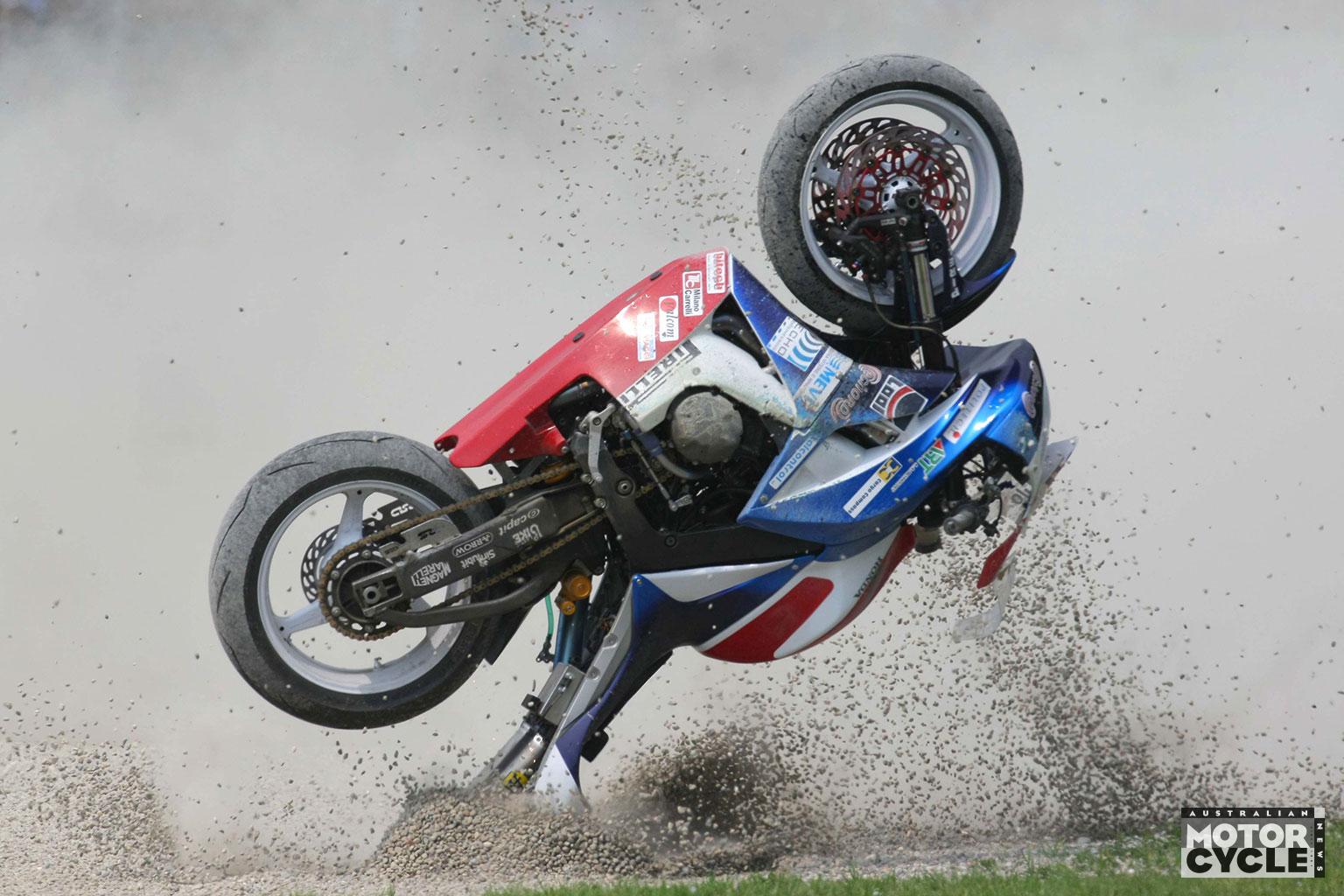
“It showed that I had a pretty deep experience, that I was competent, reliable and consistently at the front. And Sergio Bertocchi’s DFX Honda team ended up signing me on the basis of that document.”
Unfortunately, getting himself onto the WorldSBK grid was only half the battle. Unbeknown to Russell, Bertocchi’s team had lost its major sponsor before the 2008 season began and, by mid-year, suppliers were refusing to extend any more credit. HRC Europe helped Russell into a World Supersport ride with Althea Honda for the second half of the season, where he recorded a best finish of sixth at Brno.
Then the Global Financial Crisis hit a paddock heavily dependent on sponsorship. “Almost overnight, all of these world championship teams were turning around to the riders and asking them to pay.”
BAD DEAL
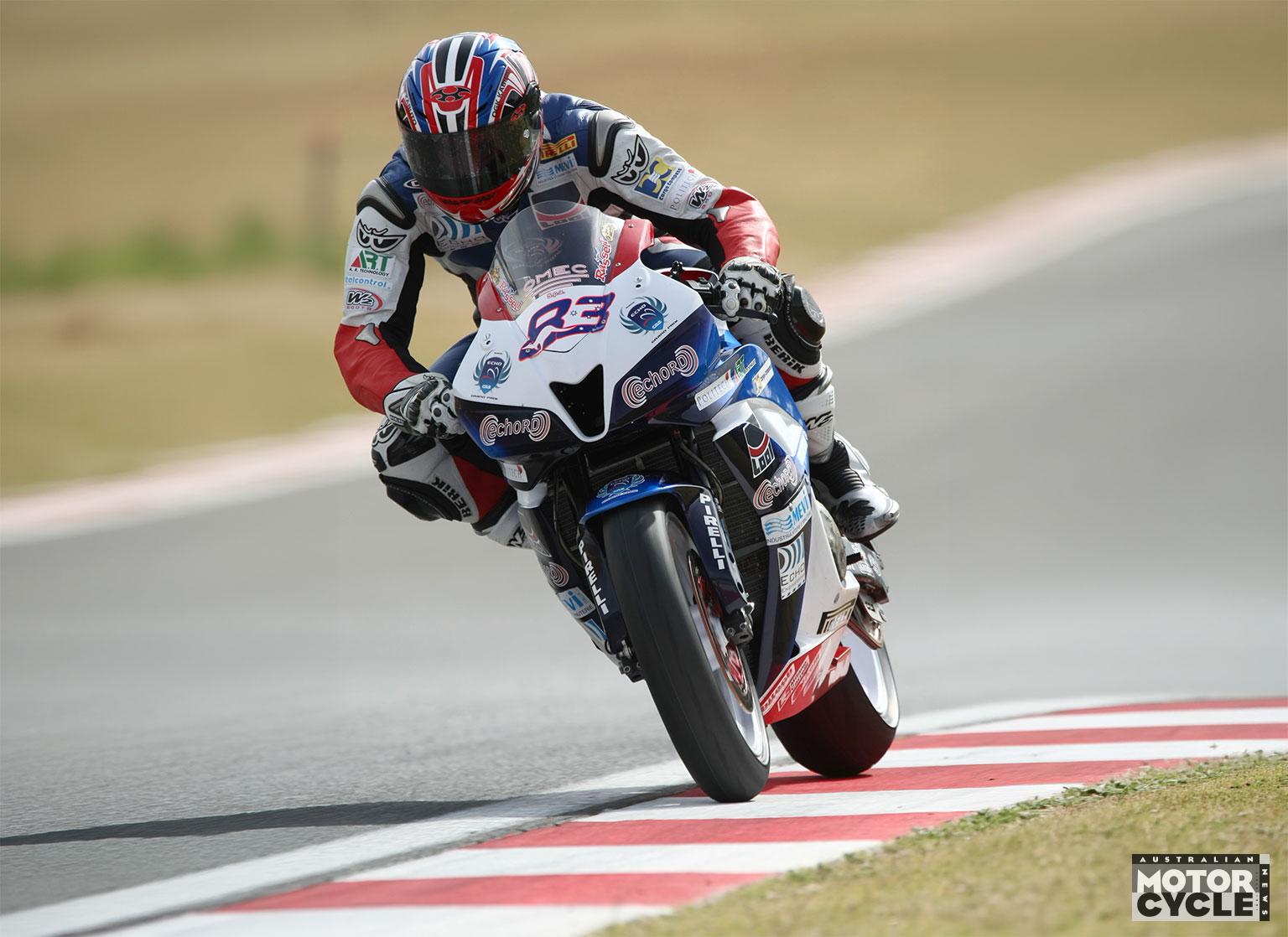
Riders from countries where racing attracted greater commercial support could sometimes find the money, while Australians were in a much tougher position. Against that backdrop, an offer from Echo CRS Honda for the 2009 World Supersport Championship looked promising, but Russell admits he didn’t have enough experienced, well-connected people around him to warn him what he was walking into.
“I ended up making a really bad decision riding for them.”
The team owner was also the team manager and crew chief and, according to Russell, insisted on doing virtually everything himself. The Honda was consistently among the slowest bikes through the speed traps, but attempts by Russell and teammate Fabrizio Lai to convince him changes were needed went nowhere.
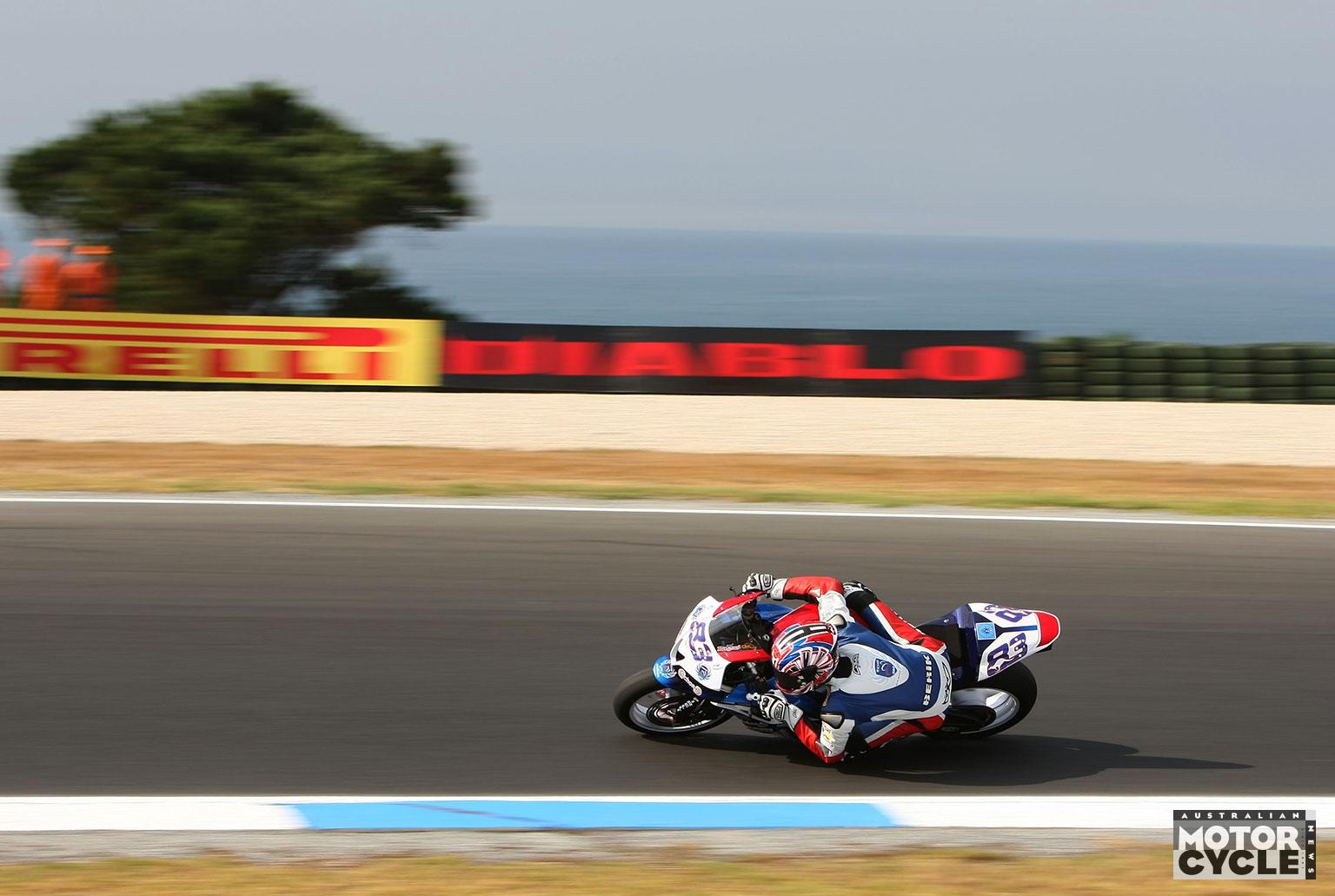
More than 15 years earlier, his father Wayne had a racebike for his son but nowhere to race it. Now Russell had a place in the World Supersport Championship, but didn’t have the bike to make anything of it. Following his dad’s example, he found what seemed like a solution.
Through Goddard and his racing contacts, Russell found front-running WorldSSP outfit Parkalgar Honda, then second in the championship with Eugene Laverty, willing to supply Echo CRS with a CBR600RR in the same specification as its own racebikes. Russell convinced his team’s major sponsor to fund it and, despite the team owner’s objections, the deal went ahead.
“The concept was, we’re going to deliver you a bike, you don’t need to touch it, just jump on it and ride it.” But when Russell arrived at the workshop, the new bike was being stripped.
Confused, he went to speak to the team owner, who told him: “You see that bike out there? You will never ride that bike. You’re out of the team.”
The series required a release letter from Echo CRS before he could race for another team. The owner refused, effectively ending his season. “That team probably did more to damage my career than anything else.”
RACING WAS EVERYTHING
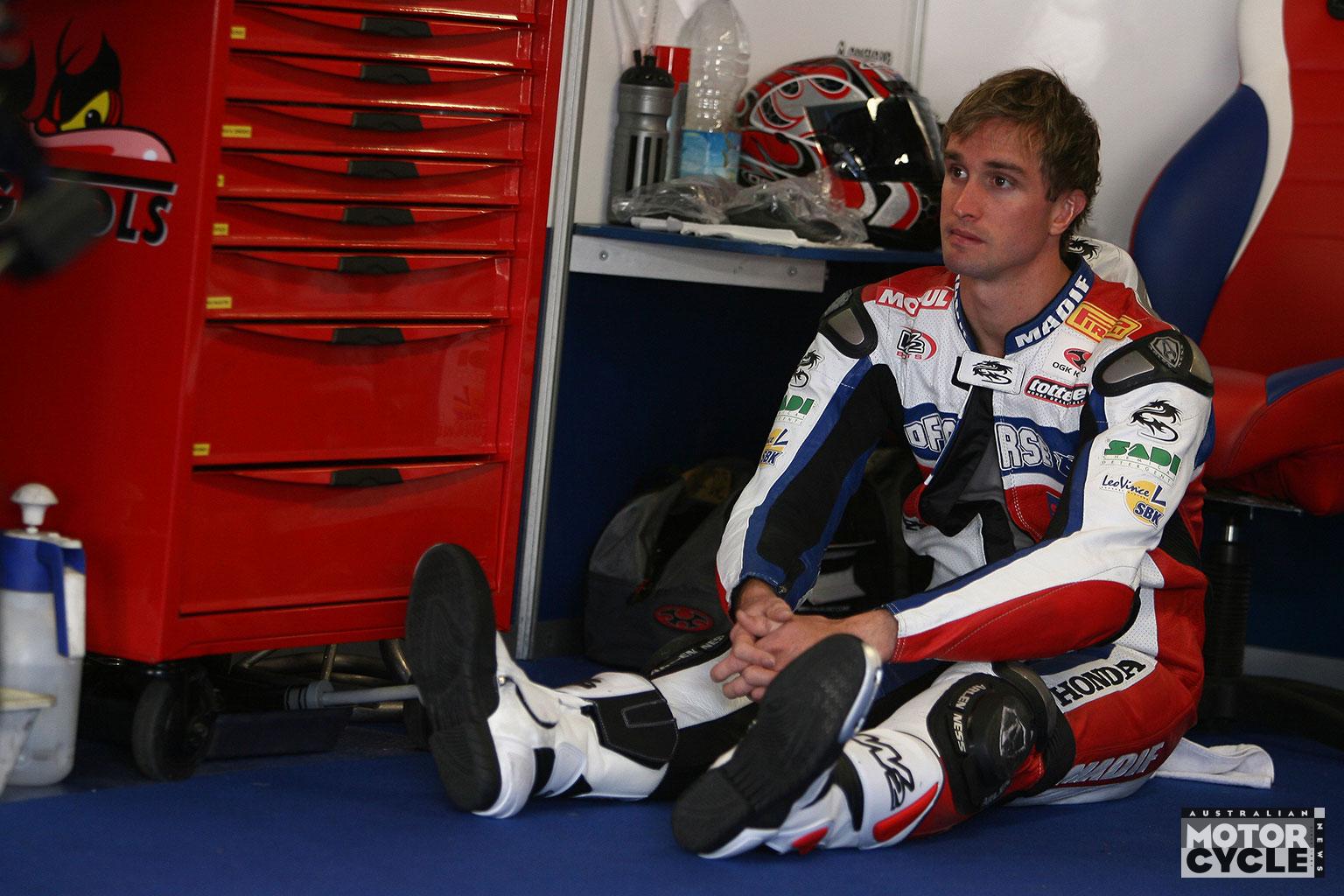
Since he was 16, he’d been working towards a goal he and his dad had set after racing began interfering with school: reach the world championship by age 24 and run inside the top 10. It gave the pair a measure of whether the enormous commitment they were making was leading somewhere.
Russell was 24 when he lined up for the 2008 WSBK season. At Phillip Island’s second round, he finished ninth. “I achieved the goal that I’d set out to achieve,” he says. “And I didn’t stop and think about it at the time. My career was so tunnel vision. It was to the exclusion of everything else. Racing was it.”
By 2010, Russell was still racing overseas, domestically in Italy and Sweden, but barely earning enough to survive. For the first time, he began questioning the life he’d spent years working towards. And now, with hindsight, he can look back and see what he couldn’t at the time.
“I created a goal and I reached that goal but I hadn’t created a new one.”
Returning to Australia in 2011, a handful of appearances included a ride on an Aprilia RSV4. During a wet race at Winton, he crashed heavily and, lying in the medical centre afterwards, realised the appetite had gone.
“I remember just sitting there thinking, ‘I don’t want to do this anymore’.”
Walking away from racing also meant confronting a question he’d never needed to ask: If racing had been his life since he was 16, who was he without it?
“My whole identity was wrapped up in being a motorcycle racer,” he admits. “For me, it just dictated everything. It dominated my life.”
So he deliberately went looking for experiences he’d missed while racing, taking jobs as a labourer, trades assistant and in sales, working across different industries and even starting an engineering degree.
“I just wanted to do normal jobs and experience what normal life was like.”
In early 2024, Russell headed west to Derby to help his dad with the family hotel business as he approached retirement. About six months later, he attended a party after a games day at the local sportsman’s club, where a man he’d never seen before confronted him.
“He was angry at me, and I had no idea why. Neither did my friends beside me,” says Russell. “And that’s basically the last memory I’ve got.”
TOUGHEST BATTLE OF ALL
CCTV footage showed Russell being knocked unconscious by a running punch and falling head-first onto concrete. He suffered a serious skull fracture, a broken cheekbone, two broken vertebrae and nerve damage to his shoulder. He was flown by the Royal Flying Doctor Service to Broome, but his injuries were beyond what could be treated there. He still doesn’t know who organised it, but he was flown by private medical jet to Royal Perth Hospital.
“I was in a coma for just under a month,” Russell says. “I had to relearn swallowing, talking, walking. I had double vision for about six months and I’ve been in a slow recovery since.”
Suddenly the thing that had struck me at the start of our conversation – Russell’s articulate recollections, the detail he can retrieve from races held more than 20 years ago – takes on a very different significance.
He’s recovered well physically, but fatigue remains a problem, as do short-term memory and the executive functions involved in day-to-day planning. He’s now living at a specialist facility in Perth where he has access to the support and rehabilitation he needs.
“Physically, I’m fine, but my brain doesn’t work the way that it used to,” he says.
It’s a confronting admission from a bloke whose racing career included more than its share of heavy crashes, broken bones and rapid returns to competition. When asked whether any of that experience – the ability to tolerate pain, commit to rehab and keep going – has helped, his answer is immediate.
“No, it’s completely different,” he states. “This is like nothing, nothing that ever happened to me when I was racing. You can’t push your way through it.”
And for someone who spent so much of his life doing exactly that, recovery has demanded a very different skill. “I’ve learned a lot of patience and to lower my expectations.”
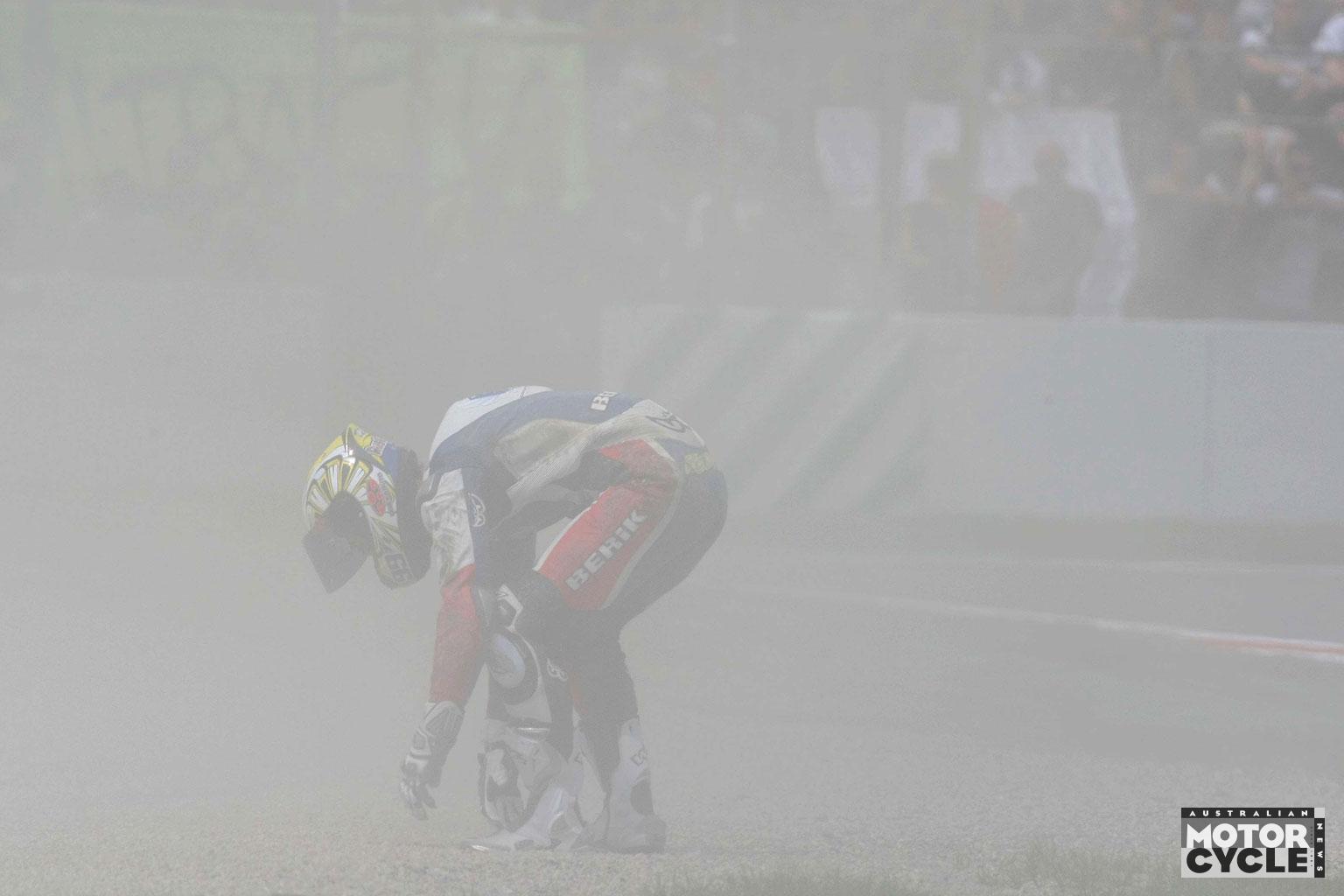
Russell’s immediate goal is to regain his independence through therapy and management strategies, but he’s also reconsidering the clean break he made from motorcycle racing.
“I miss racing and the relationships I had during it that I took for granted at the time,” he says.
“I regret the swift departure I made and so much of my life went into it for so long, it’d be a pity to not share that in some way.”
Commentary appeals, as does working with a team or at a ride school. Most of all, Russell thinks the lessons from a career containing plenty of opportunity, success and hard knocks might be useful to the next kid trying to find his way through the sport.
“It would be nice to share some of those experiences with young riders, so hopefully they’ll know a bit better what to look out for, how they can prepare for it and deal with it.”
And he’d like to get back to a racetrack.
One of the exercise physiologists helping with Russell’s rehabilitation is also a rider and, inevitably, the pair spend plenty of time talking bikes. He has just ordered a Panigale V4 S and Russell hopes they’ll make it to the track together when he’s ready.
And when that happens, there’ll be no spreadsheets, no expectations and nothing more to prove.