Peter Bom tackles the issue many riders, both on the track and the road, don’t want to confront
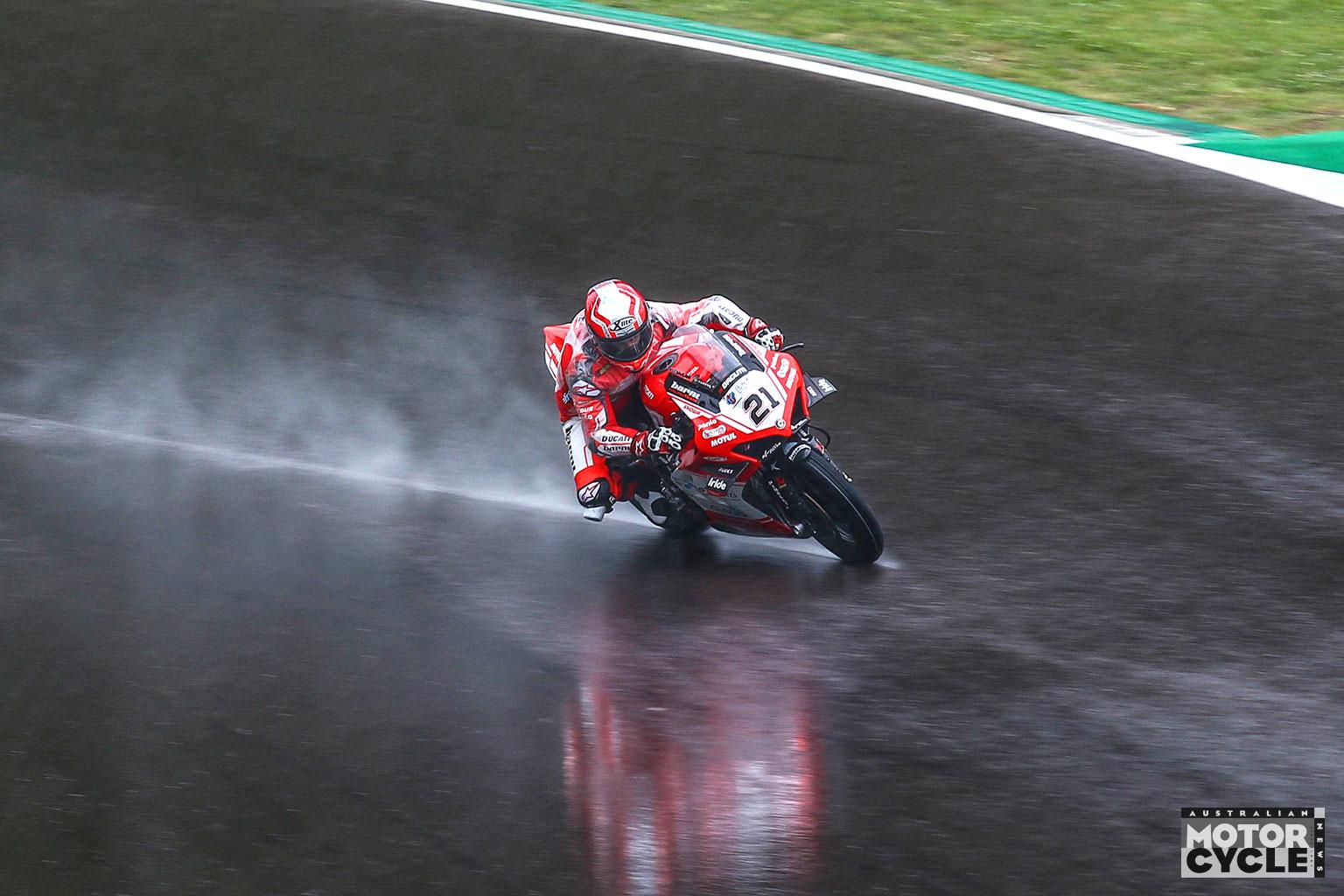
It’s only when it rains that you really see the best riders on top and in control. Simply because in wet conditions, skills are more important than the bike.
We have seen it so many times. As soon as the asphalt is wet and the rain tyres are on the rims, the balance of power changes between the riders. For while favourites sometimes disappoint, it is often the underdogs who rise to the top. And often the wet races are great, with plenty of drama, including crashes, and often surprising results.
Everything is becoming a bit more equal
The fact is that on a wet track the amount of power is no longer that important, nor is the perfect tuning of the suspension and electronics. Tyre choice is also simple, and their pressure or temperature no longer plays a major role.
For the riders, it is quite a huge adjustment. Naturally, there is much less grip on wet asphalt, but exactly how much less is very difficult to estimate. And as if that wasn’t bad enough, the situation is constantly changing. As soon as the rain subsides, the grip suddenly improves, but if it dries up too much, the ultra-soft rubber on the rain tyres wears out lightning-fast.
However, if it starts raining harder, the water pools and racing suddenly becomes much more difficult. The ideal racing line also changes on a wet track, and extra care must be taken to avoid puddles.
Riders hate this, and that is why even the well-known ‘rain specialists’ still prefer a dry race. Why?
Because things can go wrong so easily in the rain. For while a small mistake on a dry track can often be corrected, in the rain it usually results in an immediate crash.
The warnings from the tyres are harder to interpret because everything can be different again by the next corner.
There is never exactly the same amount of water everywhere, so a lean angle that is still easy in turn one can prove to be far too steep in turn two.
The same applies to braking, turning in and getting on the throttle early.
Riders also need to look extra far ahead in the rain to spot wet or drying patches in time. Additionally, they must remember very well what they have just learned in a corner, to then repeat it exactly when they arrive there again a lap later.
And all this on a constantly changing track with tyres that can suddenly wear out if the track starts to dry.
This makes it a nightmare for riders who are used to constantly pushing the limits under consistent conditions and then pushing them just a little bit farther each time.
And since this is not possible on a wet track, it makes the risk of crashing so much greater.
Of course, there are exceptions. Sometimes we hear riders say they hope it will rain during the race. However, this refers to situations where recognised rain specialists know they stand no chance on a dry track and would prefer to take these risks.
Riders who are particularly fast in the rain should not automatically be considered more talented. After all, they ride the vast majority of the season in dry conditions, so would have risen to the top anyway.
But when it rains, the game changes. Suddenly they have to do so many things very differently. It would therefore be quite a coincidence if the same guys who are very good in the dry were suddenly also exceptional in the rain. This explains why there are true rain specialists, because they simply have more aptitude for it.