Café racer concept is back and looks to be heading for showrooms
Back in March Harley-Davidson revealed its carbon-bodied RMCR café racer concept bike built around the liquid-cooled Revolution Max engine from the Pan America and Sportster S and borrowing chassis elements from the long-cancelled Bronx streetfighter project. Now a combination of trademark applications and design registrations suggest that the RMCR could be heading for showrooms.
The RMCR – which stands for Revolution Max Café Racer – took its styling cues from the 1970s XLCR, a sales disaster in its day that has since become expensive and collectable. Finished in carbon fibre, it wrapped its retro bodywork around a chassis that notably included the swingarm from the Bronx streetfighter, which came within months of reaching showrooms half a decade ago only to be cancelled at the 11th hour as Harley changed tack and refocused on its core cruiser and tourer customers.
Now, under the new leadership of Artie Starrs, Harley is on a mission to launch more accessible, affordable models including multiple new additions to the liquid-cooled Revolution Max range, which currently includes the Nightster, Sportster S and Pan America. The RMCR concept hinted at that and the new IP filings add more meat to the bone.
Starting with the trademarks, Harley has applied for rights to use the RMCR name commercially all over the world, including applications in the European Union, UK, USA, Canada and more. That’s at odds with Harley’s original claim that the RMCR concept was nothing more than a show bike. Simultaneously the company filled applications to use the name ‘RMXR’ in commerce, suggesting there’s a second version of the bike in development, with the ‘XR’ element suggesting it’s a flat-track-style bike, probably sharing the rear section of the RMCR but ditching the nose cowling and adding higher, wider bars.
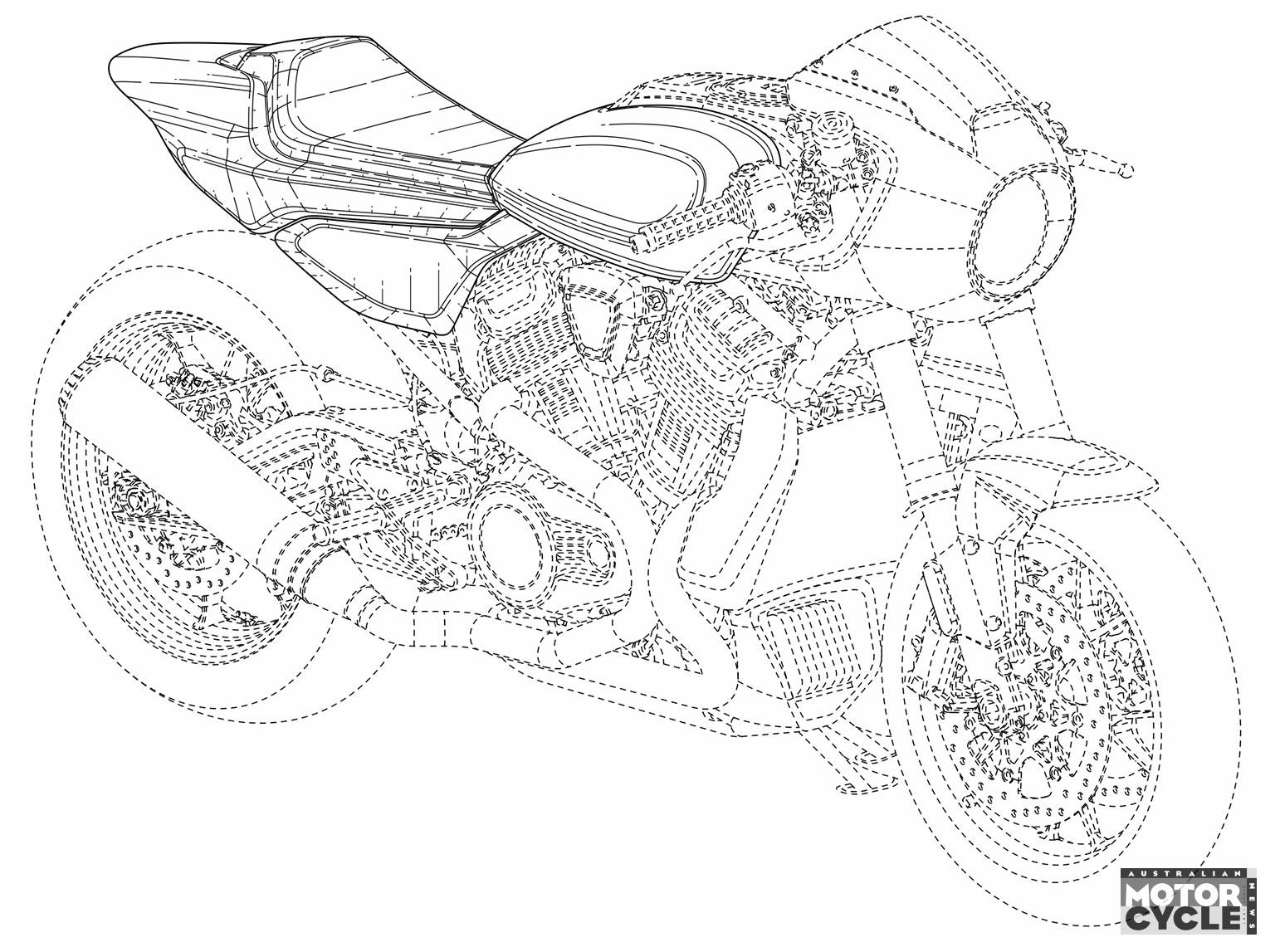
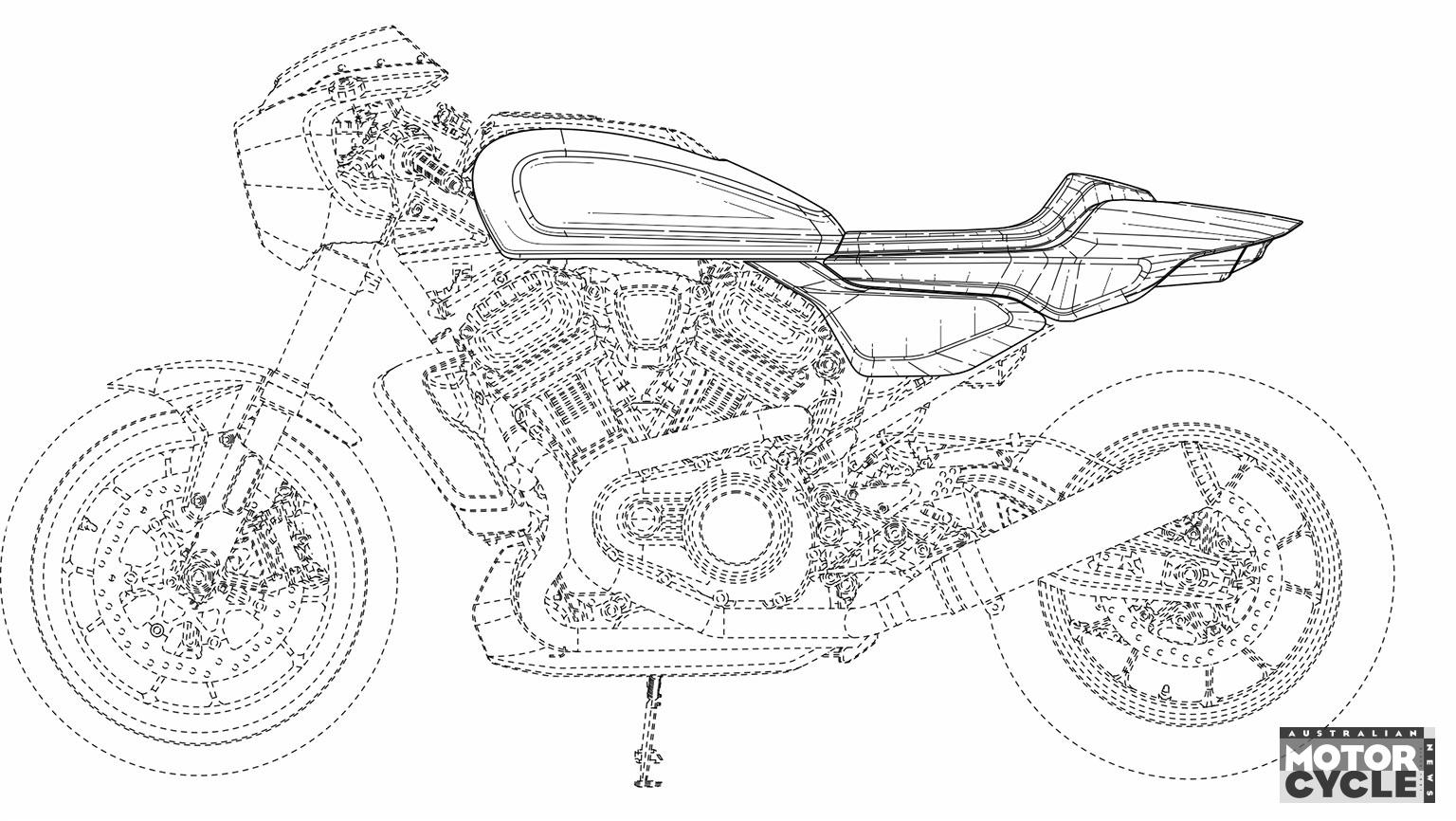
Soon after the trademark filings emerged, Harley filed design registrations to protect the RMCR’s styling. The accompanying drawings closely match the original show bike’s outline, but with a subtle difference to the front mudguard, which in the drawings is reshaped and includes the mandatory side reflector that would be needed on a roadgoing version. The drawings still lack elements like mirrors, indicators or a licence plate bracket, though.
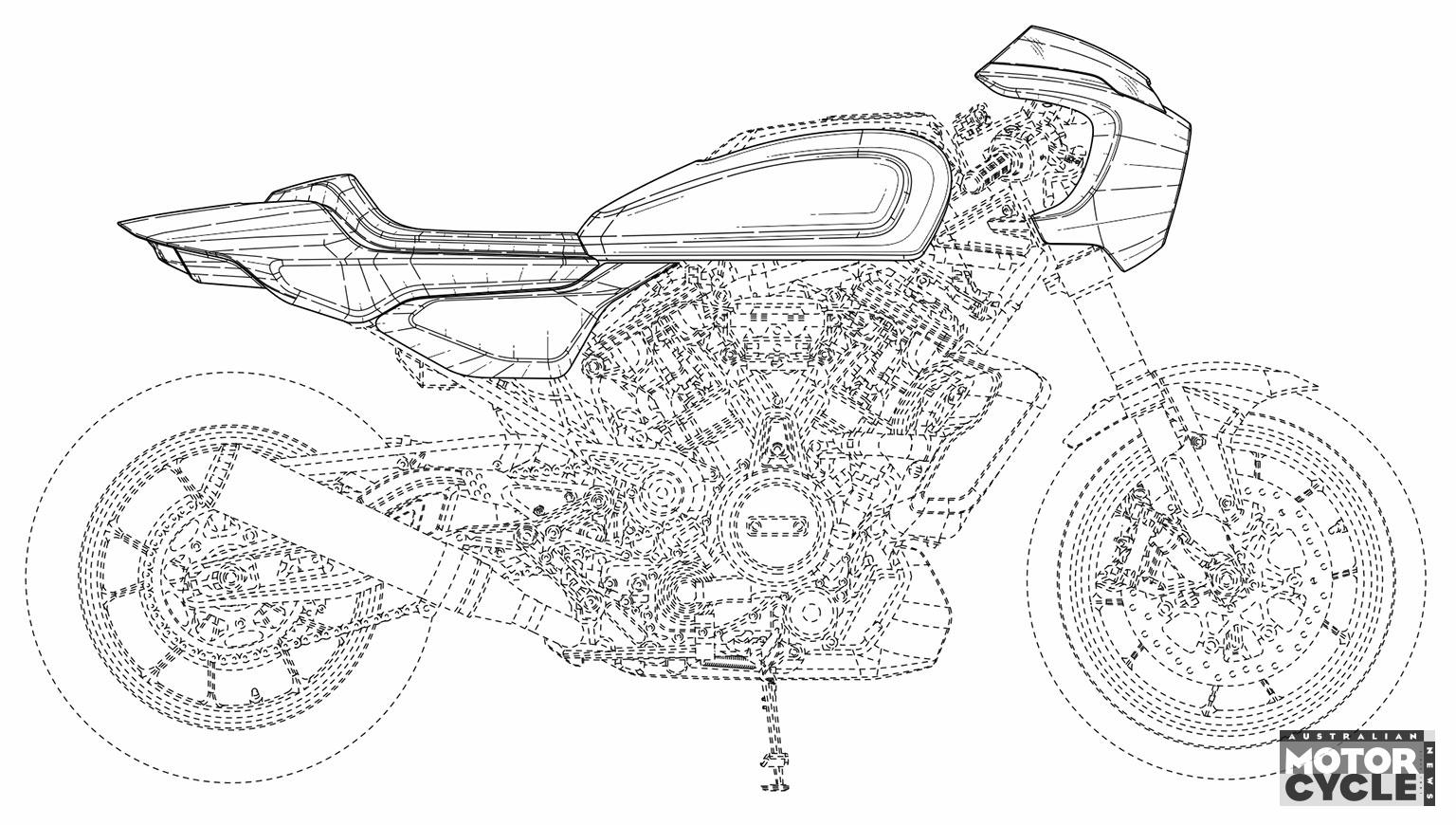
Separate design registrations covered individual elements of the RMCR’s styling including the nose cowl and the seat unit.
Interestingly, while the registrations were published in August, they were originally filed with the relevant IP offices as early as January 2024, well over a year before the show bike broke cover and long before Artie Starrs took over from Harley’s previous CEO Jochaim Zeitz. That means Harley was already thinking about reusing elements from the Bronx project more than two years ago. In the effort to plug the gaps at the more affordable end of Harley’s range, Starrs has already confirmed the brand will reintroduce the Sportster 883, a model that went out of production four years ago. The Bronx was cancelled shortly before that, having previously had its launch date pushed back from 2020 to late 2021, and since Harley is likely to already have invested in tooling to get that model into production, creating the RMCR and RMXR around some of the same components could be another logical shortcut to bolster the brand’s range.