Features include built-in camera and rear-facing microphones to monitor blind spots
GoPro might already dominate the market for action cameras but it’s got an eye on motorcycle helmets as well – buying Australian smart helmet brand Forcite in 2024 and teaming up with AGV on lid development last year. Now it’s filed patents showing what to expect from a GoPro helmet and looks like the company’s ambitions go well beyond simply adding a camera.
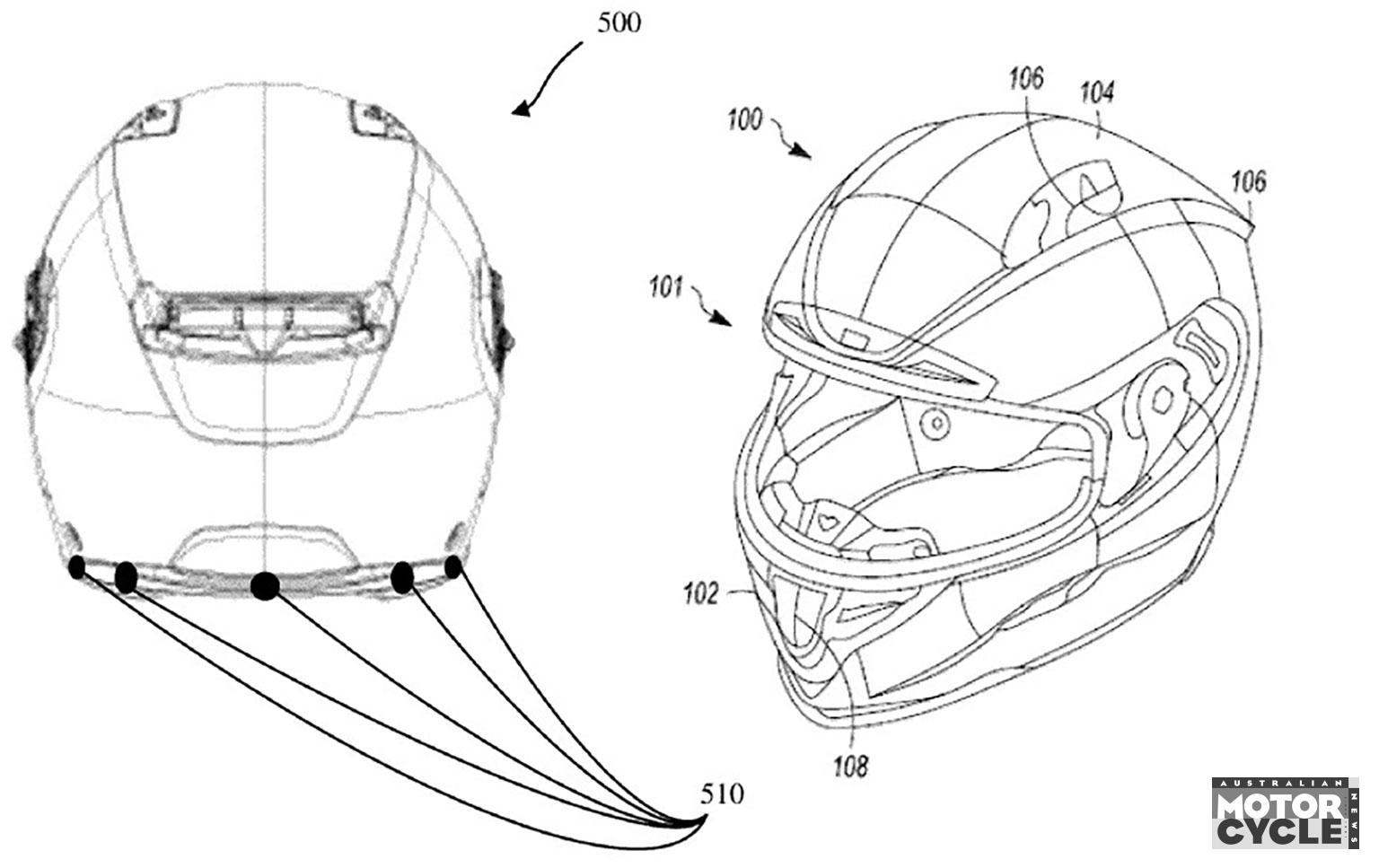
The patent documents show that the planned helmet does have a camera, of course. It’s neatly built into the chin bar, its lens covered by flush-fitting protector, and connected to a pair of microphones facing inward to record the rider’s thoughts. The upper surface of the chin bar also gets an array of multicoloured LEDs facing upward that project light onto a reflective segment in the upper part of the visor, with different colours and sequences used to convey messages to the rider, for example indicating what direction to turn when following satnav directions.
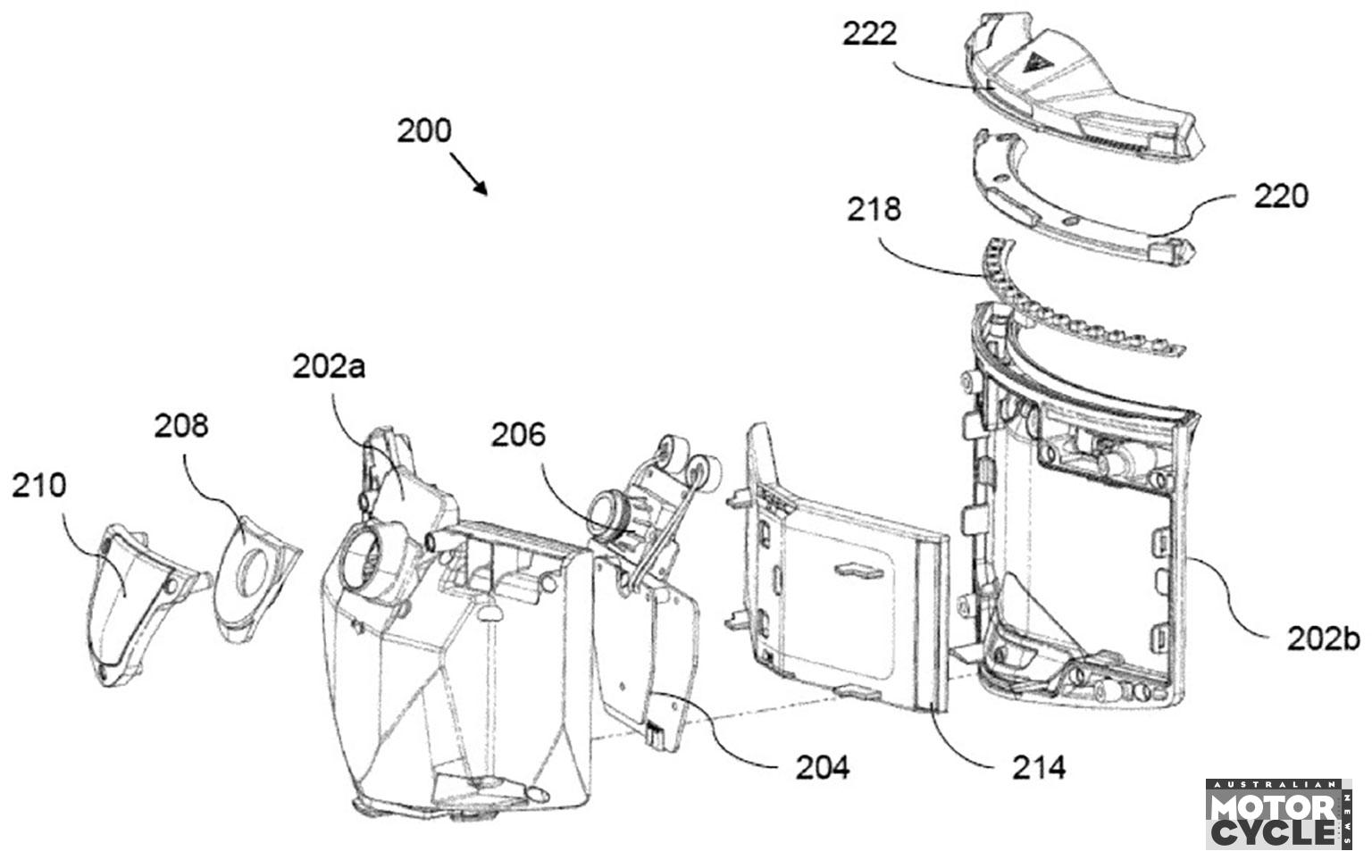
But the real focus of the patent isn’t the camera system or the head-up display. Instead it’s the helmet’s rear-facing microphone array and its cloud-based connectivity, which are intended to combine with advanced machine learning tech to create a low-cost blind spot monitoring system.
The microphones will pick up noise from surrounding traffic that the patent suggests, via machine learning, can be used to monitor the position and distance of other vehicles in relation to those microphones. The helmet will also learn to ignore the sound of your own bike. By using built-in accelerometers the helmet can track the rider’s head movements so it won’t get confused about the positions of other vehicles as you look around.
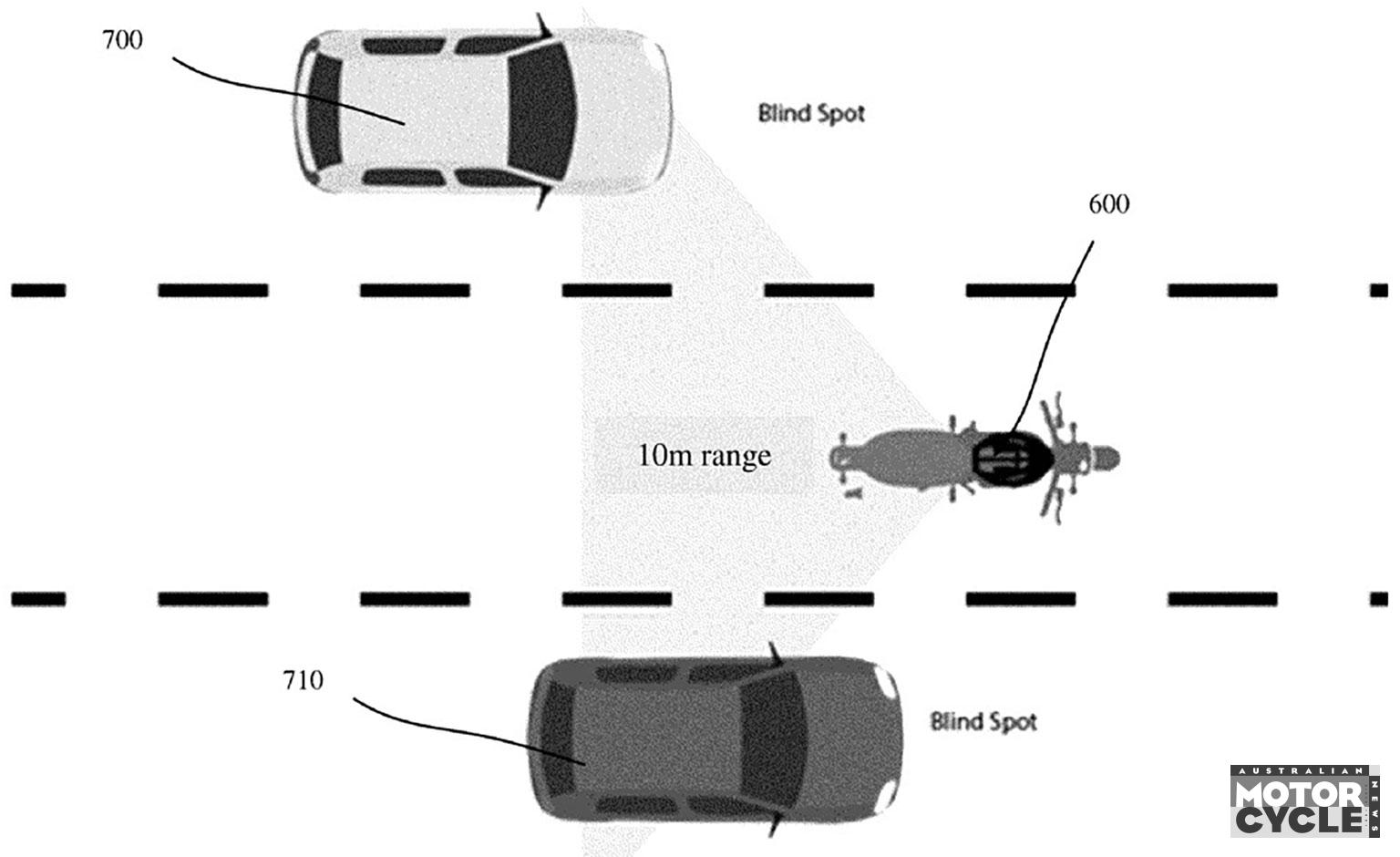
The idea appears to be to reduce the cost of the built-in elements of the helmet – microphones are much cheaper than cameras or radars – and to leverage computing power instead.
Whether a computer can successfully use sound alone to accurately pinpoint the positions of other traffic and provide useful blind spot warning alerts as a result, remains to be seen. Given the volume and variability of external influences like wind noise, not to mention the vastly differing noise levels of cars, it’s sure to be a tough task.