Semi-enclosed electric scooter looks to be headed for showrooms, as more clues about upcoming M1000RS emerge
As a rule of thumb, when BMW calls a concept vehicle ‘Concept’ then it’s a near-production machine and when it gives it the title ‘Vision’ it’s less likely to reach showrooms, but a new patent suggests the company is still hard at work on a roofed electric scooter similar to last year’s Vision CE show model.
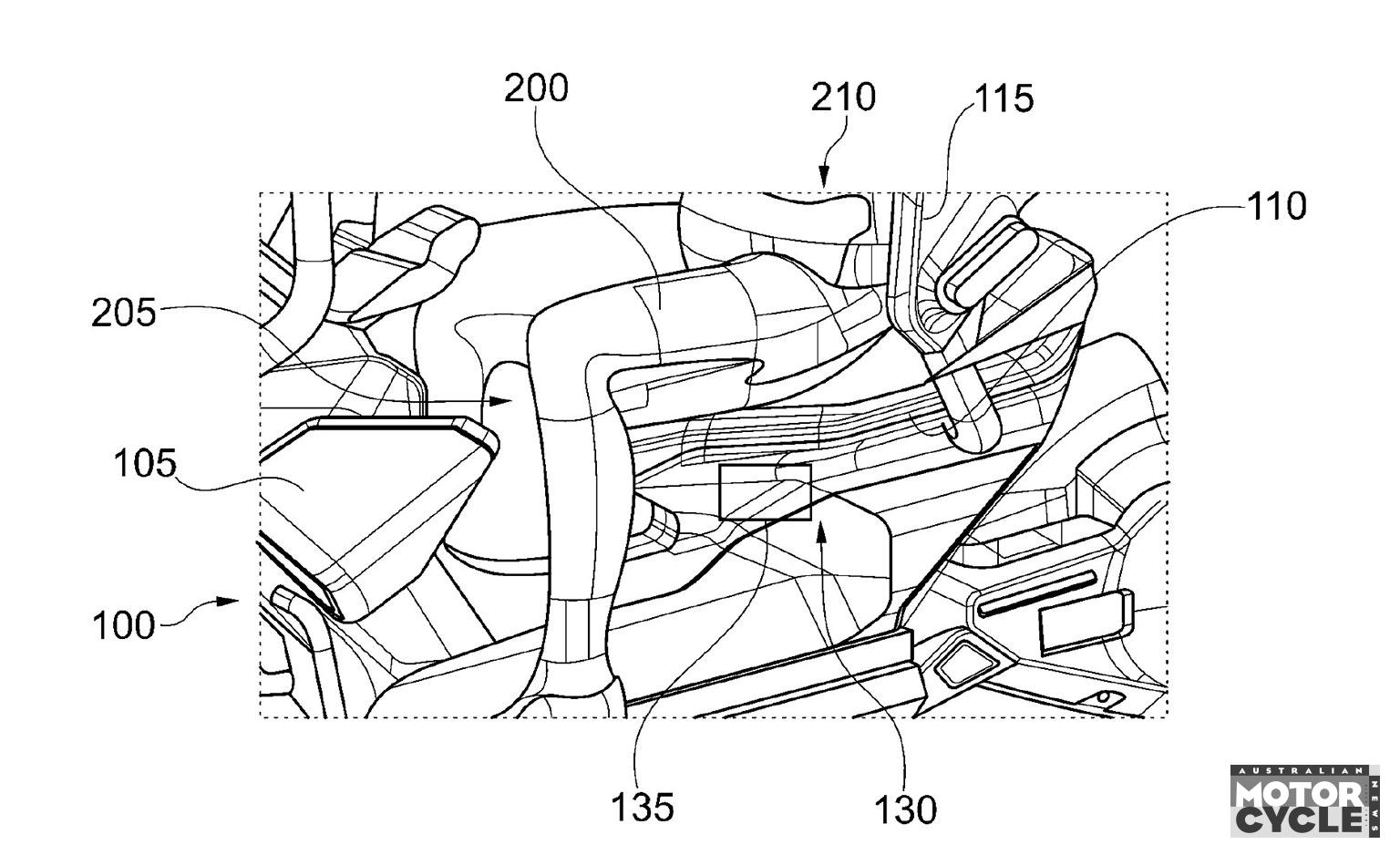
The Vision CE was an electric scooter similar to the existing CE-04, but with a car-style high-back seat and four-point harness to keep the rider securely attached and a tubular rollover cage to act as a safety cell in a crash. It’s an idea that BMW has been pursuing for decades, starting with the initiation of the C1 scooter project way back in 1992. The C1 reached production in 2000, only to be discontinued in 2003 in the wake of poor sales and a confused reception: the idea was that the bike’s crash structure would allow it to be ridden without a helmet, but individual countries took different approaches so helmets were still required in some jurisdictions.
Since then BMW has occasionally returned to the idea, initially with the 2007 C1-E concept – an electric version of the original C1 – and most recently with the Vision CE.
The latest patent suggests that project is still progressing, showing close-up drawings of a bike that’s similar to the Vision CE but with some distinct differences including a redesigned powertrain and alterations to some of the visible body panels, all hinting that the original ‘Vision’ is progressing towards a more production-viable machine.
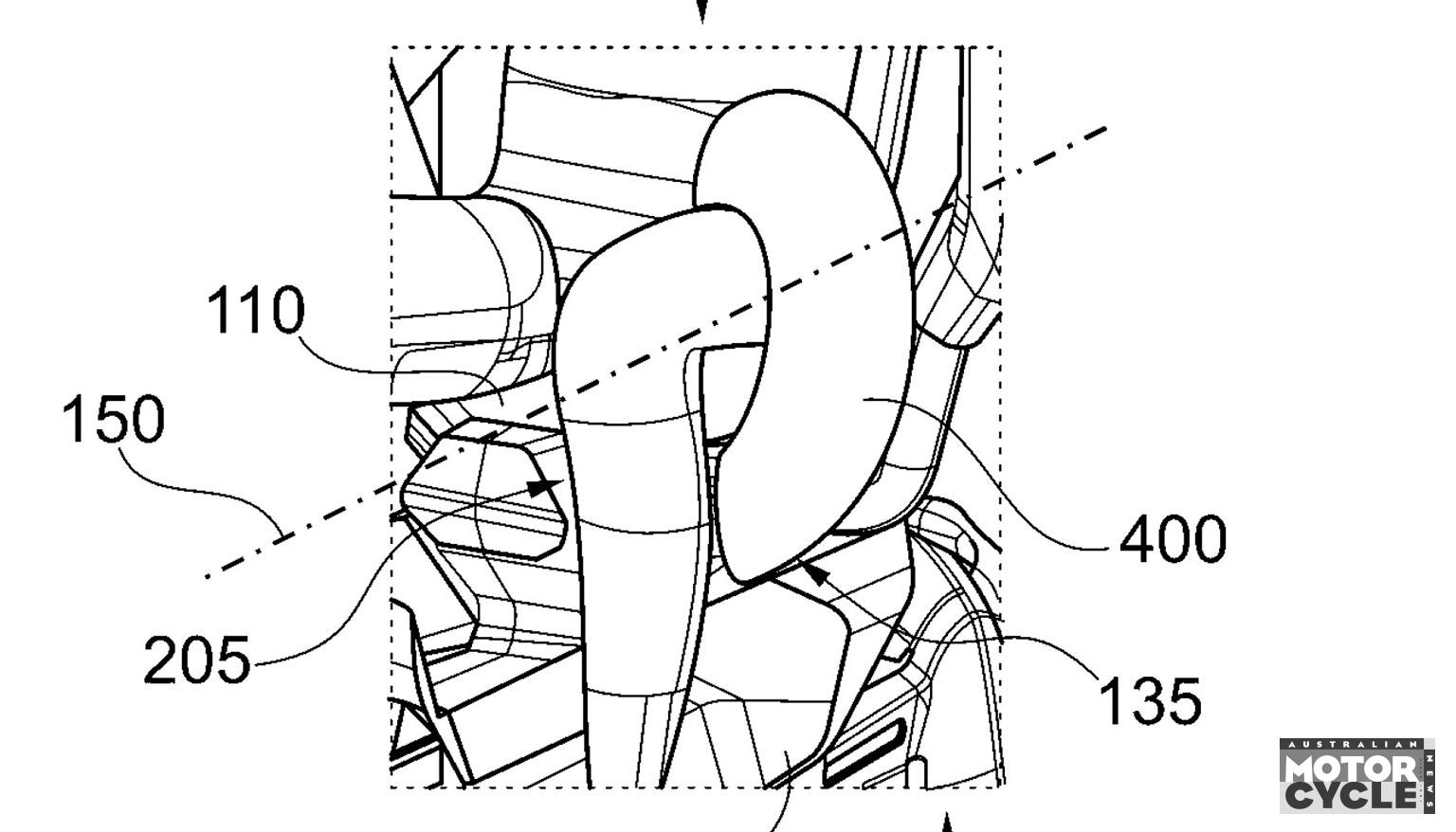
The focus of the new patent is addressing a specific problem with the idea of an open-sided safety cell and a rider that’s strapped to the bike: what’s stopping the rider’s limbs from flailing outside the cell during an crash and potentially getting injured? Specifically considering the rider’s legs, the patent’s solution is a side-mounted airbag system, with a curved, tubelike airbag that emerges from a hatch beneath the rider’s thigh when it’s triggered and extends up and around their upper leg, holding it in place on the seat. With their thighs pinned against the seat and prevented from moving outward, the airbags should also help keep their lower legs in place and their feet on the footboards, reducing the risk that they might get trapped between the bike and the ground.
Of course, all this tech adds more weight and cost to an electric scooter that’s already likely to be expensive when compared to conventional bikes. But realistically a future BMW bike-with-a-roof will be intended as a practical commuting alternative to a small car, and in that light it could still forge a place in the market.
More M1000RS details emerge
We’ve already seen paperwork from California’s Air Resources Board and the US Environmental Protection Agency listing a BMW M1000RS model among the company’s approved 2027 offerings and now a new document direct from BMW itself has confirmed the bike’s existence.
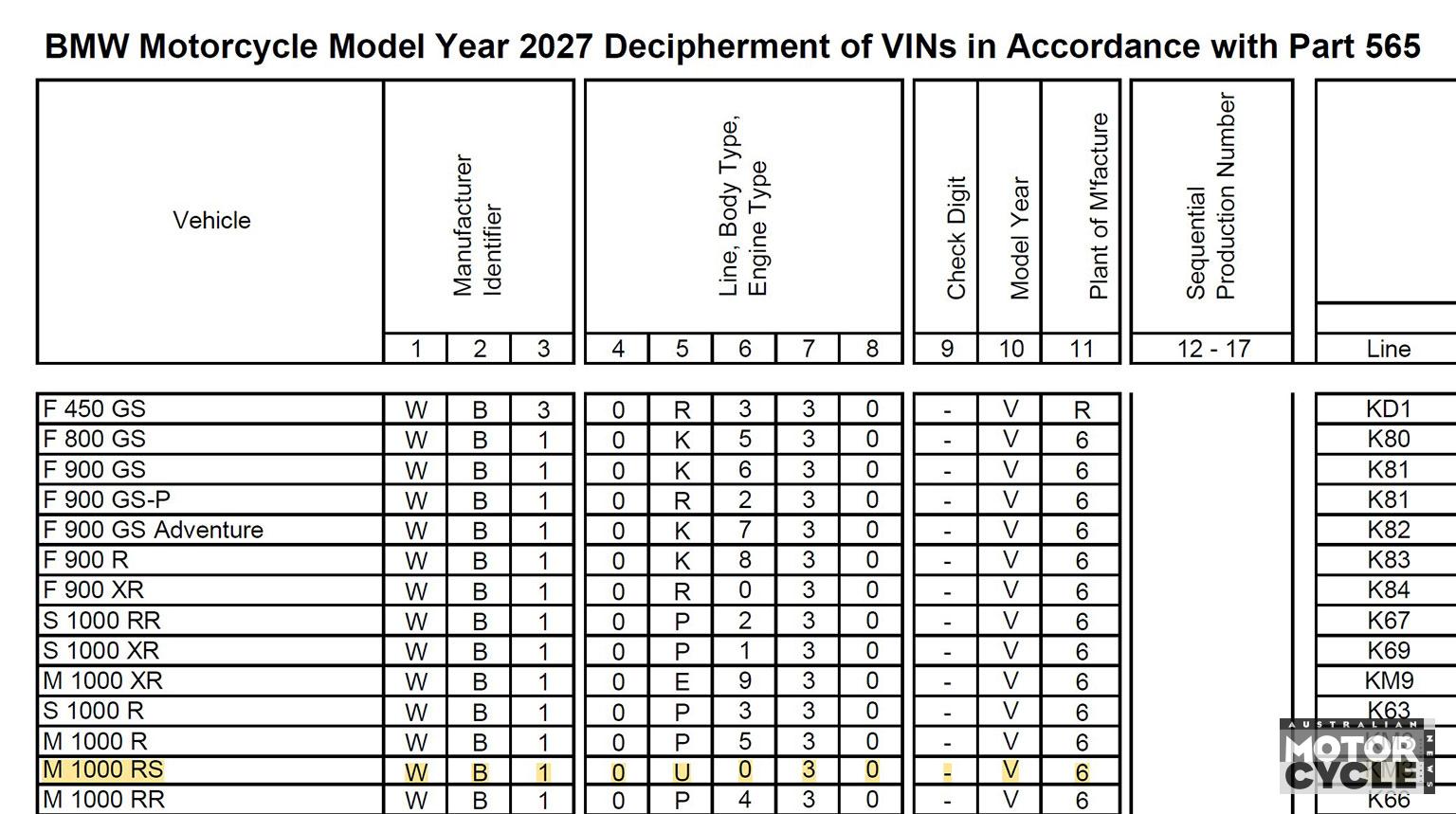
The latest evidence is in the form of VIN decoding paperwork filed with the National Highway Traffic Safety Administration (NHTSA) in the USA, which requires all manufacturers to explain the meanings of their bike’s unique Vehicle Identification Numbers (VINs) each year.
BMW has filed the paperwork for its 2027 range, and it includes the M1000RS as a new member of the ‘M’ model range. The document also confirms that it has the same engine as the M1000RR – putting out 202bhp in US-market trim, but more than that elsewhere – rather than the slightly less powerful, 198bhp version of the 998cc four that’s used in the M1000XR.
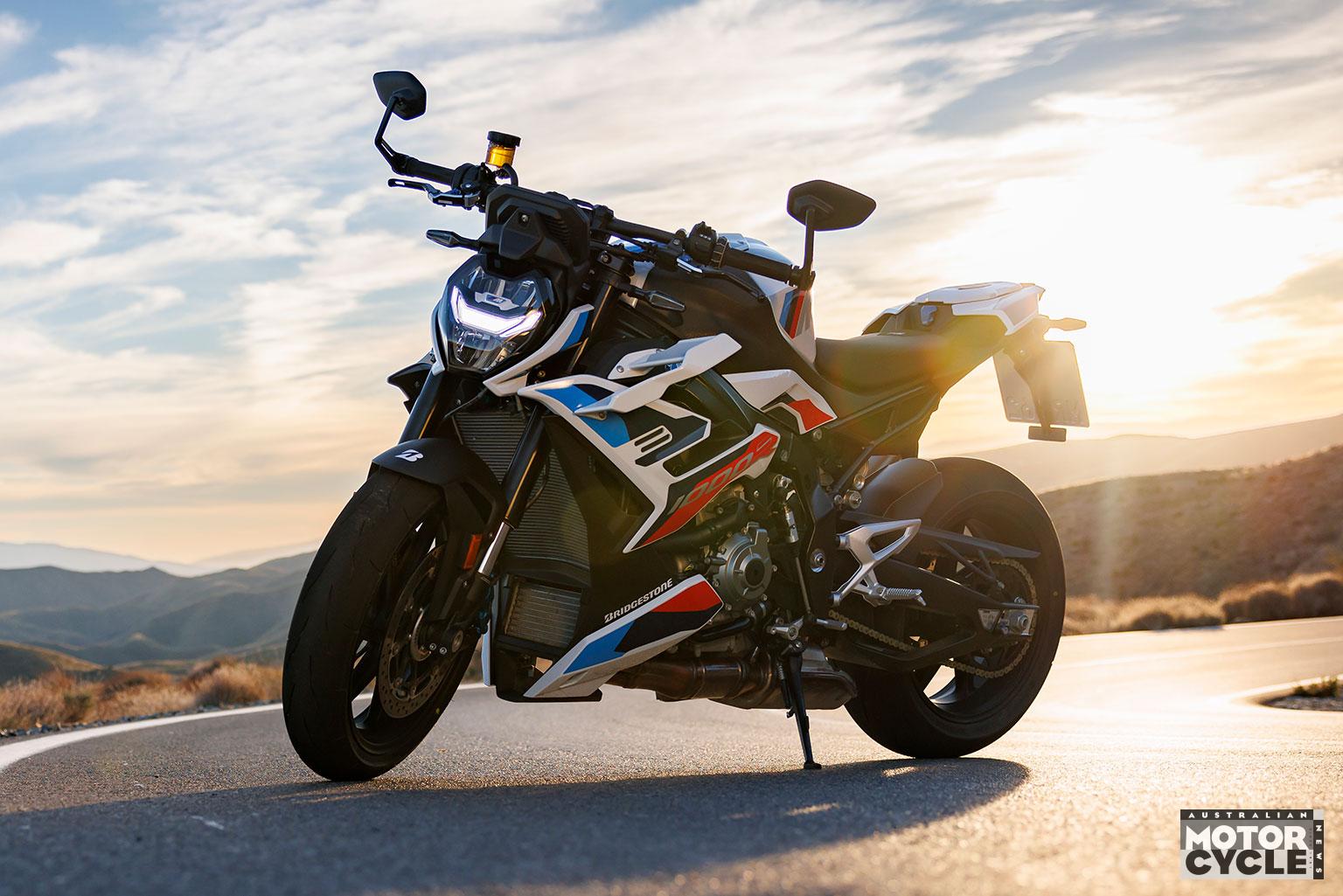
Tellingly, the new document shows that the M1000RS’s VIN will share the same ‘KM3’ model line identifier code as the naked M1000R, rather than the ‘K66’ code of the M1000RR superbike. That suggests it will essentially be an M1000R with a larger front fairing to fill the sports-touring role in the range.