Call it an ADV? Kawasaki patents one of the weirdest concepts in the history of saddled vehicles
Last year Kawasaki unveiled the Corleo – a horse-like machine that made its static debut last April at Expo 2025 in Osaka. The brand doubled down with promises that it will reach production by 2035 and now the first patents have emerged showing how it’s intended to work.
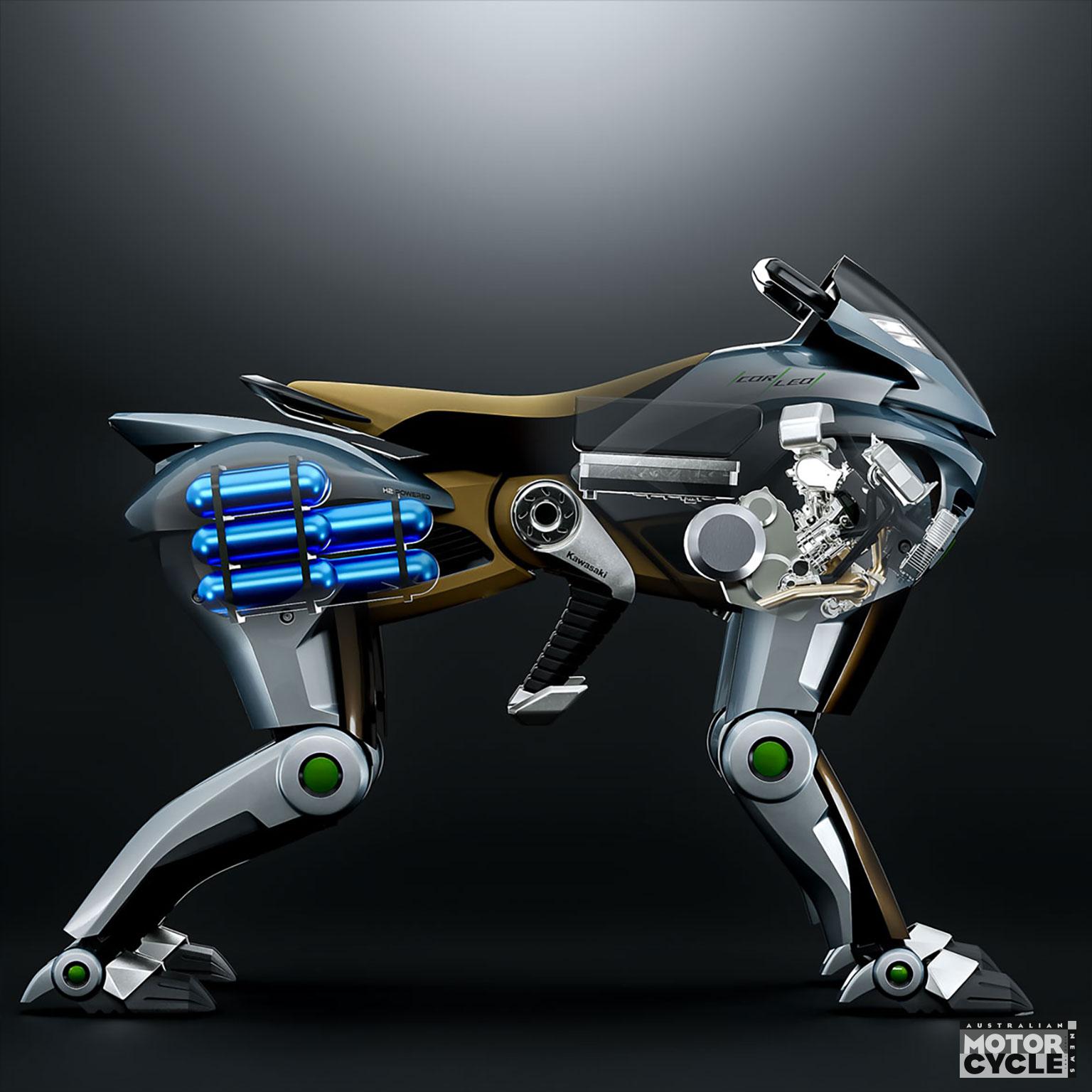
While inevitably likened to a horse thanks to the fact it’s got four hooved legs and a rider the Corleo is actually modelled on the shape of a lion, that’s the ‘leo’ in its name, and Kawasaki refers to it as an RMV: Robotic Multi-Legged Vehicle. The idea is that it’s part motorcycle, part ATV and part animal, able to cross terrain that a wheeled vehicle would struggle with, but at speeds that couldn’t be achieved on foot. Kawasaki’s CGI videos show it bounding across a variety of landscapes, and there’s no denying it looks like fun. It just might not be that simple to make it really work.
View this post on Instagram
Underneath there’s a hydrogen-fuelled combustion engine – initially said to be a turbocharged 150cc two-stroke single – connected to an electricity generator that drives electric motors to move the legs. However, reports in Japan claim that Kawasaki has since briefed the Japanese press that the engine has since been uprated to a 303cc design with a supercharger.
Either way, it’s still difficult to reconcile the idea that a few small hydrogen cylinders in the rear of the machine can contain enough fuel to provide much in terms of power or range. With a combustion engine converting hydrogen and oxygen from the air into water and a rotational movement that’s then converted into electricity, stored in batteries and fed into the motors driving the legs, there are sure to be some substantial losses in efficiency. Kawasaki hasn’t revealed numbers – the vehicle hasn’t been built yet – but previous combinations of hydrogen combustion engines and generators have resulted in overall efficiency of around 30%. In comparison, a hydrogen fuel cell that converts the gas directly into electricity using a chemical reaction, eliminating the engine and generator, would give up to around 60% efficiency. However, Kawasaki is dedicated to the idea of hydrogen combustion engines, which have certain manufacturing advantages and the ability to run on hydrogen that isn’t completely pure. Contaminated hydrogen can cripple or destroy a fuel cell.
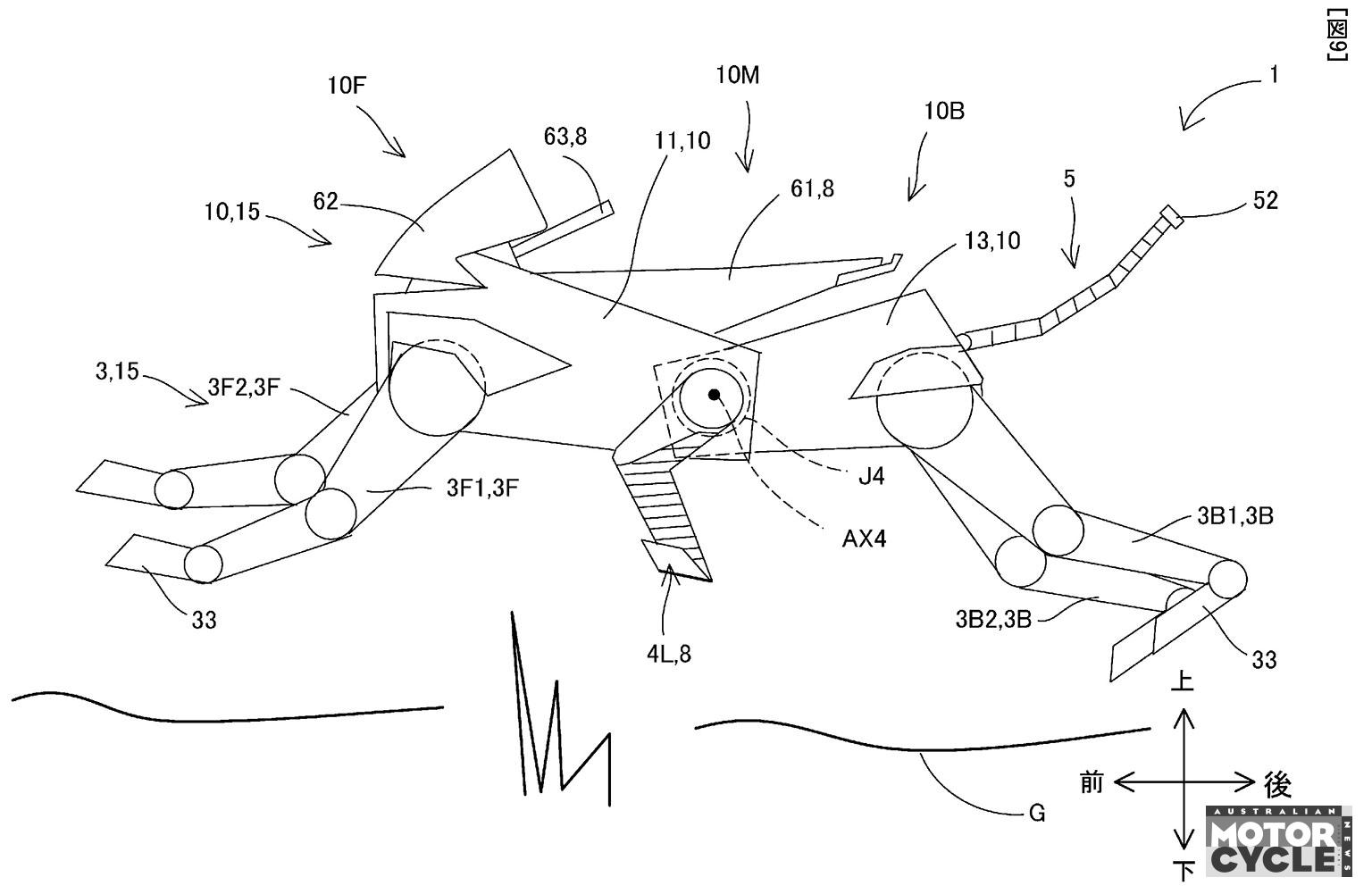
Kawasaki has already applied for at least eight patents around the project, but most have not been published yet. The first to be revealed and give a genuine insight into the way Corleo is ridden has now emerged, though, and shows that the company intends the rider to wear a dedicated piece of clothing equipped with multiple inertial measurement units to provide continuous monitoring of their centre of gravity. Rather like a horse, the Corleo doesn’t have steerable handlebars, brakes or a throttle. Instead the rider’s position, combined with its own sensors, control its operation.
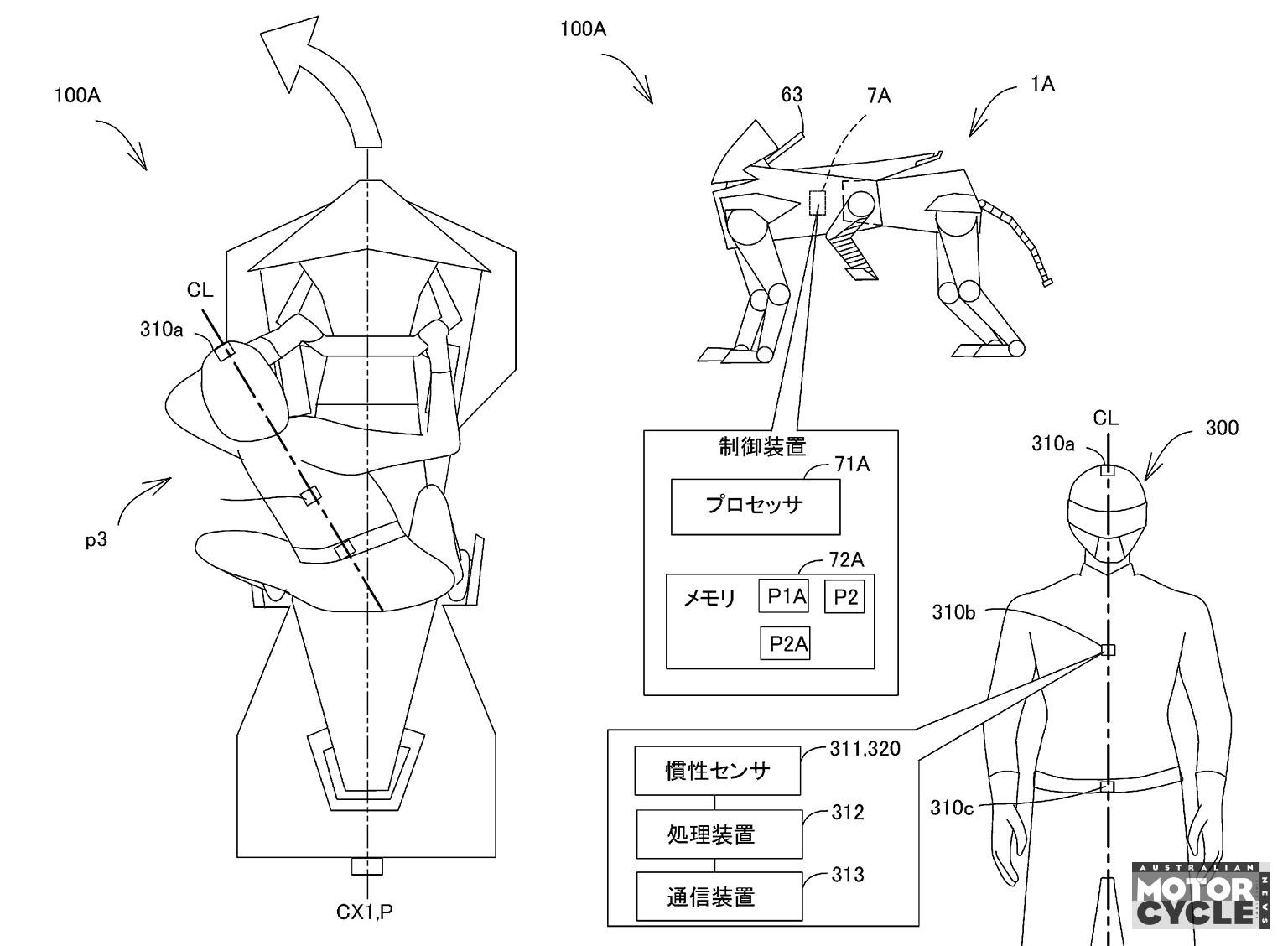
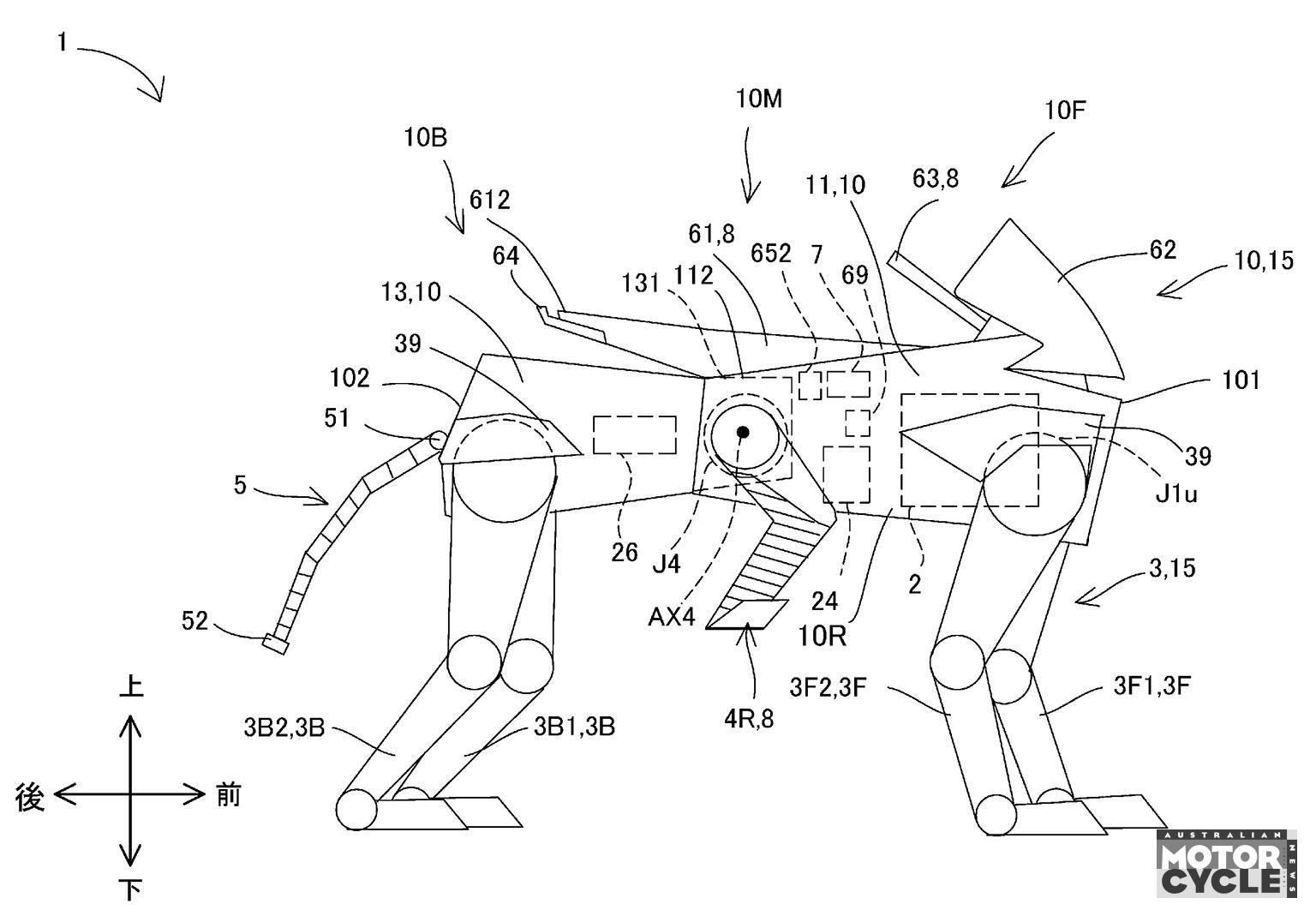
The patent suggests the vehicle has both automatic and manual driving modes. In automatic, it navigates its own way to your destination – you’re simply the passenger – while the manual mode gives the rider control. Beyond that there are several riding settings including a high-speed travel mode (gallop), a low-speed mode, a ‘gear-drop’ mode and a rough terrain mode. Within these there are further settings for energy saving, suspension control and balance control.
Kawasaki’s plan is to have a virtual riding simulator in action by next year, followed by demonstration prototypes in 2028 and 2029 ahead of a rideable prototype version, the Corleo RE, at a ‘Mecha Esports’ event at Expo 2030 in Riyadh. Further prototypes will follow in 2033, with the production model, dubbed Corleo X, coming in 2035. Initially, even that will be intended for use only in outdoor sports parks, so it’s likely to be something you’d rent rather than buy. Even that seems like an ambitious goal, though, given the slow progress of hydrogen combustion engines and the eternal issue of how to store enough hydrogen on a combustion-engined vehicle for a viable, real-world range.
But Corleo is already working very well for Kawasaki in one respect: publicity. The initial CGI riding videos from its 2025 unveiling are said to have achieved 1.2 billion impressions on social media.