Bob Rees lost the love of his life and the use of his legs while touring in a remote part of Africa. But his determination to continue riding has since inspired many
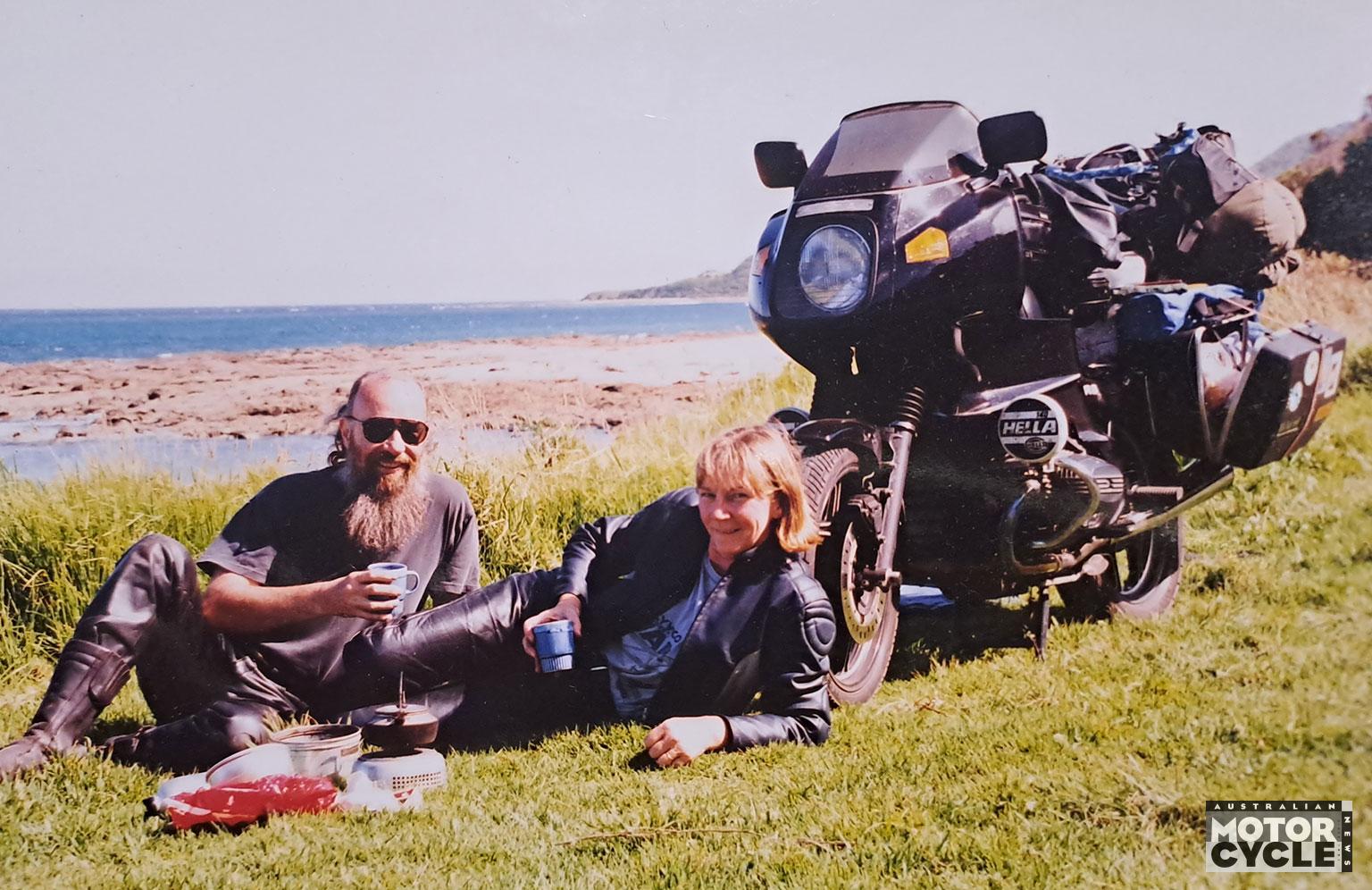
Perth rider Bob Rees became a paraplegic in 2019, after being hit head-on by a car on a single-lane bridge in a remote part of Africa. Lifelong motorcyclists, he and his wife Christine were enjoying their second tour of the continent on a BMW R 1250 GS with friends when, already on the bridge, “a car jumps on and kept accelerating like I wasn’t there”, recalls Bob. “I knew my back was broken when I hit the ground, I was paralysed. And I thought my wife was going to be okay – she’s very stoic, just a beautiful lady – obviously lots of breaks in her arms and legs and stuff.”
With very little in the way of services in Africa’s remote northern Malawi region, Bob and Chris were told an ambulance might be three days away. Someone managed to get in touch with a charity that had access to a flatbed truck; villagers removed a door from a dwelling in order to get Bob onto the back of the truck, and a mattress turned up in a bid to try and make Chris more comfortable on what would be a five-and-a-half-hour journey to Mzuzu Central Hospital along dusty, bumpy roads.
“It’s a long story, but I knew Chris was going to die, and so did she. I twisted over so we could hold hands, we told each other we loved each other and she said what a fabulous 47 years we’ve had together and don’t blame yourself. And then she died. And she looked beautiful.”
With another hour and half still to travel, Bob explains how he also experienced death himself that day, how he went down a white tunnel, losing all pain, grief and even the memory of what had happened.
“I was just in this state of ecstasy – I’ve never been so happy in all my life. It was just crazy,” he tells me. And while his mate’s shouting eventually bought him back to life, he’s grateful for the experience that much later would bring him at least some comfort knowing that Chris would have felt that way too.
They arrived at Mzuzu hospital, which had steel beds and no painkillers, and it was another 38 hours before a small plane transferred him to Johannesburg, where Bob was finally operated on.
“You can imagine how traumatic the whole thing was,” Bob says. “I’m dealing with the pain and paralysis, and the death of Chris. And the only way I could keep going, really, was to try and turn it around and make my life worthwhile. So even when I was in Africa in the hospitals there, before I was flown over to Australia to the Fiona Stanley (Hospital in Western Australia), I was figuring out how I could go and ride a bike again.”
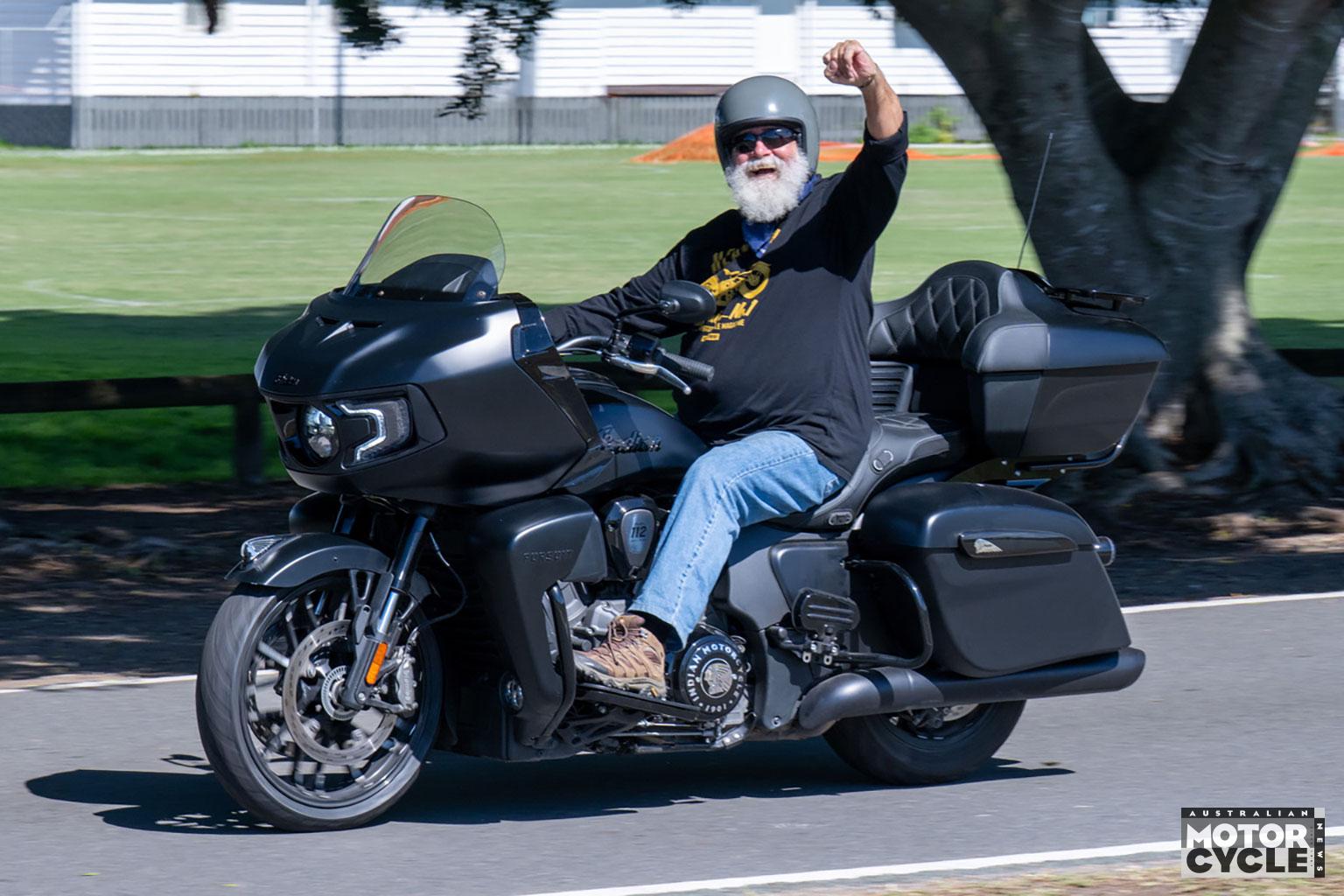
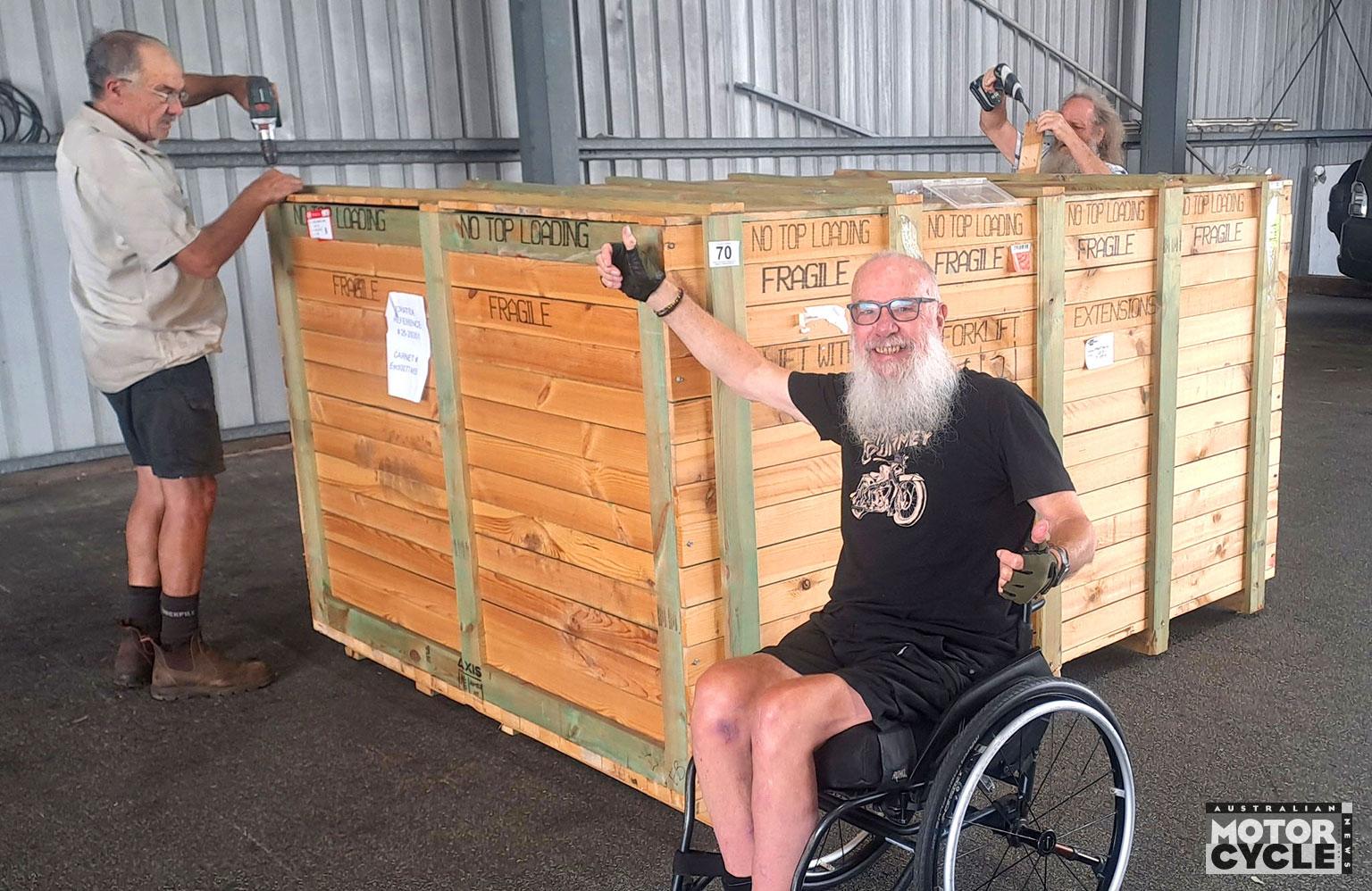
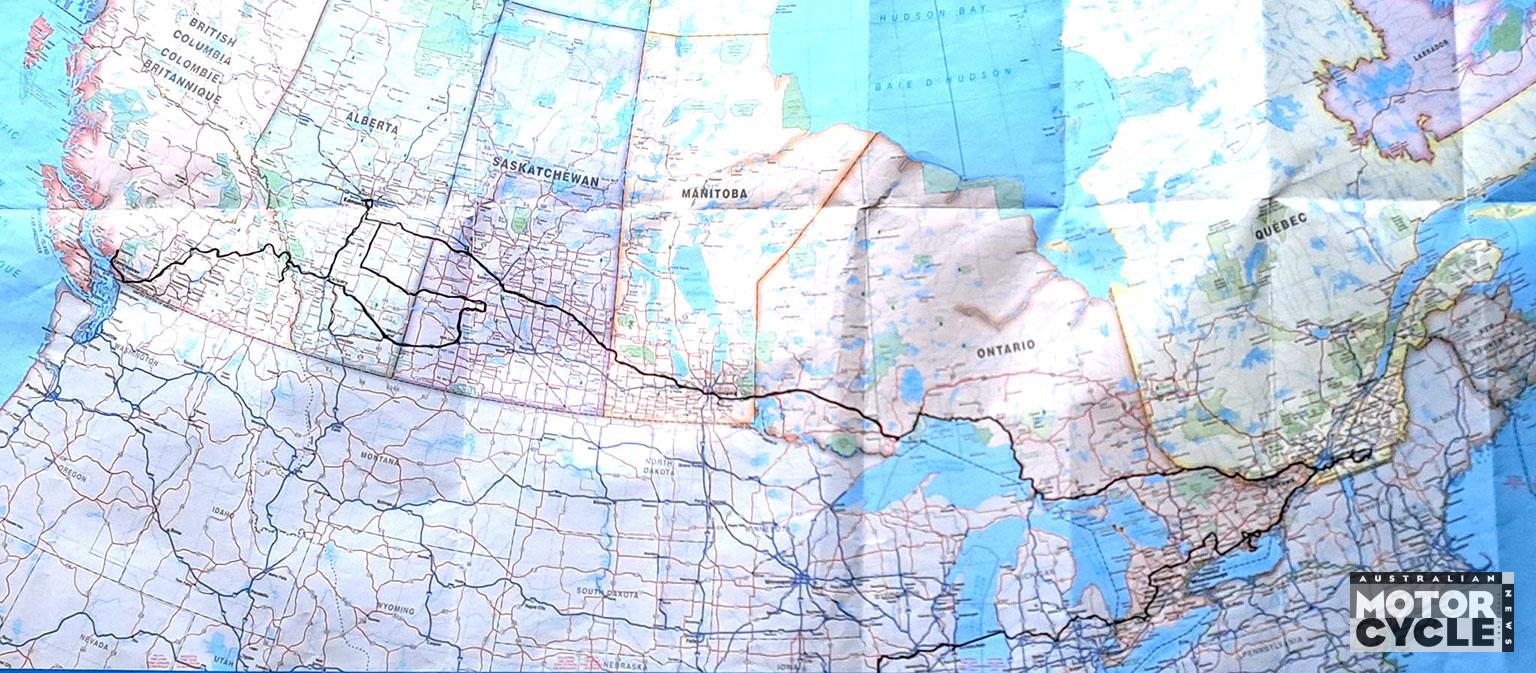
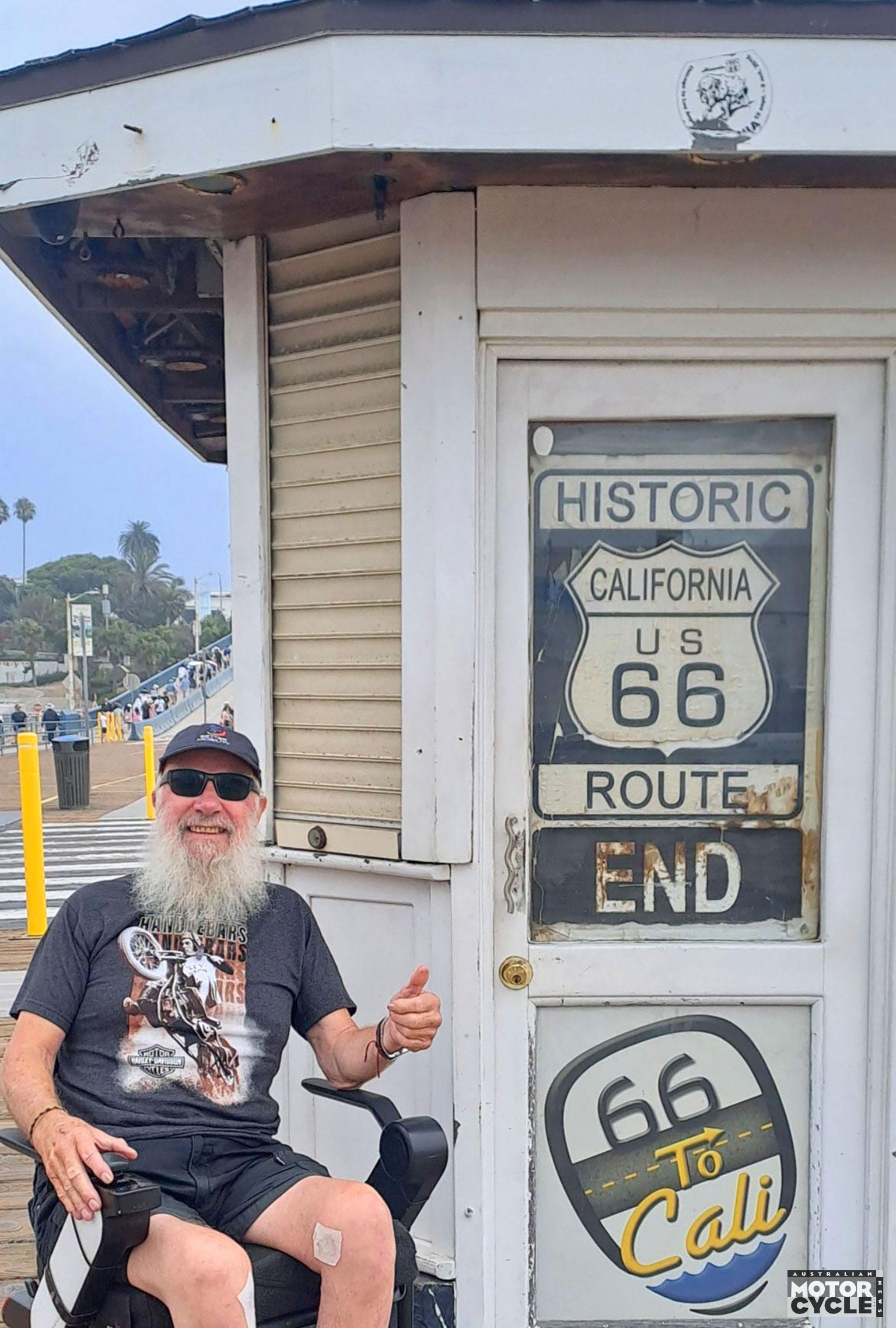
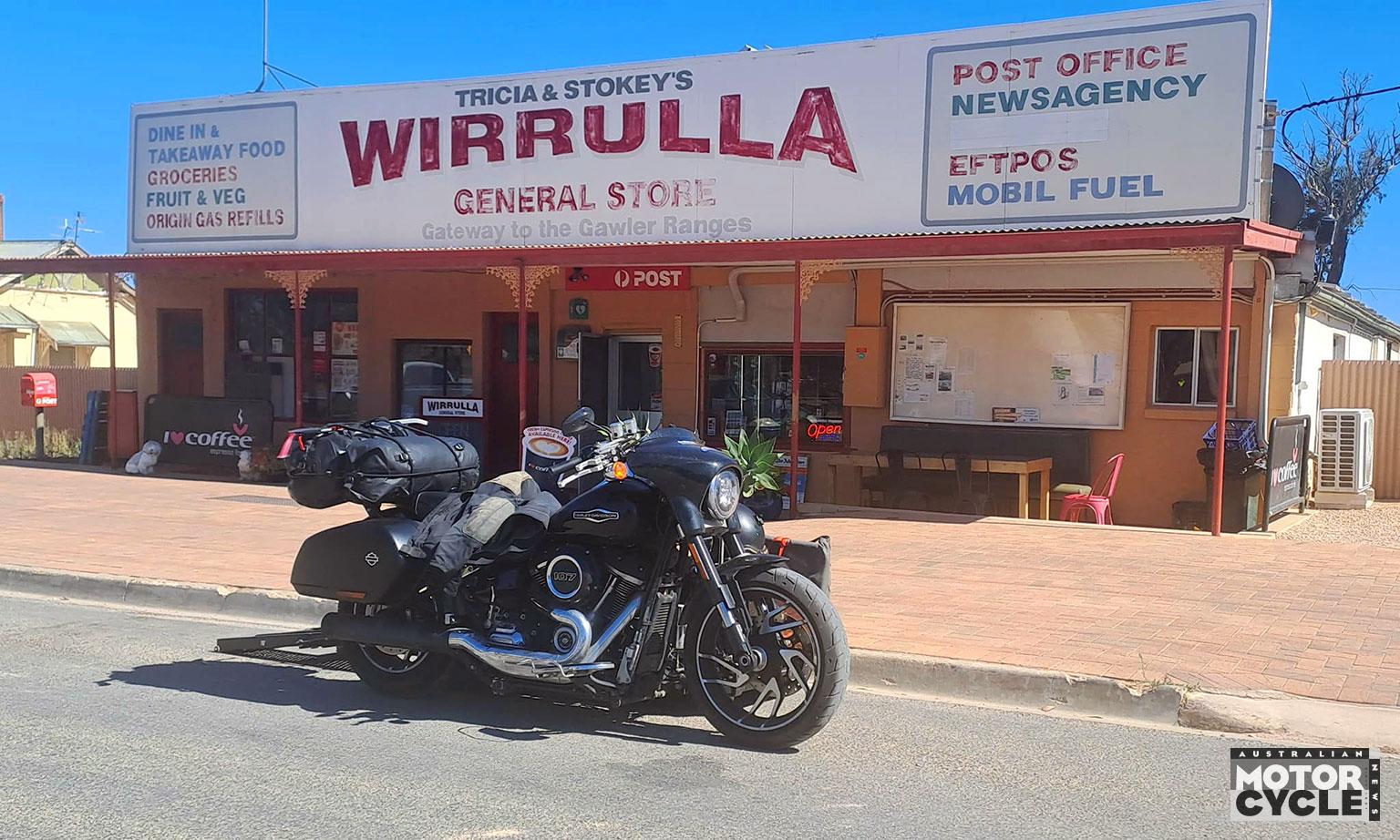
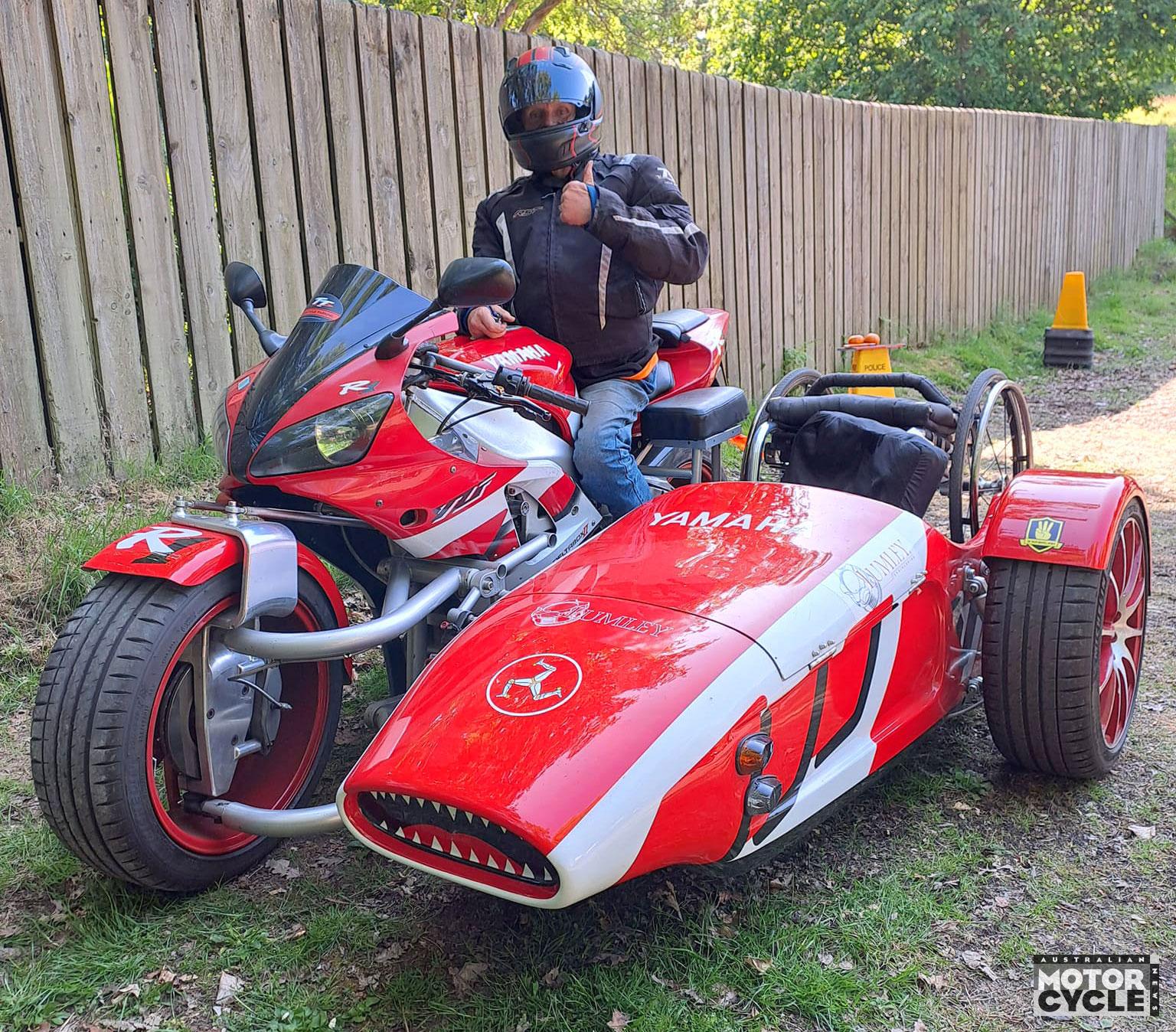
Fast forward just half a dozen years and Bob, now 78, is onto his second bike since the accident, he’s toured unassisted across Australia, through Europe, throughout the UK, he’s been to the Isle of Man TT and the Manx GP, and has recently returned from a five-month trip through North America and Canada. He’s recorded an album – he’d never so much as written a song before the accident – and as well as public speaking gigs about his inspiring story of survival, he’s done a lot of advocacy work in raising awareness about the specific needs of people living with disabilities.
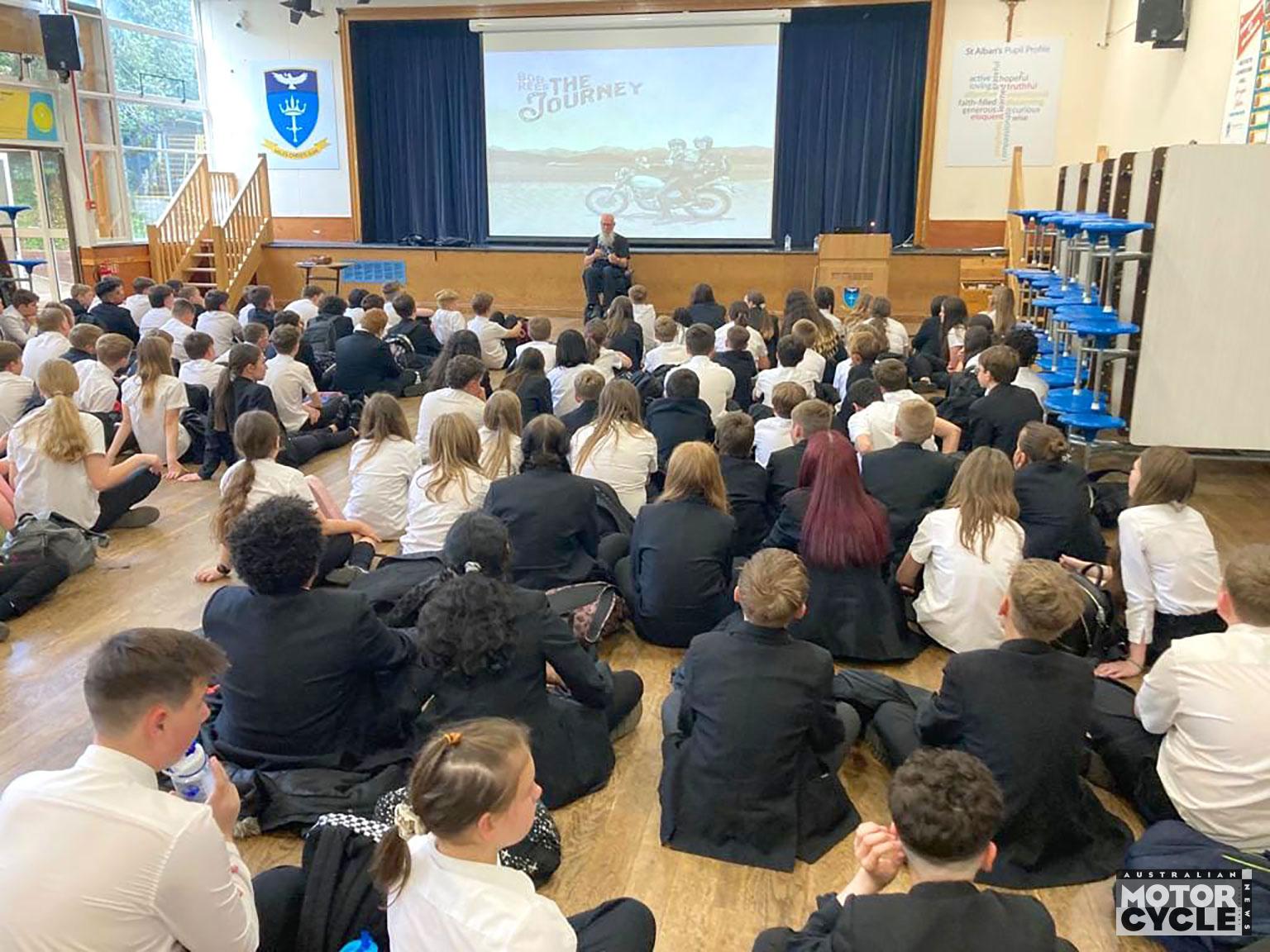
“That’s become a big part of my trips – I speak in schools, men’s sheds – and even families where there’s no disability, they haven’t had any death, but they want their kids to know about this other world that I live in, you know, to open their eyes up. It’s amazing, it really is.”
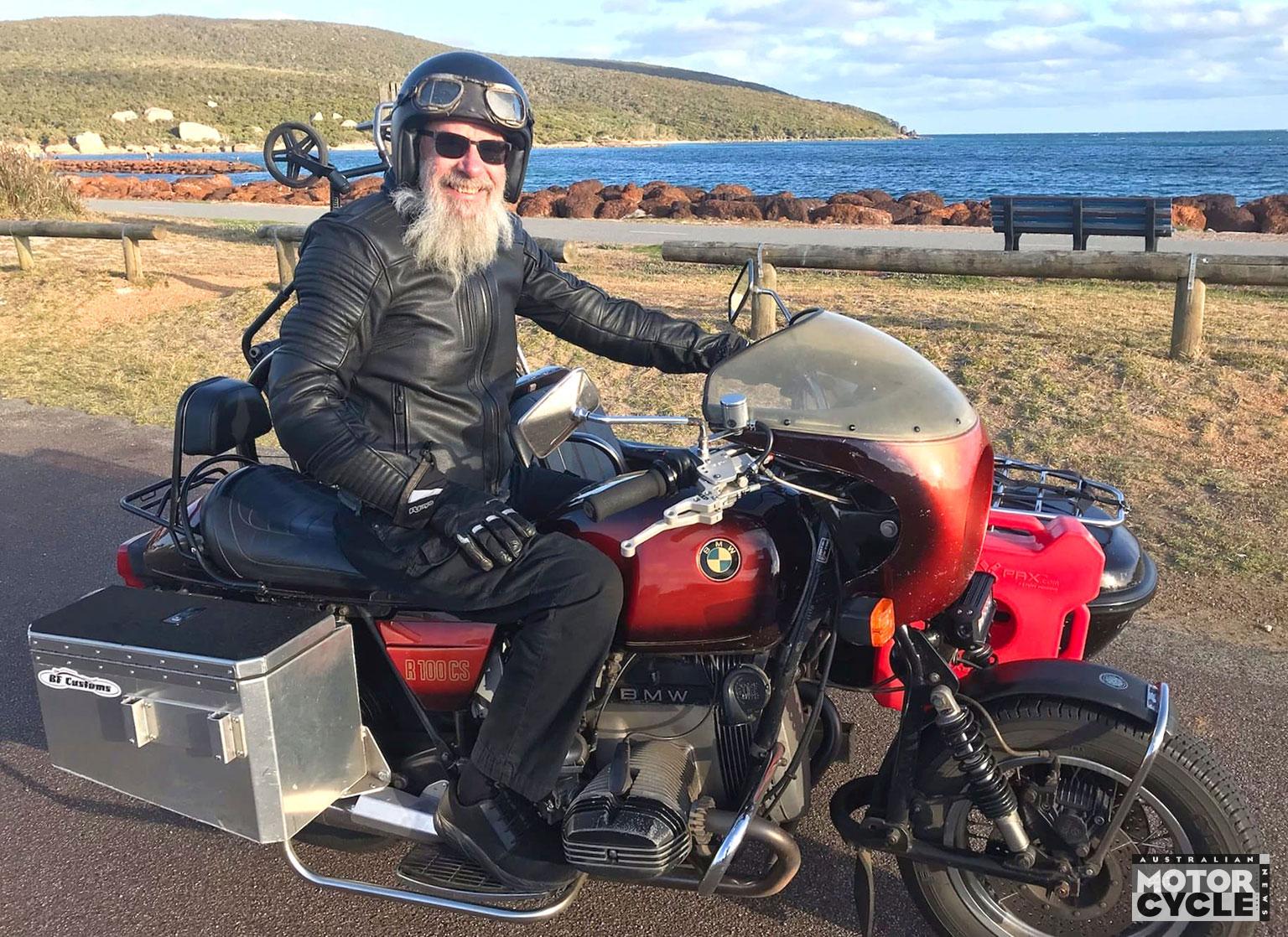
After five and a half months in a Perth hospital, and having to be convinced by his spinal doctor to finally give up on his determination to walk again, Bob’s first bike was a modified 1982 BMW R 100 CS.
“That was Chris’s bike; we already had it. I had a stack of bikes in the shed – I’ve still got eight – but that was hers,” Bob says. “We adapted it with Brendon Flower from BF Customs.”
While it got Bob from A to B, he very quickly realised some of its features didn’t make it an ideal bike for a waist-down paraplegic.
“Because I’ve got no core strength, I’ve got to hang on to things all the time. I can’t sit up without support,” he says. “It’s got a flat seat, so there’s no way for it to hold me. So even putting a helmet on, I’d have to lay back on the seat because I couldn’t sit up and do it, so it was really hard.
“This one time it was 1.30am. I’m bloody soaking wet. I pulled into my shed and nearly fell off. And I thought, ‘Oh, this is no good’.”
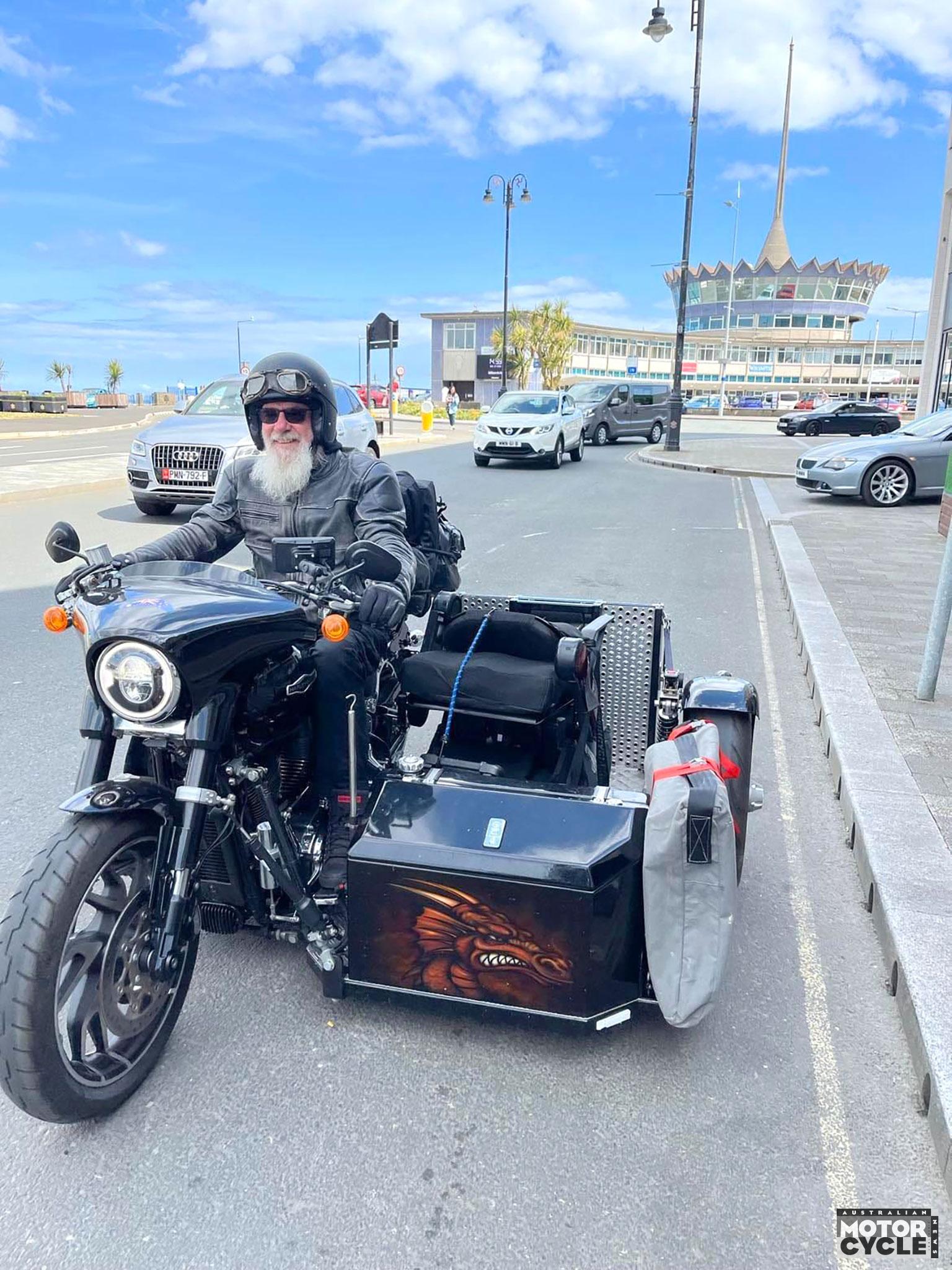
Bob was in a Harley-Davison dealership when he spotted a Sport Glide. Both the frame and the deep supportive seat struck him as good attributes for what he needed.
“And also the fact that it was a V-twin. Because the BM had pots sticking out on the side, they were getting in the way of my wheelchair,” says Bob. “I rang Brendon and said what do you reckon and he said yes, so I bought it.”
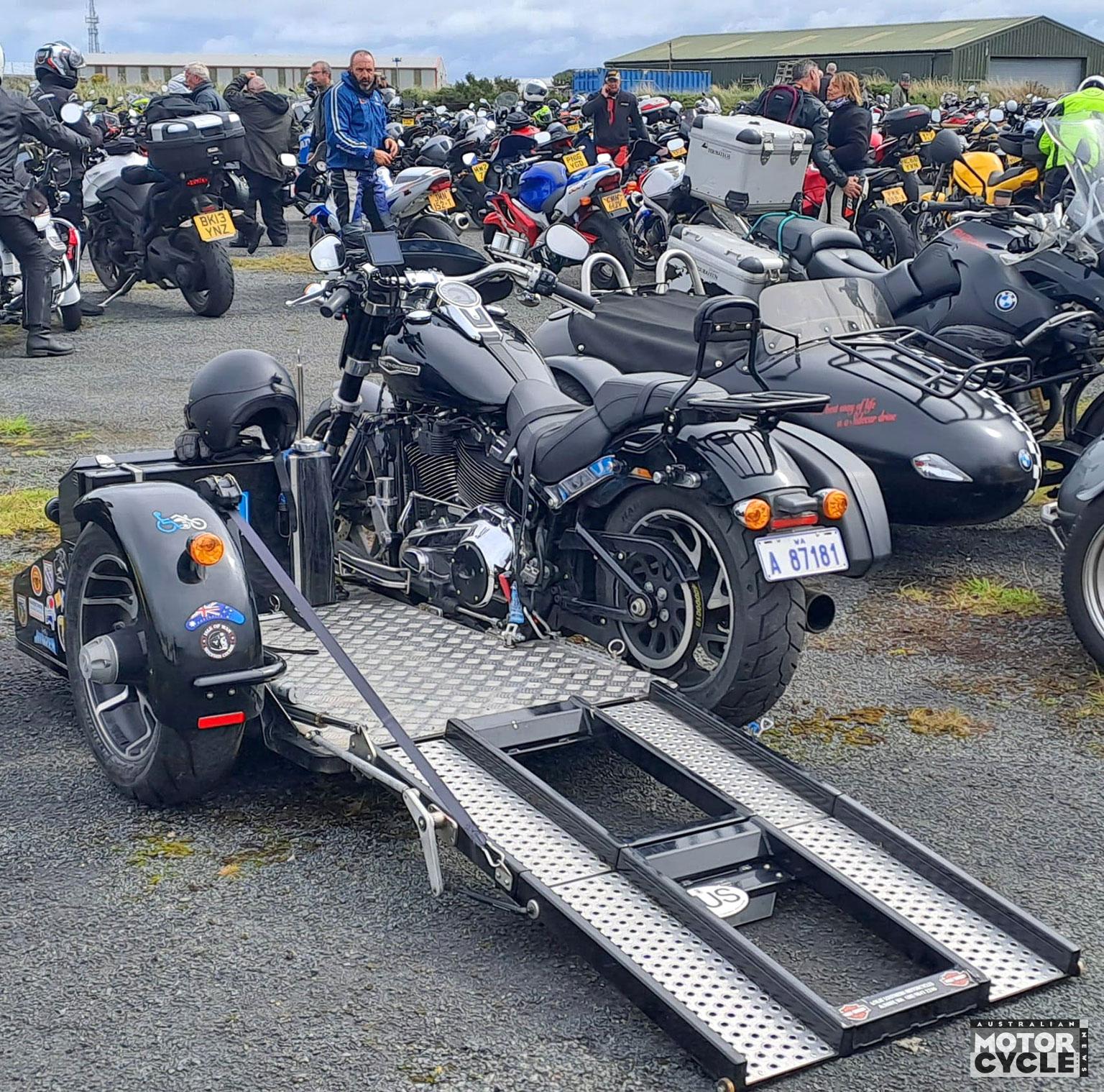
Not your average modified bike, Bob knew he needed a machine that could support him not just on his future overseas travels, but it needed to be adept enough at ensuring he could travel alone without any assistance which, according to Bob, is very rarely done.
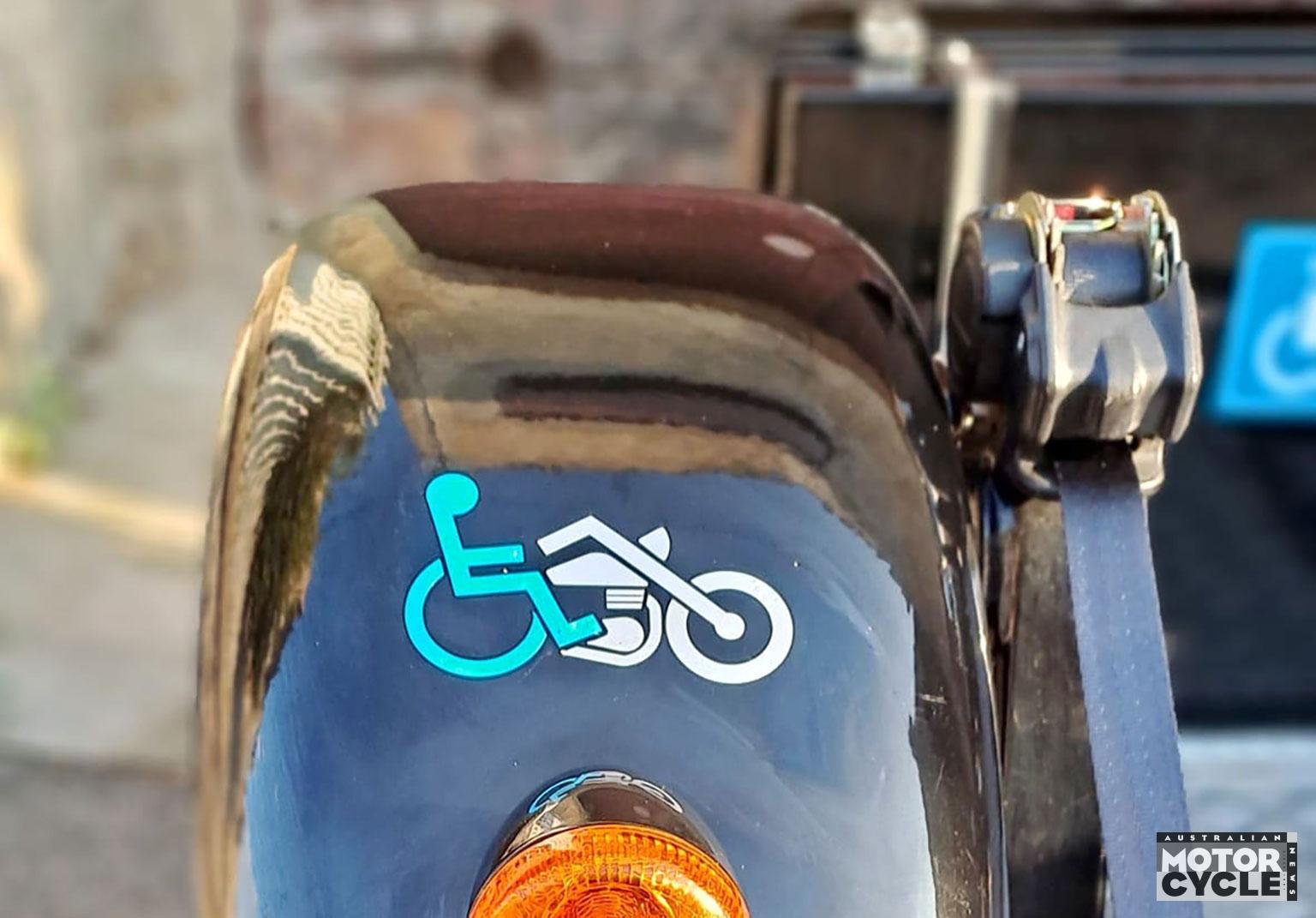
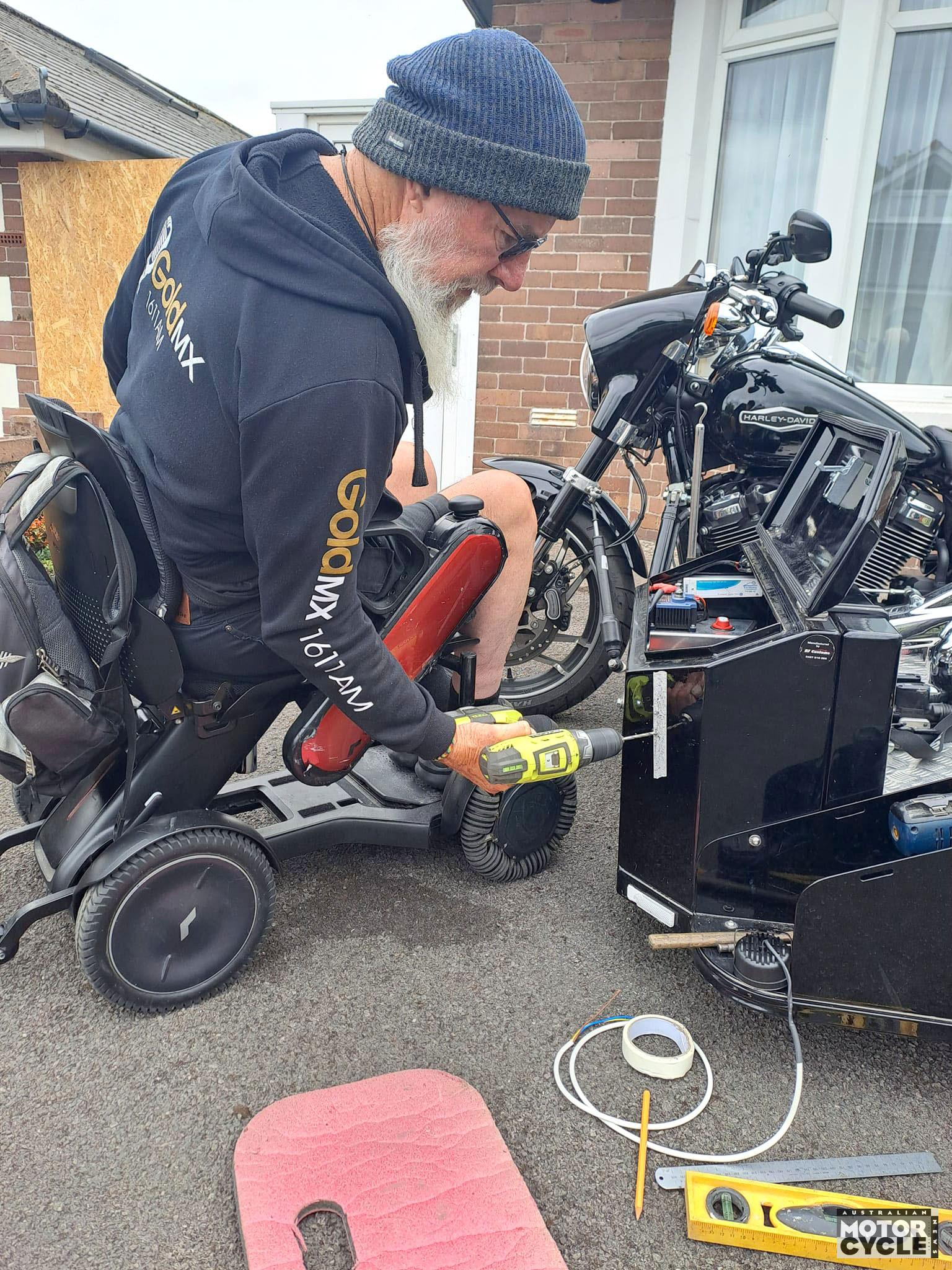
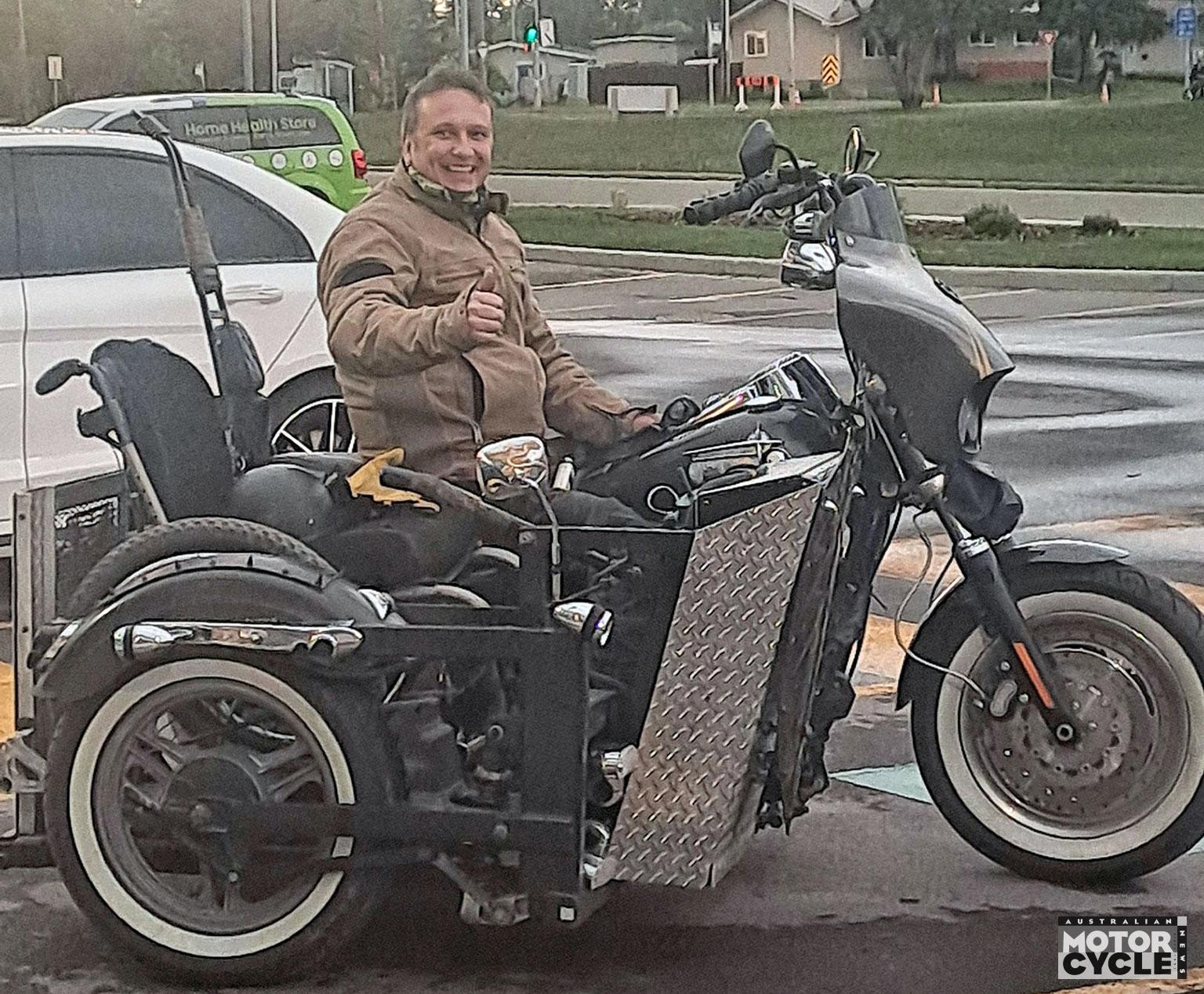
“I bought another Sport Glide back wheel for the sidecar, because I wanted it to look good. I sourced a reverse gear from America, and when I got the bike to Brendon’s place, we stood the bike up, put some cardboard on the ground and I wheeled onto the cardboard so we could work out what the size the platform would be.”
As well as accommodating his electric wheelchair, the platform needed an electrically operated ramp, it needed capacity to carry a second battery, an extra 16 litres of fuel and, to keep his independence – something that’s hugely important to Bob – a commode-cum-shower chair.
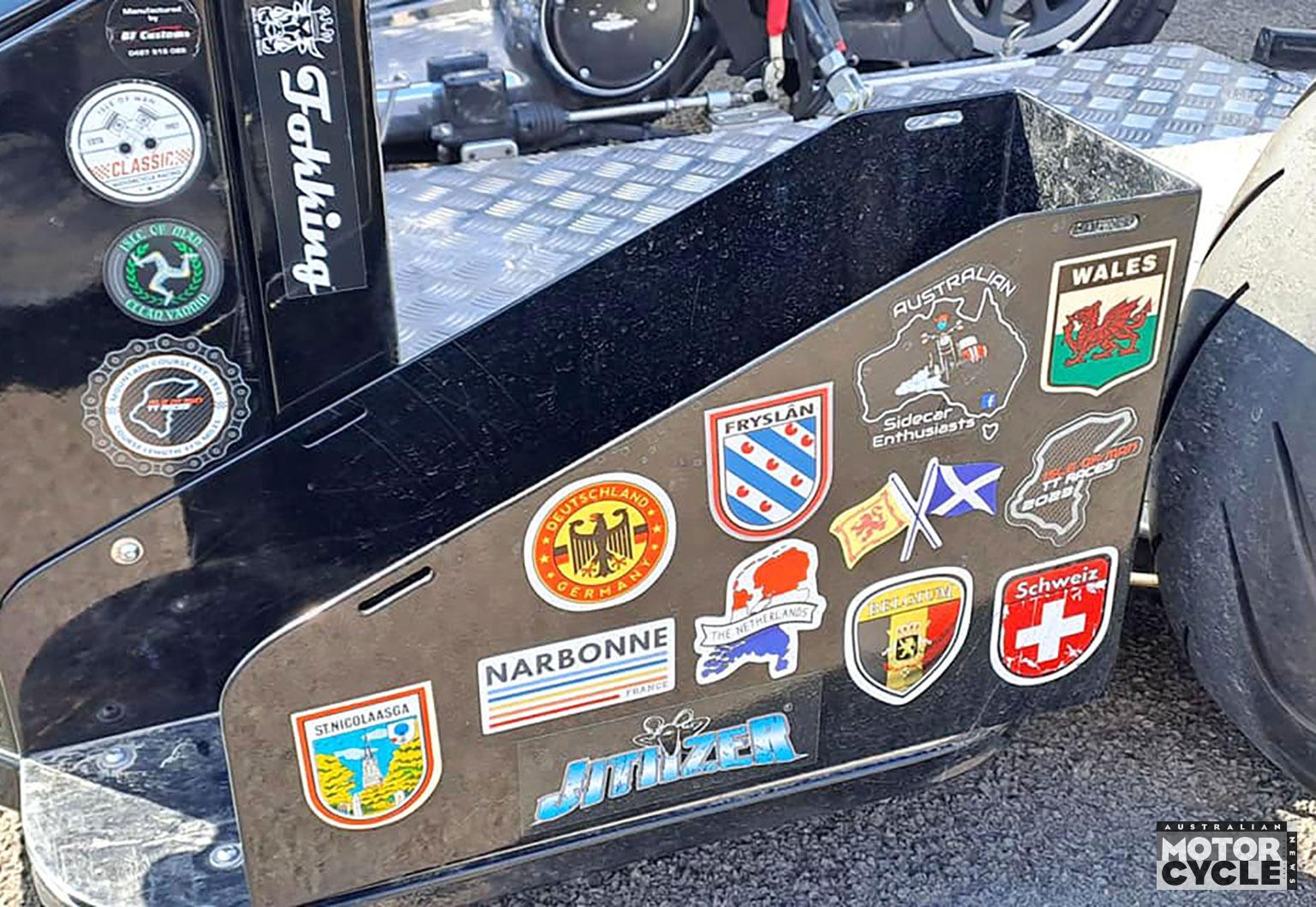
“I reckon it’s the only Harley in the world that’s got a shithouse attached,” Bob laughs. “The second battery works the ramp, but there’s a button on the side of the box so if the bike’s battery is dead, I can jumpstart it by pressing the button. The back of the box is fuel. When the bike starts running low, I’ll flick a switch and it pumps straight into the tank, even when I’m riding.”
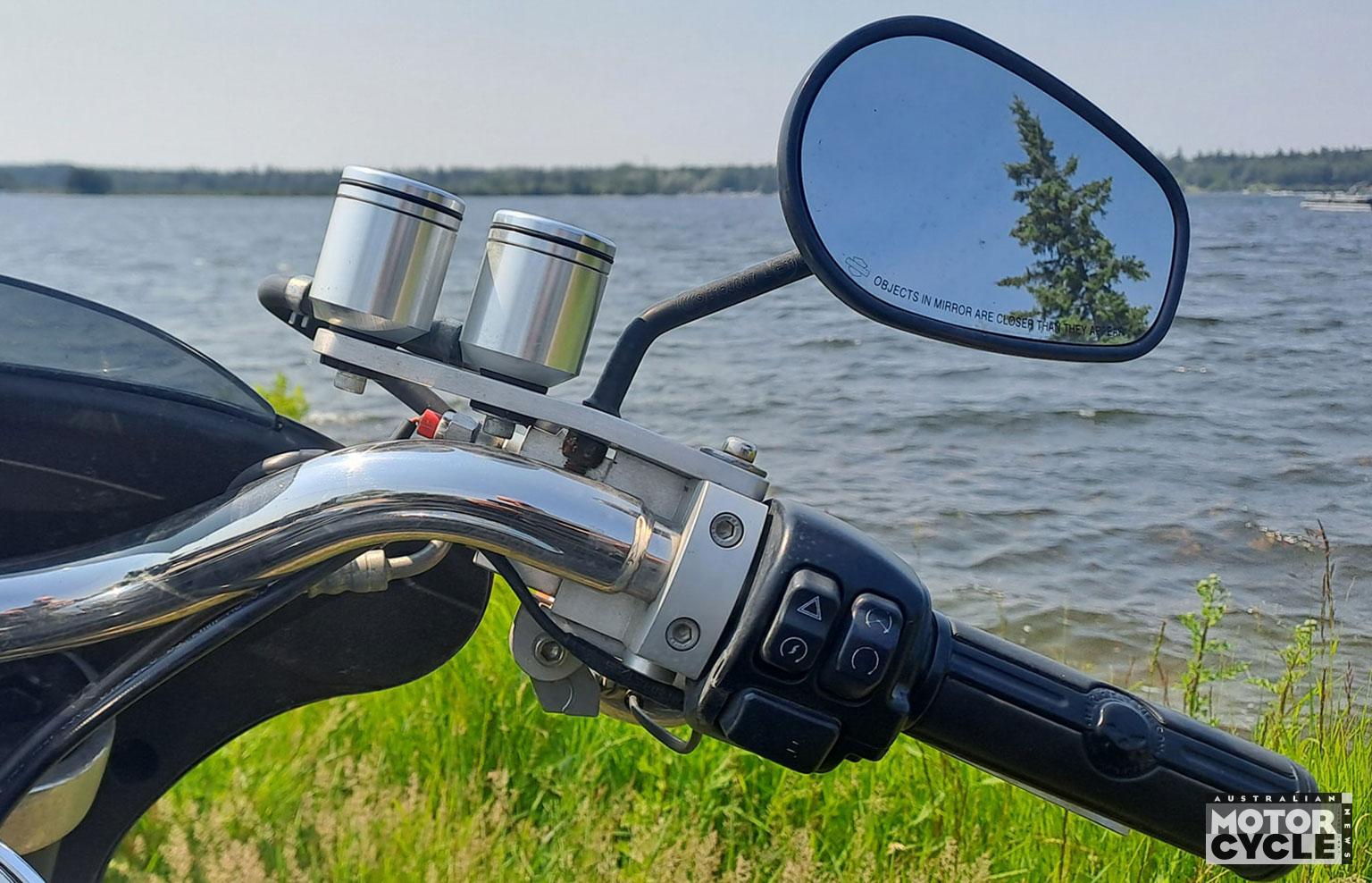
There’s a hand shifter in order to help him find neutral, which it needs to be in to get the bike into reverse. Two buttons on the left handlebar – one green and one red – change gears up and down respectively, and two levers on the right operate the front and rear brakes, which he can use independently or together.
There’s no brake on the sidecar but it needed a park brake in order to meet ADRs.
Bob explains that due to the nerve damage, all paraplegics and quadriplegics spasm, which can lead to his feet jumping off the footpegs, so running boards with guardrails fitted to them keep his feet firmly in place.
“Although it did jump off once when I was in France,” he recalls. “I was getting shitty cause I’d blown four fuses that day and I had to go fix them; you know, get in the wheelchair, go and get my tools out, fix another fuse, then ride another hour and another fuse would go. I wanted to ring the hotel to say I was going to be really late, and the people at this shop charged me 20 euros for the phone call – real assholes – so I was shitty and didn’t put my foot inside the rail properly.
“And I was riding along and I could feel that something wasn’t right. It felt like my foot was getting warm and I looked down and it wasn’t there – I’m dragging it behind me at 80km/h. It wore away my boot, I had to pull over and it was pretty tough. Trying to figure out if I’d broken my foot or not, cause I can’t feel it. I thought if it looks alright in the morning – I didn’t want to go to hospital – I’ll just keep going… I just kept going.”
Travelling alone adds all sorts of complexities to touring. Not only does his physical disability mean everything takes longer and any solutions to problems need to be found on his own, but being confined to a wheelchair greatly reduces his scope in terms of meals and accommodation.
“Chris and I rode all over the place. You could just walk up to any place with a bed and it didn’t matter,” he says. “Now I need to make sure there are no steps, that the door’s wide enough for my wheelchair, and so it makes things very, very complicated.”
He prefers to cover distances of no more than 350km each day.
One reason is he can realistically only sit on about 90km/h because of that lack of core strength, another is the associated effort required to be able to still do what he loves so much. Between catheters, suppositories, commodes and wheelchairs, getting up and getting out the door can take anywhere between four or five hours, and he’s lucky if that includes breakfast.
“You just accept that that’s what you got to do, that it’s not a chore,” Bob says. “When things go wrong – I got stuck in a blizzard in the Rockies and nearly froze to death, and I got bloody heat stroke in a desert in California and nearly fried to death – but you’ve just got to accept there’s going to be problems and things are going to go wrong and you’ve just got to fix it.”
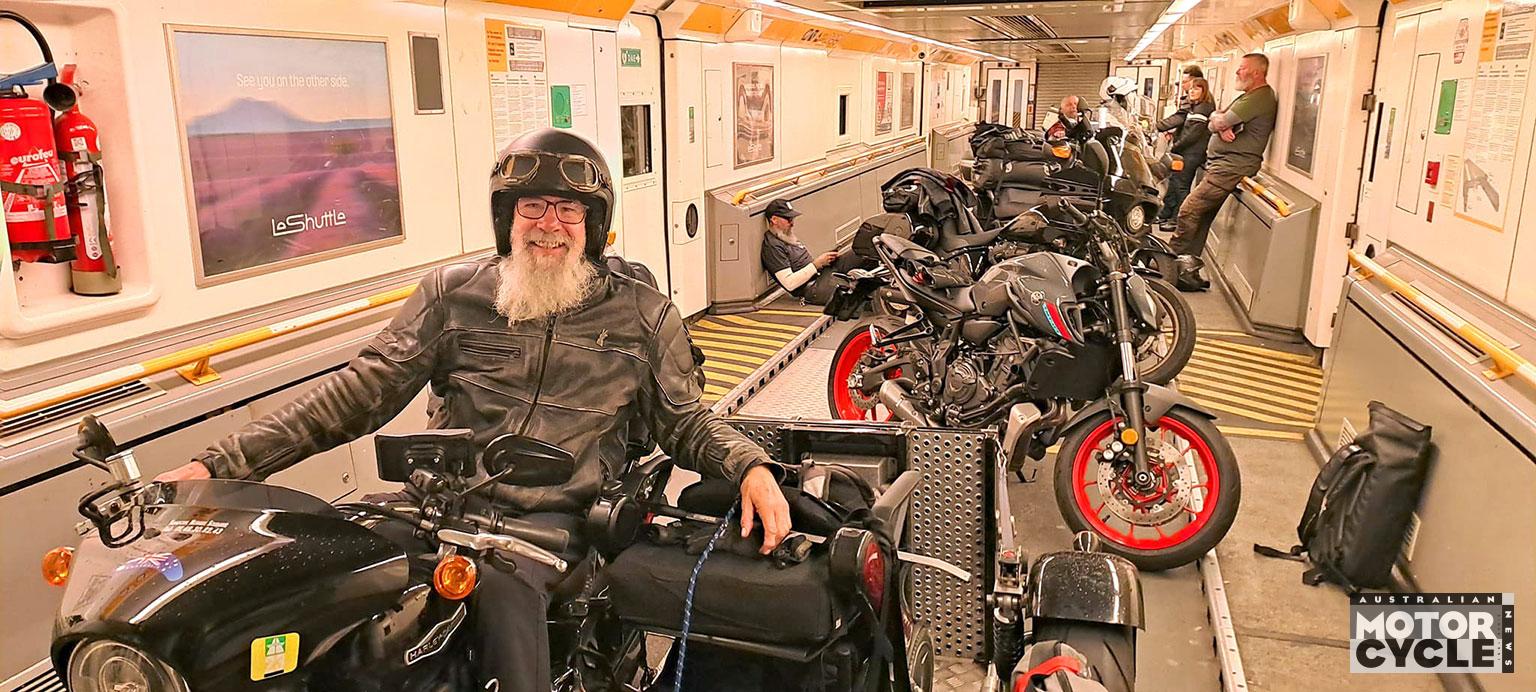
There are people he’s met on his travels who have inspired him as much as he’s inspired others. He’s still mates with a one-armed bloke who rode from the south of France to the Isle of Man TT, he learned of a motorcycle club specifically for amputees and rode with another paraplegic on a modified Harley while in Canada.
“We were riding side-by-side, these two paralysed guys on these bloody Harleys,” he recalls. “We pull up outside a roadhouse and everything goes quiet when we roll in, that was a was real highlight.”
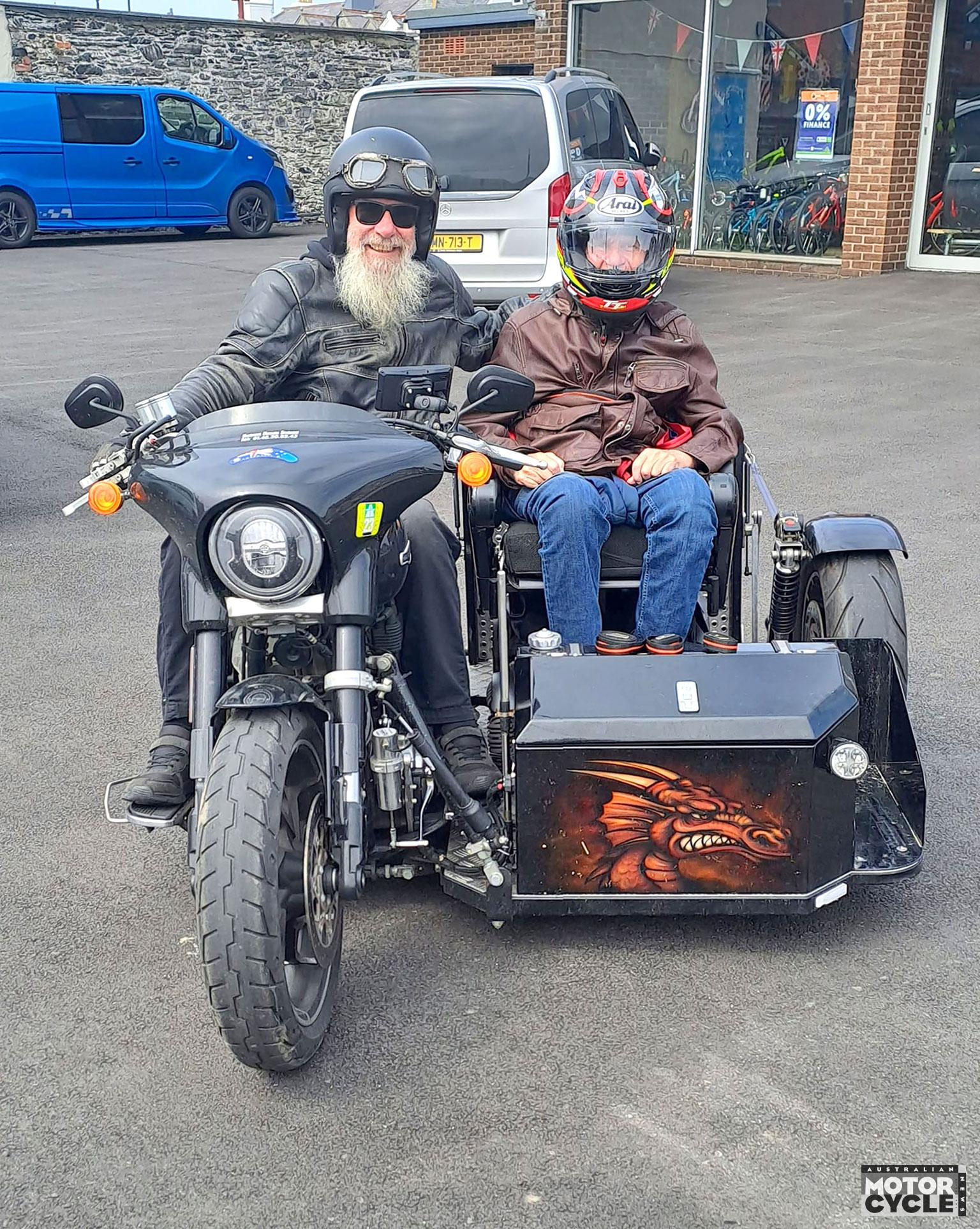
Bob was riding a lap of the Isle of Man TT’s Mountain Course once: “A Kiwi guy who’s in the last stages of MS, his friend asked me if I’d like to meet him and I said do you reckon he’d like to go for a ride around the TT course,” he starts. “This guy’s got a tube to eat and drink and all the rest of it, so he’s really disabled. Anyway he brought his jacket with him, so his mates picked him up and chucked him in my wheelchair and we did a lap of the TT between races. I had a bloke riding pillion to hold his head because he had no control, it’d just wobble. But when we finished, we came back through the grandstand and all these people were clapping, which was really emotional.”
For all the kilometres he’s covered since the crash, Bob knows none of it exists in isolation. Every ride, every trip, every story told carries something of that life he shared with Chris. They were married in the early 1970s, raised a family, have four grandkids and shared thousands of extraordinary kilometres together touring the world on two wheels. And in so many ways, and for so many reasons, he’s still out there riding for both of them.
“Living as a paraplegic, it governs your life to a certain extent, but when I do these trips on a bike exploring countries and stuff, it makes it really worthwhile,” he says. “And I want to keep doing it for as long as I can.”
From grief to guitar
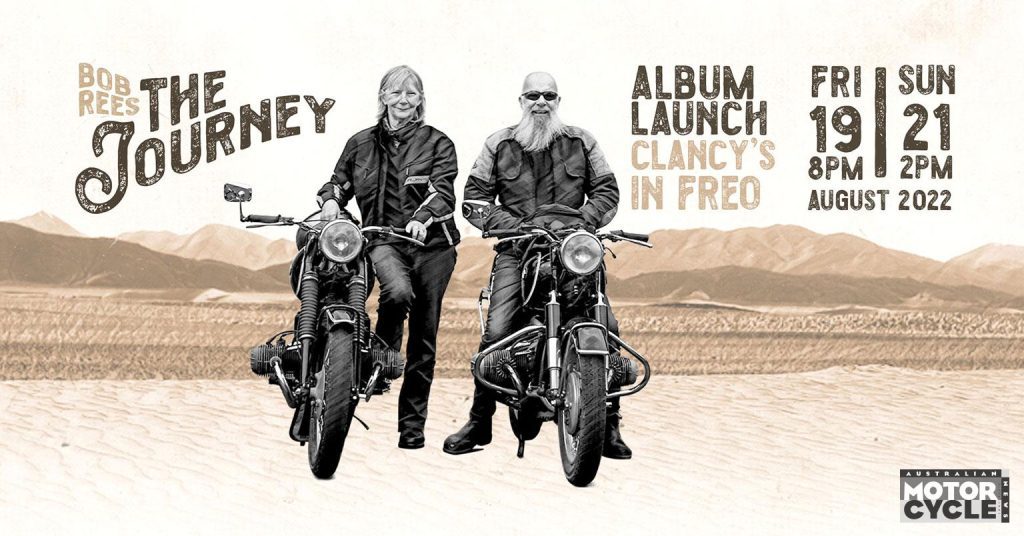
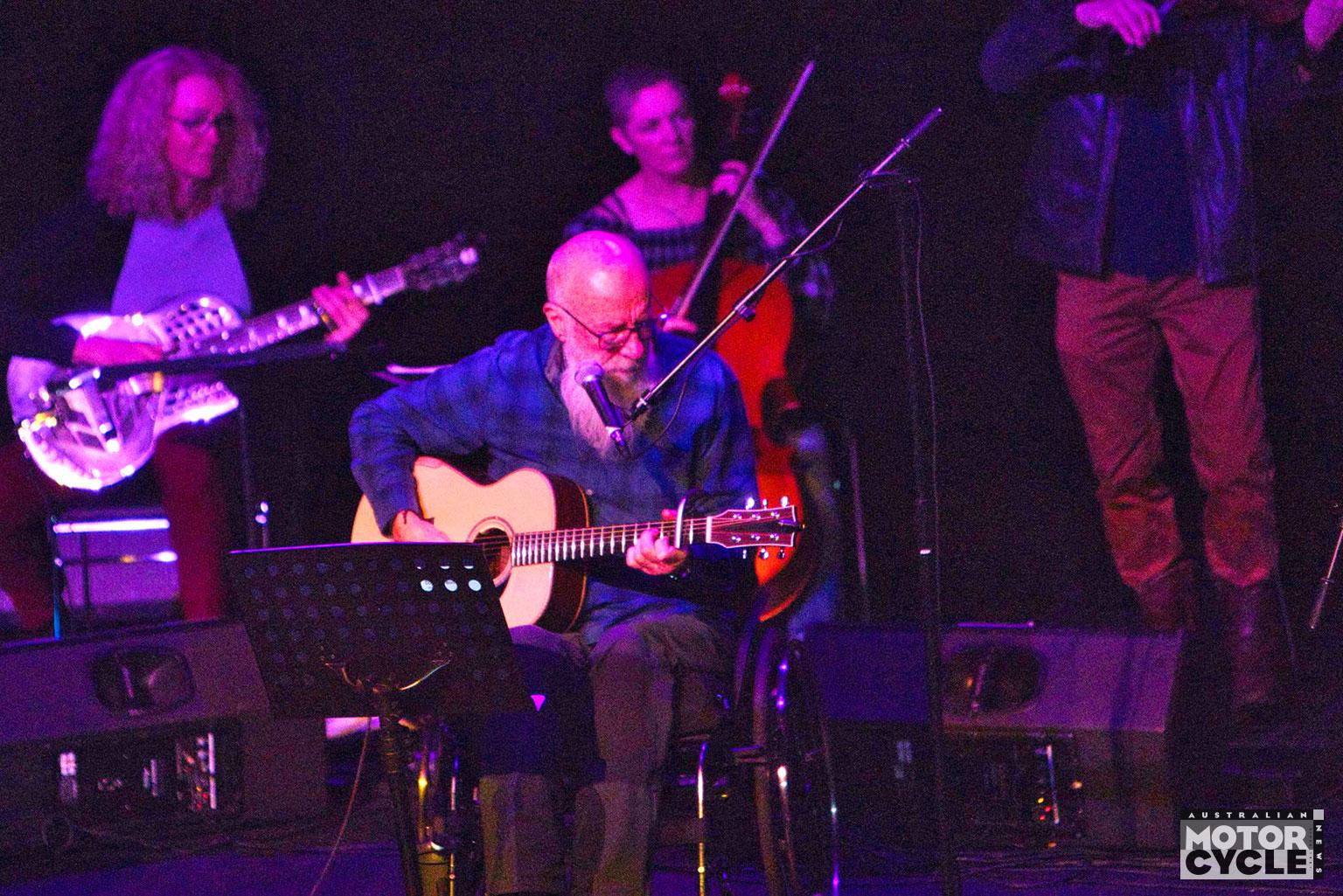
Bob hadn’t written a song in his life before the crash. That changed in the quiet that followed. Back home, facing his first Christmas without Chris, he picked up his guitar and wrote his first song in 20 minutes. Another followed, then more. What started as a way to process grief quickly grew into something larger, with Bob eventually recording an album alongside professional musicians in Fremantle, WA. The songs have struck a chord with listeners, particularly those navigating their own loss or hardship. It’s another unexpected chapter in a life rebuilt – and another way Bob continues to connect with and inspire others.
“I know two other riders that have recently become paraplegics and depression is the first thing that hits, and you’ve got to dig yourself out of that hole. For some, they can’t do it, so in being able to read about me hopefully will help others. That’s the main thing.”