Still screamin’ – What the ZX-10R lacks in electronic tricks it more than makes up for with a glorious inline four, razor-sharp handling and a chassis honed by years at the pointy end of WSBK
When you get a text from the boss that there’s a fresh Kawasaki ZX-10R that needs to be ridden, my heart skips a beat and my mind starts racing. I haven’t ridden a new ZX-10R in a while. Will it be faster than the boosted H2? Will it have menus full of new tech? Will it handle like a 600? I refuse to cloud my mind by researching beforehand, so this and more run through my mind on an endless loop until I roll into Kawasaki HQ and see it with my own eyes…
In the interests of full disclosure, my personal bike is a 2004 ZX-10R which I have a love/hate relationship with. I’ve owned it for about 17 years, left countless amounts of rubber in and out of corners on it. I used to race a 2006 ZX-10R and my first road bike was a 2003 Z1000. So yes, I do have a bit of a soft spot for a green Kawasaki. And I’m pumped to ride a fresh 2026 model and see what Kawasaki have cooked up.
THE WAKE-UP CALL
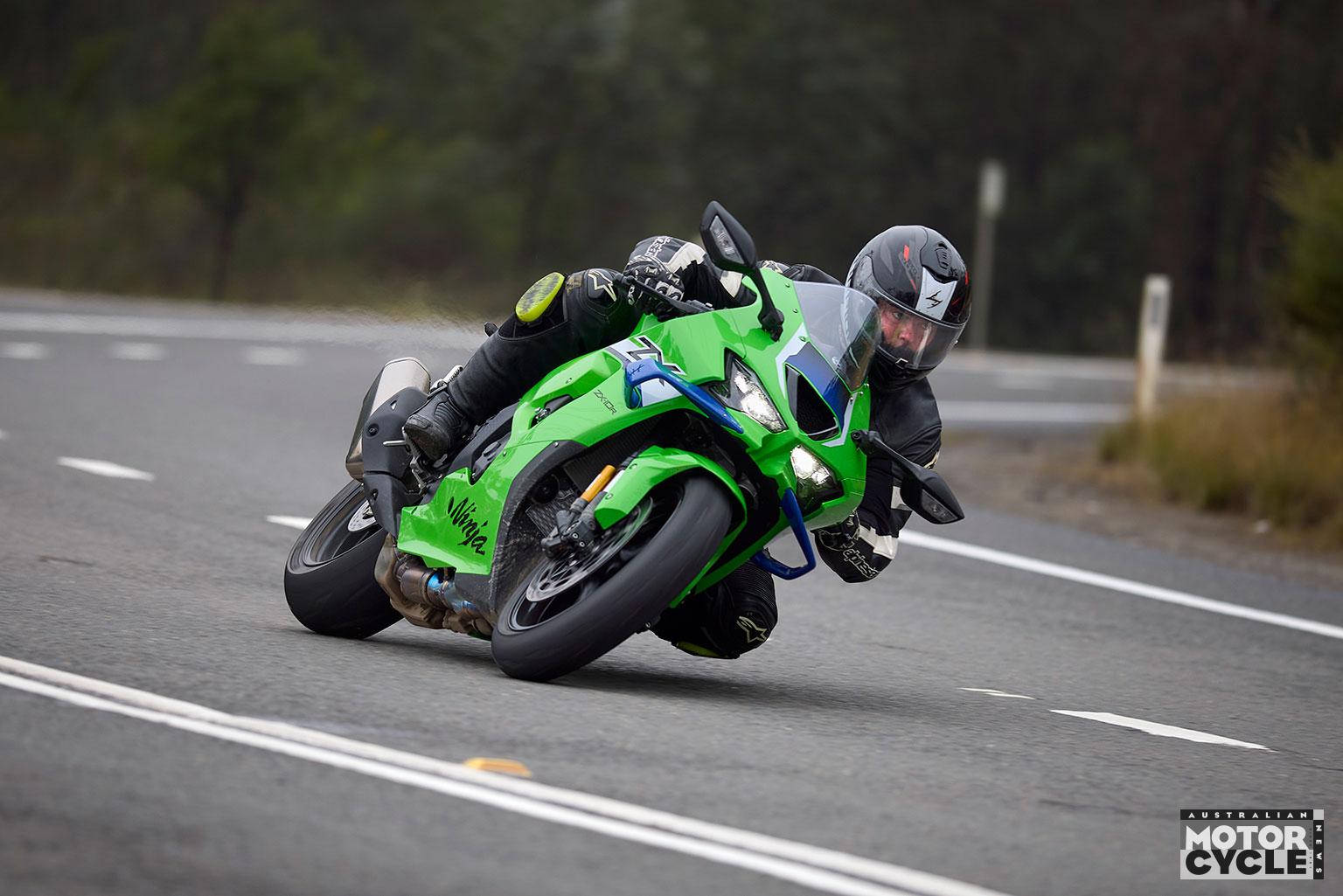
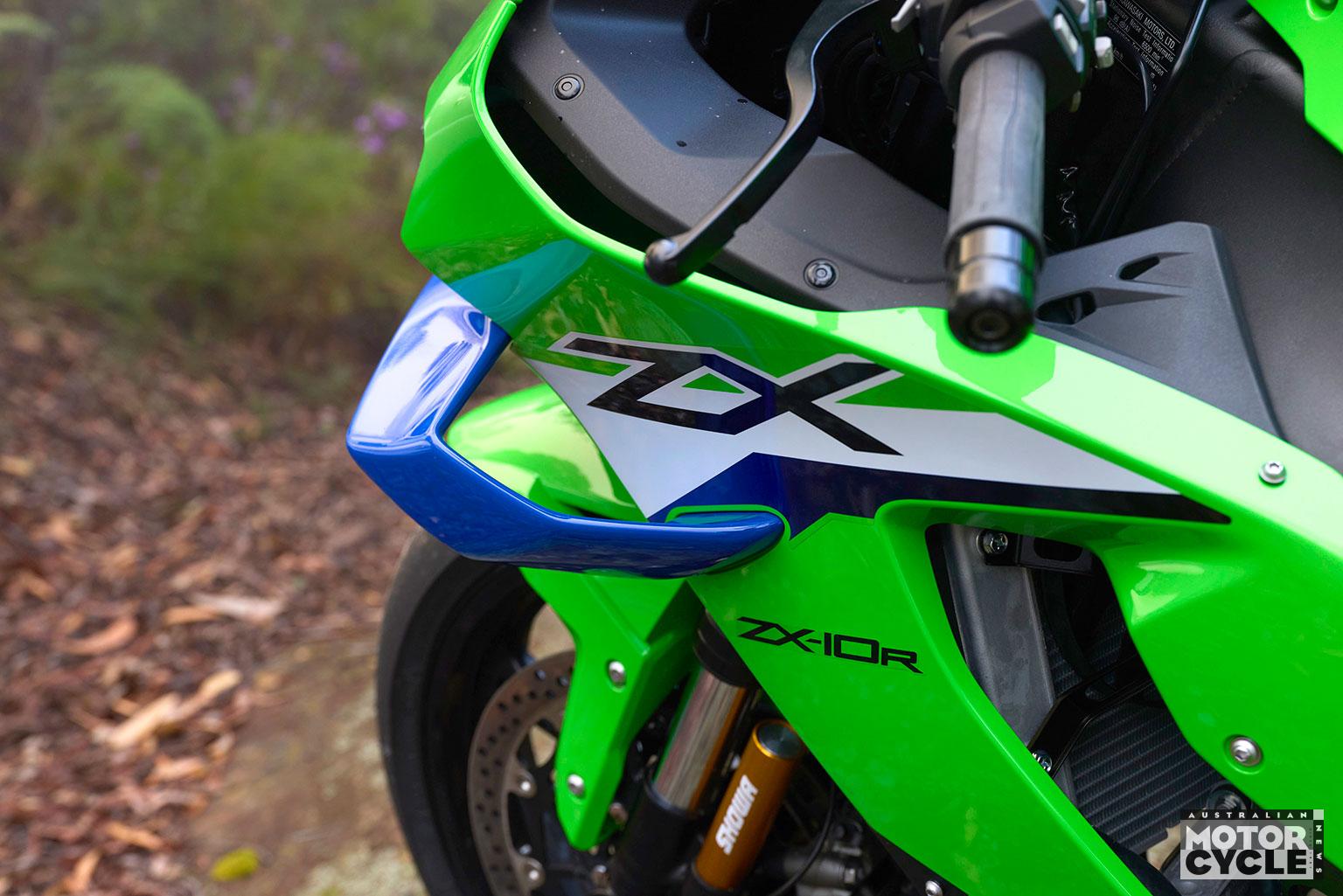
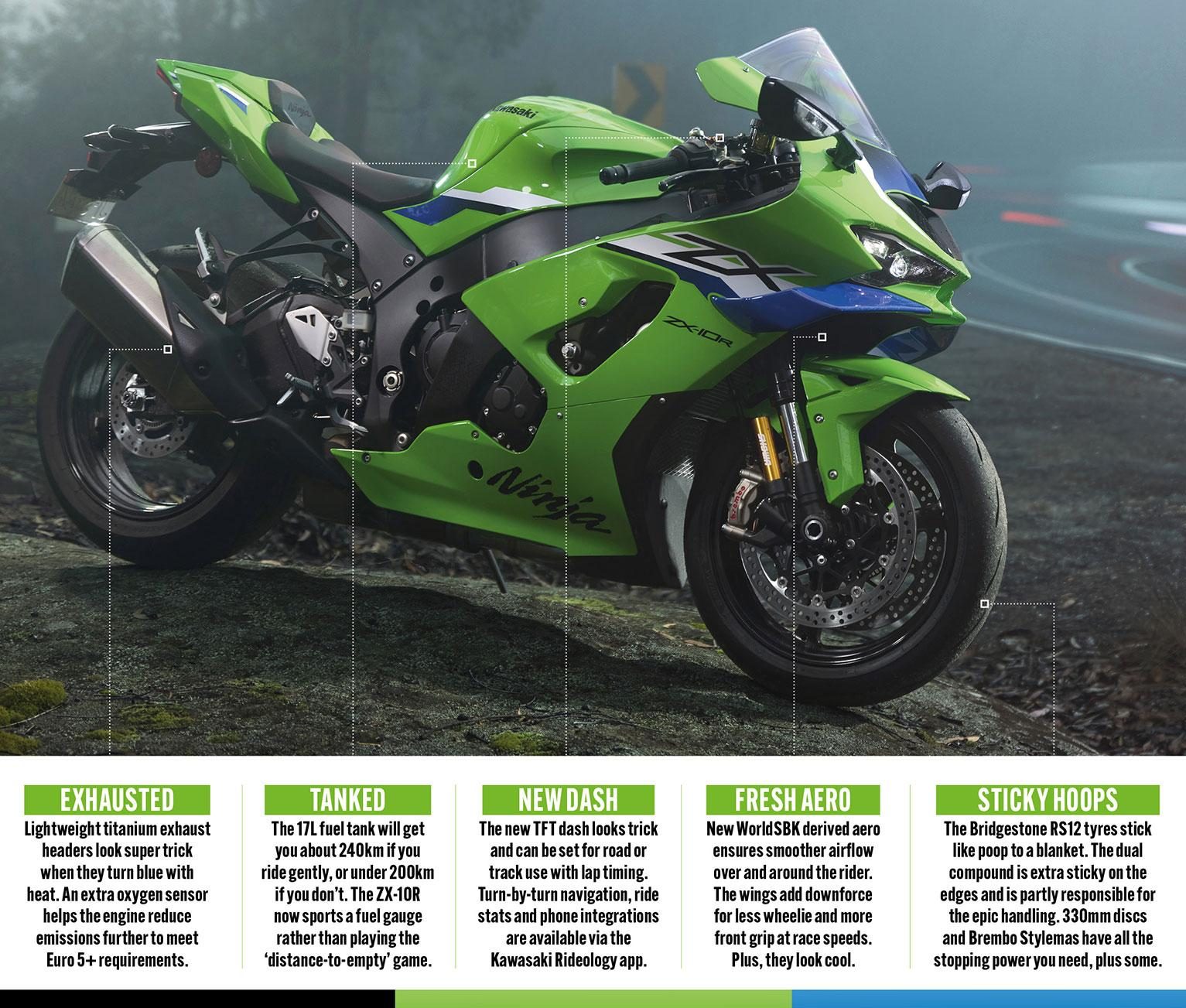
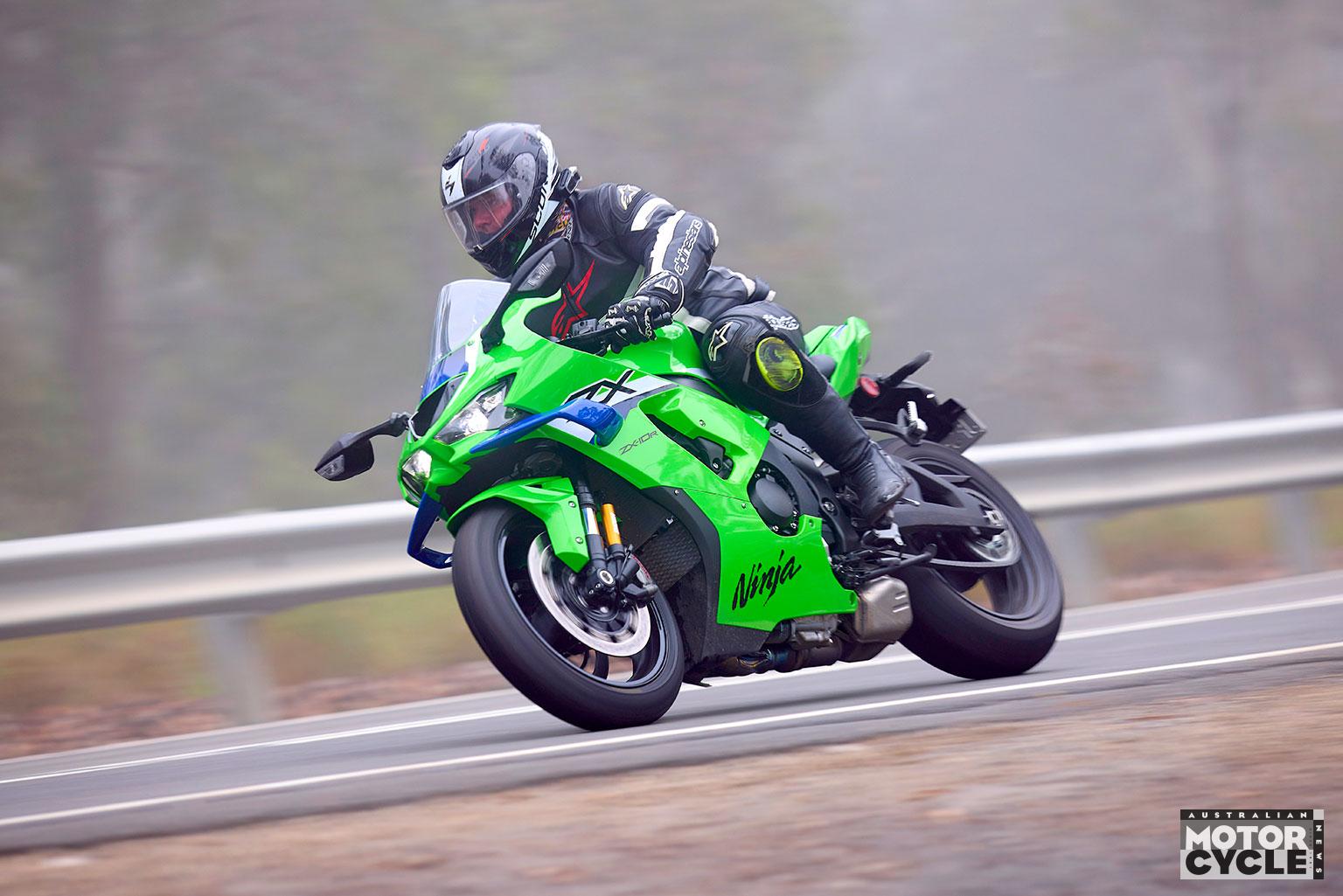
As the bike rolls out, I’m immediately stoked to see the bright green paint, blue wings and fresh new look. If it wasn’t for the ZX-10R decal on the side, untrained eyes would probably mistake it for the ZX-6R. It looks tiny, aerodynamic and shares similar features to the 636 when looking at it head on. Obviously, the front end is still dominated by the huge ram air intake duct – but it’s back above the headlights, giving it a slimmer look. The wings are straight out of World Superbike, thanks to the factory Kawasaki team’s need for front-end downforce and slippery aero to keep up with the competition. The Ninja looks like it means business while still looking iconic.
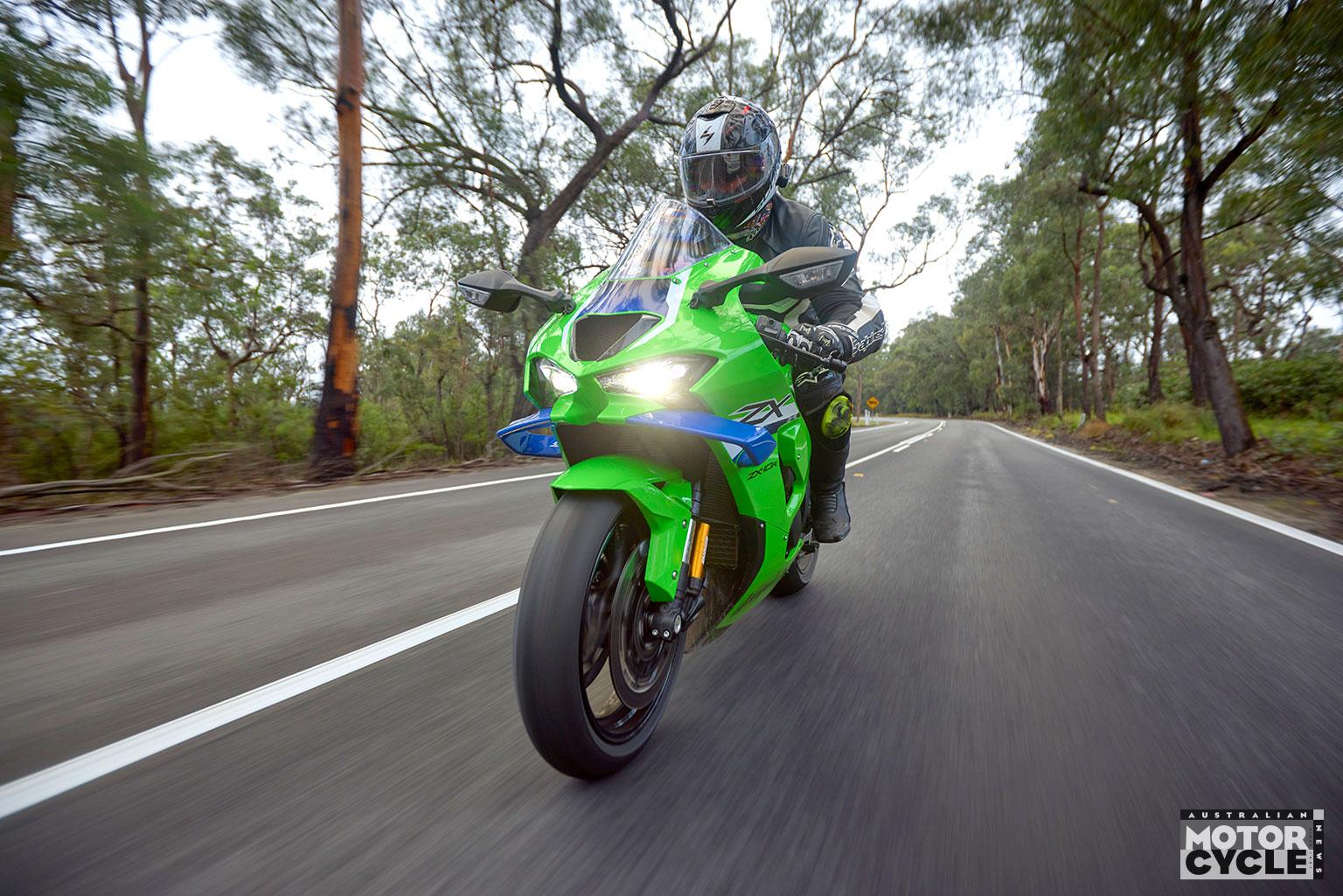
As I hit the road into the morning traffic, the Ninja immediately feels natural to me; as it should, I guess. It feels light and nimble. It’s compact but there’s room for the taller riders to stretch out and slide their butt back a bit.
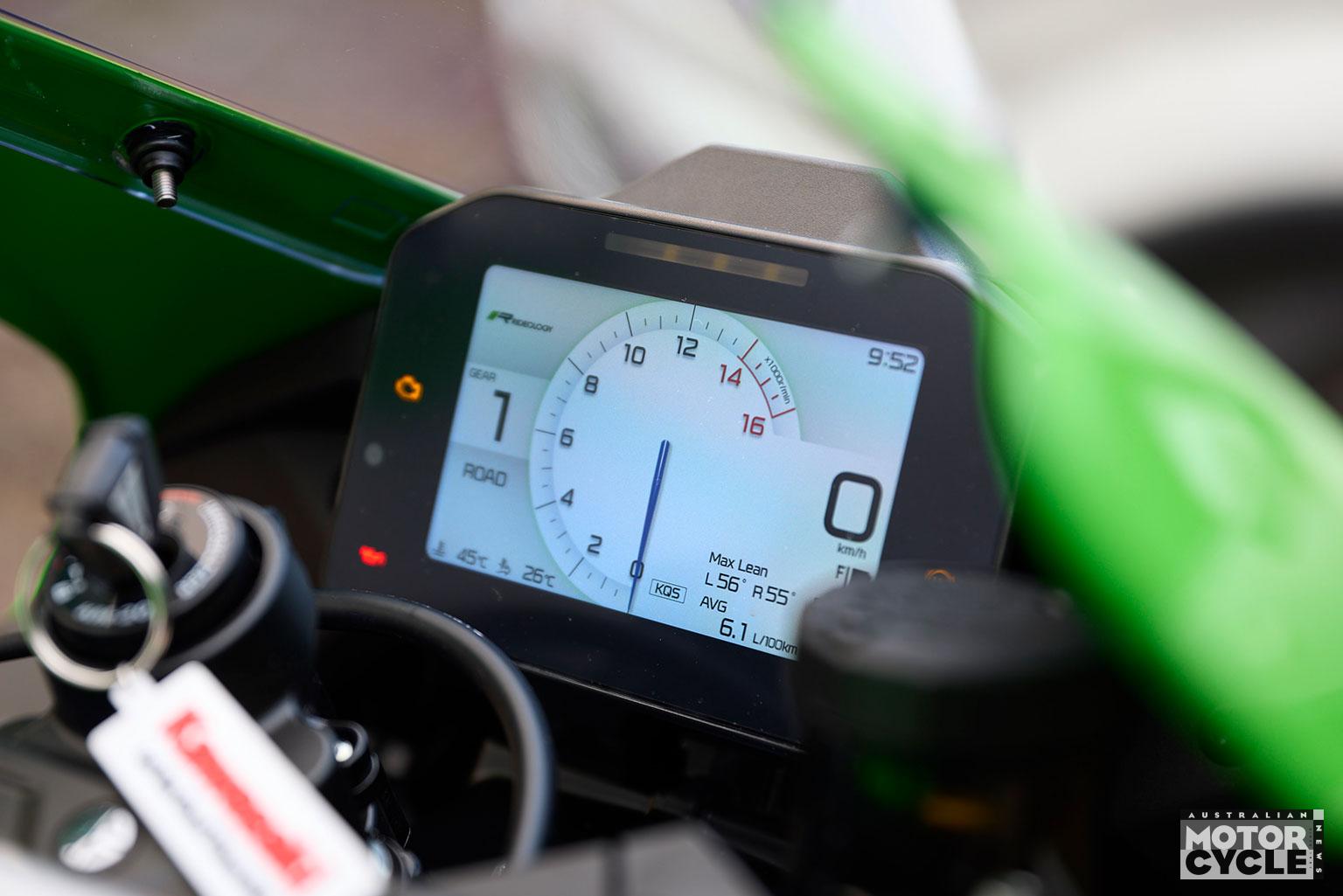
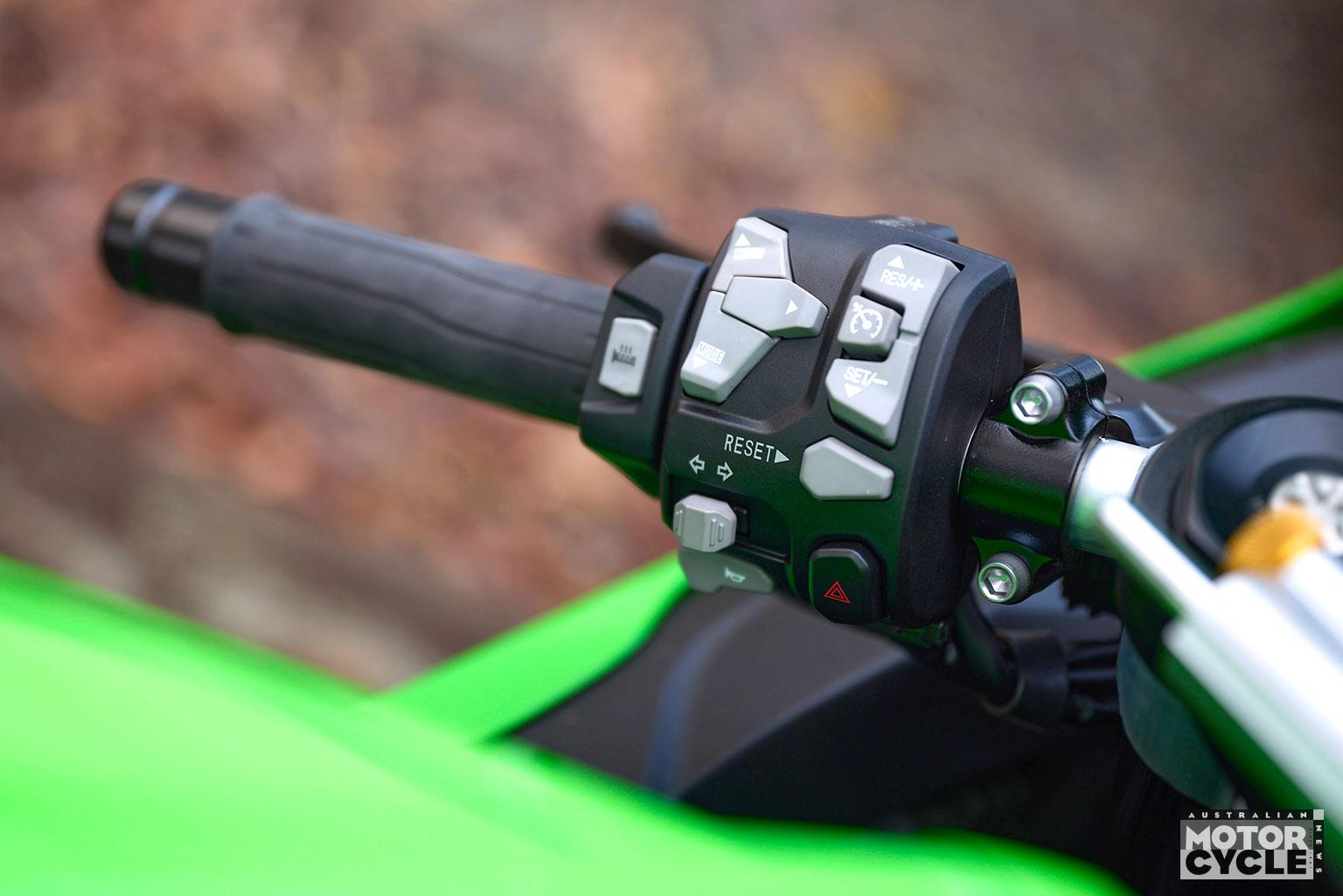
The new dashboard is stunning and easy to read. The controls are familiar to Kawasaki owners and carry over from the previous model. The cable-operated clutch is predictable and adds a bit of a raw feeling to the bike; cables feel like old tech but they get the job done and feel consistent every time. The brakes feel nice at low speeds, and the quickshifter is butter in and around the ‘burbs. The birds are tweeting and the sun is shining, but there’s a small problem. If I didn’t know any better, I would think I was riding a ZX-6R, but this time, not in a good way.
What has happened to the bottom end torque I ask myself. Am I stuck in rain mode or something? Has my butt dyno been tainted after riding the Ninja H2, 900cc triples and twins?
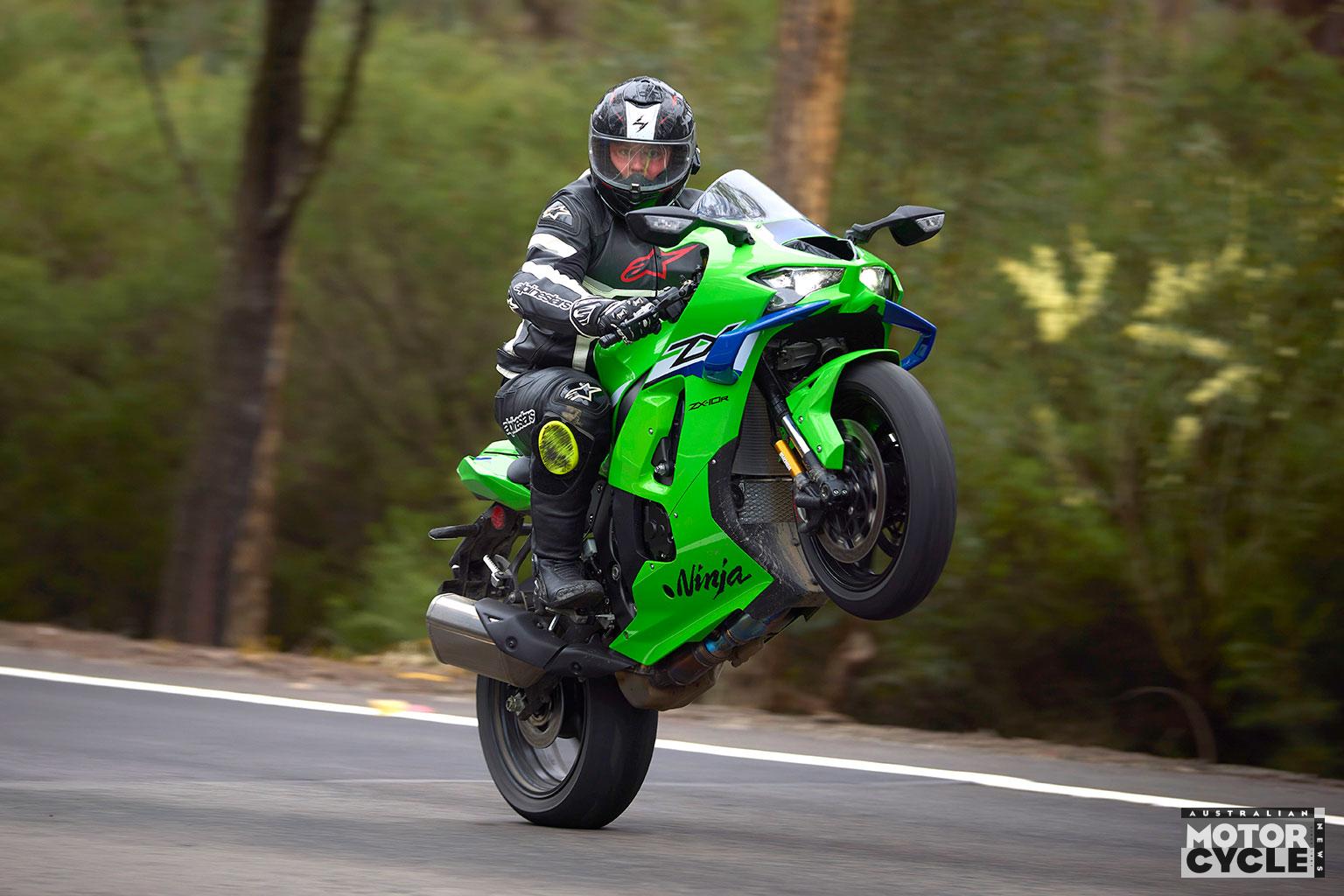
Maybe, but I did literally hop straight off my dead stock 22-year-old ZX-10R and onto this one. I understand this has about 30 more horsepower and revs about 2000rpm higher than my old hack, but surely Mr Kawasaki man could have dialled in a bit more punch off the line for us? Pulling up next to a jacked-up Raptor has me shaking in my boots and looking for the launch control. Once you get the ZX-10R up over 70km/h or so, normal programming resumes, but without slipping the clutch like an 80-year-old in a manual Ford Laser, it’s a bit soft off the line.
POINT AND SHOOT
Once out of the traffic, the ZX-10R is a peach. The four cylinder is as smooth as can be, it loves to rev and is most enjoyable in the upper half of the 14,000 available revs. The engine remains essentially unchanged from the 2025 model; it cranks out 144kW (193hp) or 151kW with ram air in effect. It does meet some stricter emissions targets, however.
Cruise control is a nice touch, although it wanders over and under the set speed a bit if the road isn’t flat and straight. But it’s nice to have a little rest as you cruise along the boring bits.
The ride modes are adjustable on the fly, if you close the throttle while doing so. There are three built-in maps and four customisable maps that vary power delivery and traction control, which incorporates Kawasaki’s corner management function. There is no way to change the ABS settings or wheelie control separate to the traction control. While there aren’t many settings to play with, I have no real complaints about the electronics, but I mostly vary between having traction control on its lowest setting or off while keeping the power on full.
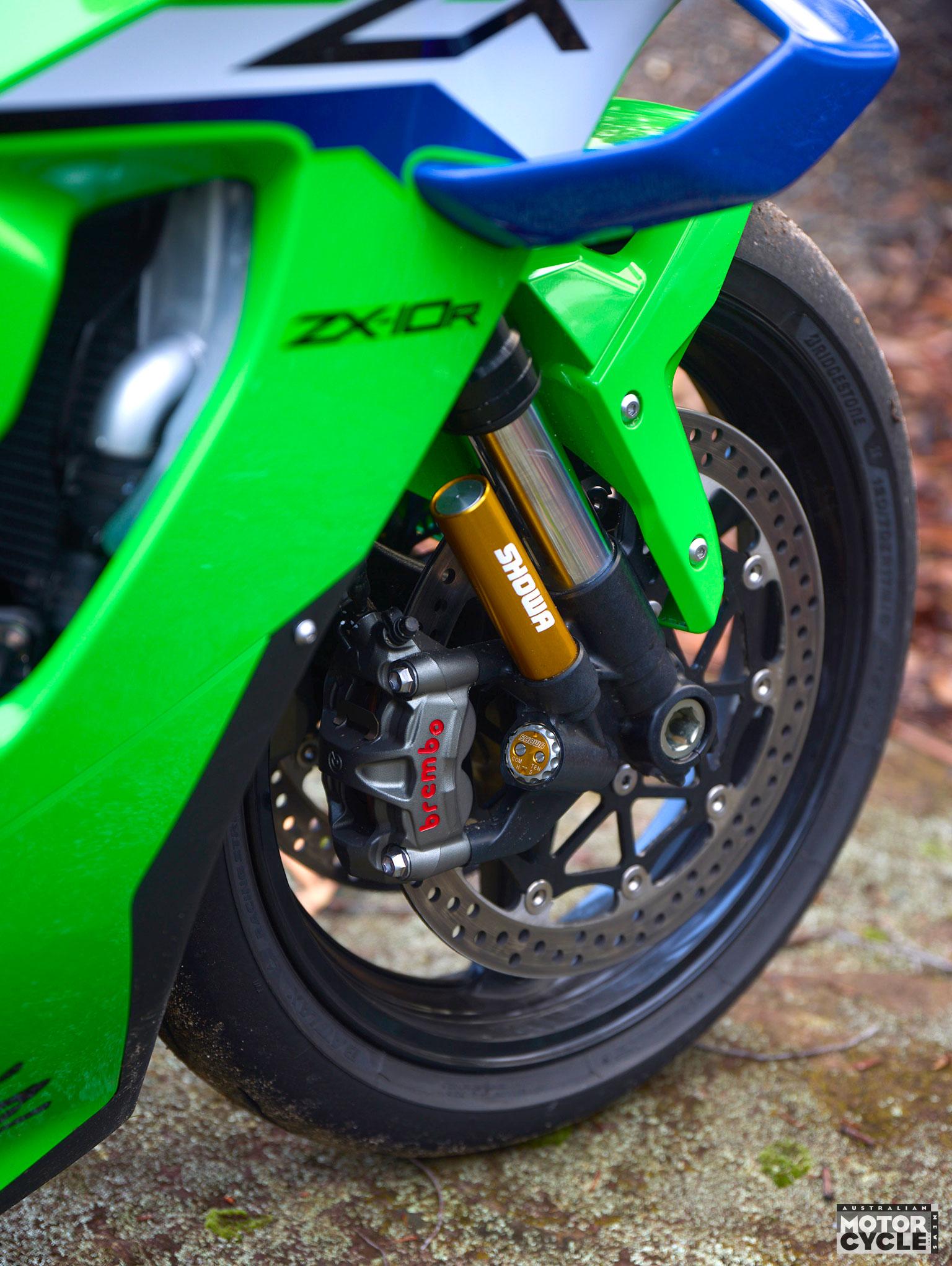
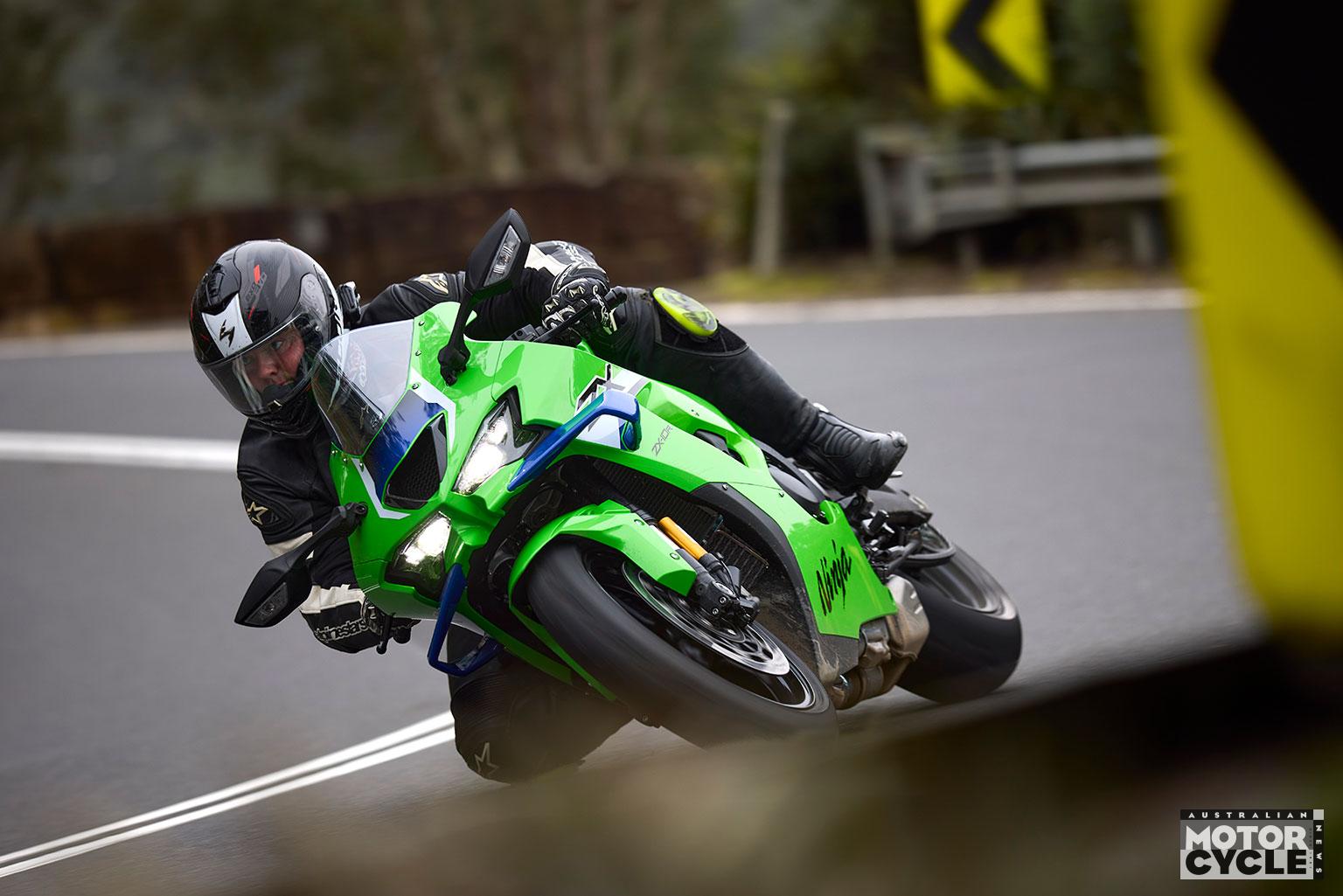
Heading into the twisties on the Ninja gives me a real buzz. Even after only riding the bike for about 100km it feels almost too easy. The Showa 43mm BFF (Best Friends Forever?) fork has been around a few years now and suits the 10 perfectly. I don’t feel the need to even adjust a clicker.
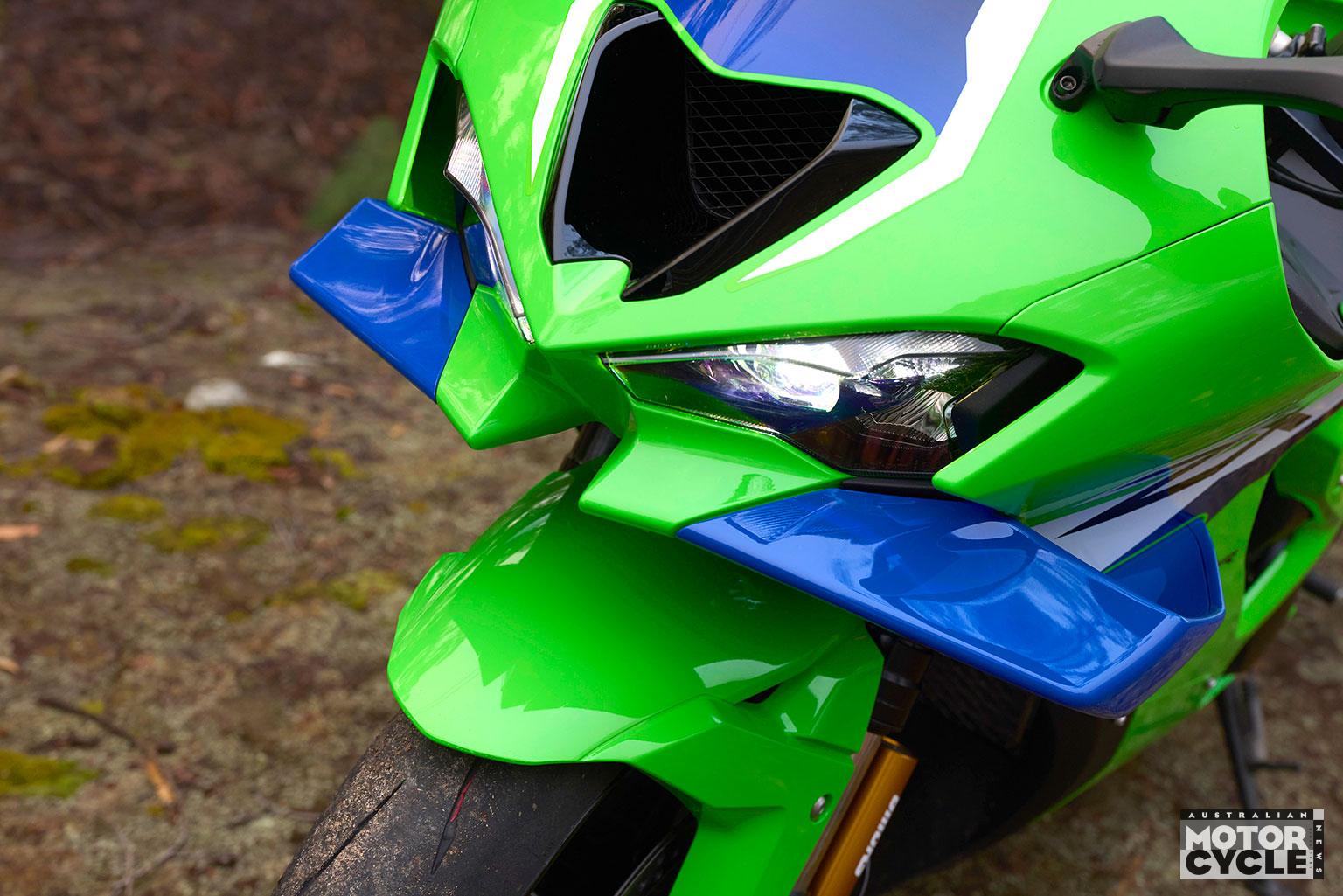
Down the back is a Showa horizontally mounted BFRC lite (Balance Free Rear Cushion) shock absorber, which feels equally at home. I want to stick a bit more preload on it, but feel going at it with an alloy bar and hammer would be rude. So I just breath in instead.
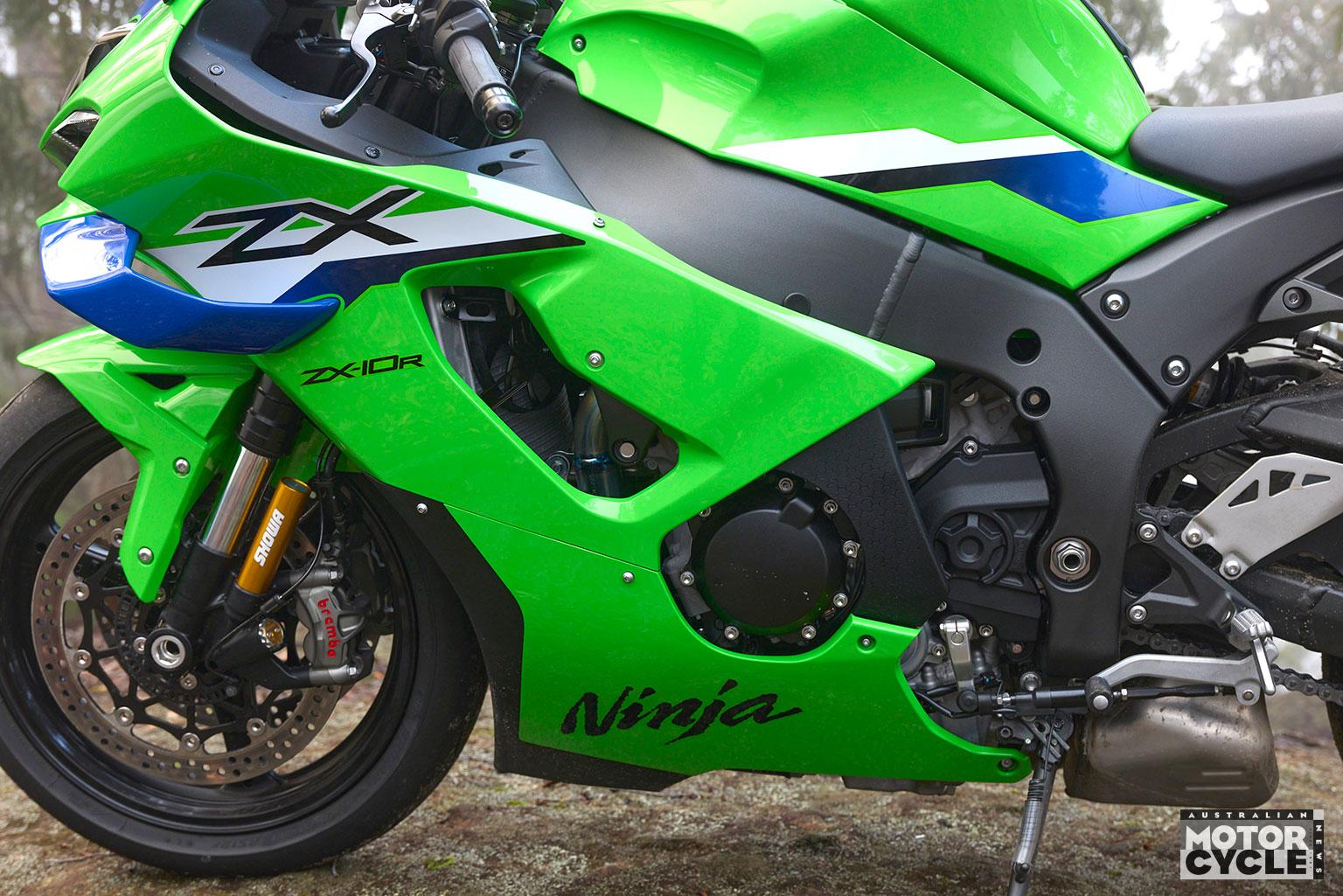
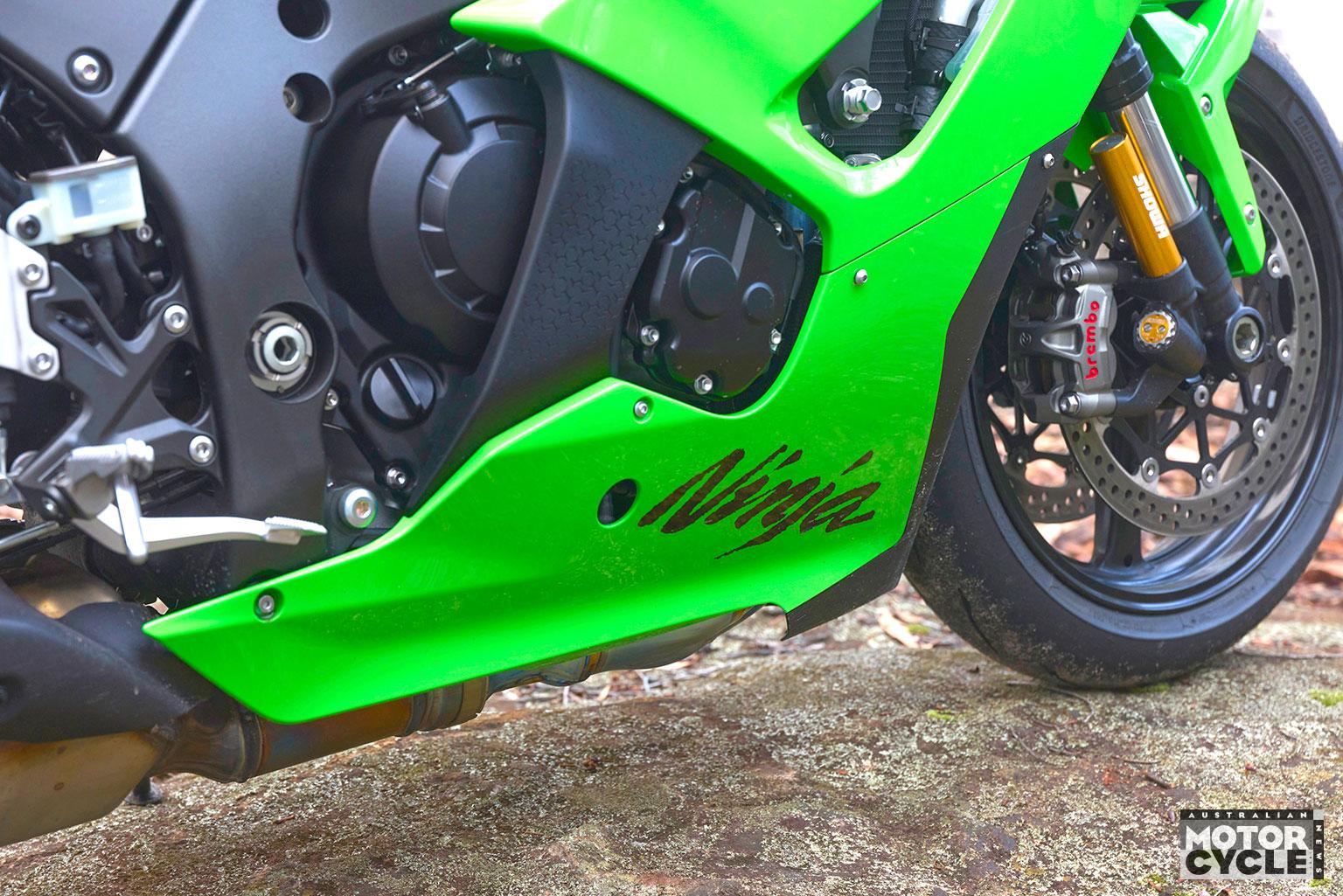
Tipping the Ninja into the corner is precise and effortless. The Brembo front brakes feel strong and progressive as you trail them into the corner. Once on the side of the tyre it feels like the grip and lean angle are almost endless. It loves corners and feels very stable as I wind the power into it, transferring the load to the rear tyre and standing it up on exit. If you’re in the right gear, the rear tyre will step out slightly and squirm a bit as it finds traction, while the traction control keeps a close eye on things.
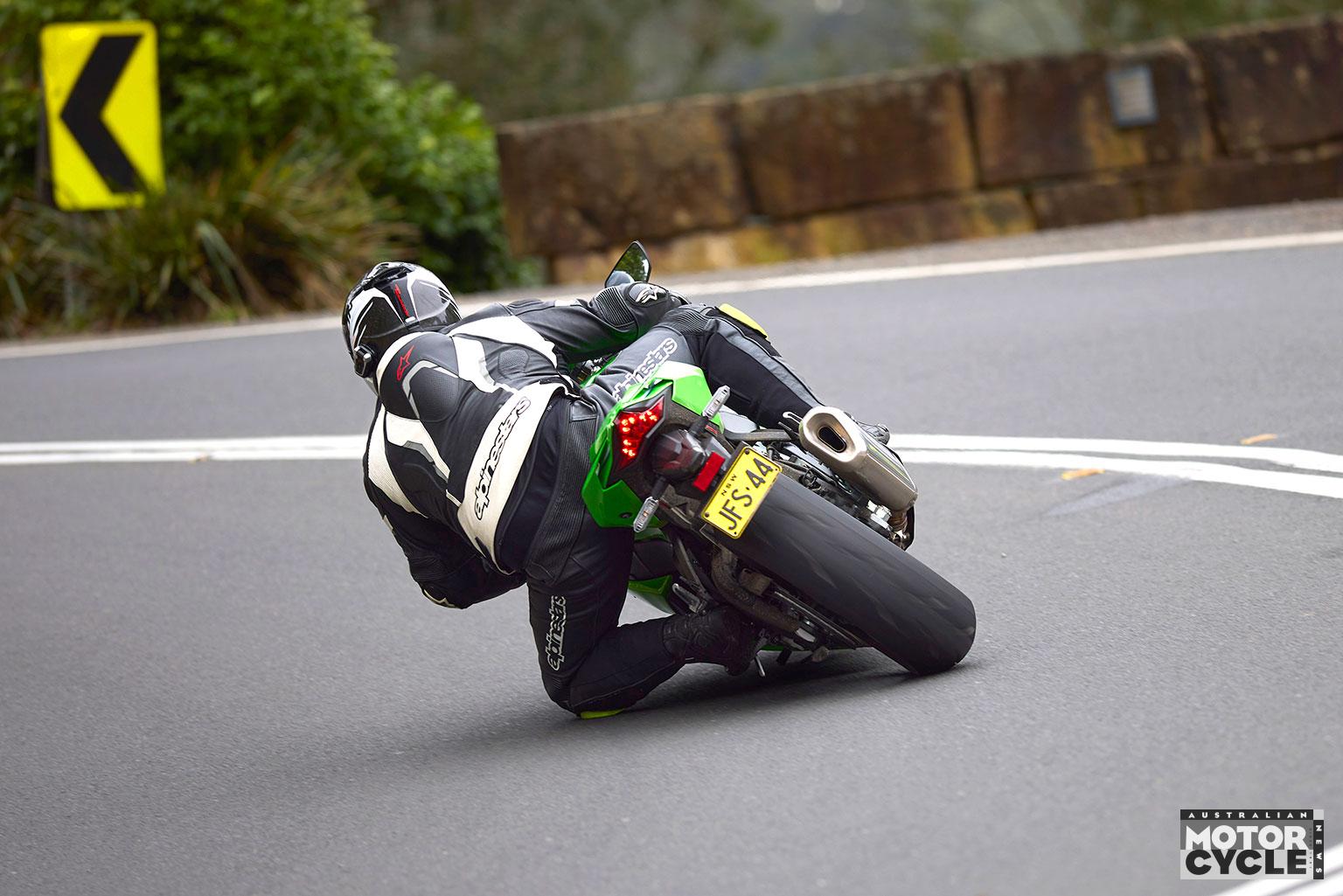
Obviously a fair chunk of this feeling comes from the uber-sticky Bridgestone RS12 tyres that the ZX-10R comes wearing. But either way, I almost feel like Marc Marquez as I review my max lean angle on the dash and see it has climbed to 56 degrees. While I am a massive Marc fanboy, I’m a little sceptical of its accuracy.
Cranking the 10 from corner to corner and listening to the engine screaming out to its redline is a special kind of medicine.
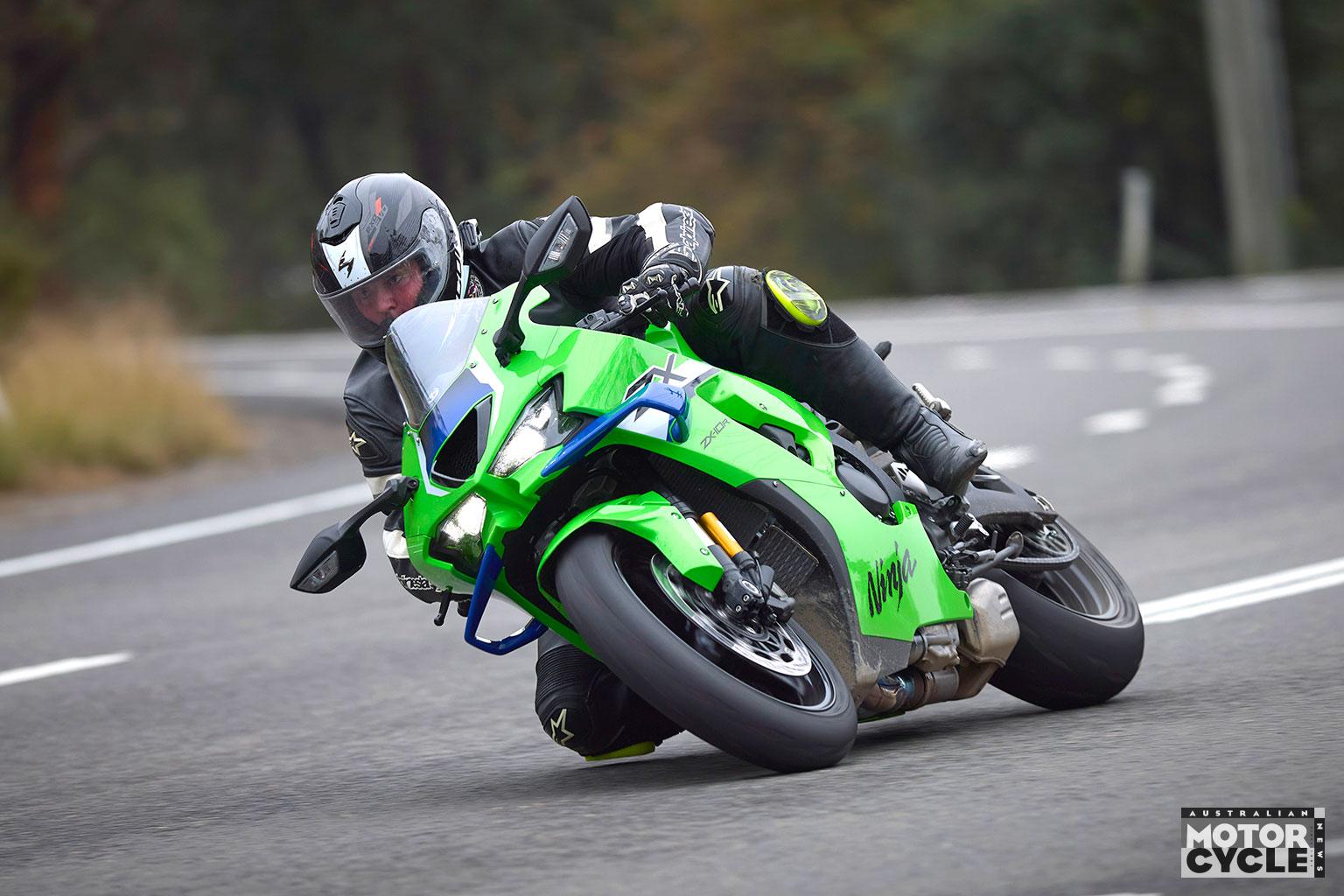
The big Kawa has a distinct induction roar (more like a shriek) that really gets the juices flowing and almost makes me forget about the lack of grunt off the line. Don’t get me wrong, the ZX-10R is no slouch; I headed down to a friend’s place to test its acceleration where I have previously taken the H2. From a regular standing start (no launch control) to the braking point, it reached 230km/h against the H2’s 240. That is pretty impressive if you consider the advantage the ZX-10R would have on the brakes and in the corners over the heavier H2.
I feel it might be time for Kawasaki to look towards variable valve timing or something to broaden the powerband – or are we seeing the end of litre bike development for the road? I can’t help but feel we are living in a special time, where petrol-powered motorcycles are approaching their peak.
FINAL WORD
Is the ZX-10R for everyone? Maybe not. But I feel the Ninja is a bit underrated in the modern 1000cc landscape and is pretty good in the bang-for-buck stakes.
If you’ve watched WorldSBK over the past 10 or 15 years, you will know a bloke called Jonny Rea. JR won six consecutive world titles aboard the ZX-10R against some stiff competition from Yamaha, Ducati, BMW and Honda. You can’t do that without a strong base to work with. Kawasaki is the smallest of the Japanese manufacturers and has outgunned the much bigger factories.
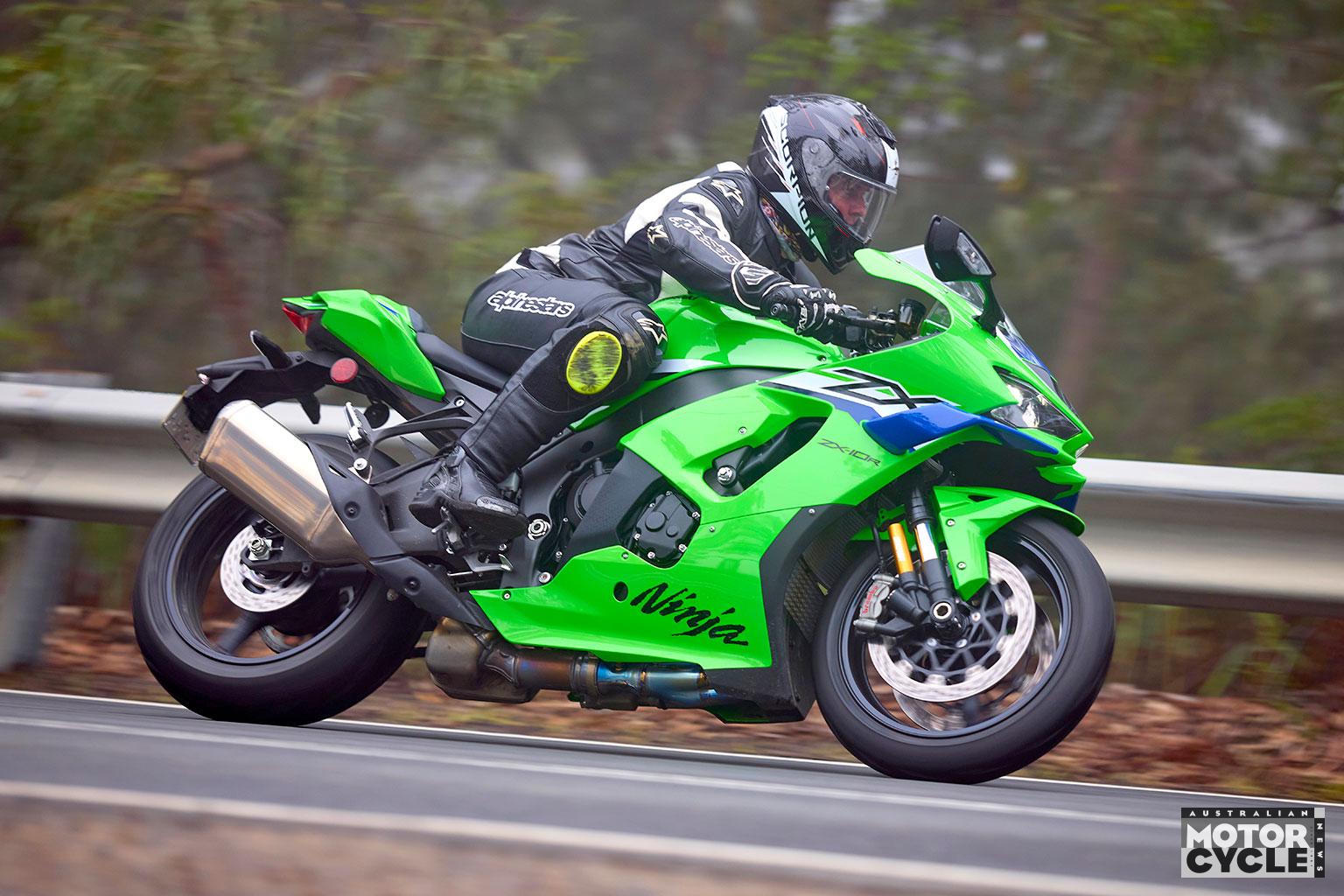
While the ZX-10R might lack a few electronic gizmos like electronic suspension, wheelie control, slide control and fancy ABS settings, you know you’re getting a bulletproof engine, top-quality Showa suspension and a chassis that has been developed to where it is over many years at the pointy end of the WorldSBK field.
The ZX-10R is a rider’s bike and is to be ridden by those who aren’t afraid to stand out from the pack on a green machine. They come in green, because green means go!
✅ PROS – Screaming inline four, light and nimble, very decent bang for your buck.
❌ CONS – Reduced low-end torque, ageing electronics, Marc Marquez will never ride one 🙁
Would you like another R with that?
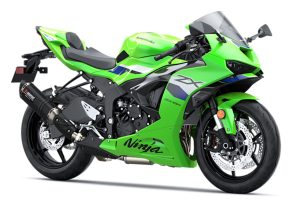
If a single R on your ZX-10R isn’t enough, or you are a pirate, the RR might be more your style. The ZX-10RR also only comes in full green, so you will not go unnoticed on the track or on a Sunday ride with your buddies. The RR is aimed at racing and track days while still being road legal. This green mean machine features upgraded lightweight Pankl engine internals like pistons and titanium rods for more reliability at race speeds and extra power (1kw extra in the specs); low-friction titanium-coated inner fork tubes; updated rear shock absorber; race-track ready suspension settings; steel braided brake lines and Pirelli Supercorsa SP tyres. It’s also a single seat only model, so no pillions allowed. If green means go, the RR goes more and is priced at $46,429 ride away. Needless to say it is available in strictly limited numbers.
THE END OF AN ERA?
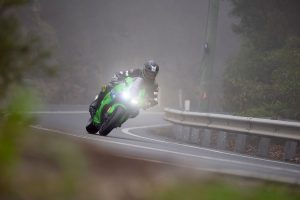
There’s a part of me that reckons we’re living through the golden years of the litre bike era without even realising it. Bikes like the ZX-10R, Yamaha R1, Fireblade and GSX-R 1000R have been honed over decades into unbelievably capable machines, but the writing is starting to appear on the wall. Emissions rules keep getting tougher, development costs keep climbing and most manufacturers seem happier building naked bikes than chasing another handful of horsepower from a screaming inline four.
Maybe I’m wrong and someone will pull another rabbit out of the hat. But if this really is the last generation of naturally aspirated superbikes, we’re going out on a high. They’re faster, safer and more rideable than ever before, and that distinctive induction howl at 14,000rpm is something future riders might only ever hear on YouTube. If that day comes, I’ll be hanging onto my green bikes for dear life.
TRACK STARS
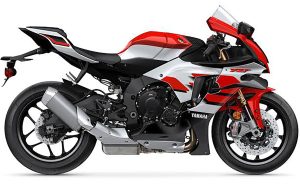
YAMAHA YZF-R1 – $33,749 ride away
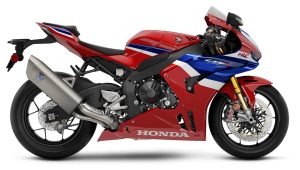
HONDA CBR1000RR-R SP – $39,006 ride away
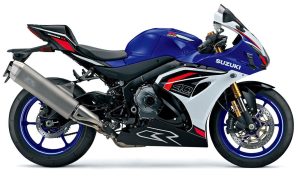
SUZUKI GSX-R 1000R – $28,490 ride away
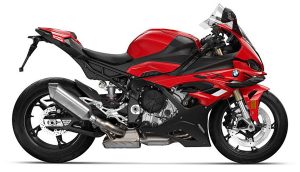
BMW S 1000 RR – $29,505 ride away
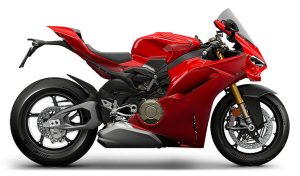
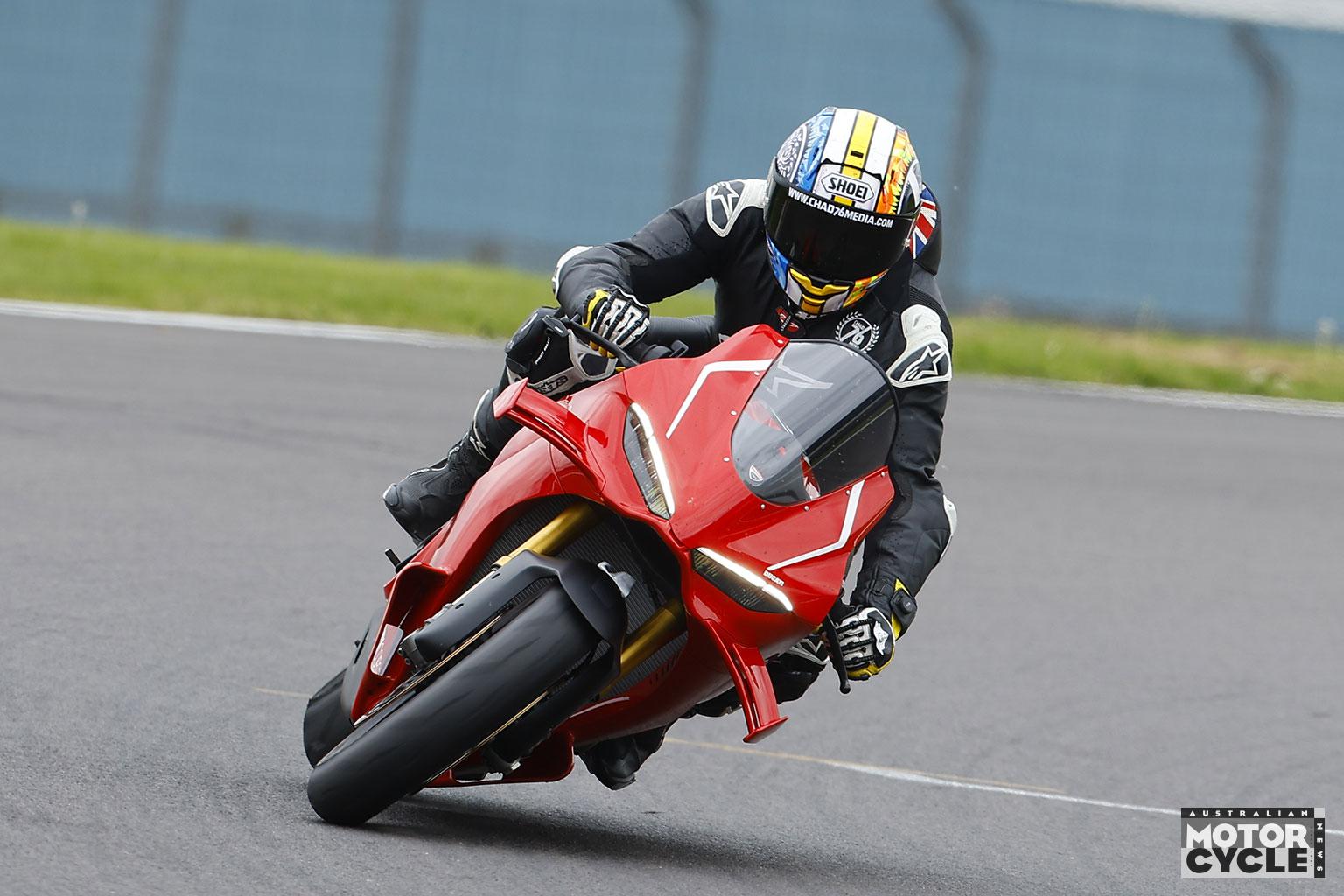
DUCATI PANIGALE V4 – $39,325 ride away
SPECIFICATIONS
ENGINE
Type Inline 4 cylinder, 16 valve, DOHC
Bore & stroke 76mm x 55mm
Capacity 998cc
Compression ratio 13:1
Cooling Liquid
Fuelling EFI 47mm x4 with dual injection, electronic throttle valves
Transmission Six-speed
Clutch Wet, multi-plate, slipper
Final drive Chain
PERFORMANCE
Power 144kW (193hp) @ 13,000rpm (151.2kW/202.7hp with ram air)
Torque 110Nm @ 11,400rpm (claimed)
Top speed 299km/h (limited)
Fuel consumption 6.7L/100km (measured)
ELECTRONICS
Type ABS, ride-by-wire
Rider aids Intelligent ABS, traction control, cruise control, quickshifter, launch control, corner management, engine brake control.
Modes Road, Sport, Rain, 4x Rider.
CHASSIS
Frame material Aluminum
Frame type Cast twin spar
Rake 25°
Trail 105mm
Wheelbase 1450mm
SUSPENSION
Type Showa
Front: 43mm inverted fork, compression, rebound, preload, top out springs, 120mm travel
Rear: Horizontal back link monoshock, compression, rebound, preload, top out spring, 107mm travel
WHEELS & BRAKES
Wheels Cast aluminium
Front: 17x 3.5in Rear: 17 x 6.0in
Tyres Bridgestone Battlax RS12
Front: 120/70 ZR17 (M/C 58w)
Rear: 190/55 ZR17 (M/C 75w)
Brakes Brembo, ABS
Front: Twin 330mm semi floating discs, Brembo M50 Stylema monoblock calipers
Rear: Single 220mm disc, Nissin single piston caliper
DIMENSIONS
Weight 209kg (wet, claimed)
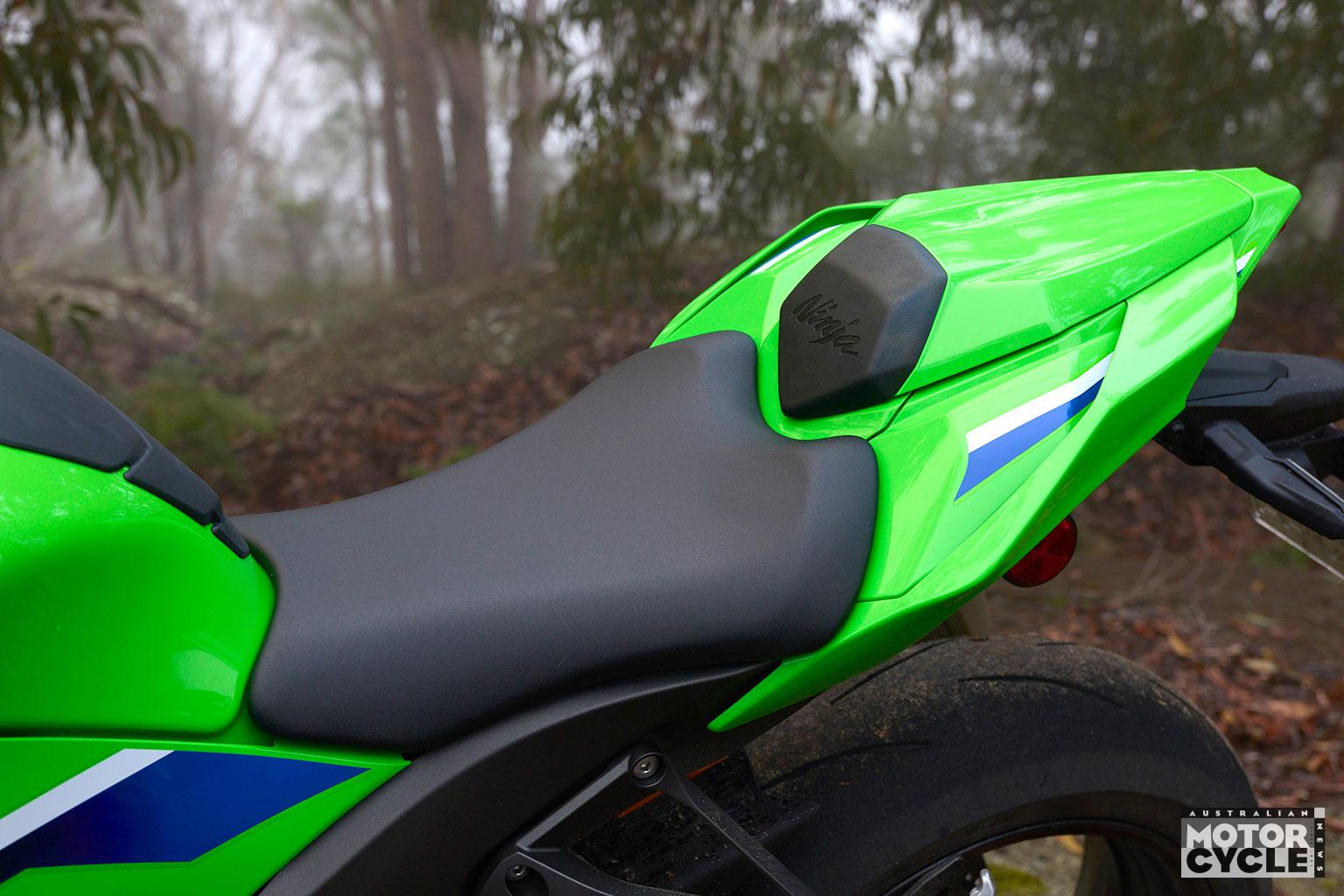
Seat height 825mm
Width 750mm
Height 1180mm
Length 2085mm
Ground clearance 130mm
Fuel capacity 17L
SERVICING & WARRANTY
Servicing First: 1000km
Minor: 12,000km
Major: 24,000km
Warranty Two years, unlimited km
BUSINESS END
Price $28,610 ride away
Colour Lime Green/Blue 24
Contact Kawasaki.com.au