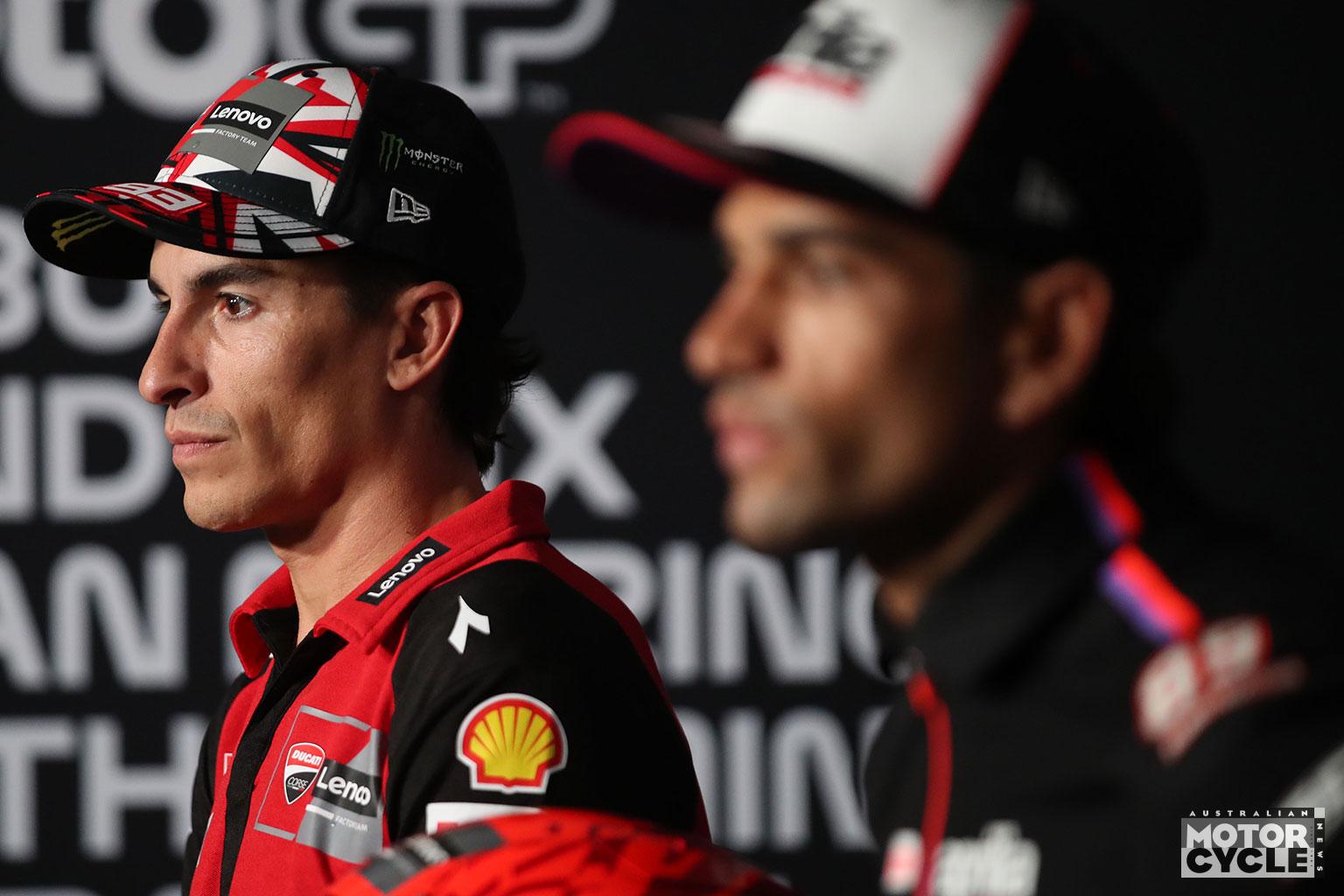
1951 was a pivotal year for motorcycle grand prix racing, itself just turning three. It marked the first championship for Geoff Duke (the first of six), and it was a double – 350 and 500cc. Duke – dapper, personable, innovative and stylish – was the Marc Marquez of his day.
It was also the last premier-class title for a Norton, for any single-cylinder motorcycle. The doors closed on a long and glorious page of motorcycle history.
And the year that the world’s oldest surviving motorcycle magazine first saw the light of day. Welcome, AMCN… so young that it hadn’t even been given that name yet.
This souvenir issue will surely celebrate many landmarks for a publication both august and still lively. This column will be slightly different. Looking sideways instead at how much has improved in that three-quarters of a century. And forward at what may improve in MotoGP’s bold new future. Or perhaps won’t.
The improvements are, as one might expect, manifold, and in most cases obvious. Just look at the speed. Comparisons aren’t easy, with no directly comparable GP tracks. In 1951, eight races were contested. The list includes Assen, but on a very different layout, as well as long-forgotten venues like Switzerland’s Berne, Albi in France and the fearsome Clady roads circuit outside Belfast, for the Ulster GP.
The fastest 1951 lap was at Monza: 162.9km/h, set by Nello Pagani’s Gilera. Today’s 22-race calendar’s fastest was set last year by Fabio Quartararo at 185.1km/h. Where? Phillip Island, of course. Away from GPs, however, the Isle of Man is unchanged. Fastest lap in 1951: Duke’s 153.2km/h. In 2023, yet to be bettered, Peter Hickman’s BMW ran 219.5km/h!
The money’s different. Back then, only a handful of top riders could make a good living. Today, every MotoGP rider is well paid, and the top guys make millions.
The technology bears some basic comparison. Dustbin fairings were the aero of the day – the low-tech equivalent of today’s bewinged wonders. Engines were four-stroke. Like today. And tyres remain (in Mike Hailwood’s famous words) “round and black”. But it’s all several generations advanced. And electronics hadn’t even been thought of, back in the days of carburettors and ignition points.
Most significantly, the safety. Six deaths were recorded in 1951 – three at the Isle of Man TT. The most significant victim was reigning 250cc champion Dario Ambrosini, at Albi. Vastly safer circuits and vastly improved rider equipment have mercifully changed all that: the same number of fatalities in modern racing spans 30 years rather than just one.
The ambience could hardly be more different. Forgotten is the camaraderie of the old campsite paddocks with riders sleeping in vans, working on their own bikes under canvas, sharing banter around campfires. Now it’s all hissing pneumatic doors of five-star hospitality suites, with only the MotoGP elite allowed to park their massive motorhomes trackside.
It was Dorna’s commercial drive and Carmelo Ezpeleta’s hands-on management that wrought the greatest changes, but we are at another pivotal point. Dorna has been taken over by Liberty Media, an all-singing, all-dancing American sports promotion giant, fresh from the success of manipulating F1’s appeal beyond the petrol-head fan base into mass-media success.
They’ve only just started the same process with MotoGP, one sign being the lionisation of its riders with massive pre-race public events and a remorseless building of their personal profiles.
And one major loss so far… the legendary Phillip Island, one of the world’s finest motorcycle racing circuits, to be replaced with a street circuit in Adelaide (a curious if very different hark-back to the public-roads circuits of 1951).
It’s a business rather than racing decision, and a clear marker of the direction MotoGP will be taking from here on.
Some things, however, haven’t changed at all. The crowds. The fans. Most especially, the riders. A fine kind of madness.