New patent reveals variable-geometry, hubless-drive electric two-wheeler
Chinese car brands seem to be jumping on the two-wheeled bandwagon. We’ve already seen the vast, eight-cylinder Souo S2000 cruiser and tourer models from Great Wall Motors and QJMotor is part of the wider Geely Group, and now Chery is getting in on the action with a radical-looking new electric bike.
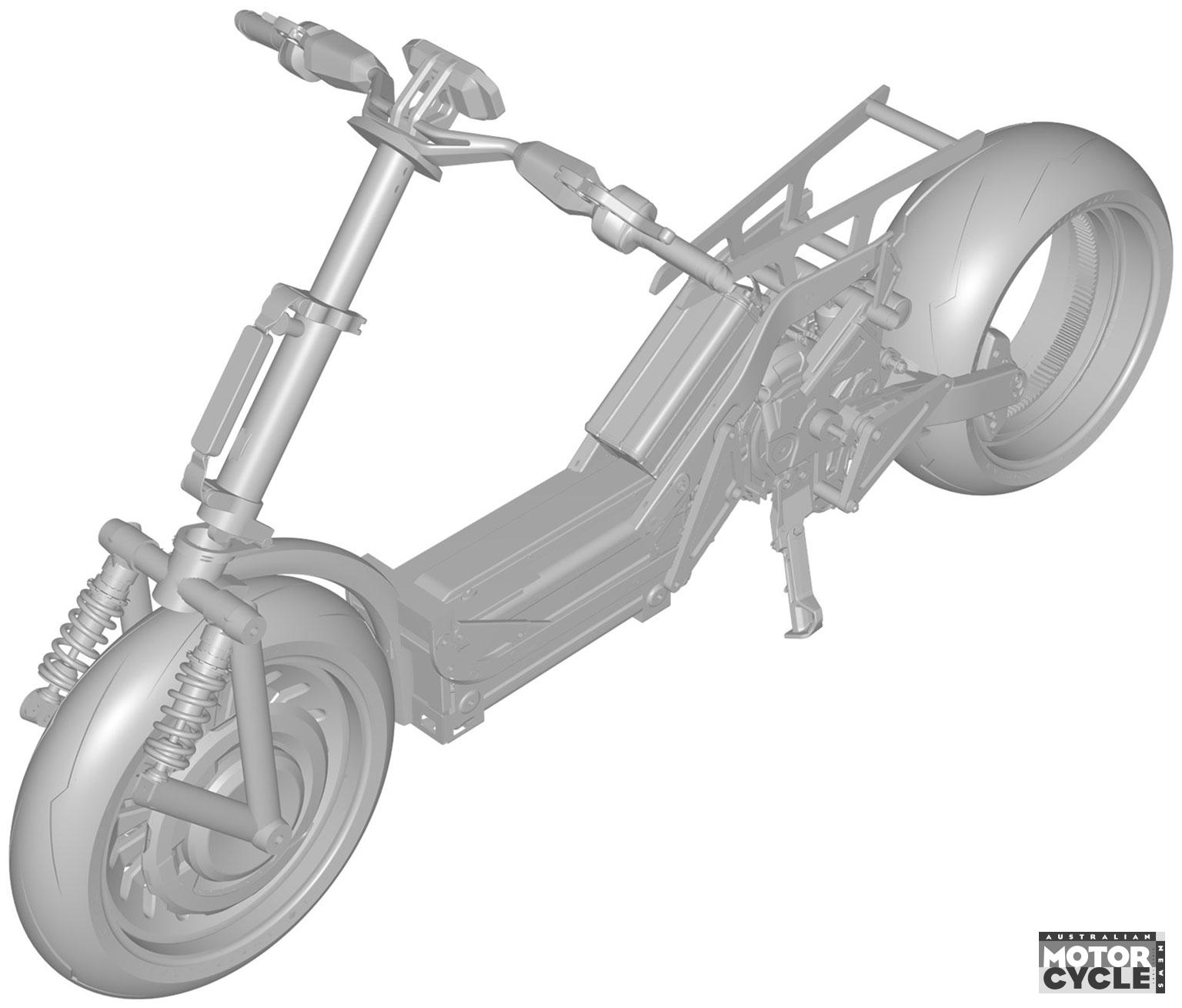
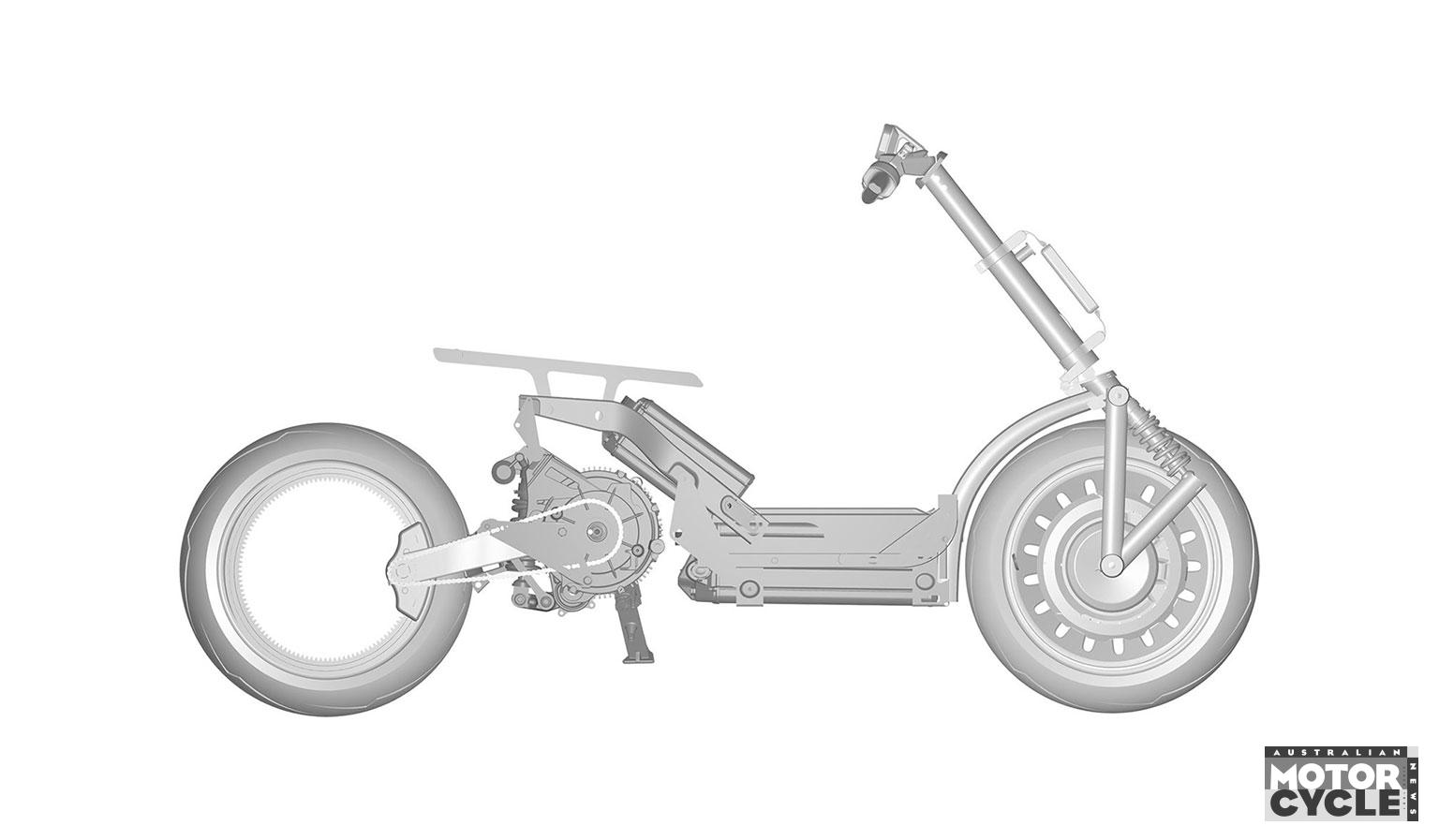
So far all we have to go on is a set of patent filings showing an incomplete chassis and drivetrain, but there are already plenty of unusual elements to dig into, including a hubless rear wheel and variable-height bars.
Chery is already an international brand on four wheels, and owns several other car making names that might be familiar, including Jaecoo and Omoda, as well as a 50/50 joint venture with Jaguar Land Rover that’s resulted in a standalone Freelander brand that debuted earlier this year. It’s also revealed a trio of two-wheelers this year, including a budget electric scooter, a more sophisticated electric maxi-scooter and a prototype range-extender electric motorcycle with a combustion engine that’s used purely to generate electricity and charge the battery. There’s no word yet on the production plans for those machines, but the new patent is even more ambitious.
It depicts the chassis of an electric motorcycle or scooter – or a combination of the two – with the battery mounted low down and forming the main structure between a large motor at the rear and a simple tube frame that curves up over the front wheel and holds the steering head.
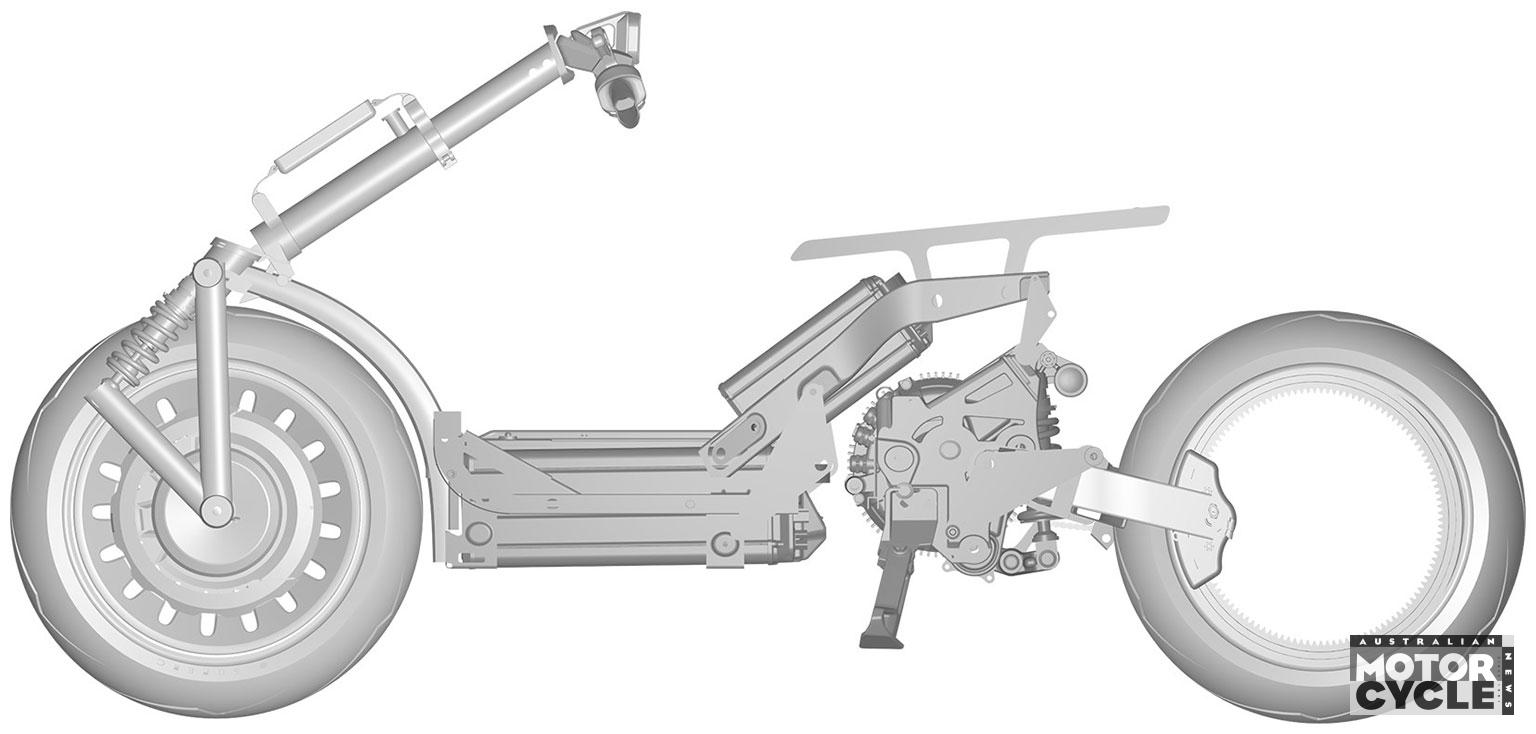
At the back, that motor directly drives a chain that goes down the righthand side of a short, double-sided swingarm, but instead of going all the way to the rear wheel’s centre, it stops as soon as it’s past the wheel rim. That rim is toothed on the inside and the chain drives a gear that meshes with those teeth, while the wheel itself is held by a perimeter bearing.
It’s not a completely new idea – we’ve seen plenty of custom bikes with hubless wheels in the past, and Verge’s electric bike has a motor that’s built into the wheel rim – but the Chery system eliminates the need for a reduction gearbox between the electric motor and the wheel, so arguably simplifies the transmission, albeit while making the wheel bearing more complex.
The stubby swingarm is supported on a conventional rising-rate monoshock linkage, but the patent illustrations are missing the chassis segment that connects the motor to the main structure of the bike.
Also missing is the seat and any bodywork, which makes it hard to be certain how the next element – bars that move up and down like those of a stand-up jet-ski – will be used. The bars are on a long steering column that hinges at the bottom, just above the front wheel, so they can be raised or lowered freely. Presumably that means you’ll either be able to sit down on a seat mounted on the brackets shown above the motor, or stand up on a set of footboards that aren’t shown in the patent.
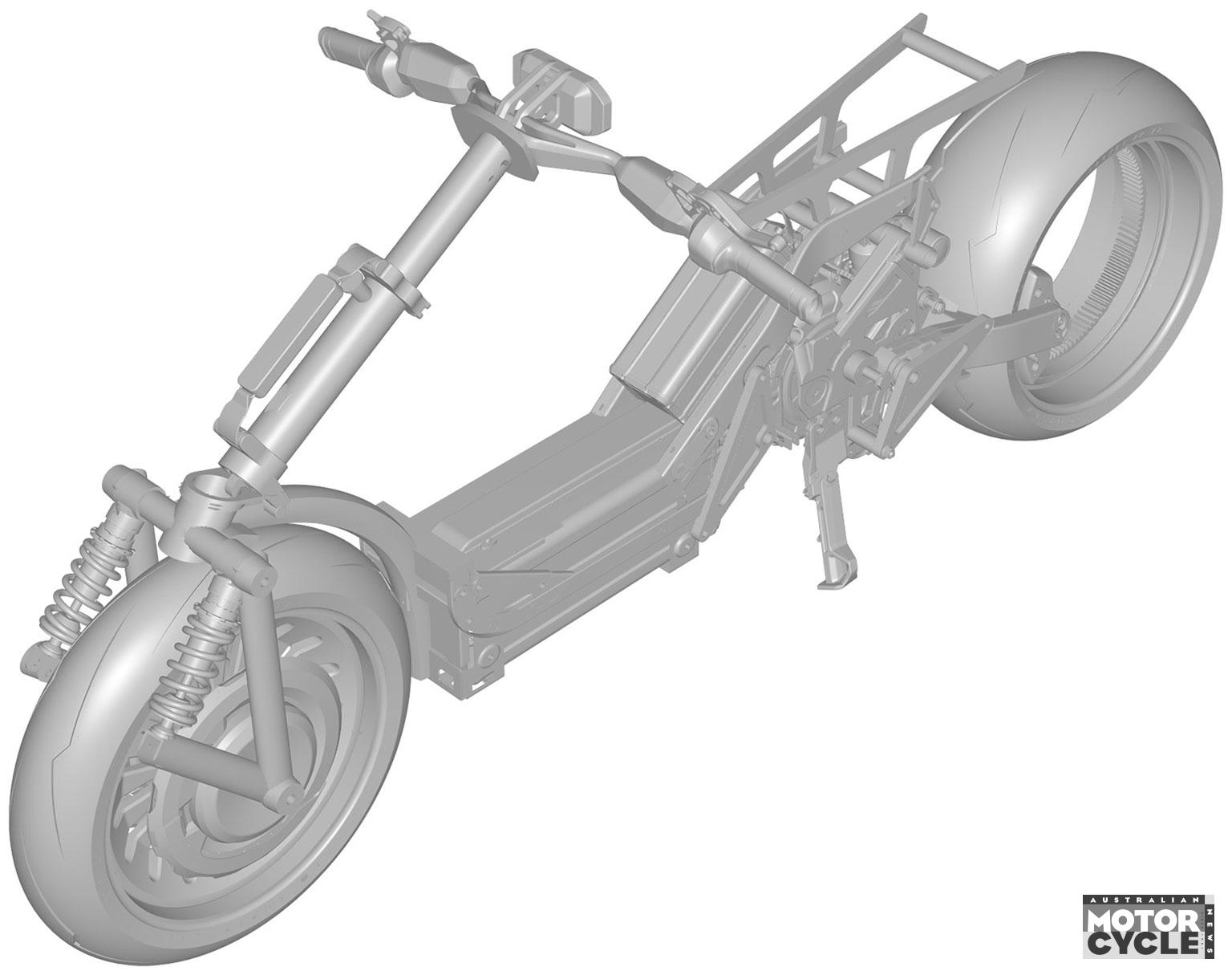
It’s hard to get a sense of scale from the images, but the height and width of the bars suggests the wheels are small – maybe 14-inches in diameter – so the whole vehicle is more compact than most.
The front suspension is puzzling as well, because from the CAD illustrations in the patent it’s not clear how it could possibly work. There are springs, but no apparent means for the front wheel to actually be able to move up and down. And if it did, it would immediately hit the frame above it. Given that some parts of the CAD image are missing, and others are misaligned, it’s possible that the front wheel or part of the suspension has been incorrectly positioned, or that an important part of the system has been excluded from the images altogether.