Launched at last, does China’s first real superbike represent a changing of the guard?
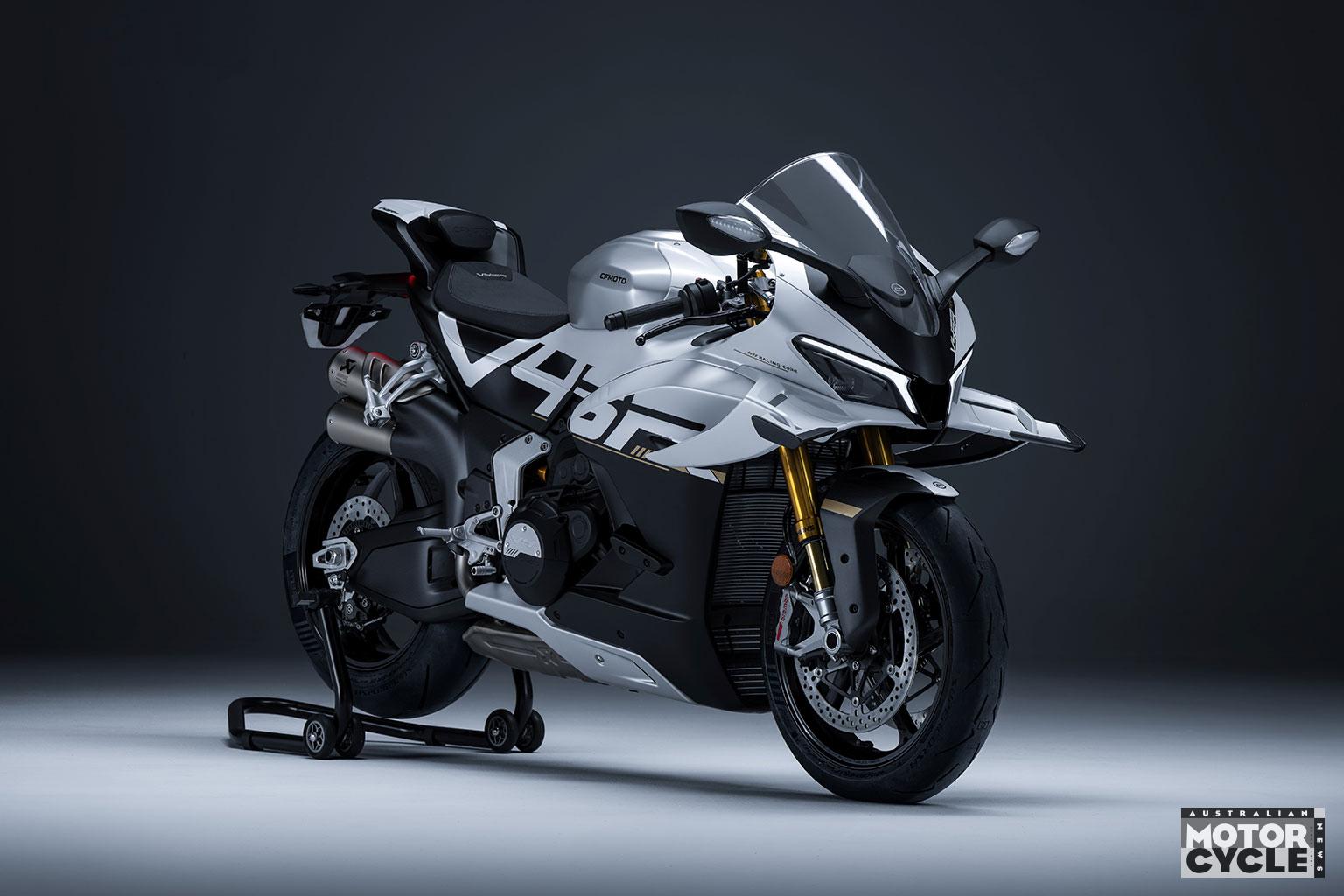
This might be a moment to remember in years to come. CFMoto has been tempting us with previews of its V4 superbike project for the last two years but the finished V4SR-RR made its debut at EICMA in Milan and on paper it’s got the ingredients to shake up the established order and do something that would have been unimaginable until very recently: put a Chinese-made motorcycle at the top of superbike riders’ wish-lists.
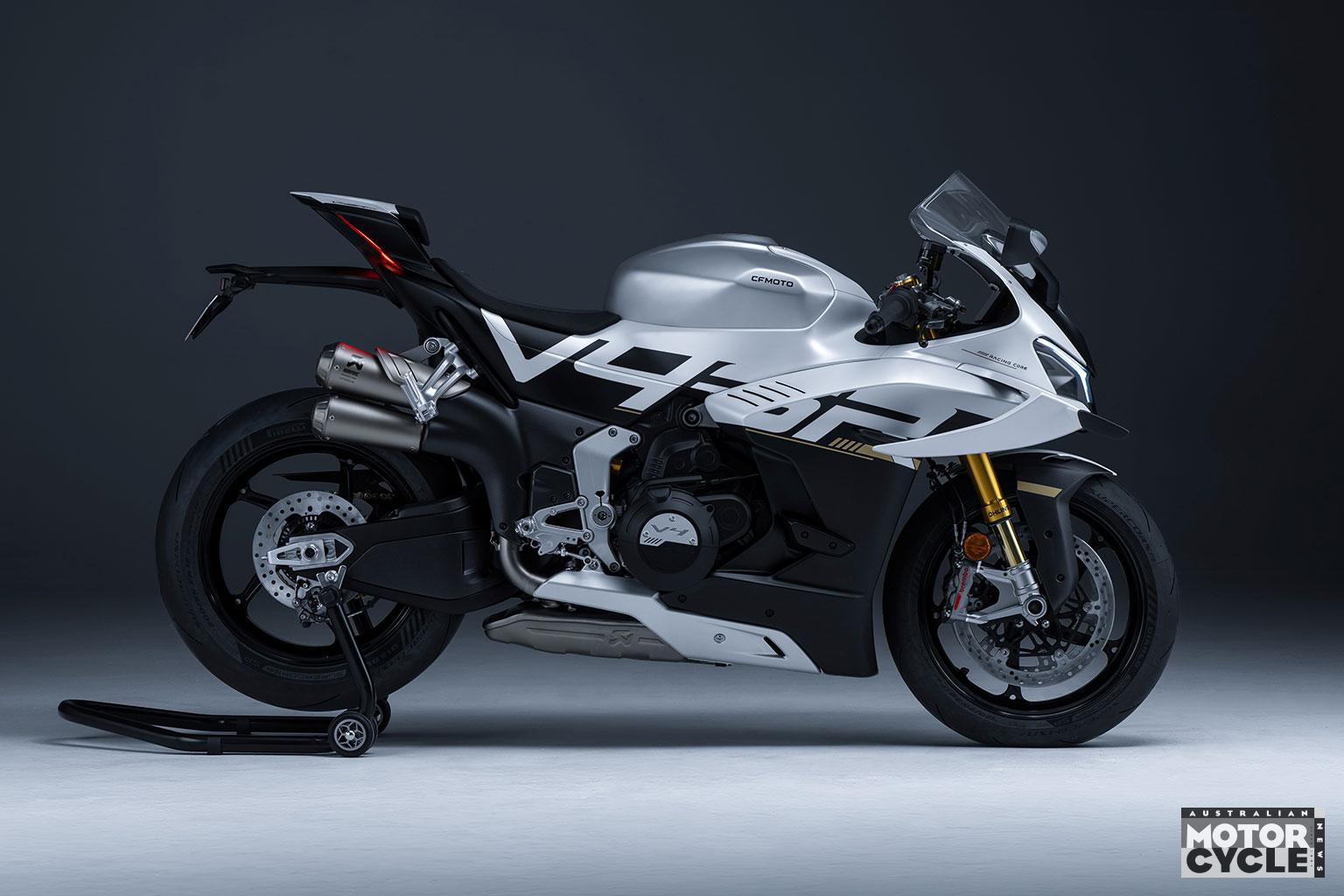
Let’s start by getting some numbers out of the way. The V4SR-RR still needs to undergo roadgoing type-approval and the precise power and weight figures will wait until that’s done, but the company promises it will make more than 157kW, or 210hp, and weigh approximately 180kg dry. Both numbers are right in the WSBK-oriented, litre superbike ballpark: Ducati’s exotic Panigale V4 R, Honda’s CBR1000RR-R and BMW’s M1000RR all make 160kW, with dry weights ranging from 172kg to 183kg. So we can take it as read that the CFMoto is going to be there or thereabouts. During development tests the bike has already hit over 315km/h.
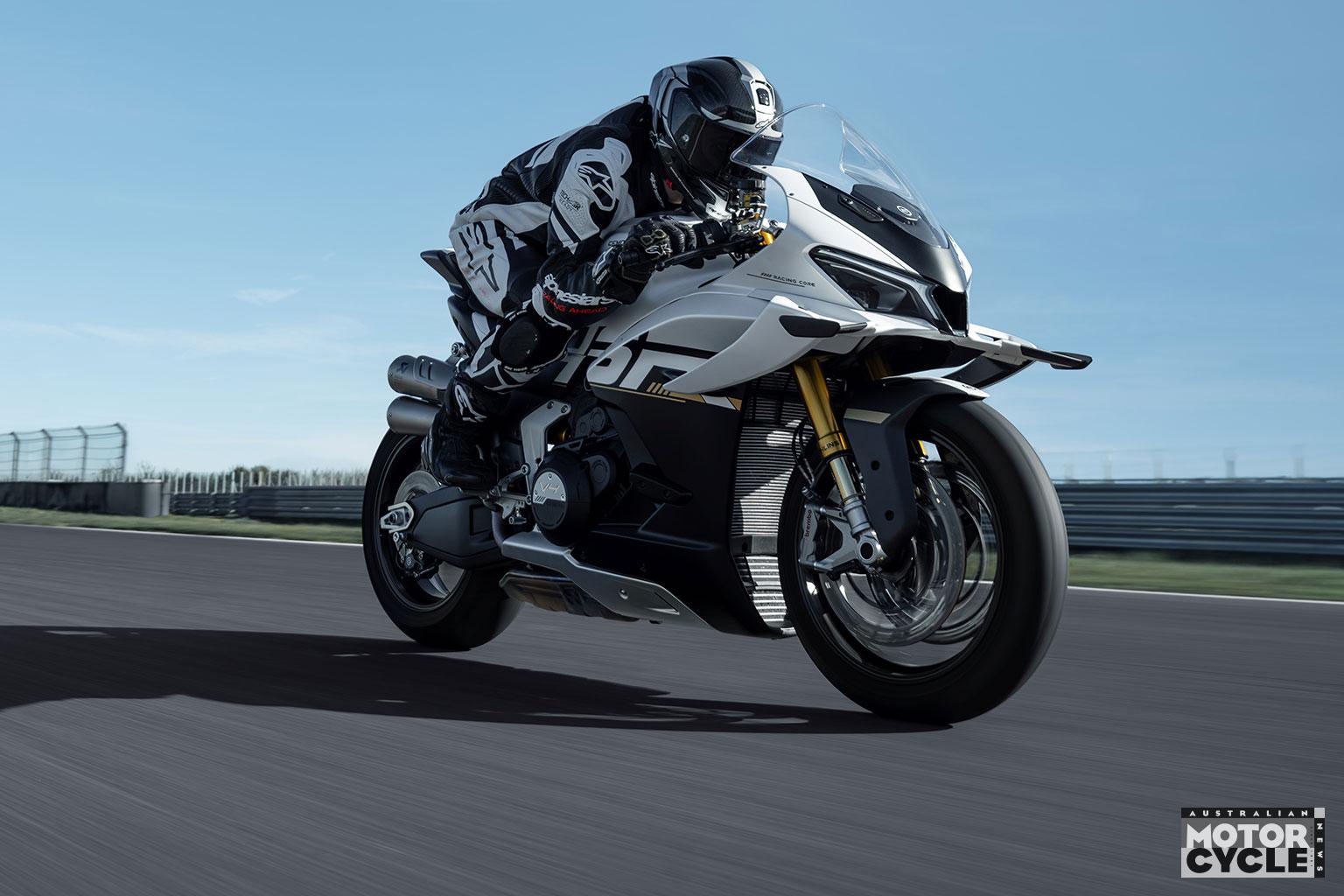
What’s more important is the way those numbers are achieved and the V4SR-RR is closer to the MotoGP-inspired Panigale than any of the others. It’s not just the V4 engine format, as preferred in MotoGP and clearly the ideal money-no-object route to racing success, but that it has a counterrotating crankshaft to offset the gyroscopic forces of the wheels and make the bike turn faster, that it uses variable-height intake trumpets to boost midrange without sacrificing peak power, that it acts as a structural section of the chassis, with partial frames to connect to the headstock and swingarm pivot. CFMoto has clearly designed the bike with an eye to what works best, regardless of cost.
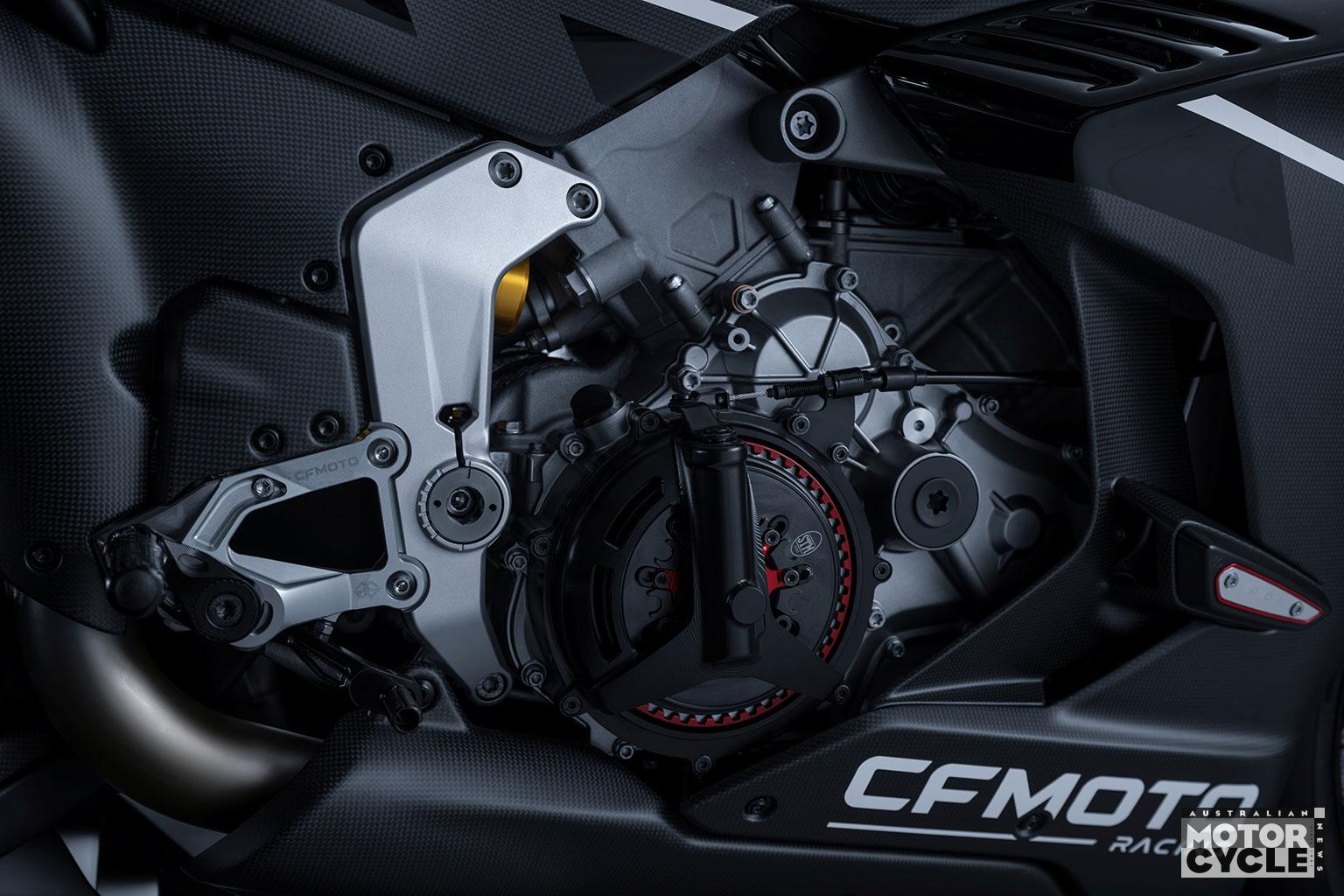
An 81mm bore and 48.4mm stroke match the Panigale V4R’s figures, resulting in a 997cc total capacity, but don’t be fooled into thinking this is a Chinese copycat. Those figures are also used across the MotoGP grid thanks to rules (in the outgoing 1000cc regulations) that limit bore sizes to 81mm. The result is that there’s a huge global reservoir of knowledge around combustion chamber designs, valve sizes, port shapes and pistons for engines with those dimensions; the Blade also uses an 81mm bore, so does the Aprilia RSV4, and the M1000RR’s is 80mm. These dimensions work, so why mess with them?
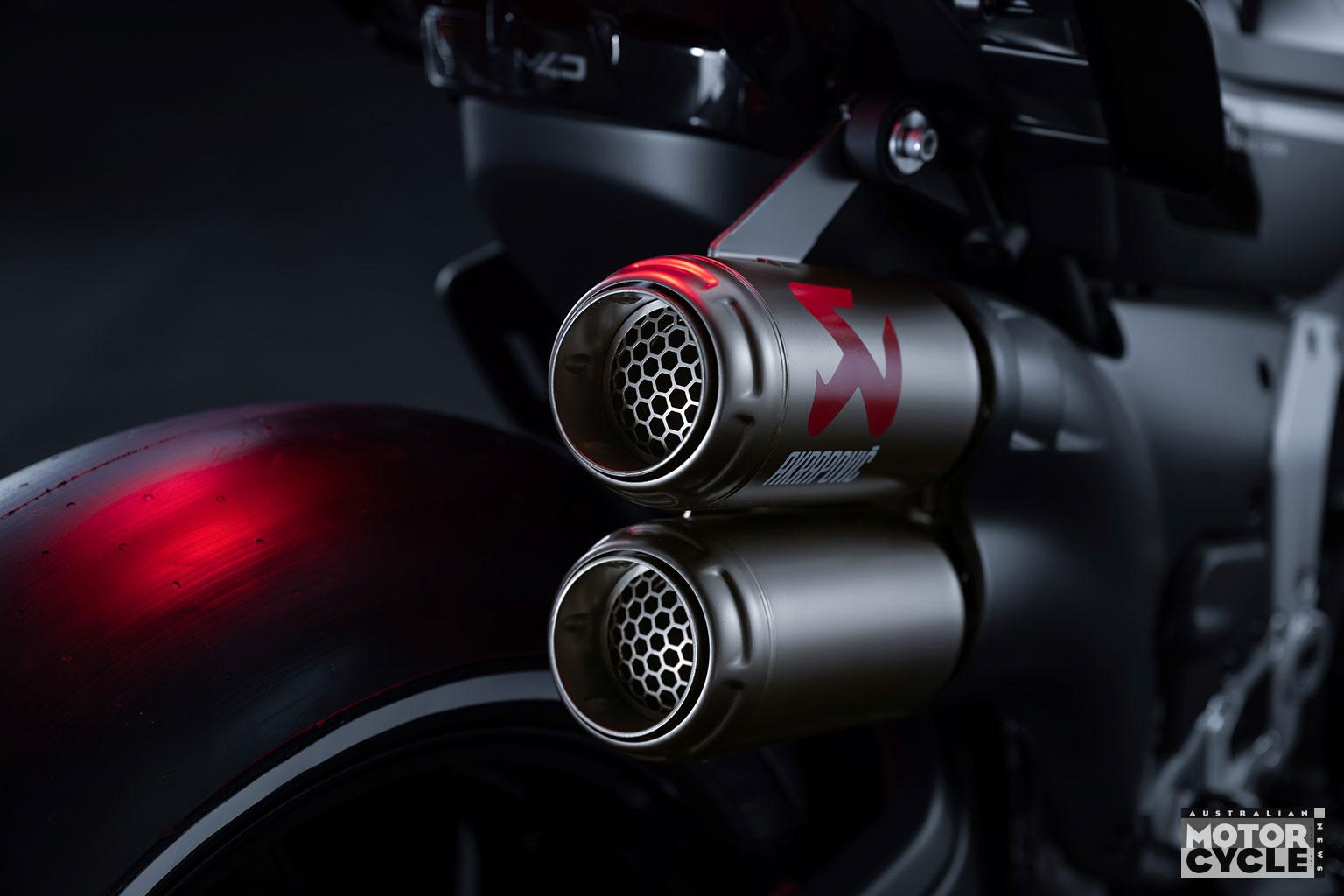
The V4 uses a combination of chains and gears to drive its dual overhead camshafts, with a chain to each intake camshaft, which is then geared to drive the exhaust one. It’s a design that helps reduce the slack in the chain, for more accurate valve timing, but without the complexity of a full gear-driven cam setup. Again, it’s the same route taken by V4s from Ducati and Aprilia. The valves are opened via finger followers and closed by conventional springs, not a desmodromic system like the Ducati. The engine exhausts through a fully titanium exhaust made by Akrapovič, and internally the pistons are from Pankl, so CFMoto is clearly happy to turn to established parts suppliers.
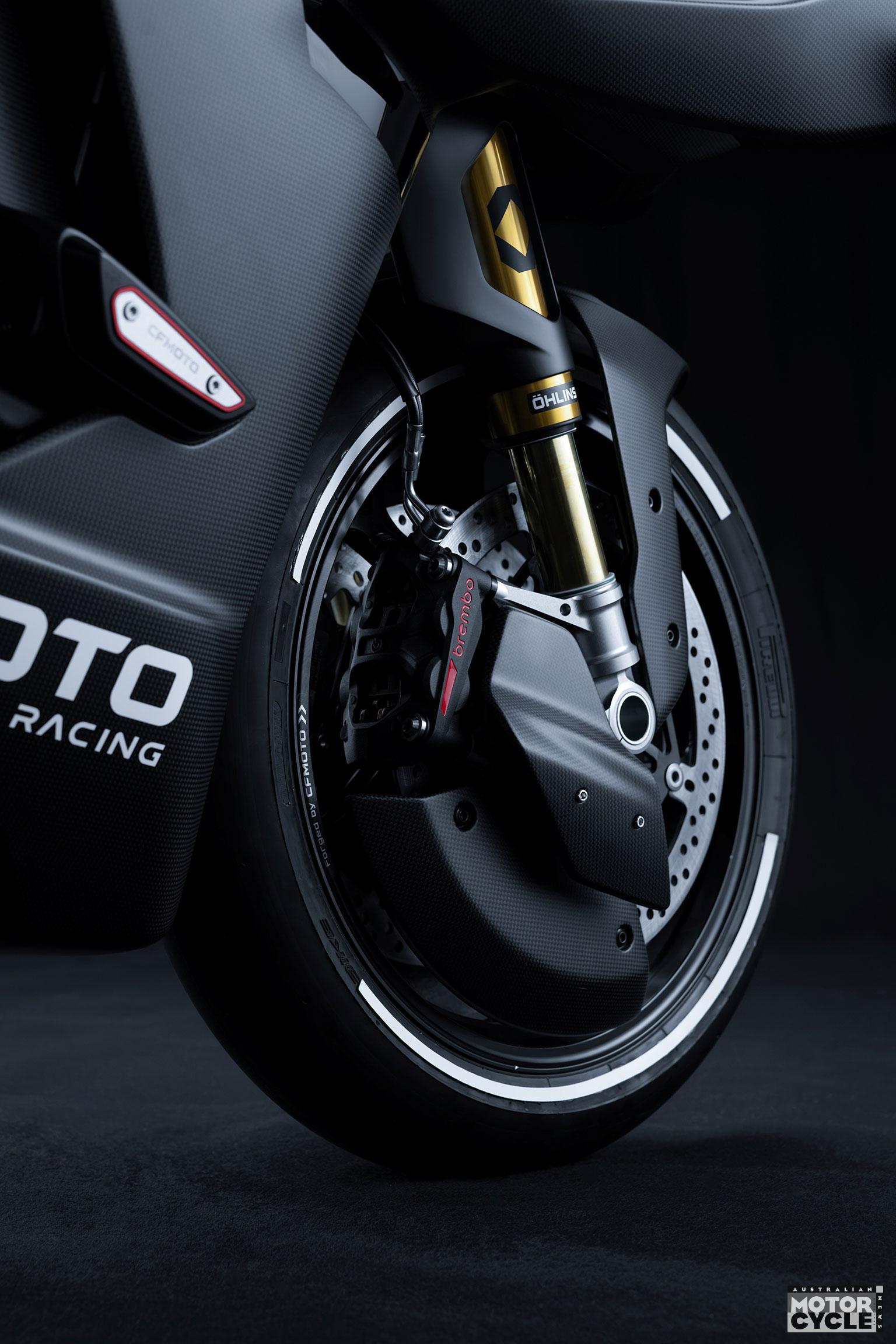
In a change from the prototype V4SR-RR that CFMoto showed last year, the production version gets full Öhlins suspension, with race-oriented, mechanically-adjustable components rather than the firm’s Smart EC electronic setup. Another big name, Brembo, supplies the brakes, with Hypure Sport radial calipers, and in another nod to racing there’s an adjustable swingarm pivot.
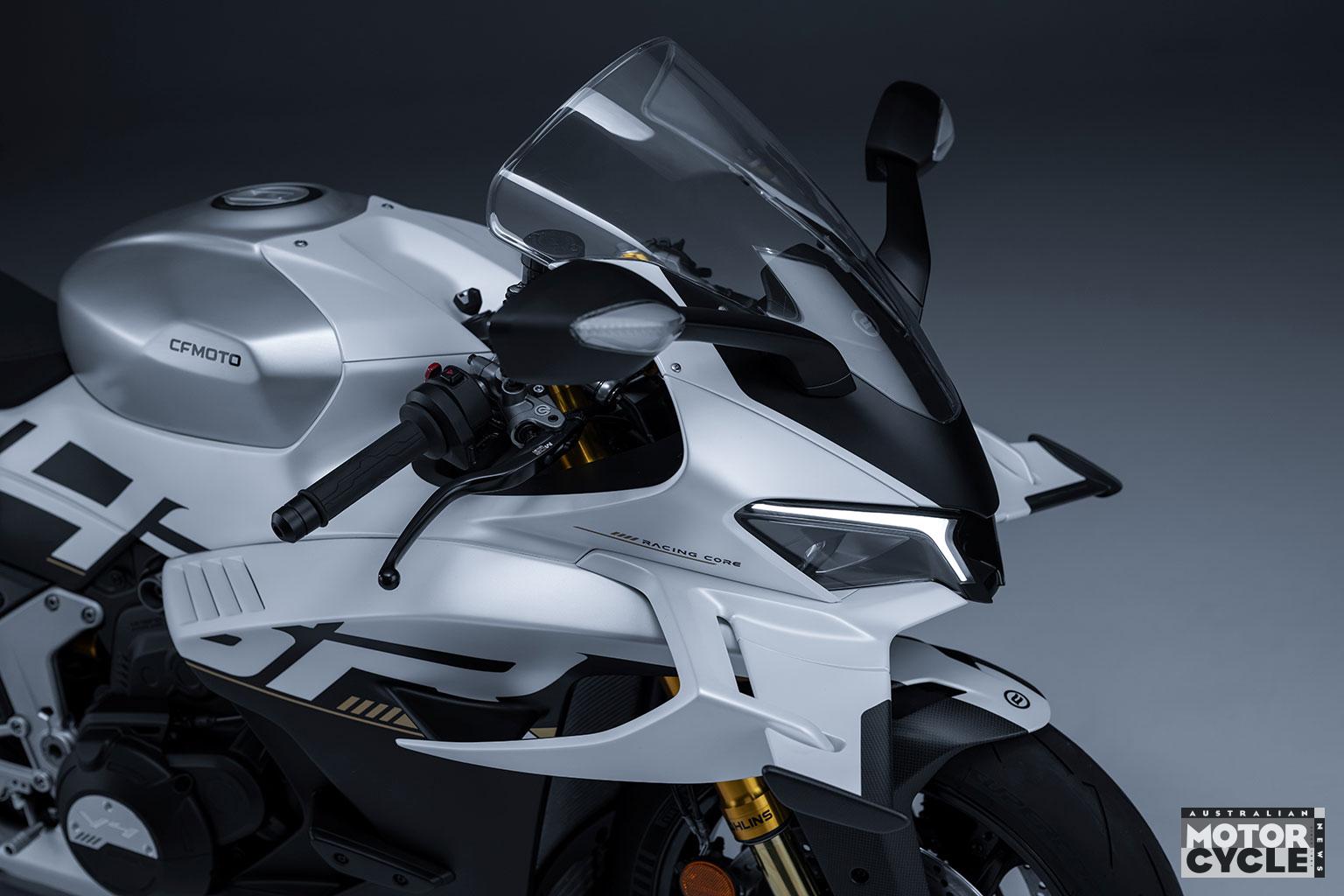
But the ace in the hole for CFMoto might turn out to be the V4SR-RR’s active aerodynamics. While Bimota’s KB998 Rimini debuted moving winglets before the CFMoto, the Chinese bike takes them to a whole new level. Not only do the wings change their angle of attack depending on speed and acceleration – helping prevent wheelies when you’re accelerating hard, feathering at high speed to reduce drag, and pitching down again to put more downforce on the front wheel when you hit the brakes – but they move independently in corners. Images of the bike on track show that the wing nearer the apex adopts a steep angle of attack while its counterpart on the other side pitches the other way. Basically they work like the ailerons of an aeroplane, using airflow to encourage the bike to lean into the corner.
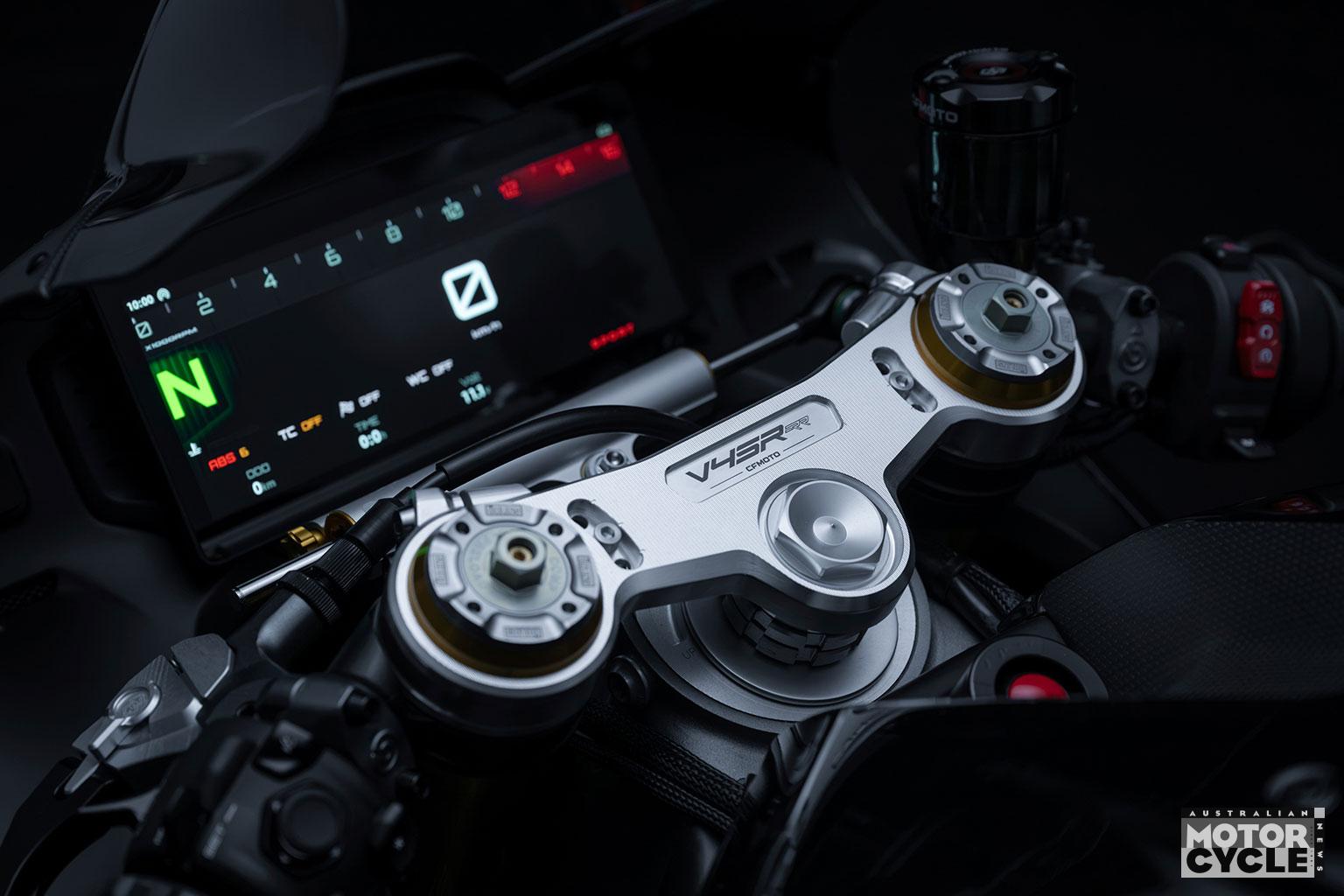
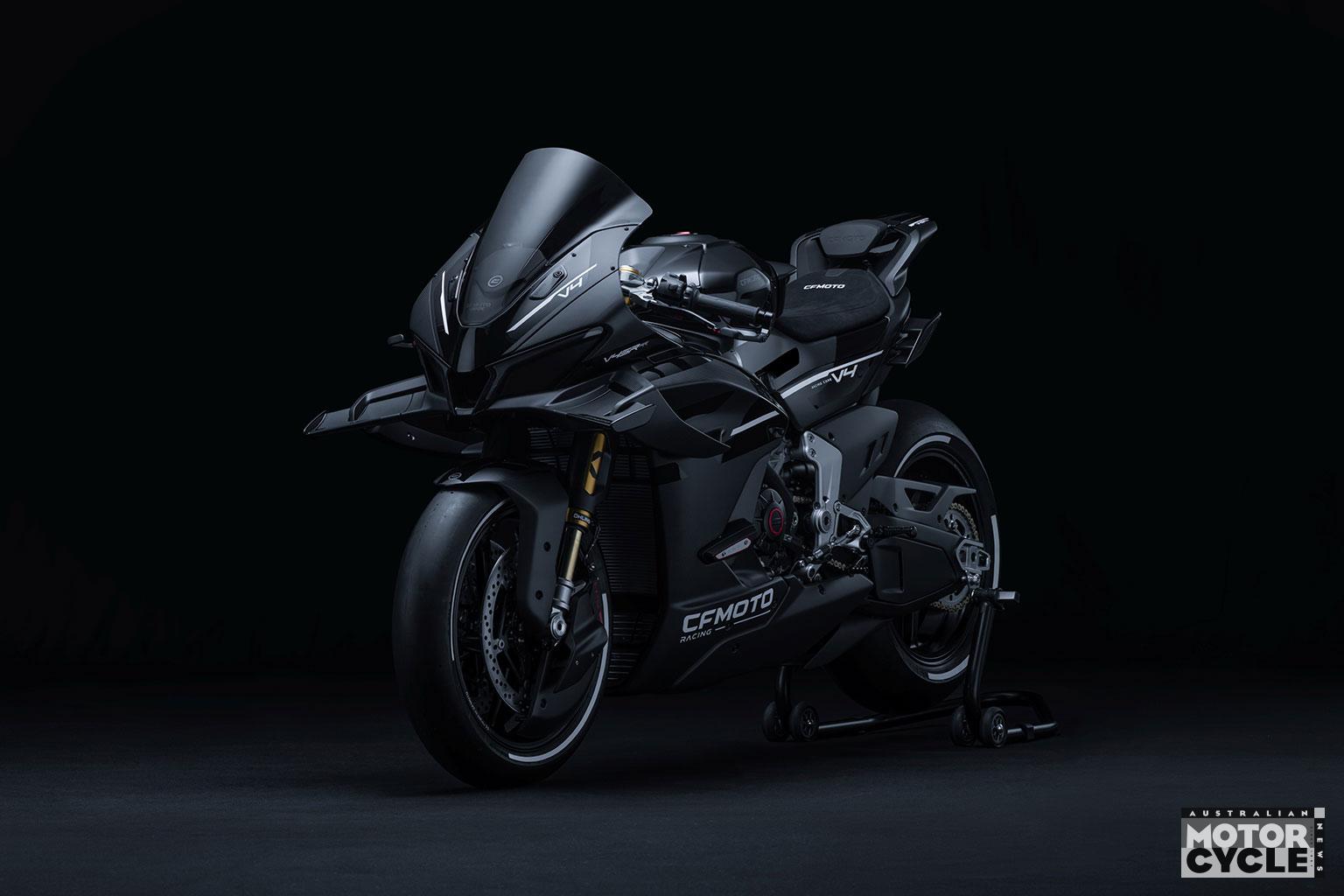
There are still questions around the bike, though. We don’t know how long we’ll have to wait before it’s available, or what it’s going to cost when it reaches dealers. Nor, officially, do we know whether there’s going to be an official WSBK campaign – although there’s absolutely zero doubt that’s where it’s headed. CFMoto’s favoured Aspar team, which runs the brand’s Moto2 and Moto3 squads, has already been involved, with its riders testing the prototypes, and at the EICMA launch CFMoto showed a second version, dubbed ‘Carbon Black’ with full carbon race bodywork, a race Akrapovič exhaust, Gilles billet parts, slick tyres and an STM slipper clutch, plus additional aero components around the front brakes.
A full WSBK campaign isn’t expected until 2028, but there are already rumours that CFMoto will make wildcard entries at some rounds in 2027 as it prepares for a full-scale factory onslaught.
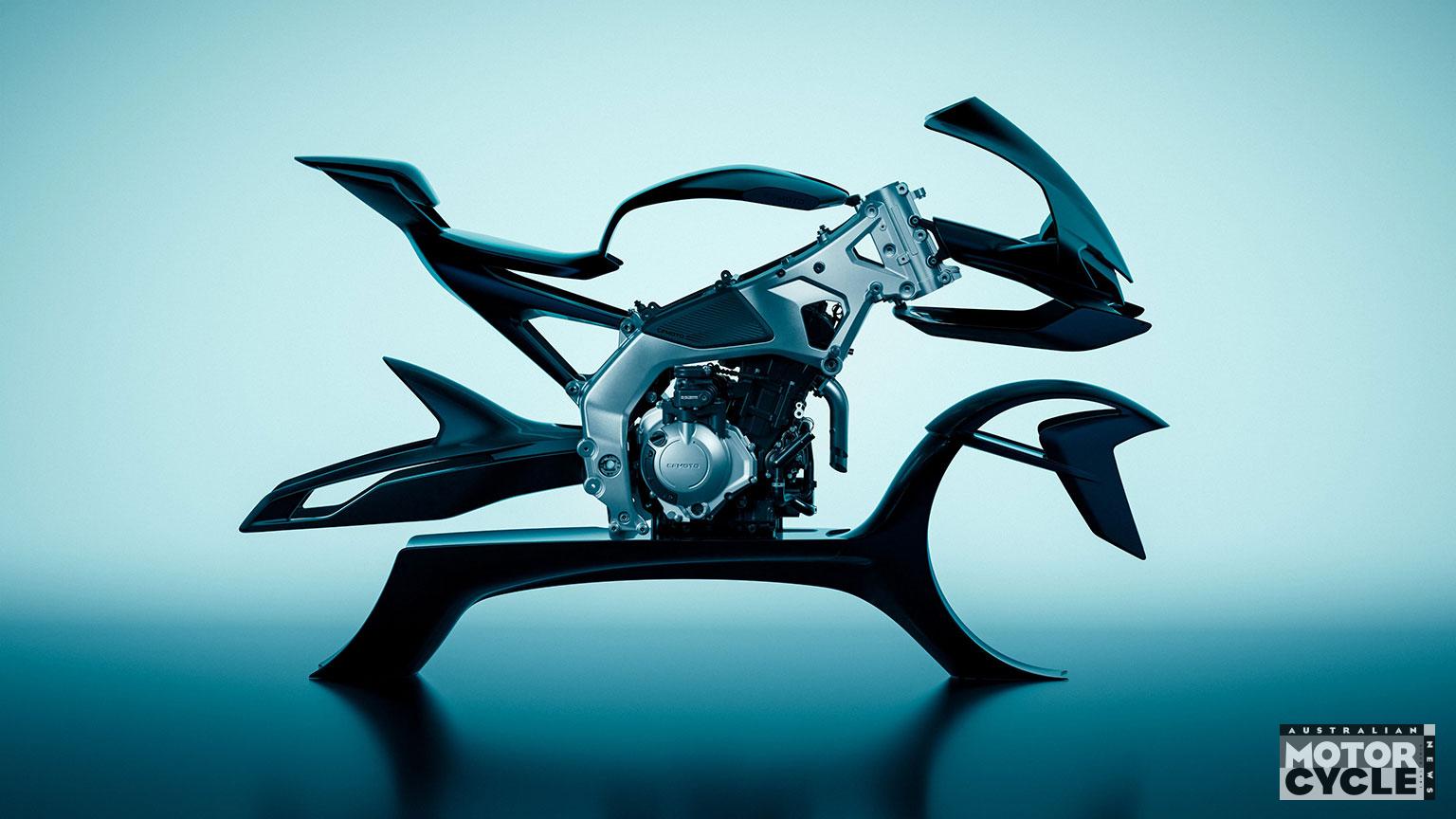
CFMoto 550SR-R incoming
CFMoto’s other EICMA launches included a brace of new 527cc parallel twins – the 550MT and 550MT-X – and a teaser for an upcoming sports bike using the same engine.
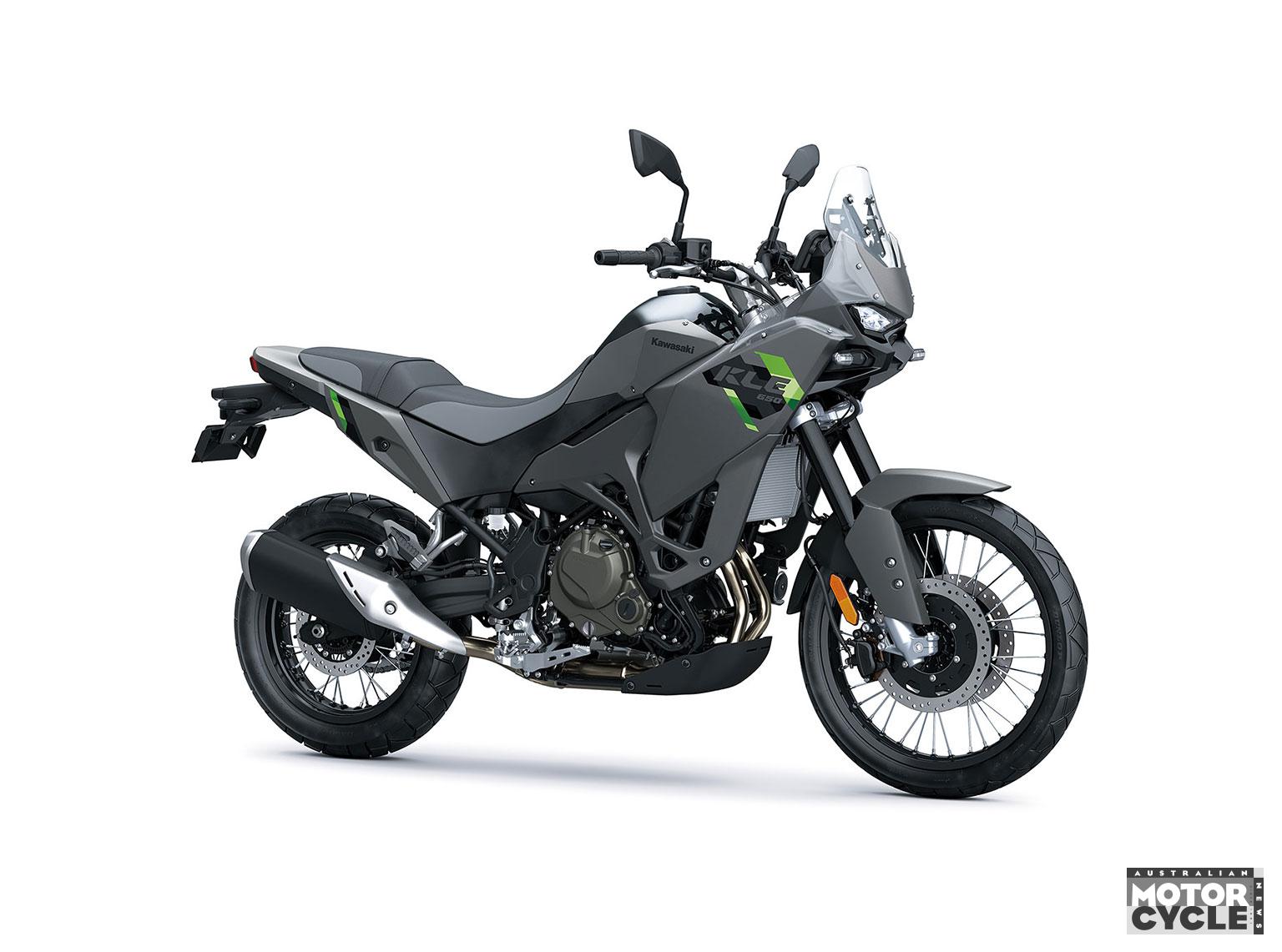
The MT models build on the success of the existing 450MT, using a similar chassis and an enlarged version of that bike’s 270-degree twin, making 40kW and 52Nm. The 550MT-X has the rally-style look of the 450MT, with a 21-inch front wheel, while the 550MT uses a 19-inch front and more adventure-touring styling akin to the bigger, 700MT, 800MT and 1000MT models, plus an electronic clutch like Honda’s E-Clutch system.
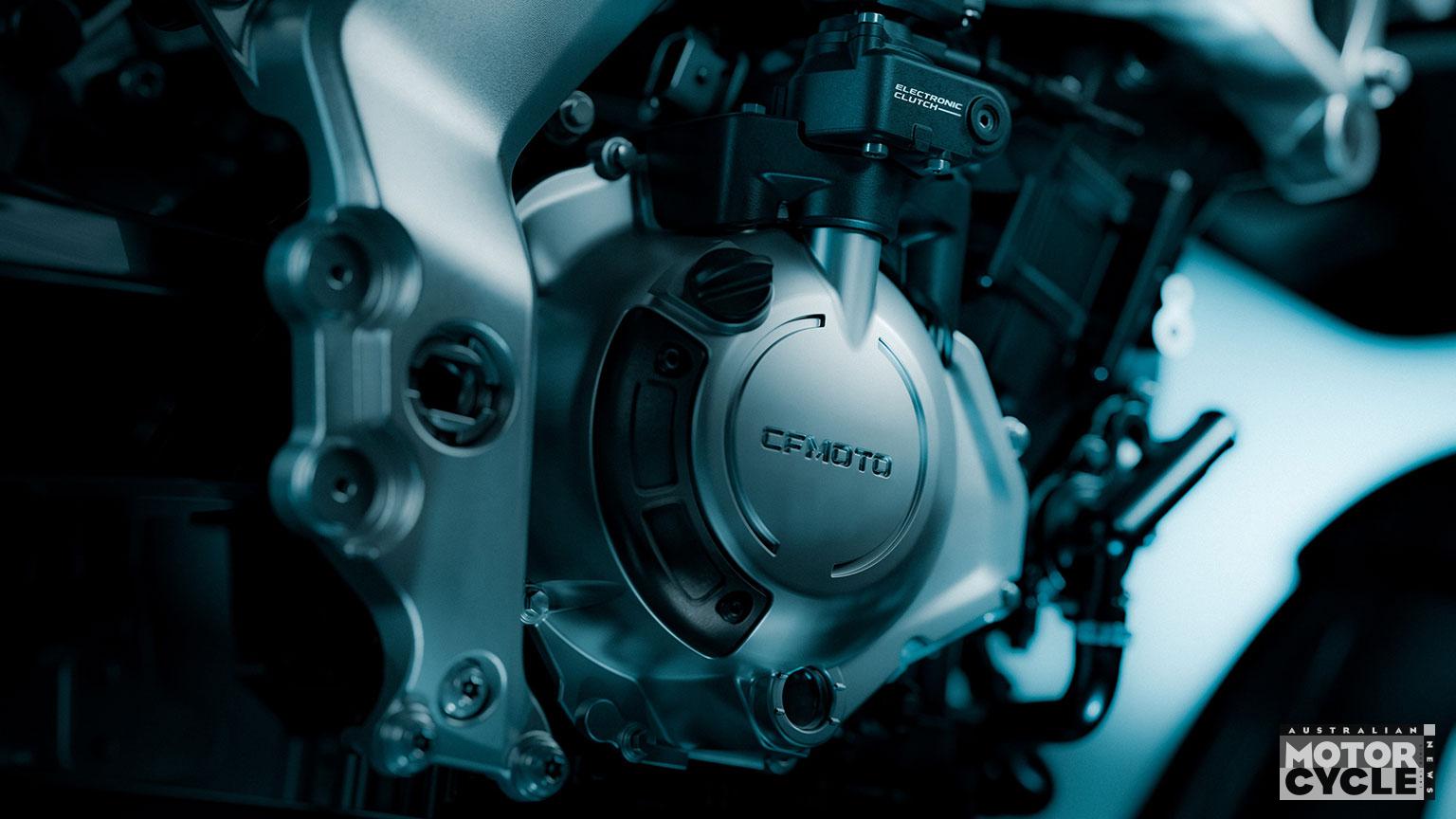
But the appearance of the same electronic clutch engine in a cast aluminium sports bike chassis previews an upcoming 550SR-R model that’s already been spied on test in China. The spied prototype used vast front winglets, like the V4SR-R, and looks like a big step up from the existing 450SR.