New model grows wings and gets variable valve engine
Suzuki doesn’t currently offer the parallel twin GSX250R in Australia and the model disappeared from European markets half a decade ago with the introduction of Euro5 emissions rules – but a new version is about to be launched in China that could see it make a comeback.
The GSX250R, which was offered over here when it was originally launched back in 2017, has always remained in production and available in many markets including the USA even after emissions rules prevented its sale in Europe. Manufactured in China in partnership with Haojue, an updated version has appeared in Chinese approval documents with visual revisions and an important technical improvement to improve performance and emissions.
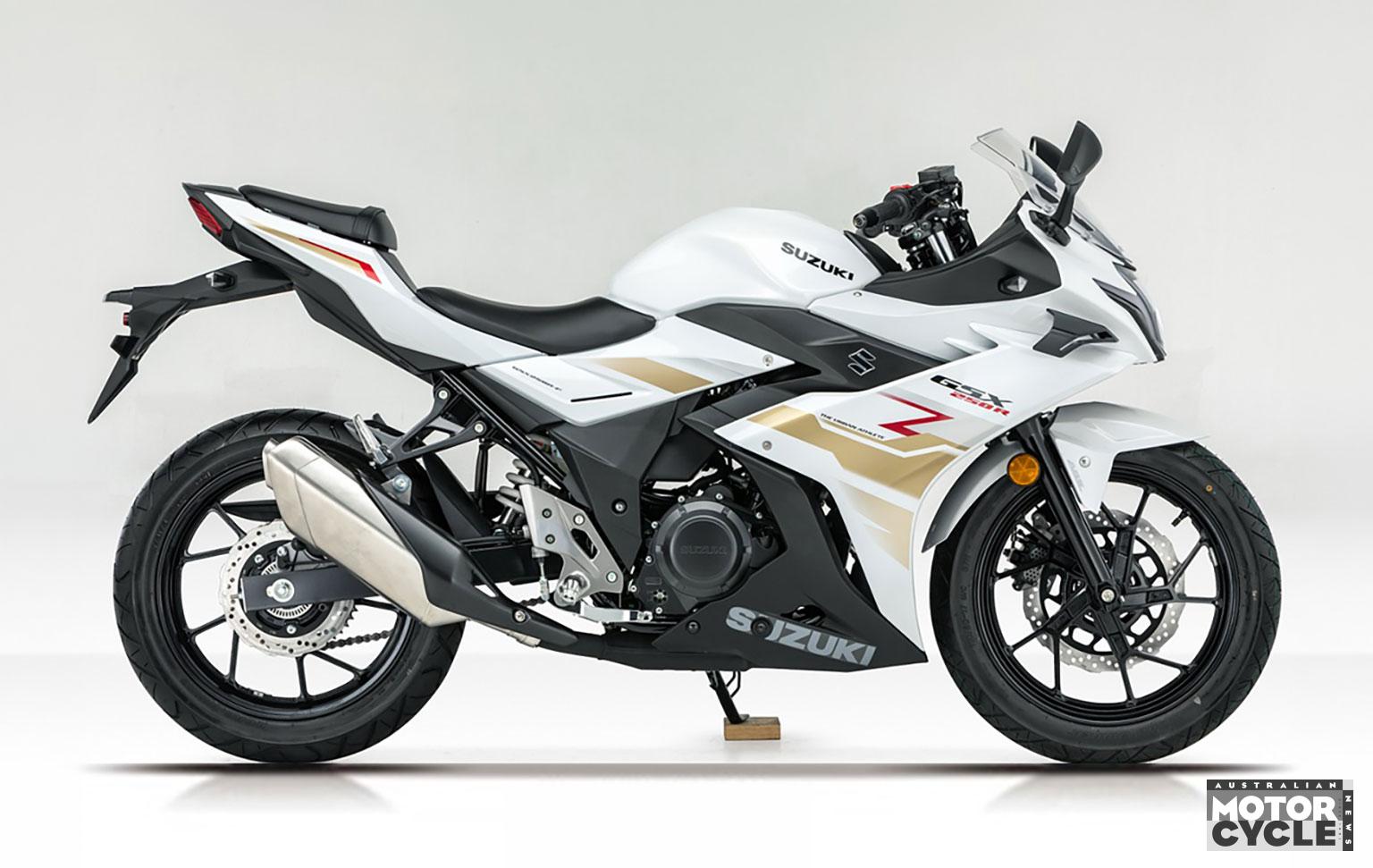
For some years Suzuki has been working on a variable valve timing and lift system for the bike’s 250cc twin, and that’s now believed to be being implemented on the new model. Patents have shown the details of the design, which works much like Yamaha’s ‘VVA’ (Variable Valve Actuation) system, as used in bikes like the R125. Designed to work with the GSX250R’s single overhead cam engine, the variable valve system adds a second set of intake cam lobes and rockers, with the ability to switch across to the more aggressive lobe when required. Information from China says that the new GSX250R, expected to be officially launched in July, will use the system.
The photos released as part of the type-approval process show the updated bike in two colours – ‘starlight black’ and ‘glacier white’ going by the writing underneath them – and show a redesigned exhaust system that’s a clear indication of changes to the engine and emissions. The visible section of the engine is the same as before, so it’s not an all-new motor, and the chassis, suspension and most of the bodywork are also carried over.
Styling changes include a revised nose section and headlight, plus the adoption of a pair of small winglets where the indicators would previously have set. Those turn signals are now repositioned further back and higher than before, on the black bodywork ahead of the bars.
Chinese reports suggest there will also be a power increase from 18.4kW to 21.5kW, and a tech-lift including a TFT instrument panel and the usual Bluetooth connectivity that comes with it.