V-twin and electric motor could fill the role of a future ‘big block’ engine
Moto Guzzi retreated from its tradition of making large-capacity machines with the demise of the 1380cc California, Audace, Eldorado and MGX-21 cruisers back in 2020 but a new patent hints that their role could be filled in future by a hybrid system boosting the performance of the ‘Compact Block’ 1042cc V-twin from the V100 Mandello.
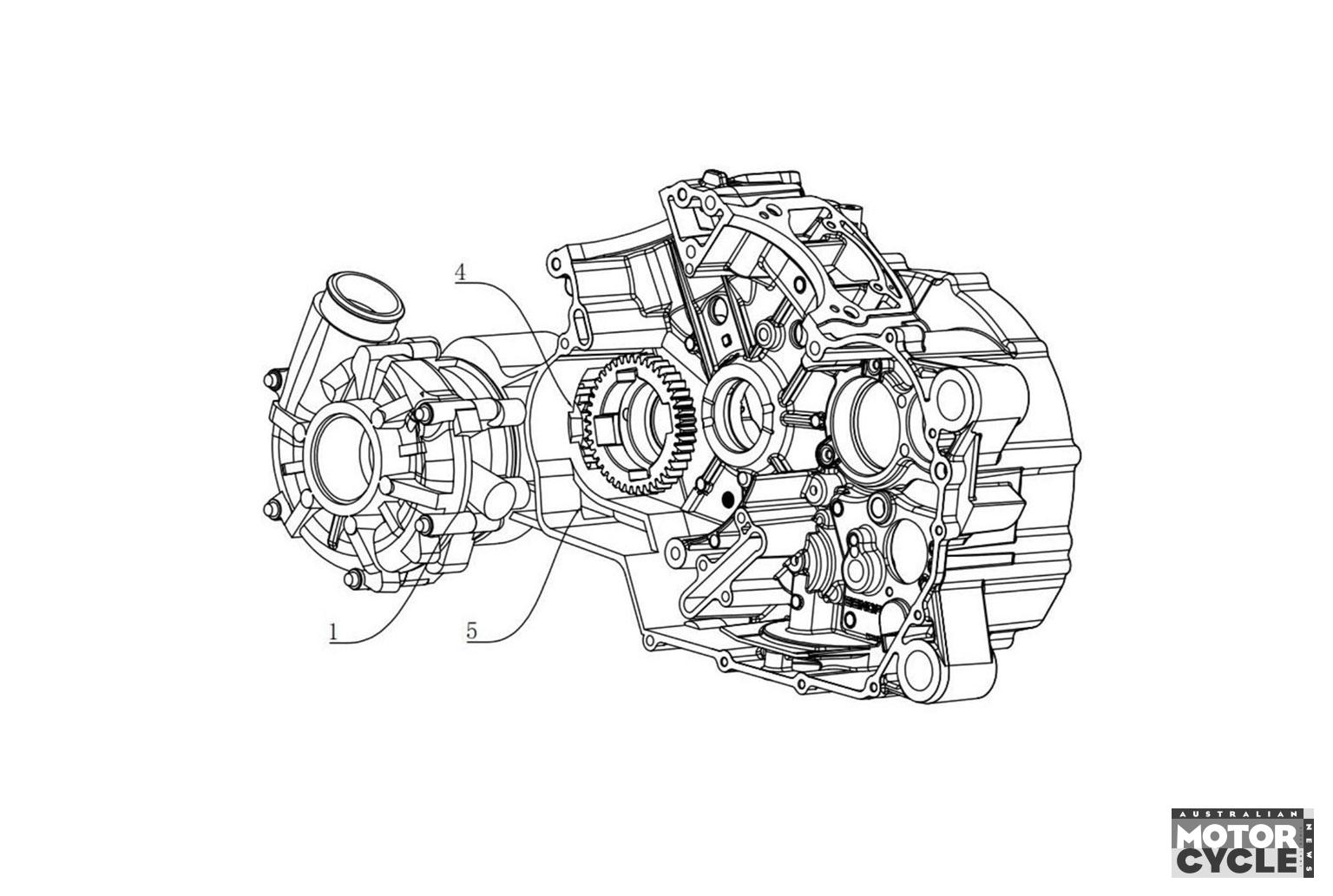
Depicting an Eldorado-style cruiser model, the patent shows how the company plans to incorporate a large electric motor above the transmission of a future V-twin, giving the ability to run either in all-electric mode with the engine switched off or with both powertrains working together for a boost in torque and power.
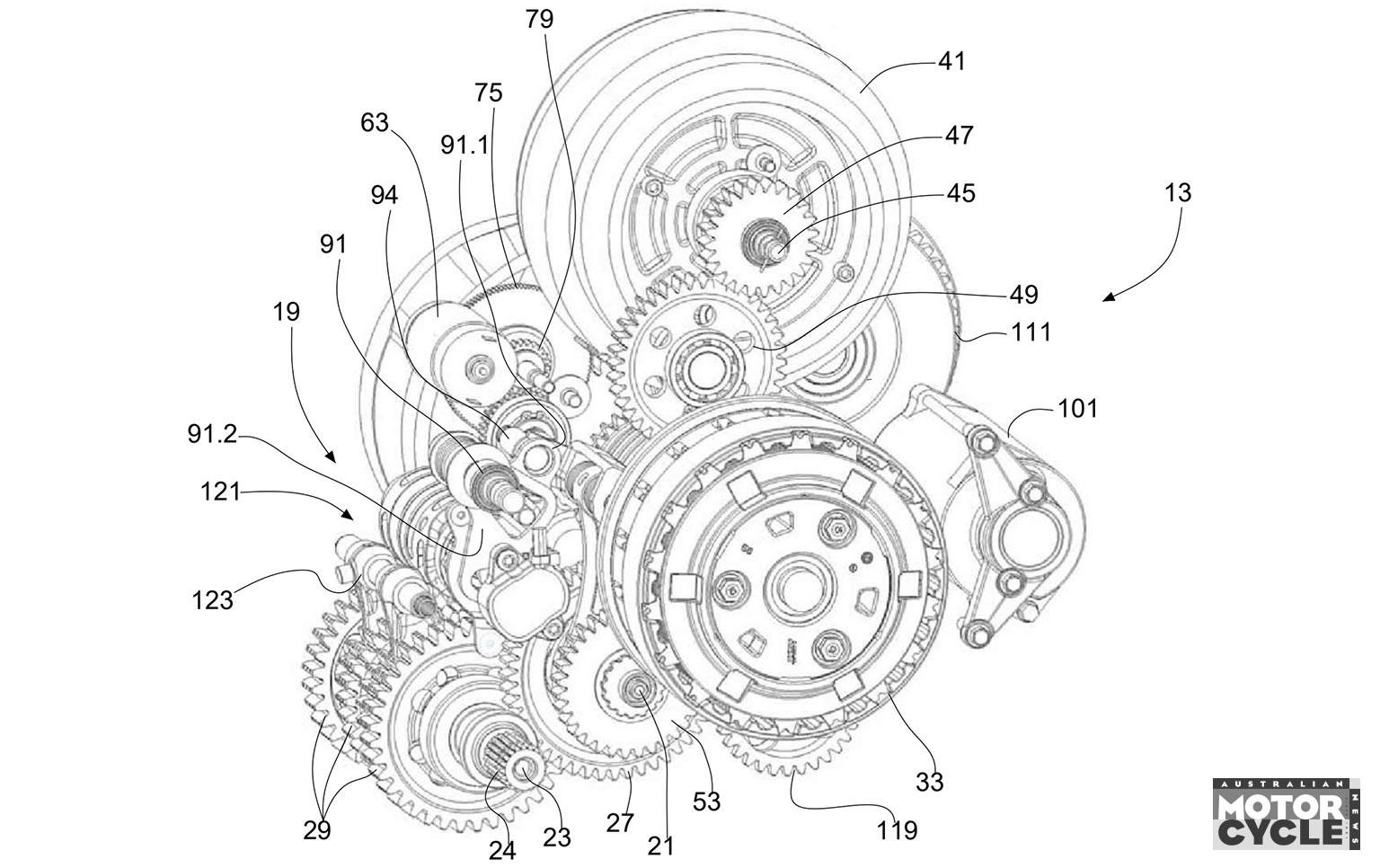
While the engine itself isn’t shown in any detail – the patent only reveals images of its crankshaft bolted to the hybrid-equipped transmission – the gearbox appears to be the six-speed unit from the V100 Mandello and the latest Stelvio. Unlike earlier Guzzis, where the clutch is sandwiched between the engine and gearbox, the Compact Block engine puts it on the end of a long shaft extending back from the crankshaft, so it’s accessible at the rear of the gearbox without splitting the engine and transmission. That design is clearly visible in the new patent as well, and elements like the starter motor (which is retained, rather than using the hybrid motor as a starter-generator) match the unit used on the Mandello.
The large electric motor of the hybrid system sits roughly where the alternator does on the Mandello, on the centreline of the engine and transmission behind the V of the cylinders. Since it doubles as a generator, there’s no need for a separate alternator. It’s geared to drive the input side of the six-speed box, unlike many hybrid solutions that power the output side of the transmission, and remains permanently engaged. The combustion engine can, however, be disengaged to allow the electric motor to drive the bike without the engine running.
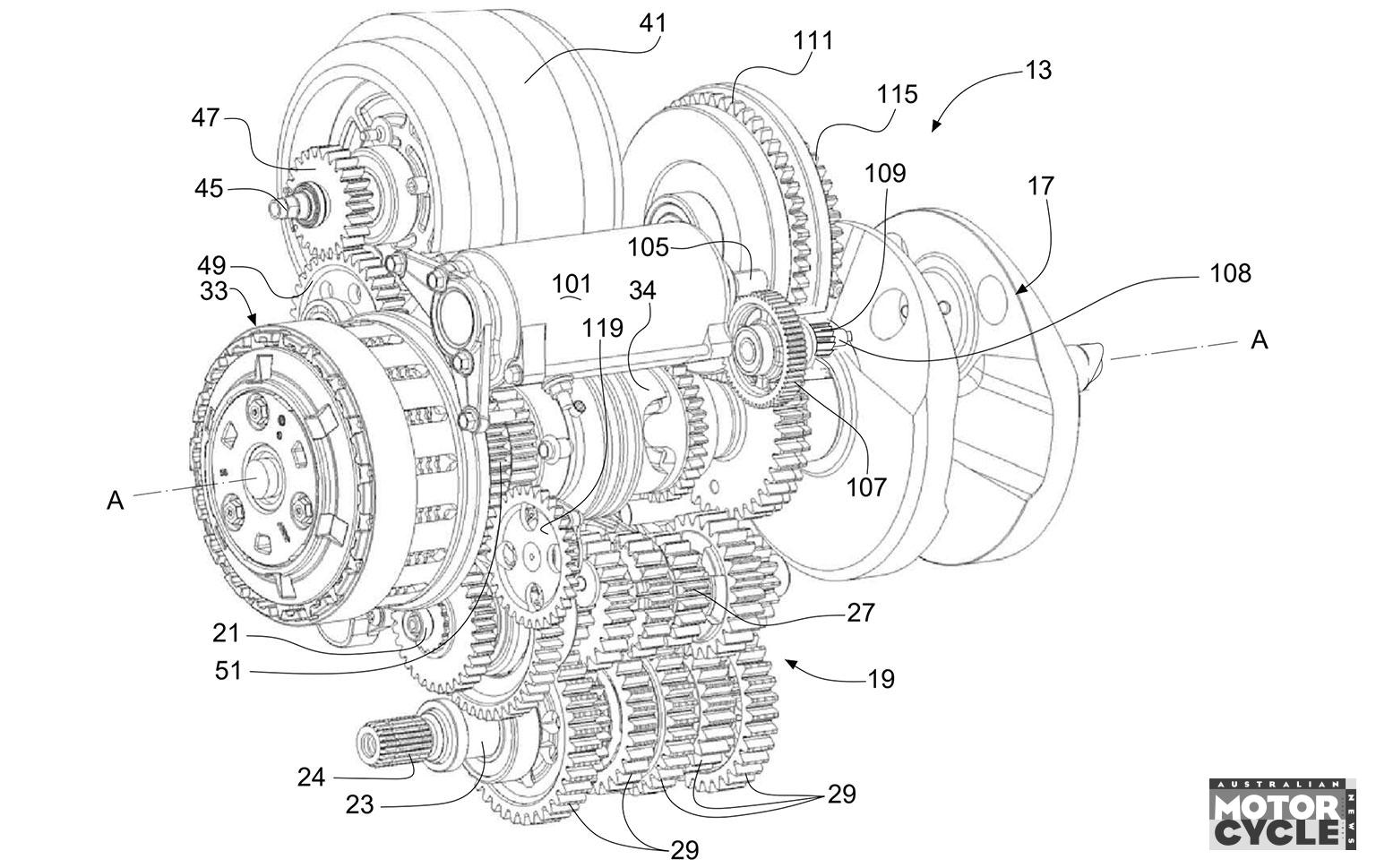
The patent is particularly focused on this mode. When running as an all-electric machine, the transmission is locked into one ratio – the patent suggests second or third – and prevented from shifting gears. When the combustion engine is running, however, it reverts to a conventional multi-speed gearbox, with the hybrid motor helping to rev-match the transmission during shifts to provide faster, smoother gearchanges.
Notably, the patent also says the shifts could be automated, suggesting Guzzi is planning to join the growing ranks of companies offering semi-auto models with pushbutton gearshifts.
Like the brand’s existing range, the hybrid features a shaft final drive, and while the electric motor and the larger battery required to allow any meaningful range in all-electric mode will inevitably add weight, it’s likely to be no bulkier than a larger-capacity V-twin with similar performance would be. For a cruiser-style bike, the hybrid solution could be a clever way to get more torque while simultaneously reducing emissions and improving efficiency.
The cruiser argument is bolstered by the fact that Moto Guzzi has recently applied for new trademark rights to the ‘Eldorado’ name in Europe, as well as renewing its claims to the ‘California’ and ‘MGX-21 Flying Fortress’ titles in the USA, despite none of those bikes appearing in the current model range.