Two-strokes were supposed to be yesterday’s technology but customers don’t agree
This wasn’t in the script. For years a combination of technological developments, environmental pressures and competition regulations have conspired to make the two-stroke motorcycle a rarity – all but extinct when it comes to road bikes and increasingly scarce in racing – but a surprise comeback is underway and Kawasaki has now joined the fray with the launch of the KX327 as its first big stroker in more than twenty years.
While small-capacity two-strokes never disappeared from the brand’s offroad range, the higher performance echelons have been dominated by four-strokes for years. But customer demand and a growing number of two-stroke models from rivals like KTM mean major brands like Kawasaki are now revisiting the idea.
The KX327 motorcross bike and its closely-related KX327X cross-country equivalent share a new, 327cc two-stroke single, packed into a KX450F-derived aluminium chassis fitted with up-to-the-minute suspension, resulting in a 2020s interpretation of a 1990s idea.
Kawasaki hasn’t released full details of the new engine, except to confirm it has the brand’s first fuel-injected stroker, allowing it to have two switchable riding modes and eliminating the spectre of swapping jets to counter altitude or weather changes. There’s an electric starter, too, and a newly-designed variable exhaust port systems that’s claimed to create a flat plateau of torque rather than the peaky delivery often associated with two-strokes.
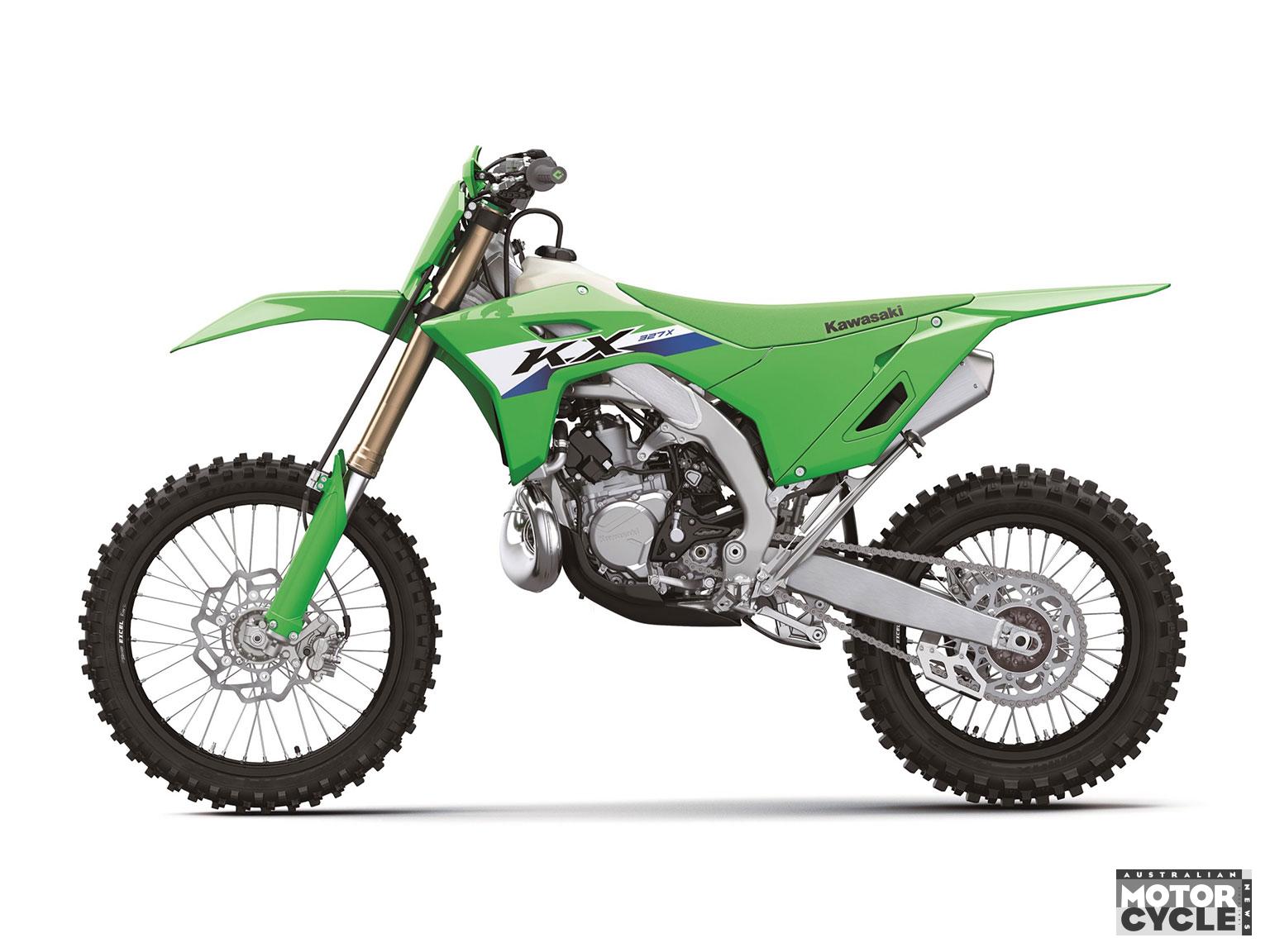
The result could be something of a holy grail. A bike with the predictable thrust of a four-stroke but without the complexity and high maintenance costs associated with competition four-stroke motocross bikes.
While the KX327 features conventional motocross design features including a combination of a 21-inch front wheel and a 19-inch rear, plus a five-speed transmission, the cross-country KX327X gets an 18-inch back rim and a six-speed box with an extra low first ratio for slow riding. It also gains hand guards, a bash plate and a side stand.
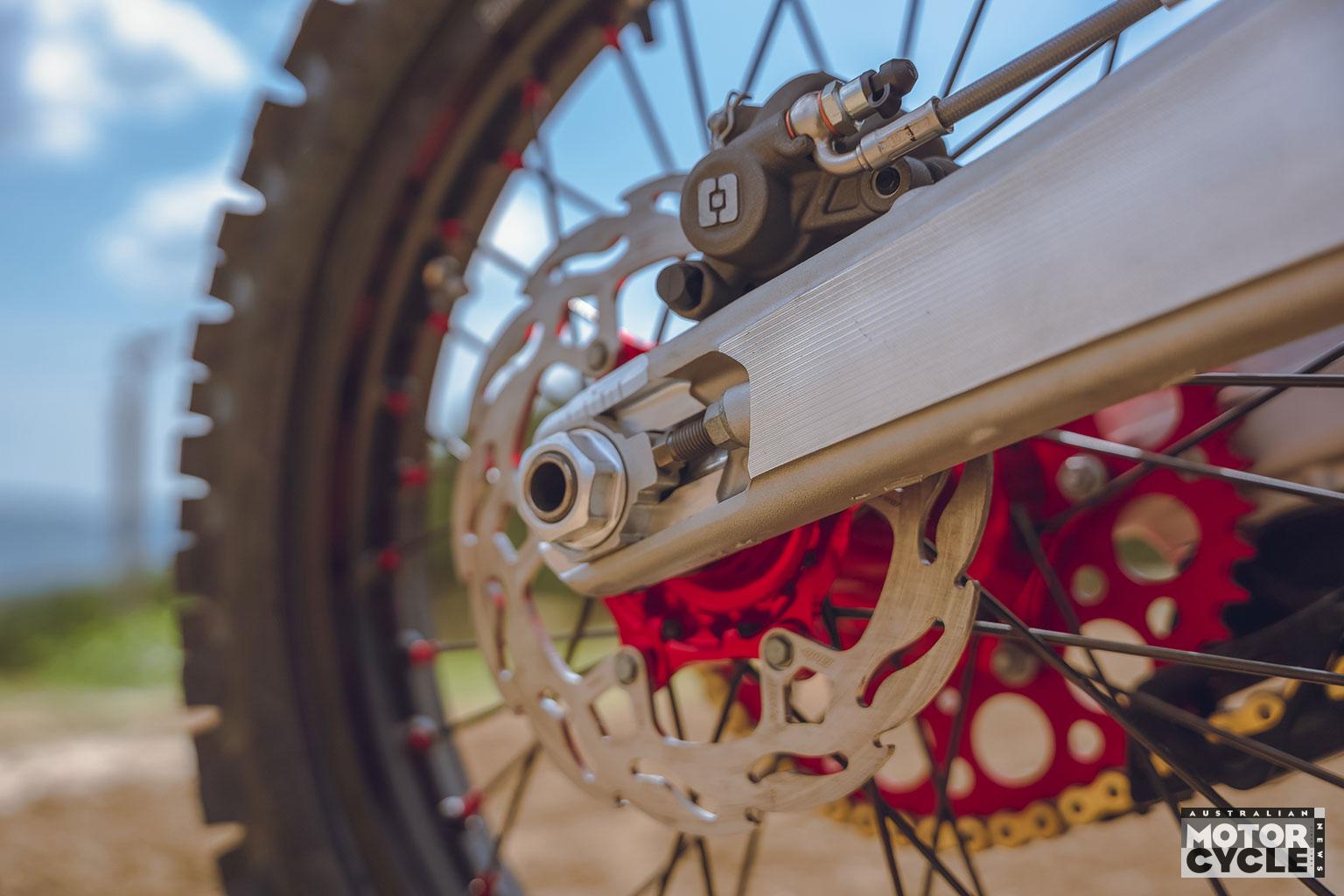
Both bikes use the same 48mm, fully-adjustable USD forks from KYB, plus a new generation of Uni-Trak rear suspension, again with a KYB shock and a full range of adjustment. Nissin provides the brakes, with a 270mm front disc and two-pot caliper and a 240mm rear rotor and single-piston stopper. And both models also share the same adjustable riding position, with four positions for the bars and two for the footpegs. There’s even smartphone connectivity to give GPS riding logs and real-time engine monitoring.
While revival of two-strokes in offroad competition is clear, that doesn’t mean we can expect a similar return of roadgoing strokers. The new KX327 still uses premix, and modern emissions rules mean it would be nearly impossible to get a high-performance two-stroke to conform to road regulations.