Gold Wing and Fireblade amongst the candidates for Honda’s next-gen e-compressor tech
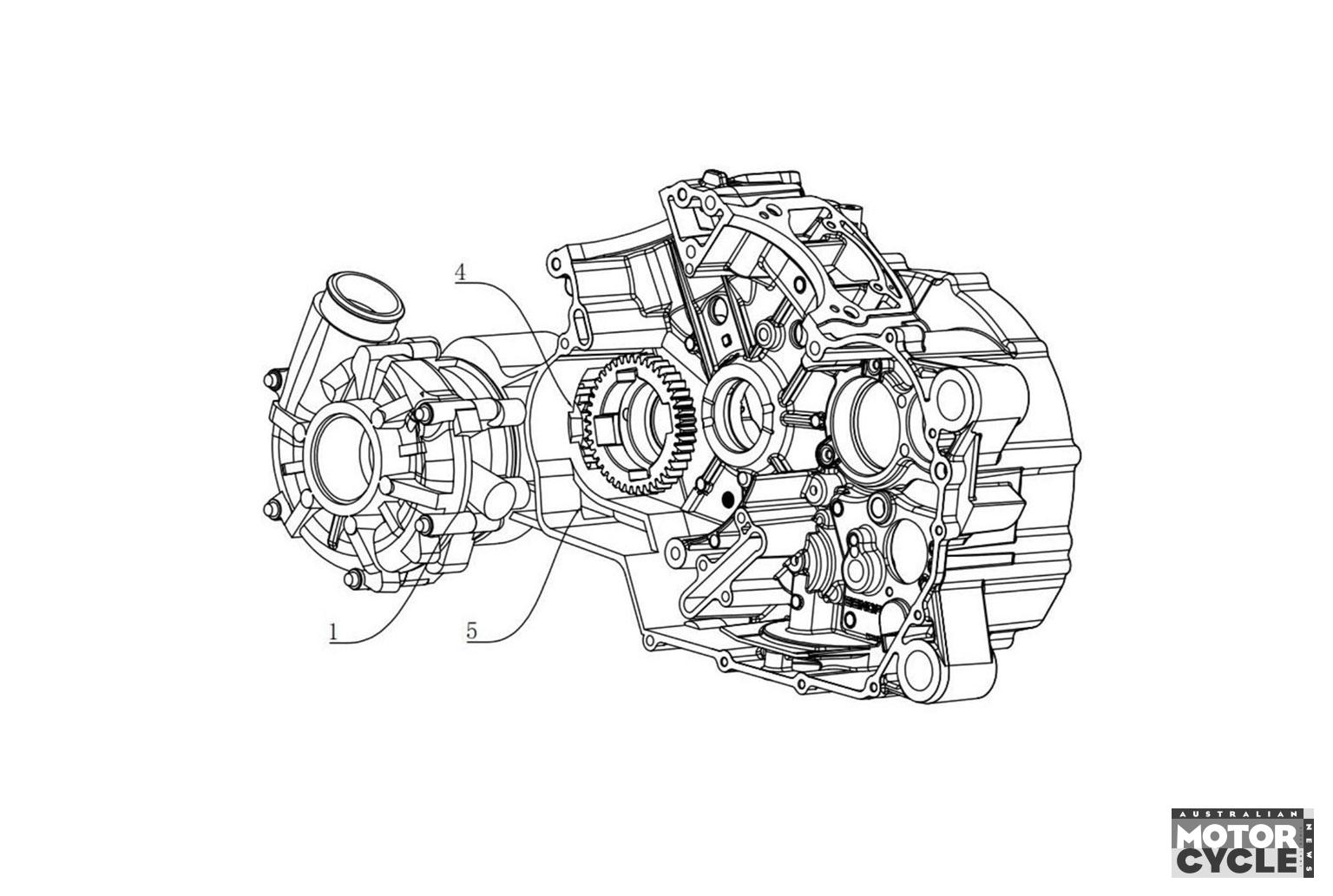
Honda’s upcoming V3R with its radical three-cylinder engine and electric supercharger is unarguably among the most exciting new model on the horizon for 2027 and if it’s a success we can expect to see the same forced-induction idea carried over to a host of additional models.
The company’s patents for the V3R have already confirmed that its new engine is a modular design, intended to form the basis of a range of motors in different sizes and configurations from V-twins to V-sixes, but the e-compressor supercharger could also find a home on other machines.
Only working part-time, when the rider really needs all the power and torque available, the V3R’s electric supercharger means the bike is simultaneously normally aspirated – breathing through an intake that bypasses the supercharger altogether – and boosted, with air valves that switch across to the blower when it’s needed. That suggests it provides a relatively low level of boost, and because the boost pressure can be closely regulated by the engine management system, which also controls the electric motor that spins the compressor, it should be easy to fit to engines that weren’t designed for forced induction from the start.
What’s more, because it’s electric, the e-compressor can be fitted anywhere there’s space for it, and in any orientation, without having to worry about either a mechanical drive from the engine, as with a normal supercharger, or about plumbing it into the exhaust system, as with a turbo.
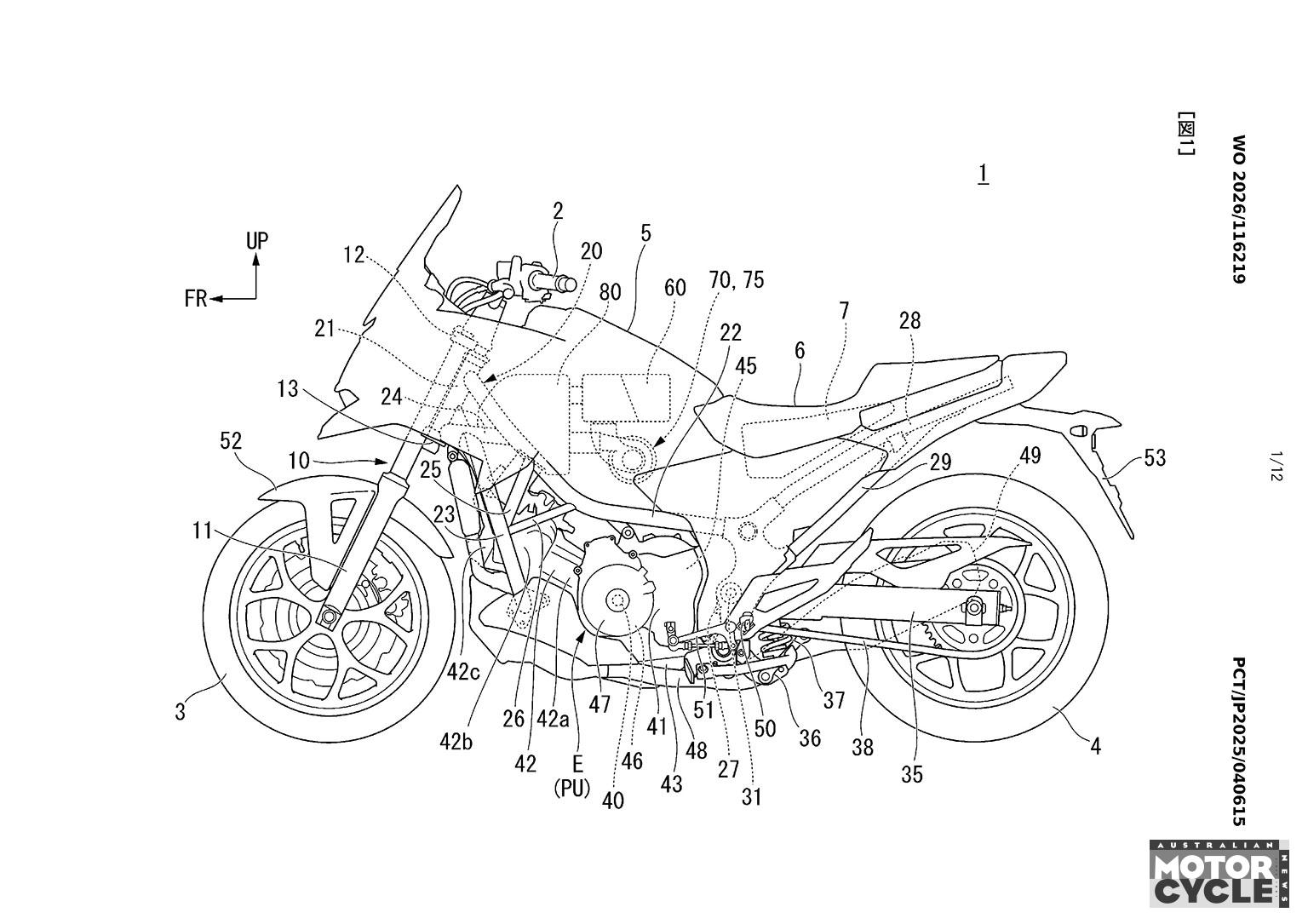
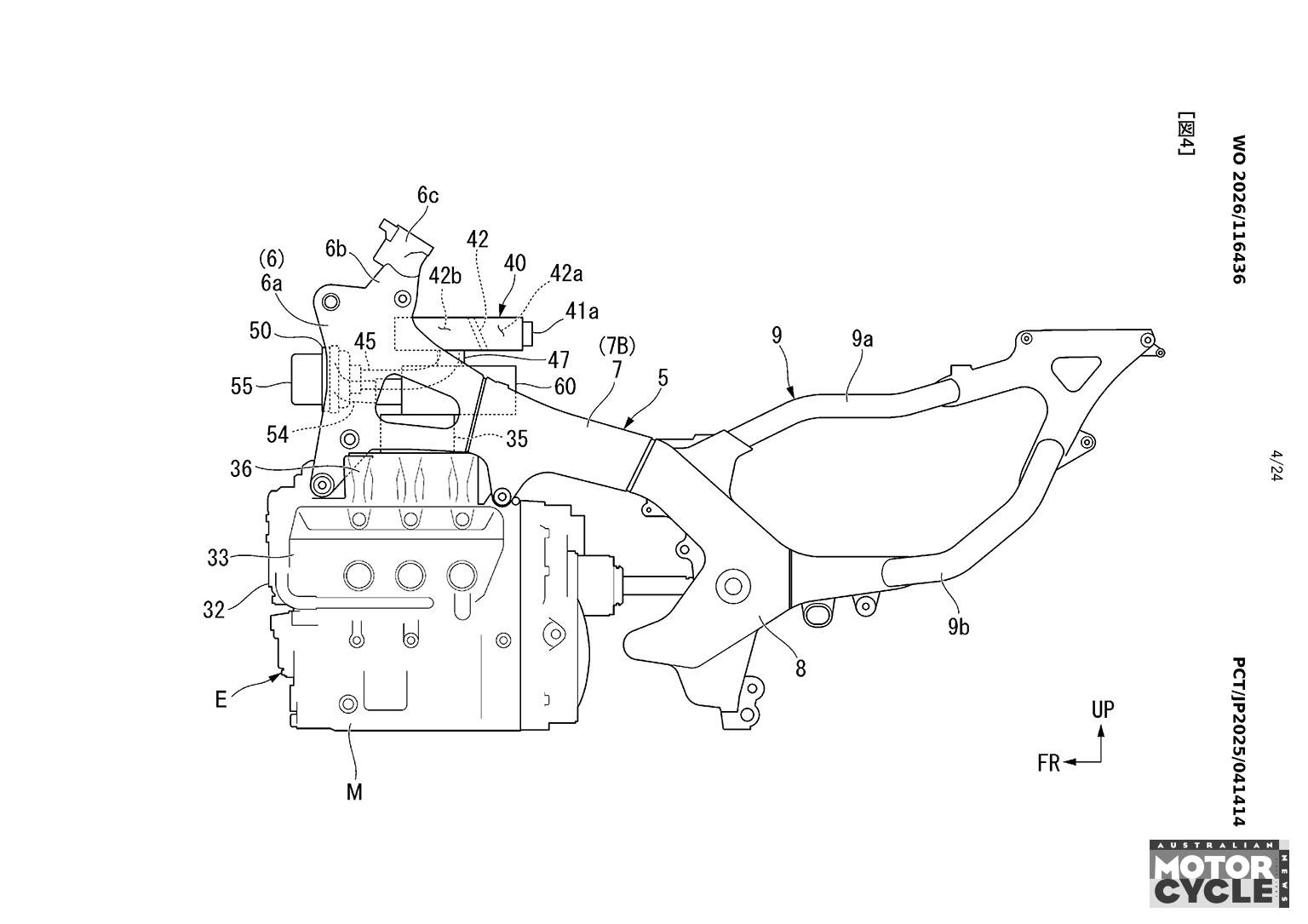
Honda’s new patents – nine of them – illustrate how the e-compressor could be fitted to a whole array of different models. These include the Gold Wing, mounting the compressor above the signature flat-six engine, and the NC750. The latter, with its low-profile parallel twin and large luggage space in the ‘tank’ above it, is ideal for the e-compressor, as by sacrificing luggage area there’s plenty of room to house the air filter box, the e-compressor and the pressurised plenum chamber that feeds the throttle bodies.
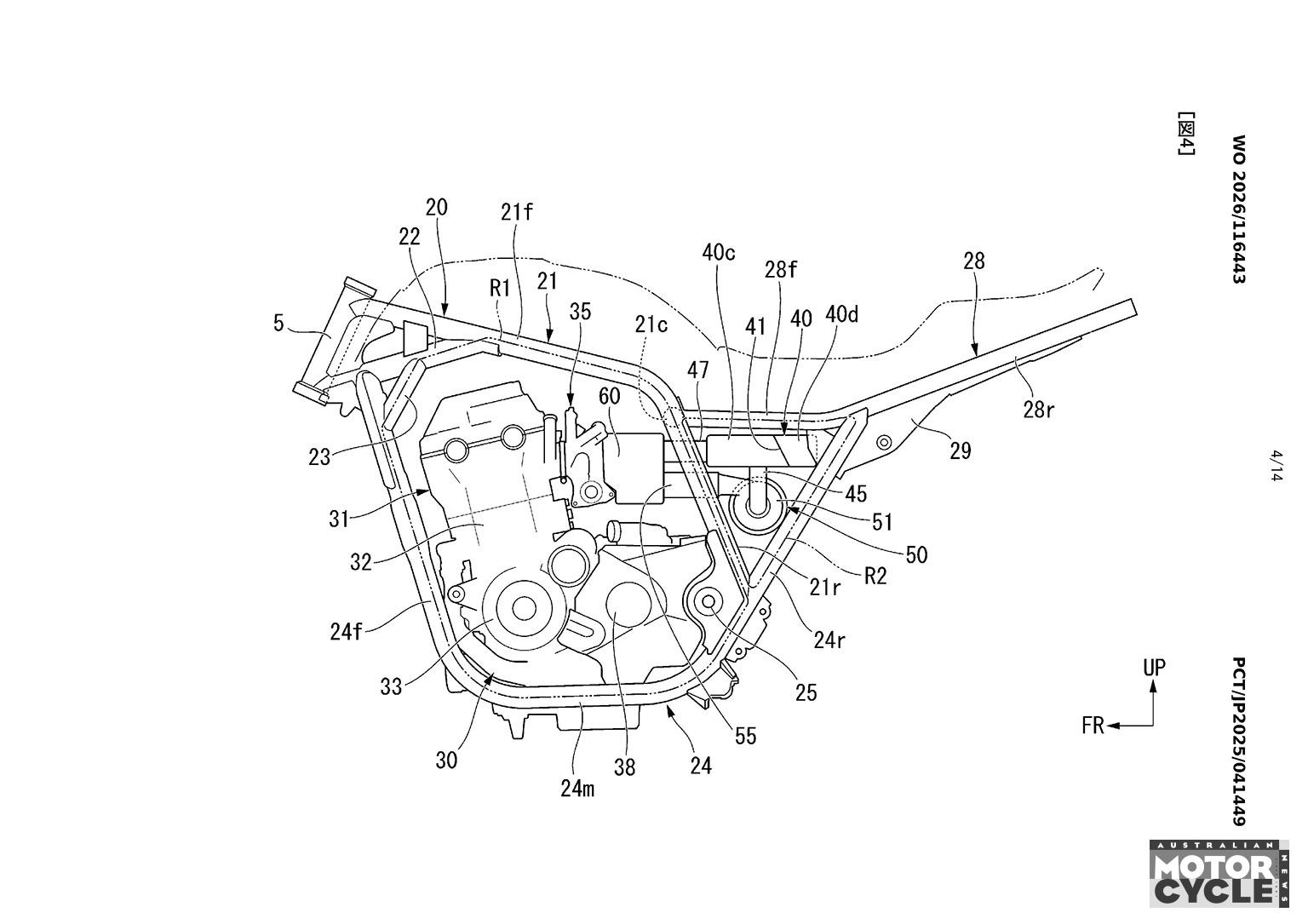
Further patents include documents showing a bespoke V-twin design based on the modular V3 in the V3R. Mounted in a tubular steel frame similar to the V3R’s, the V-twin version essentially eliminates one of the two cylinders in the V3’s front bank to become a more conventional design. Since it’s based on the V3R, the whole chassis is already designed to accommodate the supercharger. Logically, since the V3R is a 900cc bike with the power and torque of a 1200cc machine, the V-twin is likely to be a 600cc model with 800cc-equivalent performance.
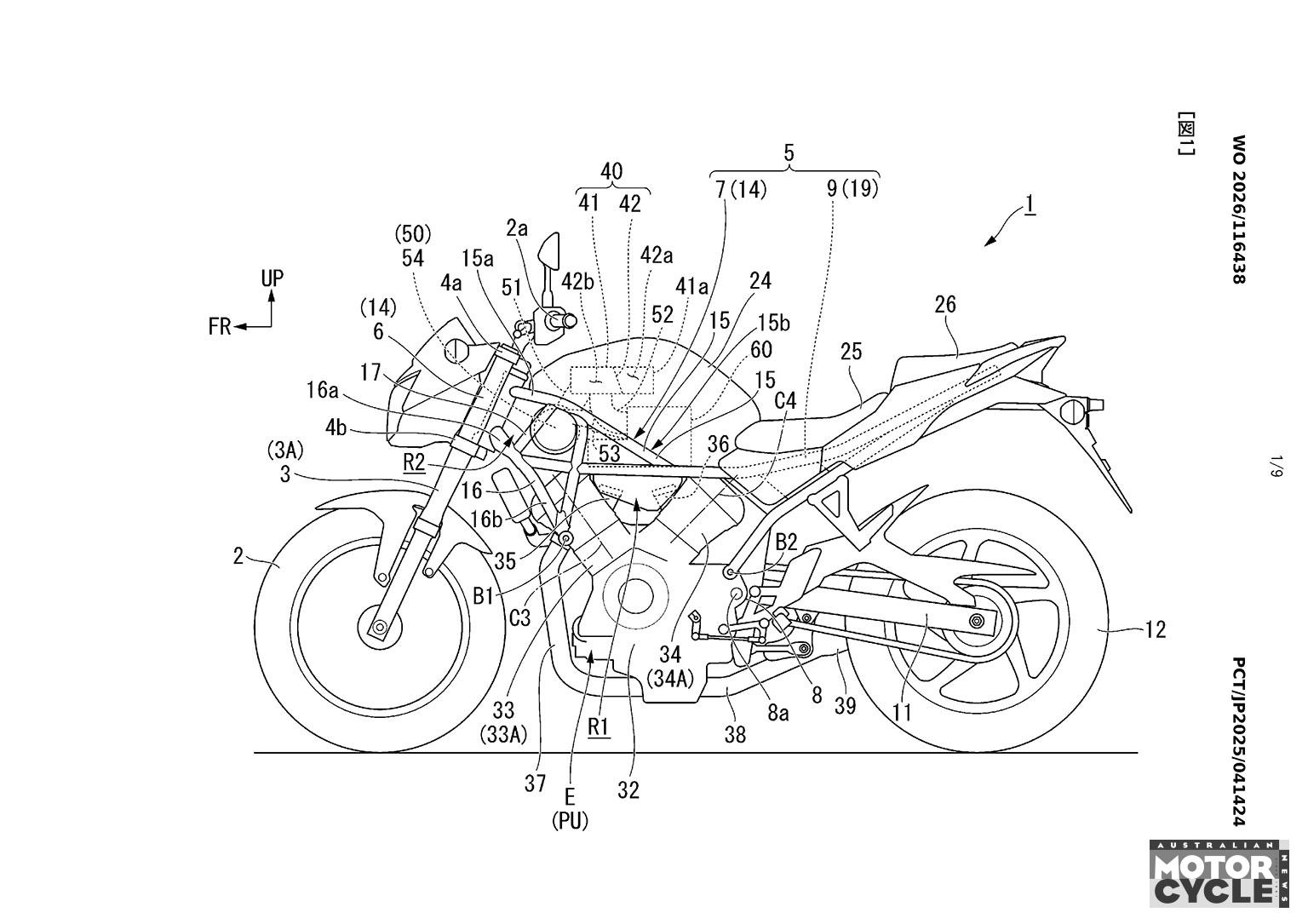
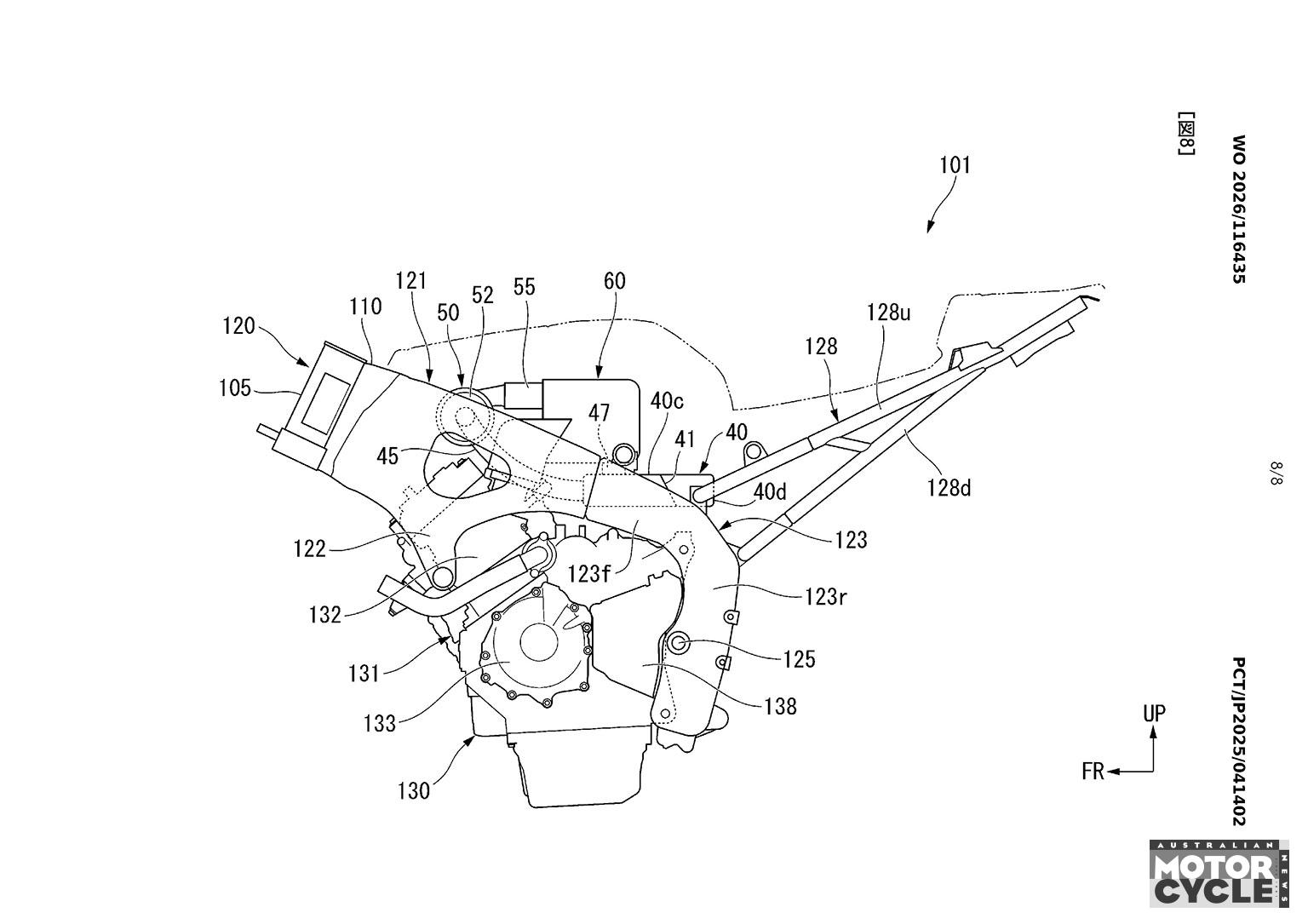
Then there are two inline fours in Honda’s new batch of patents. The first is, oddly, based on the CB1300 Super Four. That bike, while a long-running and popular model in Japan, was recently discontinued and replaced by the CB1000F, so it seems unlikely that it will be revived and supercharged. Instead, the patent is likely to be covering Honda’s intellectual property around the mounting of the e-supercharger on a generic four-cylinder layout – backed up by the fact this design has multiple iterations with various positions for the compressor and its related parts. The same patents also include a smaller reference to beam-framed four-cylinder bikes, illustrated using the chassis and engine from the current-generation CBR1000RR-R Fireblade. That bike already makes well over 200hp in stock form, so a supercharged version could have insane performance and might just make sense as a high-end exotic to rival Kawasaki’s Ninja H2.
However it shakes out, the patents make it clear that Honda’s committed to the e-compressor idea, and if customers react well there’s potential to use it on a host of extra models in the future, improving performance while reducing fuel consumption and emissions without starting from a clean sheet to do it.