Big brands should be taking notice as new V4 becomes China’s fastest bike
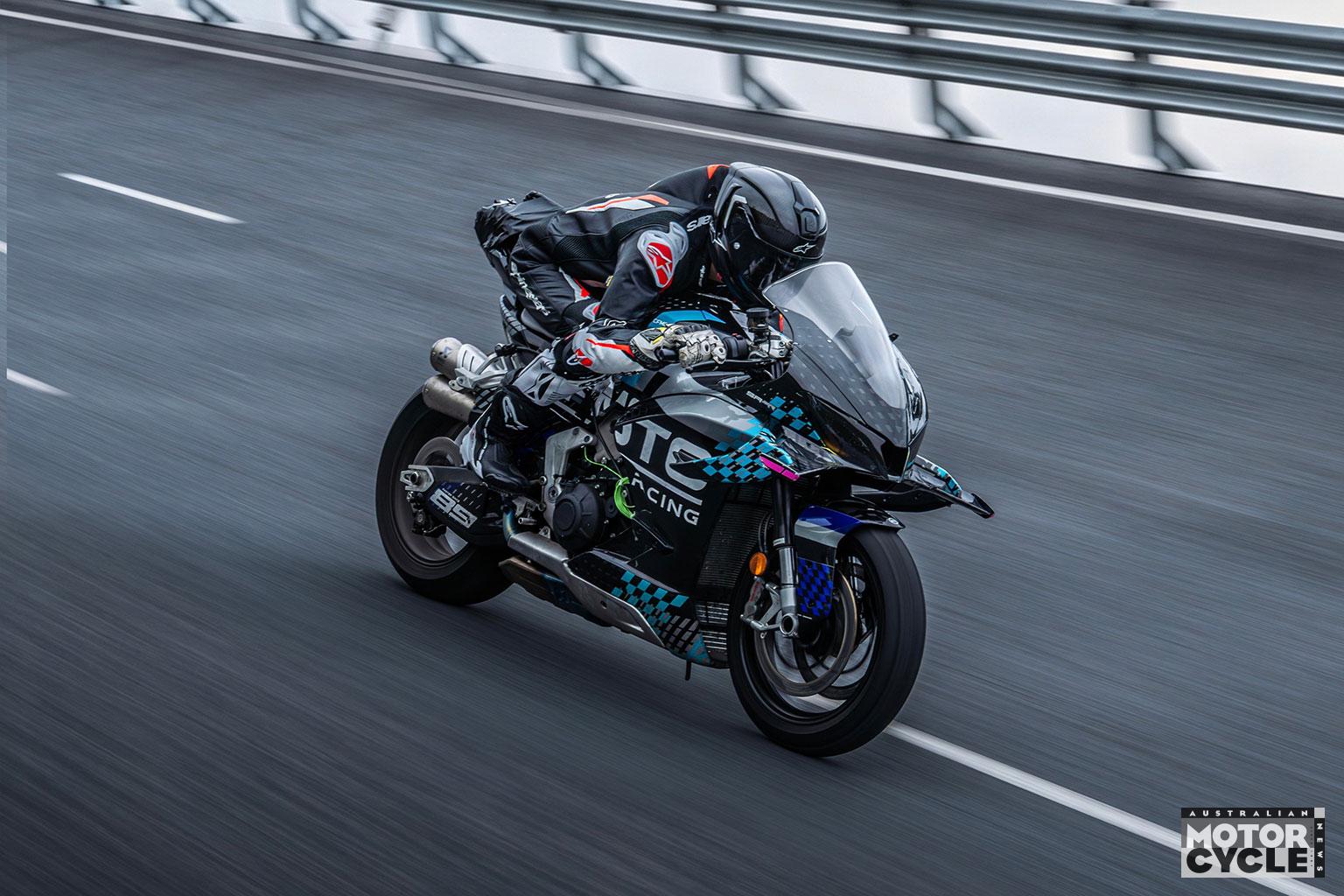
Remember how the Japanese ‘big four’ and Europe’s biggest motorcycle brands made the so-called ‘gentlemen’s agreement’ at the turn of the millennium to limit their bikes’ top speeds to 300km/h, putting an end to the top speed battles fought between the likes of Suzuki’s Hayabusa and Kawasaki’s ZX-12R? Well CFMoto doesn’t appear to have signed up to that – hitting 315.82km/h with a prototype for its upcoming V4 SR-RR superbike.
In doing so, the company makes a couple of key points. One, this is the fastest Chinese-made motorcycle yet. Two, its claims of 210hp-plus aren’t wide of the mark and superbike manufacturers across the world need to know that the newcomer isn’t going to be a laughing stock.
It isn’t the first superbike to pass that 300km/h threshold: MV Agusta’s old F4 CC superbike was certified at 315km/h, while BMW’s current M1000RR is good for 314km/h and Aprilia’s RSV4 1100 is type-approved at 305km/h. But it’s right up there with the fastest litre machines ever to reach production, if the test bike was in showroom-ready spec.
There’s a nod to the notional 300km/h limit: video of the test run shows the bike’s digital dash freezes at 299km/h and the rev-counter hits the end of its 13,000rpm scale at the same time. But you can hear the revs rising further still as the speed readout on the Racelogic datalogger continues to climb, briefly reading 316km/h. CFMoto say that the real peak speed was 315.82km/h.
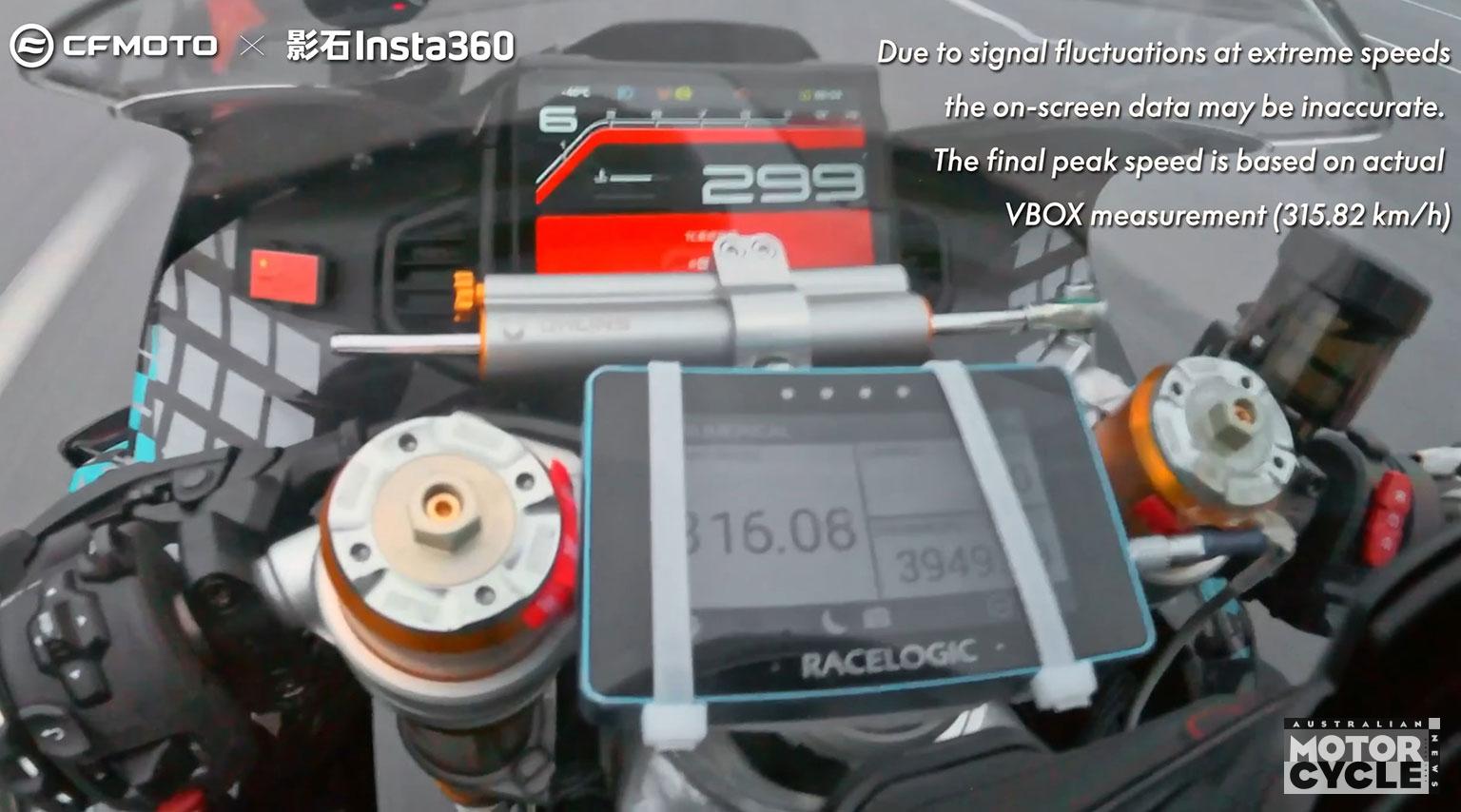
The run also gives clues to other aspects of the bike’s performance. It hits around 160km/h before the shift from first to second gear, around five seconds into the run, having passed 100km/h in three seconds. 200km/h arrives around the eight-second mark, just after the test rider shifts into third gear at 195km/h. He grabs fourth at 215km/h and fifth at 245km/h, reaching 250km/h 16 seconds after leaving the line.
The acceleration slows after that, and it takes a total of around 40 seconds to hit 300km/h, and 55 seconds to reach the absolute maximum. But, of course, we don’t know whether the rider was accelerating as hard as possible. The top speed was also achieved on a banked circuit, suggesting the absolute maximum on a straight, flat road could be fractionally higher still.
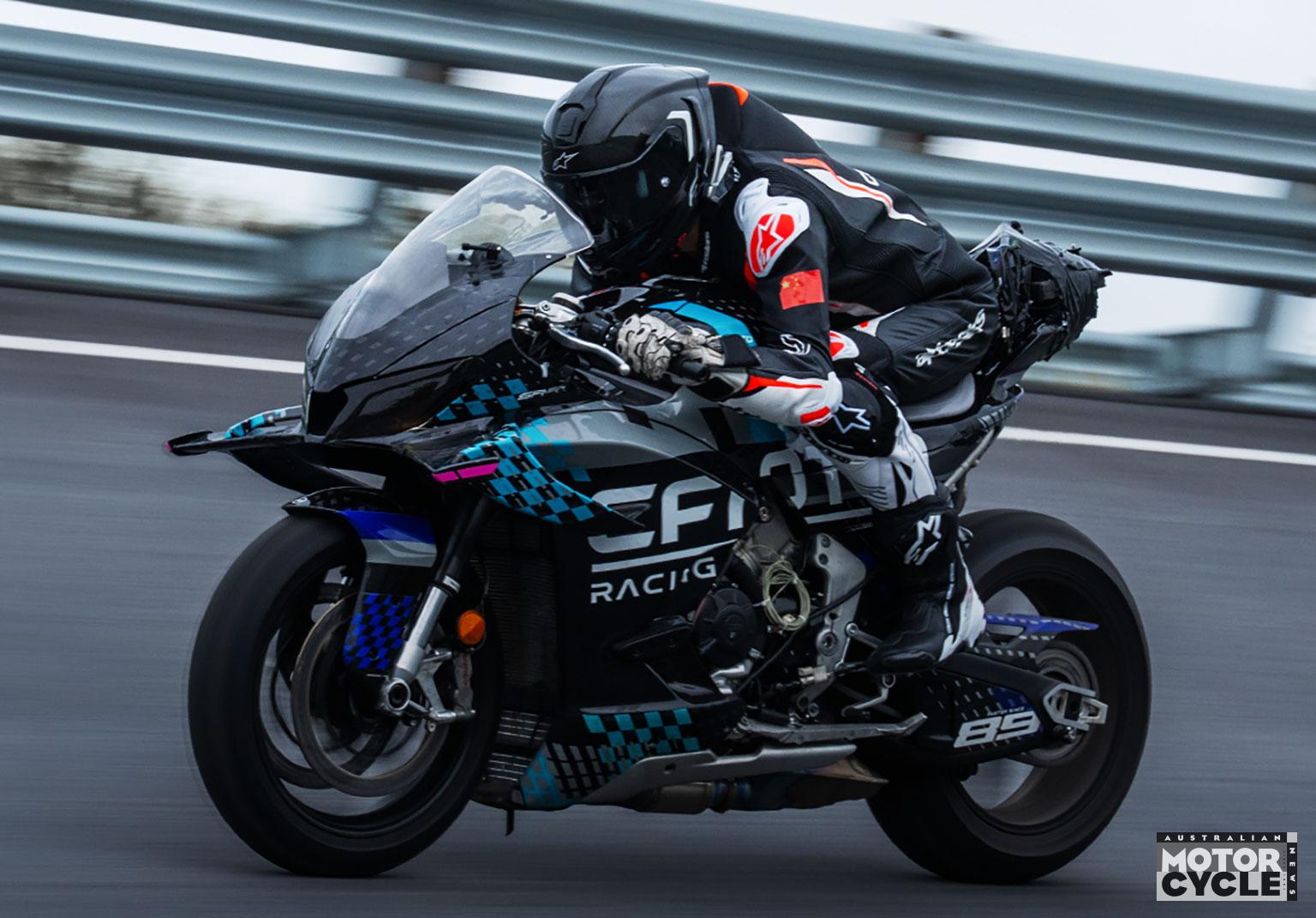
CFMoto’s running prototype also confirms that the near-production machine is extremely close in appearance to the bike it displayed at EICMA last November, even including the huge winglets that – in the show bike at least – were actively adjusted on the fly via electric motors. The wings still have the same hinging mechanism, although for the top speed runs there was duct tape over the seams where the wings join the body.