Royal Enfield’s latest arrivals reflect two aspects of the brand’s success. The Bullet 650 celebrates the legacy that built the brand, while the Guerrilla 450 Apex represents the modern thinking driving its future
It’s easy to write Royal Enfield off as a brand built on nostalgia, trading heavily on its history and the affection riders hold for simpler times. But a recent Australian launch of two new models highlighted how the company is enjoying significant modern-day success by looking back to where it came from, while also going from strength to strength with one eye firmly on the future.
Royal Enfield produced 1.24 million motorcycles during the past financial year and sold 1.22 million, while sales across the Asia-Pacific region grew by eight per cent – the company is the strongest it’s ever been.
Much of that success also comes from making clever use of a small number of proven engine platforms. So far, its range is built around the 350, 450 and 650 families, with each spawning motorcycles of markedly different style and purpose. The Apex expands the 452cc Sherpa range to three, while the Bullet becomes the seventh model developed around Royal Enfield’s hugely successful 648cc twin.
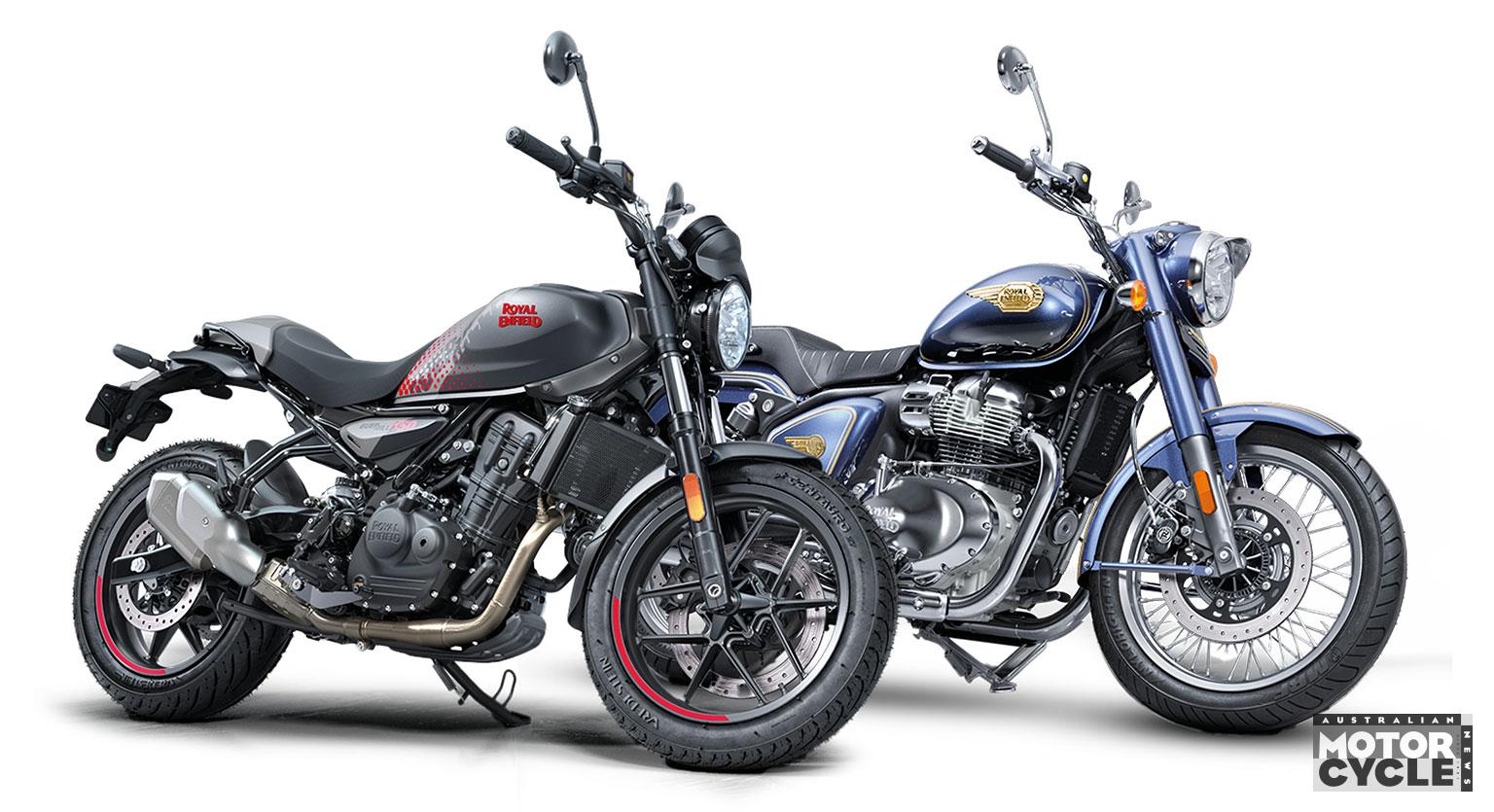
When you stop and think about it, the 2026 Royal Enfield Bullet 650 and the newly introduced Guerrilla 450 Apex are about as far apart as any Royal Enfield in today’s line-up. On one hand, you have what many in Chennai’s halls must see as the firm’s flagship model, an almost century-old nameplate applied to the Indian brand’s highest-capacity and hugely popular 650 twins platform. On the other, you’ve got a sharp-looking single-cylinder 450cc nakedbike powered by Royal Enfield’s first-ever water-cooled engine.
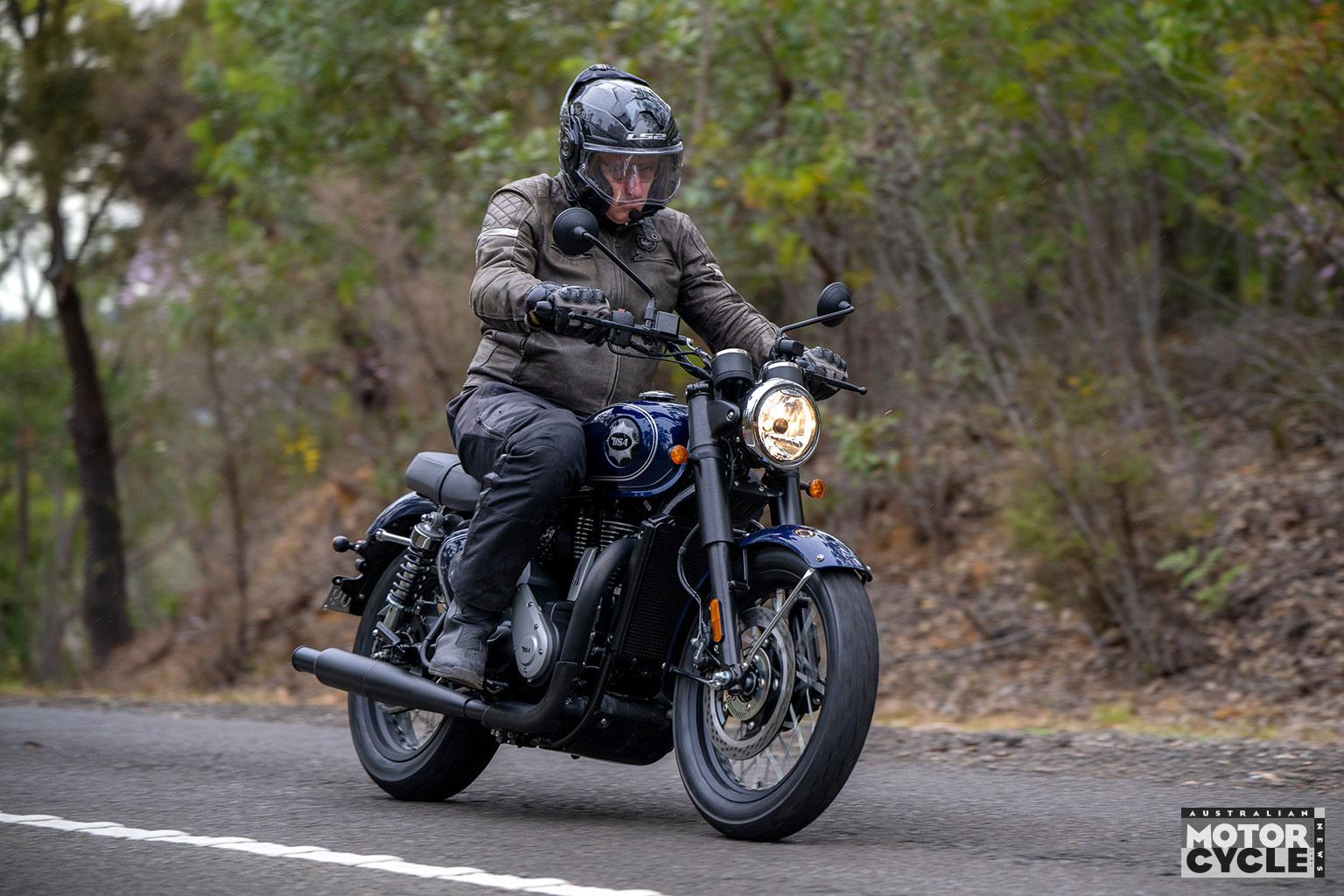
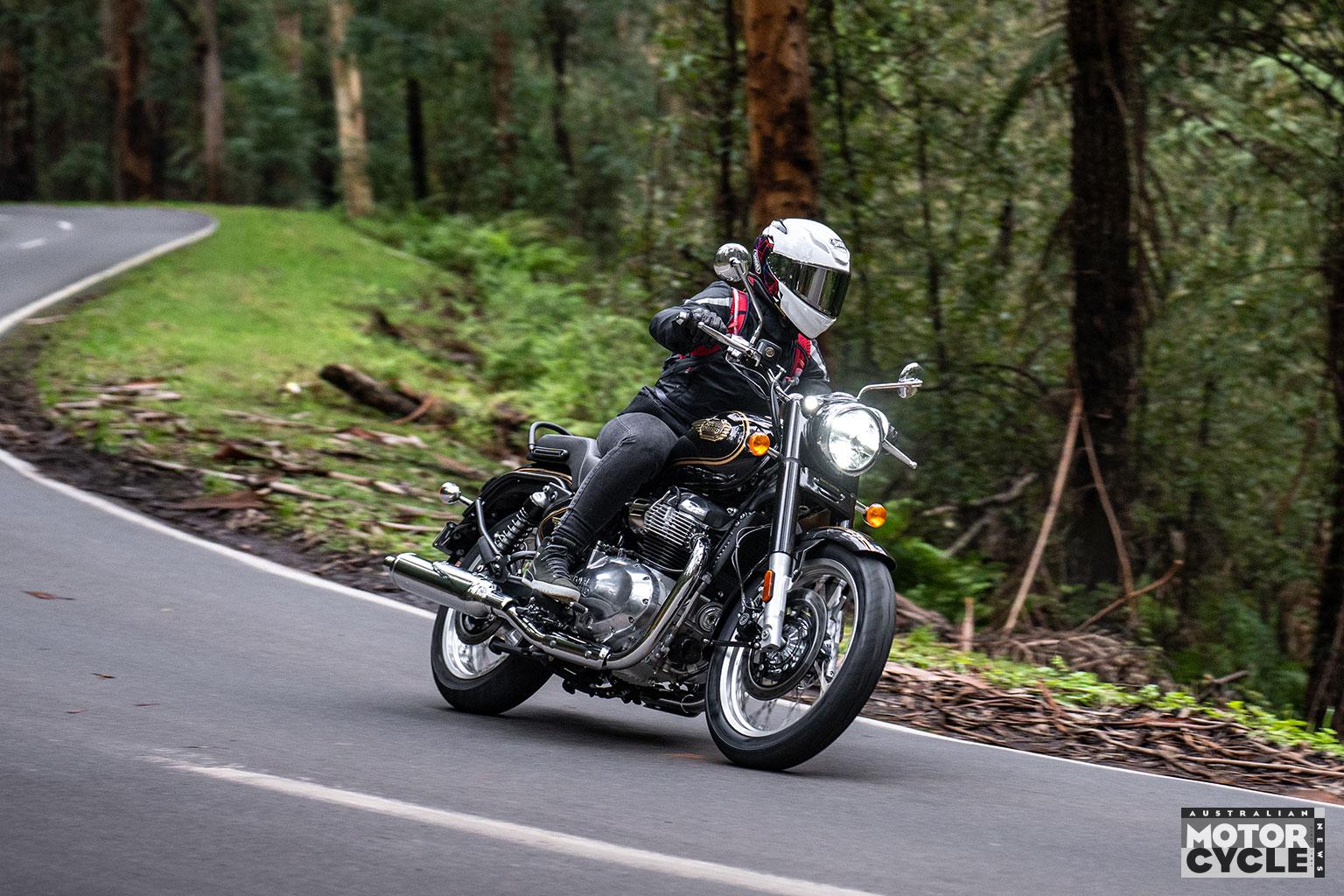
Few motorcycles carry a name quite like Bullet. In continuous production since 1932, it’s widely recognised as the world’s oldest motorcycle model still in production, and remains synonymous with Royal Enfield itself. Following the retirement of the long-running Bullet 500 in 2020 and the arrival of the J-Series Bullet 350 three years later, the new Bullet 650 brings the famous moniker to Royal Enfield’s hugely successful 648cc twin-cylinder line-up for the first time.
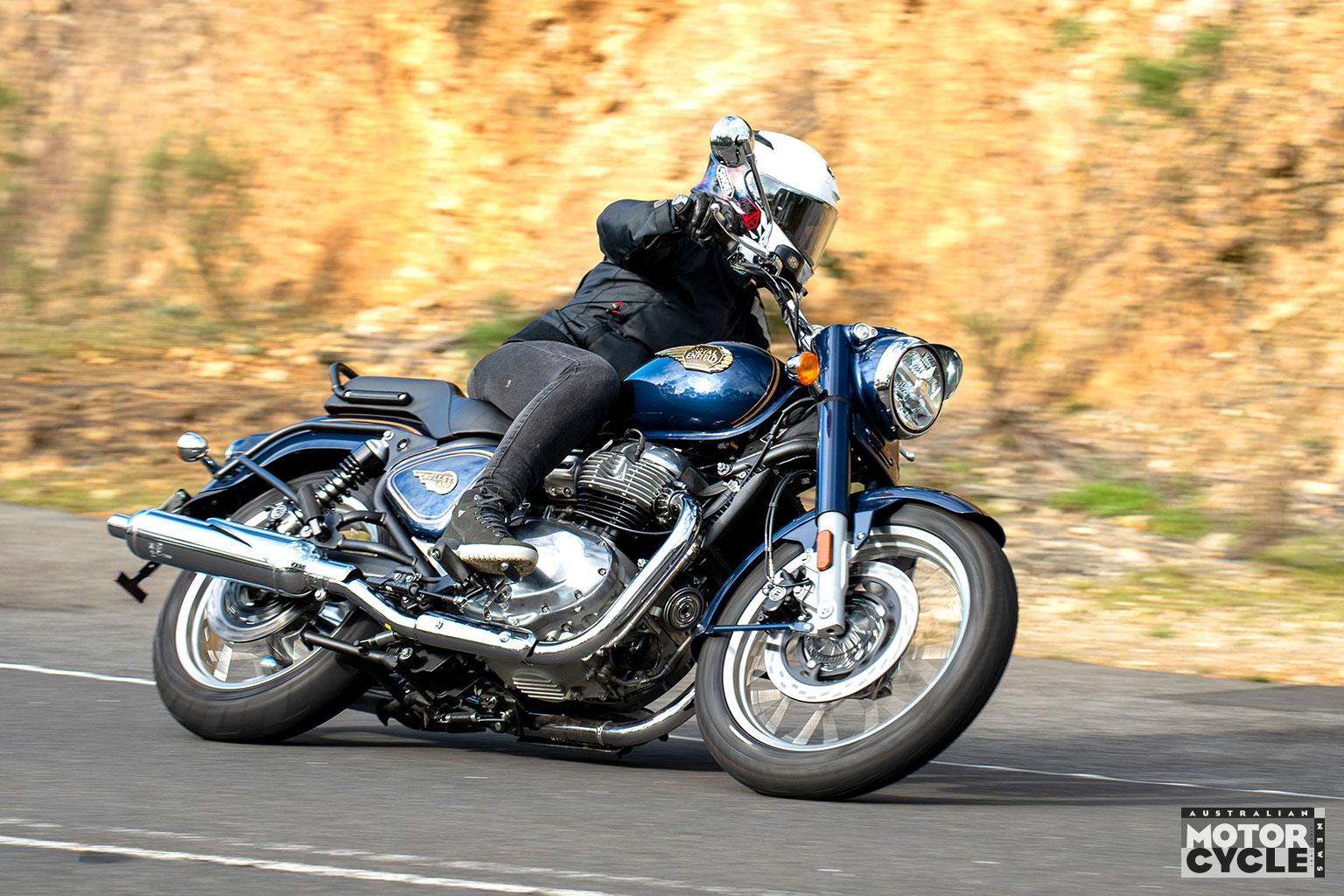
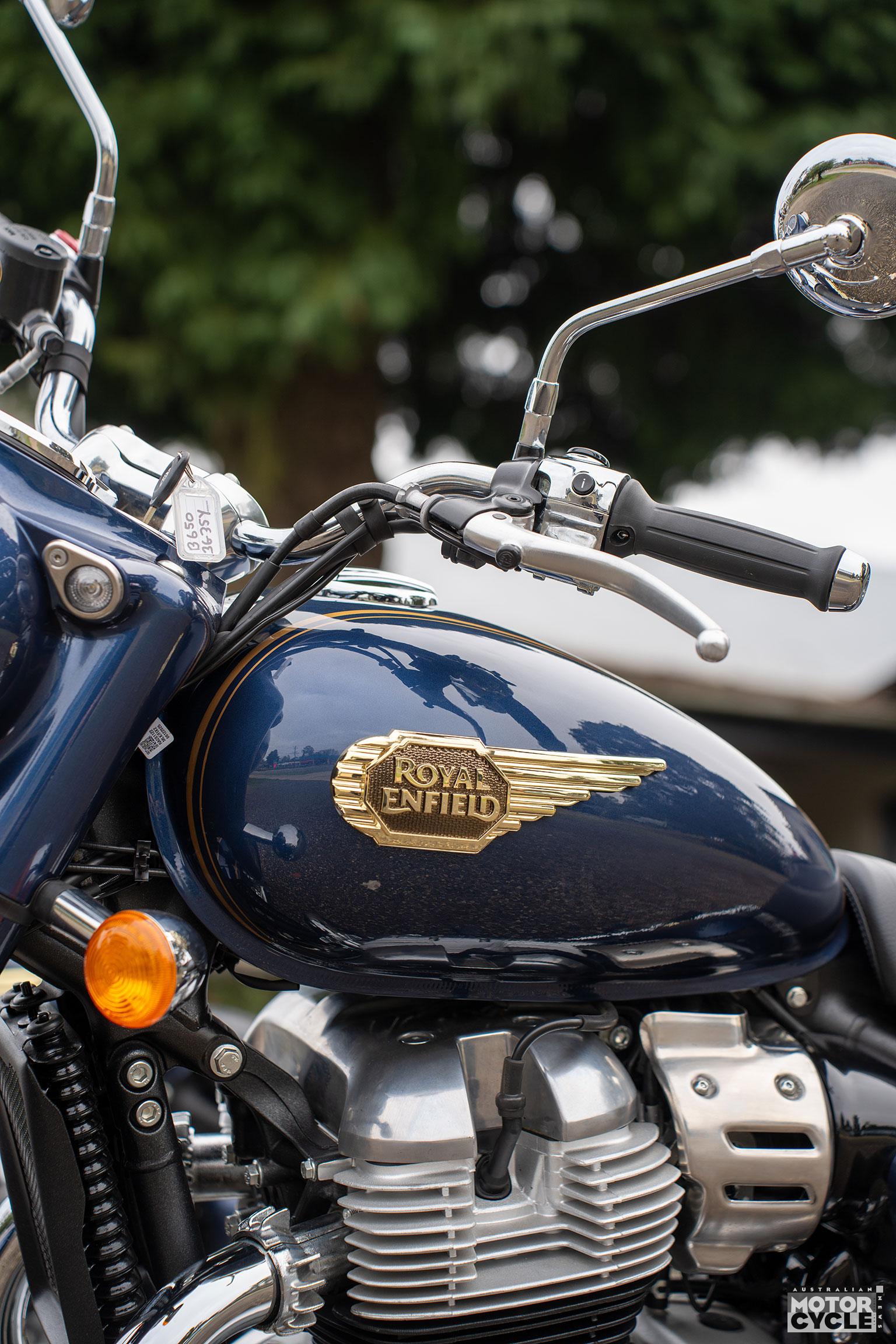
Despite the larger engine, the styling leaves little doubt about its heritage. The stepped seat, the dual chrome peashooter exhausts, immaculate hand-painted pinstripes, distinctive loop-frame silhouette and Royal Enfield’s signature headlight casquette all remain, ensuring the 650 is immediately recognisable as a Bullet. Rather than reinventing one of motorcycling’s oldest nameplates, Royal Enfield has simply given it the performance to match modern expectations while preserving the character that made the original an icon.
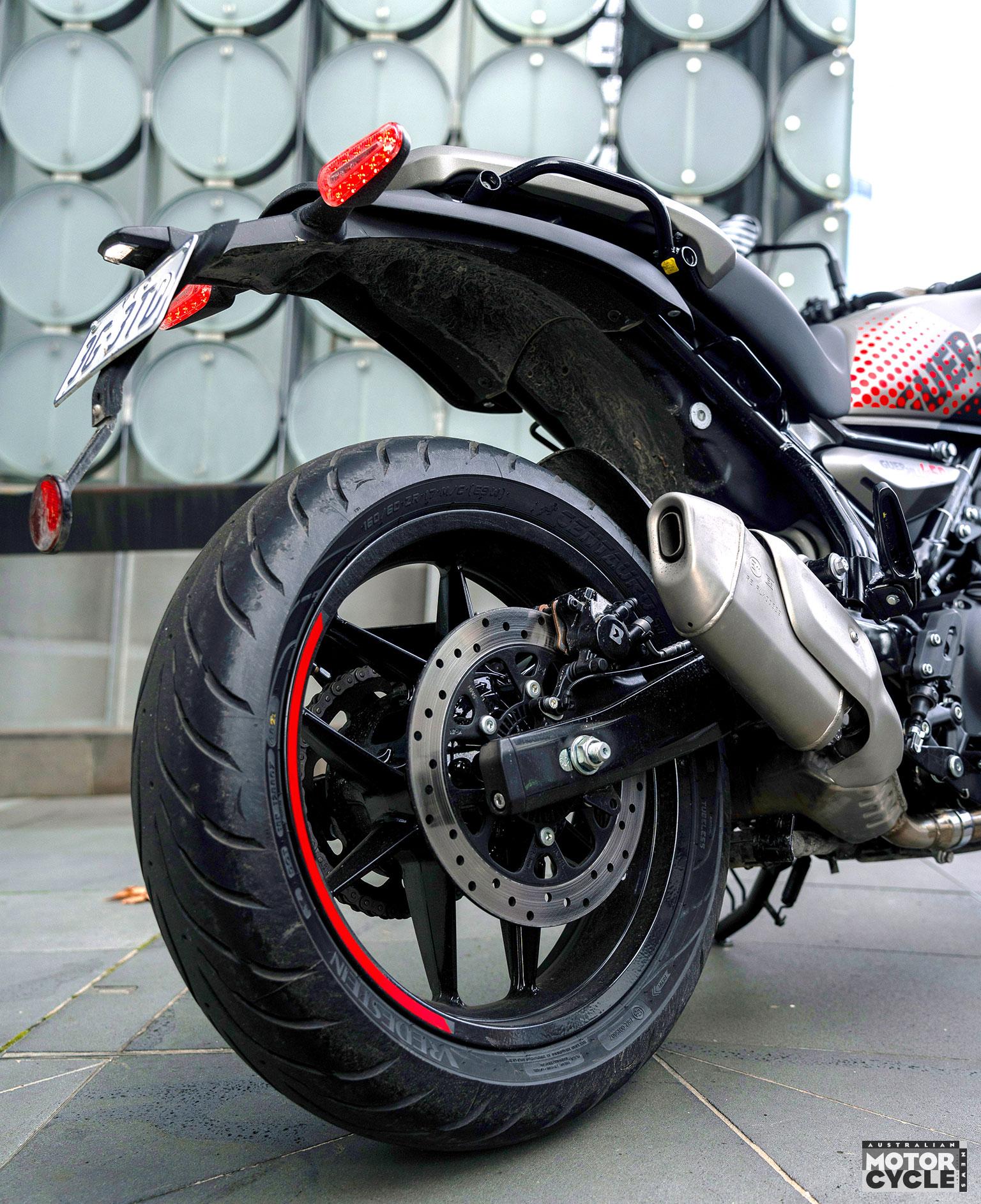
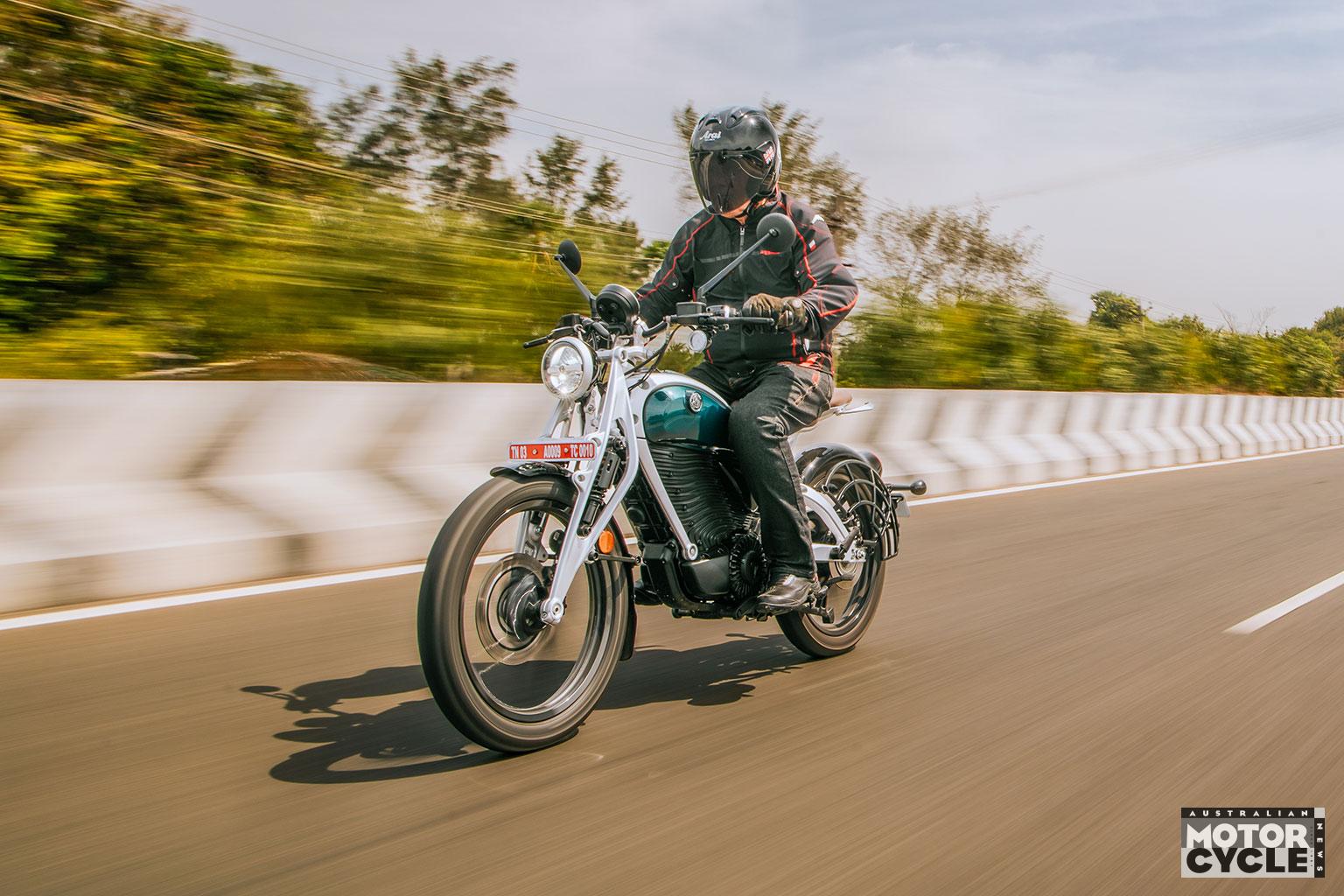
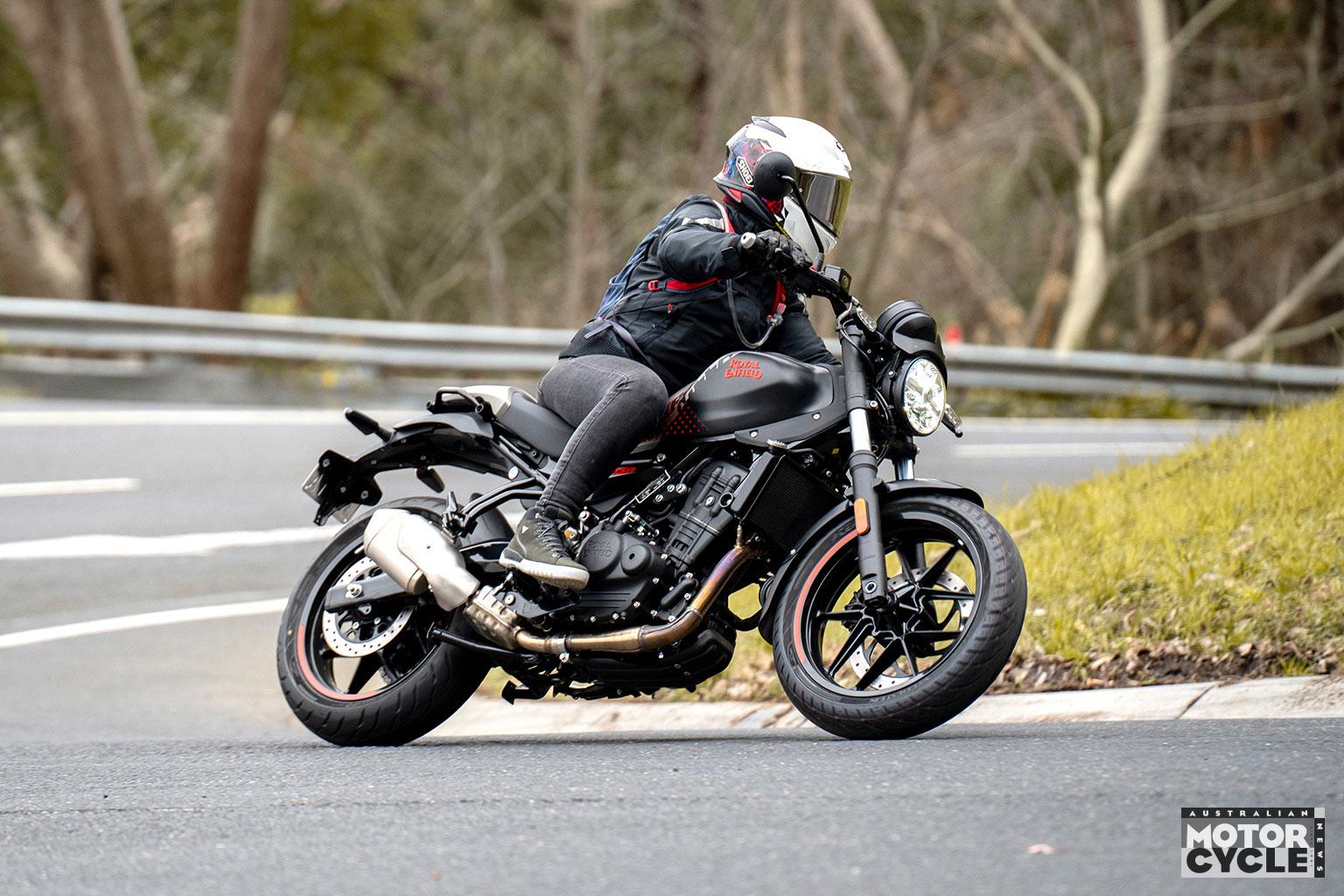
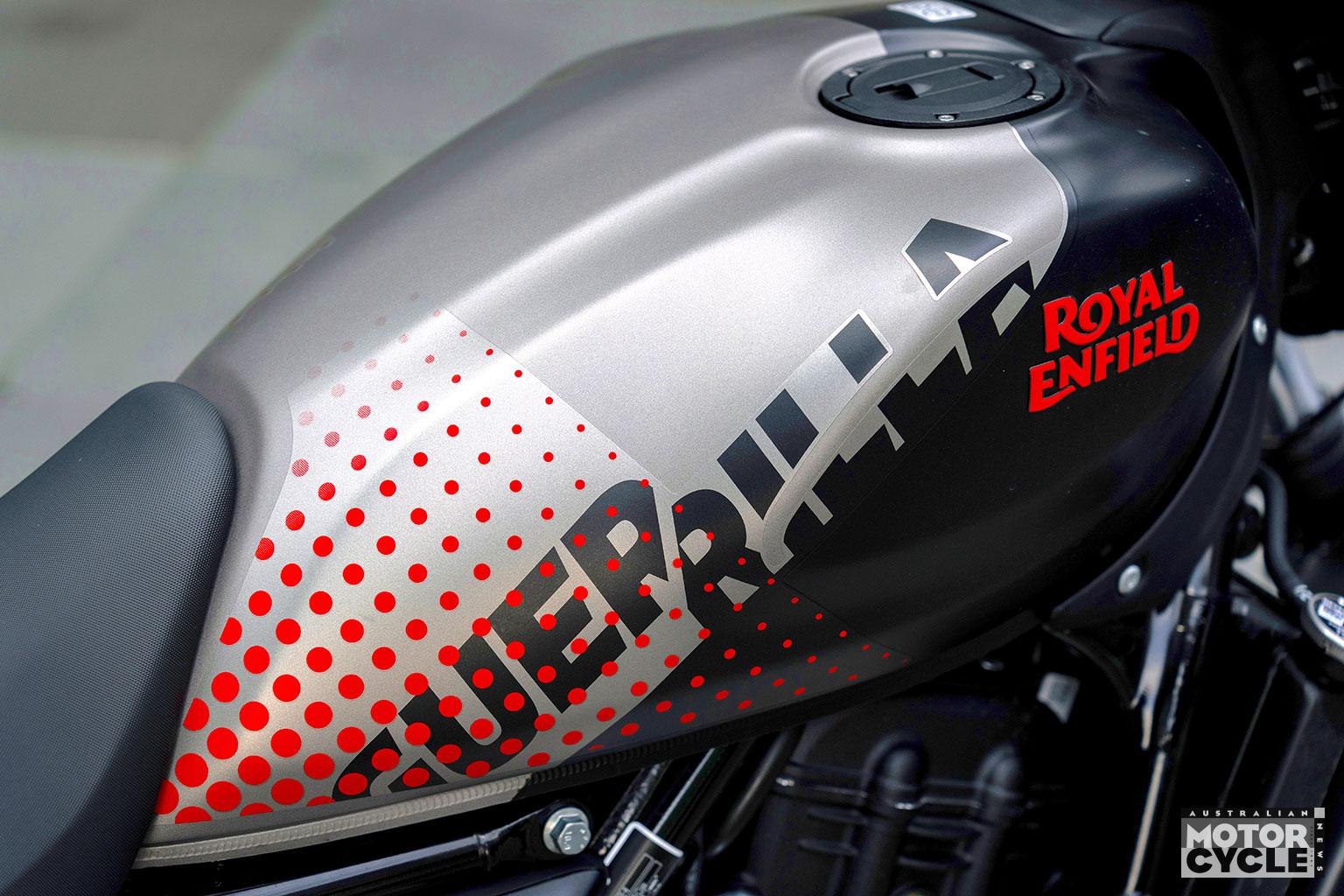
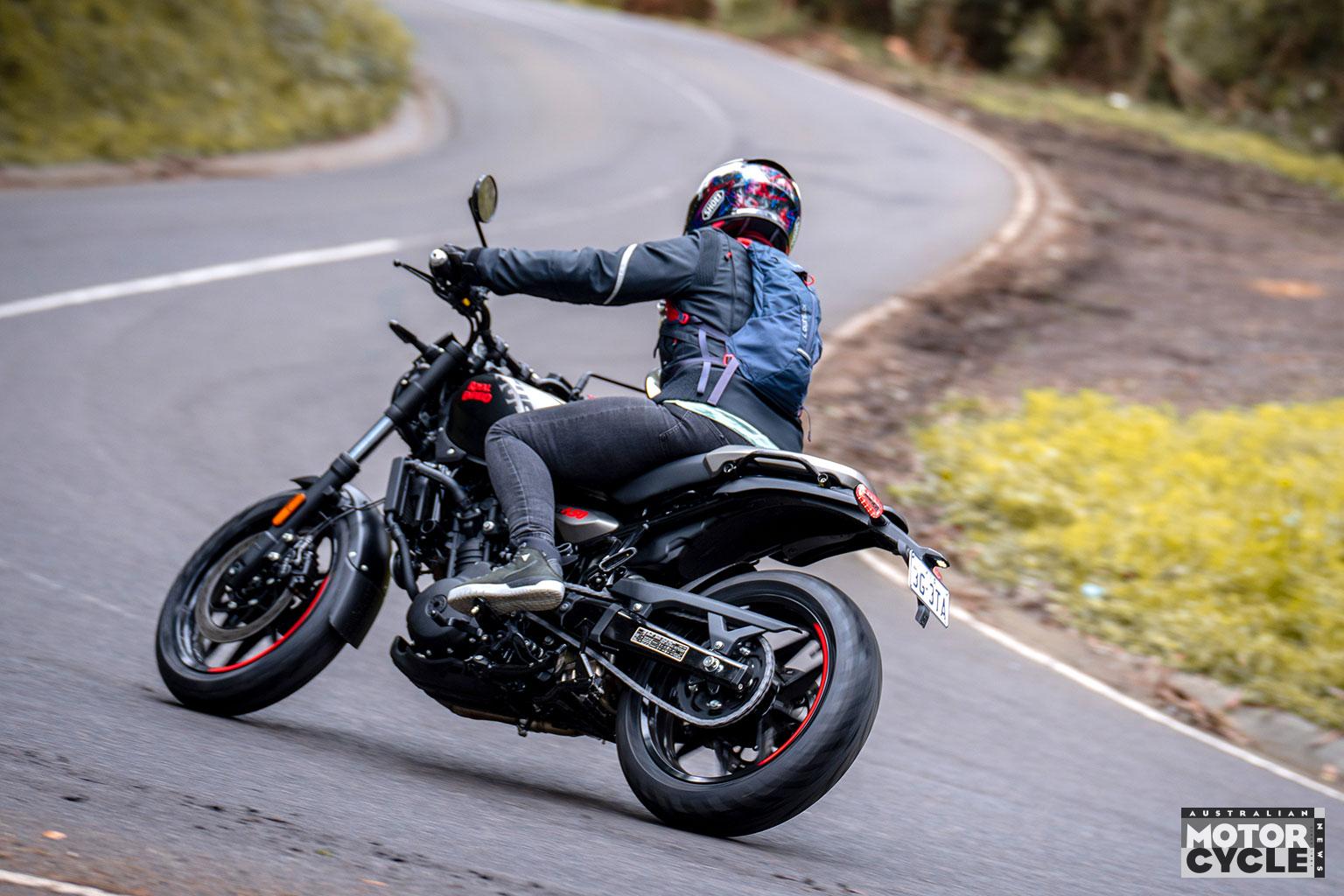
By contrast, the Guerrilla 450 Apex looks firmly ahead. Based on the scrambler-style Guerrilla 450 introduced last year and powered by Royal Enfield’s new liquid-cooled Sherpa engine, the Apex is positioned more towards the urban commuter. It ditches the old-school fork gaitors, swaps block-pattern tyres for more road-oriented rubber and a tweak to the handlebar puts your bodyweight just over half a centimetre lower and farther forward than the original Guerrilla. Its contemporary aesthetic integrates its tail and brake lights within the rear indicators, leaving the tail unit cleaner and less cluttered.
They’re subtle changes that sharpen an already entertaining package that, by Royal Enfield Australia’s own admission, didn’t meet projected sales expectations in its original guise. The Apex feels more purposeful as an urban nakedbike, complementing its lively single-cylinder engine with a riding position and chassis set-up aimed squarely at sealed roads.
The Apex’s 452cc single produces 29.4kW (39.4hp) at 8000rpm and 40Nm at 5500rpm. Despite giving away almost 200cc to the 650, when you jump off the Bullet and onto the Apex, it doesn’t feel outclassed. The Apex is substantially lighter than the Bullet, and the single spins up far more eagerly than the twin. It feels lively away from traffic lights, enthusiastic through the gears and perfectly suited to the stop-start demands of commuting or attacking a favourite backroad – of which we did plenty!
The Apex’s switchable riding modes are called Sport and Street. In fact they’re the same two throttle maps labelled Performance and Eco on the Himalayan 450. Sport gives the Sherpa a sharper, more immediate response that suits enthusiastic riding, while Street softens the initial delivery and makes the bike noticeably more docile. Given the difference between them, I couldn’t help thinking Rain might have been a more appropriate name for the latter.
The Bullet takes a different approach. Its cable-operated throttle, extra weight and slower-revving twin give it a more relaxed and stable demeanour, but there’s plenty of performance beneath that unhurried character. Its 648cc parallel twin produces 34.6kW (46.3hp) at 7250rpm and 52.3Nm at 5650rpm, giving it a relatively modest 5.2kW advantage over the Apex but an additional 12.3Nm of torque. And with around 80 per cent of its torque available from just 2500rpm, it responds with effortless drive when overtaking, threading through traffic or driving cleanly out of slower corners. The Bullet prefers making considered use of the broad spread of torque, whereas the 450 is quite happy to hang out in the upper regions of its digital tacho.
Neither engine is objectively better; they simply reinforce each bike’s personality. The Sherpa brings energy, responsiveness and modern technology to a lightweight roadster, while the 648cc twin delivers the relaxed, muscular feel that has made Royal Enfield’s 650 platform such a success since its 2018 debut.
Despite their very different capacities, weight and character, there isn’t much separating them at the bowser when it comes to range. The Apex’s claimed 3.5L/100km from an 11-litre tank and the Bullet’s 4.7L/100km from its 14.8-litre tank both equate to a theoretical useful riding range of around 315km.
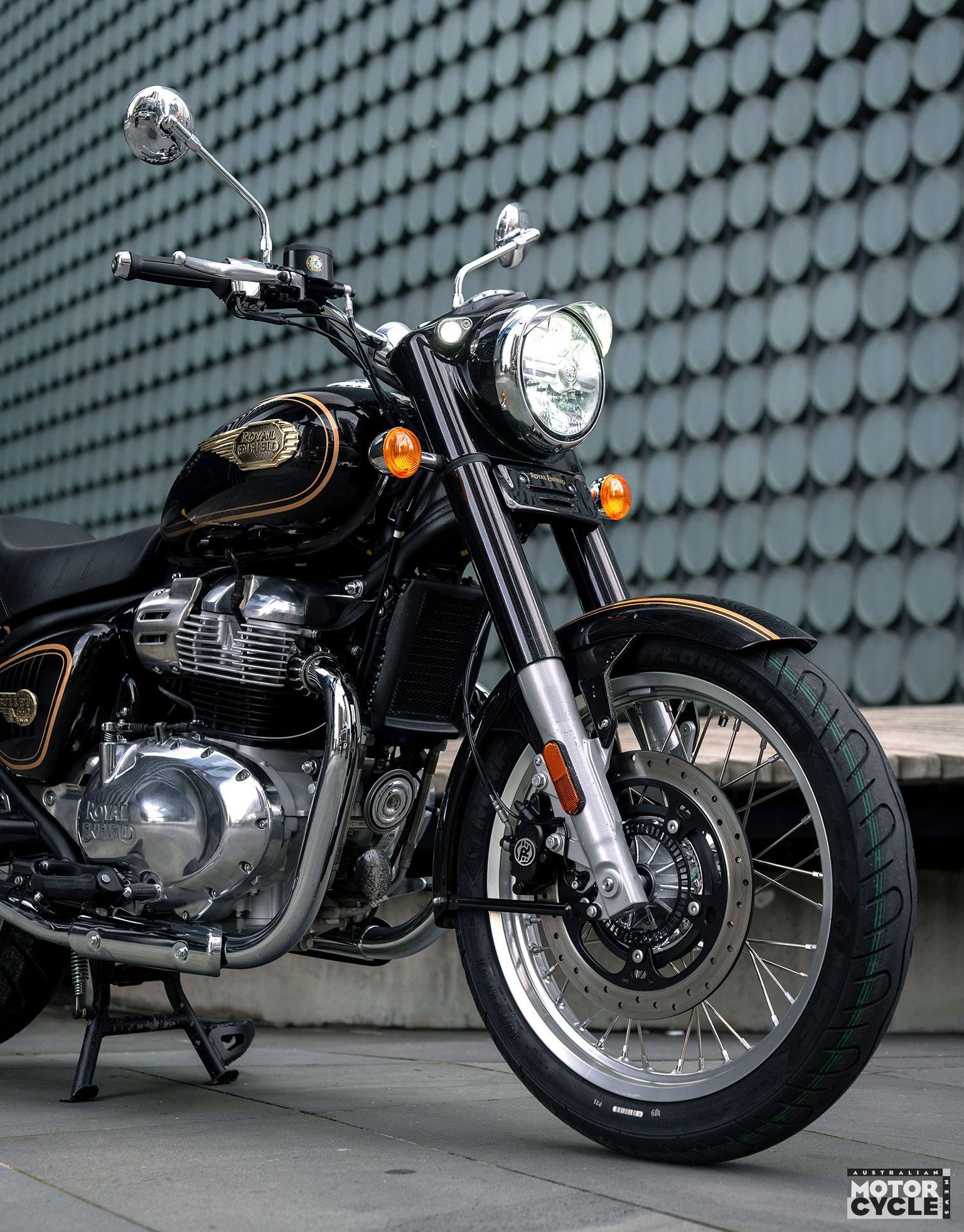
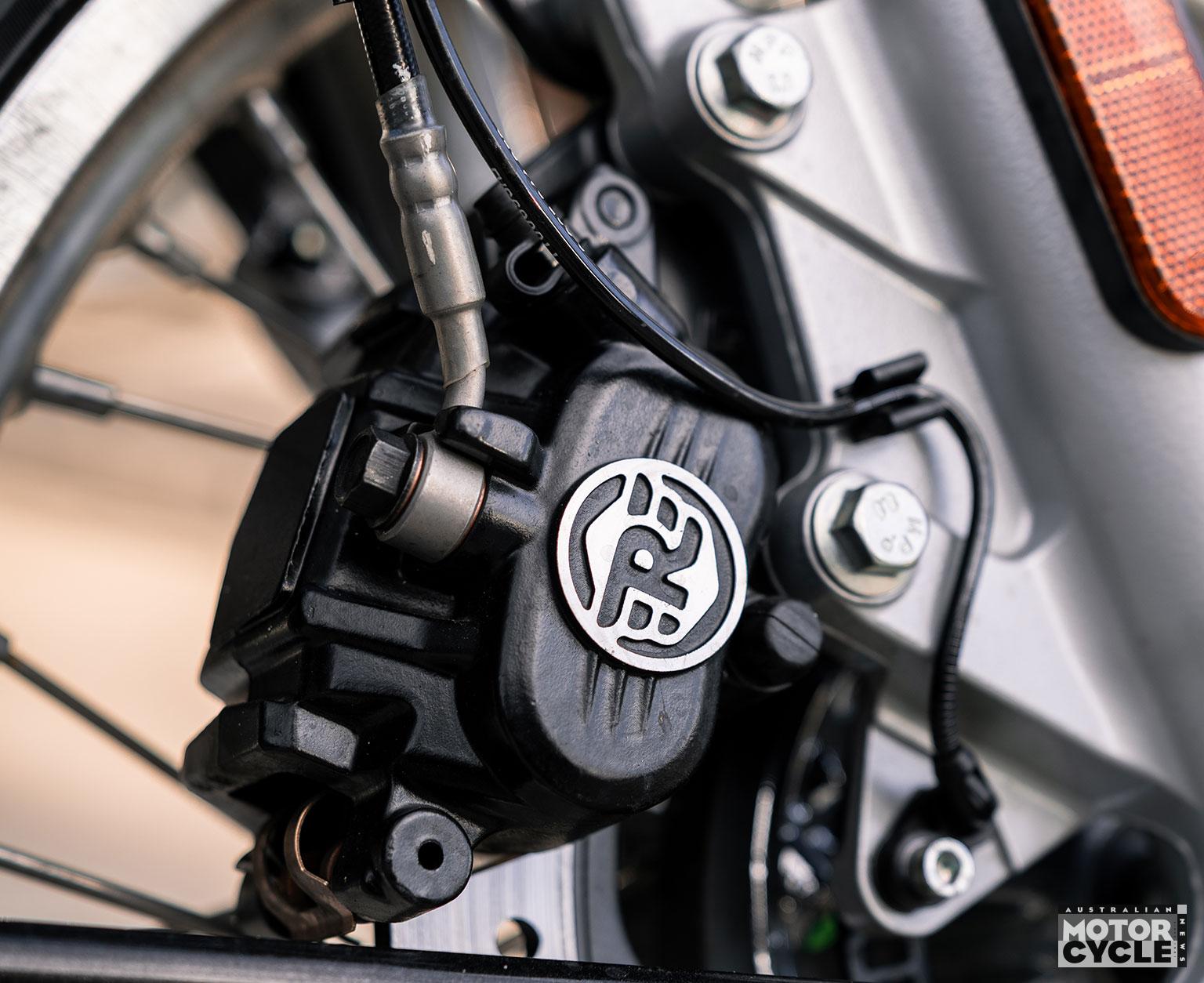
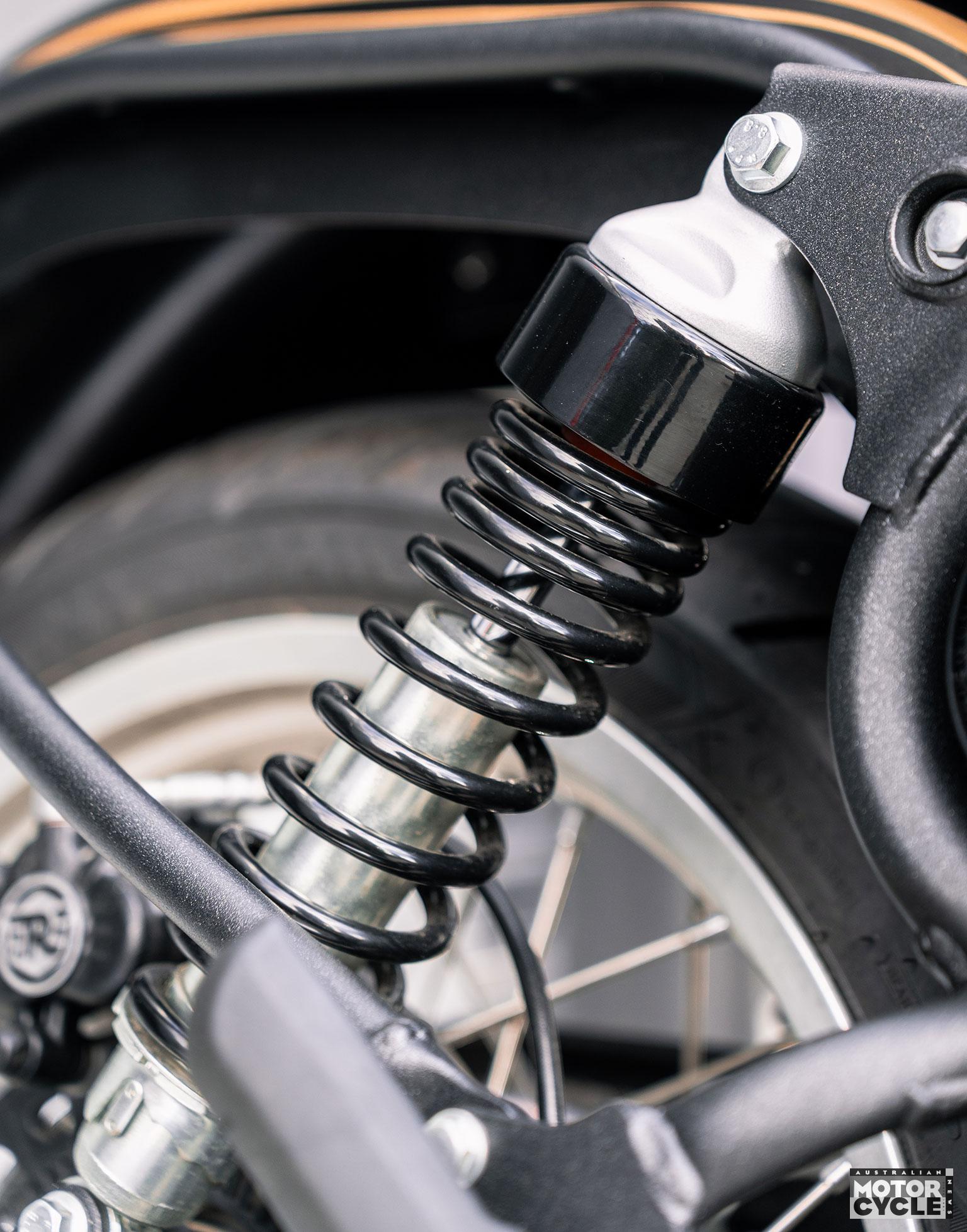
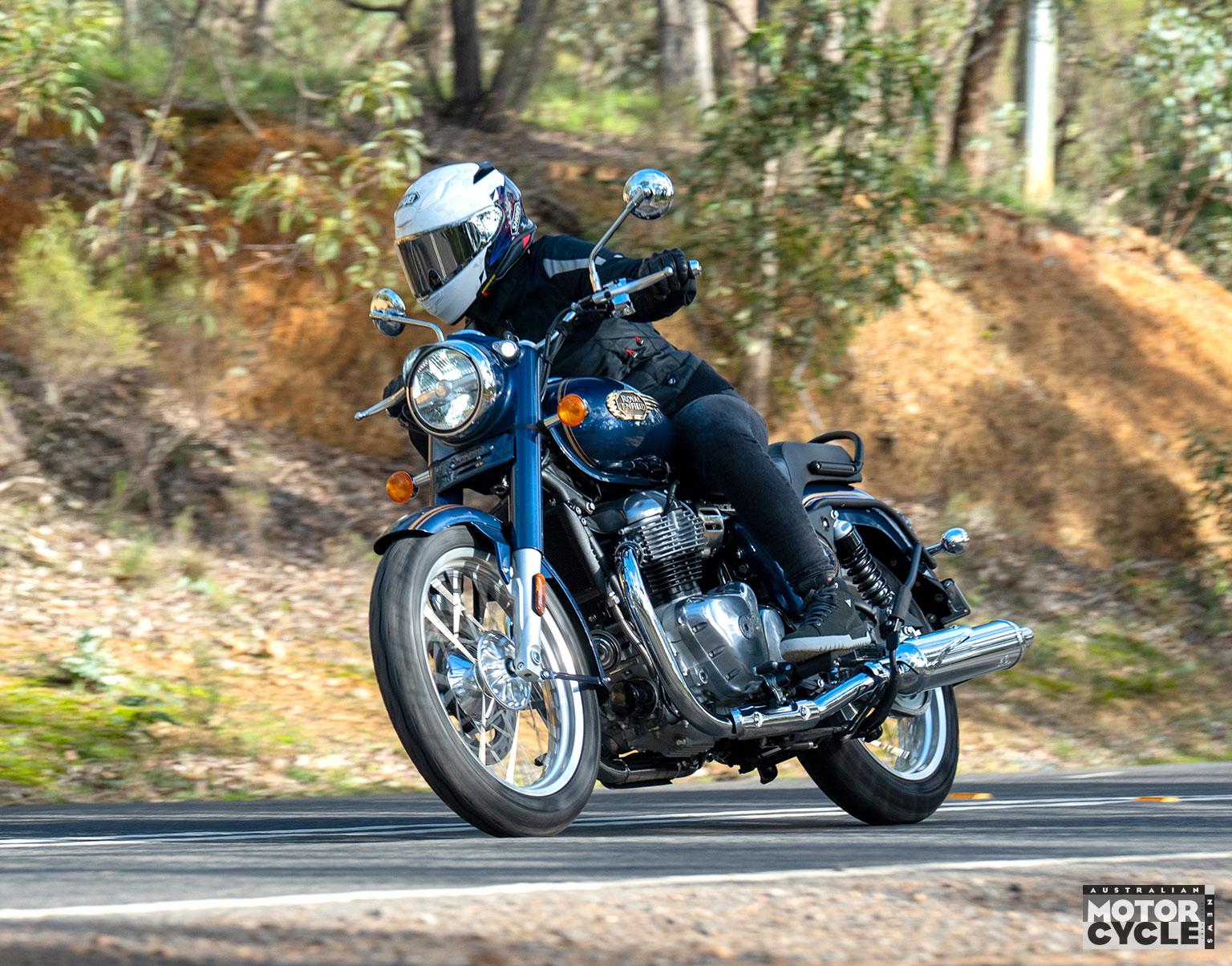
When it comes to running gear, the Bullet 650 stays true to its classic brief with a conventional 43mm telescopic fork and twin rear shock absorbers, while braking comes via a 320mm front disc and 300mm rear, backed by dual-channel ABS. The wheel combination of a 19-inch front and 18-inch rear further reinforces its traditional proportions and contributes to the bike’s calm, planted feel.
The Apex adopts a more contemporary approach. An upside-down Showa fork and a linkage-mounted monoshock replace the Bullet’s conventional suspension, while a 17-inch wheel at each end, road-focused tyres and the more aggressive ergonomics give the chassis a noticeably sportier intent. Braking is handled by a 310mm front disc and 270mm rear, also with dual-channel ABS.
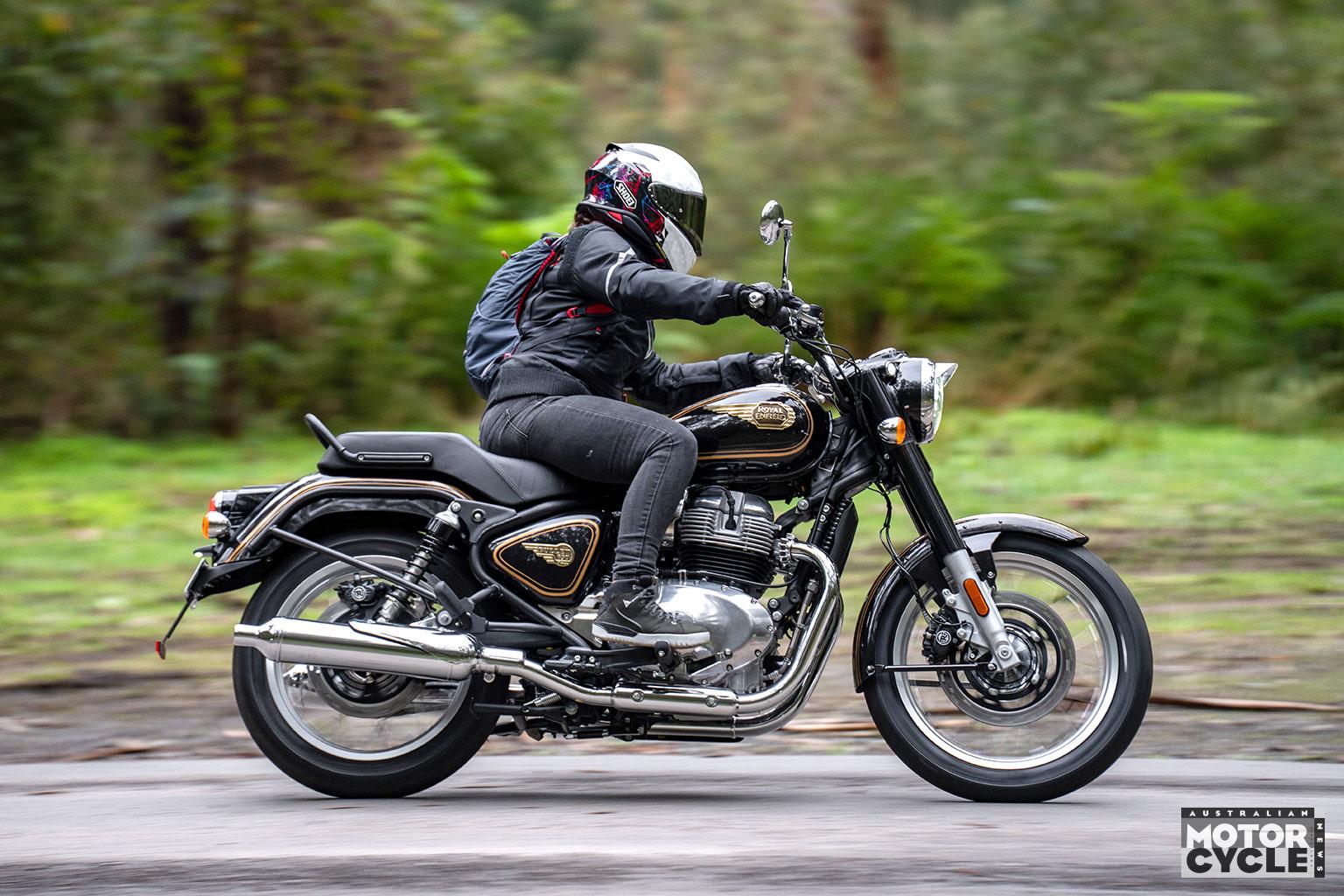
On the road, those differences are immediately apparent. The Bullet feels plush, composed and reassuring, a result of its 243kg kerb weight, no doubt, but also thanks to its well-sorted suspension package. Its longer wheelbase helps the bike settle naturally into flowing corners and remain impressively stable, with damping that suits exactly what the motorcycle is trying
to achieve.
The Apex, meanwhile, feels tauter and more eager to change direction. Its shorter wheelbase, lighter weight and more aggressive ergonomics help it tip into corners with less effort and respond more quickly to rider input. Combined with the Sherpa engine’s willingness to rev, it gives the Apex a playful character that belies its modest capacity.
Once again, neither approach is objectively superior. The Bullet’s chassis complements a motorcycle built around torque and timeless styling, while the Apex’s engine, geometry and running gear make the most of a lightweight, modern roadster designed for everyday urban commuting.
However, despite sitting at opposite ends of Royal Enfield’s range philosophically, both motorcycles are LAMS approved therefore they’re ultimately targeting much the same rider.
The Bullet’s seat is both higher – by 20mm – and wider than the Apex’s, but the bigger distinction is the extra 58kg it carries over the Apex. Yes, it works in the Bullet’s favour once rolling, but it’s quite noticeable when wheeling the bikes around or performing a tight u-ey.
The divide between tradition and modernity carries through to the cockpit, where Royal Enfield has taken two very different approaches to instrumentation, navigation and connectivity. The Bullet 650 uses Royal Enfield’s Tripper Pod, a small secondary display mounted alongside the analogue speedometer (with LCD inset). Paired with the Royal Enfield app, it provides turn-by-turn navigation using simple directional prompts, along with a clock and basic connectivity information. The main riding data remains within the conventional instrument cluster, so the Pod supplements the Bullet’s analogue/LCD gauges rather than replacing them, while the aluminium switchgear adds another welcome touch of quality.
The Guerrilla 450 Apex uses the more advanced Tripper Dash, a four-inch circular TFT that serves as the bike’s complete instrument panel. It displays speed, revs, fuel level, gear position, ride mode and other vehicle information, while smartphone connectivity adds calls, music controls and full navigation. Unlike the Pod’s directional prompts, the Dash can display the surrounding map and route directly on the screen, although this requires a connected phone running the Royal Enfield app.
The Bullet’s Tripper Pod feels entirely appropriate because it adds modern navigation without disturbing the bike’s classic simplicity. The Apex’s Tripper Dash, meanwhile, is a natural fit for a motorcycle aimed at younger riders who want to explore ride modes, monitor more information and make greater use of connected technology. Both include onboard USB charging, with the Apex using a USB-C outlet.
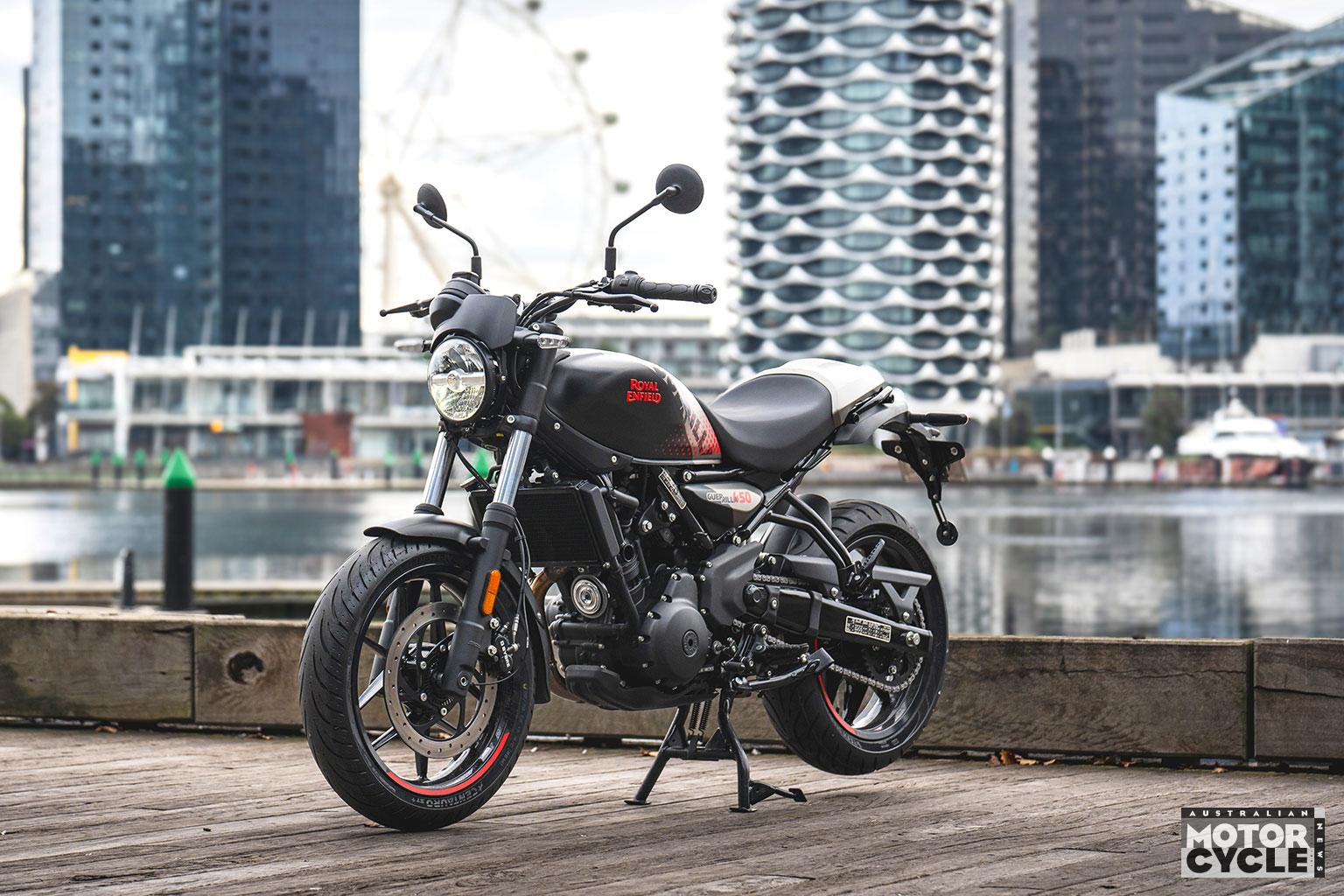
The Bullet 650 is available in Battleship Blue from $10,990 ride away or Cannon Black from $11,190 ride away, while the new road-focused Guerrilla 450 Apex is priced at $8390 ride away in either Apex Red or Apex Black. That positions it beneath the original scrambler-style Guerrilla variants, despite the Apex’s more overtly road-oriented brief. Every Royal Enfield is backed by a three-year factory warranty and three years of roadside assistance.
The Bullet remains one of the most important names in the company’s history, carrying nearly a century of identity into the present day. The Apex shows an equally important understanding that history alone will not sustain the brand forever.
Royal Enfield’s continued growth depends on preserving what made it distinctive while also producing motorcycles that feel relevant to newer riders, modern cities and changing expectations. And these two new machines illustrate that beautifully.
The platform principle
Developing an all-new motorcycle is expensive, but developing an all-new engine is another level again. Beyond the design work itself comes years of testing, emissions certification, tooling, supplier contracts and production planning. So it’s not surprising that virtually every major manufacturer now builds multiple motorcycles around a common mechanical package.
Done well, platform sharing lets engineers spend more time refining elements like chassis geometry, suspension settings, ergonomics, styling and electronics – things that make a bike feel different to one of its stablemates – rather than reinventing the engine every few years. It also reduces manufacturing complexity, improves parts availability and spreads development costs across a larger number of motorcycles.
Royal Enfield has embraced that philosophy. Its Australian range now spans 15 models, yet most are built around just three platforms: 350, 450 and 650. The challenge is ensuring platform efficiency doesn’t produce cookie-cutter motorcycles – and that’s where Royal Enfield has largely succeeded.
| Platform | Australian Models |
|---|---|
| 350 | Hunter 350, Meteor 350, Classic 350, Bullet 350, Goan Classic 350 |
| 450 | Himalayan 450, Guerrilla 450, Guerrilla 450 Apex |
| 650 | Interceptor 650, Continental GT 650, Super Meteor 650, Shotgun 650, Bear 650, Classic 650, Bullet 650 |
| SPECS | RE Guerrilla 450 Apex | RE Bullet 650 |
|---|---|---|
| ENGINE | ||
| Type | Single cylinder, DOHC, four valves per cylinder | Parallel-twin, SOHC, four valves per cylinder |
| Bore & stroke | 84mm x 81.5mm | 78mm x 67.8mm |
| Capacity | 452cc | 648cc |
| Compression ratio | 11.5:1 | 9.5:1 |
| Cooling | Liquid | Air/oil |
| Fueling | EFI, 42mm throttle body | EFI, with dual throttle bodies |
| Transmission | Six-speed | Six-speed |
| Clutch | Wet, multi-plate, slip assist | Wet, multi-plate |
| Final drive | Chain | Chain |
| PERFORMANCE | ||
| Power | 29.4kW (39.4hp) @ 8000rpm (claimed) | 34.6kW (46.3hp) @ 7250rpm (claimed) |
| Torque | 40Nm @ 5500rpm (claimed) | 52.3Nm @ 5650rpm (claimed) |
| Top speed | 150km/h (est) | 175km/h (est) |
| Fuel consumption | 3.5L/100km (claimed) | 4.7L/100km (claimed) |
| ELECTRONICS | ||
| Type | Bosch | Bosch |
| Rider aids | Dual-channel ABS | ABS |
| Rider modes | Sport and Street | Not applicable |
| CHASSIS | ||
| Frame material | Tubular steel | Tubular steel |
| Frame type | Twin spar | Double cradle |
| Rake | Not given | Not given |
| Trail | Not given | Not given |
| Wheelbase | 1440mm | 1480mm |
| SUSPENSION | ||
| Type | Not given | Showa |
| Front suspension | 43mm conventional fork, non-adjustable, 140mm travel | 43mm upside-down fork, non-adjustable, unknown travel |
| Rear suspension | Monoshock, preload adjustable, 150mm travel | Dual shocks, preload adjustable, 90mm travel |
| WHEELS & BRAKES | ||
| Wheels | Cast alloy; Front: 17 x 2.5, Rear: 17 x 4.0 | Wire-spoked aluminium; Front: 19 x 2.5, Rear: 18 x 3.5 |
| Tyres | Vredestein Centauro ST; Front: 120/70R17, Rear: 160/60R17 | MRF Nylohigh–FN; Front: 100/90R19, Rear: 140/70R18 |
| Brakes | ByBre, ABS; Front: Single 310mm disc, twin-piston caliper; Rear: Single 270mm disc, single-piston caliper | ByBre, ABS; Front: Single 320mm disc, twin-piston caliper; Rear: Single 270mm disc, single-piston caliper |
| DIMENSIONS | ||
| Weight | 185kg (kerb, claimed) | 243kg (kerb, claimed) |
| Seat height | 780mm | 800mm |
| Width | 833mm | 830mm |
| Height | 1125mm | 1155mm |
| Length | 2090mm | 2260mm |
| Ground clearance | 169mm | 154mm |
| Fuel capacity | 11L | 14.8L |
| SERVICING & WARRANTY | ||
| Servicing | 1000km; Minor: 12,000km; Major: 24,000km | 1000km; Minor: 12,000km; Major: 24,000km |
| Warranty | Three years, unlimited km, roadside assist | Three years, unlimited km, roadside assist |
| BUSINESS END | ||
| Price | $8390 (ride away) | From $10,990 (ride away) |
| Colour options | Apex Red or Apex Black | Battleship Blue or Cannon Black (+$200) |
| Contact | royalenfield.com.au | royalenfield.com.au |