There is little comfort for medium-good grand prix riders when they reach a certain age.
‘Medium-good’ is not meant as an insult. Any rider able to hold his head up in MotoGP is clearly brilliant.
But with a conveyor belt of newcomers pushing through, and a brave new world of revised and (supposedly) upgraded MotoGP starting next year, there are inevitably some casualties.
The problem for the medium-good is the rampant geniuses – mainly represented at the moment by Marc Marquez and Pedro Acosta. With them around, even the exceptional only get an occasional chance at winning. And then they run out of time.
We’re looking at the likes of GP winners like Brad Binder, Enea Bastianini and Jack Miller. Three guys whose 2026 results have been severely impacted by less-than competitive bikes (KTM and Yamaha). And who are facing the chance of being jobless next year. Or of having to go to World Superbikes, which in the ever more rarified realms of MotoGP is more or less the same thing.
Since the cheesy declaration of the new five-year MotoGP/Constructors contract at Brno, there has been a flurry of announcements, mostly confirming what we already knew. And there are some tasty surprises for the new 850cc era.
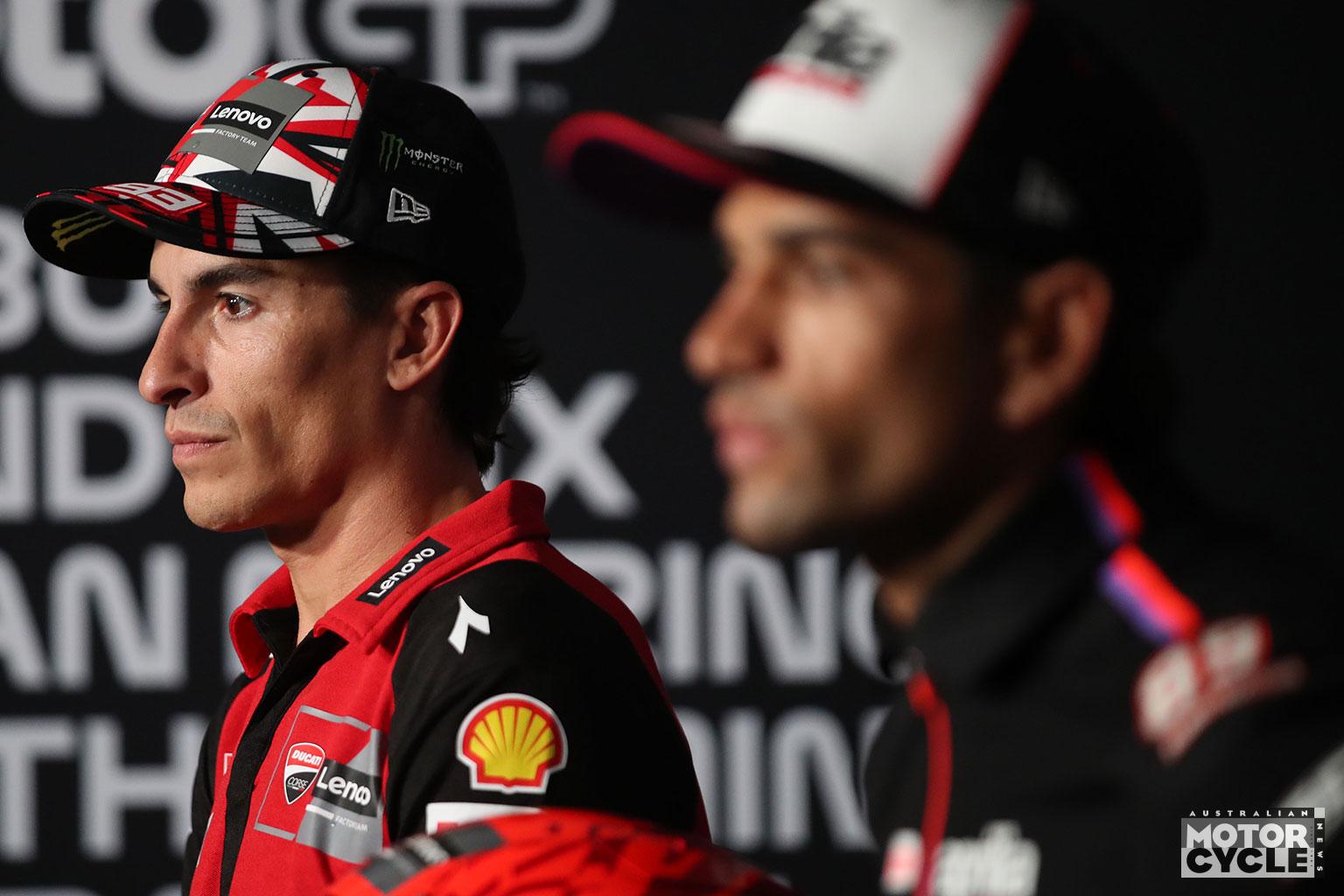
We have Marquez Senior joined at Ducati by Acosta – old master versus new. There’s Marco Bezzecchi at Aprilia with Pecco Bagnaia, who turned his back on Ducati after eight years, after being supplanted by Marquez.
Fabio Quartararo is aiming for redemption at Honda, after a five-year slump with a declining Yamaha. He’s gambling on HRC recovering from their own slump, a process which has already begun rather encouragingly.
It’s an even bigger gamble for Jorge Martin and this year’s revelation Ai Ogura, abandoning ultra-competitive Aprilia for Yamaha. They must be getting paid plenty. Chancy too for Alex Marquez and Ducati’s current top scorer Fabio Di Giannantonio, heading across the Alps to join somewhat beleaguered KTM.
One theory about the tech changes – smaller engines, lighter bikes, less aero and banned ride-height devices – is that it will
be ‘more skill-based’. This should make things easier for the MotoGP gamblers.
But that is no comfort for the three riders named above. Nor for other previous race-winners facing career slide. Step forward Maverick Vinales, Alex Rins and former Moto2 champion Franco Morbidelli. Plus the unobtrusive but excellent Luca Marini, who unlike them has never won a MotoGP race but is exceptionally consistent and reliable. There may be salvation for the first and last named, but nothing is certain.
There’s another category left clinging onto hope rather than certainty: race-winning Moto2 riders who have made the mistake of not being Spanish or young.
Actually, Manuel Gonzalez is plenty Spanish but at 23 he’s an old man in the class. Only four of 28 riders on the grid are older. The Captain Scarlet lookalike narrowly missed the title in 2025 and looks set to run away with it this year. Puzzlingly, it’s apparently not enough to secure a MotoGP slot.
Also in the hopeful category is his Australian teammate Senna Agius, a redoubtable rider but also only pencilled in for a MotoGP move. Bizarrely, his nationality might turn out to be an advantage, as MotoGP seeks to reinforce international appeal.
Meanwhile, young Moto2 Spaniards Danny Holgado, Izan Guevara and Spanish-born ‘Columbian’ David Alonso are headed straight in, with Ducati, Yamaha and Honda seats.
Well, nobody’s career goes on forever. Even Valentino Rossi had to stop some time, although Marc Marquez’s latest renewal is for two more years, by when he will be 35; and Bagnaia’s new Aprilia contract is for a remarkable four years, taking him to 33. There will be plenty of young riders dismayed by this.
Racing can be a cruel business, in more ways than just the obvious. Talent is not necessarily enough. But to be fair, it certainly helps.