Subtle changes bring popular British retros bang up to date
When UK businessman John Bloor relaunched the heritage British brand Triumph in 1990, almost straight away he was urged to bring back the Bonneville model name. He resisted all the way up to 2001, aware that introducing a twin-cylinder retro before bedding down his range of modern models could end up being corporate suicide.
But when he finally launched the Bonneville Bloor, he could never have predicted how it would blossom into a range that is now a backbone of Triumph’s global success. And the range hasn’t had to keep reinventing itself to maintain sales in the market segment it’s largely created.
Like the range of triples (and also fours Hinckley Triumph produced for a while), the 2001 Bonneville was over-engineered for reliability. Soon American aftermarket firms were producing high-compression big-bore kits to take advantage of the peppy camshaft that was a feature of the first 790cc Bonneville.
Triumph responded by taking the engine out to 865cc in 2005 to provide more torque and power, then upped it to 900cc and 1200cc in 2016. Along the way, tech upgrades included fuel injection and styling.
Several variants were produced, from Scrambler to Thruxton, and this range became a strong seller for Triumph around the world and in Australia-New Zealand.
A typical buyer of what Triumph now calls its Modern Classics wants simplicity, not tech overload, so upgrades have been subtle and mainly made to match changing safety and pollution laws.
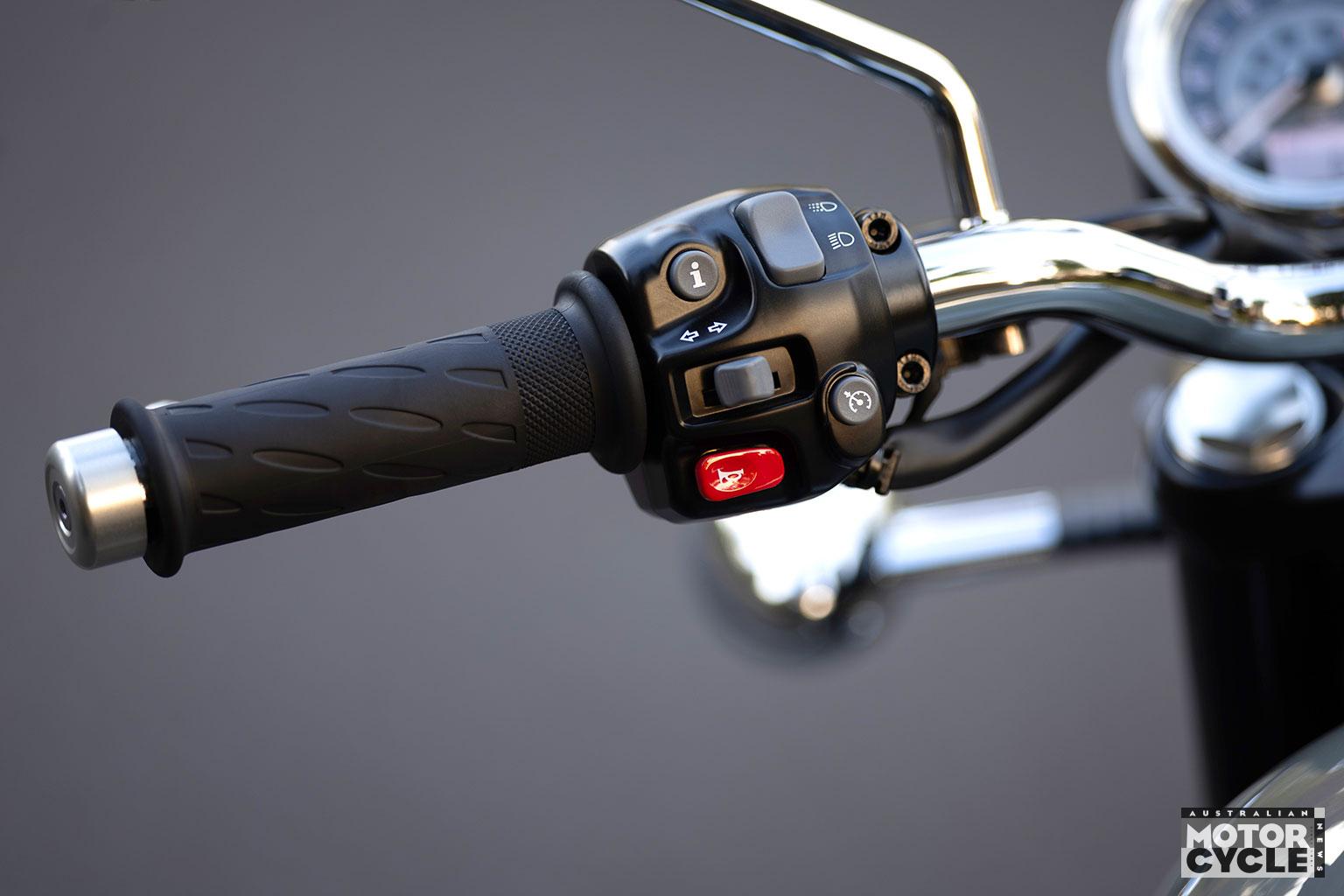
For 2026, the Modern Classic range has gained lean-sensitive cornering ABS brakes and traction control, two riding modes, a new LED headlight with a daytime running light, and a cockpit-mounted USB-C power socket. Cruise control comes standard for the Bonneville T120 and T120 Black. There are new paint schemes and the Bobber and Speedmaster have some other updates specific to them.
Triumph Australia made the T120, Bobber and Speedmaster available for a day and a bit of riding on the winding roads behind Marysville in the Yarra Ranges outside Melbourne.
It was more of a taste than a deep dive into the riding experience as the test route was fairly short and didn’t involve any city or freeway travel. Then again, most owners of the T120 and Bobber will probably mainly use them for weekend blasts in the hills.
A Bonnie day back in the sixties
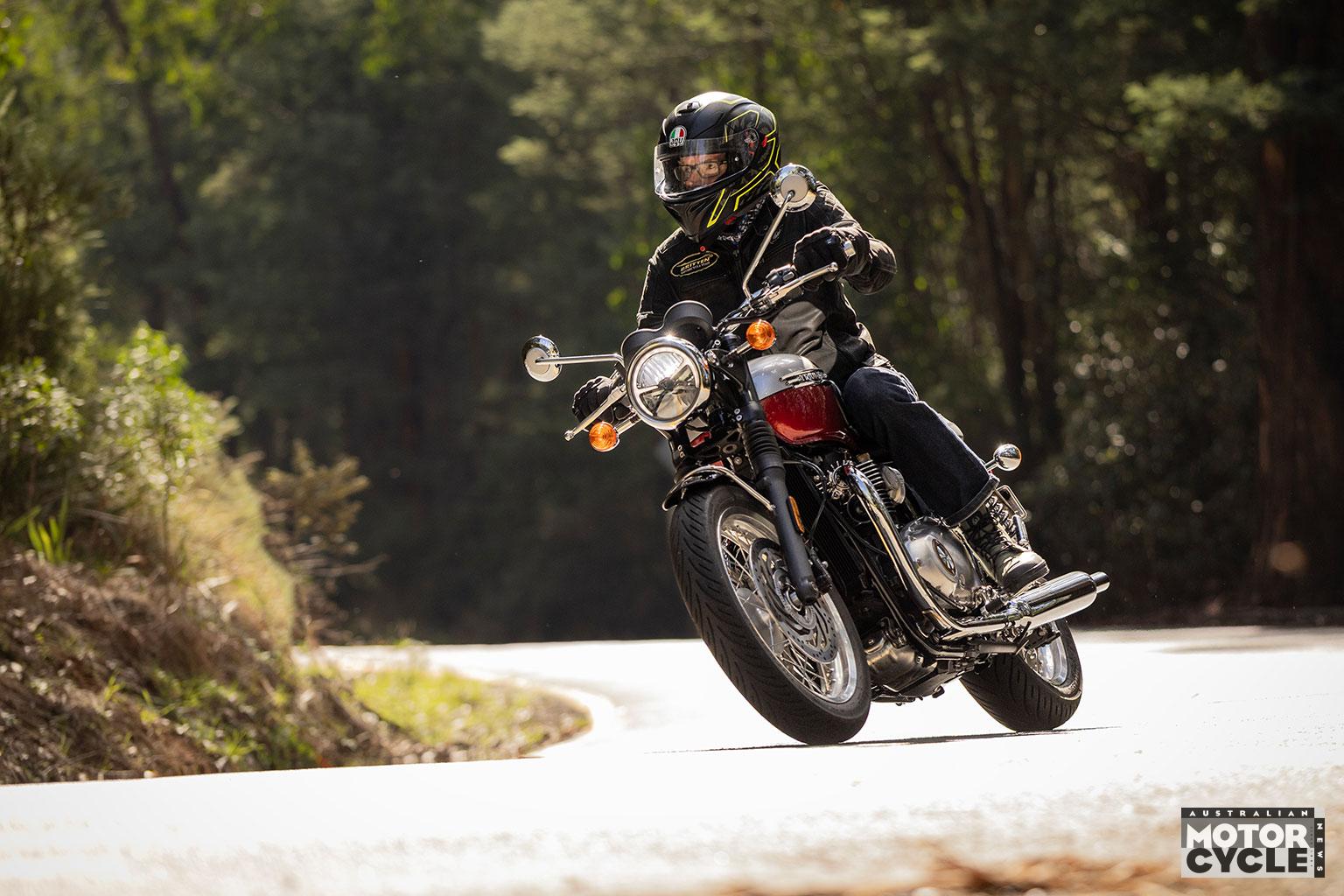
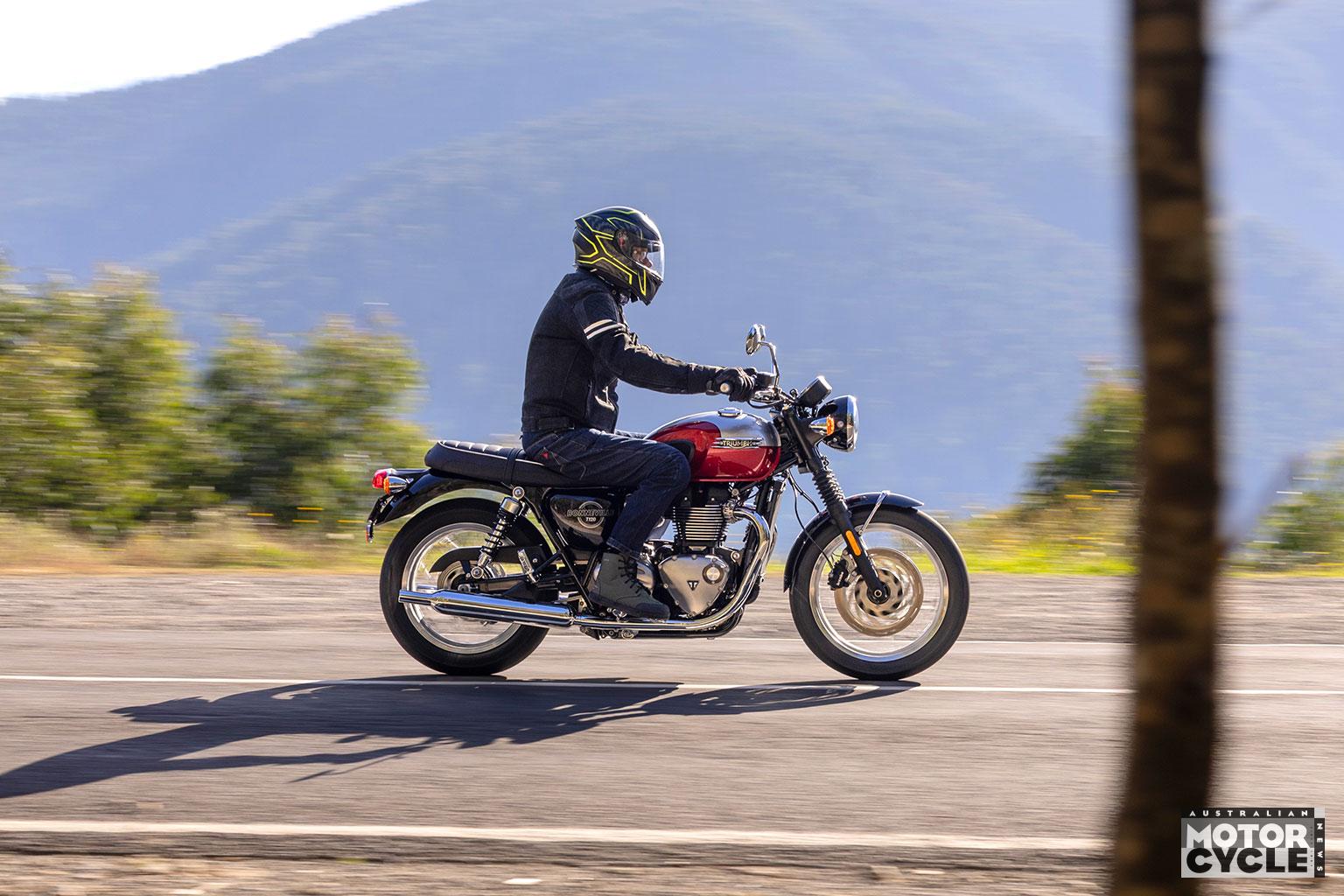
First I rode the Bonneville T120, painted in classic Sixties red and ivory paint (the official Triumph colour name is Cranberry Red).
It’s hard to believe this model has been around for 25 years. Obviously Triumph has updated it over this time but it’s never lost its original charm that harks back to the Sixties when the Bonneville and Jaguar’s E-type sportscar were the two mobile symbols of Swinging London.
The T120, Bobber and Speedmaster are now all powered by the ‘Hi-Torque’ version of Triumph’s 1200cc parallel twin.
This liquid-cooled, SOHC, eight-valve engine has a 270° firing order, which gives it a unique engine note. Triumph claims peak power of 57.5kW (77hp) at 6100rpm and maximum torque of 106Nm at 4000rpm. Claimed wet weight starts at 233kg wet (Bonneville T120) to 265kg (Speedmaster). Compression ratio is 10:1, fairly low by today’s standards. For example, the Last Edition Thruxton 1200 had 12:1 compression.
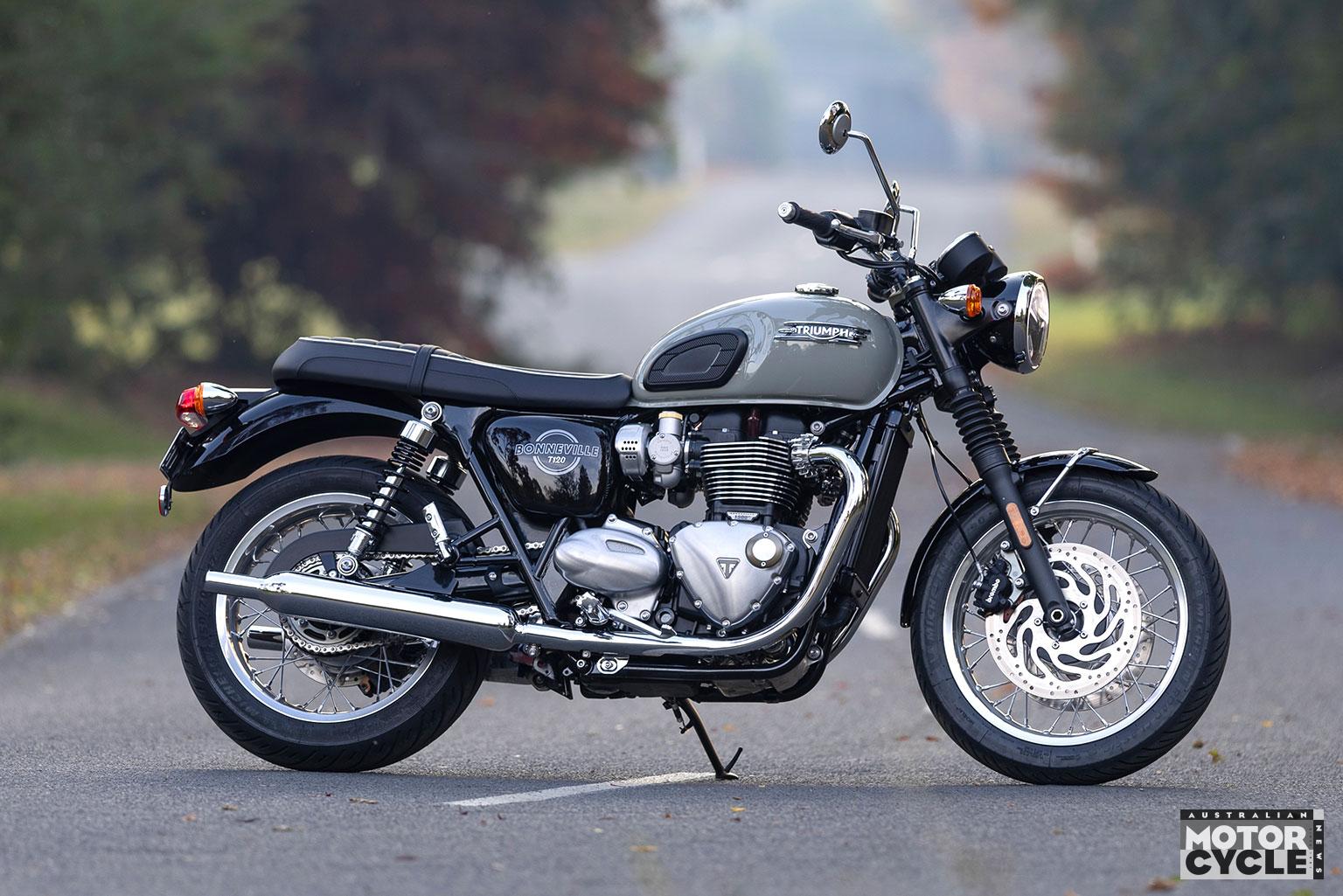
Even parked up, the Bonneville has a huge road presence. The closer you walk towards it the more details hit you in the face.
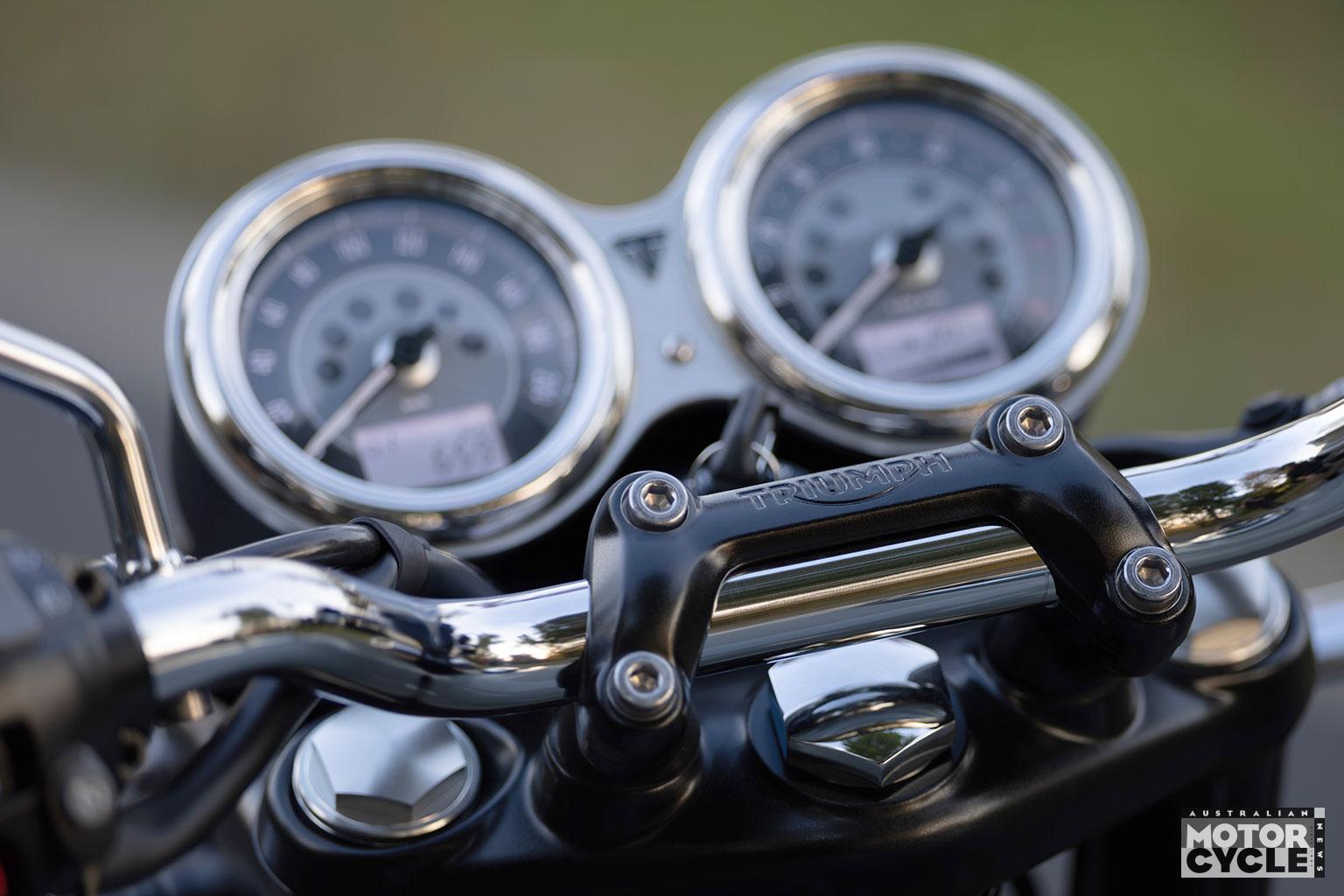
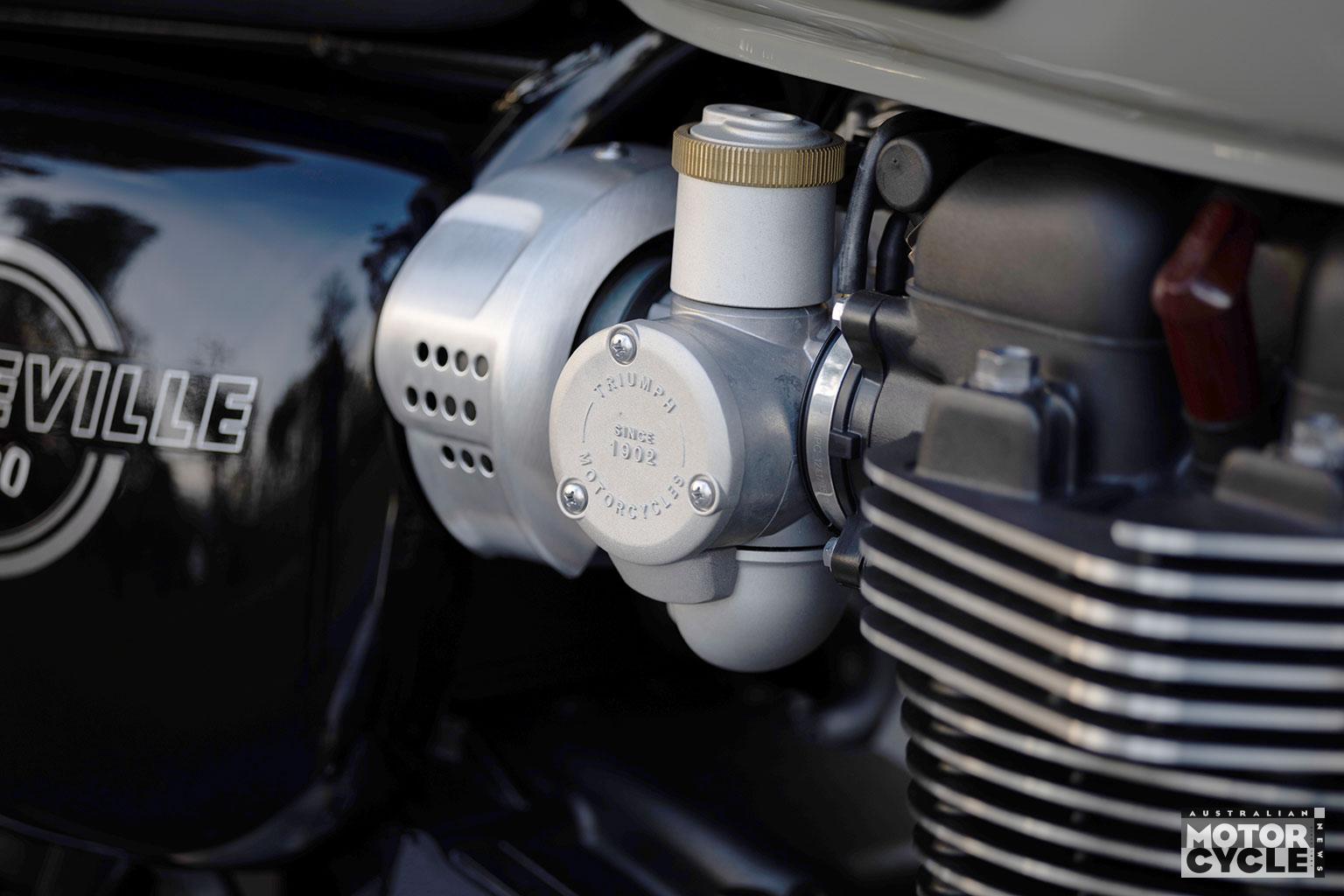
When Triumph went to fuel injection on their big twins with the 865cc engine in 2009, they thought long and hard about aesthetics. Eventually they settled on imitating the most interesting-looking carburettor of the Sixties, the Amal Monobloc, with its distinctive horizontal float chamber.
When 2016 came along and they revised the range with water-cooled engines, they made sure the cylinders and head retained the traditional fins of a classic air-cooled parallel twin.
This year the retro attention to detail involves new hand-finished paint schemes and old school coachlining.
Then there are spark plug caps that look very much like the sort of bakelite finish that was around ‘back in the day’. Overall, the finish and fine attention to detail takes you right back to the heyday of Triumph’s Bonneville.
The riding experience also takes you right back to an era of an upright riding position, sweeping lines through corners and a feeling of a solid motorcycle hewn from steel, not formed in plastic.
The electronic fuel injection, with ride by wire throttle, is well tuned with a seamless power delivery from down low. The wet multi-plate clutch has a ‘slip and assistance’ feature to ensure smooth changes in the six-speed transmission.
The two ride modes are Road and Rain but I expect only riders moving up from a smaller-sized bike to the Bonneville will bother using Rain, which limits power delivery.
Handling is predictable and even pushed at a brisk pace the non-adjustable suspension worked fine for my 75kg weight.
I’ve ridden various incarnations of the Bonneville over the years and the example I rode confirmed the fact that the Bonneville remains an elegantly styled retro that is a competent performer in all road conditions.
I did, however, find it slightly lacking as an emotional experience. I couldn’t decide exactly why. Perhaps it has been refined slightly too much.
Bobber brilliance
Jumping onto the Bobber, which has had similar upgrades, it’s hard to believe they are powered by the same 1200cc twin-cylinder engine.
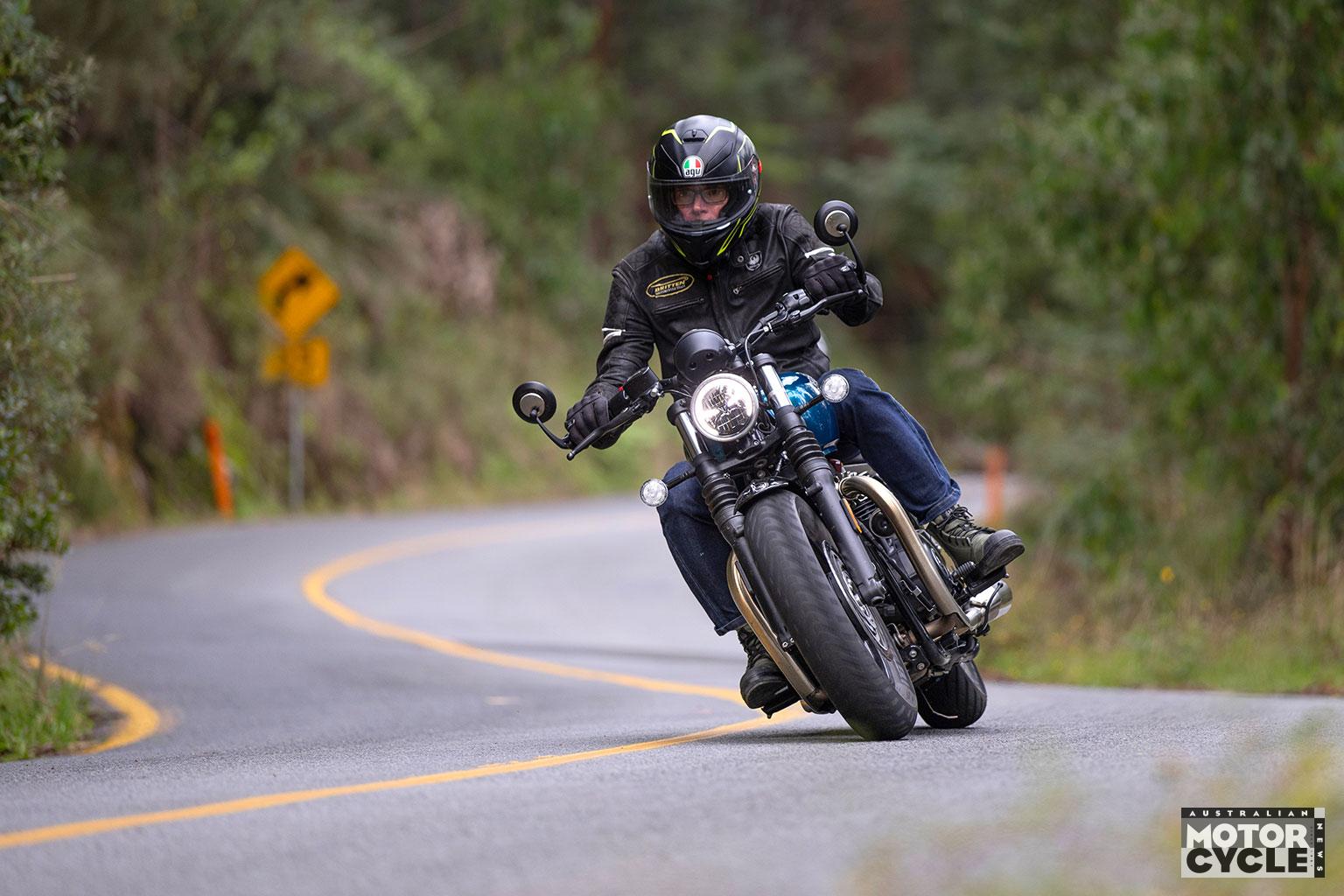
Obviously the engine map has been adjusted for torque as this thing rocks from very low in the rev range. Riding out of Warburton, I snapped the throttle open in second gear as the speed limit went from 60km/h to 100km/h and the front wheel skimmed the tarmac under acceleration. Not bad for a low-rider that weighs a claimed 250kg wet.
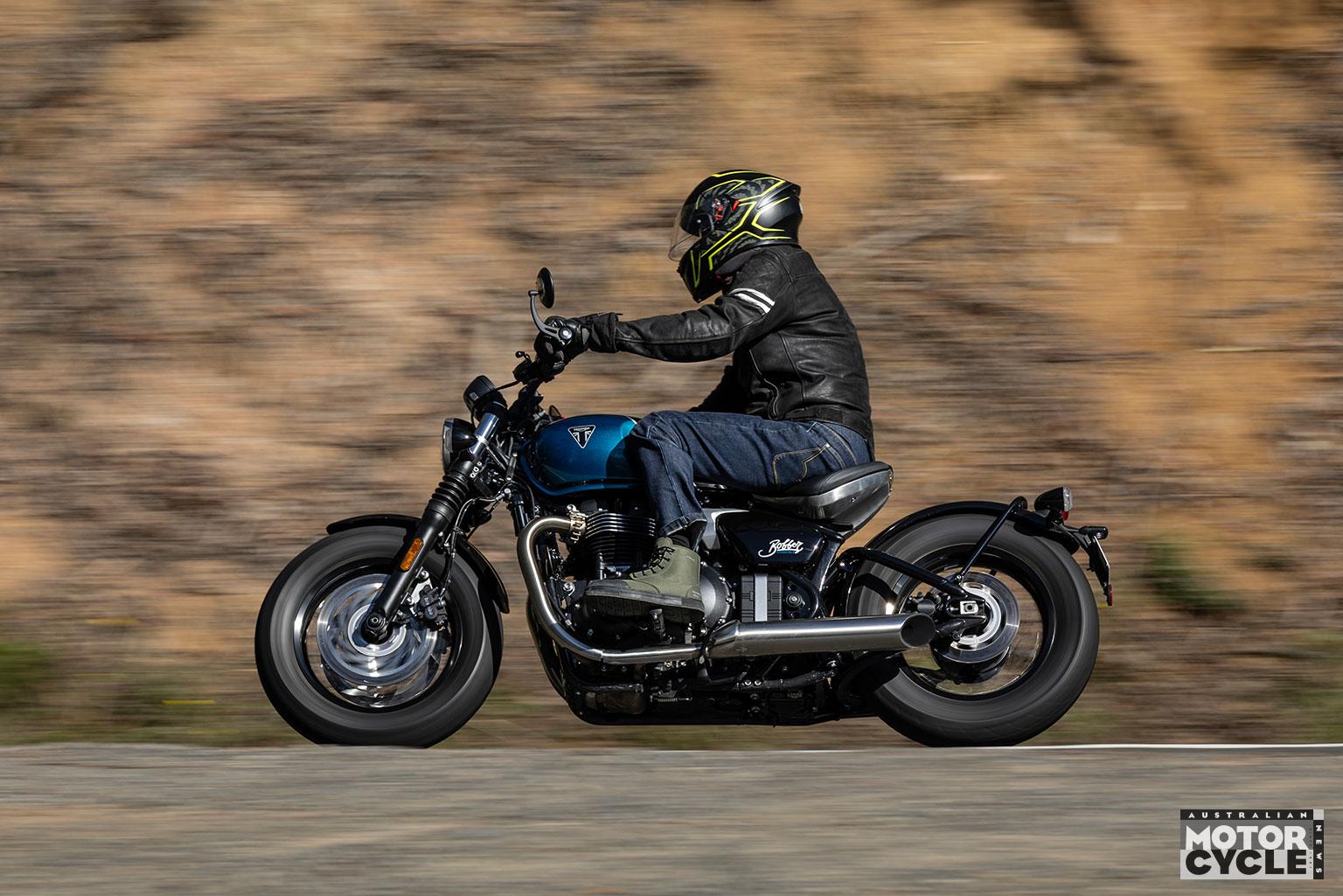
The Bobber is a model I thought Triumph would only make for a couple of years as its Fifties old school chopper-drag racer looks surely aren’t to everyone’s taste. But nearly 10 years on it remains a big seller in Triumph’s Modern Classics range.
A larger fuel tank (now 14 litres) and a flatter handlebar gives it even more of a British bulldog look. You feel like a real road warrior riding it.
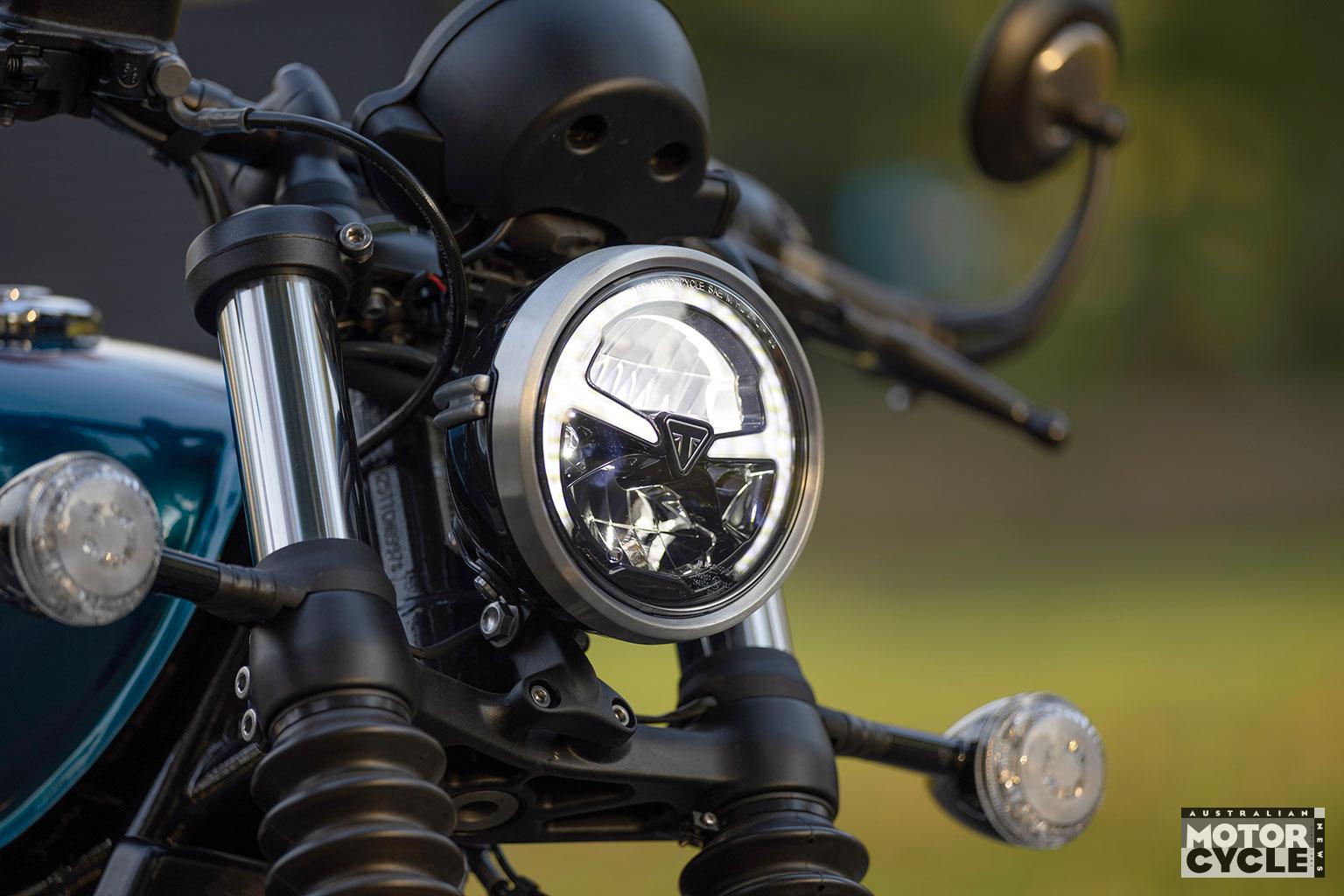
There are two new colour schemes. The Interstellar Blue and Sapphire Black version I rode reminded me of Triumph’s two evocative Sixties paint schemes called Pacific Blue and Riviera Blue. There is a classy Satin Mineral Grey and Satin Sapphire Black option, as well as the popular Jet Black option.
The solo seat, which ‘floats’ about the subframe, has been widened and reshaped for improved comfort. It has a hidden adjustment mechanism so riders can tailor seat height between 690mm and 700mm by moving it up and forward. You need spanners to do this.
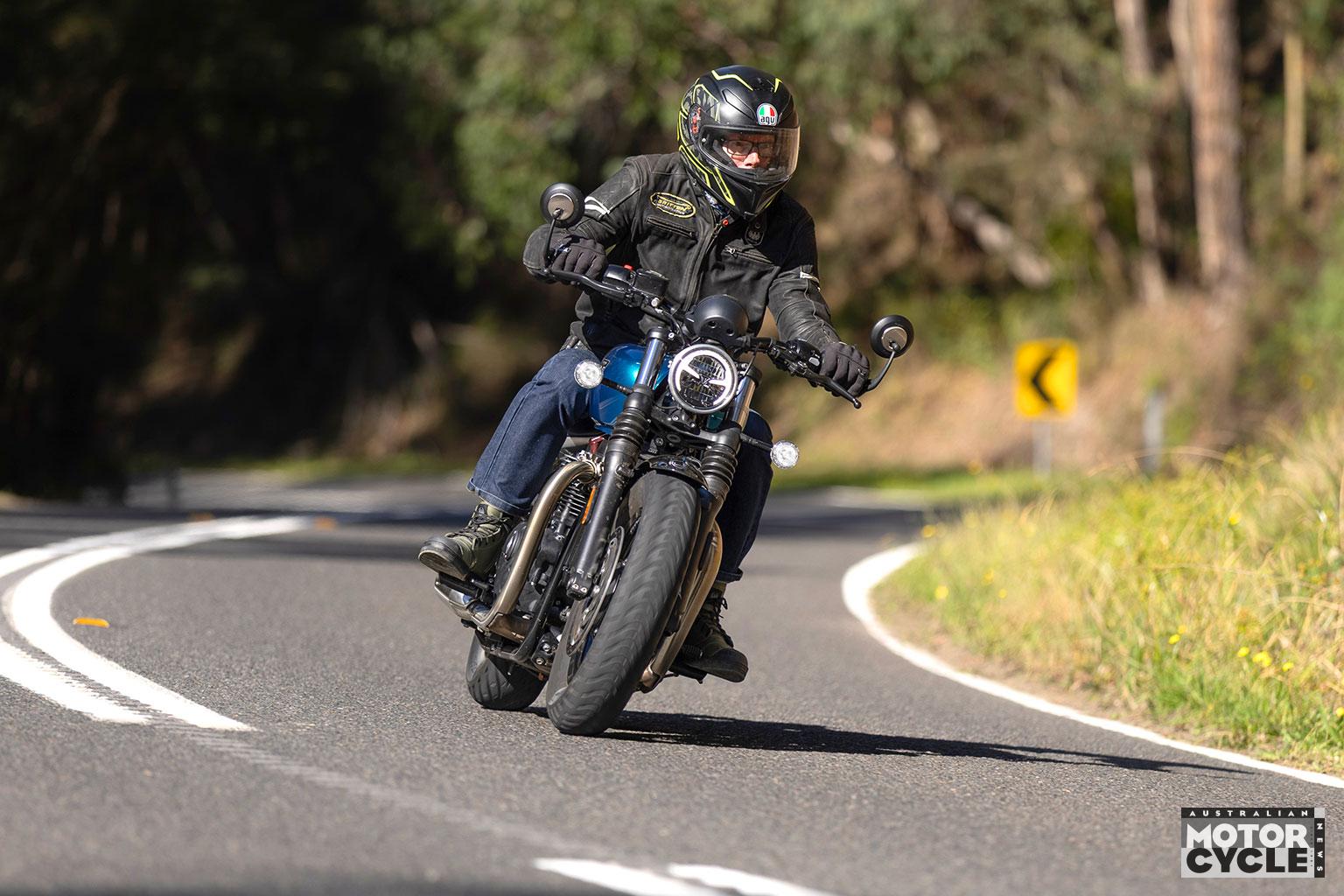
Wheels now are a 32-spoke design on lightweight aluminium rims that retain the 16in diameter of the original. I’ve never been a fan of 16in wheels and fat tyres but the Bobber changed my attitude. It handled as well as the Bonneville on the winding mountain roads we rode.
I was mightily impressed with the Bobber’s look, performance and overall riding experience. This is a bike that an owner would look forward to riding as it takes you into another world and even makes you feel a bit like an extra in a Mad Max movie. It would also double as garage eye candy on a rainy day.
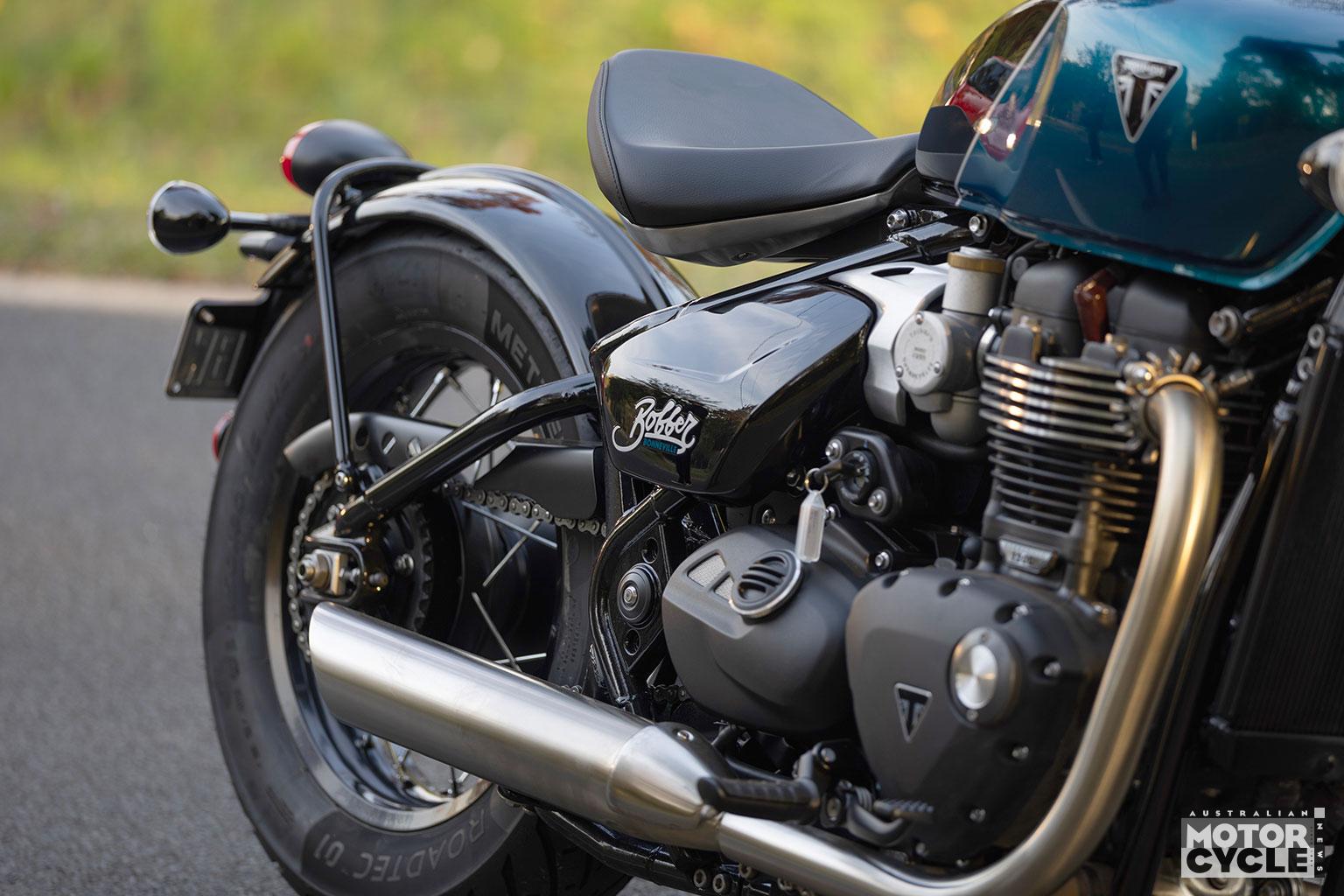
Triumph’s accessory range for the Bobber has more than 120 items, from leather seat options to high-rise handlebars, if you want to modify the look more. Very tempting.
Sensible Speedmaster
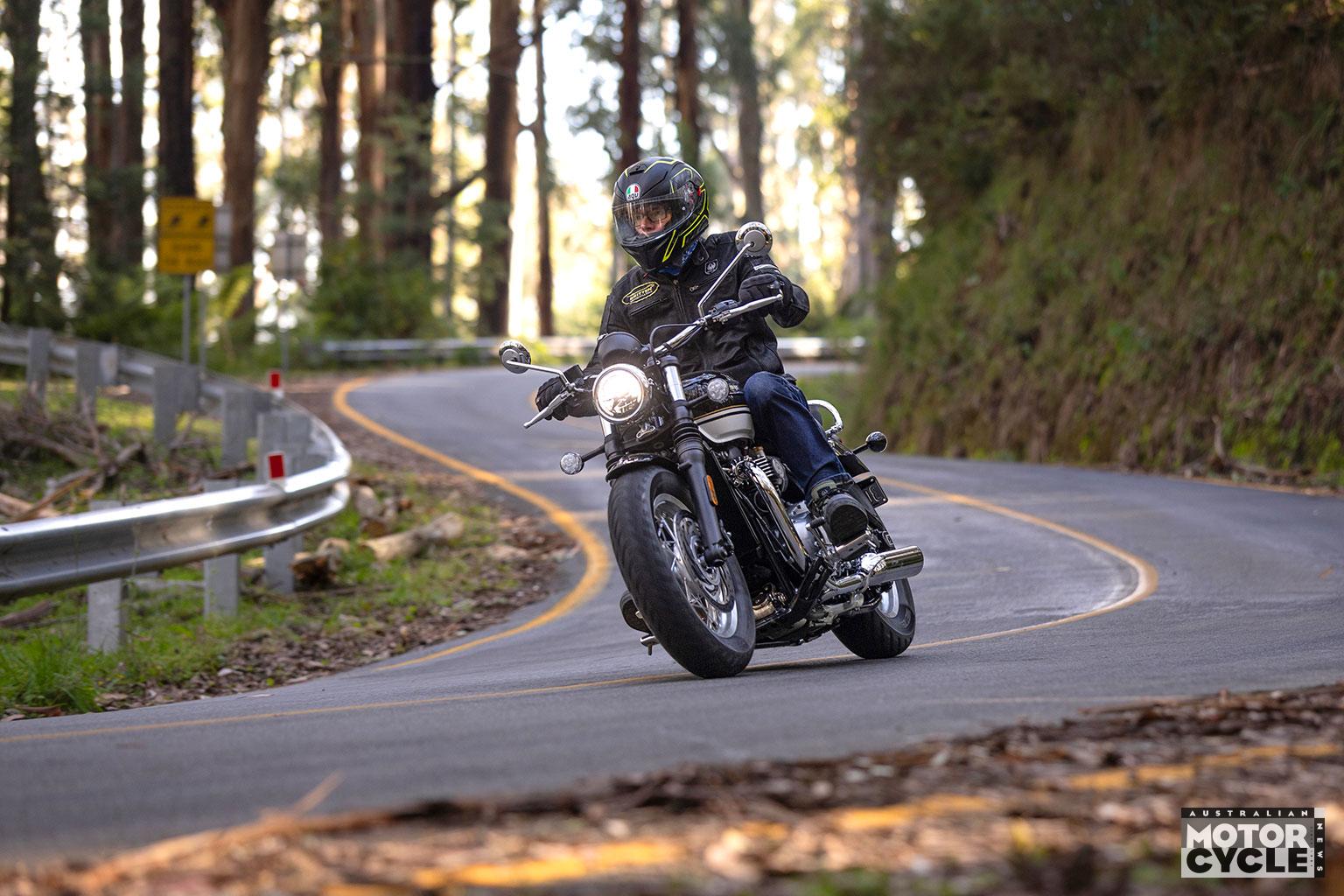
Finally I slung a leg over the Bonneville Speedmaster. Sharing a lot of the Bobber’s features, including the steel ‘swing cage’ rear suspension that contains a linkage-driven monoshock, it’s a sort of Captain Sensible version. The focus here is on two-up comfort and a low seat height for slow-speed manoeuvering.
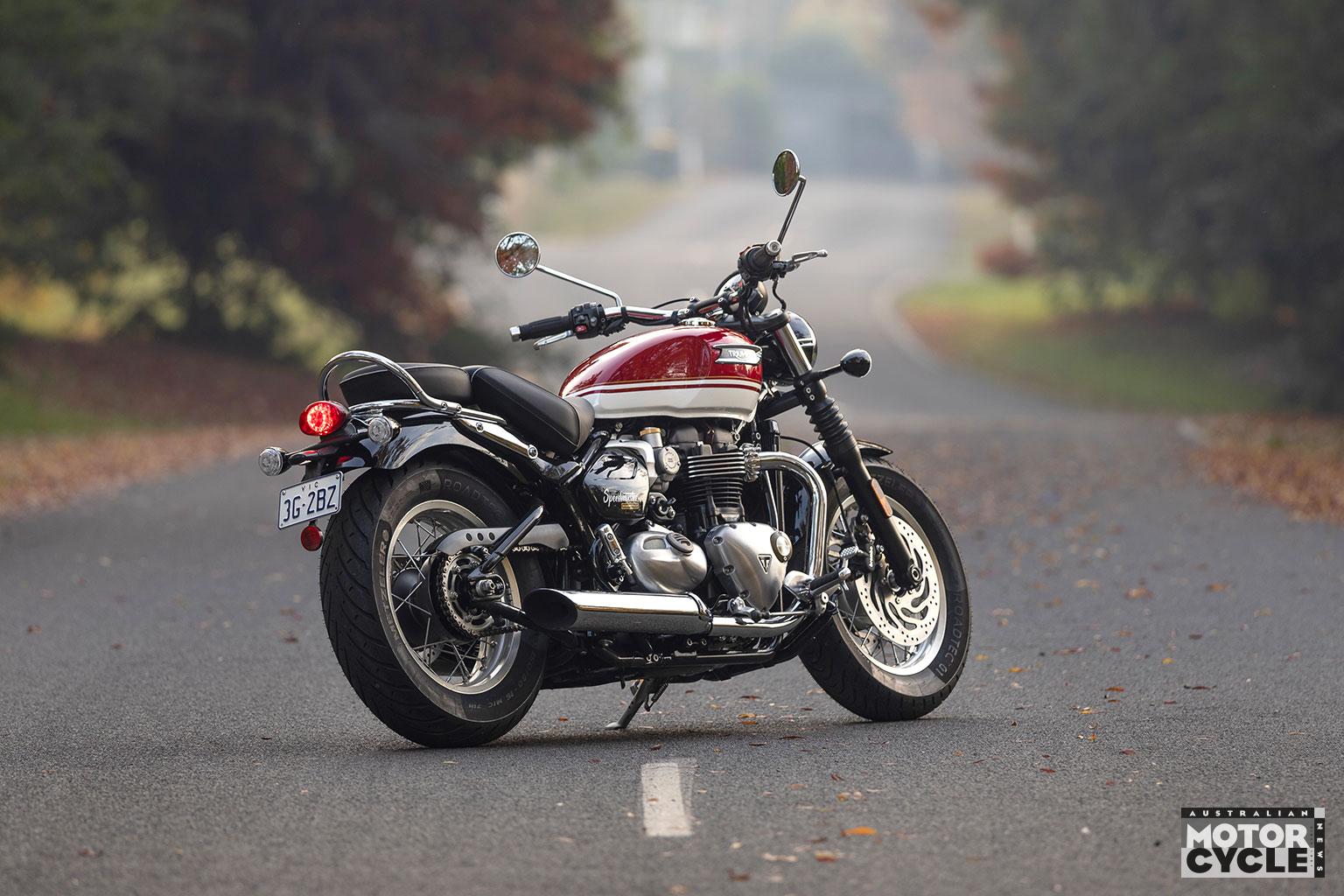
Both the Speedmaster and Bobber have lowered suspension, which obviously can compromise cornering clearance, and if you hit a big bump you feel it. But they track perfectly through corners.
For 2026 both Speedmaster rider and pillion seats have wider bases and deeper foam for improved comfort. A pillion backrest can be added or, for solo rides, the pillion pad can be removed and a rear luggage rack attached. A flatter handlebar is intended to give what Triumph calls a ‘more natural riding position’, and a larger, 14-litre petrol tank will encourage longer riding stints.
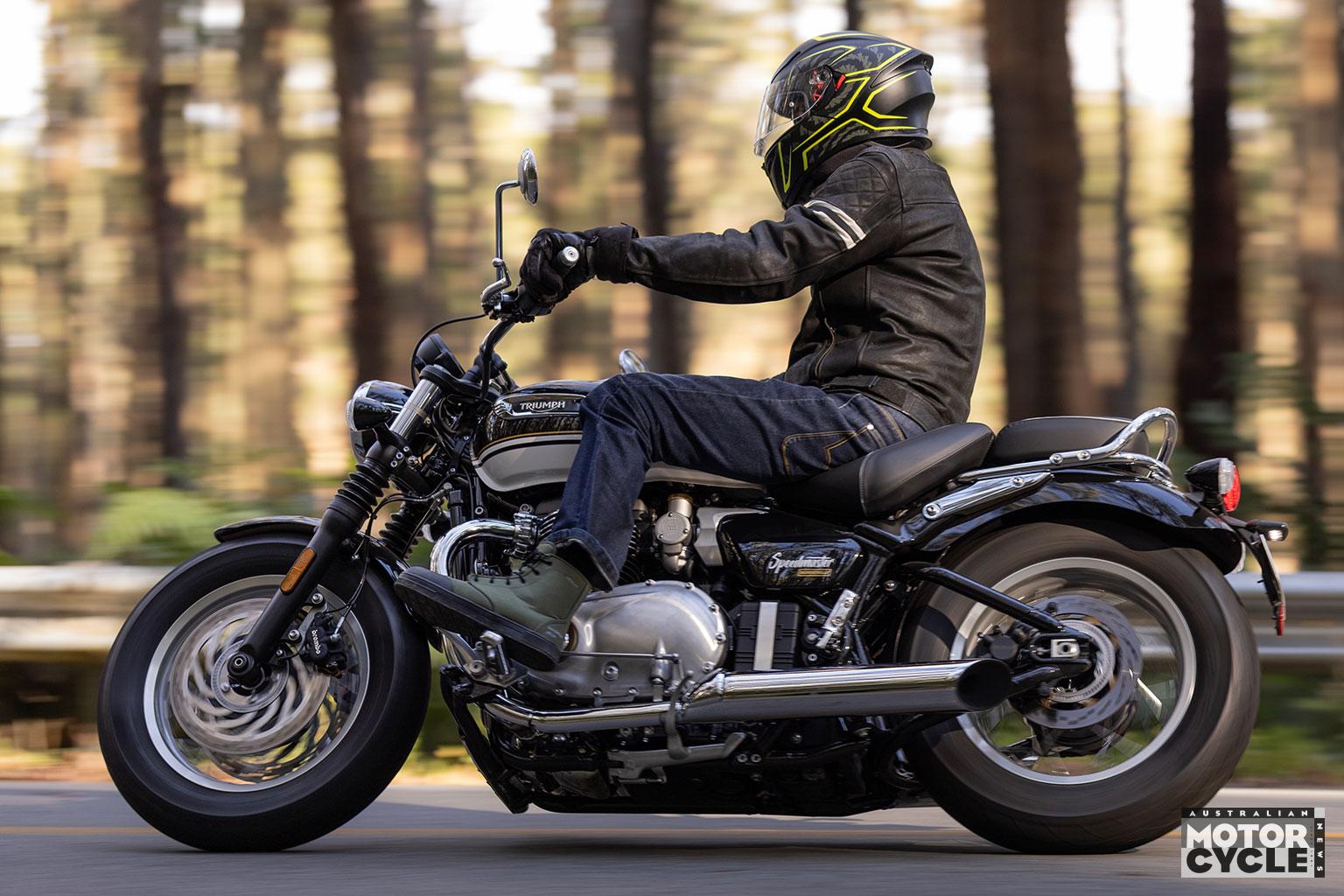
I found the low-stress riding experience not that far removed from a large scooter with my feet placed well forward and sitting low in the saddle. Despite a claimed wet weight of 265kg, the Speedmaster felt easy to ride. However, I found it pretty easy to ground down my heel on a corner in brisk riding, so I wondered what it would be like fully laden with a pillion and luggage. Obviously it’s more suited to interstate highway trips than weekend mountain blasts.
I reckon the Speedmaster could be a great all-rounder option for laidback, two-up riding; a day trip to the beach or a weekend away.
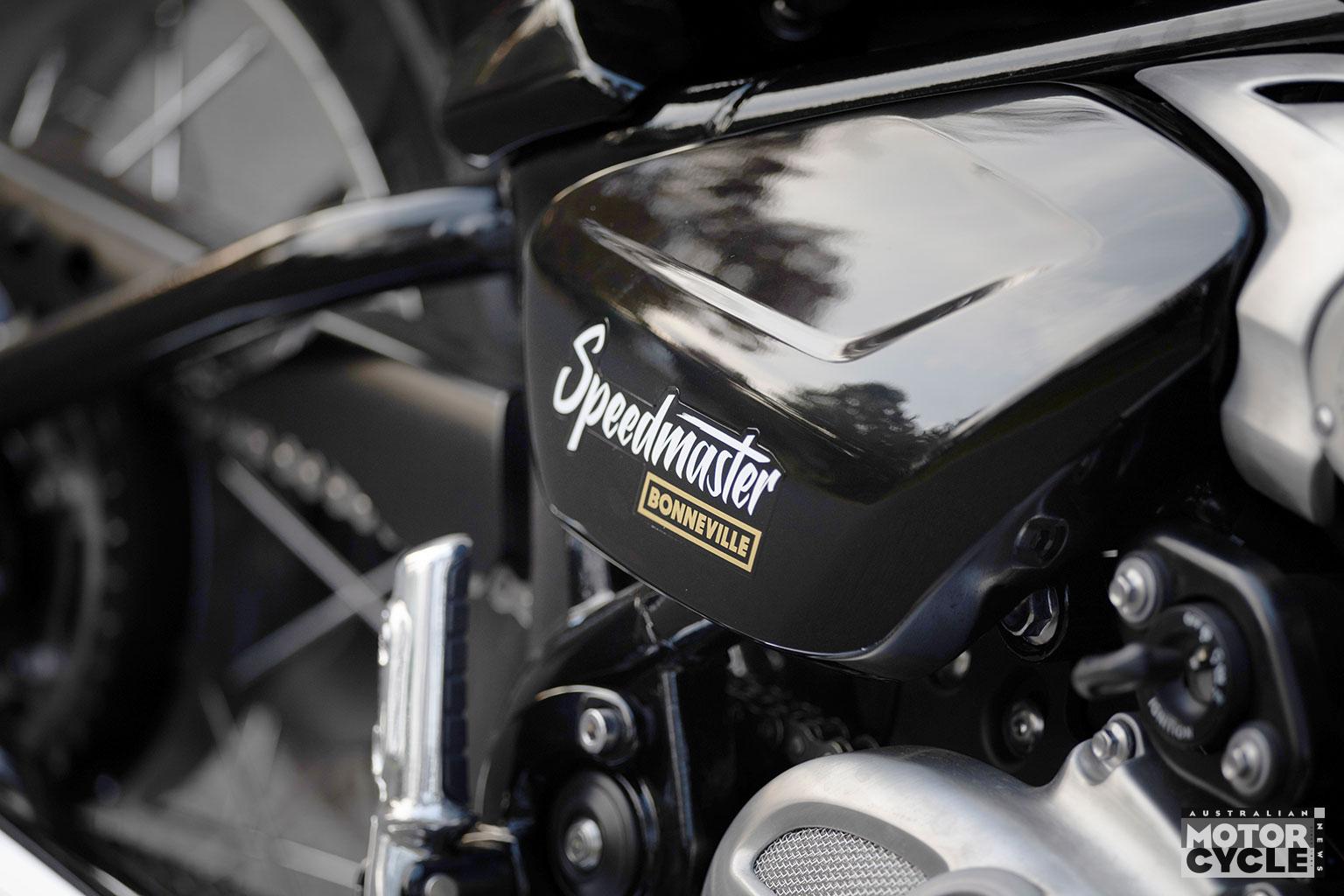
Again, there are around 100 accessory options for the Speedmaster. These include leather or wax cotton panniers, touring screens and footboards, several high handlebars, teardrop mirrors, custom badges, and even a side-mounted licence plate hanger.
To sum up the range, Triumph has put maximum effort into retaining the core values of the Bonneville T120, Bobber and Speedmaster. It’s easy to see why they are such an important part of the overall Triumph sales catalogue.
✅ PROS – If I could have taken one of these home, it would have been the Bobber. What a fun bike to ride and even look at!
❌ CONS – Cornering clearance on Speedmaster could be an issue when fully laden. Rivals are hovering with cheap copies.
SPECIFICATIONS
ENGINE
Type Liquid-cooled, SOHC, eight-valve parallel twin-cylinder with 270° firing order
Bore & stroke 97.6mm x 80mm
Capacity 1200cc
Compression ratio 10:1
Fuelling Electronic fuel injection
Transmission Six speed
Clutch Wet, multi-plate with slip and assistance
Final drive X-ring chain
PERFORMANCE
Power 57.5kW (77hp) @ 6100rpm
Torque 106Nm @ 4000rpm
Top speed Not given
Fuel consumption 4.4L/100km (claimed)
ELECTRONICS
Type IMU, ride by wire
Rider aids Lean-sensitive ABS and traction control, cruise control
Modes Road and Rain
CHASSIS
Frame type Tubular steel cradle with twin-sided tubular steel swingarm
Rake 25.5° (Bonneville T120), 25.4° (Bobber/Speedmaster)
Trail 105mm (Bonneville T120), 92mm (Bobber/Speedmaster)
SUSPENSION
Type Showa/KYB
Front KYB 41mm cartridge fork, non-adjustable (Bonneville T120), Showa 47mm cartridge fork, non-adjustable (Bobber/Speedmaster)
Rear KTB twin shocks with preload adjustment (Bonneville T120), KYB monoshock with linkage and preload adjustment (Bobber/Speedmaster)
WHEELS & BRAKES
Wheels Spoked with aluminium rims
Front: 18in x 2.75in (Bonneville T120), 16in x 2.5in (Bobber/Speedmaster)
Rear: 17in x 4.25in (Bonneville T120), 16in x 3.5in (Bobber/Speedmaster)
Tyres Metzeler
Front: 100/90-18 (Bonneville T120), 130/90-16 (Bobber/Speedmaster)
Rear: 150/70 R17 (Bonneville T120), 150/80-16 (Bobber/Speedmaster)
Brakes Brembo/Nissin
Front: Twin 310mm fixed discs, Brembo two-piston floating calipers
Rear: Single 255mm disc, Nissin single-piston floating caliper
DIMENSIONS
Weight 233kg wet (Bonneville T120), 250kg wet (Bobber), 265kg wet (Speedmaster)
Seat height 790mm (Bonneville T120), 690-700mm (Bobber), 705mm (Speedmaster)
Wheelbase 1450mm (Bonneville T120), 1500mm (Bobber/Speedmaster)
Fuel capacity 14.5L (Bonneville T120), 14L (Bobber/Speedmaster)
SERVICING & WARRANTY
Service intervals 16,000km/12 months
Warranty Two years, unlimited km
BUSINESS END
Price from $24,450 rideaway (Bonneville T120), from $24,650 rideaway (Bobber/Speedmaster)
Color options Cranberry Red, Stone Grey or Aegean Blue (Bonneville T120), Interstellar Blue, Satin Mineral Grey or Jet Black (Bobber), Carnival Red or Sapphire Black over Crystal White (Speedmaster)
Contact www.triumphmotorcycles.com.au