A decade on and there still isn’t anything like it. Kawasaki’s ultimate cult hero just keeps hitting different
As I’m rolling out of Kawasaki HQ on the H2, I contemplate stopping to pinch myself. Was I really on Kawasaki’s ultimate cult hero bike? Was there a bird stuck under the fuel tank crying for help when I blipped the throttle? What will happen when I give it a fistful? So many questions… but so much traffic to negotiate first.
I remember vividly back in 2014 when Kawasaki were releasing teaser snippets of a new bike they had created. A bike that was otherworldly, broke the rules and tantalised the imagination of riders across the planet. The H2 would set a new benchmark in the industry.
It’s been over 10 years since the Ninja H2 hit the market and it still sits on a pedestal, unmatched.
The Ninja H2 isn’t just a collection of upgraded parts thrown at a standard motorcycle to meet racing homologation, or a special edition of an existing model; this polarising monster was created as a team effort by Kawasaki Heavy Industries, bringing together skills and technology from heavy equipment, aerospace, gas turbine and shipping divisions alongside the motorcycle division to create this show-stopping rocket on wheels. It became the first mass-produced supercharged motorcycle and the engine in the H2R (see sidebar), while not street legal, made it the fastest and most powerful mass-produced motorcycle available on the market.
RUSH OF POWER
The latest road-going Ninja H2 model produces a stout 170kW (228hp) at 11,500rpm, which increases to 178.5kW or 240hp in the old money when Ram Air is in effect. This is still more powerful than a 2026 model Ducati V4R.
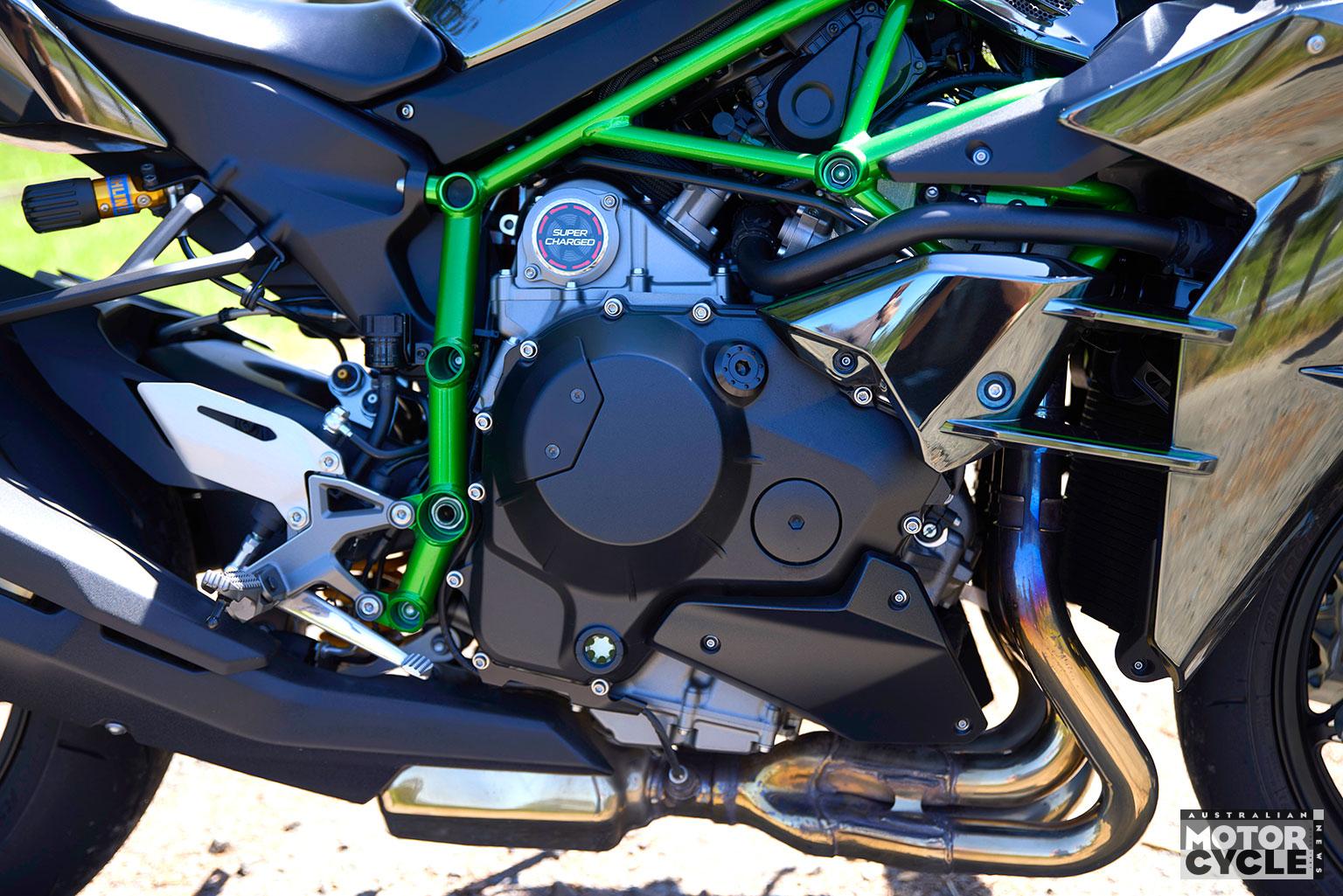
The 998cc inline four-cylinder isn’t just a ZX-10R engine, it is a complete redesign. Think cast pistons, but with flat tops for lower compression, stainless steel intake valves, bonded alloy and steel exhaust valves. Extra oil jets for the supercharger drive, pistons and transmission.
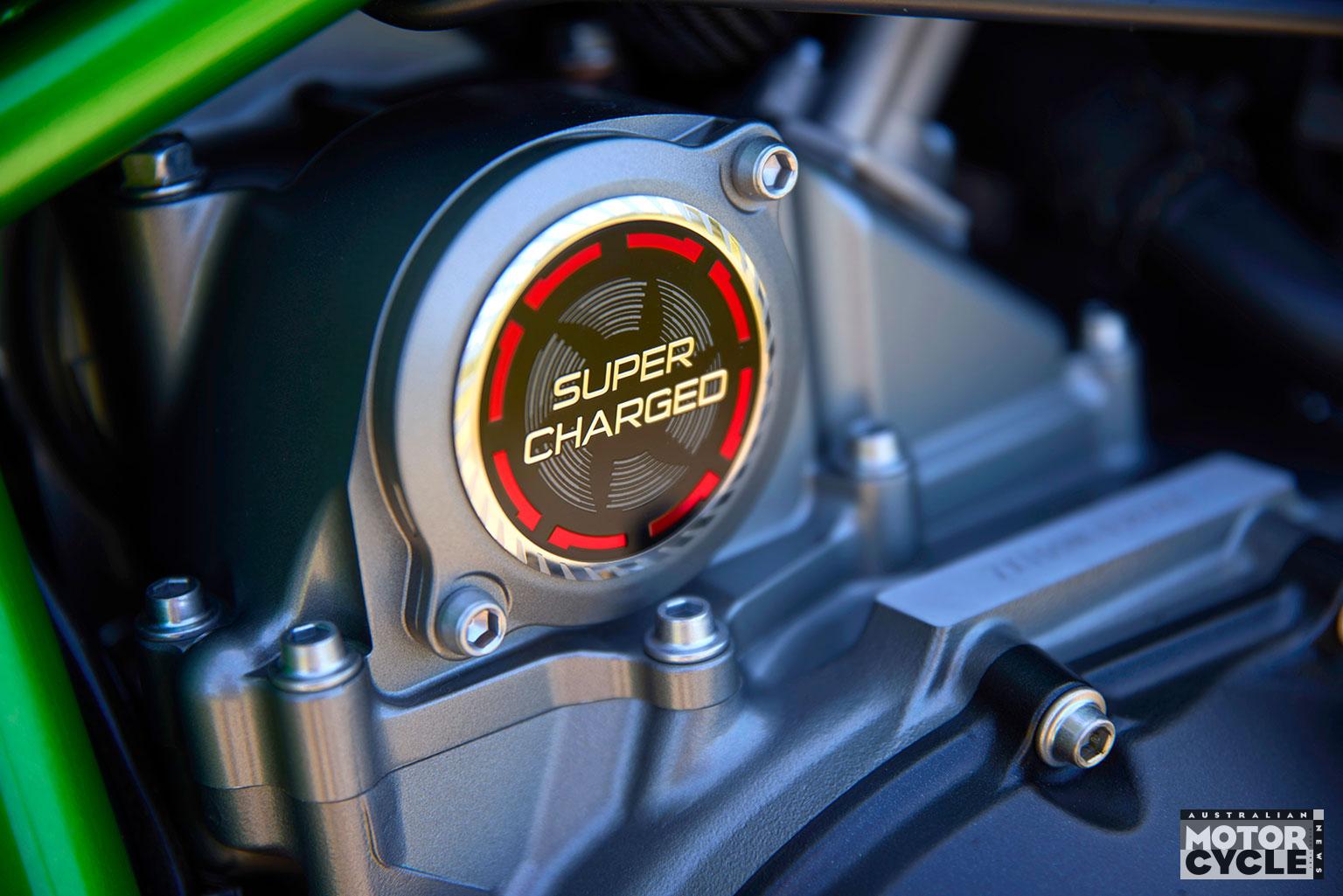
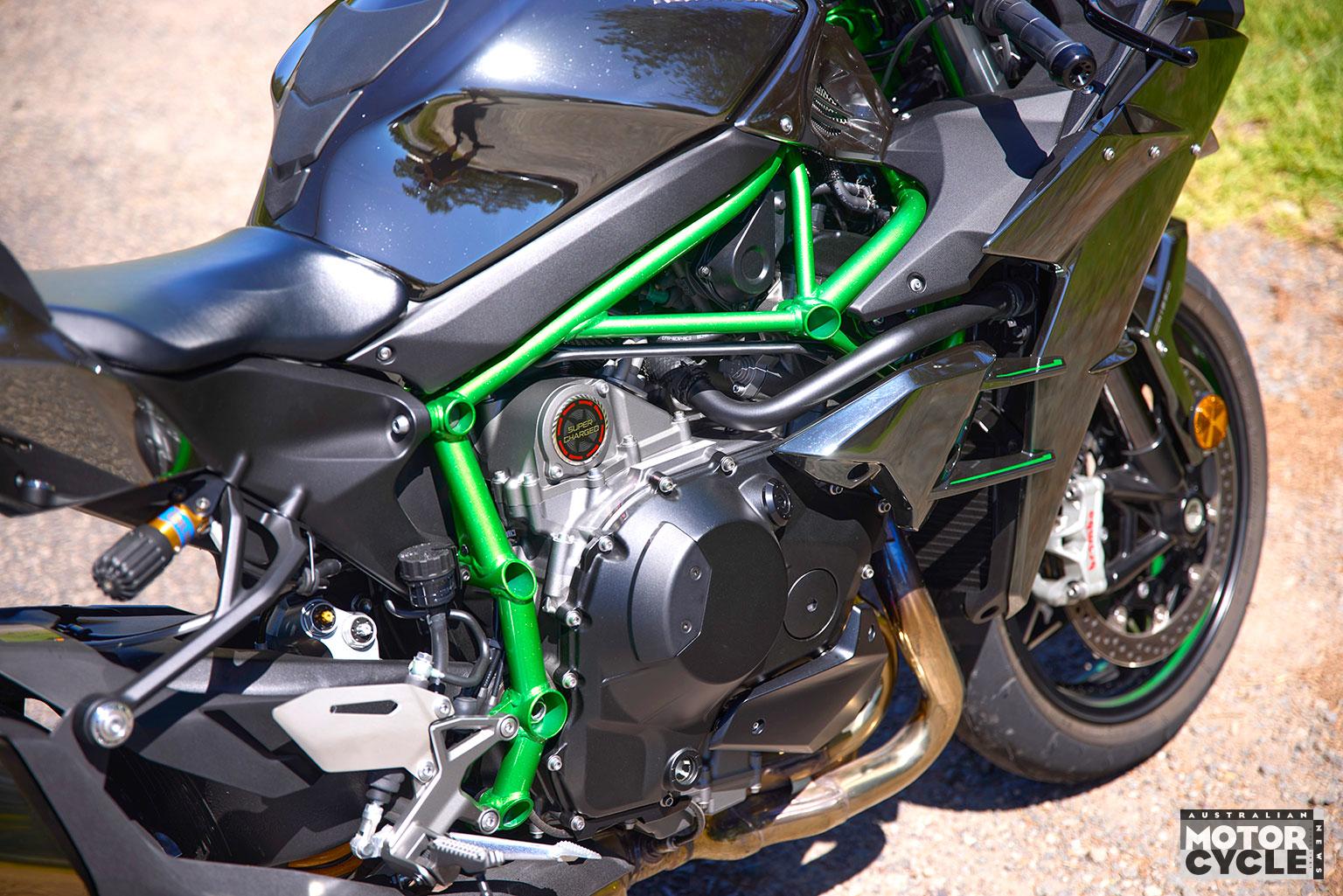
There are extra fuel injectors above the intake to help cool the air as it enters the engine. Then there’s a beefed-up gearbox, clutch and a centrifugal supercharger slapped on top of the gearbox behind the cylinders. While the technological wizardry is much more complicated, it is essentially a variable-speed, chain-driven turbo that spins up nine times faster than the crank, giving the engine boost at any revs while still being perfectly predictable and under control.
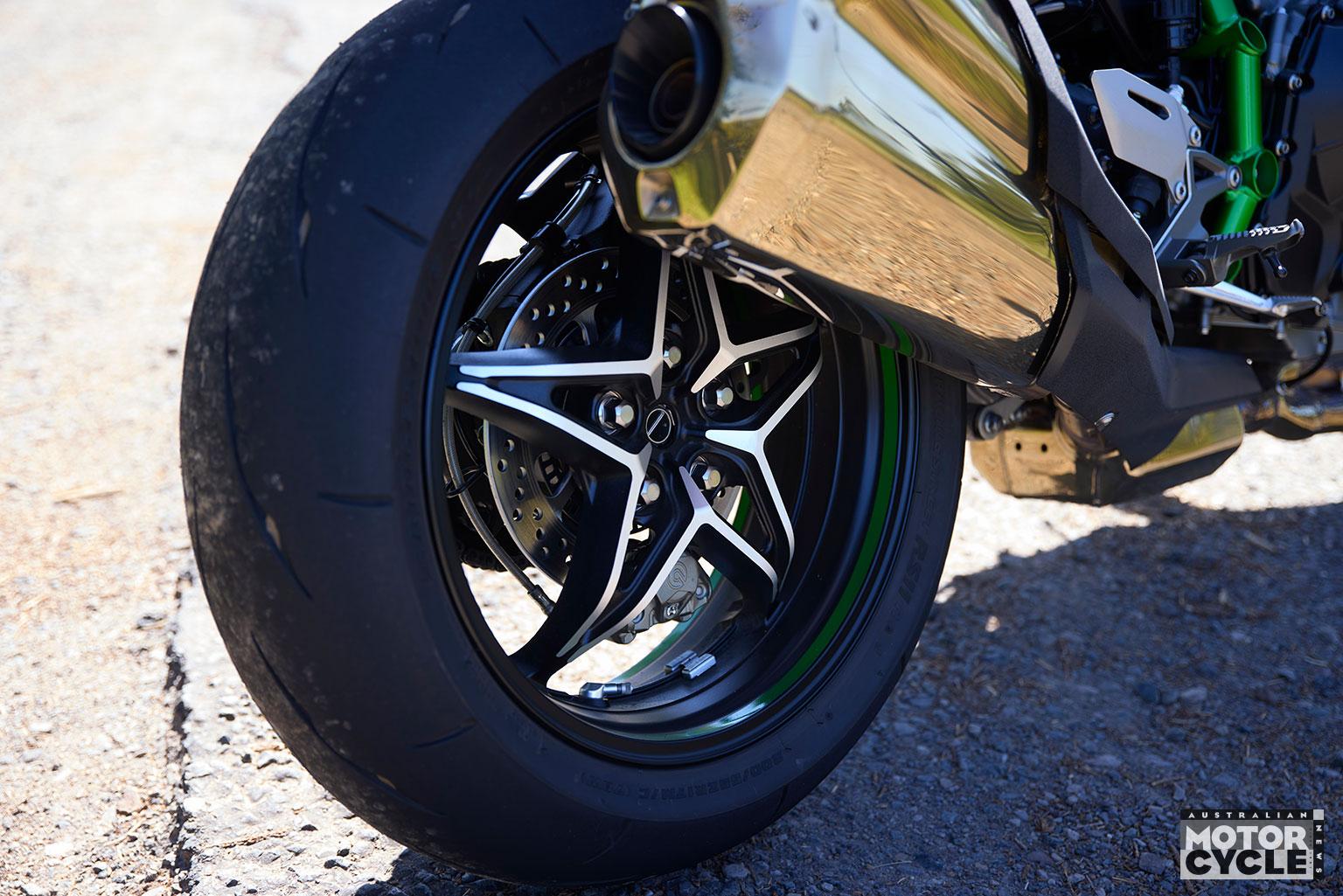
Experiencing the rush of power is something that sticks with you. Under power, the engine makes no strange noises or peaks of torque that fade out, it simply builds speed relentlessly while the four cylinders scream all the way to the relatively low (in modern superbike terms) 14,000rpm redline. When you shut the throttle, the blow-off valve immediately spews the unwanted build-up of air pressure from the supercharger back into the airbox like Hello Kitty sneezing. As the revs continue to drop, the BOV flutters and keeps releasing the unwanted air, producing that sound like a bird trapped under the fuel tank.
If you hold the throttle pinned and click a couple of gears, you won’t even hear boo from the supercharger. It is quite brilliant. The quickshifter just bangs gears with a solid thump and it keeps on propelling you towards the horizon in a blur.
For obvious reasons, that gearbox and clutch are beefier versions than found in your regular 1000cc sportbikes – although the left hand doesn’t feel it, thanks to the slip-and-assist clutch that bites harder as torque increases and the hydraulic master cylinder works its magic.
The H2 uses a dog ring gearbox where the gears stay in place and the dog rings move into position to select the next gear. This gives the transmission a lighter but positive feeling at the foot and engages gears quicker during acceleration. Die-hard Kawasaki riders who love the positive neutral finder found on nearly all Kawasaki bikes will note its omission from the H2. It’s a small price to pay.
BEYOND BELIEF
You would be forgiven for thinking that the H2 could be a bit of a one-trick pony made to just go fast in a straight line. While the engine is arguably the stand-out feature, there is more to the story.
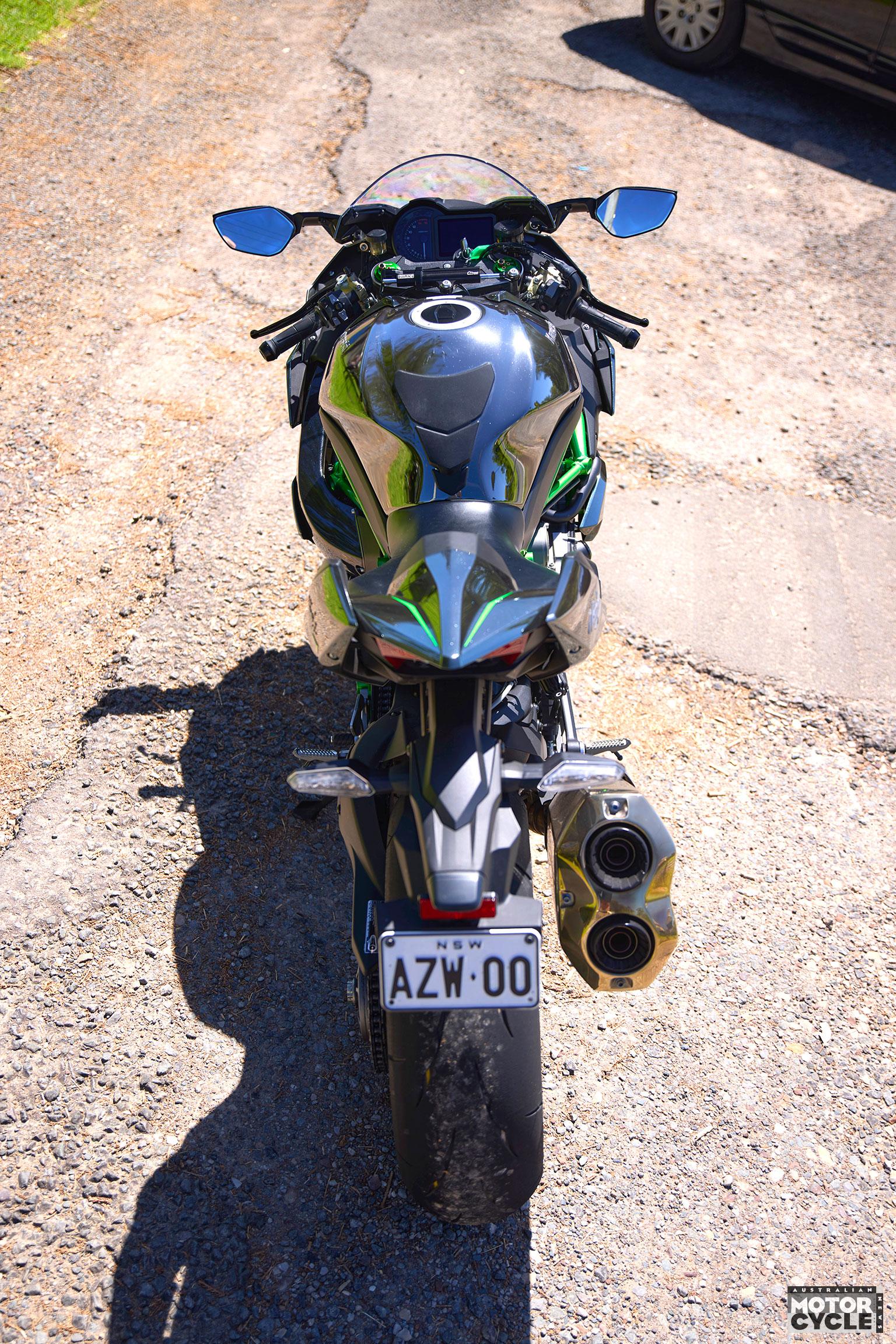
The trellis frame is high-tensile steel built specifically for the H2. Pipe thickness varies where required to offer the right amount of rider feedback while allowing flex where it’s needed. The single-sided swingarm is mounted on the rear engine mount shaft, which frees up space and negates the need for a cross member – which also saves weight.
While aesthetically pleasing, the single-sided swingarm allows the exhaust system to be mounted closer to the centre of the bike to increase ground clearance at full lean.
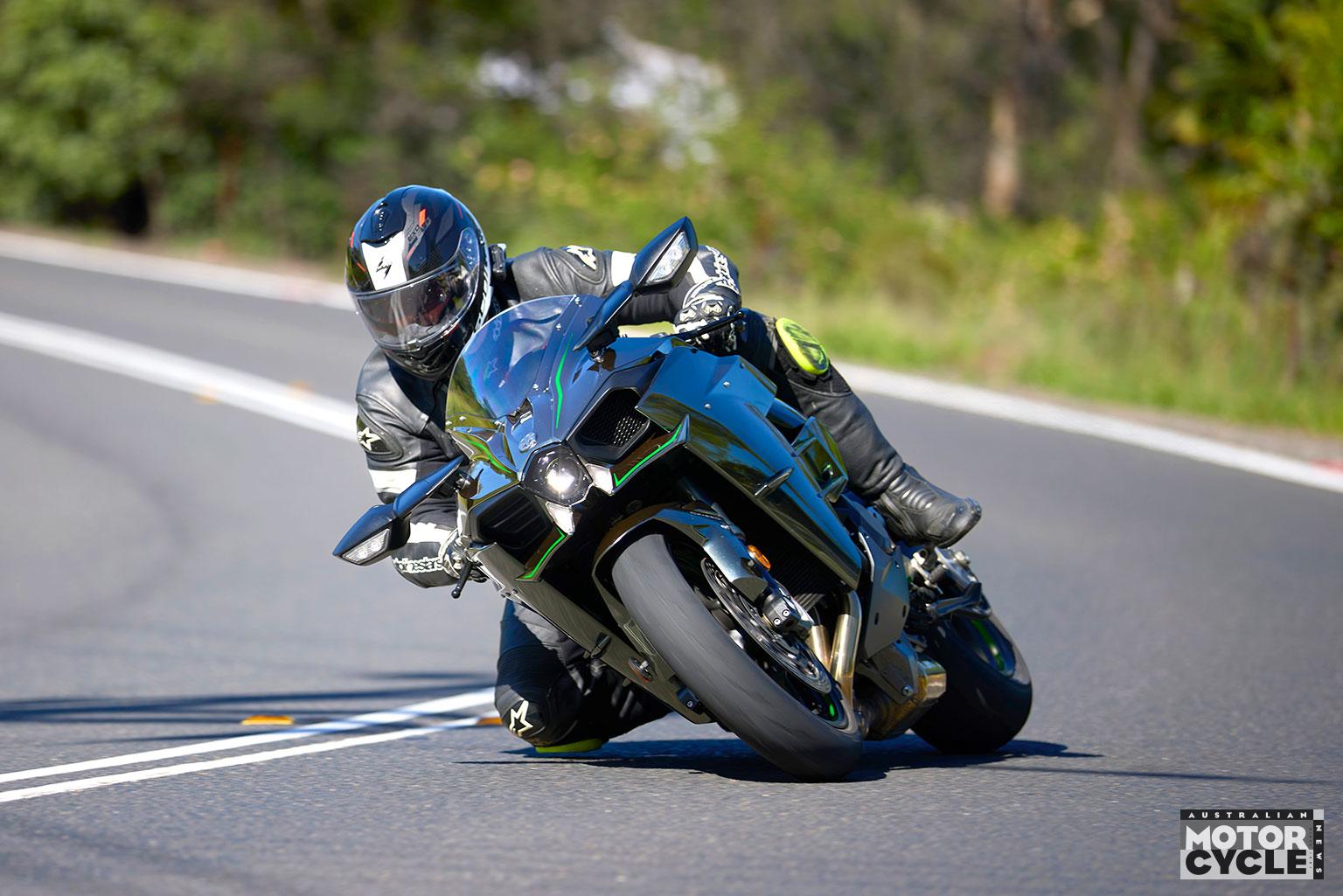
Kawasaki designed the H2 around Superbike geometry for superior track handling rather than making it longer and slower to turn. As there’s no provision for luggage or a pillion, further weight could be kept off the rear subframe and the rear tail could be made into an aero item and adjustable bump stop for your butt.
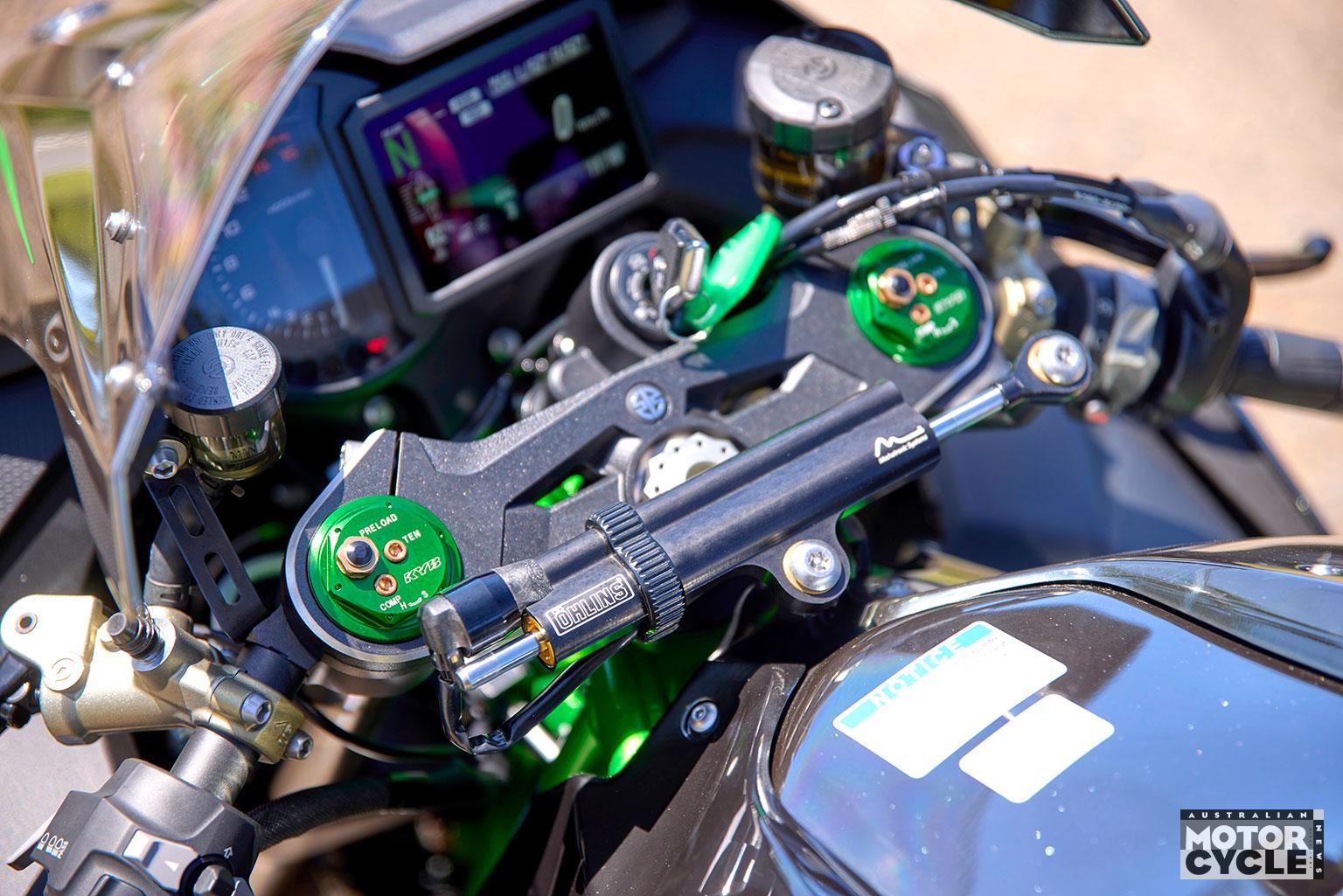
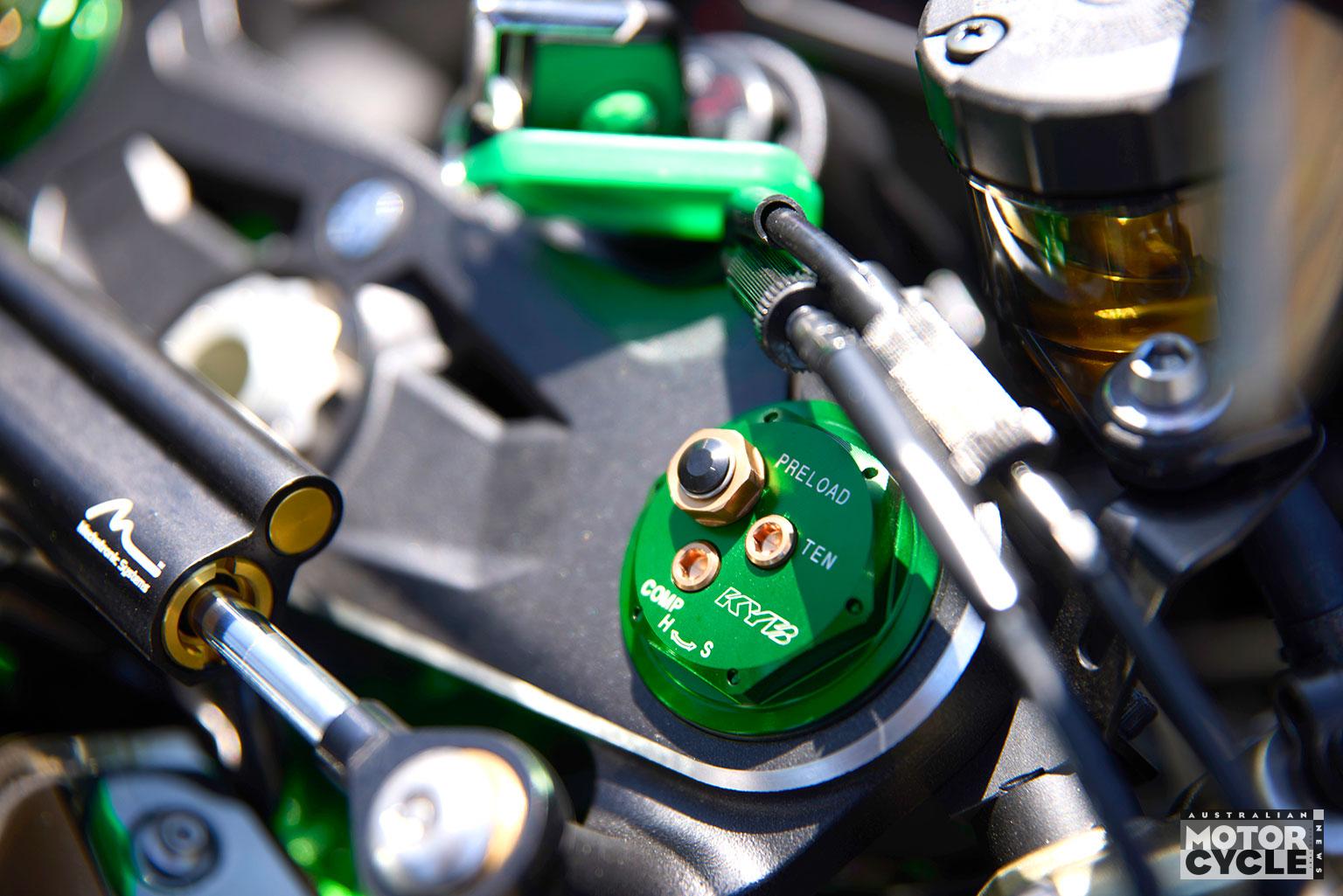
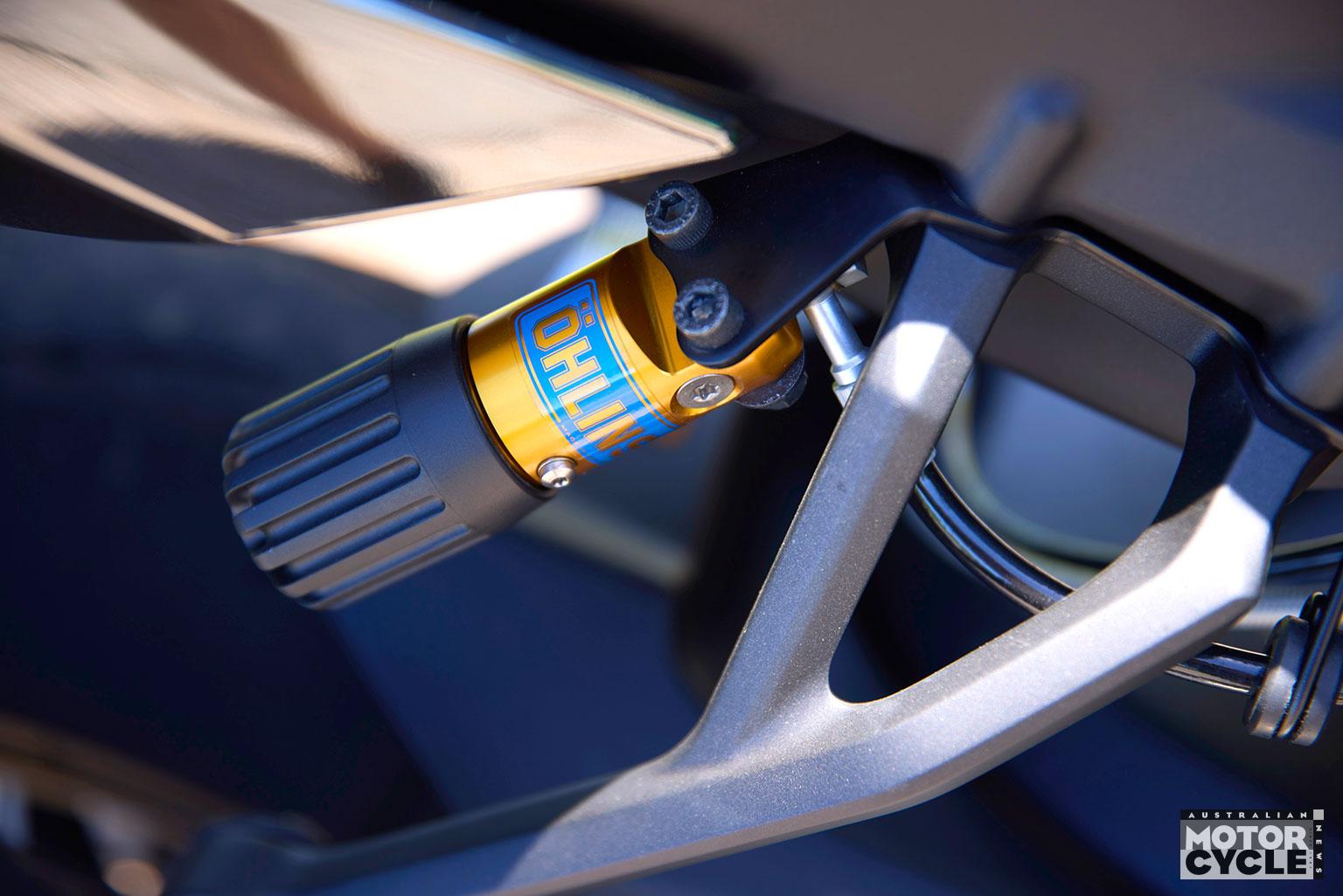
Front suspension is a KYB separate function fork that is fully adjustable. Down at the rear is an Öhlins TTX fully adjustable monoshock with hydraulic preload adjustment. There is an electric Öhlins steering damper mounted at the triple clamps. While these days I would expect electronic semi-active suspension, this gear is top quality and still relevant.
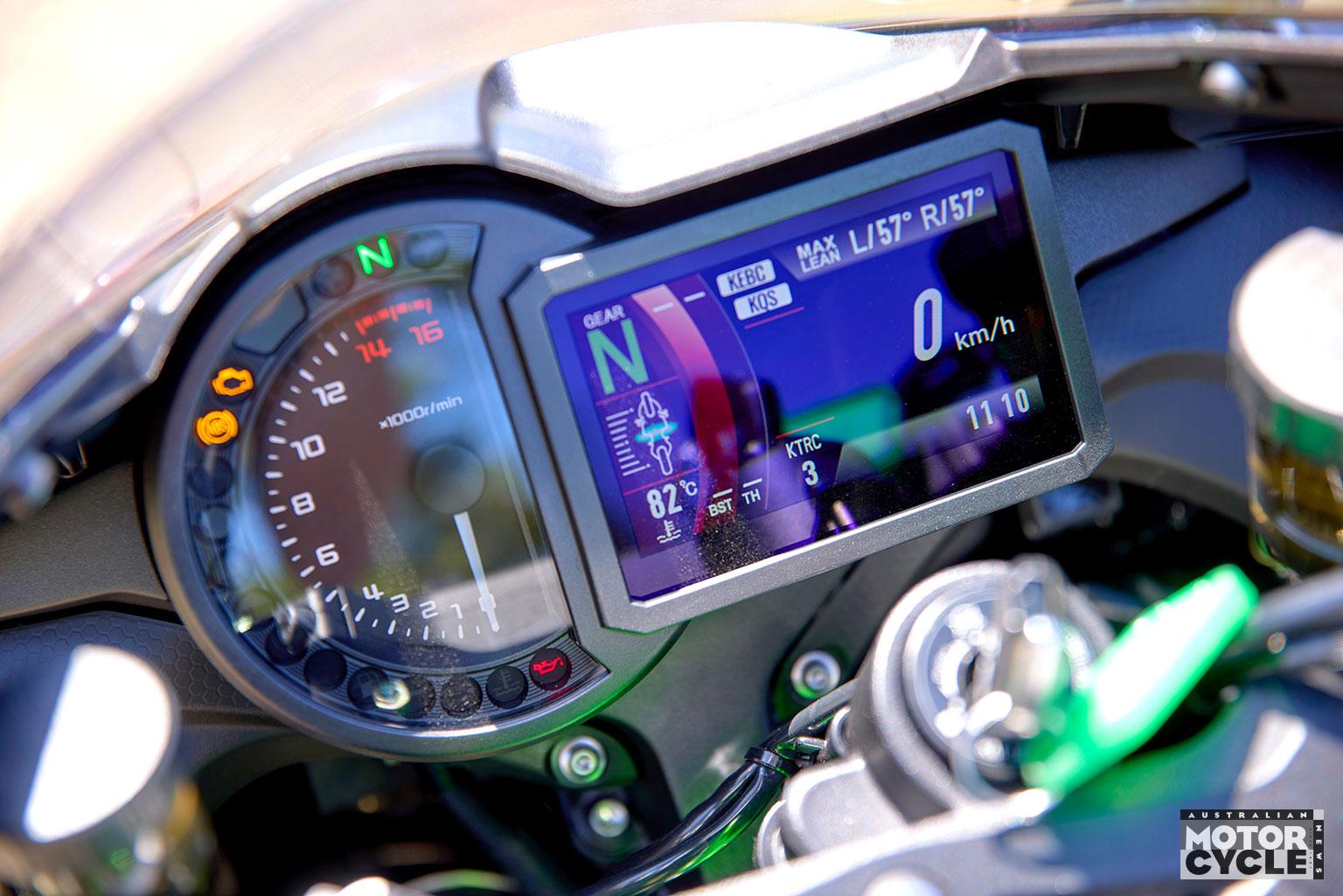
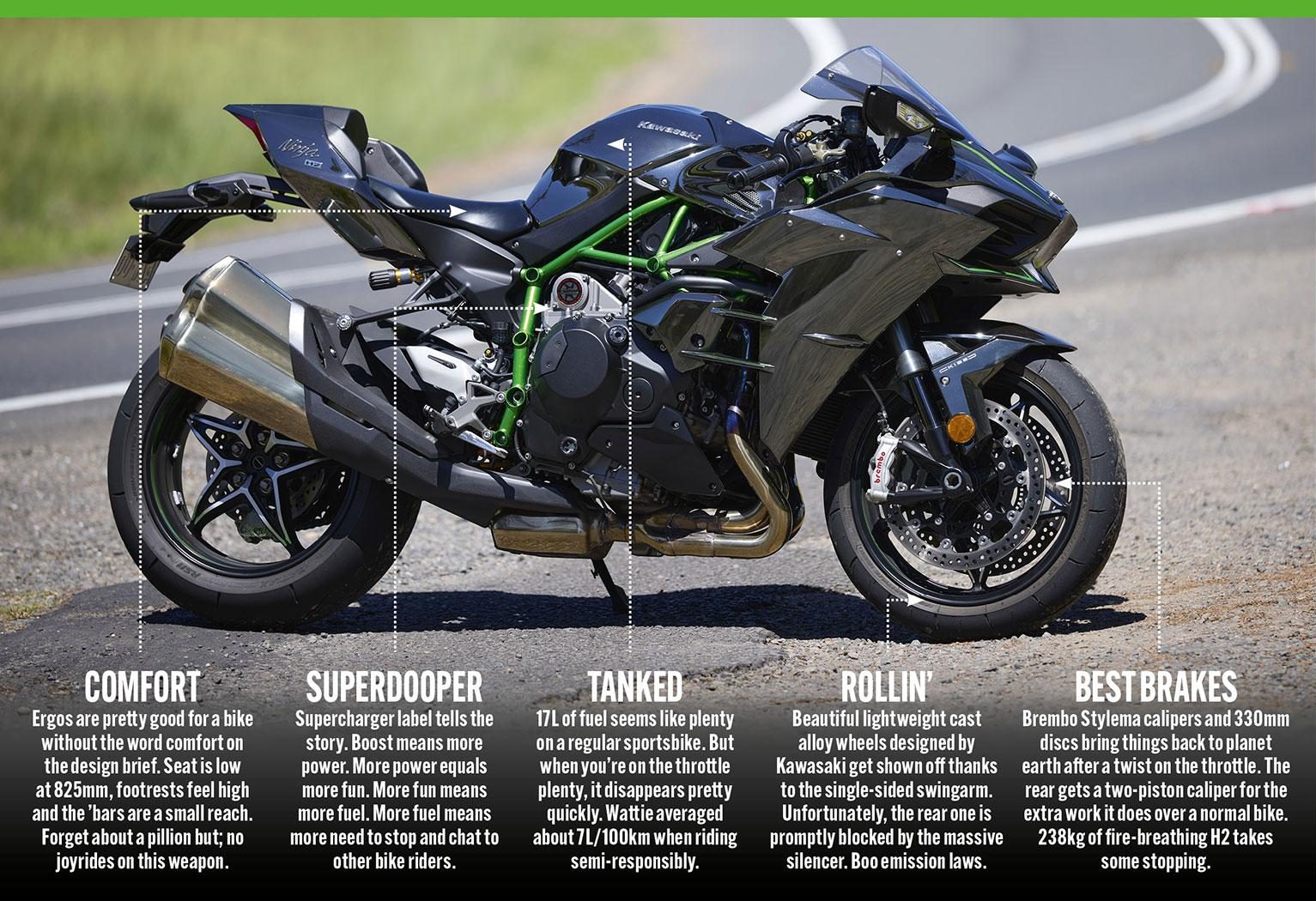
The seating position is a little different than a ZX-10R. For example; it feels longer from the seat to the ’bars and the footpegs are high but not so far back. It feels to me like the rider’s seat is a tad farther back to make space for the supercharger to sit behind the cylinders in prime real estate for mass centralisation. As you sit on the bike, it’s quite low to the ground and you look over the windscreen as you reach for the ’bars. It feels like it wants you to tuck in and send it to the horizon. Even the brake and clutch lever angle feels more right when tucked in. There isn’t much room for adjusting lever angle as the fairing is developed for maximum aero efficiency and maximum acceleration. In saying that, it’s still roomy and comfortable enough for longer rides.
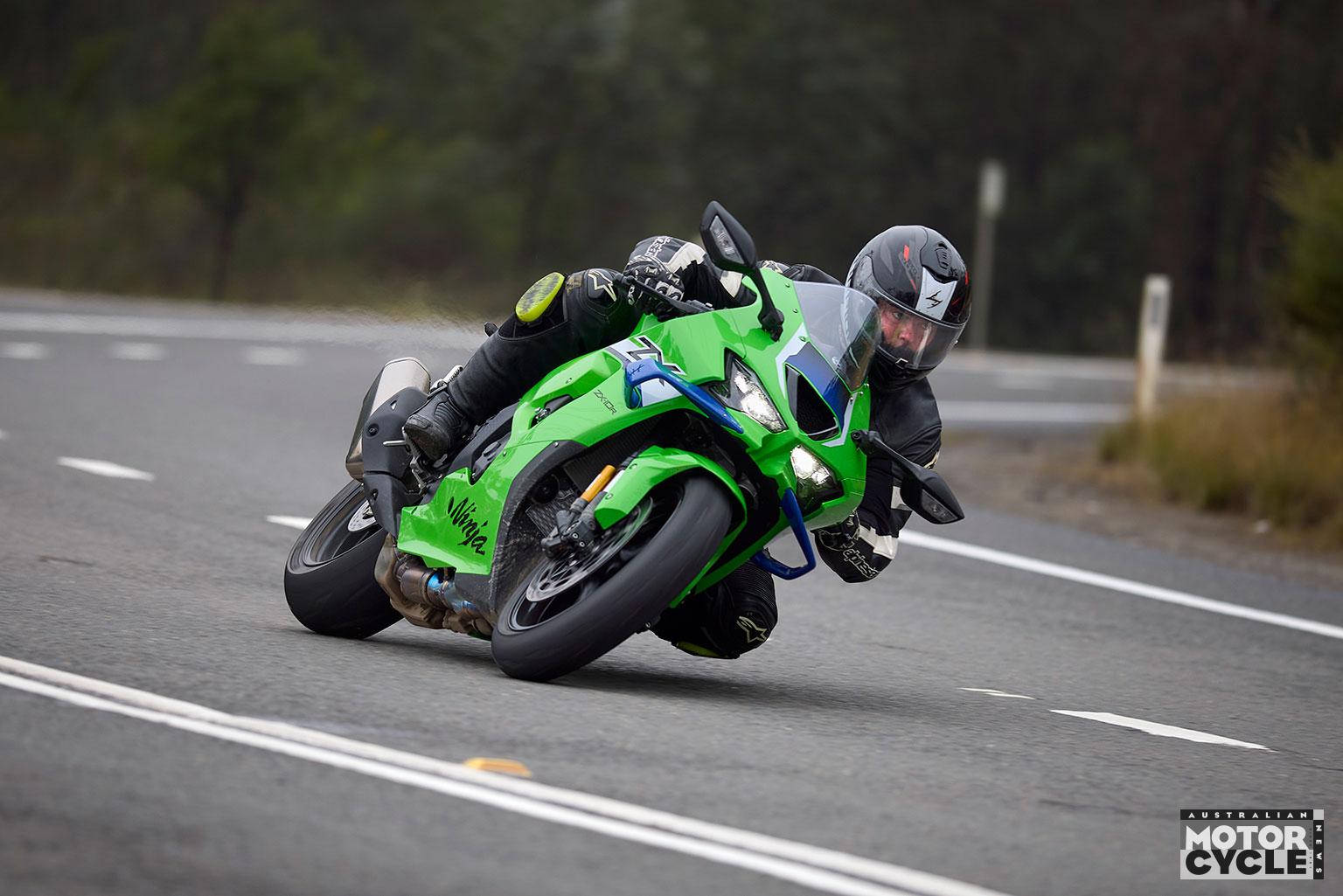
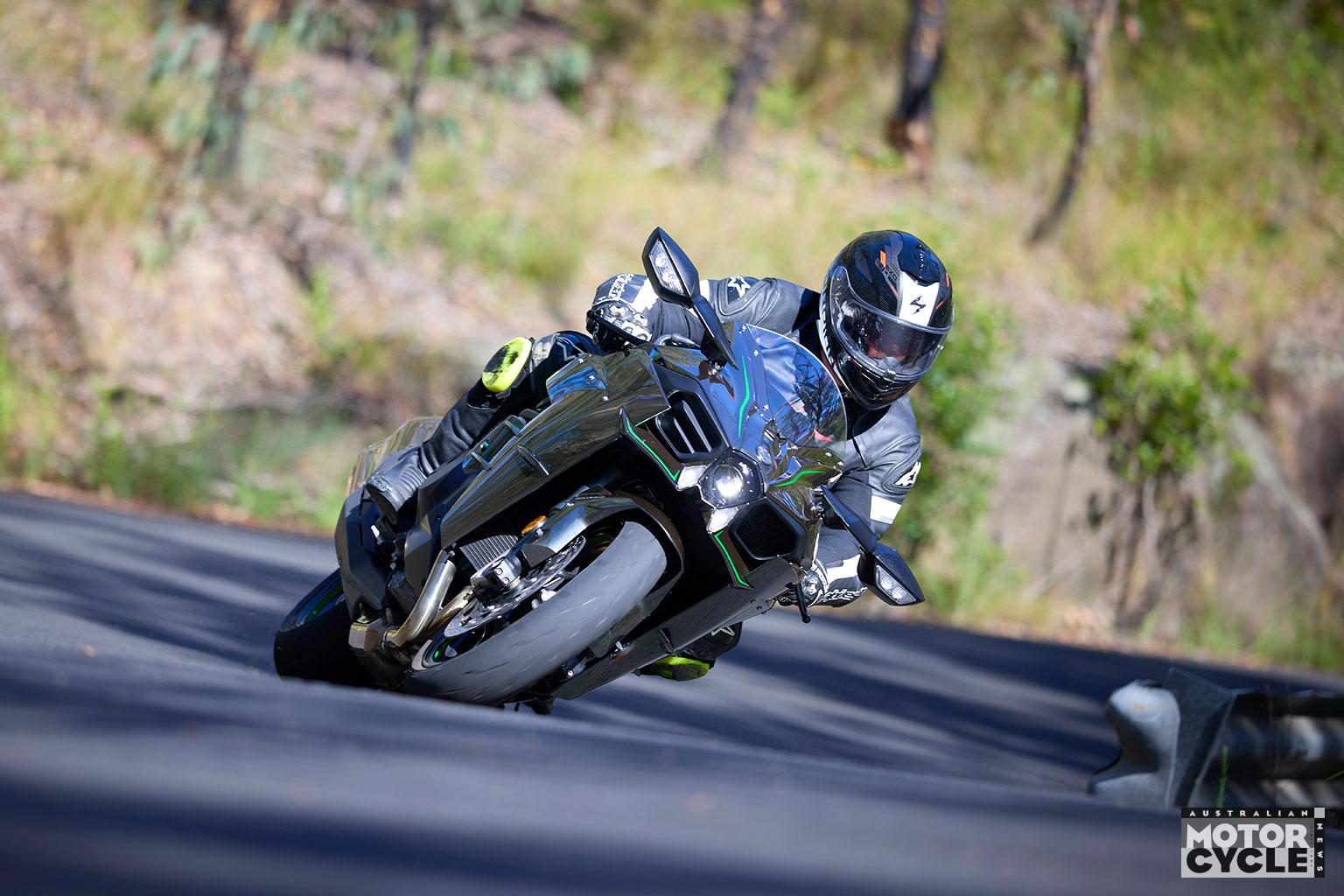
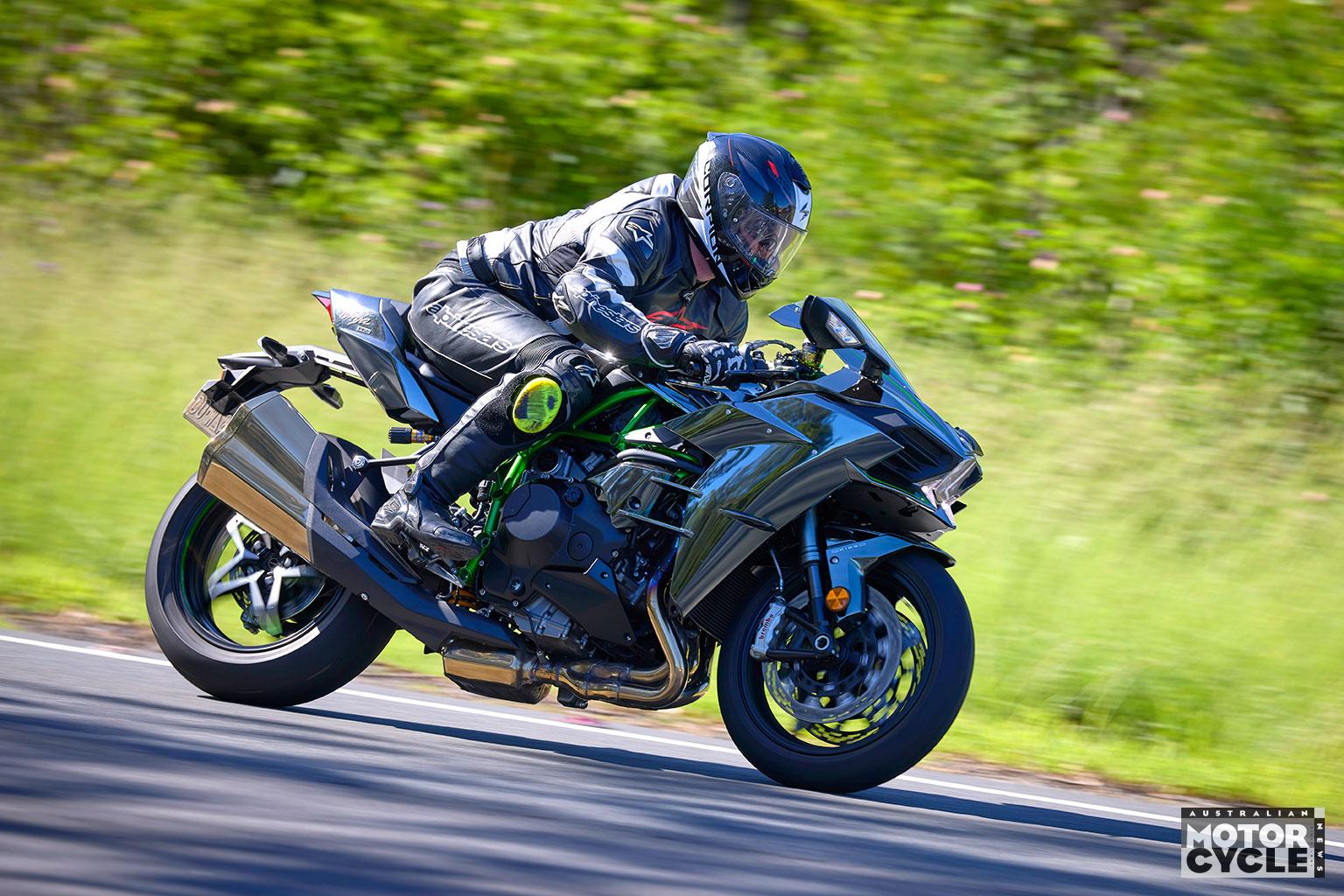
The H2 handles better than I expected. I had almost talked myself into the thought that it would be more of a show pony than a race bike. It has a unique feeling of being longer than it is; flicking it from side to side takes a bit of effort but it drives out of the tight corners hard without throwing the front wheel up. I’ve ridden bikes with half this power that want to wheelie more than the H2. This ‘long’ feeling makes it feel super stable mid corner, and it’s quite happy to be on the edge of the tyre in sweeping corners even when pushing the limits of adhesion. There’s only so much a tyre can do with a heavy hand, minimum traction control and over 200hp dialled up. The H2 leaves the darkest of darkies out of corners and it does it with precision.
WorldSBK electronics
It would be morally irresponsible to build this bike without decent electronic rider aides. Although Kawasaki has form in this area, think back to the original 1971 750cc two stroke H2 and the 2004 ZX-10R. Lucky for us, a World Superbike-developed electronics package is fitted to the Ninja H2. It is starting to show its age without a host of ride modes, electronic suspension, cruise control and wheelie control. But it does offer nine levels of traction control, Kawasaki’s corner management system, six-axis Bosch IMU, Intelligent ABS, Rain mode, fly-by-wire throttle valves, engine brake control, launch control and an up-and-down quickshifter.
The six-axis IMU is the hero of the system; it brings all the electronics together. In the more intrusive modes, you can feel the bike holding back power during a corner and then feeding it back in as it stands up on corner exit.
I mostly rode with the TC in the freest possible setting (or off altogether) as I like to be more in control of the bike and feel the power when I want it. I gave the launch control a few tries. It seems very aggressive and mostly wanted to lift the front wheel quickly no matter what mode I used. The throttle is very sensitive and the engine revs very quickly, so getting the launch right is a fine art that I don’t have the patience for.
The H2 does have Bluetooth, so with the Kawasaki Rideology app you can have navigation, ride logs, phone calls etc all through the dashboard.
Life of an icon
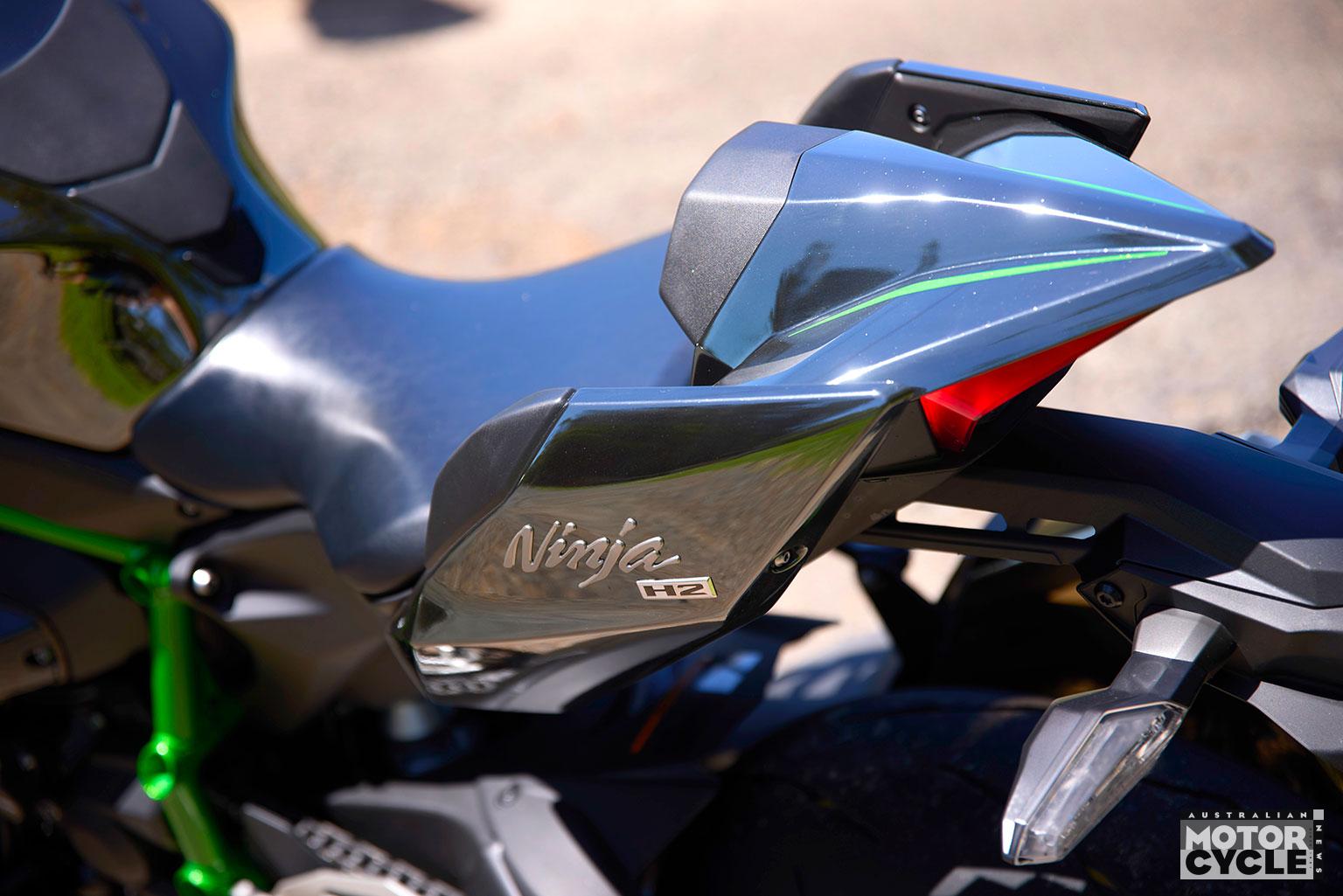
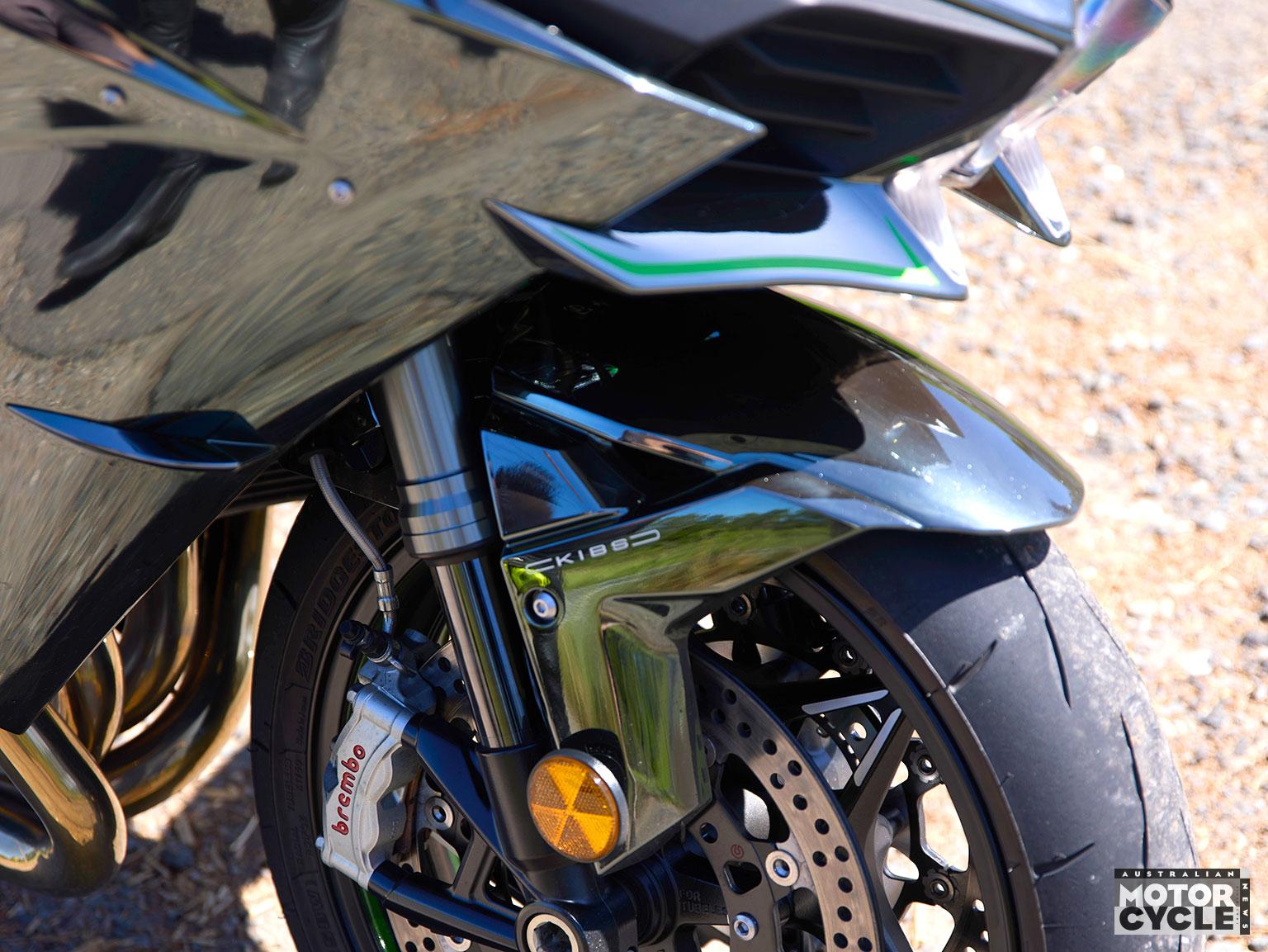
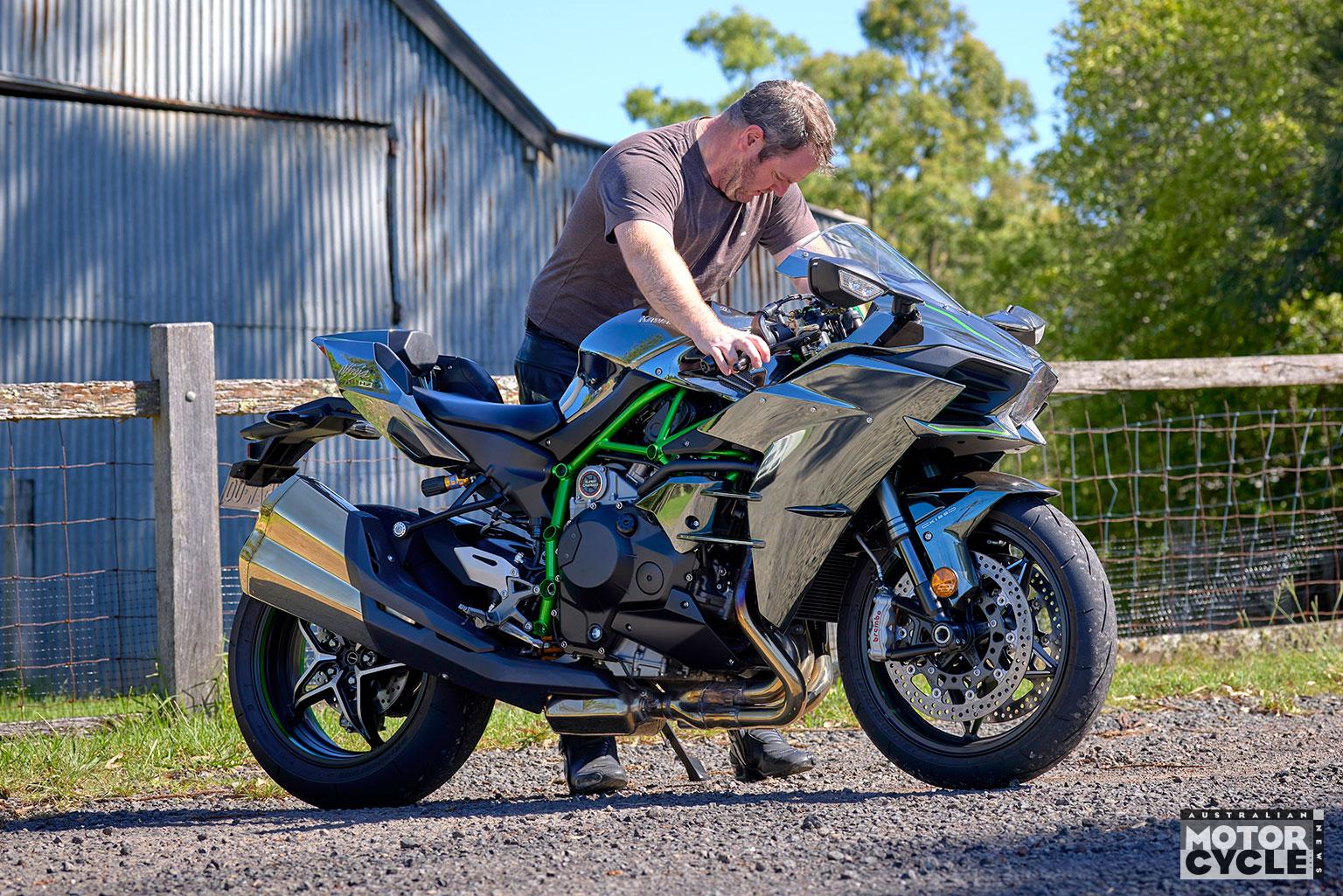
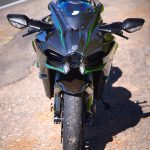
The fairings, paint and aero have to be the most iconic feature of the H2. As soon as I rolled it into my garage, my teenage son had remarked that he has a LEGO model of this bike. Every motorcycle enthusiast can spot it across five lanes of traffic. It is such an icon. The H2 looks fast even on the side stand. The single front headlight, huge air intake, mirrors that look like wings and sculpted fairings are like no other. Each Ninja H2 is hand painted at the factory to ensure perfection. The paint is apparently self-healing for small scratches and scuffs, the top coat has silver in it to be reflective at some angles and black at other angles. Each time you look at it, it’s different. The green frame stands out as a point of difference among regular bikes too. You can’t not love it.
Living with the H2 is an interesting concept to me. It is not a family-friendly or even spouse-friendly bike; there is no back seat. Unless your significant other has their own bike, it’s a one-person deal. Having a friend to carry some extra fuel on longer rides could come in handy however as 17L disappears rapidly when the fun factor is turned up. Extra air into the engine means it needs extra fuel. There’s no fuel gauge either, so if you are having a great old time, the fuel light can appear at less than 140km travelled.
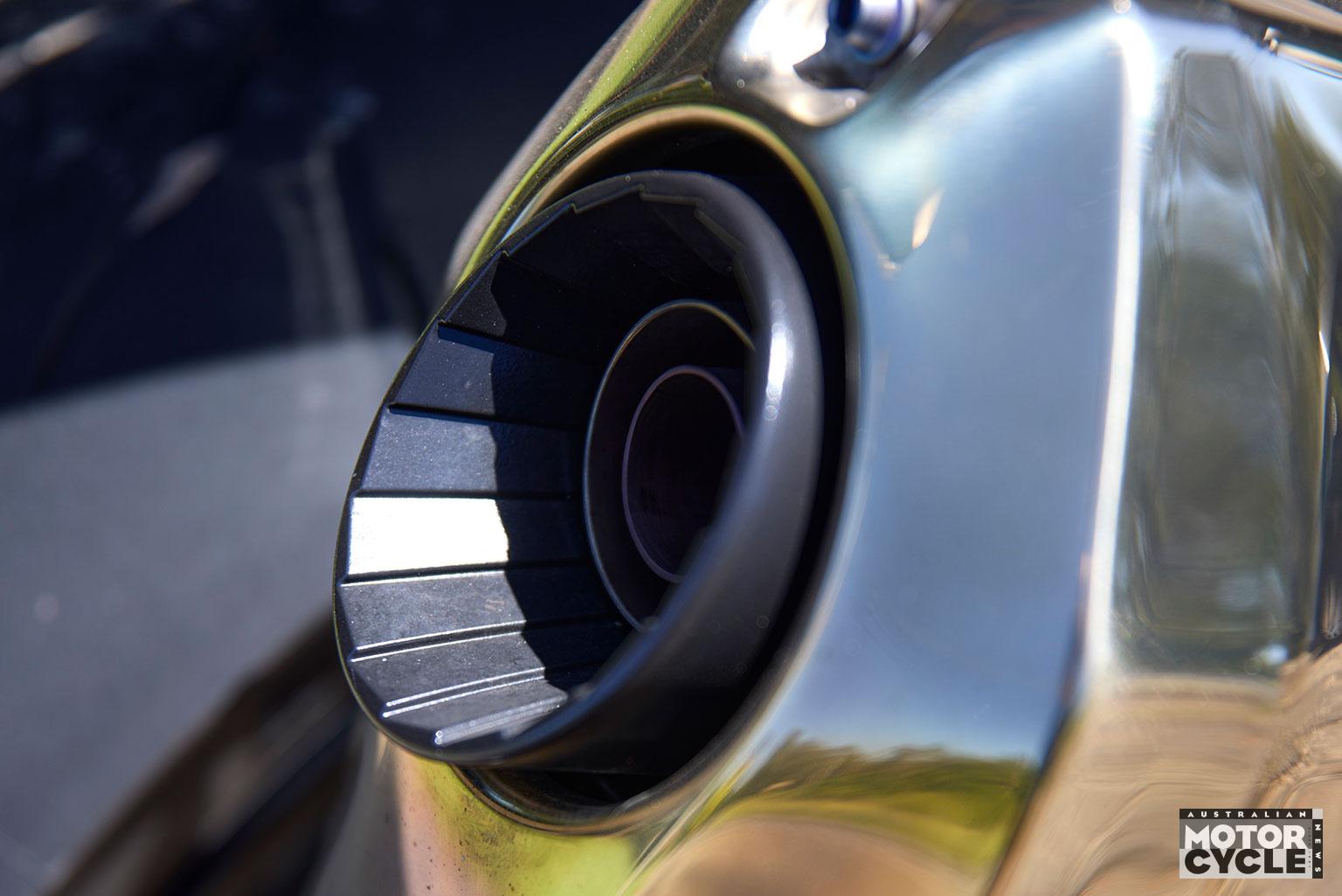
It isn’t cheap. Well, it wasn’t when it was new. But these days it seems like a reasonable deal at $49,939 ride away. You are getting a whole lot of performance. Servicing is pretty standard at 12,000km intervals and 24,000km for a major with valve clearances etc but at 48,000km you will need the supercharger runout checked by a qualified technician.
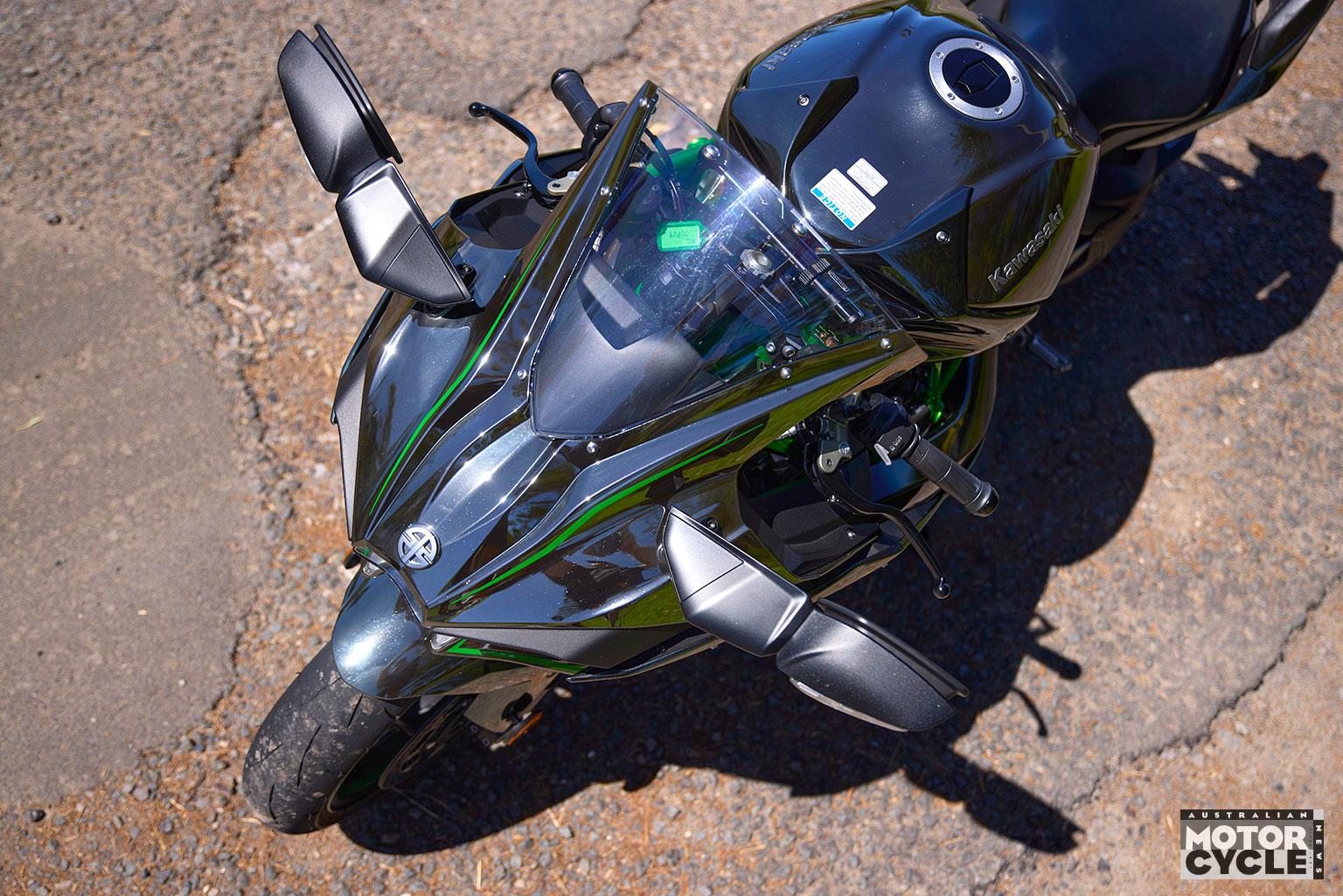
While I have had a total blast riding this bike – and if I had the means I would love to have one as a second bike, partly for the ride and partly for owning such an iconic bike – I can’t help but feel a little bit sad that nobody took the bait that Kawasaki threw out when it created the Ninja H2. Where is the turbo Gixxer or Hayabusa? Where is the Hybrid Honda using F1 tech? Is this the peak of motorcycles? Will the next H2 be a hybrid, electric or hydrogen-powered even?
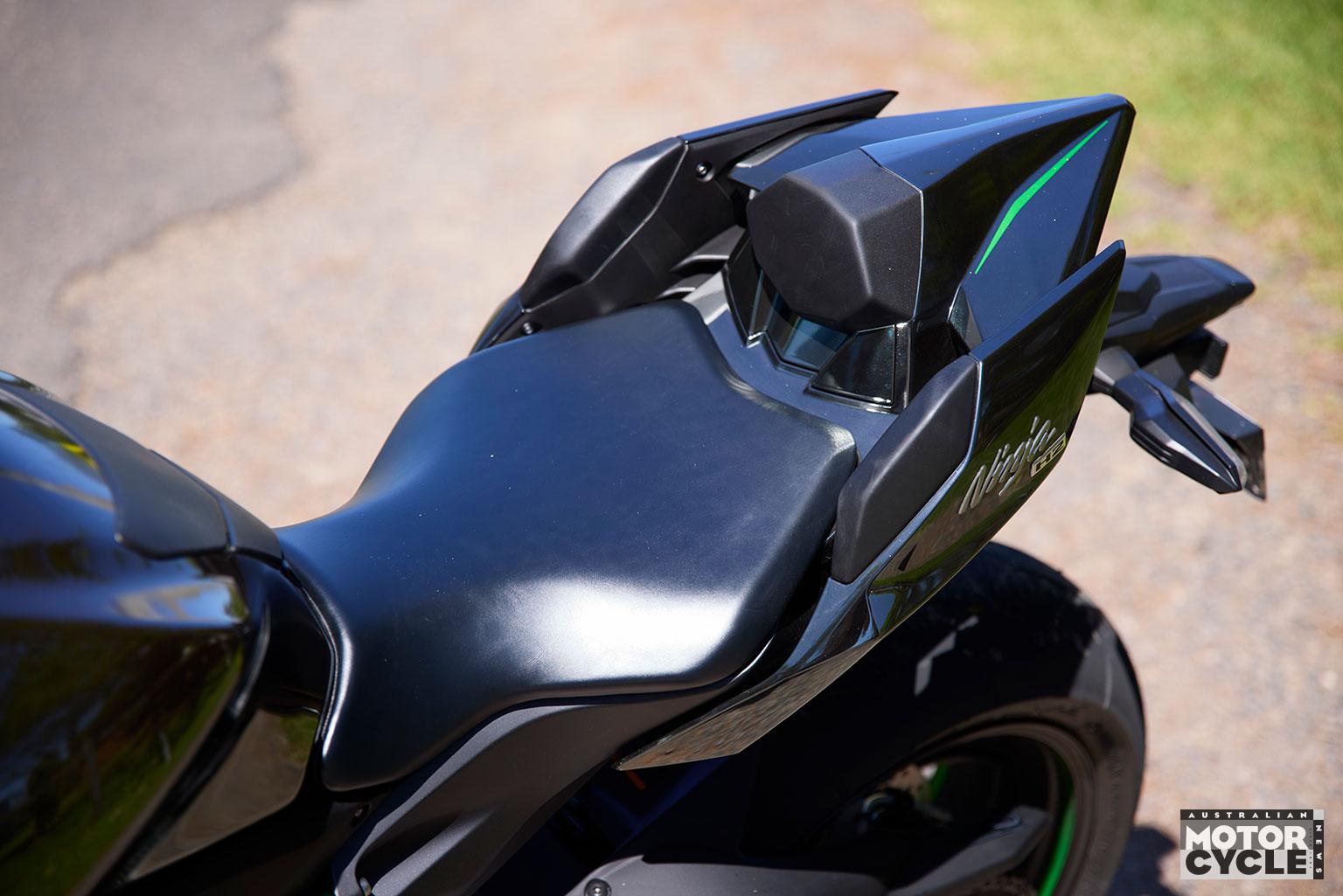
Is the H2 on your bucket list? If it is, go for it! But be prepared to make friends with riders anywhere you go, because everyone wants to have a squiz and a chat about an unforgettable bike.
✅ PROS – What dreams are made of; power to burn; choo choo noises.
❌ CONS – Never have a peaceful cafe stop again; initial outlay on dated electronics; my licence trembled the whole time.
WHAT’S IN A NAME?
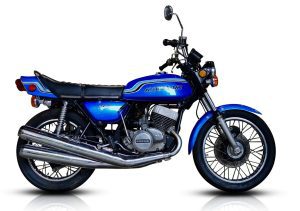
H2 is not just a random model name, the Ninja H2 was named after ‘The Widow Maker’ 1972 Kawasaki 750cc H2 Mach IV. While other manufacturers were taking steps forward in power output, Kawasaki took a leap. They created a 750cc three cylinder two-stroke naked road bike. The existing 500cc H1 put out 45kW (60hp) and weighed 184kg. The 750cc H2 put out 55kW (74hp) and weighed 191kg. The bike would be raced in the 750cc class with other current superbikes that were only making less than 45kW. The H2 had the power, the speed (201km/h), but not the brakes or chassis to match, which made it a challenge to ride – hence earning its grim nickname. It did do epic wheelies but, so I’m glad they let that one through to the modern bikes. You can see that it was only fitting to name the next big shakeup from Kawasaki the Ninja H2.
SPECIFICATIONS
ENGINE
Type Supercharged inline four cylinder, 16 valve, DOHC,
Bore & stroke 76mm x 55mm
Capacity 998cc
Compression ratio 8.5:1
Cooling Liquid
Fuelling EFI 4x 50mm intakes with dual injectors, electronic throttle control
Transmission Six-speed, return, dog-ring
Clutch Wet, multi-plate, slip and assist
Final drive Chain
PERFORMANCE
Power 170kW (228hp) @ 11,500rpm (178.5kW with ram air)
Torque 141.7Nm @ 11,000rpm (claimed)
Top speed 299km/h (limited)
Fuel consumption 7.0L/100km (measured)
ELECTRONICS
Type Bosch ABS, ride-by-wire
Rider aids ABS, traction control, quickshifter, Wet mode, engine brake control, launch control
CHASSIS
Frame material High tensile steel
Frame type Trellis
Rake 24.5°
Trail 103mm
Wheelbase 1455mm
SUSPENSION
Type KYB and Öhlins
Front KYB 43mm telescopic fork, adjustable preload, rebound and compression, 120mm travel
Rear Uni trak with Öhlins TTX36 monoshock, adjustable preload, rebound and compression, 135mm travel
WHEELS & BRAKES
Wheels Cast alloy
Front: 17 x 6in Rear: 17 x 3.5in
Tyres Bridgestone Battlax RS11
Front: 120/70 ZR17 (M/C 58W)
Rear: 200/55 ZR17 (M/C 78W)
Brakes Brembo, ABS
Front: Twin 330mm floating discs, Brembo Stylema monoblock calipers
Rear: Single 250mm disc, Brembo dual piston caliper
DIMENSIONS
Weight 238kg (wet, claimed)
Seat height 825mm
Width 770mm
Height 1125mm
Length 2085mm
Ground clearance 130mm
Fuel capacity 17L
SERVICING & WARRANTY
Servicing First: 1000km
Minor 12000km
Major 24000km
Warranty Two years, unlimited km
BUSINESS END
Price $49,939 ride away
Colour Mirror coated spark black
Contact kawasaki.com.au