China’s latest seamless-shift gearbox has a different twist
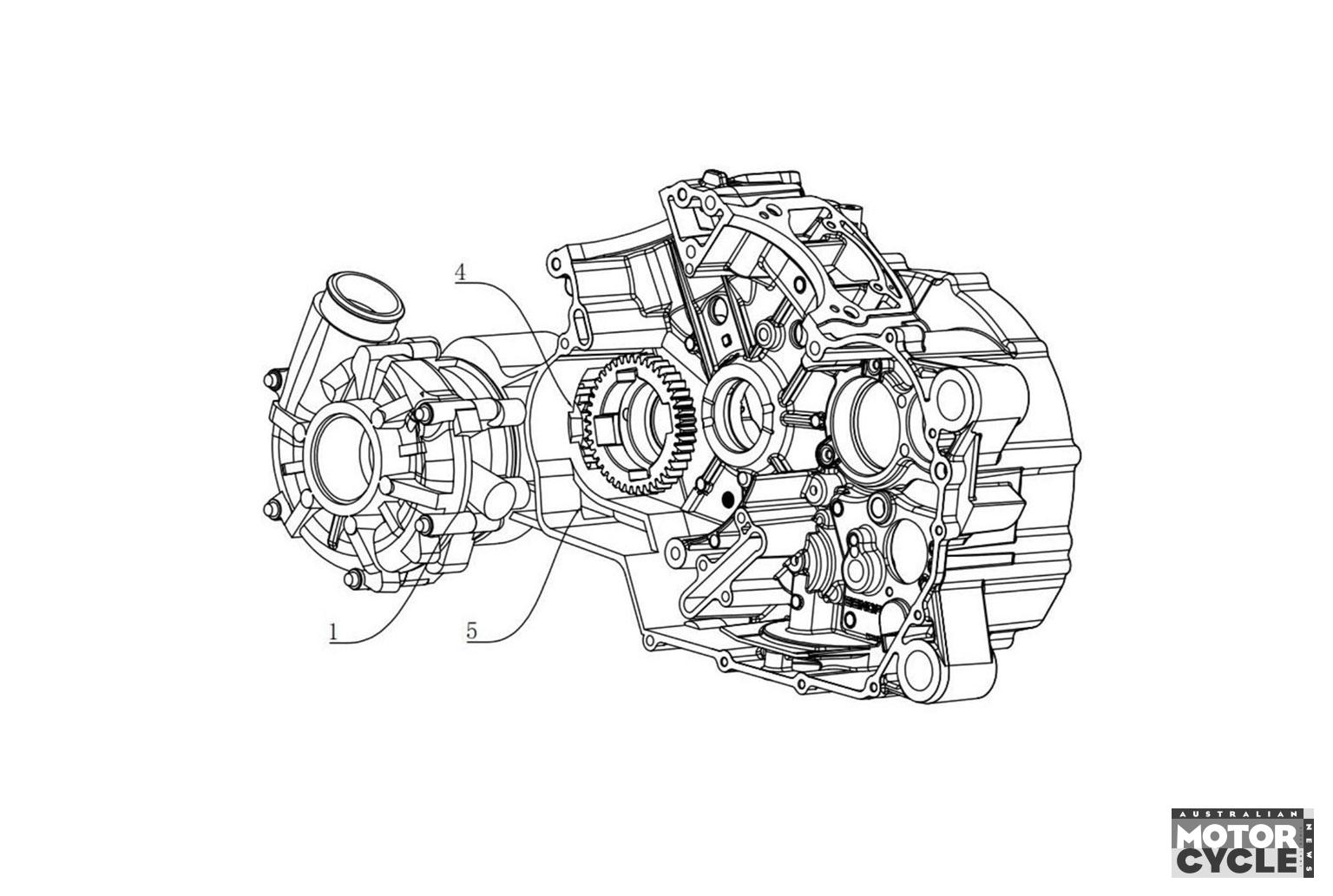
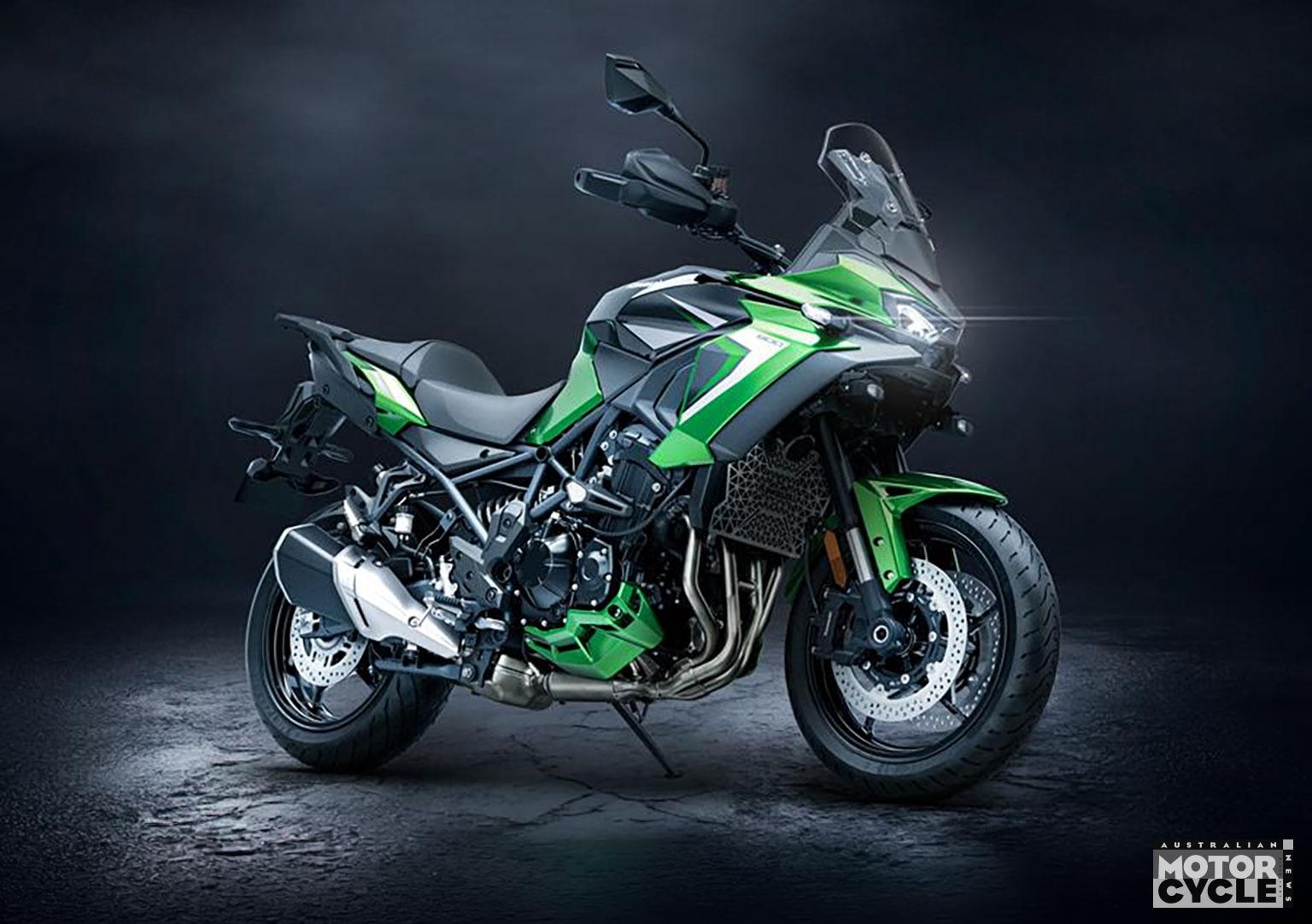
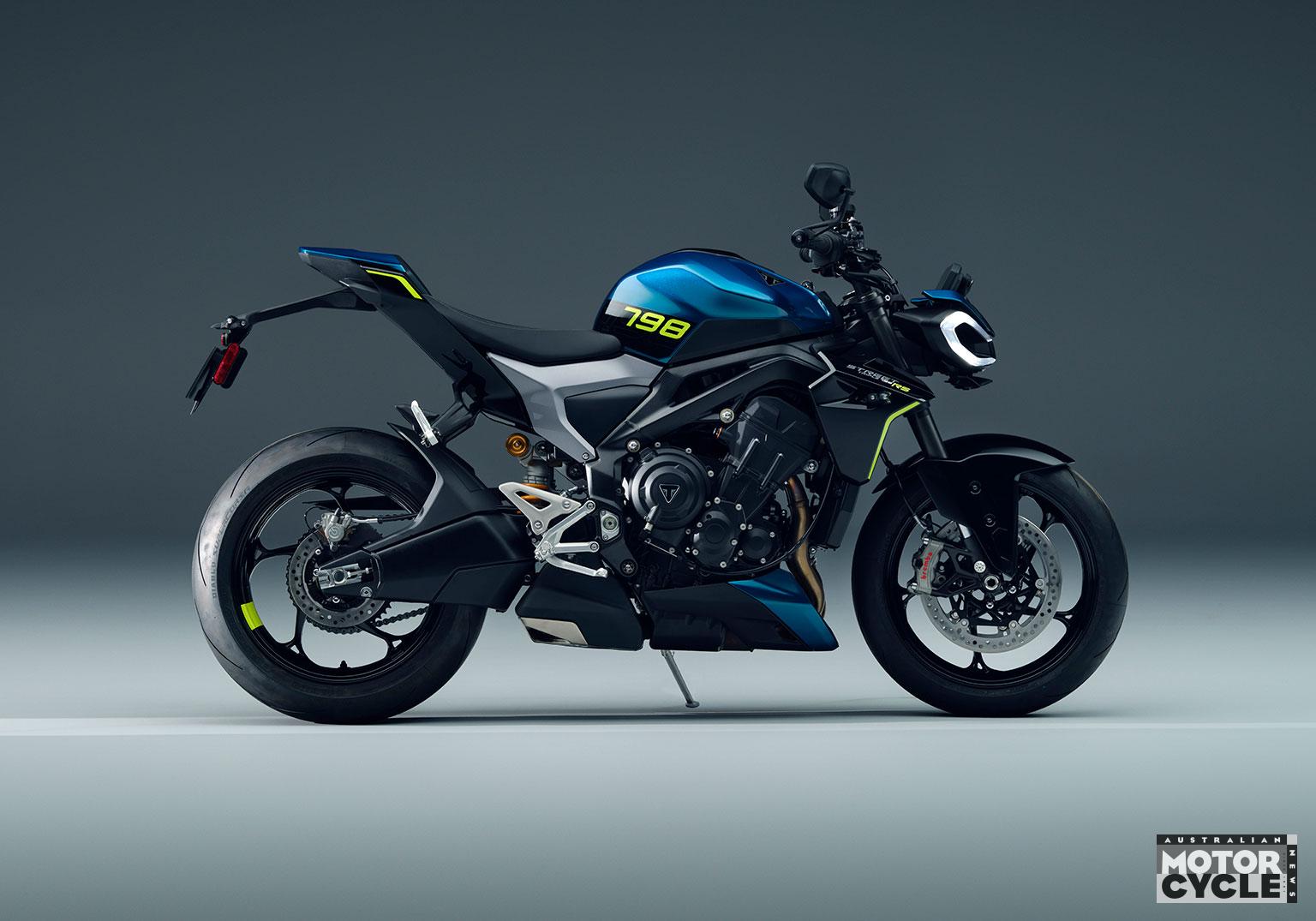
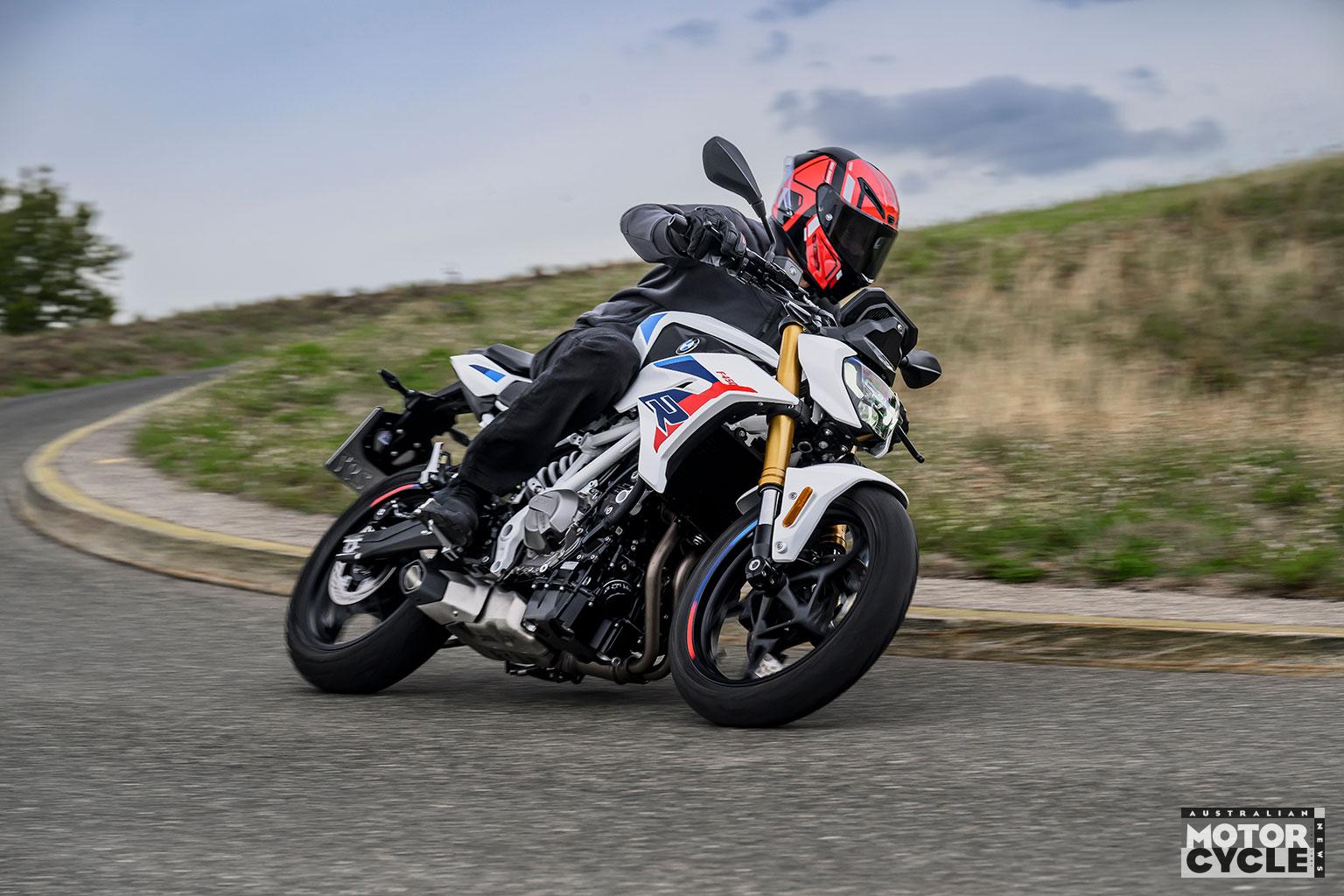
Chinese brand Benda has been turning heads with its ambitious designs for the last few years – and generally coming good on its promises of new technologies – so it’s worth paying attention to this new patent application that shows a seamless-shift, dual-clutch gearbox fitted to the company’s LFS700 streetfighter four.
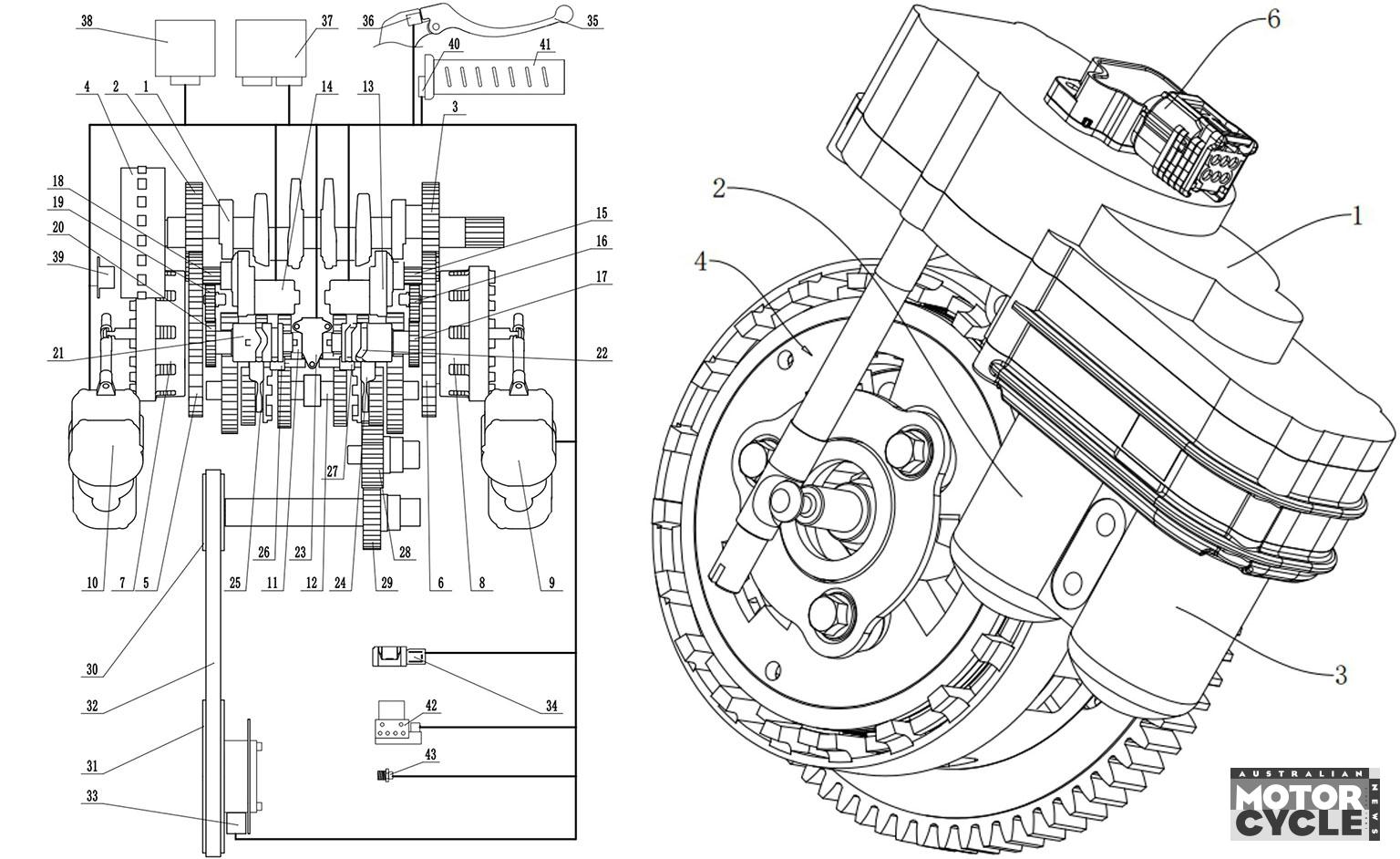
Benda has been working on its own dual-clutch transmission for a while now, and showed a prototype of it last year attached to the upcoming 1700cc straight-six engine that it unveiled at the same time. But this is a slightly different variation on the idea, illustrated on the company’s existing 680cc four-cylinder motor that’s currently bolted to the LFC700 muscle-cruiser and the LFS700 that’s pictured in the patent. It’s also been mooted as the power unit for an upcoming sports bike, the LFR700, which was shown as a concept back in 2023.
Benda’s dual-clutch gearbox works on the same principle as those used in a various cars and in Honda’s DCT models, but with a twist. Like those machines it uses a two-part input shaft, with one half carrying the even-numbered gears and the other half bearing the odd-numbered ones. Each half of the input shaft has its own clutch to connect it to the engine’s crankshaft. That means you can have two gears engaged simultaneously, shifting between those ratios by disengaging one clutch and engaging the other – an operation that’s computer-controlled to give a seamless transition that means the engine is never completely disengaged from the rear wheel. Where Benda’s setup really differs is in the way the clutches are on opposite ends of the split input shaft, connecting to both ends of the crankshaft, rather than being mounted concentrically on one side of the gearbox.
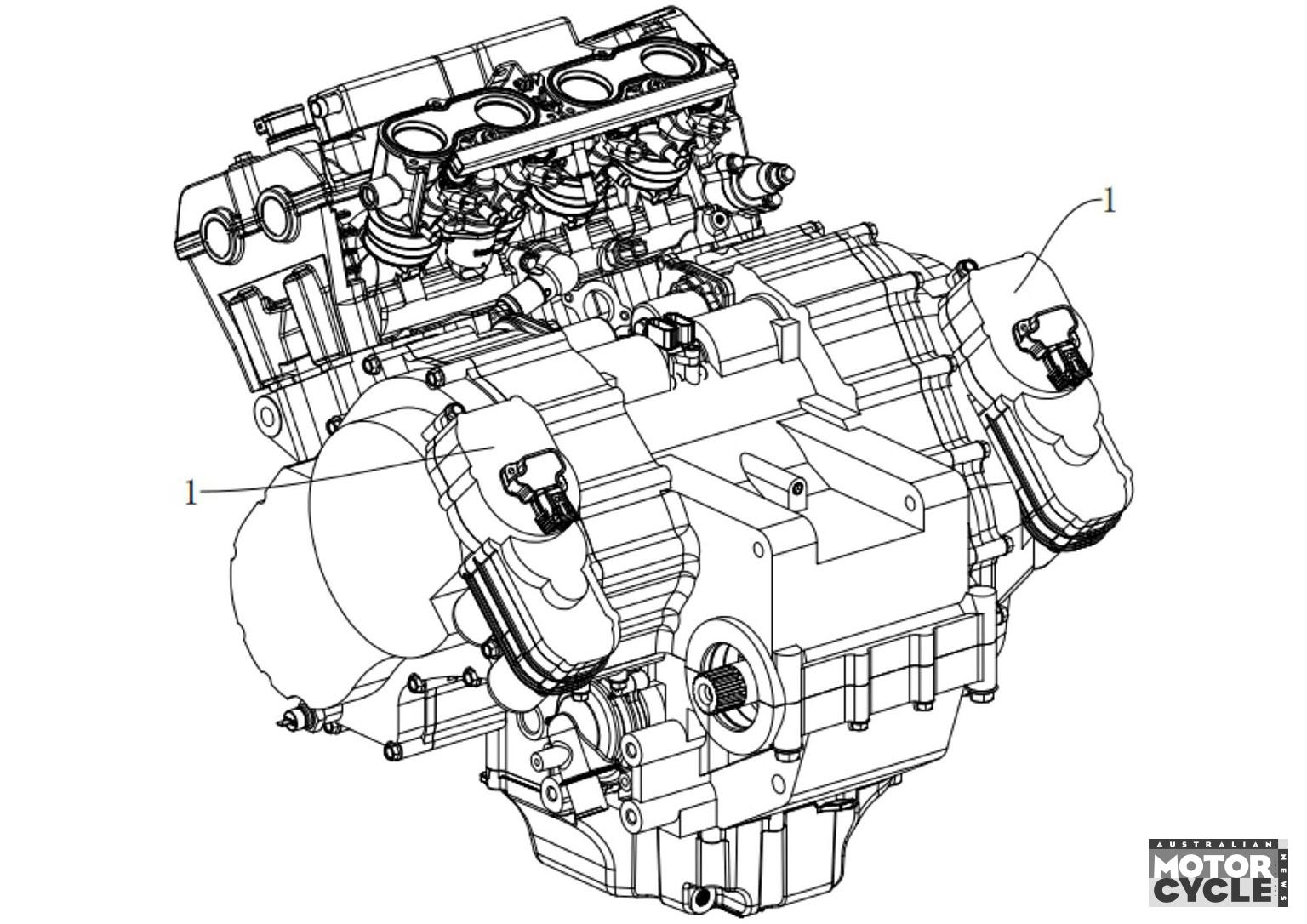
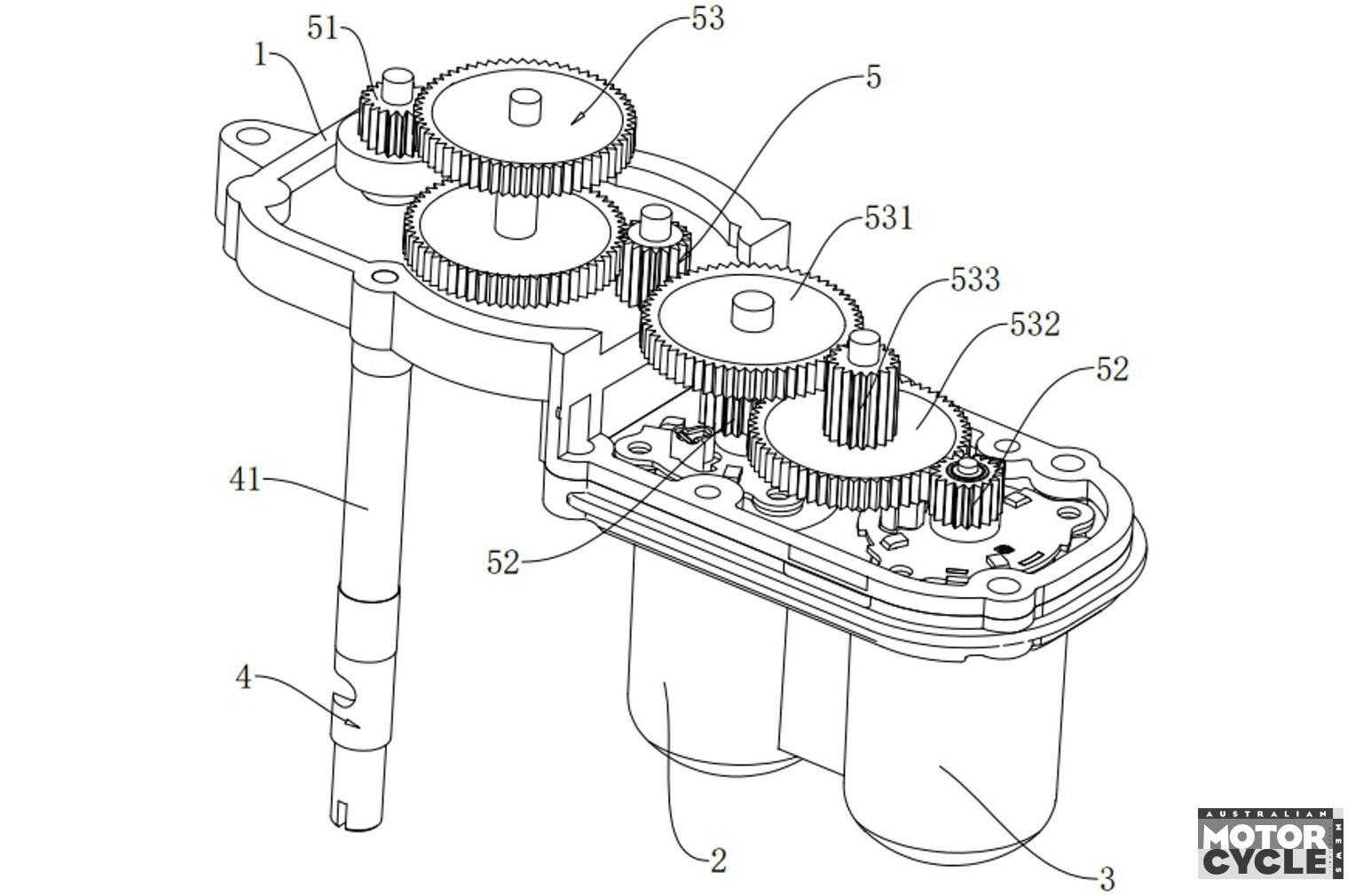
On the straight-six engine prototype, the clutches are claimed to be a novel, electromagnetic design, but the new patent shows a simpler system that uses the same electromechanical actuators that Benda already uses on its e-clutch models. These actuators are nearly identical to the design seen on Honda’s E-Clutch bikes, and as such are vastly simpler and cheaper to make than the complicated hydraulic clutch control and gearshift system used on Honda’s own DCT models.
With automated transmissions increasingly popular in China, and Honda’s DCT accounting for more than 50% of global sales of some of the models that are offered with it as an option, it’s clear there’s an appetite for auto-shifters, and it seems to be one that Benda is only too happy to cater to.