The Grand Prix Commission has announced a fresh set of rule updates, including changes to grid spacing and bike limits.
Folowing the dangerous scenes at the first corner of the Hungary GP, MotoGP has acted. The latest Grand Prix Commission news confirms that holeshot devices used at race starts are banned from this weekend’s Tissot Grand Prix of the Netherlands at Assen, bringing forward a change that was already due under next season’s wider rule revisions.
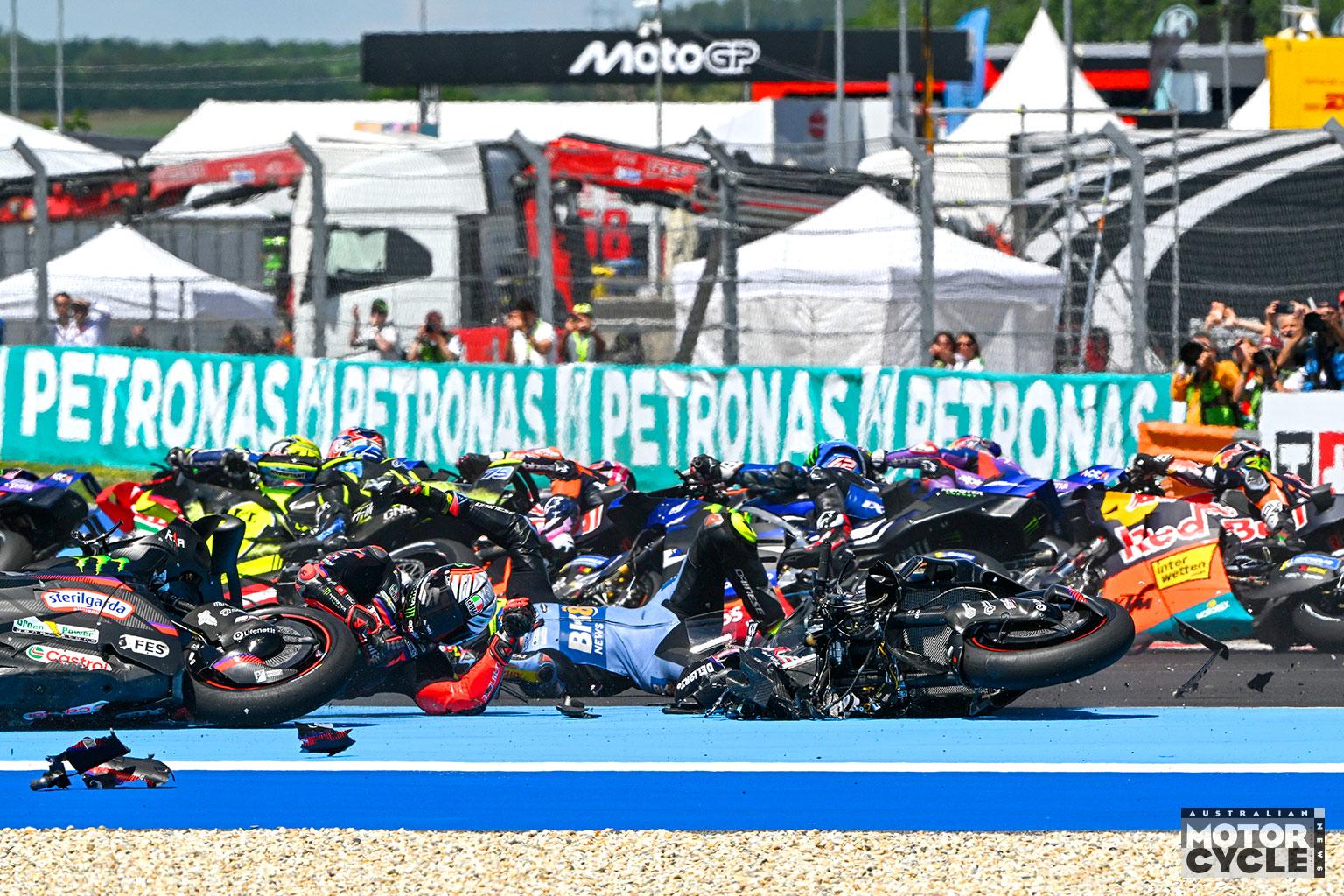
It follows growing concern during several Grands Prix this season about the safety risks created by front ride height systems at the start, especially as the whole field arrived at turn one faster, closer together and with riders forced into an awkward braking manoeuvre to release the devices. Alongside that, MotoGP has also announced wider grid spacing from the German Grand Prix onwards in all classes to further increase rider safety at starts. The spacing between riders will increase from three metres to four metres, while the distance between each row will increase from nine metres to 12 metres. There will still be three riders per row, but with more space between them to reduce risk at the start.
What did front ride height devices actually do?
Moto2 and Superbikes both need around 2.7 seconds to accelerate from 0 to 100 km/h at the start. Until recently, the same applied to MotoGP bikes. But with the introduction of the so-called holeshot devices, also referred to as starting aids, that dropped by 25 per cent to around 2.0 seconds.
These holeshot devices lower the bike at both the front and the rear. And not just a little bit. In fact, so far that the fairing almost touches the asphalt. At the front, this is achieved by locking the front suspension deep in its travel, just as MX bikes used to do. At the rear, the normal ride height device is locked in an extra low position. Both of these locking devices release again as soon as the rider brakes hard.
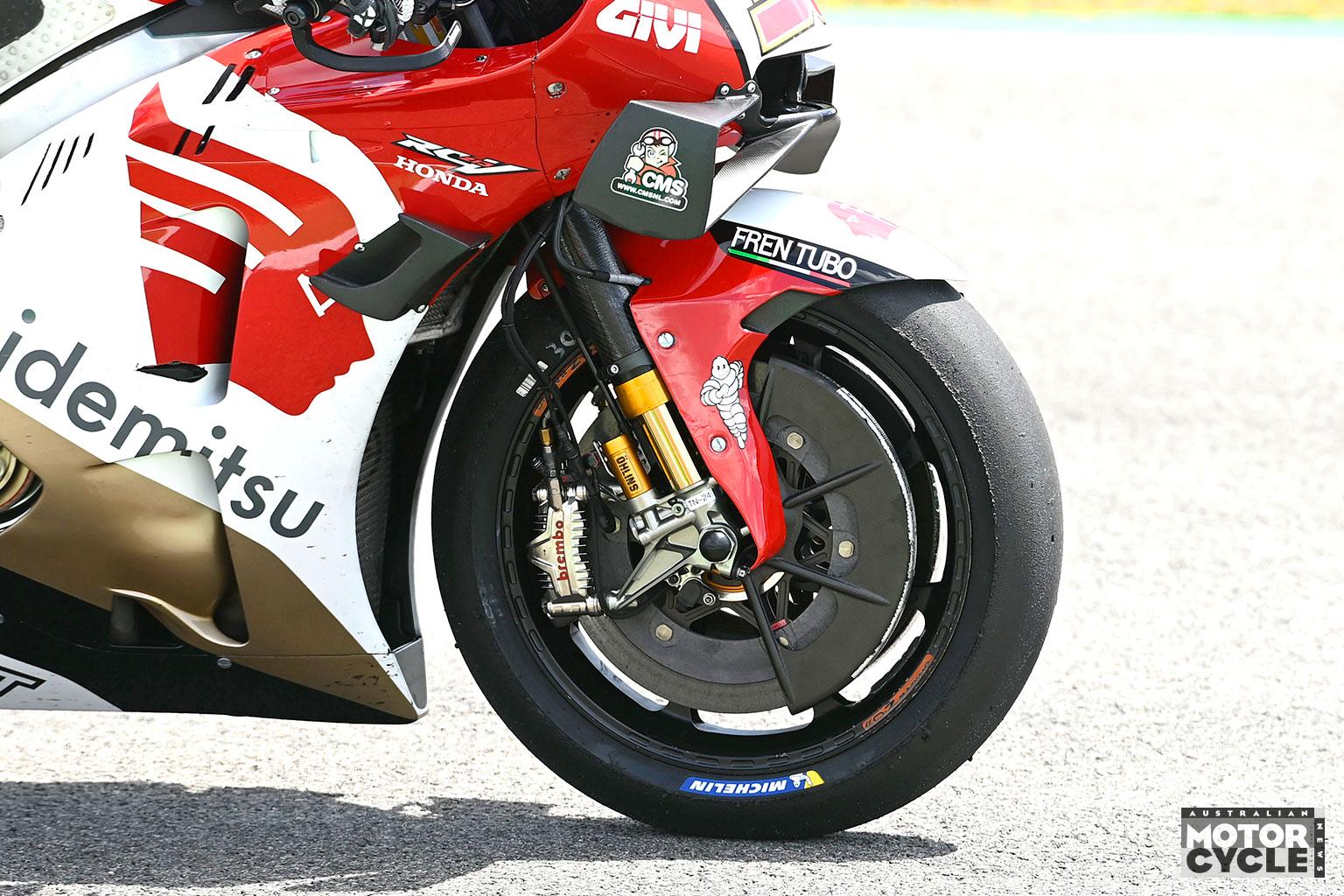
The improved starts are explained by the fact that the centre of gravity is now significantly lower. As a result, acceleration is faster before the motorcycle tends to wheelie. Lifting the front wheel is the limiting factor on all powerful motorcycles, provided there is sufficient rear wheel grip. And that limit was simply moved a lot farther back. About 0.7 seconds farther back, let’s say.
Far from perfect
When Ducati, who else, came up with this in late 2019, it was mainly interesting, and all Ducati riders significantly improved their starts. By now, all other manufacturers have copied it, so no one has an advantage anymore. These starting systems have been developed so well that all riders now charge into the first corner with the same acceleration.
That used to be quite different before the technology was introduced. Back when bikes were more prone to slipping and wheelies off the line, the field was already being spread out nicely soon after the start. Now that is no longer the case. The entire field stays closer together and, significantly, approaches the first corner faster.
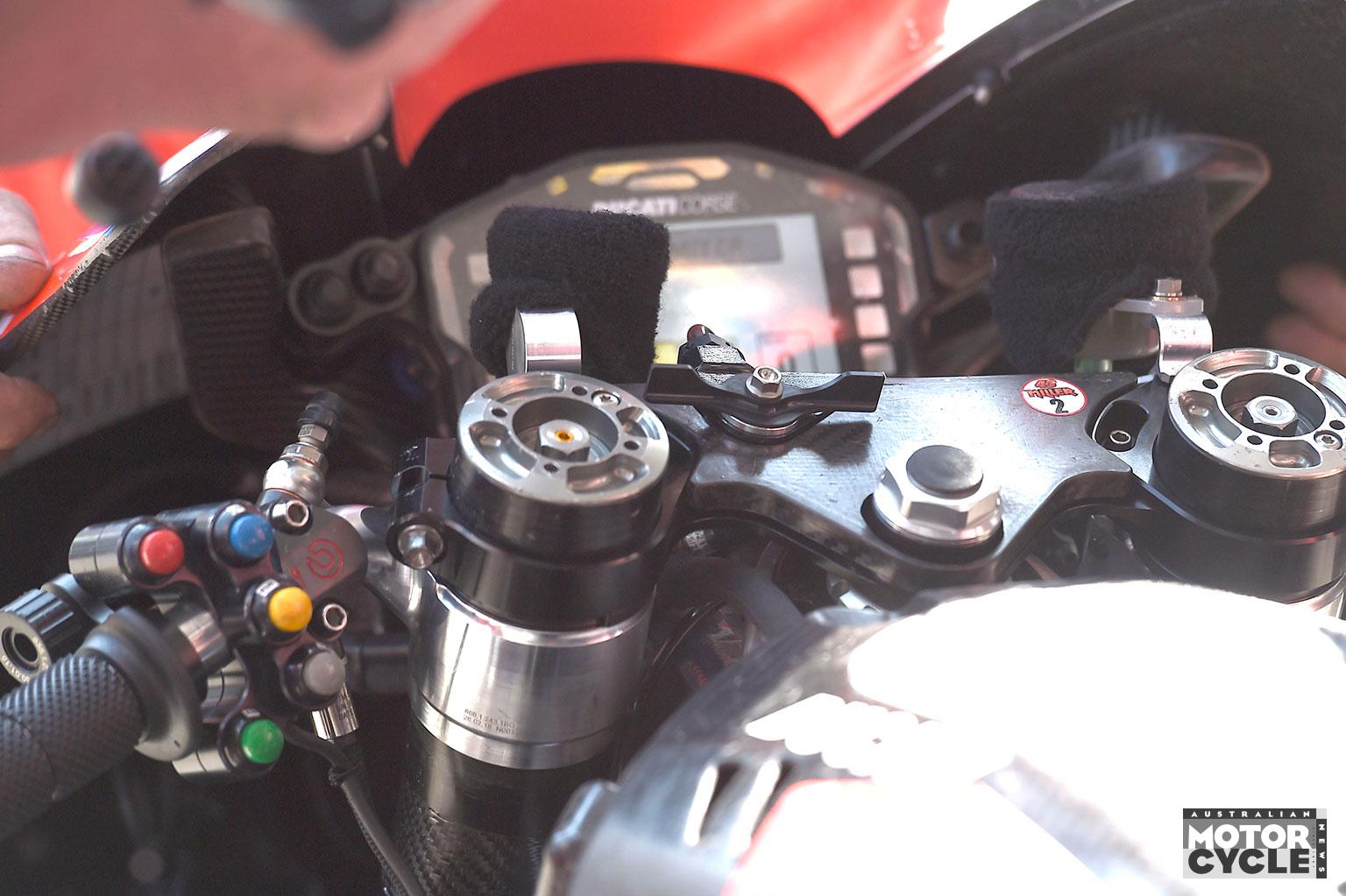
And that leaves us with the big disadvantage of these holeshot devices: a greater chance of crashes in the first corner after the start. Ultimately, it is more dangerous because all riders now arrive at the first corner at a higher speed and the entire field stays packed together. And if that was not bad enough, all riders also had to grab an initial extra handful of front brake in order to disengage the locked-down suspension.
We kept seeing riders who did not succeed in bringing their bikes back to the normal position because they did not have to brake as hard as expected for the first corner. Anyone affected by this had to go weirdly slow and then brake again, trying to release the ride height lock-ups. Obviously, this created a dangerous situation for following riders.
Jack Miller’s view
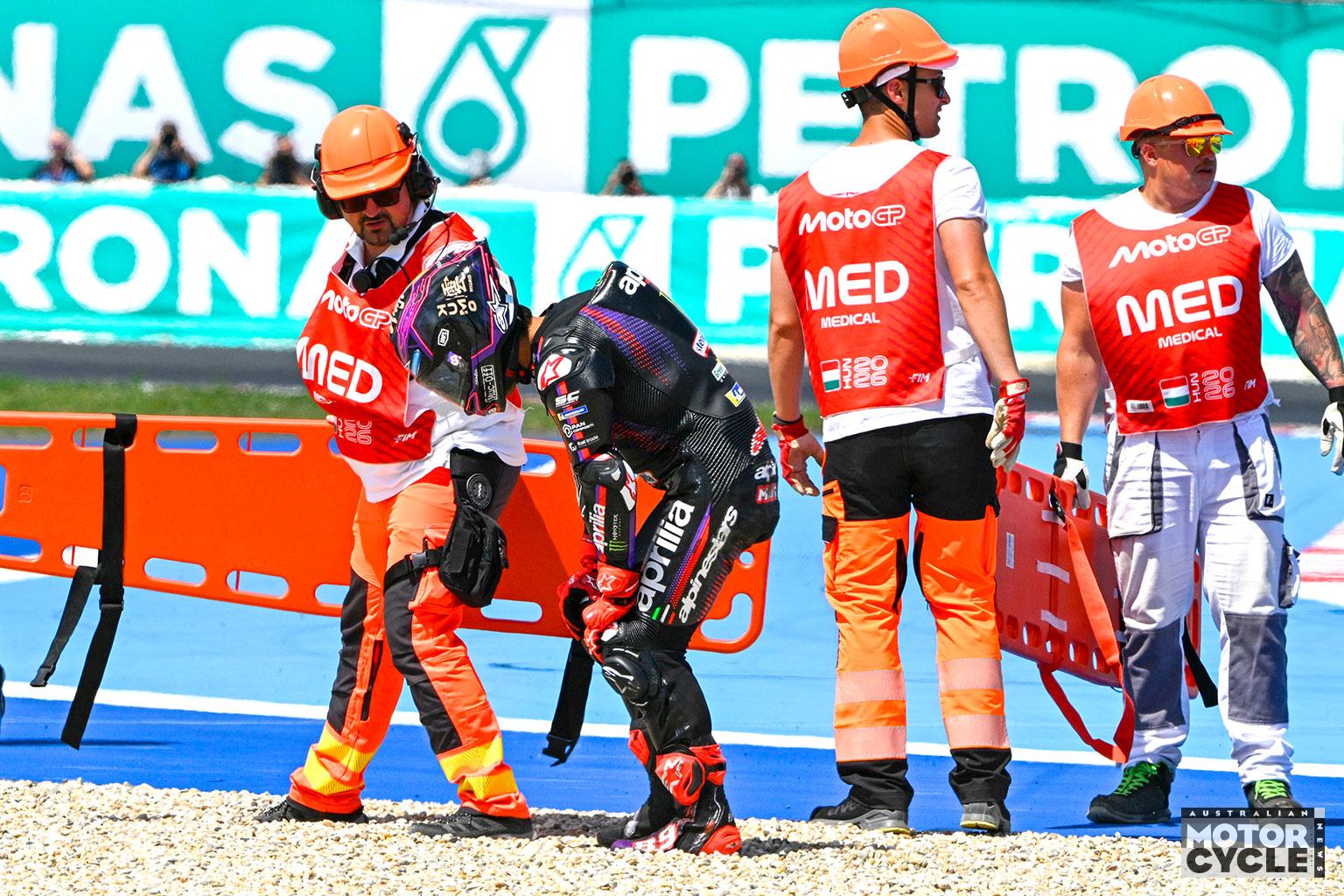
At the Hungarian round at Balaton, Jorge Martin took out four riders at the start when he locked the front and crashed under braking for turn one, including his team-mate and championship leader Marco Bezzecchi. For me, that incident underlined exactly why these devices had to go.
Although it was a very clever idea from Gigi Dall’Igna and Ducati, I’m glad this nonsense is now being unscrewed. The problem was no longer technical ingenuity. The problem was that the system had become standard, removed variation from starts, tightened the pack, increased speed into turn one and added an unnatural braking action that riders had to perform immediately after launching off the line.
That is too much risk for too little gain.
Jack Miller summed it up well after the Balaton accident. In his view, it was not simply a case of Martin braking far too late. “At the end of the day we’re making an unnatural manoeuvre, especially here in Balaton where turn one was quite slippery with the new asphalt, that you weren’t even really able, without locking the front, to really get enough transfer to unlock the devices.”
That is exactly the point. If a start system depends on forcing the rider into an awkward, sometimes excessive braking input just to return the bike to normal, then it is not a clean solution. It is a complication, and a dangerous one.
What it means going forward
From Assen, MotoGP riders will have to launch without front holeshot devices at the start. That should gradually bring starts back toward something more natural, with a little more variation between riders and machines, slightly less extreme acceleration, and hopefully a little more separation before the first corner.
It will not suddenly make starts slow, and it will not remove all first-corner chaos. But it should reduce one of the key factors that has made modern MotoGP launches so compressed and so risky.
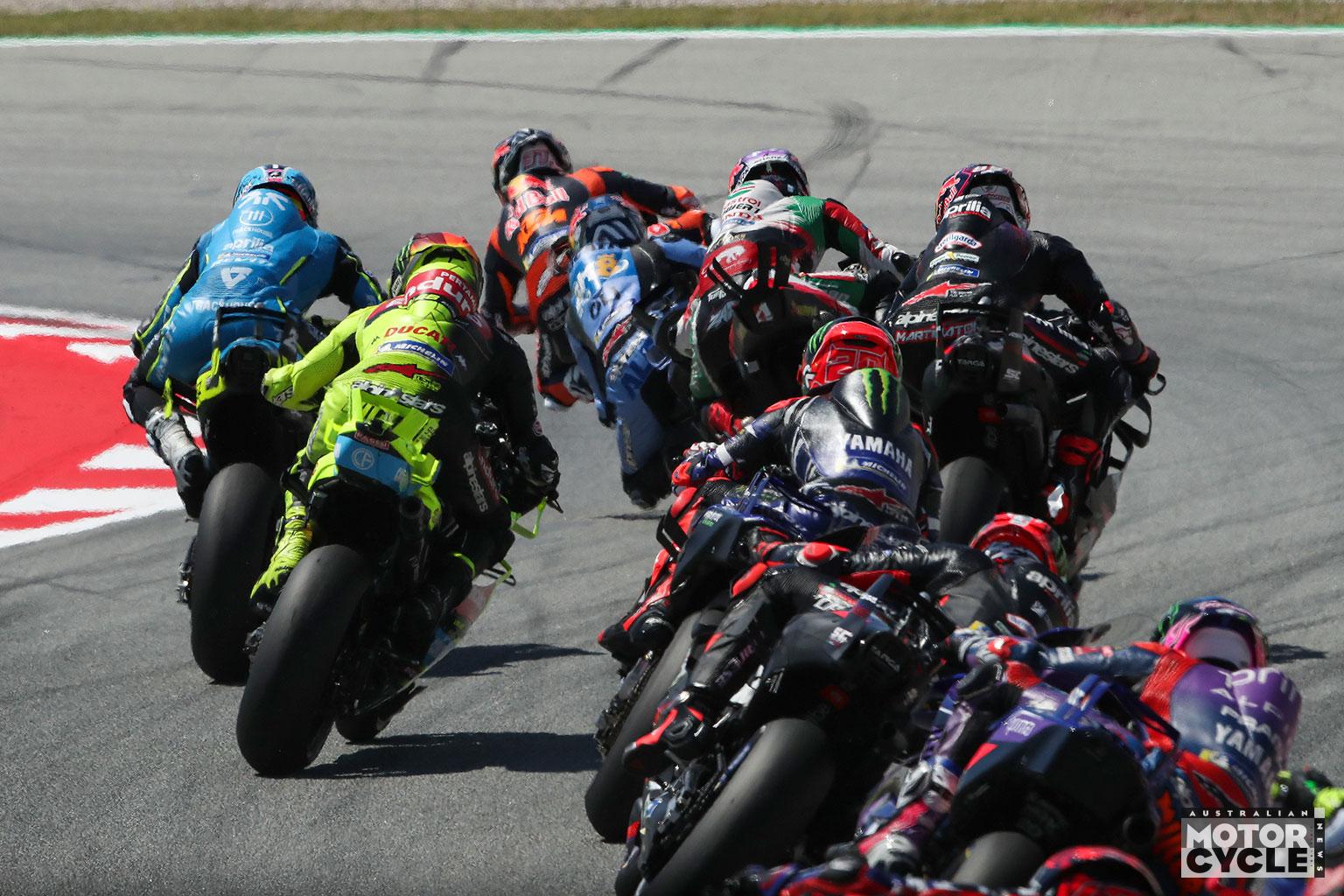
The broader direction is clear. MotoGP wants safer starts, less artificial complexity and fewer situations in which riders are forced to manage awkward mechanical tricks in the most dangerous phase of the race. The wider rules were already heading this way next season, and Assen simply brings that decision forward.
One final regulation change was also confirmed by the Grand Prix Commission. From 2028, no factory will be allowed to have more than six bikes on the grid, effectively limiting each manufacturer to its own team plus a maximum of two customer teams, provided that at least five manufacturers are competing in the championship at that time.