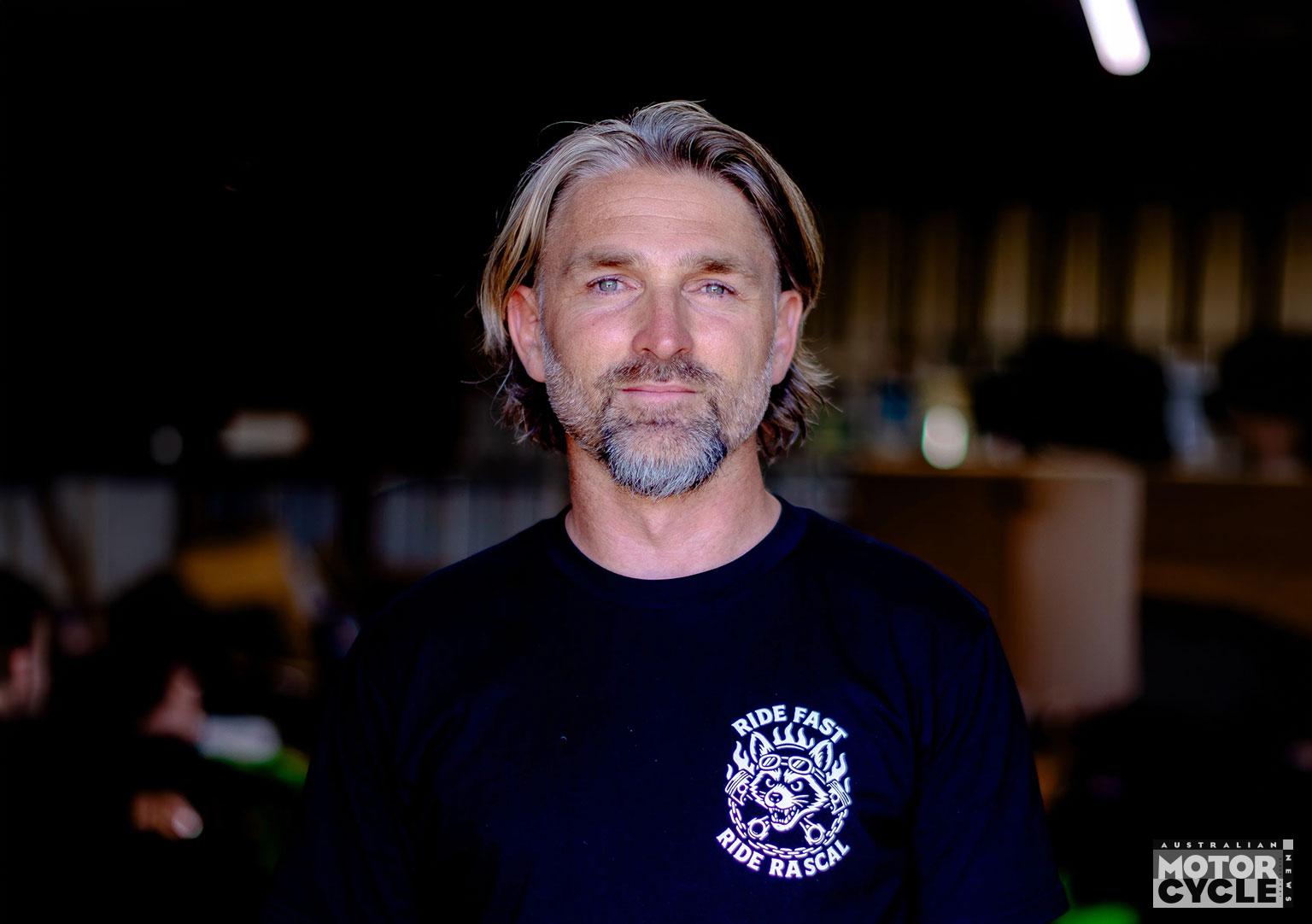
Aldo Drudi is famous for painting lids for champions. Few people get closer to them, so he knows how they tick
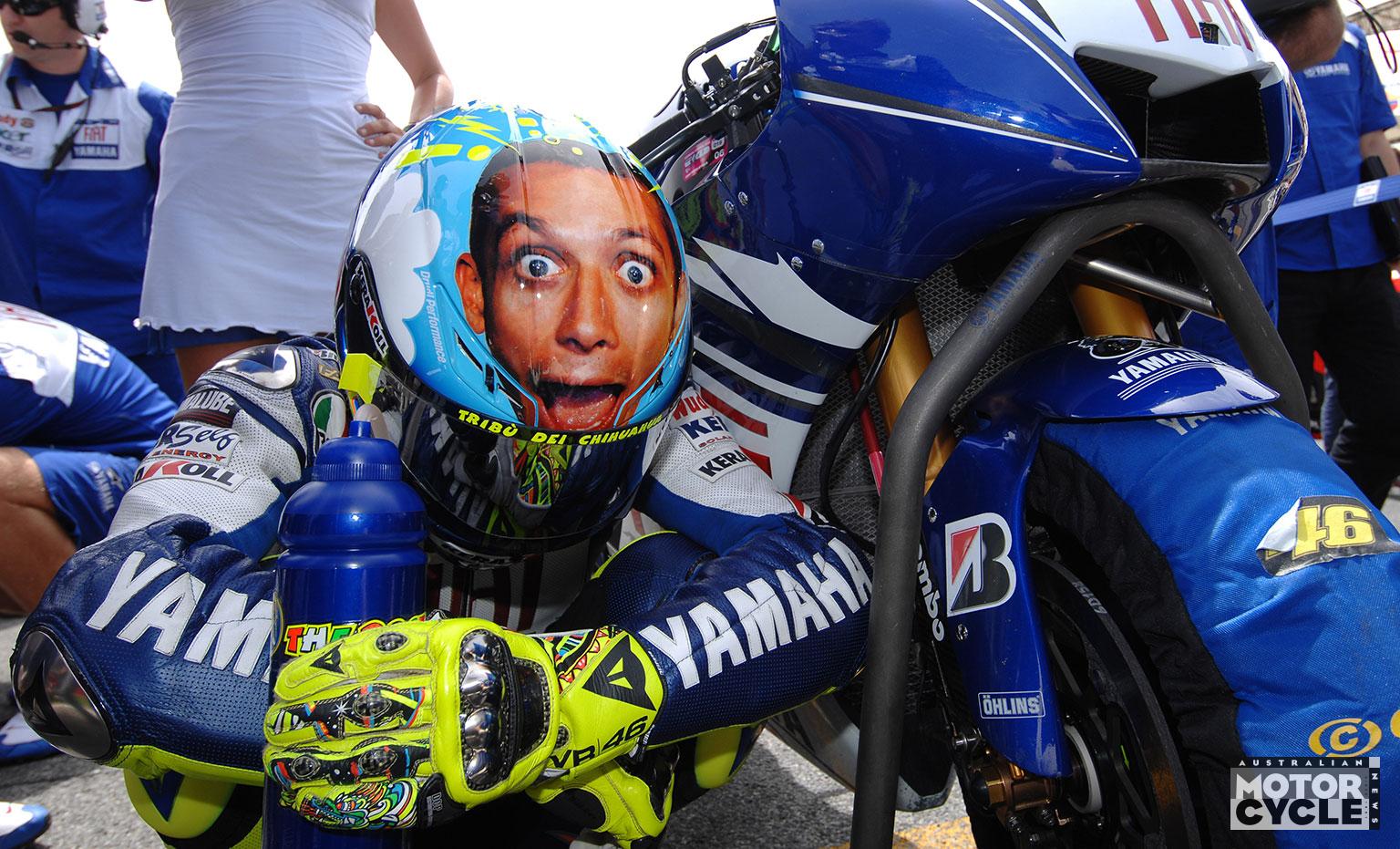
Aldo Drudi isn’t the only artist in motorcycle racing but he stands apart. The Italian has been painting helmets since the 1970s, drawing inspiration from centuries of art history.
A few years ago he took a group of Valentino Rossi’s VR46 riders to Florence’s Uffizi museum, home to masterpieces including Michelangelo’s David.
“I was with Franky Morbidelli and a few of the other VR46 guys,” he recalls. “When I talk to these guys I try to talk about more than just colour and design. I say, ‘If you want to be faster, you have to understand better who you are and you need to understand where you’re from and the Italian culture behind you’.
“So we went to the Uffizi. I asked a professor to show us around and I said to her, ‘Please go softly with these guys because they are racers’. She said, ‘No problem’. She started telling them about Michelangelo’s David… I was expecting a disaster, but the guys were standing there with open mouths. We spent four hours in the museum.”
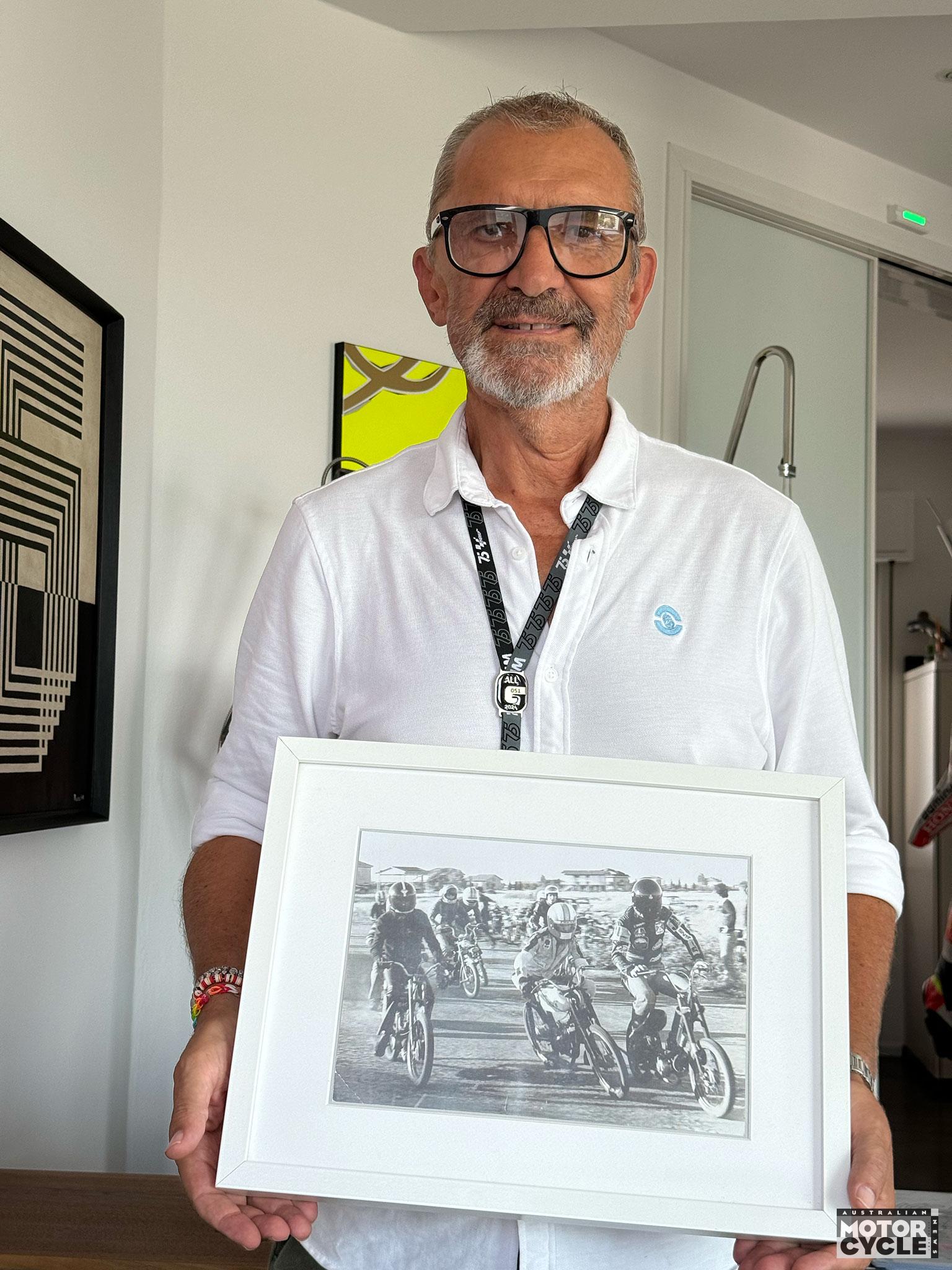
The past matters to Drudi because identity matters. Helmet design, he says, is modern warpaint. “Medieval knights went into battle wearing the colours and designs of their family liveries… and North American Indians used warpaint. The work we do with helmet design is the same thing, but also much more complex than it might seem.”
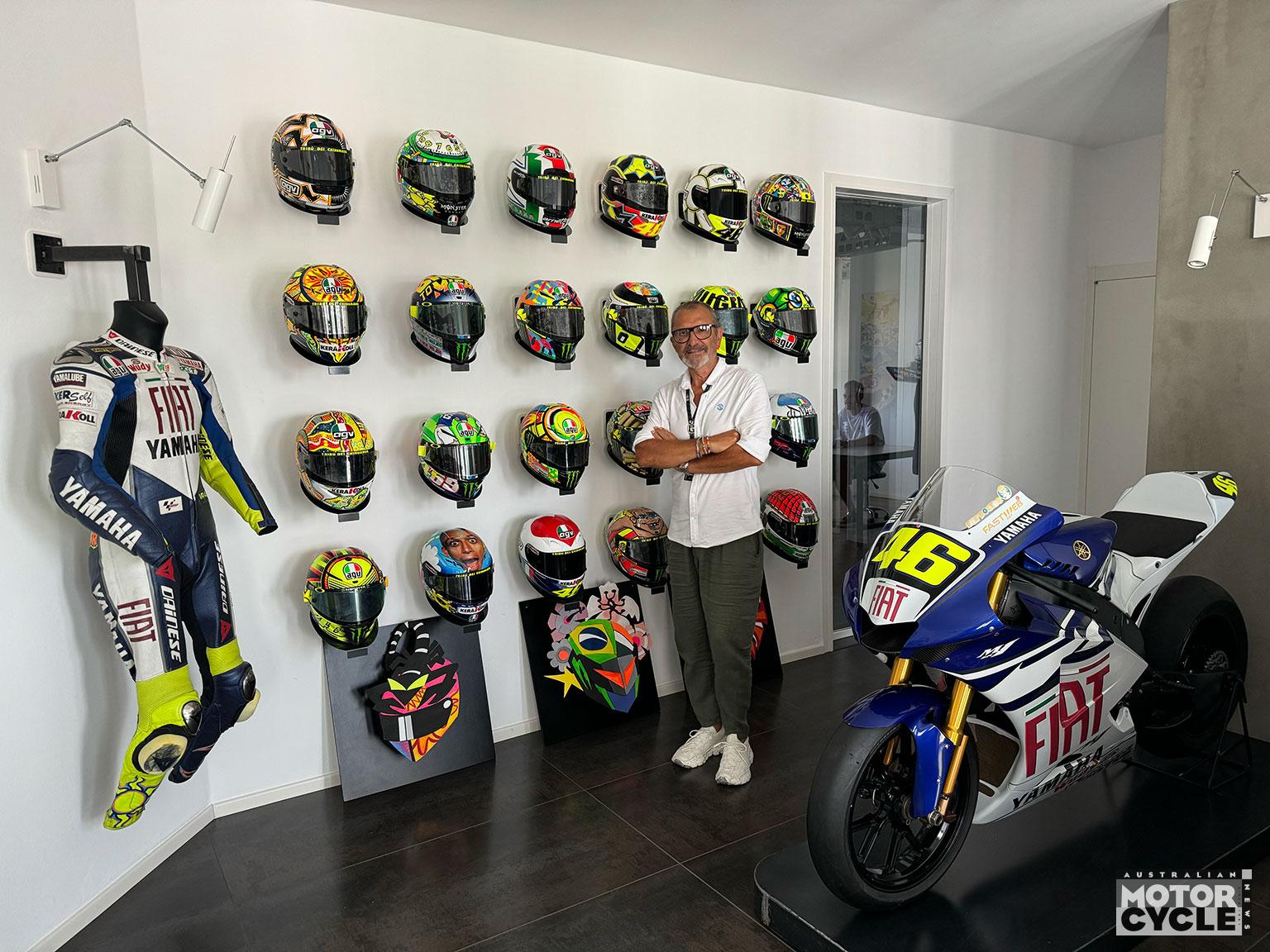
Over decades he has worked with a who’s who of the sport: Rossi, Marquez, Morbidelli, Simoncelli, Kevin Schwantz, Mick Doohan, Randy Mamola, Jonathan Rea and more. Their helmets – along with leathers and liveries – fill his Riccione studio near Misano.
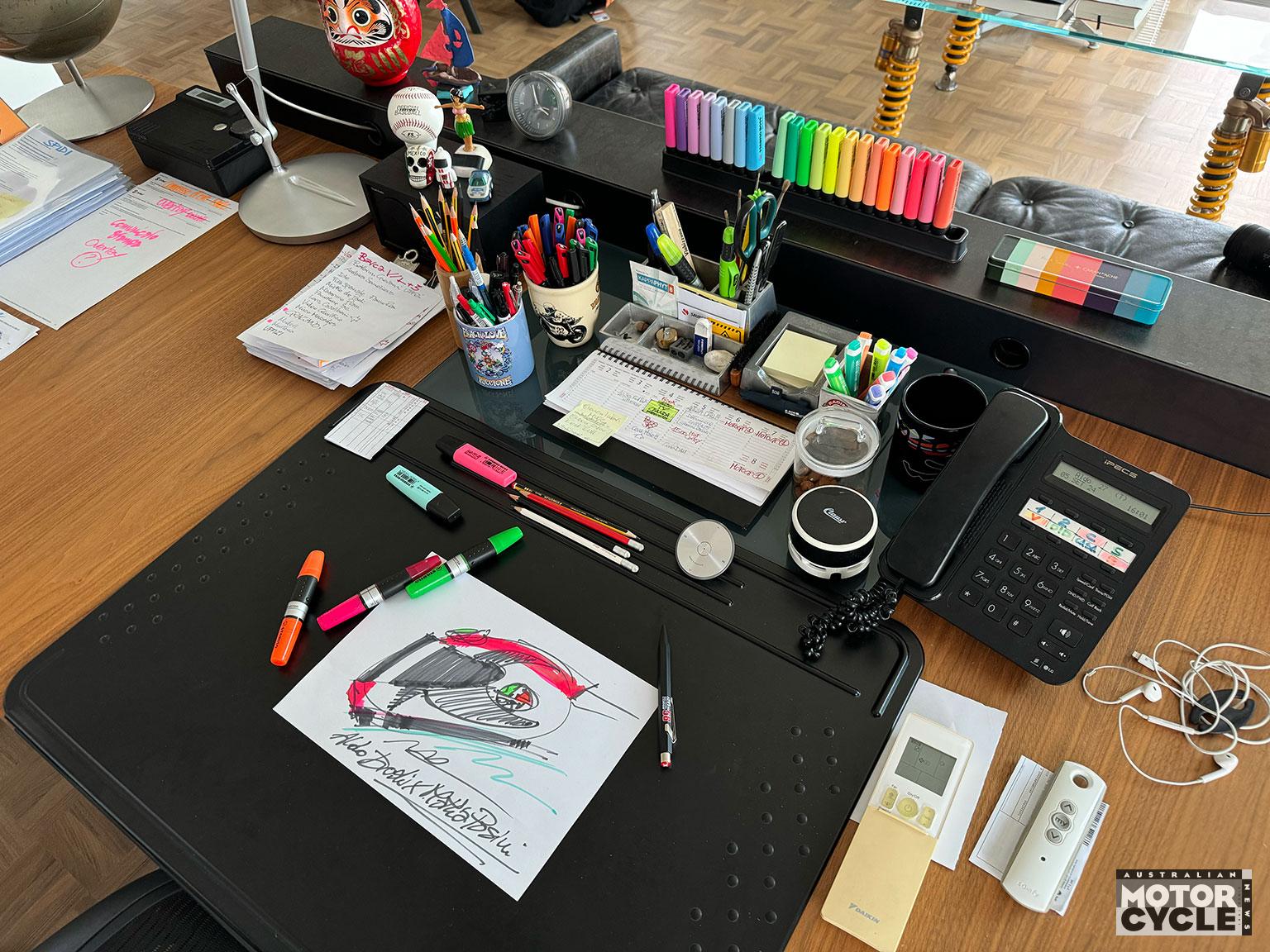
Drudi sees a direct link between his craft and racing itself. “There’s a really strong connection between our jobs, because racers try to find the perfect line… which is also what I’m doing when I make a sketch for a design – I make my line, then change it, change it.”
Years spent around riders have shaped his understanding of what it takes to win. “The riders can do better by making everything perfect… but to win on the last lap they need to have a different idea… They have to be a bit crazy and go past their limit. I think it’s the same in my job.”
Yet the apparent madness of racing hides something else. “Sometimes I was with Valentino when he was getting ready to race, like a bullfighter. He was so exact… These aren’t crazy guys… It’s completely the opposite – it’s about control.”
Then comes his most striking observation. “To be a champion you have to be strong and a cannibal,” he says, reflecting on the fierce rivalry between Rossi and Marquez. “They are two cannibals.”
Drudi worked with both until their infamous 2015 fallout, when Marquez’s camp cut ties with Rossi’s VR46 circle, including Drudi’s operation.
Motorcycles have been part of his life since childhood. He grew up on Italy’s Adriatic coast, at the edge of Motor Valley. “This region is a dream if you have a passion for motorcycles – it’s motorcycling’s Silicon Valley! My father used to take me to watch the Mototemporada races… so I asked him to buy me an Aermacchi Aletta race bike, but… there was no chance.
“I used to dream about becoming a racer… so me and my friends had our own races – pirate races! That’s when it all started.”
His first helmet design was for himself. “I painted my helmet red, with a coyote on the front… I was a fan of the Roadrunner cartoon… and Barry Sheene.”
Soon, others were asking. One of them was Graziano Rossi. “We used to ride together on the beach and he liked my helmet design, so he asked me to make a design for him.”
That connection would later lead to Valentino. Drudi’s work with Rossi became iconic, not just visually but emotionally.
“My favourite Valentino helmets aren’t so much a question of the designs; it’s the story behind them. The first is the Pink Floyd ‘Wish You Were Here’… The other is a copy of the Italian flag helmet that Graziano wore.”
The Wish You Were Here helmet honoured Simoncelli, Rossi’s close friend who died in 2011.
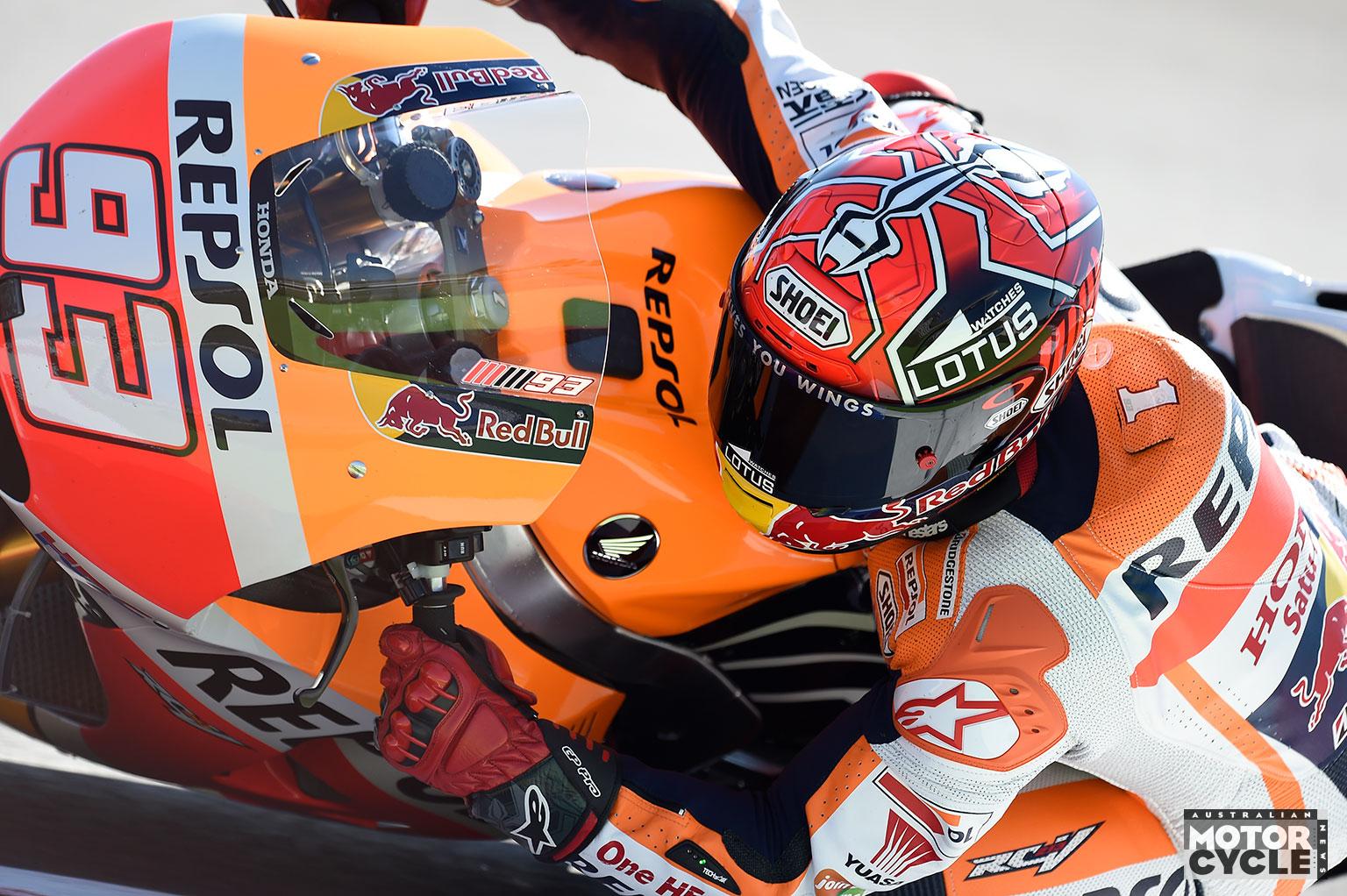
“Valentino is always heavily involved. He’s one of the most intelligent and curious guys I’ve ever met. The most curious riders become champions because their curiosity gives them an advantage.”
Drudi recalls Rossi as a boy. “I remember when Valentino was a kid… he was always in the middle, listening, watching, trying to understand. Even when he became a champion he always gave me ideas… but also he listened to my ideas.”
Despite his reputation, Drudi resists the label of artist. “I’m not an artist, I’m an artisan. Colours give me a special energy. I open my box of pens and I have 150 different colours. My heart beats a bit faster and then I test, test, test.”
He still works freehand, insisting creativity must come before computers. “Only after they do the first sketches can they start working with computers.”
In his early days he even rode to feel what he was trying to draw. “I remember trying to give the sensation of speed but sometimes I needed to be fast, so in the evening I’d ride my motorcycle up into the hills, to feel the speed.”
Time has changed his perspective. “When you are young, you have huge enthusiasm. Now I’m working with guys and I could be their grandfather!”
His message is consistent. “Humans have something special beyond technology. We are the only ones who have fantasy. We should work using our memories, not the memories in our phones!”
Then he smiles, waves his arms in frustration and says, “Vaffanculo!”, a favourite Italian swearword.
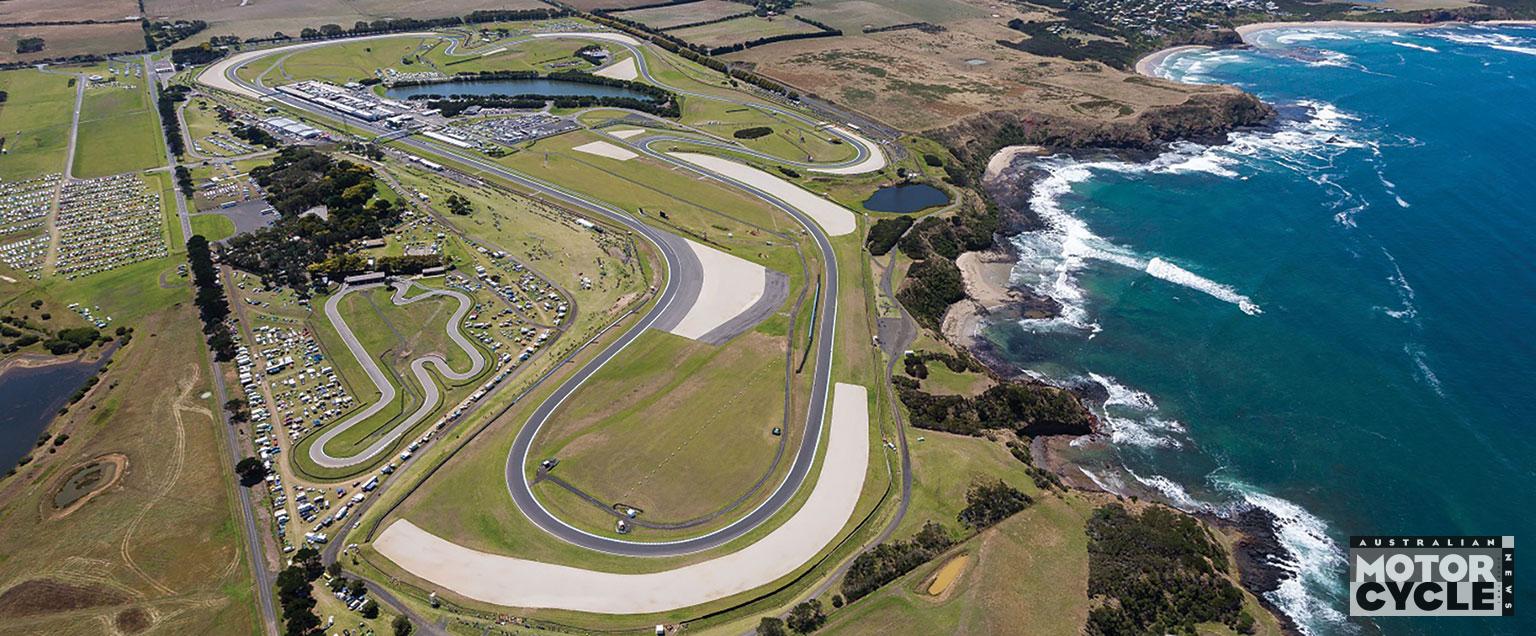
Nowadays Drudi’s work with riders – helmets, leathers and livery designs – only accounts for around 30 per cent of his business. He does a lot of corporate work, much of it for clients within the motorcycle industry. Most visible is his transformation of the Misano racetrack. Drudi painted the kerbs and asphalt runoffs in vivid colours, turning the track itself into an artwork.
No doubt about it, the world of motorcycling looks different thanks to Drudi’s work.