An early crash almost saw AMCN reader Kim Walker give it up for good. Now she has learned how to ride with her anxiety and reclaim the joy of the bike
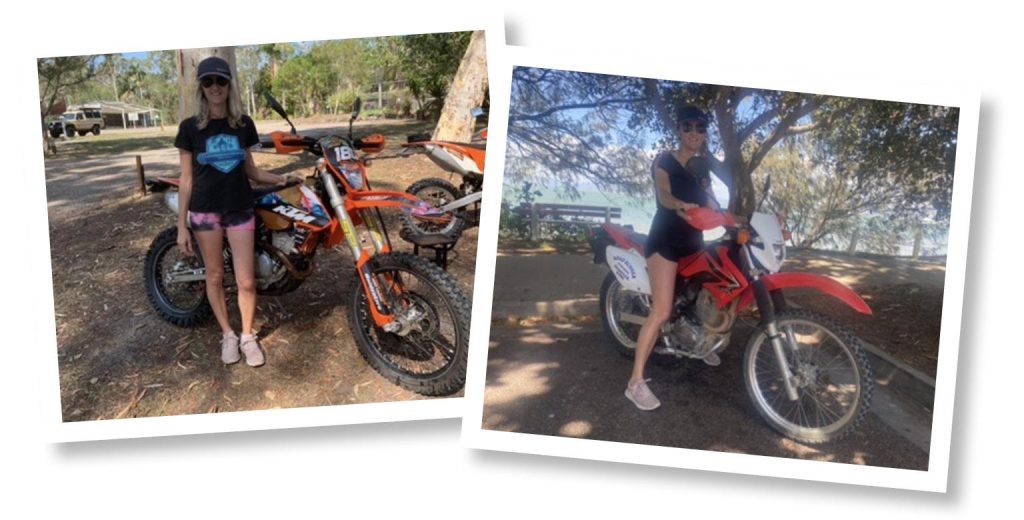
I grew up in the country, riding motorbikes on dirt roads, farms and massive properties out west. Riding was familiar to me. I felt capable and confident on a bike, navigating loose surfaces and wide-open spaces without much thought.
So when I decided to get my road licence, I didn’t expect anxiety to be part of the process. But it was – and it took me completely by surprise.
Learning to ride on the road felt very different to riding off-road. Traffic, rules, other vehicles and the pressure of being assessed all added layers I hadn’t anticipated. My confidence evaporated quickly, replaced by tension, self-doubt and a constant sense of being on edge. By day two of my course, my anxiety was so high that I crashed into a fence.
Physically, I was fine. Mentally, it rattled me.
What confused me most was that I knew anxiety. I’m a psychologist, and I’d spent years helping hundreds of clients understand and manage it. I understood the theory, the nervous system and the tools… yet there I was, struggling on the bike.
I was determined not to give up.
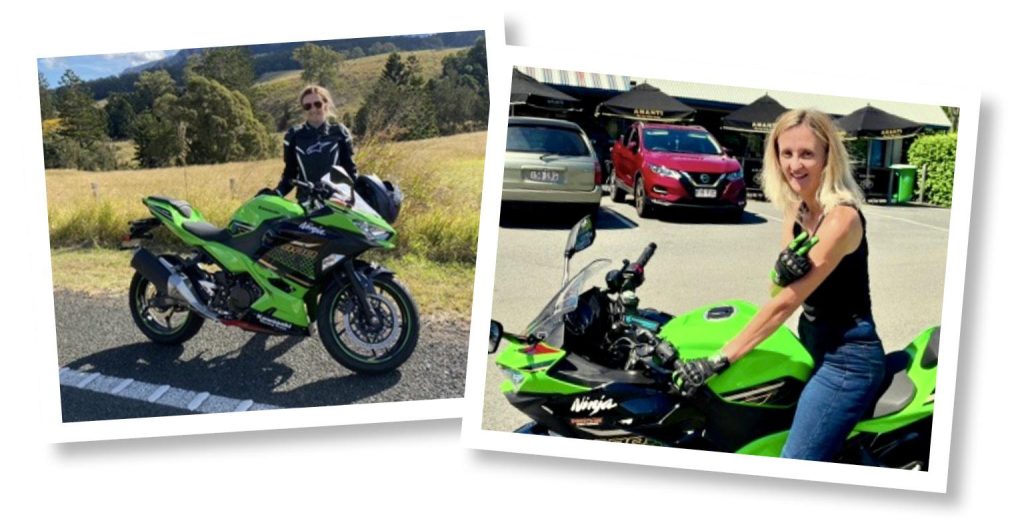
Instead of pushing harder, I slowed everything down. I practised endlessly in empty carparks. I rode short distances, over and over, until my body began to feel safe again. I applied the same principles I teach clients: graded exposure, nervous system regulation and compassion rather than criticism. It took around six months before I felt genuinely comfortable and confident riding on the road.
That experience changed my relationship with riding – and with anxiety.
When anxiety meets the road
Anxiety is one of the most common mental health challenges worldwide. In Australia alone, around one in 10 people live with an anxiety disorder, with women affected almost twice as much as men. Yet despite how common it is, only one in four people seek professional support. Left unaddressed, anxiety can interfere with work, relationships and overall wellbeing. Over time, it can also contribute to depression and burnout.
For riders, anxiety doesn’t stay confined to the mind; it shows up on the road. On a bike, it can appear as muscle tension, shallow breathing, racing thoughts or overthinking every decision. This isn’t just uncomfortable; it can affect attention, reaction times and decision-making, increasing risk.
And yet, riding is also one of the most effective stress relievers many riders have. Research shows that it increases alertness and sensory focus while reducing stress hormones such as cortisol. Many riders describe it as a state of ‘relaxed awareness’ – fully present, engaged and grounded.
More than 80 per cent of motorcyclists say riding improves their mood and overall happiness. For some, the bike represents freedom from daily pressures. For others, it’s about rebuilding confidence after setbacks.
What I didn’t expect, after my own experience, was how many riders would quietly tell me: “I feel anxious too.” Men and women. New and experienced. Riders returning after accidents, long breaks or major life stress. That was the moment Ride with Anxiety was born.
As both a psychologist and a rider, I’ve seen anxiety show up in many forms. In the body (tight shoulders, gripping the ‘bars, shallow breathing) and in the mind (catastrophising, self-doubt, fear of making mistakes). What helped me – and what I now teach riders – isn’t eliminating anxiety but learning how to ride with it.
Simple practices can make a meaningful difference. Slowing your breathing at the lights before taking off helps calm the nervous system instead of carrying tension into the ride; riding within your limits by choosing routes, speeds and distances that match how confident you feel that day; and really connecting with each ride, focusing on engine feedback, road feel and movement to bring attention back into
the present.
These may not remove anxiety completely, but they certainly reduce its grip.
My personal riding journey, combined with my professional experience, led me to create Ride with Anxiety – first as workshops and later as a book. I’ve now helped hundreds of riders build confidence on the bike while also learning skills that support better anxiety management in everyday life.
It’s not about ‘fixing’ riders or pretending anxiety shouldn’t exist. For many, anxiety will always be part of the picture. The goal is learning how to ride alongside it – so it becomes manageable rather than a reason to stop riding altogether.
Anxiety is common, and among riders it’s often hidden behind silence or self-judgment. But acknowledging it doesn’t make us weaker – it makes us safer, stronger and more self-aware.
Sometimes the ride isn’t just about the road ahead; it’s about learning how to keep going – with confidence, skill and compassion – even when anxiety shows up.