Wonder woman’s super legacy – fast, fearless and unflinching, Peggy Hyde rewrote the rules for women on two wheels
If Peggy Hyde (born Margaret Moorehouse) was a tough and focused competitor on Australian racetracks during the 1960s and 70s, she was just as formidable off it, and remained so for all her 82 years.
Born in Melbourne, Peggy attended university studying music, although she never actually finished the course when she broke her arm in a road accident and was unable to do her practical lessons. She later became a choirmaster and organist at Holy Trinity Church in Kensington.

Margaret became Peggy at an early stage, and Moorehouse became Hyde with her marriage to Julian Hyde. Their marriage was a result of a mutual fascination with all things motorcycling, which even included racing each other’s bikes. Her first motorcycle was an ageing 350cc Matchless, but this was short-lived after being totalled in a road accident. In its place came a much more serious road burner – a 750cc Norton Atlas – and a desire to ride faster and faster. To this end, the Hydes joined Hartwell Motorcycle Club – initially just for the fellowship and social side – and between them purchased a 250cc Suzuki T20 with the aim of competing in the booming and ultra-competitive Lightweight Production class. Her first race meeting was a Hartwell MCC club meeting at Winton in 1967, at which she and Julian shared the Suzuki and the same set of leathers.
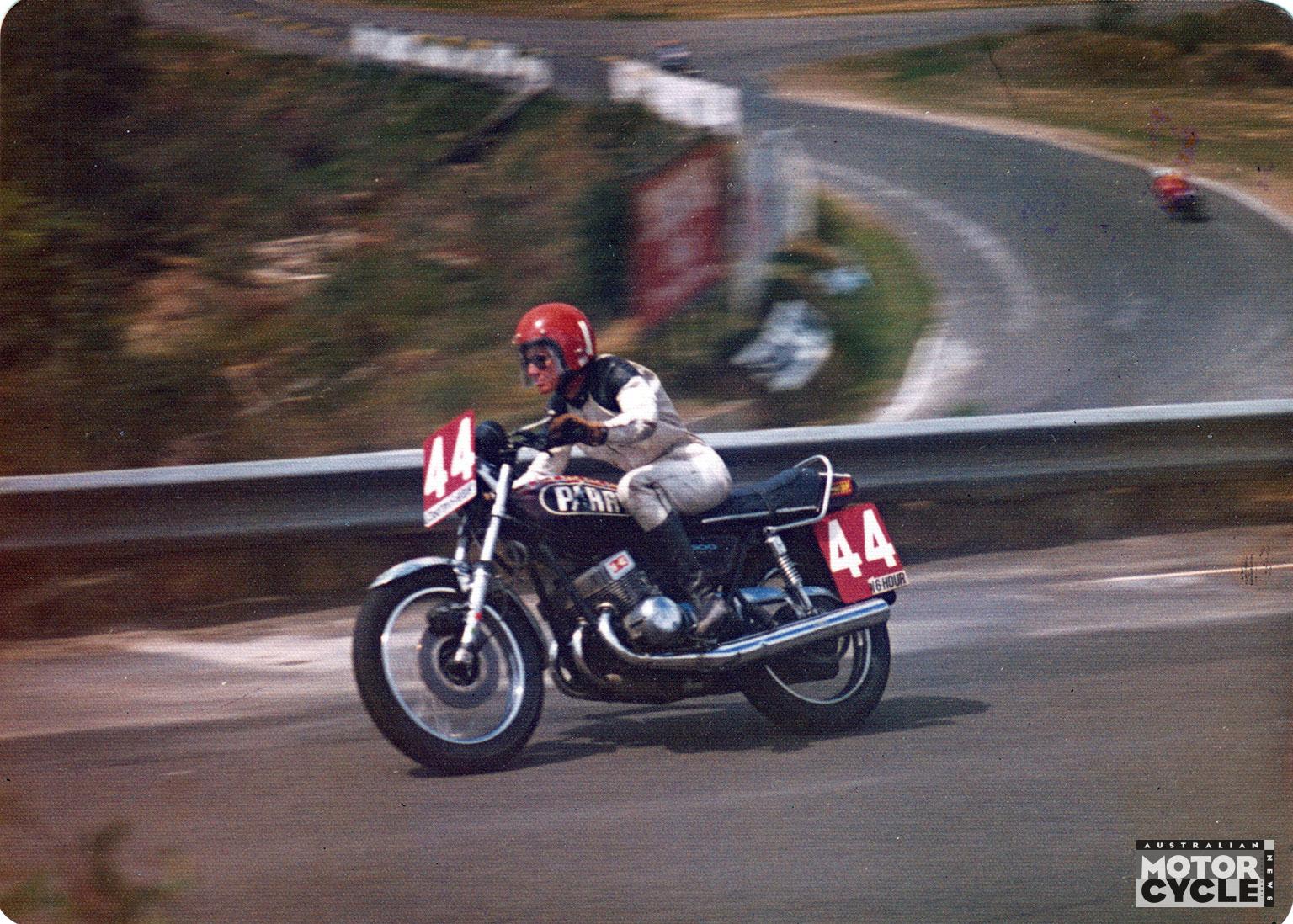
Even at this early stage, Peggy was standing her ground in the male-dominated sport and got into quite a kerfuffle with the Auto Cycle Council of Australia over her efforts to be issued with an unrestricted racing licence. She won, although she publicly maintained that this was a world-first for a woman, which was disputed. With her new licence, Peggy was aiming for bigger things, like the Unlimited Production class, which was dominated by some of the biggest names in the sport at the time.

That was the sort of challenge that fired up Peggy and she began a search for competitive tackle, as she told me when I interviewed her in 2014: “We went through bikes quite quickly because we commuted a lot from the Dandenong Ranges into Melbourne. Geoff Cook from Kawasaki Motorcycles wanted me to buy the first model H1 triple, although I had a Yamaha TR2B by then for racing. Geoff kept pressing me, so eventually I did buy an H1 at cost, except that he offered to pay me $100 off the price for every race that I won. I had actually paid some money off the bike – about $400 – then I started winning races, but Geoff Cook didn’t want to pay. So he eventually sued me and a whole lot of silly nonsense went on in court, but the upshot was that he didn’t win and he had to pay all my costs as well – so that was the end of that! I really liked the H1, but it had its peculiar habits.”
Don’t mess with Peggy, on or off the track!

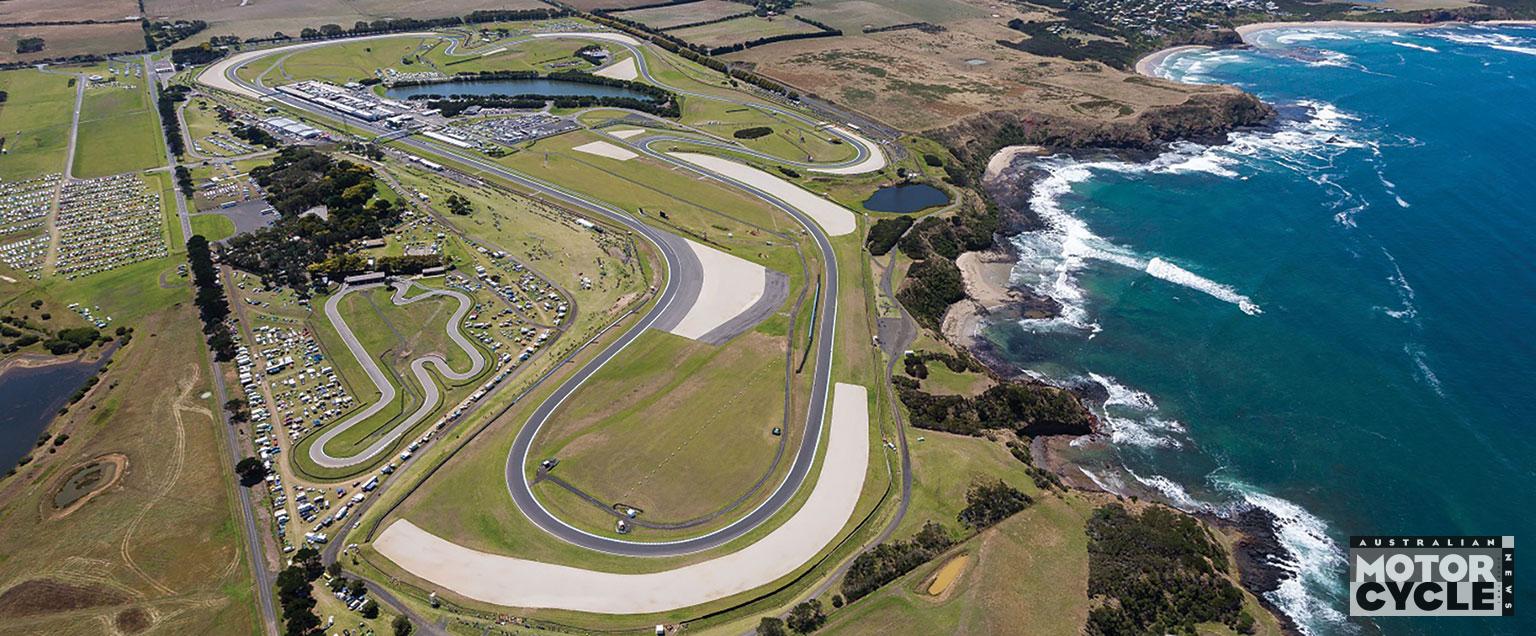
Peggy and the H1 took to the track for the first time at Mallala for the 1969 South Australian Grand Prix, and to run-in the bike she rode it to and from the event – and finished sixth in the Senior GP. Soon after, she won the Senior C Grade event at Phillip Island on 3 January 1970. It was hailed in the press as the first win for a female in open competition in Australia and marked the beginning of a stellar year for Peggy. At the prestigious Harvey Wiltshire Memorial meeting at Calder, Peggy really showed her class in the all-comers Unlimited Production Race where she faced stars like Australian Unlimited champion Ken Blake (Kawasaki H1) and multiple Australian TT winner Peter Jones on a T500 Suzuki. A mediocre start meant she had it all to do to reel in the leaders, but Peggy had fire in her belly as she tore through the field, taking the lead from Jones on lap six, who then dropped the model trying to regain the lead. Now she had Blake on her hammer, but he too crashed after a big move on the final corner failed to come off, leaving Peggy a clear winner from her good friend Jeff Curley.

Taking her Yamaha TR2B with them, Peggy and Julian moved to Sydney where he took up a job offer with Macquarie University. There she began breeding cattle dogs and Tottenburg dairy goats. On the track, she took up where she had left off, racing at Oran Park, Amaroo Park and Mount Panorama, Bathurst.
And she was perfectly placed to compete in the state’s biggest event – the Castrol Six Hour Race at Amaroo Park, which she competed in from 1970 until 1974, the final time riding with Kawasaki dealer Tim Parry. Not surprisingly, Peggy was the quicker of the pair, but Tim still has fond memories of the race: “During Peggy’s second stint she was carted wide by a rider on a 750 Honda at the top of Bitupave Hill and ran off into the infield of the loop. The footage of her bucking bronco ride through the bush and rocks was on every six o’clock television news. When it was over, I bought one of the cattle dogs she had bred (Ralph) and went our separate ways.”

The TR2B Yamaha was sold and replaced with a Z1 900 Kawasaki, which Peggy used as road transport as well as for Production racing, but by the mid 70s her enthusiasm for racing was waning. Julian and Peggy were divorced in 1979 and she also had health problems: “I had been very ill and had big surgery, and I got interested in sailing. I wasn’t (physically) fit for the profession I’d been trained for, so I took a year off and did some sailing and wound up in the Gulf of Carpentaria. Then I went to Cairns and finished up buying a yacht.”

From 1984, Peggy lived on her yacht in North Queensland, well away from the motorcycling scene, at least until Easter 2014 when she accepted an invitation from long-time friend Tim Parry to attend the Penrite Broadford Bonanza. There she donned the same white leathers she had worn more than 40 years before, pulled on the same open-face Bell helmet and took to the track on a racing motorcycle (the ex-Mike Hailwood Ducati 750SS) for the first time since 1978. It was just a steady tour in the Star Session, but it was enough to whet her appetite for more. After 38 years away from the sport, Peggy joined the Road Racing Association of Townsville and renewed her competition licence.

In more recent times, Peggy applied her famous tenacity to an incredible number of worthwhile projects, including campaigning for greater awareness of domestic violence against females, animal welfare and many environmental causes. In the latter category, she frequently clashed with officialdom and developers, on at least one occasion being locked up.
Throughout her racing career, Peggy maintained that, male or female, the three ingredients necessary for success were talent, judgement and motivation. Whether racing or not, motivation was something that stayed with Peggy all her life.
Peggy Hyde passed away on 5 February 2026.
What a Hyde! Day history was made
We relive the moment macho men realised Peggy was better than them
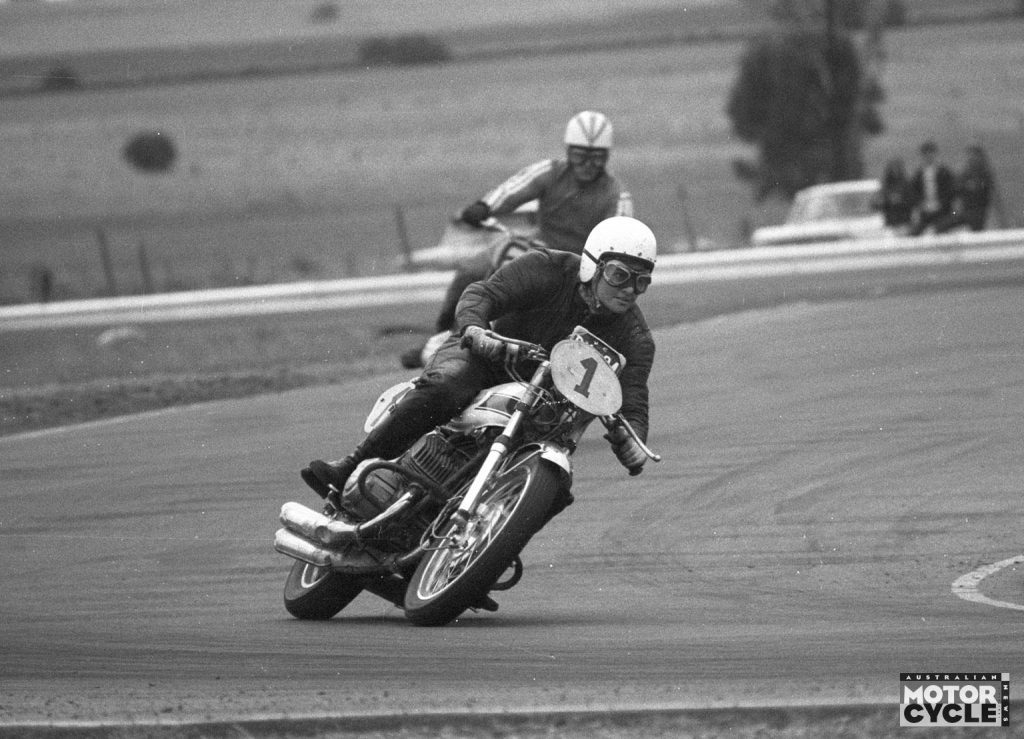
ON 19 APRIL, 1970, at Calder Park Raceway, a quiet recalibration of Australian motorcycle racing took place, even if few realised it at the time. Peggy lined up on the second row of the grid for the Production race at the Preston Motorcycle Club’s Harvey Wiltshire Memorial meeting. The attention, naturally, was elsewhere: Ken Blake, Peter Jones and Jeff Curley, the established stars. Hyde, newly promoted to B Grade, was riding a Kawasaki H1: fast, volatile and already earning its reputation as a handful even for experienced racers. The track was greasy after drizzle and an earlier kart meeting. It was not a forgiving day.
The flag dropped. The favourites surged ahead. Hyde made no heroics off the line.
Then she began braking impossibly late.
By the end of lap one she was carving past Blake under brakes at the end of the main straight. By lap two she had reeled in Jones and taken the lead.
Jones slid off attempting to respond. Blake stayed in pursuit, pressure building, until he too fell trying to reclaim the position on the final lap. Hyde rode on alone.
AMCN’s race report at the time captured the tone of the moment with a bluntness of the era: the men had tried to “save face for the male sex”. They failed.
For Hyde, the victory was decisive not because of who she beat, but how she beat them. It was a Production race. Same machinery. Same conditions. No allowances.
“That was important to me,” she told me four decades on. “We were all on equal terms.”
She had advantages others didn’t. Years of commuting in all weather. Courier work through Melbourne traffic. Endless wet miles. A rider trained to trust judgement over bravado. Slow starts never bothered her; she rode methodically, one pass at a time.
After the chequered flag she completed another lap, wary of having been flagged early in a previous race. When she finally returned to the pits, the crowd closed in. One slap on the back knocked the wind out of her. It was Jeff Curley, laughing.
“They all fell off! They all fell off!” he shouted.
On that slippery Calder afternoon, Peggy didn’t ask for acceptance. She earned it simply by riding better than everyone else.