Fresh emissions filings suggest BMW is adding a new M1000RS to its range, powered by the M1000RR engine
BMW is about to add a new M1000RS model to its lineup – sharing the engine with the top-spec M1000RR but adopting a more road-biased stance.
The news comes courtesy of new filings with the California Air Resources Board, which need to be made before a vehicle can be sold in that state. The new M1000RS shares the same certification as the 2027 M1000RR, which is expected to be unveiled soon with an all-new chassis and styling based on last year’s Concept RR show bike.
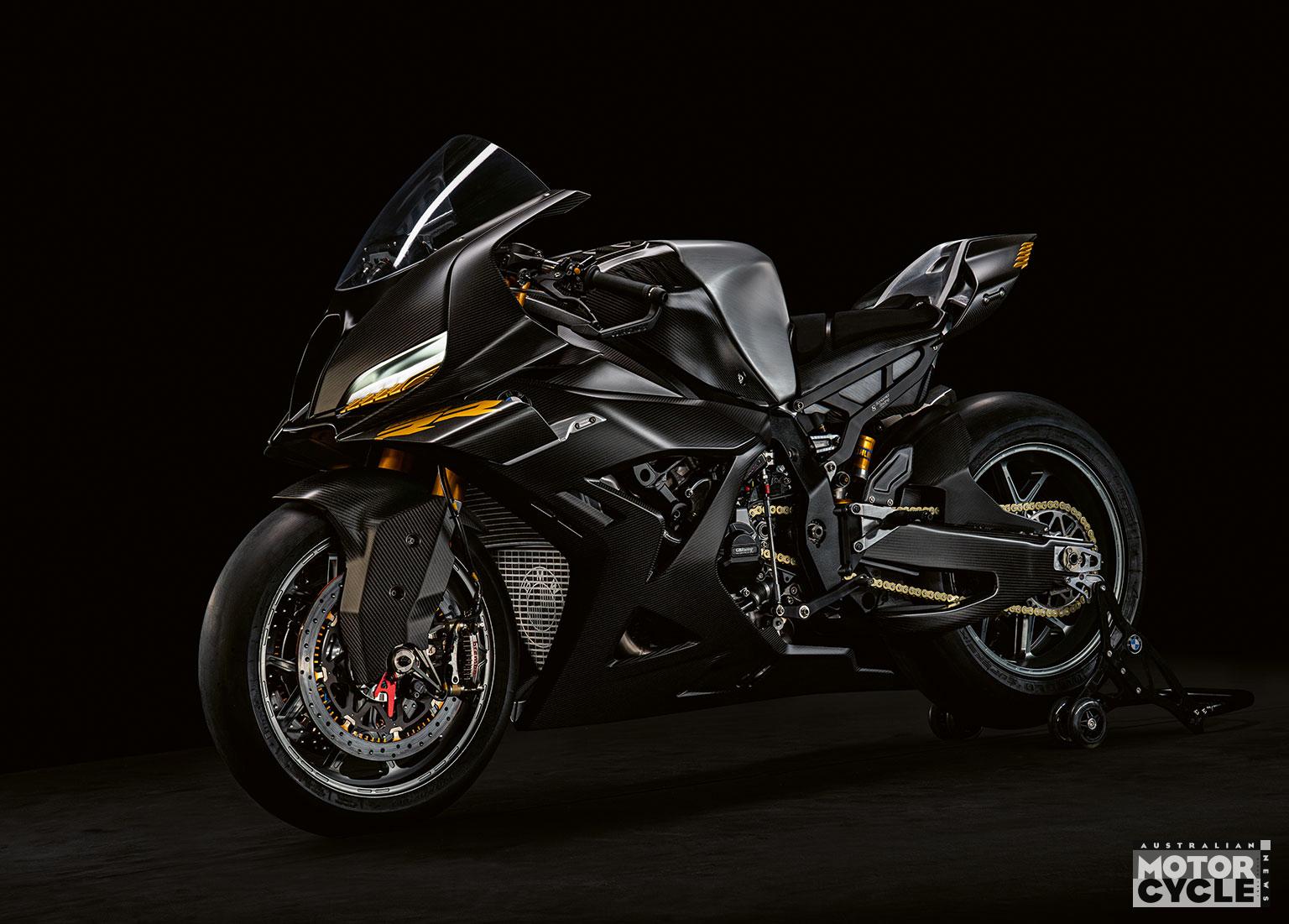
Details of the bike are still scant. The filing document shows that the 2027-spec M1000RR engine has a revised designation, changing from ‘TBMXC01.0MRR’ in 2026 to ‘VBMXC01.0MRR’ in 2027, but that’s a normal annual change, with the first letter denoting the year of production. ‘T’ was 2026, and since ‘U’ is missed out for being too similar to ‘V’ when stamped into a casting, we go straight to the ‘V’ for 2027. The actual emissions of the 2027 engine are unchanged compared to the 2026 version, but the document shows that evaporative emissions – the vapours that can escape from the fuel tank into the air – have been slashed from 1.1g to 0.2g. That points to a new fuel tank and system, and since both the 2027 M1000RR and the new M1000RS have the same evaporative performance, that hints they share the same fuel tank.
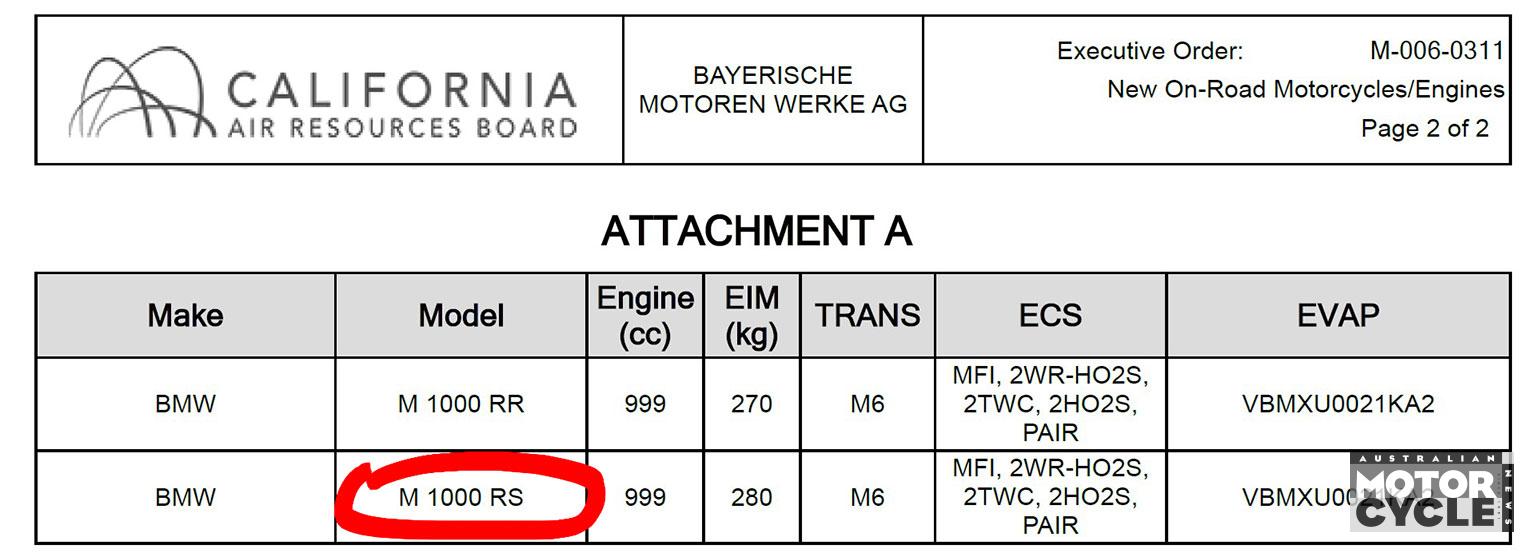
The ‘RS’ name, however, indicates a more road-oriented approach than the outright race-replica M1000RR, which is really a homologation special to maximise WSBK racing potential. The RS, according to the CARB documents, is around 10kg heavier than the RR, although the paperwork uses an ‘Equivalent Inertial Mass’ (EIM) figure intended to approximate the real-world weight rather than the more accurate dry, wet or kerb weight numbers we’re more used to. The EIM weight of the M1000RR is listed at 270kg, which is the same as the current model’s. Since the existing M1000RR’s kerb weight, including fuel, is 194kg, and EIM figures are rounded to the nearest 10, it appears that the EIM number is around 75kg more than the kerb weight. That means the M1000RS, with an EIM of 280kg, will have a kerb weight of somewhere around 205kg including a full tank of petrol.
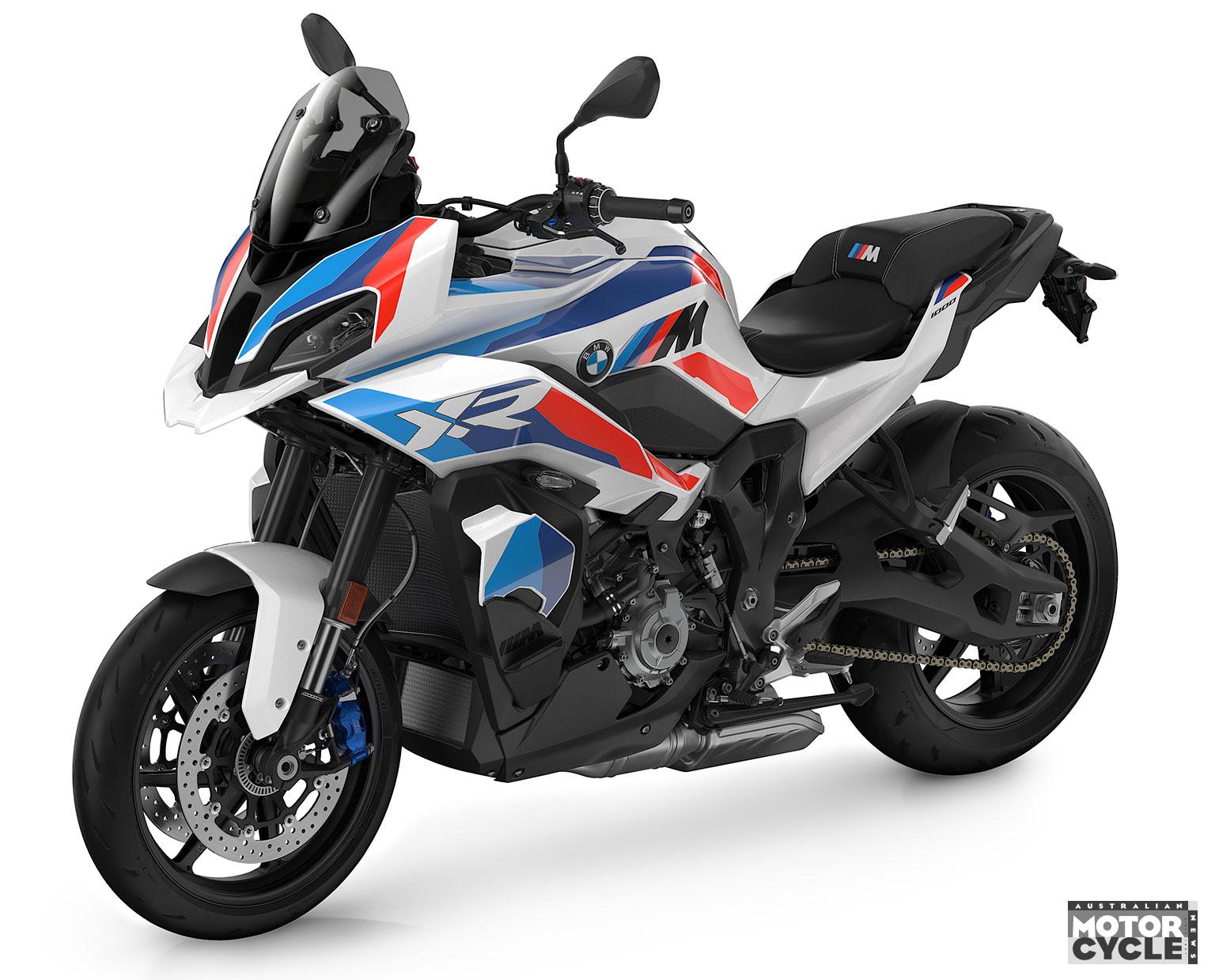
The M1000RR engine, shared by the new M1000RS, features upgrades including titanium valves, different intake and exhaust porting, reshaped combustion chambers and larger-diameter throttles when compared to the version seen in the S1000RR, M1000XR and M1000R.
The new model means BMW’s S1000/M1000 ranges are getting increasingly complex. At the moment, the RR versions are superbikes, the XR models are crossover-style sports tourers, and the R variants are naked bikes. The M1000RS looks like it’s aiming to squeeze between the M1000RR, S1000RR and M1000XR, slicing a small niche into even more subcategories.