Fast learner – In a class war exploding with horsepower and hype, Yamaha’s new R7 has grown sharper, smarter and more mature
Yamaha’s popular R7 is under attack from all sides as manufacturers desperately try to attract new and young riders to their entry-level sportsbikes. This is a booming segment. The class is evolving, the bikes are improving and, with the new World Sportbike series running alongside the Superbikes this year, excitement around these light and affordable machines is building nicely. So sportsbikes are anything but dead.
Yamaha jumped into this class with the new and highly acclaimed R7 in 2022 and now, with the competition from Triumph, Aprilia, Kawasaki and CFMoto so intense, has jumped again with a significantly uprated machine.
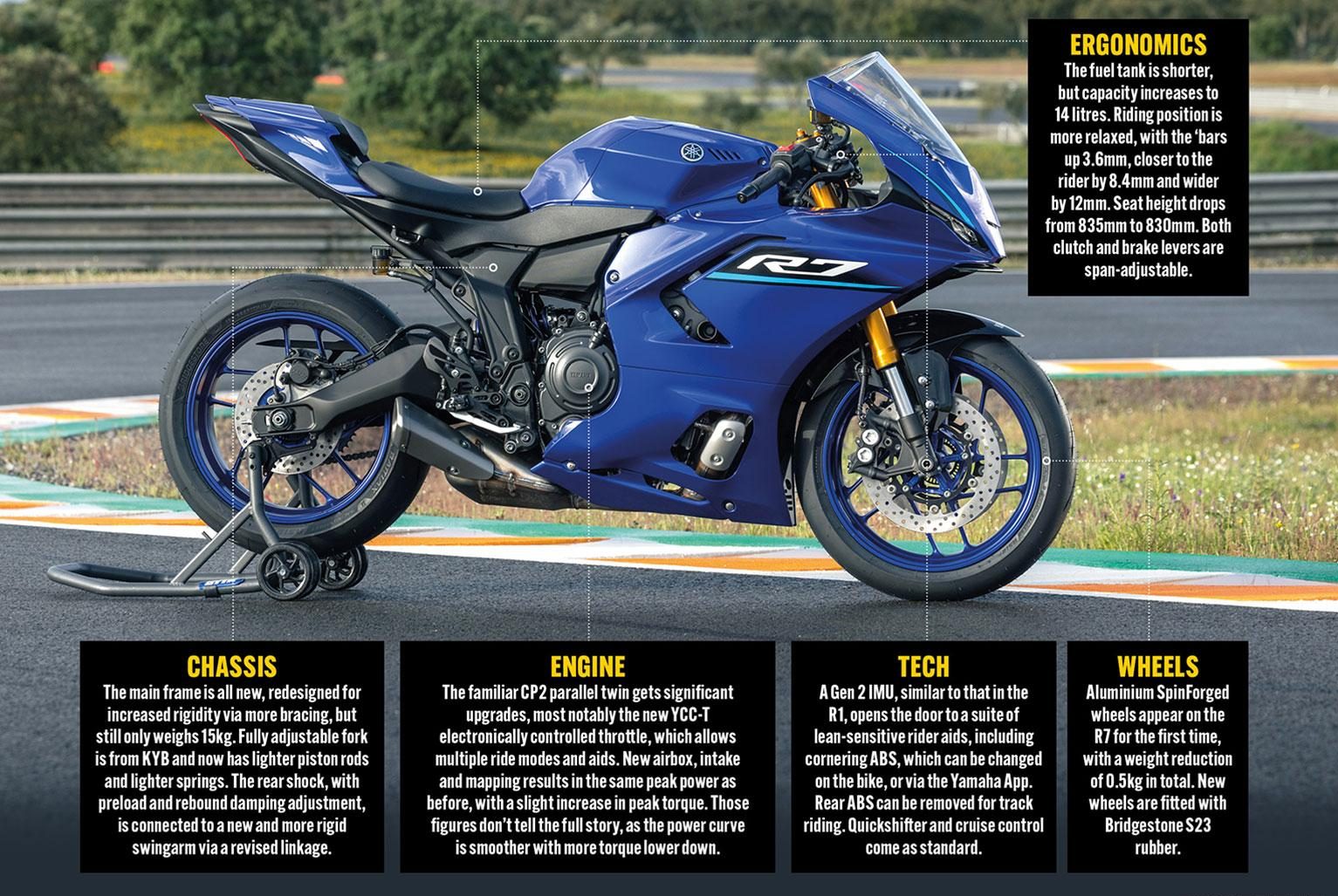
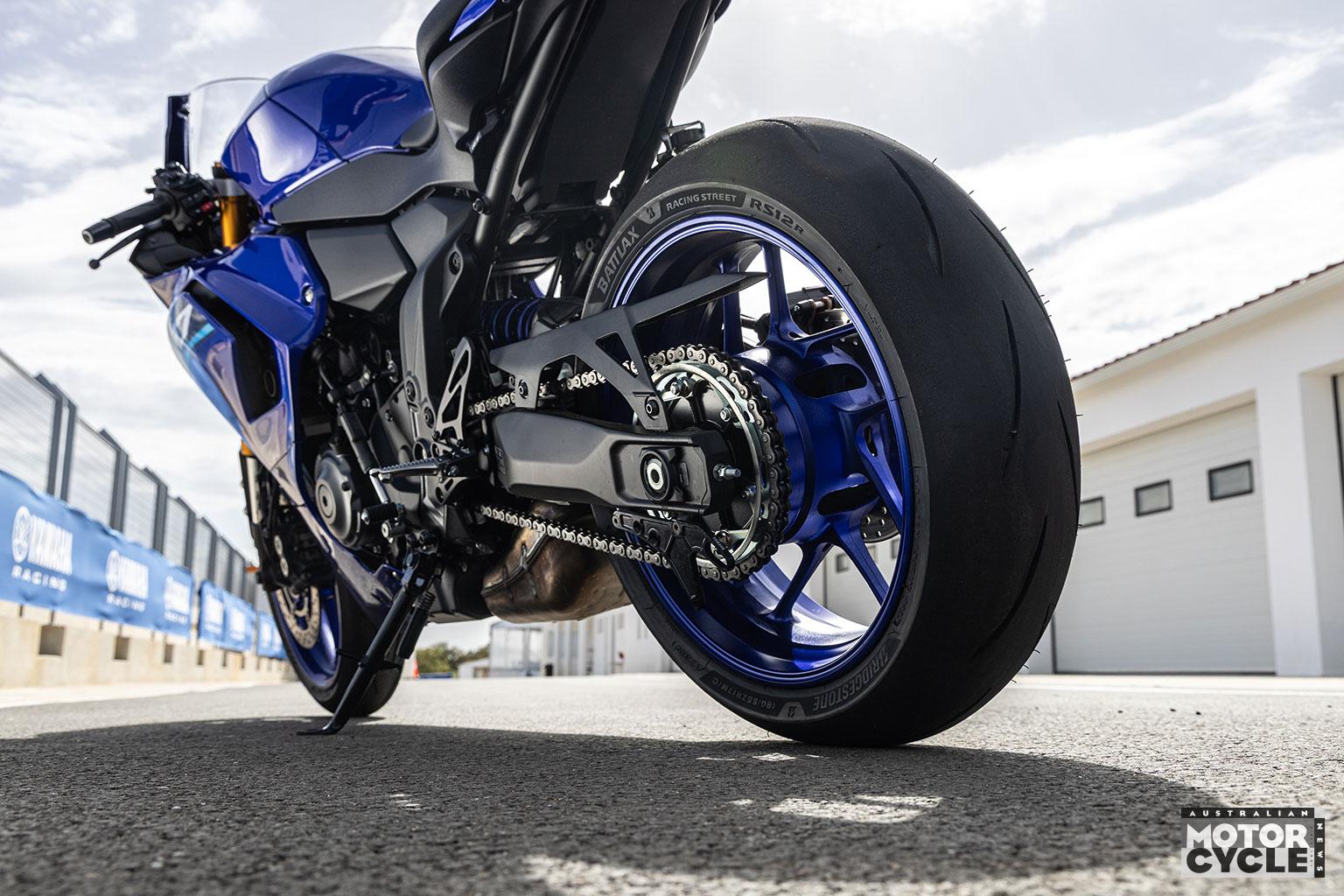
Yamaha’s brief was to preserve the essential everyday accessibility of the R7 but also give it more performance while upping the level of tech and rider aids for both road and track. The familiar 689cc CP2 engine remains unchanged internally, but the introduction of Y-CCT (Yamaha Chip Controlled Throttle) allows more precise control, gives a slight increase in torque, and opens the door to riding modes and lean-sensitive rider aids for the first time. Bridgestone Battlax Hypersport S23 tyres sit on lighter ‘SpinForged’ wheels, the suspension is uprated, the frame is more rigid, and the riding position is more relaxed, with a slightly lower seat and a larger fuel tank.
The biggest talking point, though, will be the comprehensive suite of lean-sensitive rider aids on an entry-level sportsbike. With traction control, slide control, lift control, power modes, riding modes, Yamaha’s third-generation quickshifter, engine brake management, launch control, brake slip regulator, plus ABS, it’s as electronically potent as an R1. For a sportsbike pushing out just over 70hp and priced at $A16,549 in the two standard colours (more on this coming up), it is stunningly well equipped.
Yamaha wanted us to get a feel for the new R7 on both the road and track, which is why we had a full-on day riding 160km from Spain into Portugal followed by a late-afternoon track session on the dramatic new Circuito do Sol just over the border
in Portugal.
Riding the new R7
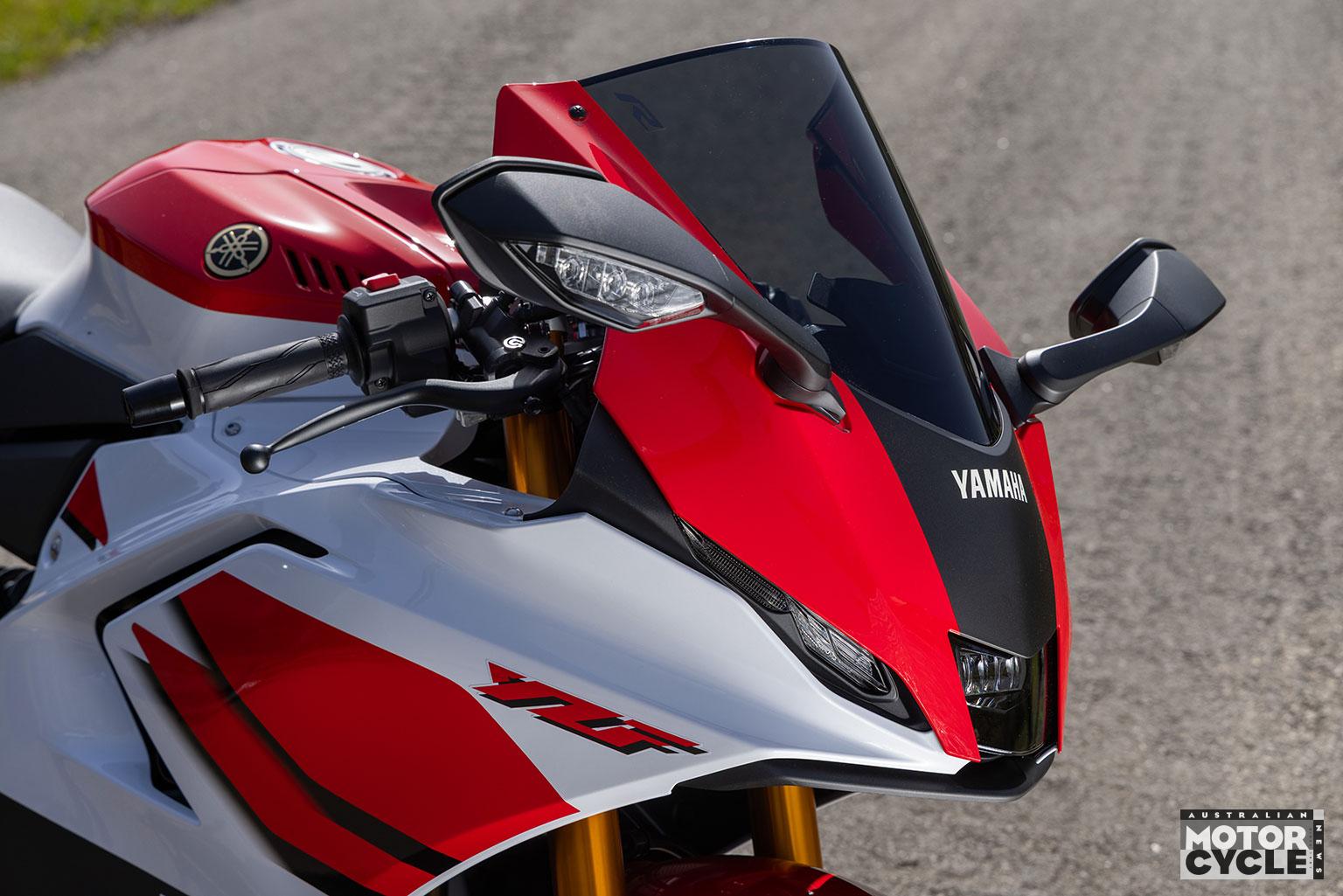
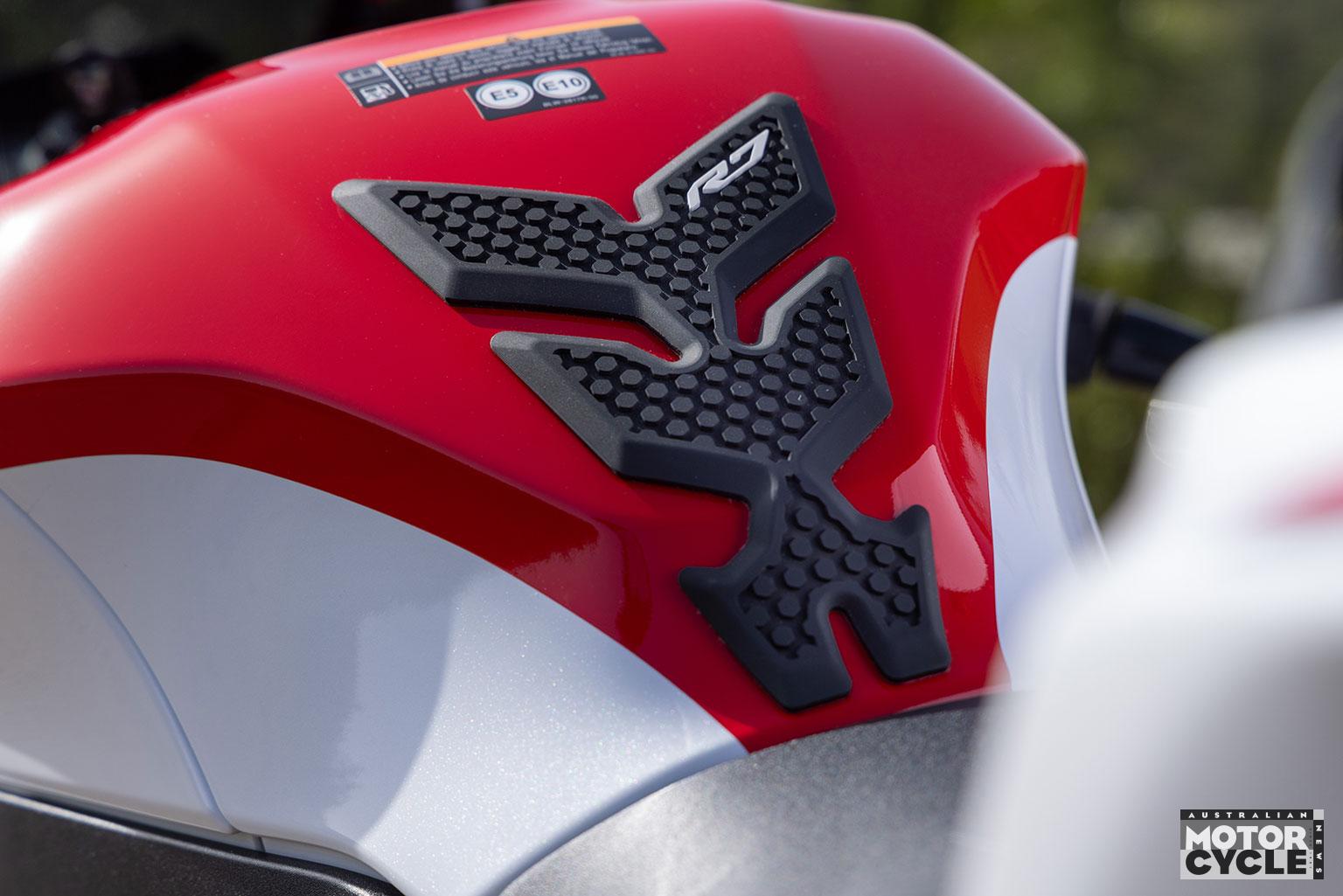
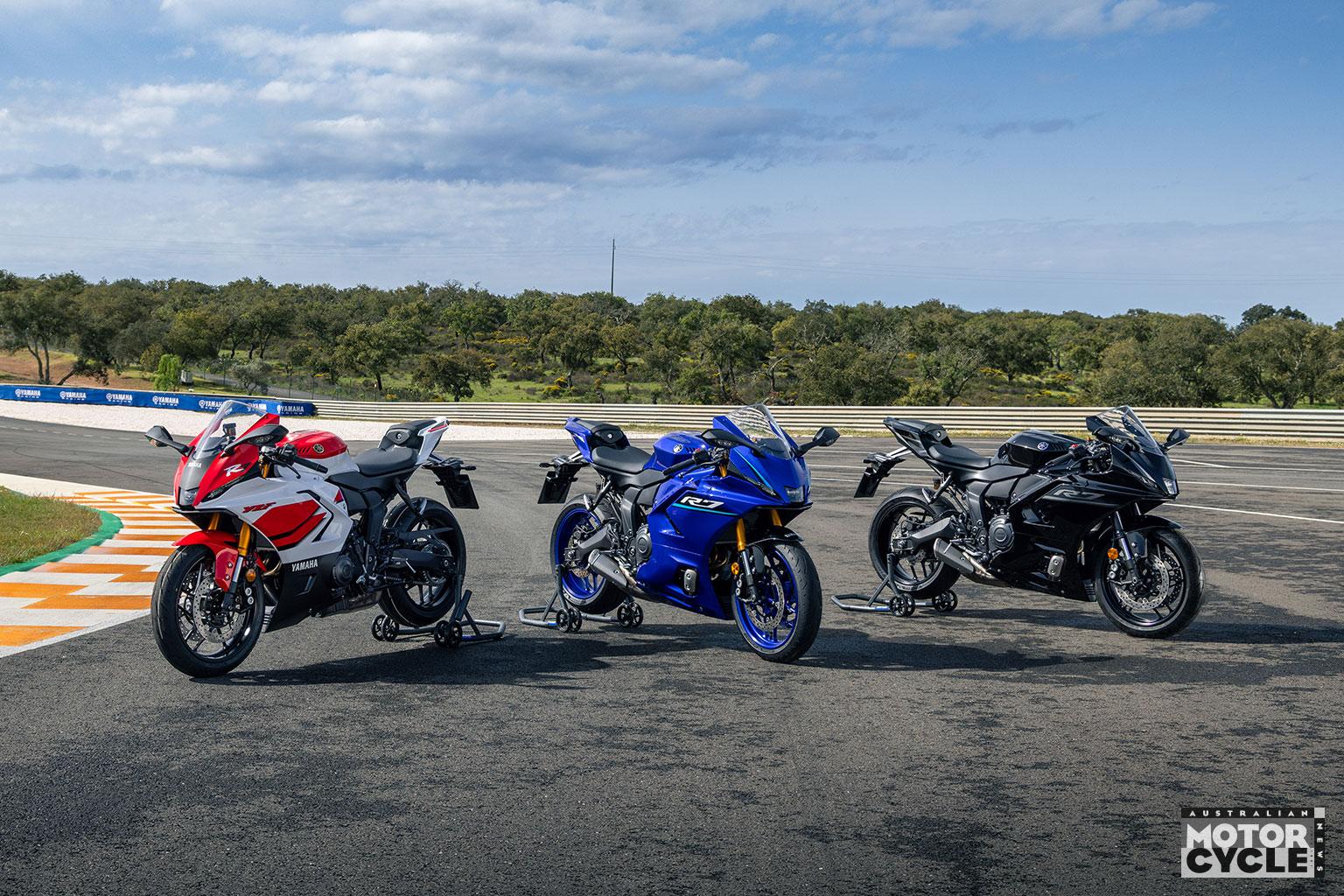
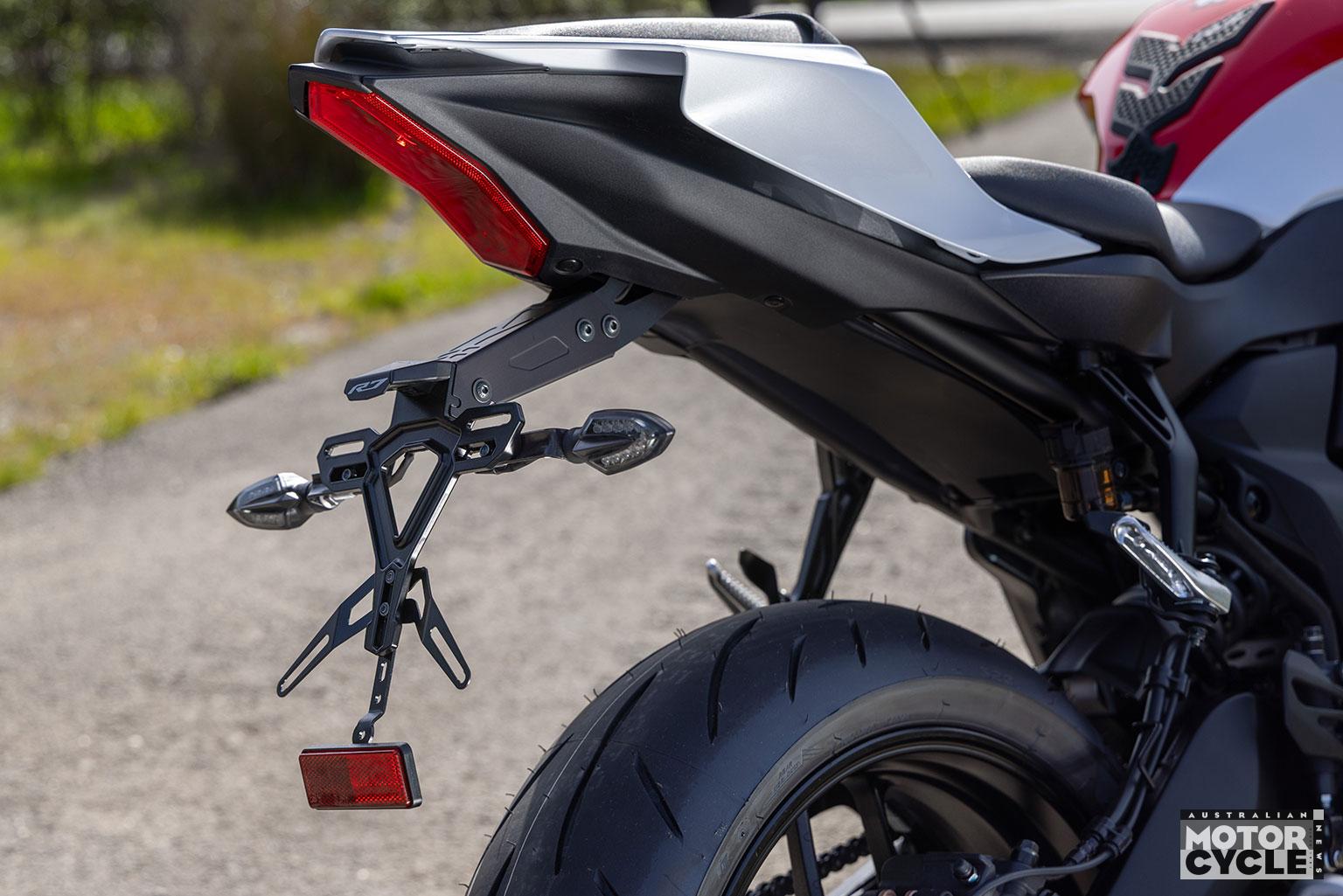
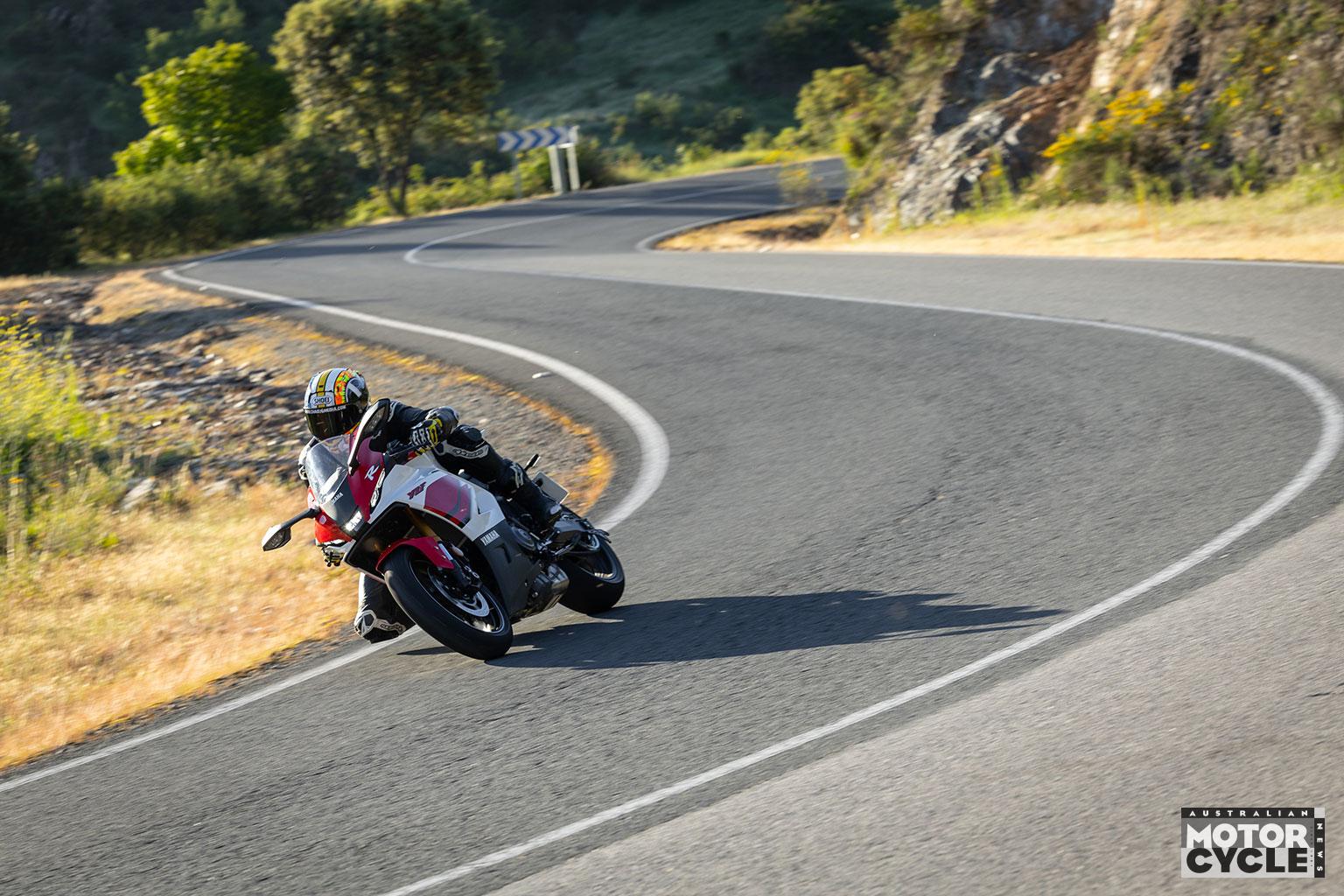
The third colour option (for an extra $500 at $17,049) is this: iconic red-and-white paintwork lifted from the race machines of the 1990s to mark 70 years of Yamaha performance. Those old enough to know will immediately be transported back three decades to the original R7 ridden by legendary riders such as Noriyuki Haga in World Superbike. And I, for one, have fallen for it.
That said, the original 749cc R7 was raw exotica – a limited run homologation special built to go racing at the highest level – and today’s R7 is incomparable in most respects. Some purists will doubtless say that this colour scheme should only be applied to very special Yamahas or remain in the history books forever, but it works on the new bike very well.
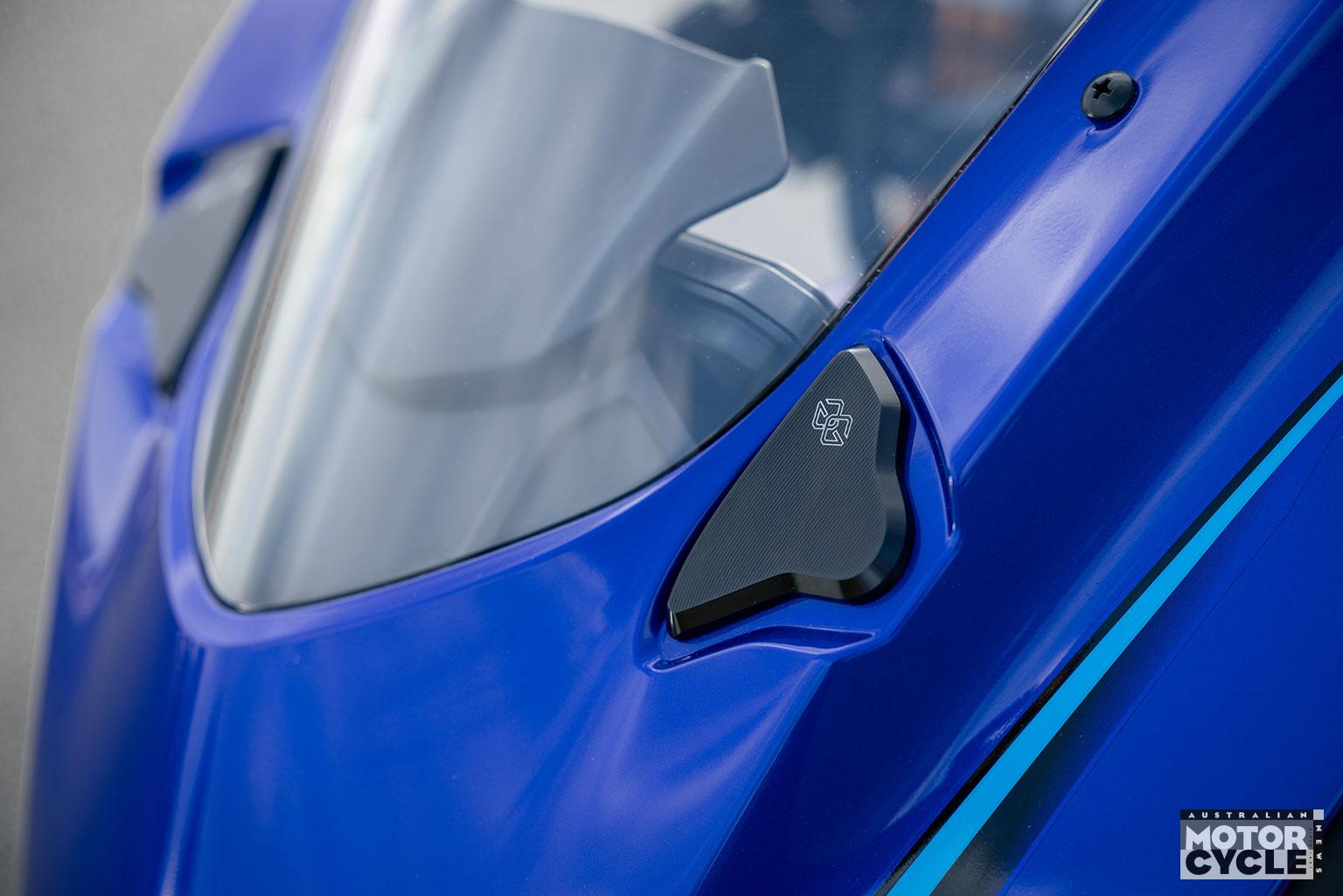
It’s not just the paintwork that lifts it above the average, either. A new top fork yoke lends a factory R1 appearance, while the adjustable fork hints towards genuine track potential, and a new 5-inch full-colour dash with Bluetooth connectivity adds a high-end feel.
Making a sub-$20k, entry-level sportsbike so visually appealing is hard work, but Yamaha has done it. New riders and old timers alike are going to appreciate the R7 on looks alone. It packs a wow factor few bikes in this class can begin to match.
We started our test ride in Aracena, south-west Spain, heading to our lunchtime destination, a new racetrack called Circuito do Sol, 160km away across the Portuguese border.
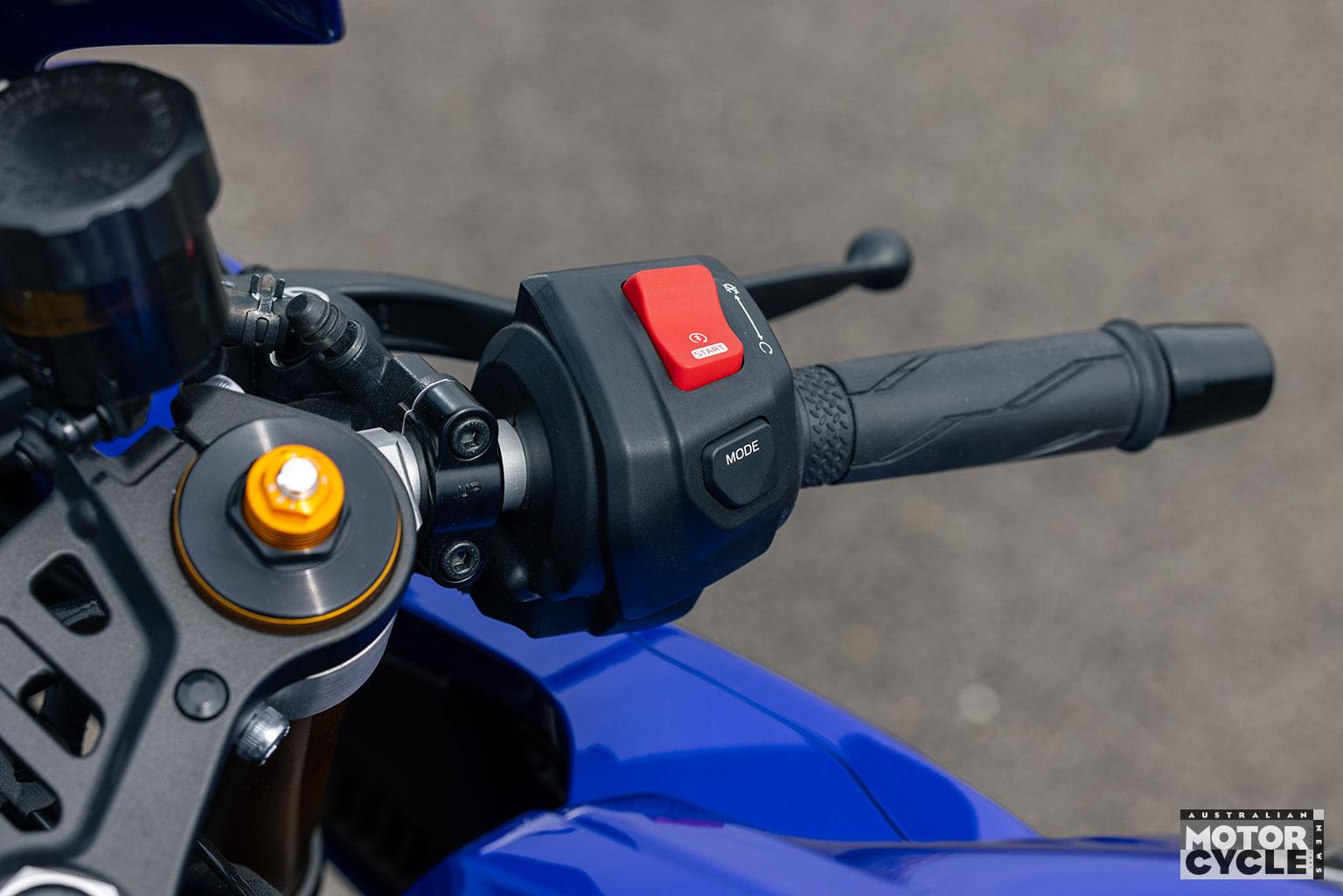
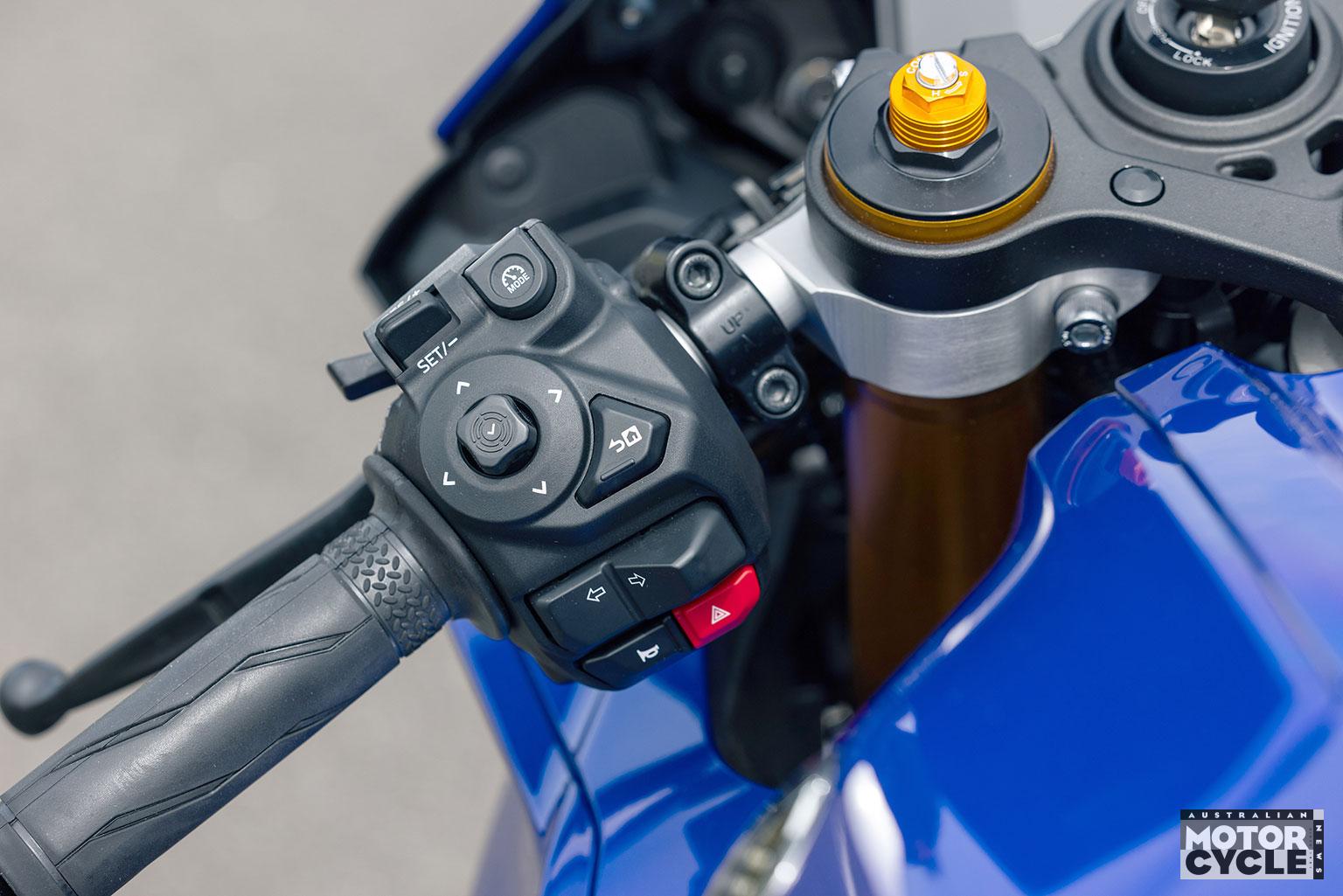
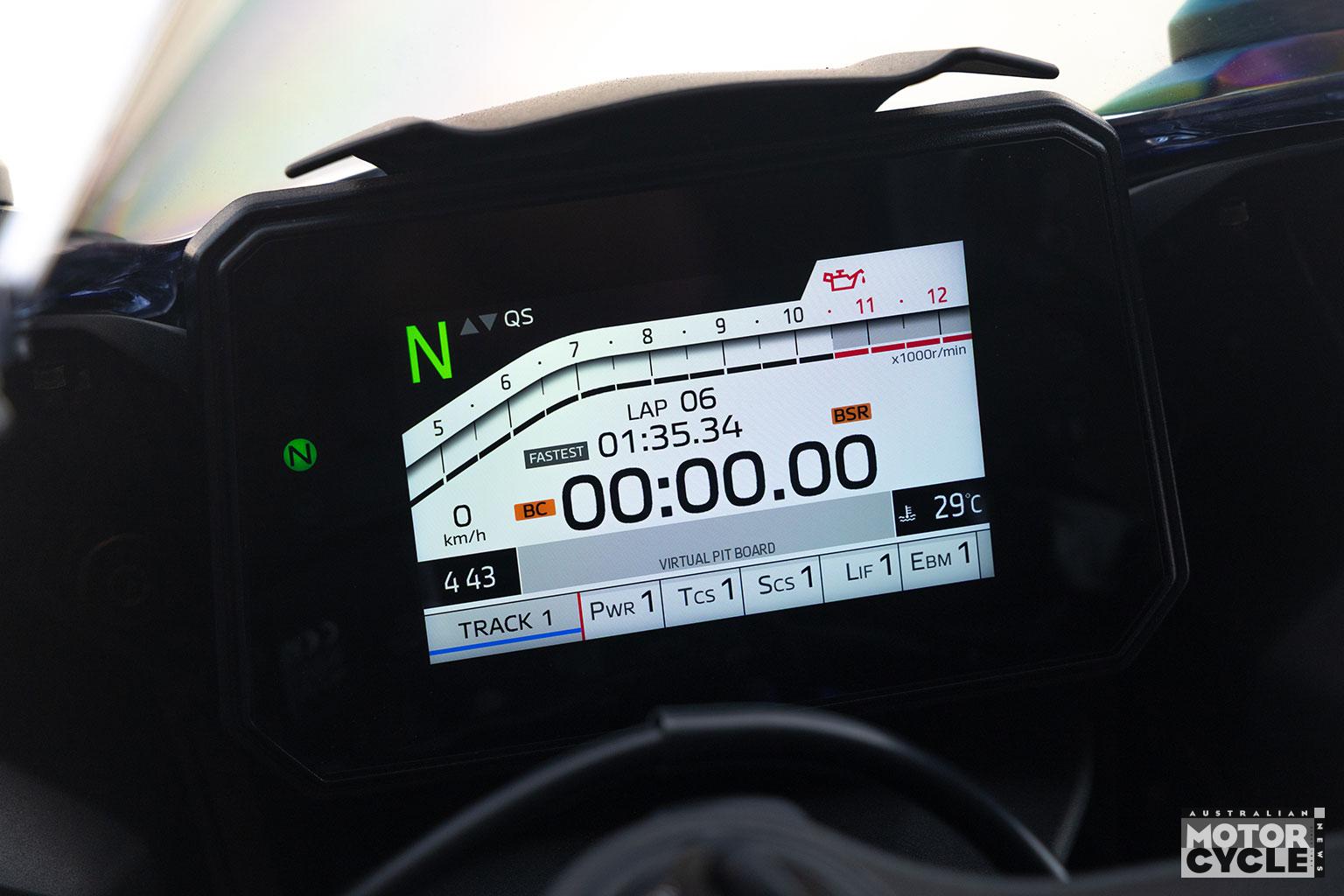
On board, the R7 is unmistakably Yamaha, with familiar switchgear, including the love-or-hate joystick and double-tap indicator switch. The new display is neat, easy to read and navigate, with four themes to choose from, ranging from racy to informative. Modes can be changed on the go, as can most of the rider aids. It’s all relatively simple to operate and, for a bike in this class, has one of the best displays.
The riding position and ergonomics feel more relaxed compared to the outgoing model, and you notice this immediately. The ‘bars go up 3.6mm and are closer to the rider by 8.4mm and wider by 12mm, and the seat, now at 830mm, is 5mm lower but feels like more.
The old bike seemed small, almost toy like, but the 2026 R7 feels more grown-up and purposeful. I think the wide ‘bars really help this, along with the quality of key visual references like the new top yoke. There’s a premium feel.
Yamaha has made the frame and swingarm more rigid – presumably for track riding and racing – but softened the front fully adjustable KYB suspension. You can feel the difference in the set-up, especially the suspension transmitting more to the rider. The ride is plusher, more comfortable and much more like an accommodating street bike than a track-focused machine.
Some of the roads in Spain were broken and potholed, yet the Yamaha soaked them up. Combine that with the roomier riding position and we have, dare I say, a relaxed and comfortable sportsbike. The thought of a long morning’s ride suddenly appealed now I was getting a feel for the new R7.
Engine-wise, Yamaha has added YCC-T ride-by-wire, played with the air intake and fuelling, and that’s pretty much it. Peak power is a claimed 54kW (72hp) at 8750rpm and the same as before, while peak torque is up a fraction to 68Nm at 6500rpm, but the CP2 parallel twin feels smoother and stronger than before, especially in the lower mid-range. The up-and-down quickshifter is smooth, too, but I found myself opting for fewer gear changes than on the older bike, going back just one gear rather than two for a brisk overtake. I even found myself riding lazily away from Spanish villages in fourth or fifth gear with decent acceleration. The new R7 can be remarkably civilised.
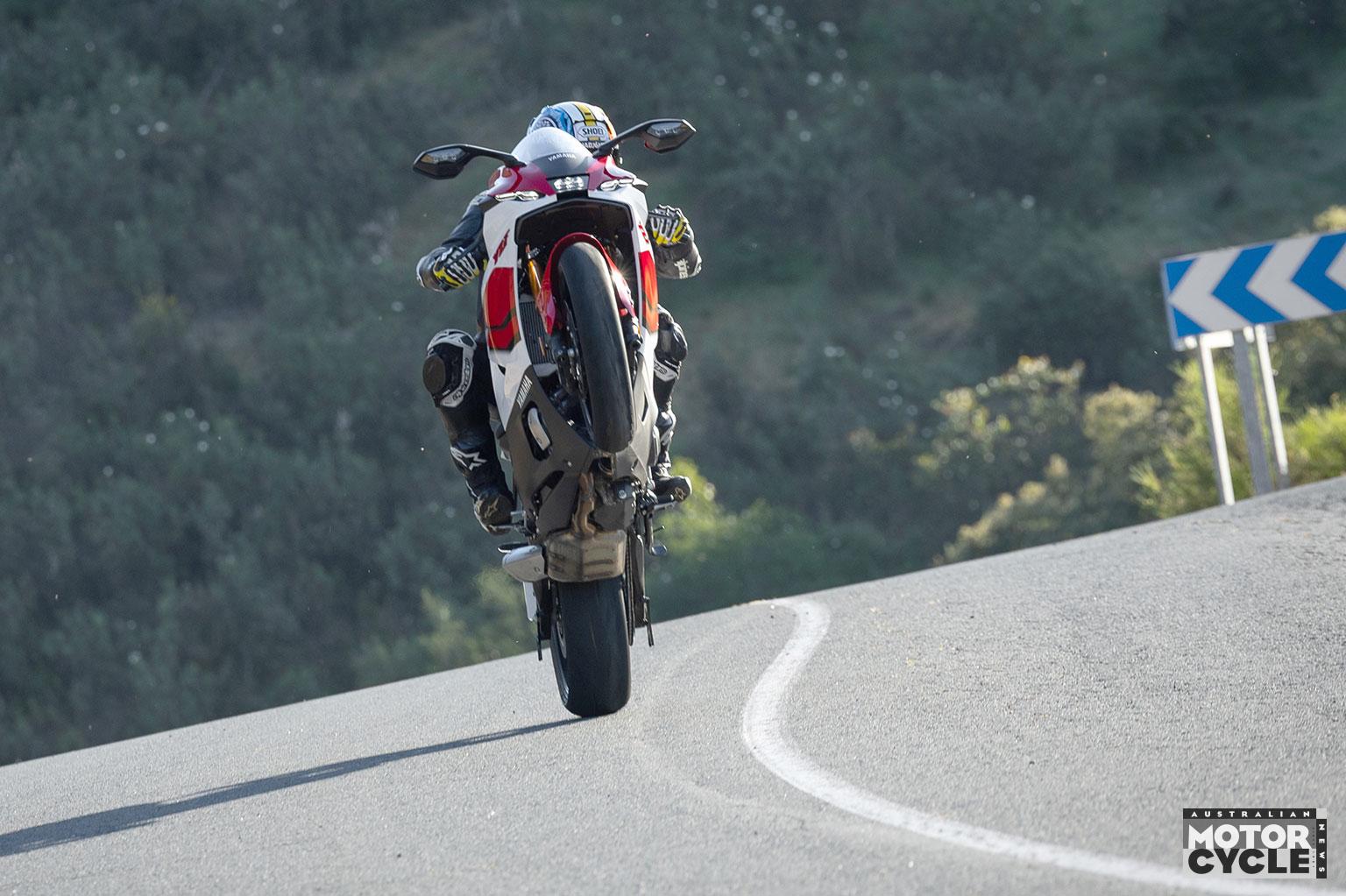
You can still chase the revs, obviously. The CP2 is full of torque but loves a free-spinning gallop towards the redline too. With the lift control removed, it will happily loft the front wheel in the first two gears with some help from the clutch.
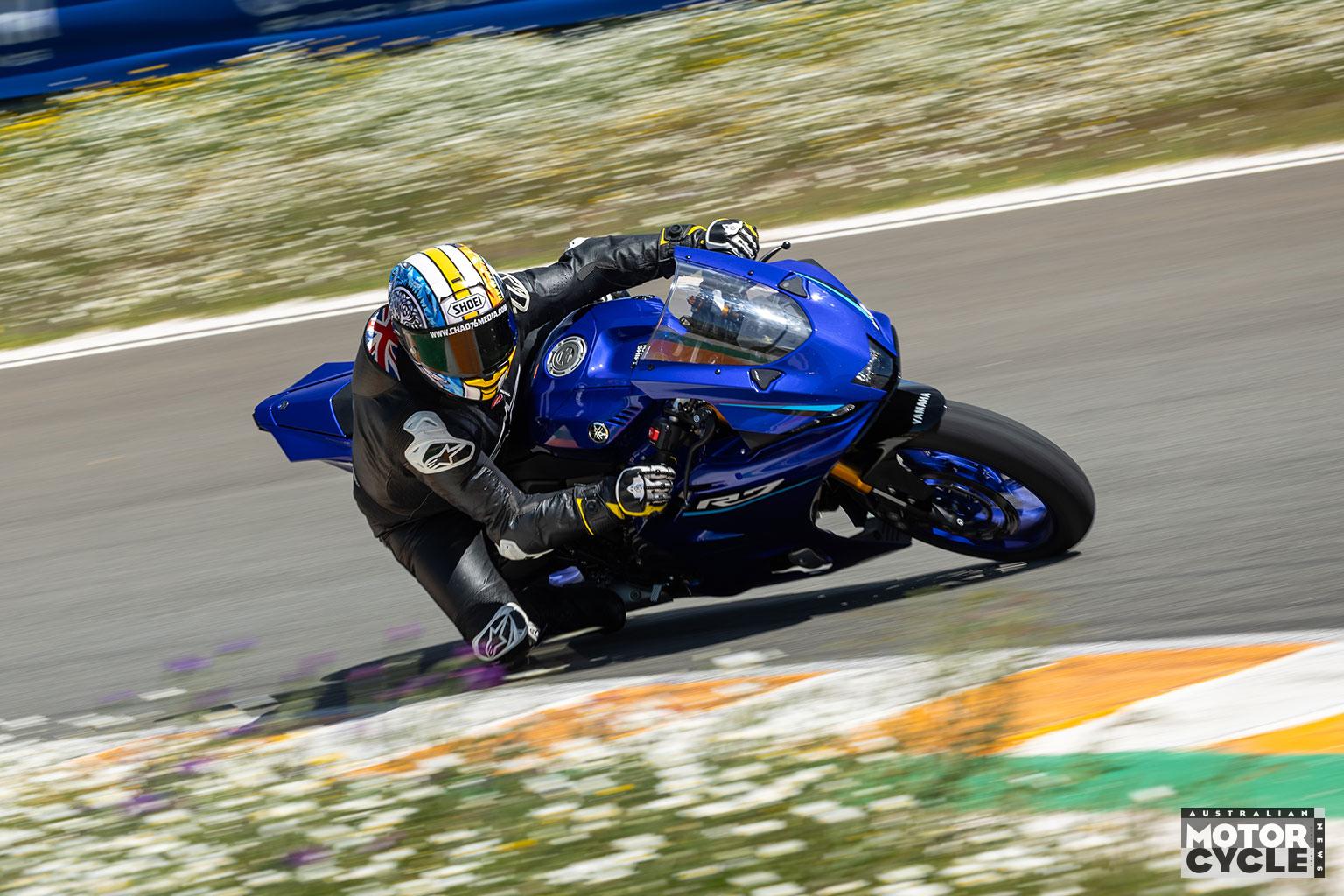
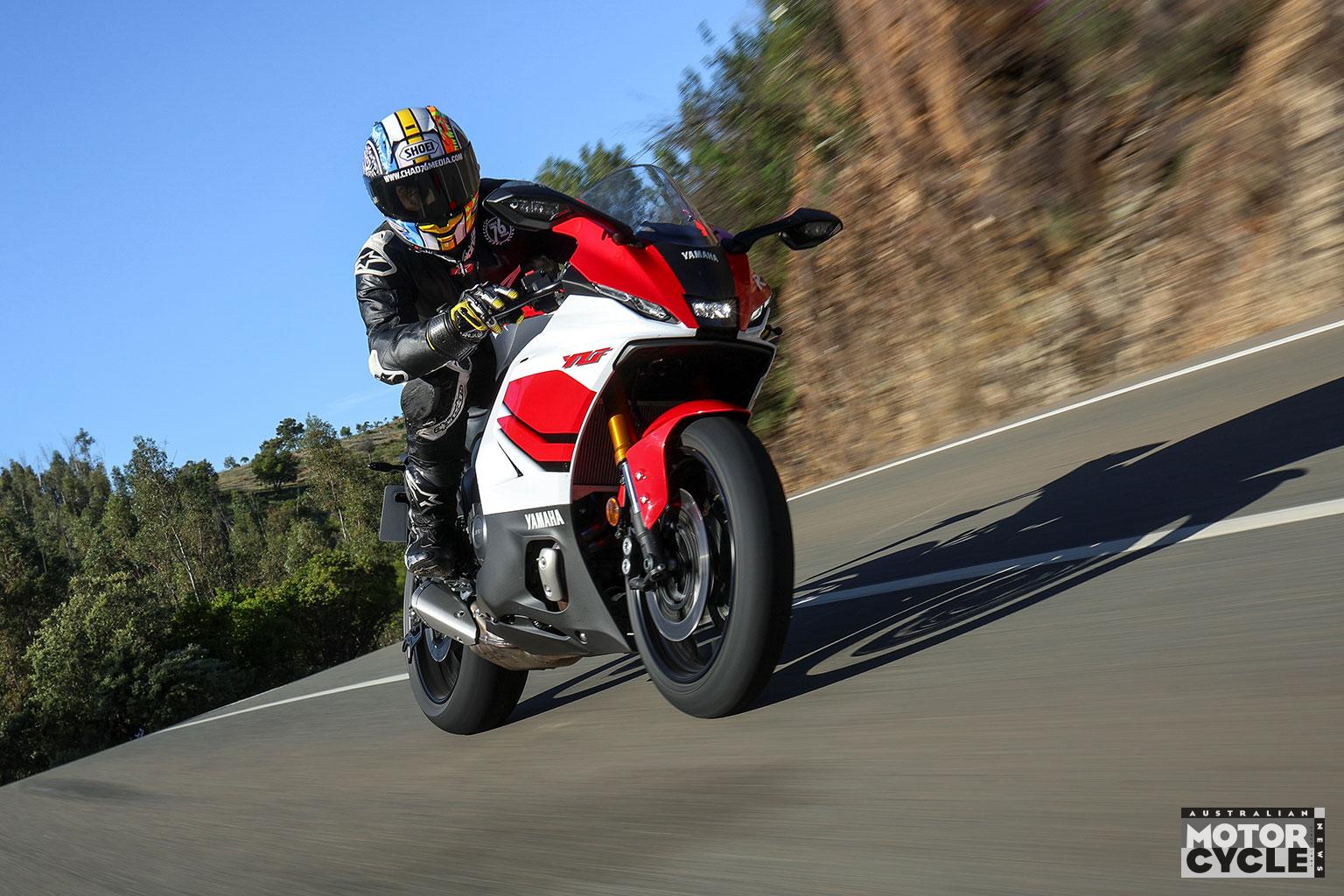
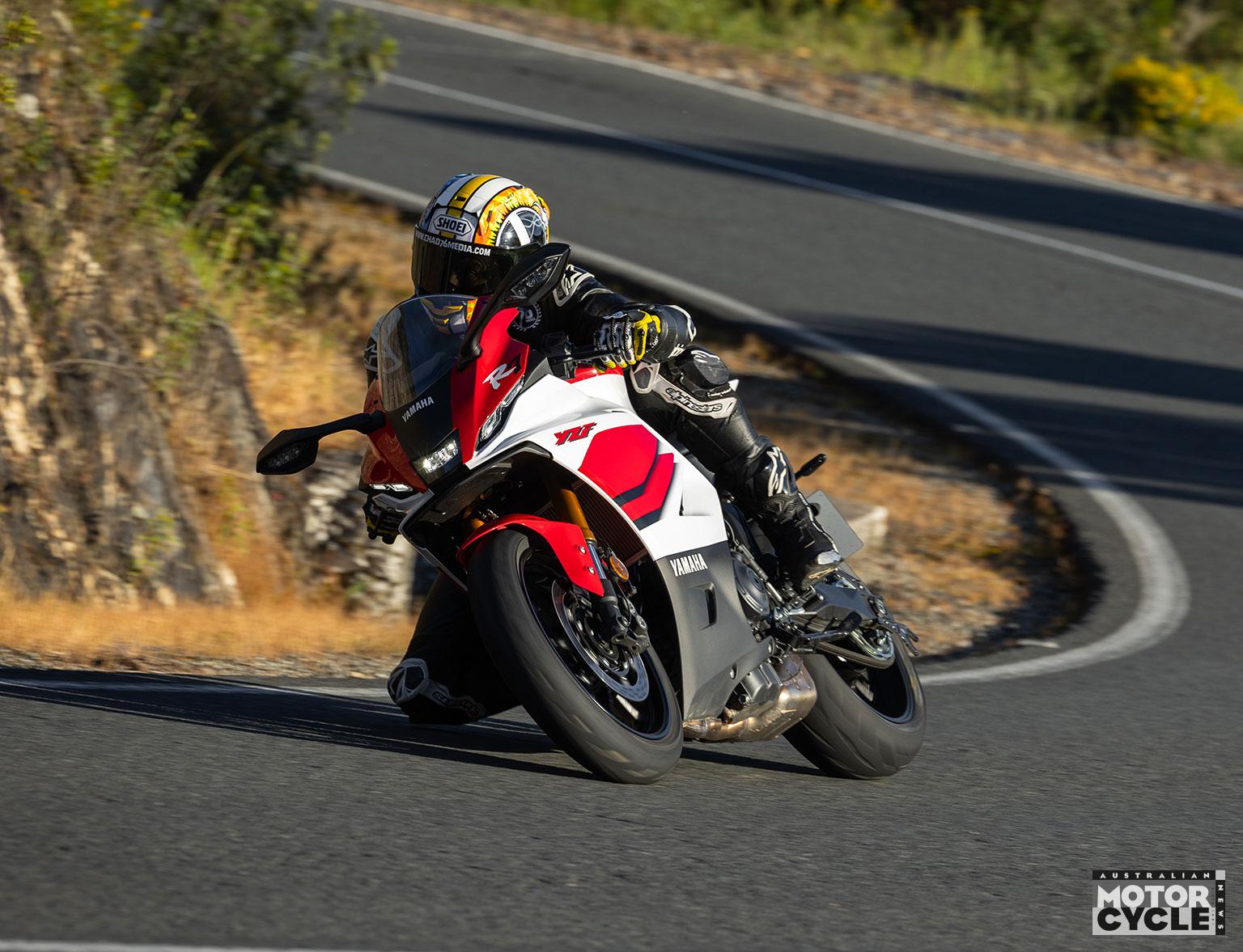
This isn’t a slow bike, and it feels stronger than its quoted 72hp. On test it was in its element on the route’s long, fast sweepers, able to accelerate past 100km/h traffic safely before zipping back up to 150km/h and sometimes more. When we hit some twistier switchback sections, the Yamaha again performed well above expectations. The combination of that softer suspension set-up and grippy Bridgestone S23 rubber gave loads of confidence-boosting feedback – so much that I regularly dropped into corners with a kneeslider planted firmly on the road.
The suspension is compliant and supportive – just how a sportsbike set-up should feel on the road. And if the corner tightens slightly, you can add a little front brake, even when knee down, thanks to the lean-sensitive ABS. If the road surface dramatically changes for the worse, you also have slide and traction control, just in case. The R7 is aimed at new or inexperienced riders who will make mistakes (as I did on my first sportsbike), and these state-of-the-art electronics will help them as much as they can help finesse the skills of an experienced rider. I certainly wish my first sportsbike had had lean-sensitive ABS; it might have saved me a few scars. And for those who don’t want the intervention of the rider aids, you can always turn them off.
The only slight negative to the R7’s compliant set-up is revealed when the pace heats up. While feel and grip levels remained high throughout our road ride, the front fork used too much of its 120mm stroke when braking or trail braking deep into the corner, and needed more support – but this can be done with adjustable suspension.
On track
For the track-riding part of the test, Yamaha technicians tweaked the suspension and fitted more track-focused Bridgestone RS12 tyres, and that was all. Time to hit the new Circuito do Sol.
I was somewhat concerned that the R7 might be a little outclassed or underpowered in this environment. The circuit has multiple blind crests, positive and negative corners, wild undulations with every type of corner imaginable, and is more like a rollercoaster and a test of bravery than a conventional racetrack. As it turned out, it was the perfect playground for the R7.
When you’re learning a new track, especially one as perplexing as this one, you need a friendly and forgiving bike, which is one important reason the Yamaha R7 shone.
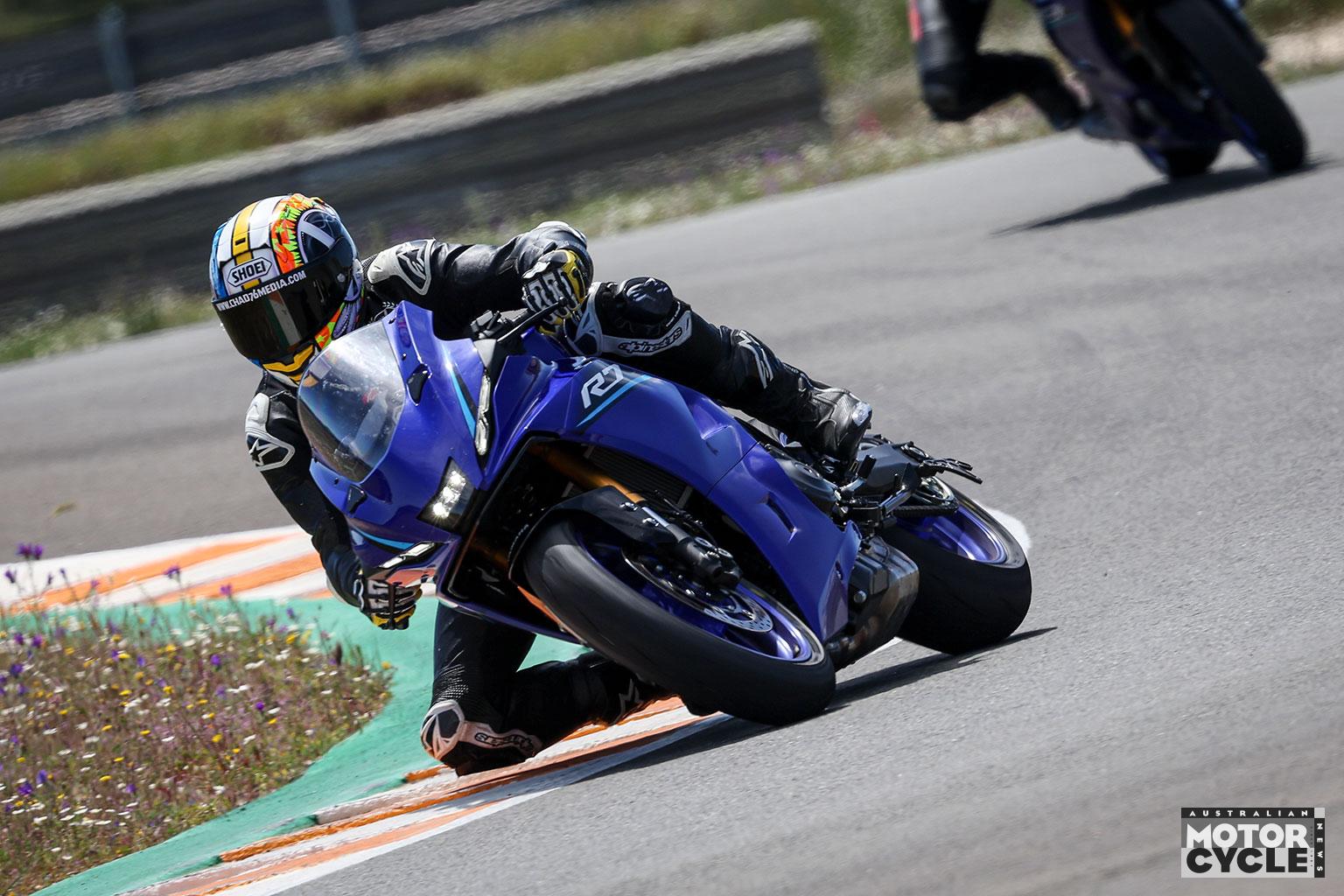
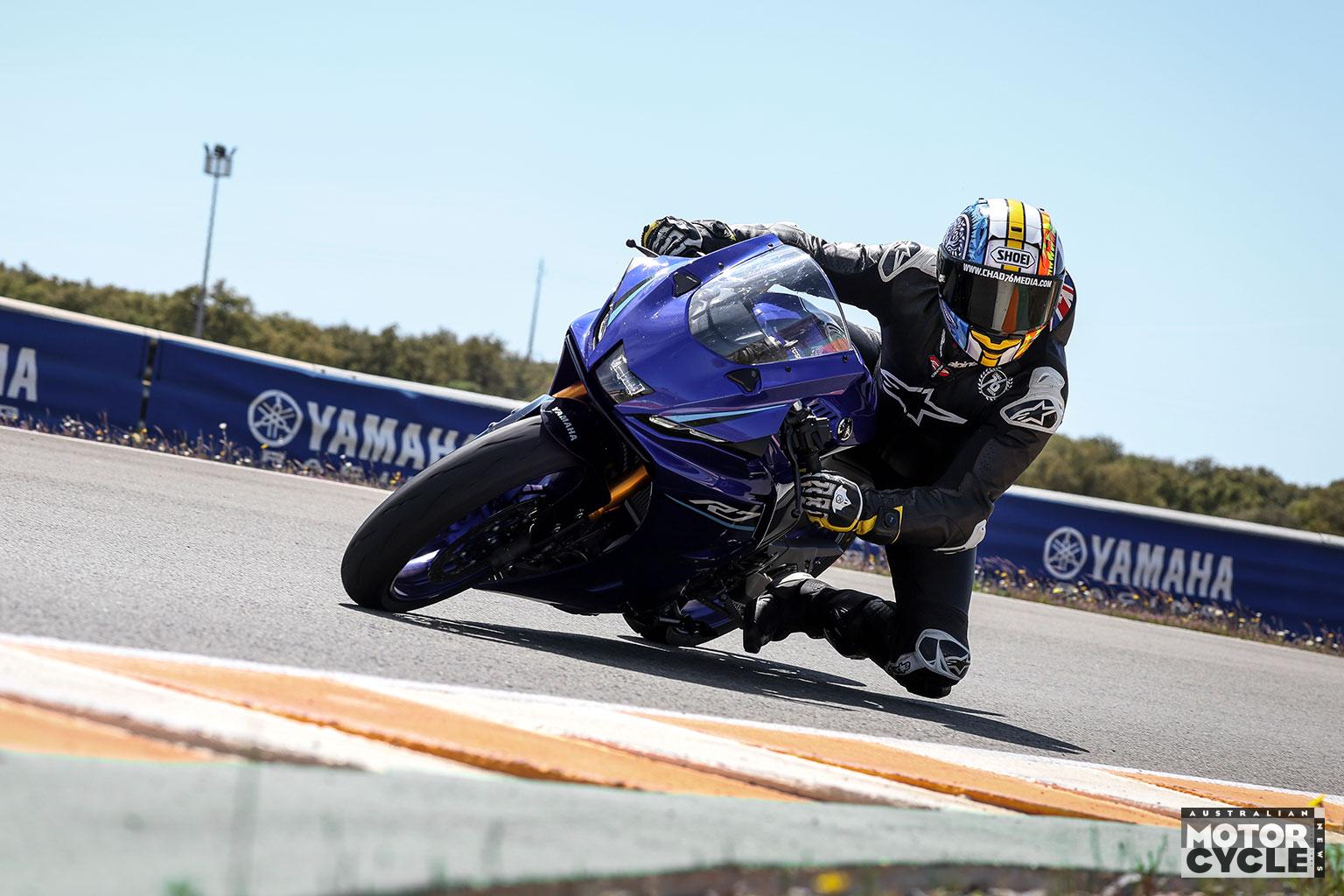
In that first session I opted for the standard Sport mode with power set to full and all the rider aids, including the ABS, to a minimum level of intervention. I could feel the lift control working over crests and rises, smoothly smothering and landing unwanted wheelies. But I didn’t detect the ABS or anything else kick in, and the unintimidating and wholly useable power meant I was always in control, able to pick the right line and turn in corners just so. New and less experienced riders are going to revel in this helpfulness on track and should feel relaxed and secure with those barely noticeable rider aids working in the background.
Despite my concerns about the front fork when riding hard, we didn’t radically change the settings for the track. The spring pre-load remained the same, while the compression damping was increased from setting 7 to setting 4 and the rebound damping from 8 to 4 (the range of both is 11 clicks). The front end still had a great feeling but now more control, and the racier rubber used without warmers gave more confidence, encouraging me to let go of the brakes and carry more corner speed.
For learning a new track, especially this one, the R7 really was the perfect partner.
Later in the afternoon, I removed the lift control – no science here, it was purely for fun – as well as the rear ABS but left the overall set-up alone. If we were pushing for lap times or racing, I think the fork would benefit from more experimentation, but for a track day environment there was simply no need to waste time counting clicks. Despite only having 72hp – perhaps even because it only has 72hp – it was enormous, uncomplicated fun. Get on the power as early as you dare (there’s loads of grip and feel, not forgetting the slide control as back up), tuck in behind the decent-size screen (bum in the air, obviously) and squeeze out every last horsepower down the straight. Pop up, jump on brakes, release and throw the R7 on its side to almost elbow-down angles of lean. Then repeat until the sun goes down.
The ABS kicked in once or twice, and the pegs and my toe slider tickled the track a bit, but for an entry-level bike on this type of track, it was beyond mere good and relatively safe, too. Other bikes in the class wouldn’t have fared as well, with riders giving up as underdamped suspension and ground clearance became an issue.
The key here is that I was riding the bike, not the other way around. The R7 is light, flickable and fun to ride – but never too much. After a hard 20-minute session on the rack, I wasn’t exhausted, just hungry for more, which wouldn’t be the case with something with more power.
Naturally, a 72hp motorcycle is a lot better when all the other bikes on track are 72hp motorcycles, and on a faster track with faster bikes – even bikes in this class have 90-95hp – would it have been as much of a gas? I’d estimate that the R7 has the chassis to match or beat any bike in this class, and rider aids are top shelf, but there is no hiding the fact that it’s a few ponies behind some of the competition.
Verdict
Red hot competition in the entry-level sportsbike sector meant Yamaha needed to improve the R7, which, lacking rider aids, was starting to feel dated. Yamaha has done that and more. The list of rider aids and sporty tech like slide control for the track or cruise control for the road, is class leading. It now boasts the same level of electronics as a superbike of just a few years ago – and does so for well under $20k.
The aids are ostensibly there to help new riders learn their craft, but they also make life easier for more experienced riders. Riding the 2026 R7 is, quite simply, a whole load of fun.
But it’s not all about rider aids. The riding position is more grown up and more civilised, while a softer set-up gives the R7 a more friendly, road-orientated feel. There’s great feedback from the chassis and it’s easy to ride. It’s one of those bikes that fills its rider with confidence.
The overall design hasn’t drastically changed, but subtle tweaks make a difference, especially like the high-quality new dash and top fork yoke. And, like many but not all, I thoroughly approve of the 70th Anniversary colours.
The 2026 R7 is an excellent road bike that can be used every day and still be fun on the right track for new or experienced riders alike.
The two big questions are: is 72hp enough? And, with a starting price of $16,549, is it too expensive to be a success in this class?
✅ PROS – Premium feel, class-leading electronics and a brilliantly friendly chassis make for huge fun on road or track. Punchy CP2 engine remains one of the great all-rounders.
❌ CONS – Still down on outright power against key rivals and, although the softer suspension boosts comfort, the front fork lacks support when ridden aggressively on track.
CLASS-LEADING TECH
The outgoing R7 may have been criticised for its lack of rider aids, especially in recent years as new bikes have come to the market with lean-sensitive this, that and the other, but now with an electronically controlled throttle and a 6-axis IMU, Yamaha is arguably leading the way in this class in terms of electronics and rider aids. Three rider modes come as standard (Sport, Street and Rain) plus a customisable slot. These change and trim an impressive list of rider aids: Power Modes (1-3), Traction Control (1-3), Slide Control
(1-3), Lift Control (1-3), 3RD Generation Quickshift (1-2 and off), Engine Brake Management (1-2 and off), Brake Control (on or off ABS), Brake Slip Regulator (on or off), Launch Control, (1-2 or off) and Rear ABS (on or off).
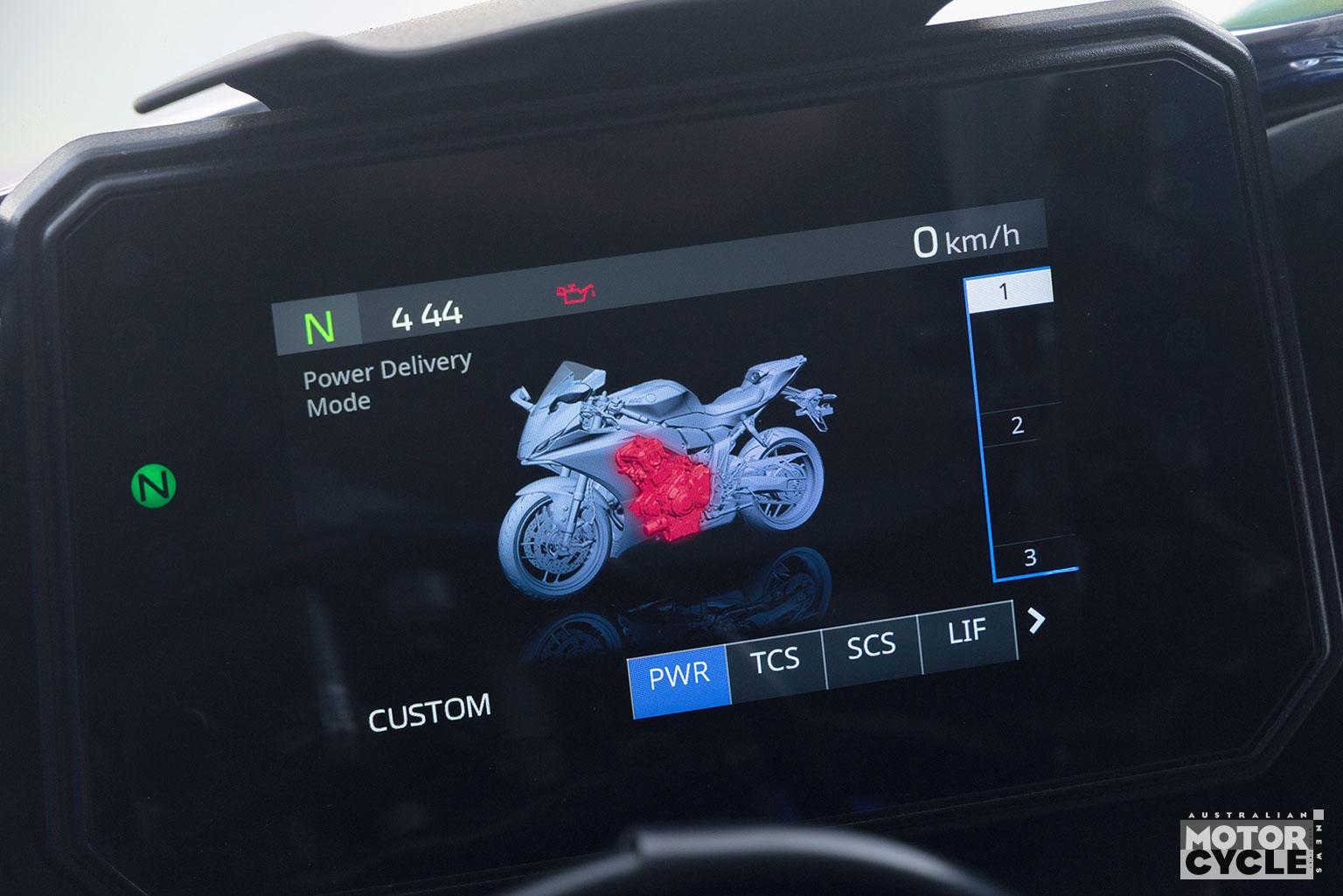
Furthermore, via the MyRide app, owners can have turn-by-turn navigation or Garmin StreetCross and take calls and messages. For the track, the Y-TRAC Rev app enables datalogging, lap times, lean angle, gear, speed, etc, and even hangs out a virtual pit board (dash message) so mates can tell you the kettle is on while you are out on track.
the rivals
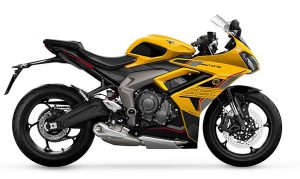
Triumph Daytona – $15,500 ride away
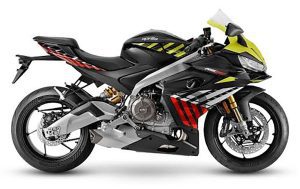
Aprilia RS660 – From $23,090 ride away
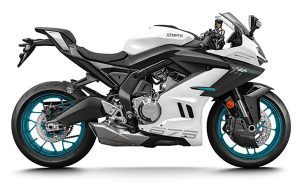
CFMOTO 675 SR-R – $11,790 ride away
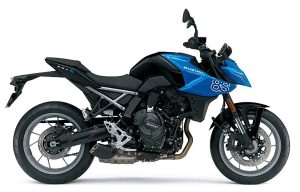
Suzuki GSX-8S – $12,490 ride away (sale price)
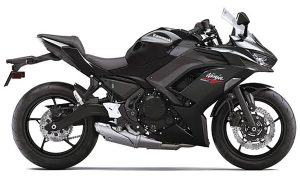
Kawasaki Ninja 650 – $13,553 ride away
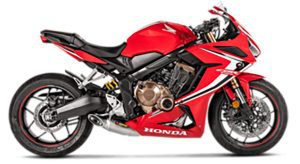
Honda CBR650R – $13,699 ride away
ENGINE
Capacity 689cc
Type Liquid-cooled, 16v, four-stroke,DOHC parallel-twin
Bore & stroke 80mm x 68.6mm
Compression ratio 11.5:1
Fuelling Electronic injection
Transmission Six-speed, chain drive
Clutch Wet, multi-plate disc
Power 54kw(72hp) @ 8750rpm (claimed)
Torque 68Nm @ 6500rpm (claimed)
Top speed 201km/h (est)
Fuel consumption 4.L/100km
SPECIFICATIONS
ELECTRONICS
Type Yamaha in house
Rider aids Riding modes, cornering traction control, cornering ABS, wheelie control, slide control, engine brake control.
CHASSIS
Frame Diamond
Rake 24°
Trail 91mm
Wheelbase 1395mm
SUSPENSION
Type KYB
Front: 41mm, USD, fully adjustable. 120mm travel
Rear: Single rear shock, pre-load and rebound adjustable, 120mm travel
WHEELS & BRAKES
Spin forged aluminium
Front: 3.5X17in
Rear: 5X17in
Tyres Bridgestone Battlax Hypersport S23
Front: 120/70/x17
Rear: 180/55/17
Brakes Cornering ABS
Front: Twin 298mm discs, four-piston radial calipers
Rear: Single 245mm disc, single-piston caliper
DIMENSIONS
Weight 189kg (wet)
Seat height 830mm
Wheelbase 1395mm
Fuel capacity 14L
BUSINESS END
Price Standard $16,549 ride away, Anniversary edition $17,049 ride away
Colours: Icon Blue, Midnight Black, Anniversary White
Contact yamaha-motor.com.au