Fresh design filings show Honda’s highly anticipated V3R in final production trim, revealing road-ready details
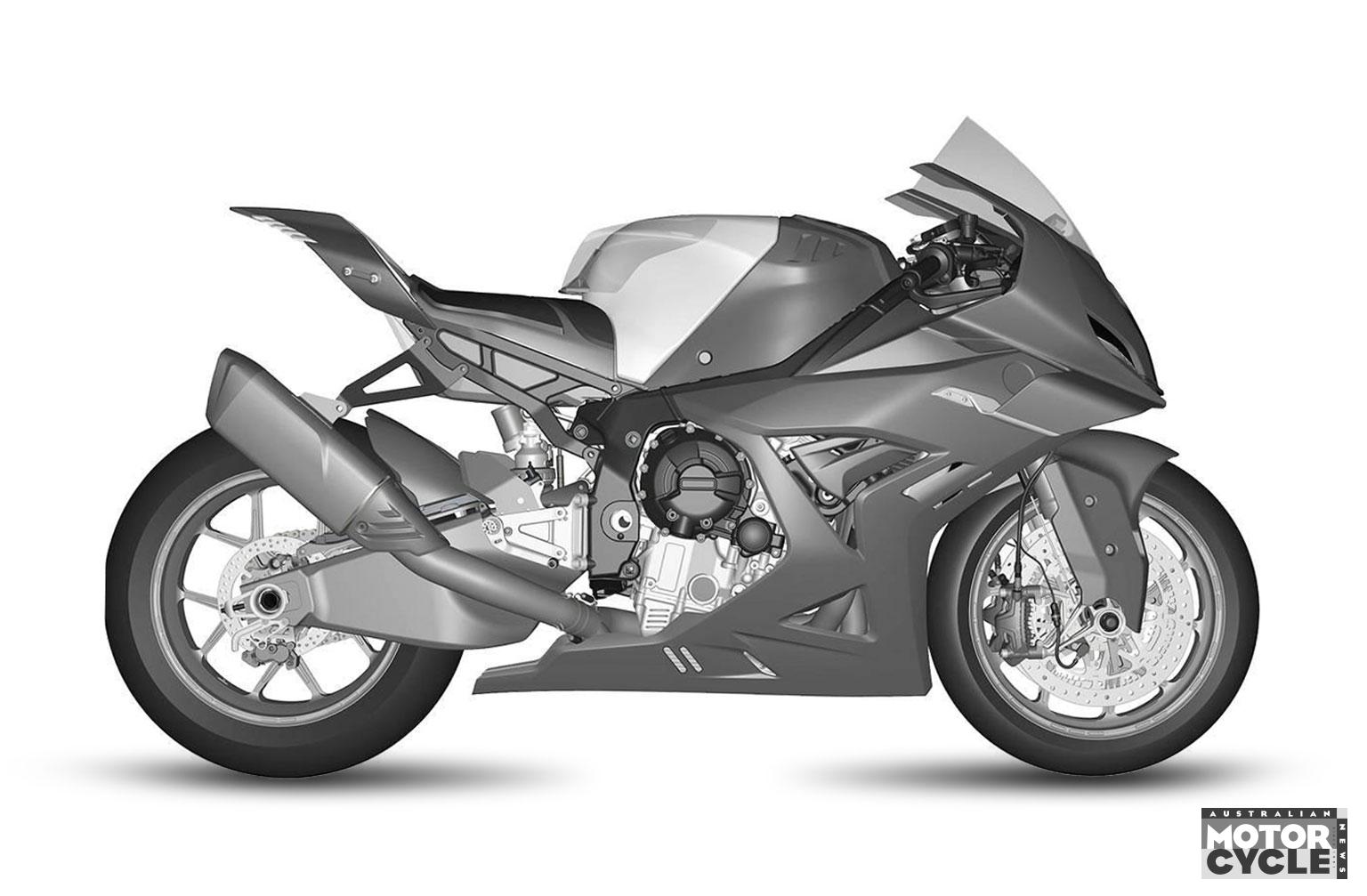
Honda’s supercharged V3R has been the talk of the EICMA show in Milan two years running – an engine was shown in 2024 and the whole bike last year – and now it’s finally getting ready to appear in showrooms and we’ve got an early look at the finished production model via a set of design filings that have leaked before Honda intended.
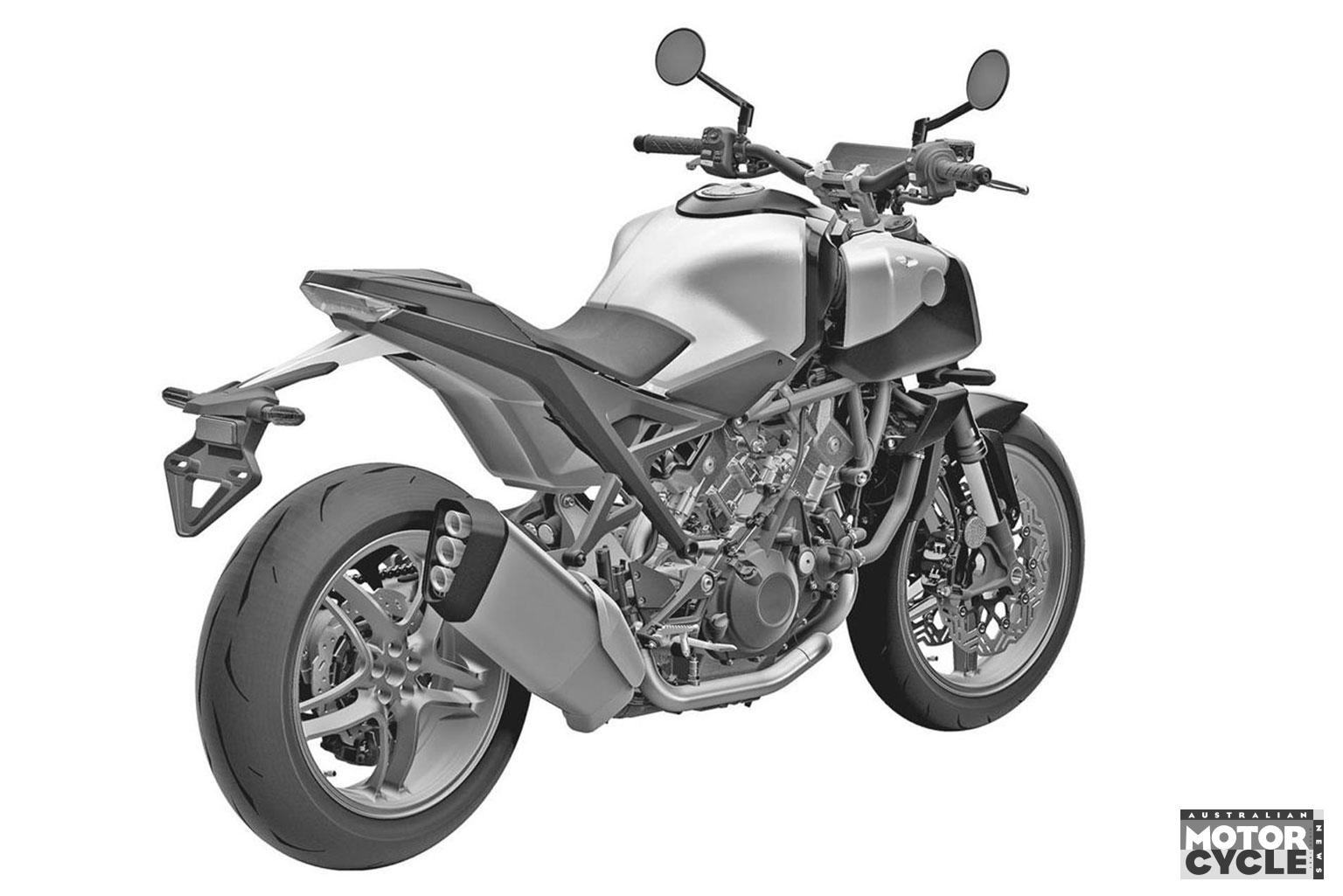
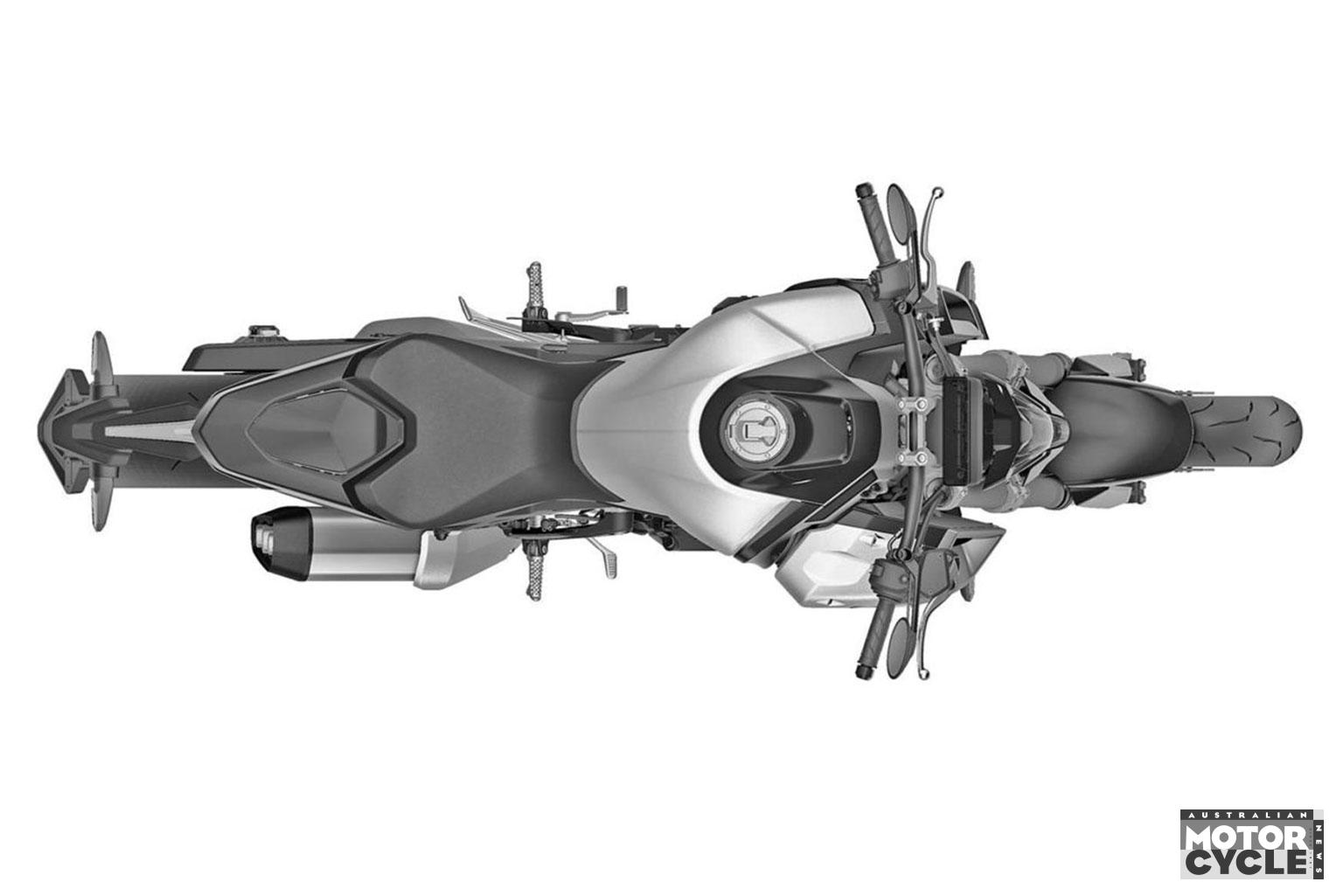
The designs might only be CAD files rather than real photos but they clearly strip away the distraction camo wrap that covered last year’s EICMA show prototype, while adding road-legal addenda like mirrors and turn signals that were missing from that show model.
What’s immediately clear is that the 2025 show bike was very close to the production machine. The engine and chassis, the upside-down forks and the Nissin brakes, all appear unaltered in the design registrations. Even the parallel-spoke alloy wheels and single-sided swingarm are identical to the show model, along with the distinctive, lopsided bodywork that’s a direct result of the supercharged engine that lies underneath.
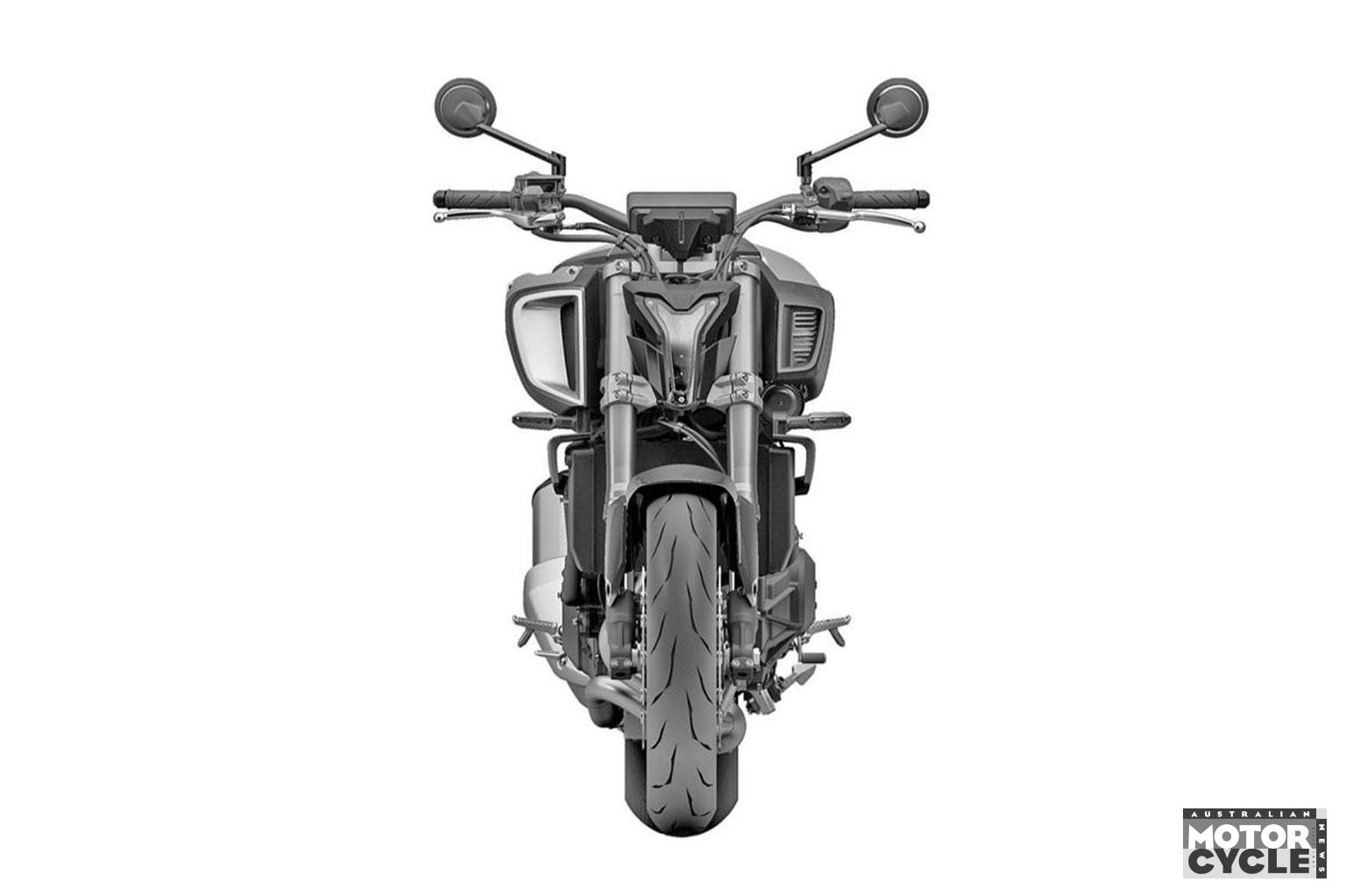
To recap, Honda’s V3R is all about the motor. As the name suggests it’s a V3 – the first time the layout has reached production in a four-stroke motorcycle, although there have been a few two-stroke V3s in the past. Two cylinders point forward and another to the rear, in an asymmetrical form that’s reminiscent of the all-conquering RC211V GP bike’s V5 engine.
But that’s just the tip of the iceberg as the engine is also the first to get Honda’s E-Compressor tech, with an electric supercharger mounted above the front cylinder bank, ready to introduce lag-free forced induction whenever it’s needed. That supercharger’s position explains why the righthand side of the bodywork bulges out so much further than the left: it contains the entire air intake and airbox. The smaller, lefthand intake simply cools the bike’s electronics, with the main ECU also evicted to a spot outside the frame rails thanks to the addition of the supercharger between them.
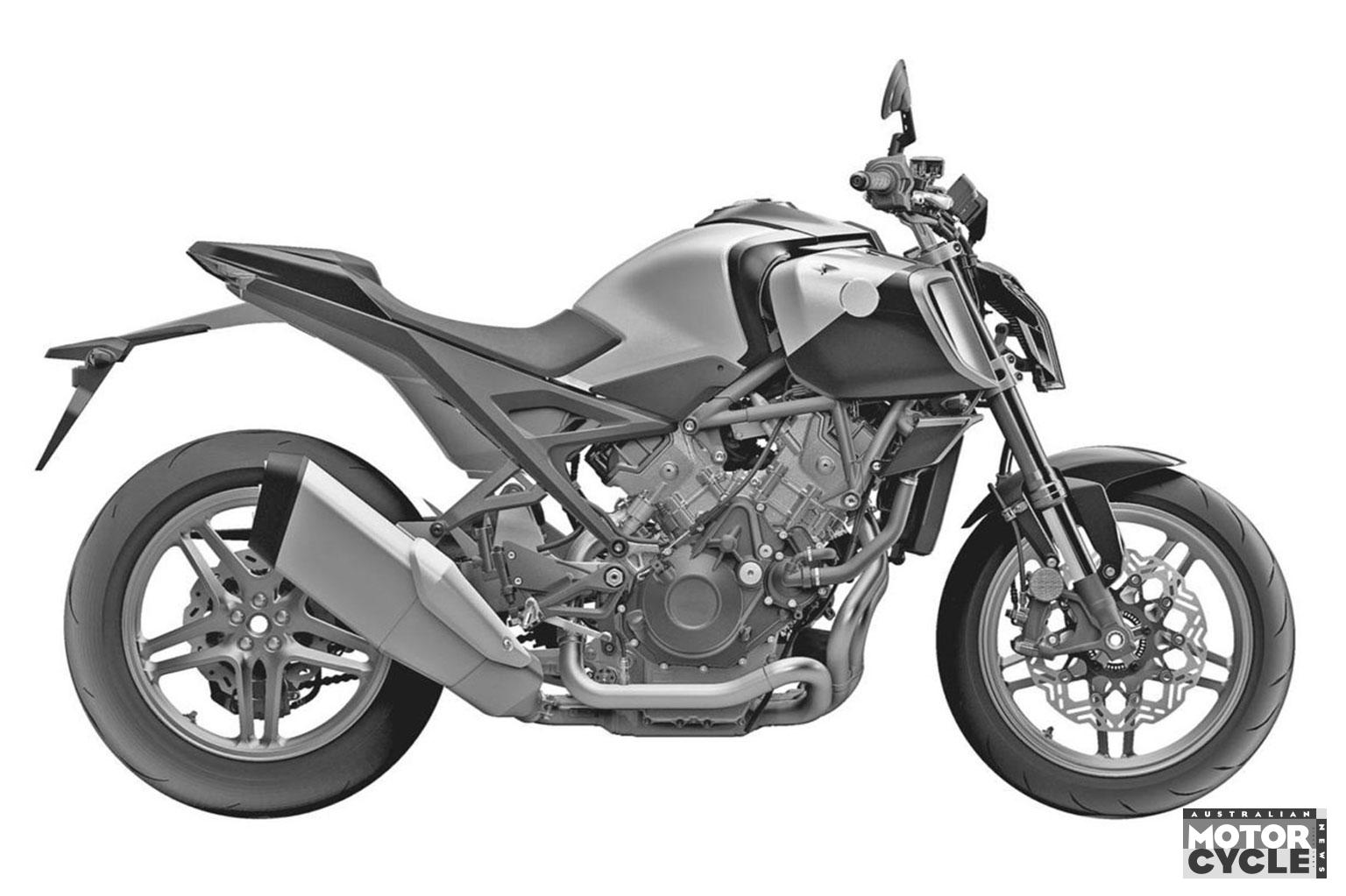
A solenoid-controlled valve system allows that airbox either to feed directly into a plenum chamber above the triple throttle bodies in the V of the engine, with the engine operating in normally-aspirated mode, or to divert airflow to the electric supercharger. Kicking in only when needed, that supercharger, with its own built-in, brushless motor, is powered by a lithium ion battery pack that recharges when you’re not asking for maximum performance. Its supercharging effect increases the engine’s effective capacity by around a third by squeezing more air into the cylinders than would be possible without the compressor, giving power and torque that Honda claims is on a par with a 1200cc bike.
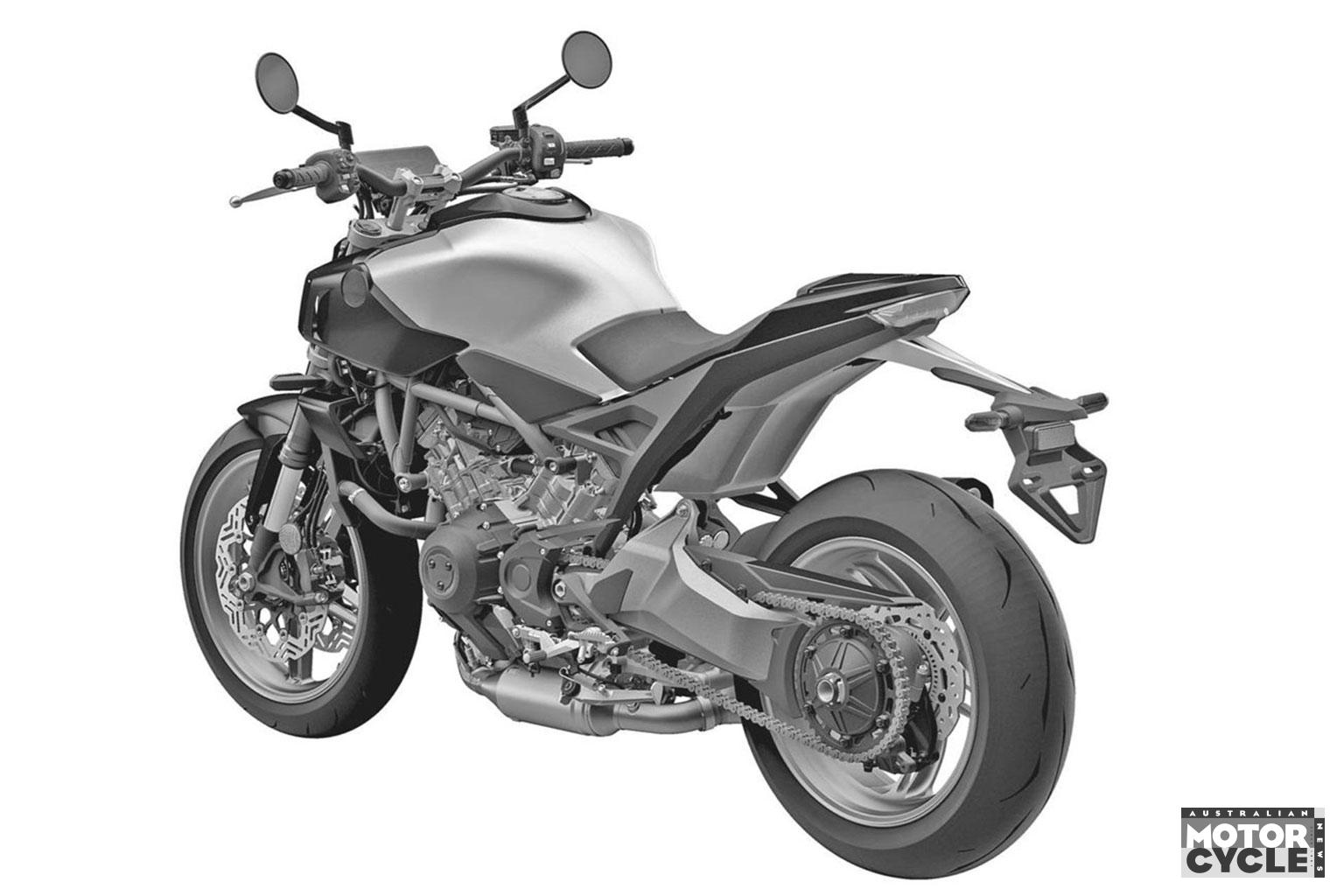
The visual changes that can be seen in the new CAD images include the rear licence plate bracket, extending far rearward to comply with European rules that insist bodywork must extend further back than the rear tyre. In mounts the rear indicators, reflector and licence plate light, although the main tail light is fitted to the main bodywork above it.
We also see the mirrors for the first time – simple circles, with nothing clever about them – and the front indicators mounted just above a pair of vestigial, downturned winglets that flank the radiator’s upper corners. The usual, afterthought side reflectors – another legal box to tick – are slapped onto the front brake caliper mounts.
It’s a little surprising to see that the sawtooth brake discs, scarred with extensive, slash-like perforations, are production parts rather than simply a concept idea. They look light, though.
It’s also clear that Honda isn’t adding anything like its E-Clutch system to the bike, at least not initially, ensuring that we should get the chance to experience the supercharged engine in its natural form without too much automation on show.
The simple TFT dash is identical to the show bike’s, and there’s no obvious ignition key hole on show, suggesting we can expect keyless go.