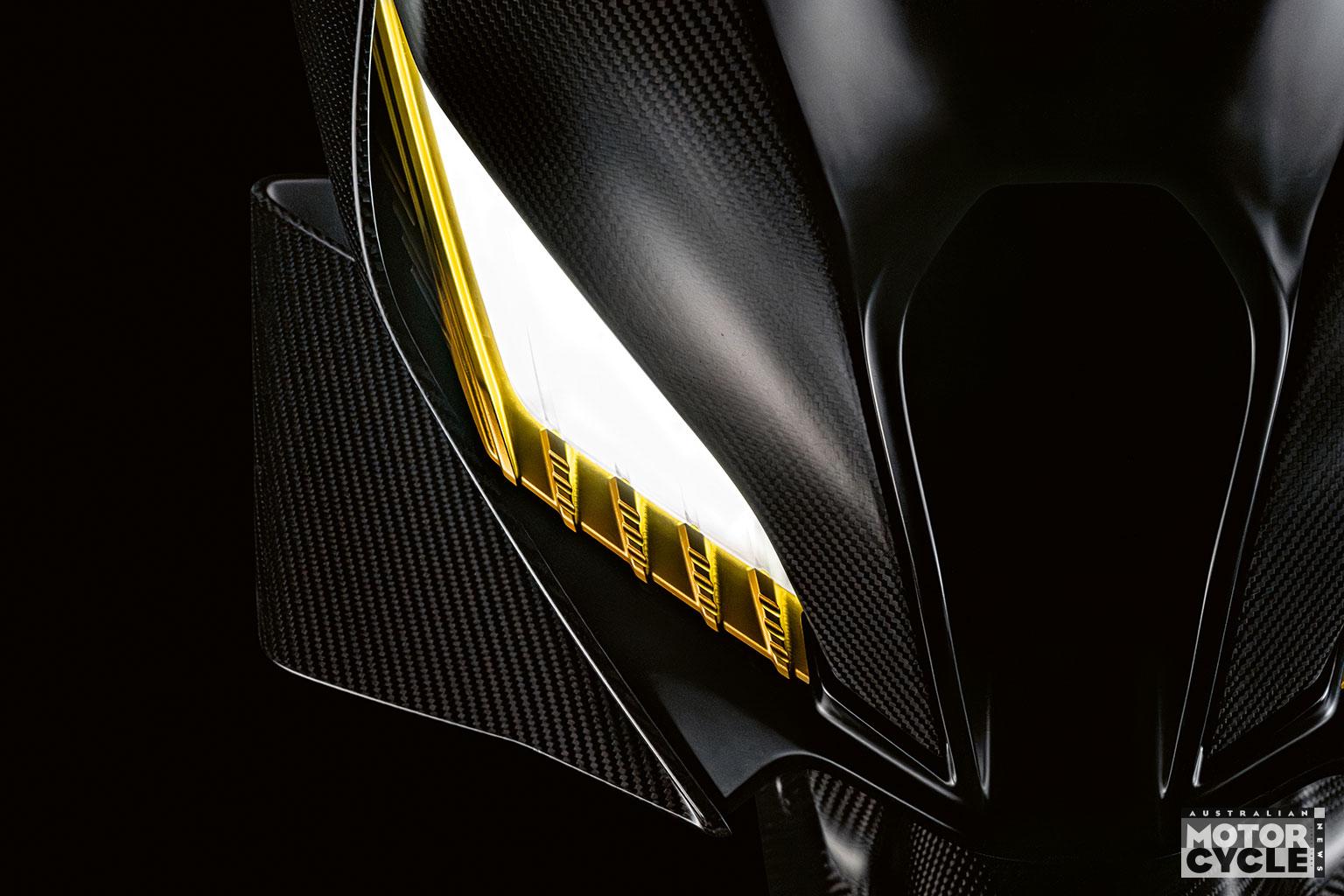
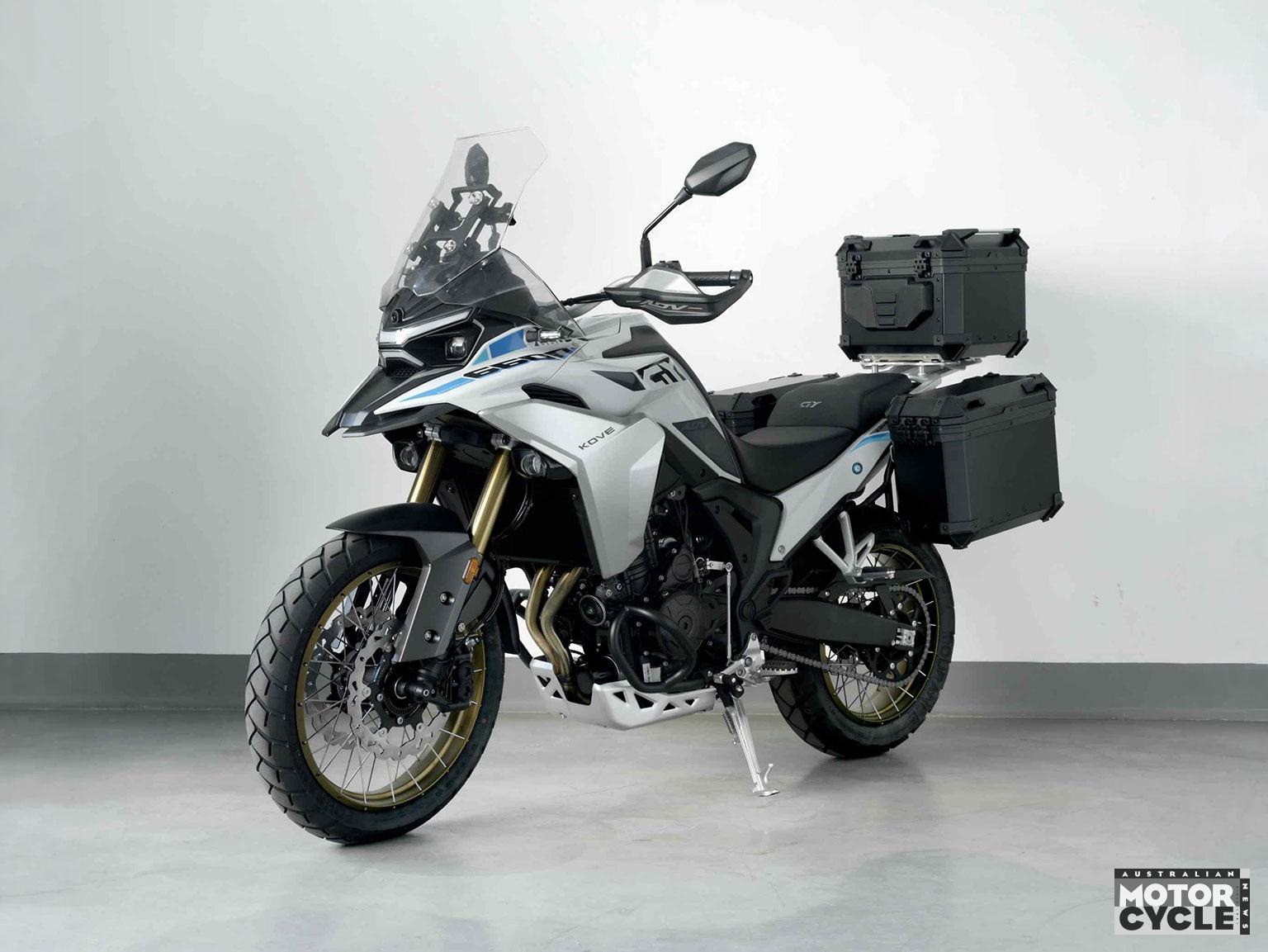
CFMoto V4 SR-RR rival expected to adopt movable winglets
Love them or hate them, it’s clear that winglets are here to stay on modern performance bikes, and they’re becoming a new technological battleground as a growing number of brands realise that moving wings are more useful than fixed ones.
So far only Bimota’s KB998 Rimini has employed movable wings in a production bike, and in a fairly limited way. They simply alter their angle of attack to increase downforce at lower speeds and under braking, and flatten out to reduce drag at high speed. But CFMoto’s upcoming V4 SR-RR superbike promises to include a much more extreme system, with far larger winglets, and now a new patent from its Chinese rival QJMotor reveals it’s also developing a similar design.
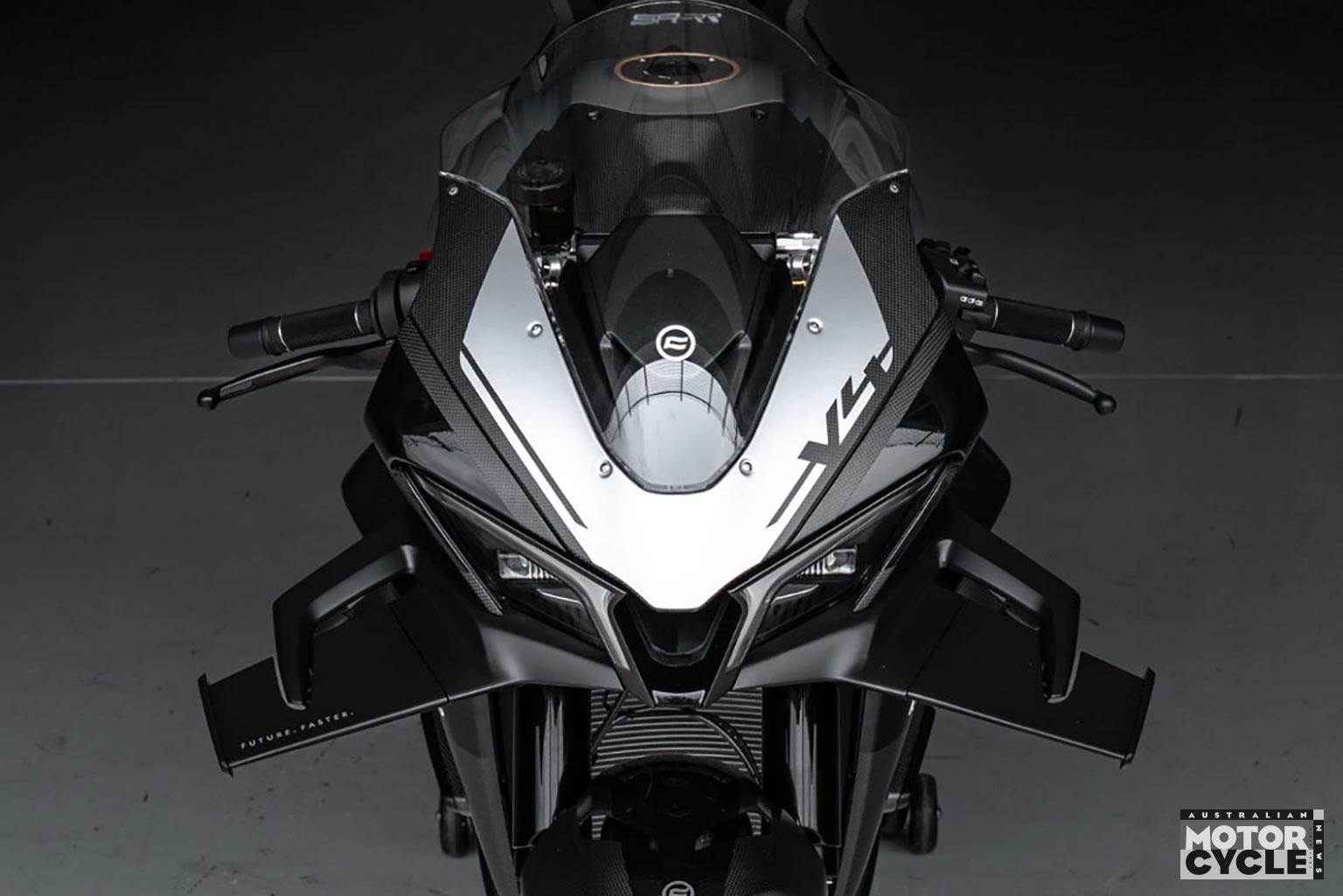
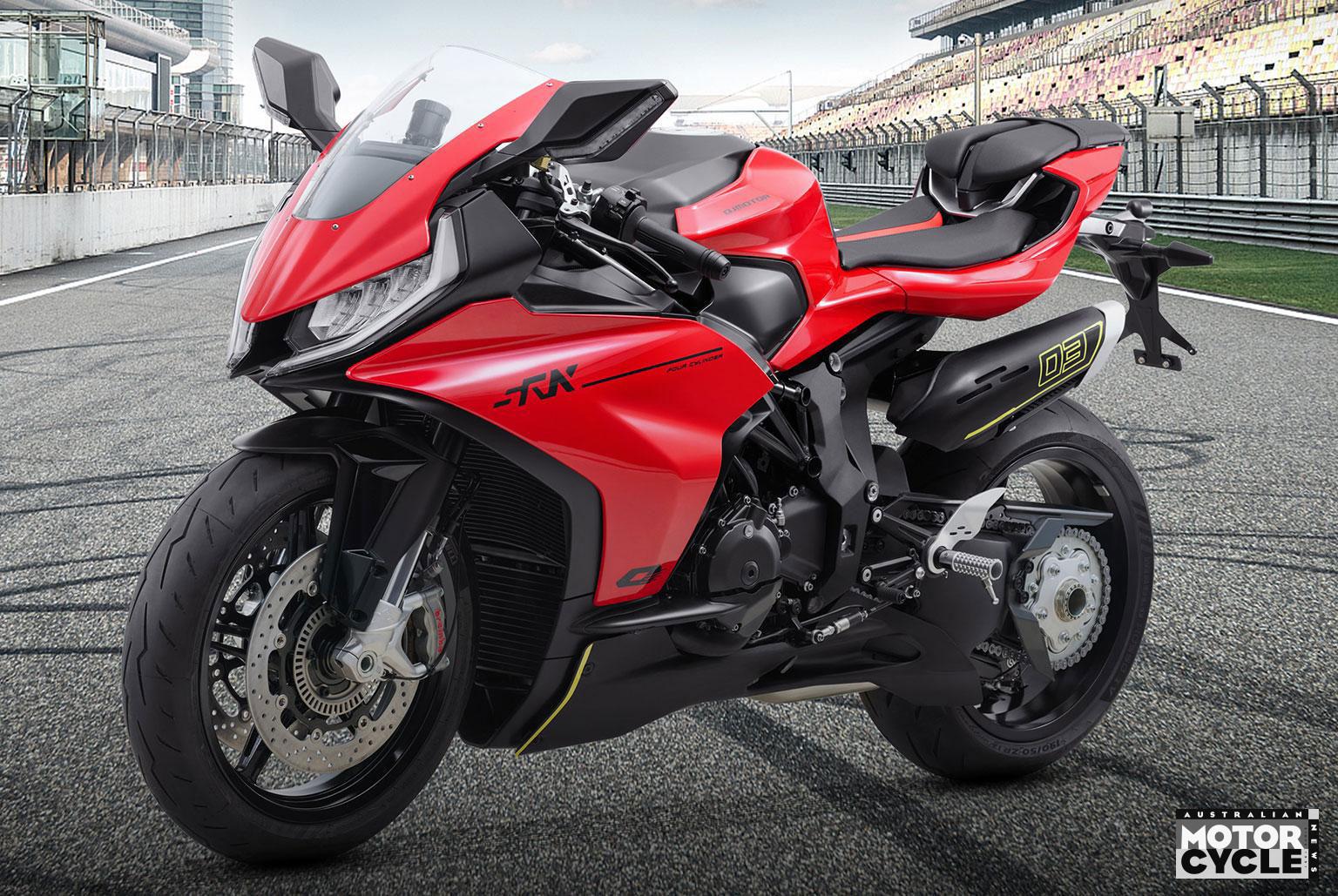
QJMotor was the first Chinese brand to show a litre-class superbike, initially under the name SRK1000RR. Since retitled SRK1051RR, it’s based around MV Agusta’s previous-generation inline four-cylinder engine, which QJMotor acquired rights to manufacture several years ago. But it’s yet to reach production and on paper CFMoto’s V4 SR-RR demolishes it in terms of performance and technology, so unsurprisingly QJMotor is working hard on an upgraded machine.
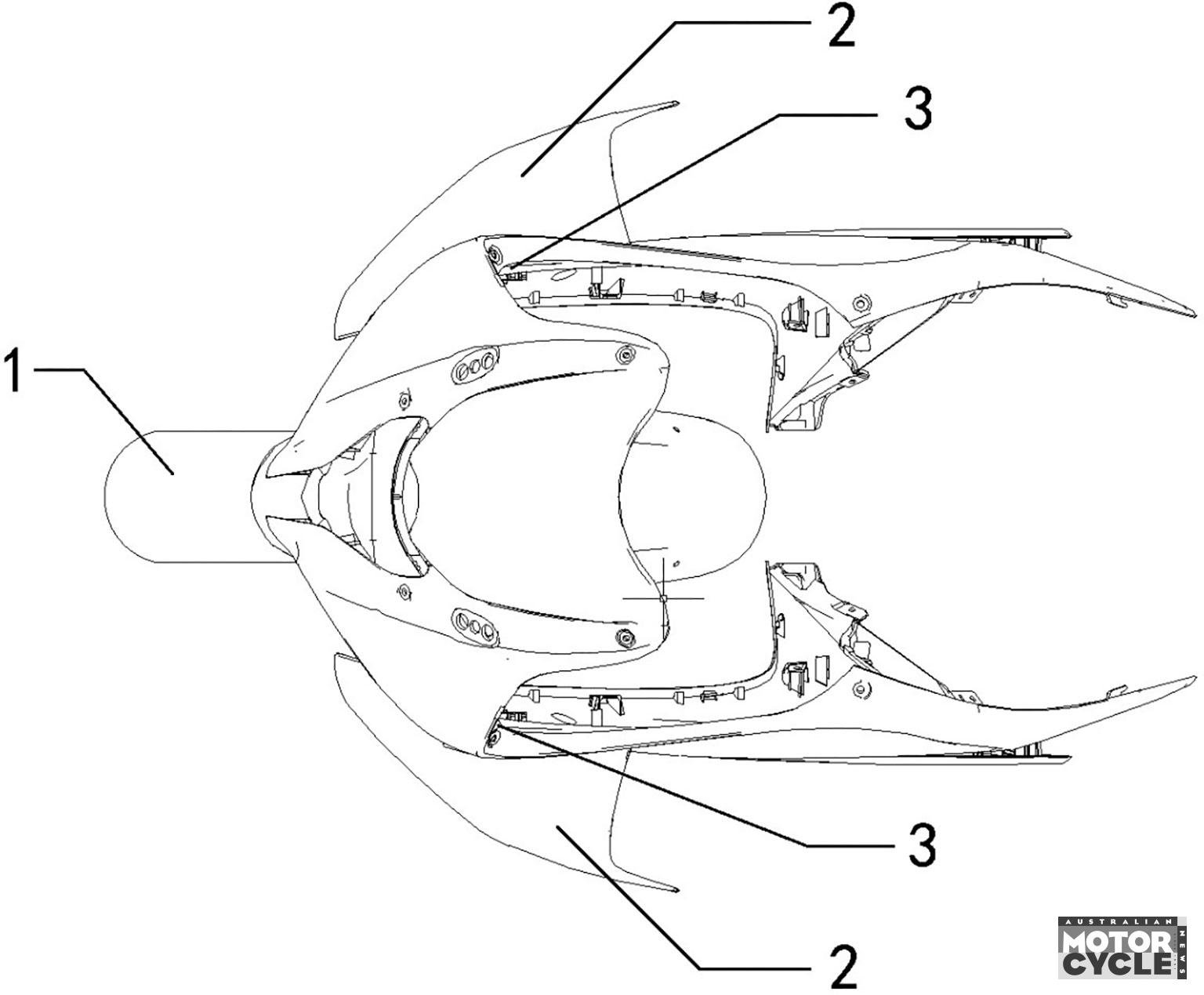
The new patent doesn’t show the bike in full but depicts a top-down view of the nose, complete with huge, back-swept winglets that are the subject of the document.
The patent says it “relates to the field of motorcycle technology and discloses a control method and system for motorcycle wings,” going on to explain that it can monitor the bike’s status and alter the winglets’ positions to suit.
Importantly, like the CFMoto V4 SR-RR prototype that was displayed at EICMA last year, the new QJMotor can independently alter the angles of the left and right winglets: in the words of the patent document: “distributing asymmetrical angles of the left and right wings according to the body tilt angle and angular velocity during high-speed cornering.”
Since bikes lean in corners, conventional, fixed winglets and even those like the Bimota Rimini’s that can move in unison are of greatest value in a straight line, helping keep the front wheel on the ground so you can accelerate harder without wheelieing. By taking the CFMoto and QJMotor approach of having independently movable wings, the technology becomes useful in corners as well: essentially acting like an aeroplane’s ailerons to help control the bike’s roll and lean angle, as well as either adding downforce or even using aerodynamic forces to help pull the front through a corner.
The six-axis inertial measurement units that are already commonplace on modern bikes, used to provide information to cornering ABS and lean-sensitive traction control systems, mean the data required for computer-controlled winglets is already available. The IMU gives real-time info on acceleration, braking, pitch, roll and yaw, and when coupled with data like speed, throttle position and brake pressure, that’s all a wing-control system needs.
QJMotor’s patent includes a flow chart showing the sequence of checks and responses that the computer will make, hundreds or even thousands of times per second, to operate the system. It shows that if it senses emergency braking, for example, it will alter the wings to maximise downforce and act as air brakes. If a wheelie is detected it alters the wing angle to push the nose back down, and in corners the left and right wings will operate independently based on both the lean angle and the roll rate of the bike.
With two Chinese brands, each new to the road-going superbike arena, introducing this sort of technology, it’s intriguing that we’ve yet to see a response from the established manufacturers in Japan and Europe. Are they simply keeping their powder dry before launching their own active-wing bikes (BMW, for example, has also filed patents on this subject), or do they risk being overtaken by these Chinese newcomers to the field?